Antinuclear

Australian news, and some related international items

  • Home
  • 1 This month
  • Disclaimer
  • Kimba waste dump Submissions

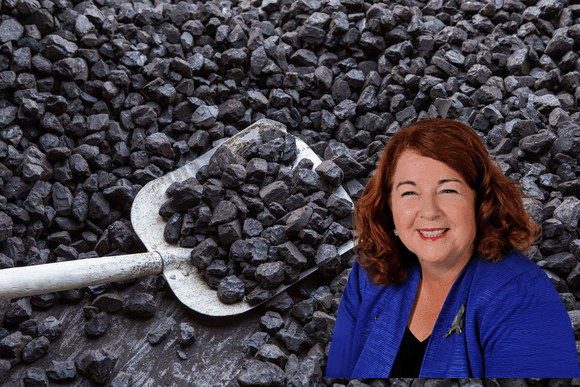
Melissa Price – Australia’s Minister For Coal – but don’t we need a Minister for the Environment?

Environment Minister Price under pressure to front the public,    https://www.smh.com.au/federal-election-2019/environment-minister-price-under-pressure-to-front-public-after-campaign-20190520-p51pak.html ,By Nicole Hasham, May 20, 2019   Australia has failed to deliver a major report to the United Nations on its progress in halting the extinction crisis as pressure mounts on Environment Minister Melissa Price to front the public over highly controversial election-eve decisions.Ms Price’s absence from the federal election campaign became a national curiosity. She refused scores of media interview requests, ignored challenges from her political rivals for public debates and did not appear at government announcements relating to her portfolio.

This prompted suggestions she was avoiding scrutiny of controversial approvals she granted just before the election, such as groundwater plans for the divisive Adani coal project and a contentious uranium mine in her home state of Western Australia.

Prime Minister Scott Morrison has indicated Ms Price will be re-appointed to the portfolio in his next cabinet.

The Department of the Environment and Energy, which Ms Price oversees, was due last December to present Australia’s sixth national report to the United Nations Convention on Biological Diversity.

The report would outline the government’s progress on conservation measures and in meeting the objectives of the convention, to which Australia is a party. However, it has not been delivered.

Australia has one of the world’s worst extinction records. The global crisis was highlighted in a shocking United Nations report this month that warned 1 million species on Earth were headed for extinction within decades.

The Morrison government has also failed to deliver an official plan to protect the nation’s animals and plants. A draft version of the plan, Australia‘s Strategy for Nature 2018-2030, was panned last year as a “global embarrassment” for its brevity and lack of specific targets.

Ms Price’s office did not respond to this publication’s questions or interview request.

Mr Morrison was grilled over the United Nations extinction report and appeared to stumble in his response, referring to government measures that do not exist.

Two days out from the election, Ms Price and Resources Minister Matt Canavan announced an independent audit of energy giant Equinor’s plans to drill for oil in the Great Australian Bight, in response to deep concerns in South Australian coastal electorates.

Should Ms Price continue in the environment portfolio, she faces a number of persistent questions, including how Australia will meet its Paris climate targets if the government’s plans to use carryover carbon credits from the Kyoto period are deemed outside the rules.

In a statement, the department said it was working on the report to the UN Convention on Biological Diversity and that this involved “an extensive co-ordination and consolidation process”. The department hopes to finalise the report this year.

The separate national biodiversity strategy was being revised and required agreement from state and federal environment ministers, it said.

Greens environment spokesperson Senator Sarah Hanson-Young said Mr Morrison “must dump Melissa Price from the ministry … The climate and our environment can’t afford another term with Melissa Price as environment minister”.

May 21, 2019 Posted by Christina Macpherson | AUSTRALIA - NATIONAL, climate change - global warming, environment, politics | Leave a comment

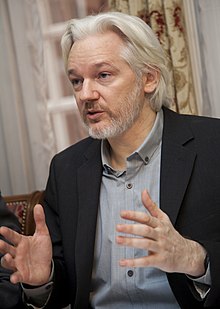
Sweden wants Detention of Assange, meanwhile USA seizes his property. DOES AUSTRALIA CARE?

Sweden Requests Detention of Assange as WikiLeaks Accuses U.S. of Illegally Seizing His Property   https://www.democracynow.org/2019/5/20/headlines/sweden_requests_detention_of_assange_as_wikileaks_accuses_us_of_illegally_seizing_his_property

MAY 20, 2019  Swedish authorities issued a request Monday for the detention in absentia of WikiLeaks founder Julian Assange, who is facing rape charges in Sweden and is currently serving jail time in Britain for skipping bail in 2012. Last week, Swedish prosecutors reopened a sexual assault investigation into Assange which was dropped in 2017 because they said the case could not proceed while Assange was holed up at the Ecuadorean Embassy in London, where he lived for seven years before being forcefully removed by British police last month.
Assange has denied the accusation, and his lawyer representing him in Sweden said he has not been able to get hold of his client to discuss the detention order.
WikiLeaks’ Editor-in-Chief Kristinn Hrafnsson has previously said of Sweden’s case, “Since Julian Assange was arrested on 11 April 2019 there has been considerable political pressure on Sweden to reopen their investigation, but there has always been political pressure surrounding this case. Its reopening will give Julian a chance to clear his name. This case has been mishandled throughout.” Assange must reportedly serve 25 weeks of his British prison sentence before he can be released. Assange now faces possible extradition to both Sweden and the United States, where he is wanted for the publication of leaked documents by Army whistleblower Chelsea Manning which showed evidence of U.S. war crimes in Iraq.

In related news, WikiLeaks is reporting that Ecuador will allow U.S. prosecutors to go through and take possession of Assange’s belongings left in their London embassy. Assange reportedly has two manuscripts at his former living quarters; his lawyers have called it an illegal seizure of property.

May 21, 2019 Posted by Christina Macpherson | AUSTRALIA - NATIONAL, civil liberties | Leave a comment

Coal industry lobbying Morrison govt to build new coal plants

Coal industry urges re-elected Morrison government to build new coal plants, Guardian,   Ben Smee  @BenSmee 20 May 2019 

The Coal Council calls on Labor to reverse many of its climate policies after strong election swings against it, The coal industry has begun lobbying the re-elected Morrison government to support hardline positions, including building new coal-fired power stations and weakening approvals processes for new mines.

The Coal Council of Australia released a statement on Sunday welcoming the election result, praising the Coalition for supporting coal, and calling on Labor to reverse many of its climate-focused policies towards the fossil fuel…….

Despite the election result, coal will likely remain a vexing issue where policies designed to win regional votes could also cost support in inner-city electorates. Research by the Queensland Resources Council, leaked to the Australia Institute in the days before the election, shows the sector is “nearing crisis” and that coal has created a negative perception.

Queensland Labor sources acknowledged Adani was likely decisive in Herbert, Dawson and Capricornia. But they cautioned against being sucked into the larger narrative, being pushed by supporters of coal, that Adani was an underlying cause for the party’s poor result across Queensland.  https://www.theguardian.com/australia-news/2019/may/20/coal-industry-urges-re-elected-morrison-government-to-build-new-coal-plants

May 21, 2019 Posted by Christina Macpherson | AUSTRALIA - NATIONAL, climate change - global warming, politics | Leave a comment

MORRISON WOULD RATHER GIVE GREEN LIGHT TO NUCLEAR OVER SOLAR

  https://www.pennywong.com.au/media-releases/morrison-would-rather-give-green-light-to-nuclear-over-solar/?fbclid=IwAR3YVe9E5_QsFkEOO_C1rPQUllcK-c-mhNmKECufgKWHwI_hv0zUBOgV5RQ  Noah Carroll, 8 October 2018 The Prime Minister has become so desperate to find any energy policy he today refused to rule out building nuclear power stations across Australia – including in areas bordering his own electorate.

Mr Morrison today told Alan Jones there is “absolutely no reason why, when it’s economic, we shouldn’t have nuclear power generation in Australia.”

According to a report from the Australian Institute about where nuclear power would be located, Botany Bay, neighbouring Morrison’s own electorate, could be a likely candidate for a nuclear reactor. Townsville, Mackay, Rockhampton, the Sunshine Coast and Bribie Island were also named as possible locations.

Scott Morrison would rather put nuclear reactors up and down the east coast of Australia, instead of investing in solar and admitting that renewables are cheaper and cleaner.

This in spite of all the evidence nuclear power is actually much more expensive than renewable energy and would lead to higher prices.

Mr Morrison also seems blind to the well documented safety risks of nuclear power, highlighted by events like the Fukushima nuclear disaster.

Mr Morrison’s bizarre thought bubble confirms the Liberals will support any form of power generation as long as it is not the proven and sensible forms of renewable energy like wind and solar power.

Rather than floating nuclear power balloons, the Prime Minister should end his government’s war on renewable energy — the cheapest and cleanest power available. 

May 20, 2019 Posted by Christina Macpherson | AUSTRALIA - NATIONAL, politics | Leave a comment

Australian Treasurer Josh Frydenberg is adamant that there will be no increase in climate action from this government

Our plan is very clear’: No climate revamp for re-elected Coalition,  Australians should not expect any change to the Liberal-National government’s climate change policies after their federal election win.   SBS, 20 May19

Treasurer Josh Frydenberg has hosed down any suggestion that the Coalition will be going back to the drawing board on climate change after the government’s come-from-behind election win.

“Our plan is very clear and it’s the plan that we took to the Australian people,” he told ABC’s Insiders on Sunday. Treasurer Josh Frydenberg has hosed down any suggestion that the Coalition will be going back to the drawing board on climate change after the government’s come-from-behind election win.

“Our plan is very clear and it’s the plan that we took to the Australian people,” he told ABC’s Insiders on Sunday.

Mr Frydenberg was among Coalition members who faced a swing against them on Saturday, in the face of challenges from independent or Green candidates campaigning largely on climate change.

Former prime minister Tony Abbott lost his seat to Independent Zali Steggallfor whom climate change was pivotal.

As the results rolled in, outgoing MP Julie Bishop said the Coalition must reassess its position on climate change and possibly revisit former prime minister Malcolm Turnbull’s signature energy policy.

“It will have to end the uncertainty and the National Energy Guarantee was the closest thing we had to a bipartisan position.” …..

Labor frontbencher Tanya Plibersek hopes the government finally grapples with climate and energy with a policy aimed at bringing down pollution, reducing power prices and boosting investment in renewables.

“How is this government going to manage that when they are still so broken inside with climate change deniers on one side and people who at least accept the science on the other side, but 14 different energy policies?” https://www.sbs.com.au/news/our-plan-is-very-clear-no-climate-revamp-for-re-elected-coalition

May 20, 2019 Posted by Christina Macpherson | AUSTRALIA - NATIONAL, climate change - global warming, election 2019 | Leave a comment

Environmentalists shocked at election result, but resolute

After the climate election: shellshocked green groups remain resolute, Guardian,  Paul Karp  20 May 19,
Environmentalists reject suggestions tactics such as the Stop Adani convoy cost Labor the election 
The environmental movement drew first blood on election night by helping independent Zali Steggall oust Tony Abbott but, in the end, the Coalition – which rated a miserable 4% on the Australian Conservation Foundation’sclimate change scorecard – won.After the unexpected result environmentalists have questioned whether their campaign tactics need revision or whether the progressive side of politics was let down by other factors.The Australian Conservation Foundation chief executive, Kelly O’Shanassy, told Guardian Australia climate “was definitely a top issue in the election … but it didn’t convert to votes in all the places it needed to”……..

in Queensland, Nationals MPs including Michelle Landry and George Christensen are prepared to heap the blame – or more accurately, the credit for the conservatives’ strong vote in central Queensland – on campaigns like Stop Adani and particularly the convoy organised by the Bob Brown Foundation.  ……

in Queensland, Nationals MPs including Michelle Landry and George Christensen are prepared to heap the blame – or more accurately, the credit for the conservatives’ strong vote in central Queensland – on campaigns like Stop Adani and particularly the convoy organised by the Bob Brown Foundation.  ……..

GetUp’s exit polling found climate change was the voters’ top issue in Warringah, where Tony Abbott lost to Zali Steggall, in Josh Frydenberg’s seat of Kooyong and in Menzies.

Independents including Steggall and Helen Haines in Indi and the Centre Alliance’s Rebekha Sharkie in Mayo all want a better climate policy and there were swings to Labor in inner-city Melbourne.

Paul Oosting, the national director of GetUp, said “the leading climate denier Tony Abbott was unseated”. “It’s clear the Coalition aren’t meeting the public’s expectations and need to change their approach or face more Warringahs.”

Schneiders said it would be “unwise for the prime minister not to recognise his government is very vulnerable on the environment”. The Coalition may feel “they’ve had a happy day now – but the job just gets harder again as soon as they get sworn in”. “It’s a tactical win – the problem hasn’t gone away.”

O’Shanassy said concern about climate change “goes across political lines”. During door-knocking in the electorate of Chisholm, eight out of 10 voters committed to consider the climate, including Liberal voters.

So while the Liberal party retained most of its blue-ribbon seats, like Higgins and Kooyong, O’Shanassy said there is “rising concern from Liberal voters” that the party will need to take seriously – in the same way the state election drubbing in Victoria sparked a flurry of environmental policy announcements from Scott Morrison.

“There’s no doubt the Morrison government needs to deal with climate and energy – and they won’t be able to continue to put it in the too-hard basket.”…… https://www.theguardian.com/australia-news/2019/may/20/after-the-climate-election-shellshocked-green-groups-remain-resolute

May 20, 2019 Posted by Christina Macpherson | AUSTRALIA - NATIONAL, climate change - global warming, election 2019 | Leave a comment

Crossbenchers put climate on agenda

SBS 20 May 19,  New independent MP Helen Haines says she doesn’t intend to operate in a bloc with other crossbenchers, saying she runs her own race in Indi., The Victorian seat of Indi’s likely new independent MP Helen Haines says she doesn’t intend to operate as a bloc with fellow crossbenchers, but expects they’ll work together on issues such as climate change.

Ms Haines looks set to take the seat that was previously held by independent Cathy McGowan, winning almost 52 per cent of the vote so far after preferences.

It would make her the first independent to succeed another independent in a seat……..

“I’m not operating as a bloc with the other independents. I very much run my own race in Indi,” she said.

“There’s no doubt, though, that we do see eye-to-eye on action on climate. I think climate is the one that we will be collaborating very closely on the crossbench.”……. https://www.sbs.com.au/news/crossbenchers-put-climate-on-agenda

May 20, 2019 Posted by Christina Macpherson | AUSTRALIA - NATIONAL, climate change - global warming, election 2019 | Leave a comment

Voters feared climate policy more than climate change

Election 2019: What happened to the climate change vote we heard about?   https://www.abc.net.au/news/2019-05-20/what-happened-to-the-climate-change-vote/11128128

By Matt Mcdonald  It was supposed to be the big issue of the 2019 Australian federal election: climate change.

A range of polls and surveys had left many analysts, myself included, with the sense that this would be a crucial issue at the ballot box.

The annual Lowy Institute Poll demonstrated stronger support for climate change action in Australia in 2019 than in any previous survey since 2006.

In the survey more than 60 per cent of Australians agreed with the sentiment that “Global warming is a serious and pressing problem. We should begin taking steps now even if this involves significant cost”.

And while a self-selecting sample, those filling out the ABC’s Vote Compass survey consistently emphasised climate change as a crucial issue for them at the election.

Crucially, those identifying it as the most important issue had risen from 9 per cent in 2016 to 29 per cent in 2019.

Advocacy groups and even media outlets also encouraged the view that 2019 was, and should be, Australia’s climate election.

This was prominent in pre-election statements from NGOs like ACF and Oxfam. GetUp! ran this argument strongly before and during the campaign, and The Guardian’s editorial on the eve of the election exhorted all Australians to view the election as an opportunity to vote for substantive action on climate change.

But in the end, we saw a decline in the primary vote for the Labor Opposition, who had announced a more significant reduction target than the Government and a suite of measures — from investment in renewable energy to an energy guarantee — to get there.

And we saw a rise of only around 0.5 per cent of the primary vote for the party with the most progressive and ambitious climate policy: the Greens. More consequentially, of course, we saw the re-election of a Government with limited ambition on emissions reductions.

How did this happen?

While it’s too early for fine-grained analysis, we can draw a few conclusions at this point.

First, the seats where climate change was significant as an issue at the election tells us something. As the most significant political issue for Greens supporters in the election, climate change clearly played a role in the re-election of Adam Bandt in Melbourne, and in strong primary votes for the Greens in nearby electorates of Higgins, Kooyong and Macnamara.

In Sydney, it was clearly prominent in Wentworth (undecided at the time of writing), and most prominently Warringah where Zali Steggall won the seat from Tony Abbott.

In Warringah, not only was the LNP’s position on climate change inconsistent with the views of most in this constituency, but Mr Abbott was (rightly) seen as the chief architect of an extended period of climate inaction in Australia.

Simply put, he was (in Opposition, in Government and in public debate) the chief contributor to the toxic politics of climate change in this country over the past decade.

Mr Abbott’s re-election was, in short, a bridge too far for his constituency.

But in this case and in other inner-city seats, support for climate action looks broadly consistent with a ‘post-materialist’ sensibility.

Here the emphasis on quality of life over immediate economic and physical needs encourages a focus on issues like climate change. But this is a sensibility that speaks to those in higher socio-economic brackets, and principally with higher levels of education.

It isn’t particularly applicable to regional Queensland, for example, especially when constituents in the latter view large scale mining operations as a crucial potential source of income and employment.

Voters feared climate policy more than climate change

Second, the Lowy Institute polling data also tells us something about when climate support rises and falls.

Simply put, climate concern is at its highest in Australia when there’s a perception (eg 2006, 2019) that the government isn’t doing anything about the issue and isn’t taking it seriously. Conversely, climate concern has been at its lowest as the Government began to pursue substantive climate action, bottoming out when the so-called carbon tax was legislated in 2012.

In this election, Australians were suddenly faced with a prospective Labor Government ready with a suite of measures to tackle climate change.

And they were presented with an account of these measures as a devastating economic blow to Australian prosperity and growth.

However discredited much of this modelling ultimately was, and the broader fear campaign about everything from electricity prices to the end of petrol-based cars, it raised the spectre of immediate economic sacrifice for Australian

We’re already in a climate emergency

So what would it take to make climate change a major political concern in Australia, and a crucial issue in future Australian elections?

A climate emergency, perhaps? The problem with this argument is that by most accounts, we’re in one.

The five hottest years on record have been the past five, natural disasters have increased in intensity and frequency, we’re in the midst of an extinction crisis and the average global temperatures suggest that we’ve almost reached the agreed Paris target for warming: no more than 1.5 degrees.

So the issue is not whether there’s a problem. Rather, it’s how to get Australian policy makers and voters to recognise and respond to it credibly and seriously. It should be easier to do.

We’re confronted more than ever with manifestations of climate change.

The five hottest years on record have been the past five, natural disasters have increased in intensity and frequency, we’re in the midst of an extinction crisis and the average global temperatures suggest that we’ve almost reached the agreed Paris target for warming: no more than 1.5 degrees.

So the issue is not whether there’s a problem. Rather, it’s how to get Australian policy makers and voters to recognise and respond to it credibly and seriously. It should be easier to do.

We’re confronted more than ever with manifestations of climate change.

May 20, 2019 Posted by Christina Macpherson | AUSTRALIA - NATIONAL, climate change - global warming, election 2019 | Leave a comment

Why do politicians appear to believe shock jock Alan Jones on nuclear power? Scott Morrison has his doubts

Nuclear Fuel Cycle Watch South Australia, Steve Dale 20 May 19, I listened to that Alan Jones, Morrison interview (that Wong’s press release references) – Jones was rabidly pro-nuclear (as usual) and Morrison was trying to point out that nuclear is not cost effective. When Alan Jones goes, I wonder how many pollies will drop their support for nuclear power – I think many say they support it just to get on the right side of him.

“Mr Morrison told broadcaster Alan Jones that he would do whatever it takes to bring electricity prices down but when it came to nuclear power, “I don’t have any issues” but the “investment doesn’t stack up”.
He compared nuclear power unfavourably with Hydro Tasmania’s Battery of the nation – a proposal to develop thousands of megawatts of pumped hydro capacity in addition to the island state’s existing hydro capacity to back up rapidly expanding solar and wind power.”
https://www.afr.com/…/scott-morrison-no-issue-with…

May 20, 2019 Posted by Christina Macpherson | AUSTRALIA - NATIONAL, media, politics | Leave a comment

Independent candidate Zali Steggall’s win in Warringah is a message about need for action on climate change

Warringah win a climate message: Steggall,  SBS 19 May 19, The Olympian who vanquished Tony Abbott, snatching the Sydney seat he held for 24 years, says his loss means “the handbrake” on climate change action is off.

The independent who defeated Tony Abbott in Warringah says “the handbrake is now off” Australia’s action on climate change, blaming the former prime minister for being a major impediment.

Mr Abbott lost his Sydney seat of 24 years on Saturday night to Zali Steggall, a barrister who was the first skier to win a Winter Olympics medal for Australia.

Speaking with reporters on Sunday, she congratulated Prime Minister Scott Morrison and described her win as “a message from Warringah … getting away from climate wars”.

“Mr Abbott was, I think, very negative when it came to progress on climate change policy and I think now is an opportunity for Mr Morrison to get on with the job,” she said.

“The major person who has been against climate change action, I think, is probably Mr Abbott.

“I actually think it is a message from this electorate … the handbrake is now off.”

She said climate change had been an important issue for the electorate for some time and the considerable swing against Mr Abbott at the previous election had “just continued” because constituents wanted action….. https://www.sbs.com.au/news/warringah-win-a-climate-message-steggall

May 20, 2019 Posted by Christina Macpherson | AUSTRALIA - NATIONAL, climate change - global warming, election 2019 | Leave a comment

Morrison’s reelection is a disaster for the future of the country — and the world

‘We have lost Australia for now,’ warns climate scientist in wake of election upset

The unexpected victory of conservatives in Australia’s election is bad news for the future of global climate action.  https://thinkprogress.org/we-have-lost-australia-warns-climate-scientist-scott-morrison-upset-92008fabb597/?fbclid=IwAR2pfAFrP0d2JOTKR5QaIqt8cBVZGfTE_cwjY82DyE8603QnDRp_clnc-q

JOE ROMM, MAY 18, 2019,The unexpected victory of conservatives in Australia’s election Saturday is bad news for the future of global climate action, warn climate experts.

Polls had suggested that the Labor Party, which supports strong climate action, held a narrow lead in recent days. But in the end, Prime Minister Scott Morrison won re-election as his Liberal Party (which is actually conservative) swept to victory.

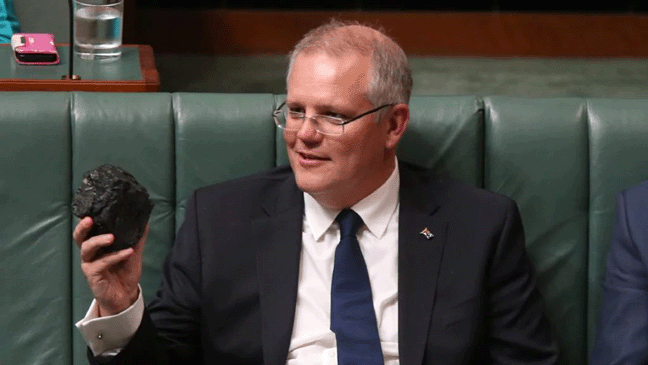
“Australians elected someone who once brought a lump of coal into Parliament urging us to dismiss the warnings from climate scientists, and to dig up more coal instead,” Professor Stephan Lewandowsky, an Australian cognitive scientist, told ThinkProgress in an email. “There is little doubt that his government will do precisely that.”

“We have lost Australia for now,” warned Penn State climatologist Michael Mann in an email.  “A coalition of a small number of bad actors now threaten the survivability of our species,” he said.

These include “the fossil fueled Murdoch media empire, which saturated the country with dishonest right-wing campaign propaganda” working with a few “petrostates including Saudi Arabia, Russia, Trump’s America, and now Australia.”

Rupert Murdoch’s grip on the Australian media — and his support of climate disinformation around the world — led one Australian scientist to write in 2011, “The Murdoch media empire has cost humanity perhaps one or two decades of time in the battle against climate change.”

In re-electing Morrison, a long-time opponent of climate action, Murdoch and his allies have triumphed again.

In fact, Morrison first became prime minister back in 2015 following a party coup against then Prime Minister Malcolm Turnbull, who supported the climate action.

Turnbull’s efforts to cut carbon pollution and promote clean energy rankled right-wing members of his ruling Liberal Party, whose stances were closer to President Trump’s pro-coal (and anti-immigrant) policies.

Ironically, 2019 has already seen the hottest summer on record for Australia. The temperatures have been so brutal in South Australia, in fact, that heat-stressed bats are literally falling out of trees.

Australia is one of most vulnerable countries to climate change, since much of it is already very hot and dry — and so much of its population lives along the coast, which is threatened by rapidly rising sea levels.

Morrison’s reelection is thus a disaster for the future of the country — and the world, since avoiding catastrophic climate change requires a collective effort.

And so “we must redouble our efforts to make sure that the rest of the world works even harder to act on climate,” said Mann. “The stakes are too great to simply give up.”

May 19, 2019 Posted by Christina Macpherson | AUSTRALIA - NATIONAL, election 2019 | Leave a comment

Australia stuck with pro-nuclear. climate sceptic, government – theme for May 19

The election result was not what was expected. Progressive Australians are still reeling from the shock – of another 3 years of a government whose loyalty is to the fossil fuel industry and to the nuclear lobby.

The Scott Morrison government has no plans, no idea at all, about how Australia might genuinely aim to meet its Paris climate change commitments.

It seems that most Australians were taken in by Scott Morrison’s simplistic message   “I alone can manage the economy, cutting taxes (for the wealthy) is all that is needed” . The message of  Labor and The Greens comprehensive policies did not come across.

A Trump -like victory, a Brexit like victory – grim years ahead for Australia.

The goal of a clean, positive programme for energy, climate, water, and the environment must not be abandoned. Progressive Australians, whether in Parliament, in the Senate, in the media, or in the environmental movement will not give up.

Reflecting on the catastrophic failure of the opinion n polls that consistently predicted a Labor win , I realised the deep division in Australia between the (mainly city-dwellers) and rural Queensland.  We who see ourselves as “progressives” are in general,, followers of ABC and SBS, readers of The Guardian, Sydney Morning Herald, and our friends on social media.  The ABCs “Vote Poll” reflects only opinions of ABC viewers, not Australians as a whole.

The unpalatable fact is that most Australians get their information from commercial TV and Murdoch media. Their realities are the struggle for jobs and just managing from day to day. They simply are not getting the facts.

The challenge for progressive campaigns is to get across the message that renewable energy supplies jobs, while coal is being increasingly automated, as well as other messages on the vital importance of managing water supplies, and of saving our one great river system.  Action on climate change is essential for quality of life in rural Australia –  but this is a message that has not come through to people there.

May 19, 2019 Posted by Christina Macpherson | AUSTRALIA - NATIONAL, election 2019 | 2 Comments

What is needed is a war on climate change: why are people not voting Green?

Climate crisis demands war footing, but we won’t even vote for the Greens,  https://www.brisbanetimes.com.au/federal-election-2019/climate-crisis-demands-war-footing-but-we-won-t-even-vote-for-the-greens-20190516-p51o38.html, By Elizabeth Farrelly
May 18, 2019  The world’s children are demanding that we forget the past and look to the future. Hope? “I don’t want your hope,” says Greta Thunberg, the deadpan Swedish teen who inspired the climate strikes. “I want you to panic. I want you to feel the fear.” We’re moved, watching this stuff, but are we listening? Will we act?

A recent poll puts climate change atop Australians’ list of perceived threats, with almost two-thirds of us believing it’s situation critical. This is scarcely a surprise, given the unignorable increase in intensity of heatwaves, cyclones, fire and drought, the unassailable axiom that all economies need ecology and the unwelcome news that atmospheric CO2 this week topped 415ppm for the first time in human history – not to mention the kids and their climate strikes. What is surprising is how few of us will vote accordingly.
The evidence is mounting – for climate change, but also for official acceptance of it by our hopelessly laggard institutions. In February, the NSW courts made history by rejecting the Rocky Hill coalmine (in part) for its climate impact. This is huge and will ripple far and wide through the system. Almost more astonishingly, even the NSW government – although still frantically building motorways and increasing coal exports – now thinks it might find room for a little climate change department  within its voluminous but dowdy skirts.
So climate-consciousness is now commonsense. Yet still the party most devoted to it – the Greens – is generally seen as radical and nonsensical. Even those who vote Green do it, one suspects, more as heartfelt protest than from a genuine desire to see the Greens take government.
This anomaly derives both from public misperception of the party and from the party’s refusal of anything resembling discipline in its public persona.
 Leaving parties aside, briefly, what if we did vote for climate? What if, today, a miracle occurred across Australia and we decided, en masse, neither to stuff our ballot-papers down the dunny of rusted-on tribal loyalties nor engage in our usual election scrabble for the goodies, but to vote instead for climate commonsense, for survival? How would that shape the policy agenda?

Chief Justice Brian Preston’s long and scholarly judgment on the Rocky Hill mine is instructive here, noting with refreshing candour that government is tasked to guard the public interest, that this is not served by climate destruction and that the precautionary principle is required by law to be applied to all State Significant Projects.

“The Rocky Hill Coal Project,” wrote Preston, “will yield public benefits, including economic benefits, but it will also have significant negative impacts, including visual, amenity, social and climate change impacts and impacts on the existing, approved and likely preferred uses of land in the vicinity … which are all costs of the project.”
This is important, setting as legal precedent the self-evident fact that climate destruction is a very real cost and yet another way in which the public is routinely required to foot the bill for private gain
Which is the only reason climate change has been allowed to rampage on. We talk much about costs of mitigation and – obvious riposte – the far greater cost of non-mitigation. But there’s a critical difference. Mitigation costs are payable immediately and by the rich, whereas the cost of failure is payable later, by the poor.

Or so the rich (people and countries) like to think. But unless they want, metaphorically speaking, to clean their own toilets they – and especially their kids and grandkids – are umbilically linked to the poor. On anything more than a five-minute time-frame it’s all interconnected. There is no Planet B.

So how would it look, this Green Centre policy platform?
Naturally there’d be a rapid phase-out of fossil fuels, where our still-considerable smarts (despite what we’ve squandered during neoliberal decades) go to capture that vast natural resource, the sun. Every vehicle is electric, most freight is transported by solar train and every horizontal surface not devoted to growing food – be it desert, paddock, rooftop or road – is photovoltaic, generating energy for local use.
With mining thus reduced (and fracking banned), farmland is no longer under siege and the great river systems begin to recover. Petrochemical fertilisers and pesticides, being CO2-intensive, are also phasing out so industrial-scale farming – which kills more than it grows – is dwindling. Instead, regenerative agriculture reappears, building soil and re-planting trees in a way that both enhances water-retention and sequesters CO2.
Such agriculture, necessarily smaller in scale, requires more human input – in particular, intellectual. So country populations are again flourishing. To enhance walkability and urban vitality but also to reduce energy consumption, these towns, like the big cities, have set boundaries, further protecting precious foodlands from sprawl.
To achieve this, under scrutiny from a new federal Independent Commission Against Corruption, political donations have been banned and elections are publicly funded. This has lessened the skewing of politics towards large corporate interests  leaving governments genuinely interested in what people think.

In places where people rejected tower-living, the need for medium density, and for people to like it (since now the developers are not running the show), has placed extra emphasis on both design and consultation.

With the loosening of the developer stranglehold, self-help and co-operative housing has also flourished. The resulting communities, prioritising street life and walkability, render people more engaged and also fitter. Epidemic obesity and diabetes have reduced, paving the way for changes to the health system that shift the emphasis from gargantuan, energy -guzzling, waste-spewing mega-hospitals to smaller local hospitals where sunlight and fresh air reduce energy and enhance healing.

It’s not a pipe dream. It’s not even radical. It simply acknowledges that grabbiness and tribal loyalties are irrelevant. Thunberg told the UN, “we had everything we could wish for and yet now we may have nothing.” Justice Preston puts it more drily. The costs of mining will “exceed the benefits”.

This is war. We’ve a common enemy, measurable in °C, and a common goal – survival. To win we must act with the focus, haste and unity of a war effort.

May 18, 2019 Posted by Christina Macpherson | AUSTRALIA - NATIONAL, climate change - global warming, election 2019 | Leave a comment

Why is UK govt covering up the records on nuclear bomb tests in Australia in the 1950s?

Unusual secrecy around 1950s nuclear testing , The Saturday Paper,    Martin McKenzie-Murray  18 May 19  Between 1952 and 1957, Britain tested 12 nuclear weapons in Australia – on the Montebello Islands off the Pilbara coast, and at Maralinga and Emu Fields in the South Australian outback. The tests were hurried, incautious and showed extraordinary disregard for Australian assistance and the local Indigenous people who had been forcibly but imperfectly evacuated from their land.

It was a clusterfuck,” says Elizabeth Tynan, an Australian historian, and the award-winning author of Atomic Thunder: The Maralinga Story. “The disregard was partly driven by the fact they were in a rush. They cut corners. They did it on the cheap – and it showed. They had very little regard for safety. Cavalier. They knew about the risks. There were international protocols. Many were disregarded. I met one man, he was a technician with the British effort in Australia, and he said of Indigenous Australians that they were ‘nothing to do with us – it was the Australian government’s responsibility’.”
For Susanne Roff growing up in Melbourne in the 1950s was uneventful. But later, living in Scotland with her husband, William Roff, an eminent historian, she developed a dogged, almost obsessive interest in this chapter of British history that remains cloaked in secrecy.

Once a month, Roff takes the train south from her home in a Scottish fishing village – to archives in London, Birmingham and Cambridge. She’s still looking for answers. “Why was the purportedly Australia-controlled Atomic Weapons Tests Safety Committee so ineffective?” she asks. “Why was the UK able to continue testing at Maralinga until barely six weeks before opening of the 1956 Olympics despite the known hazards to east coast populations? Why didn’t [Sir Mark] Oliphant ever speak out against the tests and contamination, including when he was governor of South Australia?”

Late last year, Roff had another question: Why, more than 60 years after the last nuclear test in Australia, had the British government suddenly vanished previously declassified documents about the tests from its national archives? Roff wasn’t alone in her surprise. The Campaign for Freedom of Information, a British not-for-profit organisation, described it as worrying.

All that was certain was that the files had been removed on the order of the Nuclear Decommissioning Authority.

“WE CAN BUT WONDER WHY THE WORLD’S THIRD ATOMIC AND THERMONUCLEAR POWER HAS SUDDENLY BECOME SO NERVOUS ABOUT EVENTS THAT HAPPENED DECADES AGO.”“The secrecy is arguably even worse today,” Tynan tells me. She is working on a second book about the British tests. “British service personnel have run into brick walls at every turn [in seeking compensation and acknowledgement]. One of the clues to the attitude of the British government is that it has not really ever properly acknowledged what they did. They were nuclear colonialists and they buggered up a part of our country. One former British personnel I met burst into tears when he thought about how Britain had never said sorry. The secrecy … seems incomprehensible. They continue to be secretive.”

But not all documents are closeted. Susanne Roff has some, which she shared with me – British intelligence files on Dr Eric Burhop, an Australian physicist who had worked on the Manhattan Project, which ran from 1939 to 1946.   …….

Robert Menzies agreed to the testing immediately, without bothering to consult cabinet. For a time, only three people in the country knew of the agreement: the prime minister, treasurer and defence minister. He asked few questions of the British. “But it wasn’t pure patriotic sycophancy,” Tynan says of Menzies’ decision. “The pragmatic response was: vast reserves of uranium in Australia. It’s central to weaponry and power. It was completely valueless until the Manhattan Project. Then it became a valuable commodity. Australia had a lot of it. That was a very significant part of his reasoning. The other thing that would’ve informed Menzies’ thinking was that he was anxious to ensure Britain and America would protect Australia.”

They were also without the counsel of the Australians who had worked on the American tests – notably, Mark Oliphant and Eric Burhop. Both Susanne Roff and Elizabeth Tynan agree Oliphant would have been a strong head of the safety authority, which was otherwise feckless.

Both men were long suspected of being Communist spies, and may have been excluded to mollify US doubts about British security. The files on Burhop that I’ve seen are voluminous. The FBI, MI5 and ASIO all had records on him. In England and America, he was aggressively surveilled. His phone was tapped. Even Joseph Rotblat had his doubts about his former colleague. The British intelligence historian Andrew Brown has written: “Rotblat remained convinced that Burhop and other left-wing scientists … opposed the [proposed nuclear] moratorium not for their stated reasons but because it would perpetuate the USA’s monopoly and place the USSR at a dangerous disadvantage.”……

In 1984, Australia held a royal commission into the British tests. It found a litany of negligence and cover-ups. “Britain had to be dragged, kicking and screaming, to it,” Elizabeth Tynan says. Today, their attitude is much the same. In 2015, Fiji – frustrated by Britain’s refusal to compensate its people who suffered radiation poisoning during the Pacific tests – declared it would compensate citizens itself. “We are bringing justice to a brave and proud group of Fijians to whom a great injustice was done,” Fiji’s prime minister said. “Fiji is not prepared to wait for Britain to do the right thing.”

Meanwhile, in Britain’s national archives, the nuclear files are still gone. “The UK government has always [downplayed] risks to the servicemen who took part in the tests, the Aboriginal community in the immediate vicinity of them, and the general population downwind … as well as possible genetic effects on subsequent generations,” Susanne Roff says. “We see similar responses in relation to Fukushima in Japan. All the operational and scientific documents relating to the Australian tests that have been on open access in the National Archives have suddenly gone walkabout. We can but wonder why the world’s third atomic and thermonuclear power has suddenly become so nervous about events that happened decades ago.”  https://www.thesaturdaypaper.com.au/news/law-crime/2019/05/18/unusual-secrecy-around-1950s-nuclear-testing/15581016008158

May 18, 2019 Posted by Christina Macpherson | AUSTRALIA - NATIONAL, politics international, secrets and lies, wastes, weapons and war | 1 Comment

Mineral wealth, Clive Palmer, and the corruption of Australian politics 

Mineral wealth, Clive Palmer, and the corruption of Australian politics   https://theconversation.com/mineral-wealth-clive-palmer-and-the-corruption-of-australian-politics-117248    Warwick Smith, 17 May 19, Research economist, University of Melbourne
Clive Palmer is reportedly spending  A$70 million of his own money on his party’s campaign.How is it possible for one individual to command so much wealth and where did it come from? The sad and strange reality is that Australian governments gave him most of it by letting him dig up and sell natural resources that, by rights, belong to us not him.

We’ve a history of handing vast wealth to resource and mining magnates and companies and then watching them use that wealth to undermine our democracy in order to continue to get access to that wealth. Palmer is small fry compared to Gina Rinehart and Andrew Forrest or the corporate power of BHP, Rio Tinto and others.

So, what do state and federal governments charge for our mineral wealth? You would hope that they use state-of-the-art methods to get the best possible prices. You’d be wrong, of course.

We barely charge for resources

The federal government relies primarily on company tax and then on extra tax from employment and consumer spending and other things that are boosted as an indirect result of mining.

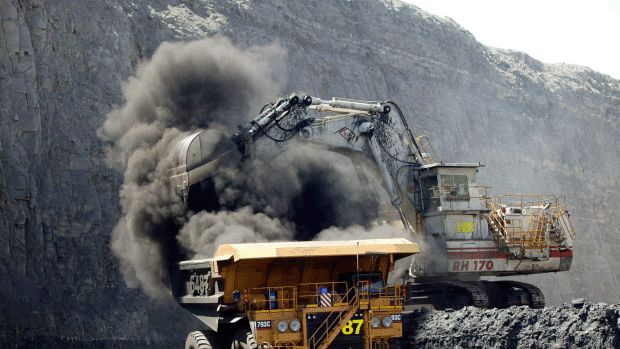
But many of the big mining and resource companies use the holes in our tax system to avoid paying company tax. In addition, mining is being increasingly automated, with self-driving trucks and trains becoming the norm, and ever-larger machinery meaning that fewer workers are needed for each tonne extracted and refined. These days billions can be spent with relatively few jobs created.

State and territory governments collect royalties from land-based mining companies, which are charged per unit of product. It means that when the prices of our mineral resources go up during a commodity boom the royalties do not rise with them – the mining companies benefit, but not the people who own the resources.

How much we collect in taxes is just the beginning of the story.

We also spend vast amounts of taxpayer cash on building the infrastructure needed for resource extraction; things such as roads, railways and ports. We also often end up footing the bill to clean up after mines close and the big companies sell depleted mines and their clean-up obligations to shell companies that then file for bankruptcy.

We could (and should) seek more

We could fix the system to get a fairer price.

We already have a more effective tax system for offshore oil and gas. It is, in effect, what the Rudd government tried to do in 2010 when it proposed a mining super profits tax. Foolishly, the tax was announced more than a year before it was to come into effect, giving the mining interests plenty of time to campaign against it.

They spent more than A$22 million just on advertising. Rudd abandoned the original proposal and was removed from office.

The Gillard government consulted the miners and adopted a watered-down version – the Mineral Resource Rent Tax – that was so toothless it collected almost nothing. Even though it was worthless, the mining industry still saw it as enough of a threat to pressure Tony Abbott to kill it off when he took government, which he did with Clive Palmer’s vote in parliament.

But miners have muscle

A more radical idea would be to put out tenders for the extraction and refinement of natural resources and then have the government or an independent authority owned by the government allocate them. Such a “single desk” would have considerable market power – it could demand good payments.

The truth is that all of this has been public knowledge for a long time and the solutions are well known. The problem is politics, not knowledge. The mining industry is so powerful that our leaders rarely attempt to take it on.

Given that Palmer set the record for most absent politician in two out of the three years he was in the parliament last time, why is he so keen to go back? There’s no evidence that he’s a conviction politician, trying to make the country better based on some strongly held principles; quite the opposite given how regularly he has changed his positions.

Could it be that what he really wants is political power in order to defend and increase the extent to which him and his mates rake in the cash at our expense?

In 2016 the government used it’s position as a creditor to seek the appointment of a special liquidator to look at the collapse of Palmer’s Queensland Nickel company and the actions of Palmer’s actions personally. The government’s Michaelia Cash said at that time it would use every power as it’s disposal to hold company officers to account.

On Thursday at the National Press Club Prime Minister Scott Morrison was asked how he intended to manage the conflict between pursuing Palmer in the courts and courting his vote in the Senate.

He replied that he would be able to.

We will continue to pursue that measure through the courts with full vigor – we are very confident in our ability to pursue that as we absolutely should

It is obvious that we need political donation reform to keep the influence of money out of politics but we need to go one step further and reform how we, the Australian people, sell our mineral resource wealth so that we don’t create mining giants like Palmer in the first place. He is just the tip of the iceberg.

May 17, 2019 Posted by Christina Macpherson | AUSTRALIA - NATIONAL, election 2019 | Leave a comment

« Previous Entries     Next Entries »

1 This month

Chernobyl: The Lost Tapes – A good documentary on Chernobyl on SBS available On Demand for the next 3 weeks– https://www.sbs.com.au/ondemand/tv-program/chernobyl-the-lost-tapes/235274195556

20 May – Webinar – The dangerous world of AUKUS, US, military occupation and suppression of dissent

National Webinar, 20th May, 2026, 6.30pm AEST. Confronting laws restricting/suppressing protest speech and action

Speakers: Former Sen. Rex Patrick, Lawyer Nick Hanna ,Arthur Rorris ,Jorgen Doyle, Sen David Shoebbridge,

Facilitator Kelley Tranter.

of the week – Australians for War Powers Reform (AWPR)

​To see nuclear-related stories in greater depth and intensity

– go to https://nuclearinformation.wordpress.com/

  • Pages

    • 1 This month
    • Disclaimer
    • Kimba waste dump Submissions
      • NUCLEAR ROYAL COMMISSION
      • Submissions on Radioactive Waste Code 2018
      • SUBMISSIONS TO SENATE INQUIRY 18
    • – Alternative media
    • – marketing nuclear power
    • business and costs
    • – Spinbuster 2011
    • Nuclear and Uranium Spinbuster – theme for June 2013
    • economics
    • health
    • radiation – ionising
    • safety
    • Aborigines
    • Audiovisual
    • Autralia’s Anti Nuclear Movement – Successes
    • climate change – global warming
    • energy
    • environment
    • Fukushima Facts
    • future Australia
    • HEALTH and ENVIRONMENT – post Fukushma
    • media Australia
    • Peace movement
    • politics
    • religion – Australia
    • religion and ethics
    • Religion and Ethics
    • secrets and lies
    • Spinbuster
    • spinbuster
    • wastes
    • ethics and nuclear power – Australia
    • nuclear medicine
    • politics – election 2010
    • secrecy – Australia
    • SUBMISSIONS to 2019 INQUIRIES
    • weapons and war
  • Follow Antinuclear on WordPress.com
  • Follow Antinuclear on WordPress.com
  • Blogroll

    • Anti-Nuclear and Clean Energy Campaign
    • Beyond Nuclear
    • Exposing the truth about thorium nuclear propaganda
    • NUCLEAR INFORMATION
    • nuclear news Australia
    • nuclear-news
  • Categories

    • 1
    • ACTION
    • Audiovisual
    • AUSTRALIA – NATIONAL
      • ACT
      • INTERNATIONAL
      • New South Wales
      • Northern Territory
      • Queensland
      • South Australia
        • NUCLEAR ROYAL COMMISSION 2016
          • Nuclear Citizens Jury
          • Submissions to Royal Commission S.A.
            • significant submissions to 6 May
      • Tasmania
      • Victoria
      • Western Australia
    • Christina reviews
    • Christina themes
    • Fukushima
    • Fukushima 2022
    • General News
    • Japan
    • Olympic Dam
    • Opposition to nuclear
    • reference
    • religion and ethics
    • Resources
    • TOPICS
      • aboriginal issues
      • art and culture
      • business
        • employment
        • marketing for nuclear
      • civil liberties
      • climate change – global warming
      • culture
      • energy
        • efficiency
        • solar
        • storage
        • wind
      • environment
      • health
      • history
      • legal
      • media
      • opposition to nuclear
      • people
      • personal stories
      • politics
        • election 2013
        • election 2016
        • election 2019
        • Submissions Federal 19
      • politics international
      • religion and ethics
      • safety
        • – incidents
      • secrets and lies
      • spinbuster
        • Education
      • technology
        • rare earths
        • thorium
      • uranium
      • wastes
        • Federal nuclear waste dump
      • weapons and war
    • water
    • Weekly Newsletter
    • Wikileaks
    • women

Site info

Antinuclear
Create a free website or blog at WordPress.com.
Privacy & Cookies: This site uses cookies. By continuing to use this website, you agree to their use.
To find out more, including how to control cookies, see here: Cookie Policy
  • Subscribe Subscribed
    • Antinuclear
    • Join 859 other subscribers
    • Already have a WordPress.com account? Log in now.
    • Antinuclear
    • Subscribe Subscribed
    • Sign up
    • Log in
    • Report this content
    • View site in Reader
    • Manage subscriptions
    • Collapse this bar
 

Loading Comments...