Scotland could help Australia deal with its nuclear waste
As Gary Cushway points out, under current arrangements, the waste produced in the reprocessing of spent Australian nuclear fuel which was sent to Dounreay in the 1990s will stay at Dounreay; the vitrified waste produced at Sellafield is only being sent to Australia to fulfil a contractual agreement. If the transfer from Sellafield was halted, and the waste currently stored at different locations in Australia was kept where it is, the case for a national radioactive waste management facility in Australia would be drastically eroded.
Cushway believes that the Scottish Government could cancel the 2012 joint waste substitution policy and come to an arrangement with the Australian Nuclear Science and Technology Organisation (ANSTO) regarding management of the reprocessed Australian waste at Dounreay.
At the very least, more pressure should be put on the UK Government to stop the transfer of waste until its final destination is known.
Can Scotland help stop nuclear waste being dumped on Aboriginal land? At the very least, more pressure should be put on the UK Government to stop the transfer of waste until its final destination is known. Scots are yet to fully reckonwith the role that we played in the brutal colonisation of Aboriginal Australia, but the Scottish Government now has an opportunity to offer meaningful solidarity to Aboriginal communities who are still fighting to protect their land and culture.
Linda Pearson @Pearson_LM Linda Pearson, anti-nukes activist and Common Weal policy officer, explains how nuclear waste due to be transferred from the UK to Australia could be dumped on Aboriginal land, and what role the Scottish Government could play in preventing another act of racist disregard of Australia’s indigenous population in what is a long and brutal history of discrimination
APPROXIMATELY 10,000 miles from Scotland in South Australia, Aboriginal traditional owners are fighting against plans to build a nuclear waste dump on their land. It is the latest phase in a struggle to protect land and culture which has lasted over 20 years. Continue reading
The Australian govt’s $31m nuclear bribe
 Feds’ $31m nuclear sweetener, Whyalla News Louis Mayfield , 23 July 18 The federal government have injected more money into their Community Development Package, which will be available to the community selected as the future site for the nuclear waste management facility.
The value of the package has been tripled to $31 million, and is broken up into three separate programs:
- An $8 million Community Skills and Development Program, delivering grants over the four year licencing and construction period to maximise the community benefits from the construction and operation of the Facility.
- An increased $20 million National Radioactive Waste Management Facility (NRWMF) Community Fund, to deliver long term infrastructure and development benefits to the community.
- Up to $3 million over three years from the Government’s Indigenous Advancement Strategy (IAS) to strengthen Indigenous skills training and cultural heritage protection in the successful community.
Currently Kimba and Hawker remain in the running to be chosen as the location of the National Radioactive Waste Management Facility – but their communities remain deeply divided on the nuclear issue.
-
Resources Minister Matt Canavan said the Community Development
 Package would ensure the selected community has the skills in place to take advantage of the opportunities that will come with the facility.
The waste management facility itself is expected to create at least 45 jobs…….
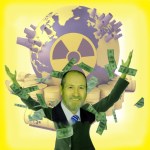 Member for Grey Rowan Ramsey said he had spent considerable time communicating with Minister Canavan regarding the structure and relevance of the financial package to Kimba and/or Hawker.
……..Centre Alliance Senator Rex Patrick described the government’s announcement as ‘completely inappropriate and misguided’.
“As evidenced in recent visits to Kimba and Hawker by the Senate Economics Reference Committee, the communities are deeply divided over the issue,” he said.
“Throwing taxpayer money at them will just rub salt into already weeping wounds.”
Senator Patrick described the selection process for the nuclear waste facility as a ‘sham’.
“The Minister has stated that the site selection will only occur if there is ‘broad community support’, but refuses to state what ‘broad community support’ actually means,” he said.
“That’s like running a race and telling the participant that they don’t need to know where the finish line is and that officials will just tell everyone who has won the race.”https://www.whyallanewsonline.com.au/story/5543866/feds-31m-nuclear-sweetener/
Member for Grey Rowan Ramsey said he had spent considerable time communicating with Minister Canavan regarding the structure and relevance of the financial package to Kimba and/or Hawker.

South Australians do not want nuclear waste dump
South Australia rejects Liberal Government’s nuke waste dump
 Australian Greens nuclear spokesperson Senator Sarah Hanson-Young has slammed the Liberal Government’s bribe to the Hawker and Kimba communities as they tries to find a home for their nuclear waste dump. Polling commissioned by the Greens shows that the majority of South Australians want to stop the nuclear waste dump from being built in their state.
“Resources Minister Matt Canavan should be ashamed of himself for trying to bribe the community in return for dumping radioactive waste on them. Putting money on the table, just weeks before the Kimba and Hawker communities vote on whether they want a nuclear waste dump in their front yard smacks of desperation and bribery,” Senator Hanson-Young said.
“Polling shows the majority of South Australians want our state to put a stop to this project. Nuclear waste is not welcome in Kimba or the Flinders Ranges, and the rest of the state is behind these two communities in their fight against this proposal.
“The tourism industry in the Flinders Ranges and South Australia’s export gain market is all at risk if this dump goes ahead, along with the destruction of sacred aboriginal land and special women’s sites.
“A lack of community consultation and transparency cannot be forgotten just because the Minister pulls out his chequebook.
“While the community is being offered at one off $31m bribe, the Government is keeping secret how much money the individual owners of the chosen site, including former Liberal Senator Grant Chapman will personally pocket. This is poor form, the neighbours deserve to know how much profit Mr Chapman and others will get from selling out the rest of the community.
“Why won’t the Government reveal how much their Liberal mate will pocket from taxpayers ahead of the community ballot next month?
On Saturday it was revealed the Lucas Heights nuclear waste facility was rife with safety hazards, and today, Matt Canavan is tripling the offer to pay a community off so he can dump nuclear waste out of sight, out of mind. This is despicable, contemptuous behaviour from a Minister desperate to find tick something off his to-do list.”
Senator Hanson-Young visited the Flinders Ranges and the community of Hawker on Friday. She spent time talking with local business owners and tourism operations and was taken on a site visit by the local aboriginal leaders.
“The Flinders Ranges community has been put through extreme stress through this long, divisive process. The Flinders Ranges is one of the jewels in South Australia’s tourism crown – that would be lost if it is turned into a nuclear waste dump,” Senator Hanson-Young said.
“The Flinders Ranges is a pristine, untouched wilderness. We should be investing in tourism which would benefit our whole state, not dumping radioactive waste in the middle of it.
“It is horrifying that the Federal Government is planning to build a nuclear waste dump on a sacred women’s site. The brave Adnyamathanha women fighting to protect this site are standing up for preserving thousands of years of cultural significance, and they must be listened to.
“The Greens stand with those fighting this nuclear waste dump plan and commend their bravery for standing up to the Government to stop it.”
Sham of ‘Broad Community Support’ for Kimba or Hawker for nuclear waste dump
YOU WANT A RADIOACTIVE WASTE FACILITY, YOU JUST DIDN’T KNOW IT UNTIL NOW
The ‘Broad Community Support’ Sham Continues
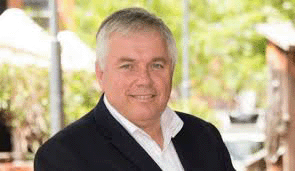 Centre Alliance Senator Rex Patrick has described Minister Canavan’s announcement to triple the incentive package for the communities of Kimba or Hawker, if they vote in support of a National Radioactive Waste Management Facility in their local community, as completely inappropriate and misguided.
“The Minister just doesn’t get it,” said Rex. “As evidenced in recent visits to Kimba and Hawker by the Senate Economics Reference Committee, the communities are deeply divided over the issue. Throwing taxpayer money at them will just rub salt into already weeping wounds.”
“The process is becoming even more of a sham. Firstly, the Minister has stated that the site selection will only occur if there is ‘broad community support’, but refuses to state what ‘broad community support’ actually means. That’s like running a race and telling the participant that they don’t need to know where the finish line is and that officials will just tell everyone who has won the race.
“Next, the Minister stated to the media that ‘The Federal Government wants the entire process done and dusted by the end of the year,’ confirming that the federal election is setting the time frame and that Minister Canavan has already made up his mind.
“And now we see this,” said Rex. “Money being thrown at the problem with an ill-informed view that dollars can heal the division in the community.”
Centre Alliance understands the need for Australia to deal with its own low and intermediate nuclear waste. But forcing a Radioactive Waste Management Facility on an unwilling and divided community is not the solution.
“The Minister needs to bring the community along with him,” said Rex.
As a minimum threshold of support, the Minister must have:
· 65% vote in favour of the facility, and;
· Indigenous approval, and;
· Agreement from all of the immediate neighbours to the planned facilities
“The Minister should declare this minimum threshold before the vote. He should declare it right now.
“The Minister also needs to publish all technical reports and cost benefit analyses before the vote.”
Sarah Hanson-Young – a politician who cares
The Adnyamathanha and Flinders Local Action Group would like to thank Senator Hanson-Young for coming to The Flinders Ranges and meeting with us. You listened to everyone with kind empathy and understanding and it was a pleasure to be with you. Thank you Sarah.
#nonuclearwasteintheflindersranges https://www.facebook.com/groups/344452605899556/
According to Senator Canavan, Kimba and Hawker locals asked for a bigger bribe, to become a nuclear sacrifice zone
Multimillion-dollar incentive put on the table for town that takes on nuclear waste facility ABC RADIO ADELAIDE, 23 JULY 18 As debate rages over where Australia’s first permanent nuclear waste dump should be placed, the Federal Government has announced it will offer a $31 million package to the community which takes it on.
Two sites near Kimba and one near Hawker have been shortlisted to permanently hold low-level nuclear waste and temporarily hold intermediate-level waste.
However some concerned community members have likened the funding increase to “dangling a carrot” in front of the communities.
The new offer would include a $20 million community development package, $8 million to provide training and up to $3 million over three years for Indigenous skills training and culture heritage protection.
The Government had previously promised $10 million………
Funding likened to ‘dangling a carrot’
Aboriginal elder Regina McKenzie is a custodian of the Barndioota site — west of Hawker — and is a traditional owner of the land.
She said the proposal lacked cultural respect and believed the Government was trying to bribe the communities.
“It’s not a good spot, it’s very seismically active,” she told ABC Radio Adelaide.
“The culture issues are bad as well, they wouldn’t put a waste dump on the Vatican… the respect for Aboriginal beliefs and customs should come into it. “They’re dangling a carrot in front of the Hawker community, in front of the Kimba community.”
 Senator Canavan said that after consultations with both the Kimba and Hawker communities, locals thought more incentive would be needed to get long-term support.
He said the hope would be that the $8 million would be a package of $2 million over four years as the facility was built.
Senator Canavan said the community vote in Hawker and Kimba on August 20 would be important in the Government’s decision, but it wouldn’t be the deciding figure.
“Can I just stress, this has been a grassroots process, it will not proceed without that community’s support,” he said.
“The views that matter now are not the Government’s or mine, it’s the views of the people on the ground there in Kimba and Hawker.
“Obviously we’d love to have support from both communities.” http://mobile.abc.net.au/news/2018-07-23/government-increases-incentive-for-sa-nuclear-waste-facility/10024884?pfmredir=sm
Radioactive Waste Facility: Communities can’t be bought
 23 July 18 This morning federal resources Minister Matt Canavan revealed his increasing desperation to find a site for Australia’s radioactive waste before the next election by announcing an increase in the incentive package for the chosen community from $10 million to $31 million.
The Minister has repeatedly stated that “broad community support” is needed in order to select a site for the National Radioactive Waste Management Facility (NRWMF).. However the Minister continues to refuse to detail what this means. Talking on ABC North and West radio with Paul Culliver today, Minister Canavan continued to avoid answering how this support would be measured.
Hawker GP and member of the Flinders Local Action Group Susi Andersson said “for many in the community it has never been about money. Tourists are stopping people in the street to say they won’t come back if Hawker hosts a dump. A 2% drop in tourism numbers would lose the region $8.5 million every year. A one off federal payment is not worthwhile”.
Peter Woolford, a farmer from Kimba and chair of No Radioactive Waste on Agricultural Land in Kimba or SA said “Minister Canavan’s announcement this morning of a new community benefits package has no influence on our opposition to the proposed Kimba sites. We have always maintained that the NRWMF does not belong on agricultural land, and no amount of money changes that. Our federal government has a responsibility to find the right site, not just any site for this facility, and our support for siting it in Kimba cannot be bought”.
Nuclear Waste Campaigner at Conservation SA Mara Bonacci said “since Minister Canavan announced a community ballot on the federal waste plan the promises of jobs and dollars have tripled. We are concerned that much of this increase in funding would benefit the project rather than the community. $20 million has been allocated for infrastructure that communities should have regardless of whether they accept the NRWMF or not.”
Given that today’s announcement about tripling the economic incentive to the community comes just weeks before the community ballot to gauge community sentiment and after an increase in the purported employment benefits of the facility from 15 to 45 with no change to the actual proposal, it is clear that Minister Canavan’s desperation to find a site is driven by politics, not responsible radioactive waste management.
For comment: Kimba: Peter Woolford 0447 001 493 Conservation SA: Mara Bonacci 0422 229 970
Nuclear sacrifice bribe – no guarantee that it will all go to the towns hosting nuclear waste dump

Media breakdown is that an extra 20 million is going to whoever hosts the dump, on top of the 10  million already promised.
The 20 million is to deliver long-term infrastructure projects.
In my opinion this amount was already allocated.
In the Federal government’s Business Case for the waste dump, these numbers are already part of their estimations.
There is no doubt the promise of infrastructure is to sustain their facility.
This is manipulation by the government due to the pending postal vote.
Annette Ellen Skipworth The 10 million is going to go to the state government not the local government …and they dont have to spend it in the local area
Australian government ‘s $31 million bribe to Kimba or Hawker, South Australia to host nuclear waste dump
$31 million in incentives offered to SA community that hosts national radioactive waste repository Adelaide Now, 23 July 18 THE Federal Government wants to lock in support for a radioactive waste facility in rural South Australia by tripling the incentive package for the community that hosts the repository to $31 million.
As two SA communities prepare to vote on August 20 whether to support the radioactive waste management site going ahead, Resources Minister Matt Canavan will on Monday announce an increased community development package.
Two sites near Kimba and one at Barndioota, near Hawker, have been shortlisted for the facility to host low- and intermediate-level radioactive waste.
The Government had promised to spend in excess of $10 million on job-boosting projects in the district where the facility is built.
Senator Canavan said the Government was now willing to provide:
$20 MILLION to deliver long-term infrastructure projects.
$8 MILLION to train locals and businesses to benefit from the construction and operation of the facility.
UP TO $3 million over three years for indigenous skills training and cultural heritage protection.
“As well as a brand new industry with around 45 new jobs, this enhanced package will ensure the successful community is ready and able to take advantage of the benefits of hosting this facility both during construction and the lifetime of its operation,” he said.
Senator Canavan said the new package had been developed after consultation with the local communities on how best to support people and industries near the waste management dump.
Funds could be used to support agriculture, tourism or other industries the community wanted to prioritise.
The proposal for the radioactive waste dump has divided neighbours and families in the short-listed districts.
The Government wants to choose a preferred site before the end of the year.
The two shortlisted communities have already been rewarded with Government development grants worth a combined $4 million.
Senator Canavan said the host town would become a key part of the Australian “science ecosystem” providing new career pathways for young people.
He said it would have similar employment impact to defence centres elsewhere.
“What shipbuilding or aircraft bases do for some communities … the national radioactive waste management facility will do for its host town,” he said.
PUBLIC HEARING 2 August on National Radioactive Waste Dump Selection , Canberra
 ECONOMICS REFERENCES COMMITTEE Selection process for a national radioactive waste management facility in South Australia PUBLIC HEARING Thursday 2 August 2018 Committee Room 2S1 Parliament House, Canberra Time Witness The program for this hearing has not yet been released https://www.aph.gov.au/Parliamentary_Business/Committees/Senate/Economics/Wastemanagementfacility/Public_Hearings
Adani’s claims to have secured finance questioned
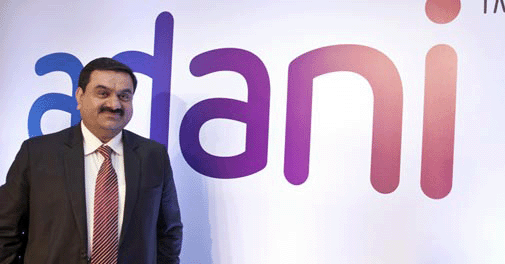 Green Left Margaret Gleeson July 20, 2018
‘Karan Adani’s understatement of the cost of the rail link by almost $2.5 billion
is par for the course in Adani propaganda. He also claimed that all approvals
were in place and that work would commence immediately
after the rail finance was approved.
‘However, this is not the case.
There remain several obstacles before work at the mine can begin, including:
‘1. Federal approval for Adani’s proposed water scheme,
involving pumping 12.5 billion litres of water a year from the Suttor River to the mine.
The government has delayed its decision and asked Adani for more information.
‘2. A court challenge by a group of Wangan and Jagalingou people to a land-use agreement.
If the challenge to invalidate the agreement is successful, Adani would then require the
Queensland government to extinguish native title at the mine site.
‘3. A stop order application by a group of Juru people, amid a dispute about cultural heritage
in the vicinity of the Abbot Point coal terminal and a section of the rail link.
‘4. Finance to build an airstrip near the mine site for fly-in fly-out workers. …
‘5. Finance to build the rail line. …
‘6. The Queensland Labor government has imposed more than 240 conditions
on the Carmichael coalmine project, 132 of which relate to water. …
‘Federal Labor environment spokesperson Mark Butler, who opposes the mine,
was sceptical of claims Adani would soon have the finance required for the rail line. …
www.greenleft.org.au/content/adanis-claims-have-secured-finance-questioned
Safety problems at Lucas Heights nuclear reactor
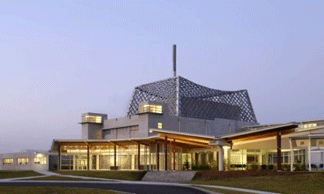 Nuclear radiation spills spur Lucas Heights review, THE AUSTRALIAN, SIAN POWELL, Higher Education & Science Writer, Sydney SEAN PARNELL-Health Editor, Brisbane @seanparnell
Australia’s nuclear safety agency has ordered a review of Sydney’s Lucas Heights nuclear medicine facility after two radiation spills, and a separate investigation is under way into a mechanical failure that has caused delays in diagnostic tests across the country.
The Australian Nuclear Science and Technology Organisation has had four safety breaches in 10 months and in recent weeks has had to call on US…….
Distribution of the replacement nuclear medicine supplies was also disrupted this month after airline delays from the US prevented the medicine reaching clinics and hospitals for some days……….
The supply problems caused by the mechanical failure have come as a review was ordered by the independent regulator, the Australian Radiation Protection and Nuclear Safety Agency and its chief executive Carl-Magnus Larsson, who issued the organisation with a direction under the Australian Radiation Protection and Nuclear Safety Act.
The agency said the independent review it had directed would focus on quality control of molybdenum-99 (Mo-99), the radioactive agent used in diagnostic imaging.
After the first safety breach when a staff member’s hands were contaminated on August 22 last year, ARPANSA found ANSTO to be noncompliant with its licence conditions, according to a statement from the safety agency.
“Three further events including the latest event on 7 June, 2018, indicate ongoing safety issues at ANSTO Health,” ARPANSA said………
An internal review is being conducted into the conveyor failure on June 22 while the separate independent safety review into the ageing ANSTO facility is undertaken.
ANSTO will appoint an independent reviewer. “This appointment is the next step on a path of continuous improvement.
“Using recommendations from the review, we’ll identify what more can be done to make that facility safer,” a spokesman for ANSTO said.
…….The conveyor has been fixed but compliance checks and a thorough audit will keep the production of nuclear medicine at a standstill for some time.
Repairs were originally delayed because ANSTO staff members were forced to wait until radiation levels in the conveyor room fell to a safe level……..https://www.theaustralian.com.au/news/health-science/nuclear-radiation-spills-spur-lucas-heights-review/news-story/7c5f0c09e7847d8c0265e86c28d1e796
Australian governments finally admitting the dire fate of the Great Barrier Reef
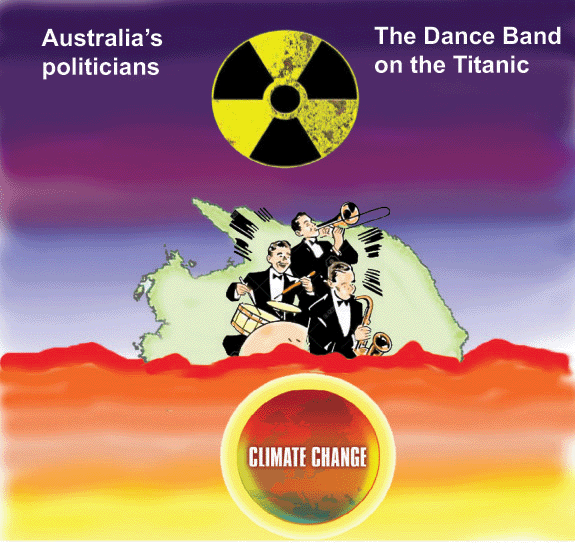 Australian governments concede Great Barrier Reef headed for ‘collapse’ The Age, By Nicole Hasham, 20 July 18 , The world’s climate change path means the Great Barrier Reef is headed for “collapse” according to a plan endorsed by state and federal governments that critics say turns a blind eye to Australia’s inadequate effort to cut carbon emissions.
The federal and Queensland governments on Friday released a “new and improved” Reef 2050 Plan to save the iconic natural wonder, which explicitly acknowledges climate change poses a deadly threat to the reef.
The comments depart starkly from previous official efforts to downplay damage wrought on the reef for fear of denting the tourism industry.
Based on current climate projections, the outlook for coral reefs generally is “one of continuing decline over time, and in many regions, including the Great Barrier Reef, the collapse and loss of coral reef ecosystems”, the plan says.
It concedes that consecutive coral bleaching events and other stressors “have fundamentally changed the character of the reef”, which is one of the most diverse ecosystems on the planet. “Coral bleaching is projected to increase in frequency … those coral reefs that survive are expected to be less biodiverse than in the past,” the plan says.
The reef is the world’s largest living structure, covering an area roughly the size of Italy.
Coral reefs are particularly sensitive to the effects of climate change including higher sea temperatures, ocean acidification and more intense storms and cyclones.
The plan recognised that “holding the global temperature increase to 1.5°C or less is critical to ensure the survival of coral reefs”.
However WWF-Australia head of oceans Richard Leck said Australia’s emissions reduction efforts were not even in line with limiting warming to 2°.
He cited a 2017 report by the United Nations environment program that found Australia’s greenhouse gas emissions were set to far exceed its pledge under the Paris accord. This agreement aims to limit global temperature rises this century to well below 2° and to pursue efforts to limit the increase to 1.5°.
“It is simply not good enough for the revised plan to suggest the global community must work to limit warming when Australia is not doing its fair share,” Mr Leck said.
The Australian Marine Conservation Society’s reef campaign director Imogen Zethoven said increased recognition of climate change as a threat to the reef must be followed by action…….https://www.theage.com.au/politics/federal/australian-governments-concede-great-barrier-reef-headed-for-collapse-20180720-p4zsof.html
Australia joins in nuclear industry’s propaganda to schoolchildren in Asia Pacific

IAEA nurtures nuclear education in Asia Pacific http://www.world-nuclear-news.org/NN-IAEA-nurtures-nuclear-education-in-Asia-Pacific-2007185.html20 July 2018
The International Atomic Energy Agency (IAEA) held the first in a series of six regional training courses for secondary school science teachers last month in Indonesia. The courses aim to equip teachers in Asia Pacific to inspire a new generation of nuclear scientists and engineers by engaging students and enhancing their understanding of nuclear science and technology.
The first two-week course was attended by 26 teachers from 17 countries. The course comprised presentations, laboratory work and technical visits to Indonesia’s National Atomic Energy Agency (Batan). It also served a good opportunity for teachers from different countries to network and exchange experiences in teaching. The IAEA said the course marks the first time that it had formally engaged with the secondary education teaching community.
The participants were introduced to diverse methods of teaching nuclear science and technology to children aged 12-18 in an effective and engaging manner. The IAEA said it hoped the attendees will become mentors to other teachers in their countries. “This way, the project aims to reach one million students by 2021,” it said.
Sunil Sabharwal, a radiation processing specialist at the IAEA, said: “The idea is to introduce teachers to the link between the key role being played by nuclear science in enhancing the quality of our everyday life and the simple nuclear concepts being taught in schools as well as to provide them with innovative methods to deliver this knowledge to students through academic as well as extra-curricular approaches.”
Following the course, Jordanian teacher Amal Al-Khassawneh said, “The training course provided me with the necessary confidence, courage and knowledge to talk about the real facts of nuclear science with students.”
The course followed a Regional Workshop on Curriculum Development and Launching of Nuclear Science and Technology for Secondary Schools that took place in the Philippines in February. During an earlier workshop, in Japan, a regional nuclear science and technology competency framework was established that serves as reference for national educational curriculums. The IAEA said the competency framework was crucial in the preparation of the training course in Indonesia.
The next regional training course for secondary school teachers will take place at the Argonne National Laboratory in the USA in August. The following four will take place in Japan, the Philippines, Malaysia and Australia this year and next.
Between 2012 and 2016, the IAEA and experts from Australia, India, Israel, Japan, South Korea and the USA developed a compendium that collects unique teaching strategies and materials to introduce science and technology in education systems across Asian countries. This compendium was piloted in Indonesia, Malaysia, the Philippines and the UAE and reached 24,000 students. The IAEA said the pilot demonstrated that students “were more receptive to learning about nuclear science and technology when teachers used a diverse set of methods, which also increased their problem-solving skills”.
The IAEA said an updated version of the compendium will be prepared over the coming years.
Submissions to Senate: more people oppose a nuclear waste dump in Kimba or Hawker.
The 58 submissions to the Senate, opposing the plan for the process for selecting a nuclear waste dump site come from a variety of organisations and individuals, and include residents of Eyre Peninsula.
These are some points that came up as they answered the Term of Reference, especially (f) – Any related matters. (These submissions also generally gave full answers to the other 5 more narrow Terms of Reference)
Comprehensive criticism of the entire process. (ENUFF Submission no. 109) No justification for dump (Wakelin B No. 23) Why the assumption it has to be South Australia.? (Wauchope N. No. 21) Flawed process (Hughes No. 57) (Mitchell No. 25) Opposed to process, not necessarily to dump (Lienert L No. 50) End the process (Noonan, D No 31) Longterm negative effects (Sisters of St Joseph No. 68 )
Nuclear wastes. Wants re-examination of waste plans (CCSA 55 ) Intermediate wastes (Mitchell 25, Scott C 14 ) Prelude to commercial waste import? (Name Withheld 90 ) Dangers Waste types ( Noonan, D31 Wauchope N 21 ) Lucas Heights best site (Taylor A 82 ) stranded wastes (Tulloch S 32)
Issues of dishonesty – lack of trust (Ashton 73) Hypocrisy of DIIS (Bannon 85 Fergusson 106) Biased committees (Scott T 44) Biased and misleading information given (Thomas 36 Tiller J 9 Tulloch B 87) Dishonest process (Tulloch R 62 ) Conflicts of interest (Cushway 6 Fels P 84 Fergusson 106 )
Illegality of setting up nuclear dump – (Gaweda 54 Madigan 26 Scott T 44 Stokes B Tulloch S 32 Walker 20 )
Aboriginal issues well beyond the Term of Reference about this. Strongly Aboriginal In depth on Aboriginal interaction (ATLA No 42 MKenzie K 78 McKenzie R 107) History of Aboriginal interaction (Bangarla 56 )History. (Madigan 26 MKenzie K 78)
Floods groundwater (Fels K 63 Fels P 84 Thomas 36 )
1 This month
25 October – Film –Britain’s Nuclear Bomb Scandal: Our Story – part of the Adelaide Film Festival,
Screening and Conversation
A screening of Britain’s Nuclear Bomb Scandal: Our Story (2024) followed by a talk with 2026 Bettison and James Awardee and Tradtional Owner Karina Lester in conversation with Simone Tur.
When: Sun 25 Oct, 12:00pm-Screening, 1:15pm-Talk
Where: The Mercury
Free admission, register below by clicking on BUY TICKETS and select free event tickets, at end of web page:
https://www.adelaidefilmfestival.org/program/2026/britains-nuclear-bomb-scandal-our-story
.

Australians deserve the truth
about
AUKUS – https://aukuspublicinquiry.com/

PETITION – To: Prime Minister Anthony Albanese and the Australian Labor Government

of the week – Australians for War Powers Reform (AWPR)
To see nuclear-related stories in greater depth and intensity

