Why Australians Need A National Environment Protection Agency to Safeguard Their HealthThe rationale for reform is clear, writes David Shearman, Emeritus Professor of Medicine at University of Adelaide, in this article which first appeared in The Conversation. PrBono Australia, , 28th March 2018 David Shearman
Australia needs an independent national agency charged with safeguarding the environment and delivering effective climate policy, according to a new campaign launched by a coalition of environmental, legal and medical NGOs.
Most Western democracies have established national regulatory action, such as the US Environmental Protection Agency – yet Australia is a notable exception.
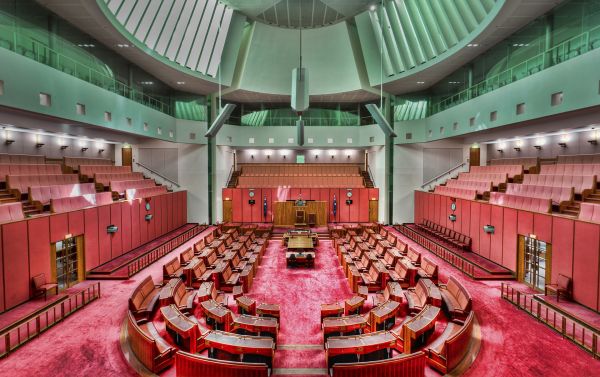
On Tuesday in Canberra, the Australian Panel of Experts on Environmental Law (APEEL) will hold a symposium on the reform of environmental laws in Australia. If enacted, these proposals would offer protection to Australia’s declining biodiversity and environment, as well as helping to safeguard Australians’ health.
The proposal would involve establishing a high-level Commonwealth Environment Commission (CEC) that would be responsible for Commonwealth strategic environmental instruments, in much the same way that the Reserve Bank is in charge of economic levers such as interest rates.
The new CEC would manage a nationally coordinated system of environmental data collection, monitoring, auditing and reporting, the conduct of environmental inquiries of a strategic nature, and the provision of strategic advice to the Commonwealth government on environmental matters, either upon request or at its own initiative. The necessary outcomes would then be delivered by government and ministers via a newly created National Environmental Protection Authority (NEPA).
On Wednesday, this call will be echoed by a major alliance of leading environmental groups, including Doctors for the Environment Australia. Similar to the CEC/NEPA proposal, this group has called for an independent National Sustainability Commission that would develop conservation plans, monitor invasive species, and set nationally binding air pollution standards and climate adaptation plans.
The new body would replace the EPBC Act, which has failed to deliver the protections it promised in key areas such as land clearing and species protection, and has no role in limiting climate change which is a major factor in species loss.
The new agencies would be in a position to provide authoritative and understandable consensus reports, similar to those produced by the Intergovernmental Panel on Climate Change but with a stronger legal basis on which the government should act on its advice.
Murdoch press hails the inquiry it demanded into ABC’s ‘privileged status’,Guardian, Amanda Meade 30 Mar 18, News Corp embraces competitive neutrality terms of reference. Plus: forget Bureaucracy Stop, meet Reveal Capture
The Coalition has handed Rupert Murdoch something his outlets have been lobbying for pretty hard recently: an inquiry into whether the public broadcasters are “using their privileged status to smother commercial operators”. That’s how the announcement of the terms of reference for a competitive neutrality inquiry was reported by the Australian this week.
“The ABC is crowding out and threatening the survival of commercial news organisations because it enjoys that privileged status and has become a state-funded player across every media channel in the digital age,” Oz media editor Darren Davidson wrote last year.
“That is the judgment not only of News Corp, publisher of the Australian, but of every other big commercial operator including Fairfax Media, Seven West Media and Nine Entertainment.”
For fans of The Handmaid’s Tale, season two returns to SBS TV on Thursday 26 April, and episodes will be available on SBS On Demand after they have aired.
Stop, it’s efficiency time
The ABC is of course no stranger to inquiries, either being subject to them or conducting them internally. We told you last week about Bureaucracy Stop, an initiative to cut red tape from the ABC’s chief technology officer, Helen Clifton.
Now from Michelle Guthrie’s right-hand woman, Louise Higgins, comes Efficiency Project and Reveal Capture.
A packed meeting in Bairnsdale in eastern Victoria on March 21 was horrified as the implications of a planned mineral sands mine in the area were revealed.
The Kalbar Resources mine has been in the planning stage for several years and is due to start next year. The site is at Glenaladale, about 20 kilometres from Bairnsdale in grazing country, but only 350 metres from the $200 million a year vegetable growing industry in the Mitchell River Valley.
The mine will be open-cut, with up to five holes operating at any one time, each 1 kilometre long, 500 metres wide and up to 40 metres deep. It will be the biggest mineral sands mine in Australia and will mine zircon, rutile, titanium and ilmenite. Mining is planned to last 20 years, processing 800 tonnes an hour, 24 hours a day, 7 days a week.
There are many serious concerns.
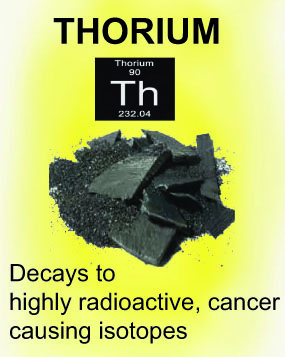
Kalbar declares mining will cease on windy days to prevent dust laden with radioactive and or/carcinogenic chromium, vanadium pentoxide, thorium and titanium dioxide from blowing across the farmland and urban areas. However, this was not the experience of people in the Victorian Wimmera who were promised the same; it never happened. One farmer who challenged the mine owners (Iluka in that case) was told he would be charged $70,000 a day for lost production!
The mine requires about the same amount of water as used by the 29,000 households supplied by the Mitchell River. This water is not available locally. It is planned to be piped from the Sale aquifer, but that aquifer is fully committed and can only be released by purchasing existing water rights.
There will be an extra 40 B-double 72 tonne trucks a day, with road maintenance costs to be met by the East Gippsland Shire.
Run-off and siltation of the Mitchell River and Gippsland Lakes is inevitable in heavy rain, further damaging the world-renowned Silk Jetties, the Ramsar-listed wetlands and the tourist industry based on recreational fishing. There will be six tailings storage dams, each 10 hectares in size, at the head of the Perry River, which also flows into the Gippsland Lakes.
Speakers from the Wimmera talked about their experience of the Iluka Douglas mineral sands mine in their area. All promises of consultation, employment, compensation, monitoring, dust control and rehabilitation were reneged. Conditions imposed on the mine operation were not enforced. Radioactive materials were not buried as promised. The community was destroyed. Several people developed brain tumours. There were several Workplan Variations, which bypassed environmental regulations. Dust monitoring stations were placed upwind of the mine and only checked every seven days.
The Victorian Labor Government in 1990 legislated the Mineral Resources (Sustainable Development) Act to give mining priority over all other land uses. Farmers are forced by regulation to accommodate mining. This has not been changed by subsequent governments.
Promised rehabilitation does not occur. Of the 150 mines operating in Victoria, 122 are in care and maintenance mode, which can continue indefinitely, and only one has been classified as fully rehabilitated.
Communities receive no benefit from mines but suffer the costs of pollution, falling land values, impaired health and community destruction. Local councils lose revenue because mines do not pay rates.
While East Gippsland is a strong National Party area, people have fought and won major victories against governments before and will do so again. The battle against the proposed Very Fast Train land speculation proposal was successful in the early 1990s, the closure of the railway line was reversed, the Tambo Upper School closure was prevented, and more recently community action defeated coal seam gas mining.
The opposition to the mine is led by the East Gippsland Community Action Group and Mine-Free Glenaladale, which screened The Bentley Effect two weeks before the mineral sands meeting, increasing people’s determination to fight and win.
Defecting Lib MP to push for nuclear dump
New Liberal MP Dennis Hood will agitate for the State Government to revive plans to store high-level nuclear waste in SA, after he abandoned Cory Bernardi’s Australian Conservatives in a shock post-election move….
Joining the Liberals enhances Mr Hood’s chances of securing another eight-year term at the 2022 state election. The Conservatives had a poor showing at this month’s election and it appears unlikely their Upper House candidate, Rob Brokenshire, will be returned.
Mr Hood said his old party’s 3.5 per cent Upper House vote “is not going to get anyone anywhere”.
“If you want to stay with something that’s heading down that path, then pretty soon you will find that they have no members in parliament and no impact,” he said.
Mr Hood said still supported the expansion of nuclear industries in SA, despite Mr Marshall rejecting the proposal over fears it would expose taxpayers to high risk.
“One of the great things about the Liberal Party … is it is okay for individual members to disagree on policies,” Mr Hood said. “I do support a nuclear waste repository in SA. “I will support the party position.
Submission to Senate Standing Committees on Economics “Selection process for a national radioactive waste management facility in South Australia “
My name is Noel Wauchope. I am a former school teacher, having taught science in secondary schools. I have a long term interest in nuclear issues. I would say that I am a generalist, rather than a specialist in a scientific field. I believe that this generalist approach is an advantage in examining and communicating about a nuclear waste dump proposal. All too often, even very well educated people are intimidated by the technical jargon of experts on nuclear technology, and thus become reluctant to form their own opinion.
I note the specific terms of reference that we are encouraged to address, and I deplore the fact that they, and the title of this Inquiry, are already begging the question – by stating “in South Australia”.
Already we are all supposed to accept without question the proposition that South Australia is the location for the federal nuclear waste dump – done and dusted!
SUMMARY
My main concern is in addressing b the concept of “broad community support”. The Inquiry ‘s brief for this appears to be confined to the Kimba and Hawker people. The establishment of a nuclear waste facility at Kimba or Hawker will involve transport of radioactive wastes through the region, and will have ramifications for its economy, agriculture and tourism. The local communities have not been properly informed, and pretty well brain-washed with the myth that the nuclear waste dump is a “medical necessity”. The nature of the wastes, lumping together Intermediate Level Wastes (ILW) and Low Level Wastes (LLW) is a messy and confusing plan, and its real meaning has not been explained to them. The safety problems with waste canisters have not been discussed. These local communities are not aware of their future in hosting “stranded wastes” – as there is no existing plan for the permanent burial of the very long lasting ILW wastes.
c The involvement of indigenous people by the National Radioactive Waste Management Facility (NRWMF) has been inadequate, and the idea that they support the plan is simply not believable, in view of the poor survey practices carried out, and the clear opposition of leading Aboriginal organisations.
e Eyre Peninsular , state-wide and nation-wide community views should be considered.
f Related matters include South Australia’s law prohibiting nuclear waste facilities, best practice for managing nuclear wastes, publicity and media coverage, and a responsible approach to radioactive waste management, and Australia- wide decision-making. Continue reading →
Photographs from a rally in Sydney, protesting against Federal Government plans to establish a nuclear waste dump at Brewarrinain North Western NSW, on Ngemba land. Traditional custodians of the land, the Ngemba, are opposed to the dump.
Speakers at the rally included organiser Natalie Wasley, Ngemba and Brewarrina representatives, Trish Frail and Natalie Eastwood, Nathan Moran from the Metropolitan Local Aboriginal Land Council, Dave Sweeney from the Australian Conservation Foundation, Jim Green from Friends of the Earth, and NSW Greens parliamentarians Jamie Parker and David Shoebridge, as well as others. The Wakagetti dance troupe provided dance performances and a smoking.
About 100 people from all around Australia then marched from Bligh Street outside the Commonwealth offices, through Sydney’s CBD to NSW Parliament House, chanting, “No bundabunda (poison) on Ngemba land”.
Peat fires burning near Cobden could smoulder for months, cause further evacuations ABC South West Vic By Matt Neal 24 Mar 18
Peat fires that have forced residents in Victoria’s south-west to evacuate their houses could continue smouldering for months, farmers say.
About 100 houses have been evacuated due to the fires burning near Cobrico over the last two days, with locals urged to leave the area until wind conditions change.
Cobrico farmer John Errey had to leave his home for a night on Thursday — and will probably have to do so again.
One of the blazes that tore through the region on St Patrick’s Day burnt three-quarters of his pasture, yet miraculously spared his house, dairy and livestock.
But the fires continue to smoulder in the peat swamp at the bottom of his farm.
The combination of a thinning ozone layer and farming practices in India may add up to more days of extreme ultraviolet radiation across Australia.
A Sun-Herald analysis of daily UV index readings since 1997 in Sydney, Melbourne and Brisbane found the number of days when ultraviolet radiation reached or passed extreme levels had risen slightly.
The amount of UV that hits Australia is influenced by fluctuations in cloud cover, ozone levels and the solar cycle.
In Sydney, four of the 10 highest UV index days since 1996 have been recorded since December 2016. While the ozone layer is recovering over the poles, it is thinning in mid-latitudes from Russia to the Southern Ocean below Australia, a study published last month in the journal Atmospheric Chemistry and Physics found.
“Decreases in ozone are less than we saw at the poles before the Montreal Protocol was enacted [in 1987], but UV radiation is more intense in these regions and more people live there,” said report co-author Joanna Haigh, from Imperial College London.
The weather bureau studied UV radiation in Australia between 1959 and 2009 and found an annual increase of 2 to 6 per cent since the 1990s, above a 1970-80 baseline. The bureau found these changes were related to ozone depletion.
Associate Professor Clare Murphy, from the school of chemistry at Wollongong University, said ozone trends were not fully understood.
“The largest factor involved in mid-latitude ozone depletion is the nitrogen cycle, which operates by nitrous oxide turning into reactive nitrogen in the stratosphere,” Dr Murphy said.
Nitrogen fertiliser is converted into nitrous oxide by soil microbes, creating a stable greenhouse gas that can reach the stratosphere, where the ozone layer protects the earth from most of the sun’s UV radiation,” she said. “However, once in the stratosphere, nitrous oxide is broken down by high energy radiation from the sun to become reactive nitrogen, which can deplete ozone.”
Dr Murphy said that last century, concerns about ozone depletion centred on “chlorine chemistry” (CFCs) because of the massive hole over the poles. “Now it’s nitrous oxide, which almost stopped the Concord from flying because they were worried about reactive nitrogen in the stratosphere.”
Nitrous oxide damage to ozone is ubiquitous, whereas damage from CFCs creates a hole during extreme weather years over the Antarctic, Dr Murphy said.
Nitrous oxide was identified as the most damaging substance to the ozone layer in the 21st century by a 2009 study published in Science. That study also suggested one of the best ways to address the problem was to give insurance to Indian farmers.
“In India, particularly, they’re putting in 10 times more nitrogen fertiliser on their crops than they need to because if a crop fails they may starve,” Dr Murphy said. “Insurance could pick up the loss.”
Robin Schofield, director of Melbourne University’s environmental science hub, said UV in Australia should be trending downwards because factors such as surface ozone, which is contained in smog, is on the rise and there is evidence of a recovery of stratospheric ozone.
The UV Index and skin cancer
The UV index relates to the intensity of sunburn-producing UV radiation. Sun protection is recommended when the UV Index is above 3 in clear sky conditions. The higher the number, the more severe.
11+ = Extreme. Avoid sun exposure between 10am and 4pm due to extreme risk of harm.
8-10 = Very High. Unprotected skin and eyes may be damaged and can burn quickly.
6-7 = High. Protection against skin and eye damage is needed. Reduce time in the sun between 10am and 4pm.
3-5 = Moderate. Stay in the shade near midday when the sun is strongest. Moderate risk of harm.
1-2 = Low. There is a low danger from the sun’s UV rays for the average person.
Note: UV intensity can nearly double with reflection from snow or reflective surfaces such as water, sand and concrete.
Heather Walker, Cancer Council Australia’s skin cancer committee chair, said UV is the most common cause of skin cancer but the council has not seen any evidence of a trend of more extreme or high UV days.
“Queensland is the skin cancer capital of Australia and they get more UV all year round,” Ms Walker said. “Skin cancer rates continue to rise but look like they may be stabilising over the next few years in all age groups except for the under 40s.”
The continued high rate of skin cancer in Australia is partly due to the ageing population, because cancer is a disease of ageing, Ms Walker said.
Brisbane average monthly maximum UV index.
Photo: Australian Radiation Protection and Nuclear Safety Agency
But skin cancer rates are falling for people under 40, she said, because they have had the benefit of Sunsmart messages [slip, slop, slap, seek shade and slide on sunglasses], which started in the 1980s.
“This is a message we need to keep reinforcing, because as it was put to me: ‘you don’t tell your children to brush their teeth once and expect them to do it for the rest of their lives’.”
Because UV and heat are not related, people often get sunburnt when there is no sun.
“The heat will rise and continue to rise in the afternoon, whereas UV is more of a bell curve shape that peaks in the middle of the day. And that’s why the advice is to avoid being outside in the middle of the day.
“Cool and cloudy days when the UV is high, that’s when people are most likely to be caught out because they don’t think they need sun protection.”
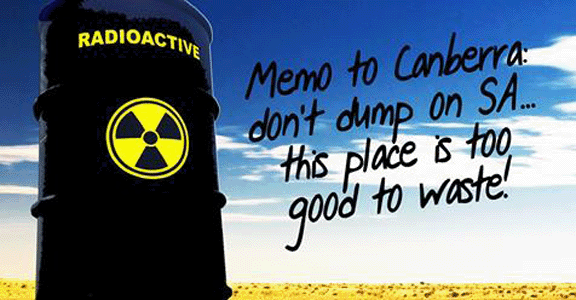
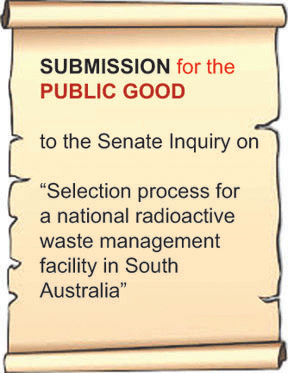
“Selection process for a national radioactive waste management facility in South Australia” – that’s the title of the Senate Inquiry . Begs the question, doesn’t it ? Why does it have to be assumed that it’s gotta be in South Australia?
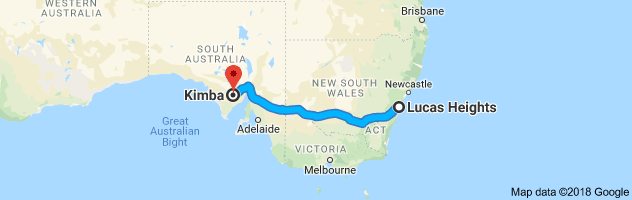
Sounds damn silly to me – toting highly radioactive trash for 1700 km – pretty much involving 3 States, all the way from Lucas Heights, Sydney, where it can be relatively safely kept – until decades later when they might bury it permanently – near to the nuclear reactor that’s producing it. (Heck they might even have the brains to shut down the reactor and stop producing radioactive trash)
But – never mind. These uninformed Senators need your submission. They’ve already got at least 5 submissions from pro nuclear enthusiasts – now showing on their website. We can do better.
SUBMISSION TIPS There have been rumours that Senate Inquiry submissions are limited to 5-6 pages. This is not the case, if your submission is longer than 5 pages you need to provide a summary at the front of your submission. See suggestions below:
The best submissions:
clearly address some or all of the terms of reference—you do not need to address each one
are relevant and highlight your own perspective
are concise, generally no longer than four to five pages
begin with a short introduction about yourself or the organisation you represent
emphasise the key points so that they are clear
outline not only what the issues are but how problems can be addressed, as the committee looks to submissions for ideas to make recommendations
only include documents that directly relate to your key points
only include information you would be happy to see published on the internet.
Submissions that include complex argument, personal details or criticise someone may take the committee longer to process and consider.
Your own ideas, your own words are best, BUT if you are pressed for time etc, you can submit an online submission at Waste Dump Senate Inquiry Submission.
Including my brief 3 pager, Summary:
To be credible, a finalised ARPANSA Code must mandate the best practice Principal of Non-Imposition of nuclear waste disposal facilities on community.
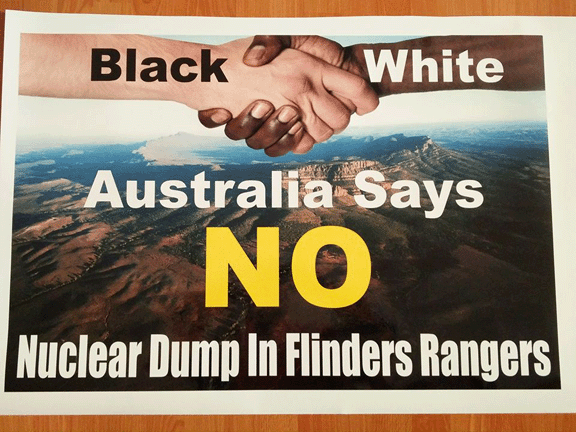
It is untenable for this Code to countenance Disposal Facility Siting in an area of special cultural heritage significance to Aboriginal people. Proposed NRWMF siting in the iconic Flinders Ranges must stop. A finalised ARPANSA Code must respect Aboriginal people’s rights and interests. ARPANSA needs to recognise the Storage and Disposal of nuclear wastes affects the rights, interests and safety of all South Australians and is prohibited in our State under the Nuclear Waste Storage (Prohibition) Act 2000.
Any imposition of Disposal Facility Siting in SA will be strongly resisted by community across SA.
at: https://www.arpansa.gov.au/…/4206–62d45b57e7ea1b50ccb30956…https://www.facebook.com/groups/344452605899556/
Paul Waldon No Nuclear Waste Dump Anywhere in South Australia, 18 Mar 18
Today the 18th of March is another red letter day in the nuclear arena with the 31st anniversary of a accident at Lucas Heights.
But first lets jump forward 29 years to the Hawker nuclear community meeting on the 6th of May 2016, where a man named Bruce Wilson from the DIIS who chaired such meeting, a man who could be a totally inept clairvoyant, a nuclear decision psychopath, a misinformed government payed nuclear spruiker, or just a sad ignorant man, this is a man whom said “We will NOT have accidents” .
The opposing dichotomy believes in the old dictum “Pray for the best, prepare for the worst” and the such dichotomy keeps giving a resounding NO to a deadly radioactive dump, which keeps falling on deaf ears of the liars who said they would walk away from a community that doesn’t want to accept it.
Now lets return to the anniversary of the 1987 accident where a fire at Lucas Heights nuclear research laboratory resulted in the contamination of two workers and the discharge of radioactive gas into the atmosphere over populated areas. Yes, Bruce this was a accident, however there was an event two years prior to such accident that may be called a purpose when alleged vandals dodged security patrols and smashed a underground pipe, releasing radioactive effluent into river ways. (What was this pipe made of, maybe brittle 2mm plastic?).
Are we to believe, Bruce, that there wont be anymore accidents, maybe because accidents will be suppressed, or called a planed event, or re-classed as “Technically produced anomalies” just like the erroneous, magniloquent re-classing of high grade waste to intermediate waste in an attempt to try and push through a egregious program while attempting to insult the intelligence of the majority of informed South Australians who don’t want a risky radioactive dump here? https://www.facebook.com/groups/1314655315214929/
Paul Waldon Fight To Stop Nuclear Waste Dump In Flinders Ranges SA “A rose by any other name would smell as sweet.” High Grade waste by any other name would be such a risk.
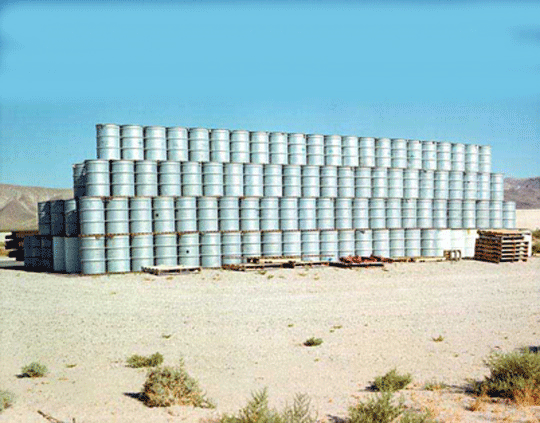
There has been one, only one successful test of a dry cask to find its safe threshold and that was a recorded drop from 10 meters, all other tests have failed to record the threshold for compromising a dry-cask.
Holtec industries had a reported failure in nine yes 9 different areas of construction of dry-casks, about the time Australia had some nuclear fuel vitrified, so ask yourself did we buy a poor quality dry-cask. Hidry buildup on nuclear fuel and its cladding in the dry-cask is a forever real explosive threat to the integrity of such containment vessels, this has a problem with no current tests able to monitor such issues.
The nuclear industry has acknowledged that stainless steel is susceptible to Chloride induced corrosion with cracking of dry-casks. These minor cracks are likely to develop into truwell cracks that can compromise the dry-casks. The president of one company that produces dry-casks for the nuclear industry whom was present at a Citizens Engagement Panel meeting in Orange County was reported to say “If there was a truwell crack, even a microscopic crack million of curies of radiation would escape through the crack, and it would be impossible to get near the canister or repair it, and he went on to say its not practical to repair these things when they start cracking.”
Rebecca HigginsFight To Stop Nuclear Waste Dump In Flinders Ranges SA, 24 March 18 On the news last night they made it sound like the dump was just a question of WHERE not IF.
This new government is pushing hard and fast. As someone living on the Eyre Pen. I am 100 percent opposed to this and can not understand why a few money hungry farmers in kimba get a vote and we don’t.
This will affect all of us we should all get a vote. Those of us not benefiting from this toxic nightmare would surly oppose it. Anyone with half a brain can see this is both unnecessary and dangerous. Anyone in Kimba who thinks this is a good thing needs a lobotomy and FAST. Greedy bastards. Ranges SA https://www.facebook.com/groups/344452605899556/
Business News 23rd March 2018,A group of small and medium-size South Australian businesses plan to launch a first-of-its-kind power trading platform using blockchain technology in an attempt to save money and buy and sell local clean energy.
Blockchain-based microgrid developer LO3 Energy, of New York, is working on the project with solar and electrical firm Yates Electrical Services, of Paringa, South Australia, a region known for its vineyards, almond and fruit orchards — and incredibly high electricity prices.
25 October – Film –Britain’s Nuclear Bomb Scandal: Our Story – part of the Adelaide Film Festival,
Screening and Conversation
A screening of Britain’s Nuclear Bomb Scandal: Our Story (2024) followed by a talk with 2026 Bettison and James Awardee and Tradtional Owner Karina Lester in conversation with Simone Tur.
When: Sun 25 Oct, 12:00pm-Screening, 1:15pm-Talk
Where: The Mercury
Free admission, register below by clicking on BUY TICKETS and select free event tickets, at end of web page: