April 3rd submissions close for Senate Inquiry into Selection for Nuclear Waste Dump Site
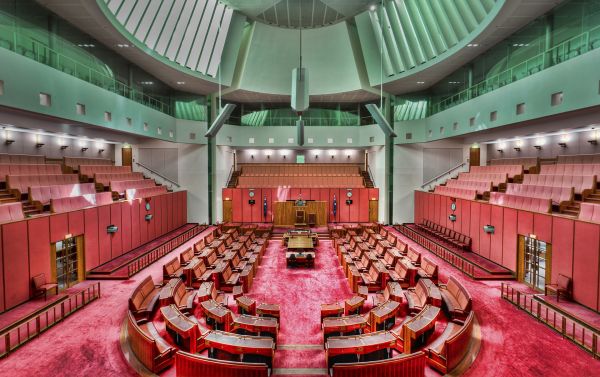

 Selection process for a national radioactive waste management facility in South Australia
https://www.aph.gov.au/Parliamentary_Business/Committees/Senate/Economics/Wastemanagementfacility
On 6 February 2018, the Senate referred an inquiry into the selection process for a national radioactive waste management facility in South Australia to the Senate Economics References Committee for inquiry and report by 14 August 2018.
Closing date for submissions is 3rd April 2018
Committee Secretariat contact:
Senate Standing Committees on Economics
PO Box 6100
Parliament House
Canberra ACT 2600
Phone: +61 2 6277 3540
Fax: +61 2 6277 5719
economics.sen@aph.gov.au
Terms of Reference
On 6 February 2018 the following matter was referred to the Economics References Committee for inquiry and report by 14 August 2018:
The appropriateness and thoroughness of the site selection process for a national radioactive waste management facility at Kimba and Hawker in South Australia, noting the Government has stated that it will not impose such a facility on an unwilling community, with particular reference to:
- the financial compensation offered to applicants for the acquisition of land under the Nominations of Land Guidelines;
- how the need for ‘broad community support’ has played and will continue to play a part in the process, including:
- the definition of ‘broad community support’, and
- how ‘broad community support’ has been or will be determined for each process advancement stage;
- how any need for Indigenous support has played and will continue to play a part in the process, including how Indigenous support has been or will be determined for each process advancement stage;
- whether and/or how the Government’s ‘community benefit program’ payments affect broad community and Indigenous community sentiment;
- whether wider (Eyre Peninsular or state-wide) community views should be taken into consideration and, if so, how this is occurring or should be occurring; and
- any other related matters.
How did Bright New World suck people in to be part of 2018 political pro nuclear propaganda ?
 Steve Dale No Nuclear Waste Dump Anywhere in South Australia,
The poor people that got sucked into signing “An open letter to South Australia’s elected members and political parties 2 March 2017” – did they know their names would still be used as propaganda a year later? Their faces are still being displayed on a page of Bright Nuke World’s web site.
(https://www.brightnewworld.org/…/an-open-letter-to-south-au…) Any journalists reading this? How about going around and asking each of the people listed how they got sucked into signing it and whether they are happy for their names to be used forever more. Like most nuclear garbage, the letter has a long half life. https://www.facebook.com/groups/1314655315214929/
In Australia solar farm approvals and record rooftop installations expected to ‘turbo-boost’ production
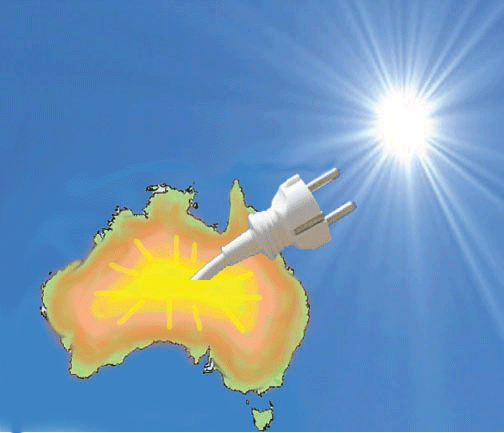 Australia’s solar power boom could almost double capacity in a year, analysts say https://www.theguardian.com/australia-news/2018/feb/11/australias-solar-power-boom-could-almost-double-capacity-in-a-year-analysts-say
Solar farm approvals and record rooftop installations expected to ‘turbo-boost’ production, Guardian, Naaman Zhou, 11 Feb 18
A record-breaking month of rooftop installations and a flood of large-scale solar farms could almost double Australia’s solar power capacity in a single year, industry analysts say.
A massive solar energy boom is being predicted for 2018, after an unprecedented number of industrial solar farms were approved by the New South Wales and Queensland governments last year.
Last month also became the biggest January on record for rooftop installations, according to the renewables website RenewEconomy and industry analysts SunWiz
With 111MW of new panels, it saw a 69% rise compared with the same month last year and became one of the top five months ever – largely driven by low installation costs and a boost in commercial uptake.
At the same time, nearly 30 new industrial solar farms are scheduled to come on line.
NSW approved 10 solar farm projects last year – twice as many as the year before – and has approved another in 2018. Queensland currently has 18 large-scale projects under construction, which is the most in the country.
The new farms could be operational within the year, according to John Grimes, the chief executive of the Clean Energy Council.
“These solar farms can be built within a matter of weeks,” he said. “They’re really quick and simple.”
Together, the new large-scale projects could add between 2.5GW and 3.5GW to the national grid and rooftop installations could add another 1.3GW, according to the Smart Energy Council’s estimates. This would nearly double the nation’s solar energy capacity, currently 7GW, in a single year.
“The train tracks are about to converge,” Grimes said. “Rooftop installations and utilities are both booming and could turbo-boost the solar numbers overall.”
In Queensland, residential solar panels are already the state’s largest source of energy, producing more combined than the 1.7GW Gladstone power station. Just under a third (30%) of residential homes in the state have solar installed – the most in the country.
With the completion of the new solar farms, solar will provide 17% of the state’s energy. “We’ve turned the sunshine state into the solar state,” Queensland’s former energy minister Mark Bailey said in October.
In New South Wales, the planning minister, Anthony Roberts, said the 10
new solar farms would generate 1.2GW of energy and reduce carbon emissions by more than 2.5m tonnes – the equivalent of taking about 800,000 cars off the road.
Grimes said the solar boom “was only going to grow” in future.
“Solar is the cheapest way to generate electricity in the world – full stop,” he said. “It’s not unusual for grid pricing to be north of 20c per kilowatt hour in a majority of jurisdicitions. A solar array, at an average size for an average home, if you amortise the cost over 20 years, the effective rate is 5c per kilowatt hour. That’s called an economic no-brainer.”
He said the rush to install rooftop panels could have been sparked by January’s warm weather and rising energy prices.
“I think people are acutely aware of energy prices. People are running air conditioning and thinking, ‘hooley dooley I’m going to get a bill’.”
2017 saw a record 1.25GW of solar power added to the grid nationally, counting both large-scale solar farms and rooftop panels. The predicted rate of rooftop panels alone in 2018 is expected to be 1.3GW.
From tears to cheers: three years since South Australia’s nuclear Royal Commission was announced.
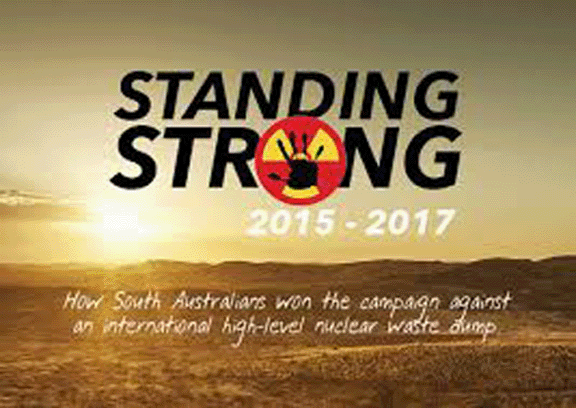
8 Feb 18 Three years ago today SA Premier Jay Weatherill announced a Royal Commission into the nuclear industry and a major community campaign against plans for an international high level radioactive waste dump began.
 The No Dump Alliance (NDA) has today released a book about this campaign. To view the book, click here. ‘Standing Strong’ covers the key issues championed by Aboriginal and civil society groups opposed to the plan including the lack of Traditional Owner consent, dubious economics, the risks to people and the environment and the impact on future generations.
The book shows how South Australians hit the streets, organised community meetings, got involved online, signed postcards, attended information sessions, door-knocked MP’s and breathed a sigh of relief in June 2017 when the Premier conceded that the plan was “dead” and that his government would not pursue the plan.
“This book documents how our community said no to the threat of radioactive waste,” said Yankunytjatjara woman and NDA spokesperson Karina Lester. We know nuclear is not the answer for our lands and people, we have always said no. It is important that all politicians get the clear message that nuclear waste and nuclear risk is not wanted in SA.”
Today’s launch and anniversary comes amid escalating efforts to oppose Canberra’s plan to store and dump federal radioactive waste in regional SA.
The NDA has joined with communities in both the Flinders Ranges and Eyre Peninsula in welcoming recent comments from Premier Weatherill against future nuclear waste plans. The Premier has said that the government will consider legal action against the federal government to stop the attempt to impose a national nuclear waste dump in SA. The NDA also welcomes the successful move by NXT Senator Rex Patrick, with Labor and Greens support, to establish a Senate Inquiry into the planned national nuclear waste dump.
“Over the past three years a risky plan to import global radioactive waste was clearly defeated”, said nuclear campaigner and NDA spokesperson Dave Sweeney. “This was an important and comprehensive community victory.”
“Today the challenge is to convince Canberra to start treating radioactive waste responsibly and the SA community respectfully because SA is simply too good to waste.”
‘Standing Strong’ is dedicated to the life and work of Yami Lester – Yankunytjatjara Elder and Land Rights activist who sadly passed away in July 2017.
The No Dump Alliance will continue its work on nuclear issues in South Australia.
New South Wales Liberal Premier Berejiklian is approving a solar energy revolution
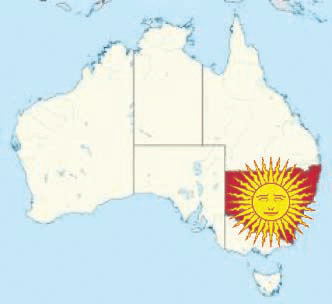 Solar ‘tsunami’ coming in Australia as NSW accelerates approvals http://www.smh.com.au/environment/climate-change/solar-tsunami-coming-in-australia-as-nsw-accelerates-approvals-20180207-p4yzl1.html, Peter Hannam, Cole Latimer
The Berejiklian government has approved 11 large-scale solar energy plants in the past 12 months, clearing the way for NSW to join a “tsunami” of new renewable energy capacity across the nation.
The 170-megawatt Finley Solar Project in the Riverina, which will include half a million solar panels, is the first to get approval in 2018.
The 10 to get the go-ahead in 2017 doubled the number in the previous year, and alone supported 1800 construction jobs, Planning Minister Anthony Roberts said.
Those 10 “collectively reduce carbon emissions by over 2.5 million tonnes, which is equivalent to taking around 800,000 cars off the road”, he said.
NSW had more renewable generation capacity under construction than any other state, Energy Minister Don Harwin said.
John Grimes, chief executive of the Smart Energy Council, a group promoting solar energy and storage, described the acceleration of solar approvals in NSW as “fantastic”. The Coalition-led state government was “one conservative group that’s not working against renewables, and that’s got to be good thing”, Mr Grimes said.
In 2017, large-scale and roof-top solar added about 1.3 gigawatts nationally, a record for the industry.
On current trends, roof-top panels could alone add 1.4 GW of new capacity this year, with solar farms soaring by 2.5-3.5 GW, the Smart Energy Council estimates.
Together the 2018 tally may come close to doubling existing capacity in a single year as firms rush to supply the Renewable Energy Target that has to be filled by 2020.
“We’re about to get this giant, enormous tsunami, and nobody knows about it,” Mr Grimes said. “Wind [energy] used to be big and solar was small – now solar’s big, and wind is small.”
Officials in various approval agencies are struggling to keep up with approvals as companies flood them with applications, he said.
“With some of the best sunshine anywhere in the world and lots of good locations available, it is not surprising that NSW is up there with Queensland as one of the national frontrunners for new large-scale solar power projects,” Kane Thornton, chief executive of the Clean Energy Council, said.
At present, Queensland is ahead of NSW in terms of projects with finance or under construction, although the two states have similar numbers of approved ventures.
Renewable energy projects to be built under the Renewable Energy Target in the next couple of years add up to more power than the original Snowy Hydro project, which took a quarter of a century to complete, Mr Thornton said.
Solar projects can typically be developed, approved and built faster than wind ventures.
“And with the cost of new solar power continuing to plunge, they can also be built for a very competitive price which is substantially lower than either new coal or new gas,” Mr Thornton said.
An example of other states’ development includes a plan by Tilt Renewables to spend almost $500 million to integrate two projects – a solar farm and battery venture, and a 300-megawatt, pumped hydro storage project in a disused quarry – with its wind farm interests in South Australia.
Tilt’s $90 million Snowtown North solar and storage project includes a 180,000-panel farm with 44-MW capacity and a 26 MW-hour battery. It is forecast to have an operational life of around 25 years and offset around 85,000 tonnes of CO2-equivalent.
“By combining wind energy – with typically an evening peak at this site – and solar energy with a daytime peak, the two assets can combine to better match daily electricity demands,” Tilt chief executive Deion Campbell said, adding that “with the battery reducing the effect of short-term variability from the two renewable generation technologies”.
One area where NSW is a relative laggard is the penetration of rooftop solar, with roughly half the 30 per cent rate of South Australia and Queensland. “There’s a lot of ground to make up,” Mr Grimes said.
Beyond the big solar farms, though, is a jump in demand from companies looking to install smaller systems – such as between 400 kilowatt to 10 MW capacity – without power purchase agreements to offset the output.
“They are doing it to offset their own electricity use” and to get price certainty, Mr Grimes said.
Yeelirree uranium project Court decision – “a bad decision, but not the end decision”
‘Sad day for our people, our land’: Appeal fails against Yeelirrie uranium mine in WA’s Mid West, http://www.watoday.com.au/wa-news/sad-day-for-our-people-our-land-appeal-fails-against-yeelirrie-uranium-mine-in-was-mid-west-20180208-h0vrpr.html
Conservationists and Tjiwarl traditional owners will continue to fight the approval for a uranium mine in central WA despite losing a Supreme Court appeal.
Former state environment minister Albert Jacob gave the green light to Cameco’s Yeelirrie mine proposal in January last year, just 16 days before the pre- election caretaker mode began.
The Conservation Council of WA and traditional owners fear unique subterranean fauna in the area will be made extinct if the project proceeds.
Chief Justice Wayne Martin determined on Thursday that the appeal against the ministerial decision should be dismissed. Costs will be determined at a later date.
Tjiwarl native title holder Vicky Abdullah said the court case was only part of the campaign . “This is a very disappointing and sad day for our people, our land, and our future,” she said. “We have fought long and hard to protect Yeelirrie and stop the uranium project. “It’s a bad decision, but it’s not the end decision.”
The ministerial endorsement was subject to 17 conditions, including the Canadian company undertaking further surveys and research into stygofauna and troglofauna to minimise impacts on the tiny underground creatures.
Mr Verstegen said he always knew the appeal would result in either the uranium approval being ruled invalid or the environmental laws being exposed as inadequate.
“Today’s ruling shows that indeed our environmental laws are deeply inadequate,” he said.
There is still a federal decision pending, with the WA appeal delaying the process by months.
“It is now up to the commonwealth government to take a rigorous approach to the environmental assessment of this project rather than just relying on the shonky assessment that was done under the Barnett government,” Mr Verstegen said.
“We call on the federal government not to approve extinction at Yeelirrie.”
Mr Verstegen said advice would be sought on whether further legal action was possible. Regarding costs, he said lawyers would argue it was a public interest case and they should not have to bear the full costs.
Senate Committee investigating nuclear waste project may already be compromised

 Paul Waldon, Fight To Stop Nuclear Waste Dump In Flinders Ranges SA, 8 Feb 18,
We have ANSTO, ARPANSA, and DIIS which have failed to display there impartiality, they are incapable of listening, they are environmentally blind, impotent of nuclear safeguards, responsibly inadequate, and obstinate, so what makes people think we will be better off saying yes to a investigation when we have already delivered a resolute “NO.”
Most Australians do not want the government to limit charities’ ability to advocate
Only One in Five Australians Favour Proposed Limits on Charitable Advocacy https://probonoaustralia.com.au/news/2018/02/one-five-australians-favour-proposed-limits-charitable-advocacy/ Only one in five Australians support the Turnbull government’s proposed measures to restrict charitable advocacy, including just 36 per cent of Coalition supporters, according to a new poll. , 7th February 2018, Luke Michael,
The Electoral Funding and Disclosure Reform Bill 2017 aims to block donations by foreign entities attempting to influence Australian politics.
But the charity sector has strongly pushed to re-draft the bill, fearing it will curtail its ability to advocate on social issues.
In response, the Fred Hollows Foundation commissioned polling for the Hands Off Our Charities alliance to gauge the public’s opinion on the legislation and on charity advocacy.
YouGov Galaxy polled a nationally representative sample of 1,008 Australian residents between 29 January and 1 February 2018.
The poll found that less than one in five Australians believed charities took one-sided, political positions with their advocacy.
Despite it being a coalition policy, more than half (53 per cent) of coalition supporters said they believed Australian charities played a vital role in highlighting social issues to government.
Coalition supporters were also broadly against the proposed move to limit charitable advocacy, with only 36 per cent of supporters in favour of the legislation, along with just 14 per cent of Labor supporters and 12 per cent of Greens supporters.
Overall, only 20 per cent of respondents supported the proposed measures.
Fred Hollows Foundation director of public affairs Nick Martin, told Pro Bono News that these results highlighted the public’s support for charitable advocacy.
“What it showed is that people do see charities speaking out on key matters of public policy as very important for a vibrant democracy and for seeing issues that otherwise might not be considered by government or our political leaders,” Martin said.
“What’s also clear from the results is that people have a lot of trust and faith in charities’ work. The findings showed the Australian public does not agree that charities are one sided and rather they think charities are non-partisan and conduct their work fairly to all governments and all political actors.
“So any inference that charities might be partisan in one way or another was rejected in the research.”
Martin said the government should be taking “a good, hard look at the laws as they are [currently] drafted”.
“Whatever the intention of the drafters, the bills they’ve put before parliament go much further and would seriously restrict the ability of charities to legitimately do their work,” he said.
“Our view is that the laws the bill presents should be scrapped and they should be completely redrafted to meet the stated objectives the government put forward. The impact of the bill would be absolutely devastating for every charity in Australia.
“What we hope is that the government pays attention to the number of charities and other stakeholders who have raised their concerns about this. [Some] really important constituents in Australia are voicing their opposition right now through this survey and other means.”
Marc Purcell, the CEO of the Australian Council for International Development (ACFID) said the bill would “fundamentally alter how Australians participate in our democracy”.
“There is widespread opposition to this bill from every corner of Australian society. Australians support charities having a strong voice and believe they play a vital role in our democracy,” Purcell said.
“It’s clear that Australians think we would be a poorer place if we started down the dangerous path of silencing communities.
“This bill will bring in new harsh civil and criminal penalties, an increased red-tape burden, restrictions on funding sources and places a burden on everyday Australians making a charitable donation. We fear charities will stop advocating and contributing to public debate.”
These findings come as a recent Pro Bono Australia survey of the charity sector found more than two thirds (63 per cent) of respondents were unclear on how the bill would affect their charity.
A total of 79 per cent said they were concerned by the new obligations, while 96 per cent said their charity or not for profit had not been consulted by the government on the draft bill.
A parliamentary inquiry into the bill is currently underway with a report due by 2 March 2018.
Submissions by 3 April: Senate Committee of Inquiry into Selection Process for a National radioactive waste dump site in South Australia
Senate in push for state nuke dump vote, The Advertiser, Peter Jean , Political Reporter 7 Feb 18 All South Australians would vote on whether a radioactive waste dump should be built in the state, under options to be considered by a federal parliamentary committee.
South Australia’s peak environment body welcomes Senate nuclear waste dump inquiry
 South Australia’s peak environment body has strongly welcomed the establishment of a Senate Inquiry, proposed by NXT Senator Rex Patrick, into the controversial site selection process for the national nuclear waste dump.
The Federal Government’s plan to establish a Radioactive Waste Management Facility has deeply divided and caused undue stress to the affected communities of Kimba in the Eyre Peninsula and Hawker in the Flinders Ranges.
“The Turnbull Government’s flawed process to impose a nuclear waste dump on South Australia has been deeply distressing to the communities of Kimba and Hawker,” said Conservation SA Chief Executive Craig Wilkins.
“Of course we need an appropriate long term solution to the nuclear waste created at the Lucas Heights reactor in Sydney, but the process currently underway is clearly not the right one.
“We are very pleased that Senator Rex Patrick from the Nick Xenophon Team is standing up for South Australia and the affected communities, and this inquiry has received support from the federal senate” he continued.
The Full TOR for the Inquiry can be found here:
https://www.aph.gov.au/Parliamentary_Business/Committees/Senate/Economics/Wastemanagementfacility
South Australia has repeatedly said no to nuclear waste – from legislation banning dumps introduced by the state Liberal Government in 2000 to the recent defeat of plans to establish an international nuclear waste dump in SA to now, where communities are voicing loud and clear opposition to the Federal site selection process.
Mr Wilkins said “It’s clear that political and community opposition to the current federal nuclear waste dump process is valid and growing.
“We welcome the recent announcement by Premier Weatherill that his government would consider legal action to stop any attempt to impose a national nuclear waste dump on our state.
“South Australians have a right to know where all parties stand on the national nuclear waste dump issue ahead of the state election on March 17,” he concluded..
Australia’s geographic diversity provides reliability for renewable energy – Pat Conroy MP
 Steve Dale Nuclear Fuel Cycle Watch South Australia, 7 Feb 18
Atomic bomb survivors call on Australia and Japan to sign UN nuclear weapons ban treaty

‘End of nuclear weapons or end of us’: Survivors call on Australia, As Japan’s Peace Boat arrives in Sydney, survivors of the Hiroshima and Nagasaki bombings advocate for nuclear disarmament. https://www.sbs.com.au/news/end-of-nuclear-weapons-or-end-of-us-survivors-call-on-australia By Rachel Lockart , 6 Feb 18
Julian Assange remains stuck in London, still at risk of extradition to USA
 Julian Assange ‘has suffered enough’, his lawyers tell British judge, SMH, Nick Miller, 6 Feb 18, London: Julian Assange has suffered enough and shouldn’t face prison for absconding from justice, his lawyers have told a court.
The Wikileaks editor is depressed, in constant pain from an infected tooth, and has been stuck in the Ecuador Embassy in London’s Kensington far longer than the maximum 12-month jail penalty for breaching bail, his barrister said.
On Tuesday Assange lost a legal bid at Westminster Magistrates Court to quash the arrest warrant that has awaited him since he entered the Ecuador embassy in June 2012.
However his lawyers immediately launched a new push to end the UK government’s attempt to bring him to justice – arguing that it is against the public interest to punish him for refusing to leave the embassy.
It is a criminal offence for someone on bail to refuse to surrender to police without “reasonable cause” – and Assange refused to leave the embassy despite a court order for his arrest.
Assange went into the embassy after he exhausted his line of appeal against a decision to extradite him to Sweden to face rape allegations. Sweden last year ended its investigation into the allegations, and the European arrest warrant against Assange was cancelled. However the British warrant for his arrest still stood – and judge Arbuthnot said she was not persuaded it should be quashed simply because the underlying investigation had stopped.
Mr Summers said Assange was not “thumbing his nose” at justice and his five and a half years in the embassy were “adequate if not severe punishment for the actions that he took”.
Assange had genuine fears – later proved correct – that the US were keen to prosecute him over his work with Wikileaks, Summers said.
If arrested he would face rendition to the USA, treatment similar to that meted out against Wikileaks whistleblower Chelsea Manning – and possible “persecution, indefinite solitary confinement and the death penalty”, Summers said in a written submission……….
Judge Arbuthnot said it was a “very interesting” case.
She will rule on the public interest application on February 13.
Outside court, Assange’s lawyer Jennifer Robinson said whether or not the warrant is quashed Assange would not leave the embassy until he had an assurance he wouldn’t be extradited to the US.
“Mr Assange remains willing to answer to British justice in relation to any argument about breaching bail, but not at the expense of facing injustice in America,” she said.
“This case is and always has been about the risk of extradition to the United States and that risk remains real.” http://www.smh.com.au/world/julian-assange-has-suffered-enough-his-lawyers-tell-british-judge-20180206-p4yzjt.html
Australia’s new weapons export industry – secret men’s business

Secret men’s business of the arms industry needs exposure The Age, Stephanie Dowrick,  5 Feb 18, “…….. I woke to the news that the federal government had decided to unveil a new “defence export strategy” to propel Australia into the big league of global weapons exporters.
Then, in the wake of that news – which has left many speechless, even despairing – comes a newer announcement of a $3.8bn boost to the Export Finance and Insurance Corporation. This is a taxpayer-funded “national interest” loan facility that previously supported the exporting of wine and other relatively harmless products but is now set, with a massive boost to its funds, to finance loans to some of the world’s largest arms manufacturers. What’s more, those loans do not need to pass any test of “social risk evaluation” – a nod to caring for others – but can be approved at the discretion of Trade Minister Steve Ciobo.
Oddly enough, on the Blue Mountains drive my friend and I had discussed the weapons industries and the influence they have on the global economy. Their power to affect, even to drive governments’ policies, is immense. It is also profoundly undemocratic. Governments keep a tight grip on media revelations. The weapons world is “secret men’s business” from which the public is definitely shut out. My best sleuthing efforts came nowhere near discovering what this industry is really worth or who profits most.
“This strategy is about job creation,” Prime Minister Malcolm Turnbull assures us. His colleague Christopher Pyne, the Minister for Defence Industry in a cabinet lacking a minister for science, is already presiding over a submarine project set to cost us $50 billion. Pyne is promising “tens of thousands” of jobs could be involved in this weapons’ push. But the issue here is surely far less about job creation than it is about which industries the government, on our behalf, wishes to support. These opinions, these ideological choices determine where we are heading as a nation. This is where a government has huge power. It’s also where it most accurately reveals itself. ……
If “job creation” truly is our government’s motive, then let them choose honestly. The weapons industries lack accountability, transparency, moral and social value. They thrive in the presence or expectation of deadly conflict. Their cost to the world’s physical and social environments is incalculable.
There are many sectors in Australia and globally that produce jobs and social benefits. With generous investment, they could produce more. In land and agricultural regeneration alone, as well as high-tech research and manufacturing, in renewable energy, the arts, community development, health and education, defence-sized investment would undoubtedly pay employment dividends – while simultaneously boosting our social and moral wellbeing. These are choices that have profound consequences. They could make the world safer. Or not. Reverend Dr Stephanie Dowrick is a writer and social commentator www.stephaniedowrick.com www.facebook.com/StephanieDowrick http://www.theage.com.au/comment/secret-mens-business-of-the-arms-industry-needs-exposure-20180202-h0spx3.html
The nuclear industry lobbyists rule the Australian radiation regulator
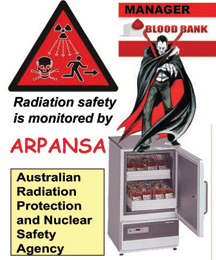 Steve Dale Fight To Stop Nuclear Waste Dump In Flinders Ranges SA https://www.facebook.com/groups/344452605899556/ So many words – just a lot of management speak. Not one mention of the words inhalation or ingestion (of radioactive particles). The nuclear industry/lobbyists rule the regulator. From their page – “Since the promulgation of the 1992 Code of Practice, there have been significant international advances in radioactive waste safety. For example, the International Commission on Radiological Protection (ICRP) has revised its radiation protection limits and the International Atomic Energy Agency (IAEA) has published a range of revised waste safety standards. These changes have been progressively reflected in other Australian standards and codes.” – I think this is code for – international standards have been watered down, and it will be easier to get a nuclear industry going here if we wait
1 This month.
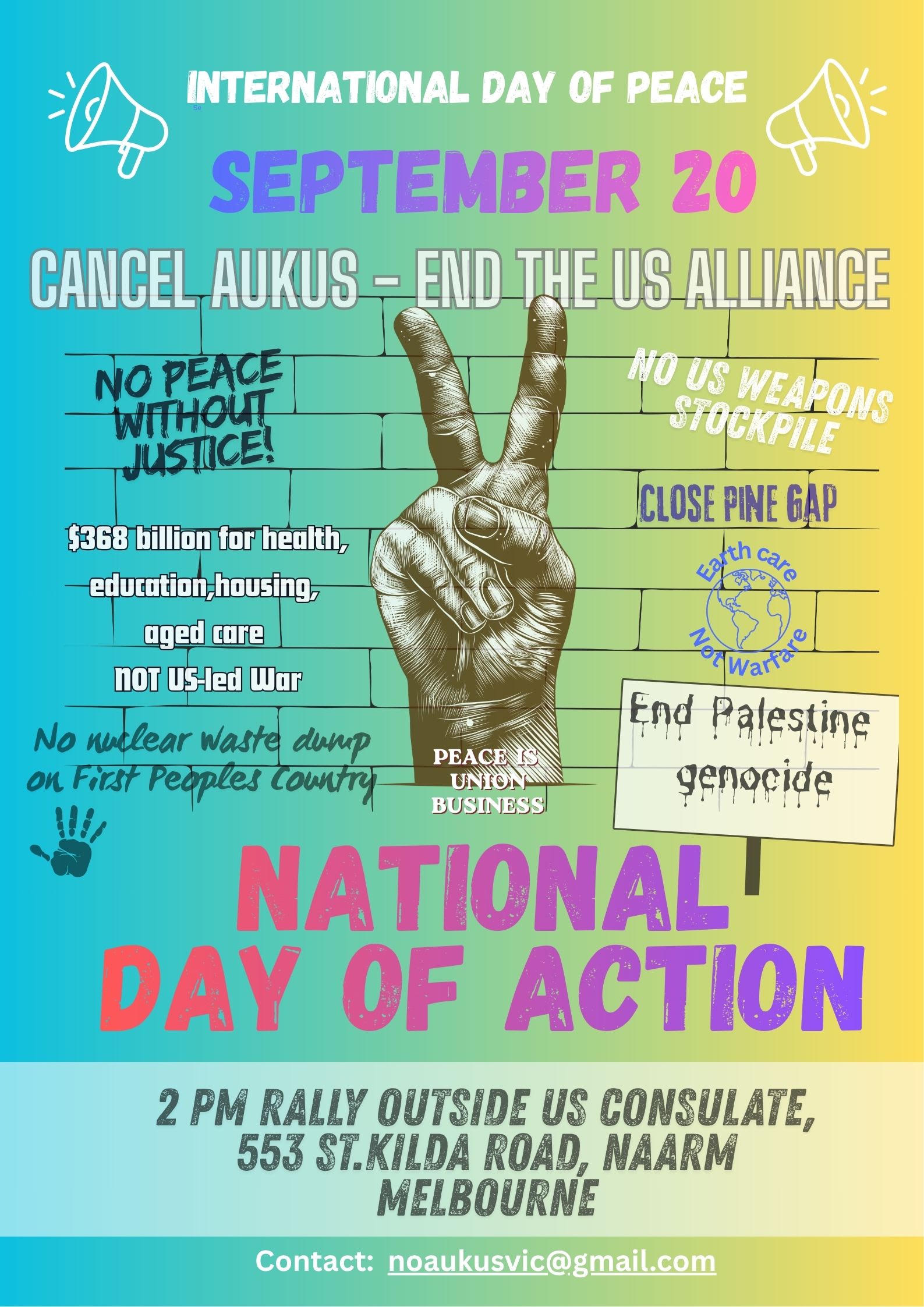
20 September –National Day of Action in Melbourne on the International Day of Peace

Help Aunty Sue Protect Her Land and Sacred Sites From Destructive Rocket Testing.
.

Australians deserve the truth
about
AUKUS – https://aukuspublicinquiry.com/

PETITION – To: Prime Minister Anthony Albanese and the Australian Labor Government

of the week – Australians for War Powers Reform (AWPR)
To see nuclear-related stories in greater depth and intensity
 Antinuclear