Nuclear submarines are not going to have ‘any effect’ at all
The Australian’s Foreign Editor Greg Sheridan says there is “no way” Australia can have a fleet of eight nuclear submarines “before probably 2050”.
“The current strategic problem is going to be resolved long, long before these nuclear subs,” Mr Sheridan told Sky News Political Editor Andrew Clennell.
“Nuclear subs are very sexy, but they are not going to have any effect at all.
“I still think the government should go ahead with a new conventional submarine because we’re… going to end up with no submarines at all.”
Greens Senator Barbara Pocock ‘s reminder that the Kimba nuclear waste storage has no longterm plan for removal of that waste to permanent disposal

Yesterday’s visit to Kimba by Federal Resources Minister Madeleine King failed to acknowledge the fact that the proposed radioactive waste dump at Kimba includes temporary storage of intermediate level waste which must await a long term solution.
We Greens are standing with the Barngarla Native Title holders in their legal battle to halt the waste dump and with farmers in the region who don’t want to jeopardise the export of their crops to European markets.
Living With Our Expensive AUKUS Nuclear Submarines
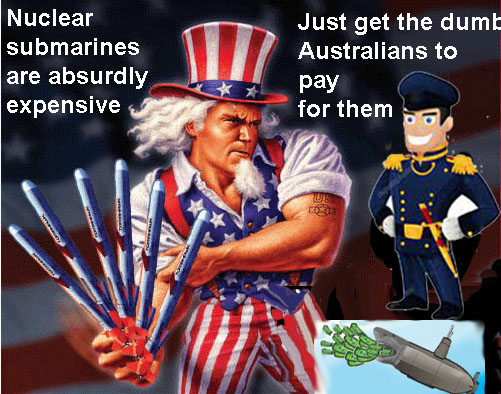
More public discussion of this complex issue might assist in modifying the worst excesses of the AUKUS deal with its enormous financial consequences and more dependency on those powerful friends abroad which have been such a feature of the federal LNP’s foreign policies for decades past.
Will we all continue to live with those dark AUKUS nuclear submarines? Australian Independent Media, By Denis Bright 13 Jan 23,
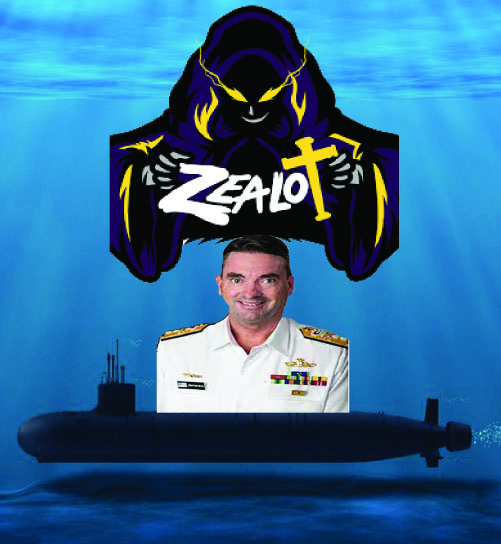
The Christmas edition of The Australian (24-25 December 2022) released a quote from the head of Australia’s nuclear task force Vice Admiral Jonathan Mead. It described the AUKUS submarines as the gold standard of our new security blanket. Spies worldwide wanted to know so much more as the consultative processes surrounding the details were always in the hands of political, military and intel insiders. The wider public would always be left with future payments to cover the financial costs and fall-out from lost trading and investment opportunities between Australia and China.
Writing in The Guardian (8 June 2022), Daniel Hurst estimated that the still undefined AUKUS deal would be an additional $90 billion over the French diesel-powered submarines negotiated by the Turnbull Government.
Yet, Australians seemed to welcome the dark submarines which had a popularity rating of 62 per cent despite an acknowledgment that the deal would inflame relations with China and our future commercial ties according to Katherine Murphy of The Guardian (28 September 2021).
The Albanese Government has already made a goodwill payment to France of $835 million for our breach of contract over the cancelled submarine deal (ABC News 11 June 2022). These costs will fade into insignificance when the full costs of the AUKUS Submarine deal evolve.
The French Government tried hard to promote its contribution to the US Global Alliance after gaining its contract with the Turnbull Government for the sale of the diesel-powered submarines to Australia. French Navy Rubis-class nuclear powered submarine (SSN) Emeraude and Loire-Class support & assistance vessel (BSAM type) Seine reached RAN Fleet Base West in Perth on 9 November 2020 (Naval News 10 November 2020). Prior to the maintenance and logistics visit, Australian Defence Force elements, including the Frigate HMAS Anzac, and Collins-class submarine HMAS Sheean and a P-8A Poseidon aircraft exercised with the French Navy units off the coast of Fremantle.
The ageing nuclear submarine Emeraude was commissioned in 1988. Ten crew members were killed in an accidental explosion off Toulon, France in 1994. Reporters from Vingt Heures (Channel 2 in Paris) were invited on board to film the missiles on the attack class submarine after its triumphal return after a six-month voyage to Australia, the South China Sea and the Taiwan Straits in early 2021. Naval News in Paris were unable to comply with my request for a detailed map of the navigation route which was flicked across the television screen by reports from Vingt Heures. Were the French vessels welcomed into the naval installations at the US installation on Diego Garcia on their merry jaunt from the Red Sea to Western Australia I wondered?
Up north in the South China Sea, both China and Taiwan of course have rival claims over specific islands and reefs across the South China Sea, so the Emeraude had to be on guard as it moved in stealth mode through troubled waters.
Perhaps more commercial globalization is the only recipe for the new wave of security fears about an emergent China. While China remains dependent on mineral and energy resources from Africa, the Middle East, Australia and energy rich Indonesia for its national economy, it can hardly cut off its supply network with shipping embargoes as claimed by advocates of Freedom of Navigation. The AUKUS submarine deal did not canvass such issues and were to be a trump card in giving a khaki hue to the federal LNP’s plans to win the 2022 election for Scott Morrison. Having won the election, the Albanese government was soon caught up in positive political spin that was deemed to come with the AUKUS deal which required no background briefings to balance references to gold standard security advantages for Australia.
It was a bit late for the Chinese Embassy’s goodwill event on 10 January 2023, to change the tide of Australian public opinion (ABC News, 10 January 2023):
The ambassador made both remarks during a wide-ranging and largely upbeat press conference in Canberra held to mark the New Year.
He declared relations between China and Australia had reached a period of “stability”, saying the Chinese Year of the Rabbit offered an opportunity to “jump over obstacles” that had emerged in recent times.
But there are still deep doubts in Canberra about China’s trajectory and the limits to the rapprochement in the wake of high-level meetings between Prime Minister Anthony Albanese and President Xi Jinping, as well as Foreign Minister Penny Wong and her then-Chinese counterpart Wang Yi in Beijing.
Jumping over obstacles to goodwill demands a cooling of tensions over access to the South China Sea, ironclad guarantees about the special status of Hong Kong and an end to saber-rattling over Taiwan which is largely integrated into the economy of China in trade and capital flows. Ambassador Xiao Qian of the Chinese Embassy in Canberra proposed a similar lifeline for Australia to minimize the costs of the AUKUS submarine deal (The Guardian 10 January 2023)………………………………………….
Taiwan still retains some island outposts in the South China Sea including the island of Taiping where the military airport is indeed the main feature of the entire island as covered in the Italian-based PIME AsiaNews (12 March 2022)…………
The ASEAN Forum opposes the return of great power rivalry between nuclear weapons states in the region. Writing in The Interpreter (13 September 2022), Melissa Conley Tyler noted the reservations from regional leaders about the AUKUS submarine deal:
When Australia, the United Kingdom and the United States announced the AUKUS trilateral security cooperation agreement a year ago, it didn’t get a uniformly positive reception in Southeast Asia.
Indonesia’s Ministry of Foreign Affairs said it was “deeply concerned” over an arms race in the region. Malaysia expressed concerns at multiple levels, with both the prime minister and foreign minister raising concerns that it could “potentially spark tension among the world superpowers and aggravate aggression between them in the region”. Malaysia’s Minister for Defence Hishammuddin Hussein went as far as saying he would consult with Beijing on its views on AUKUS.
With commitment to the AUKUS deal still at a consultative stage, favourable guarantees from China might yet modify those gun-ho commitments from the Morrison Government to the re-militarization of our region.
Former Prime Minister Malcolm Turnbull has also revived concerns over the AUKUS submarine deal as covered by Ellen Ransley (news.com.au 9 January 2023):……………………….
More public discussion of this complex issue might assist in modifying the worst excesses of the AUKUS deal with its enormous financial consequences and more dependency on those powerful friends abroad which have been such a feature of the federal LNP’s foreign policies for decades past.
This nostalgia for a return to Cold War solutions will hardly bring progress in reducing regional tensions. While waiting for the arrival of the AUKUS submarines, China continues with its development of land and sea based nuclear weapons. Perhaps some eleventh-hour deals are still possible to reduce future tensions, but change is difficult because of bipartisan agreement in Australia on this issue which seems to have strong electoral support in the absence of public discussion on the economic consequences….. more https://theaimn.com/living-with-our-expensive-aukus-nuclear-submarines/
Population growth is not a good thing, it’s a bad thing.

All this enthusiasm for Australia to grow its population! Hasn’t anybody noticed that vast swathes of this continent are getting flooded? Then there have been vast swathes on fire – with hitherto unknown soaring fire temperatures.
And these events are happening in the green fringe around this vast land. With global heating, the centre, the most of this huge land will become too hot, too dry, for human habitation .
We’ll be flat out trying to sustain the population that we already have.
What catastrophes will it have to take, before homo-not-very-sapiens-at-all abandons the suicidal philosophy of endless growth?
SMH January 16, 2023
Growth of both population and the economy is the cause of most of Australia’s problems, not a solution, and does not align with majority Australian opinion (“Big Australia? Dream on”, January 14). Per capita, Australians already consume resources at a rate which, if extended to the whole world, would require four Earths to fulfil that demand, yet Michael Koziol, together with the political parties and most economists, seeks to grow our resource demand into an unsustainable and increasingly inequitable future. We need to curb our demands on nature, not expand them. The economy we must build is a very different one, in which we seek to satisfy real need, not an avalanche of artificially stimulated wants. John Coulter, Bradbury (SA)
Do we value ecological and economic sustainability and the wellbeing of future generations and ecosystems, or do we prioritise the short-term gains of rapid resource exploitation, consumption and waste disposal? The latter are not sustainable on a planet where the human ecological footprint far exceeds Earth’s renewable biocapacity and whose life-support functions are failing. Indeed, we have an extinction and ecosystem crisis in Australia that has prompted 240 leading scientists to call on the government to take strong protective action. Further, our State of the Environment Report named population growth as a factor causing this environmental destruction. A second criterion is surely human wellbeing. Is it enhanced by population growth? In Australia, it appears that wellbeing as measured by the Genuine Progress Indicator was greatest in about 1970 when the population was 15 million but has fallen since as the population has increased. We have to decide to halt the damage to our life-supporting ecosystems and our own wellbeing. Increasing the population will make it harder. Alan Jones, Narraweena
The State of Environment Report 2021 would be a good starting point for Michael Koziol and other Big Australia proponents, as it details the decline in our natural world, and lists population growth as one of the major causes. Immigration may have been beneficial 50 or more years ago, when our population was less than half of now, but in the current global environment, with 8 billion people, it would be foolish for Australia to increase our population – either through immigration or fertility programs – and still expect our remaining natural environment and quality of life to survive. The increasing costs of dealing with climate change disasters should also be factored in to any population discussion. Karen Joynes, Bermagui
Why do we have this obsession with increasing the population of Australia? Admittedly, we live in a large country, but it is mostly arid with a fragile ecosystem that has been badly treated by our sojourn here over the last 234 years. It is time we demanded that our land be protected from greed and stupidity. We do not need an excessively large population, apparently to keep the economy growing, we need a thoughtful government to ensure we have a country that is sustainable, a country which is nourished by care, responsibility and respect. And it had better be soon. Nola Tucker, Kiama https://www.smh.com.au/national/nsw/population-growth-is-not-a-good-thing-it-s-a-bad-thing-20230115-p5ccl7.html
Brian Toohey -on Australia’s new arms race
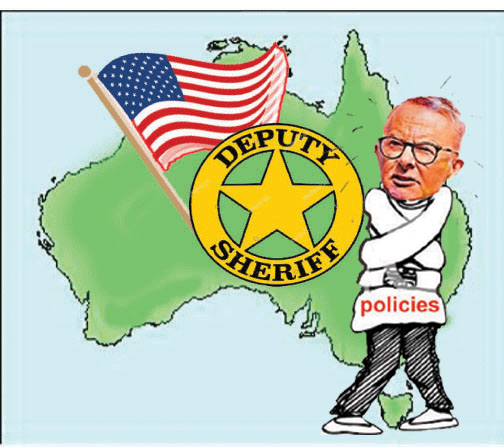
At the same time as the Australian government is trying to improve relations with China, it is greatly increasing spending on offensive weapons for a potential war with China – without adhering to any published treaty explaining the ground rules.
The Saturday Paper, 14 Jan 23
Australia has now joined the United States in refusing to discuss the ANZUS Treaty, let alone claim it is the foundation of Australia’s security. What was once seen as a virtue is now considered a drawback.
The perceived trouble is that the treaty bans the aggressive use of military force – something the US and Australia both use. Consequently, statements released during the Australia–US ministerial meetings on defence and foreign policy in early December did not mention ANZUS or its constraints. Instead, they refer favourably to the “rules-based international order” in which the US, not the United Nations, makes the rules.
In his subsequent comments on the need to build Australia’s military forces and welcome more American forces, Prime Minister Anthony Albanese made no reference to ANZUS. This is part of a trend in which Australian leaders cannot bring themselves to criticise recent harmful US breaches of the international rules on trade and investment.
Article 1 of the 1951 ANZUS Treaty requires the parties to “refrain in their international relations from the threat or the use of force in any manner inconsistent with the purposes of the United Nations”. Aggression is clearly inconsistent with the Charter of the UN, which states, “All members shall refrain from the threat or use of force.”
Labor’s then External Affairs minister, Bert “Doc” Evatt, played a significant role in establishing the UN in 1945 and served as its president from 1948-49. Initially, Labor gave enthusiastic support to ANZUS’s prohibition on aggression. No longer. The preferred “rules-based international order” doesn’t ban aggression, except presumably for countries such as Russia and China. Unlike with the ANZUS Treaty, no text of the new rules or the AUKUS pact is available.
Albanese won’t explain why he wants a large and hugely expensive arms build-up. In a media interview published on December 19, all he said was that we need to spend a lot more on defence because the need for new capabilities is so great. He did not explain why. He refuses to nominate a potential enemy. He merely says we need to spend more on our military to “promote peace and security in the region”.
Participating in an arms race is not necessarily the same as promoting peace. Yet Albanese refuses to invest in arms control measures – unlike the Hawke–Keating governments……………….
Albanese takes for granted that there’s no need to explain where the threat comes from – although the implication is, of course, China……………………
Perhaps China will start a major war within a few years. No one knows. Alternatively, it may put renewed stress on its policy of living in “Confucian harmony” with its neighbours.
Albanese lacks an informed grip on defence issues.
In the interview quoted above, he stated Australia must become more self-reliant in its defence, apparently unaware this is not possible because the US won’t give Australia the computer codes needed to operate American weapons systems and sensors. Nor will it show Australian technicians how to repair or modify any classified components.
This will get worse because of Albanese’s determination to buy eight American attack nuclear submarines for the Australian Navy. Because of the submarines’ extreme complexity, Australia won’t be able to operate them on its own. It may even have to let the US borrow them under the new “interchangeability” policy announced by Defence Minister Richard Marles………………………
Unlike noisy nuclear subs, the latest conventional ones are much cheaper and can operate silently for three or more weeks. ……………
There is no indication Albanese has warned the Americans not to use their forces in Australia for military aggression, in breach of the ANZUS Treaty and UN bans. Similar considerations apply to electronic intelligence facilities in Australia, which play a crucial role in war fighting…………………………
………successive governments have integrated Australian forces so tightly with their American allies – in the planning, training, doctrine, logistics and communications process – that the nation may find itself plunged into a devastating war between the US and China without parliament having the ultimate say after full consideration of the issues…………………..
At the same time as the Australian government is trying to improve relations with China, it is greatly increasing spending on offensive weapons for a potential war with China – without adhering to any published treaty explaining the ground rules.
…………………… Australia wants to deploy nuclear submarines close to China, so they can fire missiles into the Chinese mainland. Little thought appears to have been given to how fiercely China could retaliate…………………………….more https://www.thesaturdaypaper.com.au/opinion/topic/2023/01/14/australias-new-arms-race
Minister Madeleine King visits Australia’s proposed nuclear waste dump site – methinks the lady doth protest too much.

Peter Remta. 14 Jan 23 Minister visits Kimba to discuss Nationa Radioactive Waste Management Facility, 13 January 2023
Minister for Resources and Northern Australia, the Hon Madeleine King MP, has visited Kimba to meet with local community members and view the planned site for the National Radioactive Waste Management Facility.
It is going to be a long wait for another 10 years
The town of Kimba, on South Australia’s Eyre Peninsula, has been involved in more than seven years of consultation on the location of Australia’s National Radioactive Waste Management Facility.
Still have not provided a safety case or even details of the radionuclide inventories and activity of the intermediate level waste.
Will the high-level light waste processed in France be included in the storage?
“It was a pleasure to visit Kimba for the first time as Minister for Resources and Northern Australia and meet with community members to understand their views firsthand,” Minister King said.
“I was also able to meet with representatives from the Barngarla Determination Aboriginal Corporation (BDAC) Board in Kimba and other Traditional Owners.”
Minister King said she was strongly committed to protecting the cultural heritage of the site.
If she is so committed why does she continue opposing the Barngarla peoples’ review litigation?
The National Radioactive Waste Management Facility will consolidate Australia’s low level radioactive waste permanently and intermediate level waste temporarily, which is currently stored in more than one hundred locations across the country.
Please correct this total lie as many of the more than one hundred locations handle their own low-level waste and in the federal government’s own previous statements it will be lucky to get 10% of that waste for disposal at the national facility.
Most of this waste comes from nuclear medicine production, which is an essential part of an advanced healthcare system like ours and one that most Australians will benefit from over their lifetimes.
Again please don’t be cute as the waste you are speaking about is the intermediate level waste generated at Lucas Heights in the course of producing nuclear medicine and that should soon be dramatically reduced as the medical profession worldwide is turning away from reactor generated medicine
“As part of my visit, I engaged with a number of local community groups and stakeholders to discuss how the social and economic benefits of the project could be maximised for the local community,” Minister King said.
None of this will in any way improve or safeguard the community from all the potential problems of the aboveground facility and the destruction of its agricultural industry.
“I understand there is a wide range of views about the project in this community and I wanted to listen to those views firsthand.”
Minister King also met members of the community at a sundowner event at the upgraded Kimba Medical Centre, which was funded under the National Radioactive Waste Management Facility Community Benefit Program.
“The upgrades to the Kimba Medical Centre will drive health and social improvements in a community that sorely needs it,” Minister King said.

[Ed note: I understood that Kimba was a thriving, healthy community, a State leader in agriculture.
Are we to understand that instead, it is a sickly pathetic situation, and indeed, the radioactive waste dump’s purpose is to be the saviour of this sad place?]
The only benefit of upgrading the so-called medical centre will be hopefully to provide better care for the people who are affected by radiation – and there will be quite a few believe me with the above ground facility.
Other projects funded in previous rounds include the upgrades to the Kimba Medical Centre, resurfacing Kimba District sporting fields, as well as various mental health initiatives.
[Ed. note. I wonder how much mental health and community cohesion have been damaged by this whole nuclear waste fiasco?]
Federal minister visits South Australian site for nuclear waste as legal challenge continues

ABC North and West SA / By Nicholas Ward https://www.abc.net.au/news/2023-01-13/madeleine-king-visits-kimba-nuclear-waste-dump-site-preparations/101853878
Works to establish Australia’s first national nuclear waste facility near Kimba on South Australia’s Eyre Peninsula are continuing apace, despite ongoing legal disputes surrounding the project.
Key points:
- Site preparation works for the nation’s nuclear waste storage are well underway
- More federal money for the host town of Kimba is reliant on the facility’s construction
- The federal resources minister says there are currently no plans to store high-level nuclear waste at the site

Federal Minister for Resources Madeleine King, who is responsible for the Australian Radioactive Waste Agency (ARWA), made her first visit to the town this week to inspect the chosen site at Napandee.
Federal Minister for Resources Madeleine King, who is responsible for the Australian Radioactive Waste Agency (ARWA), made her first visit to the town this week to inspect the chosen site at Napandee.
“The studies being taken out at the site at the moment are site-characterisation studies,” she said.
They are entirely remedial. They are what I would call small-scale.
“There is a cultural heritage management plan that is informed by the research of the Barngarla people.
“There are strict protocols around the work that is going on right now to make sure there is no disturbance of cultural heritage.”
‘Reversible’ preparation underway
ARWA Safety and Technical general manager David Osborne said concurrent works at the site included tests of its seismology, hydrology and background radiation.
“We have to do all of this work before we can even think about construction,” he said.
“This is about gathering information and all of the work is reversible. We’re simply collecting information that any organisation would do before a construction project.”
Mr Osborne said the work was anticipated to take between 18 months to two years to complete.
Meeting to address concerns

Local grain farmer Peter Woolfood met with the minister to express concerns about the facility’s threat to the region’s “clean, green, agricultural image”.
“We just can’t understand why you would expose this great agricultural industry we have here in grain production to any potential risk at all by having a nuclear waste dump here,” he said.
“Australia’s a big place, so there are plenty of areas this could go without impacting people or industries, simple as that.”
Ms King said those concerns had been taken on board and made assurances that the facility would only be used to store low and intermediate-level nuclear waste.
“There is no high-level waste produced in Australia and there will not be high-level waste stored at the facility so far as planned,” she said.
More money tied to construction
Kimba District Council has benefited from a $6 million federal grants program, currently in its final round, for waste site candidates.
Another $20 million is in the pipeline for the community, but the minister says several hurdles need to be cleared before the money can flow.
“The facility has to get its operational licence. That does require construction and construction is a long way off,” Ms King said.
“There is a judicial review [involving the Barngarla Determination Aboriginal Corporation] going on right now and it depends on the outcome of that case.”

Kimba District Council Mayor Dean Johnson gave the minister a tour of the town’s new $1 million medical centre, funded by federal grants.
He said that despite legal challenges, there was a growing expectation that the town’s future was fixed.
“Ultimately, Napandee [the waste site] is earmarked as the final site for the national radioactive waste facility and we believe that will happen,” he said.
Australia’s nuclear submarine plan – a source of disagreement in US Congress

Who is going to build our nuclear submarines? Financial Review 13 Jan23.……………………………………………………………. At the heart of the problem is this simple fact: according to current projections, the US needs to turn out two submarines a year, but only around 1.3 per year are coming out of its naval shipyards.
The deficit in shipyard capacity is a problem that affects maintenance and refits as well as new boat construction. Last year, Rear Admiral Doug Perry, director of undersea warfare requirements in the US Navy, admitted that of America’s 50 attack submarines, “18 were either in maintenance or waiting to go in maintenance”. That figure should be closer to 10.
‘Zero-sum game’
In the words of senators Reed and Inhofe, “what was initially touted as a ‘do no harm’ opportunity to support Australia and the United Kingdom and build long-term competitive advantages for the US and its Pacific allies, may be turning into a zero-sum game for scarce, highly advanced US SSNs”.
Reed and Inhofe will have been briefed in detail by US officials, and presumably those classified briefings led them to conclude that the projected additional demand from the AUKUS program would come at the expense of America’s own military preparedness.
…………………………….. the back-and-forth [in the USA regarding Austrsalian submarines] shows that wider congressional commitment could be put under strain if the program comes to be seen as improving Australian capability while stretching the US to breaking point.
Australia’s ‘optimal pathway’ on AUKUS
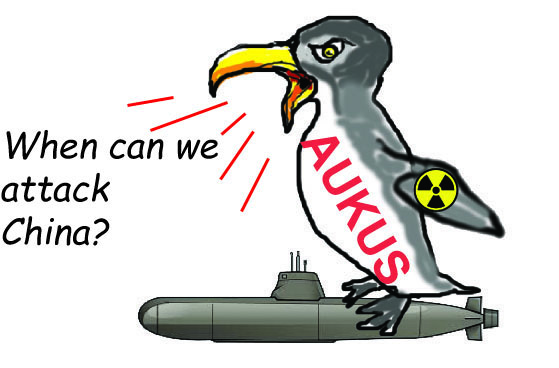
‘Optimal pathway’ is Prime Minister Albanese’s way of describing the obscure, tortuous AUKUS process
By Alison BroinowskiJan 12, 2023 https://johnmenadue.com/australias-optimal-pathway-into-or-out-of-aukus/
Just in time, the fundamental faults of AUKUS are being exposed in Canberra and Washington.
This development is not only due to the mounting concern among Australian civil society groups. The Australian mainstream media are now discussing the hitherto unmentionable drawbacks of AUKUS. But it’s because two US Senators, Democrat Jack Reed and Republican James Inhofe (since retired) warned President Biden that the US can’t meet its own submarine needs, let alone Australia’s. They also cautioned about American statutes and regulations that would have to be changed.
Their concern came just in time, for the AUKUS agreement between Australia, the US and the UK is promised for March. As any Australian who’s been asking the Morrison and Albanese governments for the details for the past year knows well, there are none. For the nuclear-powered submarines, we don’t know the cost of the weaponry, the dates of delivery, or the training, staffing and crewing requirements, and it’s a good guess that the government doesn’t either.
In a rare burst of candour, Peter Jennings, whose constant theme at ASPI was and remains to urge more Australian spending on American weapons directed at ‘deterring’ China, is now concerned that if Australia/China relations improve, that could compromise secret US nuclear technology to be shared with Australia. But he still wants the agreement.
What is AUKUS if not a means to deter China?’ he asks, adding that if AUKUS fails, so could ANZUS (Australian, 10 January 2023: 9). Jennings’ concerns may open the AUKUS can of worms, which as he implies, also contains a festering mass of unresolved problems for the ANZUS alliance.
ANZUS was negotiated in 1951 as the bare minimum commitment Australia, New Zealand and the US were prepared to make to defend each other. With no effectively binding clauses – apart from Article 1 where they undertake to refrain from the threat or use of force, consonant with international law and the UN Charter – its unwritten purpose was to contain Japan. Talked up for decades, it acquired mythical significance for Australia’s mateship with the US. But would the US defend Australia if that wasn’t in America’s interests?
That nagging doubt was raised with Julia Gillard, as Prime Minister, by Kim Beazley who knew that whatever else the US would not defend, it would fight for a base. The ‘joint facilities’ at Pine Gap, Narrungar, and Northwest Cape weren’t enough: in 2011 Australia proposed US Marine deployments in the Northern Territory. Under the Coalition, the Force Posture Agreement of 2014 went further, giving ‘unimpeded access’, exclusive control and use of agreed facilities and areas to US personnel, aircraft, ships and vehicles. As Bevan Ramsden pointed out here on 10 January, the sovereignty horse has bolted. US-Australia ‘Force Posture Agreement’ undermines sovereignty, must be terminated
It is too late for Prime Minister Albanese to assure Australians that the nation’s ‘sovereign interest’ will be protected: it hasn’t been for more than a century during which alliances to Britain and the US circumscribed Australian sovereignty. It is meaningless for Malcolm Turnbull, having done nothing to arrest the process of ‘interoperability’ with the US as prime minister, now to lament that AUKUS diminishes Australian sovereignty. The nuclear-powered submarines will have to be bought from, operated by and maintained by the US, and Australia’s defence forces are already ‘interchangeable’ with America’s, as Defence Minister Richard Marles has said. Some face-saving concessions to the UK’s submarine industry will further complicate the agreement.
Australia ‘cannot do everything ourselves’, says Retired Rear Admiral Peter Clarke. What if any of this Australia can do ourselves he didn’t go into. Proof of Clinton Fernandes’ description of Australia as a ‘sub-imperial power’ is becoming stronger by the day, even as its ‘power’ element diminishes.
When political leaders adopt defence jargon, the rest of us should reach for our fact-checkers. ‘Optimal pathway’ is Prime Minister Albanese’s way of describing the obscure, tortuous AUKUS process. ‘When we talk about optimal pathway, we talk about not just the issue of what is built, but how it is built, as well as the optimal pathway in building a capacity of skills in the Australian workforce’, he said. Opposition leader Peter Dutton tried for a clearer answer, saying that Australia was really dependent on buying US submarines to ‘keep the region safe’. That too remains debatable.
Our leaders don’t say which countries in our region want Australia to ‘keep it safe’. Most of our regional neighbours are safely managing their relations with others now, without our submarines. They will have to wait until 2040 for that to change. In the meantime, Australia might seek their advice about a shared vision for a safe region. How Australia confronting the PRC with armed force is going to deter China – from reclaiming Taiwan, perhaps – is never explained. Peter Jennings hopes Australia can match China’s growing submarine fleet and join the US to stop the ‘Chinese Communist Party dominating the Indo-Pacific’. But how and when will we do so, and at what cost?
What our leaders always leave out is why we should do all this. Before the AUKUS deal is signed and it’s too late, Australians need a clear answer. That needs to be more reliable than citing the ANZUS insurance policy. Australia’s interests in our region are not interchangeable or interoperable with those of the US, nor are they identical, and they should be sovereign.
Dr Alison Broinowski AM is a former diplomat, author and academic. She is President of Australians for War Powers Reform.
Guilty of Journalism

The Political Prosecution of Julian Assange
by Kevin Gosztola https://www.sevenstories.com/books/4493-guilty-of-journalism?fbclid=IwAR2np9Ku9WHMKuJ7xTPkrrolJRvbkxdWcmyac0FnEZqKSduuhH2g2M-zPaM 7 Jan 23
From an acclaimed independent journalist, this carefully-documented analysis of the government’s case against Julian Assange and its implications for press freedom acts as a crucial, compelling guidebook to Assange’s upcoming trial.
The legal action against Julian Assange is poised to culminate in a trial in the United States in 2023, and this book will help the public understand the proceedings. The establishment media’s coverage of WikiLeaks founder Julian Assange’s extradition case has focused on his deteriorating health and what CBS News called his “secret family,” but most of this coverage failed to detail the complex issues at stake against Assange.
Guilty of Journalism outlines how WikiLeaks exposed the reality of American wars, the United States government’s unprecedented indictment against Assange as a publisher, and the media’s role in persuading the public to “shoot the messenger.” This new book by Kevin Gosztola, who has spent the last decade covering Assange, WikiLeaks, and the wider war on whistleblowers, tells the full story based on testimony from dozens of witnesses.
It examines abuses of power by the CIA and the FBI, including a spying operation that targeted Assange’s family, lawyers, and doctors. Guilty of Journalism offers a balanced and comprehensive perspective on all the events leading up to what press freedom advocates have called the trial of the century.
Australia’s contribution to AUKUS should be a next generation conventional submarine

By Kym Bergmann, 08/01/2023 https://asiapacificdefencereporter.com/australias-contribution-to-aukus-should-be-a-next-generation-conventional-submarine/
Sherlock Holmes teaches us that when all possible explanations have been eliminated, the only remaining answer – no matter how improbable – must be correct. As prospects are diminishing that Australia will be able to receive a nuclear-powered submarine before the 2050s, policy makers are faced with two choices: do nothing, or fast track something that will add significantly to the undersea warfare capabilities of the three AUKUS partners.
The latest development is that two US Senators – one serving and one just retired – Democratic Chair of the Senate Armed Services Committee Jack Reed and his Republican predecessor Senator James Inhofe, have warned that the US does not have the capacity to build submarines for Australia. Previously, Australian officials have dismissed any negative commentary about the nuclear submarine plan as “noise”, but this is getting hard to ignore.
Maybe the report by the nuclear-powered submarine task force due in March will prove the critics wrong, but unless it comes up with a concrete schedule with dates, legally enforceable commitments and so on, Australia needs to have a Plan B. A document that emphasises intentions, good will, more discussions, dialog, harmonising requirements, committees, and further investigations gets us nowhere.
Even the most vocal critics of conventional submarine technology concede that they nevertheless retain some performance advantages, such as in complex, shallow water littoral environments. They are also comparatively cheaper to build and – depending on their size and complexity – a nation can acquire at least three conventional submarines for every nuclear-powered boat.
A new generation fleet of Australian conventional submarines could see some of them permanently based in Guam – or even Japan – making an important contribution to USN-led coalition operations in areas such as the South China Sea. Some could also travel to the UK, though what contribution they could make to joint security from there is unclear, but the gesture might be politically worthwhile.
A commitment to actually doing something to help ourselves would also go over well in Washington. US figures are reportedly surprised and disappointed at the supine position of Australia, which seems to believe a solution for our defence needs will be handed to us on a platter. Why should Australia expect the US to solve our submarine problems for us? First and foremost, this a challenge to be met by the sovereign Australian government and not offshore it like some sort of strategic help line.
The quickest solution for Australia would be to forget about the Collins Life of Type Extension due to start in 2026 and fast track the local construction of the South Korean KSS-III Batch 2 design – now owned by Hanwha – which could see boats in the water from 2030. These are long-range conventional submarines that achieve a very low indiscretion rate by using lithium-ion batteries and other advanced technologies that were never part of the cancelled Attack class program. Their endurance could be further expanded by building a resupply base on Christmas Island – surrounded by deep water and easy to protect – that would give them an extra 25% time on station.
Another option would be a Next Generation Collins class – a larger version of the Swedish A26 submarine, similar to the one favoured to be chosen by the Netherlands to meet their need for a long-range oceanic submarine. A Third Generation Collins in the 2050s could be nuclear-powered, with the involvement of both the US and the UK. That’s called long term planning and is probably closer to the spirit of AUKUS because it would contribute to sovereign capability.
For all the boosters of nuclear-powered submarines, we say this: unless Australia has a highly skilled construction base, we will be condemned to forever seeking to buy them from the US or the UK – and, as we are witnessing, the chances of that ever happening are receding. As those two nations learned from the Sea Wolf and Astute programs, without a continuous submarine construction program, the loss of skills can be catastrophic.
The only sure way to guarantee that Australia will be able to build nuclear powered submarines – other than the reactors themselves – is to be able to transition from building large, advanced conventional submarines to something with a different propulsion system. Put simply: those arguing that an interim submarine is too inconvenient are condemning to death the idea of the local build of a nuclear-powered boat. We will need a skilled, experienced, existing workforce, existing program management and existing local supply chains.
The only sure way to guarantee that Australia will be able to build nuclear powered submarines – other than the reactors themselves – is to be able to transition from building large, advanced conventional submarines to something with a different propulsion system. Put simply: those arguing that an interim submarine is too inconvenient are condemning to death the idea of the local build of a nuclear-powered boat. We will need a skilled, experienced, existing workforce, existing program management and existing local supply chains.
Dear US Congress, thank you for saving Australia from itself
by Rex Patrick | Jan 7, 2023 https://michaelwest.com.au/dear-us-congress-thank-you-for-saving-australia-from-itself/
Is “bad news” out of US Congress about an AUKUS nuclear submarine deal a blessing in disguise? Former submariner and senator Rex Patrick says US politicians, though acting in the interests of the US, may save Australia from itself, and $170 billion too.
We are concerned that what was initially touted as a ‘do no harm’ opportunity to support Australia and the United Kingdom and build long-term competitive advantages for the US and its Pacific allies, may be turning into a zero-sum game for scarce, highly advanced U. SSNs,” wrote the Democrat and Republican heads of the Senate Armed Services Committee.
“Over the past year, we have grown more concerned about the state of the US submarine industrial base as well as its ability to support the desired AUKUS SSN [Nuclear Submarine] end state”.
“We believe current conditions require a sober assessment of the facts to avoid stressing the US submarine industrial base to the breaking point.”
These two Senators have nailed it.
Scotty’s greatest marketing moment
The AUKUS submarine was a ‘brain fart’ of Prime Minister Scott Morrison who was facing disquiet within the Liberal Party ranks (I know; as a Senator and submariner, they were raising the issue with me) over the French designed Attack Class replacement submarine program.
It was an idea supported by a Defence Department which had, in the 12 years since the future submarine project had been initiated, spent five billion taxpayer dollars delivering no submarine, and more than $8.5 billon on other failed projects.
On the morning of September 16, 2021, Morrison stood up in a stage-managed announcement staring US President Biden, then UK Prime Minister Boris Johnson and Morrison. Apart from the fact that President Biden didn’t know Morrison’s name, it was Morrison’s greatest ‘Scotty from Marketing’ moment.
While waving a big and distracting nuclear submarine hand to the camera, his other hand was behind his back silently putting a death to the French submarine program, something that would very shortly after cause a diplomatic rift between Australia and France.
Then opposition leader, Anthony Albanese, was given a briefing on AUKUS and the new submarine plans just 24 hours prior to the announcement. In the face of the oncoming election, Albanese made the political call to give the announcement Labor’s full support. Indeed, pursuing a ‘small target’ political strategy, Labor was embarrassingly desperate to avoid a fight about national security.
Not good for Australia
It was only after the dust had settled that the right questions started to be asked; simple questions like how much, when and where?
The cost soon emerged. The French submarine program has taken an expensive $50 billion submarine program and blown out to an unaffordable $90 billion. The AUKUS submarine was to invoke a cost ‘chain reaction’, coming in at a bankrupting $170 billion. We were jumping out of the financial frying pan and into the fire.
2040 what?
The commissioning date soon emerged. 2040! Noting the rationale for the switch from a French to an AUKUS program was the rising geo-political tension in our regions, the AUKUS submarine was to be delivered even later that the French solution. In an environment where Defence itself had warned our defence procurement warning time had been reduced to less than 10 year, it made no sense to embark on a program that delivers a first capability in 20 years.
Then the build discussions started. The nuclear submarine was not to be built in Australia, rather the US. We were going to sell out Australia industry, and in particular our hard-won competent submarine sustainment industry. We were going simply export $170B, most of the jobs and a sovereign capability the taxpayer had spent billions developing.
Not good for the US either
And the US Congress is now coming to the realisation that the AUKUS program will not be good for the US either.
Supporting Australia’s submarine program will put even more pressure on the US submarine industry trying to build 12 new Columbia Class ballistic missile submarines and meet the demands of supplying the US Navy with its own Virginia Class submarines.
This is not surprising. The US Congressional Research Service has been issuing reports for the better part of a decade that highlight the growing pressures on and limited capacity of the two American submarine construction facilities. The industrial capacity problem is already acute.
The old Los Angeles Class submarines are retiring faster that the Virginias can be brought online.
Now the Senate Armed Services Committee has finally realised what would be involved in supporting the AUKUS submarine.
Please help pal!
Not having built or operated nuclear submarines before, and as the only country in the world that would be operating nuclear submarines without an established nuclear power industry, Australia’s dependency on the US would be significant. Training, shipbuilding, operating and maintaining a nuclear submarine, nuclear safety … we would need a lot of help with all of it.
We are talking about nuclear reactors. The US can’t half commit to this. AUKUS nuclear submarines will be a considerable distraction to the entire US submarine enterprise at a time when they don’t need distraction.
But the public concerns of the senators only tell half the story.
China conflict looms, before the subs arrive
Conflict between the US and China is more likely to occur in the next decade, than in the 2040’s when a first AUKUS nuclear submarine would be fully operational.
A decision by the US to support an AUKUS nuclear submarine would be a decision resigning their close Asia-Pacific ally to the operating of ageing Collins class submarines in the very period a high-end submarine partnering capability was needed most.
Stupid and stupider, but political momentum
The whole AUKUS nuclear submarine thing has a political momentum about it which will bring about national security downsides for both countries.
As indicated above, the Labor Party leadership signed up to this massive project on 24 hours’ notice and little information. Now, completely captured by the ‘Department of Largely Failed Procurement and No Accountability’, Albanese, Defence Minister Richard Marles and Defence Industry Minister Pat Conroy have been supplied with a full barrel of naval Kool Aide, and they’re chugging it down.
Cold hard analysis, such as that being conducted by the US Congress, might be the only thing that saves Australia from itself.
The Australian government joined enthusiastically into America’s espionage law attack on whistle blowers and journalists
Key US Allies Collaborate On Espionage Laws Considered Harmful To Whistleblowers And Journalists

Since the legislation was passed, Australian Federal Police have raided the homes and offices of journalists who reported on war crimes in Afghanistan and the monitoring of Australian citizens’ communications.
Groups, such as Reporters Without Borders and the National Union of Journalists, wrote to lawmakers and warned that the bill conflated journalism with spying, expanded the definition of classified information, and disproportionately increased the penalty of espionage to life imprisonment.
Many of these new elements align existing laws with the United States Espionage Act, an antiquated law that was adopted over a century ago.
Richard Spence, Jan 5, 2023 https://thedissenter.org/us-allies-collaborate-to-write-new-espionage-laws/
Ministers and security officials in Australia, Sweden, and the United Kingdom have coordinated with the United States to develop new espionage laws.
Each of the countries have faced criticism from news media and civil society organizations for proposing laws that will harm journalists and whistleblowers’ ability to report on abuse and corruption in their own and each other’s countries.
These states have close intelligence ties to each other and the United States, and they have played some role in the extradition of WikiLeaks founder Julian Assange, whose prosecution is widely recognized as a threat to global press freedom. In fact, disclosures of the kind that Assange published have been cited as what the laws aim to make illegal.
FBI Director Christopher Wray had several days of meetings with “law enforcement partners in the United Kingdom” during July 2022. After these meetings, MI5 chief Ken McCallum promoted the “National Security Bill,” the first change to UK espionage laws since 1989.
The law would purportedly address the perceived threats Wray and McCallum discussed.
McCallum and other intelligence officials’ warnings and suggestions were frequently referenced by parliament members and government ministers who supported the bill when it was debated in the UK Parliament in November 2022.
Priti Patel, when she was UK Home Secretary, said the bill “was designed in close consultation with security services.”
In Sweden, the 2022 Foreign Espionage Act, which was adopted last November, specifically criminalized disclosures that cause “substantial damage” to Sweden’s relations with other countries or organizations. That led reporters to warn that journalists revealing war crimes committed by the US government could be prosecuted.
The Australian espionage bill also defined information that “harm[s] or prejudice[s] Australia’s international relations” as illegal to disclose.
Australia Security Intelligence Organization (ASIO) Director Duncan Lewis, who advised the country’s premier on their legislation, was asked at a parliamentary committee hearing, “Is there a connection, in your view, between our diplomatic and economic relations and our national security? In other words, if someone causes harm to our diplomatic relations with a foreign country, like the United States, can that harm our national security?”
“Absolutely,” Lewis responded. “You would need [to] go no further than perhaps the case of [Edward] Snowden to think about that—the enormous damage that was done to various diplomatic relations as a result of the leaks that came out of Snowden.”
The Espionage and Foreign Interference Act of 2018 introduced a range of measures the Australia government claimed were meant to combat Chinese interference.
A collection of media outlets, including The Guardian and News Corp, opposed the law, saying that “journalists and their support staff continue to risk jail time for simply doing their jobs” due to the possibility of being prosecuted for dealing with classified information.
Since the legislation was passed, Australian Federal Police have raided the homes and offices of journalists who reported on war crimes in Afghanistan and the monitoring of Australian citizens’ communications.
The ASIO gave “extensive operational briefings” on foreign interference to Malcolm Turnbull, when he was Australia’s prime minister, and Turnbull noted their input as he introduced the legislation in Parliament.
ASIO Director Duncan Lewis explained what in part motivated the push to expand the country’s espionage law. “Our international allies and partners with whom we share threat information tell us resoundingly that Australia is not alone in confronting a new threat environment, one that’s different from what we’ve seen before. In ASIO’s view, we must now adjust to this harsh reality.”
Lewis pointed to UK Prime Minister Theresa May who had urged allied powers to do more to “clamp down on the hostile activity of foreign agents.”
During parliamentary debate in the UK, Patel referred to these discussions.
“Let me say something about the legislation we want to introduce. We are learning from other countries, such as Australia—indeed, I had a bilateral meeting just last week. This is also part of the work of Five Eyes,” Patel shared. “A lot of work is being done to look at the institutional impacts of hostile state activity, alongside issues such as foreign agent registration. We want to get this right through future legislation, and that is what we are working on.”
Groups, such as Reporters Without Borders and the National Union of Journalists, wrote to lawmakers and warned that the bill conflated journalism with spying, expanded the definition of classified information, and disproportionately increased the penalty of espionage to life imprisonment.
Many of these new elements align existing laws with the United States Espionage Act, an antiquated law that was adopted over a century ago.
During a Novembr 2021 speech for the right-wing Heritage Foundation on the US-UK alliance, Patel acknowledged this fact.
“We will modernize existing counter-espionage laws to better reflect the contemporary threat; and we will improve our ability to protect official data and strengthen the associated offenses,” Patel declared “Our strategic partnership must continue to address all this activity – which is uninhibited and growing along with all the other threats we see day in, day out.”
The UK’s proposed legislation updates the current espionage laws to now be applicable to non-UK citizens. Press organizations have complained, “The lack of geographic limits and the overly broad definition of the safety and interests of the United Kingdom can extend the reach of the bill across the globe.”
Australia’s new laws also apply outside of the country and like the UK include assisting (or benefiting in the UKs case) foreign entities, leading to criticism that officials are criminalizing those who work with foreign press outlets.
According to the Australian chair of the Five Eyes Law Enforcement Committee, the organization will arrest those who have committed espionage “no matter where those criminals are in the world.”
Swedish military and intelligence officials studied changes to espionage legislation at the behest of the Swedish government and used WikiLeaks’ release of US diplomatic cables in 2010 as an example of a kind of leak that would harm Sweden’s relationship with other countries if it happened today.
Officials also singled out the North Atlantic Treaty Organization (NATO) and the US as powers that were important to protect from damaging leaks.
In June 2022, Conservative Party parliamentary member Sir John Hayes asked Damian Hinds, who was the UK minister of state for prisons, parole, and probation, if “a WikiLeaks-type disclosure dressed up as being by a guardian of liberty or some such other nonsense” would be illegal.
“The defenses in part one of the bill provide law enforcement with several options for prosecuting disclosures, where the person is acting for or on behalf of a foreign power or where the disclosure would materially assist a foreign intelligence service,” Hinds responded. “That can include bulk disclosures.”
“To be clear, with this bill, the maximum sentence for an indiscriminate disclosure—a bulk data dump—will be higher than it is today if that act is done for a foreign power or the disclosure would materially assist a foreign intelligence service, even if not procured by that foreign intelligence service itself,” Hinds further stated.
Canada, which is a Five Eyes country like Australia and the United Kingdom, has also followed their lead. Canadian security officials briefed the press and politicians, claiming that China aims to influence Canadian democracy.
Security officials in Canada have submitted reports to their government requesting new security laws to prevent Canada from becoming a “weak link” amongst its allies.
Kimba nuclear waste dump plan lacks a safety plan and is fracturing the local community

Peter Remta 7 Jan 23. I have again passed on more information to Professor Orellana who is the United Nations special rapporteur mandated as to the human rights aspects of nuclear and hazardous waste
What is really needed is for various community members to contact him direct and explain to him how stressful the whole situation at Kimba has been leading to a fractured society which may never properly recover from this ordeal
The federal government at every turn has failed to abide by or follow the international prescriptions relating to its proposals for Kimba which among other things include the lack of a safety case and after so many years being unable to provide the radionuclide inventory of the intermediate level waste to be stored in the above ground facility
Australia prides itself as a leading first world country on having a most democratic system of government yet this situation would not be tolerated in most third world countries which seem to give greater credence to human rights than locally
Everything for Special Rapporteurs Orellana shoulder sent to his assistants:
Sonia Cuesta sonia.cuesta@un.org
Halida Nasic halida.nasic@un.org
Australia to buy long-range HIMARS missile system from United States – at unknown cost (? 2 $billion)
ABC, By defence correspondent Andrew Greene, 5 Jan 2023
Australia’s Army will have an unprecedented long-range strike capability with the purchase of the US-made High Mobility Artillery Rocket (HIMARS) system, which Ukraine has praised for its devastating effectiveness against invading Russian forces.
Key points:
- Defence officials say the use of HIMARS in Ukraine against Russia confirms why it’s needed
- Labor says the overall cost of the missiles is over one billion dollars
- Defence Industry Minister Pat Conroy says it “isn’t useful” to disclose the full cost to “potential adversaries”
The Albanese government has finalised a deal to buy 20 of the truck-mounted rocket launchers by 2026, while signing another deal to acquire the Norwegian-made Naval Strike Missiles (NSM) for Australian warships next year.
Precise costs of the purchases are being kept secret for security reasons, but the government has confirmed to the ABC the overall figure is “between one and two billion dollars”.
Defence Industry Minister Pat Conroy said during an October visit to the United States he held “productive discussions” with the Army and Lockheed Martin on how Australia could start producing the rockets used in HIMARS.
On New Year’s Day, a Ukrainian strike using the US-donated HIMARS system killed dozens, possibly even hundreds of Russian soldiers in the Donetsk region……………………………….
Congress was first notified of a possible sale of the Lockheed Martin-produced HIMARS to Australia seven months ago, while the NSM purchase was flagged by the Morrison government in April last year………………..
Labor says the HIMARS and NSM purchases will together cost over $1 billion, but Mr Conroy says precise details are being kept deliberately hidden.
“We won’t be disclosing the total cost of the two announcements,” he told the ABC.
“The two combined costs is between one and two billion dollars, the reason that we’re not disclosing the specific amount is that gives information to potential adversaries which isn’t useful beaming out there.”
In its notice to Congress in May, the US Defence Security Cooperation Agency estimated the cost of 20 HIMARS and associated munitions and equipment at US$385 million ($561 million). https://www.abc.net.au/news/2023-01-05/australia-america-himars-missile-system/101827334
 | |||
| |||
1 This month
15 April – Zoom –Nuclear Power is Not the Solution
Apr 15, 2026 01:00 AM in Canberra, Melbourne, Sydney

Join the International Physicians for the Prevention of Nuclear War (IPPNW) on Tuesday, April 14th for a timely webinar exploring the risks associated with nuclear power and challenging the myth that it offers a simple, safe, carbon-free solution to the climate crisis

of the week – Australians for War Powers Reform (AWPR)
To see nuclear-related stories in greater depth and intensity
 Antinuclear