Indigenous opponents of Adani’s Carmichael mine to intensify court battle
‘ Wangan and Jagalingou people vow to ‘take the fight up a notch’
after mine’s endorsement by Queensland parliament’ Joshua Robertson, The Guardian Australia: http://www.theguardian.com/business/2016/mar/17/indigenous-opponents-of-adanis-carmichael-mine-to-intensity-court-battle
“Indigenous opponents of Adani’s Carmichael mine have vowed to ramp up their legal fight against the project despite fresh progress by the miner and its endorsement by the Queensland parliament.
Representatives of the Wangan and Jagalingou people, the traditional owners of the site of Australia’s largest proposed coalmine, are considering a series of high court and federal court actions to broaden their unfolding battle against the Indian miner.
Adani’s failure to secure an Indigenous land use agreement (ILUA) with the Wangan and Jagalingou continues to pose a key obstacle for the project, … “
High Court challenge to Tasmania’s controversial anti-protester laws
here are environment ministers Groom and Hunt backing the arrest and punishment of Australians who make a modest stand for threatened species that they, the ministers, should be protecting.
In an age of the accelerating and irreversible destruction of our Earth’s biosphere, the untoward and often unseen influence of its exploiters is eroding Australia’s time-honoured rights to peaceful protest.
It was inevitable that somewhere, some time, some citizens would face the repressive Tasmanian laws. That stand has now been made among the stately ferns of Lapoinya and will move to the High Court of Australia where the consequences are enormous for every environmental, social, cultural and Indigenous issue in Australia’s future
Bob Brown’s arrest in Lapoinya under new anti-protestor laws, The Saturday Paper, BOB BROWN, 19 Mar 16 A  follows their use to arrest conservationists in the Lapoinya forest. “…….The logging at Lapoinya torpedoed any hope Forestry Tasmania had of winning Forest Stewardship Council (FSC) certification, the internationally recognised green accreditation increasingly sought by global markets. FSC depends on respectful relationships with local communities………
Through all of this, the nation’s most powerful potential guardians of Australia’s forests and threatened species, Prime Minister Malcolm Turnbull and the federal minister for the environment, Greg Hunt, failed to lift a finger.
The right to protest under threat
In Australia, the option of choice for setting back conservation is the strangling of environmental protest. As the resource-extraction industries come under fire for increasing encroachments on farmland and places of high natural or cultural heritage value, a key strategy is to have governments outlaw effective political protest…….. Continue reading
Royal Commission comment period ends but Aboriginal resistance to radioactive dump grows ever stronger
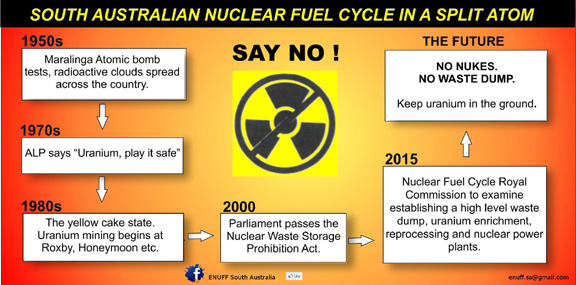
18 Mar 16 Traditional Owners and members of the Aboriginal-led Australian Nuclear Free Alliance (ANFA) have today reaffirmed their opposition to the suggestion that South Australia should host a high level international nuclear waste dump. This announcement comes as the submission period closes for comments on the tentative findings of South Australian Nuclear Fuel Cycle Royal Commission
A major recommendation of the Commission to date has been that South Australia could host an international waste storage and disposal facility. This suggestion is strongly rejected by Aboriginal people across the state because of the risks posed to country and culture. Several Aboriginal communities throughout South Australia live with the negative impacts of the nuclear industry through uranium mining and nuclear weapons testing and are committed to resisting any further nuclear proposals.
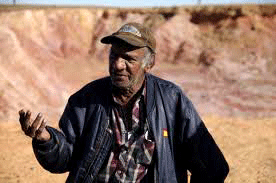 “We have long memories; we remember the atomic weapons tests at Maralinga and Emu Fields and the ongoing denial around the lost lives and health impacts for Aboriginal people. We don’t want any nuclear projects here in South Australia and we won’t become the world’s nuclear waste dump,” said Arabunna elder and Australian Nuclear Free Alliance president Kevin Buzzacott.
Enice Marsh, senior Adnyamathanha woman and Australian Nuclear Free Alliance member said:
“Any kind of radioactive waste dump would put our groundwater at risk. Groundwater is about survival; we don’t want to be faced with another huge risk like this.”
Sue Coleman-Haseldine is a Kokatha-Mula woman and co-chair of the Australian Nuclear Free Alliance. She has recently travelled to Vienna to share her family’s experience with the nuclear industry: “They’ve poisoned us once and there’s no way in the world they’re going to do it again.”
“This problem doesn’t stop at South Australia’s border, there is nowhere that should be designated an international waste dump,” Ms Coleman-Haseldine concluded.
For comment contact: Sue Coleman-Haseldine: 0458 544 593
Kevin Scarce dodges the vital questions of debt & safety from #NuclearCommissionSAust plan
 NuclearCommissionFerret, 18 Mar 16 A meeting was organised by ALP MPs Frances Bedford and Tom Kenyon for their constituents in the north east suburbs of Adelaide. Royal Commissioner Kevin Scarce was the only speaker, there was no balance with a nuclear critic speaker.
Kevin Scarce was asked the question:
” what happens if we accept high level nuclear waste for interim storage, then don’t have enough money when it comes time to build the deep geological dump. We’ll either end up with waste we can’t store to the safest extent possible, or a debt.”
A South Australian Labor MP has the guts to speak out against nuclear waste dump plan
“I don’t want nuclear dump”: Labor MP http://indaily.com.au/news/local/2016/03/18/i-dont-want-nuclear-dump-labor-mp/, Tom Richardson, 18 Mar 16
Jay Weatherill could face a divided party if he forges ahead with a proposal to establish a high level nuclear waste dump in South Australia, with a long-time Labor MP telling InDaily the idea is “quite worrying” – and suggesting several colleagues share the same view.
The tentative findings of Kevin Scarce’s nuclear royal commission handed down last month found an unambiguous economic case to establish a repository, with the Premier already moving to amend the law to facilitate broader debate on the issue.
 But the debate is heating up in the corridors of parliament, with former Labor minister and Ashford MP Steph Key joining Greens MLC Mark Parnell – a vocal opponent of increasing SA’s nuclear involvement – in sponsoring a briefing for interested MPs by a noted critic of the waste dump push.
An email went out to all MPs this week, reading: “Dear colleagues, there’s been so much said about an economic bonanza from building a global nuclear waste facility – but what if the economics don’t stack up?”
“Come and hear from Dr Richard Denniss, Chief Economist, The Australia Institute,” it concluded.
The briefing will be held on Tuesday, after a public briefing by Denniss together with economist and InDaily columnist Richard Blandy, both of whom have argued against the economic case for a waste dump.
“I think it would be fairly well known that I’m an anti-nuclear person,” Key said when contacted by InDaily. “I have been for the last 40 years, and I still am.” She said she was “interested to know what [Denniss and Blandy] have to say about the costings that have been put forward so far”.
“People are saying it could help us economically [but] I don’t actually want to have a dump at all,” she said. “I’m just interested to know whether these billions of dollars cited actually stack up – Mark and I decided we’d try and offer something to people that can come along.”
Key says she believes SA should “store our own waste [and] I do have some sympathy for low level or intermediate level repository”, but she has grave misgivings about a high-level global storage facility.
“I want to know all about it… the study I have done, I think it’s quite worrying,” she said, citing concerns over transportation. “We keep getting things across the sea and then by train, presumably, and truck… what does all that mean? What’s the risk analysis of all that? There’s quite a bit to consider.”
Labor right-winger Tom Kenyon has argued passionately in favour of the repository, but Key – a Left-faction stalwart – says: “I want to have a look at all the facts before I come out and argue in a very public way about this issue.”
“And I want to talk to my colleagues, but I get the impression that quite a few of them have a lot of sympathy for my way of thinking,” she said. “I’ve spoke quite passionately at both convention and state council – and national conference – over the years, so I don’t think anyone would be surprised that I don’t think this is a good idea.
“I just remember Fukushima – five years on and there’s still just people helping with the cleanup, let alone the natural disaster that it was… it just seems like a very big risk to me, and if it doesn’t stack up financially I think people are starting to run out of arguments.”

Greens call on Nuclear Royal Commission to “get real”
 The Greens SA’s submission to the Nuclear Royal Commission’s Tentative Findings rejects the suggestion that an economic bonanza awaits our State if South Australians would only resign ourselves to becoming the world’s nuclear garbage bin.
“The Royal Commission has been blinded by imaginary wealth and sucked into believing that a project that has never succeeded anywhere else in the World is South Australia’s for the taking”, said Greens SA Parliamentary Leader, Mark Parnell MLC.
“The most obvious question is being ignored: If this is such a great deal, how come no other country has grabbed it before now?
“The Greens are urging the Royal Commission to “get real” and critically examine the supposed economic benefits alongside the ongoing economic, social, environmental and reputational costs.
“Washing your hands of responsibility for a toxic legacy left to future generations is just immoral.
“The solution to South Australia’s current unemployment problems won’t be solved with mythical jobs that are decades into the future with the creation of toxic liabilities that last hundreds of thousands of year.
On releasing the “Tentative Findings” Report to the media on 15th February 2016, Commissioner Kevin Scarce stated, “The community needs to understand the risks and the benefits.” The Royal Commission’s “Tentative Findings” highlights many purported benefits but is scant on detail when it comes to the profound risks.
According to the Greens’ submission, the “Tentative Findings” suffer from:
1.Unrealistic expectations of the magnitude of the project;
2.Failure to appreciate 6 decades of international failure to solve the nuclear waste problem;
3.Missing costs, unfunded liabilities, missing contingencies and failure to recognise inevitable cost blow-outs
4.Heroic assumptions of other countries’ willingness to pay for SA to take their nuclear waste;
5.Lack of recognition of the potential for irrecoverable sunk costs and unlimited future liabilities;
6.Failure to address reputational damage and impact on other sectors of the economy; and
7.Naïve expectations that South Australia would get to keep all the profits from a nuclear waste dump in our State, without having to share them with other States.
“The Commission’s final report due on 6th May should recommend that the folly of South Australia’s increased involvement in the nuclear industry be abandoned.
“In relation to the other Terms of Reference, increased uranium mining, uranium processing or nuclear power were never really an option for SA and the Royal Commission was an expensive way to tell us what we already knew”, concluded Mark Parnell.
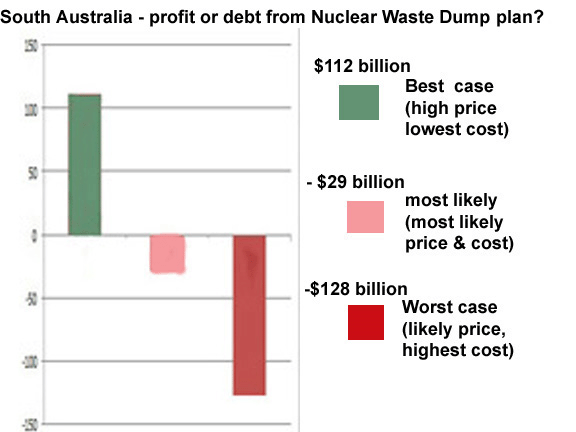
Is there REALLY profit in nuclear waste importing industry?
Conservation Council South Australia 18 Mar 16 A high-level nuclear waste dump for SA
Should we do it for the money?
The Nuclear Royal Commission claims some eye-popping revenue figures to take the world’s high-level nuclear waste.
Labor, Liberal unite to support high-level nuclear waste dump in South Australia
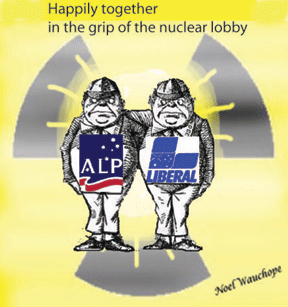 Labor, Liberal unite to support high-level nuclear waste dump in South Australia February 16, 2016 Paul Starick and Daniel Wills The Advertiser UNPRECEDENTED political support is being thrown behind South Australia becoming the global storage facility for high-level nuclear waste in return for a $445 billion bonanza.
Forging a historic united front on a decades-old issue of bitter division, Labor Premier Jay Weatherill and Liberal federal Resources and Energy Minister Josh Frydenberg are encouraging debate on a Royal Commission proposal, unveiled on Tuesday, for SA to store and dispose of hundreds of thousands of tonnes of spent nuclear fuel and waste…….http://www.adelaidenow.com.au/news/south-australia/labor-liberal-unite-to-support-highlevel-nuclear-waste-dump-in-south-australia/news-story/683296ab45e53c73432c66bbe0358e34
Senate tables over 6,000 signatures against Hill End nuclear waste dump
 18 Mar 16 NSW Greens Senator Lee Rhiannon today tabled 6,282 signatures calling on the government to drop plans for a nuclear waste dump at Hill End. “Over 6,000 people have signed three petitions saying no to a nuclear waste dump at Hill End,” Senator Rhiannon said.
“The Hill End community has voted at three separate community meetings to unanimously oppose a nuclear waste dump and are strongly supported by their neighbouring towns, local councils and business groups.
“The Minister and the Department keep repeating that the nuclear waste dump won’t be imposed on communities that don’t want it.
“Yet the government has spent hundreds of thousands of dollars of public money sending glossy packages promoting the dump to residents in Bathurst and Mudgee, after promising the Hill End community meetings that they had heard the message it wasn’t wanted.
“They’re now following up their promotional package blitz with survey phone calls and face to face visits to Hill End , Bathurst and Mudgee residents fishing for support. “It’s time the Government acknowledges that no one wants nuclear waste at Hill End,” Senator Rhiannon said.
South Australia Nuclear Waste Dump Plan – Future Safety Is Unknown!
 A high-level nuclear waste dump for SA Can it be done safely?


New South Wales Parliament passes anti-protest laws
 Anti-protest laws giving police greater powers pass NSW parliament http://www.theguardian.com/australia-news/2016/mar/16/anti-protest-laws-giving-police-greater-powers-pass-nsw-parliament
Anti-coal seam gas protesters could be jailed for seven years under laws described as a ‘crackdown on democratic rights’ Trespassing anti-coal seam gas advocates face heavier fines and greater jail sentences with tough new anti-protest laws passing through NSW parliament.
With the support of the Shooters and Fishers party and Christian Democrat Fred Nile, the controversial legislation was passed 20-16 in the upper house on Wednesday after minor amendments to the original proposal.
The bill gives police greater powers to search without a warrant, seize items and move protesters on, while fines for illegal entry to mining and CSG sites have increased tenfold from $550 to $5500.
Anti-CSG protesters who interfere with gas sites – including those who chain themselves to machinery – will also be exposed to a maximum jail sentence of seven years.
The Greens MP Jeremy Buckingham, who along with Labor voted against the legislation, condemned the changes as a “jackboot police crackdown on democratic rights”.
The Labor MP Adam Searle also spoke out against the bill’s “sinister” provisions.
“This legislation strikes at the heart of a fundamental aspect of our society – the right to peacefully protest,” he told parliament during hours of fierce debate.
But the premier, Mike Baird, defended the legislation, saying he didn’t believe it was too harsh.
“It’s quite simple, peaceful protests are fine,” Baird said. “Anyone that wants to disrupt a business or ultimately act illegally and puts the lives of themselves and others at risk, well we’ve put these measures in and I think it’s appropriate.”
About 500 protesters shut down a part of Sydney’s CBD to rally against the proposed changes on Tuesday.
A Reachtel poll commissioned by the NSW Nature Conservation Council this week also showed 61.4% of people opposed increasing police powers and fines for protest action.
The NSW Law Society said lawyers were concerned the legislation could seriously interfere with people’s human rights liberties.
Meanwhile, the NSW Unions movement says it’s considering launching a high court challenge against the laws.
The decision to import high level nuclear waste is a forever decision.
 A high-level nuclear waste dump for SA: The big questions

Conservation Council South Australia 18 Mar 16
Turnbull govt missing the chance for Australia to lead on climate change action
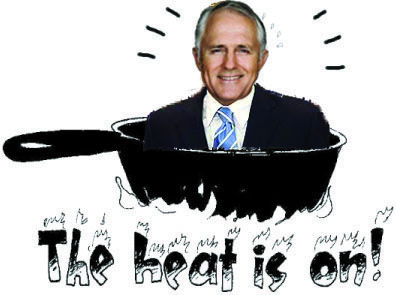 Malcolm Turnbull risks Australia’s economy with inaction on climate change, Guardian
Jonathon Porritt, 15 Mar 16
He may not want to confront climate-change deniers in his party, but it’s time for the prime minister to seize the low-carbon agenda for the opportunity it is
Even for a sympathetic observer from the UK, the politics of climate change in Australia is, to say the least, vexatious. But it’s now entering a more critical phase than ever before. The mismatch between the conclusions of the Paris agreement in December last year and the failure of Australia’s political establishment to understand what’s going on “out there in the rest of the world” is putting Australia’s entire economy at risk.
When the prime minister, Malcolm Turnbull, wrested the prime ministership from Tony Abbott in September last year, the international climate community breathed a deep sigh of relief. With the former Canadian prime minister, Stephen Harper, Abbott was seen as the most egregiously pig-headed climate-change denier in western world had ever thrown up. By contrast, Turnbull had done OK on climate change as a previous leader of the Liberal party, so it was assumed he would do a lot better second time round.
Nothing could be further from the truth. As I discovered on my latest visit, Turnbull has been utterly pusillanimous in pursuing any kind of progressive climate agenda. As part of his “oil on troubled waters” strategy, he apparently decided not to take on Abbott’s climate-denying guerilla fighters, and has offered zero leadership to Australia’s confused and polarised citizenry either before or after Paris.
For instance, he stood idly by as Australia’s world-renowned science agency, the CSIRO, announced it would cut 80% of its climate scientists, effectively ending Australia’s climate research program.
No surprise then that the New South Wales Liberals recently passed a motion, with the support of more than 70% of delegates, calling on the federal government to hold public debates between scientists from the Intergovernmental Panel on Climate Change and independent climate scientists. Basically, they are still refusing to accept that the science of climate change is settled, and are fighting an obstinate rearguard action to keep mining and burning as much coal and gas as possible.
You can see why Turnbull might be a bit nervous about confronting such a monumentally ignorant faction in his party. And he may even be reassured that such deniers still hang on elsewhere in the world. ……..
What he needs to know is that it’s all so much worse (and moving so much faster) than anyone imagined even five years ago. Instead of having decades to do what needs to be done to set the global economy on a genuinely low-carbon trajectory (as in net zero emissions by 2050, which is what Turnbull’s government signed up to in Paris), we now have little more than a decade.
Australia is uniquely vulnerable in this respect. The damage that will be done to the Australian economy as the world decarbonises at speed, leaving billions of dollars stranded in fossil-fuel assets that can no longer be developed, is almost impossible to imagine. And to rub salt into that already inflamed wound, there are few countries that will suffer more from rising average temperatures (as in forest fires, increasingly inhospitable cities, and drought-devastated rural economies) and rising sea levels……..
as it happens, not only is Australia uniquely vulnerable to the consequences of runaway climate change, it’s also extraordinarily well-placed to navigate its way through to the kind of ultra-low-carbon prosperity on which the destiny of all nations now depends.
In January a blockbuster report from the International Renewable Energy Agency (Irena) identified Australia as one of the most significant beneficiaries of this kind of accelerated shift to renewables by 2030, providing significant gains in GDP (up 1.7%) and employment, as well as socioeconomic and other environmental benefits. http://www.theguardian.com/sustainable-business/2016/mar/15/malcolm-turnbull-risks-australias-economy-with-inaction-on-climate-change
ENuFF RESPONSE To The Nuclear Fuel Cycle Royal Commission
ENuFF RESPONSE To The Nuclear Fuel Cycle Royal Commission February 2016 TENTATIVE FINDINGS Everybody for a Nuclear Free Future, March 2016
https://drive.google.com/file/d/0BzGxGaq45dRNd2RqT3d0VTVEWjA/view (on original the authors of this response provide source references for their statement)
Noel Wauchope: Response to Tentative Findings of Nuclear Fuel Chain Royal Commission
 Noel Wauchope 16 Mar 16 INTRODUCTION
In view of this waste importation focus by the Commission, I ma here responding to that issue. For simplicity, I have stated passages from the “Tentative Findings in pink.
MANAGEMENT, STORAGE AND DISPOSAL OF NUCLEAR WASTE
STABILITY
The storage and disposal of used nuclear fuel in South Australia is likely to deliver substantial economic benefits to the South Australian community. An integrated storage and disposal facility would be commercially viable and the storage facility could be operational in the late 2020s.
The late 2020s How come Australia could have this nuclear wase facility operational so soon, when other countries have still not satisfactorily completed such a facility over many decades?
The Royal Commission must know that this requires – first of all, overcoming Federal environmental law, and overturning South Australia’s State law against importing nuclear wastes. And that’s only the beginning in overcoming public rejection (1A)
78. For the management of used fuel and intermediate level wastes, South Australia has a unique combination of attributes which offer a safe, long-term capability for the disposal of used fuel.
They include:
a. the underlying Archaean geological structure,
the Gawler Craton, at an appropriate depth for disposal
Earthquake hazard: For either temporary or permanent storage of radioactive wastes, South Australia poses great risks. While the whole State has a small earthquake hazard zone, there are large sections which have an increased earthquake hazard. Particularly in the South of the State (1)
Risk to precious artesian water. While the South of the State has earthquake risks, almost the entire of the rest of the State covers the Great Artesian Basin. (2)
Effectively, this means there is almost no part of South Australia that could safely store radioactive trash for decades, let alone for thousands of years.
I am grateful to Paul Langley, who has set out the problems in relation to the Gawler Craton – “The Royal Commission does not provide a map that defines the area covered by the Gawler Craton. ……There are many maps showing the Gawler Craton and most of them vary radically from one another.”
Langley also drew attention to instability within the Ceduna Sub Basin – “The proposed HLNW geologic repository may be (or may not be) flooded with ground water after completion – as part of the design criteria. I have to ask how such a repository might impact occupants of the Peninsular.”
“Agriculture, aquaculture, tourism and mining industries, all reliant on sustainable natural resources, contribute over $2.5 billion to the economy in an average year. Despite low rainfall and low soil fertility, around 45% of SA’s wheat and 20% of SA’s barley harvest come from the Eyre Peninsula. In addition, the region contributes 45% of the state’s seafood harvest. Some 95% of farms are broad acre, of which 85% depend on grain growing alone, or a mix of grain and livestock farming. Given all this, the Eyre Peninsula is extremely vulnerable to a hotter, dryer future.” Source: “Effective Adaptation Policy Making: A case study from the Eyre Peninsula” National Climate Change Adaption Research Facility, athttps://www.nccarf.edu.au/content/case-study-eyre-peninsula https://nuclearexhaust.wordpress.com/2016/03/15/response-to-the-tentative-findings-of-the-sa-nuclear-fuel-cycle-royal-commission/
84. Given the quantities held by countries that are yet to find a solution for the disposal of used fuel, it is reasonable to conclude that there would be an accessible market of sufficient size to make it viable to establish and operate a South Australian repository.85. There is no existing market to ascertain the price a customer may be willing to pay for the permanent disposal of used fuel.
What would the (overseas) holders of radioactive wastes be willing to pay for disposal and storage of radioactive wastes in South Australia?
This question really has no answer. The Commission’s conclusion of total revenue of more than $257 billion, despite all the high-sounding financial statements, sounds like a nice figure just plucked out of the air. At present every country with nuclear facilities is struggling with the unanswered question of what do do with their radioactive trash. Even Finland, which has built a 500 metre deep burial place, will not have enough space for their accumulating radioactive trash. So far, there is no room for Fennovoima’s waste in the Onkalo repository in Olkiluoto. (2)
At this stage there are no proposals for exporting nuclear waste. Royal Commissioner Kevin Scarce, in his recent report on the Commission’s overseas visit, said “We haven’t done the financial study”. When anyone does do the financial study, they will need to factor in the financial costs of insurance, of security for hundreds, thousands, of years, as well as of environmental degradation.
Another factor would be the comparison of the commercial value of renewable energy not pursued, tourist and agricultural opportunities lost as government money went into fostering nuclear schemes rather than South Australia’s more positive activities.
There would be no revenue for at least 30 years – probably longer – until the waste disposal facility were to be up and running. Who pays up for it all in the meantime? Does South Australia have to borrow heavily – and then – what if it all does not eventuate, anyway?
TRANSPORT OF RADIOACTIVE WASTES
I am astonished at the minimalist approach Tentative Findings report towards the transport of radioactive wastes. It’s as if the subject does not matter!
135. During the past 30 years, approximately 11 000 containers of uranium oxide concentrate (UOC) have been exported from Australia. There have been a
number of incidents during the transport of UOC where containers have been knocked or dented. However, given that UOC has low radioactivity and is transported
in sealed drums inside shipping containers, there has never been an accident in Australia resulting in the release of UOC to an extent that has adversely affected
workers, the public or the environment. (They don’t count the Ranger spill in 2014 https://antinuclear.net/2014/10/23/toxic-spill-report-critical-for-ranger-uranium-mine/)
transport packages….
It’s as if the Royal Commission had never heard of the modern facts about climate change – extreme weather events increasing in frequency and severity. (3)
It’s as if the Royal Commission had never heard of the increasing dangers, and increasing sophistication of terrorist attacks.
It’s as if the Royal Commission had never heard of the growing objections of many communities, to having nuclear waste ships pass near them or through their ports. (4)
155. There is no compelling evidence from any international experience that the development of nuclear facilities in South Australia would adversely affect other economic sectors, provided those facilities are operated safely and securely. There is a perception there would be an impact, which would need to be addressed in the process of obtaining community consent for any proposal. In the event of a major nuclear accident, adverse impacts on the tourism, agriculture and
property sectors could potentially be profound.
Of course – there’s no evidence at all – as it has never been done before – to set up a nuclear waste importing business to a non nuclear country – particularly in a State such as South Australia, with its renowned wine industry, tourism, fisheries, agriculture, including innovative schemes such as Sundrop Farms
In the past, countries like France accepted the risks of nuclear power, and their other industries thrived. Now, even in France, there is concern about polluting industries. For some time after the Chernobyl nuclear catastrophe, the French wine industry was severely depressed., because the wine growing regions were squarely in the path of the ionising radiation fallout. (5) There is concern in Washington State about the impact of Hanford nuclear waste facility on the wine industry. (6)
SECRECY ISSUE: LAWS AND FINANCIAL ARRANGEMENTS RELATING TO OTHER COUNTRIES
146. There is significant appetite in the private sector investment community to support new Australian infrastructure projects.
The Tentative Findings assume a great financial bonanza to South Australia, but is very vague on how the costs and (assumed) profits would be carved up between South Australia and the countries sending the wastes.
And, I still wonder, if it’s going to be such a bonanza, why is no other country offering to host the global radioactive trash?
Once again, Paul Langley has expressed this question most eloquently:
Nuclear nations all have their own laws regarding nuclear matters. For instance the United States has many laws, including the Atomic Energy Act, as currently amended, associated laws and regulations. It has long been an issue that the US Act prevents full disclosure regarding “special nuclear material” – that is plutonium and uranium as used and produced in a reactor. This matter has long been a concern in the US democratic setting. For instance, see CARDOZO LAW REVIEW, VOL 26, NO 4, MARCH 2005, PP. 1401-8.
The HLNW repository is promoted by the Royal Commission as being South Australian, owned by the government and benefitting the people of SA. To what extent then, in the course of contract negotiations, will the government and people of SA become beholden to the provisions of foreign laws regarding disclosure and other matters in regard a client nation’s HLNW? Will the contracts be commercial in confidence ? Will provisions alien to SA law be invoked in order to comply with contracted obligations? Will such provisions restrict our right to know and our freedom to speak? Will the full nature of the stockpile resident in the HLNW repository be secret in any way? Will the people be able to study each contract? What is an unclassified restricted document, and what happens if an ordinary person figures out it’s contents? (7)
References: Continue reading
1 This month
17 October, Free Public Talk on Nuclear Issues in South Australia
David Noonan will speak on public interest concerns over the new Roxby Downs Indenture Act 2026 on BHP copper-uranium mining and ore processing in SA, and on how AUKUS may face SA with a High-Level nuclear waste agenda.
Dr Jim Green will discuss international developments in the field of nuclear power including ‘small modular reactors’ and Generation 4 ‘advanced’ nuclear reactor concepts.


Help Aunty Sue Protect Her Land and Sacred Sites From Destructive Rocket Testing.
.

Australians deserve the truth
about
AUKUS – https://aukuspublicinquiry.com/

PETITION – To: Prime Minister Anthony Albanese and the Australian Labor Government

of the week – Australians for War Powers Reform (AWPR)
To see nuclear-related stories in greater depth and intensity

