Esperance to be sacrificed for the profits of the uranium industry?
why should the people of Esperance have any faith they will be protected this time around by those with responsibility to regulate mining companies and protect the community, when they failed so badly last time?
During the Esperance lead crises, Government agencies continually downplayed the seriousness of the problem and denied any serious risk to human health.
Martin Bruckner’s remarkable book Under Corporate Skies tells the shocking story of another Western 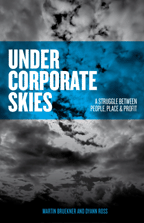 Australian “Sacrifice Zone”
The inability of WA Government agencies to effectively regulate and monitor the operations and performance of multinational corporations whose rationale is profit maximization was confirmed in a recent WA Auditor General’s Report.
Esperance WA: Sacrifice zone for the profits of the uranium industry?, The Stringer, by Colin Penter July 20th, 2015 A mining industry media outlet hasreported that the uranium industry in WA is keen to establish Esperance on WA’s southern coast, as a port export hub for radioactive uranium material mined in Western Australia. Continue reading
Nuclear Power Reactors large or small for South Australia Not Justifiable
 South Australia Invites Comments on Nuclear Power, Sowells Law Blog,Roger Sowell, 21 july 15 Nuclear Power for South Australia Not Justifiable”………I have been invited to prepare and submit responses to the questions and issues posed in Paper 3 for Civilian nuclear power plants. There are 17 questions, shown below [on original] . I plan to formally submit detailed answers to most, if not all, the questions.
The short, summary answer to the over-arching question of Should South Australia build and operate nuclear power plants, is no. The basis for that conclusion is the facts and particulars of South Australia’s power grid both at present and the foreseeable future. The grid is small, with 5,000 MWe total installed capacity. The demand is low, with typical daily maximum 1,500 MWe although demand peaks on hot summer days at approximately 3,000 MWe. More importantly, minimum demand at night is approximately 700 MWe. Finally, South Australia has access to abundant coal and natural gas for fuel.
Given the small grid loads, and small minimum night demand, a nuclear power plant that is operated at baseload to provide maximum efficiency and minimum power price, must be a small size at perhaps 300 MWe. Small nuclear reactors suffer from reverse economy of scale and are very expensive for the amount of power produced. Conversely, a larger plant would achieve some economy of scale, but the plant must have its output reduced at night to ensure grid stability. A larger plant would be more costly to allow load changes, and the sales price for electricity produced must increase accordingly. (see Truth About Nuclear Power, part 2 for details — see link) The usual safety concerns also apply: operating upsets and radiation releases, evacuation plans, spent fuel storage or reprocessing, and sabotage and terrorist attacks, to name a few. http://sowellslawblog.blogspot.com.au/
Australian Labor Party needs a credible plan for climate change action
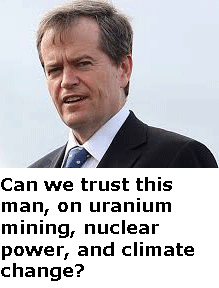 Labor must back up renewables target with a credible plan http://www.smh.com.au/federal-politics/political-news/labor-must-back-up-renewables-target-with-a-credible-plan-20150721-gihih5.html#ixzz3gYyNAqy2 Tom Arup Environment editor, The Age Amid the brutal political fight over the carbon tax it has been occasionally forgotten that Australians really like renewable energy.
Only on Tuesday a poll by Essential Media found 50 per cent of people thought the government should prioritise support for renewables over the coal industry. Just 6 per cent thought the opposite.
It appears Labor has been taking note. Hence the splashy commitment to have half of Australia’s large-scale power production coming from renewables by 2030.
It is an attempt to quell one of the Coalition’s strongest political attacks – that Labor will bring back a “carbon tax” in power. And it targets the Prime Minister’s apparent distaste for clean power (well wind farms at least) and public backing of coal.
Also on Labor’s side is science, which is demanding a rapid transition away from fossil fuels towards cleaner technologies if the planet is to have any chance of keeping global warming to relatively safe levels.
We have a long way to go to meet this goal. Just 13.5 per cent of our power came from renewables last year, and our current target will see a 23.5 per cent share by 2020 if it is met.
The ALP remains pledged to introducing an emissions trading scheme, a move the Coalition will attempt to tar with the carbon tax brush. But the hint is that Labor will use its renewable energy splash to adopt a softly softly approach on carbon pricing, at least until 2020. It could amend the Coalition’s Direct Action scheme to this end.
In the meantime it would have to send other signals to energy investors. The likely policy lever is to extend the existing renewable energy target scheme, which financially supports new projects.
Labor could also set limits on excess emissions coming from coal power plants, or simply ban old power stations, as countries like the United States and Canada are doing. And it could also beef-up efforts to cut energy use.
All these measures have costs and benefits. Meanwhile, many economists say the most economically efficient way to make the long-term transition to a cleaner energy mix is with a strong carbon price.
As ever, the devil will be in the detail.
The target is a push in the right direction. But Labor will have to back it up with a credible climate plan or risk it being seen as a vote grab.
Labor Leader Bill Shorten to announce 50% renewable energy target at Labor conference
Bill Shorten to unveil 50% renewable energy target at Labor conference, SMH July 22, 2015 Mark Kenny Chief political correspondent Opposition Leader Bill Shorten is set to unveil a bold climate policy goal requiring half of Australia’s large-scale energy production to be generated using renewable sources within 15 years.
Fairfax Media has learnt that despite Labor’s humiliating 2013 election defeat caused in part by voter contempt for its carbon tax, Mr Shorten will use this weekend’s ALP national conference in Melbourne to announce the even more ambitious goal, dramatically beefing up Labor’s renewable energy target.
The policy shift is designed to recover green support, sharpen the contrast with Prime Minister Tony Abbott over climate change and make global warming the defining battleground of the next federal election……….
The target of at least 50 per cent renewable energy by 2030 is in contrast to Labor’s current platform, which is silent on the subject. Both sides of politics committed only to the current benchmark of a minimum 33,000 gigawatt hours of renewable energy by 2020………
The Abbott government is yet to announce its post-2020 emissions reduction target but that is expected in August.
The Shorten approach follows a strong and well-co-ordinated campaign inside the ALP by a group calling itself the Environment Action Network and backing a “50/50” campaign in favour of 50 per cent renewable energy by 2030. http://www.smh.com.au/federal-politics/political-news/bill-shorten-to-unveil-50-renewable-energy-target-at-labor-conference-20150721-gih4bp.html#ixzz3gZ7IS5o5
Australia’s shame. Cardinal Pell criticising Pope Francis over Climate Change policy

Dunno about you, but I am just as ashamed of this Australian Catholic Cardinal as I am of Australia’s Prime Minister Abbott
Cardinal George Pell criticises Pope Francis over climate change stance , SMH, July 19, 2015 Kerrie Armstrong Cardinal George Pell has publicly criticised Pope Francis’ decision to place climate change at the top of the Catholic Church’s agenda.
Cardinal Pell, a well-known climate change skeptic, told the Financial Times the church had “no particular expertise in science”.
“The church has got no mandate from the Lord to pronounce on scientific matters,” he said,
“We believe in the autonomy of science.”
Industry under attack, as Tony Abbott hacks into Clean Energy Finance Corporation
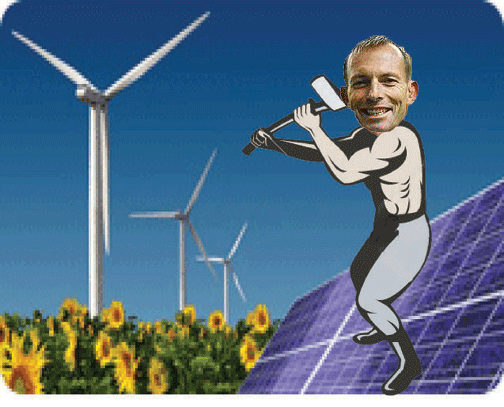 Australia Renewable Energy Gets Hacked & Attacked, Clean Technica July 21st, 2015 by Steve Hanley Originally published on Solar Love.
Australia is bathed in sunlight like few other places on earth. It, among all countries, has the highest potential to generate all the electricity it needs from renewable sources, principally the sun and wind.
But the prime minister doesn’t care about clean, renewable energy in Australia. All he cares about is doing the bidding of the wealthy coal owners who bought and paid for his election win in 2013. Since he took office, Australia’s investment in clean energy projects has fallen 70%, according to Bloomberg New Energy Finance.
Government Says No to Solar Investment
Now Abbott has issued instructions to the Clean Energy Finance Corporation (CEFC) prohibiting it from investing in wind farms or small-scale solar projects. Opposition leaders and solar energy supporters say the government directive prohibiting CEFC from investing in rooftop solar will cripple the industry and further diminish Australia’s chances of transitioning to a clean energy economy.
“I don’t agree with the prime minister that if you just don’t have any government support for the future of renewable energy, that the renewable energy will just miraculously grow and increase in Australia,” opposition leader Bill Shorten told the Australian Broadcasting Corporation. He said that striking wind farms and rooftop solar from the CEFC will mean that “the only thing the CEFC can invest in is flying saucers.”
The Role of the Clean Energy Finance Corporation
How federal govt changes to Clean Energy Finance Corporation will affect Australian househholds
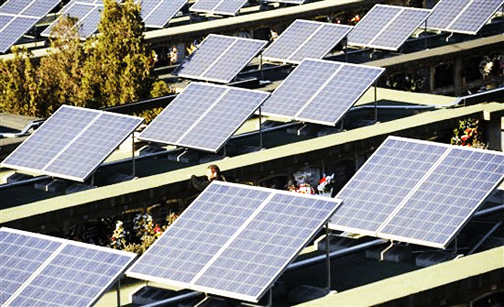 Solar panels: What do the federal government changes mean for households, SMH July 19, 2015 Peter Hannam
Environment Editor, The Sydney Morning Herald The Clean Energy Finance Corporation has been told not to invest in rooftop solar. What does that mean for me?
The CEFC is the “green investment bank” set up by the Gillard Labor government that the Abbott government wants to scrap. It has been blocked in the Senate so instead it wants to narrow the CEFC’s mandate by blocking investment in “mature” technologies such as wind farms and solar panels.
The fund, though, exists mainly to find ways to boost the competitiveness of all renewable technologies, from large-scale solar plants to wave and geothermal sources, and energy-efficiency measures.
Earlier this month, for instance, the CEFC joined in a 12-year, $100 million venture with Origin. The energy giant will own, install and maintain solar PV systems for households and businesses. Customers get a fixed energy price for a longer term than would typically have been offered by banks.
What is this large-scale solar we’re hearing about?……… http://www.smh.com.au/environment/climate-change/solar-panels-what-do-the-federal-government-changes-mean-for-households-20150718-giewy8.html#ixzz3gZupHfyv
National Australia Bank to invest more in renewable energy
 NAB maintains its faith in renewable energy, SMH, July 19, 2015 James Eyers Senior Reporter The country’s largest financier of renewable energy projects, National Australia Bank, has said it plans to lend more to the sector despite it being thrown into turmoil last week when Prime Minster Tony Abbott ordered the Clean Energy Finance Corporation (CEFC) to stop putting funds into wind power.
NAB’s head of debt capital markets, Steve Lambert, said the domestic politics around wind power is “noise, but you have to try to look [past that]” and said in the absence of local deals, NAB will continue to back projects overseas, and intends to become one of the world’s leading banks in renewable energy financing. …….
“Is the renewable energy industry supported by long-term fundamentals? Both public opinion and demand suggest yes, it is. Is there money flowing into the industry? Yes, there is. So our thinking is: how do we help facilitate that? We want to stay there and at the same time try some new things.”
NAB has been working with the CEFC to provide Australian businesses with access to discounted funding for energy efficiency and renewable energy upgrades. It was also the first Australian bank to issue a “green bond”, where proceeds are used for an environmentally sustainable purpose. …….. http://www.smh.com.au/business/banking-and-finance/nab-maintains-its-faith-in-renewable-energy-20150719-gieq5g.html#ixzz3gZ5w596X
Don’t let the nuclear lobby shut you up! Submissions to Royal Commission due by 3rd August
If you’ve been thinking of making a submission, I hope that you have not been intimidated by the Royal Commissions Issues Papers – by either their ambiguous and confusing content, or by their complicated process for submitting. These submission procedures are set up to be easy for AREVA, EDF, Toshiba, Lavalin SNC, Terrestrial Energy, Bill gates’ Terra Power – or any other international nuclear company.
And – hard for the ordinary person.
However,
- you can send in a submission on paper, if the Internet process is not convenient for you.
- You don’t have to make comments on every question on the Issues Paper – just ones that you are interested in.
- You can add your own ideas, outside of their set questions, though the Commission wants them to be at the end, in an Appendix.
Issue Paper 2. FURTHER PROCESSING AND MANUFACTURE. Issue Paper 3. ELECTRICITY GENERATION
Your submission doesn’t have to be long. They want you to download and use a Cover Sheet
They want you to have your signature witnessed, and signed by a JP or a Commissioner for Affidavits. A member of the police force will do. In some States, pharmacists, teachers, and others will qualify. This is a hassle, but not that hard to do.
If you don’t want the hassle of scanning it all into the computer – to send via the internet, to submissions@nuclearrc.sa.gov.au, you can post it to Nuclear Fuel Cycle Royal Commission GPO Box 11043 Adelaide SA 5001. You can even phone them, and arrange a verbal submission o8 8207 1480
More information at the Commission’s website
Labor Party nuclear enthusiasts will postpone their push until after the National ALP Conference
Nuclear power on the backburner as ALP awaits review THE AUSTRALIAN JULY 18, 2015 Rebecca Puddy and Michael Owen
A national push within Labor ranks to change decades of opposition to nuclear energy has been shelved while South Australia conducts a royal commission into the controversial power source.
Gary Gray, the federal opposition’s resources spokesman, told The Weekend  Australian a move within the ALP to end the party’s opposition to nuclear energy was on hold until the royal commission reported to the Weatherill Labor government next May.
This means that delegates at the ALP national conference in Melbourne next weekend will move a motion unopposed for Labor to continue its prohibition of the “establishment of nuclear power plants and all other stages of the nuclear fuel cycle in Australia”.
Uranium company Cameco offends Shire of Esperance in discussing use of its port.
 Shire of Esperance irate about uranium remarks, Australian Mining
 15 July, 2015 Ben Hagemann The Shire of Esperance has lashed out at public suggestions by Cameco that they would want to use the WA port for shipping uranium. The managing director of Cameco Australia, Brian Reilly, recently announced the company would want to explore the possibility of shipping their products through Esperance.
Shire president Malcolm Heasman said the Canadian miner had not approached the local council to discuss the prospect of exporting uranium through the Port of Esperance, before the making public statements of their intent, a move he said was “extremely discourteous”……..
Heasman said uranium was a very emotive commodity, and that the Shire of Esperance ran a “very clean port” which used world-best practice when handling cargo. “It doesn’t matter whether it’s uranium or nickel or any other product, to come through our port hey have to satisfy world’s best practice, and the community won’t stand for anything less,” he said. “I don’t know if they were just trying to solicit a comment, but it would be nice if they actually came and spoke with us.”
Cameco’s Yeeleerie project, billed as the largest uranium development in WA, is located near Wiluna some distance from Port Adelaide and Darwin, the only two ports in Australia approved for shipping uranium. http://www.miningaustralia.com.au/news/shire-of-esperance-irate-about-uranium-remarks
Australia’s Federal Government welcomes Iran nuclear deal (Video and Audio)
 Iran nuclear deal welcome: Australia http://www.sbs.com.au/news/article/2015/07/15/iran-nuclear-deal-welcome-australia (AUDIO and Video) The federal government has welcomed the landmark nuclear deal Iran thrashed out with major international powers.
“It settles the issue with respect to Iran’s nuclear ambitions to ensure there isn’t an opportunity for Iran to develop nuclear weaponry,” he told ABC radio on Wednesday.
Central Europe correspondent Kerry Skyring speaks to SBS Radio from Vienna:
Tony Abbott’s vindictive war against renewable energy
 Abbott’s war on renewable energy has been protracted and aggressive. It has destabilised investment. It has been fought through an attrition of uncertainty. This week, one wonders if he has entered the final campaign
Clean Energy Finance Corporation is the key to Australia’s chance to be Renewable Energy Superpower
despite the higher investment hurdle to be cleared when the CEFC makes any new loan, it has managed to continue to unveil new projects such as the launch this month of a $100 million, 12-year fund with Origin Energy to promote more commercial use of solar panels, with more to be announced within days
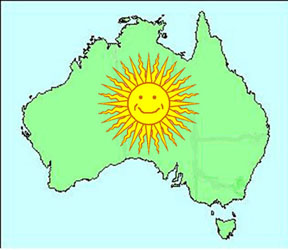 Australia can be a global solar and wind superpower, and the CEFC is the key July 13, 2015 Peter Hannam Environment Editor, The Sydney Morning Herald
Australia is perfectly placed to become the next global superpower of renewable energy, the “Saudi Arabia of solar” for the coming century.
While Saudi Arabia has barrels of oil, we have an abundance of sunlight to fuel solar power and wind to power turbines, plus enough geographical space, modern infrastructure and a stable political system to house such an industry on a massive scale.
But if Australia is to realise its remarkable renewable energy wealth, (see chart below, published by the Melbourne Energy Institute, revealing its world-beating solar exposure as indicated by the lighter colours on the map), banks and investors will need to active players.
Australia’s government not stopping Sydney IKEA’s renewable energy project
The world’s biggest furniture retailer, which has annual sales of €30 billion ($44 billion), is aiming to be energy neutral by 2020, with 100 per cent of its energy needs coming from renewable sources.
IKEA’s Australian business took the first steps last year, installing 16,000 solar panels on the roofs of six stores, including almost 4000 panels at its flagship store at Tempe, near Sydney Airport.
“It’s really cool,” says Wilson, who gave up his job running Randwick Council’s Sustaining Our City program almost three years ago to join the Swedish retailer, attracted to the company by its ambitious long-term environmental targets.
“When they do have bold ambitions it makes things happen,” says Wilson. “It was the 100 per cent renewable energy targets that got me excited about working for IKEA – I want to be on that journey.”
It’s a journey that may not have got off the ground if not for Labor’s now defunct carbon tax. When electricity was cheap and solar panels expensive, the business case simply did not stack up.
The company pressed ahead after the carbon tax was scrapped by the Abbott government last year and now expects to achieve payback in less than 10 years, in line with its parent’s relatively generous return on investment hurdles……….http://www.afr.com/business/energy/solar-energy/ikea-backs-renewable-energy-targets-despite-government-changes-20150717-gid4gu
1 This month
17 October, Free Public Talk on Nuclear Issues in South Australia
David Noonan will speak on public interest concerns over the new Roxby Downs Indenture Act 2026 on BHP copper-uranium mining and ore processing in SA, and on how AUKUS may face SA with a High-Level nuclear waste agenda.
Dr Jim Green will discuss international developments in the field of nuclear power including ‘small modular reactors’ and Generation 4 ‘advanced’ nuclear reactor concepts.


Help Aunty Sue Protect Her Land and Sacred Sites From Destructive Rocket Testing.
.

Australians deserve the truth
about
AUKUS – https://aukuspublicinquiry.com/

PETITION – To: Prime Minister Anthony Albanese and the Australian Labor Government

of the week – Australians for War Powers Reform (AWPR)
To see nuclear-related stories in greater depth and intensity

