Universities can get tax-payer funding for a Bjorn Lomborg climate centre
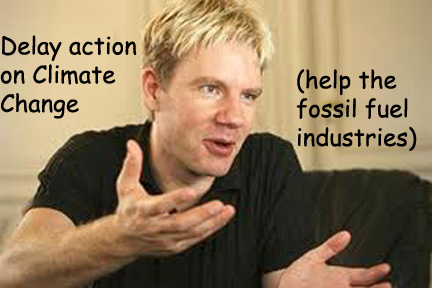 Universities told to speak to Bjørn Lomborg if they want $4m in funding, Guardian, 4 June 15
Senate estimates told government funding for consensus centre is still on the table after UWA pulled out due to backlash from staff and students Universities approaching the Department of Education about the $4m in government funding available for hosting Bjørn Lomborg’s consensus centre have been told they should talk to Lomborg himself.
Since the University of Western Australia pulled out of a $4m deal with the federal government to host the centre, the department had “had some informal approaches from universities who might be interested and suggested to them and Dr Lomborg they might want to talk”, the associate secretary of the department, Robert Griew, told senate estimates on Wednesday night.
Labor senator Kim Carr asked “so if a university wants to take this up they should talk to Dr Lomborg?”
“Yes, but of course they could talk to us as well,” Dr Griew replied.
Carr, a long-term minister in Labor governments, said he had “never seen anything like this before where the government would hand over $4m … and hopefully find someone to take it up.”
The committee heard the $4m had been found from consolidated revenue in the May 2014 budget, but not announced at that time, and that the education department had first heard about it from the department of prime minister and cabinet.
The department had spoken to Dr Lomborg last July and he advised them “he was in discussion with a number of universities”. Dr Lomborg had been advised to “speak to vice chancellors directly” to find a host institution for the $4m centre.
After a backlash from staff and students when Guardian Australia revealed the $4m government deal to host the “Australia Consensus Centre” UWA handed back the funding and dropped its connection with Lomborg.
The education minister, Christopher Pyne, vowed to find another university to host the centre and said he was seeking legal advice about a decision by the university to renege on the funding agreement it had signed with the commonwealth.
Griew said legal advice had been provided to the minister but no legal action had been taken against UWA……..http://www.theguardian.com/australia-news/2015/jun/03/universities-told-to-speak-to-bjrn-lomborg-if-they-want-4m-in-funding?CMP=share_btn_tw
Big mining companies losing the public opinion battle
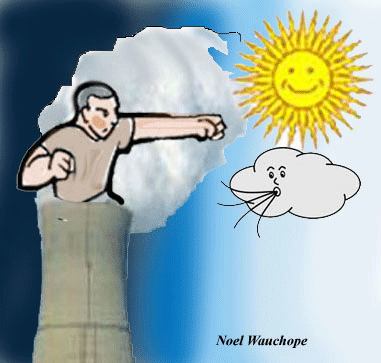 Big miners need to win hearts and minds in fight against environmental activism, Australian Financial Review, Jennifer Hewett, 3 June 15 The mining industry may have seen off the mining tax it despised but industry executives seem less certain about how to deal with a much more generic threat.
Environmental activism against the mining industry – particularly the coal and coal seam gas industries – is becoming more powerful, sophisticated and effective.
It ranges from protesters chaining themselves to gates or trees on mining sites to the divestment movement, which has seen groups ranging from the massive Norwegian sovereign wealth fund to Australian universities to French banks get out of fossil fuel investments or financing…….
the potential impact and risk of reputational damage from the level of environmental opposition is growing – making discussion about it a natural feature of the annual conference of the Minerals Council of Australia in Canberra on Wednesday.
LOSING THE PR BATTLE
A lot of frustrated companies belatedly realise they are losing the public relations battle and the support of large sections of the community, ………
Industry Minister Ian Macfarlane says it has become a “war of ideology” and the industry must not stop pushing back against this sort of attack.
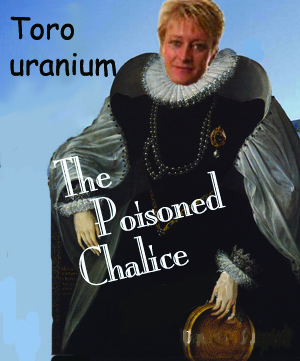 But how best to do so is not so clear to the industry players…. Vanessa Guthrie, chief executive of uranium company Toro Energy, said her 30 years in the nuclear industry had convinced her it was necessary to fight with the heart as well as the head…….
The ability to be more persuasive becomes even more important given the momentum of the global movement to combat climate change by limiting or even closing down the coal industry. That means the protesters’ targets have changed.
Although Guthrie is sure environmental activism will return to her industry, she said uranium was going through a “quiescent” period while coal and coal seam took the heat. For the first time, there were no protesters outside last year’s annual uranium conference……
Aboriginal leader Warren Mundine, who formerly worked with Forrest and now runs his own 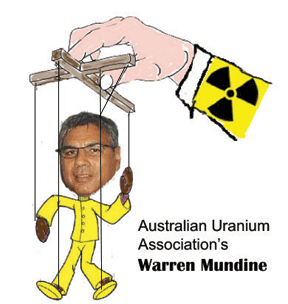
consultancy, said it was vital to engage with the community and use the right language as part of a “soft war”.
The companies are now slowly becoming more attuned to the need for this and using social media themselves. But so far there seems little enthusiasm for the sort of people-focused, soft big advertising campaign that helped put the industry’s case against the mining tax. …..
As a sign of the mood of the times, industry fund Auscoal Super, with more than $9 billion in assets and 76,000 mining industry members, says it’s changing its name to Mine Wealth+Wellbeing. Consider it the triumph of marketing over reality.http://www.afr.com/opinion/columnists/big-miners-need-to-win-hearts-and-minds-in-fight-against-environmental-activism-20150603-ghg1n5
2014 Clean Energy Australia Report released
 Clean Energy Australia Report 2014 Released http://www.energymatters.com.au/renewable-news/clean-energy-australia-em4854/ June 4, 2015 2014 was a difficult year for renewable energy in Australia with the grim reaper looming over the RET for much of it – but it wasn’t without its bright spots.
Clean Energy Australia Report 2014 states more than 230,000 households and businesses installed either solar power systems or solar hot water last year.
While this may be down on previous years; the average size of each system installed continued to increase (nudging 4.5kW on average), thanks to the plummeting cost of solar panels, other components and increased competition.
More businesses are switching on to solar savings and by the end of 2014, 15,000 commercial enterprises across Australia had installed solar panels; collectively saving more than $64 million on their power bills.
All up, 823.42 MW capacity of residential and commercial solar installs up to 100kW occurred during 2014.
Only two large-scale solar power stations were commissioned in 2014, totaling 23.5 MW. However, 5 new plants with a collective capacity of 258.275 MW were under construction at the end of last year.
The majority of the 16 wind farms under construction in 2014 were on hold by the end of the year due to policy uncertainty. Three wind farms with a combined capacity of 566.7 megawatts were completed in 2014; Snowtown II in South Australia, Gullen Range in New South Wales and Mount Mercer in Victoria. Five wind farms remained in progress early this year and five and are expected to be completed in 2015.
By the end of 2014, there were 71 wind farms Australia-wide, consisting of 1,866 wind turbines in total and with a collective output capacity of 3807MW.
Overall, 13.47 per cent of Australia’s electricity came from renewables last year, enough to power 4.5 million average homes . While dropping from 2013 (14.76 per cent), this was mainly due to reduced rainfall in hydro catchments.
There was a huge difference in renewables use between the states – around 95 per cent of the electricity consumed in Tasmania came from renewables last year (primarily hydro) and approximately 40 per cent of South Australia’s power (primarily wind power). The next best was Western Australia at 13 per cent.
While investment in new large-scale renewable energy fell 88 per cent in 2014 compared to the year before due to policy uncertainty, with bipartisan backed legislation now being considered by Parliament, the CEC says the outlook for the sector is looking more positive.
The Clean Energy Australia 2014 Report was produced with the support of the Australian Renewable Energy Agency and can be downloaded here (PDF).
SBS examines 23 years of native title in Australia – on Mabo Day
On June 3, 1992 the High Court of Australia overtuned the notion of Australia being ‘terra nullius’ (nobody’s land) before settlement. The Mabo decision, as it become known, followed a decade-long legal battle by Eddie Mabo and several others to have their land rights recognised.
Edward Koiki Mabo was born at Mer (Murray Island) where Meriam people are the traditional custodians of the land……..
A history of native title in Australia………http://www.sbs.com.au/news/article/2015/06/02/mabo-day-23-years-native-title-australia
Rare earths AND URANIUM company allying with Clean Energy Council
 We do need to keep an eye on rare earth developments. In the longer term, recycling must be the major way to obtain these. In the shorty term, rare earths are needed, but require vigilant management because of their radioactive toxicity, and need for secure radioactive wastes disposal
Yellow Rock Resources has been accepted as an associate member of the Clean Energy Council of Australia.
Yellow Rock Resources (ASX:YRR) has been accepted as an associate member of the Clean Energy Council (CEC) of Australia.
The membership will allow Yellow Rock to engage with industry participants and policy makers.
Yellow Rock’s admission as a member demonstrates the company’s commitment to developing its world-class Gabanintha vanadium deposit in Western Australia specifically for emerging technology servicing the renewable energy market.
Gabanintha is a project which has the ability to support renewables as a supplier of vanadium for Vanadium Redox Battery technology.
Yellow Rock in discussions with renewable energy suppliers
Yellow Rock has initiated discussions with renewable energy suppliers SunEdison and Total Energy Australia, among others, focused on potential collaborative opportunities at Gabanintha.
Vincent Algar, chief executive, commented: “The latest excellent drilling results give us another opportunity to expand our relationships in the financial and renewable energy sectors.
“Gabanintha is a project which has the ability to support renewables as a supplier of vanadium for battery storage technology.
“In addition, Gabanintha can be supported by renewable energy generation to reduce its own operating costs, making it a unique opportunity for investors.”
About Gabanintha
The Gabanintha deposit is an intrusive layered intrusive body smaller, but displaying similar characteristics to the igneous Bushveld Complex, host to some of the world’s most significant platinum, vanadium and chromite deposits.
The project will have continued newsflow over coming weeks as more results flow through from the recent reverse circulation drilling program. commence on receipt of all assay results.
Currently 167 historical drill holes support an Inferred Resource of 125 million tonnes at 0.70% vanadium, 8.64%TiO2 and 32.6% iron.
This includes a separate high grade Indicated and Inferred Resource of 60.4 million tonnes at 0.98% vanadium, 11.4% TiO2 and 42.15% iron.
Dr Helen Caldicott dissects the propaganda for South Australia’s Nuclear Chain Royal Commission
This article was posted on Saturday 30 May. I have “upped” it to the top of this page, because it is the clearest and most comprehensive discussion of the very fraught South Australian nuclear fuel chain plan.
 Clearly this whole disastrous process is financially beyond the reach of little South Australia. However
Premier Jay Weatherill has been persuaded to establish a flawed royal commission to assess the viability of incorporating the entire nuclear fuel chain in the state.
this is a carcinogenic industry that must be halted immediately in the name of public health. The people advocating a nuclear South Australia have no comprehension of genetics, radiation biology, oncology and medicine. Or they are willing to ignore the risks.
 SA’s short-sighted view of uranium and nuclear options https://www.thesaturdaypaper.com.au/opinion/topic/2015/05/30/sas-short-sighted-view-uranium-and-nuclear-options/14329080001942#.VWjSBtKqpHw Something quite extraordinary is happening in South Australia, the state that initiated the national movement against French atmospheric nuclear tests in 1971-72, and where the movement against uranium mining began in 1975, which ultimately led to a five-year ban by the ACTU on the mining, transport and export of uranium. Forty years later, it is the ultimate irony that the French nuclear industry is interested in becoming involved in South Australian uranium enrichment and nuclear reactors.
 In 2010, the University College London (UCL) established its School of Energy and Resources, Australia, in Adelaide. The school partnered with pro-nuclear and pro-shale gas corporations, including BHP Billiton and Santos. On the surface this may seem harmless enough, but the school and its well-connected backers has had a profound impact on the nuclear debate in South Australia, particularly as the state begins a royal commission into “opportunities and risks” in the “nuclear fuel cycle”.
Professor Stefaan Simons, who is the director of the International Energy Policy Institute and UCL’s  BHP Billiton chairman of energy policy, has been strongly promoting construction of nuclear powered submarines in South Australia, as well as a repository in the state for radioactive “waste streams”. Dr Tim Stone, a businessman and visiting professor to the UCL’s Adelaide campus, was expert chair of the British Office for Nuclear Development and sits on the board of British energy company Horizon Nuclear Power. James Voss, the former managing director of Pangea Resources, the company that originally proposed a nuclear waste dump in Australia in the late 1990s, is also part of the UCL fold, as honorary reader at the International Energy Policy Institute.
Outside of UCL, support has come from the likes of Professor Barry Brook, former professor of climate change at the University of Adelaide, and now professor and chair of environmental sustainability at the University of Tasmania. Brook has vigorously promoted the whole nuclear fuel chain, from uranium mining and enrichment to reactors and storage of radioactive waste in the desert of South Australia. He and Tim Stone have been appointed to the Nuclear Fuel Cycle Royal Commission’s Expert Advisory Committee.
The arguments put for nuclear power are many and specious. As South Australia continues to be seduced by them, it is worth pointing out the flaws that too often go uncorrected. Continue reading
Home energy storage is bringing solar power to the people
What is certain is that the electricity equation will look very different in a few short years, and it looks like, for the first time in many years, that ordinary consumers will hold a bit more of the power
How home energy storage is going to change the way we think about power, Adelaide Now, CAMERON ENGLAND SUNDAY MAIL (SA) MAY 31, 2015 WHEN Elon Musk launched the Tesla Power Wall earlier this month, it was done in true Silicon Valley style.
The charismatic chief executive enters stage right, sans tie, and makes a pronouncement that his new product will change the world — cue rapturous applause from the audience and because this is the United States, whooping.
The thing about Musk’s pronouncement is that it’s most likely true.
It might not necessarily be his company — critics are divided as to whether Tesla will be the market leader it’s portraying itself as — but home and business energy storage is soon to change the way energy utilities, homes and governments think about power……..
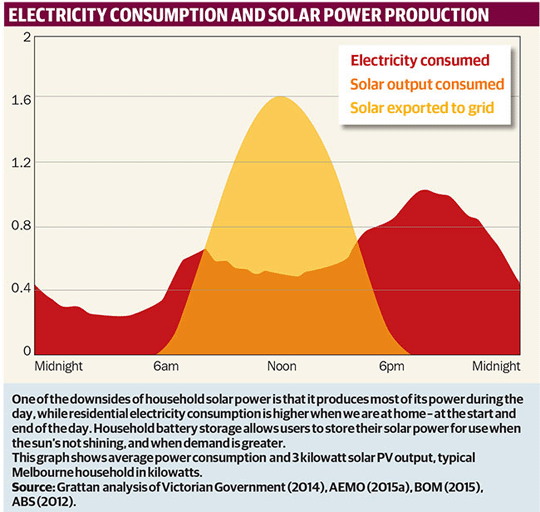
Batteries allow homes and especially businesses to employ “peak shaving” — if power prices spike, flick over to using your own solar power and save money, or if the grid power is cheap, suck it out and sell it back later at a higher price.
Or simply save up the solar power your rooftop panels produce during the day for use in the evening, when your demand might be higher……..
Tesla Power builds on the Tesla Motors technology — relatively standard lithium ion batteries with smart software to help them interact with the grid. The initial interest has been huge. The company recently reported early orders of 50,000 to 60,000 batteries, or as Musk put it, “It’s like crazy off-the-hook”.
Effectively the company is sold out until the middle of next year and its huge new factory will not be big enough to keep up with demand.
At $US3000 for the battery and $US7000 installed with solar panels (US prices) the system makes it economic for houses to become much less dependent on grid power.
UBS estimates that in Australia, the system would pay itself back in six years.
But Tesla is not the only game in town — although it almost certainly has the best PR machine. Continue reading
Australian Renewable Energy Agency sets out conditions for large scale solar
 Establishing the social licence to operate large scale solar facilities in Australia: insights from social research for industry http://apo.org.au/research/establishing-social-licence-operate-large-scale-solar-facilities-australia-insights-social
Introduction
The main objective of the research was to identify the preconditions necessary for utility-scale solar installations to have a social licence to operate in Australia. Specifically, the research set out to understand general attitudes towards solar energy and the acceptability of large scale solar energy facilities with a view to creating this report.
The research consisted of three key components:
• Quantitative phase: a survey of a representative sample of 1,197 Australians.
• Qualitative phase: a series of 15 group discussions held in capital cities, regional centres and communities near large scale solar facilities. Research to investigate perceptions of the desirability of utility-scale solar facilities.
• Review phase: a review of the factors that influence social licence to operate solar facilities, conducted via in-depth interviews and covered in the group discussions with stakeholders in communities living near large scale solar facilities.
The quantitative survey included testing the impact of exposure to two sets of stimuli (consisting of images and information about large scale solar facilities) through asking survey participants about their attitudes towards large scale solar facilities relating to land use; efficiency; reliability; visual impacts; economic impacts; environmental impacts; health impacts and the cost of electricity before and after seeing the stimulus materials.
Senator moves to punish Greenpeace for its international Great Barrier Reef campaign
 THE campaign over the Great Barrier Reef has erupted into all-out war between the Federal Government and Greenpeace,
Coalition Senator Matt Canavan yesterday moved for punitive action to be taken against Greenpeace over its Reef campaign in which it sought to have the World Heritage area listed by UNESCO as “in danger”.
Senator Canavan has written to Federal Environment Minister Greg Hunt, urging him to investigate whether Greenpeace’s registration as a tax-deductible organisation can be withdrawn.
Perth wave energy project producing power and fresh water

Carnegie Wave Energy based in Perth is a world leader in wave energy technology. In 2014 the company began deployment of three wave energy converters at the Garden Island naval base off the coast near Perth. Large buoys rise and fall with passing waves. Each is tied by rope to the sea floor. As waves pass, the buoys rise, the ropes tighten and extremely high pressure is created in a water-based fluid. This is piped to shore where the pressure powers water desalination and the production of electricity. This technology, known as CETO, has application for small coastal towns and remote islands where oil or diesel is often used in generators. The Perth project is the first demonstration of a complete grid-connected CETO system anywhere in the world.
Western Australian gas company planning to sell solar panels and batteries
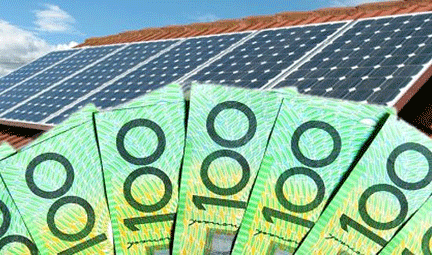 Alinta’s solar plan to cut bills, The West Australian Daniel Mercer June 1, 2015 Gas giant Alinta is hatching a plan to sell solar panels and batteries to households, allowing them to slash power bills by reducing reliance on the electricity grid.
Alinta is also weighing the idea of offering micro gas generators, which could pave the way for households to disconnect from the grid altogether.
The plan looms as a direct challenge to taxpayer-owned electricity provider Synergy, which has been losing millions of dollars as customers switch to solar en masse.
There are about 170,000 households in the South West grid alone which have photovoltaic cells on their roofs, and this figure is expected to soar by the end of the decade.
Under Alinta’s plan, tipped to start this year, it would lease solar panels to residential customers, who would then provide any power they did not use back to Alinta to sell into the market.
The Sydney-based company would also offer batteries to store surplus solar power and small gas-fired generators that could be used as a backup in the event it was cloudy for days.
Efficient and affordable battery storage has long been regarded as the holy grail of renewable energy and US firm Tesla announced last month it was on the verge of being able to produce it………https://au.news.yahoo.com/thewest/a/28289418/alintas-solar-plan-to-cut-bills/
Effects of extreme heat in USA – and what about Australia?
 Anthony M Horton: Extreme heat – ‘Business as usual’ life to end in less than 30 years in the U.S.
A new study projects that the United States will have a four to six-fold increase in extreme heat exposure by 2070 — and even earlier in the South. Unfortunately, no similar study has been conducted in Australia…
As a scientist, I am concerned that research into a range of climate related issues are seemingly not on the agenda in Australia and stellar pillars such as the world renowned Commonwealth Scientific and Industrial Research Organisation (CSIRO) and the Bureau of Meteorology (BoM) are suffering increasingly deep staff cuts at a time when they are needed the most.
It also appears that the long held “without fear or favour” bastion of these pillars has also seemingly ended. If this is really the case, it is a truly sad day for Australia-especially given the many world leading breakthroughs achieved by the former and the proud record of the latter. …
I fear for the future of Australia if this trend becomes entrenched as, by the time the Government realises they have made a tactical error, there won’t be enough trained people left to pick up the slack, as they will have retired, retrained or will be employed elsewhere in the world.
ANSTO’s problem of mounting radioactive wastes at Lucas Heights
 ANSTO staves off nuclear waste squeeze AFR by Christopher Jay 28 May 15, The Australian Nuclear Science and Technology Organisation ANSTO) will use a slab of this year’s $193 million budget allocation to extend and retrofit two existing nuclear waste storage facilities, to stave off a critical shortage of storage space which will otherwise materialise by 2017.Another $26.8 million over four years has been allocated to pack, ship and return Australian high level waste being reprocessed in the UK Sellafield plant no earlier than mid-2019. EPA Continue reading
Clean Energy Finance Corporation helping irrigators to buy renewable energy
 Funding for irrigators to buy renewable energy made available through Clean Energy Finance Corporation ABC Rural By Sarina Locke , 29 May 15 Irrigators, furious with power price rises, are pushing hard to install renewable energy on their farms.
To date the financial backing from banks has been largely missing.
Now the Government backed Clean Energy Finance Corporation is poised to announce a partnership with a major bank, to help irrigators invest in more efficient energy. It is just the tip of renewable energy projects in agriculture, worth $3 billion that will need financial assistance from the Corporation in future……..
The Clean Energy Finance Corporation is responding. It has a program with the Commonwealth Bank, called the energy efficient loan for mid-sized companies, available nationwide. It offers small loans of $100,000 up to $5 million plus.
But the CEFC is poised to rollout more programs with other banks offering a similar product for irrigators. Continue reading
The ANZ Bank’s first green bond issuance a resounding success
 Australian investors lap up ANZ green bonds THE AUSTRALIAN JOHN CONROY MAY 28, 2015 The ANZ Bank’s first green bond issuance – and Australia’s largest – has been a “resounding success”, the Clean Energy Finance Corporation said, with the CEFC not needing to provide the $75m it had committed to back the issuance.
The $600m ANZ green bond issuance – which has been certified by the Climate Bonds Initiative – was fully subscribed by private sector investors and will back investment in utility-scale wind and solar as well as green buildings.
About 40% of the green bond funds will go into green building projects in Australian and New Zealand, as well as some parts of Asia, with the remaining 60% to be invested in renewable energy, largely wind and solar, The Fifth Estate reports, with Australian institutional investors making up the majority of subscribers.
The five-year fixed rate bond had a coupon of 3.25% and was rated AA-, the website said. The Fifth Estate also quotes CBI as saying the issuance was actually oversubscribed, at $725m. CEFC CEO Oliver Yates said the “high quality” bonds would expand and diversify the investor base for clean energy.
“Green bonds provide investors with a unique opportunity to invest in renewable energy and energy efficiency through a low-risk, high quality fixed-income product. At the same time, green bonds support long term investment in important low carbon infrastructure projects which can benefit the broader economy,” he said.
He said investors were increasingly seeking additional benefits, such as an environmental or social return……..http://www.theaustralian.com.au/business/latest/australian-investors-lap-up-anz-green-bonds/story-e6frg90f-1227372751422
1 This month
17 October, Free Public Talk on Nuclear Issues in South Australia
David Noonan will speak on public interest concerns over the new Roxby Downs Indenture Act 2026 on BHP copper-uranium mining and ore processing in SA, and on how AUKUS may face SA with a High-Level nuclear waste agenda.
Dr Jim Green will discuss international developments in the field of nuclear power including ‘small modular reactors’ and Generation 4 ‘advanced’ nuclear reactor concepts.


Help Aunty Sue Protect Her Land and Sacred Sites From Destructive Rocket Testing.
.

Australians deserve the truth
about
AUKUS – https://aukuspublicinquiry.com/

PETITION – To: Prime Minister Anthony Albanese and the Australian Labor Government

of the week – Australians for War Powers Reform (AWPR)
To see nuclear-related stories in greater depth and intensity

