National protests against plans to close remote Aboriginal communities
#SOSBlakAustralia call goes out across the land to save remote Indigenous communities, Crikey MARIE MCINERNEY | MAR 19, 2015 A day of action to protest plans to close remote Indigenous communities in Western Australia ended up not only trending nationally on Twitter but hit the streets in real-life, with rallies across Australia, from Derby and Roebourne to Townsville and Tasmania.
The largest protest was, understandably, in Perth, fuelled by Prime Minister Tony Abbott’s “lifestyle choice” comments last week. They also prompted this call today by Close the Gap campaign co-chairs Mick Gooda and Kirstie Parker for the governments to re-engage with Aboriginal and Torres Strait Islanders, saying the decisions being made about remote communities are “highly damaging and a breach of inherent rights”.
Such was the growing momentum on the issue that Premier Colin Barnett addressed the rally in Perth – see The West Australian’s report and other media coverage of the protest (and 2015 Close the Gap day events):……
Below is a selection of the #SOSBlakAustralia tweets that captured virtual and real-life protest through the day, from organisations and individuals, including high profile sports and arts figures. Not even a pending cyclone was going to stop them: [tweets reproduced here] http://blogs.crikey.com.au/croakey/2015/03/19/sosblakaustralia-call-goes-out-across-the-land-to-save-remote-indigenous-communities/
Prices of solar battery systems set to plunge

Munson sees Australia as one of the most prospective markets in the world. That’s because of its high electricity costs, huge grid, expansive geography, excellent solar resources, and the penetration of rooftop solar PV.
But it’s also because the industry – from regulators down to networks and retailers, partly as a result from the boom in rooftop solar and the prospects for battery storage – are beginning to rethink their business.
Why battery system costs may fall 3x faster than solar PV http://reneweconomy.com.au/2015/why-battery-system-costs-may-fall-3x-faster-than-solar-pv-84344 By Giles Parkinson on 20 March 2015 Everyone, it seems, agrees that battery storage is the next big thing to affect global energy markets. What is not agreed upon is the timing. Some think this may happen in a few years, others in a decade or more. Some think it is happening now.
The big question for many is how quickly battery storage costs will fall in coming years. Will it be as dramatic as that of solar PV, which took everyone but a few solar savants off-guard and cut costs 80 per cent over a five-year period? Some – such as investment banking giants Deutsche Bank and UBS – say it will. Others say it is not possible.
Ken Munson, the founder and head of smart energy systems start-up Sunverge – which is backed by an Australian government-funded investor – is in no doubt that storage costs will fall. In fact, he thinks they could fall three times as fast as solar costs did. Continue reading
Bloggers vulnerable in Australia’s metadata retention bill.
 George Brandis says Bloggers won’t be covered by Metadata Amendments MAR 18 by conspiracyoz Lanai Scarr www.couriermail.com.au BLOGGERS are unlikely to be covered by provisions protecting journalists in the government’s controversial metadata retention bill…… Prime Minister Tony Abbott yesterday agreed to amend the laws to ensure journalists be better protected under the bill amid fears investigative journalism would be stifled.
A further amendment will be moved requiring law enforcement agencies to obtain a warrant to access journalists’ metadata to identify a source.
But Senator Brandis said bloggers would not be covered by the provisions. “I wouldn’t regard bloggers as journalists,” Senator Brandis told ABC radio……Independent Senator Nick Xenophon said there should be provisions in the amendment that would ensure a journalist would know when a warrant was being issued.
He said Australia should follow the lead of the US on the laws.
“(Whistleblowers) won’t come forward if they don’t know they will be protected.
“It will have a chilling effect on investigative journalism.”
Under the government’s new data retention laws which it hopes to pass in the next sitting fortnight, Australian phone and internet providers will be required to store various customer metadata for up to two years for law-enforcement agencies’ access.
No warrant will be required to access the data, just an agencies’ senior officer’s sign off……..http://conspiracyoz.com/2015/03/18/george-brandis-says-bloggers-wont-be-covered-by-metadata-amendments/
Kakadu Traditional Owners pay their respects to Malcolm Fraser
Kakadu Traditional Owners pay their respects to Malcolm Fraser The Mirarr people, whose lands include parts of Kakadu National Park as well as the Ranger and Jabiluka uranium deposits, are saddened by the news of Mr Malcolm Fraser’s passing. More than thirty years ago, as Prime Minister, Mr Fraser declared the first stage of Kakadu National Park and oversaw the enactment of the Aboriginal Land Rights (Northern Territory) Act.
These visionary decisions continue to have significant impacts on the lives of many Aboriginal people across the Northern Territory. While the passage of the Land Rights Act imposed the Ranger Uranium Mine on Mirarr country it also delivered real property rights to Mirarr and other Aboriginal people across the Northern Territory and remains the high water mark of Aboriginal Land Rights in Australia.
In more recent times, Mr Fraser has been an advocate for justice and decency for Aboriginal communities from within the conservative side of politics. Yvonne Margarula, Mirarr Senior Traditional Owner said: “I want to pay respect to Mr Fraser, who was an important leader. With Mr Gough Whitlam, Mr Fraser ensured that our land rights were acknowledged and granted to us and other Bininj (Aboriginal) people in the Territory.
“He has been a friend to Aboriginal people over a long period. “We also respect that he became Ambassador for Children’s Ground, one of our important partnerships in Kakadu and West Arnhem, to change the future for our people. We are thinking of his family at this time,” Ms Margarula concluded.
Examining the full chain proposed by Australia’s (and USA & Canada’s) nuclear lobby
What does the nuclear lobby want, for South Australia?, Online Opinion,
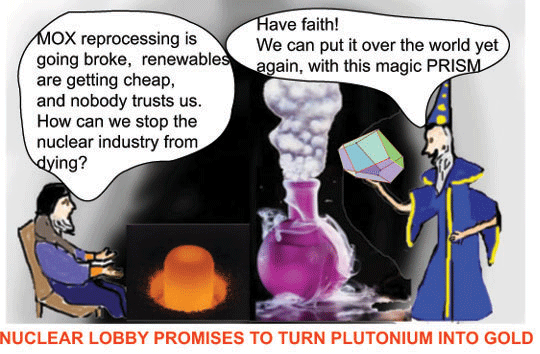
| By Noel Wauchope 19 March 2015 “….It is difficult to work out exactly what is planned in nuclear industry expansion for South Australia. The plans involve some or all of these industries: uranium enrichment, nuclear power, importation and storage of nuclear wastes, 4th Generation nuclear reactors, and expansion of uranium mining. However, we can be grateful to ABC Radio’s Ockham’s Razor programme, as it provided the nuclear lobby with a platform for setting out succinctly their intentions. Oscar Archer, a well -known voice for the nuclear industry, explains…… Australia should get a fleet of PRISM small nuclear reprocessing reactors – Archer’s plan is for “IFS+IFR: Intermediate Fuel Storage and Integral Fast Reactor, namely the commercially offered PRISM breeder reactor from General Electric Hitachi.” What he means here is the Power Reactor Innovative Small Module Archer then sets out the sequence of events that would lead to the establishment of this fleet. In Archer’s words “it goes like this. Australia establishes the world’s first multinational repository for used fuel – what’s often called nuclear waste” However, he notes that “This is established on the ironclad commitment [my emphasis] to develop a fleet of integral fast reactors to demonstrate the recycling of the used nuclear fuel”…… the sting in the tale of his plan is really exactly what he calls the first step – the overturning or weakening of Federal and State laws. The Federal Act protects against nuclear reprocessing and expanded nuclear industries. ARPANSA sets safety standards for exposure to ionising radiation. South Australian State Law would have to be overturned, too – under the Nuclear Waste Storage Facility (Prohibition) Act 2000 The central premise of Oscar Archer’s promotion of this nuclear chain of events is that Australia should go out on a limb – be the first country in the world to import nuclear wastes and to order a mass purchase of PRISM reactors….. The PRISM reactor exists only on paper and its development is decades away from completion. David Biello, in Scientific American comments “Ultimately, however, the core problem may be that such new reactors don’t eliminate the nuclear waste that has piled up so much as transmute it. Even with a fleet of such fast reactors, nations would nonetheless require an ultimate home for radioactive waste, one reason that a 2010 M.I.T. report on spent nuclear fuel dismissed such fast reactors.”
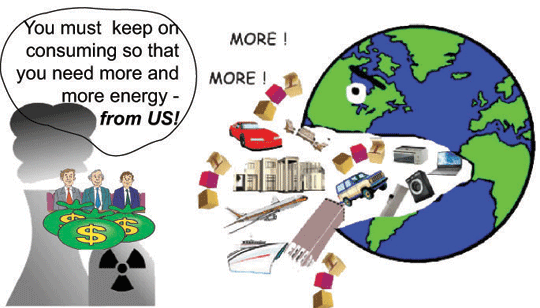
The PRISM can’t melt down in the way that conventional nuclear reactors can. However, its essential use of plutonium entails hazardous transport – vulnerability to terrorism and use as a “dirty” bomb. And – finally the PRISM reactor itself becomes radioactive waste requiring security and burial. There is another, underlying premise here that needs to be examined. This is the premise that it is OK for Australia and the world to continue to consume energy endlessly…….
The plan purports to reduce greenhouse emissions by means of thousands of little reactors, (and big ones) – but their development is so many decades away that it would be too late for climate change action. We are left with a plan that looks suspiciously as if the troubled nuclear industries of USA, Canada and UK have selected Australia as the guinea pig for a plan to reverse their industries’ present decline.
|

Family First Senator Bob Day gets Senate support for SA nuclear commission
 Senate backs SA nuclear commission http://www.heraldsun.com.au/news/breaking-news/senate-backs-sa-nuclear-commission/story-fni0xqi4-1227268345280 AAP MARCH 18, 2015
THE Senate has backed South Australia’s royal commission into expanding the nuclear industry.
SA Premier Jay Weatherill launched a royal commission to investigate if the state, home to world’s largest uranium deposits, should embrace production, enrichment and storage of nuclear power.
SA Family First senator Bob Day won enough Senate support to formally welcome the commission, with his motion passing 34 to 33.
Nuclear Royal Commission will ignore the elephant in the room
| 20 Mar 15, The biggest hole in the nuclear Royal Commission isn’t the proposed open cut pit at Olympic Dam, but rather the omission of any consideration as to whether South Australia should be LESS involved in the nuclear industry, rather than MORE involved, according to Greens SA State Parliamentary Leader, Mark Parnell MLC.
“Despite the Premier’s assurance that he has an “open mind”, the most fundamental question of SA’s role in the global nuclear industry won’t be considered at all. The Royal Commission is only charged with considering NEW ADDITIONAL involvement or expanding our existing involvement; it won’t be looking at whether SA should extract itself entirely from the nuclear cycle.” said Mark Parnell. “If you don’t ask all the questions, you won’t get all the answers. “Clearly, there are many South Australians who are opposed to South Australia’s involvement in the nuclear cycle. With our natural advantages and nation-leading performance in wind and solar, South Australians see that the future is to embrace clean renewable energy, rather than flirting with dangerous, dirty and expensive nuclear power. Becoming the nation’s or world’s nuclear waste dump is not most people’s vision for our State’s future or the legacy that we want to leave our children.”
Now that the Royal Commission is underway, the next critical decisions will be around the selection of key staff including “Counsel assisting the Royal Commission” and any technical or other research staff. “Choosing people who are partisan or have vested interests will be seen by the public as evidence of a biased process and the credibility of any findings will be diminished.” The Royal Commission also needs to announce how it intends to conduct its inquiry, including opportunities for personal submissions, public hearings, site visits and how all South Australians can engage with the process. “The Greens will engage with the process, but we won’t hesitate to publicly criticise the Royal Commission if it becomes secretive, biased or otherwise limits the ability of South Australians to have their say on their State’s future.” said Mr Parnell. |
1000 submissions to S. Australia’s Nuclear Royal Commission. Kevin Scarce accused of pro nuclear bias
 Nuclear royal commissioner officially appointed, denies bias ABC Radio National PM 19 Mar 15 DAVID MARK: The newly appointed royal commissioner for investigating the nuclear industry in South Australia says he is not biased towards the industry. The former South Australian governor, Kevin Scarce, has been accused of speaking in favour of the industry in the past.
The royal commission officially started today.
Mr Scarce says the commission will hold public hearings around the state. In Adelaide, Natalie Whiting reports.
NATALIE WHITING: In the lead up to the start of South Australia’s royal commission into developing a nuclear industry, there has been some criticism of the man selected to lead it. Some people opposing the inquiry, including Doctor Jim Green from Friends of the Earth Australia, say former governor Kevin Scarce had spoken out in favour of the industry before.
He was officially given the role of commissioner today and has hit back at those suggestions……..
Craig Wilkins from the Conservation Council has welcomed that.
CRAIG WILKINS: We actually do have a significant history already in this industry and it’s really important that if the commission is to do its work properly it considers where we’ve come from as well as where we’re going. So we very strongly welcome the fact that the terms of reference have been broadened to include that history.
NATALIE WHITING: But he says he would have liked the terms to also look at minimising the state’s involvement in the industry. South Australia already mines uranium.
CRAIG WILKINS: Surely any decent investigation of an industry should mean that all options are on the table. If there are concerns, which many people do have concerns already with this industry, surely this commission should be looking at what our appropriate role should be in it and that may well be a reduction rather than an increase.
NATALIE WHITING: Kevin Scarce says that has been ruled out……
Weatherill’s Royal Commission hides the connection between nuclear industry and nuclear weapons
 Dennis Matthews, 20 Mar 15 It’s not difficult to find out that the world’s nuclear waste is not neatly segregated into “military” and “non-military”. The processes that create the waste, such as separating out the various isotopes of uranium, chemical processing prior to this separation, and the processing of spent fuel rods from nuclear reactors all occur at facilities that service both the nuclear weapons and the nuclear power industries.
Weatherill’s Royal Commission has been charged with looking into importing nuclear waste but has been explicitly told not to include nuclear use for military or defence purposes. If the Commission doesn’t study the close physical connection between the military and non-military uses then it is closing its mind to one of the reasons why South Australia shouldn’t have anything to do with the nuclear industry.
It’s pretty obvious that Weatherill and the nuclear lobby don’t want to look into this because it would inevitably lead to a result that they don’t want to know about. More the pity for South Australia.
South Australian govt starts Royal Commission into Nuclear (it’s a CHAIN not a CYCLE)
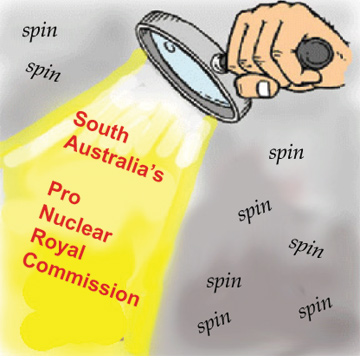
Dennis Matthews 20 Mar 15 The Nuclear Fuel Cycle Royal Commission is full of contradictions and political spin
Surely if there was a fuel cycle then we wouldn’t need a nuclear waste dump. In fact it is a nuclear fuel chain; dig it up, process it, use it, then dump the wastes in some cash-strapped state.
The terms of reference explicitly state that the military use of uranium is excluded. Yet a former high-ranking member of the military who is sympathetic to the nuclear industry is the commissioner.
The commissioner has urged people to keep an open mind but the terms of reference state that the commission can’t do that because it can only look at expanding the nuclear industry and not the opposite.
It is claimed that the commission will not recommend sites for a nuclear dump but it will investigate whether South Australia has suitable geography. So it won’t be in your backyard but it might be in the valley down the road.
The royal commissioner said any consideration of reducing nuclear industry involvement had been ruled out by the SA Government.
Nuclear Fuel Cycle Royal Commission makes formal start in SA ABC News 19 Mar 15 Public hearings in remote Aboriginal communities are expected to be part of a royal commission in South Australia into nuclear energy issues. Governor Hieu Van Le has signed off to mark the official start of the Nuclear Fuel Cycle Royal Commission, which is expected to make its recommendations to the SA Government by May next year.
It will examine a range of issues including whether the state should have a nuclear power station or
nuclear waste dump.
Former governor Kevin Scarce will head the inquiry. Continue reading
VIDEO: Greens’ Larissa Waters strongly defends current Renewable Energy Target
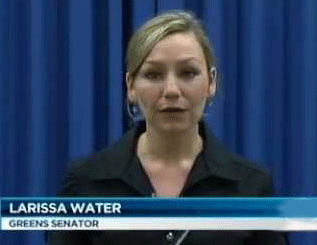 Greens savage Labor over RET deal http://media.theage.com.au/news/federal-politics/greens-savage-labor-over-ret-deal-6366253.html A report that shows power companies are the worst polluters underscores the need to retain the renewable energy target in its current form says Greens environment spokesperson Larissa Waters.
Australian Senate votes to back councils’ solar initiatives in western New South Wales.
 Senate shines a light on bright solar initiative in western NSW http://www.abc.net.au/news/2015-03-18/senate-solar/6327952 The Senate has passed a motion calling on all levels of government to back a solar powered initiative in western New South Wales.
The Greens put forward the motion in the Upper House yesterday about the solar energy exchange initiative which involves 24 council areas throughout the state’s west.
The program is also known as SEXI. Each council is installing photo-voltaic panels as part of the initiative.
Greens Senator Lee Rhiannon said the motion was a significant show of support in the project and its ambition to provide cleaner energy. “There is nothing binding on this motion on anybody,” the Senator said. “However it clearly carries weight when the national parliament of the country comes behind a project in one specific region.”
Senator Rhiannon said the project set an example for other councils around the nation to follow.
“To have the support of the Senate clearly adds weight to this important project for solar energy in western New South Wales,” she said. The councils involved in the initiative include Balranald, Bourke, Mid-Western and Narrabri.
“Bad taste” to mention climate change and Vanuatu devastateded by cyclone
 Vanuatu Devastated, Just Don’t Mention The Climate Change New Matilda 18 Mar 15 While Cyclone Pam was bearing down on the tiny island nation, its president was at a conference in Japan, pleading for action on climate change. Richard Hil explains.
What are we to make of the gargantuan elephant in the ABC studio that failed to get a mention?
Despite breathing down the neck of ABC’s 7.30 anchor, Leigh Sales on Monday night, no reference was made to it during an interview with Joe Natuman, Prime Minister of cyclone ravaged Pacific Island nation, Vanuatu.
Perhaps Sales was being sensitive to the Prime Minister’s distressed state. He had, after all, experienced firsthand a category 5 cyclone and had seen his nation turned into rubble, with the death toll still rising.
The Prime Minister said that the last time his country was devastated by a cyclone was during the 1980s, but that was a modest category three system.
The nature and scale of the destruction wrought by Cyclone Pam, packing winds of over 250 kilometres per hour and waves several metres high, was in his words, unprecedented.
Despite the unusual ferocity of this event, Sales studiously avoided the unmentionable – anthropogenic climate change. Instead, the questions dealt with the emergency response, food and shelter requirements and the aid sought from and provided by Australia.
Sales was not alone in her reluctance to bring up the matter of human-induced climate change. Despite widespread and heartfelt declarations of support and sympathy there appeared to be an unspoken media censorship on this issue. Continue reading
Poor uranium market, and Labor policy – French nuclear giant AREVA not to explore in Queensland
 French abandon Far North uranium prospects DANIEL BATEMAN THE CAIRNS POST MARCH 18, 2015 ONE of the world’s largest uranium producers is pulling out of the Far North following the State Government’s renewed ban on uranium mining.
Areva Resources Australia has confirmed it is in the process of relinquishing its 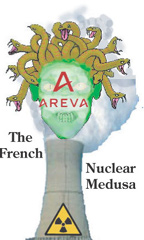 exploration projects in Queensland on “technical” grounds.
Minister for State Development, Natural Resources and Mines Anthony Lynham has said a statewide prohibition will once again be put in place over uranium mining, forcing several companies to shelve development plans.
Areva had been exploring in the Karumba and Carpentaria basins since about 2012.
Areva Resources Australia managing director Joe Potter said the company would not be applying for new exploration tenements in Queensland in the near future, in light of the recent state policy changes and general downturn in the uranium market…….
Australian Conservation Foundation Northern Australia program officer Andrew Picone welcomed the return of a ban and the departure of Areva.
“The fact that Areva have pulled up stumps in Queensland’s Gulf only illustrates the market’s global contraction,’’ he said. http://www.cairnspost.com.au/business/french-abandon-far-north-uranium-prospects/story-fnjpusdv-1227266987603
Companies not keen to take up New South Wales uranium exploration licenses
Slow uptake of NSW uranium exploration licenses http://www.abc.net.au/news/2015-03-18/slow-uptake-of-nsw-uranium-exploration-licenses/6328100 By Jacqueline Breen, 18 Mar 15, Only one of the six companies invited by the State Government to apply for a uranium exploration license has done so. The ban on mining uranium in New South Wales remains in place, but the Coalition has lifted the ban on exploration.
Last year the government invited six companies to apply for licenses to explore for deposits around Broken Hill, Cobar and Dubbo.
Only EJ Resources has submitted an application, seeking three licenses to explore north of Broken Hill.
The other companies–Australian Zirconia, Callabonna Resources, Hartz Rare Earths, Iluka Resources and Marmota Energy–did not apply before the government’s March deadline passed. When the government announced the shortlist last year Resources Minister Anthony Roberts said the state needed a “stock-take” of its uranium resources.
“This will allow us to understand fully what the uranium reserves are in New South Wales,” he said.
If EJ Resources’ license application is successful, the state government’s Division of Energy and Resources said only low impact monitoring that doesn’t disturb land can be carried out, unless further approval is sought.
The division said a land access agreement with landholders must be in place before any exploration begins.
1 This month
17 October, Free Public Talk on Nuclear Issues in South Australia
David Noonan will speak on public interest concerns over the new Roxby Downs Indenture Act 2026 on BHP copper-uranium mining and ore processing in SA, and on how AUKUS may face SA with a High-Level nuclear waste agenda.
Dr Jim Green will discuss international developments in the field of nuclear power including ‘small modular reactors’ and Generation 4 ‘advanced’ nuclear reactor concepts.


Help Aunty Sue Protect Her Land and Sacred Sites From Destructive Rocket Testing.
.

Australians deserve the truth
about
AUKUS – https://aukuspublicinquiry.com/

PETITION – To: Prime Minister Anthony Albanese and the Australian Labor Government

of the week – Australians for War Powers Reform (AWPR)
To see nuclear-related stories in greater depth and intensity

