Western Australia’s huge wind power potential blocked by Federal and State governments
While there are only three large-scale wind farms in WA, smaller community-based operations have been successful at locations including Denmark, Bremer Bay, Rottnest Island, Kalbarri, Denham and Coral Bay.
An expansion of the Albany wind farm means it meets 80 per cent of the town’s power needs.
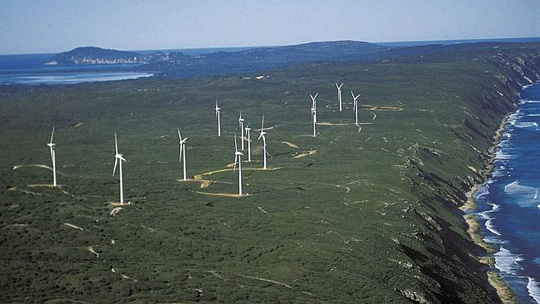
Wind power: WA wind farms ineffective for renewable energy TREVOR PADDENBURG PERTHNOW MARCH 16, 2015 WA is one of the windiest places on the planet with wide open spaces for wind farms, yet the state remains a renewable energy backwater, latest figures reveal.
Clean Energy Council data for significant wind farm projects shows WA generates less than 500MW of power from a total of 308 turbines around the state.
That’s half of Victoria’s wind generation at 939MW from 454 turbines and well below South Australia, which generates 1205MW of electricity from 561 turbines.
One reason is debate about health effects and noise emissions from wind turbines, even though numerous studies including a recent National Health and Medical Research Council review ruled there was no truth to claims that turbines cause health effects.
Aside from the question of health effects, the wind energy industry in WA is in crisis from a political double whammy, with the Federal Government signalling it wants to scrap Australia’s renewable energy target and the WA Government signing new contracts that tie electricity production to coal.
Estimates put investment in large-scale renewable energy projects in 2014 at 10 per cent of the figure for 2013.
That’s despite the Australian Institute saying wind had the potential to supply 40 per cent of Australia’s energy needs and was now cheaper to produce than coal.
Clean Energy Council policy director Russell Marsh said WA should be a world leader but it remained in the doldrums, underfunded and undervalued by governments fixated on coal.
“WA has a great wind resource and the space. But the review of the renewable energy target has basically closed the industry down,” he said. Continue reading
Australia’s land needs the cultural knowledge of Aboriginal communities
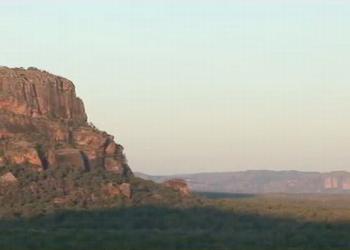
Evidence for the sustainability of Aboriginal settlements on their lands exists where Aboriginal people are moving increasingly into collaborations with scientists and other researchers to maintain the viability of fragile ecosystems on their lands.
Their role in mapping biodiversity, crucial to maintaining sustainable country in remote places, is unique and without parallel. This activity has important spin-offs in education and employment.
Eighty five percent of the population lives within 50 kilometres of the coastline. This is the voting block that is driving government policies. Thus it is this area of Australia that our present governance system overwhelmingly addresses.
In September 2012 the national organisation Desert Knowledge Australia released a report, Fixing the Hole in Australia’s Heartland, that identifies the defining features of remote Australia. Importantly, it sets out the challenges of governance faced by all nations with similar remote lands.
The project team and the reference group comprise an impressive array of people with considerable knowledge and experience of remote Australia. Notable are the former Minster for Aboriginal Affairs, the Hon Fred Chaney AO and Dr Peter Shergold AC who was at that time the most senior public servant in Australia.
Above all this report moved away from defining the issues to do with remote Australia as an “Aboriginal problem”. To quote from the report:
The governance of remote Australia should not be cast as an “Aboriginal issue” – it is about ineffective government arrangements, disengagement and national indifference.
These problems are too often perceived only in the context of the dysfunction of remote Aboriginal settlements and seen therefore as purely “Aboriginal” issues rather than issues of government capability. That is a mistake. Many non-Aboriginal Australians face similar issues as a result of their remote location.
I recently interviewed the project coordinator and lead author of the report, Dr Bruce Walker. He admitted the government response to this report has been negligible and disappointing. He is adamant that the need for an Outback Commission recommended in the report is now urgent and critical to address the needs of the people who live in remote Australia……
The Outback’s global significance as we move into the Anthropocene Continue reading
New South Wales’s Labor plans to turn Hunter Valley into a renewable energy hub
 NSW election 2015: Turning Hunter into a renewable energy hub http://www.theherald.com.au/story/2953110/turning-the-hunter-into-a-renewable-energy-hub/?cs=12 By MATTHEW KELLY March 18, 2015 THE Labor Party would invest $14 million to help the Hunter become a renewable energy hub, if elected to government.
Labor leader Luke Foley said expanding the renewable energy sector was a key component of the party’s plan to combat climate change. Other components of the plan include keeping the state’s electricity network in public hands and legislating for a 20 per cent renewable energy target by 2020.
It would also invest $37.4 million to replace florescent and incandescent lighting with LED technology in hospitals. It is estimated this would cut power bills by about $72.6 million over 15 years.
‘‘We will focus on obtaining a greater share of our energy needs from renewable sources, which will help address the threat to our environment,’’ Mr Foley said.
‘‘As a state, we must pursue greater energy efficiency and cleaner energy sources.’’
Labor ‘s demands for decision on Renewable Energy Target
Shorten Demands Renewable Energy Target Resolution http://www.energymatters.com.au/renewable-news/shorten-renewable-energy-em4729/ March 17, 2015 Labor leader Bill Shorten has called on the Liberal Government to resolve the impasse over Australia’s Renewable Energy Target within the next two weeks.
“Since Tony Abbott launched his ambush on renewable energy early last year, Australia’s renewable energy industry has been in crisis,” said Mr. Shorten.
“Something has to happen this fortnight otherwise jobs will go – and Labor is simply not prepared to see that happen.”
Unfortunately, jobs have already gone, with the latest example reported on RenewEconomy just yesterday. According to RenewEconomy’s Giles Parkinson, one of the largest renewable energy developers in Australia, Pacific Hydro, is cutting staff numbers by as much as 25 per cent.
The outcomes of a meeting between Labor and representatives from industry, investors and unions yesterday reinforced Labor’s position on the RET. Labor is demanding that the Small-scale Renewable Scheme (SRES), which provides support for the installation of residential and commercial solar power systems must remain as it currently operates, with a commitment to no policy changes.
The party also wants the removal of current legislated review processes, with the next review to occur for post-2020 renewables. The RET has been subject to ongoing reviews and this is contributing to investor uncertainty.
Labor also wants a commitment to a mid to high 30,000 gigawatt hours Large-scale Renewable Energy Target (LRET) and more controversially, a 100% exemption to all emissions intensive and trade exposed sectors .
“The future of this industry is too important to fall victim to the Government’s ongoing chaos,” said Mr. Shorten. “The Government’s only position has been to drive investment out of the country and as a result, increase electricity prices and pollution.”
Investment in large-scale renewable energy projects in Australia last year was down 88 per cent to just $240 million – the worst levels we have seen for more than ten years. Australia was ranked in the top four most attractive places to invest in renewable energy in 2013. Less than two years later, the country is now ranked 10th.
On a related topic, the annual share of coal fired generation in Australia’s National Electricity Market (NEM) rose again to reach 74.7 per cent in the year to January 2015. Coal use and related emissions have been rising since the axing of the carbon tax. “Renewable energy is a critical part of the Australia’s future energy mix and key ingredient for economic growth,” said Mr. Shorten. “Labor’s position seeks to lay the foundation for a viable renewable energy industry not just to 2020 but beyond.”
Australian Capital Territory rejects hosting radioactive waste dump
Environment Minister Simon Corbell says radioactive waste is not welcome in ACT, Canberra Times March 14, 2015 Matthew Raggatt The ACT government would reject any moves to build a radioactive waste facility in the territory, its deputy leader has said.
Environment Minister Simon Corbell said he doubted the nation’s smallest jurisdiction – half of which is covered by national parks and state forests – would make the federal government’s cut for a new site.
“It is extremely unlikely there is any land suitable in the ACT for this activity,” he said.
Earlier this month the federal government called for nominations from landholders of any state or territory for a site for a national permanent radioactive waste management facility. The site would allow for the storage and disposal of “low level and intermediate level waste”, produced in Australia from a range of scientific and industrial/medical activities. …….
A spokeswoman for the Minister for Industry and Science Ian Macfarlane said details of the nominated sites would be made public after all applications were received and the minister had considered them.
The spokeswoman said the majority of Australia’s radioactive waste was stored by the Commonwealth at two sites, the Australian Nuclear Science and Technology Organisation campus at Lucas Heights and the CSIRO facility at Woomera in South Australia.
The Defence Department, Australian Radiation Protection and Nuclear Safety Agency, state and territory governments and other scientific, industrial and research organisations also stored some waste.
Australia does not produce or store high level radioactive waste, the federal government said.
If you want to put forward your land to be bought for the project, you have until May 5. http://www.canberratimes.com.au/act-news/environment-minister-simon-corbell-says-radioactive-waste-is-not-welcome-in-act-20150314-1412y9.html
Nuclear lobby putting pressure on Queensland government
 Lobby groups asks for consultation on uranium ban, Brisbane Times March 15, 2015 Amy Remeikis Queensland state political reporter Fairfax Media revealed on Saturday that Labor intended on sticking to its long-held policy on uranium mining and would reverse the 2012 decision by the Newman government to lift it.
But the Queensland Resources Council, which originally had declined to comment on the measure, was moved to issue a statement on Sunday, asking for consultation.
“Before rushing to a decision, we would ask the government to consult the QRC and companies with uranium interests on its intentions concerning uranium,” it said in its statement……http://www.brisbanetimes.com.au/queensland/lobby-groups-asks-for-consultation-on-uranium-ban-20150315-144dpo.html
South Australian voters reject expansion of nuclear industry
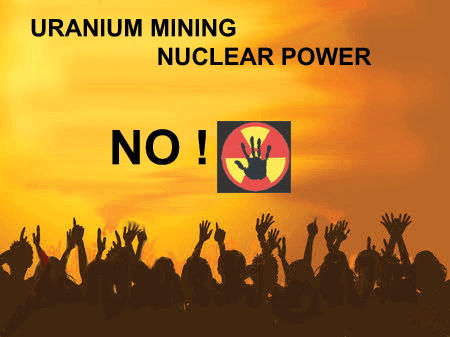 Voters reject Premier Jay Weatherill’s agenda to transform the state, Adelaide Advertiser PAUL STARICK THE ADVERTISER MARCH 13, 2015 A majority of respondents reject plans to switch South Australia’s time zone, downgrade hospital emergency departments, create more “super” schools, expand the nuclear industry and overhaul tax…….
Key findings of the survey, which involved people being interviewed at numerous times and locations across metropolitan Adelaide and regional SA, were:
ALMOST 70 per cent opposed furthering SA’s role in the nuclear industry, including a power station, waste dump or enrichment facility…..
Nuclear waste storage banned by law in South Australia
 South Australia Nuclear Waste Storage Facility (Prohibition) Act 2000 An Act to prohibit the establishment of certain nuclear waste storage facilities in South Australia; and for other purposes.
—Objects of Act The objects of this Act are to protect the health, safety and welfare of the people of South Australia and to protect the environment in which they live by prohibiting the establishment of certain nuclear waste storage facilities in this State.
nuclear waste means— (a) Category A, Category B or Category C radioactive waste as defined in the Code of Practice; or (b) any waste material that contains a radioactive substance and is derived from— (i) the operations or decommissioning of— (A) a nuclear reactor; or (B) a nuclear weapons facility; or (C) a radioisotope production facility; or (D) a uranium enrichment plant; or (ii) the testing, use or decommissioning of nuclear weapons; or (iii) the conditioning or reprocessing of spent nuclear fuel;
nuclear waste storage facility means any installation for the storage or disposal of nuclear waste; public authority has the same meaning as in the Environment Protection Act 1993; radioactive substance means any substance that spontaneously emits ionizing radiation. 5—Act binds Crown This Act binds the Crown in right of the State and, in so far as the legislative power of the State permits, in all its other capacities……..
13—No public money to be used to encourage or finance construction or operation of nuclear waste storage facility Despite any other Act or law to the contrary, no public money may be appropriated, expended or advanced to any person for the purpose of encouraging or financing any activity associated with the construction or operation of a nuclear waste storage facility in this State……
Asia Pacific Greens call for a nuclear free region
 Green Parties call for a nuclear free region on anniversary of Fukushima, Global Greens 10 March, 2015 “……The Green Parties of the Asia Pacific region offer our sincere condolences for the tragedy suffered, and our solidarity with the people and Green Party of Japan.
We use this anniversary to remind the Governments of the world, that it is the responsibility of all nations to ensure the safety of our planet.
There is no doubt, the suffering for the Japanese people has been immense, especially for those living in and around Fukushima, and it is not yet over. The world has already witnessed suffering following nuclear disasters in Chernobyl (Ukraine), Khystym (Russia), Sellafield (United Kingdom), and Three Mile Island (USA). However, there are currently 71 new nuclear plants under construction around the world, the majority of which are in the Asia Pacific region (China 26, Taiwan 2, India 6, Japan 2, Pakistan 2, South Korea 5). (3)
It is time we fully committed to a nuclear-free world.
Whether your country is listed as one of these constructing further nuclear plants or not, we are all implicated in the nuclear supply chain – through uranium mining, refining, power generation, radioactive waste, nuclear weapons, or through complicity by not discouraging the practice of our trading partners.
 Green Parties around the globe oppose the expansion of nuclear power and are working to rapidly phase it out. Nuclear energy is not the emissions-free solution that the world needs to address climate change, in fact, it is a net producer of greenhouse gases.(4)
As we have seen with Fukushima, the human and planetary costs are too high, and when examining the nuclear supply chain, it is simply ineffective at reducing emissions.
We need to stay focused on transitioning to clean renewable energy sources – these are not only safer, but offer a more equitable solution. We can achieve economic development with genuine quality of life through a sustainable smart green economy. Examples of this kind of development include community-based, co-operative, renewable energy operations complemented by reduced energy consumption through electricity saving government policies.
At this critical moment, we ask the people Asia Pacific to call on their governments to:
- Commit to a nuclear-free world.
- Move to clean equitable renewable energy solutions for your country
- Provide democratic process in citizens’ referenda on nuclear power.
- Ensure information transparency, participatory democracy, social and environmental justice for residents living near power plants and nuclear waste fields.
- Prioritise in decision-making the wellbeing of our planet and future generations.
Signatories:
The Asia-Pacific Greens Federation (APGF) Coordination Committee
The APGF’s members are:
- Australia: Australian Greens
- India: Uttarakhand Parivartan Party (UKPP)
- Indonesia: Sarekat Hijau (Indonesian Green Union)
- Japan: Greens Japan
- Korea, Republic of: Green Party Korea
- Mongolia: Mongolian Green Party
- Mongolia: Civil Will Green Party of Mongolia
- Nepal: Nepali Greens (Green Civil Society)
- New Zealand: Green Party of Aotearoa New Zealand
- Pakistan: Pakistan Green Party
- Taiwan: Green Party Taiwan http://www.globalgreens.org/news/green-parties-call-nuclear-free-region-anniversary-fukushima
Hans-Peter Schnelboegl’s submission on draft Terms of Reference for Nuclear Royal Commission
the Royal Commission itself may act in breach of the “Nuclear Waste Storage Facility (Prohibition) Act” by promoting radioactive waste storage in SA.
Submission on draft Terms of Reference to the SA Royal Commission on our role in nuclear energy
The draft Terms of Reference for the Royal Commission are heavily leaning in favour of new nuclear ventures rather than investigating the issue impartially:
The first paragraph includes supportive phrases like:
“whether there is any potential for the expansion”
”any circumstances necessary for such an increase”
“opportunities created by expanding”
“the measures that might be required to facilitate and regulate that
increase in activity”
This is balanced by just one cautious phrase:
“any risks … created by expanding”
The other paragraphs of the draft ToR’s show a similar imbalance.
I request that the ToR’s be expanded to explicitly include
Precautionary Principle
Intergenerational Equity
Long-term Consequences
Public and Workers’ Health
Impacts on Freedom and Democracy
Nuclear versus Alternative energy sources – comparison of cost and risks
The reasons are in short:
It is well known that the nuclear industry involves severe dangers from radiation exposure. Radiation can not be perceived by any of the human senses. The health consequences of exposure to radiation are,
in most cases, experienced much later when no connection to the exposure is drawn.
Furthermore, nuclear ventures are characterised by the potential for severest nuclear accidents and incidents like The nuclear bombing of Hiroshima and Nagasaki where hundreds of thousands of inhabitants were incinerated in an instant or slowly died from burns, cancers …
The explosion of a nuclear reactor at Chernobyl. Scientists using mainly epidemiological data have shown that by 2004 already 1 million people had died from the consequences of the accident. This number is growing.
The meltdown of four Fukushima reactors fuelled by Australian uranium.
The resulting contamination of our oceans, especially the Pacific Ocean, is steadily increasing.
Uranium mining in Australia has a deadly impact on mine workers, nearby residents and, most of all, on future generations.
For decades Australian governments have refused to establish a database for uranium mine workers’ health, and the currently partially established database seems skewed like the draft terms of this Royal
Commission.
It seems mining companies are now using highly sensitive blood tests to detect cancers and weakened defences against cancers early, and then simply terminate employment.
Much worse than the impact on mine workers will be the impact on future generations using contaminated groundwater and/or being exposed to radioactive dust storms dispersing the fine radioactive materials in tailings dams.
This is compounded by the fact that the hazards of radiation and the proper maintenance of radiation hot spots will be forgotten within a few hundred years. Already today local kids and tourists are swimming in contaminated mining dams.
The Impacts on Freedom and Democracy stem mainly from the strong public opposition to any nuclear industries and the subsequent attempts by governments to quell that opposition.
This happened when the French government developed its vast nuclear industry: Widespread opposition and protests were suffocated by horrendous police brutality permanently damaging French democracy.
In South Australia, police brutality led to the locking up of peaceful protesters in a shipping container at the Beverley uranium mine site – in full sun, for hours without water and toilets. This resulted in a
million dollar court verdict against the South Australian government, i.e. the SA taxpayer.
Those responsible for ignoring the public’s opposition to uranium mining and approving the hazardous mine, for brutally suffocating peaceful protests with methods akin to torture, they were neither jailed nor fined.
Another SA example of destructive impacts of nuclear industries on freedom and democracy is the special status of the Olympic Dam mine: A number of public rights have been suspended for the mine.
For example FoI: The SA government is not allowed to pass on information from the mine without the consent of the mine. This is highly relevant when it comes to the frequent accidents and incidents
at the site. I remember two major fires of very large storage ponds for used process chemicals (kerosene and the like) and numerous pipes resulting in a plum of thick smoke passing over SA. There was very
little or no reliable information available about the radioactive contents of the smoke.
Further, Aboriginal heritage protection and certain environmental regulations have been suspended for the Olympic Dam uranium mine.
And finally, the Royal Commission itself may act in breach of the “Nuclear Waste Storage Facility (Prohibition) Act” by promoting radioactive waste storage in SA.
Queensland Labor says NO to uranium mining
 Labor says no to uranium mining in Queensland, Brisbane Times, Amy Remeikis Queensland state political reporter 14 Mar 15 Labor plans on scuttling a Queensland industry before it even begins.
The Newman Government announced it would overturn the long-time ban on uranium mining in 2012 and opened applications in August 2014.
Queensland’s Mary Kathleen Mine, near Mount Isa, closed in 1982, seven years before uranium mining was banned in the state……..
a spokesman for the new government said uranium mining would once again be kiboshed in Queensland.
Andrew Cripps ( Mines Minister in the previous Liberal government) said it would not have any impact.
“The Department of Natural Resources and Mines has not received one single application for a uranium mining lease since the previous LNP government’s regulatory framework for uranium mining started on 31 July 2014,” he said……………http://www.brisbanetimes.com.au/queensland/labor-says-no-to-uranium-mining-in-queensland-20150313-143pzi.html
Australia’s remote ecosystems need the care of Aboriginal communities
 Remote indigenous communities are vital for our fragile ecosystems – The Conversation http://bsllibrary.org.au/equity-and-climate-change/remote-indigenous-communities-are-vital-for-our-fragile-ecosystems-the-conversation-52920/ MARCH 13TH, 2015 Extract from an article by Craig Moritz, Emilie-Jane Ens and Jon Altman
Amid the questioning of government support for remote Aboriginal communities and what Prime Minister Tony Abbott called the “lifestyle choices” of those who live there, the growing role of Aboriginal management of large areas of remote Australia has been overlooked.
There are 1,200 small, discrete Indigenous communities in regional and remote Australia with various sources of income, including federal government “Working on Country” funding, as well as meagre and tightly regulated welfare payments. They fulfil a key role in populating large areas of outback Australia …
Outback Australia has high biodiversity and would otherwise be unoccupied – and so open to a host of threats including intense and widespread wildfires and invasive species. There is also a long-standing recognition of outstations as important to maintaining the connection of remote-living Aboriginal people to their culture and customary responsibilities.
More than a third of Australia is recognised as Aboriginal owned and managed land, mainly in very remote regions. Given ancestral connections and Aboriginal people’s customary obligations to Country (the land with its inherent natural, cultural and spiritual meaning), they are the best placed to look after it, it is a practice that can be very important to them.
SOURCE: Moritz, Craig; Ens, Emilie-Jane and Altman, Jon. “Remote indigenous communities are vital for our fragile ecosystems.” The Conversation 13th March 2015
Nuclear waste that originated in Lucas Heights is due to return to Australia soon
 Why don’t people realise the distinction between the relatively small amounts of nuclear waste (originating at Lucas Heights) that Australia is contracted to take back, and the greedy dream of some to import nuclear wastes from other countries?
Four shipments of Australian radioactive waste was sent to France for “reprocessing” between 1999 and 2004, and the first of it will be returned by sea to Australia between September and March 2016.
 More time needed to plan for nuclear waste dump: councils, SMH, March 13, 2015 – Peter Ker Resources reporter Councils interested in housing Australia’s radioactive waste dump have complained the Abbott government’s tender period is too short for them to make a decision, inclusive with their communities, on the divisive issue.
The government has given landowners and communities two months to nominate as the best location for the national waste facility, which will permanently house intermediate level nuclear waste produced at the Lucas Heights reactors in southern Sydney. Continue reading
Mounted police, canine squad & dozens of police move Aboriginal protestors at Perth’s Heirisson Island
 Heirisson Island Aboriginal protest: Police move in to clear campers, ABC News 13 Mar 15 By Rebecca Trigger Angry scenes erupted at Perth’s Heirisson Island today as police and the city moved to dismantle an Aboriginal camp, set up in response to the State Government’s plan to close remote communities.
Dozens of officers, including mounted police and the canine squad moved in on the island at about 3:00pm, Continue reading
Melbourne rally in protest at plan to close remote Aboriginal communities
Aboriginal rally brings Melbourne CBD to standstil SAMANTHA LANDY HERALD SUN MARCH 13, 2015 HUNDREDS of Aboriginal rights activists have shut down Melbourne’s CBD in a protest against the planned closure of remote indigenous communities in Western Australia. The demonstrators brought Swanston St to a standstill during the evening peak, disrupting traffic and almost a dozen tram routes for about an hour and a half from 6pm…….
Ms Onus said Mr Abbott’s comments that living in remote communities was a “lifestyle choice” were “blatantly racist”. “These people live where their ancestors have been for tens of thousands of years,” she said.
“There will be (thousands of) Aboriginal refugees if these communities close. “We know what happens to homeless Aboriginal people — they’re often criminalised. “They’re gonna end up in prisons and hospitals and homeless shelters.”
Ms Onus said protests were also being held in other capital cities.
Victoria Police spokesman Adam West said there were no incidents during the protest.samantha.landy@news.com.au http://www.heraldsun.com.au/news/victoria/aboriginal-rally-brings-melbourne-cbd-to-standstill/story-fni0fit3-1227261910970
1 This month.
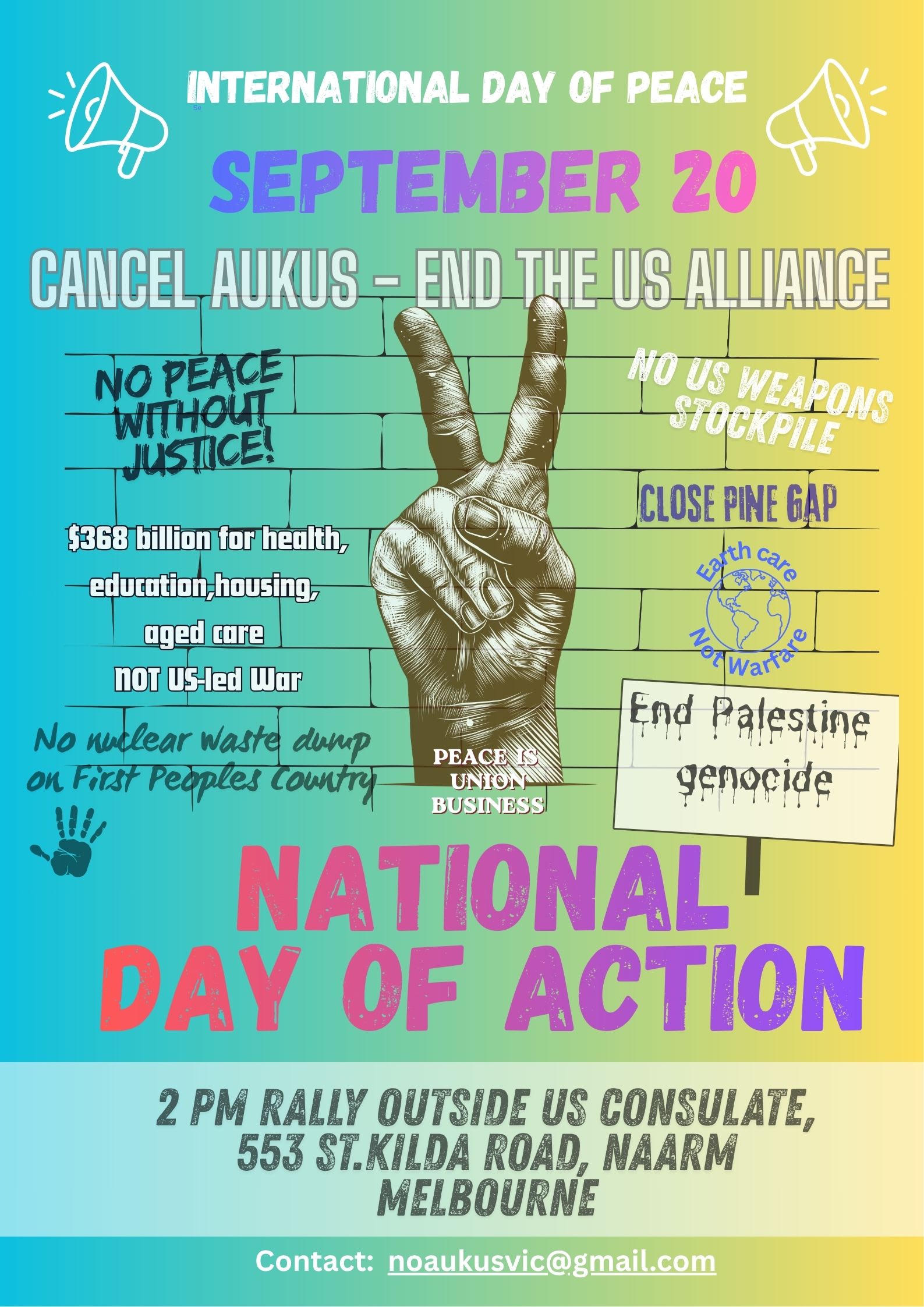
20 September –National Day of Action in Melbourne on the International Day of Peace

Help Aunty Sue Protect Her Land and Sacred Sites From Destructive Rocket Testing.
.

Australians deserve the truth
about
AUKUS – https://aukuspublicinquiry.com/


PETITION – To: Prime Minister Anthony Albanese and the Australian Labor Government

of the week – Australians for War Powers Reform (AWPR)
To see nuclear-related stories in greater depth and intensity
 Antinuclear