Timeline for the struggle for Aboriginal land rights
Aboriginal people have a responsibility to live on Country
Closing the divide between all Australians, The Age, March 13, 2015 Justin Mohamed
Aboriginal organisations and communities have raised strong concerns about the impact community closures will have.It is not purely an economic equation. Continue reading
A new project off the coast of Australia may make wave power a reality
Renewable energy Looks swell, The Economist 14 Mar 15 A new project off the coast of Australia may make wave power a reality
Mar 14th 2015 NO LAND stands between Antarctica and Australia’s west coast—just a vast ocean, rippled and rocked by the Roaring Forties. For centuries these westerlies, which blow between latitudes 40° S and 50° S, powered ships sailing from Europe to Asia. These days, they are also creating waves in the world of renewable energy. At the end of February, a demonstration project designed to use the ocean swell they produce went live. As a result Australia’s largest naval base now gets part of both its electricity and its fresh water courtesy of the ’Forties.

Carnegie Wave Energy, in Perth, has been working since 1999 on what it calls CETO technology. Ceto was the ancient Greek goddess of sea monsters, and Carnegie’s particular monsters are buoys that resemble giant macaroons. They float a metre or two below the ocean’s surface, bobbing up and down in the swell and generating electricity as they do so. The current version, CETO 5, has a capacity of 240kW per buoy. Three of the beasts are now tethered to the sea bed 3km from HMAS Stirling, on Garden Island. They also help to run a desalination plant on the base, for fresh water is a valuable commodity in Western Australia’s arid climate………
Carnegie aspires to bigger and better buoys it hopes will generate a megawatt each when launched in 2017. These versions, CETO 6, will be 20 metres across and will produce electricity inside themselves instead of at an onshore power plant. That means no pipe is needed; a submarine power cable will do instead……….
Carnegie also has its sights on markets farther afield. Military bases around the world need secure supplies of energy and water. And wave energy is attractive to island countries like the Maldives that must, at the moment, import fossil fuel at some expense. Whether submarine wave power of this sort will ever become truly mainstream is moot. But Carnegie is showing that, in appropriate circumstances, it could indeed have the wind behind it. http://www.economist.com/news/science-and-technology/21646176-new-project-coast-australia-may-make-wave-power-reality-looks-swell
Adelaide Advertiser obligingly publicises pro nuclear shills
 Dennis Matthews, 13 Mar 15 Whilst belittling socially aware South Australian schoolteachers and environmentalists The Advertiser seems to be totally comfortable with pro-nuclear visiting British professors quoting numbers “suspect to challenge” and Japanese Professors supporting nuclear reactors and nuclear waste storage in Australia (The Advertiser, 13/3/15).
The British Professor is from the University College London, which has a campus in Adelaide, has had very generous funding from the people of SA but looks like closing its doors in the near future, and which appears to be a *Trojan Horse for the uranium mining and nuclear energy lobby.
The Japanese Professor is an “expert on international law” and as far as we can tell has no particular expertise on uranium mining, nuclear reactors or nuclear waste dumps but who claims that Australia could offer a “cradle to grave” solution to the nuclear industry. The people of Fukushima would be experts on that, but neither The Advertiser nor the esteemed professor of international law seems to be in a rush to talk about the reality versus the mirage.

* re UCL – a Trojan horse
see Adelaide’s University College London (UCL) -pro nuclear research funded by nuclear interests
South Australian Liberal Senator Sean Edwards promises $billions for accepting the world’s radioactive trash
Dr. Jim Green, from Friends of the Earth, Australia attended the protest and told ABC radio that he was there to for two reasons. To lend his sympathy to the 160,000 Japanese who remain displaced from the Fukishima disaster and to send a message to the government that they’re “not happy about the terms of reference” of the inquiry.
The inquiry’s terms of reference will focus on uranium enrichment, nuclear generation and waste storage. Opponents of nuclear energy say the focus of the inquiry is disproportionately skewed towards the positive financial benefits without adequately accounting for the dangers.
Dr. Green would like to see uranium mining and previous nuclear programs such as Radium Hill and the Port Perry Uranium processing site included in the inquiry. Both sites sit deserted and serve as a reminder to Dr. Green of the perils of nuclear power.
So with just a single day left for the public to submit their opinion on the issue, perhaps it’s worth asking the question: At what price should we be willing to become a nuclear dumping ground?
 Royal commission is set the debate a proposed plan from SA senator to expand nuclear industry http://www.news.com.au/technology/environment/royal-commission-is-set-the-debate-a-proposed-plan-from-sa-senator-to-expand-nuclear-industry/story-e6frflp0-1227259822071 MARCH 12, 2015 FREE power, no payroll tax and no motor vehicle tax.
Sounds pretty great, right? That is what South Australian Senator, Sean Edwards is touting if the state expands its nuclear energy industry.
According to the Liberal senator, the state would be able to access ten of billions of dollars from the global nuclear industry if they are allowed to store rods and nuclear waste from other countries.
“The science is in. The process is proven and we have a first mover advantage which would see us generate wealth akin to being the Saudis of the South,” he told the Adelaide Advertiser.
The senator believes it would turn South Australia into a “special economic zone” which would further attract business investment.
Mr. Edwards has thrown his weight behind the project. He has reportedly met with countries interested in partnering with the state government and has briefed Trade Minister Andrew Robb and Industry Minister Ian Macfarlane on the details. All while promising huge economic incentives to the people of his state. Continue reading
Respected Aboriginal women elders explain the importance of the Homelands
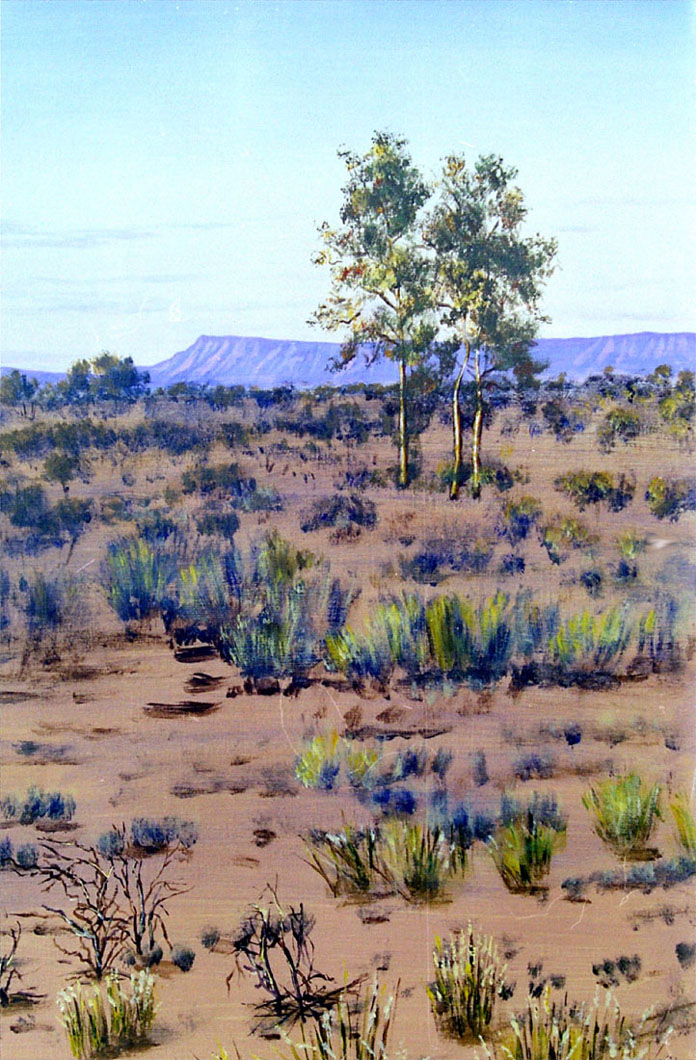 ‘People wanted to go back to homeland’
Mr McLarty said many of the small communities were created in response to government policy last century which saw Aboriginal people forcibly amalgamated into camps with other tribes.
“People wanted to move back to their own homeland,” he said.
“People wanted to go out to their own community, to feel some ownership, because they didn’t feel like they belong here in another tribal area.”
He said the Prime Minister’s comments may come from a lack of understanding of Aboriginal people’s history.
The women said remote communities were being unfairly painted as dysfunctional.
They argued that in most communities, children were safer and happier being raised ‘on-country’, where there was not the steady flow of drugs and alcohol and they could learn the traditional culture.
 Remote Aboriginal community closures: Return to country or risk losing traditional homes forever, elders warn http://www.abc.net.au/news/2015-03-11/indigenous-community-members-called-on-to-return-to-country/6304716 By Erin Parke and Rebecca Trigger Senior Aboriginal women from WA’s Kimberley say the Prime Minister’s “lifestyle choice” comments are a wake-up call and people who have drifted from their bush communities should return or risk losing them forever.
The call comes in the wake of Tony Abbott’s suggestion that living in remote Aboriginal communities was a “lifestyle choice” that could not be endlessly subsidised by the Government.
Senior Miriuwung Gajerrong woman and chairperson of the Kimberley Aboriginal Law and Culture Centre Merle Carter said the comments should spur people into action.
“For all of our people who are living in town, who are fringe-dwellers, just because of alcohol, go back to your communities,” she said.
“With the statement that Premier Colin Barnett made about closing the Aboriginal communities, and Tony Abbott backing him up, this might be a wake-up call.” Continue reading
Four years on: Kakadu Traditional Owners remain saddened by ongoing Fukushima disaster
11 March 15 The Mirarr Traditional Owners of parts of Kakadu National Park including the Ranger and Jabiluka uranium deposits have expressed their continued sadness on the fourth anniversary of the Fukushima nuclear disaster. Contamination from the failed reactors has forced over 150,000 people to permanently leave their homes and details of the ongoing human and environmental devastation continue to emerge with new leaks of highly radioactive water from the site detected just last month.
In October 2011 the Australian Safeguards and Non-Proliferation Office (ASNO) confirmed the Fukushima nuclear crisis was directly fuelled by uranium from Australia. At the time Mirarr Senior Traditional Owner Yvonne Margarula wrote to UN Secretary General Ban Ki Moon expressing her concern and sadness at the devastation that uranium from her lands was causing in Japan: “This is an industry we never supported in the past and want no part of in the future. We are all diminished by the events unfolding at Fukushima,” Ms Margarula wrote.
In August 2014 the Mirarr along with national environment, union and public health groups, hosted an Australian tour of Mr Naoto Kan. Mr Kan was Prime Minister of Japan when the Fukushima reactors failed and, though previously a supporter of nuclear power, is now a passionate advocate for safe renewable energy sources. Mr Kan was particularly affected by his visit to Mirarr country and the Ranger mine which has supplied Japan with uranium for over three decades.
Gundjeihmi Aboriginal Corporation CEO Justin O’Brien said: “Mirarr country and Japan have been linked by nuclear issues for many years. On this fourth anniversary of the Fukushima disaster we send our thoughts to the people of Japan, whose lives have been irrevocably changed by that terrible event.”
“The impacts of the nuclear industry will be felt for generations in every place and amongst all peoples it touches. Here in Kakadu the legacy of uranium mining is all too evident and we are deeply saddened to learn of the ongoing and increasing impacts of the failed reactors on the people and country of Japan,” Mr O’Brien concluded.
South Australian nuclear lobby imports UK shill Tim Stone to spruik for nukes
 Herald Sun reports – NUCLEAR energy is “cheap, safe and low carbon’’, world-leading nuclear expert Dr Tim Stone says
Office for Nuclear Development
- Tim Stone, Senior Adviser to the Secretary of State for BERR and to the Chief Secretary of the Treasury on new nuclear power: he is the Chairman and founder of KPMG‘s Global Infrastructure and Projects Group.
Protecting the nuclear industry from bad news
In July 2012, The Guardian revealed OND emails that revealed how it worked closely with E.ON and RWE to soften the impact of a major blow to plans for a new nuclear programme……
Sharing intelligence with the industry
In December 2011, The Guardian revealed how the OND was “quietly exchanging intelligence on key policies with multinational companies in an effort to protect and promote their plans for new nuclear power stations”.
It shared information about the handling of the EDF‘s application to build the first of the new nuclear stations at Hinkley Point, in Somerset.
It also sent EDF and the Nuclear Industry Association details of its court battle against Greenpeace, which is trying to block the Government’s nuclear plans…….http://powerbase.info/index.php/Office_for_Nuclear_Development
South Australian protest against expanding nuclear industry
Protesters warn of SA nuclear risks 9 News 11 Mar 15 Protesters have raised the spectre of the Fukushima nuclear disaster to warn against expanding the industry in South Australia.
The SA government has launched a royal commission to investigate whether the state should embrace nuclear enrichment, power production and the storage of waste.
Environmentalists have argued that the industry could generate catastrophic risks for the state.
Propping up a giant inflatable “nuclear waste” barrel, the protesters held signs reading “Aus Uranium Fuelling Fukushima” and “SA: Renewable not Radioactive”. http://www.9news.com.au/national/2015/03/11/13/05/protesters-warn-of-sa-nuclear-risks#5MFxGQZ8vrKyHfPv.99
SA Royal Commission Draft Terms of Reference Ignore Health Impacts of Nuclear Industry
11 Mar 15 The Medical Association for Prevention of War (MAPW) and the Public Health Association of Australia (PHAA) are deeply concerned that the Royal Commission’s draft terms of reference are too narrow and do not protect the health of South Australians.
“The draft terms of reference do not address health impacts at all, for either industry workers or the general public,” said Dr Margaret Beavis, President of MAPW. “Nuclear reactors are associated with increased rates of childhood leukemia in surrounding areas, and there are already legacy health issues in South Australia resulting from previous nuclear activities and uranium mining,” she added.
“In addition, the large government subsidies reactors require may reduce funds available for public institutions like hospitals and health services in South Australia,” Dr Beavis added.
The MAPW and PHAA are calling for a comprehensive examination of the entire nuclear industry, including uranium mining and security risks.
“There are health threats associated with every step of the nuclear fuel cycle and ample scientific evidence regarding the hazards of low dose radiation exposure,” said PHAA spokesperson Dr Michael Fonda. “There needs to be a genuine and scientific assessment of the health impacts of the nuclear industry both from the past and for the future,” he added.
This Royal Commission provides an opportunity to explore energy solutions for South Australia. “Uranium is a non-renewable resource and Australia needs a 21st century Energy Policy that hastens the transition of our economy toward one powered by renewables, not one that ties us down in outmoded and potentially dangerous technologies,” Dr Beavis said.
Both organisations have offered to assist the Royal Commission in its inquiry.
Community renewable energy taking off rapidly in Australia
 Communities take lead on renewable energy as big projects stall http://reneweconomy.com.au/2015/communities-take-lead-on-renewable-energy-as-big-projects-stall-81109 By Giles Parkinson on 10 March 2015
 Dozens of projects have emerged as state governments tap into local ideas, offering grants for innovative projects that allow solar and other renewables to be developed at a local level, for innovative financing packages, and even the development of localised smart grid.
It’s a crucial step. Australia has nearly two million homes with some sort of solar appliance – rooftop PV arrays or solar hot water – and is probably leading the world in residential solar, with some 4,000MW of rooftop arrays, penetration rates of more than 25 per cent. It is at the forefront of the rise of the so-called “energy prosumer”.
The CSIRO last year predicted that up to one-half of total electricity needs will be generated locally, either on households rooftops, by business, or in community-owned or sponsored arrays.
What has been missing from the emergence of this “decentralized” energy system – which will ultimately turn the current centralised economic model on its head – has been concrete action at community level.
This is important because it will not just build up scale, it will also offer solutions to those not yet able to take part in the solar revolution, including low-income housing, apartment dwellers and renters.
And it will allow whole communities to look after their own energy needs, as some network operators are even encouraging. And, as pointed out by Beyond Zero Emissions Stephen Bygrave earlier this week, “all revolutions need to start from the bottom up,” as they had in Germany and Denmark in the energy space. There’s not much hope of leadership at the federal level in Australia.
Apart from a few groundbreaking projects, such as the Hepburn wind farm and a few smaller community-funded solar arrays, little has been done so far in Australia, although there have been plenty of ideas and aspiration of how to match the achievements in Europe, where much of the renewable energy is owned at community level in some form.
That is now starting to change rapidly. Continue reading
Tadmanian govt, Workers Union, Clean Energy Council push for decision on Renewable Energy Target
Pressure Builds For Renewable Energy Target Resolution http://www.energymatters.com.au/renewable-news/ret-resolution-urged-em4722/ March 11, 2015
February 17 marked a year of wrangling over the Renewable Energy Target, a situation that resulted in investment in large-scale renewable energy projects such as wind and solar farms plummet 88 per cent; putting Australia behind some developing nations.
Yesterday, the Tasmanian Government demanded certainty from the Commonwealth, stating the ongoing issue hurt Tasmania more than the other states due to its reliance on hydroelectric power.
The Australian Workers Union has also repeated its calls for an immediate resolution, stating tens of thousands of jobs are at risk. The AWU has a special focus on the exemption of the aluminium industry under the RET and says an exemption has been agreed upon by both major parties.
So, is there light at the end of the tunnel given all the competing interests? Yes, but the more pessimistic might say it still remains to be seen if that will be an oncoming train for some sectors. One thing is certain, the Clean Energy Council is fighting hard for its members; wanting a target somewhere in the mid to high 30,000GWh range and Labor is supporting this stance.
On the weekend, Environment Minister Greg Hunt held discussions with the Clean Energy Council and the Australian Industry Group, saying ‘huge progress’ had been made. It’s understood the Federal Government wants the impasse resolved by Easter.
The Australian Industry Group is very conscious of the fact things have dragged on for far too long.
“I think what you’ve got now is a sense of urgency and a recognition that this needs to be done quickly if it’s to be done at all with any sort of reasonable outcome to give industry the certainty needs, so the time for sitting on the fence is pretty much over and this deal just needs to be done,” said chief executive of the Australian Industry Group, Innes Willox.
A strong Renewable Energy Target isn’t just about overseas investment, jobs or environmental benefits – it’s been shown the RET will reduce electricity prices. A 2013 report stated that even by that point in time, Australia’s rooftop solar power systems alone were saving between $300 million and $670 million each year in wholesale electricity costs.
A nuclear industry in South Australia would move Australia towards having nuclear weapons
Study says SA plan would lift nuclear latency Sky News , 11 March 2015 South Australian plans for a nuclear industry would take Australia well down the path to a nuclear weapons capability, a new study says.
That’s termed ‘nuclear latency’ – the potential for a country to build atomic bombs.
‘The recent move by the South Australian government to examine nuclear industry development options would contribute significantly to Australia’s own nuclear latency,’ said analyst Michael Malyshev in a paper released by the Australian Strategic Policy Institute………
Mr Malyshev said that in the 1960s, US president John F. Kennedy expressed fear that 20-30 countries could develop nuclear weapons in a few years as nuclear knowledge and technology became more widely available.
To keep track, various international watchdogs such as the International Atomic Energy Agency established the concept of nuclear latency.
No developed nation has zero latency and about four dozen countries have significant nuclear latency. Most, including Australia, are also signatories to the nuclear non-proliferation treaty.
Mr Malyshev said nuclear watchdogs and other entities, including intelligence services, needed to remain vigilant.
Tony Abbott completely out of touch with understanding of Aboriginal culture
West Australian Greens Sentor Rachel Siewert joined the chorus of criticism, releasing a statement describing Mr Abbott’s comments as “unbelievably racist and completely out of touch”.
“The cultures that exist within these communities are thousands of years old and stretch far beyond the Prime Ministers bizarre idea of a ‘lifestyle choice’,” she said
By Rebecca Curtin and political reporter Jane Norman The Prime Minister backs a WA Government proposal to close a number of remote Indigenous communities, saying it is not the taxpayer’s job to subsidise “lifestyle choices”, prompting a backlash from Indigenous Australians. The Federal Opposition is demanding the Prime Minister apologise after he suggested it is a lifestyle choice to live in remote indigenous communities.
Rolf de Heer on Tony Abbott and”lifestyle choices” for Aboriginals
Rolf de Heer slams Tony Abbott over ‘lifestyle choice’ comments on remote Aboriginal communities, SMH March 11, 2015 Garry Maddox Australian filmmaker Rolf de Heer has lashed out at Prime Minister Tony Abbott for saying that indigenous Australians live in remote communities because of “lifestyle choices”.
Speaking after the Aboriginal drama Charlie’s Country won best film and best director at the Film Critics Circle of Australia Awards in Sydney, the director of such acclaimed indigenous dramas as The Tracker and Ten Canoes described the comment as “offensive”.
“It’s so inappropriate that it’s laughable,” de Heer told Fairfax Media after the awards. “It shows such ignorance that he has no right to be the prime minister of Australia.” ………
A fired up De Heer said that to make those comments about the residents of remote communities was “profoundly misunderstanding” of Aboriginal culture and economic reality.
“It’s hypocritical that our Prime Minister pretends to be the Minister for Aboriginal Affairs and has so little understanding of what it is to be on country and that there is no choice involved,” he said.
“There are no jobs so they earn nothing. So they get welfare and they pay twice as much for their food as we do. Welfare is not enough here, let alone there. So they have a choice to move somewhere else?”
De Heer said David Gulpilil, the acclaimed actor whose struggles with alcohol, drugs and the law inspired the fictional central character in Charlie’s Country, had been forced to live in Murray Bridge outside Adelaide.
“He can’t afford to live in Darwin and somebody will put him up in Murray Bridge. That’s a lifestyle choice? Yeah. Thank you Mr Abbott.” http://www.smh.com.au/entertainment/movies/rolf-de-heer-slams-tony-abbott-over-lifestyle-choice-comments-on-remote-aboriginal-communities-20150310-140it3.html#ixzz3U1KMlmDc
1 This month
17 October, Free Public Talk on Nuclear Issues in South Australia
David Noonan will speak on public interest concerns over the new Roxby Downs Indenture Act 2026 on BHP copper-uranium mining and ore processing in SA, and on how AUKUS may face SA with a High-Level nuclear waste agenda.
Dr Jim Green will discuss international developments in the field of nuclear power including ‘small modular reactors’ and Generation 4 ‘advanced’ nuclear reactor concepts.


Help Aunty Sue Protect Her Land and Sacred Sites From Destructive Rocket Testing.
.

Australians deserve the truth
about
AUKUS – https://aukuspublicinquiry.com/

PETITION – To: Prime Minister Anthony Albanese and the Australian Labor Government

of the week – Australians for War Powers Reform (AWPR)
To see nuclear-related stories in greater depth and intensity

