Australia half-hearted about removing corruption in oveseas mining operations
Tougher standards to fight corruption in the resources industry ABC News 26 May 13 By resources reporter Sue Lannin More of the world’s governments have signed up to measures designed to reduce corruption in the global resources industry.
Around 3.5 billion people live in poor countries that are rich in resources but they do not see the trillions of dollars that flow from their mineral and energy reserves.
Last week, the United Kingdom and France joined the Extractive Industries Transparency Initiative (EITI), which requires countries to fully disclose taxes, royalties and other fees they receive from oil, gas and mining income.
About 40 countries have now implemented the voluntary scheme and about $US1 trillion in revenue has been disclosed.
Australia has launched a pilot EITI scheme but is not yet fully compliant.
Despite recent reforms in the US and the European Union, Australia does not require mining and energy companies to publicly reveal the taxes and royalties they pay to governments around the world for natural resources.
Federal Minister for Resources and Energy Gary Gray said in his written speech prepared for the EITI conference in Sydney last week that transparency for transparency’s sake was not necessarily the best policy.
“While I recognise the benefit for governments to better understand and negotiate market conditions, exposure of sensitive project, contract and other market information will distort market competitiveness,” he said in the speech.
But the senior policy manager for extractive industries at Oxfam America, Ian Gary, says investor pressure is mounting in Australia for more openness…..
NGO says EITI merely symbolic
However, NGOs would like to see the standards tightened further as some of the new rules merely “encourage” countries to increase disclosure.
Environmental NGO, Global Witness, has called EITI a “totemic reformers club”, saying corrupt countries such as Nigeria are members…….
Australia’s SILEX uranium enrichment technology – a nuclear weapons danger
a SILEX facility could make it much easier for a rogue state to clandestinely enrich weapons grade uranium to create nuclear bombs
SILEX could become America’s proliferation Fukushima,
Controversial nuclear technology alarms watchdogs http://www.smartplanet.com/blog/intelligent-energy/controversial-nuclear-technology-alarms-watchdogs/18138 By David Worthington | July 30, 2012 A controversial nuclear technology is raising alarms bells among critics who claim it may be better suited for making nuclear weapons than lowering the cost of nuclear power and could lead to a nonproliferation “Fukushima” for the United States.
SILEX (separation of isotopes by laser excitation) is a method for enriching uranium with lasers. It was developed by Australian scientists during the mid 1990’s as a way to reduce the cost of nuclear fuel, because uranium must be processed before it can be used to generate power.
The scientists formed Silex Systems to license the technology for commercialization, and that process is still ongoing. In 2000, the governments of Australia and the United States signed a treaty, giving the U.S. authority to review whether SILEX should be deployed. That’s because there could be a major proliferation problem. SILEX reduces the steps necessary to transform fuel grade uranium into to weapons-grade uranium, and the process doesn’t create telltale chemical or thermal emissions, according to an article published by the Bulletin of the Atomic Scientists. R. Scott Kemp, an assistant professor of nuclear science and engineering at MIT, has the byline. Continue reading
(? Dangerous) Australian invention Silex Laser Uranium Enrichment
Silex Systems gets closer to nuclear ambitions LISTED uranium processing pioneer Silex Systems is a quantum step closer to its long-term quest of persuading a cabal of heavy-hitting US nuclear companies to build a full-sized power station using its next-generation enrichment method.
Silex last week revealed the consortium, Global Laser Enrichment, had completed a first-stage “test loop” at its facility in Wilmington, North Carolina. …. http://www.theaustralian.com.au/business/mining-energy/silex-systems-gets-closer-to-nuclear-ambitions/story-e6frg9df-1226650934760
Australia hosts the first World Indigenous Network conference in Darwin.
 Native voices join together at conference Border Mail, By Rick Feneley May 27, 2013 “….. Australia hosts the first World Indigenous Network conference in Darwin.
Launched on Sunday, it is a rainbow connection of about 1200 of the world’s indigenous rangers and land and sea managers. It will hear the mangrove people of Bangladesh on the challenge of climate change. The forest people of Madagascar and the Republic of Benin will talk about ecotourism. It will hear from the Bedouin of Egypt, the Maori and indigenous delegates from Brazil, Mexico, Tanzania, Kenya, South Africa, Mongolia, the Solomon Islands, Indonesia, Papua New Guinea and more countries……
Arnhem Land traditional owners used the event’s launch to celebrate the creation of Australia’s first government-recognised indigenous protected area over the sea. The new Dhimurru IPA will extend 40 kilometres out to sea from the Gove Peninsula and cover 450,000 hectares of water around the north-western tip of the Gulf of Carpentaria.
With the support of the federal and Northern Territory governments, the Dhimurru Aboriginal Corporation will manage the conservation of the sea territory in collaboration with quarantine, customs and fisheries authorities.
”It’s important because, in our culture, we have to look after the land and the sea,” says Dhimurru ranger Lisa Dhurrkay, 25. Their responsibility doesn’t stop at the shoreline, she says.
Four IPAs covering more than 85,000 square kilometres were declared in Western Australia’s Kimberley last week…. http://www.bordermail.com.au/story/1528298/native-voices-join-together-at-conference/?cs=7
Australia’s Clean Energy Finance Corporation in demand by many projects
The CEFC was established as part of the Federal Government’s carbon pricing package and will have a total of $10 billion in funds to allocate over a five year period to renewable energy investments, as well as energy efficiency and low emissions projects.
It must, however, deliver a return on its investment, more than the equivalent of the government bond rate. More than that, it must also fight for survival if a Coalition government is elected in September.
CEO Oliver Yates said the CEFC – which officially “opened its doors” in early April after absorbing Low Carbon Australia and expanding its team – was involved in “active discussions” with more than 50 project proponents who were seeking CEFC funding of around $2 billion, and which had total project costs of more than $4.5 billion.
He said the CEFC had have received further proposals from more than 100 additional project proponents seeking CEFC finance of more than $3 billion and with total project costs of over $6 billion. He said the CEFC had “already committed” to concluding some transitions and that list was growing. ”There are many aspects of any transaction that need to be concluded before a deal is ‘done’,” he said……
He said the CEFC would be taking a “commercial approach” to investment and would be self-sufficient. Its mandate no longer assumed it would be making losses of 7.5 per cent on each investment, and it would not cost “anything like” the $350-450 million per year that the Coalition says it can save by dumping the institution.
“The whole concept of the CEFC was to provide stability and independent market-based decision making for financing development of the clean energy sector,” Yates said.
“The difference between the CEFC and a traditional financial institution is that we don’t seek maximum profits. The CEFC expects to earn a positive, risk-adjusted return for taxpayers from its portfolio of investments higher than the government’s costs of funds and the benchmark rate and is intended to operate as a self-sustaining operation within a few years.
“Our potential to make higher profits helps to secure public policy benefits and reduce the cost of moving to a lower carbon economy. The big difference is that the CEFC has the ability to offer concessional finance where we consider there are real public policy benefits for a transaction to occur.”
Yates also said that repeated Coalition threats to not honour the contracts entered into by the CEFC had raised the threat of sovereign risk, and were not something that any government should be contemplating.
“Imagine a world where every infrastructure project in the country will need to consider an environment that contracts could be ripped up by incoming governments that don’t like the project,” he said. “It is not a world we want in Australia.” http://reneweconomy.com.au/2013/cefc-receives-proposals-for-more-than-10bl-in-projects-23772
Paul Langley investigates Australian govt’s cover-up of Maralinga atomic radiation deaths.
 A Message to Australians from the British Government Paul Langley’s Nuclear History Blog 25 May 13 “The Royal Commission does not answer the questions that arise from the deaths and injuries resultant from the repeated nuclear bombing of Australia by Britain.”
Dr Cutter of the Aboriginal Health Service, Alice Springs, testified that mass deaths of Aboriginal people occurred at the time. There are reports of mass graves. Britain took 10 years to not answer the question of the location of the mass graves….” http://nuclearhistory.wordpress.com/2013/05/18/a-message-to-australians-from-the-british-government/
 Christina Macpherson 25 May 13, I highly recommend this article, in which Paul Langley reports on his own research into the effects of the Black Mist fallout cloud of 1953. One court case proved injury to a claimant, but the legal proceedings in this case have been suppressed from the record.
Langley has first-hand witnesses of the radiation injuries, to civilians and military, and of government suppression of information on this.
Yet by 2006 the higher rate of cancer among nuclear test veterans was confirmed by the government’s own survey.
Langley’s efforts to uncover the facts about Aboriginal victims’ health, following exposure, were met with blocking. Yet Langley knew that documents did exist, discussing this, in correspondence between Senator Chaney and the South Australian Health Commission.
He reports that all the medical records of the Maralinga radiation victims treated at Port Augusta hospital have mysteriously disappeared, as have also exposure dose records of all Australian Service Personnel. Langley assumes that these records do exist, but are now held in the UK, by the Ministry of Defence.
Langley’s conclusion – “the Australian government was a fifth column in this nation on behalf of the British government.”
NT trade unions join Traditional Owners to protest Muckaty radioactive waste dump.
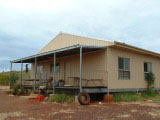 24 May 13, Six years and still standing strong: NT Union members will join Traditional Owners and supporters from across the Territory in Tennant Creek this weekend for a rally against the proposed national radioactive waste dump at Muckaty in the Northern Territory. The rally and concert will mark exactly six years since the Northern Land Council voted to nominate the site.
In May 2012 the Australian Council of Trades Unions National Congress unanimously voted to support the Muckaty campaign. Bryan Wilkins, NT Organiser for the Australian Manufacturing Workers Union said, “NT Unions  are standing in solidarity with Traditional Owners and communities to resist the federal government plan for a radioactive waste dump. We will continue to campaign against any legislation that targets the Muckaty Land Trust, or any site in Australia for a nuclear waste dump that is not based on recognised scientific and international best practice.”
Muckaty Traditional Owners and the community in Tennant Creek remain resolutely opposed to the national radioactive dump being built. Muckaty Traditional Owner Dianne Stokes said, “It’s been six years of big struggle for Warlmanpa and Warumungu people. We are still standing strong. We are saying that we still don’t want the waste to come to Muckaty Land Trust.”
“Tomorrow will be a big day for us mob, the Traditional Owners of the Muckaty. We are happy that we have people traveling to Tennant to join us for the rally against the nuclear waste. We also have unions coming along and we are looking forward to meet these people. We will march together to stand up strong and tell the NLC and the government to back down and leave us alone.”
Beyond Nuclear Initiative coordinator Natalie Wasley added, “The nomination of Muckaty by the NLC and the dogged pursuit of the site by successive Federal Ministers are being challenged on the ground as well as in the federal court. It is highly disappointing that while the court is scrutinising the original nomination process, the NLC is preparing to nominate a new site on Muckaty for assessment. The process of managing radioactive waste must be transparent and include all stakeholders. We urge Federal Resources Minister Gary Gray to step away from the highly contested Muckaty plan and initiate an Independent Commission into radioactive waste management.”
Report shows that Malawi gets a raw deal from Paladin’s KAYELEKERA URANIUM MINE
THE CASE OF PALADIN’S KAYELEKERA URANIUM MINE: REPORT RELEASED ON THE REVENUE COSTS AND BENEFITS TO MALAWI, Mining in Malawi, 23 May 13 The Australian mining company Paladin Energy and its subsidiaries along with the Malawi-based Kayelekera Uranium Project, in which it has an 85% stake, were the subject of much discussion this evening in Lilongwe at the launch of the report The Revenue Costs and Benefits of Foreign Direct Investment in the Extractive Industry in Malawi: The Case of Kayelekera Uranium Mine. The report explores what it describes as Malawi’s largest Foreign Direct Investment* and the extent to which Malawi is benefiting. It concludes that ”Malawi is getting a raw deal from the mining and exploitation of uranium by Kayelekera Mine”…….
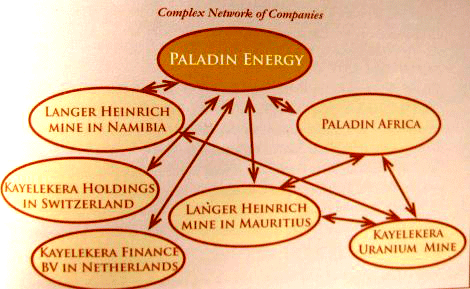
At the launch of the report, Dalitso Kubalasa and Collins Magalasi, the executive directors of MEJN and AFRODAD respectively, spoke briefly before AFRODAD’s Tafadzwa Chikumbu presented the research findings. This paved the way for a lively question and answer session with questions raised about whether or not parliament is ready to renegotiate the terms of the agreement with Paladin, what has happened to the man who lost his sight due to “kayelekera radiation” and if mining revenue in Malawi therefore “dirty money”.
This discussion was followed by the official launch of the report by the Second Deputy Speaker of Parliament Juliana Mphande who exclaimed that she was “appalled to note that incentives offered to Paladin have severe implication to Government revenue and require attention of parliament”. She outlined the areas requiring parliamentary investigation and debate…..
Below is a summary of the main findings: Continue reading
Australian Greens’ practical plan for an Energy Savings Agency
 Politics of solar: Milne, Hunt and the CEFC, REneweconomy, By Giles Parkinson 24 May 2013 The politics around solar, and the renewable energy target, and enabling bodies such as the Clean Energy Finance Corporation continue to get murkier as the election approaches. Attendees at the Solar 2013 conference in Melbourne got a taste of it on Friday as various politicians swaggered into the conference. Investment certainty is craved, and promised. But it remains elusive.
Greens leader Christine Milne delivered the only new initiative, saying she wants to establish a new federal government agency – the Energy Savings Agency – that she says will lower electricity bills, save energy and reduce emissions.
She says the Energy Savings Agency will have three priorities – focusing on reducing demand in peak periods, striking a minimum and compulsory “fair price” for electricity generated by consumers and exported to the grid, and designing a national energy efficiency scheme, something that Labor has talked about but failed to deliver.
 Milne proposes providing $400 million over 5 years in incentives to reduce demand, which she says could deliver $1 billion in energy savings. The national EE scheme would look to combine and expand the three state-based schemes currently in operation.
She said the agency will make Australia’s energy system fairer, cheaper and cleaner. “The Federal and State Governments have failed to prevent unnecessary spending on new electricity poles and wires,” Senator Milne said. “Make no mistake, several state governments want to maximise profit from their electricity assets. Selling less electricity is not in their interest which is why reform of the energy market is too slow and why intervention is vital.”
“We need an independent agency to provide information, analysis, advocacy and financial support to help remove the barriers to cheaper and cleaner energy options.”
Senator Milne said the proposal has been costed by the Parliamentary Budget Office and will cost $405 million to run each year.
The case of over-investment in the grid was one taken up by Oliver Yates, the CEO of the Clean Energy Finance Corporation, which has $10 billion in funds to invest – for a commercial return – in emerging renewable technologies, and which is likely to be a major catalyst of big solar and other significant renewable projects.
Yates said that the $40 billion spent on the grid in recent years had provided a “miserable” outcome for consumers. A study to be released soon by the CEFC will conclude that a minimal amount had been spent on demand management – despite numerous studies saying that these could have saved billions of dollar in investment, and thousands of dollars to individual households.
“Rather than writing off expenditure … there is a real risk that these costs will get pushed onto retail and commercial customers that produce electricity,” Yates said. This would be bad for the solar industry. http://reneweconomy.com.au/2013/politics-of-solar-milne-hunt-and-the-cefc-22212
Indigenous cultures and the future – World Indigenous Network Conference
 The heavy footprint of the mining sector is compounded by the legal limitations of the native title regime, the often controversial and secretive nature of mining agreements and the fact that the cards are heavily stacked against the Aboriginal people who are concerned about or would prefer to see no mining on their country.
Selling the future short ANDREW PICONE ABC Environment 24 MAY 2013 Mining offers great hope for many Indigenous communities, with promises of jobs and schools. However Australia’s traditional owners should not sell themselves short of a future. “…….Next week in Darwin, Indigenous land owners, environment groups and other stakeholders from around the world will come together to address some of these burning issues at the World Indigenous Network 2013 conference. The conference comes at a key moment because across Australia, particularly in the north, there is an increasing number of collaborations between Indigenous Australians and conservationists, occurring alongside Australia’s mining boom.
Indigenous peoples from places as diverse and distant as Egypt, Mongolia, Lappland, Ecuador and all over Asia Pacific and representatives from communities right across Aboriginal Australia will share stories and strategies about a broad range of land and sea management issues and to celebrate healthy country and strong cultures. Continue reading
Australian study shows increase in cancer among children who had CT scans
CT Scans May Increase Cancer Risk in Children, Adolescents http://www.medscape.com/viewarticle/804715 Larry Hand May 23, 2013 Children and adolescents who undergo computed tomography (CT) scans may be at greater risk of developing cancer compared with individuals who do not, according to a study published online May 21 in the British Medical Journal. However, the absolute risk for all cancers is relatively low.John D. Mathews, MBBS, MD, PhD, DSc Hon, DMedSc Hon, professor of epidemiology at the School of Population and Global Health, University of Melbourne, Carlton, Victoria, Australia, and colleagues analyzed the records of children and adolescents aged 0 to 19 years who were included in the Australian Medicare database between January 1, 1985, and December 31, 2005. They followed the study population through electronic linkage to the Australian Cancer Database and the National Death Index through December 31, 2007. Continue reading
Commercial scale solar systems now becoming competitive in Australia
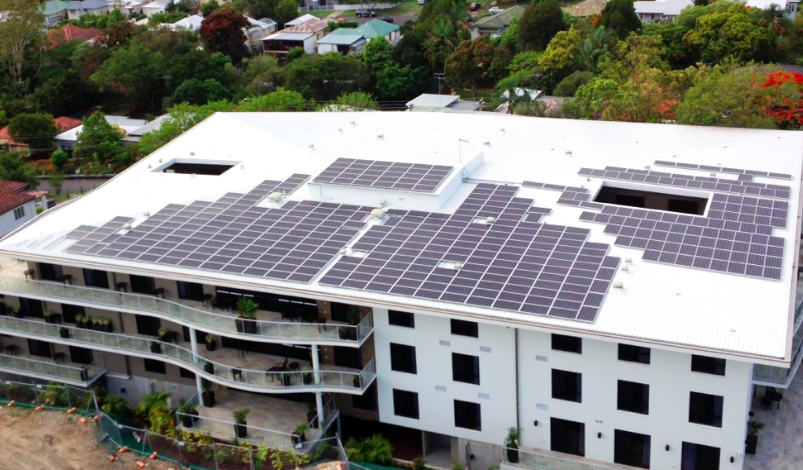
Conergy tips Australia solar market to grow 20% a year to 2015 REneweconomy, By Giles Parkinson on 23 May 2013 German solar giant Conergy is predicting 20 per cent annual growth in the Australian solar market between now and 2015 as commercial-scale solar systems become competitive with the local electricity market. Conergy said the levellised cost of energy (LCOE) for solar PV systems in Australia had fallen to just under 13c/kWh, which is less than half of the average retail price in the country. It says commercial scale plants, such as the recent 100kW system it commissioned at the Casa dAmore nursing home [seen below] in South Brisbane, were now cost effective with no subsidies.
Below – Brisbane’s solar powered nursing home. The installation was made by SEQ Energy Pty Ltd: http://www.seqenergy.com.au The generation of this plant is 160 MWH/year, not 392 and the panels used are Conergy Power Plus 255M.
 “The excellent climatic conditions and the achievement of grid parity … are now opening up new opportunities for the Australian market,” said David McCallum, managing director of Conergy Australia in a statement. He said the market, which is expected to fall by 25 per cent in 2013 toa round 750MW, from its 2012 peak of around 1,000MW, should grow 20 per cent a year in coming years. “Thanks to solar power becoming competitive, the Australian market will move away from being a purely investment driven market and become part of the genuine energy market, where the main criteria are electricity availability and the price per kilowatt hour. “Bearing these criteria in mind, plants no longer need to be as large as possible but instead tailored precisely to the customers and their load profile in order to optimise production and consumption behaviour.
Grid parity has reached Australia. “Thanks to solar power becoming competitive, the Australian market will move away from being a purely investment driven market and become part of the genuine energy market, where the main criteria are electricity availability and the price per kilowatt hour. “Bearing these criteria in mind, plants no longer need to be as large as possible but instead tailored precisely to the customers and their load profile in order to optimise production and consumption behaviour. Grid parity has reached Australia. Conergy said the output of the 100kW system at Casa d’Amore was being consumed entirely on site, and accounting for one third of its total electricity needs. It will deliver $16,000 in savings from the annual electricity bills each year. http://reneweconomy.com.au/2013/conergy-tips-australia-solar-market-to-grow-20-a-year-to-2015-2015
National Native Title Conference for benefit of whom?
Oxfam report mocks Native Title, Lateral Love Australia, by Gerry Georgatos May 20th, 2013 “……The Oxfam report and Mr Anaya’s arguments are timely with the annual National Native Title Conference scheduled for the first week of June – in Alice Springs. There is much wrong on the Australian landscape with Native Title, with some of the resources sector ripping off blind Aboriginal communities, with the so-called mining boom having returned contextually little to Aboriginal communities, and with huge inconsistencies in compensation payments for Traditional Owners signing Indigenous Land Use Agreements…….
In 2013, the annual National Native Title Conference will be convened by the Australian Institute of Aboriginal and Torres Strait Islander Studies (AIATSIS) and the Central Land Council (CLC) on the traditional lands of the Central Arrernte people, the Native Title holders of the Alice Springs area.
Rest assured, that there will be changes to Native Title practices end of the year but sadly they will not be favourable to Aboriginal peoples.This year’s Conference title is “Shaping the Future” but for whom?
Themes of the Conference will include “The Native Title Act 20 years on, where to from here?” But to be honest, it should be back to the drawing board. The Native Title Act was skewed from its original moderate intentions by Prime Minister Paul Keating to a weak policy structure that allowed the resources sector and developers to steamroll Aboriginal peoples. The weakness in the Act is that negotiations between parties are to be had “in good faith.”
The Act was further watered down by Prime Minister Bob Hawke. The Native Title Act has continued on as the outrageous (racist) joke that it has been ever since cheating Aboriginal communities out of opportunity and equality and turning not only Aboriginal and non-Aboriginal peoples against each other but also Aboriginal peoples against one another.
The remaining themes of the Conference are how to manage the little returns Aboriginal Corporations secure from mining industries for their Traditional Owners – ‘development options’ and ‘Indigenous governance.’ The Conference would better serve impoverished Aboriginal peoples and Native Title holders if it instead themed Oxfam’s report – that only one of the 53 biggest miners on the Australian Securities Exchange had a public commitment to the principle of informed consent for Aboriginal peoples. http://thestringer.com.au/oxfam-report-mocks-native-title/#.UZm8398iPIU
Value of coal generators is falling as demand falls, renewables rise
Shift from base-load slashes value of state coal generators REneweconomy By Giles Parkinson 23 May 2013 It seems certain that the NSW and Queensland governments will have to take significant write-downs on the value of the fleet of coal-fired power generators, and the assets may not be able to be sold because of the radical reshaping of the Australian electricity market.
The NSW government is seeking buyers for its coal-fired generators, and a price of $3 billion, and the Queensland government is mulling over recommendations that they should do the same. Any sale of those assets would likely be held in 2015/16.
But are they worth anything? Industry insiders say there are unlikely to be any buyers at the price the governments are expecting- because black coal-fired generation is becoming increasingly sidelined by the unanticipated fall in demand, the impact of renewables such as rooftop solar and wind farms, and the effects of the carbon price. Many of the black coal-fired generators are operating at barely more than half their capacity, as the concept of baseload generation gradually recedes….. http://reneweconomy.com.au/2013/shift-from-base-load-slashes-value-of-state-coal-generators-92669
Mining companies secretive about how they gain consent of Aboriginal communities
Oxfam report mocks Native Title, Lateral Love Australia, by Gerry Georgatos May 20th, 2013 Oxfam Australia has added its weight to the controversy that domestically and internationally embarrasses Australia over how the resources sector and the various prescribed government bodies cheat Aboriginal land owners out of due benefits for access to land for mining projects. Oxfam has completed a study that has found that only one of the 53 biggest miners on the Australian Securities Exchange had a public commitment to the United Nation’s principles of informed consent for Aboriginal peoples.
OXFAM CEO, Helen Szoke said that Australian companies are circumventing the intentions of the Native Title Act and that informed consent is not being secured.
“We looked at the policies of companies specifically within the context of how they dealt with the issue of consent of Indigenous peoples to use their land,” said Ms Szoke.
“Disturbingly what we found is that the majority of companies do not have any transparent policies about how they gain that consent and how they go about negotiating with local Indigenous communities.” Continue reading
1 This month
17 October, Free Public Talk on Nuclear Issues in South Australia
David Noonan will speak on public interest concerns over the new Roxby Downs Indenture Act 2026 on BHP copper-uranium mining and ore processing in SA, and on how AUKUS may face SA with a High-Level nuclear waste agenda.
Dr Jim Green will discuss international developments in the field of nuclear power including ‘small modular reactors’ and Generation 4 ‘advanced’ nuclear reactor concepts.


Help Aunty Sue Protect Her Land and Sacred Sites From Destructive Rocket Testing.
.

Australians deserve the truth
about
AUKUS – https://aukuspublicinquiry.com/

PETITION – To: Prime Minister Anthony Albanese and the Australian Labor Government

of the week – Australians for War Powers Reform (AWPR)
To see nuclear-related stories in greater depth and intensity

