U.S. proposals about extradition of Julian Assange are designed to keep him in prison for life
Assange fiancee rejects US proposals over possible extradition
Stella Moris says measures intended to keep her partner ‘in prison effectively for the rest of his life’, https://www.theguardian.com/media/2021/jul/08/julian-assange-fiancee-rejects-us-proposals-over-possible-extradition Ben Quinn@BenQuinn75, Thu 8 Jul 2021
US assurances that Julian Assange would not be held under the strictest maximum-security conditions if extradited from the UK have been rejected by his fiancee, who described them as a formula to keep him in prison for the rest of his life.
Details of the proposals made to British authorities emerged after permission was granted this week to appeal against January’s ruling that the Wikileaks co-founder cannot be extradited on mental health grounds.
They include assurances that Assange, if convicted in relation to charges of alleged espionage and hacking, would be allowed to serve any jail time in his native Australia.
The package contains a particular assurance that Assange would not be subject to “special administrative measures” (SAMs) in US custody or imprisoned at the “supermax” prison in Florence, Colorado, procedures reserved for high-security prisoners. The assurances were subject to change if he were to “do something” subsequently that met the US test for the imposition of the high-security measures.
Details were contained in excerpts of the UK court ruling granting limited permission to appeal, which were released by the Crown Prosecution Service.
In January, the district judge Vanessa Baraitser ruled Assange could not be extradited because of concerns over his mental health and risk of suicide in a US prison.
Stella Moris, Assange’s fiancee, described reports about US undertakings as “grossly misleading”, adding that 80,000 prisoners in US prisons were held in solitary confinement on any given day and only a handful were held in the conditions specifically mentioned in the proposals.
“The US government also says it may change its mind if the head of the CIA advises it to do so once Julian Assange is held in US custody,” she added.
In relation to him serving jail time in Australia, she said that it had always been his right to request a prison transfer to finish serving his sentence.
“What is crucial to understand is that prisoner transfers are eligible only after all appeals have been exhausted. For the case to reach the US supreme court could easily take a decade, even two.
“What the US is proposing is a formula to keep Julian in prison effectively for the rest of his life.”
Nick Vamos, a partner at the Peters & Peters law firm and a former head of extradition at the Crown Prosecution Service, said it was “highly unusual” for the US Department of Justice to offer broader assurances to a foreign court on prisoner treatment upfront. In fact, he said it had previously refused to do so in terrorism cases.
“It’s not unusual in extradition, but it is for the Americans to give this type of assurances because their previous approach over many years has been to say, ‘the US legal system is a fair one and our prison system is capable of dealing with people with all kinds of conditions,’” he said.
While a date has yet to be set for a high court hearing in relation to the US appeal, Vamos suggested things could move “quite quickly”.
While the ruling earlier this year had gone in Assange’s favour, he added: “The difficulty he and his legal team now have is that, if the court says we are denying extradition because we are concerned about his treatment, we are worried that a, b or c might happen, and the requesting state then provides an assurance which says, ‘under no circumstance will that ever happen’, then it defeats the objection.
“There’s also a longstanding history of our courts accepting the assurances from requesting states. The question is: ‘Does the assurance address it in fact or can it be undermined by suggesting that it is not quite as good as it appears or that they will dishonour it anyway?’”
Key witness in Julian Assange case admits to lies in indictment
A major witness in the United States’ Department of Justice case against Julian Assange has admitted to fabricating key accusations in the indictment against the Wikileaks founder. STUNDIN, Bjartmar Oddur Þeyr Alexanderssonbjartmar@stundin.is, Gunnar Hrafn Jónssonritstjorn@stundin.is 26 June 21,
A major witness in the United States’ Department of Justice case against Julian Assange has admitted to fabricating key accusations in the indictment against the Wikileaks founder. The witness, who has a documented history with sociopathy and has received several convictions for sexual abuse of minors and wide-ranging financial fraud, made the admission in a newly published interview in Stundin where he also confessed to having continued his crime spree whilst working with the Department of Justice and FBI and receiving a promise of immunity from prosecution.
The man in question, Sigurdur Ingi Thordarson, was recruited by US authorities to build a case against Assange after misleading them to believe he was previously a close associate of his. In fact he had volunteered on a limited basis to raise money for Wikileaks in 2010 but was found to have used that opportunity to embezzle more than $50,000 from the organization. Julian Assange was visiting Thordarson’s home country of Iceland around this time due to his work with Icelandic media and members of parliament in preparing the Icelandic Modern Media Initiative, a press freedom project that produced a parliamentary resolution supporting whistleblowers and investigative journalism.
The United States is currently seeking Assange’s extradition from the United Kingdom in order to try him for espionage relating to the release of leaked classified documents. If convicted, he could face up to 175 years in prison. The indictment has sparked fears for press freedoms in the United States and beyond and prompted strong statements in support of Assange from Amnesty International, Reporters without borders, the editorial staff of the Washington Post and many others.
US officials presented an updated version of an indictment against him to a Magistrate court in London last summer. The veracity of the information contained therein is now directly contradicted by the main witness, whose testimony it is based on.
No instruction from Assange
The court documents refer to Mr Thordarson simply as “Teenager” (a reference to his youthful appearance rather than true age, he is 28 years old) and Iceland as “NATO Country 1” but make no real effort to hide the identity of either. They purport to show that Assange instructed Thordarson to commit computer intrusions or hacking in Iceland.
The aim of this addition to the indictment was apparently to shore up and support the conspiracy charge against Assange in relation to his interactions with Chelsea Manning. Those occurred around the same time he resided in Iceland and the authors of the indictment felt they could strengthen their case by alleging he was involved in illegal activity there as well. This activity was said to include attempts to hack into the computers of members of parliament and record their conversations.
In fact, Thordarson now admits to Stundin that Assange never asked him to hack or access phone recordings of MPs. His new claim is that he had in fact received some files from a third party who claimed to have recorded MPs and had offered to share them with Assange without having any idea what they actually contained. He claims he never checked the contents of the files or even if they contained audio recordings as his third party source suggested. He further admits the claim, that Assange had instructed or asked him to access computers in order to find any such recordings, is false.
Nonetheless, the tactics employed by US officials appear to have been successful as can be gleaned from the ruling of Magistrate Court Judge Vanessa Baraitser on January 4th of this year. Although she ruled against extradition, she did so purely on humanitarian grounds relating to Assange’s health concerns, suicide risk and the conditions he would face in confinement in US prisons. With regards to the actual accusations made in the indictment Baraitser sided with the arguments of the American legal team, including citing the specific samples from Iceland which are now seriously called into question.
Other misleading elements can be found in the indictment, and later reflected in the Magistrate’s judgement, based on Thordarson’s now admitted lies. One is a reference to Icelandic bank documents. The Magistrate court judgement reads: “It is alleged that Mr. Assange and Teenager failed a joint attempt to decrypt a file stolen from a “NATO country 1” bank”………..
On the FBI radar
Thordarson’s rogue acts were not limited to communications of that nature as he also admits to Stundin that he set up avenues of communication with journalists and had media pay for lavish trips abroad where he mispresented himself as an official representative of WikiLeaks………………………. https://stundin.is/grein/13627/key-witness-in-assange-case-admits-to-lies-in-indictment/
Barngarla Determination Aboriginal Corporation (BDAC) will take legal action against nuclear dump plan if Resources Minister Keith Pitt names Napandee as the site
Barngarla will pursue judicial review if Napandee site named. https://www.portlincolntimes.com.au/story/7330119/barngarla-may-seek-legal-review/?fbclid=IwAR28Hj_22In6jE2Vd3s7ZrWBtOe0nHJxbyqdKk_xXF6hXv8Z-TNbEtBu5CEMembers of the Barngarla Determination Aboriginal Corporation (BDAC) have said the outcome of the nuclear waste amendment bill was the result they were hoping for.
The National Radioactive Waste Management Amendment (Site Specification, Community Fund and Other Measures) Bill 2020 was passed by the Australian Parliament on June 22.
The BDAC had previously raised concerns about the absence of a judicial review process by naming the Napandee site in the proposed legislation.
“The government sought to change the law to remove our democratic right to judicial review of their actions so that no court could ever assess what had been done,” they said in a previous statement.
However BDAC chair Jason Bilney said the bi-partisan support the bill received in parliament was what they were looking for, as changes were made to the bill to reinstate the ability to pursue a judicial review of the site selection process.
The bill was initially tabled in parliament in February 2020 with the intention to name the Napandee site near Kimba within the legislation.
Now federal resources minister Keith Pitt will be required to name the host site through ministerial decision, which will allow for a potential judicial review of the site selection process in future.
Mr Pitt is also not bound to name one of the three sites currently shortlisted.
Mr Bilney said it had been a “long, hard battle” for 15 months, and that he and others were in Canberra that week as the bill went through.
“It’s a good outcome for the Barngarla people, but also all Australians because it affects all Australians,” he said.
The BDAC have stated since the passing of the bill that if there is a declaration of the Napandee site, the BDAC will seek a judicial review.
“The Barngarla and farmers worked together and the senate did not agree to pass any bill which removed judicial review,” they said.
“We had certain demands, which amounted to removing site specification in the bill and removing Schedule 1.
“The government gave in to these demands and effectively amended their own bill to reflect what Barngarla, Labor and the cross bench had said we required.
“So, we have no issues with the new bill, as it is the bill that we demanded occur.
“Namely, it preserves judicial review.
“In simple terms, we won this battle in parliament and we are very grateful for Labor and the cross bench, including senator Hanson’s One Nation, the Greens, and senator Patrick.”
We even had the Explanatory Memorandum further amended to make it clear that the Minister was not limited to just the three sites in the Table and that the Table was purely a historical record.
Maralinga nuclear bomb tests – British and Australian governments’ callous cruelty to First Nations people.

Australia’s Chernobyl: The British carried out nuclear tests on Indigenous land. It will never heal. https://www.mamamia.com.au/maralinga-nuclear-testing/ CHELSEA MCLAUGHLIN, JULY 5, 2021 For tens of thousands of years, the Aṉangu people lived on the warm, red earth of their country.
The land provided them with food, water and shelter as they travelled around an area we now know as outback Far North South Australia.

But after colonisation, they were moved off their land: forcibly removed, sent into missions across the region and displaced by train lines linking Australia’s east and west that impacted their water supply.
Much of the information around the tests was highly classified, and some information remains so.
For tens of thousands of years, the Aṉangu people lived on the warm, red earth of their country.
The land provided them with food, water and shelter as they travelled around an area we now know as outback Far North South Australia.
But after colonisation, they were moved off their land: forcibly removed, sent into missions across the region and displaced by train lines linking Australia’s east and west that impacted their water supply.
Much of the information around the tests was highly classified, and some information remains so.
Thirty per cent of the British and Australian servicemen who were exposed during these tests died of cancer, though a Royal Commission in 1984 was not able to reach a conclusion linking their health issues directly to the blasts.
Similarly, many locals died prematurely, went blind and suffered from illness that may have been linked to radiation.
British nuclear scientists, wanting to determine the long-term effects of the tests on Australia and its citizens, ordered the testing of dead Australian infants and children for radiation contamination.
Between 1957 and 1978 in hospitals around Australia, bones were secretly removed from 21,830 bodies. They were reduced to ash and sent away to be analysed for the presence of Strontium 90, a radioactive isotope produced by nuclear fission.
Unsurprisingly, none of the First Nations people of the region were told about the tests and many of the bones were taken without permission.
Associate professor Liz Tynan, the author of Atomic Thunder: The Maralinga Story, told Mamamia‘s The Quicky First Nations people were still in the area during the periods of testing, and this led to disastrous consequences.
Tynan said the Milpuddie family – Charlie, Edie, two kids and their dogs – were found by British service personnel in 1957, camped on the crater left by the bomb Marcoo soon after it had been detonated.
They were rounded up and most of the family, not Edie, but most of them, were given showers. Edie didn’t wish to have a shower,” Tynan explained.
“They were tested for radioactivity and the geiger counters did detect radioactivity, particularly on the young boy Henry. Anyway, there were rather insensitively treated I suppose, given showers, had clothes put on them and then take off down south to a mission.”
Their dogs were shot in front of them. Edie was pregnant at the time, and she later lost her child.
“It was a tragic story and indicative of the callous approach to Indigenous people that was displayed by both the British government and their officials that were conducting the tests, and by the Australian government as well,” Tynan said.
Following the testing, many Aṉangu people returned to the area, but the lands that had previously sustained and protected them were now poison.
We still don’t know the truth impact of the bombs at Maralinga, as well as nearby Emu Fields and the Montebello Islands off the coast of Western Australia.
“The South Australian Department of Health commissioned a fairly extensive study, [but] that study was hampered by the fact there was no base-line data from which to understand the general health of the population before the tests,” Tynan said.
The study did show an increase in various cancers, but most of the findings were inconclusive due to a lack of information. Indigenous Australians were not counted in the census at the time and there was very little known about the health of the populations.
In 1964, a limited cleanup of the Maralinga site, named ‘Operation Hercules’, took place.
A year after a 1966 survey into the level of contamination at the site, a second clean-up titled ‘Operation Brumby’ filled 21 pits with contaminated equipment and covered them with 650 tonnes of concrete.
Tynan said it was later found the survey data was drastically wrong, and the contamination was 10 times worse than thought.
It wasn’t until decades later, with the help whistleblowers and scientists, that the government began to realise the true, horrifying extent of the damage done to the land at Maralinga.
Under an agreement between the governments of the United Kingdom and Australia in 1995, another clean-up took place. And while this was more thorough than the previous, it still came with issues.
Whistleblower Alan Parkinson, who wrote the 2007 book Maralinga: Australia’s Nuclear Waste Cover-up, exposed the unsatisfactory methods.
The plan had been to treat several thousand tonnes of debris contaminated with plutonium by a process called situ vitrification. Against the advice of Parkinson, the government extended the contract of the project manager, even though that company had no knowledge of the complex process of vitrification.
Parkinson was let go from the project.
The government and the project manager then embarked on a hybrid scheme in which some pits would be exhumed and others treated by vitrification. After successfully treating 12 pits, the 13th exploded and severely damaged the equipment. The government then cancelled the vitrification and simply exhumed the remaining pits, placed the debris in a shallow pit and covered it with clean soil.
Parkinson told The Quicky another, complete clean-up of Maralinga could take place, but it was unlikely because of the cost and the courage it would take to admit the previous attempts were insufficient.
Around the same time as the 90s clean up was the Australian government push for a nuclear waste dump to be located nearby.
Fearing even further poisoning of their country, First Nations woman Eileen Wani Wingfield co-founded the Coober Pedy Women’s Council to campaign against the proposal.
The plan was eventually abandoned, but has popped up again in many forms over the decades. Currently, the Coalition is amending a bill that could see a site set up near Kimba.
Glen Wingfield, Eileen’s son, has spent his life working and learning from his parents’ tireless campaign for protection of their country.
The theme of NAIDOC Week 2021 is Heal Country! but as Wingfield told The Quicky, much of the Aṉangu lands in and around Maralinga are beyond healing.
“A lot of the Aboriginal communities that live in and around that area, they just will not and do not go back near that country. I think that’s a word, healing, that we can’t use in the same sentence with that area.”
Tynan agreed, saying there are parts of the area that will be uninhabitable for a quarter of a million years.
“There are parts of the site that you can’t go to, that are still very dangerous,” she said.
“The real problem at Maralinga was the plutonium which was detonated in a series of trials… The particular type of plutonium they used, plutonium 239, has a half-life of 21,400 years which takes hundreds of thousands of years for that radioactivity to diminish.”
Wingfield said the broken connection between these people and their lands is “just downright disgraceful and horrible”.
“No amount of conversation will ever cover what’s been done for people in and around. The lasting effects of health issues on people have been passed through people who were there to generational abnormalities… I think when you talk compensation and stuff, I don’t think we’ll ever get close.”
Keith Pitt, Minister for Resources, enthuses about nuclear power.
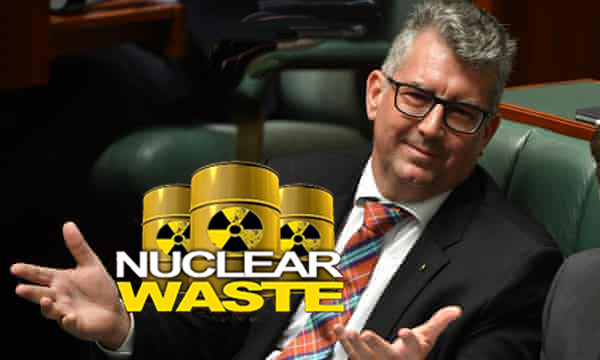
Keith Pitt MP, Minister for Resources, Water and Northern Australia / LNP member for Hinkler, wants Australia to follow Poland, with a plan to developi nuclear power.
Mr Pitt is one of the Morrison government’s most outspoken advocates for nuclear power who previously quit the frontbench over his opposition to the Paris Agreement. https://www.4bc.com.au/podcast/will-poland-transitioning-to-nuclear-be-a-blueprint-for-australia/
Need for a USA”no first use” of nuclear weapons policy – the concern of regional U.S. allies

In our lead article this week, Van Jackson makes a compelling case for the United States to establish a no-first use policy on nuclear weapons. This would entail a pledge from Washington that its nuclear arsenal would not be used as a means of warfare except in the event that it was first subject to a nuclear attack by an adversary. While there is already some momentum behind such a policy amongst Democrats, Biden has taken no concrete steps towards implementing it and it has yet to be legislated by Congress.
No-first use nuclear policy. https://www.eastasiaforum.org/2021/07/05/no-first-use-nuclear-policy/ Author: Editorial Board, ANU, 5 July 21,
Since the election of Joe Biden in 2020, much of the world has breathed a collective sigh of relief as we have witnessed what appears to be a return to ‘pre-Trump normalcy’ in the United States. One of the greatest foreign policy challenges that faces the Biden administration, however, is recovering US credibility in Asia, which was severely undermined by his predecessor Donald Trump.
From the standpoint of US allies in the region, a concerning aspect of Trump’s rise to the presidency was his loose talk about nuclear weapons and apparent openness to utilising them against adversaries. While most allies have long emphasised the immense benefits of the US security guarantee and its attendant nuclear umbrella, Trump’s rise to power rendered alliance relationships potential liabilities.
These concerns among allies in the region were significantly elevated in 2017, when Trump began to entertain the prospect of launching a pre-emptive — albeit non-nuclear — strike against North Korea. He supposedly even went so far as to order an evacuation of US servicemen and their families from Seoul — an injunction that was ultimately not carried out by US officials in South Korea. His apparent willingness to engage in conflict with a nuclear-armed North Korea was reinforced rhetorically as he threatened ‘fire and fury’ against Kim Jong-un’s regime.
These developments had US allies (and non-allies alike) in the region beleaguered by the prospect of nuclear war in the region. Their concerns were reinforced by Trump’s predilection to appoint family members — with little to no foreign policy expertise — as official advisors. The notion that a US-initiated conflict with North Korea, entailing probable commitment by American allies, might be informed in part by the likes of Ivanka Trump and Jared Kushner was a severe indictment of alliance management.
The election of Joe Biden allayed some of the concerns of US allies. But the fact that Trump received over 70 million votes in the election and may run again for president in 2024 means that his tenure cannot be easily viewed as an unfortunate aberration.
What can Biden do during his presidency to restore confidence among American allies in the region, and restore US credibility in the aftermath of the Trump administration?
In our lead article this week, Van Jackson makes a compelling case for the United States to establish a no-first use policy on nuclear weapons. This would entail a pledge from Washington that its nuclear arsenal would not be used as a means of warfare except in the event that it was first subject to a nuclear attack by an adversary. While there is already some momentum behind such a policy amongst Democrats, Biden has taken no concrete steps towards implementing it and it has yet to be legislated by Congress.
Jackson outlines three common arguments that are cited against a non-first use nuclear policy: China, Russia and North Korea would never believe in the veracity of no-first use declarations; it would encourage uncertainty among adversaries as to whether the United States could use nuclear weapons against them; and there would also be concerns among American allies about the implications of a no-first use policy for US extended nuclear deterrence and Washington’s ability to deter threats on their behalf.
Yet Jackson argues that, ‘ … the world is no longer unipolar. The old bargain — Washington does arms-racing so allies don’t — makes no sense in a world where US politics is depressingly awry. Allied nuclear proliferation poses its own risks, but it may be a better alternative to US nuclear preponderance and presidential first-use launch authority’.
As the region becomes increasingly volatile, a policy of US restraint on the use of nuclear weapons has acquired new urgency. The advent of the Biden administration has done little to alleviate US–China tensions; Biden’s China policy so far appears to be a continuation of that of the Trump administration. Meanwhile, prospects of a cross-Strait crisis continue to rise and progress on the denuclearisation of North Korea remains elusive. These political tensions have been aggravated by economic destabilisation in the region that has been fuelled by the COVID-19 crisis.
These developments have spawned new concerns about conflict and the role of US alliances in the region. Some analysts believe that such conflict would have potential to evolve into nuclear war. Given that the US-led alliance network is premised on the maintenance of regional peace and security, it behoves Washington to clarify that it will not employ first use of nuclear weapons.
This is important for the Biden government. It is also important for the future US administrations that could see the likes of Trump with a finger back on the nuclear button.
The EAF Editorial Board is located in the Crawford School of Public Policy, College of Asia and the Pacific, The Australian National University.
THE AUSTRALIAN newspaper sinks to a new low in pro nuclear propaganda.
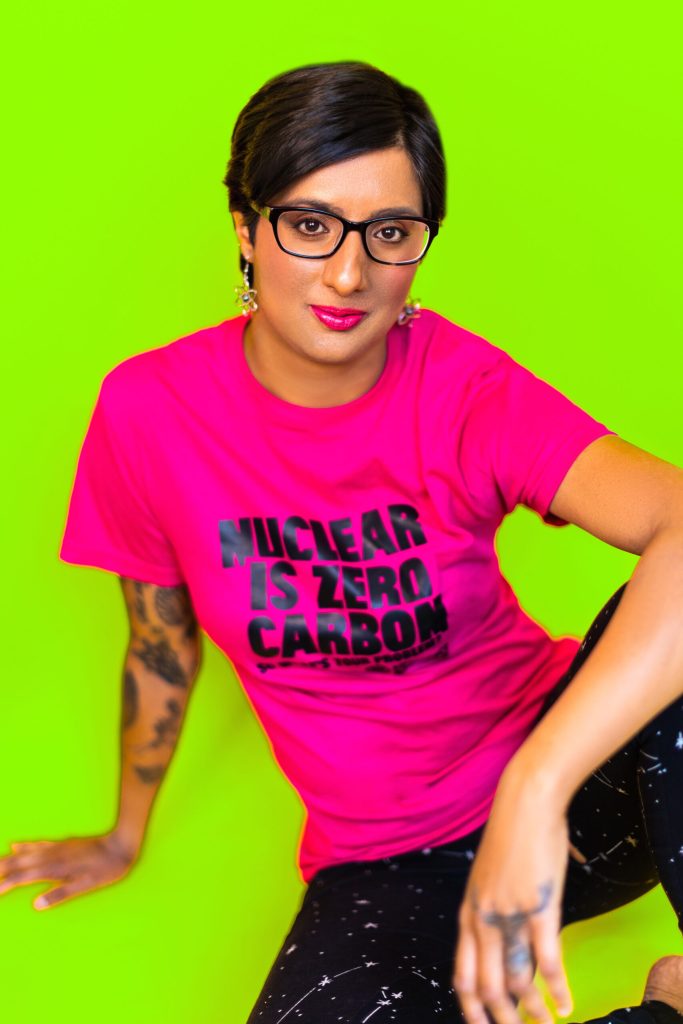
at left Zion Lights
Today’s THE AUSTRALIAN carries this article ”Savvy activists cast nuclear benefits in a fresh green light”. The article is by Claire Lehmann, who must be a real sucker to fall for such purile pro nuke spin, or , more likely, knows where the money is, in writing for News Corpse.
Claire Lehmann would appear to have swallowed the spin of Zion Lights. Zion Lights is certainly a talented self-propagandist, and is loved by the nuclear industry, because she pitches her pro nuke spin to young people, using popular media – Tok Tok and Instagram etc.
Below, on today’s Antinuclear, I’m republishing 2 articles which give some context to the background of Zion Lights.
Bob Hawke – his allegiance to USA was geater than to the union movement
Secret embassy cables cast the Bob Hawke legend in a different light, Guardian,Jeff Sparrow 4 July 21,
Papers show Hawke as a unionist said one thing to his members, and something quite different to his US embassy friends….
The documents uncovered by Coventry date from 1973 to 1979, a period of bitter industrial and political conflict during which Hawke, as leading trade unionist, often featured in the press as a stalwart militant……..
In public, he backed an “independent non-aligned Australia” (a popular stance in the aftermath of the Vietnam war); in private, he told US officials he wanted the Anzus co-defence pact extended beyond a “purely military alliance”.
Coventry says the Americans valued their relationship with Hawke because he “helped protect [US] defence installations, provided information about union disputes and warned officials that installations could be targeted”…….
In 1973, the American Labour Attaché (a figure quite probably connected to the CIA) contacted Hawke about a potential union dispute at the joint American-Australian facility at North West Cape. The cables record that Hawke “volunteered to intervene informally”, saying he felt “concern and surprise at the militancy” of the workers.
The Americans particularly appreciated Hawke’s willingness to deradicalise the labour movement. As Coventry puts it: “Hawke proved useful in pre-empting and pacifying union disputes.”…………
the context in which it has emerged makes the material particularly significant. The high court recently upheld the constitutional legitimacy of Australia’s new foreign interference laws.
One challenge came from John Shi Sheng Zhang, a political adviser to NSW Labor MP Shaoquett Moselmane. The second challenge, however, came from a rightwing US group called LibertyWorks, which objected to the new legally requirement to register a conference featuring Tony Abbott and Nigel Farage.
That’s because, on paper at least, the new laws criminalise the kind of meddling in which the Americans have gleefully engaged for decades………
Had today’s foreign interference laws been in place in the 1970s, Hawke’s conduct would certainly have invited legal investigation……. https://www.theguardian.com/commentisfree/2021/jul/03/secret-embassy-cables-cast-the-bob-hawke-legend-in-a-different-light
Australian government’s unnecessary crackdown on charities and on peaceful protest

The government is clamping down on charities — and it could have a chilling effect on peaceful protest, The Conversation, Krystian Seibert
Industry Fellow, Centre for Social Impact, Swinburne University of TechnologyJuly 2, 2021 The Australian government introduced new regulations last week that could have a major chilling effect across Australia’s diverse charities sector.
The government’s aim was clear: the regulations are intended to target “activist organisations”, and specifically crack down on “unlawful behaviour”.
Despite this rhetoric, there is no evidence unlawful behaviour by charities is a problem of any significance. By clamping down on charities in this way, the government is not only curtailing their ability to organise peaceful protests, it is imposing more unnecessary red tape on an already highly-regulated sector.
What would the regulations do?
The regulations would give the Australian Charities and Not-for-profits Commission (ACNC) new powers to take action against a charity if it commits, or fails to adequately ensure its resources aren’t used to commit, certain types of “summary offences”.
These are generally a less serious type of criminal offence, and can include acts such as trespassing, unlawful entry, malicious damage or vandalism.
If the ACNC commissioner believes a charity is not complying with the regulations, they would be able to take enforcement action, which may include deregistering the charity. This would lead to the charity losing tax concessions — one of the incentives for people to donate to them.
In effect, the regulations mean that if a charity organised a protest in front of a government department and initially refused to leave, this could be considered trespassing. And this could then be grounds to have the charity deregistered.
Are these regulations necessary?
There is little, if any, evidence of a need for the regulations.
First, a comprehensive review of the ACNC legislation commissioned by the government in 2018 did not identify any issues with unlawful behaviour by charities.
In fact, the review recommended removing the ACNC’s existing power to take action against charities that commit serious breaches of the law. It pointed out that charities must already comply with all laws that they are subject to, and it is not the ACNC’s responsibility to monitor compliance or impose sanctions for breaches.
Despite this, the new regulations would extend the reach of the ACNC and expand its existing powers even further.
And importantly, there is no evidence charities — or their staffs or volunteers — are engaging in widespread unlawful activity. When questioned at a recent Senate Estimates hearing, ACNC Commissioner Gary Johns said the commission’s data did not indicate this was a problem.
Even the government’s own regulatory impact assessment asserts only a “small number” of charities have engaged in unlawful behaviour. However, even this claim is not backed up by solid evidence, with the assessment saying it is based on.
Charities are already highly regulated
Charities in Australia are already highly regulated and subject to a broad range of obligations. They must also abide by any number of laws, for example, occupational health and safety and criminal laws.
And the ACNC already has extensive investigation and compliance powers. If charities breach any of the laws they are subject to, they can be sanctioned just like other organisations — and the same applies to their staff.
In addition, charities are already required to take steps to ensure their directors comply with duties, such as acting with reasonable care and diligence. This includes monitoring and managing risks arising from a charity’s activities.
Drafted in a vague way
Perhaps most concerningly, the proposed regulations are worded in a very vague manner, and although improvements were made in response to public consultation on a draft version, major problems remain……………….. https://theconversation.com/the-government-is-clamping-down-on-charities-and-it-could-have-a-chilling-effect-on-peaceful-protest-163493
Premier Marshall should stand up for South Australia: Reject the federal Liberal’s unlawful, unfair, unsafe and unnecessary nuclear waste dump plan for SA
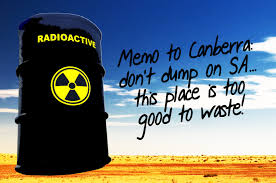
Premier Marshall should stand up for our State: Reject the federal Liberal’s unlawful, unfair, unsafe and unnecessary nuclear waste dump plan for SA
David Noonan, July 2021 Premier Stephen Marshall must stand up for South Australia’s interests and push back on federal Liberal government imposition of an unlawful nuclear waste dump in our State.
Premier Marshall should stand up for our State: Reject the federal Liberal’s unlawful, unfair, unsafe and unnecessary nuclear waste dump plan for SA
David Noonan, July 2021 Premier Stephen Marshall must stand up for South Australia’s interests and push back on federal Liberal government imposition of an unlawful nuclear waste dump in our State.
- The objects of this Act are to protect the health, safety and welfare of the people of South Australia and to protect the environment in which they live by prohibiting the establishment of certain nuclear waste storage facilities in this State.
- As Premier you should give all South Australian’s a Say and take action to instigate a required public inquiry into the impacts of a nuclear waste storage facility on the environmental and socio-economic wellbeing of this State. The NUCLEAR WASTE STORAGE FACILITY (PROHIBITION) ACT 2000, Section 14 states:
- If a licence, exemption or other authority to construct or operate a nuclear waste storage facility in this State is granted under a law of the Commonwealth, the Environment, Resources and Development Committee of Parliament must inquire into, consider and report on the likely impact of that facility on the environment and socio-economic wellbeing of this State.
The Port of Whyalla is targeted for shipments of ANSTO nuclear fuel waste and communities along proposed nuclear waste transport routes across our State all have a right to have a Say.
Nuclear waste dumping is a Human Rights issue for our fellow Indigenous South Australian’s. As Minister for Aboriginal Affairs, Stephen Marshall should support the Barngarla People’s right to say No to nuclear waste storage on their country:
- The “United Nations Declaration on the Rights of Indigenous People” (2007) Article 29 calls on States “to ensure that no storage or disposal of hazardous material shall take place in the lands or territories of indigenous peoples without their free prior and informed consent.”
- The federal Liberal government proposes to ship and truck nuclear waste across SA into indefinite above ground storage in a fancy shed at Napandee on Eyre Peninsula – without any capacity or even a plan for its eventual permanent disposal.
- SA’s clean green reputation, and our prime agricultural lands and farming communities, deserve better than untenable imposition of toxic nuclear wastes in a shoddy reckless federal plan to park and dump wastes that require isolation from the environment for 10,000 years.95 per cent of Intermediate Level Waste (ILW) in Australia are owned by Commonwealth government agencies, the vast majority is produced and held at ANSTO’s Lucas Heights reactor facility in Sydney – where it should stay in secure extended storage.
- The federal Budget provided $60 million for further decades of extended storage capacity for ILW at ANSTO Lucas Heights, building onto the operation of existing stores to 2026.
- In 2015 a separate Interim Waste Store for ANSTO nuclear fuel waste was built at Lucas Heights with a design capacity for 40 years. This store received a shipment of reprocessed nuclear fuel waste from France in 2015 and is intended to now receive a shipment from the UK in 2022, and is safety rated to 2055.
- The CEO of the federal nuclear regulator ARPANSA stated in evidence to a Senate Inquiry in 2020: “Waste can be safely stored at Lucas Heights for decades to come.”
- The federal Liberal government proposes to bring all these nuclear wastes to SA, along with decades of ANSTO’s further proposed nuclear waste production and future shipments of ANSTO reprocessed nuclear waste from France.
Premier – Stand up for our State!
Barnaby Joyce is back as Deputy PM – pushing for nuclear and coal
Barnaby Joyce says Australia needs low-emission coal stations and backs nuclear power
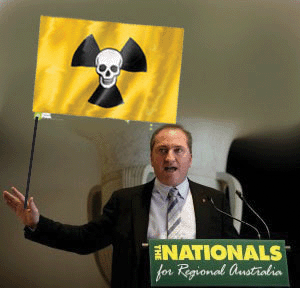
Joyce said small modular reactors could “power the city of Tamworth, the city of Armidale and a lot of other towns beside” with technology you could transport “on the back of a truck”
Deputy prime minister also blasts banks for managing carbon risk and supports coal exports in Sky News interview, Guardian, Katharine Murphy and Amy Remeikis 29 June 21
The newly returned Nationals leader and deputy prime minister Barnaby Joyce says Australia needs high-efficiency, low-emission coal power stations, as well as revenue from continuing exports of thermal coal, to bankroll social services.
While metropolitan Liberals have made it clear they will not support new coal-fired power, and the International Energy Agency has advised wealthy countries to phase out coal power plants by the end of the decade, Joyce used an interview on Sky News to champion modern coal plants, and declare he was in favour of nuclear reactors………..
Joyce told Jones he was a supporter of Australia adopting nuclear power if people wanted zero-emission power generation. But he said whether the nation went down that road was ultimately a matter for voters.
“I can’t change the nuclear position,” the Nationals leader said. “I believe we should have nuclear power and, and I believe that anything to make our nation a stronger place, this is the path we should be going down,………
Joyce said small modular reactors could “power the city of Tamworth, the city of Armidale and a lot of other towns beside” with technology you could transport “on the back of a truck”.https://www.theguardian.com/australia-news/2021/jun/29/barnaby-joyce-says-australia-needs-low-emission-coal-stations-and-backs-nuclear-power
Australia’s failed nuclear front group bites the dust.

Ben Heard’s lobby group is closing down, June 2021: Heard’s ‘Bright New World’ group — which received secret corporate donations from the Nuclear Industry — is closing down.
Concerted efforts to have state and federal laws banning nuclear power have failed in recent years. At a guess, the corporate donors have given up and will no longer fund Bright New World.
A stocktake on Heard’s 10 years of pro-nuclear, anti-renewables campaigning: renewable capacity grew by an incredible 1500+ gigawatts worldwide and renewables now account for 30% of global electricity generation. Nuclear generation was stagnant and nuclear’s contribution to global electricity generation fell to 10%.In Heard’s home state of South Australia, renewables have grown to 60% of electricity generation and the conservative state government is enthusiastically committed to 100% net renewables by 2030.Heard’s efforts to turn South Australia into the world’s nuclear waste dump were equally unsuccessful.Good riddance to Bright New World. https://nuclear.foe.org.au/ben-heard-secret-corporate-donations/
Australian Local Gov Association support Mount Isa nuclear weapons ban motion
Australian Local Gov Assoc pass Mount Isa nuclear weapons motion https://www.northweststar.com.au/story/7316487/australian-local-gov-assoc-pass-mount-isa-nuclear-weapons-motion/
Derek Barry ocal Government Association has supported Mount Isa City Council’s letter to the federal government looking for a nuclear weapons ban……..(subscribers only)
Portrait of a pro nuclear shill – Ben Heard
Ben Heard and the nuclear lobby group ‘Bright New World’ that accepts secret corporate donations

For factual rebuttals of the misinformation promulgated by other nuclear advocates, please visit: https://nuclear.foe.org.au/propaganda/
Ben Heard founded the South Australia-based ‘Bright New World’ nuclear advocacy group that accepts secret corporate donations from the nuclear industry.
Like so many other nuclear advocates, Heard very rarely or never says or does anything about the problems of the nuclear industry such as its systemic racism (abundantly evident in his home state, South Australia) or the inadequate nuclear safeguards system and the associated WMD proliferation risks.
A big part of Heard’s schtik is his conversion from a nuclear critic to a supporter. It is a back-story built on slender foundations. A mining industry magazine article said Heard was “once a fervent anti-nuclear campaigner” but in fact he never had any involvement whatsoever in anti-nuclear campaigning. Heard made no effort to correct the error in the magazine article — indeed he put the article, uncorrected, on his own website and only corrected it after the falsehood was publicly exposed. Likewise, Heard made no effort to correct an ABC article which described him as a “former anti-nuclear advocate”.
Heard has a recurring disclosure problem. He rarely disclosed his consulting work for uranium company Heathgate when spruiking for the nuclear industry. He said the reason he rarely disclosed his consulting work with Heathgate was that it was mentioned on his website. So any time you hear anyone speaking about anything in the media, it’s your responsibility to do a web-search to see if they have a financial interest! More recently, he rarely discloses corporate funding — indeed his lobby group has a policy of accepting secret corporate donations. Moreover, Heard rarely if ever discloses his connection to nuclear power company Energy. https://nuclear.foe.org.au/ben-heard-secret-corporate-donations/rrestrial Energy.
Napandee still the targeted site for nuclear waste? South Australia’s radioactive nightmare.

The Senate’s nuclear waste dilemma, Pearls and Irritations, By Noel Wauchope, Jun 27, 2021 ”……….. Australia’s obligations mount – to have some credible plan for long term management of its nuclear waste from its present Opal, and previous HIFAR nuclear reactors.The new amendment made this very significant change – and a real career-on -knife edge situation for Keith Pitt. Instead of specifying Napandee as the site for – let’s face it – just another temporary nuclear waste dump – the Bill now says that a selection is to be made from one of the listed sites. …
Well this seems to boil down to just one site anyway……… after all the promotional activity, and significant funding already granted to Kimba, it looks as if Napandee is still the targeted site….
Legal challenges to this site selection ? …….. the first consideration will be the Barngarla Native Title Owners………. [There] are farmers, local residents and business leaders, who are asking the government for funding for an independent review and assessment of the dump project. Up till now, information on the project has been confined to government and ANSTO promotion of the dump as a ”medical necessity” for Australia.
Then there are residents of the wider Eyre Peninsula, who have had no say in the Kimba decision. There are the various communities whose residents are likely to object to having radioactive waste transported through their area. There’s South Australia, too, which has clear laws prohibiting the establishment of a nuclear waste dump in that State, the Nuclear Waste Storage Facility (Prohibition) Act 2000.
But even those who have no ”local” interest in this project have been raising objections, with that rather old-fashioned motivation – the greater good. Thirteen of Australia’s top non government organisations rejected the Napandeed plan and the original Act as deeply flawed There were many submissions to the Senate Committee’s Inquiry into the plan, raising well-argued doubts about economic problems with the plan, about geological unsuitability of the location, environmental risks, and the likely outcome of Kimba being burdened with ”stranded wastes”
It is an issue of national concern, but it has been pitched by the government as a matter only for the 824 eligible voters of the Kimba Shire.
Looking at this in the wider and historical context, the plan is not so new. The federal government and ANSTO have been aiming for years to transfer the responsibility of the reactor wastes to some distant location, preferably out of New South Wales. ANSTO, under the recently departed CEO Dr Adi Paterson had grand plans for expanding its operations, to build a marketing empire for medical radioisotopes, This is a dubious plan, as now these isotopes are being produced in a safer, more practical way, using non nuclear cyclotrons.
A greater dream, (or perhaps nightmare) lies behind the nuclear lobby’s push for a radioactive waste dump. It’s the idea, promoted by the company PANGEA, in 1999, of Australia becoming the importer of international nuclear waste – the world’s nuclear waste hub. PANGEA has been reborn as ARIUS, with the same dream. In 2016, that dream was pushed by the South Australian Nuclear Fuel Cycle Commission, which failed to convince South Australians. Two Citizens Jury processes rejected the plan, and the South Australian Premier Steven Marshall announced that it was definitely axed.
There’s still more. The dream of plutonium and other end products of nuclear reactors coming to Australia was tied to the aspirations for an Australian nuclear future, first with the goal of the full nuclear fuel cycle, with advanced nuclear reactors, small nuclear reactors, thorium reactors, (that need plutonium to kick-start the fission process), nuclear submarines, nuclear-propelled spacecraft and so on……..
[Ed. note – the Bill was passed by the Senate on 22nd June]
Australian Conservation Foundation Nuclear Free Campaigner David Sweeney said “The return of legal review is important but it is extraordinary that the Minister ever thought its removal was reasonable,” Mr Sweeney said.“A day in court is a fundamental right and to seek to remove this was deeply flawed – as is the government’s wider plan.”
The ACF along with other peak environmental, health and community organisations, has spelt out its objections in a document on its website, stating that the plan for the Kimba waste dump is unnecessary and deeply flawed. More importantly, they are calling for what is instead really needed . They demand a properly funded and expert independent review of Australia’s radioactive waste management, based on evidence and global best practice.
https://johnmenadue.com/the-senates-nuclear-waste-dilemma/
1 This month
Chernobyl: The Lost Tapes – A good documentary on Chernobyl on SBS available On Demand for the next 3 weeks– https://www.sbs.com.au/ondemand/tv-program/chernobyl-the-lost-tapes/2352741955560
15 April – Zoom –Nuclear Power is Not the Solution
Apr 15, 2026 01:00 AM in Canberra, Melbourne, Sydney

Join the International Physicians for the Prevention of Nuclear War (IPPNW) on Tuesday, April 14th for a timely webinar exploring the risks associated with nuclear power and challenging the myth that it offers a simple, safe, carbon-free solution to the climate crisis

21 April Webinar: No Nuclear Weapons in Australia
Start: 2026-04-21 18:00:00 UTC Canberra, Melbourne, Sydney (GMT+10:00)
End: 2026-04-21 19:30:00 UTC Canberra, Melbourne, Sydney (GMT+10:00)
Event Type: Virtual
A virtual link will be communicated before the event.
Host Contact Info: australia@icanw.org

of the week – Australians for War Powers Reform (AWPR)
To see nuclear-related stories in greater depth and intensity
 Antinuclear