The Risky Economics of South Australia’s Nuclear Waste Importing Plan
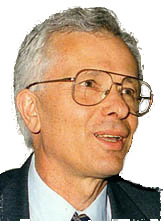 Risks, ethics and consent: Australia shouldn’t become the world’s nuclear wasteland, The Conversation, Mark Diesendorf, Associate Professor, Interdisciplinary Environmental Studies, UNSW Australia, June 28, 2016 Last month the South Australian Nuclear Fuel Cycle Royal Commission recommended that the state government develop a business venture to store a large fraction of the world’s high- and intermediate-level nuclear power station wastes in South Australia. It proposes to do this by first building an interim above-ground store, to be followed by permanent underground repository.
But the commission’s recommendation is based on several debatable assumptions, including:
- an economic analysis that purports to show huge profits with negligible commercial risk
- the notion that social consent could be gained by “careful, considered and detailed technical work”
- the argument that Australia, as a net exporter of energy, has an ethical responsibility to help other countries lower their carbon emissions by means of nuclear power.
I have analysed critically these and other assumptions of the royal commission in a scholarly paper published in the international journal Energy Research and Social Science.
Risky economics
The commission’s economic analysis rests on the heroic assumption that customers would, upon delivery of their nuclear wastes to South Australia, pay up-front for both interim above-ground storage andpermanent underground storage. This would be up to 17 years before the underground repository has actually been built. The estimated total payment would be about A$1.75 million per tonne of heavy metal (tHM) for storing possibly 138,000 tHM in total.
However, this ignores the huge financial risk to the government and taxpayers in the following scenario: the SA government builds the initial facilities – port, underground research and an interim above-ground storage – at a cost of about A$3 billion. Commencing in year 11, customers deliver their nuclear wastes in dry casks, but pay initially only for the costs of interim storage of the casks, declining to pay for geological storage until the underground repository has been built and becomes operational in year 28.
Despite the royal commission’s claim that the government would not develop the project under these conditions, the government could be influenced to accept the wastes by pressure, both positive and negative, from overseas governments, multinational corporations and/or internal politics.
Then, after a large quantity of nuclear waste has been placed into interim storage in SA, the government might not proceed with the geological storage, costing an extra A$38 billion, for technical, political or financial reasons.
A similar situation occurred in the United States with the termination of funding for the Yucca Mountain repository after US$13.5 billion had already been spent.
In this scenario, SA would be locked into managing a large number of dry casks, designed only for interim storage and located above ground, which will gradually erode and leak their dangerous contents over several decades. The physical hazards and the corresponding financial burden on future generations of all Australians would be substantial.
In this scenario, it would also be risky for customers who relied upon it and so failed to provide their own domestic geological repository……… https://theconversation.com/risks-ethics-and-consent-australia-shouldnt-become-the-worlds-nuclear-wasteland-61380
Social Consent and South Australia’s Nuclear Waste Import Plan
Risks, ethics and consent: Australia shouldn’t become the world’s nuclear wasteland, The Conversation, Mark Diesendorf, Associate Professor, Interdisciplinary Environmental Studies, UNSW Australia, June 28, 2016
“…….Aware that Australians are divided on the nuclear industry, the royal commission acknowledges that gaining “social consent warrants much greater attention than the technical issues during planning and development”.
Then, on the same page of its report, it postulates that community support could be gained by “careful, considered and detailed technical work”. It thus creates the false impression that all social and ethical concerns can be reduced to technical issues.
Ultimately, gaining social consent is a socio-political struggle that draws only slightly on research and education on science, technology and economics. This is demonstrated by current debate in Australia on climate science, in which citizens are influenced by a print media that in many cases is biased towards denial, and a Coalition government that contains several vocal climate sceptics
Indigenous Australians have successfully opposed for 20 years an above-ground dump for low-level national nuclear waste on their land at Muckaty in the Northern Territory. Indigenous communities are already mobilising, together with environmentalists, to resist very strongly any development of intermediate- and high-level repositories in South Australia. The social impacts of a low-level waste dump are bad enough, but would be dwarfed by the social, physical and financial impacts of a high-level waste repository…….” https://theconversation.com/risks-ethics-and-consent-australia-shouldnt-become-the-worlds-nuclear-wasteland-61380
Citizens Jury: the ever climbing costs of Jay Weatherill’s nuclear waste dream
 $7k each for Jay Weatherill’s nuclear citizen jury http://www.theaustralian.com.au/news/briefs-nation/7k-each-for-jay-weatherills-nuclear-citizen-jury/news-story/c363f8aac22374ef76e470b9c71d33e8 JUNE 27, 2016 Rebecca Puddy Reporter Adelaide The South Australian government has set aside $350,000 for 50 randomly chosen people to meet over four days to discuss the establishment of a nuclear waste dump, equating to $7000 a person.
The first two days of consultations of the citizens’ jury were held at the weekend, with Premier Jay Weatherill picketed by anti-nuclear activists on his way to open the deliberations over whether the state should have a high-level nuclear waste repository.
It is understood a budget of $350,000 has been set aside for the four days, including recruitment and management, accommodation and transport, event facilitation over the two weekends, live streaming and transcription services, catering, venue hire and security.
In announcing the citizens’ jury, Mr Weatherill last month said less than a $1 million had been budgeted for his nuclear consultation process, but more would likely be assigned in the state budget on July 7.
Blow to South Australian govt: BHP categorically rejects any role in nuclear waste importing
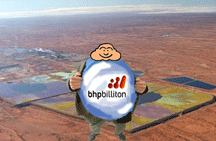 In another potential blow to the South Australian government, which had pinned the state’s economic future on the original expansion plan, Olympic Dam asset president Jacqui McGill categorically rejected siting a high-level international nuclear waste repository on any land covered by its indenture agreement.
We’re not a waste repository company, so that’s not in our business model and it’s not in our plans,” she said. BHP had no moral responsibility to manage waste
BHP: Fukushima set uranium industry back for years THE AUSTRALIAN JUNE 27, 2016 Michael Owen SA Bureau Chief Adelaide A key reason for BHP Billiton’s decision four years ago to indefinitely mothball a $30 billion plan to turn Olympic Dam into the world’s biggest uranium mine was the Fukushima nuclear plant explosion rather than cost concerns, it has been revealed. Continue reading
1 – 3 July – Lizard Bites Back festival at Olympic Damn Uranium Mine
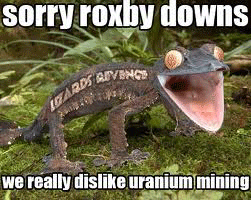 The Lizards Bites Back music and arts festival and protest camp will take place at the gates of the Olympic Dam uranium mine (or close by) from the 1st – 3rd of July this year. The “protestival” will include a variety of musicians and artists from around the country, mobile artworks, workshops on nuclear issues, non-violent direct action, and the message that there is strong community opposition to uranium mining and any expansion of the nuclear fuel chain in South Australia, from BHP Billiton’s planned heap leach demonstration plant to current proposals for South Australia to host a nuclear waste dump. The event will run entirely on solar and wind power.
The entire nuclear fuel chain from mining to nuclear waste dumps poses unique health and environmental risks that span generations. With South Australia currently facing two proposals for nuclear waste dumps The Lizard Bites Back will re-focus on the source of the problem, highlighting an absurd global situation where we continue to mine a mineral that we cannot dispose of safely, whilst proposals are again being made to force nuclear waste dumps on communities that do not want them. The Olympic Dam mine itself will also eventually become a dump – in the sense that once it is closed, it will leave millions of tonnes of radioactive tailings on the surface of the land forever.
Uranium mining is the beginning of the nuclear fuel chain, and the problem of the long term storage of radioactive waste remains unresolved. Until the industry and governments stop creating nuclear waste by mining uranium, operating nuclear reactors and making nuclear weapons, why should any community bear the health and environmental risks associated with a nuclear waste dump? The government’s current approach mops up the bathroom floor whilst the tap is still running.
A responsible approach to managing nuclear waste would begin with stopping its production. An environmentally and socially just approach would stop targeting Aboriginal lands as sacrifice zones.
The Lizard Bites Back follows on from the Lizards Revenge in July 2012, which mobilised 500 people against the proposed expansion of the mine. Since then, that proposal has been shelved and the company has been investigating heap leach mining as part of a cheaper expansion plan. BHP is projected to begin a heap leach trial on the current mining lease by late this year. Even though this technique is not currently used on-site, Federal approval of the trial did not require environmental assessment.
Please see below for a summary of the issues. Continue reading
Port Augusta protest against federal government’s plan for dumping Lucas Heights nuclear wastes at Barndioota
Doctor Margaret Beavis, a Melbourne-based GP, joined the protest today and 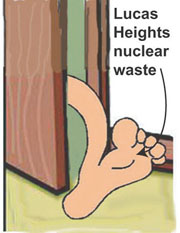 says the community needs help addressing this issue.
“I think it’s important to realise that most of this waste doesn’t come from the use of medicine,” Dr Beavis said.
Nuclear waste protest gives people voice http://www.transcontinental.com.au/story/3990175/nuclear-waste-protest-gives-people-voice/ Matt Carcich @MattCarcich June 24, 2016,Around 150 people made their voices heard in a protest against the federal government’s plan for a national nuclear storage facility in the Flinders Ranges at the Barndioota site near Hawker.
The march started at the Port Augusta foreshore, before stopping out the front of State MP Dan van Holst Pellekaan’s office.
The rally continued down the main street, stopping at every major intersection and Woolworths, before heading to the Port Augusta Regional Council building and finishing at Gladstone Square.
People travelled from Port Pirie, Whyalla, Hawker, Quorn and Adelaide for the event.
Upon arrival at Mr van Holst Pellekaan’s office, the state MP for Stuart and protesters discussed about multiple facets of the proposal.
Australian Greens candidate for Grey Dr Jillian Marsh, who is a Adnyamathanha Traditional Owner, accompanied the march and made an impassioned speech.
Dr Marsh said it’s important for people to have their voices heard and reinforced the Australian Greens’ stance against the proposal. Continue reading
Protest outside South Australia’s Nuclear Citizens Jury
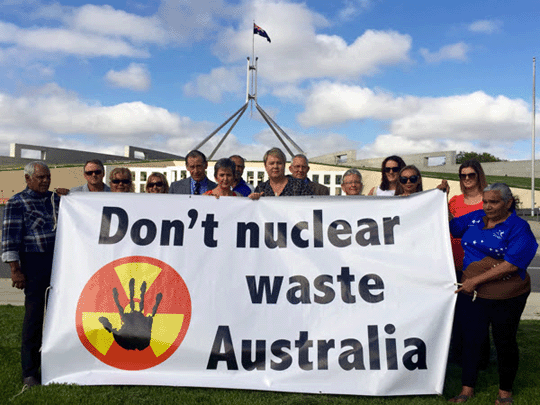 Nuclear royal commission: Protesters voice opposition to SA waste dump outside citizens’ jury, ABC News, 25 June 16 Anti-nuclear protesters have confronted SA Premier Jay Weatherill on his way into a citizens’ jury which is meeting to consider a controversial proposal to build a nuclear waste dump in the state.
The event at the South Australian Health and Medical Research Institute (SAHMRI) was prompted by the Nuclear Fuel Cycle Royal Commission, which handed down its findings earlier this year.
The final report by commissioner Kevin Scarce delivered to the SA Government in May made 12 recommendations, including the creation of waste storage sites and the relaxation of federal restrictions on nuclear power.
Tentative findings released in February also urged the creation of a dump with capacity for 138,000 tonnesof spent fuel from the world’s nuclear reactors.
Dozens of protesters gathered outside SAHMRI in Adelaide this morning, shouting out their concerns when the Premier arrived.
Gypsy-Rose Entriken from the Barossa Valley said she was worried about the dangers of transporting nuclear waste. “I’m really worried about what the implications of this long-term dump are going to be, and how it’s going to affect us for the rest of our lives and for generations,” she said.
“How are they going to get it here? There’s so many things that can go wrong.”
The citizens’ jury is made up of 50 people selected from about 1,100 registrations by research organisation newDemocracy Foundation, and is part of a public relations exercise organised by the State Government.
Its job is to decide which elements of the royal commission’s recommendations need to be discussed in more detail…….http://www.abc.net.au/news/2016-06-25/citizens-jury-to-consider-nuclear-dump-proposal/7543314
Gems from Nuclear Citizens Jury – South Australia today
Morning Session
DemocracyCo advises on streaming of Nuclear Citizens Jury hearings in Adelaide
Emily from democracyCo here.
 The Lifestream sessions will be up tomorrow on this website. http://yoursay.sa.gov.au/decisions/yoursay-engagements-nuclear-community-conversation/about First session will be from 9.20am. We are also transcribing all presentation & Q&A sessions with the Jury – we can’t transcribe workshop sessions though, too tricky! On Facebook & Twitter you will also be able to find updates throughout the day.
******************************************
 For any credibility, the hearings with witnesses would need to be available on video and audio, and preferably televised. I fear that NewDemocracyCo is being played by the Nuclear Royal Commission and the Weatherill government.
National Labor opposes nuclear waste importing: an obstacle to South Australia’s plan

 Labor’s national policy against nuclear could create issues for SA’s waste dump proposal http://www.abc.net.au/news/2016-06-24/alp-policy-could-create-issues-for-sa-nuclear-vision/7539166?utm_source=dlvr.it&utm_medium=twitter By Leah Maclennan Labor may oppose a high-level nuclear waste dump, even if the South Australian Government decides to build one, a federal Labor MP says.
The State Labor Government is consulting on the proposal following the recommendations of the Nuclear Fuel Cycle Royal Commission.
But Labor MP Nick Champion told a forum in Adelaide that he is against it, and would not want one in his electorate, which covers the northern suburbs and the Barossa Valley.
“I think the transport of it. I think the actual construction of it, the fact that nobody in the world has done it,” Mr Champion said. “Canada hasn’t done it. I think the Fins have only just established one, I think there is a lot more thinking that would have to go into it before we embarked on such a route.”
Mr Champion also raised the issue of the Labor Party’s policies, saying it has a national position in opposition to a high-level nuclear waste dump.
“There’d be some interesting debates at the national conference as there has been for the last three decades on nuclear issues,” he said
“But at the moment our platform opposes a high-level nuclear waste dump and so I suspect that’s the way the policy will be.”
Liberal senator Simon Birmingham told the forum it was the strongest opposition he has heard from a Labor MP.
“I’ve heard Bill Shorten and Penny Wong and Anthony Albanese express reservations about a nuclear waste dump before but I think Nick has put the party platform and position more clearly today than I’ve actually heard from a lot of others,” he said.
“For South Australians who think there is a good opportunity for our economy here, and [Premier] Jay Weatherill appears to be one of them, that’s a concerning proposition that you’ve put that it would seem to be very hard to get cooperation from a federal Labor government if SA is to go down this pathway.”
The federal Liberal Government has said it would work cooperatively with the South Australian Government if it decides to go ahead with the plan.
S Australia’s Nuclear Citizens Jury – dubious panel, dubious public accessability
omigawd I can’t believe that they are classing nuclear business lobbyists Nigel NcBride  and Jason Kuchel as “experts” on nuclear science.
This Citizens jury panel is worse than I expected it to be. As for the link to “streaming” – it does not lead you there. It leads you to the Nuclear Royal Commission’s page where you’re invited to “register for discussion”. So much for public access to the hearings. This is a charade of the Citizens Jury Process.
To have any credibility a Citizens Jury on this nationally important matter should be televised, or at very least available as video, audio and transcript.
South Australia’s Nuclear Citizens Jury to have a ?scientific panel
A businessman, an environmentalist and an oncologist walked into a citizens’ jury…http://indaily.com.au/news/local/2016/06/23/a-businessman-and-environmentalist-and-an-oncologist-walked-into-a-citizens-jury/ Passionate advocates and fierce opponents of a state-based high-level nuclear waste dump will confront the first Citizens’ Jury debating the issue over the weekend.
Business SA chief Nigel McBride, who last week confirmed his organisation was now “advocating actively and positively for a high-level waste repository” will join a panel of prominent figures to debate the issues and field questions from the 50 jurors on Sunday.
McBride will butt heads with the likes of Conservation Council SA chief Craig Wilkins, who has strongly argued against increasing SA’s involvement in the nuclear fuel cycle.
They will join SA’s chief scientist Dr Leanna Read, SA Native Title Services CEO Keith Thomas and ethicist Simon Longstaff on the panel, along with mining lobbyist Jason Kuchel, Kelly-Anne Saffin from the Northern and Yorke Regional Development Australia and Michael Penniment, Director of Radiation Oncology at the Royal Adelaide Hospital.
Nuclear Fuel Cycle Royal Commission Consultation and Response Agency chief executive Madeline Richardson said in a statement the panel was “a dynamic way of exploring some of the big issues in an open and informative way”, with the discussion to be livestreamed to the public.
“It is about letting everyday South Australians frame what the community should focus on, rather than the Government, politicians or lobby groups setting the agenda,” she said.
The jury will meet for four days across two weekends to identify key issues that require further debate.
Jury convenor Emily Jenke, from DemocracyCo, said the panel discussion was “designed to stretch the jurors’ thinking, spark ideas and explore issues through presentations by speakers who can elevate the conversation”.
“We know jurors want to hear from people who have strong opinions, and also people who have specific expertise,” she said.
“The group is made up of a range of people – leaders, experts and people with a specific interest – and that’s the balance we are looking for.”
Topics such as health, Aboriginal heritage, environment, industry, ethics, community, business and potential reputational damage will be canvassed.
Taxpayers $100,000,000 to be spent up front BEFORE any decision on South Australia nuclear waste importing
 Valdis Dunis Nuclear Fuel Cycle Watch South Australia 24 June 16
Last night on Adelaide ABC TV News, The Royal Commission’s Jacob Engineering Manager Tim Johnson was interviewed after his submission to SA Parliament yesterday. He stated for the government to be certain that a waste dump would be feasible technically and financially would – like any large technical engineering program – require detailed analysis, and given the complexity Jacob’s estimate is about A$100M that the State Government would have to spent upfront BEFORE we could confirm a yes/no to make sure it will work and make money for us.
Should we spend $100M on more nuclear analysis, or spend the money instead on renewables and other services in our state?
http://nuclearrc.sa.gov.au/…/2016/02/JOHNSON-Tim-489-496.pdf
http://www.abc.net.au/news/sa/
Nuclear Citizens Jury South Australia Saturday, June 25 and Sunday, June 26
The first Jury of 50 South Australians has now been randomly selected with representatives from far and wide across the state ranging in age from 18 to over 65. The jurors will meet for the first time in Adelaide next Saturday, June 25 and Sunday, June 26 for a weekend of deliberations.
South Australians will have the chance to sit in and watch first-hand the deliberations and workings of a Citizens’ Jury. Ten randomly selected people will be able to attend selected sessions of over both upcoming Jury weekends.
To register for your chance to be offered an observer place at one of the Jury sessions, you must first be logged in or registered on the YourSAy Nuclear website, before filling out the application form.
The observers will be able to sit in during a morning or afternoon session. Each day there are between three and four sessions available. All open sessions will be streamed live on the YourSAy Nuclear website
Registration for the first two days of the Citizens’ Jury (Saturday 25 June and Sunday 26 June) will close at 5pm Wednesday 22 June, 2016.
Registrations for the last two days (Saturday 9 July and Sunday 10 July) will close at 5pm on Wednesday 6th July. All applicants’ names will be sorted into a random stratification process which will be
facilitated independently by newDemocracy Foundation. To allocate seats, a random number draw will be conducted.
Does the South Australian plan meet the BASIC REQUIREMENTS FOR CITIZENS’ JURY ?
BASIC REQUIREMENTS FOR CITIZENS’ JURY - Assurance that the participants are randomly selected from as wide a range as possible.
- Honorarium payment, crèche facilities, and easy-access jury locations, etc, every effort made not to exclude any person because of their situation.
- The selection of a truly neutral Advisory body, with equal representation from pro and anti nuclear witnesses.
- Moderators for the hearings also selected to be neutral.
- Questions well selected so as not to influence the response (this was one of the major failings of the Royal Commission)
- Complete video and audio of the hearings available to the public, (though not the private discussions of the participants)
The public availability of complete audio or video recordings of all jury hearings, (though not of “jury room” deliberations if participants would prefer privacy) is an important aid to transparency. Multiple sources of funding help to ensure that the jury’s organisers are not seen as having a financial interest in producing a verdict that supports the interests of a single funding body. To maximise the scrutiny they provide, the two or more funders should have somewhat opposing interests regarding the subject likely to be under discussion.
The moment in a citizens jury that is most important for its participants is the point at which they deliver their recommendations to those in power. A jury in which jurors are not only allowed to present their conclusions themselves at a press conference, but also undertake work towards ensuring that some of their conclusions are implemented, is a far more empowering process than one in which their verdict is merely extracted by researchers and written up without further input from the jurors. http://sru.soc.surrey.ac.uk/SRU37.html
| Iain Walker <iain.walker@newdemocracy.com.au |
but sub-contracted out to South Australia’s DemocracyCo
- – CEOs are Emma Lawson and Emily Jenke.
Principal Advisor is Ilka Walkley
- CONTACTS:
- 0421 098 355
- 0427 834 062
- Ilka Walkley
- 0409 961 902
- Vivienne Lambert
- 0417 084 475
- Note how the poisoned chalice is always given to women. They can then be blamed when it all stuffs up
1 This month
7 April – WEBINAR – Australia and the Doomsday Clock – Preventing nuclear war through NoFirstUse and other policies
Online | Tuesday April 7, 4:00-5:30pm, Australian Eastern Time / 8:00-9:30am Central Europe Time
– Access the registration link
15 April – Zoom –Nuclear Power is Not the Solution
Apr 15, 2026 01:00 AM in Canberra, Melbourne, Sydney

Join the International Physicians for the Prevention of Nuclear War (IPPNW) on Tuesday, April 14th for a timely webinar exploring the risks associated with nuclear power and challenging the myth that it offers a simple, safe, carbon-free solution to the climate crisis

21 April Webinar: No Nuclear Weapons in Australia
Start: 2026-04-21 18:00:00 UTC Canberra, Melbourne, Sydney (GMT+10:00)
End: 2026-04-21 19:30:00 UTC Canberra, Melbourne, Sydney (GMT+10:00)
Event Type: Virtual
A virtual link will be communicated before the event.
Host Contact Info: australia@icanw.org

of the week – Australians for War Powers Reform (AWPR)
To see nuclear-related stories in greater depth and intensity
 Antinuclear