South Australia Power Networks punish home energy storage
Home Energy Storage Penalised In South Australia http://www.energymatters.com.au/index.php?main_page=news_article&article_id=4004 3 Nov 13, SA Power Networks seems to have taken a dim view of mains-connected solar households incorporating battery storage systems. While countries such as Germany are actively encouraging the uptake of home energy storage, it appears South Australia is actively discouraging it.
In an industry news bulletin from earlier this month; SA Power Networks have declared that customers installing energy storage will lose their feed in tariff incentive. According to the document: Continue reading
South Australian Govt’s plan to keep ‘unsuitable’ people out of body governng Aborignal lands.
New APY rules to vet ‘unsuitable people ‘http://www.theaustralian.com.au/national-affairs/politics-news/new-apy-rules-to-vet-unsuitable-people/story-fn59nqld-1226733838565 SARAH MARTIN OCTOBER 07, 2013 NEW rules for the executive body that governs South Australia’s troubled northern Aboriginal Lands are being considered by the state Labor government, as it embarks on a review of the APY Land Rights Act.
The terms of reference for the review, obtained by The Australian, show that the government wants to prevent unsuitable people being appointed to the Anangu Pitjantjatjara Yankunytjatjara Lands executive through a new “fit and proper person” test.
“The criteria would cover, but would not be limited to, demonstration of competency, experience, skills and ability, personal integrity, reputation, diligence, independence of mind, fairness and absence of convictions or civil liabilities,” the terms of reference say.
“To give confidence the nominees for election to the APY executive have the necessary skills, experience, ability and commitment to carry out the role, it is considered only fair and reasonable for some form of ‘fit and proper’ criteria to be applied.”………
Uniting Communities indigenous policy spokesman Jonathan Nicholls said he was concerned about the scope of the review.
“It is unlikely this review will do much to address the governance and capacity problems that have plagued the APY executive for a number of years.” http://www.theaustralian.com.au/national-affairs/politics-news/new-apy-rules-to-vet-unsuitable-people/story-fn59nqld-1226733838565#sthash.WAfwHGWH.dpuf
Australian Renewable Energy Agency backed award winning wave energy project

Even before completion of the Port MacDonnell demonstration project, funded by the federal government’s Australian Renewable Energy Agency and private backers, Greenwave has caused a stir worldwide. Mr Baghaei said the company was in talks with governments and businesses in Asia, Europe and the US on deployment of the technology under licence. “We feel we are one of the leaders in this sector,”
Oceanlinx award buoys wave-energy’s future http://www.theaustralian.com.au/business/companies/oceanlinx-award-buoys-wave-energys-future/story-fn91v9q3-1226724729334 CHERYL JONES THE AUSTRALIAN SEPTEMBER 23, 2013
A CONCRETE structure taking shape at the Techport facility in Adelaide is helping to lay the foundations of a new Australian export industry — wave power technology.
The structure, a one-megawatt “wave energy converter” — the most powerful such unit in the world and capable of powering about 1000 households — is being built by Oceanlinx to demonstrate technology developed by the small Sydney company. Continue reading
South Australia’s renewable energy success, as its electricity prices fall
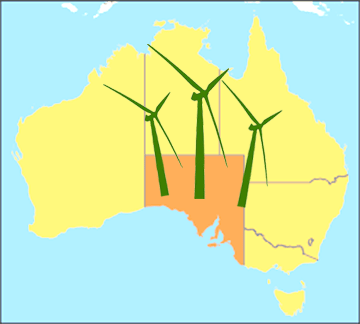

The Australian Energy Market Operator has predicted that the amount of rooftop solar could triple by 2020. Depending on how much wind energy is built between now and 2020 – and that will depend on whether the new government retains the current renewable energy target – the state’s renewable energy capacity is expected to soar well above 50 per cent by then.
South Australia’s perfect energy mix: Cleaner, greener, cheaper REneweconomy, By Giles Parkinson on 18 September 2013 Not only has South Australia achieved the highest level of wind energy and rooftop solar in the country, and has cut its emissions by a third in the last few years, its consumers have also had a windfall in generation costs: they are paying generators much less for their electricity than they did before the boom in wind farm and household solar began in 2009.
A study by energy analyst firm Pitt & Sherry finds that in 2012/13, the average South Australian paid generators $88 a year less for the electricity he or she consumed than they did in 2009-10.
And that is even after the introduction of a carbon price. If the impact of the carbon price is taken out, the average price paid per capita to generators in South Australia has fallen by $188 over the last four years – during which time the wind industry has grown from virtually nothing to more than 1,200MW, and rooftop solar has done the same (it is now 400MW). Continue reading
Adelaide’s 100% solar powered bus – a world first!
 The World’s First 100% Solar Powered Bus http://www.energymatters.com.au/index.php?main_page=news_article&article_id=3945 17 Sept 13, The world’s first solar powered bus is located in Adelaide, South Australia – which makes it especially heaps good*.
Tindo – the name of Adelaide City Council’s electric solar bus – is the first in the world to be recharged using 100% solar power. Continue reading
Distnguished Aboriginal Elder, Yami Lester, explains the dismantling of Anangu Pitjantjatjara Yankunytjatjara (APY) lands
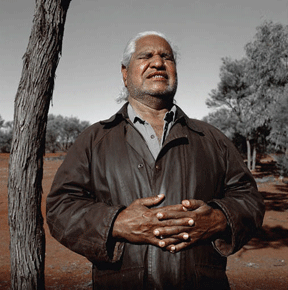 “As an elder of the Yankunytjatjara and the APY Lands I state my absolute disappointment and disgust with the governments of South Australia and the Commonwealth. I say “NO” to mining in APY Lands and I say “NO” to homeless centres being built for our people away from their traditional homelands.”
Elder believes the APY Land is being dismantled http://cooberpedyregionaltimes.files.wordpress.com/2008/11/coober-pedy-regional-times-12-09-2013.pdf, by Yami Lester, (OAM) Order of Australia Medal)
Yankunytjatjara Elder Yami Lester is deeply disturbed by the exodus of Anangu from the APY Lands over the past several years. Big mining has been approved for the area but there are no jobs.. He says many families are not returning, causing a decline in the population of the lands. Lester who was awarded the Order of Australia medal in 1981 for service in the field of Aboriginal Welfare says,“The governments are now impatient to mix Anangu into the mainstream, hundreds of kilometres from their homelands.
 interests is a cruel and racist act,” said Yami Lester.
South Australian uranium mine to be 100% Russian owned
Honeymoon Well uranium mine to go into Russian hands ABC Rural By Babs McHugh 7 Sept 13, The Honeymoon Well uranium mine in South Australia is set to be 100 per cent Russian owned by the September quarter.
Shareholders of Canadian company Uranium One have approved a buyout offer from the Russian State Corporation for Nuclear Energy, Rosatom.
A Rosatom subsidiary already owns 49 per cent of Uranium One and, once the deal is completed, the new entity will be private.
Honeymoon Well is is the smallest of Australia’s operating uranium mines. The others are Olympic Dam in South Australia, Ranger Mine in the Northern Territory and Beverley Mine in South Australia…… http://www.abc.net.au/news/2013-09-06/russia-to-own-honeymoon-well-uranium-mine/4941128
South Australia’s drop in electricity consumption partly due to solar panels
 Solar Panels Reducing South Australia’s Electricity Consumption by Energy Matters, 2 Sept 13, Expected growth in energy consumption in South Australia over the next decade has been lowered; thanks in part to solar PV.
The 2013 South Australian Electricity Report (SAER), prepared by the Australian Energy Market Operator (AEMO), says the state’s annual energy consumption was 13,330 gigawatt hours (GWh) in 2012-13; down by 42 GWh compared to 2011-12.
Looking ahead, electricity consumption is forecast to decrease by 0.1% per year over the 10-year outlook period……. http://www.energymatters.com.au/index.php?main_page=news_article&article_id=3919
South Australia on track to lead the world in renewable energy use
it would make South Australia the most advanced industrialised economy in the world in the adoption of variable renewables, and a test case for the incorporation of such energy sources into a broader grid.
South Australia heads to 50% renewables within a decade, (excellent graphs) http://reneweconomy.com.au/2013/south-australia-heads-to-50-renewables-within-a-decade-21296 REneweconomy By Giles Parkinson on 2 September 2013 Already, one in five houses in South Australia has rooftop solar PV, and a new AEMO document predicts this could treble by 2022. With wind already supplying 27% of power, and new wind farms coming on, the state will likely have 50% of wind and solar within 10 years.
The state of South Australia is emerging as one the leading regions in the world in the take-up of variable renewable energy sources such as wind energy and rooftop solar PV, and could be the first industrial economy to reach 50 per cent variable renewable generation.
According to figures included in a report by the Australian Energy Market Operator, that could happen well within a decade. That would make it the most advanced industrialised economy in the world in the adoption of variable renewables.
In a special report on the state released late last week, AEMO noted that 31 per cent of the state’s energy consumption was met by wind and solar in 2012/13, with more than 1,250MW of large scale wind farms, and a further 400MW of solar PV installed on one out of every five homes in the state. Continue reading
Radio: Adelaide the hub of military industrial intelligence nuclear complex
The issue isn’t nuclear power. The issue is processing uranium for nuclear power that then can be used for defence
You have to understand this in terms of in terms of Adelaide, -it’s a military industrial intelligence complex
Simons is connected to the University College of London but basically he’s a front man for business interests, We can clearly question what he is doing given the fact that he’s getting funding from indirect corporate sources.

 AUDIO: https://radio.adelaide.edu.au/nuclear-power-in-south-australia-a-golden-age/ Nuclear Power in South Australia – a golden age? Radio Adelaide 23 Aug 13 Chris Komorek spoke with Dr David Palmer from Flinders University to explore the changing landscape. Produced by Ian Newton. TRANSCRIPT by Christina Macpherson
Chris Komorek As the uranium debate heats up, so does the destroyed reactor in Fukushima, Japan.The International Energy Policy Institute at the University College London’s Adelaide campus is advocating a ramped up nuclear industry here in South Australia. We’re joined by Dr David Palmer from Flinders University.
Crippling losses for US nuclear weapons company’s uranium mine in Australia
 Fukushima fallout for uranium stings Heathgate Resources Financial Review, SIMON EVANS, 26 Aug 13 Heathgate Resources, the owner of the Beverley uranium mine in northern South Australia, has suffered losses totalling a whopping $60 million over the past two years.
Heathgate has operated Beverley since 2000, but has been hit hard in its past two financial years by a plunge in global uranium prices.Beverley is one of four uranium mines in Australia, and Heathgate is also involved in the nearby Four Mile uranium project, set to become the nation’s fifth uranium mine as regulatory approvals move a step closer.
Uranium prices fell by more than 50 per cent after the meltdown at the Fukushima nuclear plant in Japan in March 2011, and have failed to recover . Heathgate Resources made a loss of $34.5 million in calendar 2012 according to its latest financial statements lodged with the Australian Securities and Investments Commission.
This followed a loss of $25.6 million in 2011.
Heathgate’s total revenue in calendar 2012 was $59 million, according to its financial statements, a substantial slump from the 2011 when total revenue was $84.6 million.
Heathgate president Craig Bartels declined to comment on the results and the operating performance.
Heathgate is owned by the US-based global nuclear giant General Atomics, as is one of Heathgate’s stablemates, Quasar Resources, which holds a 75 per cent stake in the Four Mile project. The other 25 per cent of Four Mile is owned by ASX-listed Alliance Resources, but the two groups are still involved in court action over past disagreements about how best to develop the resource…… http://www.afr.com/p/australia2-0/fukushima_fallout_for_uranium_stings_7q6Q2t7EXWB2IaLsOu5w0L
Wind power bonanza from windy weather in South Australia, NSW, and Tasmania
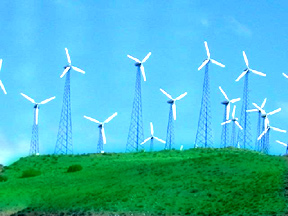 Blustery Weather Generated A Wind Power Bonanza http://www.energymatters.com.au/index.php?main_page=news_article&article_id=3907 25 Aug 13, Wind farms in Australia’s National Electricity Market cranked a record amount of power for the week beginning August 11.
During the period, 47% of South Australia’s power was supplied by the wind and Victoria’s wind farms contributed 10% to that state’s electricity needs. Tasmania and New South Wales had their second and third highest levels of wind power generation respectively.
While the blustery conditions caused havoc for emergency services, it’s an ill wind that blows nobody any good as they say.
“The positive was the large amount of clean energy that was produced by the wind farms on Australia’s southern coastline, breaking records for the amount of wind power generated in a single week in South Australia and Victoria,” said Clean Energy Council Policy Director Russell Marsh.
“What this shows is that wind power is working. It generates very useful amounts of power and also helps farmers who host wind turbines by providing them with income.” Mr. Marsh says based on data sourced from the Australian Electricity Market Operator (AEMO); wind power provided a record 7.6 per cent of all power generated across the entire National Electricity Market during that week; the equivalent of supplying more than 2.3 million homes.
Under normal conditions, South Australia’s wind farms contribute about one quarter of the state’s total electricity production. In 2011/12, wind generationblew past coal to become the second largest source of electricity in South Australia. The state, which has around 40% of Australia’s installed wind capacity, reached its target of generating 20% of electricity from renewable energy in 2011.
South Australia now has its sights set on producing one third of its electricity from renewable sources by 2020. Like its previous target, that is expected to be met well ahead of schedule.
BHP’s Olympic Dam uranium mine expansion again rears its ugly head
BHP ‘determined’ to push ahead with Olympic Dam but only after new mining techniques are thought through, CHRISTOPHER RUSSELL THE ADVERTISER AUGUST 22, 2013 BHP Billiton is “absolutely determined” to find a way to go ahead with expanding Olympic Dam, the company’s top executive in South Australia says.
There were two key objectives for BHP in South Australia, asset president of Olympic Dam Darryl Cuzzubbo told a mining conference in Port Pirie.In his first public speech since taking command in SA, Mr Cuzzubbo said the priority was to make sure the existing Olympic Dam copper/uranium/gold operation was running at world-leading efficiency standards.
If not, he would have no credibility when asking the BHP Billiton board to fund the expansion. Secondly, the key was to make the economics of the expansion work. “We are absolutely determined to find the best way to expand Olympic Dam that competes against other investment opportunities,” he said…….
Since being granted a four-year extension by the State Government on the indenture covering the mine expansion, BHP has been working hard at rescoping the project……. There were three areas to be resolved he said – to work out a more effective mining method to get down 350m to reach the ore, to process the minerals at less cost and to split the project into “bite-size” pieces so it could generate revenue along the way.
The original expansion method envisaged spending about $30 billion but not reaching the top of the ore body for four or five years.
Wind energy facts – including 47% of South Australia’s energy last week
 Wind supplied 47% of South Australia’s energy last week http://reneweconomy.com.au/2013/wind-supplied-47-of-south-australias-energy-last-week-67550 By Ketan Joshi on 20 August 2013 VERY GOOD GRAPHS in this article
Science Week was from August 10-18, inclusive. The Australian Energy Market Operator (AEMO) makes 5-minute generation data available through a gargantuan database. I’ve chosen to focus on South Australia and Victoria, states which lead the way in installed wind generation – there are 22 wind farms I’ve obtained generation data for, summarised in the table below.
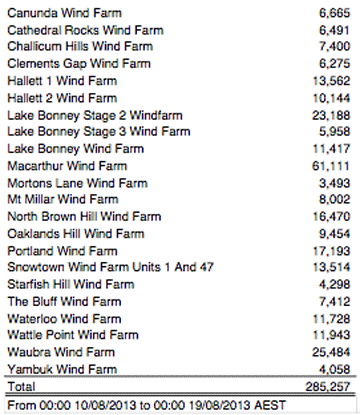
The total generation of those 22 wind farms was 285,257 megawatt hours. But what does that deliver to the energy market? The average Sydney household consumes 11.6 KWh per day, or 0.104 MWh over 9 days. So, the generation of wind farms throughout science week could power ~2.7 million homes – enough for all of Greater Sydney, and all of Greater Adelaide. That statistic alone is a firm reminder that wind power is a formidable player in the supply of energy. Continue reading
Shabby history of destruction of Aboriginal culture and land ownership
Rudd and Abbott charge the north Eureka Street Dean Ashenden | 19 August 2013 “……..Credit for getting this history under way goes to the pastoral grandees of the colony of South Australia. In the 1860s they funded an obsessive-compulsive alcoholic Scotsman to find out what lay between their northern border and the far coast, and how it could be got. John McDouall Stuart’s six expeditions found little to encourage them, but lust trumped reason, and South Australia set itself to be the first colony in history to found a colony. The two would fuse, in time, to become the Great Central State.
Dreams of imperial glory and speculative fortunes turned almost immediately into a long-running mixture of farce and nightmare. Eventually South Australia got lucky. In 1911 it managed to palm off its colony onto the newly-constituted Commonwealth of Australia. Astonishingly, the Commonwealth even agreed to pay serious money for it, nearly four million pounds, plus another 2.2 million for a railway line that had not even reached South Australia’s northern border, let alone made any money.
Believing, as had the South Australians before them, that there must be a way to turn space into land, the Commonwealth did what South Australia had done, with the same result. An official inquiry report in 1937 was scathing. It found that in the 25 years since the takeover the federal government had spent more than 15 million pounds and was heading further into the red. The previous year’s production had brought in 100 000 pounds less than the Government’s outlay for the year of 600,000 pounds.
But the inquirers nonetheless found that it can be done, if it’s done right. It prescribed the familiar medicine: ports, roads, bridges, railways, ports, industry development boards, the lot.
Much of what the inquiry wanted soon came to pass, but not in result of its proposals. In 1939, war saw tens of thousands of troops stream north to build roads, airfields, a port and other infrastructure. For the first time the white population exceeded the black.
Soon motor vehicles, aircraft, air conditioning and buckets of public money transformed the look and feel of the Territory, but ‘development’ remained elusive. In the Territory, and more particularly in neighbouring tropical Queensland and Western Australia, mining was the only big earner, not necessarily to the advantage of government revenues.
The kind of on-the-ground industries apparently envisaged by Rudd and Abbott — horticulture and agriculture particularly — were confined to coastal enclaves or to the margins of viability. Much of the north proved too hot, too wet, too dry, too far from markets, too barren or too pestilential, with the happy consequence that the frontier failed to do its grim work.
Instead of a near-obliteration of Aboriginal populations of the kind seen on the eastern and southern seaboards, northern Australia witnessed a slow-motion saga of sporadic violence and accommodation, of advance and retreat. Neither side ever looked liked winning, and neither ever looked like giving up.
In the aftermath of the Coniston massacres of 1928 both sides abandoned violence for other means, and since then both have used the law, politics, money and public opinion in hundreds of struggles over land and ‘culture’, some famous or notorious, most not, one side straining to gain ground, the other to resist and to recover.
That 160-year struggle now seems to be reaching a new stage. We like to think that the devastation of one population and culture by another is all in the past, but the apparent failure of Rudd and Abbott to notice that northern Australia is shared country suggests that there might be more to come.http://www.eurekastreet.com.au/article.aspx?aeid=37087#.UhP0g9Jwo6I
1 This month

of the week – Australians for War Powers Reform (AWPR)
To see nuclear-related stories in greater depth and intensity
 Antinuclear