Adani groundwater bores investigated amid claims they were sunk without approval
‘The Queensland environment department launches an investigation
into a series of groundwater bores drilled by Adani,
which conservationists say were sunk without approval,
contrary to the miner’s claim it had permission for the works.’
‘Key points:
‘Adani told the ABC it was abiding by the conditions of the Carmichael project’s approvals
‘Conservationists have repeatedly warned that the company’s dewatering plans would see groundwater levels plummet
‘The Queensland Environmental Department said the bores were not in place in time for a recent site inspection’
‘The environmental group Coast and Country has obtained high resolution satellite
and drone imagery which it says shows the “illegal” works at the site
of Adani’s controversial Carmichael coal mine project in north Queensland.
‘”Adani have sunk six dewatering bores,” said the group’s Derec Davies.
“They’ve needed approval, a groundwater approval, for these bores. They don’t have that.
“They’ve drilled into Great Artesian Basin aquifers, they’ve put at risk
our groundwater particularly at a time when half the country’s in drought.” … ‘
6 American nuclear power stations in danger as Hurricane Florence approaches
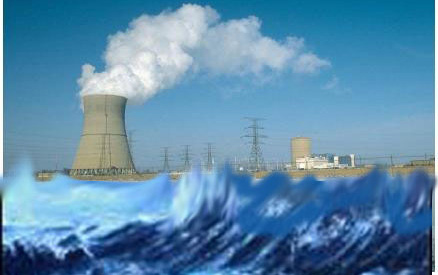 As 1.5 Million Flee Hurricane Florence, Worries Grow Over Half Dozen Nuclear Power Plants in Storm’s Path https://www.commondreams.org/news/2018/09/11/15-million-flee-hurricane-florence-worries-grow-over-half-dozen-nuclear-power-plants
“Flooding-prone Brunswick Nuclear Plant among rickety old Fukushima-style reactors in likely path of Hurricane Florence.”
As the Associated Press reported on Monday, “The storm’s potential path also includes half a dozen nuclear power plants, pits holding coal-ash and other industrial waste, and numerous eastern hog farms that store animal waste in massive open-air lagoons.”
The plants thought to lie in the path of the hurricane, which is expected to make landfall on the Southeastern U.S. coast on Thursday, include North Carolina’s Brunswick Nuclear Power Plant in Southport, Duke Energy Sutton Steam Plant in Wilmington, and South Carolina’s V.C. Summer Nuclear Station in Jenkinsville.
“Florence will approach the Carolina coast Thursday night into Friday with winds in excess of 100mph along with flooding rains. This system will approach the Brunswick Nuclear Plant as well as the Duke-Sutton Steam Plant,” Ed Vallee, a North Carolina-based meteorologist, told Zero Hedge. “Dangerous wind gusts and flooding will be the largest threats to these operations with inland plants being susceptible to inland flooding.”
In 2015, the Huffington Post and Weather.com identified Brunswick as one of the East Coast’s most at-risk nuclear power plants in the event of rising sea levels and the storm surges that come with them.
As of Tuesday afternoon, Hurricane Florence was thought to have the potential to cause “massive damage to our country” according to Jeff Byard, associate administrator of the Federal Emergency Management Agency (FEMA).
The storm was labeled a Category 4 tropical storm with the potential to become a Category 5 as it nears the coast, with 130 mile-per-hour winds blowing about 900 miles off the coast of Cape Fear, North Carolina.
Meteorologists warned of hurricane-force winds in the region by mid-day Thursday, with storm surges reaching up to 12 feet or higher.
U.N. Secretary General warns of risks of “runaway” global warming

 U.N. Chief Warns of a Dangerous Tipping Point on Climate Change https://www.nytimes.com/2018/09/10/climate/united-nations-climate-change.html?smid=tw-nytclimate&smtyp=cur, By Somini Sengupta,
Sept. 10, 2018 Warning of the risks of “runaway” global warming, the United Nations secretary general, António Guterres, on Monday called on global leaders to rein in climate change faster.
· “If we do not change course by 2020, we risk missing the point where we can avoid runaway climate change,” Mr. Guterres said at United Nations headquarters in New York.
· “Climate change is the defining issue of our time, and we are at a defining moment,” he said. “Scientists have been telling us for decades. Over and over again. Far too many leaders have refused to listen.”
· His remarks came with countries around the world far short of meeting the goals they set for themselves under the 2015 Paris accord to reduce the emissions that have warmed the planet over the last century. The next round of climate negotiations is scheduled for this year in Poland.
· One of the big tests at those talks, which start Dec. 3 in Katowice, will be whether countries, especially industrialized countries that produce a large share of global emissions, will set higher targets for reducing their emissions.
· “The time has come for our leaders to show they care about the people whose fate they hold in their hands,” Mr. Guterres said, without taking questions from reporters. “We need to rapidly shift away from our dependence on fossil fuels.”
· Mr. Guterres’s speech came days before a high-level climate meeting in San Francisco, spearheaded by Gov. Jerry Brown of California, meant to demonstrate what businesses and local leaders have done to tackle climate change.
· The United Nations chief seems to be taking a page from Mr. Brown’s playbook. He, too, is looking beyond national leaders to make a difference. He has invited heads of industry and city government leaders to his September 2019 climate change forum in an apparent effort to increase pressure on national governments.
The Paris Agreement aims to keep temperatures from rising more than 2 degrees Celsius from preindustrial levels in order to avoid what scientists call the most catastrophic impacts of climate change.
But few countries are even close to meeting the targets they set under the Paris pact. And an assessment by the United Nations found that country targets so far would achieve only one-third of the global target.
Mr. Guterres sought to make the case that a shift away from fossil fuels like oil and coal would create jobs and bolster economies. Rebutting critics who argue that such a shift would be costly, he called that idea “hogwash.”
He cited the steps private companies are taking to wean themselves away from polluting fossil fuels — including a hat tip to the insurance company Allianz, which has promised to stop insuring coal fired power plants — though he said such actions are plainly insufficient.
“These are all important strides,” Mr. Guterres said. “But they are not enough. The transition to a cleaner, greener future needs to speed up.”
He warned that governments were not meeting their Paris Agreement commitments and goaded world leaders to step up.
“What we still lack, even after the Paris Agreement, is leadership and the ambition to do what is needed,” he said.
Mr. Guterres did not mention any countries or any heads of state by name. But looming large over his remarks was the leader of world’s most powerful country: President Trump, who has dismissed climate science, rolled back environmental regulations and vowed to pull the United States out of the Paris climate accord.
Climate change brings a global heat crisis
Japan Crushed by Godzilla-Like Deluge, Floods, and Landslides
 GLOBAL HEAT CRISIS September 5, 2018, Alex Smith, Radio Ecoshock New high temperature records set all over N. Hemisphere
Download or listen to this Radio Ecoshock show [link on original at https://www.ecoshock.org/2018/09/global-heat-crisis-new.html]
“…..Nobody alive or dead has ever seen anything like what just happened in the past few months. No human has ever lived with carbon dioxide levels this high in the atmosphere. And that carbon load continues to climb as motorized life and fossil-powered electricity spread across the globe. The human cloud of greenhouse gases found an echo as forests released their carbon on every continent.
Here in British Columbia, on the west coast of Canada, we had our second year of fire emergency. Over 700 large fires burned through the mountains. Gigantic out-of-control blazes lit up the night, and then buried the whole sky with thick smoke, turning the day into night. Thousands were evacuated, turning on their vehicle headlights at ten in the morning……..
Thick smoke was blown down into Vancouver and Seattle and Portland. Then it blew back right across the continent, thousands of miles across the Prairies and into Ontario and New York State. Of course the smoke was rained out in the East, where a series of strange storms stoked up alternating high heat with hard-to-bear humidity and then unseasonable cold. Nobody in North America got a free pass to enjoy the summer.
And that’s the thing. During my life, summer was the time of good weather you could count on, except for the occasional thunder storm. Now in the age of climate change, summer is the season to survive.
When I was growing up, old people feared the winter. More old men and old women died during the cold weather. Now in the new climate times, the lore has changed. Old people should fear the summer. That’s true with the heat deaths this summer in Canada in 2018, and the mass heat deaths in Europe 2003. From Australia to California to Pakistan, we will dread the coming of summer. Think about that.
Below, NASA space shot showing fires August 2018

SPREADING LIKE WILDFIRE…….. At one point in July the whole Northern Hemisphere seemed ablaze. It may be the first transcontinental fire ever seen. Fires rages in most of western North America, in the Arctic, in Sweden, Germany, Greece, Russia, Japan, and even Australia – where it is supposed to be winter. A global fire-mapping service just blaring red all over. Meanwhile in Africa the annual crop-burning, and in the Amazon and Indonesia, slash and burn to expand agriculture added to the planetary pulse of carbon into the atmosphere. It as all in the same two weeks of July.Here is a graphic by NASA based on fires they can see from space. Continue reading
Over 4,000 “liquidators” at Chernobyl died from radiation-caused cancers,
 THE ‘LIQUIDATORS’ WHO RISKED IT ALL TO CLEAN UP CHERNOBYL WIRED, LAURA MALLONEE, 09.08.18
THE MELTDOWN AT the Chernobyl Nuclear Power Plant in northern Ukraine on April 26, 1986 was a massive tragedy that ultimately claimed at least 9,000 lives and affected millions more. It also created a toxic mess. Radioactive particles choked the atmosphere and rained down on cities, forests, and roads. In the immediate aftermath, fires had to be put out, debris cleared, contaminated waste buried deep underground.It was, obviously, not an easy task. Remote-controlled bulldozers and other robots proved too weak for the job, their circuitry fried by radiation. So the Soviet Union sent in humans—600,000 of them. These brave firefighters, soldiers, janitors, and miners—the so-called “liquidators”—did everything from hosing down streets to felling trees to building a concrete sarcophagus around the exposed reactor … all the while charged subatomic particles ravaged their cells and shortened their life spans.
“No personal sacrifice was too much for these men and women,” says photographer Tom Skipp. Moved by their story, he visited Slavutych, Ukraine in April to photograph survivors, now in their golden years. The portraits make up his haunting series The Liquidators.
“The liquidators were sent into impossible scenarios where even machines failed,” Skipp says. “Each has a human story seemingly entangled in the complex history of communism and duty to the motherland….
On average, the liquidators were exposed to 120 millisieverts of radiation, about 1,200 times the amount you get from a simple x-ray. In the years following the meltdown, more than 4,000 of them died from radiation-caused cancers, and another 70,000 were disabled by exposure. Still, the liquidators shared a steadfast sense of duty to their government and fellow citizens, even when they didn’t agree with the ruling system or found it difficult to talk about. “I think that there’s a certain amount of fear aligned with speaking out against any wrongdoings that were committed,” Skipp says. “Many live on a state pension.”
Skipp photographed the men and women with his Fujifilm GFX 50 in their homes, as well as at at a local museum dedicated to explaining the history of Chernobyl and Slavutych. Many of the portraits capture them standing proudly but solemnly before an image of the destroyed reactor and beneath a clock stopped at the exact time of the meltdown—the moment that defined their lives forever. https://www.wired.com/story/chernobyl-liquidators-photo-gallery/
Thousands march across US to call for action on climate change
 Rise for Climate: thousands march across US to protest environment crisis https://www.theguardian.com/environment/2018/sep/08/rise-for-climate-protests-san-francisco-new-york. 9 Sep 18
Protests spearheaded by march in San Francisco ahead of climate change summit in the city next week
Tens of thousands of people took part in marches and other events across the US on Saturday, calling for a swift transition to renewable energy in order to stave off the various perils of climate change.
On Small Modular Nuclear Reactors, nuclear lobbyists, like Dr Pangloss, unrealistic optimism


“Panglossian puffery”, says David Lowry. The report ignores the security and nuclear waste problems of small modular reactors.
The Nuclear Free Local Authorities (NFLA) says this is yet another attempt to promote the benefits of SMRs despite large and quite possibly insurmountable hurdles to cross. The Government suggests the report was produced by an ‘independent’ group, yet at least half of the group have strong links to the nuclear industry, including the Nuclear Industry Association. The UK appear to be one of the few governments pursuing a strategy of promoting SMRs. Even France and Finland, the only other countries in Europe currently developing large nuclear projects, have no plans to develop such technology. Indeed France has just commissioned a whole raft of new smaller-scale solar energy projects.
the finance sector is accurate in being sceptical of new nuclear developments given the rapidly decreasing costs of renewable energy.
Rolls-Royce warned last month that it was preparing to shut down the [Small Modular Nuclear Reactor] project if the government did not make a long-term commitment to its technology.
 Panglossian SMRs , NuClear News Sept 18, The government should subsidise the deployment of small modular nuclear reactors in order to speed the transition to a low carbon energy system, according to an independent review into the technology commissioned by Ministers. The Expert Finance Working Group on Small Reactors (EFWG) said in a report that government should offer subsidies for small nuclear reactors to help de-risk the technology and kickstart cost reductions. (1)
Small modular reactors (SMRs) generally have a capacity less than 600MW, with the costs ranging from £100 million to £2.3 billion, which the experts suggest could be delivered by 2030. The EFWG has recommended the government to help de-risk the small nuclear market to enable the private sector to develop and finance projects – it believes SMRs could be commercially viable propositions both in the UK and for an export market.
The report says the “Government should establish an advanced manufacturing supply chain initiative, as it did with offshore wind, to bring forward existing and new manufacturing capability in the UK and to challenge the market on the requirement for nuclear specific items, particularly Balance of Plant (BOP), thereby reducing the costs of nuclear and the perceived risks associated with it.”
Nuclear Energy Minister Richard Harrington said: “Today’s independent expert report recognises the opportunity presented by small nuclear reactors and shows the potential for how investors, industry and government can work together to make small nuclear reactors a reality. Advanced nuclear technologies provide a major opportunity to drive clean growth and could create high-skilled, well-paid jobs around the country as part of our modern Industrial Strategy.” (2) Continue reading
Wagga Wagga by-election: Independent candidate sticks to policy of action on climate change
 Doctor ‘sticks to guns’ on climate The independent candidate favoured to win the Wagga Wagga by-election has written about the dangers of climate change…. (subscribers only)
Big climate marches this weekend – USA, UK, France – Europe
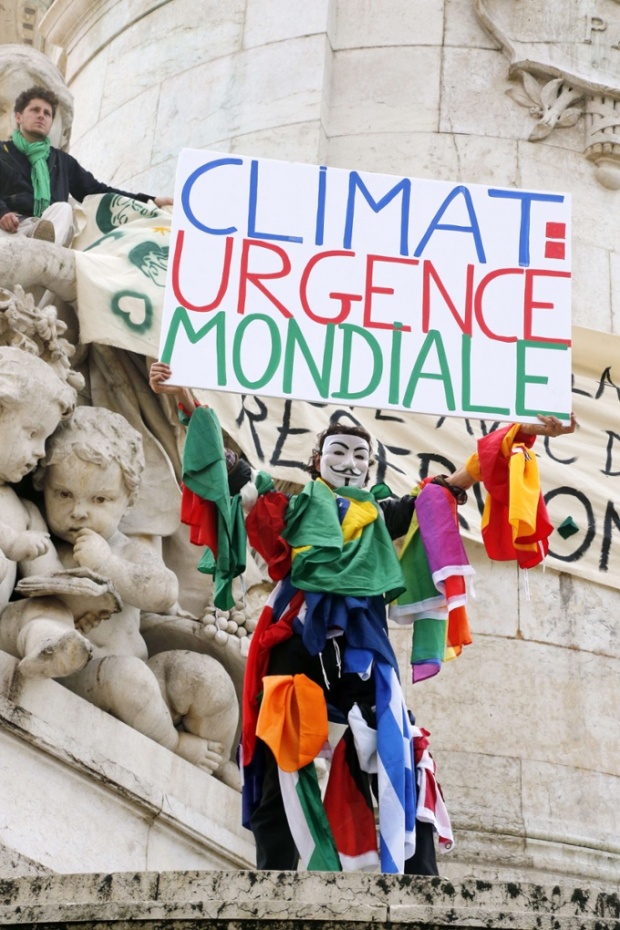 Hundreds of thousands expected to join global climate marches this weekend Protests against politicians’ failure to tackle the environmental crisis will take place in more than 90 countries, Guardian, Matthew Taylor Environment correspondent, Fri 7 Sep 2018 Hundreds of thousand of people in more than 90 countries are expected to take part in demonstrations this weekend to protest about the failure of politicians to tackle the global environmental crisis.
Organisers say more than 800 events – from marches to street theatre, acts of civil disobedience to mini festivals – will take place in towns and cities amid growing frustration at the lack of meaningful political action over the emerging climate breakdown.
Nick Bryer from campaign group 350.org which is organising the event said: “Politicians are failing. They are still protecting the interests of the fossil fuel companies over the interests of people, despite mounting evidence of the devastation these companies and this system is causing the planet.”…….
In the UK there are events organised in cities from London to Wigan, Bradford to Durham.
Jane Thewlis, from Fossil Free West Yorkshire, is organising an event in Bradford……….
One of the biggest protests is expected in Paris where up to 100,000 people are expected. Events in other European cities including Copenhagen, Brussels and Lisbon are also expected to attract tens of thousands of protesters.
The events come ahead of the Global Climate Action Summit that starts in San Fransisco next week and will see politicians and city leaders from around the world gather to discuss the climate crisis.https://www.theguardian.com/environment/2018/sep/07/hundreds-of-thousands-expected-to-join-global-climate-marches-this-weekend
Michael Shellenberger has gone down a rabbit hole with his two essays promoting the proliferation of nuclear weapons.

Since then, the arguments have been turned upside down with prominent industry insiders and lobbyists openly acknowledging power-weapons connections. This remarkable about-turn has clear origins in the crisis facing nuclear power and the perceived need to secure increased subsidies to prevent reactors closing and to build new ones. Continue reading
Radiation and health: the plight of Japan’s nuclear workers
Sworn to secrecy, after a superficial safety education drill, they are sent into highly contaminated, hot and wet labyrinthine areas.
 the state also raised nuclear workers’ limits from no more than 50 mSv per year (mSv/y) and 100 mSv/5 years to 250 mSv/y to deal with emergency conditions, and determined that there would be no follow-up health treatment for those exposed to doses below 50 mSv/y, while TEPCO decided to not record radiation levels below 2 mSv/y in the misplaced justification that the effects would be negligible.
poor monitoring and record-keeping has meant that many former nuclear workers who develop leukaemia and other illnesses have been denied government compensation
 Informal Labour, Local Citizens and the Tokyo Electric Fukushima Daiichi Nuclear Crisis: Chapter Author(s): Adam Broinowski Book Title: New Worlds from Below [many footnotes and references on original] Sept 18
Nuclear workers are important as sentinels for a broader epidemic of radiation related diseases that may affect the general population. We live with contradictions everyday
Introduction The ongoing disaster at the Fukushima Daiichi nuclear power station (FDNPS), operated by Tokyo Electric Power Company (TEPCO), since 11 March 2011 can be recognised as part of a global phenomenon that has been in development over some time. This disaster occurred within a social and political shift that began in the mid-1970s and that became more acute in the early 1990s in Japan with the downturn of economic growth and greater deregulation and financialisation in the global economy. After 40 years of corporate fealty in return for lifetime contracts guaranteed by corporate unions, as tariff protections were lifted further and the workforce was increasingly casualised, those most acutely affected by a weakening welfare regime were irregular day labourers, or what we might call ‘informal labour’.
During this period, many day labourers evacuated rented rooms (doya どや) and left the various yoseba (urban day labour market よせば, or lit. ‘meeting place’) to take up communal tent living in parks and on riverbanks, where they were increasingly victimised. With independent unions having long been rendered powerless, growing numbers of unemployed, unskilled and precarious youths (freeters フリーター) alongside older, vulnerable and homeless day labourers (these groups together comprising roughly 38 per cent of the workforce in 2015)3 found themselves not only lacking insurance or industrial protection but also in many cases basic living needs. With increasing deindustrialisation and capital flight, regular public outbursts of frustration and anger from these groups have manifested since the Osaka riots of 1992.
In this chapter, first I outline the conditions of irregular workers at nuclear power plants and the excess burden they have borne with the rise of nuclear labour in Japan since the 1970s. I then turn to post-3.11 conditions experienced by residents in radiation-contaminated areas. Contextualising these conditions within the genealogy of radiodosimetry standards, I seek to show, through personal interviews and localised responses, how those who are regularly exposed to radiation from Fukushima Daiichi are now confronting problems similar to those faced by informal nuclear labour for decades in Japan. This analysis shows how, after 40 years or more of environmental movements as discussed in Chapter Four, the struggle continues to find viable solutions to the systemic production of the intertwined problems of environmental crises and labour exploitation, and suggests how potential alternative directions for affected populations may lie in their mutual combination.
Conditions for Informal Labour Employed in Nuclear Power Stations Continue reading
Compensation to be paid to family, as Japan acknowledges death caused by Fukushima radiation
 Fukushima disaster: Japan acknowledges first radiation death from nuclear plant hit by tsunami, ABC News 6 Sept 18 Japan has acknowledged for the first time that a worker at the Fukushima nuclear power plant, destroyed by an earthquake and tsunami more than seven years ago, has died from radiation exposure.
Key points:
- The man had worked at the plant since the earthquake and tsunami in 2011
- He was diagnosed with lung cancer in 2016, in his 50s
- The Health, Labour and Welfare Ministry ruled that compensation should be paid to the family
The Health, Labour and Welfare Ministry ruled that compensation should be paid to the family of the man in his 50s who died from lung cancer, an official said.
The worker had spent his career working at nuclear plants around Japan and worked at the Fukushima Daiichi plant operated by Tokyo Electric Power at least twice after the March 2011 meltdowns at the station.
He was diagnosed with cancer in February 2016, the official said. ……..
The ministry had previously ruled exposure to radiation caused the illnesses of four workers at Fukushima, the official said.
But this was the first death……
Tokyo Electric is facing a string of legal cases seeking compensation over the disaster.
The news came as the northern Hokkaido region was hit by a 6.7 magnitude earthquake, sparking concerns at the three-reactor Tomari nuclear plant, which lost power as a result of the earthquake.
The Tomari plant has been in shutdown since the Fukushima disaster.
The Fukushima crisis led to the shutdown of the country’s nuclear industry, once the world’s third-biggest.
Seven reactors have come back online after a protracted relicensing process.
The majority of Japanese people remain opposed to nuclear power after Fukushima highlighted failings in regulation and operational procedures in the industry.http://www.abc.net.au/news/2018-09-06/first-man-dies-from-radiation-from-fukushima-nuclear-disaster/10208244
The heat’s on solar farm for anti-renewables Liberal candidate Beverley McArthur

A Liberal candidate, Beverley McArthur, who has attacked government subsidies for renewable energy stands to make a huge sum from a $150 million solar farm on her family’s property… (subscribers only)
THIS YEAR, news media coverage of Japan’s typhoon ignores danger to nuclear power plants
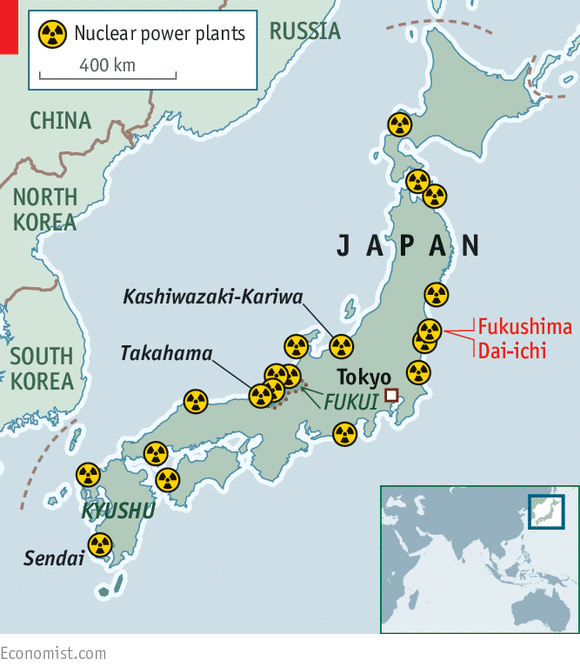
Typhoon hits Japan
Typhoon Jebi path update: Where is Japan typhoon NOW? Will it hit Tokyo? https://www.express.co.uk/news/world/1012314/Typhoon-jebi-path-update-typhoon-tokyo-category-3-Japan-warning-western-central-japan
TYPHOON Jebi will make landfall in southern Japan on Tuesday as damaging winds, flooding and mudslides are expected to hit the country. But where is the typhoon now and will it hit the capital Tokyo?
Typhoon Jebi smashed into Japan on Tuesday, barreling across the mainland at speed in a northeasterly track.
Japan issued evacuation advisories for more than 1 million people and cancelled hundreds of flights in the face of extremely strong winds and heavy rain hammered the country.
AccuWeather senior meteorologist Adam Douty said: “Damaging winds and coastal flooding may be the most significant impacts with this storm.
Where is Typhoon Jebi now?
Typhoon Jebi is currently located just north of Kyoto, traveling back out into the sea in a northeasterly direction.
The storm avoided a direct hit with capital Tokyo, but the city is still expected to bear the brunt of winds of more than 60mph.
Osaka and Kobe also took a hammering from the storm when they were struck earlier on Tuesday, after Jebi moved in from Honshu. The storm made landfall on Shikoku, the smallest main island, around noon.
Jebi then raked across the western part of the largest main island, Honshu, near the city of Kobe, several hours later, heading rapidly north.
Wind gusts of up to 208 km/h (129 mph) were recorded in one part of Shikoku, with forecasts for gusts as high as 216 km/h (135 mph).
Around 100 mm (3.9 inches) of rain drenched one part of the tourist city of Kyoto in an hour, with as much as 500 mm (20 inches) set to fall in some areas in the 24 hours to noon on Wednesday. The Meteorological Agency advised the public to be on the lookout for even more flooding and mudslides, as well as high tides.
Prime Minister Shinzo Abe told a meeting of the government and ruling parties: “We have seen typhoons and torrential rains.
“The government will do its utmost to prevent disaster.
Jebi – whose name means “swallow” in Korean – was briefly a super typhoon and is the latest harsh weather to hit Japan this summer.
Japan has been hit by extreme weather since the beginning of July and western parts of the country have been left devastated by flooding and landslides, leaving more than 220 people dead.
typhoon Jebi’s course has brought it close to parts of western Japan hit by rains and flooding but the storm was set to speed up after making landfall, minimising the amount of rain that will fall in one place.
The country has experienced record-breaking heat as well as floods and landslides.
1 This month

of the week – Australians for War Powers Reform (AWPR)
To see nuclear-related stories in greater depth and intensity
 Antinuclear