Several U.S. utilities back out of deal to build Small Nuclear Reactors

|
Several U.S. utilities back out of deal to build novel nuclear power plant, Science, By Adrian Cho, Nov. 4, 2020 Plans to build an innovative new nuclear power plant—and thus revitalize the struggling U.S. nuclear industry—have taken a hit as in recent weeks: Eight of the 36 public utilities that had signed on to help build the plant have backed out of the deal. The withdrawals come just months after the Utah Associated Municipal Power Systems (UAMPS), which intends to buy the plant containing 12 small modular reactors from NuScale Power, announced that completion of the project would be delayed by 3 years to 2030. It also estimates the cost would climb from $4.2 billion to $6.1 billion………. critics of the project say the developments underscore that the plant, which is designed by NuScale Power and would be built at the Department of Energy’s (DOE’s) Idaho National Laboratory, will be untenably expensive. M. V. Ramana, a physicist who works on public policy at the University of British Columbia, Vancouver, says he’s not surprised that so many utilities have opted out of the project. The question, he says, is why so many are sticking with it. “They ought to be seeing the writing on the wall and getting out by the dozens,” he says. ………
if the NuScale plant doesn’t run constantly at full output, it will be less efficient and even more expensive to operate, in terms of cost per megawatt hour (MWh) of energy, Ramana argues. Peter Bradford, a former member of the Nuclear Regulatory Commission (NRC) and former chair of the state utility commissions in Maine and New York, says renewables coupled with short-term storage in batteries would likely be a cheaper means to even out the supply……. in the 1980s, Washington Public Power Supply System agreed to build several nuclear reactors in Washington that ran far overbudget and were never completed, leading to the biggest default on municipal bonds in U.S. history. Public utilities are particularly vulnerable to such risks, Bradford says, as other than ratepayers they have few sources of revenue that could be used to cover cost overruns. “Not only are there no deep pockets, there are no pockets,” he says. On 28 October, Heber Light & Power in Utah withdrew from the project, just 1 day after utilities in the Utah communities of Bountiful and Beaver pulled out. Still, even critics doubt the UAMPS deal will fall apart immediately. In August, the NuScale design passed a key milestone in the NRC review process, receiving its safety evaluation report, and observers expect final “design certification” to come next year. In the meantime, UAMPS is moving to complete an application to construct and operate the plant, Webb says. That application should be submitted in 2023, construction of the plant should start in 2025, he says. Before construction can start, however, UAMPS still has to line up customers to buy the full 720-megawatt output of the plant, Webb says. So far, UAMPS members involved in the project have agreed to take only a relatively small fraction of that output. So UAMPS may have to convince plenty of other folks that it’s a good deal. https://www.sciencemag.org/news/2020/11/several-us-utilities-back-out-deal-build-novel-nuclear-power-plant |
|
Some problems that will handicap the development of Small Nuclear Reactors
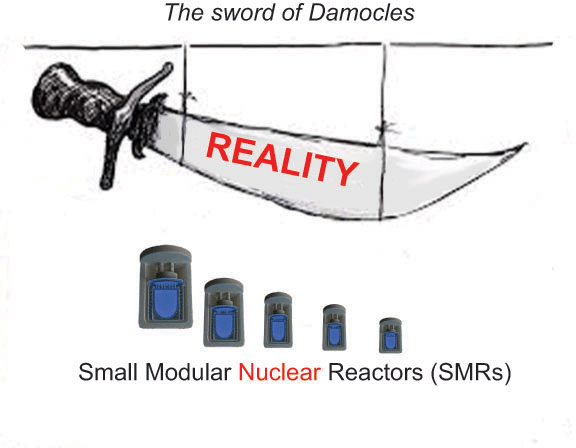 The I&C challenges for small modular reactors, Nuclear Engineering International 4 November 2020 Dr Li Li examines the instrumentation and control requirements and challenges for a new generation of small modular reactors.
REACTOR DEVELOPERS ARE DEVELOPING A wide variety of small modular reactor (SMRs)….. Many use Generation III+ pressurised water reactor (PWR) technology similar to that used in current gigawatt-scale reactors, while others are based on advanced Generation IV technologies ranging from high temperature gas-cooled reactors to molten-salt reactors.
Each design will have its own requirements for instrumentation and control (I&C) systems for the operation, monitoring and control of the reactor, turbine island and balance of plant. Even among PWRs, the design principles and I&C architectures are very different and cannot be easily replicated from one design to another.
To understand the challenges, let’s look at three competing designs: the UK SMR being developed by a consortium of companies including Rolls-Royce, Jacobs, Assystem and Atkins with support from research institutions including Nuclear AMRC; the NuScale Power Module backed by Fluor Corporation with funding from the US Department of Energy; and the Westinghouse SMR, which adapts technologies from the established AP1000 design………..
The issue of cyber security will be critical for the certification of digital I&C systems. According to the Industrial Control Systems Cyber Emergency Response Team, part of the US Department of Homeland Security, cyber-attacks and security infringement targeting control systems have increased significantly in recent years. With more digital smart devices used in nuclear power plant of any size, it must be a priority to protect the vulnerability of smart devices and digital I&C system from cyber attack and malicious sniffing from hostile individuals or organisations…….
in most cases, new codes and standards will need to be developed for advanced reactors.
The development of new codes and standards is a very lengthy process. It will take resources and time to publish a new standard for the nuclear industry, and we might not see one ready before new SMR developers file their design certification application……….
Many SMR designs, including the three considered above, have the potential to be used for co-generation of process heat, district heating or desalination. This will introduce additional complexity for regulators to approve the power plant I&C design, if the co-generation processes are located at same site for economic reasons. This brings new challenges because extra safety measures must be considered. For example, additional safety features of the control system and evacuation plan must be approved by an adequate jurisdictional authority for the orderly shutdown of both the nuclear plant and industrial processes in the event of an accident.
Author information: Dr Li Li, Head of the digital I&C group at the UK’s Nuclear Advanced Manufacturing Research Centre (Nuclear AMRC) https://www.neimagazine.com/features/featurethe-ic-challenges-for-small-modular-reactors-8345341/
Chernobyl’s bumblebees still affected by radiation
This new data shows effects on bumblebees are happening at dose rates previously thought safe for insects, and the current international recommendations will need to be re-evaluated.
|
Chernobyl: bumblebees still at risk from radiation nearly 35 years on, https://theconversation.com/chernobyl-bumblebees-still-at-risk-from-radiation-nearly-35-years-on-149055, Katherine Raines, Fellow and Lecturer, University of Stirling, November 5, 2020 In the early hours of April 26 1986, reactor four of the Chernobyl nuclear power plant in Ukraine exploded, causing the largest nuclear disaster in history. More than 350,000 people were evacuated, and a 4,700km² exclusion zone was formed in Ukraine and Belarus. Despite the intervening 34 years, there is still uncertainty about the effects of the radiation exposure on wildlife living in the Chernobyl exclusion zone (CEZ).
|
Poland’s nuclear energy plans not likely to be supported by the European Commission
Nuclear power is not considered environmentally sustainable, and there is little hope this approach will change. Therefore, the possibilities for bankrolling nuclear energy are very limited.
 Brussels’s impact on Poland’s nuclear project, https://biznesalert.com/brusselss-impact-on-polands-nuclear-project/ : Paweł Wróbel, @Pawrobel 4 Nov 20, Poland’s nuclear power plant constrsuction program has been riddled with ambiguity for many years. Neverthele, among the few certainties remains the necessity to abide by the EU law on granting state aid. The project cannot happen without Brussels. Investments in nuclear energy are one of the most expensive in the energy sector, which is why building a nuclear plant in Poland will not be possible without state support. Therefore, the European Commission will have to approve the selected financing model – Paweł Wróbel, CEO of Gate Brussels, writes for BiznesAlert.pl. Continue reading
The US election is a vote on climate change for the whole world
 The US election is a vote on climate change for the whole world, By Helen Regan, Ivana Kottasová and Drew Kann, CNN November 2, 2020 The climate crisis has become a key issue not just for American voters in this US election — but people across the world.
Another USA organisation abandons its involvement in NuScam’s small nuclear reactors

Heber Light & Power Take The Off Ramp On Nuclear Power KPCW, By CAROLYN MURRAY , 2 Nov 20, The Heber Light and Power Board voted to terminate their investment in the Nu Scale nuclear power program resulting in a total loss of a little overdue to off ramp fees and the original investment.
Atomic racism decimated Kiribati and the Marshall Islands; now climate change is sinking them
Losing paradise, Atomic racism decimated Kiribati and the Marshall Islands; now climate  change is sinking them https://wordpress.com/read/feeds/72759838/posts/2998141589–1 Nov 20, This is an extract from the Don’t Bank on the Bomb Scotland report “Nuclear Weapons, the Climate and Our Environment”.
 Kiribati. In 1954, the government of Winston Churchill decided that the UK needed to develop a hydrogen bomb (a more sophisticated and destructive type of nuclear weapon). The US and Russia had already developed an H-bomb and Churchill argued that the UK “could not expect to maintain our influence as a world power unless we possessed the most up-to-date nuclear weapons”.
The governments of Australia and New Zealand refused to allow a hydrogen bomb test to be conducted on their territories so the British government searched for an alternative site. Kiritimati Island and Malden Island in the British Gilbert and Ellice Islands Colony in the central Pacific Ocean (now the Republic of Kiribati) were chosen. Nine nuclear weapons tests – including the first hydrogen bomb tests – were carried out there as part of “Operation Grapple” between 1957 and 1958.
Military personnel from the UK, New Zealand and Fiji (then a British colony) and Gilbertese labourers were brought in to work on the operation. Many of the service personnel were ordered to witness the tests in the open, on beaches or on the decks of ships, and were simply told to turn their backs and shut their eyes when the bombs were detonated. There is evidence that Fijian forces were given more dangerous tasks than their British counterparts, putting them at greater risk from radiation exposure. The local Gilbertese were relocated and evacuated to British naval vessels during some of the tests but many were exposed to fallout, along with naval personnel and soldiers.
After Grapple X, the UK’s first megaton hydrogen bomb test in November 1957, dead fish washed ashore and “birds were observed to have their feathers burnt off, to the extent that they could not fly”. The larger Grapple Y test in 1958 spread fallout over Kiritimati Island and destroyed large areas of vegetation.
Despite evidence that military personnel and local people suffered serious health problems as a result of the tests, including blindness, cancers, leukaemia and reproductive difficulties, the British government has consistently denied that they were exposed to dangerous levels of radiation and has resisted claims for compensation.
Like the Marshall Islands, the low-lying Republic of Kiribati is now bearing the brunt of the effects of climate change. Salt water washed in on king tides has contaminated the islands’ scarce freshwater resources. Pits that are used to grow taro plants have been ruined and the healthy subsistence lifestyle of local people is under threat.
It is predicted that rising sea levels will further impact freshwater resources and reduce the amount of agricultural land, while storm damage and erosion will increase. Much of the land will ultimately be submerged. In anticipation of the need to relocate its entire population, the government of Kiribati bought 20km2 of land on Fiji in 2014.
The UK is set to spend £3.4 billion a year on Trident nuclear weapons system between 2019 and 2070. If Trident were scrapped, a portion of the savings could be provide to the Republic of Kiribati in the form of climate finance (see section 1.2.1). Scrapping Trident would also allow money and skills to be redirected towards measures aimed at drastically cutting the UK’s carbon emissions (see section 1.2.2) – action that Pacific island nations are urgently demanding.
The Marshall Islands. The most devasting incident of radioactive contamination took place 8,000 km from the US mainland during the Castle Bravo test in 1954. The US detonated the largest nuclear weapon in its history at Bikini Atoll in the Marshall Islands, causing fallout to spread over an area of more than 11,000km. Residents of nearby atolls, Rongelap and Utirik, were exposed to high levels of radiation, suffering burns, radiation sickness, skin lesions and hair loss as a result.
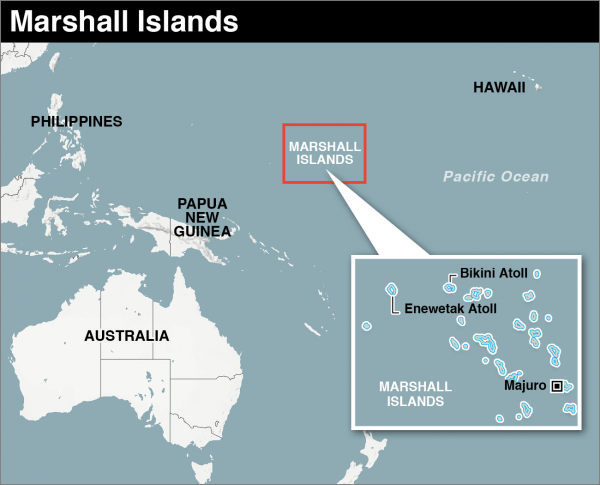
Castle Bravo was just one of 67 nuclear weapons tests conducted by the US in the Marshall Islands between 1946 and 1958. Forty years after the tests, the cervical cancer mortality rate for women of the Marshall Islands was found to be 60 times greater than the rate for women in the US mainland, while breast and lung cancer rates were five and three times greater respectively. High rates of infant mortality have also been found in the Marshall Islands and a legacy of birth defects and infertility has been documented. Many Marshallese were relocated by the US to make way for the testing.
Some were moved to Rongelap Atoll and relocated yet again after the fallout from Castle Bravo left the area uninhabitable.
Rongelap Atoll was resettled in 1957 after the US government declared that the area was safe. However, many of those who returned developed serious health conditions and the entire population was evacuated by Greenpeace in 1984. An attempt to resettle Bikini Atoll was similarly abandoned in 1978 after it became clear that the area was still unsafe for human habitation.
A 2019 peer-reviewed study found levels of the radioactive isotope caesium-137 in fruits taken from some parts of Bikini and Rongelap to be significantly higher than levels recorded at the sites of the world’s worst nuclear accidents, Chernobyl and Fukushima.
Compounding the injustice of nuclear weapons testing, the Republic of the Marshall Islands is now on the frontline of the climate emergency. The government declared a national climate crisis in 2019, citing the nation’s extreme vulnerability to rising sea levels and the “implications for the security, human rights and wellbeing of the Marshallese people”.
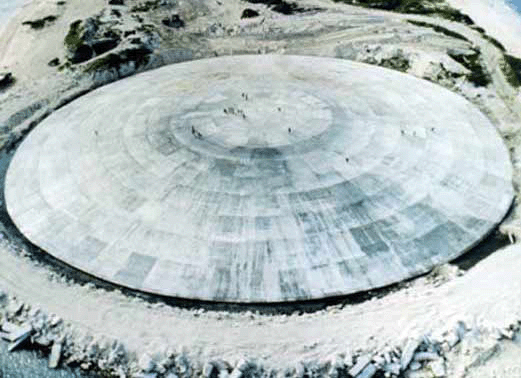 At Runit Island, one of 40 islands in the Enewetak Atoll, rising sea levels are threatening to release radioactive materials into an already contaminated lagoon. In the late 1970s, the US army dumped 90,000 cubic metres of radioactive waste, including plutonium, into a nuclear blast crater and covered it with a concrete cap. Radioactive materials are leaking out of the crater and cracks have appeared on the concrete cap. Encroaching salt water caused by rising sea levels could collapse the structure altogether. The Marshallese government has asked the US for help to prevent an environmental catastrophe but the US maintains that the dome is the Marshall Islands’ responsibility. Hilda Heine, then President of the Republic of the Marshall Islands, said of the dome in 2019: “We don’t want it. We didn’t build it. The garbage inside is not ours. It’s theirs.”
The Runit Island dome offers a stark illustration of the ways in which the injustices of nuclear weapons testing and climate change overlap. Marshall Islanders were left with the toxic legacy of nuclear weapons testing conducted on their territory by another state. The country is now being forced to deal with the effects of a climate crisis that they did not create, including the erosion of the Runit dome.
The nations that contributed most to the crisis are failing to cut their emissions quickly enough to limit further global heating, leaving the Marshallese at the mercy of droughts, cyclones and rising seas. A recent study found that if current rates of greenhouse gas emissions are maintained, the Marshall Islands will be flooded with sea water annually from 2050. The resulting damage to infrastructure and contamination of freshwater supplies will render the islands uninhabitable.
If the US scrapped its nuclear weapons programme, it could give a portion of the billions of dollars that would be saved to the Republic of the Marshall Islands to help the country mitigate and adapt to climate disruption (see section 1.2.1 on international climate finance). The US could also use the freed-up funds to invest in its own Just Transition away from a fossil-fuel powered economy. Read the full report.
Protecting nature is vital to escape ‘era of pandemics’ – report
 Halting destruction of wild places could slow frequency of deadly outbreaks, say scientists, https://www.theguardian.com/environment/2020/oct/29/protecting-nature-vital-pandemics-report-outbreaks-wild Damian Carrington Environment editor @dpcarrington
The world is in an “era of pandemics” and unless the destruction of the natural world is halted they will emerge more often, spread more rapidly, kill more people and affect the global economy with more devastating impact than ever before, according to a report from some of the world’s leading scientists.
The emergence of diseases such as Covid-19, bird flu and HIV from animals was entirely driven by the razing of wild places for farming and the trade in wild species, which brought people into contact with the dangerous microbes, the experts said.
“The risk of pandemics is increasing rapidly, with more than five new diseases emerging in people every year, any one of which has the potential to become pandemic,” the report says.
It estimates there are more than 500,000 unknown viruses in mammals and birds that could infect humans.
The current approach to disease outbreaks is trying to contain them and develop treatments or vaccines, which the scientists say is a “slow and uncertain path”. Instead the root causes must be tackled, including stopping the demolition of forests to produce meat, palm oil, metals and other commodities for richer countries.
The costs of such a transformative change would be “trivial”, the experts found, compared with the trillions of dollars of damage caused by the coronavirus pandemic alone. Their proposed solutions include a global surveillance network, taxing damaging meat production and ending taxpayer subsidies that ravage the natural world.
“There is no great mystery about the cause of the Covid-19 pandemic, or of any modern pandemic,” said Peter Daszak, the chair of the group convened by the Intergovernmental Science-Policy Platform on Biodiversity and Ecosystem Services, (Ipbes) to produce the report. “The same human activities that drive climate change and biodiversity loss also drive pandemic risk through their impacts on our environment.”
“We’re seeing pandemics every 20-30 years,” said Daszak, who is also the president of EcoHealth Alliance, and they were getting more frequent and damaging. “We can escape the era of pandemics, but this requires a much greater focus on prevention, in addition to reaction.”
Since the coronavirus pandemic began, the UN, World Health Organization and others have warned that the world must tackle the cause of these outbreaks and not just the health and economic symptoms. In June, leading experts called the pandemic an “SOS signal for the human enterprise”, but little government action has been taken.
The report was produced by 22 experts in fields including zoology, public health, economics and law, and representing every continent. It cites more than 600 studies, a third of which were published since 2019. “It’s really state of the art in terms of its scientific basis,” said Anne Larigauderie, the executive secretary of Ipbes.
The report says the rise in emerging diseases is driven by “the recent exponential rise in consumption and trade, driven by demand in developed countries and emerging economies, as well as by [rising population] pressure”.
Daszak added: “Clearly, in the face of Covid-19, with more than one million human deaths, and huge economic impacts, [the current] reactive approach is inadequate. There is enough science that shows a way forward and would involve transformative change that rethinks our relationship with nature.”
The scientists call for a high-level intergovernmental council on pandemic prevention to provide decision-makers with the best evidence, predict high-risk areas and coordinate the design of a global disease surveillance system.
High-risk species, such as bats, rodents, primates and water birds should be removed from the $100bn a year legal wildlife trade, they said, and there must be a crackdown on the illegal wildlife trade.
They also said emerging disease risk must be factored into decisions on large developments and called for meat production to be taxed. “Meat consumption is rising so dramatically, and it’s so clearly associated with pandemics,” Daszak said.
“Many of these policies may seem costly and difficult to execute,” the report says. “However, economic analysis suggests their costs [of about $50bn a year] will be trivial in comparison to the trillions of dollars of impact due to Covid-19, let alone the rising tide of future diseases.”
Daszak said: “For each of the policies there are pilot studies that show they work – they just need to be scaled up and taken seriously. This is classic public health – an ounce of prevention is worth a pound of cure.”
The report was widely welcomed by other experts. Guy Poppy, an ecology professor at Southampton University, said the report’s comprehensive analysis of solutions was valuable. “The link between planetary health and human health was already becoming increasingly recognised, but Covid-19 has brought it to the front of everyone’s minds,” he said.
Prof John Spicer, a marine zoologist at the University of Plymouth, said: “The Covid-19 crisis is not just another crisis alongside the biodiversity crisis and the climate change crisis. Make no mistake, this is one big crisis – the greatest that humans have ever faced.”
But he said that by offering solutions the report “is a document of hope, not despair … the question is not can we [act], but will we?”
Time to rethink Australian government’s flawed plan on nuclear waste dumping
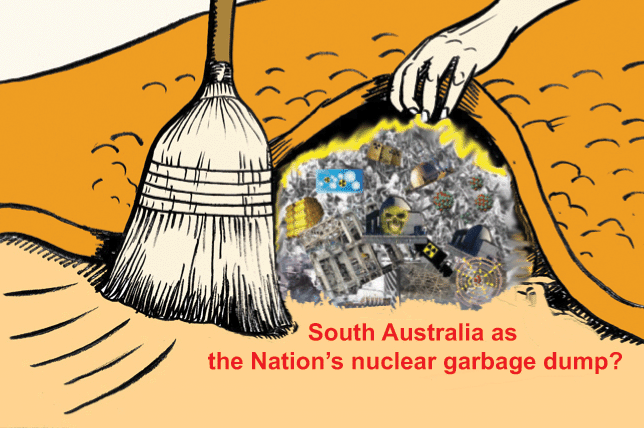 Kazzi Jai, No nuclear waste dump anywhere is South Australia, 30 Oct 20,
How the marketing of American weapons determines U.S. foreign policy on China

Key Pentagon Official Turned China Policy Over to Arms Industry & Taiwan Supporters
October 28, 2020, The triumph of corporate and foreign interests over one of the most consequential decisions regarding China is likely to bedevil U.S. foreign policy for years to come, writes Gareth Porter. https://consortiumnews.com/2020/10/28/key-pentagon-official-turned-china-policy-over-to-arms-industry-taiwan-supporters/ By Gareth Porter
The Grayzone
When the United States finalized a set of seven arms sales packages to Taiwan in August, including 66 upgraded F-16 fighter planes and longer-range air-to-ground missiles that could hit sensitive targets on mainland China, it shifted U.S. policy sharply toward a much more aggressive stance on the geo-strategic island at the heart of military tensions between the United States and China.
Branded “Fortress Taiwan” by the Pentagon, the ambitious arms deal was engineered by Randall Schriver, a veteran pro-Taiwan activist and anti-China hardliner whose think tank had been financed by America’s biggest arms contractors and by the Taiwan government itself.
Since assuming the post of assistant secretary of defense for Asian and Pacific security affairs in early 2018, Schriver has focused primarily on granting his major arms company patrons the vaunted arms deals they had sought for years.
The arms sales Schriver has overseen represent the most dangerous U.S. escalation against China in years. The weapons systems will give Taiwan the capability to strike Chinese military and civilian targets far inland, thus emboldening those determined to push for independence from China.
Although no U.S. administration has committed to defending Taiwan since Washington normalized relations with China, the Pentagon is developing the weapons systems and military strategy it would need for a full-scale war. If a conflict breaks out, Taiwan is likely to be at its center.
Returning Favors
Schriver is a longtime advocate of massive, highly provocative arms sales to Taiwan who has advanced the demand that the territory be treated more like a sovereign, independent state. His lobbying has been propelled by financial support from major arms contractors and Taiwan through two institutional bases: a consulting business and a “think tank” that also led the charge for arms sales to U.S. allies in East Asia.
The first of these outfits was a consulting firm called Armitage International, which Schriver founded in 2005 with Richard Armitage, a senior Pentagon and State Department official in the Reagan and George W. Bush administrations.
Schriver had served as Armitage’s chief of staff in the State Department and then as deputy sssistant secretary of state for East Asian and Pacific affairs. (Armitage, a lifelong Republican, recently released a video endorsement of Joseph Biden for president).
As a partner in Armitage International, Schriver was paid consulting fees by two major arms contractors — Boeing and Raytheon — both of which hoped to obtain arms sales to Taiwan and other East Asian allies to compensate for declining profits from Pentagon contracts.
Schriver started a second national-security venture in 2008 as president and CEO of a new lobbying front called The Project 2049 Institute, where Armitage served as chairman of the board. The name of the new institution referred to the date by which some anti-China hawks believed China intended to achieve global domination.
From its inception, The Project 2049 Institute focused primarily on U.S. military cooperation with Northeast Asian allies — and Taiwan in particular — with an emphasis on selling them more and better U.S. arms.
Schriver, known as the Taiwan government’s main ally in Washington, became the key interlocutor for major U.S. arms makers looking to cash in potential markets in Taiwan. He was able to solicit financial support for the institute from Lockheed Martin, General Atomics, BAE and Raytheon, according to Project 2049’s internet site, which provides no figures on the amounts given by each prior to 2017.
Equally important, however, is The Project 2049 Institute’s heavy dependence on grants from the government of Taiwan. The most recent annual report of the institute shows that more than a third of its funding in 2017 came either directly from the Taiwan government or a quasi-official organization representing its national security institutions.
Project 2049 received a total of $280,000 from the Taiwan Ministry of Defense and Taiwan’s unofficial diplomatic office in Washington (TECRO) as well as $60,000 from the “Prospect Foundation,” whose officers are all former top national-security officials of Taiwan. In 2017, another $252,000 in support for Schriver’s institute came from the State Department, at a time when it was taking an especially aggressive public anti-China line.
By creating a non-profit “think tank,” Schriver and Armitage had found a way to skirt rules aimed at minimizing conflicts of interest in the executive branch.
The Executive Order 13770 issued by President Donald Trump in early 2017 that was supposed to tighten restrictions on conflicts of interest barred Schriver from participation for a period of two years “in any particular matter that is directly and substantially related to my former employer or former clients….”
However, the financial support for Project 2049 from Boeing, Lockheed-Martin, General Atomics, Northrop Grumman and Raytheon, and from Taiwanese official and quasi-official bodies were considered as outside that prohibition, because they were not technically “clients.”
Big Wins for Supporters
Brought into the Pentagon at the beginning 2018 to push China policy toward a more confrontational stance, Schriver spent 2018 and the first half of 2019 moving proposals for several major arms sales to Taiwan — including the new F-16s and the air-to-ground missiles capable of hitting sensitive targets in China — through inter-agency consultations.
He secured White House approval for the arms packages and Congress was informally notified in August 2019, however, Congress was not notified of the decision until August 2020. That was because Trump was engaged in serious trade negotiations with China and wanted to avoid unnecessary provocation to Beijing.
Lockheed Martin was the biggest corporate winner in the huge and expensive suite of arms sales to Taiwan. It reaped the largest single package of the series: a 10-year, $8 billion deal for which it was the “principal contractor” to provide 66 of its own F-16 fighters to Taiwan, along with the accompanying engines, radars and other electronic warfare equipment.
The seven major arms sales packages included big wins for other corporate supporters as well: Boeing’s AGM-84E Standoff Land Attack Missile (SLAM), which could be fired by the F-16s and hit sensitive military and even economic targets in China’s Nanjing region, and sea-surveillance drones from General Atomics.
In February 2020, shortly after Schriver left the Pentagon, the Taiwanese President Tsai Ing-wen received the lobbyist in her office in Taipei and publicly thanked him for having “facilitated the sale of F-16V fighter jets to Taiwan and attached great importance to the role and status of Taiwan in the Indo-Pacific region.” It was an extraordinary expression of a foreign government’s gratitude for a U.S. official’s service to its interests.
Having delivered the goods for the big military contractors and the Taiwan government, Schriver returned to The Project 2049 Institute, replacing Armitage as chairman of the board.
Neocon Vision
The arms sales to Taiwan represented a signal victory for those who still hoping to reverse the official U.S. acceptance the People’s Republic of China as the legitimate government of all of China.
Ever since the 1982 U.S.-China Joint Communique, in which the United States vowed that it had “no intention of interfering in China’s internal affairs or pursuing a policy of “two China’s” or “one China, one Taiwan,” anti-China hardliners who opposed that concession have insisted on making the 1979 Taiwan Relations Act, which called for the United States to sell Taiwan such arms “as may be necessary to enable Taiwan to maintain a sufficient self-defense capability” as keystone of U.S. Taiwan policy.
The neoconservative Project for a New American Century (PNAC) led by William Kristol and Robert Kagan wanted to go even further; it pushed for the United States to restore its early Cold War commitment to defend Taiwan from any Chinese military assault.
Thus a 1999 PNAC statement called on the United States to “declare unambiguously that it will come to Taiwan’s defense in the event of an attack or a blockade against Taiwan, including against the offshore islands of Matsu and Kinmen.”
After leaving the World Bank in 2008 amidst a scandal involving his girlfriend, Paul Wolfowitz – the author of that 1999 statement on East Asia – turned his attention to protecting Taiwan.
Despite the absence of any business interest he was known to have in Taiwan, Wolfowitz was chairman of the board of the U.S.-Taiwan Business Council from 2008 to 2018. The Project 2049 Institute was a key member of the council, along with all the major arms companies hoping to make sales to Taiwan.
During the first days of Wolfowitz’s chairmanship, the U.S.-China Business Council published a lengthy study warning of a deteriorating air power balance between China and Taiwan. The study was obviously written under the auspices of one or more of the major arms companies who were members, but it was attributed only to “the Council’s membership” and to “several outside experts” whom it did not name.
The study criticized both the George W. Bush and Obama administrations for refusing to provide the latest F-16 models to Taiwan, warning that U.S. forces would be forced to defend the island directly if the jets were not immediately supplied. It also called for providing Taiwan with land-attack cruise missiles capable of hitting some of the most sensitive military and civilian targets in the Nanjing province that lay opposite Taiwan.
The delicacy of the political-diplomatic situation regarding Taiwan’s status, and the reality of China’s ability to reunify the country if it chooses to do so has deterred every administration since George H.W. Bush sold 150 F-16 fighter jets to Taiwan. That was, until Shriver’s provocative “Fortress Taiwan” sale went through.
The triumph of corporate and foreign interests in determining one of the most consequential U.S. decisions regarding China is likely to bedevil U.S. policy for years to come. At a moment when the Pentagon is pushing a rearmament program based mainly on preparation for war with China, an influential former official backed by arms industry and Taiwanese money has helped set the stage for a potentially catastrophic confrontation.
Gareth Porter is an independent investigative journalist who has covered national security policy since 2005 and was the recipient of Gellhorn Prize for Journalism in 2012. His most recent book is The CIA Insider’s Guide to the Iran Crisis, co-authored with John Kiriakou, just published in February.
This article is from The Grayzone
A Joe Biden victory could push Scott Morrison – and the world – on climate change
 A Joe Biden victory could push Scott Morrison – and the world – on climate change, Guardian Katharine Murphy 30 Oct 20, International action on emissions reduction will get a huge shot in the arm if the US election goes to the Democratic leader.
I’m a deeply superstitious person, so I can barely bring myself to utter the words “if Joe Biden wins the American presidency next week”, but for the purposes of where we are going this weekend, I need to utter those words, because that’s our starting point for unpacking a few things.
If Biden wins, obviously that’s the end of Trumpism, which would be a boon on so many fronts. So, so many fronts. The compendium of boon would span many volumes, and we haven’t got all weekend, so let’s just hone in on one critical issue that impacts Australia, and that’s climate change.
If we take the former vice-president at his word (and if you want a recent interview that dives right in, have a look here), a Biden victory would be a massive shot in the arm for international action on emissions reduction.
If we take the former vice-president at his word (and if you want a recent interview that dives right in, have a look here), a Biden victory would be a massive shot in the arm for international action on emissions reduction……………
Without wanting to ruin anyone’s weekend, we have to track back to America to find our final cause for pessimism – and that it, of course, the re-election of Donald Trump next Wednesday Australian time.
If Trump returns to the White House, the prognosis is simple. The planet loses. https://www.theguardian.com/australia-news/2020/oct/31/a-joe-biden-victory-could-push-scott-morrison-and-the-world-on-climate-change
Urgency to protect nature, or up to 850,000 animal viruses could be caught by humans
|
UN report says up to 850,000 animal viruses could be caught by humans, unless we protect nature, The Conversation Katie Woolaston, Lawyer, Queensland University of Technology, Judith Lorraine Fisher, Adjunct Professor University of Western Australia, Institute of Agriculture
October 30, 2020 Human damage to biodiversity is leading us into a pandemic era. The virus that causes COVID-19, for example, is linked to similar viruses in bats, which may have been passed to humans via pangolins or another species.Environmental destruction such as land clearing, deforestation, climate change, intense agriculture and the wildlife trade is putting humans into closer contact with wildlife. Animals carry microbes that can be transferred to people during these encounters. A major report released today says up to 850,000 undiscovered viruses which could be transferred to humans are thought to exist in mammal and avian hosts. The report, by The United Nations’ Intergovernmental Science-Policy Platform on Biodiversity and Ecosystem Services (IPBES), says to avoid future pandemics, humans must urgently transform our relationship with the environment. Humans costs are mountingThe report is the result of a week-long virtual workshop in July this year, attended by leading experts. It says a review of scientific evidence shows: …pandemics are becoming more frequent, driven by a continued rise in the underlying emerging disease events that spark them. Without preventative strategies, pandemics will emerge more often, spread more rapidly, kill more people, and affect the global economy with more devastating impact than ever before.
The report says, on average, five new diseases are transferred from animals to humans every year – all with pandemic potential. In the past century, these have included:
The report says an estimated 1.7 million currently undiscovered viruses are thought to exist in mammal and avian hosts. Of these, 540,000-850,000 could infect humans.
But rather than prioritising the prevention of pandemic outbreaks, governments around the world primarily focus on responding – through early detection, containment and hope for rapid development of vaccines and medicines…..
Finally, Australia is one of few countries without a national centre for disease control and pandemics. But there are good reasons for hope. It’s within Australia’s means to build an organisation focused on a OneHealth approach. Australia is one of the most biologically diverse countries on the planet and Australians are willing to protect it. Further, many investors believe proper environmental policy will aid Australia’s economic recovery. Finally, we have countless passionate experts and traditional owners willing to do the hard work around policy design and implementation. As this new report demonstrates, we know the origins of pandemics, and this gives us the power to prevent them…… https://theconversation.com/un-report-says-up-to-850-000-animal-viruses-could-be-caught-by-humans-unless-we-protect-nature-148911
|
|
The new Nuclear Weapons Ban Treaty supports existing agreements, and in no way conflicts with them
 This will take hard work, creativity and patience as well as political will, but it is a legitimate and universally-pursued goal ever since nuclear weapons, as well as other weapons of mass destruction, came into being. The objective of prohibiting them was already present in the very first resolution of the General Assembly, unanimously adopted in 1946.
|
Soon Nuclear Weapons Will Be Prohibited, Viewpoint by Sergio Duarte The writer is President of Pugwash. Former UN High Representative for Disarmament Affairs. NEW YORK (IDN) 28 Oct 20, – The 50th instrument of ratification of the Treaty on the Prohibition of Nuclear Weapons (TPNW) was deposited on October 24 – coinciding with the 75th anniversary of the United Nations Charter. In accordance with its Article 15, the Treaty will enter automatically into force 90 days after that date. When in force, the TPNW will become part of the corpus of positive international law as the first multilateral agreement that comprehensively prohibits nuclear weapons and also addresses the humanitarian consequences of nuclear weapon use and testing, including assistance to victims. Besides, it is the first treaty that explicitly forbids its members from hosting nuclear weapons belonging to other states.Efforts to develop an effective multilateral instrument to directly outlaw nuclear weapons spans several decades. Continue reading |
Awkward questions for NuScale on Small Nuclear Reactors (SMRs)
|
NuScale Faces Questions on Nuclear Reactor Safety and Financing Its First Project The first small modular reactor to receive federal approval must still grapple with design changes and safety concerns if it’s to be built by 2030. GreentechMedia JEFF ST. JOHN OCTOBER 27, 2020 NuScale Power wants to build the first small modular nuclear reactor complex in the U.S. by decade’s end and has pointed to recent federal safety approvals and a cost-sharing arrangement with its first prospective public utility customers as advancing that goal.
But its reactor design faces significant safety questions that were not resolved by a Nuclear Energy Commission (NRC) review completed in August. Those include potential problems with the system that automatically shuts down its reactors in case of emergency, casting doubt on key safety claims from the Portland, Oregon-based company, critics say. The nature of NRC’s review will leave the resolution of these key safety issues to be completed later this decade. This could prove problematic for NuScale’s first project, the 12-reactor Carbon Free Power Project (CFPP) in Idaho Falls, Idaho. Over the past two years, the project has seen expected costs double from $3 billion to $6.1 billion and its completion date moved from 2026 to 2030, putting pressure on parent company Fluor Corp. to keep further cost increases in check and secure financial backers for the project. NuScale won’t complete key safety reviews for its reactor design until later this decade. These design changes and safety reviews will be the responsibility of the Utah Associated Municipal Power Systems (UAMPS), the first customer for 213 megawatts of the 720 MW the CFPP will produce, under a combined construction and operating license process. This could open up the CFPP to technical and legal challenges after significant investments in the project have already been made, critics warn. UAMPS, a division of the Utah state government serving wholesale electric services to communities across the Intermountain West, has seen three cities vote to depart the 33-city consortium planning to agree to buy power from the CFPP in the past few months and is facing an October 31 deadline to commit to its role in the project. And while the Department of Energy has issued a $1.36 billion, 10-year cost-share pledge to UAMPS, that funding will require future congressional appropriations in order to become reality. ….. Other U.S.-based SMR developers include Bill Gates-backed TerraPower and X-Energy, which have recently received financial support from DOE with the goal of building their first working units in the next seven years. Others include Hyperion Power Generation and Terrestrial Energy. …… Safety questions on emergency shutdownOne of the most pressing unresolved safety issues deals with NuScale’s system to prevent overheating or meltdown during emergencies, according to the Advisory Committee on Reactor Safeguards (ACRS), which reviews reactor designs for the NRC. NuScale’s reactor must submerge its fuel in water carrying boron, an element that absorbs neutrons and slows the fission chain reactions that generate heat and radioactivity. That water can be boiled away during emergencies, meaning that redundant safety systems are required that are capable of replacing it. NuScale has said its system can reintroduce boronated water into the reactor without pumps that might lose power during an emergency, by venting steam into a surrounding containment vessel and condensing it back into water to inject into the core. But a March ACRS review noted that boron could be left behind as water turns into steam, yielding condensed water without enough boron to slow the chain reactions that could lead to overheating or core meltdown. NuScale submitted design modifications to add boron to that reintroduced water supply. But in an April meeting, ACRS member Jose March-Leuba noted that the new design requires a series of 10 valves to operate without fail to solve the problem it’s geared to address, which he characterized as “10 single failure points.” The ACRS told the NRC in a June letter that it “cannot reach a final conclusion on the safety of the NuScale design until the issue of the potential for a reactivity insertion accident” — a sudden increase in fission that cannot be halted — “is resolved to our satisfaction.” ……… Edwin Lyman, director of nuclear power safety at the Union of Concerned Scientists, said that the ACRS finding casts doubt on “one of the major selling points for this reactor, which is that it can passively shut down without any operator actions.” NuScale has relied on its passive safety claims to argue that it should be exempt from other nuclear reactor safety requirements, such as maintaining emergency evacuation and planning zones within a 10-mile radius of the site and employing a security force to prevent sabotage attempts. Integrating these safety requirements into its projects may push NuScale’s power costs beyond the $55 per megawatt-hour it has targeted, he said. “Nuclear safety is not just design. It’s the whole set of measures,” Lyman said. Uncertain path to approval, unclear financing futureNuScale’s recent safety approval from the NRC is not as comprehensive a stamp of federal approval as the company had planned to obtain by now. In March testimony before the U.S. House of Representatives, NuScale CEO John Hopkins said that parent company Fluor Corp. and investors have spent about $500 million to prepare a “design certification application,” which was submitted in 2016 and expected to be complete by September. But NuScale’s recent approval from the NRC is not for a design certification application, Lyman said. Rather, it’s a “standard design approval,” which comes with less stringent rules for NRC review and allows future design changes. But it opens up NuScale’s design to future legal challenges that a design certification approval would not, he said. NuScale also plans to increase the size of its reactor units from 50 MW to 60 MW units, which will require a separate design approval review, Lyman said. Meanwhile, NuScale’s original design certification, “when it’s approved, may never actually be used.” …… these uncertainties have complicated the picture for UAMPS, which has pushed back its deadline for finalizing its licensing agreement with NuScale from September until October 31. UAMPS could be facing more than $100 million in commitments under its yet-to-be-finalized agreement. ….
Broader challenges for small modular reactorsIn a September report, M.V. Ramana, a professor of disarmament and human security at the University of British Columbia, highlighted other risks facing NuScale. Those include further delays in licensing and certification, as well as the potential that design changes and increased safety requirements will raise the cost of power from NuScale’s reactors, which is already higher than the prices being set by new wind and solar energy today. Adding batteries or other forms of energy storage to renewables may prove a less costly solution to providing reliable zero-carbon electricity than NuScale can, he wrote. Ramana also questioned the financial stability of NuScale’s parent company, engineering and construction giant Fluor, which has seen its share price drop about 80 percent over the past two years amid mounting financial losses and federal investigations into its accounting practices. Fluor has invested $643 million into NuScale alongside $314 million in DOE funding, Hopkins told Congress in March. But it will need to bring more financial backers on board in the decade to come. As for the DOE cost-share agreement, Lyman said it’s dependent on future congressional budget approvals that may not emerge. “The bottom line is, without a large subsidy, it would not be economical for them to buy this power.” ………https://www.greentechmedia.com/articles/read/nuscale-faces-questions-over-nuclear-reactor-safety-path-to-financing-first-project |
|
Banks are funding the depradation of the natural world. Time they stopped
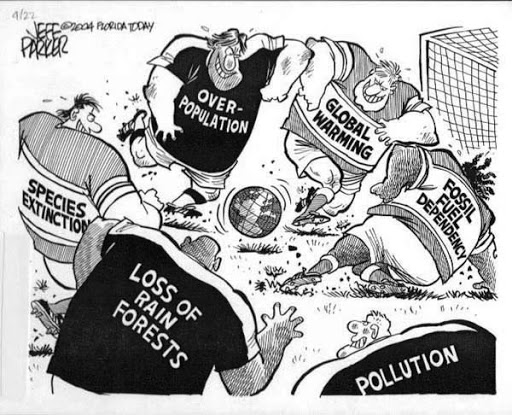
The world’s banks must start to value nature and stop paying for its destruction, Guardian, Robert Watson 28 Oct 20, As a new report spells out how financial institutions contribute to biodiversity loss, the clamour is growing for a new approach.
- Banks lent $2.6tn linked to ecosystem and wildlife destruction in 2019 – report
- The scientific community has long been unequivocal about biodiversity destruction. Last month, the UN reported that the world had failed to meet fully any of the 2020 Aichi bioiversity targets that countries agreed with fanfare in 2010, even as it found that biodiversity is declining at an unprecedented rate, and the pressures driving this decline are intensifying.
This week’s Bankrolling Extinction report finds that financial institutions provide the capital that is funding over-exploitation of our lands and seas, putting biodiversity in freefall. Last year, the world’s 50 biggest banks provided $2.6tn (£1.9tn) in loans and other credit to sectors with a high impact on biodiversity, such as forestry and agriculture. Bank by bank, the report authors found a cavalier ignorance of – or indifference to – the implications, with the vast majority unaware of their impact on biodiversity.
In short, this report is a frightening statement of the status quo.
- Fortunately, signs are emerging that some governments are – slowly – taking aim at financial backers of the destruction of the natural world. They must now push more forcefully. In the wake of Covid-19, treasury cupboards may be bare, but with new policies and limited recovery funds, they can steer trillions of dollars of private capital towards a nature-positive response to coronavirus, to spur growth, prosperity and resilience without returning to business as usual over-consumption and climate and biodiversity risk.
- Voices from economics and finance are starting to add impetus and rationale for such momentum. One of the world’s foremost business groups, the World Economic Forum (WEF), has recognised the economic importance of nature. In its annual Global Risks Report, published earlier this year, WEF found that for the first time environmental risks dominated perceived business threats. Biodiversity loss was considered among the five most impactful and most likely risks in the next decade, with concerns ranging from the potential collapse of food and health systems to the disruption of entire supply chains. ……………. https://www.theguardian.com/environment/commentisfree/2020/oct/28/the-worlds-banks-must-start-to-value-nature-and-stop-paying-for-its-destruction-aoe
1 This month

of the week – Australians for War Powers Reform (AWPR)
To see nuclear-related stories in greater depth and intensity
 Antinuclear