Ionising radiation risk in smoke from re-ignited fires in Chernobyl area

The main risk from the fires comes from inhaling, via the smoke, small radioactive particles thrown years ago from the open core of the Chernobyl reactor
Chernobyl Wildfires Reignite, Stirring Up Radiation
https://www.msn.com/en-us/news/world/chernobyl-wildfires-reignite-stirring-up-radiation/ar-BB12ueLl?ocid=st2 Maria Varenikova, 13 Apr 20, VINNYTSIA, Ukraine — Firefighters have struggled to control wildfires burning through radioactive forest in the abandoned territory around the Chernobyl nuclear plant, where radiation levels are considerably lower than they were immediately after the 1986 accident but still pose risks.
Radiation readings near the wildfires, where smoke is swirling about, have been elevated, with the wind blowing toward rural areas of Russia and Belarus for most of the past week. The wind shifted Friday toward Kyiv, the Ukrainian capital, but authorities say the radiation level is still normal in the city, whose population is about three million.
But Saturday’s strong winds could spread the fires to the remnants of the nuclear plant and the equipment that was used to clean up the disaster, said Kateryna Pavlova, the acting head of the agency that oversees the area, in a telephone interview. “At the moment, we cannot say the fire is contained,” Ms. Pavlova said.
After the 1986 Chernobyl disaster, authorities created an area around the plant known as the Zone of Alienation, a rough circle with a nearly 18-mile radius, fenced off with barbed wire. Access to the zone is limited to workers who manage the site and tourists who take guided excursions.
Over time, radiation has settled into the soil, where its half-life ticks away mostly harmlessly. But the roots of moss, trees and other vegetation have absorbed some radiation, bringing it to the surface and spreading radioactive particles in smoke when it burns.
Already in lockdown because of the coronavirus, Ukraine is now also contending with fires in the post-apocalyptic landscape of the Chernobyl zone.
Wildfires break out there often but the blazes burning through dry grass and pine forests this spring, after a warm and dry winter, are far larger than the typical brush fires in the Chernobyl zone.
The Exclusion Zone Management Agency, the government office that manages the site, said the fires have burned through more than 8,600 acres over the past week. By Saturday, about 400 firefighters, 100 fire engines and several helicopters had been deployed to the exclusion zone.
According to the state center of radiation and nuclear safety, contaminated smoke is expected to reach Kyiv this weekend. However, the radiation level in the air, once smoke has disbursed far from the fires, is considered safe. It is expected to be about a hundredth of the level deemed an emergency.
The Exclusion Zone Management Agency is trying to protect critical infrastructure in the Chernobyl zone, such as the plant itself and the so-called “graves,” or parking lots of abandoned, highly contaminated trucks and tracked vehicles that were left from the original disaster, officials said.
“We have been working all night digging firebreaks around the plant to protect it from fire,” Ms. Pavlova said.
The cause has not been determined. One possibility is that a fire started intentionally by farmers to clear stubble from nearby fields had spread into the zone.
The Zone of Alienation is an eerie landscape of abandoned villages, equipment “graves,” empty fields and dense pine and birch forests, set aside in perpetuity as an experiment in mitigating nuclear disaster. The idea was to limit, through isolation, the lethality of radiation.
The danger is minimal today. Scientists say the average radiation level in the zone is about a quarter as harmful to human health as it was in the immediate aftermath of the explosion and fire.
Radioactive elements degrade at predictable intervals, called half-lives, that can vary enormously. The average particle half-life at Chernobyl is about 30 years.
The main risk from the fires comes from inhaling, via the smoke, small radioactive particles thrown years ago from the open core of the Chernobyl reactor, said Olena Miskun, an air pollution expert with Ecodiya, an environmental advocacy group.
“Wind can raise hot particles in the air together with the ash and blow it toward populated areas,” Ms. Miskun says. Also, radioactive particles can land on gardens or fields and later be consumed in food.
“We are lucky to have quarantine measures in place now,” she said. “People stay at home, walk less and wear masks,” anyway, because of the coronavirus threat. Andrew E. Kramer contributed reporting from Moscow.
The COVID Pandemic has thrown America’s atomic reactor industry into lethal chaos


Terrified Atomic Workers Warn That the COVID-19 Pandemic May Threaten Nuclear Reactor Disaster https://www.commondreams.org/views/2020/04/10/terrified-atomic-workers-warn-covid-19-pandemic-may-threaten-nuclear-reactor
Nuclear safety cannot be shortchanged—especially in the midst of an outbreak like what the nation is now experiencing, by Harvey Wasserman 10 Apr 20,
Nationwide, with falling demand and soaring prices for nuke-generated electricity, the pandemic casts a dark shadow over reactor operations and whether frightened neighbors will allow them to be refueled and repaired.
America’s 96 remaining atomic reactors are run by a coveted pool of skilled technicians who manage the control rooms, conduct repairs, load/unload nuclear fuel. Because few young students have been entering the field, the corps of about 100,000 licensed technicians has been—like the reactors themselves—rapidly aging while declining in numbers. Work has stopped at the last two US reactors under construction (at Vogtle, Georgia) due to the pandemic’s impact, which includes a shrinking supply of healthy workers.
Every reactor control room requires five operators at all times. But the physical space is limited there and in plant hot spots that need frequent, often demanding repairs. Social distancing is virtually impossible. Long shifts in confined spaces undermine operator safety and performance.
Of critical importance: every 18-24 months each reactor must shut for refueling and repairs. Itinerant crews of 1000 to 1500 technicians travel to 58 sites in 29 states, usually staying 30-60 days. They often board with local families, or in RVs, hotels, or Air B&Bs.
Some 54 reactors have been scheduled for refuel/repairs in 2020. But there is no official, organized program to test the workers for the Coronavirus as they move around the country.
As the pandemic thins the workforce, older operators are being called out of retirement. The Trump-run Nuclear Regulatory Commission recently certified 16-hour work days, 86-hour work weeks, and up to 14 consecutive days with 12-hour shifts.
Long-time nuclear engineer Arnie Gundersen warns of fatigued operators falling asleep on the job. He recalls at least one exhausted worker falling into the highly radioactive pool surrounding the high-level fuel rods. Operator fatigue also helped cause the 1979 melt-down that destroyed Pennsylvania’s Three Mile Island Unit Two.
The industry is now using the coronavirus pandemic to rush through a wide range of deregulation demands. Among them is a move to allow radioactive waste to be dumped into municipal landfills.
The NRC may also certify skipping vital repairs, escalating the likelihood of major breakdowns and melt-downs. Nearly all US reactors were designed and built in the pre-digital age, more than 30 years ago. Most are in advanced decay. Atomic expert David Lochbaum, formerly with the NRC, warns that failure risks from longer work hours and deferred repairs could be extremely significant, and could vary from reactor to reactor depending on their age and condition.
The industry has also been required to maintain credible public health response plans should those reactors blow. But pandemic-stricken U.S. hospitals now have zero spare capacity, multiplying the possible human fallout from an increasingly likely disaster.
Industry-wide the pandemic has brought working conditions to the brink of collapse. At Pennsylvania’s Limerick Generating Station, workers say they are “terrified” that the plant has become a “breeding ground…a complete cesspool” for the coronavirus. “I’m in a constant state of paranoia,” one technician told Carl Hessler, Jr., of MontcoCourtNews.
Others say social distancing is non-existent, with “no less than 100 people in the training room” and “people literally sitting on top of each other…sitting at every computer elbow to elbow.” Shift change rooms, Hessler was told, can be “standing room only.” At least two Limerick workers are confirmed to have carried the virus. COVID rates in the county are soaring.
Gundersen, a nuclear engineer, warns that limited control room floorspace and cramped conditions for maintenance can make social distancing impossible. “Some component repairs can involve five workers working right next to each other,” he says.
Because reactor-driven electricity is not vital amidst this pandemic downturn, the demand for atomic workers to “stay home” is certain to escalate. “I am concerned with Exelon & Limerick Nuclear Generating Station’s handling of the scheduled refueling—which has required bringing in workers from across the country during this pandemic,” says US Rep. Madeleine Dean in a statement likely to be repeated at reactor sites around the country.
“The potential increase of COVID-19 cases from 1,400 new workers not observing social distancing is staggering,” says epidemiologist Joseph Mangano of the Radiation and Health Project. “The Limerick plant should be shut until the COVID-19 pandemic is over.”
Indian Point Unit One, north of New York City, will shut permanently on April 28. Iowa’s Duane Arnold will close in December.
But Ground Zero may be Pacific Gas & Electric’s two 35-year-old reactors at Diablo Canyon. PG&E is bankrupt for the second time in two decades, and recently pleaded guilty to 85 felonies from the fires its faulty wires sent raging through northern California, killing 84 people. In 2010 a faulty PG&E gas line exploded in San Bruno, killing eight people.
Surrounded by earthquake faults, Diablo’s construction prompted more than 10,000 civil disobedience arrests, the most at any US reactor. PG&E now admits its two Diablo nukes will lose more than $1.2 billion this year, more than $3.4 million per day.
Amidst its bitterly contested bankruptcy, PG&E may be taken over by the state. But more than a thousand workers are slated in early October to refuel and repair Unit One, which the NRC says is dangerously embrittled.
Whether local residents concerned about both a nuclear accident and the spread of the coronavirus will let them into the county remains to be seen. So is whether they’ll be still operating by then.
With the future of the nuclear industry at stake—along with the possibility of more reactor mishaps—the whole world will be watching.
UK local authorities call for reducing construction at Hinkley C nuclear site, in view of coronavirus risks

until the Covid-19 public health emergency is under full control. This repeated call comes from the NGOs and NFLA following intensive lobbying of the UK Government, the Office for Nuclear Regulation (ONR) and the Somerset local authorities responsible for the Hinkley Point C site by many of these groups, including the local Stop Hinkley group.
There have been improved efforts as well to enforce social distancing, though it remains to be seen if earlier poor practice in this area on and around the site could lead to increased infection rates in North Somerset and areas where the workforce originate from, such as South Wales and the Bristol area.
Fukushima mothers become radiation scientists, to help future generations

“If the risks of nuclear power had been thoroughly verified by the previous generations, I think the disaster would not have happened,” Kaori Suzuki, 54, an executive of Mothers’ Radiation Lab Fukushima, based in Iwaki, said in a recent interview.
“But since it did occur, what we must do now is record our measurements and changes in the environment so we won’t make the same mistake,” said Suzuki, one of the founding members. “Passing down something that will be useful when major decisions must be made is the only thing we can do.”
The laboratory of 18 staff members, many of them mothers who mostly had no prior experience in measuring radiation, have trained themselves with support from scientists, and they now gauge levels of cesium 134, cesium 137, tritium and strontium 90 with five types of machines.
Samples they have measured include dust in vacuum cleaners, vegetables grown in home gardens, seasonal mushrooms picked in mountains and soil gathered in parks.
They have occasionally detected radiation above safety levels, and reports the lab releases every month on its website have specified which machine is used and other details for each outcome to make their activities as transparent as possible.
Their efforts have made academic contributions as well, with their measuring methods and results published in scientific journals such as Applied Radiation and Isotopes in 2016.
Suzuki said they started the initiative out of desperation to protect their children.
“We had to measure and eat. It was a matter of life and death,” the mother of two said. ….
As time goes by, Tanaka has found that fewer people are discussing radiation effects.
The number of samples brought in by citizens last year was 1,573, up 131 from the year before, but it is showing a decreasing trend overall compared to years before, according to the lab.
“The Olympic Games are coming, and there are fewer media reports on radiation levels than before,” she said.
Officials have dubbed the Tokyo Summer Games the “Reconstruction Olympics,” with the hope of showcasing the country’s recovery from the 2011 catastrophe.
Because of that concept, the starting point of the Japan leg of the torch relay for the Olympics, which were recently put off for a year to the summer of 2021 due to the global coronavirus pandemic, was a soccer training center in Fukushima Prefecture that served as a front-line base in the battle against the nuclear disaster.
Tanaka said logging accurate data and keeping them publicly available are all the more important. “To protect children, having information is essential in deciding what to eat or where to go,” she said, adding that judgments based on correct data will also prevent any discrimination…….
Kimura said she feels that the fears people have toward the new coronavirus are similar to those toward radiation, as they are both invisible.
“Everyone forgets about (radiation) because its effects in 10 or 20 years are uncertain, unlike the new coronavirus that shows pneumonia-like symptoms in a couple of weeks,” she said. “I realized again that people in affected areas like us have been living every day with the same feelings toward the coronavirus pandemic.”
“It’s exhausting,” she said, adding her daughters must have had a hard time as she made them do things differently from their friends, such as wearing masks. “But I felt I was not wrong when my daughter said to me recently, ‘I was being protected by you, mom.’”
In addition to conducting surveys on radiation readings in the environment and food items, the lab in May 2017 opened a clinic with a full-time doctor to provide free medical checkups on internal exposure.
“I think it’s necessary to keep checking children’s health as they grow up, rather than drawing a conclusion saying there won’t be any problem with this level of radiation exposure,” said Misao Fujita, 58, a doctor who is a native of Tochigi Prefecture.
Fujita said the amount of radiation exposure dosage and risks of health damage differ among children even if they live in the same area, depending on such factors as their location and behavior in the days after the nuclear disaster, whether they evacuated and what they eat now.
Those who underwent Fujita’s medical checkups when they were children include a woman who now takes her own child to the clinic, in addition to a number of young decontamination workers.
“The nuclear disaster is something that’s carried on to coming generations. That’s what we have left,” Fujita said. “We must also not forget that about 30,000 people are still unable to return to their hometowns in the prefecture. The disaster isn’t over yet.” https://www.japantimes.co.jp/news/2020/04/10/national/social-issues/fukushima-mothers-record-radiation/#.XpESi_gzbIU
University boffins discuss the eternal problem of nuclear wastes
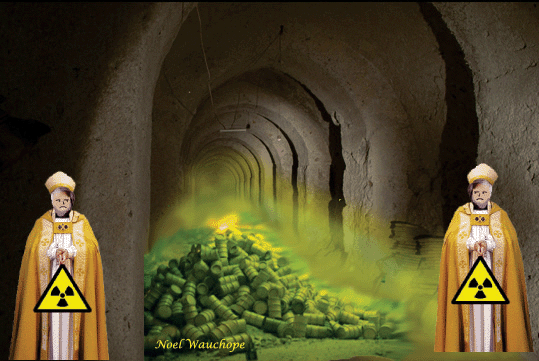
 Amazing – still none of these scientists suggests stopping making this radioactive trash!
Part of the show The Rise of Radioactivity
Chris – So what you’re saying is, if we’ve got say something that looks like glass, because it’s spitting out all these energetic particles of radiation all the time, it’s slowly going to shatter the glass. It’s almost like shaking the glass very, very hard for hundreds of thousands of years; it’s eventually going to fall to pieces and it will no longer be any good at retaining and constraining the radioactive products inside.
Adam – How do we design something in the future so that this stuff stays where it is, and isn’t archeologist bait, and they suddenly dig up a radioactive cube of glass?
COVID-19 First Outbreak — Viral Glass-Like Nodules in Lungs — robertscribbler
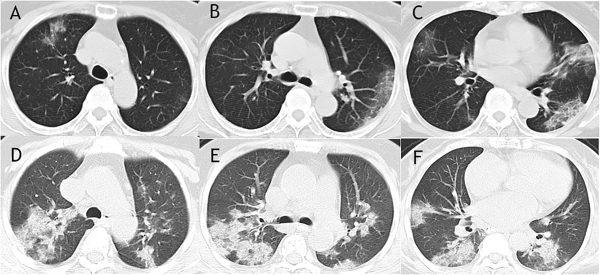
Comparison of lungs of a Wuhan patient who survived COVID-19 — image A-C — to those of a patient who suffered death from the illness — image D-F. Both image sets show the tell-tale ground glass like opacities of COVID-19 in lungs. Image source: Association of Radiologic Findings.
“The chances of a global pandemic are growing and we are all dangerously underprepared.” — World Health Organization in a September 18, 2019 statement mere months before the COVID-19 outbreak. “There’s a glaring hole in President Trump’s budget proposal for 2019, global health researchers say. A U.S. program to help other countries beef up their […]
via COVID-19 First Outbreak — Viral Glass-Like Nodules in Lungs — robertscribbler
Contrary to the schills for the polluting industries – NOW really Is the time to be talking about climate change
This is exactly the time to be talking about climate change, Joel Makower, Chairman & Executive Editor, Green Biz Group, Green Biz, March 31, 2020 – I rarely get exasperated from reading environmental business media, but a quote last week in a Bloomberg article about sustainability and the U.S. economic crisis got me headed in that direction.
 The quote came from Ted Nordhaus, co-founder of the Breakthrough Institute, a research group whose founders, self-described environmentalists, have made a career out of being gadflies — for example, arguing in favor of nuclear power and natural gas, arguing against putting a price on carbon emissions and claiming that there’s no real limit to the earth’s carrying capacity, or that energy efficiency doesn’t work because of something called the “rebound effect.”
I’ll leave it to you to proceed down the wormhole of websites critiquing the group’s analyses. Suffice to say that the Breakthrough Institute has become a darling of the anti-science, pro-pollution conservative right, which frequently cites its work in order to attack environmentalists and climate scientists and their fact-based policy recommendations.
Here’s last week’s quote, in reference to the notion of integrating climate measures into congressional appropriations as we rebuild the economy reeling from the coronavirus pandemic:
…… he says. “It would be tone-deaf to talk about climate change now.”
It’s a specious ploy often used by conservatives. Following a mass shooting, it’s not the right time to talk about gun control. Following a hurricane, it’s not the right time to talk about climate-exacerbated weather events. Following the police shooting of an unarmed black man, it’s not the right time to talk about race relations and inequality.
Of course, later on, when it’s presumably “the right time,” the public’s fickle attention likely has moved on to other front-burner topics.
Just because a problem isn’t in the news doesn’t mean it somehow has been solved. All of the above challenges remain, pandemic or not. And, to varying degrees, they all need to be kept alive, even amid other pressing priorities.
So, Nordhaus is dead wrong: This is exactly the right time to be talking about climate change.
In fact, we need to be talking unapologetically about climate, the clean economy, renewable energy, resilient food systems, sustainable mobility, the circular economy and the Sustainable Development Goals with more vigor than ever…….https://www.greenbiz.com/article/exactly-time-be-talking-about-climate-change
A salute to Captain Brett Crozier as a hero
This story says nothing about this being a nuclear-powered ship. But underlying this whole thing is the fact of the (probably necessary) culture of secrecy that surrounds all things nuclear. This is yet another example of how the nuclear culture means that it is “preferable” for people to die, rather than have the truth get out.

Captain Crozier Is a Hero, Theodore Roosevelt, my great-grandfather, would agree. By Tweed Roosevelt, Mr. Roosevelt is a great-grandson of Theodore Roosevelt and the chairman of the Theodore Roosevelt Institute at Long Island University. April 3, 2020
On Monday, Capt. Brett Crozier, the commander of the aircraft carrier Theodore Roosevelt, sent a letter to the Navy pleading for permission to unload his crew, including scores of sailors sickened with Covid-19, in Guam, where it was docked. The Pentagon had been dragging its feet, and the situation on the ship was growing dire. “We are not at war,” he wrote. “Sailors do not need to die. If we do not act now, we are failing to properly take care of our most trusted asset — our sailors.”
After the letter was leaked to The San Francisco Chronicle, the Navy relented. But on Thursday, it relieved Captain Crozier of his command.
In removing Captain Crozier, the Navy said that his letter was a gross error that could incite panic among his crew. But it’s hard to know what else he could have done — the situation on the Theodore Roosevelt was dire.
Ships at sea, whether Navy carriers or cruise ships, are hotbeds for this disease. Social distancing is nearly impossible: The sailors are practically on top of one another all day, in crowded messes, in cramped sleeping quarters and on group watches.
It is thought that a sailor caught the virus while on shore leave in Vietnam. Once on board, the virus took its now predictable course: First a sailor or two, then dozens, and all of a sudden more than 100 were sick.
Captain Crozier received orders to take the ship to Guam, but he was not given permission to offload most of the sailors. The virus was threatening to overwhelm the small medical crew aboard. There was not much time before sailors might start dying.
The captain felt he had to act immediately if he was to save his sailors. He chose to write a strong letter, which he distributed to a number of people within the Navy, demanding immediate removal from the ship of as many sailors as possible. Perhaps this was not the best approach for his career, but it got results…….
The acting secretary of the Navy, Thomas Modly, summarily fired the captain, not for leaking the letter (for which he said he had no proof), but for showing “extremely poor judgment.” Many disagree, believing that Captain Crozier showed excellent judgment. He left the ship Thursday night to a rousing hero’s sendoff……… https://www.nytimes.com/2020/04/03/opinion/coronavirus-crozier-roosevelt.html
TRUMP BROKE FAITH WITH CAPT. CROZIER AND ALL OUR SAILORS
 TRUMP BROKE FAITH WITH CAPT. CROZIER AND ALL OUR SAILORS, Crooked, KEN HARBAUGH / APR.3.20 More than a dozen members of Congress on Friday condemned the U.S. Navy’s decision to dismiss the Commanding Officer of the USS Theodore Roosevelt. Earlier this week, in a memo leaked to the San Francisco Chronicle, Capt. Brett Crozier accused the Navy of jeopardizing the lives of his crew, by failing to take swift action to mitigate an outbreak of COVID-19 aboard his ship. “Keeping over 4000 young men and women aboard the TR,” he wrote, “is an unnecessary risk and breaks faith with those Sailors entrusted to our care.” ….
President Trump has demonstrated, time and again, that he has no qualms about using the military to advance his personal political ends. He routinely stages uniformed personnel as props for partisan speeches. He treats deployments like political theater, as when he dispatched elements of the 82nd Airborne to the southern border to stoke fears of an immigrant invasion. And he undermines discipline and unit cohesion, pardoning war criminals convicted by military juries.
The rot may start at the top, but it reaches downwards………..
The current crisis aboard the USS Roosevelt lays bare the dangers of blind obeisance to President Trump. When the COVID-19 virus first began to impact the military’s overseas operations, Secretary of Defense Mark Esper warned commanders not to take any action that might surprise or embarrass the White House, or challenge the president’s messaging about the crisis. For those on board the USS Roosevelt, the downstream effect of that order may well be deadly. …….
How do we support these leaders, those with the courage to challenge blatantly political directives that needlessly endanger the lives of those they lead? To begin with, we must acknowledge what civilian control of the military actually means. It is not simply allegiance to the president. It requires Congress to perform effective oversight. Now, more than ever, America needs its elected representatives to hold military leaders accountable.
By law, every service member has a right to alert any member of Congress about issues within the military, provided no classified information is exchanged. For those in uniform who may not trust their own representatives, there are plenty of young veterans now in Congress (including one bad-ass female Navy pilot), who have no patience with the sycophancy infecting the Pentagon. Many of these representatives have come to the defense of Capt. Crozier.
Most importantly, the American public must do its part. We must remain alert whenever our armed forces are misused by the president. The American military belongs to us, not him. In his letter, Capt. Crozier alludes to the absurd politics behind the catastrophe unfolding aboard the USS Roosevelt. “This will require a political solution,” he writes, “but it is the right thing to do. Sailors do not need to die.” ………..
Ken Harbaugh is a former Navy pilot and nominee for the U.S. House of Representatives. Follow him on Twitter at @Team_Harbaugh. https://crooked.com/articles/trump-betrayed-crozier-sailors/
Donald Trump blasts Brett Crozier, Captain of the Theodore Roosevelt nuclear-powered aircraft carrier
 ‘He shouldn’t be talking that way’: Trump rips ousted Navy captain, Politico, 5 Apr 20
The president criticized Capt. Brett Crozier in harsh terms for a letter he wrote to Navy leaders notifying them of a spike in coronavirus cases among sailors on his carrier. Trump said he fully supported Crozier’s removal….
“I thought it was terrible, what he did, to write a letter. I mean, this isn’t a class on literature. This is a captain of a massive ship that’s nuclear powered. And he shouldn’t be talking that way in a letter,” Trump said……
More than 150 Roosevelt crew members have so far tested positive for Covid-19, the Navy said on Saturday. Forty-four percent of the crew has been tested, while more than 1,500 sailors have moved ashore as a smaller crew remains on board to sanitize the ship and keep its essential systems running.
Democrats in the House and Senate are now asking the Pentagon’s top watchdog to investigate whether Modly acted improperly [in firing Captain Crozier]. In a letter to acting Pentagon Inspector General Glenn Fine, 17 Senate Democrats, led by Sens. Richard Blumenthal of Connecticut and Chris Van Hollen of Maryland, requested a probe of both Crozier’s firing and the carrier’s outbreak……. ……https://www.politico.com/news/2020/04/04/trump-brett-crozier-letter-165020
Trump Administration is using a pandemic to hand out gifts to its favorite polluters
 Trump Administration is using a pandemic to hand out gifts to its favorite polluters Trump Administration is using a pandemic to hand out gifts to its favorite polluters
The Trump Administration is using COVID-19 to further its dismantling of environmental protection. Environmental Health News, Peter Dykstra 5 Apr 20, “……… far away from the justifiably wall-to-wall coverage of COVID-19, the Trump Administration is unrepentantly using the pandemic to hand out gifts to its favorite polluters.COVID-19 news deeply saddens me. This other stuff infuriates me. Last week, the American Petroleum Institute (API) sent a 10-page letter to the White House requesting a loosening of regulations, citing the COVID-19-related crash in oil and gas prices and the threat it posed to the fossil fuel industry. The White House, via Environmental Protection Agency Administrator Andrew Wheeler, granted their wish list and then some. Past talk warning against the feds “picking winners and losers” in energy went by the boards. Five days later, Wheeler issued an order that gave API even more than it asked for, calling for a suspension of any enforcement of EPA regulations if any company, fossil fuel-based or not, or local government can prove that COVID-19 was the cause of its failure to comply. Former EPA Administrator Gina McCarthy, now the President and CEO of the Natural Resources Defense Council, called the move “an open license to pollute.” The EPA required companies to disclose their greenhouse gas emissions. No more. Because coronavirus. Wheeler also took the heat off entities forced by court-sanctioned consent decrees to fix pollution problems. Because coronavirus. EPA cut frackers a break on wastewater discharges. Because coronavirus………. https://www.ehn.org/trump-epa-pollution-coronavirus-2645628019.html |
|
Wildfires threaten Chernobyl radioactive area
|
U
kraine battles forest fires near Chernobyl https://abcnews.go.com/Health/wireStory/forest-fire-chernobyl-boosts-radiation-level-69983859
Ukrainian says firefighters are laboring to put out two forest blazes in the area around the Chernobyl nuclear power station that was evacuated because of radioactive contamination after the 1986 explosion at the plant By
The Associated Press
6 April 2020 MINSK, Belarus — Ukrainian firefighters labored into Sunday night trying to put out two forest blazes in the area around the Chernobyl nuclear power station, which was evacuated because of radioactive contamination after the 1986 explosion at the plant.
Ukraine’s emergencies service said one of the fires, covering about five hectares (12 acres), had been localized. It said the other fire was about 20 hectares (50 acres). Earlier Sunday, the head of the state ecological inspection service, Yehor Firsov, said the fires had spread to about 100 hectares (250 acres). The discrepancy in sizes could not immediately be resolved. Firsov said radiation levels at the fire were substantially higher than normal. But the emergencies service said radiation levels in the capital of Kyiv, about 100 kilometers (60 miles) south, were within norms. The fires were within the 2,600-square-kilometer (1,000-square-mile) Chernobyl Exclusion Zone established after the 1986 disaster at the plant that sent a cloud of radioactive fallout over much of Europe. The zone is largely unpopulated, although about 200 people have remained despite orders to leave.
|
|

Captain of nuclear-powered aircraft carrier fired for his plea for sailors endangered by Covid 19
The USA government and military/naval big-wigs are very reluctant to allow any information about their nuclear-powered ships to get out. And even when such news does get out, the word “NUCLEAR” is dropped from the media coverage.The Navy Fired the Captain of the Theodore Roosevelt. See How the Crew Responded. The rousing show of support provided another gripping scene to emerge from the coronavirus pandemic: the rank and file cheering a boss they viewed as putting their safety ahead of his career. By Helene Cooper, Thomas Gibbons-Neff and Eric Schmitt
- April 3, 2020 WASHINGTON — It was a send-off for the ages, with hundreds of sailors aboard the aircraft carrier Theodore Roosevelt cheering Capt. Brett E. Crozier, the commander who sacrificed his naval career by writing a letter to his superiors demanding more help as the novel coronavirus spread through the ship.
- The rousing show of support provided the latest gripping scene to emerge from the coronavirus pandemic: the rank and file shouting their admiration for a boss they viewed as putting their safety ahead of his career.
…….. in removing Captain Crozier from command, senior Navy officials said they were protecting the historic practice that complaints and requests have to go up a formal chain of command. They argued that by sending his concerns to 20 or 30 people in a message that eventually leaked to news organizations, Captain Crozier showed he was no longer fit to lead the fast-moving effort to treat the crew and clean the ship.
Don’t let’s forget – Climate Change is an even greater catastrophe than Coronavirus
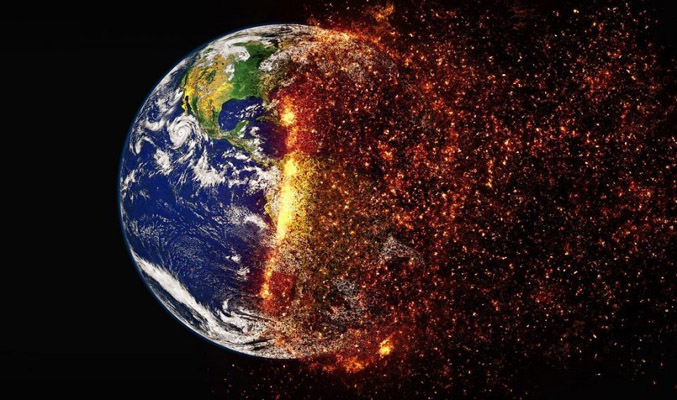
While we fixate on coronavirus, Earth is hurtling towards a catastrophe worse than the dinosaur extinction, The Conversation, Andrew Glikson
Earth and paleo-climate scientist, 3 Apr 20, At several points in the history of our planet, increasing amounts of carbon dioxide in the atmosphere have caused extreme global warming, prompting the majority of species on Earth to die out.
In the past, these events were triggered by a huge volcanic eruption or asteroid impact. Now, Earth is heading for another mass extinction – and human activity is to blame.
I am an Earth and Paleo-climate scientist and have researched the relationships between asteroid impacts, volcanism, climate changes and mass extinctions of species.
My research suggests the current growth rate of carbon dioxide emissions is faster than those which triggered two previous mass extinctions, including the event that wiped out the dinosaurs.
The world’s gaze may be focused on COVID-19 right now. But the risks to nature from human-made global warming – and the imperative to act – remain clear………
My research suggests the current growth rate of carbon dioxide emissions is faster than those which triggered two previous mass extinctions, including the event that wiped out the dinosaurs.
The world’s gaze may be focused on COVID-19 right now. But the risks to nature from human-made global warming – and the imperative to act – remain clear……
The next mass extinction has begun
Current atmospheric concentrations of carbon dioxide are not yet at the levels seen 55 million and 65 million years ago. But the massive influx of carbon dioxide means the climate is changing faster than many plant and animal species can adapt.
A major United Nations report released last year warned around one million animal and plant species were threatened with extinction. Climate change was listed as one of five key drivers.
The report said the distributions of 47% of land-based flightless mammals, and almost 25% of threatened birds, may already have been negatively affected by climate change.
Many researchers fear the climate system is approaching a tipping point – a threshold beyond which rapid and irreversible changes will occur. This will create a cascade of devastating effects.
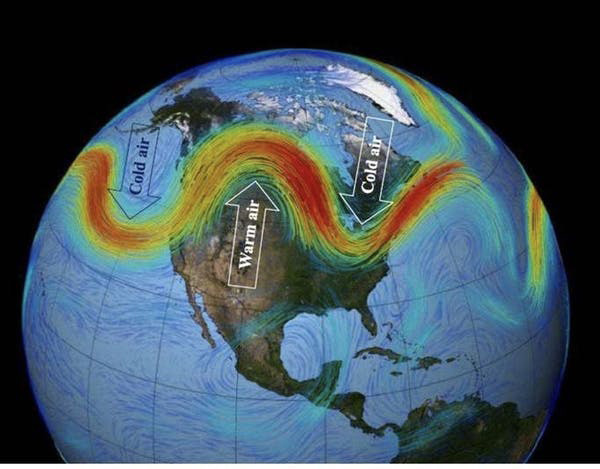
There are already signs tipping points have been reached. For example, rising Arctic temperatures have led to major ice melt, and weakened the Arctic jet stream – a powerful band of westerly winds.
While we fixate on coronavirus, Earth is hurtling towards a catastrophe worse than the dinosaur extinction, The Conversation, Andrew Glikson
Earth and paleo-climate scientist, 3 Apr 20, At several points in the history of our planet, increasing amounts of carbon dioxide in the atmosphere have caused extreme global warming, prompting the majority of species on Earth to die out.
In the past, these events were triggered by a huge volcanic eruption or asteroid impact. Now, Earth is heading for another mass extinction – and human activity is to blame.
I am an Earth and Paleo-climate scientist and have researched the relationships between asteroid impacts, volcanism, climate changes and mass extinctions of species.
My research suggests the current growth rate of carbon dioxide emissions is faster than those which triggered two previous mass extinctions, including the event that wiped out the dinosaurs.
The world’s gaze may be focused on COVID-19 right now. But the risks to nature from human-made global warming – and the imperative to act – remain clear………
My research suggests the current growth rate of carbon dioxide emissions is faster than those which triggered two previous mass extinctions, including the event that wiped out the dinosaurs.
The world’s gaze may be focused on COVID-19 right now. But the risks to nature from human-made global warming – and the imperative to act – remain clear……
The next mass extinction has begun
Current atmospheric concentrations of carbon dioxide are not yet at the levels seen 55 million and 65 million years ago. But the massive influx of carbon dioxide means the climate is changing faster than many plant and animal species can adapt.
A major United Nations report released last year warned around one million animal and plant species were threatened with extinction. Climate change was listed as one of five key drivers.
The report said the distributions of 47% of land-based flightless mammals, and almost 25% of threatened birds, may already have been negatively affected by climate change.
Many researchers fear the climate system is approaching a tipping point – a threshold beyond which rapid and irreversible changes will occur. This will create a cascade of devastating effects.
There are already signs tipping points have been reached. For example, rising Arctic temperatures have led to major ice melt, and weakened the Arctic jet stream – a powerful band of westerly winds.
Doctors warn on coronavirus danger for Julian Assange, imprisoned without conviction, in a coronavirus incubator
 ASSANGE EXTRADITION: Doctors Warning on Assange in a Covid-19 Breeding Ground, Consortium News,April 1, 2020 • In a prison cited for failing to curb infections, Doctors4Assange warn that Julian Assange is at high risk of contracting the deadly coronavirus.According to a report Wednesday in The Daily Maverick, imprisoned WikiLeaks publisher Julian Assange is one of only two prisoners of 797 inmates in Belmarsh Prison who are being held for skipping bail. The majority are violent criminals, including 20 percent for murder and 16 inmates on terrorism offenses. The facility was also repeatedly criticized by prison inspectors for a lapse in preventing infections to inmates. Following Judge Vanessa Baraitser’s decision to deny Assange bail last week, Doctors4 Assange released the following statement:
Doctors4Assange Statement on Assange
Bail Hearing over Coronavirus Risk, March 27, 2020 Doctors4Assange strongly condemns last Wednesday’s decision by UK District Judge Vanessa Baraitser to deny bail to Julian Assange. Despite our prior unequivocal statement[1] that Mr Assange is at increased risk of serious illness and death were he to contract coronavirus, and the evidence of medical experts, Baraitser dismissed the risk, citing UK guidelines for prisons in responding to the global pandemic: “I have no reason not to trust this advice as both evidence-based and reliable and appropriate.”[2]
Notably, however, Baraitser did not address the increased risk to Mr Assange relative to the general UK prison population, let alone prisoners at HMP Belmarsh where Assange is incarcerated. Nor did she address the rapidly emerging medical and legal consensus that vulnerable and low-risk prisoners should be released, immediately.
As the court heard, Mr Assange is at increased risk of contracting and dying from the novel disease coronavirus (COVID-19), a development which has led the World Health Organization to declare a public health emergency of international concern[3] and a global pandemic.[4] The reasons for Mr Assange’s increased risk include his ongoing psychological torture, his history of medical neglect and fragile health, and chronic lung disease.
Edward Fitzgerald, QC, representing Mr Assange, said, “These [medical] experts consider that he is particularly at risk of developing coronavirus and, if he does, that it develops into very severe complications for him… If he does develop critical symptoms it would be very doubtful that Belmarsh would be able to cope with his condition.”[5]
Baraitser’s casual dismissal of Mr Assange’s dire situation in the face of the COVID-19 emergency stood in stark contrast not only to the expert medical evidence, but the proceedings themselves. The hearing took place on the third day of the UK’s coronavirus lock-down. Of the two counsels representing Mr Assange, Edward Fitzgerald QC wore a facemask and Mark Summers QC participated via audiolink. US attorneys joined the proceedings by phone.
Mr Assange himself appeared by videolink, which was terminated after around an hour, rendering him unable to follow the remainder of his own hearing, including the defence summation and the District Judge’s ruling. Mr Assange’s supporters attending in person observed social distancing measures. Overall only 15 people were in attendance, including judge, counsel, and observers……..
Adding their legal voices to these medical and human rights authorities, the day after Mr Assange’s bail hearing, three professors in law and criminology recommended “granting bail to unsentenced prisoners to stop the spread of coronavirus”.[12]
Julian Assange is just such an unsentenced prisoner with significant health vulnerability. He is being held on remand, with no custodial sentence or UK charge in place, let alone conviction.
Doctors4Assange are additionally concerned that keeping Assange in Belmarsh not only increases his risk of contracting coronavirus, it will increase his isolation and his inability to prepare his defence for his upcoming extradition hearing, in violation of his human right to prepare a defence…… https://consortiumnews.com/2020/04/01/assange-extradition-doctors-warning-on-assange-in-a-covid-19-breeding-ground/
1 This month

of the week – Australians for War Powers Reform (AWPR)
To see nuclear-related stories in greater depth and intensity
 Antinuclear