Energy efficiency company moving overseas, as fossil fuel influence too strong in Australia
power consumers were at the mercy of the dominant power generators and retailers such as Origin, Energy Australia and AGL, which had little incentive to innovate or improve energy efficiency.
Australia ‘too difficult’ for high-tech energy company http://www.smh.com.au/environment/australia-too-difficult-for-hightech-energy-company-20121101-28mqy.html#ixzz2B6WBSMBO November 2, 2012 Peter Hannam A HIGH-TECHNOLOGY energy company spun off from the CSIRO two decades ago says entrenched power companies and shifting government policy are forcing it to all but abandon Australia.
Ceramic Fuel Cells, which makes small fuel cells that generate power and heat from gas or renewable energy, has shed 60 of its 110 local staff since July, and expects 98 per cent of sales to come from overseas this year. The company will retain its research and development at Noble Park but will shift the bulk of its operations to Germany. Continue reading
Toro borrows up big from Macquarie Bank for uranium venture
Toro raises $12m in debt , Yahoo News, 2 Nov 12 Toro Energy has raised $12 million through a convertible debt facility with Macquarie Bank.
Toro said the raising would boost its coffers to $19.5 million, which would be used to fund the completion of a definitive feasibility study for the Wiluna uranium project and finalise negotiations with potential joint venture or funding partners.
Managing director Greg Hall welcomed Macquarie Bank as a significant new stakeholder in Toro and said he looked forward to working with the investment bank in moving the Wiluna project through to financing phase… http://au.news.yahoo.com/thewest/business/a/-/wa/15274840/toro-raises-12m-in-debt/
Queensland uranium would have to go to ports in Darwin or Adelaide
Queensland ports unready for uranium, Brisbane Times, November 1, 2012 – Tony Moore Queensland’s burgeoning uranium industry would bring no immediate benefit to the state’s port cities, the Australian Uranium Association has predicted.
Rather, AUA spokesman Simon Clarke said uranium would be exported via ports in Darwin and Adelaide.
That would mirror the situation in Western Australia, where uranium export is banned from local ports. Uranium from WA is instead shipped through Darwin and Adelaide.
 “As matters stand now, it would seem most likely that any uranium mined in Queensland would be transported by road and rail to either Adelaide or Darwin for shipment out of Australia,” Mr Clarke said. Any port exporting radioactive uranium must be capable of carrying class seven hazardous wastes and storing waste in secure premises while waiting for commercial shipping. Continue reading
Australia’s $billions in investment, due to Renewable Energy Target
 Clean energy target drives billions in investment SMH, October 25, 2012 Tom Arup AUSTRALIA’s 20 per cent renewable energy target has helped spark $18.5 billion in new clean energy investment since its inception – and will drive another $8.8 billion to 2030 – an economic analysis commissioned by the industry’s peak body has found.
The modelling to be released today by the Clean Energy Council also says Australia would have failed to meet its greenhouse gas targets under the United Nations Kyoto Protocol without the target in place. Continue reading
Australia: electricity demand is falling, and power companies are lying about this
 Farmer finds facts lost in transmission. The Age October 22, 2012, Michael West Four months ago – on hearing of a proposal to run giant transmission lines through his property – a farmer from the NSW north coast, Bruce Robertson, delved into the claims the power companies had been making about electricity prices. He found they were untrue.
Four days ago, the Productivity Commission corroborated what Robertson had been saying all along. That is, escalating power bills were principally the upshot of over-investment in electricity networks; not the carbon tax, not rising consumption.
”Demand is falling, not rising,” Robertson says. ”This basic premise is factually incorrect.”…… ”It is often said that if you lie long enough and loud enough, then the lies become the accepted truth,” Robertson says.
”And so it is with Grid Australia, in their submission to the Senate inquiry into electricity prices. Many of the statements made to the Senate inquiry are purely and simply fabrications.”…..
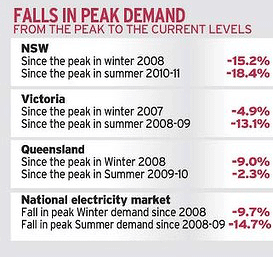 Demand for electricity had been falling since 2008 in Victoria, NSW and Queensland at roughly 1 per cent a year, despite forecast rises of 2.2 per cent a year.
Demand is now 10 per cent below where the industry forecast it would be four years ago. Mild weather, changing consumer behaviour and rising costs have all been factors in this, Robertson says.
In July, as ”gold-plating” started to become a buzzword in Canberra, Robertson launched into numerical detail of how the industry figures had been inflated and distorted…..
Peak demand was falling. Recent figures from the Australian Energy Regulator show the clear change in trend since 2008-09. Peak demand for both summer and winter demands in the national electricity market are on the wane.
In NSW, the largest market in the NEM, peak demand has veritably collapsed. ”The fall in peak in winter since 2008 has been 15 per cent and the fall in the summer peak since 2010-11 has been 18 per cent. This collapse has seen peak demands fall to levels not seen for a decade,” Robertson says.
Despite the hard numbers, we still have a ”he said, she said” debate. ”The only place that peak demand is rising is in the minds of electricity industry executives,” Robertson says……
The essence of the problem of rising power prices is the structure of the industry and its regulation. Continue reading
Grim future for Australia’s uranium industry, falling demand, falling prices
 Adding to the miners’ woes, uranium prices continue to fall, from US$73 a pound in March 2011, to around US$43 currently. That’s lower than the cash cost of production at Paladin’s Kayelekera mine in Malawi, giving the miner a decent sized headache.
Nuclear Fallout Hurts Uranium Miners , 9 News, by Mike King, The Motley Fool, October 19, 2012 The world continues to feel the impact of the Fukushima nuclear disaster. The disaster in Japan in 2011 has left 48 of Japan’s nuclear reactors sitting idle, awaiting government approval to resume operations, with just 2 restarted. In mid-September, the Japanese government approved a new energy plan which included reducing the nation’s reliance on nuclear energy substantially.
Following the Fukushima accident, Germany immediately shut 8 of its reactors, and plans to close its remaining 9 reactors by 2022.
The impact is being felt by uranium miners globally.
Paladin Energy Ltd (ASX: PDN) recently stated that annual demand for uranium has fallen, as the future of nuclear energy was cast into doubt. The world’s largest uranium producer, Canada’s Cameco, has also forecast lower sales and highlighted doubts about the take-up of nuclear power in future. Continue reading
Nuclear spin doctor the keynote speaker at Energy Conference in Melbourne: WHY?

Why is this pro nuke spinner the keynote speaker at All Energy Australia International, the conference for  the Asia Pacific, tomorrow in Melbourne?
Energy alternatives ABC Radio 10 Oct 12, Ticky is joined by Professor Chris Llewellyn Smith, Oxford
University’s Director of Energy and former head of CERN.
“…….TICKY FULLERTON we know you’re a big fan of nuclear playing a big part in our energy future. Has the global industry moved on from Fukushima or is it still in damage control in your view?
 CHRIS LLEWELLYN SMITH: I think it’s in damage control as far as public relations are concerned, but we have to put Fukushima in perspective, as one of a British journalist wrote. You take a crappy old 1960s power station, you hit it with the biggest tsunami and earthquake you can think of – actually bigger than anyone thought of, that’s one of
the problems – make every possible mistake and nobody was killed.
( Christina Macpherson’s note : Just by the way – about that mention of the crappy old 1960s power station, well – in the USA, 23 reactors operate with same flawed GE design that failed in the triple meltdown at the Fukushima plant and released over four times the amount of cesium-137 than was released in the 1986 Chernobyl disaster. )
So we shouldn’t forget that. Nobody’s been killed and probably … maybe there will be one or two radiation deaths. …. we have to treat it with great respect, but all forms of power production are dangerous and nuclear has a very, very good safety record compared to the others.
TICKY FULLERTON: It’s got a big bill behind it though. I see a report just on Europe reactors is a $30 billion repair job?
CHRIS LLEWELLYN SMITH: Yes, I think the weak spot of nuclear at the moment may be that the new generation of nuclear power stations – which were cracked up to be as cheap as coal – they’re coming out way over budget. We don’t know if that’s just because the first ones or the costs will come down….”
Glencore, world’s most notorious compnay, taking over Xstrata ?
 Analyst says Xstrata could lose control of Australian operations http://www.abc.net.au/rural/news/content/201210/s3603009.htm By Virginia Tapp 03/10/2012 A resource analyst says the merger of commodity trading house Glencore with global mining company Xstrata could put the control of its Australian operations at risk.
Matthew Trivett, of Patersons Securities, says the new company, valued at around $70 billion, would become one of the largest and most powerful in the mining industry.
Xstrata backed the merger on Monday, and the deal is now waiting for approval from 75 per cent of shareholders.
Mr Trivett says the new company would review all of its Australian operations, which means some could be held back.
“The real risk for Xstrata shareholders is that Xstrata are widely held as some of the best mining operators globally and it’s the way they can treat each country and each operation by its own particulars, so they’re not overly controlled,” he said.
“It would be a shame if that changed for Xstrata operations.”
Australian company Mantra Resources duped Tanzania out of taxes for its uranium profits
 the transfer of Mantra Resources Limited to ARMZ enables its former shareholders to pocket $1.04 billion without paying capital gains to the Tanzanian government…. Mantra Resources Limited of Australia was supposed to have paid capital gains tax to Tanzania.
Sh320bn loss looming over uranium project , 29 September 2012 By Felix Lazaro, The Citizen Dar es Salaam. Tanzania risks losing about Sh320 billion in mining taxes because of weak legal checks, particularly when it comes to uranium.
Local mining experts said yesterday that the country must go back to the drawing board and put in place a watertight policy and regulations before it allows uranium mining.Earnings from the mineral are believed to have the potential to turn around the lives of thousands of poor Tanzanians.
The chief concern right now, though, is that some subsidiaries of multinational firms licensed to explore uranium in Tanzania are capitalising on a weak legal and institutional framework to transfer ownership to affiliated companies. In the process, there are missed opportunities to collect revenue. Continue reading
Fossil fuel industries losing revenue with the success of the Renewable Energy Target.
 Putting wind up generators BY: GILES PARKINSON The Australian September 28, 2012 BERNIE Fraser built up an enviable record of responsible economic reform as head of Treasury, governor of the Reserve Bank, and as chairman of two prominent superannuation funds. …
He is a shrewd analyst with a special interest in consumer equity. He is not likely to be easily fooled by the subtleties of the campaign against renewables when the Climate Change Authority, which he heads, sits down to its first major task working through the submissions to its review of the Renewable Energy Target.
First, Fraser will want to cut through the numbers, and in doing so may well wonder if there has ever been such a concerted campaign by big business to act in what they describe as the “public interest”, and to lobby so aggressively for a change in key public policy that they say will save householders 14c a day
….. the real number that concerns the incumbents [fossil fuel energy generators] is not the purported saving to consumers, it is the loss of revenue from the fall in wholesale energy prices.
It is not 1c or 14c a day, or $840 over 18 years, it is $2.7bn a year. That is the potential loss of revenue for the incumbent coal and gas-fired generators if the RET continues as a fixed target of 41,000GWh. Continue reading
BHP prolongs the indecision on Olympic Dam uranium mine
BHP Billiton’s request for an indenture extension keeps the Olympic Dam project alive, says Greg Kelton. Adelaide Now 27 Sept 12 GET ready for another four years of “will they or won’t they”. South Australians will have to play the pol-itical guessing game of what will happen to the much-vaunted Olympic Dam mine expansion, albeit on a much smaller scale.
The state has already gone through one major economic disappointment with BHP Billiton shelving the planned $30 billion expansion last month, claiming it was due to world economic conditions.
The proposed expansion had been sold to the public by Government, economic commentators and many in the mining industry as the state’s economic saviour, the major project which would put SA up with the mining giant states of WA and Queensland.
BHP Billiton’s decision to ask for an extension of the indenture which was due to expire at the end of this year, keeps the project, in some form at least, alive….. Both parties now realise the project cannot be seen as the be-all and end-all for the state’s economy. Both have stated the need for more diversification of the state’s economic base. However, whatever they think, both parties will be keen for some form of Olympic Dam expansion to proceed. Their political futures might well depend on it. http://www.adelaidenow.com.au/news/opinion/bhp-billiton-guessing-game-set-to-continue-in-south-australia/story-e6frealc-1226482133887
Australia is slow to cop on to the collapse of the uranium market
Australia’s nuclear/uranium lobby appears to live in a parallel universe. quite distinct from the real one.
Of course, the nuclear lobby world-wide is continuing to desperately hype the future of its now declining industry. And, of course, Australia’s greedy little nuclear entrepreneurs, like John White, Ron Walker and Robert Champion de Crespigny, and their politically minded hangers on , Martin Ferguson, Alexander Downer – all salivate at the thought of Australia becoming the world’s nuke waste dump.
 Still, I expected more self interest from Australia’s uranium lobby, and States politicians. Don’t they notice what is happening to the uranium market?. BHP Billiton and Cameco noticed, and acted to stop wasting shareholders’ money in developing new uranium mines.
But every day in Australia, the media is bombarded with the joy of new uranium mining – joy in Queensland, in NSW – today it’s Broken Hill looking to the golden future. – Christina Macpherson 22 Sept 12
No foreseeable future for new uranium mines
End of last month, the price had fallen to US$49.25 and for most of September, it hovered at the US$48 mark. This is almost 60% below the entry level target as calculated by Bannerman. The impact on the development of new mines, is obvious.
I believe the commodities boom is over, or at least on hold for another five years. In the meantime, no new mines.
Our Anticipated Uranium Projects Will Not Go Ahead, Except One [analysis] Equities.com Daniel Steinmann All Africa Global Media 22 Sept12, Bannerman Resources, the Australian company driving one of four new uranium projects in Namibia, recently said at a mining conference, the price for uranium U308 needs to be between US$75 and US$90 per pound (0.454kg) to drive any new investment in greenfields uranium mines.
Hidden in this seemingly neutral observation and analysis, are many serious consequences for the further development of the uranium sector Continue reading
Tor Energy may face legal action against its Wiluna uranium mine plan
 Uranium plans may spark legal stoush http://www.abc.net.au/news/2012-09-21/uranium-mine-plans-may-spark-legal-stoush/4274134 Sep 21, 2012 The Conservation Council of Western Australia says it will consider legal action to prevent Toro Energy’s proposed Wiluna uranium mine going ahead.
The group says the State Government has not responded adequately to appeals lodged against the project, which is set to become WA’s first uranium mine. The council’s Mia Pepper says the group will pursue a range of avenues to ensure its safety and environmental concerns are addressed. Continue reading
Australia’s big opportunity to export renewable energy expertise to Indonesia
The AusTrade report has identified several areas of opportunities for Australian clean energy companies, including:
- Education – training, research and development for renewable energy development and deployment, particularly in hydropower and solar photovoltaic,…
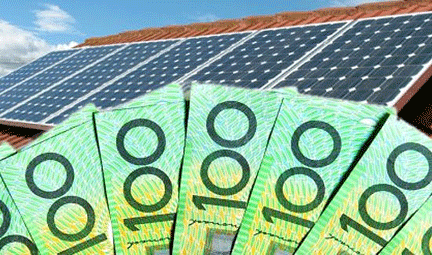 Indonesia: Clean Energy Opportunities for Australian Companies Engineering Source, by Justin McGar, 21 Sept 12 The Australian Trade Commission (ATC) has identified Indonesia as a key target market for home-grown companies involved in clean energy products, expertise and services who want to grow and develop their businesses.
That news comes according to a recent study the ATC carried out with key executives with inside knowledge into the workings of the country and Indonesia’s future renewable energy direction.
Australia already exports $4.5 billion worth of products and services to Indonesia which, with a population of over 234 million, is the fourth most populous nation in the world and one of the world’s highest performing emerging markets.
To ensure sustainable growth in Indonesia, its government has set a target that would see 25 per cent of total energy consumption filled by clean energy sources by 2025. Continue reading
1 This month
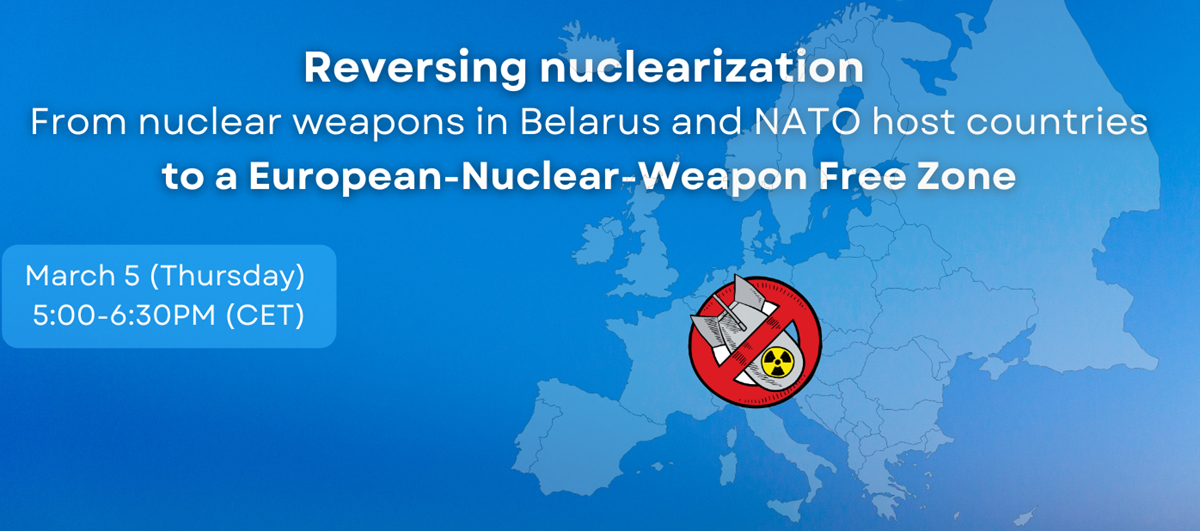
6 March -Online – Reversing nuclearization:
From nuclear weapons in Belarus and NATO host countries to a European-Nuclear-Weapon Free Zone
Mar 6, 2026 03:00 AM in Canberra, Melbourne, Sydney

of the week – Australians for War Powers Reform (AWPR)
To see nuclear-related stories in greater depth and intensity
 Antinuclear