Climate dispute between Scott Morrison and the Greens
Climate dispute breaks out as Scott Morrison visits bushfire-hit areas, SBS 11 Nov , “……war of words has broken out about the link between climate change and the unprecedented bushfire emergency that has hit NSW and Queensland.BY CLAUDIA FARHART Deputy Prime Minister Michael McCormack has lashed out at Greens MP Adam Bandt over “stupid and callous” comments linking the government’s inaction on climate change and bushfires that have claimed three lives in New South Wales.
On Saturday, Mr Bandt tweeted that “words and concern are not enough … the Prime Minister does not have the climate emergency under control”.
Bandt tweeted: I’m deeply saddened by the loss of life. Hearts go out to all affected & to brave firefighters. But words & concern are not enough. The PM does not have the climate emergency under control. Unless we lead a global effort to quit coal & cut pollution, more lives will be lost……
Prime Minister Scott Morrison and NSW Premier Gladys Berijiklian dodged more questions about climate change as they visited fire-hit areas in northern NSW on Sunday.
Mr Morrison was heckled by a climate change protester during a briefing from firefighters.
“Climate change is real, can’t you see,” the protester yelled, before being escorted out of the building. HTTPS://WWW.SBS.COM.AU/NEWS/CLIMATE-DISPUTE-BREAKS-OUT-AS-SCOTT-MORRISON-VISITS-BUSHFIRE-HIT-AREAS
Massive bushfires in New South Wales are NOT “part of a normal cycle” – fire-fighting expert.
This is not normal: what’s different about the NSW mega fires, SMH, By Greg Mullins, November 11, 2019 —I write this piece reluctantly, because there are still possible fire victims unaccounted for; people have lost loved ones; and hundreds of families have lost their homes. My heart goes out to them. I don’t want to detract in any way from the vital safety messages that our fire commissioners and Premier will be making about Tuesday’s fire potential.
In the past I’ve have heard some federal politicians dodge the question of the influence of climate change on extreme weather and fires by saying, “It’s terrible that this matter is being raised while the fires are still burning.” But if not now, then when?
“Unprecedented” is a word that we are hearing a lot: from fire chiefs, politicians, and the weather bureau. I have just returned from California where I spoke to fire chiefs still battling unseasonal fires. The same word, “unprecedented”, came up.
Unprecedented dryness; reductions in long-term rainfall; low humidity; high temperatures; wind velocities; fire danger indices; fire spread and ferocity; instances of pyro-convective fires (fire storms – making their own weather); early starts and late finishes to bushfire seasons. An established long-term trend driven by a warming, drying climate. The numbers don’t lie, and the science is clear.
If anyone tells you, “This is part of a normal cycle” or “We’ve had fires like this before”, smile politely and walk away, because they don’t know what they’re talking about..… https://www.smh.com.au/national/this-is-not-normal-what-s-different-about-the-nsw-mega-fires-20191110-p5395e.html
Scott Morrison wants to shut down moderate climate action group, Market Forces, BECAUSE IT’s TOO EFFECTIVE
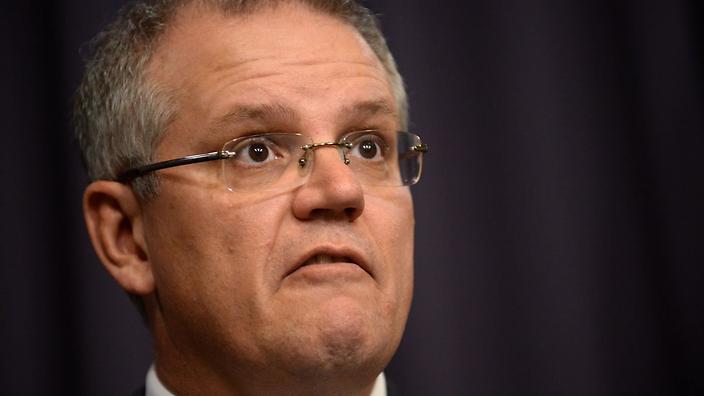 Inside Market Forces, the small climate group Scott Morrison wants to put out of business, From humble beginnings, Market Forces is now in the crosshairs of the Coalition’s war on environmental boycotts, Guardian, Adam Morton Environment editor @adamlmortonMon 11 Nov 2019 When Market Forces, a small climate activist group, was singled out as the target of the government’s push to stop environmental campaigns that advocate boycotts of fossil-fuel companies, its leader was briefly taken aback but not disappointed.
“You know you’re doing something right when the Morrison government tries to bring you down,” Julien Vincent, the group’s executive director and founder, says from its base in Melbourne. “It’s unpleasant, but it’s only happening because we are getting results.”
From Vincent’s perspective, those results include the Commonwealth Bank and insurers QBE, Suncorp and IAG pledging they would soon no longer work with or underwrite developments that use thermal coal, and the group’s part in the campaign that frustrated attempts by Indian company Adani to find investors for its proposed Carmichael coalmine.
In terms of winning the government’s attention, it is likely the results also included a recent profile in the Australian Financial Review, the newspaper of the business community. Under the headline “How activists pushed CBA out of coal in five years”, it talked up Market Forces’s successes and methods, including a deal-making meeting with the bank’s chairwoman, Catherine Livingstone.
Coincidentally or not, the attorney general, Christian Porter, last week nominated Market Forces as a poster child “radical activist group” trying to impose its will on companies through coordinated harassment and threats of boycotts. Porter said it was “simply not OK” that mining and resources businesses were being targeted on ideological grounds by activists that wished them financial harm.
It followed Scott Morrison telling the Queensland Resources Council that activists who campaigned for secondary boycotts against miners and small businesses that work with resources companies potentially posed a “more insidious threat” to jobs and the economy than street protests……
With the details in the wind, Morrison’s push has led to some confusion among Coalition MPs about what is proposed and how it will avoid impinging on freedom of expression, though none spoke publicly. The Business Council of Australia has backed the prime minister; legal academics have warned changes to reduce the influence of environmental campaigns could breach the constitution.
Environmental and civil liberty groups noted the apparent hypocrisy in the government floating a secondary boycott ban given Canavan had urged his constituents to stop doing business with Westpac after it ruled out financing the Adani mine …… https://www.theguardian.com/environment/2019/nov/11/inside-market-forces-the-small-climate-group-scott-morrison-wants-to-put-out-of-business
Australia’s out of control bushfires (all along the region where the nuclear lobby wants to put reactors!)
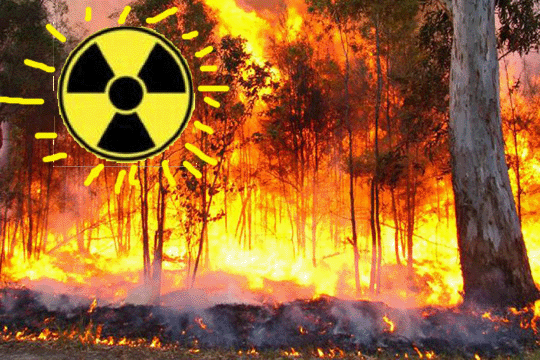 ‘Uncharted territory’: Dozens of out of control bushfires burn across New South Wales and Queensland, https://www.sbs.com.au/news/uncharted-territory-dozens-of-out-of-control-bushfires-burn-across-new-south-wales-and-queensland Hot, windy conditions are wreaking havoc across New South Wales and Queensland.
Australian firefighters warned they were in “uncharted territory” as they struggled to contain dozens of out-of-control bushfires across the east of the country on Friday.
Around a hundred blazes pockmarked the New South Wales and Queensland countryside, around 19 of them dangerous and uncontained.
“We have never seen this many fires concurrently at emergency warning level,” New South Wales Rural Fire Service Commissioner Shane Fitzsimmons told the ABC. “We are in uncharted territory.”The RFS said on Friday afternoon it received multiple reports of people being trapped in their homes at several locations.
Homes have also been destroyed, the RFS added.
A mayor on New South Wales’ mid-north coast said on Friday the bushfires ripping through the region were “horrifying and horrendous beasts”.
MidCoast Council mayor David West said a fire near Forster threatened a council building on Thursday night.
“It was literally a wall of yellow, horrible, beastly, tormenting flames,” the mayor said.
The mayor was particularly concerned about an out-of-control fire burning near Hillville south of Taree.
Strong public demand for climate action, but Australian government determined to punish climate protesters,
 An increasingly outraged public is demanding action in a nation intimately linked to coal mining. The government has responded by threatening a new law to punish protesters. NYT, By Damien Cave and Livia Albeck-Ripka, Nov. 6, 2019 SYDNEY, Australia — One climate activist halted train service by chaining himself to the tracks. Others have glued themselves to busy roads, causing gridlock. And just last week, protesters locked arms to stop people from entering a mining conference before being forcibly dispersed by police officers with pepper spray.
A surge of climate activism is flooding Australia as the country falls behind on its promise to reduce emissions — effectively ignoring the Paris Agreement the Trump administration just abandoned. Prime Minister Scott Morrison has responded with a threat that’s alarmed scientists and free speech advocates, arguing that the government should outlaw “indulgent and selfish” efforts by environmental groups to rattle businesses with rallies and boycotts. “The right to protest does not mean there is an unlimited license to disrupt people’s lives,” Mr. Morrison said, adding, “I am very concerned about this new form of progressivism.”
Australia’s “climate wars,” once confined to election campaigns, are now spilling into the streets with some of the biggest protests the country has ever seen. An increasingly outraged public is demanding action while the conservative national government refuses to budge, relying on the police to squelch dissent……..
Coal-loving politicians
Two years ago, when Mr. Morrison was Australia’s treasurer, he stood up in the House of Representatives with a hunk of black coal in his hand.
“Don’t be afraid. Don’t be scared,” he said. “It won’t hurt you.”
His shiny prop had been shellacked to keep his hands clean, but the point he made then is one he and his governing coalition stand by: Coal is good……Now, Australia is the world’s largest coal exporter. It is also a major exporter of natural gas, making for a resource-driven country that is
“rich, dumb and getting dumber,” according to one recent headline summarizing the findings of a Harvard study that ranked Australia’s economy 93rd in complexity, behind Kazakhstan, Uganda and Senegal. The mingling of mining interests with national interests is perpetuated through a revolving door: lawmakers frequently work for the coal industry after leaving office. And for some, defending coal has come to be equated with defending the country.Even the opposition center-left Labor Party is hooked, pushing for emissions cuts while continuing to support more coal mining……
An increasingly angry public
Poll after poll shows growing concern about climate change among Australians of all ages and political persuasions.In September, a survey by the Australia Institute found that 81 percent of Australians believe climate change will result in more droughts and flooding (up from 78 percent in 2018). Two out of three Australians agreed that the government should plan for an orderly phaseout of coal, while 64 percent said Australia should aim for net-zero emissions by 2050.
And researchers continue to sound the alarm. A paper co-written by an Australian scientist and signed by 11,000 other experts warned on Wednesday of a clear “climate emergency.”……
The so-called climate strike in September, part of a global effort led by children, was the largest mass demonstration in Australian history.
It was quickly followed last month by the Extinction Rebellion protests, and then came last week’s anti-mining protests in Melbourne….. Over 10 days of protests in London, the police arrested more than 1,700 Extinction Rebellion protesters.
Australia aims to go further. A law passed last year allows the military to break up protests. The Labor government in Queensland is fast-tracking a law to add new fines for protesters who use locking devices to prevent their removal……. Reduced coal mining would not hurt the economy as much as people think.
According to the Australia Institute poll from last month, Australians believe coal mining accounts for 12.5 percent of Australia’s economic output and employs 9.3 percent of its work force. “In reality,” the report says, “coal mining employs only 0.4 percent of workers in Australia and is 2.2 percent of Australia’s G.D.P.” Of the roughly 238,000 jobs that mining provides in Australia, only around 50,000 are tied to coal, according to government figures.
“The government relies on ignorance,” Professor Eckersley said. “It’s a very toxic politics.”
Portrayals of extreme activism are also exaggerated. The vast majority of protesters demanding climate action are not radical disrupters. They are more like Jemima Grimmer, 13, who asked adults to “respect our futures” at the Sydney climate strike in September, or Vivian Malo, an Aboriginal woman attending last week’s protest in Melbourne, where she said the experience of being pepper-sprayed felt like chemotherapy “on the outside.” Here in a country rapidly losing its laid-back image, the future of Australia’s climate battles could be seen in her bloodshot eyes as she stood near a line of stone-faced police officers, describing their use of force as “scary.”
“The insatiable drive for resource extraction,” she said. “It’s out of control.” https://www.nytimes.com/2019/11/06/world/australia/australia-climate-protests-coal.html
Is climate change playing a role in Australia’s drought?
 How bad is this drought and is it caused by climate change?
How do we define drought? What causes them? And are they getting worse?, Brisbane Times, By Peter Hannam , NOVEMBER 3, 2019
“………..Is climate change playing a role?
If droughts can be hard to pin down, explaining their connection to climate change adds to the complexity.
The facts are that scientists cannot say definitively that a specific drought is caused by climate change, but they can say definitively that climate change makes the effects of droughts stronger and more damaging.
Andy Pitman, director of the ARC Centre of Excellence for Climate Extremes, recently ignited a brief firestorm over his comment to a business forum that “there is no link between climate change and drought”.
Some media jumped on his views, prompting his centre to issue a belated correction saying he erred by leaving out one word, as in “there is no direct link between climate change and drought”.
The indirect links, though, should be cause enough for concern in a country with Australia’s variable rainfall……..
Climate change is blamed for accelerating the winds that circle around Antarctica, drawing storm tracks further south so some miss the mainland.
By contrast, for some areas in southern Australia, rainfall is increasing during the warmer months. That shift, though, comes as little consolation for farmers now reliant on winter harvests……
While it’s not clear how annual rainfall totals will change in a warming world, future droughts will be hotter when they do arrive, says Ben Henley, a climate researcher at the University of Melbourne.
“We’re really quite concerned in southern Australia,” he says. “Even if we get the same degree of annual rainfall, if that’s falling in the hot time of the year, that’s more likely to be evaporated off.” …..
Is this the new normal?
Cutting-edge research includes work to investigate whether droughts such as the current one are likely to become more prolonged and more frequent…..
One smoking gun is that rainforests are now burning.
“By June 2018, they reported that all types of trees were dying, leaving a desert-like landscape of sand dunes replacing the normally vegetated scene,” the paper says.
As plants dry or die,the risk of major bushfires increases. And, as plants also help moderate the local climate through a process called evapotranspiration, when they die another hand brake on the heat is removed.
Some researchers believe the ambient conditions that led to the Millennium Drought have not yet broken down, says Greg Holland, an emeritus senior scientist at the US National Center for Atmospheric Research and formerly with the bureau.
“It’s quite possible … we never came out of it,” he says, adding a couple of wet years in 2010 and 2011 may have been “a bit of an hiatus in the middle”.
Indeed, while drought is measured against historical averages, it may be time to redefine what we considered as normal. “One smoking gun is that rainforests are now burning,” he says…….https://www.brisbanetimes.com.au/environment/climate-change/how-bad-is-this-drought-and-is-it-caused-by-climate-change-20191024-p533xc.html
Scott Morrison doesn’t like even the “quiet people” speaking up
 Morrison doesn’t like it when the quiet Australians start to speak up, Canberra Times, Ebony Bennett , 2 Nov 19,
In his government’s latest free-speech crackdown, Prime Minister Scott Morrison has vowed to outlaw civil society groups campaigning against Australian businesses that work with companies with dubious environmental, human rights or ethical records.
The bank ruled out lending to Adani, as did other banks – in part because AYCC’s Dollarmite protests were a real risk to their brand (this was before the banking royal commission tanked it) but also because Adani’s coal mine is a dud project that has failed to secure finance from virtually any bank or investor, except for billionaire Gautam Adani himself.
Scott Morrison says this style of campaigning “is a potentially more insidious threat to the Queensland economy and jobs and living standards than a street protest”.
That was in 2014, when former prime minister Tony Abbott proposed a ban on secondary boycotts. Australia’s competition laws already restrict secondary boycotts – but that is mostly targeted at unions, with exemptions for campaigns run by environmental and consumer groups……
Scott Morrison doesn’t like it when quiet Australians break their silence and take aim at dodgy companies or those who choose to provide services to them – especially when they’re in his favoured industries, like the coal industry. While the Coalition government rolls out the red carpet for the coal industry, it can’t pull up the drawbridge fast enough when it comes to renewables.
If the Minerals Council says jump, the federal government (and NSW and Queensland governments) say “how high?” Whereas the Coalition government has done its level best to kill off the renewables industry. Thankfully, in the long term they have been about as effective at killing off renewables as they have been at cutting emissions: hopeless.
The Morrison government regularly boasts about Australia’s record on renewables, but the fact is it is single-handedly destroying the holy trinity of renewable energy policy: the Renewable Energy Target (RET), the Australian Renewable Agency (ARENA) and the Clean Energy Finance Corporation (CEFC).
Collectively, the RET, ARENA and the CEFC are responsible for unleashing $23.4 billion worth of investment in renewable energy over a five-year period (2013-18). But there’s nothing the Coalition loves more than throwing sand in the gears of the success of the renewables industry.
Looking ahead, the RET has been exhausted, ARENA is running out of money and the last bastion of renewable energy investment, the CEFC, is now being bastardised to fund fossil-fuel projects……..
Prime Minister Scott Morrison has gone to great pains to talk up renewables, but the truth is that the PM is quite happy to wreck the renewables revolution. He labels those who protest companies wrecking our environment as “selfish and indulgent”, but the truth is that under Scott Morrison, free speech is reserved only for people with paid jobs, and protests are only to be tolerated at convenient times, in convenient places.
If you don’t like it, shut up – or Scott Morrison will make you shut up.
How good is Australia?
- Ebony Bennett is deputy director at independent think tank the Australia Institute. Twitter: @ebony_bennett. https://www.canberratimes.com.au/story/6470618/morrison-doesnt-like-it-when-the-quiet-australians-start-to-speak-up/?cs=14246
Scott Morrison delivers a speech that sounds very like an attack on democracy
|
Scott Morrison threatens crackdown on protesters who would ‘deny liberty’ https://www.theguardian.com/australia-news/2019/nov/01/scott-morrison-threatens-crackdown-on-secondary-boycotts-of-mining-companies?CMP=share_btn_tw
PM signals action on secondary boycotts of resources companies and says progressives want to tell Australians ‘what you can say, what you can think’ Paul Karp @Paul_Karp Fri 1 Nov 2019 Scott Morrison has branded environmental protesters “anarchists” and threatened a radical crackdown on the right to protest in a speech claiming progressives are seeking to “deny the liberties of Australians”.In a speech to the Queensland Resources Council on Friday, the prime minister said a threat to the future of mining was coming from a “new breed of radical activism” and signalled the government would seek to apply penalties to those targeting businesses who provide services to the resources industry. Civil society groups, including the Human Rights Law Centre and Australian Conservation Foundation, and the Greens immediately attacked the proposal as undemocratic and a bid to stifle a social movement fighting for Australia to take action on climate change. Morrison told Australian corporations to listen to the “quiet shareholders” and not environmental protesters, who he suggested could shift targets from coal companies to all carbon-intensive industries including power generation, gas projects, abattoirs and airlines. In a speech proposing limits on free speech advocating boycotts against polluting companies, Morrison said progressives wanted to tell Australians “what you can say, what you can think and tax you more for the privilege of all of those instructions”. He claimed that “progressivism” – which he labelled a “new-speak type term”, invoking George Orwell – intends “to get in under the radar, but at its heart would deny the liberties of Australians”. “Apocalyptic in tone, it brooks no compromise,” Morrison said. “It’s all or nothing. Alternative views are not permitted.” He pointed to the “worrying development” of environmental groups targeting businesses or firms involved in the mining sector with “secondary boycotts”, such as businesses refusing to provide banking, insurance or consultancy services. “They are targeting businesses of all sizes, including small businesses, like contracting businesses in regional Queensland.” “Let me assure you this is not something my government intends to allow to go unchecked. “Together with the attorney general, we are working to identify mechanisms that can successfully outlaw these indulgent and selfish practices that threaten the livelihoods of fellow Australians.” But Morrison admitted the government “can’t force one Australian company to provide a service to another”. The Greens were quick to reverse the charge of intolerance and level it at Morrison, with acting leader Adam Bandt labelling him “a direct threat to Australian democracy and freedom of speech”. “The prime minister’s commitment to outlaw the peaceful, legal protest of Australian individuals and community groups reads like a move straight from the totalitarian’s playbook,” he said. |
It’s time that the Australian government declared a water emergency
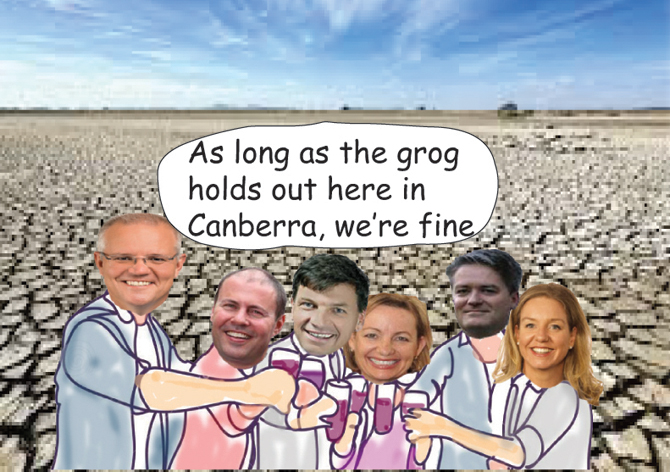
Declaring a water emergency means putting people before profit, mo https://www.michaelwest.com.au/declaring-a-water-emergency-means-putting-people-before-profit/by Quentin Grafton and John Williams — 1 Nov 19, The current drought in Eastern Australia has focused the attention of all Australians on water but effective policy responses are missing in action. Isn’t it time to call it a water emergency? Quentin Grafton and John Williams report.
The dictionary defines an emergency as “a serious, unexpected, and often dangerous situation requiring immediate action”. If there is a climate emergency – and 330,000 Australians have already signed a petition to the Australian Government to declare a climate emergency – then surely there must also be a water emergency here, right now, in Australia. As in any emergency, it requires that we be told the truth and, importantly, act on the truth.
Political leaders, however, prefer the word ‘drought’ because Australia has experienced it in the past and it is ‘solved’ when the rains come. Politicians cannot be blamed for acts of nature. ‘Drought relief’ also gives politicians the opportunity to pretend to fix the problem while showing compassion for those doing it tough.
Income support in the form of a farm household allowance for eligible households with less than $5 million in assets, and that pays more than $30,000 per farming couple per year for up to four years, is, no doubt, very welcome to those who qualify. Unfortunately, it does not solve our water emergency. In this make-believe narrative, all blame accrues to the heavens.
The current drought began in 2017, and came less than 10 years after the Millennium Drought ended. Yet the nation’s elected leaders are surprised by another major drought. Like rabbits on the road facing the full beam of an approaching vehicle, they seem unable to move beyond last century solutions to respond to this water emergency.
Instead, they announce multi-billion dollar commitments of taxpayer money for dams, many of which won’t be completed for years and would never fill until the drought ends. Water extracted from the dams would also be subject to water extraction limits under the Basin Plan.
So why do Australian political leaders support dam building as a solution knowing that dams don’t make it rain or snow? Is it because they are stuck in the past, trapped in myths or delusions, or asleep at the wheel?
If only this were true. Australia could then solve the water emergency by simply ‘briefing’ the Prime Minister, Premiers, and Water Ministers about the 21st Century solutions to the water emergency.
They could be informed of solutions like comprehensive water accounting so that everyone knows who has the water and what it is being used for. Other solutions include water planning that leaves sufficient water in the dams for people to drink by setting enough water aside for the worst droughts, and water recycling and reuse by communities to reduce extraction. Or even managed aquifer recharge to reduce surface water evaporation, and dynamic water pricing that increases the volumetric price paid when dams have less water — the list goes on.
So what is getting in the way of implementing these solutions? Money, power, and influence. Both rent-seeking and regulatory capture, represent the demand for and the supply of water respectively, and are affecting decision-making that benefits particular interests, rather than the broader public interest.
Rent-seeking is when actions are undertaken by people and organisations outside of government to influence decision-making for self-interest, rather than for the sake of improving the decision. Many forms of rent-seeking are legal in Australia, including lobbying — a multi-billion-dollar business.
Rent-seeking allows privileged access to our elected leaders and advisors to those with the means to get it. For example, between 2014 and 2018 the NSW Irrigation Council had more than 25 water-related meetings with New South Wales Ministers, yet many non-industry and non-irrigation entities had only one meeting. All combined, Indigenous, catchment, and environment entities had just 20 per cent of the total number of ministerial meetings given to irrigation and industry entities in the period.
So what does privileged access mean? Decision-making that the NSW Natural Resources Commission has described, in relation the Barwon-Darling River Water Sharing Plan, that has
“…increased allowance for extractive use at lower flow classes that are critical to the environment. These provisions benefit the economic interest of a few upstream users over the ecological and social needs of the many”.
This decision-making contributed to the dire situation in the Murray-Darling Basin and the massive fish kills along the Darling River in January 2019. Sadly, it is just one of many examples of water decision-making not made in the public interest, and described by the South Australian Murray-Darling Basin Royal Commission in January this year as “gross maladministration”.
Billions of dollars in expenditure on irrigation infrastructure, including the construction of private dams, highlighted in the ABC’s Four Corners program in July 2019 Cash Splash, and supported by evidence in peer-reviewed academic research, shows that such subsidies are likely to reduce return flows from irrigators’ fields to groundwater, streams, and rivers.
Yet, the Australian Government has spent some $4 billion on subsidising irrigation infrastructure in the Murray-Darling Basin without any cost-benefit analysis or even comprehensive measures of the impacts on stream flows.
To add to our water woes, more billions of dollars have been allocated to further subsidise water infrastructure, including dams, and announced as a ‘solution’ to the water emergency. Such spending is highly unlikely to generate a net public benefit.
As Rome burns, people in towns like Wilcannia on the lower Darling get their drinking water from 10 litre cartons delivered from the back of trucks. In a desperate cry of help, and defiance, one Barkandji Elder from Wilcannia, Kerry ‘Sissy’ King, has a message for politicians to
“Come out here and see how you feel about living [with no water]. They’ve taken it from the nation that lives off the river system. Come and sit in the gutter with us.”
Australia must stop blaming the river and recognise that capture by special interests has led to this water emergency. It is not simply an act of God; it has arisen from a lack of planning and decision-making that benefit the few at the expense of the many. Neither drought relief nor dams are solutions. Instead, Australia needs its political leaders to lead, to put the national interest first, and to make decisions that place people before profit.
Climate change is bringing more extreme weather events to Sydney and Melbourne
 Hail, cyclones and fire: Extreme weather risks on the rise, SMH, By Peter Hannam, November 1, 2019, Sydney and Melbourne will most likely be exposed to more intense hailstorms, tropical cyclones will track further south and bushfire risks will increase in most of Australia as the climate warms, new research shows.The modelling based on a 3 degree temperature rise is contained in a severe weather report to be released on Friday by IAG, the country’s largest general insurer, and the US National Centre for Atmospheric Research.
“Climate change is not just about the future,” the report states. “There is already solid evidence that there have been measurable changes to weather and climate extremes with the [1 degree of] warming to date.”
Changing insurance claims data are among the indications that major damaging hail events for Perth, Adelaide and Melbourne have already been increasing in the past decade……
Insurance and other financial firms have been reassessing their risks to climate change, prodded in part by international groups such as the Task Force on Climate-related Financial Disclosures.
IAG managing director Peter Harmer said there was “an urgent need for Australia to prepare for and adapt to climate change”.
“[It] is critical there is a co-ordinated national approach from governments, industries and businesses to build more resilient communities and reduce the impact of disasters.”
Executive manager of natural perils at IAG Mark Leplastrier said that, apart from reducing greenhouse gas emissions, communities had two main tools to shape the future risk profile: the tightening of land planning and improving building codes.
“There’s a huge opportunity to adapt,” he said……..https://www.smh.com.au/environment/climate-change/hail-cyclones-and-fire-extreme-weather-risks-on-the-rise-20191031-p536aw.html
December 2-13 UN Climate Summit in Madrid (Scott Morrison is supposed to attend?)
|
UN climate talks to take place in Madrid https://www.heraldsun.com.au/news/breaking-news/un-climate-talks-to-take-place-in-madrid/news-story/49630507277946754406e42af4685d2c, Australian Associated Press
November 2, 2019, The United Nations has confirmed Spain will host the organisation’s annual climate conference after Chile pulled out following weeks of violent unrest.
UN Climate Change head Patricia Espinosa said in a statement that the conference, known as COP25, will now take place in Madrid on the same dates – December 2-13. Weeks of violent unrest led Chile to cancel the COP25 and its hosting of the APEC trade talks that Prime Minister Scott Morrison was due to attend in mid-November. The high-profile climate summit is slated to finalise negotiations around rules for the Paris emissions reduction targets – to which Australia has agreed. Countries were going to be encouraged to improve their pollution reduction goals. |
|
Coal from six biggest miners in Australia produces more emissions than entire economy
 Big emitting companies should be held responsible for the burning of their coal overseas, report says Adam Morton Environment editor, Guardian, @adamlmorton, Fri 1 Nov 2019 Coalmining in Australia by the nation’s six biggest coal producers ultimately results in more greenhouse gas emissions each year than the entire domestic economy.In the latest report to estimate the role fossil fuel businesses play in driving the climate crisis, researchers from the University of New South Wales calculated the total emissions from the coal and gas produced by Australia’s top carbon companies, from extraction to the resources being burned for energy, mostly overseas.
They found the top six coal producers – BHP Billiton, Glencore, Yancoal, Peabody, Anglo American and Whitehaven – were in 2018 linked to 551m tonnes of carbon dioxide released into the atmosphere. Total emissions from all activity within Australia were 534m tonnes.
When the list was expanded to include Australia’s 10 biggest carbon producers, adding Chevron, Woodside, ExxonMobil and Santos, the combined emissions from their products was found to be 670m tonnes a year, equivalent to that from about 75% of global air traffic.
The UNSW report follows the Guardian’s global series The Polluters, which revealed 20 fossil fuel companies including BHP could be directly linked to more than one-third of all greenhouse gas emissions in the modern era. In Australia, it found a wave of planned developments by major fossil fuel companies across the north would significantly increase the amount of coal and gas the country planned to sell into Asia and could push the Paris climate agreement goals further beyond reach.
The report’s lead author, Jeremy Moss from the UNSW Practical Justice Initiative and a professor of political philosophy, said there was a clear case that big emitting companies, which the report calls “carbon majors”, should be held responsible for the consequences of their products……. https://www.theguardian.com/australia-news/2019/nov/01/six-biggest-coalminers-in-australia-produce-more-emissions-than-entire-economy
Hotter and drier- Australia’s weather records set to be broken this year

Australia’s annual heat records may melt after hot and dry October, The Age, Peter Hannam, November 1, 2019 Almost the whole Australian mainland is likely to have a warmer and drier than normal final two months of the year, boosting the odds that 2019 will be the country’s hottest on record.
Nationally, maximum temperatures last month were almost 3 degrees above the 1961-90 average used by the Bureau of Meteorology, making it the second hottest October in records going back to 1910.
For the first 10 months of the year, average daytime temperatures are running at 1.88 degrees warmer than the 1961-90 yardstick, placing 2019 well on track to smash Australia’s record anomaly of 1.59 degrees set in 2013, the bureau said. Mean readings are in line with the record, also set in 2013.
October capped another dismal month for rainfall, with an average of 8.3 millimetres – or about a third of the monthly average. That made it Australia’s equal-fifth driest October.
Most of the nation shared the relatively hot and dry conditions. In NSW, for instance, it was the state’s fourth-hottest October – with daytime readings 3.3 degrees warmer than average – and its fifth driest with just a quarter of the usual rain.
So far in 2019, NSW is running at the hottest for any similar period for both mean and maximum temperatures, while having among the five driest January-October periods on record……
The bureau’s latest three-monthly outlook offers little relief for most of the country.
“November and December rainfall is likely to be below average across most of the country,” it said, adding that the relatively dry conditions were likely to extend through to the end of summer for most of eastern Australia.
For November to January, the odds are running at more than 80 per cent for warmer than average days for the Australian mainland…….https://www.theage.com.au/environment/weather/australia-s-annual-heat-records-may-melt-after-hot-and-dry-october-20191101-p536mw.html
Scott Morrison’s threats against climate activists – getting a bit sinister
As he rails against activism, Scott Morrison is turning a bit sinister, a bit threatening, The government the PM leads finds activism inconvenient, but it is the same government that has sparked the activism. Guardian, Katharine Murphy Political editor, @murpharoo, Fri 1 Nov 2019 It takes some chutzpah to stand up with a straight face and deliver a speech foreshadowing a government crackdown on protest activity while in the same breath declaring that a new insidious form of progressivism is intent on denying the liberties of Australians.
But Scott Morrison has never lacked confidence.
In the florid prime ministerial tale unfurled on Friday at the Queensland Resources Council (and boy folks, it was a doozy), progressivism wanted to tell you what job you can have, what you can say, what you can think “and tax you more for the privilege of all of those instructions that are directed to you” – which made progressivism kind of busy, and a whole lot more organised and efficient than progressivism generally is.
We could, on Friday, have been treated to a measured prime ministerial reflection on the problems associated with cancellation culture. The Labor frontbencher Clare O’Neil showed this week that conversation can be attempted without everyone losing their minds. We could have had some words to bring the country together.
But after a brief touchdown in the goat’s cheese circle, which was somehow intrinsically hostile to mining in ways that weren’t really unpacked (and perhaps that might have been risky, given Morrison was addressing a business lunch where goat’s cheese might, accidentally, have featured) – we arrived, unexpectedly it must be said, at the sneering apocalypse.
Morrison warned that a new breed of #RadicalActivism™ was the on the march, “apocalyptic in tone, brooks no compromise, all or nothing, alternative views not permitted – a dogma that pits cities against regional Australia, one that cannot resist sneering at wealth creating and job creating industries, and the livelihoods particularly of regional Australians including here in Queensland”.
Apart from this being overhyped, high-velocity bollocks, it pays to remember right at this juncture that the actual purpose of Morrison’s address on Friday was to foreshadow a government crackdown against forms of activism and protests that the Coalition and the mining industry finds inconvenient.
So, just in case this unclear, let me spell it out: we were being treated to the spectacle of a prime minister teeing off against intolerance while in the same breath foreshadowing his own bout of government sanctioned intolerance – the type where police might be involved, and people might be bundled away in vans.
Yes, that happened. I saw it, because the prime minister’s speech was broadcast outside Queensland. It wasn’t always clear that Morrison knew the audience looking on at lunchtime on Friday might be broader than the residents of central Queensland, but it was broadcast nationally. To the south-east corner of the sunshine state, and Sydney, and Melbourne.
Unremarked in this stirring presentation was the fact that climate-related activism is building right at the moment, both at the community level, from the schoolkids to the grandmas, and also at the shareholder level, in large part because the Coalition has invited it.
The government who finds this activism inconvenient is the same government who has sparked the activism, given its purpose and salience and traction, because of its own woeful record on climate change……..
Apart from the perversity of a government railing against a set of conditions it has, itself, created, there was also the curiosity about carbon risk, which was presented implicitly by Morrison as a fiction of progressivism, #RadicalActivism™ and the sneering apocalypse. ………
This strange diktat will be news to the regulators – the Reserve Bank of Australia, the Australian Prudential Regulation Authority, the Australian Securities and Investments Commission – who are calmly out in the marketplace warning stakeholders on a regular basis to get their houses in order or risk being stranded in the inevitable transition, who present carbon risk as what it is: a threat to financial stability in Australia.
They’ll be astonished to learn they are the unwitting tools of the deep progressive state, co-opted by the noisy Australians. Shh, no one tell them.
This strange diktat will be news to the regulators – the Reserve Bank of Australia, the Australian Prudential Regulation Authority, the Australian Securities and Investments Commission – who are calmly out in the marketplace warning stakeholders on a regular basis to get their houses in order or risk being stranded in the inevitable transition, who present carbon risk as what it is: a threat to financial stability in Australia.
They’ll be astonished to learn they are the unwitting tools of the deep progressive state, co-opted by the noisy Australians. Shh, no one tell them. https://www.theguardian.com/australia-news/2019/nov/01/as-he-rails-against-activism-morrison-turns-a-bit-sinister-a-little-bit-threatening
Climate change – iconic Macquarie Marshes on fire
Key points:
- Since Saturday, around 3,000 hectares of Ramsar-protected national park has burnt out
- An ecologist fears the fire may destroy the unique ecosystem of Macquarie Marshes — home to numerous waterbirds
- Fires have swept through before, but the soil is dryer than usual with a flood over the next year needed for reed roots to survive
The Ramsar-protected wetland regularly supports more than 20,000 waterbirds, and more than 500,000 birds when there are large floods.
But the blaze, which started on Saturday, has so far burnt 3,000 hectares of national park and early estimates suggest 90 per cent of the wetland’s main reed bed has been razed.
Director of the Centre for Ecosystem Science at the University of New South Wales Professor Richard Kingsford feared the fire could destroy the unique ecosystem.
“Reeds are very deep-rooted plants, but they can only come back if there’s water in the system,” Professor Kingsford said…….
Drought, fire threaten endangered species
Professor Kingsford has been studying waterbirds in the Macquarie Marshes for almost 30 years.
Right now it was the driest he had ever seen it.
“It’s almost impossible to find any water in the northern part of the Macquarie Marshes,” he said.
“Water birds there are extremely low in numbers and when we were out there in September there were a lot of dead and dying animals around……
Massive flood needed
Floodplain landholder Dugald Bucknell runs his grazing operation alongside the national park.
He described the latest wildfire as the “devastating” consequence of drought and failed water policy.
In August, the Berejiklian Government intervened to divert water from the Macquarie River at Warren to drought-hit towns such as Cobar and Nyngan.
“There’s no water in Burrendong Dam upstream of the marshes, there’s virtually no water in stock and domestic dams downstream of it, and somehow we’re meant to wish for a miracle to re-wet our marshlands,” Mr Bucknell said.
He said the wetlands were not getting the water they needed to survive and feared more fires would follow.
“It’s becoming unsustainable. Its frightening,” Mr Bucknell said.
“We’re killing off our kids’ and grandkids’ future to take a bit more water elsewhere in the system.”
https://www.abc.net.au/news/2019-10-28/macquarie-marshes-on-fire-90pc-reed-bed-razed/11645914
1 This month


Help Aunty Sue Protect Her Land and Sacred Sites From Destructive Rocket Testing.
.

Australians deserve the truth
about
AUKUS – https://aukuspublicinquiry.com/

PETITION – To: Prime Minister Anthony Albanese and the Australian Labor Government

of the week – Australians for War Powers Reform (AWPR)
To see nuclear-related stories in greater depth and intensity

