Australia likely to lose National Climate Change Adaptation Research Facility
 Nobody Mentioned It, But Do We Stand To Lose Our Best Defence Against Climate Change? Huff Post, Good luck, Australia. We’re going to need it. You’ve probably never heard of the National Climate Change Adaptation Research Facility. We hadn’t. And after reading the 2017 Federal Budget, the indications are we never will again.
Here’s why this matters.
This means it’s Australia’s only government-funded body which takes established climate science, assesses the likely impacts of climate change, then tells us what the heck we should do about it.
Budget Paper No. 2 confirms confirms that its modest funding of $600,000 will continue for another year.
The Government will provide $0.6 million in 2017‑18 to the Commonwealth Scientific and Industrial Research Organisation and National Climate Change Adaptation Research Facility. This measure supports existing online platforms that inform decision makers seeking to adapt to changes in climate.
And then? Well down on page 57 of the Environment Portfolio Budget Statements, the funding looks like it dries up after the end of the 2017/18 financial year. No more NCCARF. It may merge with the CSIRO, or it may just be lost.
“I think it’s got another year to find a funding mechanism that is stable, that’s my reading of the situation,” NCARFF Director Professor Jean Palutikof told HuffPost Australia…….
Australian Conservation Foundation CEO Kelly O’Shanassy told HuffPost Australia that NCCARF was now “a research facility without funding for research”.
“The budget commitment is for $600,000 next year with CSIRO to maintain an online database of specific parts of its research. It has no funding after that.”………
More broadly, this was a budget in which the term “climate change” barely rated a mention.
“There’s nothing on climate change and very little on the environment. It’s like someone’s gone ‘Control Alt Delete’ and the whole thing’s disappeared from the budget papers,” Greens Senator Sarah Hanson-Young told HuffPost Australia politics editor Karen Barlow.
Gemma Borgo-Caratti, the National Director of the Australian Youth Climate Coalition, said “the Budget ignores climate change which in turn handballs Australia’s biggest problem to the next generation to deal with”.
Greenpeace Asia Pacific said “the Turnbull government has continued to ignore climate change and the need to fund renewable energy at a time when the country is demanding leadership on the most serious threat of our age”……http://www.huffingtonpost.com.au/2017/05/10/nobody-mentioned-it-but-we-stand-to-lose-our-best-defense-again_a_22078630/
On the whole, the Turnbull budget ignores climate change, and fails to plan for long term energy system
Other announcements included the Government reaffirming their $110m loan commitment for the solar thermal project in Port Augusta.
Most of the package will go to measures that will accelerate exploration and assessment of onshore gas and lay the groundwork for new gas pipelines.
It is clear from this budget that the Coalition government is failing to undertake the longer term strategic thinking that is needed to transform Australia’s energy system and wider economy to address Australia’s growing emissions
 Turnbull’s budget ignores energy crisis and dodges climate http://reneweconomy.com.au/turnbulls-budget-ignores-energy-crisis-dodges-climate-24886/ By Matthew Rose on 10 May 2017
Unfortunately, the second budget of the Turnbull Government continues their dire management of Australia’s energy and climate change policy. By the government’s own admission, they are in the grip of an ‘energy crisis’ largely concerning east coast gas supplies. The energy sector overall has been plagued by policy uncertainty.
Earlier in the week the Energy and Environment Minister admitted Australia wouldn’t meet its Paris Commitment of net zero emissions by 2050 and instead the end of the century was a more realistic ambition.
This ambition ignores the overwhelming scientific evidence that net zero emissions by the end of the century is totally inadequate in avoiding extremely dangerous climate change. It is inconsistent with the Paris Agreement goal of holding global warming well below 2 degrees and to pursue a 1.5-degree limit. In short, it is a grossly negligent position from Australia’s environment minister.
Despite these self-identified challenges the Federal Budget fails to address them. The current centrepiece of the Government’s climate policy the Emission Reduction Fund (ERF) remains under a cloud with no further funding allocated in the Budget. Continue reading
Health dangers from climate change are already with us
 Health and climate change, The Saturday Paper, The World Health Organisation’s director-general describes climate change as ‘the fifth horseman’ of the apocalypse, as doctors are encouraged to speak out more about illness and death caused by extreme weather. By Marie McInerney. 6 May 17, “……….The World Health Organisation is clear, declaring climate change “the defining issue” for this century. The WHO’s director-general, Dr Margaret Chan, has described it as “the fifth horseman” of the apocalypse, a new threat riding across the public health landscape.
The health risks posed for Australia have been catalogued by the Climate and Health Alliance (CAHA), a coalition of health and social policy groups that has developed a framework for a national strategy on climate, health and wellbeing in the absence of government or departmental leadership.
At the top of the list of risks are increasing frequency and ferocity of extreme weather events such as heatwaves, floods and storms such as cyclone Debbie. A warmer climate and changing rainfall patterns will increase the range and prevalence of food, water and vector-borne diseases. The evidence also warns of mental health impacts, worsening allergies and asthma, disrupted food and water supplies, and health issues for people who work in the outdoors or respond to escalating disasters.
Groups such as CAHA say a big struggle on climate change has been to persuade people that it’s not just an environmental issue, and that the health urgency is personal and immediate.
That’s where Dr Bastian Seidel sees a role for GPs as “climate witnesses”. Seidel moved to Tasmania a decade ago from Germany and was recently elected president of the Royal Australian College of General Practitioners, Australia’s largest medical organisation.
He says not a day goes by in his rural Huon Valley practice that he doesn’t hear about a climate change impact for his patients. Seasons are now pretty much unpredictable. He sees cherry farmers struggling to get crops out at Christmas, graziers dealing with prolonged drought, salmon producers worried about unseasonably hot weather. Hayfever cases now seem to go all year round.
The trouble is, he says, that not enough questions are being asked – by politicians, the media, public service, and also the medical profession – about what is causing these shifts and what health services need to do about them.
Seidel points to the recent thunderstorm asthma outbreak in Victoria that resulted in nine deaths and overwhelmed services – Victoria’s health minister Jill Hennessy likened it to 150 bombs going off in different places at once. While the government’s report into the event briefly acknowledges the influence of climate change on key conditions, Seidel says there was barely any scrutiny of its role.
“It looks like climate change has almost become the Voldemort of health impact research and policy – it shall not be named,” he says.
Seidel says GPs have to be bold enough to nominate climate change as a cause of illness and to campaign to have health policies “blueprinted” against climate change effects.
A priority example, he says, is the federal government’s Closing the Gap report. While many Aboriginal and Torres Strait Islander people and communities are at heightened risk from climate change, he says the term is only mentioned once in the 2017 report – in reference to the number of Indigenous employees at the Climate Change Authority.
While others may still shy away from the debate, Simon Judkins sees speaking out on climate change as a growing professional responsibility based on two core principles of healthcare: that prevention is better than cure, and that doctors have a duty of care for patients such as Ruby and others most immediately susceptible to climate change effects.
“Obviously there is the science to support, and we are scientists,” he said. “But we also need to advocate for the people we look after. The people who are going to be most affected by climate change are those who need a very robust public health system and GP support system because they can’t buy their way out of this. We do have a voice that is hopefully respected and I don’t think we use that voice enough in this space.” https://www.thesaturdaypaper.com.au/2017/05/06/health-and-climate-change/14939928004580
6 May Australia: climate and Adani news
 Unable to keep up with all this – but here are some headlines
Daniel Gocher
If gas is the transition fuel to a low carbon economy, then why on earth does Santos base its business plan on a catastrophic 4°C pathway?
http://reneweconomy.com.au/4-degrees-separation-santos-proves-gas-not-climate-solution-87779/
The impact of climate change on the Great Barrier Reef.
The corals of the reef have been bleached white for a second year in a row
http://www.environmentalhealthnews.org/t/-995200128361633114
Help for coral at tipping point
Tourists have been pitching in underwater to save coral damaged by Cyclone Debbie on the Great Barrier Reef.
http://www.theaustralian.com.au/national-affairs/climate/helping-hand-as-coral-hits-tipping-point/news-story/0c863220c57a4108a2eef6291e51b300
The Australian Workers’ Union has backed the provision of a $900 million concessional loan for the Adani rail link.
http://www.theaustralian.com.au/news/nation/shorten-isolated-as-unions-back-adani-loan/news-story/64540cbf645a9ac09ab4b5923cdf4c18
All about renewable energy and climate in Australia
I can no longer keep up with thisAn electricity market “about as bad as you can get” has helped put household solar – and storage – back in the spotlight of Australia’s renewables shift, prompting forecasts of “massive growth.”
http://reneweconomy.com.au/nuts-electricity-market-drives-new-rooftop-solar-boom-side-battery-storage-60456/
Business Supports Mandatory Sustainability Reporting – CSR Survey
More than half of the respondents to an annual study of corporate social responsibility practices say sustainability reporting should be mandatory – and for the first time Australian banks have fallen off the list of top 10 CSR companies.
https://probonoaustralia.com.au/news/2017/05/business-supports-mandatory-sustainability-reporting-csr-survey/
Climate change litigation is emerging as a significant risk for companies across all sectors of the economy.
http://www.theaustralian.com.au/business/legal-affairs/companies-must-take-climate-change-litigation-risk-seriously/news-story/85838f96e57407a8d67c41c7dee40011
Giles Parkinson
Greens challenge Labor to get new modelling to justify its support for an emissions intensity scheme, as attention turns to what’s next for energy policy now that the renewable critics have egg on their face over predictions the RET could never be met.
http://reneweconomy.com.au/if-renewables-target-is-met-this-year-whats-next-for-wind-and-solar-65994/
Perth is about to become the first Australian capital city to have “smart benches”, where people can charge their phones and access wifi for free.
https://thewest.com.au/news/wa/smart-bench-a-perfect-plug-in-ng-b88462793z
Electricity bills to fall thanks to renewable energy: forecaster
There could be relief in sight for households grappling with rising electricity bills, with a leading energy analyst forecasting new renewable projects will prevent more hikes in power prices within three years.
http://www.abc.net.au/news/2017-05-03/electricity-bills-to-fall-thanks-to-renewable-energy:-forecaster/8494154 Australian households to install one million batteries by 2020
Morgan Stanley is still expecting around one million households in Australia will install battery storage by 2020.
http://reneweconomy.com.au/australian-households-install-one-million-batteries-2020/
Record $7.5bn renewables spend puts RET well within reach
Stunning $7.5 billion surge in investment in large scale wind and solar projects means Renewable Energy Target is well within reach, and could be filled by commitments this year.
http://reneweconomy.com.au/record-7-5bn-renewables-spend-puts-ret-well-within-reach-37388/
Tables – large scale renewable energy projects being built, or about to start
A table summarising the large scale renewable energy projects completed, under construction, or about to start in 2017.
http://reneweconomy.com.au/tables-large-scale-renewable-energy-projects-built-start-46760/
BNEF says falling solar PV costs mean it will be cheaper to build a new large-scale solar than to burn coal by 2032.
http://reneweconomy.com.au/new-solar-will-cheaper-old-coal-2032/
Christian Roselund
Climate Policy Initiative stresses flexibility and shows how energy storage and limited gas generation can support a power system dominated by renewables at a lower cost than conventional generation.
http://reneweconomy.com.au/report-near-total-renewable-energy-systems-cheaper-gas-2030/
Leanne Minshull
Tasmania is potentially set to become an energy superpower
http://www.themercury.com.au/news/opinion/talking-point-playing-to-our-advantages-in-renewable-energy/news-story/17e537810acfb30ca165b1a45258e38d
All about the Adani coal mine expansion plan
I can no longer keep up with thishttp://www.afr.com/news/politics/adani-admits-overseas-steel-cheaper-but-still-prepared-to-buy-local-20170503-gvyfc9
GREEN groups will go to war with the Commonwealth Bank this week after documents revealed a continuing relationship with Adani that helped the controversial Carmichael mine gain approval for a water licence.
http://www.news.com.au/finance/business/green-groups-to-target-commonwealth-bank-over-potential-adani-financing/news-story/94d9701fe05b3801612015bd33bfb9ae
ADANI is facing a new investigation by the Queensland Government into its operations after water released at its Abbot Point facility was found to contain eight times the permitted level of sediment.
http://www.couriermail.com.au/news/queensland/adani-coal-port-under-investigation-from-queensland-government-for-sediment-runoff/news-story/b51d7e9667c5dd7f08b4f4ff8027b736
Survey shows 41% of people support bank’s decision to rule out funding Adani’s Queensland mine, with only 14% against, as the resources minister vows to switch banks
https://www.theguardian.com/environment/2017/may/05/westpacs-adani-decision-finds-public-support-despite-canavans-disapproval
A PROMISE to source $74 million worth of steel from Arrium has been welcomed by the State Government, but Treasurer Tom Koutsantonis warns it won’t be the “saviour” of the Whyalla steelworks.
http://www.adelaidenow.com.au/business/jobs/adanis-deal-to-buy-74-million-in-steel-from-arrium-no-saviour-for-whyalla-says-sa-treasurer/news-story/e89ffd0e26a4662b174e1ff281358aff
Adani faces possible multi-million-dollar fine over Abbot Point sediment water discharge
Mining giant Adani faces a possible multi-million-dollar fine after sediment water eight times above authorised levels was discharged from the Abbot Point coal terminal last month, the ABC can reveal.
http://www.abc.net.au/news/2017-05-03/adani-faces-multi-million-dollar-fine-over-sediment-water/8494398
A QUEENSLAND politician has slammed opponents of coal power, claiming if you don’t support coal, you can “sit under palm trees and weave baskets for a living”.
http://www.couriermail.com.au/news/queensland/queensland-government/gladstone-deputy-mayor-chris-trevor-slams-latte-sippers-who-are-against-coal/news-story/ef369f68cba0f34799928affcadf26e2
David Peetz, Griffith University and Georgina Murray, Griffith University
As the cost of renewable energy falls, funding a new mine is a risky investment.
http://theconversation.com/the-government-is-swimming-against-the-tide-on-westpacs-adani-decision-76950
Adani wards off Whyalla wipeout
The proposed $16.5bn Adani Carmichael mine project has thrown a lifeline to South Australia’s steel industry.
http://www.theaustralian.com.au/business/mining-energy/adani-to-ward-off-whyalla-wipeout-with-pledge-to-use-arriums-steel/news-story/ac0acfb6b7d5f51e63417301ce65e1c1
Federal Resources Minister, Senator Matt Canavan, is misrepresenting Wangan and Jagalingou people again
“Federal Resources Minister, Senator Matt Canavan, is misrepresenting Wangan and Jagalingou people again, as he and his National Party leader and Deputy Prime Minister, Barnaby Joyce, come down hard on Westpac.
The big four bank announced a new policy which cuts Adani out of any future lending.
“It would be laughable if it wasn’t so serious, the National Party talking climate action and Aboriginal rights, and giving economic advice to a commercial bank.
Here is the great ‘pork barreling’, coal burning and anti-land rights party of Australian history
arguing for Aboriginal advancement, and lecturing banks on climate policy and how to do business.
“All part of doing Adani’s bidding of course… Chairman Gautam Adani, made an unannounced visit to Queensland this weekend to reassure politicians “the decision would have no impact on plans for the multibillion-dollar mine.“ He met with Canavan.
“Quid pro quo, no doubt, for the Federal Government bending over backwards to change the Native Title Act to suit Adani’s interests.
“Canavan of course, like Mundine the week before, trotted out the convenient fiction as cover for trashing Aboriginal rights. Canavan claims Westpac “have also turned their back on the indigenous peoples of Queensland by this decision, because this mine in the Galilee Basin is supported by the Wangan and Jagalingou peoples. They met last year and voted on the mine, they voted on the mine 294 to one in support of it, yet that’s not good enough for Westpac”, he claimed in The Australian.
“Westpac didn’t make a decision based on Aboriginal rights one way or the other. W&J was the last thing on its business mind, sadly.
“But one more time for the record…
“Adani didn’t ‘negotiate’ and achieve the free prior informed consent of the W&J people. … “
Adani coal mine expansion project is in the wars: Matt Canavan’s not helping!
As with renewables, I am snowed under with news about Adani’s coal mine. It is indeed the critical issue in Australia right now, (well after the risk of joining Trump in war). However, as this site is dedicated to Australia’s fight to be nuclear-free, I am now, reluctantly, cutting short the posts on this topic.
Canavan’s call to boycott Westpac a colossally stupid salvo in the new Truth Wars
 Michael Bradley
Matt Canavan says Queenslanders should boycott Westpac since the bank is not going to lend money to the colossally wasteful Adani coal mine and becomes sucked into the Nationals Irony Generator.
https://www.crikey.com.au/2017/05/02/matt-canavans-call-to-boycott-westpac-for-adani-coal-mine/
Adani’s telling meltdown over Westpac’s new climate policy
Bob Burton
The angry denunciation of Westpac’s new climate policy – which rules out funding for new mines in the Galilee Basin – serves only to underscore how crucial support from at least one major Australian bank was to Adani’s push to win finance for its beleaguered Carmichael coal project.
http://reneweconomy.com.au/adanis-telling-meltdown-westpacs-new-climate-policy-14504/
Cash, not climate, real concern
Dennis Shanahan
Westpac’s announcement that it would refuse to finance the Adani mine appears to be ‘virtue signalling’.
http://www.theaustralian.com.au/opinion/columnists/dennis-shanahan/westpacs-dirty-big-secret-cash-not-climate-is-the-real-concern/news-story/6121c525df0eeae372e0adb9114d5adc
Fiji wants Australian PM to lobby Trump to stay with Paris climate deal
 Fiji asks Turnbull to lobby Trump to stay with Paris climate deal, REneweconomy, By Giles Parkinson on 2 May 2017 Fiji prime minister Frank Bainimarama, who will host this year’s climate change talks in Bonn, has asked Australia prime minister Malcolm Turnbull to urge US president Donald Trump to stay within the Paris climate treaty.
In his first address as president of COP23, Bainimarama told the Carbon Markets Institute conference in Melbourne on Tuesday that he had written a letter to Trump, who has dismissed climate science as a Chinese hoax, urging the US to stay within the Paris agreement.
Bainimarama met with Turnbull at the PM’s home in Sydney on Sunday and said he had asked Turnbull to convey the message to Trump when he meets with him next week.
“My message to Donald Trump, and the message that I hope Malcolm Turnbull will also convey is ‘Mr President, do not abandon the Paris agreement, please stay the course’.”
Bainimarama said it was clear from the latest climate science that the world is running out of time, and it may already be too late to avoid many of the impacts.
“Climate change is not a hoax, it is frighteningly real,” he said. “Billions of people are losing the ability to feed themselves … We need to limit the damage … failure is not an option.”
He has appointed a climate science denier, Scott Pruitt, to lead the Environment Protection Agency; appointed deniers to numerous other key portfolios; and has sought to roll back all climate change and clean energy initiatives, and remove rules restricting what he calls “clean coal.”
However, a decision on whether to leave the Paris deal, expected last week, has been delayed………http://reneweconomy.com.au/fiji-asks-turnbull-to-lobby-trump-to-stay-with-paris-climate-deal-96273/
Federal Labor no longer supporting Adani coal mine
 Federal Labor backtracking on support of Adani’s planned Carmichael coal mine, ABC News, 1 May 17 By political reporter Dan Conifer, Federal Labor is stepping back from its support of Adani’s proposed multi-billion-dollar Queensland coal project.
The Indian company is still to decide whether to proceed with its Carmichael mine in the Galilee Basin.
Earlier this month, Federal Opposition Leader Bill Shorten backed the project.
“I support the Adani coal mine so long as it stacks up. I hope it stacks up,” Mr Shorten said.
But Labor’s energy and environment spokesman Mark Butler today warned the development could hurt other coalmining areas……..
Westpac rules out lending to project
Westpac last week released a climate change policy stating it would only lend to projects involving higher-quality coal. The decision effectively ruled out financing the Adani development and any other ventures using coal from the Galilee Basin.
Mr Butler said the bank’s move was further proof “the economics of this project don’t stack up”.
“The demand for thermal coal exports around the world is in rapid decline,” he said.
“I think instead we should be thinking about other economic development and job opportunities for North Queensland.”
He said the Carmichael project would need a “miracle” to proceed.
Adani is seeking a $900 million taxpayer-subsidised loan for a rail line to the Abbot Point coal port.
According to Forbes’ rich list, group chairman Gautam Adani and his family are worth more than $8 billion.http://www.abc.net.au/news/2017-04-30/federal-labor-backtracks-on-support-of-adani-coal-mine/8483932
Westpac in tune with Australians about climate. Government sadly out of touch
Westpac’s anti-coal stance exposes a Coalition out of sync with business and public on climate http://www.theage.com.au/federal-politics/political-opinion/westpacs-anticoal-stance-exposes-a-coalition-out-of-sync-with-business-and-public-on-climate-20170428-gvuw4m.html Mark Kenny, Obviously Westpac’s public ‘un-friending’ of new coal – for which you can read Adani’s Carmichael coal mine in the Galiliee Basin – is a body blow for a project whose backers are thinning by the day.
Westpac is the last of the big four Australian banks to bin Adani’s publicly toxic prospectus.
All are unmoved by the lure of ongoing coal profits, especially if it comes with ties to a venture that has become a byword for climate change denial.
Adani will continue to seek other financiers – including extraordinarily, the Australian taxpayer from whom it is telling Indian backers, it remains eligible for a $1 billion loan. This is despite the Northern Australia Infrastructure Fund rules, which appear to render it ineligible.
With or without that welfare, the business case for new coal generally and the Adani mine in particular, looks to be ebbing. Fast.
Westpac’s decision is an environmental declaration of intent. But it is a coldly commercial one also that recognises what the Australian government defiantly rejects: coal’s day has passed.
Resources and Northern Australia Minister Matt Canavan hit out strongly at the bank, suggesting it had succumbed to the inner-city politics of Sydney rather than the employment needs of the sunshine state. Remarkably, Canavan – cabinet minister – even advocated a boycott, counselling potential customers to back a bank that backs Queensland’s interests.
Doubtless there would be many Queenslanders upset by the Adani venture, not least the thousands already employed around the Great Barrier Reef.
Besides, Westpac is hardly going out on a limb. Try going to the AGL website. One of the nation’s biggest energy companies has announced a new campaign to end its association with coal entirely: “The reasons for getting out of coal are all around us” its homepage proclaims.
Privately, Malcolm Turnbull must surely be hoping the Adani thing just goes away. The PM may be a progressive rationalist at heart but in his head there are other realities to balance. Party room realities like Tony Abbott, Peter Dutton, and the Nationals, whose head-in-the-sand record on climate change has left farmers so exposed that even the National Farmers Federation now proposes a carbon price.
Paul Keating once described Turnbull as a cherry on a compost heap. The trouble with compost heaps is they tend to be stationary. This issue is anything but, and if you want proof, just follow the money.
Turnbull government wants to subsidise fossil fuel transport
Turnbull wants to subsidise coal AND gas transport, REneweconomy, By Sophie Vorrath on 27 April 2017 Prime minister Malcolm Turnbull has again declared his support for all things fossil fuel, after suggesting his government could use public money to sponsor both new coal and gas production facilities in Australia, via the Northern Australia Infrastructure Fund.
In his latest concession to the nation’s powerful fossil fuel lobby, Turnbull told Brisbane Radio that the fund could be used both to subsidise gas pipelines in northern Australia and to underwrite the plans of Indian coal giant Adani to build a rail line from its proposed Carmichael mine………
Activist group GetUp said Turnbull’s plan to use public monies to underwrite gas pipelines was “another white elephant”.
“Not content with handing over a billion dollars to prop up Adani’s doomed coal project, Turnbull now wants to spend public money on an expensive and unviable gas pipeline as well.” said GetUp’s Miriam Lyons.
“Spending public money on white elephants in waiting is a betrayal of everyday Australians who pay their taxes to fund public services and public-interest infrastructure.
“As with Adani’s doomed Carmichael project, a gas pipeline from the Northern Territory to Queensland doesn’t stack up economically,” Lyons said.
“It will also do nothing to stop price-gouging by greedy gas generators who have a stranglehold on the market for supplying power to meet demand spikes caused by heatwaves and cold snaps.
“The best thing we can do to break the power of greedy gas companies is to back the competition: cleaner, cheaper, fracking-free energy from solar and storage, as well as energy efficiency,” she said. http://reneweconomy.com.au/turnbull-wants-to-subsidise-coal-and-gas-transport-61896/
Australia’s political leaders have a disgraceful history of climate inaction. Time to March For Science

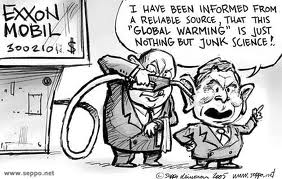 March for science? After decades of climate attacks, it’s high time, https://theconversation.com/march-for-science-after-decades-of-climate-attacks-its-high-time-76041 The Conversation, PhD Candidate, Sustainable Consumption Institute, University of Manchester, April 20, 2017. This Saturday, the March for Science will be held in cities around the world – coincidentally enough, ten years to the day since John Howard urged Australians to pray for rain.
While such marches are not the answer to everything, their very existence tells us that science is under attack, not merely from defunding of research bodies, but also via attacks on the inconvenient truths of climate science.
While scientists weep over the Great Barrier Reef, some politicians respond by laughing and joking. Continue reading
New South Wales: Gladys Berejiklian government taking on a green tinge on energy and climate change
Energy policy: Gladys Berejiklian government might be greener than Mike Baird’s, SMH, 15 Apr 17 Kelsey Munro “….. Anthony Roberts, planning and housing minister in Gladys Berejiklian’s NSW government, which some believe is showing a far greener hue than the paralysed politics of climate change at federal level might lead anyone to expect.
Witness the Premier’s visit to the flood-stricken north coast earlier this month, where she said the flood was “a one in-40-year event, if not longer”, before adding, matter-of-factly, “Unfortunately, these freak weather incidents are going to increase.”
That is the language of a politician who takes mainstream climate science as an article of faith.
The government’s signals are particularly clear in energy policy, where the new Energy and Resources Minister Don Harwin is touting a statewide “boom in renewable energy projects”, mainly in large-scale solar. “Latest figures show our renewable energy sources already contribute 14 per cent to the NSW electricity energy mix,” he told Fairfax Media. “During the state’s heatwave on February 10 this year, at the time of peak demand, renewables provided 29 per cent of total energy generation.”
The government last week backed a Greens motion to support a technical change in the structure of the national energy market that would put batteries and other storage technologies on a level playing field with more established generators, with Mr Harwin saying in parliament he had already communicated that position to the Australian Energy Market Commission……..
According to the government’s modelling, 79 per cent of NSW greenhouse gas emissions come from fossil fuels………
One significant factor is that the economics have changed dramatically. It is now far cheaper to build large-scale solar or wind than new fossil fuel powered stations, Ms McKenzie said, pointing to the Council’s recent report which found electricity from new coal-power stations would cost $160 per megawatt hour, while solar farms are around $110 per megawatt hour and falling……
Nationally, Australia’s greenhouse gas emissions are rising steadily, after a carbon tax-driven dip between 2012 and 2014. http://www.smh.com.au/nsw/energy-policy-gladys-berejiklian-government-might-be-greener-than-mike-bairds-20170414-gvkyod.html
Adani coal project – a foolish useof tax-payers’ money
 The Adani coal mine would be a poor use of our taxes, SMH, 15 Apr 17, The Adani coal mine in the Galilee Basin of Central Queensland looks like the Trump presidency did around this time last year: a bad idea with foreseeable bad consequences that may yet prove unstoppable.
The project will create “tens of thousands of jobs” and generate “an enormous amount” in taxes and in royalties, revenues for federal and state government”, the Prime Minister enthused. Meanwhile Barnaby Joyce has been banging the drum about how the coal will light up hundreds of thousands of poor households. In other words, lending our taxes to the billionaire proprietor would do India’s poor people a favour.
For now, new native title legislation that would remove one obstacle is blocked in the Senate, but the government is determined to fix that…….
It would be a very bad look indeed if the project goes ahead with the help of funds from the Australian public. It not only goes against this government’s belief in the wisdom of the free market, but would be yet another piece of embarrassing climate change denialism that sets us apart from more forward-thinking nations – including China and India – that are walking away from coal in favour of renewables.
The pivotal question for now is whether the project meets the eligibility criteria for a loan. The fact that the loan would only be available if the project couldn’t proceed otherwise (or would be seriously delayed) creates the bizarre situation that taxpayers are left footing the bill when commercial lenders baulk.
But it’s not up to politicians to decide whether Adani Mining gets the loan, although resources minister Matt Canavan, a strong supporter of the Carmichael mine, has the ultimate sign-off on disbursement of the loan funds. It’s up to the board of the Northern Australia Infrastructure Fund to make a fully independent assessment on commercial grounds. Taxpayers are entitled to expect the board to be scrupulously diligent in its decision.
To date more than a dozen banks and other funding sources have declared they won’t back the project or have pulled out of existing funding arrangements. The project’s opponents say it’s no longer financially viable, if it ever was. It augurs badly that India’s coal and power minister Piyush Goyal has repeatedly stated a goal to stop importing coal, even specifying a time frame of between two and three years, so Adani coal imports would be up against the tide.
Add to that ongoing Indian government investigations into Adani group companies, including for alleged profiteering on coal imported from Indonesia and for international tax arrangements, it’s clear the NAIF board has a lot to consider…….http://www.smh.com.au/comment/smh-editorial/the-adani-coal-mine-would-be-a-poor-use-of-our-taxes-20170413-gvkac0.html
1 This month



Help Aunty Sue Protect Her Land and Sacred Sites From Destructive Rocket Testing.
.

Australians deserve the truth
about
AUKUS – https://aukuspublicinquiry.com/

PETITION – To: Prime Minister Anthony Albanese and the Australian Labor Government

of the week – Australians for War Powers Reform (AWPR)
To see nuclear-related stories in greater depth and intensity

