Wind power for Tasmania, and for export to Pacific islands
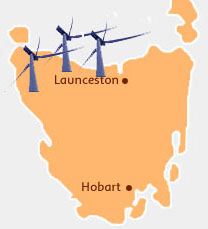 Island communities targeted for wind plant BY:MATTHEW DENHOLM :The Australian October 29, 2012 AUSTRALIA is seeking to export an off-grid power plant – capable of providing 100 per cent renewable energy – to remote and island communities currently reliant on diesel throughout the Asia-Pacific.
A prototype of the plant has been developed by Hydro Tasmania on King Island and by the end of next year will be providing 65 per cent of the Bass Strait island’s energy needs from renewable sources, or 100 per cent on windy days.
By reducing reliance on diesel generators – previously the source of 100 per cent of the island’s power – the wind and solar plant will save $4.5m a year….. http://www.theaustralian.com.au/news/health-science/island-communities-targeted-for-wind-plant/story-e6frg8y6-1226504898547
Caloundra’s solar energy array now in operation
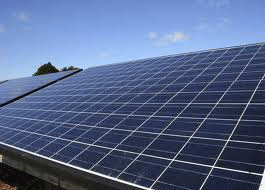 SPS Energy Installs 80 kW Solar Array for Caloundra-Based STC AZO CleanTech October 26, 2012 Today marks a new milestone for Australia’s private businesses seeking heightened energy efficiency: the unveiling of what’s believed to be one of the largest privately funded solar installations in the nation , installed by SPS Energy and now operational in Caloundra, Queensland. The Honourable Mark McArdle, Queensland’s Minister for Energy and Water Supply, officiated at the commissioning celebration.
SPS Energy, based in Eumundi, is a preeminent supplier of energy management and renewable energy solutions across Australia.
The 80kWatt solar array is located on the rooftop of the Caloundra-based Saddlery Trading Company (www.saddlerytrading.com ), and powers 75kWatts of inverter capacity. ….
“The installation has already delivered benefits for our business: an energy consumption decline of over 60% in the first billing period after commissioning, followed by further reductions in subsequent periods,” Mr Grant said.
“As a family-owned business, it’s critical for us to keep an eye on the bottom line, while integrating environmentally conscious practices.
“Our family business is proof that solar power can deliver savings, efficiency, and sustainability.”
The solar array provides STC with certainty of power costs into the future and provision for even greater energy autonomy, if needed. …. http://www.azocleantech.com/news.aspx?newsID=17503
The Australian Energy Market Operator (AEMO) finds Australia is “Saudi Arabia” of renewable energy
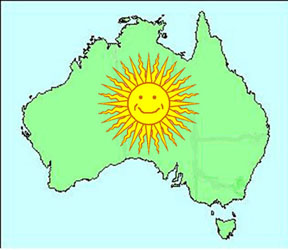 The Australian Energy Market Operator (AEMO), the body charged with running the nation’s energy supply, has modelled the feasibility of switching to 100 per cent renewable electricity generation by 2030 and 2050. This week, AEMO buried its findings in its monthly Energy Update.
AEMO isn’t due to release its draft report on the study until next March. By the end of the year, the government will already have released its Energy White Paper to chart future energy policies for years to come.
More crucial for the renewable energy sector, though, may be the release of the government’s review into the Renewable Energy Target (RET), perhaps within weeks.
Renewables: Australia’s a land of plenty SMH October 26, 2012 Peter Hannam Carbon economy editor When feisty UN climate change chief Christiana Figueres swept into Sydney this week, she mocked suggestions Australia is alone in cutting greenhouse gas emissions.
“Nothing could be further from reality,” Ms Figueres told the Lowy Institute. Rather than excoriate the government for holding out on signing up for the second round of the Kyoto Protocol to set emission targets, the diminutive diplomat instead stressed how the country was “blessed” with renewable energy resources the envy of much of the world.
While many nations were keen to tap such resources in order to improve health and lower carbon emissions, the real appeal, she said, was economic: “None of them is trying to save the planet. They’re doing it because it’s in their national interest and that’s the most important motivator.”
But for national interest to be rightly understood — and acted upon — it helps if the population is aware of what’s possible. Continue reading
Small scale solar power racing ahead in Australia
 The full report: “Benefits of the Renewable Energy Target to Australia’s Energy Markets and Economy” can be viewed here (PDF).
$21.1 Billion Small Scale Solar Power Investment In Australia By 2020 http://www.energymatters.com.au/index.php?main_page=news_article&article_id=3440, by Energy Matters, 26 Oct 12, An independent report shows Australia’s 20 per cent Renewable Energy Target (RET) has generated $18.5 billion in investment overall so far, with potentially many billions more to be invested – if the policy is left unchanged.
Released by the Clean Energy Council, the report shows Australia’s Renewable Energy Target has resulted in a reduction of fossil-fuel base power generation since it was introduced since 2001 and has also assisted in reining in wholesale electricity prices.
“The report shows that, if left unchanged, the Renewable Energy Target will result in 12 per cent less coal-fired generation and 13 per cent less gas-fired generation between now and 2030, with no reliability or security of supply issues identified,” said CEC Chief Executive David Green. Continue reading
Australia’s $billions in investment, due to Renewable Energy Target
 Clean energy target drives billions in investment SMH, October 25, 2012 Tom Arup AUSTRALIA’s 20 per cent renewable energy target has helped spark $18.5 billion in new clean energy investment since its inception – and will drive another $8.8 billion to 2030 – an economic analysis commissioned by the industry’s peak body has found.
The modelling to be released today by the Clean Energy Council also says Australia would have failed to meet its greenhouse gas targets under the United Nations Kyoto Protocol without the target in place. Continue reading
CSIRO mapping Australia’s wealth of solar energy
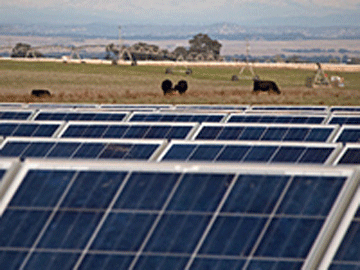 Solar mapping to shed light on rich resource , SMH, October 24, 2012 Peter Hannam We may be a nation of sun-worshippers but when it comes to forecasting where the sun shines longest, Australia’s energy authorities are stuck in the dark ages.
The CSIRO is hoping to fill that information void with a lot more riding on it than the best place to get that tan. Energy energy suppliers – current and future – need the data to predict how much solar electricity is likely to flow through the nation’s power grids.
For potential developers of large-scale solar power plants, radiation records are needed to bolster investment certainty as they try to secure finance from bankers or government agencies. The real urgency for hard numbers, though, is coming from the rapid take-up of solar photovoltaic (PV) panels, with the total now approaching 900,000 across the country. Continue reading
Senators John Madigan and Nick Xenophon move to stop wind farms
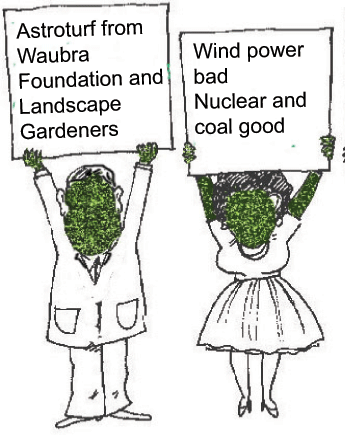 In July 2010, the National Health and Medical Research Council found that there is no published scientific evidence to support adverse effects of wind turbines on health.
Given their currently significant, and potentially enormous, contribution to reducing Australia’s greenhouse gas emissions, wind farms should not be held guilty until proven otherwise.
Wind farms: guilty until proven otherwise? http://www.climatespectator.com.au/commentary/wind-farms-guilty-until-proven-otherwise, 22 Oct 2012 Albert Yu Recent reports show that coal-fired power stations are finding it difficult to operate in the new market environment with falling electricity demand, a carbon price and the renewable energy target. Meanwhile, as noted by the Productivity Commission last week, wind generation is an “increasingly important source of power” in the National Electricity Market, highlighted by news of the first turbines turning at Australia’s largest wind farm to date, the 420 MW Macarthur wind farm.
As reported on Climate Spectator last month, wind power has allowed South Australia to transform itself from almost entirely being an importer of power from Victoria to being an exporter during high wind periods, whilst significantly reducing the state’s carbon emissions.
On the other hand, sitting before the Senate is the Renewable Energy (Electricity) Amendment (Excessive Noise from Wind Farms ) Bill 2012, introduced on June 28 by Senators John Madigan and Nick Xenophon to (in Senator Madigan’s words) “ensure we do not see any expansion in the number of wind farm refugees.” Continue reading
Australia’s Small-scale Renewable Energy Scheme (SRES) needs to be kept
Australian Solar Council Goes Into Bat For Home Solar Support by Energy Matters, 22 Oct 12, “……..The Australian Solar Council has firmly rejected the call by the Productivity Commission to abolish the Small-scale Renewable Energy Scheme (SRES).
“We all know that many more Australians want to install solar panels and solar hot water, but the upfront cost of these systems remains a significant barrier. That is why the SRES is so important and must be continued,” says John Grimes,Australian Solar Council Chief Executive.
“Demand for solar PV has reduced significantly since the solar multiplier was reduced on 1 July, and there are no signs that demand is picking up. The last thing the solar industry needs is more uncertainty.”
The Australian Solar Council is seeking direction and reassurance that the SRES and associated mechanisms are not under threat.
Mr. Grimes says his organisation endorses the view of Giles Parkinson of RenewEconomy who wrote recently that “until organisations such as the Productivity Commission get their mind around solar PV…then we cannot rely on them to make sensible recommendations”.
Under the current timetable, the Solar Credits multiplier is not due to be phased out until July 1 next year. If the Commissions draft recommendations were implemented, that could be brought forward to as early as towards the end of this year. http://www.energymatters.com.au/index.php?main_page=news_article&article_id=3435
Falling demand for electricity results in halting New South Wales coal fired power station
 Fossil Fuel Power – Another One Bites The Dust, by Energy Matters, 21 Oct AGL Energy Limited (AGL) announced on Friday the suspension of the first stage of its 1,000 MW Dalton power station in New South Wales. According to a very brief statement from the company, economic viability of the project had been under review for several months due to market conditions…
… The rising demand hasn’t happened – in fact, quite the opposite. According to a report from REC Agents Association (RAA) earlier this year, over the last three years electricity consumption in the eastern states’ National Electricity Market (NEM) had dropped by 3.2 % (6,565 GWh); with over half that reduction attributable to hundreds of thousands of solar hot water and rooftop solar panel installations, along with energy efficiency initiatives.
According to a Sydney Morning Herald article, electricity industry sources estimated more than 10 per cent of electricity demand in NSW was supplied by rooftop solar power systems during much of the daylight hours earlier last week.
The Dalton power station suspension adds to a continually growing scrap heap of gas and coal-fired projects around Australia. Elsewhere in New South Wales, the end of coal fired generation at Munmorah power station has been confirmed. In Queensland, Stanwell Corporation Limited is taking two units at its Tarong facility in Queensland offline soon and last week, it was announced some of Victoria’s Yallourn Power Station’s generation capacity would be mothballed. http://www.energymatters.com.au/index.php?main_page=news_article&article_id=3432
Don’t miss this excellent radio interview on the future of nuclear power

 Nuclear Energy Raises More Questions http://blogs.abc.net.au/nsw/2012/10/nuclear-energy-raises-more-questions.html ABC Radio 702 Sydney. Tim Holt interviews Derek Abbott, Professor of Electrical Engineering at the University of Adelaide, raises some very interesting practical considerations that will affect the future of this alternative source. 17/10/2012


PROF ABBOTT – Very hard to say how much nuclear industry is going ahead. Nuclear power – Some countries going ahead some countries pulling back. Not all so rosy in India.They are planning 60 nuclear stations. But In Tamil district 10,000 villagers demonstrating against local nuclear reactor, going on hunger strikes. Indian forces had to put out 4,000 security forces to control this problem. Needed large security force there.
My view is no. Nuclear power at the most could achieve only a very small slice of global energy pie. Can’t even supply half of the world’s needs.
Uranium gradually runs out – ore becomes more crude, harder to find uranium, and mining costs more. That’s one problem
Other problem actual metal you make the nuclear power stations out of / Nuclear power station isn’t just concrete and steel. Metals in nuclear power station – lots of exotic rare metals.Excessive energy given out, Prone to cracking, these exotic metals needed to prevent cracking are quite rare. Growth rate in consumption of these rare metals is huge , because used also in many modern technologies. Faster growth rate in consumption of these metals than the growth rate in oil. Likely to run out, even without nuclear. When would these metals run out? Add nuclear to the equation put on line hundreds of new nuclear stations.- eat into these rare metals and depleting them at a faster rate.
Problem with nuclear power – everything becomes non recyclable. What do you do with the nuclear station – you bury it for 10,000 years. Those metals become radioactive and you can’t re-use them. So – reducing world’s elemental diversity, supply of these rare metals.How many nuclear reactors would we need to supply all our energy needs from nuclear power? Something like 15,000 nuclear power stations to power the world presently. Completely unfeasible to scale up to some sort of nuclear utopia. We have problems with 430 reactors now.
Get any map of any country of the world – draw 100 dots on map as to where you could possibly put a new nuclear power station. Hard to put 10 nuclear power stations, let alone 100. Need to be away from populations, near water, where you won’t get lawsuits. USA would need 4000 nuclear stations – hard put to find 100 spots.
Yes, we should still research nuclear fusion. But to make that leap to a commercial fusion reactor- a big thing.But nowhere near commercial. Still the problems – high energy neutrons will crack the metal – same problems of rare metals – metals recycling problems again.
Renewables so relatively cheap and easy to lay on. Can build a modular solar farm using curved mirrors that focus sunlight . Mirror 10 metres in diameter – get 300-400 degrees Centigrade Can super heat water and run a steam turbine.- can set up in desert place relatively easily.
Sadly Australia has not taken bull by the horns. There are solar thermal projects in Australia. ANU in Canberra have had solar project for along time. Australia needs to take up solar. So much desert – the ideal country for solar.
Theoretically, If you powered an area size of Canberra with solar mirrors. – enough to power the whole of Australia.
Sun is a nuclear fusion reactor – it’s the obvious one to turn to.
Going back to your question about why Australia has not embraced solar power – Economics the reason and what we can afford to do. – we have a relatively small population. We are getting wakeup calls now with the changing climate. The rime is ripe now for Australia to change this

South Australia to hold Parliamentary Enquiry into Solar Thermal Energy for Port Augusta
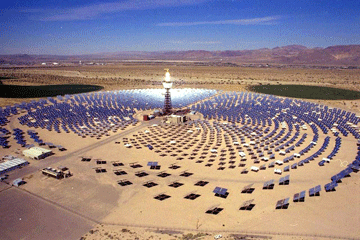 Solar Thermal Energy Parliamentary Enquiry For South Australia http://www.energymatters.com.au/index.php?main_page=news_article&article_id=3430 by Energy Matters The efforts by supporters of the construction of a solar thermal power station in Port Augusta, South Australia have paid off.
SA Mineral Resources and Energy Minister Tom Koutsantonis said a select committee will research a proposal to replace Alinta Energy’s Northern and Playford coal-fired power stations at Port Augusta with a concentrated solar thermal plant. Continue reading
Solar panels, energy efficiency, high utility prices, are causing slump in demand for coal powered electricity
 Power industry in the dark as demand wilts WA Today October 19, 2012 – “…… Demand slump The process itself is clear enough. Higher prices are prompting people to use less power,
  whether at home or at work. The higher dollar has forced some energy-intensive manufacturers to reduce output or shift abroad.
Solar panels sprouting on roofs at the pace of about 300,000 homes a year and more insulation batts underneath them are also curbing demand, particularly at peak times. Buildings are also much more energy efficient. Continue reading
Queenslanders Urged To Act On Solar Installations http://www.energymatters.com.au/index.php?main_page=news_article&article_id=3429 18 Oct 12 Tens of thousands of Queensland households that registered for the state’s previous solar feed in tariff rate are yet to finalise their paperwork and installations – and may miss out if they wait too long. Continue reading
Coal power falling – Victoria’s Premier regrets success of renewables and carbon tax
 More Coal Power To Go, Electricity Related Carbon Pollution Plunges http://www energymatters.com.au/index.php?main_page=news_article&article_id=3427 18 Oct 12 After years of battling the filthy fossil fuel status quo, Australia’s renewable energy revolutionaries are now really starting to see the changes they dreamed of.
Due to a reduction in electricity demand, the carbon tax and Australia’s Renewable Energy Target putting downward pressure on wholesale electricity prices; coal fired power generation is increasingly falling by the wayside.
We’ve previously reported on South Australia’s Playford B plants being shut down for good and Stanwell taking two units at its Tarong facility in Queensland offline soon. In New South Wales, the end of coal fired generation at Munmorah power station has been confirmed Yesterday it was announced the majority of Victoria’s Yallourn Power Station’s generation capacity would be mothballed – only three of the four units at Yallourn will generate electricity.
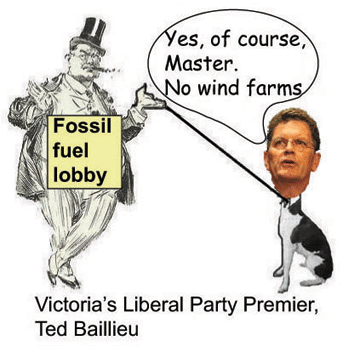
Victorian Premier Ted Baillieu had a curious reaction to the announcement according to a report on the ABC:
“This is an unfortunate signal to the future if the carbon tax is having an impact in this way,” he said.
Clean Energy Council Chief Executive David Green said shifts in the way electricity was generated were to be expected if Australia was serious about shifting to clean energy.
“Six weeks ago renewable energy was wrongly criticised in some quarters for not reducing emissions, and now Australia’s 20 per cent Renewable Energy Target has been criticised for being too effective,” Mr Green said. “The fact is, the Renewable Energy Target is doing exactly what it is supposed to: aiding Australia’s transition to a cleaner energy system and hunting out the least-cost ways of doing this.”
According to an article on WA Today, based on analysis of figures compiled by the Australian Energy Market Operator, electricity sold into the east coast market since the carbon tax was introduced had 7.6 per cent less carbon dioxide associated with it. To paraphrase Gandhi; thanks in part to over 858,000 households installing solar panels, Australians are being the change they want to see in the world.
How Australians are paying up big time for others’ air conditioning
The percentage of homes with air-conditioners has jumped from around 25 per cent in 1975 to nearly 70 per cent now, with the percentage nearly doubling in the last decade. Those households which do not have air-conditioning are paying an effective a cross subsidy of $330 for the use of those devices during those 40 hours of critical peak periods.
Why you are paying $10/hr to run your neighbour’s air-con REneweconomy By Giles Parkinson on 18 October 2012 We’re not quite into the scorching summer temperatures peaks, but here’s a thought to help boil your blood the next time you lie on the couch, sweltering in the heat. You’re one of a minority of households that do not have air conditioning, but you might as well, because it’s costing you pretty close to $10 an hour in those summer peaks to subsidise those that do.
That, at least, is the broad conclusion of the Productivity Commission’s report into electricity prices, which shines a light on a well-known fact that has suddenly become political dynamite – nearly all the electricity price rises in recent years is due to the unbelievably inefficient way we use and supply energy.
Here are a few facts that are probably well known but are worth repeating here. Continue reading
1 This month


Help Aunty Sue Protect Her Land and Sacred Sites From Destructive Rocket Testing.
.

Australians deserve the truth
about
AUKUS – https://aukuspublicinquiry.com/

PETITION – To: Prime Minister Anthony Albanese and the Australian Labor Government

of the week – Australians for War Powers Reform (AWPR)
To see nuclear-related stories in greater depth and intensity

