India’s solar parks – a good system for Australia, too
 Farming the sun’s rays: Should Australia follow India’s lead and create solar parks? http://www.abc.net.au/news/rural/2018-03-21/farming-the-suns-rays-australian-farmers-should-follow-india/9526812 NSW Country Hour By Michael Condon, 21 Mar 18, [Excellent graphics]
South Australia’s new Premier vows to kill the Tesla battery storage plan
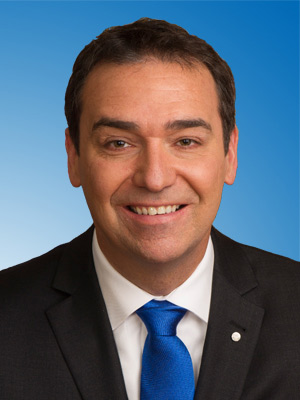 Marshall’s first promise as SA premier: Kill Tesla battery plan http://reneweconomy.com.au/marshalls-first-promise-as-sa-premier-kill-tesla-battery-plan-68601/ By Giles Parkinson on 19 March 2018
The newly elected South Australia premier, the Liberal Steven Marshall, has made his first promise – his government intends to kill the Tesla plan for the world’s biggest “virtual power plant” that would install batteries in low income households for no cost.
The Tesla plan – which aimed to install 5kW of solar and a 13.5kWh Tesla Powerwall 2 battery storage unit in 50,000 homes – would have created a virtual power plant with 250MW of capacity and 650MWh of storage.
The Tesla plan was announced just before the official start of the election campaign. The first two stages of the proposal – for 1,100 Housing Trust homes – is apparently locked in with a $2 million grant and a $30 million loan, but the broader third phase is not yet set in stone.
“No, that’s not part of our agenda,” Marshall told ABC’s Radio National breakfast program, just minutes before being sworn in as premier.
Instead, Marshall said his government would proceed with his previously announced commitment to a $100 million subsidy to 40,000 homes, where he would offer $2,500 for each battery storage unit installed.
“(Former premier Jay Weatherill) was doing it for Housing Trust homes in South Australia … that’s not part of our plan. What we are going to do is provide a subsidy to get (those with) solar rooftops systems with some storage capacity.”
Marshall’s plans would, of course, be very difficult to access for low-income households because it would still require an upfront capital payments that they would likely be unable to afford. And they do not already have rooftop solar.
It’s an extraordinary start for the new Liberal government – promising to ditch a private initiative that would provide loans to low-income households in favour of a $100 million government subsidy that would be out of reach of those households most in need of it.
So much for free markets. But it also raises the issue of sovereign risk.
If the Liberal Party is to do back-flips on initiatives like this, will it also renege on the other contracts entered into by Labor’s Renewable Technology Fund – and there are many of those, for larger-scale storage developments, and for a variety of smaller and micro-grid proposals.
It could be that the Tesla virtual power plant could go ahead, seeing that it is privately funded and requires a retailer to be chosen to help roll out the scheme and act as an intermediary.
The idea was to install the solar and battery storage for free, and deliver a reduction of around one-third in the electricity bills of 25,000 Housing Trust homes, and another 25,000 private low-income households. Investors would provide the capital.
However, given the new government’s antipathy to the scheme, it is entirely possible the tender process may be delayed and the private investors would not want to go ahead in such a hostile political environment.
It could also have an impact on Australia’s only solar manufacturer, Tindo Solar, which was looking to significantly increase its production capacity at its Adelaide manufacturing plant, and hire more employees, of course.
That’s because the Tesla plan would require half of the solar capacity to come from local manufacturers. It was also seen as an excellent platform for a new retailer to enter the South Australian market. The lack of competition in South Australia is one of the principal reasons for its high electricity prices.
The irony is that Marshall admitted he could see the benefits of battery storage – both at utility level and in households.
But he re-iterated his intent to scrap the state’s renewable energy target, because it would push up prices – even though the amount of projects under construction and promised by the new owner of the Whyalla steelworks would likely take the stake to Weatherill’s 75 per cent target, probably several years earlier.
Marshall also plans a new interconnector to NSW. Marshall says this will add to the “affordable reliable baseload” the state could access “when it’s not windy or sunny” in South Australia.
But appears to ignore the fact that NSW is already the state with the highest dependence on imports, even more than South Australia and may not been a position to export power to anyone.
But he also said the interconnector would allow for the “excess renewables” from South Australia to be exported to other states, “lowering prices across the entire nation.”
Hang on, didn’t you just say that the investment in renewables would push prices up? You can’t have it both ways.
Update: Marshall later told a news conference he would not rescind contacts entered into by previous government. This however protects only the first two stages of the Tesla virtual power plant, affecting 1,100 households. The third phase, involving 49,000 other low income households, was not subject to a signed contract, RenewEconomy understands, because it would source private funding.
Can Stephen Marshall stop South Australia’s transition to clean energy? Probably not
Speed of Australia’s energy transition hostage to Marshall law http://reneweconomy.com.au/speed-of-australias-energy-transition-hostage-to-marshall-law-65325/By Giles Parkinson on 19 March 2018
The consequences of South Australia’s election result on Saturday will be felt far beyond the state’s borders.
It was barely minutes after the SA Liberals – led by Steven Marshall – were declared winners that the federal Coalition began crowing that this was good news for Malcolm Turnbull’s signature policy, the National Energy Guarantee.
Senator Simon Birmingham said so almost immediately on ABC News 24, and the level of expectation that Marshall should serve as a vassal of the federal Coalition’s policy objectives was repeated by Turnbull, energy minister Josh Frydenberg and finance minister Matthias Cormann.
It seems unlikely that the NEG, or even Marshall, could do much to slow down the pace of the transition in South Australia, for reasons I will explain below. Continue reading
South Australia’s renewable energy future hanging by a thread
 http://reneweconomy.com.au/south-australias-renewable-energy-
 future-hanging-thread-81721/ By Giles Parkinson on 15 March 2018
It’s an election that is impossible to call. And too important to ignore.
Just two days out from the South Australia state poll, the result is in the balance, and so too is the fate of South Australia’s status as a world leader in renewable energy. It’s an outcome that could have a huge bearing on the pace of the energy transition for the whole of the country.
It was supposed to be a three-horse race between Labor – facing the monumental task of trying to secure a fifth consecutive term after 16 years in power – the SA Liberals, and Nick Xenophon’s newly formed SA Best.
Xenophon – hugely popular three months ago – has slipped back in the polls, but his party could still be kingmaker early next week, choosing to support a minority government of either Labor or the Liberals, based on the number of seats, votes, or some other criteria.
For what it’s worth, SportsBet is favouring a Labor victory, saying the odds have come in at $1.78 from $2.30), compared to the Liberals ($2.10, out from $1.57) and SA Best ($16, out from $6.50). The best odds are for a hung parliament ($1.33, in from $1.45).
More relevant, perhaps, is the assessment of ABC election analyst Anthony Green, who says that due to a redistribution of seats since the 2014 poll, the Liberals are already sitting on a notional majority of 24 seats.
That means Labor would need a 3 per cent swing in its favour, not counting the influence of SA Best, to displace them. On local radio on Thursday morning, the local pundits weren’t seeing it – putting Labor at 18-19 seats, well short of the 24 they will need to govern in their own account.
This is a troubling prospect for the clean energy industry, and for those who want to see South Australia continue its world-leading transition to a renewables-based economy, and to set an example for the rest of the country.
If renewables were to be the deciding factor in this election, then Labor would be a shoe-in.
Renewables – despite the repeated attempts to demonise wind and solar – remain hugely popular, even among Liberal voters. But Labor is the only party to fully articulate how it sees the state’s energy future unfolding, and how it will manage it.
Premier Jay Weatherill has outlined a 75 per cent renewable energy target for 2025, along with a 25 per cent “renewable storage” target, and has made it clear that he will not be cowed by the right-wing bully boys in Canberra, or the coal lobby. He has set the state’s own agenda and is sticking to it.
His policy is to focus on embracing this energy transition with world-leading and world-biggest initiatives such as the Tesla big battery, the world’s biggest solar tower at Port Augusta, the world’s biggest “virtual power plant”, and the biggest wind and solar-powered hydrogen electrolyser, among a host of other projects.
Crucially, this renewables vision is backed up by the actions of business people like Sanjeev Gupta, who says the future of manufacturing and other energy intensive industries depend on cheap green energy, and Germany’s sonnen, which intends to build a battery storage manufacturing plant in Australia.
The Liberals, on the other hand, are all over the shop. Their campaign – much of it based around the sort of conservative myths we outline here – has already been censured by the SA electoral commission, which accuses them of being “inaccurate and misleading.”
The Liberals issued a fleeting and begrudging apology over its claim of huge bill reductions. (Most of the reductions will be delivered by Labor’s in-place policies). But if the Liberals win, the energy industry is not sure what to expect, apart from more myth making.
The Liberals policy document constantly refers to out-dated solutions such as “baseload”, without ever explaining what that might be: in South Australia, that cannot mean coal, nor should it mean expensive gas.
They vow to scrap the state-based target, and they declare support for the federal Coalition’s National Energy Guarantee, despite fears it would worsen South Australia’s principal problem – the lack of competition and the resultant high prices.
The inconsistency of the Liberals position is perhaps best summed up by the blogger Ronald Brakels, who noted in this piece on SolarQuotes:
- They (the Liberals) blame Labor for not having enough back up power but are against the state-owned power plant that provides back up power.
- They say they support free market policies but blame Labor for not interfering in the market to prevent a private company from closing a coal power station.
- The (Liberal policy) document claims the SA grid is unreliable but also says the state-owned power plant is a waste of money because the grid is so reliable it will only get used an average of once every 10 years.
- They have nothing good to say about Labor, but many policies they say they will follow are similar to what Labor is doing.
It is this last point that is most salient to the industry.
The state – with the projects under construction – is already committed to well in excess of 50 per cent renewables. It is the lack of vision, and the sort of mindless opposition to new technologies that pervades their federal counterparts, that scares participants the most.
The Liberals don’t support a state-based target, but Marshall himself has admitted that reaching 75 per cent by 2025 is certainly achievable.
In fact, apart from deliberately blocking the likes of Gupta from building huge solar plants to protect the future of industries like the Whyalla steel works, it’s hard to see how South Australia could fail to meet that target.
The Australian Energy Market Operator, for instance, says that S.A. could reach 73 per cent renewables by 2020/21, and doesn’t seem concerned about being able to manage this, talking enthusiastically of the new technologies like the Tesla big battery.
But stopping people from reaching targets is what the Coalition has proved adept at doing.
The national RET effectively came to a halt for three years – a major cause for the recent price spikes on the wholesale market – as the Coalition looked to trash the scheme altogether. And the NEG appears to be designed with the intent to stifle wind and solar projects over the next decade.
Ominously, the SA Liberals talk of requiring solar and wind developers to provide “market impact” studies for renewable projects.
The Liberals openly agree with Labor only on their support for the proposed solar tower and molten salt storage project in South Australia (it’s in the electorate of the Liberals energy spokesman, Dan van Holst Pellekaan), and on delivering battery storage for households.
The Liberals target 40,000 households in a means-tested grant program offering $2,500 for each installation, while Labor targets 60,000 households in two different schemes targeting low-income households with zero upfront payments.
Liberals wants an interconnector to NSW to be built soon, Labor is happy to wait. The Liberals don’t seem to have a plan of what to do with excess wind and solar capacity.
Labor is looking at battery storage and pumped hydro, and its Renewable Technology Fund has probably already locked in about 400MW of storage capacity. It is also looking to see if hydrogen can deliver the promise of green energy exports.
As for the others, Xenophon’s SA Best remains vague on its details, and how to manage this energy transition, but it accepts that it is inevitable, and that 90 per cent renewables by 2030 is possible,although not a target.
The Greens want to go the whole hog, to 100 per cent by 2025, but do not appear to have much traction in this poll. Cory Bernardi’s Conservatives propose the usual right-wing nonsense – wanting to build a 1GW coal plant and create a nuclear waste dump.
So, what does the renewable and storage industry want? Without doubt, another Weatherill government.
Liberals leader Steve Marshall and energy spokesman Pellekaan, a former BP executive, have railed long and hard against wind. Pellekaan himself blamed it for power surges that caused outages, and has echoed federal resource minister Matt Canavan’s call for the Northern coal generator to be re-opened.
Labor has mis-stepped – its energy security target was misguided, but it had the sense to dump it; it probably didn’t need to buy the emergency back-up diesel generators when a lease might have been better value; and its pro-gas drilling agenda is troubling for many.
But Weatherill’s vision is clear.
“People are proud of our leadership on renewable energy,” he noted in the recent interview in the popular Energy Insiders podcast. Even people who are not completely convinced about climate change believe that renewables are the technologies of the future.”
But he’s not getting much support in the mainstream media. The Murdoch press, dominant in South Australia, firmly supports the Liberals. Even the Guardian, in its main electoral wrap – slugged “It’s time for change” when first published – ignored the energy issue.
But Weatherill’s fear is that if Labor loses, it will be termed as a defeat for renewables, and an excuse to wind back policies.
“What will happen, should we not be successful, the opponents of renewable energy will say South Australia’s leadership in renewable energy was the cause of their demise. That will be used against any other government that wants to push deeply into renewable energy.”
And that’s a prospect that makes you feel ill.
Queensland premier backs renewables over Adani
Queensland’s premier has talked up gas and renewable energy when asked about the Adani coal mine, on her first day back from a trade mission to the United States.
Federal Labor Leader Bill Shorten this week cast further doubt on Adani’s ability to raise funding for the project and whether a future Labor government would support the project.
Annastacia Palaszczuk on Friday said she hadn’t spoken to Mr Shorten since returning from the US, but reiterated the $16.5 billion mine had to stand up by itself without taxpayer money.
“There are other resource industries investing in Queensland, the gas industry is investing in Queensland, we have $20 billion worth of renewable energy on our books,” Ms Palaszczuk told reporters in Brisbane
“I hope a lot of resource company’s projects go ahead, but money talks, and the money is talking by investing in renewables.”
Ms Palaszczuk deflected questions about the proposed coal mine in Queensland’s Galilee Basin, instead pointing to interest from US investors in her government’s 50 per cent renewable energy target.
The premier said she had also met with the CEOs of a number of gas companies in the US as part of her government’s push to use gas as a transition fuel between coal and renewables.
Nick Xenophon’s SA BEST party promises community electricity co-op.
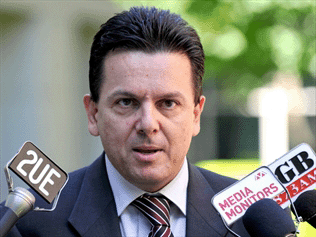
 Xenophon’s SA BEST unveils community electricity co-op plan http://reneweconomy.com.au/xenophons-sa-best-unveils-community-electricity-co-op-plan-11721/ By Sophie Vorrath on 27 February 2018
Nick Xenophon’s SA BEST party has waded into the South Australia energy war, with an election promise to cut power prices by as much as 20 per cent, by setting up a community electricity co-op.
Billed as an “exciting plan to lower power prices using the co-operative model of community electricity trusts,” the policy was unveiled on Tuesday ahead of the March 17 state election.
It follows a battery of energy policy promises from Jay Weatherill’s Labor Party, including plans to boost the state renewables target to 75 per cent, to introduce an energy storage target, and to adopt nation-leading electric vehicle incentives.
The SA Liberal Party has been less ambitious, but in October last year promised $100 million in grants to help homes to buy and install battery storage.
The SA BEST policy proposal gives form to one of Xenophon’s most favoured campaign slogans, which promised to give power back to the South Australian people.
To be named the Community Electricity Trust of SA (cETSA), the co-operative retailer would be made up of 50,000 lower-income households and up to 5000 small businesses, and power prices for those members would come down by 20 per cent.
The retailer would also be able to tender to develop 150MW of new renewable energy generation.
“The co-operative (energy) model has an internationally proven track record for delivering services,” said Business Council of Cooperatives and Mutuals CEO Melina Morrison.
“(It) is already being deployed in countries around the world, including the USA, Germany and Denmark,” she said.
“Nick Xenophon has been a long-time champion of co-operative and mutual enterprises – the Business Council of Co-operatives and Mutuals is confident this won’t be the last creative solution to SA’s problems using the co-op and mutual model from SA BEST.”
This article was originally published on RenewEconomy’s sister site, One Step Off The Grid, which focuses on customer experience with distributed generation. To sign up to One Step’s free weekly newsletter, please click here.
A renewable energy jobs boom is sweeping across regional Australia
 Renewable energy: powering Australia in more ways than one http://www.examiner.com.au/story/5229330/renewable-energy-is-powering-jobs-in-the-regions/?cs=97 James Wright 18 Feb 18 A jobs boom is sweeping across regional Australia and there’s one industry to thank – the renewable energy sector. From places like Gordon in southern Tasmania to Pindari in north-east NSW, new solar installations, windfarms, battery arrays, solar towers and pumped hydro facilities are springing life into regional towns. How are they doing this? By injecting desperately needed investment and job opportunities into remote locations.
In Far North Queensland, the Kidston solar array and pumped-hydro project will create 588 jobs this year. At the other end of the country in Port Augusta, Sundrop Farm’s first-of-its-kind solar tower for Australia creates another 200 jobs. Meanwhile over the border, Stawell in western Victoria is preparing for an influx of 1300 jobs from Nectar Farms combined windfarm, battery storage and 10-hectare hothouse facility.
This is great news! But despite the steady stream of new developments in regional areas, we’re actually being short-changed. Policy uncertainty due to ongoing internal squabbles in the Federal Government is strangling the growth of this sector and costing regional Australia the true jobs boom it deserves.
Australia has the richest renewable energy resources in the world. We have enough to power the nation 500 times over, yet we have some of the least ambitious renewable energy targets in the developed world.
If politicians could simply commit to a modest and achievable 50 per cent renewable energy target, this would create 28,000 new jobs. The vast majority would be in regional Australia where they are greatly needed to breathe new life into struggling local economies.
A renewable energy investment boom is a light on the horizon for many regional towns, we can’t let backwards politics spoil this once in a generation opportunity. James Wright is chief executive officer of the Future Business Council.
New schemes may help renters get solar panels on their roof – Australia’s solar energy boom
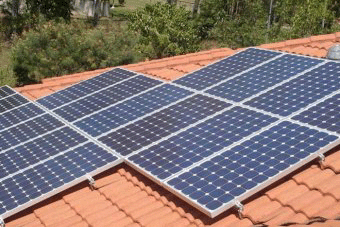 Solar boom: New schemes may help renters get solar panels on their roof, ABC Science, By Anna Salleh, 18 Feb 18,
South Australia a global leader in clean energy: Institute for Energy Economics and Financial Analysis (IEEFA)
 IEEFA: South Aust among world leaders in transition to wind, solar, ECO News, By David Twomey -February 14, 2018
In Australia solar farm approvals and record rooftop installations expected to ‘turbo-boost’ production
 Australia’s solar power boom could almost double capacity in a year, analysts say https://www.theguardian.com/australia-news/2018/feb/11/australias-solar-power-boom-could-almost-double-capacity-in-a-year-analysts-say
Solar farm approvals and record rooftop installations expected to ‘turbo-boost’ production, Guardian, Naaman Zhou, 11 Feb 18
A record-breaking month of rooftop installations and a flood of large-scale solar farms could almost double Australia’s solar power capacity in a single year, industry analysts say.
A massive solar energy boom is being predicted for 2018, after an unprecedented number of industrial solar farms were approved by the New South Wales and Queensland governments last year.
Last month also became the biggest January on record for rooftop installations, according to the renewables website RenewEconomy and industry analysts SunWiz
With 111MW of new panels, it saw a 69% rise compared with the same month last year and became one of the top five months ever – largely driven by low installation costs and a boost in commercial uptake.
At the same time, nearly 30 new industrial solar farms are scheduled to come on line.
NSW approved 10 solar farm projects last year – twice as many as the year before – and has approved another in 2018. Queensland currently has 18 large-scale projects under construction, which is the most in the country.
The new farms could be operational within the year, according to John Grimes, the chief executive of the Clean Energy Council.
“These solar farms can be built within a matter of weeks,” he said. “They’re really quick and simple.”
Together, the new large-scale projects could add between 2.5GW and 3.5GW to the national grid and rooftop installations could add another 1.3GW, according to the Smart Energy Council’s estimates. This would nearly double the nation’s solar energy capacity, currently 7GW, in a single year.
“The train tracks are about to converge,” Grimes said. “Rooftop installations and utilities are both booming and could turbo-boost the solar numbers overall.”
In Queensland, residential solar panels are already the state’s largest source of energy, producing more combined than the 1.7GW Gladstone power station. Just under a third (30%) of residential homes in the state have solar installed – the most in the country.
With the completion of the new solar farms, solar will provide 17% of the state’s energy. “We’ve turned the sunshine state into the solar state,” Queensland’s former energy minister Mark Bailey said in October.
In New South Wales, the planning minister, Anthony Roberts, said the 10
new solar farms would generate 1.2GW of energy and reduce carbon emissions by more than 2.5m tonnes – the equivalent of taking about 800,000 cars off the road.
Grimes said the solar boom “was only going to grow” in future.
“Solar is the cheapest way to generate electricity in the world – full stop,” he said. “It’s not unusual for grid pricing to be north of 20c per kilowatt hour in a majority of jurisdicitions. A solar array, at an average size for an average home, if you amortise the cost over 20 years, the effective rate is 5c per kilowatt hour. That’s called an economic no-brainer.”
He said the rush to install rooftop panels could have been sparked by January’s warm weather and rising energy prices.
“I think people are acutely aware of energy prices. People are running air conditioning and thinking, ‘hooley dooley I’m going to get a bill’.”
2017 saw a record 1.25GW of solar power added to the grid nationally, counting both large-scale solar farms and rooftop panels. The predicted rate of rooftop panels alone in 2018 is expected to be 1.3GW.
New South Wales Liberal Premier Berejiklian is approving a solar energy revolution
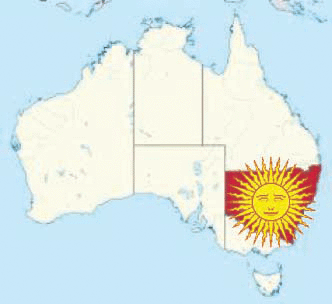 Solar ‘tsunami’ coming in Australia as NSW accelerates approvals http://www.smh.com.au/environment/climate-change/solar-tsunami-coming-in-australia-as-nsw-accelerates-approvals-20180207-p4yzl1.html, Peter Hannam, Cole Latimer
The Berejiklian government has approved 11 large-scale solar energy plants in the past 12 months, clearing the way for NSW to join a “tsunami” of new renewable energy capacity across the nation.
The 170-megawatt Finley Solar Project in the Riverina, which will include half a million solar panels, is the first to get approval in 2018.
The 10 to get the go-ahead in 2017 doubled the number in the previous year, and alone supported 1800 construction jobs, Planning Minister Anthony Roberts said.
Those 10 “collectively reduce carbon emissions by over 2.5 million tonnes, which is equivalent to taking around 800,000 cars off the road”, he said.
NSW had more renewable generation capacity under construction than any other state, Energy Minister Don Harwin said.
John Grimes, chief executive of the Smart Energy Council, a group promoting solar energy and storage, described the acceleration of solar approvals in NSW as “fantastic”. The Coalition-led state government was “one conservative group that’s not working against renewables, and that’s got to be good thing”, Mr Grimes said.
In 2017, large-scale and roof-top solar added about 1.3 gigawatts nationally, a record for the industry.
On current trends, roof-top panels could alone add 1.4 GW of new capacity this year, with solar farms soaring by 2.5-3.5 GW, the Smart Energy Council estimates.
Together the 2018 tally may come close to doubling existing capacity in a single year as firms rush to supply the Renewable Energy Target that has to be filled by 2020.
“We’re about to get this giant, enormous tsunami, and nobody knows about it,” Mr Grimes said. “Wind [energy] used to be big and solar was small – now solar’s big, and wind is small.”
Officials in various approval agencies are struggling to keep up with approvals as companies flood them with applications, he said.
“With some of the best sunshine anywhere in the world and lots of good locations available, it is not surprising that NSW is up there with Queensland as one of the national frontrunners for new large-scale solar power projects,” Kane Thornton, chief executive of the Clean Energy Council, said.
At present, Queensland is ahead of NSW in terms of projects with finance or under construction, although the two states have similar numbers of approved ventures.
Renewable energy projects to be built under the Renewable Energy Target in the next couple of years add up to more power than the original Snowy Hydro project, which took a quarter of a century to complete, Mr Thornton said.
Solar projects can typically be developed, approved and built faster than wind ventures.
“And with the cost of new solar power continuing to plunge, they can also be built for a very competitive price which is substantially lower than either new coal or new gas,” Mr Thornton said.
An example of other states’ development includes a plan by Tilt Renewables to spend almost $500 million to integrate two projects – a solar farm and battery venture, and a 300-megawatt, pumped hydro storage project in a disused quarry – with its wind farm interests in South Australia.
Tilt’s $90 million Snowtown North solar and storage project includes a 180,000-panel farm with 44-MW capacity and a 26 MW-hour battery. It is forecast to have an operational life of around 25 years and offset around 85,000 tonnes of CO2-equivalent.
“By combining wind energy – with typically an evening peak at this site – and solar energy with a daytime peak, the two assets can combine to better match daily electricity demands,” Tilt chief executive Deion Campbell said, adding that “with the battery reducing the effect of short-term variability from the two renewable generation technologies”.
One area where NSW is a relative laggard is the penetration of rooftop solar, with roughly half the 30 per cent rate of South Australia and Queensland. “There’s a lot of ground to make up,” Mr Grimes said.
Beyond the big solar farms, though, is a jump in demand from companies looking to install smaller systems – such as between 400 kilowatt to 10 MW capacity – without power purchase agreements to offset the output.
“They are doing it to offset their own electricity use” and to get price certainty, Mr Grimes said.
Australia’s geographic diversity provides reliability for renewable energy – Pat Conroy MP
 Steve Dale Nuclear Fuel Cycle Watch South Australia, 7 Feb 18
South Australia’s new solar energy plan – an international first
Reuters 4th Feb 2018, South Australia’s state premier Jay Weatherill announced a plan on Sunday to create a network of 50,000 home solar systems backed by Tesla Powerwall batteries, ahead of a state election in March.
“We lead the world in renewable energy with the world’s largest battery, the world’s largest solar thermal plant and now the world’s largest virtual power plant,” he said in a televised interview from the state capital of Adelaide. “The size of it is the reason why it’s going to be a success.” The project would begin with a trial on 1,100 public housing homes, the government said on its website.
https://uk.reuters.com/article/uk-australia-power-tesla/south-australia-promises-worlds-largest-virtual-power-plant-idUKKBN1FO029?rpc=401&
Women take the lead in Australia’s energy revolution
 Changing the face of energy, The Age, Cole Latimer , 7 Jan 18 Australia’s energy sector and National Electricity Market is undergoing the largest transition in its history, both in the makeup of the grid and the face of this change.
Leading the char7bringing their experience in the utilities space and beyond to the fore as the energy sector sees industry-wide disruption.
- Unlike many industries in Australia, energy has a strong representation of women at the top levels.
Kerry Schott and Clare Savage at the Energy Security Board; Audrey Zibelman at the Australian Energy Market Operator; Paula Conboy at the Australian Energy Regulator, and Catherine Tanna at the helm of EnergyAustralia are just some of the women making an impact at the heights of Australia’s energy sector………
- Australian Energy Market Operator chief executive Audrey Zibelman said while she didn’t start in energy, she cut her teeth in renewables and soon expanded that experience to revolutionise New York’s public service utilities and bring reform to the industry.
Ms Zibelman said she finds the space one where she can make a difference on a grand scale.
“Our job is providing public benefit, and the people who work in this space have a real public spirit, they love the challenge, what they do, and how it can have a huge impact,” she said.
“There are few opportunities – in other careers – to say you can impact so many people every day, all day. It’s hard to find any industry where you can find both [that public benefit and impact].”
Ms Zibelman believes that the current energy landscape is one in which women can thrive, as it faces its greatest challenge in its history.
“We’re seeing women increasingly taking roles in energy leadership,” she said.
“For myself, in general, we’re seeing an industry undergoing a massive change transition.
- “What I feel is that when it comes to women in energy leadership roles, we’re risk takers, and willing to challenge traditional thinking,” she said.
“Also, we’re collaborators, and women are able to create these social networks.”
Much like Audrey Zibelman, Energy Security chairman Board Kerry Schott didn’t start in the utility industry, but similar to Ms Zibelman, she has become one of Australia’s leading lights in this industry……….
- The one thing they all agreed on is the need to work towards greater efficiency in the energy space, both in terms of evolving the National Electricity Market and the way in which more renewables are introduced into Australia’s energy generation mix.
Ms Zibelman said Australia’s real focus ahead should be on how to create a more reliable system with variable generation, such as wind and solar, as well as hydro and demand response……..
- As these women helm the energy sector during its great transition, it sets a benchmark other Australian industries can follow. http://www.theage.com.au/business/workplace-relations/changing-the-face-of-energy-20171221-p4yxyv.html
 |
Click here to Reply or Forward
|
South Australia’s heatwave will not affect power supply
 SA heatwave will not affect power supply, Treasurer says, as TDU amateur cyclists ignore warnings, ABC News 19 Jan 18, By political reporter Nick Harmsen and staff The South Australian Government is not expecting to use the state’s new backup diesel power generators despite temperatures well into the mid-40s forcing a tight power supply balance.
The Australian Energy Market Operator (AEMO) has issued a level two lack of reserve notice for the state late this afternoon, meaning there is a small buffer of surplus generation available.A level three notice means unexpected load shedding blackouts are likely.
The power supply situation is even tighter in Victoria — with AEMO flagging the possibility of curtailing power to some industrial customers who have volunteered to be part of a demand management scheme.
SA’s hottest temperature so far recorded today was a scorching 47.4 degrees Celsius at Wudinna on Eyre Peninsula.Port Augusta hit 46.5C, Whyalla reached 46.4C and Lameroo and Tarcoola both had tops of 46C.SA Treasurer Tom Koutsantonis said while the state’s temporary generators were ready, they were unlikely to be used this afternoon.
“In terms of supply we should be okay,” he said.
“Victoria I understand is about to load shed industry. So they’re not coping with the power supply.
“They are a coal-dependent state and they are having to take industry offline to support their households. In South Australia we’re not having to do that today.”
In Adelaide today, the mercury climbed to 42.2C just after 12.30pm, after reaching a top of 41C yesterday and 38C on Wednesday……… State Emergency Service volunteers have handed out water at Adelaide Airport today and provided advice to international visitors to help them cope with extreme temperatures. http://www.abc.net.au/news/2018-01-19/sa-heatwave-will-not-affect-power-supply/9342306
1 This month

of the week – Australians for War Powers Reform (AWPR)
To see nuclear-related stories in greater depth and intensity
 Antinuclear