Dennis Matthews reviews Energy Market Operator (AEMO)’s report on ENERGY SUPPLY OUTLOOK
 Dennis Matthews June 2017, Comments on “ENERGY SUPPLY OUTLOOK Australian Energy Market Operator (AEMO), June 2017” This 30 page report has more acronyms than you can shake a stick at. The average full page of text contains some 20 acronyms. For example, on the first page of CHAPTER 1 we have
“New information since the November 2016 updates to the ESOO and EAAP, and the March 2017 GSOO, which has been included in the ESO modelling, includes:”
In the majority of cases, the acronym is defined only when first used. There is no list of acronyms.
Needless to say, this makes for very difficult reading except for those working in the energy industry and bureaucracy. The typical energy consumer would be continually frustrated trying to find out what many of the acronyms mean.
Referring to thermal electricity power stations as coal-powered, or as gas-powered, generators (CPG or GPG) suggests a degree of technical confusion. The coal or gas is in fact an energy source (fuel) rather than a power source.
To avoid ambiguity and confusion, the acronym NEM (National Electricity Market) should be reserved for the actual market and not used for the region covered by the market.
A relatively new term (and acronym), ‘unserved energy’ (USE) seems bound to confuse. USE is defined as:
“the amount of energy that cannot be supplied to consumers, resulting in involuntary load shedding (loss of customer supply), because there is insufficient generation capacity, demand side participation, or network capability, to meet demand.”
In other words, it is a demand that is not filled (met, served). A more correct term would seem to be ‘unfilled energy demand’ (UFED).
In considering climate conditions that could lead to peak demand, the report concentrates on temperature, especially high temperature in summer. What is driving peak demand is an ever increasing desire for comfort, throughout the whole year. Ever increasing affluence has led to ever increasing ability to pay for more and more comfort and convenience.
The major determinants of comfort would appear to be temperature and moisture. In summer, high moisture makes hot days less comfortable, whilst in winter, high moisture makes cold days less comfortable. For a given ambient summer temperature, the higher the humidity, the greater the demand for cooling. Whilst for a given ambient winter temperature, the higher the rainfall, the greater the demand for heating.
Exacerbating the trend for more and more comfort and convenience is a trend to houses with larger open spaces, fewer occupants and worse insulation. Nowhere in the report is there any consideration of managing energy demand through better building design and construction. Demand management has come to mean paying consumers to turn off energy guzzling equipment during periods of peak demand (demand side participation, DSP).
The statement that “Extreme weather conditions typically occur on summer weekdays, between 4.00 pm and 8.00 pm” is obviously nonsensical. Presumably, it is meant to refer to energy demand.
In considering risks to ‘electricity supply adequacy’ due to extreme weather conditions, the report does not seem to have included bushfires and floods.
Dennis Matthews Scrutinises the Finkel Energy Report
“The report recommends a Clean Energy Target as the mechanism for the electricity sector.”
The trouble with recommending ‘clean’ as distinct from ‘renewable’ is that ’clean’ means ‘low greenhouse gas emissions’, and hence opens up the electricity sector to nuclear power, which is definitely not environmentally clean in the more general sense and nuclear advocates will attempt to argue that, from an Australian viewpoint, nuclear power is ‘low emission’.
 Dennis Matthews June 2017 Comments on“Independent Review into the Future Energy Security of the National Electricity Market Blueprint for the Future Alan Finkel June 2017”
INTRODUCTION
The Finkel report recommendations involve greater regulation of an already highly regulated electricity market. These regulations are due to serious market failure, especially in those states that have privatised the electricity industry, yet nowhere is the possibility of de-privatisation (re-nationalisation) considered. The report’s answer to market failure is more, and more complicated, regulation and government funding. For example:
- the Australian Energy Market Operator (AEMO) “should develop a list of potential priority projects, in each region, that governments could support if the market is unable to deliver the investment required”.
- For the priority projects, the Australian Energy Market Commission (AEMC) should give guidance for governments on the circumstances “that would warrant government intervention to facilitate specific transmission investments.”
- “The Australian Competition and Consumer Commission should make recommendations on improving the transparency and clarity of electricity retail prices”.
The Finkel report, and its recommendations, contain many references to frequency control and fast frequency response but there are only two brief mentions in the report of direct current (DC) electricity, for which frequency control and fast frequency response are irrelevant.
The way in which the report refers to the financial year is ambiguous, for example: Continue reading
Drop in peak energy demand, as Western Australia goes for rooftop PV solar
 Boom in rooftop PV shifting peaks, and taking market operator by surprise, http://reneweconomy.com.au/boom-in-rooftop-pv-shifting-peaks-and-taking-market-operator-by-surprise-46984/ [good graphs] By Giles Parkinson on 16 June 2017 The growth of rooftop solar PV in Western Australia has taken the market operator by surprise, but has resulted in a dramatic reduction in both the scale and the timing of peak demand in the state.
According to the latest statement of energy market opportunities for WA, the Australian Energy Market  Operator says that rooftop solar PV – now on one in four homes and businesses in the state – reduced peak demand by 265MW, or 7.2 per cent in the last summer.
It says the uptake of rooftop solar in WA, which has been double expectations over the last two years – driven by falling costs of rooftop solar PV and the rise in grid prices – is “accelerating a paradigm shift” for the energy industry.
The biggest impact is on peak demand. The biggest peak in the state occurred on March 1, reaching 3,670MW in the 1700-1730 trading interval – the lowest since 2009.
“The rapid adoption of rooftop solar is not only slowing annual operational consumption growth but also eroding the mid-day grid demand and shifting peak demand to later in the day,” said AEMO’s Executive General Manager – Western Australia, Cameron Parrotte.
“With the strong growth in rooftop solar installations anticipated, AEMO expects demand in the middle of the day to shrink further, resulting in a rapid increase in demand in the lead up to the evening peak once the sun sets.” Continue reading
Australia’s energy problems – solved by battery storage?
Battery storage: How it could solve our energy problems http://www.abc.net.au/news/2017-06-16/how-does-battery-storage-work/8624378 7.30 By Matt Peacock If chief scientist Alan Finkel gets his way, battery energy storage will be central to Australia’s energy future.
The move to battery technology is a worldwide trend and three state governments — South Australia, Victoria and Queensland — are already going it alone, commissioning their own battery storage to ensure energy security.
So how does it work?
Batteries are used to store energy from renewable sources like solar and wind. Dr Finkel recommends all large scale wind and solar generators in Australia should have energy storage capacity.
The batteries will be particularly helpful on days when the sun doesn’t shine and the wind doesn’t blow.
“It can be used alongside a solar farm to help smooth the output and make any disruptions less likely and much more manageable,” said Kobad Bhavnagri, head of Asia Pacific economics and policy at Bloomberg New Energy Finance.
“Storage is also very likely to go in at your local substation. Your suburb is probably going to have a lot of storage in it because it adds a lot of resilience to the system. It makes operating the network better, stronger and also cheaper.”
A growing number of Australian homeowners are installing their own energy storage batteries for personal use.

The most common technology being used is lithium ion batteries.
“[It’s] the same battery that sits on your mobile phone and it’s actually the exact same battery pack that is being put into all these electric vehicles that are now coming to market,” Mr Bhavnagri said.
“So it’s a huge new industry that’s been created to manufacture large-scale battery packs for electric vehicles and for energy storage.”
Mr Bhavnagri predicts solar-plus-batteries will carve out a major slice of the Australian grid.
“We forecast that by 2040 almost half of [all] buildings in Australia, be that a factory or a household, will have a solar system. And a quarter of all those buildings will have a storage system as well,” he said.
“So when you add all of that together, we see distributed energy supplying about a quarter of Australia’s national energy needs in 2040.”
In South Australia, after a string of damaging blackouts Premier Jay Wetherill announced a major grid-scale battery storage facility to be completed this year.
Not to be outdone, the Prime Minister is investigating another form of stored energy, with a study into expanding the Snowy Mountains Scheme, where at the touch of a switch water can be released to drive the turbines.
Now both Victoria and Queensland have also commissioned huge battery storage units to be up and running within three years.
“All of those governments now are turning to storage as a way to bolster the system and the beauty of storage is that you can get that built in six months,” Mr Bhavnagri said.
“And you can also build a new solar farm in under 12 months, whereas it would take three or four years to build a new gas-fired power station or a coal-fired power station.”
Which other countries are doing it? Ike Hong represents the massive South Korean battery manufacturer Kokam, which is bidding for the power storage contracts in South Australia, Victoria and Queensland.
South Korea has already adopted battery technology, even though almost a third of its power is generated by nuclear reactors. Last year when a nuclear reactor tripped the batteries saved the day.
As battery prices continue to fall other countries are getting on board.
“In the United States, UK, Asia, and everywhere globally, the utilities start picking up the storage system. They understand the need of the storage system,” Mr Hong said.
Peter Martin’s guide to the Finkel review, and Tony Abbott’s obstructionism
Doing nothing, as Abbott and other non-readers seem to want, doesn’t offer a way out.
Worse, it allows the system to become more fragile.
Finkel wants to keep the lights on and wants to keep the system stable so that new operators feel able to invest. Abbott is standing in the way.
 Finkel review: a bluffer’s guide for those who haven’t read it How Finkel would keep the lights on, and why Abbott’s not so keen http://www.brisbanetimes.com.au/comment/how-finkel-would-keep-the-electricity-on-20170614-gwqwqo.html Peter Martin So much does Tony Abbott dislike the Finkel review of the electricity market that he hasn’t read it. On Monday, three full days after it was released, he branded its key recommendation a “magic pudding” and a “tax on coal” while conceding that he had been guided by “reports of the report” rather than the report itself.
I understand where he is coming from. Who wants to wade through 200 pages of a report they won’t like? But I’d feel better about it if I thought that at least some of the 20 or so other backbenchers who spoke out against the Finkel Report at the Coalition party room meeting on Tuesday had taken the time to read it.
I fear that most haven’t, and I reckon you probably won’t as well.
So in the interest of ensuring the people deciding the future of our electricity system have some idea of what they are talking about, here’s my potted summary.
First up, electricity prices. While the wholesale price accounts for only 31 per cent of the typical bill (the rest is distribution, retailing and the like), wholesale prices have been soaring in recent months.
It’s happening because unreasonably cheap electricity is leaving the system. Until March the Hazelwood power station in the La Trobe Valley supplied as much as 25 per cent of Victoria’s electricity and 5 per cent of the nation’s. It was cheap partly because the brown coal that fed it wasn’t good enough for much else, and especially because its owner, a French firm called Engie, had bought it for next to nothing. It didn’t need to recoup the cost of building it.
It’s the same at the nearby Loy Yang A power station. Its owner, AGL, bought much of it from the Tokyo Electric Power Company in a fire sale after the Fukushima nuclear disaster. Whatever replaces Loy Yang A and Hazelwood will cost real money, which will have to be recouped.
Seven coal-fired power stations are due to close in the next 20 years, each having reached the “retirement age” of 50. Each is roughly the size of Hazelwood.
But for a decade now scarcely anyone has felt confident enough to put up real money to build a new conventional power station. The rules about carbon prices and targets keep changing against the ever-present backdrop of an official emissions reduction target that means they will have to change again.
Plenty of investors have been prepared to build new wind and solar plants (having little to fear from a change in the rules) but those wind and solar plants don’t operate around the clock, meaning gas has had to close the gap. Continue reading
Liberal hard right oppose the Finkel Clean Energy Target
 George Christensen signals he won’t vote for Finkel’s clean energy target
LNP backbencher says he and most of the Nationals won’t vote for any clean energy target that penalises coal, Guardian, Katharine Murphy, 15 June 17, The LNP backbencher George Christensen has signalled he won’t vote for a new clean energy target because it won’t end the decade long climate wars – because Labor will “out Finkel us on Finkel”.
Christensen said on Wednesday evening that he saw no prospect of achieving policy stability on climate and energy policy through bipartisanship, because the gulf between the major parties was too wide.
“Given the history of climate policy in this place, given we’ve got the Labor party pushing 50% renewable energy targets … given we’ve got some Labor MPs talking about no more coal-fired power at all – how are we, honestly, going to have policy stability?” the outspoken MP told Sky News.
Christensen said he had no intention of voting for a clean energy target that penalised coal and neither would the bulk of the National party. “I’m out. I won’t support that”.
He said that, rather than legislating a clean energy target, the government would be better off building high-efficiency coal-fired power stations to replace the ageing coal fleet. Christensen contended that approach would reduce carbon pollution.
The backbencher’s public declaration of opposition follows an extraordinary Coalition party room meeting on Tuesday night in which government MPs ventilated their concerns about the Finkel review, which recommends introducing a clean energy target to deliver policy certainty for investors and reduce emissions……
The former prime minister Tony Abbott – who was a vocal participant in the special party room meeting, and floated the desirability of the government buying the Hazelwood power station – continued his public critique of the Finkel reviewon Wednesday afternoon.
Abbott said the “problem” with the review was it was “all about reducing emissions”. He said Australia did not need to conform with the commitments he made as prime minister in the Paris climate accord if those commitments “clobbered” power prices…..
In an interview with Guardian Australia this week, the chief scientist said it would be surprising if governments used the overhaul of energy policy to incentivise new coal-fired power stations.
He pointed out that modelling associated with the review did not envisage new coal power stations being built…..https://www.theguardian.com/australia-news/2017/jun/14/george-christensen-signals-he-wont-vote-for-finkels-clean-energy-target
More Australian renewable energy news
Eco Energy World says approval of three new solar projects, including 280MW solar farm in Bouldercombe, bring “ready to build” portfolio to total of 570MW.
http://reneweconomy.com.au/eco-energy-gets-approval-three-qld-solar-farms-20528/
Firm offered to fit jail solar panels for free
SOLAR energy wasn’t considered an “economically viable” option to power Darwin’s $1.8 billion prison – despite the Northern Territory Government receiving a proposal in 2013 from a company that offered to install the infrastructure for free
http://www.ntnews.com.au/business/firm-offered-to-fit-jail-solar-panels-for-free/news-story/4f13a19c0d1da8d58d16d4af3a1059ae
Hard to keep up with renewable energy news
Cheap wind, solar will make Australia a magnet
http://www.afr.com/news/cheap-wind-solar-will-make-australia-a-magnet–bloomberg-20170615-gwrwat
Coalition may require new solar and wind farms to match each megawatt of capacity with a megawatt hour of energy storage to “level playing field”
http://reneweconomy.com.au/coalition-wants-wind-solar-forced-match-mw-storage-15465/ Australians aren’t buying electric cars: Three charts illustrate why
EV Council says most Australians want to buy electric vehicles, but a lack of policy support – and cars – is getting in the way.
http://reneweconomy.com.au/australians-arent-buying-electric-cars-three-charts-illustrate-why-78101/
 Finkel to energise market: AEMO
AEMO CEO Audrey Zibelman says the Finkel blueprint for national electricity security is “spot on”.
http://www.theaustralian.com.au/business/mining-energy/alan-finkel-report-spot-on-aemo-chief-audrey-zibelman/news-story/4cf5e765df33ca2d07c45d4023f5170a Details cut off $90 power saving
Households will not receive a promised $90 annual saving from a clean energy target.
http://www.theaustralian.com.au/national-affairs/climate/new-electricity-reform-details-cut-off-promised-90-saving/news-story/5991f423ba3f0549edffbf37bbed3652
Latest renewable energy news from REneweconomy
-
Finkel’s Clean Energy target little more than state’s business-as-usualBy Giles Parkinson on 16 June 2017 A new analysis from The Australia Institute suggests that the renewable energy scenarios put in the Finkel review’s proposed clean energy target will deliver little more, or likely even less, than that proposed by current state-based renewable targets Coalition parties want to kill.Australian Energy Storage 2017 conference – the low key buzzIf the 2016 conference was lithium, lithium, lithium, the 2017 version has a more nuanced tone. Here are some of the highlights.
-
Bernardi goes solar to “keep the lights on,” but did he get storage?SA Senator Cory Bernardi has installed 12kW of solar at his family home – but will it keep the lights on?
-
Carnegie selected by US State Department to lead sustainability goalCarnegie has been selected as the company to lead global business in achieving the United Nation’s Sustainable Development Goal number 7 – Affordable and Clean Energy.
-
Australians aren’t buying electric cars: Three charts illustrate whyEV Council says most Australians want to buy electric vehicles, but a lack of policy support – and cars – is getting in the way.
Finkel energy review ignores battery storage, and falling cost of renewables
the cost estimates for consumers and emissions abatement for the scenarios that limit coal generation are painted as being significantly higher than allowing coal to continue.
Finkel modelling ignores new technologies, cheaper renewables http://reneweconomy.com.au/finkel-modelling-ignores-new-technologies-cheaper-renewables-33626/ By Giles Parkinson on 14 June 2017
Here we go again. The Australian public and the Coalition party room are being told that allowing coal-fired generators to continue beyond their 50 year life offers the cheapest path to a transition to a low carbon economy.
But they are being misled. This conclusion is only reached through modelling prepared by a private consultancy for the Finkel Review that deliberately ignores certain new technologies such as battery storage that can provide grid security and replace coal-fired generation at a much cheaper cost than gas.
The detailed modelling – prepared by consultancy Jacobs for the panel led by chief scientist Dr Alan Finkel – also ignores recent big falls in the costs of wind and solar, and over-estimates the cost to build new wind and solar plants.
The Australian public – and the Coalition party room – are being told that the cheapest and most effective way to address emissions is to allow coal-fired power stations to remain in the system beyond their 50-year asset life.
But this is only justified by excluding renewables and associated “firming” technologies – such as storage and synchronous condensers – that the review itself admits could provide a much cheaper option than gas-fired generation to replace coal fired generation.
Many in the industry are happy to go along with that, reasoning it best, or good enough, to get a mechanism in place now, and tweak it later.
But that plan is not working out well. Even with the promise of longer life for coal plants, and falling bills for consumers over “business as usual”, the Coalition party room is being torn apart by disagreements between the moderates and the mostly climate science-denying hard right rump.
The details of the modelling, which were only published on the environment ministry website on Wednesday, show that Australia can be a whole lot more ambitious than the targets laid out under the central Finkel Review’s conclusions, and could save even more money if some realistic cost assumptions were made and some technology answers dialled in.
The report’s recommended policy mechanism, the Clean Energy Target, has caused controversy because it allows for coal-fired generation to still support 25 per cent of total generation by 2050, albeit in a scenario where climate targets reflect the Coalition’s modest down-payment and not the “well below” 2°C scenario signed up to in Paris.
But there appears to be confusion in the modelling. Finkel himself acknowledges that the cost of wind and solar is cheaper than both coal and gas-fired generation, even with storage and “firming” capacity added, and carbon emissions and environmental impacts of the fossil fuel plant ignored. (See graph above)
Those estimates, Finkel noted, took into account some of the latest contracts, including the stunning $55/MWh deal for a wind farm in Victoria, and recent estimates by Origin Energy and AGL on the contracting costs of solar.
ARENA’s Ian Kay said on Wednesday that wind was being built in Australia at costs in the “low to mid” $50s/MWh, while solar was in the low to mid $70s/MWh, and falling.
The acknowledgement of these cost falls is critically important for considerations on how to address Australia’s energy future, but the detailed work conducted by Jacobs appears to roll back on those estimates and distorts the impacts of various policy paths.
More alarmingly, when considering scenarios where coal generators were managed out of the grid after 50 years, the Jacobs modelling deliberately ignores certain technologies such as synchronous condensers, and “synthetic inertia batteries”, that could be used instead of more expensive new gas generation.
Instead, it says that coal plant would have to be replaced only by thermal generators, meaning gas, and this would put the prices up sharply compared to the “unlimited” life coal scenario included in the preferred Clean Energy Target mechanism.
“Jacobs understands that new technology developments (i.e. synchronous condensers, synthetic inertia batteries with power conversion electronics etc.) will potentially allow renewable technologies to provide these ancillary services (or at least a portion of these services) but a more conservative approach was chosen for that sensitivity in order to examine the full impact of the constraint,” it says.
Frankly, this is outrageous. As one competing industry consultant noted:
“I’m afraid I find a lot of this so-called modelling is pretty low-grade stuff. Turning the handle and get what you want. The track record of this stuff is laughable and it’s boring and worthless to keep on talking of it as if it means something.”
It was not clear whether he was disputing the Finkel Review’s conclusions, or simply wasn’t aware of them.
The cost estimates for wind and solar used by the Jacobs modelling are also faulty. It has not reduced its capital cost estimates for wind energy below the much criticised capital costs used in its report for the Climate Change Authority last year.
Wind capital costs are still estimated at $2,400/kW, while solar PV and solar PV with single axis tracking are lowered but put between $2,200kW and $2,300/kW. (In the graph above, the left column represents life span of asset, the fourth column the capital costs per kW, and the next column the learning rate).
Solar farm and wind farm developers have told RenewEconomy that these estimates are out of the ball-park. “We think it is closer to $,1500/kw for single axis solar, and $1,800 for wind,” said the head of one firm currently constructing both wind farms and solar farms in Australia.
Also, he pointed out that solar farms have a life of at least 25 years. Only 20 years is factored in to the Jacobs modelling. The capacity factors adopted by Jacobs (Maximum of 29 per cent for tracking solar) also appear to short-change solar technology, in particular, by around 10 per cent.
This is not the first time we have taken issue with Jacobs over its modelling – most notably for a report it did for the CCA and various different policy scenarios, including the suggestion that an ambitious renewable energy target would result in a more coal-fired power stations built after 2040.
The upshot of this is that the cost estimates for consumers and emissions abatement for the scenarios that limit coal generation are painted as being significantly higher than allowing coal to continue.
This is important because, as the International Energy Agency has pointed out, and numerous others, if there is any chance of reaching the Paris climate goal, the electricity grid needs to reach zero net emissions well below 2050.
But the result is to completely distort the result, as occurred in the modelling that was used by AEMC and CCA to justify and emissions intensity scheme over alternatives such as a high renewable energy target.
Finkel Review not much help for solar and storage home customers
Finkel Review: What’s in it for solar and storage customers like Jenny? REneweconomy By Dominic Adams on 14 June 2017 The focus of this piece is about what the Finkel Review delivers for a Mojo customer, Jenny. Jenny has solar on her roof and a smart battery in her garage.
Having your attention though (and also my cake and eating it) I’d like to start by noting that we should think carefully before opposing the Clean Energy Target (CET), the big ticket item in the Finkel Review designed to reduce emissions in the power sector.
It’s become more important to put the carbon wars behind us for a time than to find the perfect policy.
The CET is far from perfect. It’s all carrot and no stick. It’s a political and environmental compromise. But it’s our last best hope of ending the lost years of uncertainty in the generation sector that are now leading to wholesale electricity price rises that will start flowing through to customers like Jenny in a few weeks.
Mojo’s mission is to drive down the costs of energy for its customers (including Jenny), and we think that ending the uncertainty in the policy environment is an essential step in that direction.
The CET however makes up just a fraction of the 212 page report. It’s a few paragraphs out of the 7 pages packed with recommendations 1.1 through 7.14. It’s fair enough to ask the question, what’s in all those recommendations for Jenny?
The answer is somewhat unclear at this stage, but the signs aren’t great for Jenny in the short to medium term.
The big problem that the Finkel Review is charged with solving is how to decarbonise the energy sector while keeping the system secure and inexpensive for consumers.
A key focus however is on the security of the system in the wake of a particular storm in South Australia (plus more than a few in teacups in Canberra). The security issue is summed up well in the Review:
“Because [system security services such as inertia, system strength and voltage control] were historically plentiful, as essentially a by-product of power supply from synchronous generators, they were not explicitly valued in the [National Electricity Market (NEM)]. With their growing scarcity, the hidden value of these services has emerged. New mechanisms will be needed to source these services, or appropriate alternatives, from synchronous machines and a range of other technologies.”
As more renewable energy pushes into the NEM, driven initially by policy, but increasingly by sheer economics, system security services are in decline. The same process contributes to reliability issues, where the lights go out because available supply can’t meet demand in the NEM.
People with batteries and controllable devices behind their meters (the so called prosumers, or Jenny) can provide system security services to the market as well as help supply meet demand in the NEM.
The key issue in the Finkel Review for Jenny is what the mechanisms for sourcing these services will be, and whether she will be able to benefit from the value that her assets provide……..
What it ultimately means for Jenny is that her solar system and battery are less valuable. Her assets can’t access all the value in providing security and reliability services because initially the markets don’t exist for those services.
In the longer run, when the markets may exist after the long process of review and policy development, the value may not be there anymore. The lions share of the value could be taken by the grid scale batteries and other devices that were required to be built in the non-market phase.
We think a better approach is to fast-track the development of market based solutions to these issues. Doing so will not just increase the benefits for Jenny, but also reduce costs for other consumers not fortunate enough to afford solar and a battery.
At Mojo we will keep up the fight for Jenny and our other customers, because they have better things to do than read the Finkel Review.
Dominic Adams is Regulatory Strategy Manager for energy retailer Mojo Power http://reneweconomy.com.au/finkel-review-whats-solar-storage-customers-like-jenny-79674/
Turnbull once again in a bind with Liberal climate denialists over Clean Energy Target plan
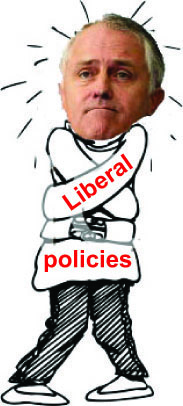 Tensions erupt in Turnbull government over climate and energy policy, The Age, James Massola, 14 June 17, Climate-change policy has ignited tensions within the federal government, with a group of backbench MPs led by Tony Abbott confronting Malcolm Turnbull over the proposed Clean Energy Target in a special party room meeting.
As one MP in the room put it afterwards: “Malcolm could lose his leadership over this if he doesn’t listen to us.”
The disquiet means that Environment and Energy Minister Josh Frydenberg is likely to have little choice but to significantly modify the Clean Energy Targert (CET), as proposed in chief scientist Alan Finkel’s review, to keep the backbench on-side as he finalises the Coalition’s policy response, which is expected as soon as the end of July.
If he does, Mr Frydenberg runs the risk of putting Labor offside – particularly if the policy is too coal-friendly – and dashing the chance of the major parties striking compromise and ending the climate policy wars.
According to several MPs in the room, at least 21 backbench MPs raised concerns about the CET, while five spoke in favour of it and five were said to be non-committal.
Another senior MP in the room said while 32 people had spoken, one third of the speakers had been in favour of the Finkel review’s recommendations, one third opposed them outright and one third expressed concerns but were non-committal. Continue reading
Giles Parkinson outlines ways to improve the Finkel Energy plan
Five ways to improve Finkel’s energy blueprint http://reneweconomy.com.au/five-ways-to-improve-finkels-energy-blueprint-60985/ By Giles Parkinson on 13 June 2017 [good graphs]
First thing first, this scheme won’t amount to a hill of beans unless the Paris climate targets are adopted, and that does not mean the modest down-payment from the Coalition on which this blueprint is modelled, but a serious attempt to deliver on the pledge to limit average global warming to well below 2°C.
Quite why the chief scientist didn’t choose to make much of the chief science questions is a bit of a mystery, but he did underline the importance of bipartisan and federal and state agreement on this. The reaction, to date, shows this is as difficult now as it was when the climate-denying, fossil fuel-backing Coalition hard right thrust Tony Abbott to the head of the party in 2009.
Can we see some modelling please? The actual energy blueprint is vague on details. Some results of the modelling are shown, such as the modest fall in consumer bills (above), and the lingering presence of coal-fired generation in 2050 (25 per cent).
But the inputs are not revealed, neither are comparisons with other options, or how they are stress-tested with a 2°C target. Most consumer watchdogs would warn against buying something with so little information, and no warranties, but that is – in effect – what we are being asked to do. Or, at least, may be what the Coalition back bench is being asked to do.
The gentailers have too many vested interests to protect, so a better and more efficient mechanism would be for a new authority to auction capacity at various points along the target. This has been used very effectively across the world, and at state level too. It gets a good price and avoids the market being held to ransom.
Be smarter about energy storage. There is no doubt that many solar plants, and wind farms, will be happy to add battery storage to their installations, and Finkel’s report acknowledges that these combinations will beat either gas or coal on both costs and emissions. But Finkel’s proposed obligation for ALL new wind and solar plants to have storage seems like regulatory overkill, adding unnecessarily to prices.
Only in South Australia has the penetration of wind and solar reached a level where storage is now required, according to the CSIRO, which suggests that anything under 40 per cent wind and solar is “trivial” to the management of the grid (presuming the grid managers are on top of their brief). So making a no-argue requirement now seems overkill, and the approach of the Victoria and Queensland state governments – calling for bids for cheapest storage – as they roll out more wind and solar seems more sensible.
Make this transition quicker, smarter, cleaner. As we noted last week, this is not Grid 2.0, it’s actually not a whole lot different from business as usual. This review was an opportunity to redefine those boundaries, but comes up short, mainly because it does not focus enough on the implications and the benefits of all the solar and storage added behind the meter by households and businesses. The CSIRO estimates $200 billion will be spent by consumers over the next three decades.
They will want to know that this investment is worth it, and they are not locked in to a utility business model that has failed to evolve, and continues to impose costs on consumers. Indeed, half of their bills comes from the transport of electricity, which means that even if the wholesale component was free, it could not match the cost of solar and storage. Which does not mean, for a moment, that everything would go off the grid, or should; but unless there is some regulatory recognition that technology changes and costs are moving fast, then they will simply not be prepared to deal with it.
And let’s not forget, all consumers will be wanting more than $90 savings a year over the next decade after seeing their bills going up $300 a year. That’s one step forward and three steps back. There is simply no reason why more savings cannot be delivered, given the falling cost of wind, solar and storage.
Josh Frydenberg, Minister For Fossil Fuel Energy, prevents hybrid renewable energy plus battery storage microgrid at Lord Howe Island
 Lord Howe microgrid in doubt as Frydenberg rules out wind turbines http://reneweconomy.com.au/39084-2/, By Sophie Vorrath on 13 June 2017 One Step Off The Grid
Plans to install a hybrid renewable energy plus battery storage microgrid at New South Wales’ Lord Howe Island, and slash its diesel fuel use, have hit a major political snag, after the federal energy minister intervened to rule out the wind power component of the long-awaited, ARENA-backed project.
The project – which has been in the works for some six years now, and in 2014 won a $4.5 million grant from the Australian Renewable Energy Agency and a $5.6 million loan from NSW Treasury – was to install 500kW of wind, 400kW solar PV and 400kWh of battery storage, in an effort to cut the island’s diesel usage by two-thirds.
Just one year ago the Lord Howe Island Board called for tenders for the installation of the first stage of the project’s development.
But the Board’s manager of infrastructure and engineering services, Andrew Logan, said Minister Frydenberg had ruled, late last week, that the impacts of the proposed two 250kW wind turbines on the Island’s World and National Heritage values – particularly on its ‘visual landscape’ – were unacceptable. Continue reading
Pipeline of solar farms across Australia to begin from Western Australia
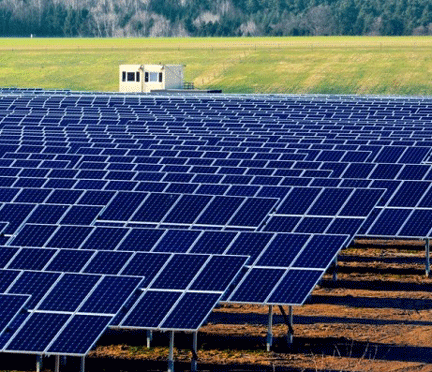 WA, UK team announce $200m big solar pipeline for Australia, REneweconomy, By Sophie Vorrath on 13 June 2017 Western Australian large-scale solar start-up Stellata Energy has joined forces with UK based renewables investment specialist, Ingenious, to build what they say is a $200 million pipeline of solar farms across Australia, starting with a flagship 120MW ground-mounted project in their home state.
The companies said in a join announcement on Tuesday that they were seeking approval to build a 120MW ground-mounted solar plant in the regional town of Merredin, roughly half way between Perth and Kalgoorlie.
The partnership signals the arrival of yet another European investor into the Australian market, in the rush to meet the remainder of the 2020 renewable energy target as technology costs continue to fall.
Stellata, which has been around for roughly one year, says it is well placed to deliver large-scale solar in Western Australia, with an executive team with extensive previous experience developing more than 600MW of ground-mounted and rooftop solar across Europe.
Ingenious, meanwhile, has raised and deployed more than £9 billion, including £500 million in renewables projects across the UK and Ireland, the companies said……http://reneweconomy.com.au/wa-uk-team-announce-200m-big-solar-pipeline-for-australia-58923/
1 This month
Chernobyl: The Lost Tapes – A good documentary on Chernobyl on SBS available On Demand for the next 3 weeks– https://www.sbs.com.au/ondemand/tv-program/chernobyl-the-lost-tapes/2352741955560
15 April – Zoom –Nuclear Power is Not the Solution
Apr 15, 2026 01:00 AM in Canberra, Melbourne, Sydney

Join the International Physicians for the Prevention of Nuclear War (IPPNW) on Tuesday, April 14th for a timely webinar exploring the risks associated with nuclear power and challenging the myth that it offers a simple, safe, carbon-free solution to the climate crisis

21 April Webinar: No Nuclear Weapons in Australia
Start: 2026-04-21 18:00:00 UTC Canberra, Melbourne, Sydney (GMT+10:00)
End: 2026-04-21 19:30:00 UTC Canberra, Melbourne, Sydney (GMT+10:00)
Event Type: Virtual
A virtual link will be communicated before the event.
Host Contact Info: australia@icanw.org

of the week – Australians for War Powers Reform (AWPR)
To see nuclear-related stories in greater depth and intensity
 Antinuclear
