Australian government snubs International Renewable Energy Agency congress
 Australia thumbs its nose at global renewable energy market REneweconomy, By Giles Parkinson on 23 January 2015 Australia has again courted controversy on the international stage, refusing to send its energy minister to a key meeting of the world’s peak renewable energy body, and sending instead a mere embassy staffer to the annual congress of the International Renewable Energy Agency.
IRENA met in Abu Dhabi last weekend, ahead of the World Energy Future Conference in the same venue. Some 150 members sent delegates and 65 of those countries sent their energy ministers. The heads of numerous energy companies, and financing chiefs also attended.
It shouldn’t come as much of a surprise, perhaps, given the Coalition government’s antipathy to renewables, and its attempts to wind back or even cancel its current renewable energy target. The Abbott government has ensured that the large scale renewable energy industry in Australia has come to a virtual standstill, just as global investment in renewables increases.
The decision to snub IRENA’s annual conference is being seen in the same vein as its decision not to send a minister to the climate change talks in Warsaw in late 2013. It has angered and surprised some here, although the truth is that Australia – as in the climate space where it has also reversed course – is now seen as something of a no-hoper and an outlier in terms of large scale renewable energy.
Having become the first country to dump a carbon price in 2014, Australia has toyed with the idea of becoming the first to dump its renewable energy target. It appointed a pro-nuclear climate denier to head a review of the renewable energy target, and the result has been policy gridlock and virtually no investment in large scale renewables in Australia in 2014.
Financiers have declared Australia to be effectively a “dead” market. It is now ranked last in terms of climate and clean energy policies. Many companies and financiers have turned their attention elsewhere, although some project developers remain in the hope that some policy certainty can return, and some of the $20 billion in projects can be unlocked, along with thousands of jobs.
ARENA director general Adnan Amin said it was disappointing that Australia did not send a senior representative to the Abu Dhabi conference………
Amin said preliminary data from IRENA indicated that global investment in renewable energy jumped 15 per cent in 2014 to more than $US260 billion, despite the austerity of some budgets.
But there was a bigger change taking place.
Amin said it was clear that renewable energy technologies were now competing with fossil fuels in many parts of the world, and seismic shifts were taking place in the structure of the industry, from a centralized to a distributed model……
“The old model is stagnating. Change is coming and it is going to be dramatic,” Amin says. http://reneweconomy.com.au/2015/australia-thumbs-its-nose-at-global-renewable-energy-market-86233
Queensland: McKinlay Shire plans solar panels for business and Council buildings
 McKinlay Shire solar levy to help businesses cut power bills ABC News, By Kate Stephens 22 Jan 2015, A north-west Queensland council says it is moving ahead with an innovate plan to help local businesses reduce their power bills.
The McKinlay Shire has put out an expression of interest for a renewable energy company to install solar panels on 14 local businesses and some council building…..http://www.abc.net.au/news/2015-01-22/outback-qld-council-sheds-light-on-solar-panels/6034296
Wherever did Epuron get the idea that the Abbott government is against wind energy?
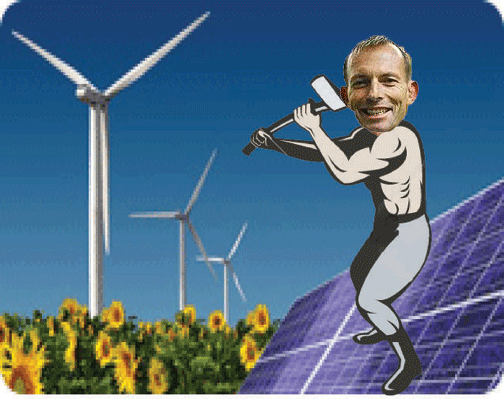 Epuron claims Abbott Government against wind energy, ABC News By Melinda Hayter 20 Jan 15 Renewable energy company, Epuron, claims federal government inaction on the Renewable Energy Target (RET) has Australians paying more for electricity than they should be.
An independent review into the target, which attracted more than 24,000 submissions, was released in August but the government is yet to release its response.
The New South Wales Greens recently cited a report which showed an 88 per cent reduction in investment in the renewable energy sector nationally last year.
Project Manager with Epuron, Donna Bolton, says banks remain wary of lending money to industry players, despite the review’s findings. “The review found that while there was a marginal increase in the cost of household electricity initially, the RET in its current state would actually bring electricity prices down,” she said.
“Despite this there’s been no action.
Epuron has windfarm interests in a number of areas of New South Wales, including the South West Slopes.
Ms Bolton says the government’s inaction has caused the industry to stall.
“It’s very difficult because it’s all about investment confidence,” she said.

“A bank looking to lend $400m, you need to know that that investment is rock solid, that the mechanisms behind it will stay in place and that your return on investment is reasonably secure.
“That’s not the case apparently, so investment has pretty much stopped.”………Epuron has accused the 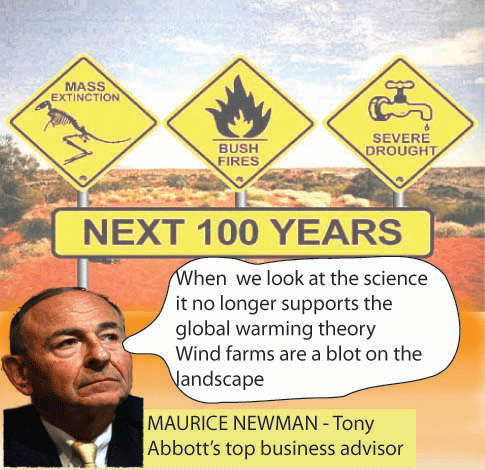 Abbott Government of being against wind energy.
“For some reason there is a lot of resistance, for particularly wind energy, in the current federal government, Ms Bolton said……“I believe the Abbott Government is firm in its belief that it wants to develop the coal industry to the maximum before that gate closes,” she said…..http://www.abc.net.au/news/2015-01-20/ret-comment/6026696
Gunnedah Shire Council takes the solar power plunge
 Gunnedah moves to solar power ABC News 19 Jan 2015, Gunnedah Shire Council is the latest in a string of local governments across the region to join a movement embracing solar energy to power public buildings.
The council is in the process of installing solar systems across a number of public buildings, including Council’s administration building, Gunnedah Shire Library and the works depot.
Mayor Owen Hasler said the buildings are historically high energy users and transitioning to solar is expected to save council thousands of dollars annually.
“We want to be seen as being proactive in reducing council’s carbon footprint, and secondly of course there’s also the financial implications,” he said.
“It reduces our operational costs and effectively makes savings for our ratepayers.
“For example in the depot, we’re expecting to save over $6,000 per annum and the administration building about $5,500.”……..http://www.abc.net.au/news/2015-01-19/gunnedah-moves-to-solar-power/6025214
Australia’s unstoppable solar energy revolution
“If you look at what the mainstream analysts are saying now, they are talking about the solar  revolution,” said Parkinson. “Even the energy distributors in Australia, they are talking about the end of centralisation and the rise of the micro-grid.” According to Parkinson, solar is now at “grid parity” with traditional sources of electricity.
 “You can’t address climate change using heavily centralised, obsolete, hideously risky fission reactors,” Milne told Al Jazeera. “It’s a humiliating stance. Australia needs to phase out fossil fuels and move to 100 percent renewable energy for the climate – and for our economy.”
Australia’s rising solar power ‘revolution‘, Aljazeera, After record-breaking solar project, scientists question why coal-dominated nation ignores renewable innovation. Royce Kurmelovs 13 Jan 2015 Adelaide, Australia – Australian researchers broke the world’s solar power efficiency record last month with their design of a novel commercial energy system, raising hopes the fossil-fuel dominated country may someday switch off its reliance on coal.
Led by Professor Martin Green, the University of New South Wales team worked with a local company to create a highly efficient solar energy system that uses mirrors to concentrate sunlight onto a central solar panel to generate electricity.
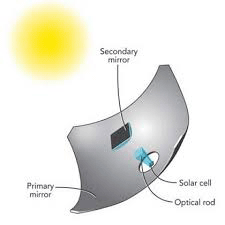 The method is known as concentrator photovoltaics (CPV), and the end product is a system with an efficiency of 40 percent – meaning 40 percent of the sunlight hitting the solar panels is converted into energy, the highest such level ever achieved.
Most importantly, the design uses readily available materials that makes putting the system into operation easier – and cheaper – than trying to commercialise more experimental designs.
Green, who is also the director for the Australian Centre for Advanced Photovoltaics, has a history of this kind of innovation.In 2011, he and his team built a solar cell that operated with 19.3 percent efficiency and soon after pushed this to 19.4 percent, edging out the previous record holder with 18.9 percent efficiency.
Off the grid
This kind of innovation has become the hallmark of the solar energy industry, and it is only going to grow, according to Green. Continue reading
Strong interest from South Australia and Victoria in ACT’s wind energy auction
ACT wind energy auction: And the winners are …. REneweconomy, By Giles Parkinson on 14 January 2015 The ACT government’s wind energy auction has thrown up some surprising winners, and none of the planned 200MW of wind turbines will be built within a bull’s roar of the nation’s capital, if market intelligence is correct. The ACT government advised the winning tenderers of their success just before Christmas, and have until early February to prove that they have the finance in place to build the projects.
The winners have not been publicly announced, and will be kept confidential. But through a process of elimination – i.e. by crossing out those among the 18 project tenders who concede they didn’t make it, there are three likely winners.
They are the Hornsdale wind project in South Australia – regarded as the country’s most prospective wind project because of its excellent wind resources. Industry estimates suggest that the project could be a go-er with a tariff of around $80/MWh…………
The second winner is thought to the small Coonooer Bridge wind project in Victoria. This is owned by Windlab, a spinoff of CSIRO which is based in Canberra. Coonoer is likely to be just 18MW, but will also likely have a level of community ownership through an innovative structure that we discussed here.
The third project is less certain but is thought to be the Ararat project owned by RES, also based in Victoria. It is also bidding for less than half of its nominated capacity of more than 220MW.
The ACT wind energy auction is important to the wind industry in Australia because the sector has been at a standstill for nearly two years. According to Bloomberg New Energy Finance, no new wind projects were financed in Australia in 2014 because of the Federal government’s attempts to nobble the renewable energy target.
That helped cause an 88 per cent slump in large scale clean energy investment, and pushed Australia down from 11th position to 39th in the world, below Myanmar and Honduras. For some international investors, the ACT auction was considered to be the last hope in Australia, given the uncertainty that continues around the RET.
Contrary to the federal government, which sees its future in coal, the ACT government hopes to source 90 per cent of its electricity needs from renewable energy sources by 2020. It will do this through a series of auctions – 40MW of large scale solar already completed, an initial run of 200MW of wind, and around 50MW of other large scale solar projects including storage, and 23MW of waste-to-energy projects.
The ACT government raised the prospect of winning tenders going to other states if the price was cheaper, although it did profess to have a strong “local content” component of the tender………….http://reneweconomy.com.au/2015/act-wind-energy-auction-and-the-winners-are-25695
News South Wales report on Renewable Energy progress in 2014
 NSW Gov releases progress report on renewables http://ecogeneration.com.au/news/nsw_gov_releases_renewables_annual_report/090661/ Thu, 8 January 2015 The NSW Government has released its annual report, Progressing the Renewable Energy Action Plan for 2014, which confirmed approximately 13 per cent of the state’s energy generation came from renewables in 2013.
The Annual Report, which details the progress of the NSW Government’s Renewable EnergyAction Plan found that the share of renewable energy in NSW’s electricity generation mix has almost doubled in the past 5-6 years.
Other key findings include:
- There are currently estimated to be more than 13,000 jobs supported by renewable energy in NSW. This includes 4,400 direct renewable energy jobs.
- Over 2,900 megawatt (MW) of projects with an estimated investment value of $5.9 billion and the potential to support around 14,000 construction jobs and 1,000 operational jobs, currently have development approval. All of these projects are located in regional NSW (August 2014).
- Total investment in small-scale solar photovoltaic (PV) in NSW has been $1.3 billion. 298,000 households have installed small-scale PV.
The report also identifies the key achievements from the period since implementing the Plan, which include construction commencing on AGL’s $450 million, 155 MW Solar Flagships project in Nyngan and Broken Hill, which the Government has played a key role in supporting and facilitating.
Dive in renewable energy investment in Australia, contrasting with global rise
Renewable investment dives in Australia, bucking global trend, SMH January 10, 2015 – Peter Hannam Environment Editor, The Sydney Morning Herald Investments in renewable energy rose to record levels globally in 2014 but fell sharply in Australia because of uncertainty triggered by the Abbott government’s review of the industry, Bloomberg New Energy Finance said.
Worldwide investment in wind farms, solar photovoltaics and other clean energy sources jumped 16 per cent last year to $US310 billion ($383 billion), or more than five times the tally of a decade earlier. Solar investments accounted for almost half the total.
China led the way, with investment soaring almost one-third to $US89.5 billion, while US investment gained 8 per cent to $US51.8 billion, and Brazil’s almost doubled to $US7.9 billion.
Australia, though, went the other way, with investment sinking 35 per cent to $US3.7 billion. BNEF said the amount was the “lowest since 2009, as wind and solar project developers delayed decisions while they awaited the government’s response to its Renewable Energy Target review”.
The Australian tally in fact masks a much steeper dive for large-scale renewable plants as small-scale solar PV largely held its own in 2014 even as state-based support schemes were wound back further.
“Four wind farms are currently under construction, but these signed contracts before the last RET review,” said Darren Gladman, the acting policy director for the Clean Energy Council.
“No more projects in the country have imminent construction plans.
“Australia is not just at risk of falling behind the rest of the world on renewable energy, we have already slipped off the back of the wave. We have some of the best sun, wind and waves in the world, but this new research shows that we are squandering some of our huge natural advantages.”
Fairfax Media sought comment from Industry Minister Ian Macfarlane, who has sought to cut the country’s renewable energy target from the current goal of 41 terawatt-hours annually by 2020 to as low as 27tWh.
So far, the Senate has blocked such a move but uncertainty over whether and when the goal will be reset has made it almost impossible to raise financing for new projects………..http://www.smh.com.au/business/renewable-investment-dives-in-australia-bucking-global-trend-20150109-12kqhk.html
Australian govt policy uncertainty leads to scrapping of Burdekin hydro power project
Meridian Energy Australia announced on Friday it would not proceed with the Burdekin hydro power generation project, which was intended to “harness the otherwise wasted power of the largest dam in Australia at Burdekin falls”………… Burge said regulatory uncertainty over the RET was the reason for not proceeding with the Burdekin project.
The project would have improved energy security in north Queensland, meeting the growing needs of agricultural and mineral businesses, and provided about 150 jobs during development and construction, the company said.
“Sadly, the decision to undermine the long-term investment signals of the RET makes it more difficult to realise these benefits for Queensland businesses and households,” Burge said.
The opposition leader, Bill Shorten, and the environment spokesman, Mark Butler, said the Meridian decision showed the government’s stance on the RET was costing jobs. Shorten and Butler said Labor would reopen RET negotiations if the government moved away from its position.“Australian families will have Tony Abbott to thank when their power bills rise because of his ideologically destructive approach to renewable energy,” they said in a joint statement.
Meridian is not the first company to cite RET uncertainty as a reason for shelving or cancelling projects. Silex Systems announced in August it was suspending a project to construct a large solar power station in Mildura, Victoria.
Keppel Prince Engineering, a wind turbine manufacturer based in Portland, Victoria, notified workers in October that 100 staff would be made redundant.
Other renewables companies have said the uncertainty has stopped them making long-term investment decisions. http://www.theguardian.com/environment/2014/dec/12/burdekin-hydro-power-project-scrapped-over-renewable-energy-target-concerns
Canberra’s Majura Valley solar farm will use advanced sun-tracking technology
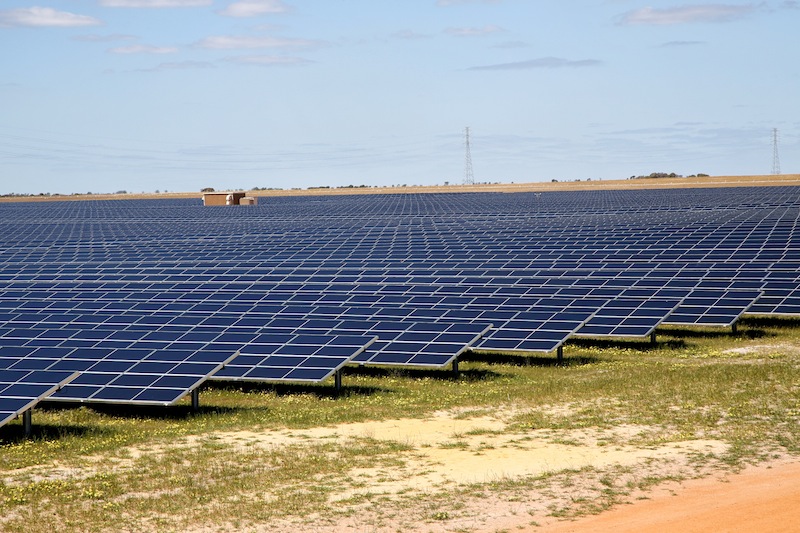 Majura Valley solar farm system tracks sun January 4, 2015 John Thistleton Reporter for The Canberra Times. Sun-tracking technology for solar panels will be deployed for the first time in Australia at a new solar farm in the Majura Valley on Canberra’s eastern fringe.
Solar Choice is developing and will operate the $6.5 million solar farm, which will feature a QBotix robotic tracking system, developed in California in 2012. The system is used in the United States, Japan and Europe.
Self-charging, track-mounted robots adjust the tilt and orientation of individual solar arrays throughout the day to gain maximum exposure to the sun.
Solar Choice, a brokerage firm which develops and manages solar projects throughout Australia and Britain, is finalising details for the 2MW first stage of its Canberra venture, which will generate about 3 million kWh of clean energy………http://www.canberratimes.com.au/act-news/majura-valley-solar-farm-system-tracks-sun-20150104-12hitb.html
Abbott government must hate Powershop – it’s making renewable sourced electricity cheaper!
 No wonder that the Abbott government is keen to wreck the Renewable Energy Target. Clever renewable electricity suppliers like Powershop are providing cheaper electricity – threatening Abbott’s backers – the polluting industries
Burge said that Powershop’s service was challenging the view put forward by major energy retailers that renewable energy would drive power bills up.
Miles George chairman of the Clean Energy Council and managing director Infigen Energy said that second tier generators had captured a “healthy” share of the retail energy market by offering discounts
“If we didn’t have a [target] those businesses wouldn’t be operating the way they are now and likely
Ben Burge, the man hoping to re-ignite the electricity market http://www.theage.com.au/it-pro/business-it/ben-burge-the-man-hoping-to-reignite-the-electricity-market-20150101-12fojw.html January 2, 2015 Andrew Colley Meet Ben Burge, the math whiz trying to shake up the staid retail energy market with a smartphone app and a good dose of analytics.
When he is away with the family, his mother-in-law pops by discreetly to do a load of washing. Her only explanation for his seemingly clairvoyant ability to know when to send her thank-you flowers is strategically placed web cams.
It’s a powerful tool and one he wants to put in the hands every Australian in a bid to take on the major energy retailers with cheaper and cleaner electricity.
 The truth is far more prosaic. Burge, chief executive of online retail energy challengerPowershop, knows when she’s there because the company’s app on his smartphone registers an unmistakeable spike in his home’s energy consumption. Burge, once Australia’s youngest CEO of a listed company, eMitch, at 25, and keen skateboarder, has already picked up 30,000 customers in Victoria whilst at the helm of what Powershop claims is the world’s first retail online energy market.
It lets consumers use a smartphone app (on iPhone and Android) or the web to monitor their energy consumption at home and choose the source of their electricity – from alternative energy projects including wind, solar or even sugarcane processing and landfill generation. A move that could help increase demand for renewable energy.
Some time early in 2015 the service will launch in NSW. Continue reading
Renewable Energy Target makes economic sense for Australia

 The economic case for renewable energy Brisbane Times,December 25, 2014 – Andrew Leigh “………Let’s start with electricity prices. This year, the Warburton review commissioned modelling by ACIL Allen showing that the RET delivers lower electricity prices for consumers. If the Abbott government cut the RET, the modelling showed, Australian consumers would pay more for their electricity. Puzzlingly, after presenting this evidence, the Warburton review recommended cutting the RET anyway.
How about employment? The RET creates jobs because it opens up new fields of activity: installing solar panels, building and maintaining wind farms, researching and developing new ways to capture wave and geothermal energy. More than 24,000 Australians were employed in the renewable energy sector in 2012. The Clean Energy Council estimates that a further 18,400 new jobs will be created by 2020 if the RET is retained in its current form.
Recent surveys put the jobless rate at about 6 percent, the highest rate since Tony Abbott was employment minister. Right now, more than 700,000 Australians are looking for work. In such a tight employment market, 18,000 more jobs should drive down the unemployment rate. If the government scales back the RET to what it calls a ‘true’ 20 per cent target (in reality, a 40 per cent cut), the Clean Energy Council’s modelling suggests 6200 less jobs will created over the next six years. Scrapping the RET altogether will see us lose the opportunity to create 11,800 new jobs.
Then there’s investment. Since the RET was introduced, more than $10 billion has already been invested in large-scale renewable energy projects like First Solar’s huge plants in the NSW towns of Nyngan and Broken Hill. First Solar says it has already invested about $142 million in its plants, creating more than 600 jobs in the process.
By contrast, scrapping the RET altogether will put at risk $11 billion of additional investment between now and 2020. Even scaling back the RET to the government’s preferred level has been modelled as leading to a $6 billion drop-off in investment. The renewable energy business is a good one to be in right now as countries and companies around the world look for ways to grow the supply of alternatives to coal and gas. It is perplexing that the Abbott government wants Australia to get out of this business just when there is the potential for a major international investment boom.
All this new investment and the jobs created as a result are clearly good for Australia’s economic growth. But the RET also has the potential to support growth in places where the decline of other industries would otherwise see them go backwards. In Geelong, IXL used to make components for the auto industry, but since Ford and other car companies announced their withdrawal from Australia, the company has switched to manufacturing steel mounting structures for solar farms. IXL is now a major supplier to First Solar’s two NSW plants, and has recently opened an Adelaide factory to keep up with the demand…….
By stimulating demand for this kind of manufacturing, the RET also has the potential to help communities such as Geelong and Elizabeth grow economically in the future.
For a government that once declared Australia ‘open for business’, it’s puzzling to see Mr Abbott putting a ‘closed’ sign on the renewable energy industry. Whether you want lower electricity prices, more jobs, or more investment, keeping the RET makes sense. Oh, and by the way, it’s good for the environment too.
Andrew Leigh is the shadow assistant treasurer and Member for Fraser. www.andrewleigh.com.
http://www.brisbanetimes.com.au/comment/the-economic-case-for-renewable-energy-20141225-12dcl5.html
South Australia scaling back feed -in solar payments to householders
 Payments slashed for solar homes that feed into grid in SA
But if you installed the same sized system before October 2011 you would potentially be pulling in $4836 per year.
Those payments will continue until June 30, 2028.
The retailer feed-in tariff, which must be paid by your energy provider, was set at 7.6c/kWh last year but fell to 6c once the carbon price was removed.
The Essential Services Commission of South Australia has further reduced it to 5.3c/kWh because it “reflects the forecast wholesale market value of photovoltaic (solar) electricity in the coming year’’.
“The proposed value is lower than the 2014 retailer feed-in tariff of 6.0 cents/kWh, due to the lower forecast wholesale market price of electricity,’’ ESCOSA says.
Individual energy retailers can elect to pay householders more for their power.
The original 44c/kWh feed-in tariff was taken up by more than 100,000 householders before it was closed by the Government in September 2011, and reduced to 16c/kWh. Householders who receive these payments are also eligible for the 5.3c payment which is paid by energy retailers.
Those who signed up before the cut-off receive the higher tariff until the scheme expires in 2028, costing an estimated $1.425 billion — an amount recovered through fees charged to all electricity customers.
The initially generous scheme was designed to foster the growth of the solar industry.
Solar panel prices have plummeted since then, with larger systems much more affordable now.
Victory for science and public health in removal of Waubra Foundation’s health charity status
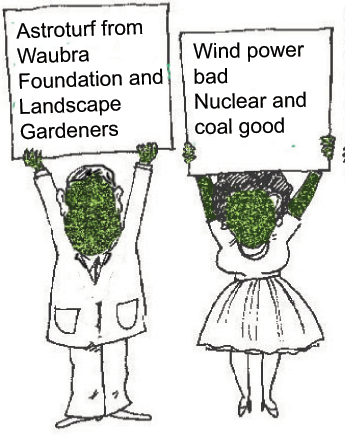 Removal of anti-windfarm group’s charity status is a ‘victory for science’, Shalailah Medhora, Guardian 19 Dec 14 Greens say decision by regulator to remove Waubra Foundation’s tax-deductible status is ‘a victory for science and a victory for public health’……..“The Waubra foundation should never have been granted status as health promotion charity, and the fact that it has now lost that status is a victory for science and a victory for public health,” Greens senator Richard di Natale said.
“I’m glad that we will no longer be lending legitimacy to an organisation that may be harming people in an effort to undermine an important source of clean and renewable energy.”……..
Simon Chapman, a professor of public health at Sydney University, said the foundation had “made it their business” to spread fear and mistrust of wind turbines……..
The Waubra foundation is named after the Victorian town of Waubra, which has become a hub for wind-powered energy, with 128 turbines in the area.
Many of the town’s inhabitants have distanced themselves from the group, and called on it to remove the town’s name from its title…….http://www.theguardian.com/environment/2014/dec/19/removal-of-anti-windfarm-groups-charity-status-is-a-victory-for-science
New technology will double savings for solar panel owners in Canberra
“Unlike traditional generators, consumers who become prosumers can can flip, so when electricity prices are low they will be consumers, when prices are high they will be generators.

Reposit Power’s GridCredit technology a game changer for energy market, Canberra Times, December 14, 2014 – John Thistleton Solar panel owners will more than double their savings with new technology being launched today. Owners of solar panels in Canberra will be offered new technology from Monday, which will more than double their savings on electricity prices.
A group of investors and electricity industry specialists are investing almost $100,000 to commercial the system, which they believe will be a game changer for the energy market.
Our goal is to get their bill as low as possible. Luke Osborne
The Australian Renewable Energy Agency will announce $445,000 funding for Canberra technology company Reposit Power to trial the solar storage and trading system, ahead of a national roll-out next year.
Reposit director Luke Osborne says for the first time solar customers can store their renewable energy and sell it back to the grid for a profit. Continue reading
1 This month

of the week – Australians for War Powers Reform (AWPR)
To see nuclear-related stories in greater depth and intensity
 Antinuclear