Two pieces of news re Radiation and Health
Tony Webb , Feb 26, 2026
1. Today saw release of a report prepared for the US Department of Energy that will, alongside others from US agencies like OSHA, be feeding into the US NRC review of radiation Protection Standards mandated by the Trump Directive (EO 24300) issued in May last year. The NRC draft of revised regulations on Radiation Safety is expected 30 April 2026. The attached report to the US DoE – with particular significance for radiation safety for workers in and populations living close to nuclear power reactors – gives a clear indication of how this process is likely to result in significant weakening of protection standards
In summary it advocates
- abandoning the Linear No Threshold and As low as Reasonably Achievable principles that offer some protection at low levels of exposure based on the principle that there is no safe level of exposure
- resetting the annual occupational exposure limit to 100 mSv – a doubling of the current US standard of 50mSv and a five-fold increase in the 20mSv annual occupational standard that applies in most other countries including Australia
- raising the public exposure limit from 1 mSv to 5 mSv
I think we can expect other US agencies to submit similar reports
2. As previous posts on this issue have noted these proposals to weaken radiation protection for workers and the public come at a time when the evidence is mounting from studies of workers and communities exposed to radiation releases in and from Nuclear power pants for a revision that would tighten the current standards. Today saw the release of a new book by Ian Fairlie – The Dangers of Ionising Radiation: A Scientific Guide to Radiation Risks for Government Agencies, Legal Professionals and Medical Clinicians has just been published (Ethics International Press. 2026) https://ethicspress.com/products/the-dangers-of-ionising-radiation As anticipated this updates much of the earlier work in Ian Fairlie and Cindy Folkers book –
The Scientists Who Alerted Us To The Dangers of Radiation – providing details on the nature of the health risks and the evidence that current standards seriously underestimate these risks – The Ethics Press site provides a link https://eipcontents.s3.eu-north-1.amazonaws.com/master/samples/978-1-83711-586-0.pdf that allows you to read the first 30 pages of the book that provide a summary of what follows – worth a read that will I hope prompt you to order the book and recommend it to people in your networks
Nuclear Kills Kids

most significant of all there is now solid evidence of increased rates of leukaemia in children living close to nuclear power plants.
Tony Webb | April 28, 2025, https://www.fabians.org.au/nuclear_kills_kids
One moment from my work in the USA in the early 1980s stands out in my memory. I’d driven from Chicago to Cleveland at the invitation of the Health and Safety Officer of the US Boilermakers Union. The purpose was to speak to the members meeting held on the night ahead of the recruitment of members for work on the annual ‘clean-up’ of the local Nuclear Power plant. The hired workers would be ‘radiation sponges’ – short-term casuals recruited for the ‘dirty jobs’ that would result in significant radiation exposures sometimes up to the permitted annual exposure limit and ‘let go’ if they reached that limit. The practice offered some protection to the company’s full -time employees whose skills would be needed on an ongoing basis and whose exposures needed to be kept below the limit. The meeting was well attended , rowdy, with a lot of questions and discussion which spilled over into the carpark after the meeting closed. I noticed one man hanging back from the circle and invited him to join and share his thoughts. As I recall them the essence was:
“I will be going in to apply for work tomorrow. I understand what you shared about the risks . . . no safe level of exposure and chance of getting cancer perhaps 20 years from now . . . It will put a roof over my family’s heads and food on the table . . . BUT my wife and I have had all the family we want. If we hadn’t, what you shared about the genetic risks, the damage to our children and future generations . . . no I wouldn’t be going . . . “
It is a sad fact that workers, both men and women will choose, often from necessity, to put their health at risk from the work environment. What is however consistent in my experience of working on radiation and other occupational health and safety issues is that they are far more concerned, cautious and likely to prioritise safety when it comes to risks to their children.
We now have solid evidence(1) that workers in nuclear power plants routinely exposed to radiation face significantly increased cancer risks, risks of cardiovascular disease including heart attacks and strokes, dementia and potentially other health effects. There is also an increased risk of genetic damage that can be passed on to their children and future generations. But perhaps most significant of all there is now solid evidence of increased rates of leukaemia in children living close to nuclear power plants.
To put it simply and in language that will resonate with workers and their families in the communities around the seven nuclear power plant sites the federal Liberal-National Coalition proposes to build if elected to government, nuclear kills kids. It matters little whether or not these nuclear plants can be built on time, within budget, make a contribution to climate change, reduce electricity prices, or secure a long-term energy future; these nuclear power plants will likely kill kids who live close by. They cannot operate without routine releases of radioactive material into the environment and our young will be exposed and are particularly susceptible to any exposure that results.
Now add to that if you care that women are more susceptible than men; that workers in these plants face greater exposure and health risks than adults in the community; that nuclear plants have and will continue to have both major accidents and less major ‘incidents’ resulting in radiation releases, community exposures and health damage. Add also that quite apart from the workers and others exposed when these plants need to be decommissioned, the radioactive wastes resulting from perhaps 30-50 years life will need to be safely stored and kept isolated from human contact for many thousands of years longer than our recorded human history. And, again if you care, also add in the concerns around proliferation of nuclear weapons which historically has occurred on the back of, enabled by and sometimes concealed by countries’ developing so called peaceful nuclear power.
All these arguments add weight to the absurdity of Australia starting and the world continuing down this nuclear power path. But if we want a single issue that strikes at the heart of human concerns it is this – and forgive me saying it again, it needs to be repeated many times until the electorate in Australia hears it loud and clear – Nuclear Kills Kids.
SOURCES……………………………………………………………………………………………………
Those left behind: The long shadow of Britain’s nuclear testing in Western Australia
WA TODAY, ByVictoria Laurie, August 10, 2025
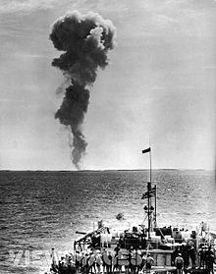
son, a daughter and a grandson of Australian servicemen exposed to nuclear testing have made an emotional pilgrimage up to the remote Montebello Islands to capture details of an era with – literally and metaphorically – enduring fallout.
Paul Grace, Maxine Goodwin and Gary Blinco recently stood together in the ruins of a bomb command centre overlooking the scene of three British nuclear tests in the 1950s that few younger Australians have ever heard of.
As the world commemorates Japan’s wartime nuclear blasts in Hiroshima and Nagasaki, the trio say Australians should not forget the impact of atomic tests conducted on West Australian soil in the 1950s, starting with Operation Hurricane in 1952 and followed by two more tests in Operation Mosaic in 1956. Other atomic tests at Emu Field and Maralinga bookended the Montebello series.
Grace, Goodwin and Blinco all know the tests left a family legacy of death or ill-health – and lingering contamination 70 years later on several islands. On a recent expedition up to the Montebello archipelago, 80 kilometres offshore from Onslow, the trio gathered documentary and archival material while filling gaps in their own family histories………………………
For Grace and Goodwin, the most poignant moment was when they stood on the tarmac at Onslow airport in the exact spot where his grandfather and her father posed for a photograph with No 86 Transport Wing Detachment RAAF, to commemorate the successful test of Britain’s first ever nuclear bomb detonation on October 3, 1952.
“They performed what they called ‘coastal monitoring sorties’ after testing, but that was code for looking for fallout – the British had promised that no fallout would reach the mainland.”
Grace’s grandfather wrote later: “As pilot of the aircraft, I would have been the most exposed crew member, being shielded only by the Perspex of the front and side windows. The navigator, radio operator and Mr Hale being in the body of the aircraft had, presumably, more protection.
“Further to the above, after leaving the atomic cloud, we spent approximately two more hours in a radioactive airplane (as proved by the Geiger-Counter check) during the return to Onslow, landing, parking and shut-down.”
Maxine Goodwin’s father died of lymphatic cancer aged 49, when she was 16.
“He would have been servicing contaminated aircraft, so my mother and I do believe his illness was the result of his participation in the nuclear tests,” she says…………………………………………….
……………………………………. a 2006 DVA study of Australian participants in British nuclear tests in Australia showed an increase in cancer deaths and cancer incidence (18 per cent and 23 per cent respectively) than would be expected in the general population.
“They tried to explain these figures away, but they are really quite damning,” says Paul Grace, an author whose book Operation Hurricane gives a detailed account of the events and personnel involved in UK nuclear testing in Australia.
The three descendants of nuclear veterans describe the Montebello Islands as haunting but beautiful. “Within the landscape, you’ve got an incredible number of Cold War artefacts lying around, what the British referred to as ‘target response items’,” says Grace………………………………………………………………………
The nuclear fallout was not limited to those servicemen involved. Still affected 70 years later are large tracts of land and seabed across the Montebello archipelago.
New research into plutonium levels in sediment on some islands have found elevated levels up to 4500 times greater than other parts of the WA coastline. The research by Edith Cowan University, released in June, was supported by the Australian Radiation Protection and Nuclear Safety Agency. Visitors are urged to spend no more than an hour on some islands.
Grace says the Montebello story is a cautionary tale of Australia’s over-eagerness to host Britain’s nuclear test series, and of UK authorities’ lack of safety and casual attitude toward radioactive drift.
“It forces you to question the wisdom of tying Australia’s defence to powerful allies, especially in the context of the current debate over AUKUS, where the benefits are vague and shifting and the costs will only become clear decades in the future,” she says.
It might seem like we are doing the same thing all over again.” https://www.watoday.com.au/national/western-australia/those-left-behind-the-long-shadow-of-britain-s-nuclear-testing-in-wa-20250808-p5mlj9.html
Australians once feared the health impacts of nuclear. Now nobody’s talking about it

SMH Angus Delaney, May 1, 2025
In 1982, Helen Caldicott, one of Australia’s most prominent anti-nuclear campaigners, spent an hour with Ronald Reagan at the White House, warning the then-president about the dangers of nuclear.
“I came out of that saying I thought, because I’m a physician, that he had impending Alzheimer’s,” Caldicott, now 86, says. “Which he did.”
Caldicott fears Australia’s memory is also faltering.
From her home in regional NSW, Caldicott says people have forgotten that period where anti-nuclear activism was a key cause of the left and nuclear safety fears ran high.
As Australians prepare to cast a vote in an election which could have huge implications for the country’s energy future, nuclear proponents dismiss Caldicott’s fears as outdated.
But they are still lurking in the debate as an unspoken question over the Coalition’s policy to build seven nuclear plants nationally to offset the decline of coal power and help Australia reach net zero emissions by 2050.
When asked if nuclear energy production was a safety risk to Australians in April, Prime Minister Anthony Albanese dodged the question and said the main reason for the concern was “about the economy”.
His government, in lockstep with the Coalition, is investing billions in a fleet of nuclear-powered submarines under the AUKUS pact.
At the final leaders’ debate on April 27, Opposition Leader Peter Dutton said the government’s endorsement of AUKUS proved nuclear power was not dangerous.
“Who in his or her right mind would sign up to a nuclear submarine and put our sailors onto the submarine thinking that there was a concern about safety?” he said on Channel Seven.
But in recent weeks, Dutton has avoided drawing attention to his nuclear policy, and Labor has attacked him over not visiting the sites of the Coalition’s proposed reactors.
The issue was dragged onto centre stage this week as anti-nuclear protesters disrupted a Dutton campaign event and press conference – and their theatrics largely played on the fears people have around nuclear safety.
If Dutton were to form government, safety could come to the fore again because it would need to overturn the federal ban on nuclear energy, implemented in 1999 by John Howard in a deal with the Greens.
Despite the dangers being dismissed by Labor and the Coalition, Caldicott remains concerned about nuclear waste being improperly stored in Australia and contaminating water supplies – or even a Chernobyl-like reactor meltdown.
“It’s not being discussed at all, which is amazing to me”, Caldicott says. “People are very ignorant.”
…………………………………………………………………………………………………………………….. UNSW associate professor Mark Disendorf says the fears are valid. He says earthquakes are common in the Hunter Valley – the site of one proposed reactor – and is concerned by a German government study that has shown proximity to a nuclear power plant increased the likelihood of leukemia for children under five.
He says that the argument that Australia’s stringent safety regulations and access to modern technology would make it immune to the dangers was “invalid because Australia has so little experience”.
In a statement, the Australian government’s primary authority for radiation protection and nuclear safety says nuclear power plants are designed to be safe and have significantly improved their operations in recent decades, “but cannot be considered entirely risk-free”.
……………….. “Australia does not have a large nuclear sector and there is low familiarity with nuclear science in the wider community,” it says.
A generational divide and ideological opposition to renewables are two explanations as to why anti-nuclear sentiment has faded, says social trends researcher and director of research at 89 Degrees East, Rebecca Huntley………………………………………………………………………………………. https://www.smh.com.au/environment/climate-change/australians-once-feared-the-health-impacts-of-nuclear-now-nobody-s-talking-about-it-20250324-p5lm2k.html?btis=&fbclid=IwY2xjawKA7V5leHRuA2FlbQIxMQBicmlkETFISGV5ZEdSZW16a2ZnQzh3AR54eVK6JF8ohdYybFhLGtY2D9k94_z5LqoVHO8xa7LOALj64JcGRZvN5lMgWA_aem_rgh9nTz4UR4AV7RXbwaoig
Doctors fear health fallout from nuclear energy plans
Canberra Times, By Marion Rae, February 12 2025
Doctors have warned of no “safe” level of radiation from a proposed network of nuclear reactors as battlelines are drawn for the federal election.
Similar to other nuclear-powered nations, Australians living within a certain radius of a reactor would need to be issued potassium iodide tablets for use in a radiation emergency, a nuclear briefing has learned.
“The only reason that everyone in that radius is given that is because they might need it,” Assistant Minister for Climate Change and Energy Josh Wilson told a nuclear briefing on Tuesday.
If anyone comes to buy your house, the proximity of a reactor will be noted on the land titles register, and insurers will not cover nuclear accidents, he said.
The warning came as doctors fronted parliament to warn of long-term health risks for workers and surrounding communities, particularly children.
Evidence included a meta-data analysis of occupational and environmental exposure that accumulated data on more than seven million people.
It found living within 30km of a reactor increased overall cancer risk by five per cent, with thyroid cancer increasing by 14 per cent and leukaemia by nine per cent.
A separate study of workers in the nuclear industry in France, the United Kingdom and the United States analysed results from more than 300,000 people who were monitored for over 30 years.
Finding not only increased cancer rates but surprisingly increased rates of heart attacks and strokes, it found impacts at low doses were larger than previously thought.
“There is no ‘safe’ lower dose of radiation. The science is clear. All exposure adds to long-term health risks,” vice-president of the Medical Association for Prevention of War Dr Margaret Beavis said……………………………
Under the coalition’s nuclear energy blueprint, seven reactors would be built across five states to replace ageing coal-fired power plants with more gas-fired plants to provide baseload power in the interim.
“Zero-emissions nuclear plants” are a key part of the Nationals’ election pitch to regions where coal plants are already closing, while Labor is pressing ahead with the transition to renewable energy backed up by big batteries.
Public Health Association of Australia spokesman Dr Peter Tait said the idea that the nuclear industry was free of greenhouse gas emissions was a “furphy”, given the construction and uranium supply chain involved.
Emissions would rise threefold under the nuclear plan due to increased coal and gas use, he warned, with the first plant not due to come online until the late 2030s.
From a public health perspective, Australians can’t afford that delay, Dr Tait said.
Executive director of Doctors for the Environment Dr Kate Wylie said prolonging the dependency on fossil fuels would mean more Australians would be affected by their known health risks, including increased rates of asthma.
Nuclear energy would also put communities at risk during the next drought, when reactors would be first in line for scarce water, Dr Wylie said.
“The ethical thing to do is to choose the least water-intensive energy sources, which are wind and solar,” she said. https://www.canberratimes.com.au/story/8890265/doctors-fear-health-fallout-from-nuclear-energy-plans/?fbclid=IwY2xjawIan3hleHRuA2FlbQIxMQABHaAJ7wF9BUi9CgA1_tQDXS5gC2WCrX8HSFZUrOQPGgXABnNkhEvlgHKolQ_aem_OShH2FPpE3tO3RIv_gAgBg
Nukes kill kids
Dr Tony Webb, 17 Jan 25
One moment from my work in the USA in the early 1980s stands out in my memory. I’d driven from Chicago to Cleveland at the invitation of the Health and Safety Officer of the US Boilermakers Union to speak to the members meeting held on the night ahead of the recruitment of members for work on the annual ‘clean-up’ of the local Nuclear Power plant. The hired workers would be ‘radiation sponges’ – short-term casuals recruited for the ‘dirty jobs’ that would result in significant radiation exposures sometimes up to the permitted annual exposure limit and ‘let go’ if they reached that limit. The practice offered some protection to the company’s full -time employees whose skills would be needed on an ongoing basis and whose exposures needed to be kept below the limit. The meeting was well attended , rowdy, with a lot of questions and discussion which spilled over into the carpark after the meeting closed. I noticed one man hanging back from the circle and invited him to join and share his thoughts. As I recall them the essences was:
“I will be going in to apply for work tomorrow. I understand what you shared about the risks . . . no safe level of exposure and chance of getting cancer perhaps 20 years from now . . . It will put a roof over my family’s heads and food on the table . . . BUT my wife and i have had all the family we want. If we hadn’t, what you shared about the genetic risks, the damage to our children and future generations . . . no I wouldn’t be going . . . “
It is a sad fact that workers, both men and women will choose, often from necessity, to put their health at risk from the work environment. What is however consistent in my experience of working on radiation and other occupational health and safety issues is that they are far more concerned, cautious and likely to prioritise safety when it comes to risks to their children.
We now have solid evidence that workers in nuclear power plants routinely exposed to radiation face significantly increased cancer risks, risks of cardiovascular disease including heart attacks and strokes, dementia and potentially other health effects. There is also an increased risk of genetic damage that can be passed on to their children and future generations. But perhaps most significant of all there is now solid evidence of increased rates of leukaemia in children living close to nuclear power plants.
To put it simply and in language that will resonate with workers and their families in the communities around the seven nuclear power plant sites the federal Liberal-National Coalition proposes to build if elected to government; nuclear kills kids. It matters little whether or not these nuclear plants can be built on time, within budget, make a contribution to climate change, reduce electricity prices, or secure a long-term energy future; these nuclear power plants will kill kids who live close by. They cannot operate without routine releases of radioactive material into the environment and our young will be exposed and are particularly susceptible to any exposure that results.
Now add to that if you care that women are more susceptible than men, that workers in these plants face greater exposure and health risks than adults in the community, that nuclear plants have and will continue to have both major accidents and less major ‘incidents’ resulting in radiation releases, community exposures and consequent health damage. Add also that quite apart from the workers and others exposed when these plants need to be decommissioned, the radioactive wastes resulting from perhaps 30-50 years life will need to be safely stored and kept isolated from human contact for many thousands of years longer than our recorded human history. And, again if you care, also add in the concerns around proliferation of nuclear weapons which historically has occurred on the back of, enabled by and sometimes concealed by countries’ developing so called peaceful nuclear power.
All these arguments add weight to the absurdity of Australia starting and the world continuing down this nuclear power path. But if we want a single issue that strikes at the heart of human concerns it is this – and forgive me saying it again, it needs to be repeated many times until the electorate in Australia hears it loud and clear – Nuclear Kills Kids
Where is the ‘mature debate’ about the health impacts of nuclear power?

By Margaret Beavis, January 2 2025, Canberra times 2/1/25 https://www.canberratimes.com.au/story/8857513/margaret-beavis-health-risks-near-nuclear-plants-exposed/
When it comes to nuclear radiation, there is a clear disconnect between the medical evidence and the views of the Coalition. Since the 1950s we have known there is a link between X-rays in pregnant women and leukemia and other cancers in their children. It is not for nothing there are signs in every radiology department asking if you are pregnant.
The current shrill denunciations of potential health risks associated with nuclear power plants as a “scare campaign” may yet prove to be an own goal, as it has drawn attention to the issue. Communities considering hosting a nuclear reactor should be aware of the evidence regarding real-world health impacts. Informed consent matters, in politics as well as medicine.
Extra cases of leukaemia occurring in children living near nuclear power plants have caused concern and controversy over decades. In the 1980s excess cases of leukaemia and lymphoma were noticed around the Sellafield nuclear plant in England.
A UK government investigation unexpectedly found that the risks for leukaemia and lymphoma were higher than in the surrounding population. In 2007, the US Department of Energy examined all the reliable data available worldwide, confirming a significant increase in leukaemia for children living near nuclear power plants..
The clearest findings on this subject come from a large national German study from 2008, which examined leukaemia among children living near any of Germany’s 16 operating nuclear plants over a 25-year period.
It showed that the risk of leukaemia more than doubled for children living within 5 km of a nuclear plant. Nuclear proponents quote a UN study with an 80 km radius showing no harm, but the much larger distance dilutes any problems for those living much closer.
Just last June, a very large (over seven million people) meta-analysis of reliable data from a range of studies found residents of any age living 20-30 km from nuclear power stations had an average 5% increased cancer risk, and again children under five were the worst impacted. Thyroid cancer increased by 17 per cent and leukemia by 9 per cent.
For workers in the nuclear industries, there is also clear evidence of increased risk of death from cancer. Indeed, recent findings show even some non-cancer diseases are increased, such as heart attack and stroke.
The best evidence for this comes from INWORKS, a multi-country study of over 300,000 radiation industry workers observed for more than 30 years. Their radiation exposures and health outcomes were carefully monitored and compared with the general population.
The cancers caused by radiation blend in with other cancers – they are not like the characteristic mesothelioma caused by asbestos. The heart attacks and strokes have the same problem. As a result, it takes large population studies and careful long-term monitoring to know what the risks are.
The Coalition has also made claims linking radiology, radiotherapy and nuclear medicine to nuclear power that are patently false and deliberately misleading.
A letter sent by Coalition MPs to their constituents earlier this year claimed that: “Nuclear energy already plays a major role in medicine and healthcare, diagnosing and treating thousands of Australians every day”.
We do not have, and have never had, nuclear power in Australia, and the nuclear power proposal has no connection to our world class nuclear medicine, radiology or radiotherapy services.
Doctors are increasingly concerned about the radiation exposures from medical imaging, particularly in children. CT scans and nuclear medicine scans are done only when essential, and the benefit outweighs the risks. We worry about cumulative lifetime exposures, especially in children.
But perhaps the biggest health issue of all with the Coalition’s proposal is the increased use of coal and gas, for decades to come. Climate change has started, and we have to take action as soon as possible.
From a health perspective, recklessly worsening future heat waves, fires, storms, floods and droughts by delaying the transition from coal for political gain is unconscionable.
Finally, the Coalition’s response to my public submission and testimony to a government inquiry has been to attack me as a past Greens candidate. They neglect to report my qualifications to speak on this.
In playing the man and failing to address the evidence, they fail their own request for an adult conversation on nuclear energy.
Nuclear industry workers face significant, inevitable and unavoidable radiation health risks
By Tony Webb, 24 June 24, https://johnmenadue.com/nuclear-industry-workers-face-significant-inevitable-and-unavoidable-radiation-health-risks/
Nuclear industry workers face significant, inevitable and largely unavoidable radiation health risks which have so far not been addressed in the debate about Australia possibly buying into this industry.
In addition to the important arguments against the coalition policy that currently proposes building seven nuclear power plants to replace closing coal fired generators, notably that such:
will be likely cost about twice that of firmed renewable generation and take at least 15 years to build – and this in the context where most nuclear plant construction worldwide appears to routinely involve a doubling of both cost and time to build
– and so are dangerously irrelevant to meeting the existential challenge to reduce carbon and methane emissions that are driving climate change;
will require legislative changes at state and federal levels that are to say the least unlikely to be achieved;ignores the challenge of developing workforce skills to manage this technology;
ignores the as yet intractable if not insoluble problem of managing long lived nuclear wastes;
and poses significant risks to the public in the event of nuclear accidents as witnessed in the USA, Ukraine/former USSR, and Japan;
There is also an inevitable and unavoidable risk to workers in the industry and public ‘downwind’ from such reactors from routine exposure to ionising radiation.
This last has to date received little attention and whenever raised results in dismissive but misleading arguments from the nuclear industry advocates, notably that any such exposures to individuals are small and pose little, indeed ‘acceptable’ health risks compared to other risks faced in day to day living and working. Tackling this misinformation as part of the campaign has much to offer in convincing the nuclear target communities and the workers in these that might be seduced by prospects of employment in these facilities that the risks they face are far from insignificant – that, as a community they will face an increase in the incidence of fatal and ‘treatable / curable’ cancers, an increase in other, notably cardio vascular diseases and increased risk of genetic damage affecting children and future generations.
Allow me to introduce myself. I have been an active campaigner on the health effects of ionising radiation since the late 1970s. With two colleagues in 1978 I founded the UK based Radiation and Health Information Service that highlighted the evidence showing the risk estimates from radiation exposure, on which the national and international occupational and public exposure limits were based, grossly under-represented the actual risk.
This radiation-health argument was developed as part of a national campaign that resulted in a significant change of the, until then, pro-nuclear policies of UK unions with members in the industry and a review of Trade Union Congress policy in 1979. It was also an integral part of the union-led national Anti-Nuclear Campaign opposing the Thatcher government’s nuclear expansion – revealed in leaked cabinet minutes as part of the government strategy for undermining the power of the unions, particularly the National Union of Mineworkers (NUM), the Transport and General Workers Union, (T&GWU) and the General and Municipal, Boilermakers’ and Allied Trades union (GMBATU). In late 1980 I took this work on Occupational Radiation risks to the USA establishing the US Radiation and Health Labor Project, auspiced by the Foundation for National Progress / Mother Jones Magazine, that built union support across the country for AFL-CIO policy calling for a reduction in the occupational exposure limit.
Subsequently I worked as a consultant to the Canadian union (CPSU – local 2000) representing workers in the nuclear power industry and built a Canadian coalition of five Unions representing workers exposed to radiation on the job. Linking these North American union demands with those of UK and European unions (also similar concerns from unions in Australia following a 1988 organising tour) reinforced pressures from within the scientific community – notably the US Biological Effects of Ionising Radiation (BEIR) committee.
These sustained pressures led eventually to the International Commission on Radiological Protection (ICRP) reducing the recommended limits for permissible occupational (and public) exposures in 1991. Despite evidence that would have justified a ten-fold reduction (from the 50 mSv annual occupational limit to a limit of 5 mSv) the ICRP limit was only reduced by 40% (to 20 mSv a year but with individual exposures still permitted to 50 mSv in any year so long as the average over 5 years was no higher than 20 mSv).
Since then, a large-scale study of UK, EU, and US nuclear industry workers has shown radiation-induced cancer risks to be on average 2.6 times higher than the estimates used to set the ICRP limits. To put it in simple if statistical terms, the lifetime cancer risk for a worker exposed to the permissible annual dose of radiation over say a 25-year career would be of the order of 6.5% higher than normal. To this should be added the significant health effects of non-fatal cancers, an approximate doubling of the normal rate of cardio-vascular disease and a not insignificant increase in genetic damage to workers children and future generations. Nuclear industry workers face significant, inevitable and largely unavoidable radiation health risks which have so far not been addressed in the debate about Australia possibly buying into this industry.
What needs to be more clearly understood however is that the concern is not just in relation to risks faced by individuals exposed on the job, or from relatively small amounts of radiation released from routine operations of nuclear plants. What is of far greater public concern is the impact of the collective exposure. What is not fully appreciated is that there is simply no safe level of exposure – any dose however small may be the one that causes damage at cellular level in the human body that may show up years later as cancer, genetic damage or some other health effect. it is the total/collective dose that will determine the number of such health effects. Spreading the dose over a larger population will reduce the risk to any individual but not the total health effects. Indeed, it may increase it. An individual affected by cancer can only die once.
These arguments carry weight. They formed a significant part if the discussions within the 2016 South Australian government’s ‘Citizens Jury’ convened to consider proposals to import and store around a third of the world’s nuclear wastes. The concern about radiation and health received special note in the report of this jury to the SA Premier that a two-thirds majority said ‘no – under any circumstances’ to the radioactive waste proposal. The issues can also form the basis for increased collaboration between the trade union, environment, medical reform and public health movements as was the case in the mid 1990s when UK, Labour MP Frank Cook convened a Radiation Roundtable that brought together representatives of these constituencies.
So, within the current debate about a possible Australian Nuclear Power program – alongside the arguments already made about its excessive cost, extended construction time frame, ill-fit within an essential decentralised renewable energy program, risks of major accidents, and the intractable problems of multi-generation waste management, can we please add this concern over health effects that will inevitably result from occupational and public exposures to radiation. Can we particularly focus the attention of trade unions and their members in the seven former coal-fired generation-dependent communities on the effect of these exposures on health of workers who might seek to be employed in operating these facilities and on the health of their families, neighbours, and future generations.
A key demand from unions should be that the occupational limit for annual radiation exposures cbe reduced from the current ICRP level of 20 mSv to a maximum of 5 mSv a year with a lifetime limit of 50 mSV. This revision of standards would put real pressure on the nuclear industry – the current uranium mining and any future enrichment, fuel fabrication, nuclear generation, fuel reprocessing, and waste management – to keep such exposures as low as possible. In the unlikely event of any of the reactor proposals getting the go-ahead there should be baseline monitoring of the health of the community and any workers employed so that any detrimental increase in health effects can be detected early and possibly remediated in the future.
Australia does not need a new “nuclear medicine” factory – clean, safe, cyclotrons can do the job.

I read with interest Liam Mannix’s report in yesterday’s edition of The Sydney Morning Herald regarding the new nuclear medicine factory but was surprised that with his scientific knowledge he did not question the need for this facility so aptly described as a factory
27 Sept 23
Mannix would be well aware that the medical profession worldwide is turning away from reactor generated medicine due to its inherently dangerous and risky nature and its extremely high manufacturing costs
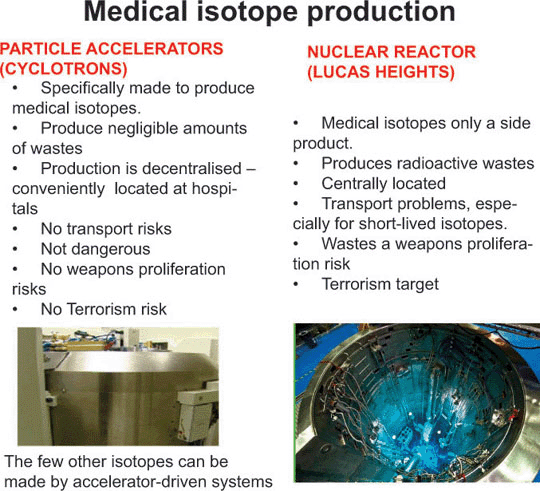
The isotopes generated by reactors for medical purposes such as at Lucas Heights are being replaced mainly by cyclotron produced isotopes but also other alternatives which are completely free of any risk to the patients and can be produced by relatively easier and safer means at a greatly reduced cost than at Lucas Heights
The only reason that isotopes produced by nuclear reactors are used for medical purposes is that their manufacture is invariably highly and unrealistically subsidised by government grants as is the case with ANSTO in Australia which is globally a prime example of that largesse .
The rapid growth in the international use of cyclotron isotopes for medical therapies is making the production of isotopes by nuclear reactors (like at Lucas Heights) obsolete
As a result there is now need for a new facility for the continued production of isotopes for medical purposes by ANSTO and in fact the current production at Lucas Heights could be stopped immediately with huge savings in government expenditure and no effect on the provision of medical therapies due to the use of much safer alternatives
ANSTO is claiming that the major part of its existence representing 80% of its undertaking is the current production of nuclear medicine isotopes by using its OPAL reactor at Lucas Heights for that purpose but this appears to be no more than a self perpetuating exercise to justify its survival
It is therefore a completely nonsensical if not deliberately disingenuous statement by Science Minister Ed Husic to claim that the “nuclear medicine precinct (of ANSTO) in Sydney will revolutionise the domestic production of nuclear medicines and improve the lives of thousands of Australians”
Reducing the risks of nuclear war — the role of health professionals
By – Kamran Abbasi, Parveen Ali, Virginia Barbour, Kirsten Bibbins‐Domingo, Marcel GM Olde Rikkert, Andy Haines, Ira Helfand, Richard C Horton, Bob Mash, Arun Mitra, Carlos A Monteiro, Elena N Naumova, Eric J Rubin, Tilman A Ruff, Peush Sahni, James Tumwine, Paul Yonga and Chris Zielinski
Med J Aust || doi: 10.5694/mja2.52054, 7 August 2023
In January 2023, the Science and Security Board of the Bulletin of the Atomic Scientists moved the hands of the Doomsday Clock forward to 90 s before midnight, reflecting the growing risk of nuclear war.1 In August 2022, the UN Secretary‐General António Guterres warned that the world is now in “a time of nuclear danger not seen since the height of the Cold War”.2 The danger has been underlined by growing tensions between many nuclear armed states.1,3 As editors of health and medical journals worldwide, we call on health professionals to alert the public and our leaders to this major danger to public health and the essential life support systems of the planet — and urge action to prevent it.
Current nuclear arms control and non‐proliferation efforts are inadequate to protect the world’s population against the threat of nuclear war by design, error, or miscalculation. The Treaty on the Non‐Proliferation of Nuclear Weapons (NPT) commits each of the 190 participating nations “to pursue negotiations in good faith on effective measures relating to cessation of the nuclear arms race at an early date and to nuclear disarmament, and on a treaty on general and complete disarmament under strict and effective international control”.4 …………………………………………
Any use of nuclear weapons would be catastrophic for humanity. Even a “limited” nuclear war involving only 250 of the 13 000 nuclear weapons in the world could kill 120 million people outright and cause global climate disruption leading to a nuclear famine, putting 2 billion people at risk.7,8 A large‐scale nuclear war between the USA and Russia could kill 200 million people or more in the near term, and potentially cause a global “nuclear winter” that could kill 5–6 billion people, threatening the survival of humanity.7,8. Once a nuclear weapon is detonated, escalation to all‐out nuclear war could occur rapidly. The prevention of any use of nuclear weapons is therefore an urgent public health priority and fundamental steps must also be taken to address the root cause of the problem — by abolishing nuclear weapons.
The health community has had a crucial role in efforts to reduce the risk of nuclear war and must continue to do so in the future.9 In the 1980s the efforts of health professionals, led by the International Physicians for the Prevention of Nuclear War (IPPNW), helped to end the Cold War arms race by educating policy makers and the public on both sides of the Iron Curtain about the medical consequences of nuclear war. This was recognised when the 1985 Nobel Peace Prize was awarded to the IPPNW (http://www.ippnw.org).10
In 2007, the IPPNW launched the International Campaign to Abolish Nuclear Weapons, which grew into a global civil society campaign with hundreds of partner organisations. A pathway to nuclear abolition was created with the adoption of the Treaty on the Prohibition of Nuclear Weapons in 2017, for which the International Campaign to Abolish Nuclear Weapons was awarded the 2017 Nobel Peace Prize……………………………………………………………..
We now call on health professional associations to inform their members worldwide about the threat to human survival and to join with the IPPNW to support efforts to reduce the near‐term risks of nuclear war, including three immediate steps on the part of nuclear‐armed states and their allies: first, adopt a no first use policy;12 second, take their nuclear weapons off hair‐trigger alert; and, third, urge all states involved in current conflicts to pledge publicly and unequivocally that they will not use nuclear weapons in these conflicts. We further ask them to work for a definitive end to the nuclear threat by supporting the urgent commencement of negotiations among the nuclear‐armed states for a verifiable, timebound agreement to eliminate their nuclear weapons in accordance with commitments in the NPT, opening the way for all nations to join the Treaty on the Prohibition of Nuclear Weapons…………….. more https://www.mja.com.au/journal/2023/219/5/reducing-risks-nuclear-war-role-health-professionals
Life on a nuclear submarine takes its toll
Do you have what it takes to operate a nuclear submarine?
With nuclear reactors on board there is twice the amount of maintenance compared to diesel-powered submarines and a distinctly different knowledge base.
AFR, Matthew Cranston, 15 Mar 23
Deep in the dark, silent waters of the Pacific and the Atlantic oceans, veteran US nuclear submariners Nirav Patel, Joshua Besser and Brent Sadler have endured what no Australian has yet but soon will – months on end under the sea.
Patel spent four months without surfacing, while Besser and Sadler spent three months. They were in one of the ultra-quiet nuclear submarines operated by the US Navy, which can create its own oxygen and desalinated water, only resurfacing for food.
That ability to spend months under the ocean is one of the biggest advantages of nuclear submarines compared to Australia’s fleet of diesel submarines, which need to resurface frequently to replenish oxygen and battery power.
But living for months under the sea takes its toll. “There is only a finite amount of happiness on board,” Patel says.
“It’s an office without windows, constantly. So if you can stay occupied, you don’t think about it,” he says, noting that daily fire, flooding, weapons and nuclear reactor drills help with focus………………………..
For Joshua Besser, who spent a decade on board nuclear-powered submarines and is now a senior director of nitrogen supply chains at explosives company Dyno Nobel, submarines are for young people.
“It’s definitely a young sailor’s game. The operational tempo is gruelling and deployments are long and arduous,” he says.
………………… A typical operational cycle consists of a six month “work up” where everyone becomes proficient in all watch stations and each department becomes certified in the mission parameters. This is followed by a six months or more deployment to achieve the intended mission. Finally, there is a six-month recovery, repair and maintenance period, he says.
Through all this, chemical amines, used to control the atmosphere, fill the fibres of the submariners’ uniforms worn throughout shifts and while eating their 30-minute meals.
They are only free from them when they take their two-minute showers, their six hours of sleep every two days, or during the extremely rare event of an ocean swim.
“Underway – you can’t tell the smell. When you come home and get off the ship, you can smell the hydraulic fluid, amine and other chemicals impregnated in your clothing and skin.”
Besser says that the level of danger on submarines with nuclear power poses far greater levels of risk than on a conventional submarine. “There are drills on every aspect that could go wrong”, and that creates a much tighter culture with the crew.
…………………. “For nuclear submarines versus diesel conventional subs – there is no comparison regarding sustained speed, electrical power and for advanced sonar systems,” Patel says pointing out yet another difference.
“They truly are hunter/killers.” https://www.afr.com/world/north-america/do-you-have-what-it-takes-to-operate-a-nuclear-submarine-20230214-p5ck9k
Julian Assange’s Biggest Fight in Notorious Prison Isn’t Over Extradition
NewsWeek, BY SHAUN WATERMAN ON 01/27/23 “…………………………………………….. Assange’s physical and mental health have declined severely during more than a decade in confinement — first sheltering from U.S. authorities in the Ecuadorian embassy in London from 2012-2019, where he lived in two rooms and never left the building, and for the last almost four years, since he was dragged from the embassy by British police in April 2019, in Belmarsh fighting extradition.
…………………… The proceedings in London continue to drag on. It has been more than a year since the High Court cleared the way for his extradition and his appeal was filed in August. But the court continues to weigh it, with no deadline to reach a decision. Even if he loses, there remains the possibility of an appeal to the British Supreme Court, or to the European Court of Human Rights. Assange could be in the U.S. within months, but he might remain in Britain for years.
His family says that with uncertainty about his extradition hanging over him like the sword of Damocles, he has lost weight and become depressed and anxious.
A confinement of uncertain duration
The worst part about the confinement is having no idea when or how he would be able to leave, Stella Assange said. “It is the uncertain duration that makes it so hard to bear … It’s a kind of torture.”…………..
The uncertainty has exacerbated Assange’s physical and mental deterioration, his wife said. In October 2021, during a High Court hearing about his extradition, Assange, attending via video link from Belmarsh, suffered a “transient ischaemic attack” — a mini-stroke. He has been diagnosed with nerve damage and memory problems and prescribed blood thinners.
“He might not survive this,” she said.
As a remand prisoner, not convicted or sentenced, and facing extradition, not prosecution, Assange is an anomaly in Britain’s most secure prison — designed to hold “Category A” inmates such as IRA militants, jihadis and murderers. One of a tiny handful of unconvicted prisoners, prison regulations require him to be treated differently, his wife said.
“He’s supposed to be able to get visits every day, he’s supposed to be able to work on his case,” she said, “But that’s only on paper. The way the prison system works, it is more efficient to treat everyone like a Cat A prisoner rather than to try to adapt the rules for individuals. In reality, that just doesn’t translate at all.” She said Assange is allowed one or two legal visits, and one or two social visits each week.
In between visits, time can stretch. And the isolation has been hard on him……………………………..
Phone calls, his half-brother Gabriel Shipton told Newsweek from Assange’s native Australia, are limited to 10 minutes. “You’ll just be getting into it and click, it’s over.”
Neither the governor’s office at Belmarsh, nor the press office for the British Prison Service, responded to emails requesting responses to detailed questions.
A source of inspiration and power
Assange gets thousands of letters and parcels from all over the world, Stella Assange said, but the authorities interdict banned items, such as books about national security, paintings and other forbidden objects.
His father, John Shipton, told Newsweek from Australia that Assange draws a lot of inspiration and power from the letters that people write to him. During their phone conversations, he will often read snippets or recall memorable letters, Shipton said. “He loves getting them … You can hear him light up a bit” when he talks about them………………………………………… more https://www.newsweek.com/2023/02/10/julian-assanges-biggest-fight-notorious-prison-isnt-over-extradition-1774197.html
Bushfire deaths and smoke-related healthcare costs predicted to rise in next few years
In the decade to 2030, more than 2,400 lives will be lost to bushfires in
Australia, with healthcare costs from smoke-related deaths tipped to reach
$110m, new modelling led by Monash University suggests. The lead health
economist with the university’s Centre for Medicine Use and Safety,
Associate Prof Zanfina Ademi, who headed the analysis, said it was
important to get a predictive picture of the bushfire situation in
Australia and its impact on health and the economy.
Guardian 2nd Jan 2023
Why medical isotopes produced in cyclotrons are so much better than those produced in a nuclear reactor.

This is probably the best explanation of the difference between the use of nuclear reactor produced isotopes in nuclear medicine, and cyclotron produced isotopes in nuclear medicine. It is a quote from TRIUMF Canada – an internationally recognised establishment which has celebrated 50 years in the world as a leading authority on subatomic physics.
This definition was released by them in 2011… “The field of nuclear medicine has evolved into what can be considered its third generation. Generation-I originated in the 1950s, with several reactors producing large enough quantities of simple radioisotope formulations that could be distributed for use globally. This allowed for the launch of the era of modern nuclear medicine, and for the next thirty years the medical community developed and implemented dedicated cameras needed to image patients injected with gamma-emitting isotopes. Generation-I radiopharmaceuticals were simple, perfusion-based compounds that distributed within the body based on simple properties such as molecular shape, size, and charge; and the isotopes injected were typically single photon emitters. The world came to adopt nuclear medicine as a cheap, yet powerful tool for the non-invasive diagnosis of disease.”
Generation-1 radiopharmaceuticals – That’s your nuclear reactor generated nuclear medicine isotopes – predominately the Technitium-99m (Tc-99m) used in diagnostic imaging. This is what the reactor in ANSTO Lucas Heights is predominately used to produce – the Molybednum-99 (Mo-99) which then decays to Tc-99m.
“Generation-II radiopharmaceuticals evolved during the 1980s and involved the development of compounds targeted to specific cellular biomarkers. With a rapid growth in understanding of the molecular basis of physiology and disease, and the expansion of a global cyclotron infrastructure, new and powerful positron-emitting compounds such as [18F]fluorodeoxyglucose, or FDG for short, were discovered and widely implemented for the safe and accurate diagnosis and evaluation of diseases affecting millions of patients. Over the next thirty years, the radiopharmaceutical research community spent an enormous amount of time and effort developing a myriad of targeted radiopharmaceuticals that have continued to feed our understanding of biology and medicine at the molecular level.”
Generation II radiopharmaceuticals – that’s your cyclotron generated nuclear medicine isotopes – predominately FDG amongst many others now – MET, FET, FLT, FCH, FMISO, FDOPA, Ga isotopes, Oxygen isotopes…the list goes on. There are currently 18 cyclotrons in Australia – this current list is from IAEA: https://nucleus.iaea.org/sites/accelerators/lists/cyclotron%20master%20list/public_cyclotron_db_view.aspx They are normally associated with diagnostic imaging partnerships on site.
“Today we are witnessing the evolution of Generation-III compounds, which have come to include both imaging and therapeutic isotopes. In a nearly synonymous way to which we came to appreciate the power and utility of imaging isotopes, therapeutic isotopes are now entering the active conscience of the medical community.”
This was remember published in 2011. The problem with radioisotopes is that you cannot control their emissions. You can certainly use low energy emitters, but regardless the ultimate aim of medicine now in 2022 is to have as little damage done to normal cells as is possible. That is why immunotherapy and nanotechnology are the foregrounds for cancer treatment now. https://www.triumf.ca/faq-medical-isotopes
New cyclotron for Australia – to produce medical isotopes, with no need for dangerous nuclear reactor production
Fom Kazzi Jai, Fight to stop a nuclear waste dump in South Australia, 5 Apr 22, Announced by Scott Morrison today….another CYCLOTRON – this one high energy – to add to the cyclotrons we already have in Australia…. to CUSTOMISE our radioisotopes!
“”The Australian Precision Medicine Enterprise will help cement precision medicine development here in Australia, also helping deliver a stronger economy by growing opportunities for our medical sector and the highly-skilled jobs it supports.”
The 2022-23 Budget demonstrated the ongoing commitment to manufacturing with an additional $1 billion for the Morrison Government’s Modern Manufacturing Strategy, including an extra $750 million for the Modern Manufacturing Initiative.
Minister for Industry, Energy and Emissions Reduction Angus Taylor said these projects will help onshore technology and expertise not currently in Australia, while securing new sovereign capability.
“This project will see the construction of a new facility that will house a high energy 30 mega-electron volt (MeV ) cyclotron, which will be a new domestic source of critical radioisotopes – which are currently imported into Australia – and will be used in the treatment of cancer, kidney disease and other illnesses,” Minister Taylor said.
“By combining research and development and the manufacture of precision medicines locally we are shoring up our supply chain resilience,
“These projects will also create highly-skilled jobs in the medical sector, such as radiochemists, radio pharmacists and engineers, while also reducing our reliance on overseas suppliers of vital medications.”
Minister for Health and Aged Care Greg Hunt said the project will see incredible collaboration with the Monash Biomedical Imaging Centre, National Synchrotron and the Victorian Heart Hospital.
“Not only will this facility and the precision medicines it will help lead to better patient outcomes, it will help bolster Australia’s entire medical ecosystem,” Minister Hunt said.
“This project will help realise the incredible potential of medicines that are customised to patients, all the way from clinical trials to their local manufacture right here at home.”
The facility will directly support 42 jobs with 105 additional along the supply chain.“ https://www.pm.gov.au/media/locally-made-medicines?fbclid=IwAR0qgWbtvC434SHR7fHU3_fryScD-7_kOYxcczW1ua-i4zfVzIW-GxA1ONo from https://www.facebook.com/groups/344452605899556
1 This month

of the week – Australians for War Powers Reform (AWPR)
To see nuclear-related stories in greater depth and intensity
 Antinuclear