How will Julian Assange’s extradition case proceed in court?
 Julian Assange’s extradition case is finally heading to Julian Assange’s extradition case is finally heading to  court – here’s what to expect more https://www.sbs.com.au/news/julian-assange-s-extradition-case-is-finally-heading-to-court-here-s-what-to-expe court – here’s what to expect more https://www.sbs.com.au/news/julian-assange-s-extradition-case-is-finally-heading-to-court-here-s-what-to-expeFebruary 24, 2020 Holly CullenAdjunct professor, University of Western AustraliaThe extradition hearing to decide whether to send Julian Assange to the United States to be tried for publishing classified military documents on Wikileaks is expected to finally begin today in London. Assange is charged with 17 counts under the Espionage Act, involving receipt, obtaining and disclosing national security information. He has also been charged with one count of conspiracy to assist Chelsea Manning to crack a US Department of Defense password to enable her to access classified information. Assange has been in Belmarsh prison since his arrest in April 2019. He had been in solitary confinement in a prison medical unit, but was recently moved into a less isolated section of the prison due to concerns about his mental health. From May to September of last year, Assange served a sentence for bail absconding, but since then has been waiting for the extradition hearing. How will the process play out? Continue reading |
Adani about to receive criminal conviction over false documents
 Adani agrees to plead guilty to giving ‘false or misleading documents to an administering authority’, may be fined up to $3m
Key points:
- The company’s Australian arm, Adani Mining Pty Ltd, is listed for sentencing in the Brisbane Magistrates Court
- It belatedly declared clearing land on its mine site after environmentalists complained to the government
- The company says it has been prosecuted for an “an administrative error”
Adani has agreed to plead guilty to giving “false or misleading documents to an administering authority”, according to the court file and sources familiar with the case.
The company’s Australian arm, Adani Mining Pty Ltd, is listed for sentencing today in the Brisbane Magistrates Court.
It faces a fine of up to $3 million if convicted under the Environmental Protection Act.
According to notes in the court file made by Magistrate Stephen Courtney and seen by the ABC, the matter is “to be [a] plea of guilty”.
In court papers, the Department of Environment and Science (DES) says Adani filed its annual return in March 2018 with a graph declaring it cleared no land on the Carmichael mine site, north-west of Clermont, in 2017-18.
The DES alleged it became aware of the offence six months later. It alleged Adani “knew or ought reasonably to have known [the document] was false or misleading” because it had planned and carried out land clearing before and during the reporting period.
On September 6, 2018, conservation group Coast and Country raised land clearing allegations with the State Government, citing satellite imagery.
State and federal environment department officials then inspected the site within days……..https://www.abc.net.au/news/2020-02-06/adani-to-plead-guilty-court-qld/11932640
Six legal arguments against the extradition of Julian Assange to America
 Six legal arguments show why the US extradition of Julian Assange should be denied https://www.thecanary.co/uk/analysis/2020/01/25/six-legal-arguments-show-why-the-us-extradition-of-julian-assange-should-be-denied/ Tom Coburg 25th January 2020 The first of two articles examining Julian Assange’s upcoming extradition trial.
There are at least six legal reasons why the extradition request by the US against WikiLeaks founder Julian Assange should be dismissed by the UK courts. The main extradition hearing is scheduled to commence 24 February 2020, with district judge Vanessa Baraitser presiding. The evidence to support Assange is compelling.
1. Client-lawyer confidentiality breached
2. The initial charge is flawed
1. Client-lawyer confidentiality breached
3. Initial charge relies on co-operation from Manning
4. Additional charges raised by the US are political
5. US legal precedent argues that Assange’s work is protected by the US Constitution
6. Threats of violence against Assange mean he’s unable to receive a fair trial
1. Client-lawyer confidentiality breached Continue reading
Traditional Aboriginal owners will not give up fight against planned WA uranium mine, despite legal loss
 Traditional Owners lose another fight against planned WA uranium mine, https://www.sbs.com.au/nitv/nitv-news/article/2019/08/01/traditional-owners-lose-another-fight-against-planned-wa-uranium-mine?fbclid=IwAR3fZ4v8xEAU1sPLXNPznPMbbgTM0YSa97czCEvMfQacuYNB2XTsWaOhUgo 1 Aug 19, Environmental approval for Cameco’s Yeelirrie uranium mine proposal in WA still stands after another appeal by Traditional Owners failed. Traditional Owners and the Conservation Council of WA have lost their fight against a proposed uranium mine that the Environmental Protection Authority refused to back, saying risks to subterranean fauna in the project area were too great.Former state environment minister Albert Jacob approved Cameco’s Yeelirrie mine plan in January 2017, just 16 days before the pre-election caretaker mode began. Traditional Owners lose another fight against planned WA uranium mine, https://www.sbs.com.au/nitv/nitv-news/article/2019/08/01/traditional-owners-lose-another-fight-against-planned-wa-uranium-mine?fbclid=IwAR3fZ4v8xEAU1sPLXNPznPMbbgTM0YSa97czCEvMfQacuYNB2XTsWaOhUgo 1 Aug 19, Environmental approval for Cameco’s Yeelirrie uranium mine proposal in WA still stands after another appeal by Traditional Owners failed. Traditional Owners and the Conservation Council of WA have lost their fight against a proposed uranium mine that the Environmental Protection Authority refused to back, saying risks to subterranean fauna in the project area were too great.Former state environment minister Albert Jacob approved Cameco’s Yeelirrie mine plan in January 2017, just 16 days before the pre-election caretaker mode began.
Together with members of the Tjiwarl native title group, CCWA challenged the approval in the Supreme Court but lost, and on Wednesday had their the Court of Appeal challenge dismissed. Traditional Owner Vicki Abdullah said the native title group was disappointed, but taking the case to court had exposed problems with WA’s environmental laws. “We won’t give up – our country is too important. We will continue to fight for Yeelirrie and to change the laws, ” Ms Abdullah said. CCWA director Piers Verstegen said the judgment was appalling and demonstrated WA’s environmental laws urgently needed to be strengthened. “This case has confirmed our worst fears – that it is legally admissible for a minister to sign off on a project against the advice of the EPA and in the knowledge that it would cause the extinction of multiple species, ” he said. “We will consider options for further appeal of this decision. “The mining company can expect a long, expensive process if they want to continue pursuing plans to mine uranium at Yeelirrie.” |
|
Launch of Australia’s National Environmental Defenders Office
 National Environmental Defenders Office launches https://www.lawyersweekly.com.au/sme-law/26968-national-environmental-defenders-office-launches, By Jerome D, oraisamy|21 November 2019 The new EDO will have offices in Adelaide, Brisbane, Cairns, Canberra, Darwin, Hobart, Perth and Sydney, with all state and territory EDOs finalising their merger process over the coming months.
Launched yesterday, the national Environmental Defenders Office will “take high-impact enforcement cases to the courts to make sure the public interest is upheld, and our communities are properly protected by our environmental laws”, it said in a statement.
In explaining why the former environmental legal centres were now coming together under one roof, EDO CEO David Morris said that the environmental problems facing Australia are not bound by our state and territory borders.
“The Murray-Darling crisis spans four jurisdictions. Our iconic koalas are dying right up and down the east coast. Climate change doesn’t stop at any border,” he said.
“Now more than ever, national leadership is required to protect Australia’s natural and cultural heritage. That’s where the new national EDO steps in.”
Moreover, the merger will see us the new EDO become the “largest public interest environmental law centre in the Australia-Pacific region”, Mr Morris told Lawyers Weekly.
“With that additional scale comes opportunities to play a bigger role empowering communities and protecting places. We see big opportunities to increase our presence in the Pacific and to better serve local communities in remote parts of Australia, including northern Australia,” he said.
“Increasingly communities across northern Australia are seeking legal assistance in respect of gas developments and we intend to ensure that our expert lawyers are available to assist them.” Merging also allows the EDO, Mr Morris added, to address the “problems of scale” identified by the Productivity Commission in its Access to Justice Arrangements report.
“That is, we’re able to centralise much of the offices’ administrative, financial and communications work freeing up our legal staff to provide better services to the community. The opportunity is that as a much bigger organisation we can play a bigger role at a national level on national issues, but at the same we’re committed to maintaining and strengthening connections to grass roots communities,” he said.
Another challenge and opportunity I expect will be big issues for us in the next twelve months will be coming to grips with what it means to be a distributed national team across a large area and multiple time-zones and multiple jurisdictions. We’ve got some tools and we’ve got some resourcing to improve our legal technology, rolling that out and implementing it will be crucial to the merger’s success.”
Australia is one of the “most naturally beautiful and biologically diverse places on Earth”, EDO’s statement continued, “but our environment is in decline”.
“There are more than 1,700 threatened species in Australia, we have lost more animals to extinction than any other country in the world. And while the Australian community expects robust accountability and oversight when it comes to environmental protection, trust in government processes and institutions has eroded to an all-time low.
Mr Morris said: “Regulations are regularly not enacted or enforced. Governments have cut resources to departments that are supposed to monitor breaches of environment law.”
“Companies routinely and intentionally breach state and federal environment laws. The problem is systemic and widespread because there is no clear legal deterrent.
“As a merged, national organisation we can share expertise, more closely scrutinise projects and address the widespread culture of non-compliance with environment laws.”
Journalists beware! Australia now a surveillance state
 Australia now a surveillance state with journalists as POIs under ASIO Act, Michael West.com, by John Stapleton — 21 November 2019 Will future historians see the Abbott/Turnbull/Morrison era as the period of governance when totalitarian instincts were unleashed? The targeting of journalists is just the beginning of a much greater disaster, writes journalist and author, John Stapleton. Australia now a surveillance state with journalists as POIs under ASIO Act, Michael West.com, by John Stapleton — 21 November 2019 Will future historians see the Abbott/Turnbull/Morrison era as the period of governance when totalitarian instincts were unleashed? The targeting of journalists is just the beginning of a much greater disaster, writes journalist and author, John Stapleton.
The #RighttoKnow movement barely touches on the intensity of media manipulation by the conservatives since they regained power in 2013; from blocking popular Facebook sites to harassing little-read authors like me. Imagine you’re writing something critical of the government. You know there are cameras in your home, a keylogger on your computer – every keystroke is observed or recorded. And then you hear cries of derision from a neighbouring house. I experienced this while completing the third and final book in a series on Australian life, Dark Dark Policing. The first two, Terror in Australia: Workers’ Paradise Lost and Hideout in the Apocalypse, may not have set the bestseller lists alight, but that is not the point. My lifetime in journalism never prepared me for so much abusive surveillance. My epiphany came post-retirement. Returning from years in Asia, I was jarred by the dilapidated state of Australia in contrast to the dynamic societies I had been in. And so began my work on a book initially titled Workers’ Paradise Lost. But it was impossible to ignore the biggest story of the day, terror, with the then Prime Minister, Tony Abbott, abandoning good government in favour of terrifying the population, pounding on about “the death cult” at every opportunity. This was despite repeated warnings from terror-messaging experts that his terminology was counterproductive, actually attracting recruits to Islamic State……. Among the most egregious laws passed by the Abbott and Turnbull governments were Journalist Information Warrants, issued entirely in secret. Journalists are not informed if a warrant is taken out against them and face jail if they publicise the fact. The laws have become so strict that journalists cannot write about security operations, or even surveillance of their reporting, without the risk of prison. I chose to use novelistic techniques. …….. The tranches of anti-journalist legislation introduced jail terms of up to ten years for journalists who disclose what are known as SIOs, Secret Intelligence Operations. Who decides what an SIO is? ASIO does…… The point is, the public narrative – thereby, the nation’s culture – is being controlled: from barely read authors like me, to the mainstream media, to Facebook warriors. Suppress dissent and you foment revolution. Thanks to the blizzard of poorly drafted legislation that the Liberals introduced to exploit the fear of terror, we now live in a country where, as the Inspector-General of Intelligence and Security recently pointed out, you can be jailed for five years for breaching orders you didn’t know existed; where children as young as ten can be incarcerated without charge. It doesn’t take the gift of prophecy to know that future historians will see the Abbott/Turnbull/Morrison era as the worst period of governance in Australia’s history, when totalitarian instincts were unleashed. The targeting of journalists is just the beginning of a much greater disaster. https://www.michaelwest.com.au/australia-the-surveillance-state-with-journalists-now-pois-under-the-asio-act/ |
|
Journalism’s future in crisis – the case of Julian Assange
JOHN PILGER: Assange’s case will define the future of free journalism, https://independentaustralia.net/life/life-display/john-pilger-assanges-case-will-define-the-future-of-free-journalism,13324 By John Pilger | 18 November 2019 John Pilger describes the disturbing scene inside a London courtroom last week when the WikiLeaks publisher, Julian Assange, appeared at the start of a landmark extradition case that will define the future of free journalism.
Her face was a progression of sneers and imperious indifference; she addressed Julian Assange with an arrogance that reminded me of a magistrate presiding over apartheid South Africa’s Race Classification Board. When Julian struggled to speak, he couldn’t get words out, even stumbling over his name and date of birth.
When he spoke truth and when his barrister spoke, Baraister contrived boredom; when the prosecuting barrister spoke, she was attentive. She had nothing to do; it was demonstrably preordained. In the table in front of us were a handful of American officials, whose directions to the prosecutor were carried by his — back and forth this young woman went, delivering instructions.
Her knee in the groin was to announce that the next court hearing would be at remote Woolwich, which adjoins Belmarsh Prison and has few seats for the public. This will ensure isolation and be as close to a secret trial as it’s possible to get. Did this happen in the home of the Magna Carta? Yes, but who knew?
Who will then dare to expose anything of importance, let alone the high crimes of the West? Who will dare publish ‘Collateral Murder’? Who will dare tell the public that democracy, such as it is, has been subverted by a corporate authoritarianism from which fascism draws its strength?
Once there were spaces, gaps, boltholes, in mainstream journalism in which mavericks, who are the best journalists, could work. These are long closed now. The hope is the samizdat on the internet, where fine disobedient journalism is still practised.
The greater hope is that a judge or even judges in Britain’s court of appeal, the High Court, will rediscover justice and set him free. In the meantime, it’s our responsibility to fight in ways we know but which now require more than a modicum of Julian Assange’s courage.
A travesty of justice- extradition process of Julian Assange
|
Julian Assange’s Extradition Process Is ‘A Charade’, The Real News Network, November 5, 2019
Interview Transcript
GREG WILPERT: Julian Assange recently lost a court bid to have his upcoming February 2020 extradition hearing postponed. The hearing about the postponement took place on October 21, and according to observers who were present, he could barely speak in coherent sentences. Reacting to the hearing, UN Human Rights Rapporteur Nils Melzer warned last Friday that Assange continues to show symptoms of psychological torture. Melzer had visited Assange in May when he conducted an extensive review of his physical and psychological condition. In his statement on Friday, Melzer said, “Despite the medical urgency of my first appeal, and the seriousness of the alleged violations, the U.K. has not undertaken any measures of investigation, prevention, and redress required under international law.” In addition to the concerns about Assange’s treatment at Belmarsh Prison outside of London, many have also raised concerns about the impartiality of the proceedings against him. Assange was jailed last April when the Ecuadorian Embassy, where he had been given political asylum, allowed the police to arrest him. He then received a 50-week sentence for having skipped jail in 2012. The Trump Administration has since then requested Assange’s extradition on 17 charges of espionage for which he could receive a 170-year prison sentence in the United States. Joining me now to discuss the latest developments in the case of Julian Assange is John Pilger. He has been observing the Assange case very closely and was present at the October 21 court hearing…… John Pilger – “…..His physical condition has changed dramatically. He’s lost about 15 kilos in weight. To see him in court struggling to say his name, and his date of birth, was really very moving. I’ve seen that when I visited Julian in Belmarsh Prison where he struggles at first, and then collects himself. I’m always impressed by the sheer resilience of the man, because as Melzer says, absolutely nothing has been done to change the conditions imposed on him by the prison regime. Nothing has been done by the British authorities.
This was almost underlined by the contemptuous way that this court hearing recently was conducted by this judge, by this magistrate. There was a sense among all of us who were there that the whole charade, and it seemed a charade, was preordained. You had sitting in front of us, on a long table, four Americans who were from the U.S. Embassy here in London, and one of the prosecution team was scurrying backwards and forwards to get instructions from them. The judge could see this, and she allowed it. It was just absolutely outrageous.
When Julian did try to speak, and to say that basically he was being denied the very tools with which to prepare his case, he was denied the right to call his American lawyer. He was denied the right to have any kind of word process or laptop. He was denied certain documents. As he said, “I’m even denied my own writings,” as he called it. That is, his own notes and manuscripts. This hasn’t changed at all, and of course the effect of that on his morale, to say the least, has been very significant, and that showed in the court.
Greg Wilpert – ” ….district judge, Vanessa Baraitser, and one of the things that she did was completely dismiss Assange’s request for determination whether the extradition proceedings are even legal. That is, he cites according to U.K. law, “Extradition shall not be granted if the offense for which extradition is requested is a political offense”
JOHN PILGER quotes Julian’s lawyer Gareth Peirce – “….under law, it’s not a matter of opinion. They are political. All but one of the charges concocted in Virginia are based on the 1917 Espionage Act, which was a political piece of legislation used to chase off the conscientious objectors during the first World War.
It’s political. There is no charge. There is no basis, no foundation, for allowing these extradition proceedings to go forward, and almost perversely the judge seemed to, if not acknowledged that in her contempt for the proceedings. Whenever Julian Assange spoke, she feigned a disinterest, a boredom, and whenever his lawyers spoke, the same thing. Whenever the prosecutor spoke, she was attentive. The theatrics of this hearing were quite remarkable. I’ve never seen anything like it. Then very hurriedly, when Julian Assange’s lawyer requested a delay in when the case actually starts from February, they said, “We’re not going to be ready in February,” and she dismissed that out of hand.Not only that, she said that the extradition case would be held in a court that is in fact adjoining Belmarsh prison. It’s almost part of the prison. It’s a long way out of London.
So you have, if not a secret trial, but a trial in which, or an extradition hearing in which very few seats are available to the public. It’s a very difficult place to get to. So every obstacle has been put in the way of Assange getting a fair hearing. And I can only repeat, this is a publisher and a journalist convicted of nothing, charged with nothing in Britain, whose only crime is journalism. That may sound like a slogan, but it’s true. They want him for exposing the kind of outrageous war crimes, Iraq, Afghanistan, that journalists are supposed to do. “
GREG WILPERT: “…….How do you explain this lack of concern among the media and human rights groups for Assange’s situation?
JOHN PILGER: Because so many human rights groups are deeply political, Amnesty International never made Chelsea Manning a prisoner of conscience. A really disgraceful thing. Chelsea Manning, who was effectively tortured in prison, and they haven’t, as you say, they haven’t elevated Julian’s case. Why? Well, they’re an extension. They’re an extension of an establishment that is now almost systematically coming down on any form of real dissent. In the last five, six years, the last gaps, the last bolt holes, the last spaces in the mainstream media for journalists, from average journalists for the likes Assange, not only Assange, for the likes of people like even myself and others, have closed. The mainstream media, certainly in Britain, always held open those spaces. They’ve closed, and there is generally I would think a fear, right throughout the media, a fear about opposing the state on something like the Assange case. You see the way the whole obsession with Russia has consumed the media with so many nonsensical stories. The hostility, the animosity towards Julian. My own theory is that his work shamed so many journalists. He does what journalists ought to have done, and don’t do any more. He’s done the job of a journalist. That can only explain it. I mean when you take a newspaper like The Guardian, which published originally the WikiLeaks revelations about Iraq and Afghanistan, they turned on Julian Assange in the most vicious way.
They exploited him for one thing. A number of their journalists did extremely well with their books, and Hollywood scripts, and so on, but they turned on him personally. It was one of the most unedifying sights I think I’ve ever seen in journalism. The same thing happened in the New York Times. Again, I can only surmise the reason for that. It’s that he shames them. We have a desert of journalism at the moment. There are a few who still do their jobs; who still stand up against establishment power; who still are not frightened. But there’re so few now, and Julian Assange is totally fearless in that. He knew that he was going to run into a great deal of trouble with the state in Britain, the state in the United States–but he went ahead anyway. That’s a true journalist…… https://therealnews.com/stories/julian-assange-extradition-process-charade
|
|
ABC challenges the validity of Federal Police raids
We don’t want any sensationalist headlines,’ AFP  allegedly told ABC, https://www.theage.com.au/national/we-don-t-want-any-sensationalist-headlines-afp-allegedly-told-abc-20191028-p534ux.htmlby Michaela Whitbourn ,October 28, 2019 —An Australian Federal Police agent told the ABC it wanted to avoid “sensationalist headlines” such as “AFP raids ABC” before it seized a raft of documents from the broadcaster’s Sydney headquarters, the Federal Court has heard.
The ABC is challenging the legal validity of the search warrant authorising the June 5 raid by the federal police on its offices in Ultimo and is seeking the return of documents seized at the time. Continue reading
A new court order is being abused in order to harass a journalist
YOU CAN’T HANDLE THE TRUTH! Media’s dwindling role in Democracy Panel
Toxic “Safety” orders the latest tool to shut down free speech https://www.michaelwest.com.au/toxic-safety-orders-the-latest-tool-to-shut-down-free-speech/, by Michael West — 25 October 2019 It’s #YourRightToKnow. There are many ways to silence the media: persecution of whistleblowers, defamation threats, contempt of court claims, lobbying of media bosses by powerful interests, injurious falsehood claims, the government’s draconian secrecy laws and police raids on journalists. Michael West reports on the latest abuse against free speech.
Today we can unveil yet another threat to freedom of speech: the Personal Safety Intervention Order (PSIO), a court order which is intended to help victims of domestic violence but instead is being abused as a tool to harass journalists, namely Sandi Keane, Editor of this publication.
It’s #YourRightToKnow. There are many ways to silence the media: persecution of whistleblowers, defamation threats, contempt of court claims, lobbying of media bosses by powerful interests, injurious falsehood claims, the government’s draconian secrecy laws and police raids on journalists. Michael West reports on the latest abuse against free speech.
Today we can unveil yet another threat to freedom of speech: the Personal Safety Intervention Order (PSIO), a court order which is intended to help victims of domestic violence but instead is being abused as a tool to harass journalists, namely Sandi Keane, Editor of this publication.
There have been some reports about the abuse of Personal Safety Intervention Orders in Victoria by those seeking malicious revenge. The editor of this journal, Sandi Keane, is believed to be the first journalist to be silenced in this way. She’s attended court seven times after receiving two Orders and has been threatened with a third. “An Intervention Order is now a sure fire way to shut down a story,” says Keane. “Getting an Intervention Order in Victoria is instant and cost-free (no lawyer required).”
The two essential criteria are for applicants to claim they have been threatened and are suffering mental stress as result.
An Interim Order will be issued immediately against anyone in Australia.
Sandi Keane says the applicants lied about the threats but no evidence was needed until the Final Contested Hearing some 12-18 months later.
The effect on public interest reporting therefore is chilling as most news is time-critical, so by the time the story might eventually be published, its news value might have evaporated.
There are no consequences for abusing the legal system and costs cannot be claimed by the Respondent in the proceedings.
The Applicant can also manipulate the date of the final hearing as a magistrate will only set a date for the Final Hearing if both sides have had a chance to get a lawyer; are ready for the hearing; or agree to the date.
Furthermore, court reporters cannot report on an Intervention Order unless they withhold the name of the court and names of the relevant parties.
So, not only does an Intervention Order trump an Injunction in the High Court with all its attendant costs and adverse publicity, it also ticks the Suppression Order box.
Yet the sting in the tail is that, from the date of the Interim Order, all references to the “protected person” must be deleted from any media site including social media (Condition 10).
Journalists can forget about getting another colleague to publish the story as this is prohibited under Condition 8.
Breaching the order risks a criminal conviction or prison sentence.
Journalists union, the Media Arts and Entertainment Alliance (MEAA), has met with the Victorian Attorney General with the hope of amending the Personal Safety Intervention Order Act to protect freedom of the press. In a letter to the Chief Magistrate, the MEAA wrote:
“This is a dangerous assault on press freedom, has a chilling effect on legitimate journalism in the public interest and undermines the public’s right to know.”
Editor’s Note:
Sandi Keane’s investigation was into the fraudsters operating in the pedigree dog industry. She was successful in contesting one of these orders. The unsuccessful Applicant in this case had served a jail sentence for fraud and was also found guilty of arson. The other applicant also has a conviction for fraud. These two people have taken out five PSIOs of which we know. The others were granted against people who had taken legal action against them, made an official complaint or given evidence against them.
The rise of PSIOs, and their abuse, coincides with the rise in other forms of suppression of free speech in Australia, by all three branches of government: the judiciary, the executive and the legislature.
It’s time to enshrine free speech in the constitution such as is the case in the US. You can take action to stand up for your right to know. Check out MEAA’s Take Action site here.
Attorney General Christian Porter backs laws that restrict journalists’ reporting
|
Material from raid on journalist’s home ‘may be used to prosecute’, The Age, By Dana McCauley October 25, 2019 — Attorney-General Christian Porter has launched an extraordinary intervention in a High Court case over raids by Australian Federal Police (AFP) on News Corp journalist Annika Smethurst’s home, asking the court to block a move to destroy material that may be used for future prosecution.
Mr Porter, who has sought to reassure media companies fighting for press freedom that he is “seriously disinclined” to approve prosecutions over public interest journalism, said in a joint submission to the court that the AFP was still weighing up whether to refer the matter to prosecutors. “If charges are laid, the data seized from Ms Smethurst’s phone may well be important. In those circumstances, the court should not order that the data be destroyed,” Mr Porter’s joint submission with the Australian Federal Police said. “It should leave it to the trial judge in any future criminal prosecution to determine whether that material will be admitted.” Australian media outlets – including Nine, publisher of The Sydney Morning Herald and The Age – have united with a ‘Right to Know’ campaign to warn against growing censorship, calling for reforms to shield whistleblowers and journalists from prosecution. Mr Porter has asked the court to uphold the validity of the AFP raid warrant and secrecy laws that restrict journalists’ reporting, which News Corp and Ms Smethurst are challenging. AFP officers raided Ms Smethurst’s home in June over a story published in the Sunday Telegraph a year earlier, in which she reported on a government plan to allow the Australian Signals Directorate to spy on Australian citizens for the first time. News Corp and Ms Smethurst argue the raid breached the implied freedom of political communication in Australia’s Constitution because the prohibition on publishing classified information was not limited to “inherently harmful” disclosures and gave the government “unconstrained discretion” to protect information, even if it was “merely embarrassing”…….. The Parliamentary Joint Committee on Intelligence and Security inquiry into press freedom will report at the end of November……… On Friday, the information watchdog launched an investigation into the Home Affairs department’s compliance with freedom of information laws after it emerged the department was failing to release documents within the legal deadline in one out of four cases. https://www.theage.com.au/politics/federal/material-from-raid-on-journalist-s-home-may-be-used-to-prosecute-20191025-p534cr.html |
|
Judge denies Julian Assange a delay in extradition hearings
|
WikiLeaks founder Julian Assange denied delay to extradition hearing by London judge, https://www.abc.net.au/news/2019-10-22/wikileaks-founder-assange-in-court-to-fight-extradition/11625042 The full extradition hearing of WikiLeaks founder Julian Assange will go ahead in February 2020 after a London judge declined a request by his lawyers to delay proceedings by three months.
Key points:
The 48-year-old appeared in a packed court on Monday to fight extradition to the United States, where he faces 18 counts, including conspiring to hack into Pentagon computers and violating an espionage law. Britain’s former Home Secretary Sajid Javid signed an order in June allowing Assange to be extradited to the US, where authorities accuse him of scheming with former Army intelligence analyst Chelsea Manning to break a password for a classified government computer. He could spend decades in prison if convicted. Assange and his legal team said he needed more time to prepare his case, but failed to convince District Judge Vanessa Baraitser that a slowdown was justified. The full extradition is still set for a five-day hearing in late February, with brief interim hearings in November and December. Assange — clean shaven, with his silvery-grey hair slicked back — defiantly raised a fist to supporters who jammed the public gallery in Westminster Magistrates Court. After the judge turned down his bid for a three-month delay, Assange, speaking very softly and at times appearing to be near tears, said he did not understand the proceedings. He said the case was not “equitable” because the US government had “unlimited resources” while he did not have easy access to his lawyers or to documents needed to prepare his battle against extradition while confined to Belmarsh Prison on the outskirts of London. Lawyer Mark Summers, representing Assange, told the judge that more time was needed to prepare Assange’s defence against “unprecedented” use of espionage charges against a journalist. Mr Summers said the case has many facets and would require a “mammoth” amount of planning and preparation. He also accused the US of illegally spying on Assange while he was inside the Ecuadorian Embassy seeking refuge, and of taking other illegal actions against the WikiLeaks founder. “We need more time,” Mr Summers said, adding that Assange would mount a political defence. Mr Summers said the initial case against Assange was prepared during the administration of former president Barack Obama in 2010 but wasn’t acted on until Donald Trump assumed the presidency. He said it represented the US administration’s aggressive attitude toward whistleblowers. Representing the US, lawyer James Lewis opposed any delay to the proceeding. The case is expected to take months to resolve, with each side able to make several appeals of rulings. The judge said the full hearing would be heard over five days at Belmarsh Court, which would make it easier for Assange to attend and contains more room for the media. Assange’s lawyers said the five days would not be enough for the entire case to be heard. Health concerns for Assange Outside the courthouse, scores of his defenders — including former London mayor Ken Livingstone — carried placards calling for Assange to be released. Wikileaks editor-in-chief Kristinn Hrafnsson said it was a “big test case for journalism worldwide”. “This should be thrown out immediately because this is a total violation of a bilateral treaty between the US and the United Kingdom which basically states that you cannot extradite someone for political offences, and this is a political case,” he said. Regarding Assange’s health, Mr Hrafnsson said he was in a “stable condition” but was living in “de facto solitary confinement”. “After three or four weeks it starts to bite in and you can feel that he is suffering,” he said. Assange supporter Malcolm, who did not give his surname, told the ABC there was “not nearly enough” people actively campaigning for Assange’s freedom, and he wanted to see the whole street blocked at the next hearing. Another supporter accused the Australian government of failing to “defend their own citizen”. The crowd outside court was largely well-behaved but briefly blocked traffic when a prison van believed to be carrying Assange left court. |
|
Indigenous landowner challenges Sussan Ley’s decision for coal mine
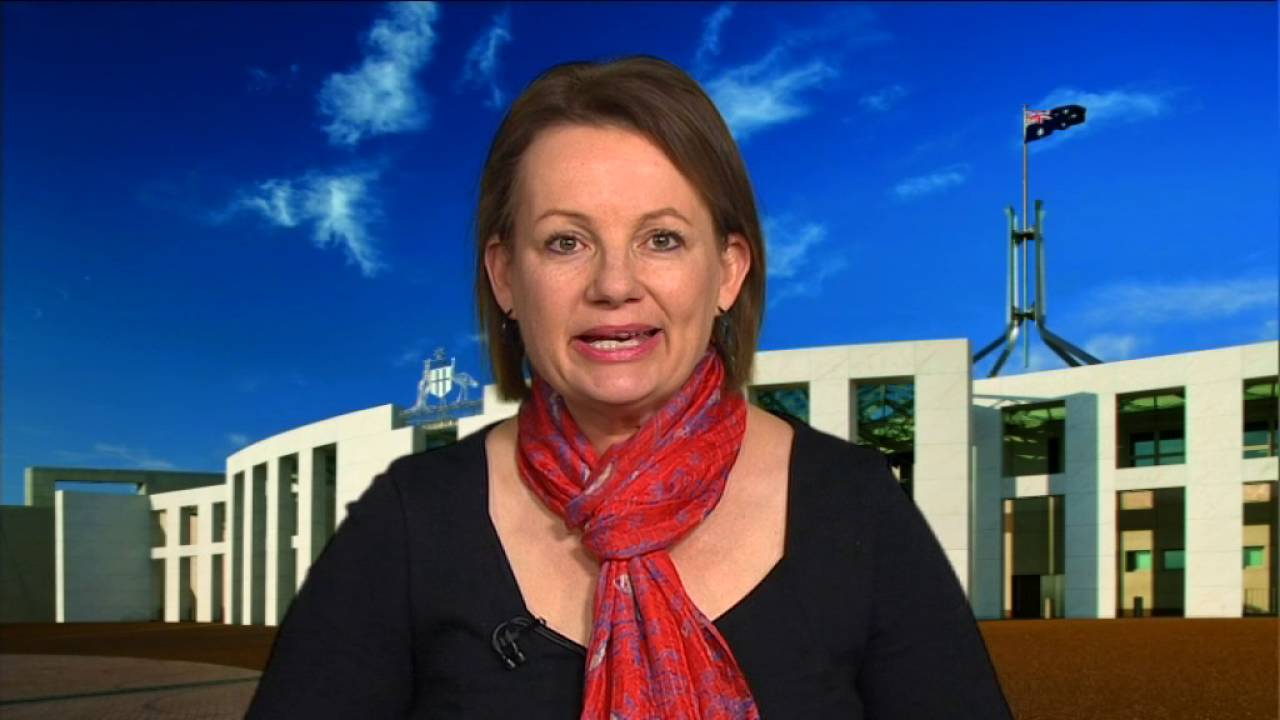 Legal challenge over Sussan Ley’s decision to put potential mining jobs at Shenhua Mine before cultural heritage, ABC News, By Indigenous affairs correspondent Isabella Higgins and Sarah Collard 25 Aug 19, A family fighting to defend their traditional country from mining are suing Environment Minister Sussan Ley after she rejected their heritage protection bid in favour of a controversial Chinese coal project.
Key points
- Environment Minister is being sued for rejecting heritage protection in favour of a proposed coal mine
- Lawyers say it could be an important test case if the decision is found to be unlawful
- Traditional owners fear important sacred sites will be destroyed if the mine goes ahead
Last month, the Gomeroi Traditional Custodians failed in a bid to have sacred sites in north-west New South Wales preserved and protected from development due to cultural importance.
The land near Gunnedah had already been earmarked for the $1.2 billion Shenhua Watermark Coal Mine, which gained conditional federal approval in 2015 and has state development consents.
Ms Ley rejected their application on the grounds that the potential jobs generated from the mine were more important than cultural preservation.
She acknowledged the project could cause “mental health impacts … a sense of dislocation, displacement and dispossession,” among Indigenous people, but determined the social and economic value of the project took priority.
On behalf of the Gomeroi people, traditional owner Dolly Talbott has launched legal action against Ms Ley, with the case due before court for the first time on Wednesday.
She is being represented by the NSW Environmental Defender’s Office (EDO) which will argue that the minister’s decision was “unlawful” and contravenes the constitutional basis of the heritage protection act.
“If we don’t try to save these sites, then we are not fulfilling our obligations to our elders and our ancestors … and our children and grandchildren,” Ms Talbott said.
“[The national Indigenous heritage laws] are supposed to be there for the protection of Aboriginal culture and it doesn’t seem to be working.”……
Benefits of mine outweigh destruction of heritage: Minister
When deciding on the intervention request, Ms Ley acknowledged the mine would result in the “likely destruction of parts of their Indigenous cultural heritage”.
“I considered that the expected social and economic benefits of the Shenhua Watermark Coal Mine outweighed the impacts on the applicants [Gomeroi people]” she said in the rejection document seen by the ABC…….
The Minister has the final say on which applications receive protection status, under the National Aboriginal and Torres Strait Islander Heritage Protection Act. …….
Shenhua development courts controversy
This legal battle is the latest saga, in a long-running series of controversies involving the mine.
It sparked vehement protests in recent years, with farmers, environmentalists and Indigenous groups all fiercely opposed to the development.
They have raised concerns about how the mine will impact groundwater and wildlife and whether it’s economically viable.
Nationals MP Barnaby Joyce previously labelled the project “ridiculous” after his own government approved the mine, which falls in his New England electorate.
The NSW Government bought back half of the company’s mining exploration license in 2017, at a cost of $262 million, which at the time it said was to protect prime farming land.
Winning this case would mean Gomeroi people can continue to teach their children culture on country, Ms Talbott said.
“The stories of the land that we continue to tell our children today, and hopefully these sites are still there so they can tell their children.
South Australian law – no public money towards nuclear waste dumping facility
NUCLEAR WASTE STORAGE FACILITY (PROHIBITION) ACT 2000 – SECT 13
13—No public money to be used to encourage or finance construction or operation of nuclear waste storage facility
(1) Despite any other Act or law to the contrary, no public money may be appropriated, expended or advanced to any person for the purpose of encouraging or financing any activity associated with the construction or operation of a nuclear waste storage facility in this State.
(2) Subsection (1) does not prohibit the appropriation, expenditure or advancement to a person of public money for the purpose of financing the maintenance or sharing of information or to enable the State to engage with other jurisdictions.
The Kimba nuclear waste dump ballot – breaching South Australian law?

ENuFF[SA], 21 Aug 19, Today Kimba Council announced a date for a community ballot on the radioactive suppository ~ October 3rd.
http://www.kimba.sa.gov.au/page.aspx?u=408&c=10102
The legality of conducting such a ballot needs to be tested in the courts, since s.13 of the Radioactive Waste Storage Facility (Prohibition) Act SA 2000 prohibits public monies being spent “…. encouraging or financing any activity associated with the construction or operation of a nuclear waste storage facility in this State.”
http://classic.austlii.edu.au/au/legis/sa/consol_act/nwsfa2000430/s13.html
This concerns & will affect ALL South Australians, not just Kimba. We should start a fund for a court injunction based upon s.13 “… any activity …” of the Radioactive Waste Facility [Prohibition] Act ~ & then engage Maurice Blackburn Lawyers [eg] to mount a case against the ballot.
1 This month
17 October, Free Public Talk on Nuclear Issues in South Australia
David Noonan will speak on public interest concerns over the new Roxby Downs Indenture Act 2026 on BHP copper-uranium mining and ore processing in SA, and on how AUKUS may face SA with a High-Level nuclear waste agenda.
Dr Jim Green will discuss international developments in the field of nuclear power including ‘small modular reactors’ and Generation 4 ‘advanced’ nuclear reactor concepts.


Help Aunty Sue Protect Her Land and Sacred Sites From Destructive Rocket Testing.
.

Australians deserve the truth
about
AUKUS – https://aukuspublicinquiry.com/

PETITION – To: Prime Minister Anthony Albanese and the Australian Labor Government

of the week – Australians for War Powers Reform (AWPR)
To see nuclear-related stories in greater depth and intensity

