UK High Court sides with US against Assange
UK High Court sides with US against Assange, WSW,Thomas Scripps11 August 2021 , The UK’s High Court has allowed the United States to appeal on two additional grounds the refusal of Julian Assange’s extradition by a lower court.Assange, the founder of WikiLeaks still held in Belmarsh maximum security prison, is threatened with extradition on charges under the Espionage Act with a potential life sentence for revealing state war crimes, torture, surveillance, corruption and coup plots.
On January 4, District Judge Vanessa Baraitser blocked extradition, ruling that it would be oppressive by virtue of his mental health and put him at substantial risk of suicide.Lawyers for the US government sought to appeal the decision on the five grounds:
- That Baraitser made errors of law in her application of the test under section 91 of the 2003 Extradition Act, which bars extradition if the person’s mental or physical condition would render it unjust or oppressive.
- That she ought to have notified the US ahead of time, to give the government the opportunity to provide assurances to the court that Assange’s health would be looked after.
- That the judge should not have accepted or at least given less weight to the evidence of the defence’s principal psychiatric expert, Professor Kopelman.
- That Baraitser erred in her overall assessment of the evidence on suicide risk.
- That the US has since provided the UK with a package of assurances about the conditions in which Assange would be held.
The US was initially granted leave to appeal on grounds one, two and five, but denied three and four. At a preliminary hearing yesterday in front of Lord Justice Holroyde and Mrs Justice Farbey, that decision was overturned and grounds three and four were granted as well.
Their decision confirms that the January 4 ruling against extradition was only a tactical pause in an ongoing pseudo-legal manhunt, which is again proceeding apace.
Baraitser’s original decision accepted every one of the prosecution’s anti-democratic, factually unsustainable arguments except on the single point of Assange’s mental health, leaving his fate hanging by a thread. Now the US is being given the opportunity to bulldoze this last remaining obstacle.As Assange’s legal team argue in their Notice of Objection, none of the points made in the appeal by the US stand up to scrutiny………………
https://www.wsws.org/en/articles/2021/08/11/assa-a11.html?fbclid=IwAR1KNVz7_kATvh53WeOYZ5iKOlCrE3-4Q9jGh9dv79DUkXxeezC91VXjmbU
British court ruling heightens danger of Assange extradition to the US
British court ruling heightens danger of Assange extradition to the US, WSWS, Oscar Grenfell, 12 July 21, Last week’s ruling by the British High Court allowing prosecutors to appeal an earlier judgment blocking Julian Assange’s extradition, poses the very real danger that the WikiLeaks publisher will be dispatched to his American persecutors in the not-too-distant future.
The ruling is a microcosm of the Assange case as a whole. As they have for the past decade, the British courts have thrown aside the WikiLeaks founder’s legal and democratic rights. They have granted a US appeal that is both duplicitous and irregular under conditions in which the entire attempt by the American state to prosecute Assange has been exposed as an illegal frame-up.
The US appeal is a damning refutation of those, including among Assange’s own supporters, who have peddled dangerous illusions that the US administration of President Joe Biden may drop the prosecution if a sufficient number of moral pleas are addressed to the new occupant of the White House.
The appeal was first issued in the dying days of the Trump administration but it was continued, honed and argued for by Biden’s Justice Department. Assange remains in London’s maximum-security Belmarsh Prison and faces the prospect of lifetime incarceration in the US because Biden is determined to press ahead with the prosecution of a journalist and publisher for exposing American war crimes, human rights violations and illegal spying operations.
That is because the Assange prosecution is viewed as a crucial precedent by the imperialist powers for the suppression of dissent and anti-war opposition amid a ratcheting up of the preparations for military conflict, including the Biden administration’s threats and provocations against China, and the first signs of a resurgence of working-class struggle.
The appeal also confirms the warnings made by the World Socialist Web Site about January’s British District Court decision that barred extradition.
Judge Vanessa Baraitser accepted all the substantive arguments of the US prosecutors, including their right to try a publisher under the Espionage Act. Her ruling, prohibiting extradition, was framed in the narrowest terms. Its purpose was to defuse a groundswell of opposition to the prospect of Assange’s extradition and to provide the US with ample scope for appeal.
Baraitser ruled that extradition would be “oppressive.” Assange’s compromised health and the conditions of his imprisonment in the US would likely result in his suicide.
The deliberate consequence of that judgment was that there was only a legal sliver between Assange and extradition.
The US has exploited this with its appeal claiming that the conditions of imprisonment would not be so oppressive. It has proposed worthless assurances that Assange would not be held under Special Administrative Measures (SAM), regulations that impose almost total isolation on a prisoner, and that he could serve out his sentence in Australia.
The extradition hearing had heard harrowing testimony about the dire psychological consequences of SAMs and conditions at the supermax ADX Florence prison where they are frequently imposed.
The US arguments, accepted as a legitimate basis of appeal by the British court, were demolished by Stella Moris, Assange’s partner and an international human rights lawyer.
In a statement issued on Friday, Moris wrote: “Reports about US undertakings are grossly misleading. On any given day 80,000 prisoners in US prisons are held in solitary confinement. Only a handful are in ADX/under special administrative measures. ADX is just one of dozens of self-described supermax prisons in the United States. The US government also says it may change its mind if the head of the CIA advises it to do so once Julian Assange is held in US custody.
“With regard to the supposed concession of allowing Julian to serve jail time in Australia, it was always his right to request a prisoner transfer to Australia to finish serving his sentence because he is an Australian. It is no concession at all. There are existing agreements between the US and Australian authorities. What is crucial to understand is that prisoner transfers are eligible only after all appeals have been exhausted. For the case to reach the US Supreme Court could easily take a decade, even two.
“What the US is proposing is a formula to keep Julian in prison effectively for the rest of his life. The only assurance that would be acceptable would be for the Biden Administration to drop this shameful case altogether, once and for all. He should not be in prison for a single day, not in the UK, not in the United States, not in Australia—because journalism is not a crime.”
As Moris noted, the US appeal itself reserved the “right” to impose SAMs once Assange is on US soil. Testimony at the extradition hearing, including from a former US prison warden, established that the imposition of SAMs is essentially extra-judicial, often being introduced at the say-so of the intelligence agencies, and with no genuine means of appeal.
“What the US is proposing is a formula to keep Julian in prison effectively for the rest of his life. The only assurance that would be acceptable would be for the Biden Administration to drop this shameful case altogether, once and for all. He should not be in prison for a single day, not in the UK, not in the United States, not in Australia—because journalism is not a crime.”
As Moris noted, the US appeal itself reserved the “right” to impose SAMs once Assange is on US soil. Testimony at the extradition hearing, including from a former US prison warden, established that the imposition of SAMs is essentially extra-judicial, often being introduced at the say-so of the intelligence agencies, and with no genuine means of appeal.
The hearings, moreover, heard evidence of a case in which similar assurances were immediately thrown out the door once extradition was secured……………
Thordarson has now admitted, however, that almost all his testimony consisted of lies proffered in exchange for immunity from US prosecution. The American government thus submitted a false indictment to the British courts……….https://www.wsws.org/en/articles/2021/07/12/assa-j12.html?pk_campaign=assange-newsletter&pk_kwd=wsws
U.S. government offers meaningless assurances on Julian Assange’s well-being, as it gets right to appeal on UK court ruling against his extradition

UK High Court grants US government right to appeal on Assange extradition, World Socialist Website, Laura Tiernan7 July 2021 Stella Moris, the partner of imprisoned WikiLeaks publisher Julian Assange, spoke outside Britain’s High Court yesterday warning he is “still at risk of extradition” after a judge decided the US government can appeal an earlier court ruling that blocked his extradition on health grounds.
The judge also ruled that Assange must remain in prison until the appeal is heard, effectively extending his incarceration for at least many more months.The ruling underscores the Biden administration’s determination to ensure Assange’s removal to the US. According to a report in the Wall Street Journal, based on excerpts of the judge’s ruling supplied by the UK Crown Prosecution Service, the US government offered “assurances” that Assange would not be imprisoned in oppressive conditions and could be permitted to serve any sentence in Australia.Such assurances are meaningless. Once Assange is in US custody, those pledges will be cast aside. The Wall Street Journal reported: “The US said it reserved the right to impose special measures on Mr. Assange, or hold him in a Supermax jail, if ‘he were to do something subsequent to the offering of these assurances’ that meets the test for applying them.”
Assange has been denied bail and remains detained in London’s Belmarsh Prison despite a January decision by District Court Judge Vanessa Baraitser denying his extradition to the US. Assange faces trumped-up charges under the Espionage Act over his exposure of war crimes, illegal mass surveillance and torture by the US and its allies. He has been held captive in the UK for a decade.
Baraitser ruled January 4 that Assange’s extradition to a US federal prison would be “oppressive” because of his compromised mental health and risk of suicide. The US Department of Justice (DoJ) under President Donald Trump immediately appealed Baraitser’s decision. Two days later, Trump mounted a fascist coup attempt in Washington D.C. The Democrats under Joseph Biden and Kamala Harris have seamlessly continued US imperialism’s political vendetta against Assange.The WikiLeaks publisher is being held in violation of his First Amendment rights to free speech and freedom of the press and in breach of international human rights law.
Britain’s High Court has reportedly granted a right of appeal to the US on three grounds. The court will decide whether Baraitser applied the Extradition Act correctly; whether sufficient advance notice was given of the court’s decision, and whether “assurances” by the US over mitigating the risk of suicide were properly considered.A date for the appeal hearing has not been announced, but it will likely take place after the courts’ summer recess. This leaves Assange imprisoned at Belmarsh indefinitely in conditions long condemned by doctors and human rights lawyers as “psychological torture.”
In a letter sent yesterday to Biden and US Attorney General Merrick Garland by Doctors for Assange, 250 doctors from 35 countries demanded the dropping of all charges against the WikiLeaks publisher. They denounced his ongoing imprisonment due to the US appeal as “amounting to cruel, inhuman and degrading treatment in the UK.”……….. https://www.wsws.org/en/articles/2021/07/08/gnkp-j08.html?pk_campaign=assange-newsletter&pk_kwd=wsws
Key witness in Julian Assange case admits to lies in indictment
A major witness in the United States’ Department of Justice case against Julian Assange has admitted to fabricating key accusations in the indictment against the Wikileaks founder. STUNDIN, Bjartmar Oddur Þeyr Alexanderssonbjartmar@stundin.is, Gunnar Hrafn Jónssonritstjorn@stundin.is 26 June 21,
A major witness in the United States’ Department of Justice case against Julian Assange has admitted to fabricating key accusations in the indictment against the Wikileaks founder. The witness, who has a documented history with sociopathy and has received several convictions for sexual abuse of minors and wide-ranging financial fraud, made the admission in a newly published interview in Stundin where he also confessed to having continued his crime spree whilst working with the Department of Justice and FBI and receiving a promise of immunity from prosecution.
The man in question, Sigurdur Ingi Thordarson, was recruited by US authorities to build a case against Assange after misleading them to believe he was previously a close associate of his. In fact he had volunteered on a limited basis to raise money for Wikileaks in 2010 but was found to have used that opportunity to embezzle more than $50,000 from the organization. Julian Assange was visiting Thordarson’s home country of Iceland around this time due to his work with Icelandic media and members of parliament in preparing the Icelandic Modern Media Initiative, a press freedom project that produced a parliamentary resolution supporting whistleblowers and investigative journalism.
The United States is currently seeking Assange’s extradition from the United Kingdom in order to try him for espionage relating to the release of leaked classified documents. If convicted, he could face up to 175 years in prison. The indictment has sparked fears for press freedoms in the United States and beyond and prompted strong statements in support of Assange from Amnesty International, Reporters without borders, the editorial staff of the Washington Post and many others.
US officials presented an updated version of an indictment against him to a Magistrate court in London last summer. The veracity of the information contained therein is now directly contradicted by the main witness, whose testimony it is based on.
No instruction from Assange
The court documents refer to Mr Thordarson simply as “Teenager” (a reference to his youthful appearance rather than true age, he is 28 years old) and Iceland as “NATO Country 1” but make no real effort to hide the identity of either. They purport to show that Assange instructed Thordarson to commit computer intrusions or hacking in Iceland.
The aim of this addition to the indictment was apparently to shore up and support the conspiracy charge against Assange in relation to his interactions with Chelsea Manning. Those occurred around the same time he resided in Iceland and the authors of the indictment felt they could strengthen their case by alleging he was involved in illegal activity there as well. This activity was said to include attempts to hack into the computers of members of parliament and record their conversations.
In fact, Thordarson now admits to Stundin that Assange never asked him to hack or access phone recordings of MPs. His new claim is that he had in fact received some files from a third party who claimed to have recorded MPs and had offered to share them with Assange without having any idea what they actually contained. He claims he never checked the contents of the files or even if they contained audio recordings as his third party source suggested. He further admits the claim, that Assange had instructed or asked him to access computers in order to find any such recordings, is false.
Nonetheless, the tactics employed by US officials appear to have been successful as can be gleaned from the ruling of Magistrate Court Judge Vanessa Baraitser on January 4th of this year. Although she ruled against extradition, she did so purely on humanitarian grounds relating to Assange’s health concerns, suicide risk and the conditions he would face in confinement in US prisons. With regards to the actual accusations made in the indictment Baraitser sided with the arguments of the American legal team, including citing the specific samples from Iceland which are now seriously called into question.
Other misleading elements can be found in the indictment, and later reflected in the Magistrate’s judgement, based on Thordarson’s now admitted lies. One is a reference to Icelandic bank documents. The Magistrate court judgement reads: “It is alleged that Mr. Assange and Teenager failed a joint attempt to decrypt a file stolen from a “NATO country 1” bank”………..
On the FBI radar
Thordarson’s rogue acts were not limited to communications of that nature as he also admits to Stundin that he set up avenues of communication with journalists and had media pay for lavish trips abroad where he mispresented himself as an official representative of WikiLeaks………………………. https://stundin.is/grein/13627/key-witness-in-assange-case-admits-to-lies-in-indictment/
Barngarla Determination Aboriginal Corporation (BDAC) will take legal action against nuclear dump plan if Resources Minister Keith Pitt names Napandee as the site
Barngarla will pursue judicial review if Napandee site named. https://www.portlincolntimes.com.au/story/7330119/barngarla-may-seek-legal-review/?fbclid=IwAR28Hj_22In6jE2Vd3s7ZrWBtOe0nHJxbyqdKk_xXF6hXv8Z-TNbEtBu5CEMembers of the Barngarla Determination Aboriginal Corporation (BDAC) have said the outcome of the nuclear waste amendment bill was the result they were hoping for.
The National Radioactive Waste Management Amendment (Site Specification, Community Fund and Other Measures) Bill 2020 was passed by the Australian Parliament on June 22.
The BDAC had previously raised concerns about the absence of a judicial review process by naming the Napandee site in the proposed legislation.
“The government sought to change the law to remove our democratic right to judicial review of their actions so that no court could ever assess what had been done,” they said in a previous statement.
However BDAC chair Jason Bilney said the bi-partisan support the bill received in parliament was what they were looking for, as changes were made to the bill to reinstate the ability to pursue a judicial review of the site selection process.
The bill was initially tabled in parliament in February 2020 with the intention to name the Napandee site near Kimba within the legislation.
Now federal resources minister Keith Pitt will be required to name the host site through ministerial decision, which will allow for a potential judicial review of the site selection process in future.
Mr Pitt is also not bound to name one of the three sites currently shortlisted.
Mr Bilney said it had been a “long, hard battle” for 15 months, and that he and others were in Canberra that week as the bill went through.
“It’s a good outcome for the Barngarla people, but also all Australians because it affects all Australians,” he said.
The BDAC have stated since the passing of the bill that if there is a declaration of the Napandee site, the BDAC will seek a judicial review.
“The Barngarla and farmers worked together and the senate did not agree to pass any bill which removed judicial review,” they said.
“We had certain demands, which amounted to removing site specification in the bill and removing Schedule 1.
“The government gave in to these demands and effectively amended their own bill to reflect what Barngarla, Labor and the cross bench had said we required.
“So, we have no issues with the new bill, as it is the bill that we demanded occur.
“Namely, it preserves judicial review.
“In simple terms, we won this battle in parliament and we are very grateful for Labor and the cross bench, including senator Hanson’s One Nation, the Greens, and senator Patrick.”
We even had the Explanatory Memorandum further amended to make it clear that the Minister was not limited to just the three sites in the Table and that the Table was purely a historical record.
Barngarla people hold Native Title land close to planned nuclear waste dump, but were denied a vote on this.
The nuclear waste site is planned for Barngarla Country, but the amendments will allow Traditional Owners to take the matter to court, https://www.sbs.com.au/nitv/article/2021/06/23/traditional-owners-can-challenge-nuclear-waste-dump-country-1?fbclid=IwAR0ZYwZRYOUQn58LdV3A0X4L1AeERiDi8ylqkVFcjReI5KQj7_fl6VTXcaABy Keira Jenkins
Source: NITV News, 23 JUN 2021 The Senate has passed legislation that would allow nuclear waste to be stored at a remote site in South Australia, replacing current city facilities.
The Morrison government was forced to abandon key features of the bill to gain opposition support, including a provision that would have locked in Kimba as the new storage location.
Instead, Minister for Resources Keith Pitt can issue an ‘intention to declare’ a preferred location.
The amended bill, which passed through the Senate this week, also allows for a judicial review of the location if there is a dispute.
Barngarla Determination Aboriginal Corporation welcomed the reinstatement of the right to a judicial review on the process.
“This is a great moment for democracy, and for those who appreciate the independent scrutiny of government action,” they said in a statement.
In 2019, the Australian Electoral Commission conducted a month-long community ballot, asking the question ‘Do you support the proposed National Radioactive Waste Management Facility being located at one of the nominated sites in the community of Kimba?’
The ballot returned a 61.58 per cent ‘yes’ vote.
Barngarla conducted their own poll, saying they had been excluded from the AEC’s postal ballot.
100 per cent of the votes returned from Native Title holders said ‘no’ to the proposed nuclear facility.
Barngarla said the site selection process had been “completely and utterly miscarried”.
“No proper heritage assessment of the site was ever undertaken,” read the statement.
“… the most obvious and appalling example of this failed process was when the Government allowed the gerrymandering of the Kimba ‘community ballot’ in order to manipulate the vote.
“The simple fact remains that even though the Barngarla hold Native Title land closer to the proposed facility than the town of Kimba, the First Peoples for the area were not allowed to vote.
“…Mistakes have been made and the process needs to start again.”
The appalling mistreatment of Australian citizen, Julian Assange, – by USA, UK, and Australia
CHRIS HEDGES ON THE RULING CLASS’ REVENGE AGAINST JULIAN ASSANGE, May 31, 2021 · by Rise Up Times ·
Pulitzer Prize-winner Chris Hedges joins Robert Scheer to discuss the WikiLeaks founder’s plight as he languishes in a British prison. SCHEER INTELLIGENCE: A ROBERT SCHEER PODCAST
BY MODERATOR SCHEERPOST MAY 7, 2021
The mistreatment of WikiLeaks founder Julian Assange over the past decade has been defined as “psychological torture” by the UN Special Rapporteur on Torture, Nils Melzer. Yet, there is still no real end in sight to Assange’s promethean plight. Several months after a British judge blocked his extradition to the U.S.–citing that conditions in America’s inhumane prison system would be detrimental to his health–the WikiLeaks founder continues to be held in a maximum security prison in the U.K. The U.S. government, first under Donald Trump’s rule and now under Joe Biden’s, is appealing the extradition ruling. With a new decision in the case is due to be announced any day now, Pulitzer Prize-winning journalist and ScheerPost columnist Chris Hedges joins Robert Scheer on this week’s installment of “Scheer Intelligence” to discuss what Hedges has called Assange’s “martyrdom.”
Scheer and Hedges assert that Assange’s case is a clear threat to freedom of the press given that he acted in the capacity of a publisher in the same way the global media outlets that printed the content released by WikiLeaks did. Should the publishers of the Washington Post, New York Times and other media have been charged with a crime for publishing the content? Hedges and Scheer, who have both been staunch supporters of the WikiLeaks founder, conclude that there can only be one reason for all recent Republican and Democratic administrations to doggedly persecute Assange: he is a major threat to the establishment’s most sinister interests.
“Your job [as a publisher] is not to be partisan,” says Hedges. “Your job is to expose the machinations of power, the crimes of power, the lies of power–whoever’s in power. And that’s precisely what Julian did. when he was going after Bush with the Iraq War Logs, the Democrats loved him. But as soon as his journalistic integrity led him to also expose the inner workings of the Democratic Party establishment, they turned on him as vociferously as the Republicans.
“I’ve been stunned at what an egregious assault [Assange’s persecution] is on press freedom and how the institutions that purport to care about freedom of the press have been complicit in the persecution of Julian.”
As Assange is tortured before our eyes, Hedges decries the silence of organizations such as PEN, which “are tasked with holding up the kind of liberties and press freedoms that we care about.” The award-winning journalist argues that PEN and others have not only sold out to their liberal donor base, but have been “taken over” by Democratic establishment figures such as Suzanne Nossel, the current head of PEN America and former member of the State Department under Secretary of State Hillary Clinton. Scheer also highlights the plight of another person who has become collateral damage in America’s tyrannical mission against Assange.
“The real hero of this whole thing is Chelsea Manning,” says Scheer. “The U.S. government has been tormenting Chelsea Manning because they basically want to get her to say: ‘Julian Assange put me up to this; he’s the really bad guy.’ It’s a horrible story of government torture and manipulation that you have this rare, exemplary citizen, Chelsea Manning, who does the right thing and says our government, in our name, is committing war crimes–killing innocent children and journalists and everything–and then they want to now break her so she’ll go against Julian Assange.”
Listen to the full conversation between Hedges and Scheer as they examine in detail the U.K.’s role in the Assange trial, as well as discuss the very real dangers the results of the case could pose to journalists and journalism the world over.
TRANSCRIPT
RS: Hi, this is Robert Scheer with another edition of Scheer Intelligence, where the intelligence comes from my guests. And in this case, unquestionably; a very shrewd observer, Chris Hedges, longtime correspondent, bureau chief for the New York Times, and wrote for a lot of other publications.
But I want to get Chris on now with some urgency, because I’m really concerned about the fate of Julian Assange. I’ve turned 85; in my whole life I don’t think I’ve had, experienced a case of such splendid indifference to press freedom and the suffering of a brave journalist in this country, in the United States. He’s of course not from the U.S., which makes it even more appalling that he’s being held under terrible conditions in an English prison……………….. https://riseuptimes.org/2021/05/31/chris-hedges-on-the-ruling-class-revenge-against-julian-assange/
Senator Rex Patrick challenges Scott Morrison’s special arrangement to protect his government from public scrutiny
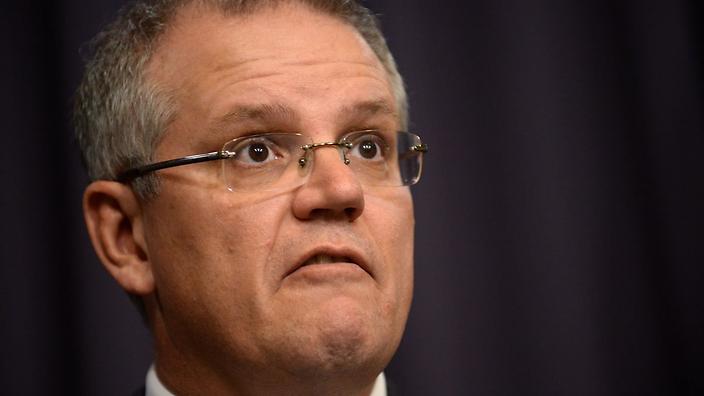
Senator challenges cabinet secrecy, The Saturday Paper 33 May 21, Scott Morrison is using a special arrangement to keep the workings of his government secret, but independent senator Rex Patrick has launched a challenge to its legality. By Karen Middleton. Karen Middleton is The Saturday Paper’s chief political correspondent.
A special policy committee the prime minister uses to keep the workings of his government secret is being called into legal question as part of a challenge to the confidential status of national cabinet.
Independent senator Rex Patrick launched the challenge after the Department of the Prime Minister and Cabinet refused two freedom of information requests for access to national cabinet documents.
Appearing before the Administrative Appeals Tribunal (AAT) this week, the Commonwealth argued that national cabinet’s workings must be secret because it is an offshoot of federal cabinet, which is governed by a confidentiality convention.
It argued that deciding how cabinet committees are formed and who joins them is in the prime minister’s “gift” alone.
The national cabinet arrangement relies on the controversial cabinet office policy committee that Morrison created upon becoming prime minister. He is its only permanent member. The one-man construct allows the prime minister to declare almost any gathering he attends to be a cabinet committee meeting, protecting it from public scrutiny.
When the tribunal’s Justice Richard White queried the mechanism purporting to give national cabinet confidential status, the government could provide no information.
“Is there anything else that tells me anything about the cabinet office policy committee?” Justice White asked counsel for the Commonwealth, Andrew Berger, QC, on Wednesday. “I’m not sure there is, Your Honour,” Berger replied.
Last year, Labor’s senate leader, Penny Wong, condemned the one-man committee as “an abuse” of process used to “cover up blatant political decision-making”.
Senator Patrick’s AAT challenge could also have implications for accessing information from other designated cabinet subcommittees and groups advising them.
The one-man construct allows the prime minister to declare almost any gathering he attends to be a cabinet committee meeting, protecting it from public scrutiny…………..
…………………………. After the hearing, Rex Patrick described national cabinet as “a last-minute idea dealt with at short notice, without its implementation or consequences being properly considered”.
“That’s apparent when looking back at the various media statements, the cobbling together of a new cabinet handbook and the evidence before the AAT,” he told The Saturday Paper.
Patrick said the legislated right to access information on intergovernmental communication had existed in Australia for almost 40 years, “subject only to a test of public harm”.
“Last year, Prime Minister Morrison took that right away,” he said. “He did not ask the parliament to change the law.”
Patrick said he was in a fight for transparency and responsible government. “And I’m in a fight to stop a prime minister unilaterally taking away a right that was given to me and all Australians, by the parliament.”
Whether Justice White agrees will be clear soon. He reserved his judgement and promised a quick decision.
This article was first published in the print edition of The Saturday Paper on May 22, 2021 as “Cabinet of one”. https://www.thesaturdaypaper.com.au/news/politics/2021/05/22/senator-challenges-cabinet-secrecy/162160560011709
South Australian Supreme Court rules that information on the Kimba nuclear waste dump can be made public.

Senator Rex Patrick · SA GOVERNMENT TRANSPARENCY FAILURE, 18 May 21,
Yesterday the South Australian Civil and Administrative Tribunal overturned a decision by SA Energy and Mining Minister Dan van Holst Pellekann to keep information on the National Radioactive Waste Management Facility (NRWMF) from the public. In August last year I made a Freedom of Information request to the Minister asking for access to correspondance between the SA and Federal Government relating to the establishment of a NRWMF facility at Kimba. In November he released four documents to me, with significant redaction on one of them.
When I challenged the redaction the Minister threatened me with legal costs. Yesterday Justice Hughes rejected the Minister’s arguments and found that the document he wished to keep secret was not exempt under FOI.People have a right to know what their Government is saying and doing so that they can properly participate in democracy. This is especially the case when there is a major issue being played out. Minister van Holst Pellekaan needs to rethink who he really owes a duty to. Ministers should serve the people, not their own narrow political interests. https://www.facebook.com/senator.rex.patrick/posts/924739811419769
Biden administration presses for Julian Assange to be extradited to USA
Biden administration files appeal pressing for Assange extradition, Yahoo News, Sat, 13 February 2021 The administration of US President Joe Biden has appealed a British judge’s ruling against the extradition of WikiLeaks founder Julian Assange, a Justice Department official said Friday.
A brief filed late Thursday declared Washington’s desire to have Assange stand trial on espionage and hacking-related charges over WikiLeaks’ publication of hundreds of thousands of US military and diplomatic documents beginning in 2009.
The Justice Department had until Friday to register its stance on Judge Vanessa Baraitser’s January 4 ruling that Assange suffered mental health problems that would raise the risk of suicide if he were sent to the United States for trial.
“Yes, we filed an appeal and we are continuing to pursue extradition,” Justice Department spokesman Marc Raimondi told AFP.
After Baraitser’s decision, which did not question the legal grounds for the US extradition request, Donald Trump’s administration moved to appeal.
But Biden’s stance was not clear, and he was pressured by rights groups to drop the case, which raises sensitive transparency and media freedom issues.
After WikiLeaks began publishing US secrets in 2009, then-president Barack Obama, whose vice president was Biden, declined to pursue the case.
Assange said WikiLeaks was no different than other media constitutionally protected to publish such materials.
Prosecuting him, too, could mean also prosecuting powerful US news organizations for publishing similar material — legal fights the government would likely lose.
But under Trump, whose 2016 election was helped by WikiLeaks publishing Russian-stolen materials damaging to his rival Hillary Clinton — the Justice Department built a national security case against Assange.
In 2019 the native Australian was charged under the US Espionage Act and computer crimes laws with multiple counts of conspiring with and directing others, from 2009 to 2019, to illegally obtain and release US secrets……….
Assange has remained under detention by British authorities pending the appeal.
Earlier this week 24 organizations, including Human Rights Watch, Amnesty International USA and Reporters Without Borders, urged Biden to drop the case.
“Journalists at major news publications regularly speak with sources, ask for clarification or more documentation, and receive and publish documents the government considers secret,” they said in an open letter.
“In our view, such a precedent in this case could effectively criminalize these common journalistic practices.”
Assange’s fiancée Stella Moris said in a statement that Baraitser’s January decision that Assange was a high risk for suicide and that US prison facilities were not safe remained a strong reason to deny extradition.
Baraitser “was given clear advice by medical experts that ordering him to stand trial in the US would put his life at risk,” she said.
“Any assurances given by the Department of Justice about trial procedures or the prison regime that Julian might face in the US are not only irrelevant but meaningless because the US has a long history of breaking commitments to extraditing countries,” she said https://au.news.yahoo.com/biden-administration-files-appeal-assange-171637702.html
In its rush for Kimba nuclear dump, Australian government tries to remove rights to legal recourse
|
Jodie van Deventer’s recent comment clearly identifies “our obligation as a society to dispose of our waste responsibly”. Sadly this much needed responsibility is missing from the federal governments stalled push to advance a national radioactive waste site near Kimba on the Eyre Peninsula. Right now, the federal government is seeking to change the rules and remove fundamental democratic rights and protections by denying concerned and affected citizens a day in court. The right to independent legal recourse is a fundamental principle of our democracy. It should not be lightly jettisoned, especially on an issue with such significant implications and impacts as radioactive waste. Despite multiple requests, Barngarla Native Title holders were explicitly excluded from the consultations and remain actively opposed to the planned waste facility. To further remove their rights – and the rights of others – is unfair, unnecessary and unjustified. This is not simply a low-level waste facility. Many state and national civil society groups, Aboriginal and professional groups, the SA Upper House, state Labor and unions share concerns and oppose the government’s approach. A key concern is that it will not result in credible long term management, especially of intermediate level waste. The right to independent legal recourse is a fundamental principle of our democracy. It should not be lightly jettisoned, especially on an issue with such significant implications and impacts as radioactive waste. Despite multiple requests, Barngarla Native Title holders were explicitly excluded from the consultations and remain actively opposed to the planned waste facility. To further remove their rights – and the rights of others – is unfair, unnecessary and unjustified. This is not simply a low-level waste facility. Many state and national civil society groups, Aboriginal and professional groups, the SA Upper House, state Labor and unions share concerns and oppose the government’s approach. A key concern is that it will not result in credible long term management, especially of intermediate level waste. The right to independent legal recourse is a fundamental principle of our democracy. It should not be lightly jettisoned, especially on an issue with such significant implications and impacts as radioactive waste. |
|

Australian uranium mining company threatens Spanish government with legal action
Miner threatens Spain over uranium ban, Cosmo Sanderson, 01 February 2021
How will Entry Into Force of the Nuclear Weapons Ban Treaty impact non weapons states parties, including Australia?
 How will EIF impact non states parties, including Australia? https://icanw.org.au/wp-content/uploads/Australia-EIF-of-the-TPNW.pdf How will EIF impact non states parties, including Australia? https://icanw.org.au/wp-content/uploads/Australia-EIF-of-the-TPNW.pdf16 Jan 21, While non states parties are not legally bound to the terms of the treaty, the norms set out and strengthened by the treaty can shape their behaviour and build pressure for them to join. The entry into force of the treaty puts Australia out of step with international law. While Australia has joined every other treaty that prohibits indiscriminate or inhumane weapons, the Nuclear Non-Proliferation Treaty and the South Pacific Nuclear Free Zone Treaty, it has not yet signed or ratified the ban on nuclear weapons. This position is contested by a growing nationwide movement and at all levels of government. The treaty reveals Australia’s complicity in the problem by including nuclear weapons in its defence posture.
****
As a country with a devastating history of nuclear testing, Australia will be obliged to take action as a state party to assist survivors of nuclear testing and take steps towards remediating contaminated environments. These obligations should be informed by and developed in collaboration with impacted First Nations people, nuclear test veterans, civil society, public health and other experts.
****
Entry into force of previous ban treaties has led to a substantial decrease in the production and deployment of prohibited weapons such as cluster munitions and landmines, both by states parties and non states parties. EIF will also impact the flow of funds to nuclear arms producing companies. Financial institutions often choose not to invest in “controversial weapons,” which are typically weapons prohibited by international law. The entry into force of the TPNW clearly puts nuclear weapons in this category and will likely trigger additional divestment, including by Australian banks and superannuation funds.
****
EIF of the treaty will further stigmatise nuclear weapons, including in Australia, by: Prompting further debate: more than 250 federal, state and territory parliamentarians have declared their support for the treaty and the federal Opposition, the Australian Labor Party, has committed to sign and ratify the treaty in government. Decision-makers will continue to be asked to engage with this new piece of international law.
****
Institutionalisation: entry into force will entrench the treaty’s place in the international legal architecture for nuclear weapons. It is already referenced in international fora as signatories and states parties proudly declare their commitment to nuclear disarmament.
****
Impacting alliances: all states parties in alliances with nuclear-armed states will be required to renounce the use of nuclear weapons on their behalf, and ensure they are not assisting with the use or threat of use of the weapons. Once a state party, Australia will need to cease any policy that countenances and supports the use of nuclear weapons. Other US allies, including New Zealand and Thailand, have already joined the treaty.
****
It will take years to build the necessary political will for some states to join the nuclear weapon ban treaty. Shifting nuclear weapons from a symbol of status to a liability of shame is slow, yet crucial, work. As the signatures and ratifications of the treaty continue beyond entry into force, non states parties will face increasing criticism from their citizens, international organisations and other states. Almost all of Australia’s neighbours in the Pacific and Southeast Asia support the treaty. It is only a matter of time before Australia joins the treaty and thereby becomes part of the solution to these abhorrent weapons.
|
|
Judge’s refusal to extradite Julian Assange is still part of cowardly process to deny freedom of information
The personal conveniently distracts from the political in the Assange story, https://www.theage.com.au/national/the-personal-conveniently-distracts-from-the-political-in-the-assange-story-20210107-p56siu.html
Elizabeth Farrelly Judge Vanessa Baraitser’s refusal to extradite Julian Assange for “mental health” reasons may look humanitarian but is in fact a deft political move. In reducing what should be an argument of law and principle to a test of personality, Baraitser managed at a blow to impugn Assange’s stability, repudiate any suggestion of innocence and open the door for America to prove the comforts of its solitary confinement and thereby win his extradition.
It’s a story of many twists and turns but underlying it throughout is a profound and widespread moral cowardice.
Baraitser’s 132-page ruling found that although the UK-US Extradition Treaty of 2003 specifically prohibits extradition for “political offence”, this provision never became law in the UK and therefore has no effect. In essence, the treaty is worthless.
The court also supported all 18 of the espionage charges against Assange, arguing that WikiLeaks’ hacking and publication “would amount to” offences in English law. Baraitser identified eight charges under the UK Official Secrets Act that would be, she said, equivalent.
Interestingly, this “would have” construction does not apply to the treaty question. Had Assange engaged in the same conduct in America, targeting British government information, he could not have been extradited because America’s “monist” system regards any treaty as law once signed. So it’s ironic that undermining this particular protection is a key US argument.
Anyone who saw the 2019 docudrama Official Secrets, chronicling the leakage by GCHQ analyst-turned-whistleblower Katharine Gun of information on US-UK dirty dealing in drumming up UN support for the Iraq war, will understand just how murky and terrifying such prosecutions can become.
This fear, and the persistent cowardice of yielding to it, is the theme of Assange’s story. I’ve written about Assange several times. I visited him in Ecuador’s embassy. Yet each time, I’ve found myself reluctant.
Seven years ago, when I met him, Assange was ebullient and hopeful, even funny. Now, as Baraitser says, he is “a depressed and sometimes despairing man who is genuinely fearful about his future”. Assange, she said, was at “high risk of serious depression leading to suicide if he were to be extradited and placed in solitary confinement for a long period”.
Baraitser noted the “bleak” conditions of Assange’s likely US confinement would include “severely restrictive detention conditions designed to remove physical contact and reduce social interaction and contact with the outside world to a bare minimum”, with family limited to one supervised 15-minute phone call a month. Detailing Assange’s mental state, she opined that his risk of suicide, in such conditions, was “very high”. This is the loophole she offers the appellant US prosecutor.
Those fears – his of 175 years in solitary (honestly, who wouldn’t top themselves?) and hers of his suicide – underpin her judgment. But there are other, more insidious fears at play here.
Such fears, I see now, feed my reluctance to revisit the Assange story: fear, in particular, of confronting the terrifying truth about our imperial system. Regardless of Assange’s innocence or guilt, the simple facts of what our controlling powers can do to you if you step out of line are terrifying.
But this small, individual fear also operates, very effectively, at nation level.
From the start, the case against Assange has contrived to turn issues of principle into questions of personality. The initial Swedish rape charges, since dropped for lack of evidence as the witness’s recollections after so long were clouded, were extremely personal, spinning off the cancellation of his credit cards upon his arrival in Stockholm, forcing him to accept hospitality; the seductions, the sex – which everyone agrees was consensual – his failure to wear a condom although asked and reluctance to take an STD test. Then the left turned against him because of the Clinton leaks – which one suspects would have been fine, had they been directed at the other side – and perceptions about Assange’s ego. He was vain, it was said, and narcissistic. As if that itself were a crime, reason enough to let him rot in solitary.
The personal and emotive nature of all this – the Swedish prosecutor’s refusal to interview him in London, Britain’s willingness to imprison him for a year on bail charges, America’s determination to prosecute him for exposing their war crimes (in the Iraq War Logs of October 2010 and the film Collateral Murder showing air crew shooting unarmed civilians from a helicopter) and the description of WikiLeaks by US Secretary of State Mike Pompeo as “a hostile non-state intelligence service” – all suggest a bigger picture, and smaller values, than mere truth or justice.
It’s often said that Assange endangered the lives of US informers but, as Baraitser notes, no causality has been shown. Even the Senate Committee on Armed Service said, “the review to date has not revealed any sensitive sources and methods compromised by disclosure”. It is said that Assange, by dumping hacked emails from Hillary Clinton’s campaign, gave us Trump. But if she was engaged in skulduggery as alleged, wasn’t it better for the world to make its own judgment?
When you look coldly at the facts it’s hard not to suspect that Sweden was coerced into the original charges and that Britain and Ecuador have been similarly pressured. Certainly Australia’s persistent refusal to intervene for Assange, an Australian citizen who has broken no Australian law, suggests a similar abject timidity in the face of US might.
That’s the fear that guys like Assange and Edward Snowden make us confront. And it’s why they deserve, at the very least, a fair and open trial.
Assange denied bail after extradition blocked, will appeal to UK High Court
 Assange denied bail after extradition blocked, will appeal to UK High Court, WSW Assange denied bail after extradition blocked, will appeal to UK High Court, WSW
Thomas Scripps, 6 January 2021 WikiLeaks founder Julian Assange has been denied bail and continues to be held on remand in Belmarsh maximum-security prison.
District Judge Vanessa Baraitser handed down the decision Wednesday in Westminster Magistrates Court, after ruling on Monday against Assange’s extradition to the United States on mental health grounds. Assange will remain in custody until the prosecution’s appeal of that ruling is heard. WikiLeaks editor-in-chief Kristinn Hrafnsson announced afterwards that Assange’s legal team would be taking the bail decision to the High Court. Baraitser’s refusal to grant bail confirms that her decision not to extradite was motivated by political considerations and not any genuine concern for Assange’s health. Assange will be kept in conditions which have had a grave impact on his mental health, during a massive escalation of the UK’s COVID-19 epidemic. Speaking to the Sydney Morning Herald Tuesday, Nick Vamos, former head of special crime and head of extradition at the Crown Prosecution Service, indicated that the appeal process would likely take two to three months. In her decision, Baraitser accepted the prosecution’s insistence that Assange’s flight into the Ecuadorian embassy in 2012—after a UK court had granted him bail in connection with Sweden’s trumped-up sexual assault investigation and extradition request—was proof of his willingness to abscond in the future. This is an absurd and vindictive position…….. Assange now has a court ruling in his favour. He is, regardless, prepared to submit to stringent bail conditions amounting to effective house arrest with a GPS tag—conditions which have allowed terror suspects to receive bail. His experience of claiming asylum in an embassy has proved it “unpleasant”, in Fitzgerald’s words, and led “to him being effectively confined for some seven years” before having his asylum revoked. “That is not something that he is ever likely to repeat.” Assange also now has a family, a partner and two children, in the UK. Besides being a reason for Assange not to abscond, Fitzgerald argued, his family provides significant human rights grounds for his release on bail. On account of COVID-19 restrictions in the prison, Assange “hasn’t seen his family in person since March 2020”. He has never been able to live with them, having spent 15 months held on remand pending his extradition hearing. Assange’s family, Fitzgerald noted, is highly relevant to the question of his mental and physical wellbeing. “The grant of bail”, he said, “would allow actual physical contact with his family, that would… alleviate mental distress”. Baraitser had acknowledged the benefit of his family’s support to Assange in her ruling on extradition, which described him as a “depressed and sometimes despairing man, who is genuinely fearful about his future.” Bail would also “considerably reduce” the risk of Assange’s exposure to COVID-19. Fitzgerald pointed to the “severe outbreak” of the virus suffered by Belmarsh Prison recently and said there had been 59 positive cases prior to Christmas. He added, “on any view, the position [the state of the UK’s epidemic] is worse now and, on any view, he would be safer isolating with his family than if he was in Belmarsh.” Baraitser dismissed these concerns, declaring “this prison is managing prisoners’ health during this pandemic in an appropriate and responsible manner.”………. https://www.wsws.org/en/articles/2021/01/07/assa-j01.html?pk_campaign=assange-newsletter&pk_kwd=wsws |
|
|
1 This month

of the week – Australians for War Powers Reform (AWPR)
To see nuclear-related stories in greater depth and intensity
 Antinuclear