Nuked: The Submarine Fiasco that Sank Australia’s Sovereignty, book by Murray Horton

Global Peace and Justice Aotearoa, 12 Nov 24, Reprinted from Covert Action Magazine
Andrew Fowler’s book Nuked: The Submarine Fiasco That Sank Australia’s Sovereignty (Melbourne University Press, 2024) was not written by a member of the peace movement. That is both a strength and a weakness. A strength, because Andrew Fowler is an award-winning investigative journalist, who has worked in mainstream Australian current affairs TV. So, it can’t be dismissed as “anti-American, anti-military” propaganda.
But it is a weakness because the author never questions the basic tenet of the book’s subject—why does Australia need any submarines at all, regardless of whether they are conventionally powered or nuclear powered. The book’s focus is a forensic analysis of who won the highly lucrative battle to supply Australia’s new subs—it was all set up to be France but then, after hidden, sub-surface maneuvering worthy of one of the book’s subjects, Australia and the U.S. torpedoed the French and did a deal among themselves.
This book is about AUKUS (Australia, UK, U.S.), the new kid on the “Indo-Pacific” block—although it should be pointed out that the UK is an awfully long way away from either the Indo or the Pacific. It is an attempt to build a new Western military alliance, initially between those three countries but with the prospect of other countries (including New Zealand) joining the ill-defined AUKUS Pillar Two at some unspecified time in the future. But let’s not get ahead of ourselves. The book is about the birth of AUKUS, which is all about submarines.
AUKUS
I’ve written about AUKUS previously in Covert ActionMagazine, so I refer you to that for the back story. In 2016 Australia signed a $A50 billion contract for France to build it 12 state of the art conventionally powered submarines for the Australian Navy. It was the largest defence contact in the history of both France and Australia. The right-wing Liberal Party was in Government in Australia, headed by Prime Minister Malcolm Turnbull…………………………………………………………………………………………………………………….
The book names names—the man who fronted the deception and betrayal of France was Scott Morrison, who replaced Turnbull as the Liberal Prime Minister in 2018, in an internal Party coup (a common occurrence in Australian politics). Behind the scenes, the key man was Andrew Shearer, “a vehemently pro-American China hawk” who went on to become Director-General of National Intelligence. Right up until just before AUKUS was announced in 2021, Morrison’s government continued to assure France that it was proceeding with the contract to buy French submarines.
Dumping France For the U.S.
Instead of 12 diesel-powered French subs, Australia signed up to have the U.S. and UK build eight nuclear-powered (but not nuclear-armed) subs for its Navy. The cost is astronomical—up to $A368 billion by 2055. Yes, that’s right—those eight subs will not be ready for more than 30 years. The first of them is unlikely to be ready until the 2040s so, to fill that gap, Australia will buy three existing U.S. subs from the early 2030s, at a cost of up to $A58b, with an option to buy two more. This is a staggering amount to spend on one military project from a country with a population of just under 27 million people.
“(AUKUS) was a clear victory for Washington, which had been concerned for some time that France had a different view on how to deal with the rise of China… There was barely a murmur of opposition from the media. Morrison had pulled off a major achievement of what U.S. public intellectual Noam Chomsky describes as the political art of ‘manufacturing consent’…”.
“How did it happen that the bulk of analysis and criticism of the submarine deal came from two former Prime Ministers, Paul Keating (Labor) and Malcolm Turnbull (Liberal) who, though on opposing sides of politics, were united in warning that the submarine deal stripped away Australia’s sovereignty……………………………..
Australia Expected To Fight Alongside U.S. In War With China
There is only the feeblest pretense that these nuclear submarines (still decades away from reality) will be used to defend Australia. Their role will be to patrol close to the Chinese coast, to hem in the Chinese Navy and, in the event of war, to attack China with cruise missiles. That’s the theory, anyway. The advantage of their being nuclear-powered is that they don’t have to return to port to refuel. U.S. hawks expect Australia to fight on its side in any war with China over Taiwan………………………………………………………………………………………..
Integration With U.S. Military
There is a lot more to the U.S.-Australia military relationship than some exorbitantly expensive nuclear submarines that may or may not ever materialise. There is the top-secret Central Intelligence Agency/National Security Agency Pine Gap spy base near Alice Springs, in central Australia, which is crucial to the global warfighting abilities of the U.S. There is the North West Cape facility on the westernmost point of mainland Australia, which the US Navy uses to communicate with its nuclear attack subs. There is Australia’s increasing involvement with the U.S. military and intelligence satellite programme, in preparation for war in space.
“Australia’s integration with the U.S. military was, of course, well underway before the AUKUS agreement. As already noted, Pine Gap and North West Cape are part of this. But there is also the basing of thousands of U.S. Marines in Darwin (northern coast), the stationing of nuclear-capable B-52s at Tindal (Australian Air Force base, northern Australia), and the stationing of U.S. military throughout the Australian Defence Force, including from the National Reconnaissance Office at the military headquarters in Canberra… Though Defence Minister Richard Marles has ruled out automatic support of the United States in any war over Taiwan, it is difficult to see how Australia won’t be involved. Pine Gap, Tindal, North West Cape and Perth (Western Australia’s biggest city) will all be integral to the battle.”
Change Of Government; No Change Of Foreign Policy
Scott Morrison’s Liberal government was voted out at the 2022 Australian election and was replaced by Anthony Albanese’s Labor Party. But Australia’s commitment to AUKUS remained unchanged………………………………………………………………………………
“Nuked” specifically attributes Labor’s fervent desire not to be seen as “anti-American” to the events of 1975, when the Central Intelligence Agency and its local collaborators, succeeded in getting Gough Whitlam’s Labor government overthrown in a bloodless coup. The U.S. covert state was particularly concerned about Whitlam’s revelations about its Pine Gap spy base and possible threats to close it. Jeremy Kuzmarov has recently written about this in CovertAction Magazine (15/11/23), so I refer you to that.
For half a century the Australian Labor Party has lived in fear of the same thing happening again, and has bent over backwards to prove its loyalty to the U.S.
………The consequences of the fear that drove the ALP leadership to embrace AUKUS with barely a second thought will haunt them for years to come. Just as Morrison was only too willing to trade Australian’s independence for the chance to win an election, so too was Labor. Now it is left to make work a deeply flawed scheme that, more than ever before, ties Australia’s future to whoever is in the White House.”
Jobs For The Boys
And what has happened to Scott Morrison, who retired from politics in 2024? “Along with Trump’s former CIA Director, Mike Pompeo, Morrison became a strategic adviser to U.S. asset management firm DYNE Maritime, which launched a $157 U.S. million fund to invest in technologies related to AUKUS. ………
“Morrison also became Vice-Chair of American Global Strategies (AGS), headed by former Trump National Security Advisor Robert O’Brien. AGS, stacked with former Pentagon, White House and State Department officials, boasts that it ‘assists clients as they navigate U.S. government processes,’ a useful addition to any company wanting to boost profits in the burgeoning area of military spending.”
New Zealand & AUKUS
…………………………………………………………………………… There are plenty of similarities between Australia and New Zealand but also significant differences. Whereas Australian governments of either party fall over themselves to loyally serve the U.S. empire, New Zealand has been nuclear free by law since the 1980s (and it was an Australian Labor government, on behalf of the U.S., which tried to pressure New Zealand to drop the policy. That pressure backfired).
……………………………………………………………….But there is a constant push to get New Zealand further entangled in the U.S. war machine, including Pillar Two of AUKUS (which has been, thus far, only identified as involving “advanced military technology”). New Zealand currently has a very pro-American Government, which is already a non-member “partner” of NATO and which is eager to serve the U.S……………………………………..
Not All New Zealand Politicians Lining Up To Grovel To Uncle Sam.
For a refreshing contrast, here’s an extract from a recent (2/10/24) press statement from Te Pāti Māori, the indigenous party, which has six Members of Parliament (out of 123). “Meanwhile the New Zealand Government is in talks with the United States about joining AUKUS to further support their war efforts. This represents the next phase of global colonisation, and it is being negotiated behind closed doors,” Co-Leader Rawiri Waititi said.
“The U.S. wants to use Aotearoa as a Pacific spy base. This could mean the end of our longstanding nuclear free policy to allow their war ships into our waters. AUKUS threatens our sovereignty as an independent nation, and the Mana Motuhake of every nation in the Pacific. It threatens to drag Aotearoa into World War 3,” said Waititi.
“The New Zealand government is putting everyone in Aotearoa at risk through their complicity. They must end all talks about joining AUKUS immediately. They must sanction Israel and cut ties with all countries who are committing and aiding war crimes,” said Co-Leader Debbie Ngarewa-Packer………………………………. more https://gpja.org.nz/2024/11/12/nuked-the-submarine-fiasco-that-sank-australias-sovereignty-by-murray-horton/
Finally Free, Assange Receives a Measure of Justice From the Council of Europe
In the U.S., “the concept of state secrets is used to shield executive officials from criminal prosecution for crimes such as kidnapping and torture, or to prevent victims from claiming damages,” the resolution notes. But “the responsibility of State agents for war crimes or serious human rights violations, such as assassinations, enforced disappearances, torture or abductions, does not constitute a secret that must be protected.”
In his first public statement since his release, Assange said, “I’m free today … because I pled guilty to journalism.”
By Marjorie Cohn , Truthout, October 4, 2024
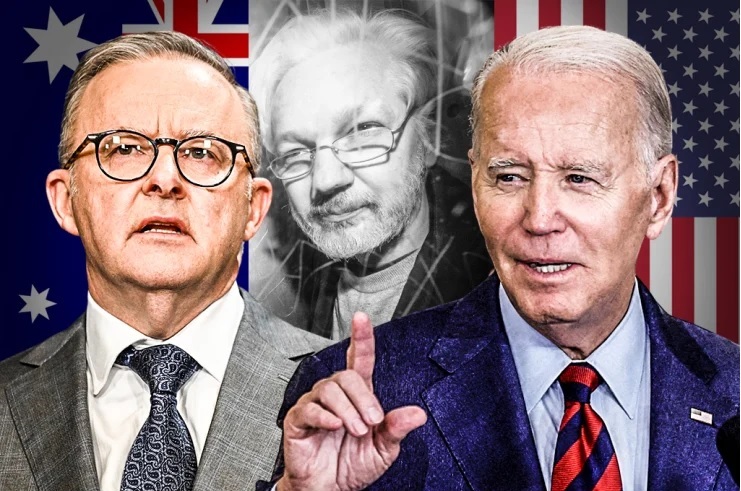
he Parliamentary Assembly of the Council of Europe (PACE), Europe’s foremost human rights body, overwhelmingly adopted a resolution on October 2 formally declaring WikiLeaks founder Julian Assange a political prisoner. The Council of Europe, which represents 64 nations, expressed deep concern at the harsh treatment suffered by Assange, which has had a “chilling effect” on journalists and whistleblowers around the world.
In the resolution, PACE notes that many of the leaked files WikiLeaks published “provide credible evidence of war crimes, human rights abuses, and government misconduct.” The revelations also “confirmed the existence of secret prisons, kidnappings and illegal transfers of prisoners by the United States on European soil.”
According to the terms of a plea deal with the U.S. Department of Justice, Assange pled guilty on June 25 to one count of conspiracy to obtain documents, writings and notes connected with the national defense under the U.S. Espionage Act. Without the deal, he was facing 175 years in prison for 18 charges in an indictment filed by the Trump administration and pursued by the Biden administration, stemming from WikiLeaks’ publication of evidence of war crimes committed by the U.S. in Iraq, Afghanistan and Guantánamo Bay. After his plea, Assange was released from custody with credit for the five years he had spent in London’s maximum-security Belmarsh Prison.
The day before PACE passed its resolution, Assange delivered a powerful testimony to the Council of Europe’s Committee on Legal Affairs and Human Rights. This was his first public statement since his release from custody four months ago, after 14 years in confinement – nine in the Ecuadorian Embassy in London and five in Belmarsh. “Freedom of expression and all that flows from it is at a dark crossroads,” Assange told the parliamentarians.
A “Chilling Effect and a Climate of Self-Censorship”
The resolution says that “the disproportionately harsh charges” the U.S. filed against Assange under the Espionage Act, “which expose him to a risk of de facto life imprisonment,” together with his conviction “for — what was essentially — the gathering and publication of information,” justify classifying him as a political prisoner, under the definition set forth in a PACE resolution from 2012 defining the term. Assange’s five-year incarceration in Belmarsh Prison was “disproportionate to the alleged offence.”
Noting that Assange is “the first publisher to be prosecuted under [the Espionage Act] for leaking classified information obtained from a whistleblower,” the resolution expresses concern about the “chilling effect and a climate of self-censorship for all journalists, editors and others who raise the alarm on issues that are essential to the functioning of democratic societies.” The resolution also notes that “information gathering is an essential preparatory step in journalism” which is protected by the right to freedom of expression guaranteed by the European Court of Human Rights.
The resolution cites the conclusion of Nils Melzer, UN Special Rapporteur on torture and other cruel, inhuman or degrading treatment or punishment, that Assange had been exposed to “increasingly severe forms of cruel, inhuman or degrading treatment or punishment, the cumulative effects of which can only be described as psychological torture.”
Condemning “transnational repression,” PACE was “alarmed by reports that the CIA was discreetly monitoring Mr. Assange in the Ecuadorian embassy in London and that it was allegedly planning to poison or even assassinate him on British soil.” The CIA has raised the “state secrets” privilege in a civil lawsuit filed by two attorneys and two journalists over that illegal surveillance.
In the U.S., “the concept of state secrets is used to shield executive officials from criminal prosecution for crimes such as kidnapping and torture, or to prevent victims from claiming damages,” the resolution notes. But “the responsibility of State agents for war crimes or serious human rights violations, such as assassinations, enforced disappearances, torture or abductions, does not constitute a secret that must be protected.”
Moreover, the resolution expresses deep concern that, according to publicly available evidence, no one has been held to account for the war crimes and human rights violations committed by U.S. state agents and decries the “culture of impunity.”
The resolution says there is no evidence anyone has been harmed by WikiLeaks’ publications and “regrets that despite Mr Assange’s disclosure of thousands of confirmed — previously unreported — deaths by U.S. and coalition forces in Iraq and Afghanistan, he has been the one accused of endangering lives.”
Assange’s Testimony
The testimony Assange provided to the committee was poignant. “I eventually chose freedom over realizable justice … Justice for me is now precluded,” Assange testified. “I am not free today because the system worked. I am free today after years of incarceration because I pled guilty to journalism.” He added, “I pled guilty to seeking information from a source. I pled guilty to obtaining information from a source. And I pled guilty to informing the public what that information was.” His source was whistleblower Chelsea Manning, who provided the documents and reports to WikiLeaks. “Journalism is not a crime,” Assange said. “It is a pillar of a free and informed society.”………………………………………………………………………………
PACE Urges US to Investigate War Crimes
The resolution calls on the U.S., the U.K., the member and observer States of the Council of Europe, and media outlets to take actions to address its concerns.
It calls on the U.S., an observer State, to reform the Espionage Act of 1917 to exclude from its operation journalists, editors and whistleblowers who disclose classified information with the aim of informing the public of serious crimes, such as torture or murder. In order to obtain a conviction for violation of the Act, the government should be required to prove a malicious intent to harm national security. It also calls on the U.S. to investigate the allegations of war crimes and other human rights violations exposed by Assange and Wikileaks.
PACE called on the U.K. to review its extradition laws to exclude extradition for political offenses, as well as conduct an independent review of the conditions of Assange’s treatment while at Belmarsh, to see if it constituted torture, or inhuman or degrading treatment.
In addition, the resolution urges the States of the Council of Europe to further improve their protections for whistleblowers, and to adopt strict guidelines to prevent governments from classifying documents as defense secrets when not warranted.
Finally, the resolution urges media outlets to establish rigorous protocols for handling and verifying classified information, to ensure responsible reporting and avoid any risk to national security and the safety of informants and sources.
Although PACE doesn’t have the authority to make laws, it can urge the States of the Council of Europe to take action. Since Assange never had the opportunity to litigate the denial of his right to freedom of expression, the resolution of the Council of Europe is particularly significant as he seeks a pardon from U.S. President Joe Biden. https://truthout.org/articles/finally-free-assange-receives-a-measure-of-justice-from-the-council-of-europe/
Australia’s mining lobby is running a pro-nuclear campaign using Liberal Party-linked ad firm
Topham Guerin, best known for its role in helping global conservative political campaigns and a number of other controversial clients, has been enlisted to promote nuclear energy in Australia.
Crikey, Cam Wilson, Oct 03, 2024
Australia’s mining industry has launched a pro-nuclear influence campaign powered by the digital advertising firm credited for its role in Scott Morrison and Boris Johnson’s surprise election victories.
At the end of August, the Get Clear on Nuclear campaign kicked off with the creation of social media posts and advertisements run on platforms on Facebook, Instagram, TikTok and YouTube; as well as its own website.
The campaign, which urges “Australia to rethink nuclear as part of our sustainable future”, is only identified on its website as being backed by the Mineral Councils of Australia at the bottom of its terms and conditions page.
Get Clear on Nuclear’s social media accounts feature a political authorisation mentioning the council, too. (Although its social media advertisements on Meta’s platforms have not been tagged as content about social, political or election issues, limiting the amount of information that be seen about them).
A review of the website’s registration reveals the involvement of Topham Guerin, a New Zealand-founded advertising agency best known for its involvement with Australia’s Liberal Party and the UK’s Conservative Party’s election victories in 2019.
The website itself is registered to Topham Guerin Pty Ltd and its registrant is the firm’s global tech director Andrew Macfarlane…………………….
The firm has attracted controversy for its reported involvement in running a “large-scale professional disinformation network on behalf of paying clients including major polluters, the Saudi Arabian government, anti-cycling groups and various foreign political campaigns”, as well as its efforts to pay influencers to attack a critic of one of its clients, Palantir.
While playing down its links to conservative politics, the firm has promoted its ability to shift elections through social media strategy. In 2019, Guerin spoke about how its harnessing of “boomer memes” helped Morrison’s come-from-behind victory over Bill Shorten.
This meme-savviness can be seen in its content for the Mineral Council of Australia campaign. Its TikTok account posts videos of parodies of the popular video game Fortnite and faked text messages purportedly sent to the account’s “girlfriend”, all promoting nuclear energy.
Minerals Council of Australia CEO Tania Constable did not answer Crikey’s questions, instead giving a general statement about the campaign.
“This campaign, entirely apolitical, is about educating and informing Australians about the unique benefits and advantages of nuclear energy, dispelling myths and misconceptions that are being used to denigrate an energy source that the developed world has long embraced,” she said.
Topham Guerin did not respond to a request for comment. https://www.crikey.com.au/2024/10/03/minerals-council-nuclear-campaign-scott-morrison/
Peter Dutton is about to talk nuclear at CEDA. Will he be fact checked by Chris Uhlmann?

Dutton and his team have not come close to explaining how it will dance around rooftop solar, or how rooftop solar will be forced to dance around nuclear. Will Dutton tell solar households that their PV will be switched off in the middle of the day to accommodate his energy ideology?
Giles Parkinson, Sep 19, 2024
Federal energy minister Chris Bowen calls it the great distraction. Virtually everyone in the electricity market calls it a nonsense, but Opposition leader Peter Dutton’s efforts to put the nuclear debate on centre stage appears to be gaining traction.
On Monday, Dutton takes his nuclear campaign, complete with obvious untruths and exaggerations, to the august environment of the Committee For Economic Development of Australia. The event, on Monday, is titled “A nuclear powered Australia – could it work?
CEDA was established in 1960 to “better understand and interrogate public policy” and says it remains independent and not restricted by vested interests or political persuasion. It should, in that case, be the perfect place for Dutton’s nuclear claims to be fact-checked.
Dutton has so far revealed little about his nuclear policy, apart from a vague plan to build reactors, both large-scale and the yet-to-be-commercialised small modular reactors (SMRs) at seven sites across the country where coal fired power stations have or still do operate.
The premise, according to the Coalition, is simple. Just build them and plug them in where there is an existing grid connection, and Australians will be protected from the lights going out and the economy being sent back to the dark ages, something it insists will be the result of Labor’s renewable energy roadmap.
It’s not clear how much more Dutton will tell CEDA about the details of the nuclear plan. He has insisted that the first reactors could be up and running and producing power by 2035 – a fanciful idea according to the regulators and other experts who point out that the late 2040s might be closer to the mark.
Dutton insists that nuclear is essential for the net zero target. It might be for other countries, particularly those with inferior solar resources and a well-established nuclear industry, but for Australia that claim is a nonsense.
The clear intention of the Coalition to slow, even stop, the rollout of new wind, solar and battery storage projects, extend the life of ageing coal generators and invest heavily in new gas – all of which will blow Australia’s emissions budget over the coming decades. It is difficult to think of a worse idea if climate change is the motivation.
Dutton has been regularly fact-checked on a number of other claims both here, and on the Guardian – less so, if not at all, in the rest of mainstream media and on radio and TV, where the claims are often broadcast. It hasn’t deterred him.
It includes the claim that Labor is looking to build 28,000 km of transmission lines to support its green energy transition. Not true. it has only targeted little more than 5,000kms.
The 28,000 km is a target under the most optimistic green energy scenario – it was developed by the Australian Energy Market Operator in its modelling under the previous Coalition government, and has changed little since then.
Dutton claims that nuclear is cheaper than wind, solar and storage. Again, not true and not by a long shot, according to recognised and respected Australian and international experts – all of whom have come under fierce attack by the Coalition and its attack dogs on social media.
It includes the claim that nuclear leads to lower power bills for consumers. But that only happens when the nuclear power is heavily subsidised, as it is in France, and when consumers are protected from market forces.
Ontario is often cited by the Coalition as having cheaper electricity prices than Australia, but they forget to tell you Ontario’s electricity prices are significantly higher than other Canadian provinces, thanks to nuclear.
Australia’s bills are weighed down by the cost of networks, servicing a population nearly twice the size of Ontario in a land are more than seven times bigger.
Dutton’s claim that nuclear can be plugged in to existing power grids without the need for upgrades is also nonsense. Most of those sites already have replacement capacity – Port Augusta and Collie in particular, and the site owners at Liddell, Mt Piper and Loy Yang have their own plans that definitely do not include nuclear.
The Coalition and their choristers also insist that nuclear somehow requires no additional back-up. That would be a miracle. All forms of generation require back up to ensure the lights stay on in case of an unexpected outage, or planned and long term maintenance.
Nuclear is no exception – it was the cause of massive amounts of pumped hydro being built around the world, in France, the Americas and China – and the size of its units at large scale mean additional measures are needed should the units go offline, even if the cause is as mundane as a tree falling across power lines.
Dutton insists that nuclear is attractive because it is “baseload” and “always on.” But modern grids demand flexibility, and none more so than Australia where – because of its excellent solar resources, the falling cost of PV and the high retail prices – more rooftop solar has been installed per capita than anywhere else in the world.
That rooftop PV is already causing problems for the existing “baseload” generators – coal and gas: It destroys their business models, and is technically challenging. The economics of nuclear relies more than any other on being “always on”.
Dutton and his team have not come close to explaining how it will dance around rooftop solar, or how rooftop solar will be forced to dance around nuclear. Will Dutton tell solar households that their PV will be switched off in the middle of the day to accommodate his energy ideology?
Dutton’s event will be compered by Chris Uhlmann, the former ABC political editor who became an instant “expert” in grids and renewables when he seized on the South Australia state-blackout and blamed it all on wind energy, even though multiple reports from regulators and energy experts have shown that not to be the case.
Will Uhlmann fact-check Dutton in the way that CEDA might expect? Uhlmann has spent much of his time since joining Sky News and The Australian earlier this year attacking the same targets as the Coalition – the IPCC, climate science itself, emissions targets, and the transition away from fossil fuels.
One of his more egregious pieces was an attack last month on a research report “Fossil Fuels are a Health Hazard” that was put together by the Doctors for the Environment Australia. Uhlmann’s piece in the Weekend Australian was titled “Fossil fuel bans are hazardous to our health”.
It included claims by Uhlmann that products such as panadol and soap depend on fossil fuels. Nonsense, the doctors wrote in response: These products might source fossil fuels now, but they don’t need to. No, we can’t stop using fossil fuels overnight, but we can phase them out very quickly.
The promotion of nuclear and fossil fuels, and attacks and the downplaying of climate science often go hand in hand. Will that be the case at CEDA next week?
As Nicholas Talley and Kate Wylie wrote in the excellent Croakey:
“Journalists have an opportunity to raise public awareness of climate change, using their power to encourage transformative action on what is termed the defining story of our time. They have a responsibility to ensure their coverage is evidence based and reports on the very real scientific and health warnings.”
Monday’s event should be very interesting.
Hidden in mainstream Olympic Games news – an incisive comment on nuclear costs!

This naughty journalist understood that the news, at the present dragging-on time must be dominated by the Olympic Games, and nothing else matters.
So he wrote in a half page article -a quarter of a page virtuously all about the Olympic Games. Then – shock horror! He aberrated!
Taxpayers will come dead last at the Brisbane Games
Shane Wright, The Age, Business Section, 6 August 24
“……………………….There are myriad reasons why these costs blow out. Governments have a political incentive to under-estimate so they can win taxpayers over to the idea. Requirements for sports change. Organisers ignore inflation risks. And they have strict deadlines, which means paying whatever it takes to get everything ready on time………………….
Last year, Flyvberg and Dan Gardner published a book, How Big Things Get Done — a text that should be mandatory reading for every politician and engineer.
Based on a global database covering 16,000 major projects (including Olympic Games) from around the world and their cost to taxpayers, and stripped of the usual political spin used by every government and political party to sell their projects, it shows the single largest cost overruns for major projects are for nuclear storage projects. In third place is nuclear power itself. Taking out the silver medal for cost overruns is hosting the Olympic Games.
Of note to Dutton should be that the average cost blowout for nuclear storage is 238 per cent, with just under half of all projects suffering an overrun of at least 50 per cent.
Then, there’s nuclear power itself, where the average cost overrun is 120 per cent (the research covers almost 200 separate power plants). In terms of dollars, that means those who think – and will potentially promise voters – the nuclear dream will cost $10 billion will actually wind up billing taxpayers about $22 billion.
Also worthy of note is that in 55 per cent of all nuclear power cases, the overrun is at least 50 per cent. Of that subset, the average blowout is 204 per cent. Again, in terms of dollars, that would mean the $10 billion nuclear program would actually cost a little over $30 billion.
The project with the lowest risk and lowest overall cost of overrun?
Solar power.
Ultimately, the choice is to believe the reality of 16,000 projects from around the world, or politicians who have every reason not to be upfront about the true cost of their various promises.
There’s just one winner in that race, and unlike the Olympics, nuclear blowouts can’t be fixed with a cardboard bed. https://www.theage.com.au/politics/federal/taxpayers-will-come-dead-last-at-the-brisbane-games-20240805-p5jzio.html
Australian Conservation Foundation’s X account suspended after apparent ‘report bombing’

‘I do believe we are being targeted and they are trying to silence us out of this space,’ ACF spokesperson says
Graham Readfearn, Mon 5 Aug 2024 https://www.theguardian.com/australia-news/article/2024/aug/05/australian-conservation-foundation-acf-x-account-suspended-report-bombing
The X account of the Australian Conservation Foundation was suspended for more than 24 hours with the charity saying it believes it is being “report bombed by pro-nuclear groups” seeking to remove negative commentary.
The environment charity’s X account @AusConservation was suspended on Sunday morning, sparking outrage among supporters. The account was reinstated late on Monday, but without the charity’s 32,000 followers.
An explanatory note on its account had said that “after careful review” the account had been suspended for breaking “X Rules”.
The founder of one Australian pro-nuclear group, Nuclear for Australia, celebrated the suspension on X – the social media company owned by free speech advocate and US billionaire Elon Musk.
Major companies last year suspended their advertising on the platform, formerly known as Twitter, after Musk said he agreed with an antisemitic tweet on the platform.
Musk later apologised and called the post his “dumbest”
The ACF’s director of engagement, Jane Gardner, said the organisation had been posting more nuclear content since the Coalition revealed it wanted to lift the country’s ban on nuclear reactors and build seven nuclear plants.
She said: “We have noticed on our posts [about nuclear] there’s plenty of people disagreeing with us, with people threatening to report our content. I do believe we are being targeted and they are trying to silence us out of this space.”
ACF has received another suspension on X for no reason. I believe we’re being report bombed by pro-nuclear groups.
This is not isolated: factual nuclear info from @renew_economy & @climatecouncil has also been removed from Facebook and TikTok recently.On X, Gardner wrote: “As Australia’s largest and oldest environment advocacy group, our content is always evidence based and never in breach of any platform’s rules.
“It’s no coincidence that pro-nuclear proponents are today publicly boasting about these repeated attempts to silence us.”
Conservation charity Friends of the Earth said on X the suspension was “ridiculous” and that “no environmental group is safe from censorship here”.
An economist at The Australia Institute, Greg Jericho, said the suspension was “an absolute disgrace”.
Gardner said after the account was reinstated: “I hope our followers will be re-instated, but we are still to hear from X about why our account was withdrawn, We’ve had no explanation.
“We are worried this could happen again and, if it does, we will have to make some decisions about whether we want to be on the platform.”
ACF’s X account was also suspended briefly last month, again after posting nuclear content. The account was reinstated, without explanation, within a day of that suspension.
Guardian Australia asked X in an email why ACF’s account was suspended and if the suspension related to complaints about particular content. An automated reply said: “Busy now, please check back later.”
Last month the not-for-profit Climate Council had a video critical of nuclear energy temporarily removed from the social media platform TikTok.
The renewable energy media outlet RenewEconomy last month had an opinion article written by the University of Queensland economics professor John Quiggin on the costs of nuclear removed from Facebook.
“Disgraceful:” Bowen demands answers as social media giants remove EV and nuclear articles

Giles Parkinson, Aug 5, 2024, https://reneweconomy.com.au/disgraceful-bowen-demands-answers-as-social-media-giants-remove-ev-and-nuclear-articles/
Federal energy and climate minister Chris Bowen has demanded answers from social media giants, and Facebook owner Meta in particular, after a series of articles supportive of electric vehicles and critical of the federal Coalition’s nuclear policy were removed from their platforms.
Last month, Renew Economy published an analysis on the soaring cost of nuclear power by leading economist John Quiggin. We attempted to post it in our feed on social media but Facebook removed it without explanation.
Other posts critical of the Coalition’s nuclear claims have also been removed, and readers report that their attempts to post the articles on their Facebook feeds had also failed.
On Friday, the Australian Conservation Foundation – which has also been critical of the Coalition’s nuclear policies, also had its page on X, formerly twitter, frozen, much to the delight of the pro-nuclear zealots, including the schoolboy funded by the deep-pocketed renewable critic Dick Smith.
“ACF has received another suspension on X for no reason,” the ACF’s head of engagement Jane Gardiner wrote on her account, which has not been suspended.
“I believe we’re being report bombed by pro-nuclear groups. This is not isolated: factual nuclear info from @renew_economy & @climatecouncil has also been removed from Facebook and TikTok recently. We are under attack.”
Last week, Renew Economy’s EV-focused sister site The Driven also had a post removed from Facebook by Meta. This time it was about the start of a new price war on electric cars, this time driven by MG. Facebook said it was because the article breached community standards.
Bowen said he was not impressed.
“This is disgraceful,” he wrote on X. “A news outlet publishes a straight and factual article about EV prices coming down and @Meta bans it.
“Social media has the responsibility to police disinformation and facilitate factual updates. Social media is of course full of climate disinformation. There is no excuse for Meta blocking this factual article. I look forward to Meta justifying this decision.”
Researchers have pointed to a network of so-called think tanks and fossil fuel ginger groups who have been ramping up their presence on social media, attacking renewable and EV technologies, and promoting coal and nuclear. Yet it appears these posts, often laughably wrong, are not taken down.
The fossil fuel industry is largely behind these actions because nuclear serves two purposes for coal and gas – it delays action on climate and emissions reduction by several decades, and causes coal fired power generators to stay open for longer and for new gas generation to be built. The social media giants appear to have taken sides.
Giles Parkinson is founder and editor of Renew Economy, and is also the founder of One Step Off The Grid and founder/editor of the EV-focused The Driven. He is the co-host of the weekly Energy Insiders Podcast. Giles has been a journalist for more than 40 years and is a former business and deputy editor of the Australian Financial Review. You can find him on LinkedIn and on Twitter.
Gina Rinehart’s threat to the proud independence of Australia’s Fairfax newspapers

So why is Gina Rinehart buying? She has no interest as a shareholder in making money. She wants to buy influence.
In 1979, Gina’s father, Lang Hancock argued: “We can change the situation so as to limit the power of government,”
before concluding: “it could be broken by obtaining control of the media and then educating the public”.

The Conversation, By Andrew Jaspan, Editor, 11 Feb 12, News of Gina Rinehart’s tilt at Fairfax Media is a circuit breaker in the never-ending story of the media company’s decline. As a former editor of The Age, one of Fairfax’s prized mastheads, I have spent the day wondering where this might end. Whichever way, it looks bad for quality, independent journalism. This is a defining moment for the kind of Australia we want….
Fairfax’s papers have an awful lot of clout. The combined audience for The Age in print and online is about 1 million readers per day, and the SMH just above. For those who follow these things, that’s higher than for any Channel 7, 9, 10 or ABC news bulletins. And more importantly, the audience for the Fairfax papers, including The Australian Financial Review, is the influential and affluent “AB” market. For these people, what the Fairfax papers report, matters.
Unlike the tabloids read by the bulk of Australians. The Age, SMH and The Fin, along with The Australian, set Australia’s news agenda and are slavishly followed by the radio talk-back and TV news shows.
So why is Gina Rinehart buying? She has no interest as a shareholder in making money. She wants to buy influence. In 2007 she placed full
page ads in The Age and SMH against then-Prime Minister Kevin Rudd’s
proposed mining tax. That campaign ended with the removal of Rudd and
the collapse of the tax. Now instead of buying pages, she wants to buy
the papers.
Such motivation is deep in the Rinehart family genes. In a 1979
polemic called Wake up Australia, Gina’s father, Lang Hancock argued:
“We can change the situation so as to limit the power of government,”
before concluding: “it could be broken by obtaining control of the
media and then educating the public”.
And on the miners’ right to mine anywhere, he wrote: “Nothing should
be sacred from mining whether it’s your ground, my ground, the
blackfellow’s ground or anybody else’s. So the question of Aboriginal
land rights and things of this nature shouldn’t exist.”
The Murdoch press in Australia is already favourably disposed to the
miners and the Minerals Council view of the world. Fairfax provides an
alternative view. And one that Gina no doubt wants neutered, silenced
or turned around. Perhaps by Gina’s favourite columnist, Andrew Bolt?
Whether Australia retains an independent and semi-pluralist media will
become clear within the near future. In the meantime, The Conversation
will keep a close eye on this matter of national importance.
http://blogs.crikey.com.au/croakey/2012/02/07/latest-wrap-of-health-and-medical-reading-from-the-conversation/
We published an analysis from a leading economist on soaring nuclear costs. Facebook removed it
Facebook pages all still full of articles and videos making outrageous claims about renewables and nuclear. But that, it seems, is OK for the social media giant.
Giles Parkinson, Jul 22, 2024 https://reneweconomy.com.au/we-published-an-analysis-from-a-leading-economist-on-soaring-nuclear-costs-facebook-removed-it/—
On Sunday, Renew Economy published an analysis on the soaring cost of nuclear power by leading economist John Quiggin. On Monday we attempted to post it in our feed on social media.
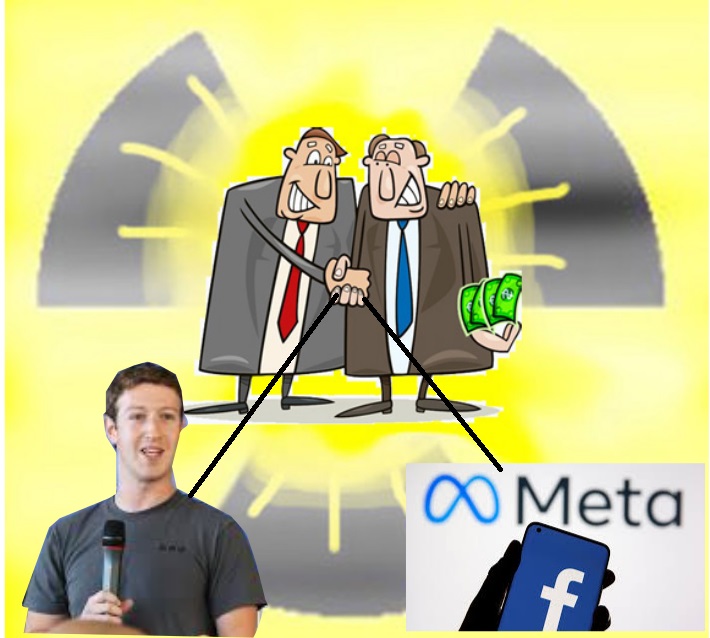
Facebook removed the item, saying it was an attempt to generate clicks by providing misleading information. We’d like to know on what basis this decision was made, but Facebook has yet to provide an answer.
It’s a concerning development, and not the first time one of our posts has been removed by Facebook.
Social media platforms including Facebook, X, YouTube, TikTok, and Instagram – are full of unchecked and misleading information about climate change and energy technologies. Much of it is complete nonsense creating FUD – fear, uncertainty and doubt – about new technologies.
It appears to be part of a well-funded and orchestrated plan by vested interests, and the fossil fuel industry in particular, to demonise renewables, electric vehicles, battery storage and other emerging competitors.
Much of this is amplified in mainstream media, where outrageous claims against renewables – and claims of blackouts, economic collapse and environmental failure – are repeatedly given voice.
Social media platforms including Facebook, X, YouTube, TikTok, and Instagram – are full of unchecked and misleading information about climate change and energy technologies. Much of it is complete nonsense creating FUD – fear, uncertainty and doubt – about new technologies.
It appears to be part of a well-funded and orchestrated plan by vested interests, and the fossil fuel industry in particular, to demonise renewables, electric vehicles, battery storage and other emerging competitors.
Much of this is amplified in mainstream media, where outrageous claims against renewables – and claims of blackouts, economic collapse and environmental failure – are repeatedly given voice.
Quiggin notes that the Czechia deal suggests the opposite is true, and confirms the widely held view in the energy industry itself that GenCost underestimates rather than overestimates the costs of nuclear. Nuclear, he says, is really really expensive.
But Facebook has now ruled that such analysis is misleading, and it won’t allow its users to view such information. Over the last few months, this has happened on several occasions to Renew Economy and its sister site The Driven.
Just last week, another article on the certification of green hydrogen technologies in Australia was pulled down. Last month, it was a story on how households will be a driving force of the energy transition. A few months earlier, an analysis on nuclear costs by Jeremy Cooper, the former deputy chair of ASIC and chair of the 2009/10 Super System Review, was also removed.
Over on The Driven, a story on how EVs are actually suitable for farmers in regional communities, was also pulled down. No explanation was provided. Despite protests, the posts were not reinstated.
Yet Facebook allows media groups such as Sky News Australia to post misleading information about renewables and climate without a check.
It’s a shocking development, and one that points to the manipulation of information by naysayers and vested interests. Some attribute it to the work of the Atlas Network, a shadowy group with strong Australian fossil fuel links that has campaigned against renewables, the Voice referendum, climate action, and climate protests.
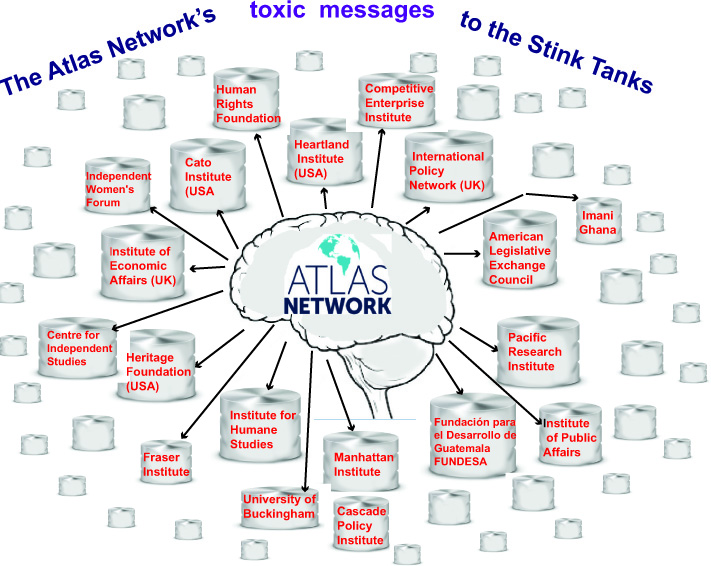
Researchers say that the whole point of the Atlas network of organisations and so called “institutes” and think tanks – which this article in New Republic says includes Australia’s Centre for Independent Studies, which has launched loud attacks against institutions such as the CSIRO, AEMO, and renewables in general – is to drown out actual academic expertise.
The Atlas Network does this, researchers say, to reduce the capacity for public and government influence with its own corporate propaganda that is dressed up as “research.”
George Monbiot, a columnist for the Guardian, calls many of the 500 institutions linked with the Atlas Network “junk tanks.” Jeremy Walker, from the University of Technology in Sydney, wrote in a paper that the network in Australia includes the CIS and the Institute for Public Affairs, both strongly anti renewable, and pro nuclear.
Their Facebook pages all still full of articles and videos making outrageous claims about renewables and nuclear. But that, it seems, is OK for the social media giant.
Book – “Nuked” on Aukus ‘fiasco’ says decision to embrace pact will ‘haunt’ Labor for years

“undermines any argument that the new submarines – whether nuclear or not – would be used primarily to defend Australia or to protect the nation’s shipping lanes”.
“at least one new cabinet minister wondered if it was possible to stop Aukus, but the suggestion went no further”.
Fowler said he did not believe there had been adequate public debate in Australia about the merits of Aukus,
Andrew Fowler’s book reveals one of Australia’s most important requirements for its submarines was the ability to work alongside the US in South China Sea
Daniel Hurst , 7 July 24, https://www.theguardian.com/world/article/2024/jul/07/book-on-aukus-fiasco-says-decision-to-embrace-pact-will-haunt-labor-for-years
One of Australia’s most important requirements for its new submarines is the ability to work alongside the United States in the South China Sea, a new book discloses.
The book by Andrew Fowler, a former investigative journalist for the ABC’s Four Corners and Foreign Correspondent programs, also predicts that Labor’s rush to embrace the Aukus pact “will haunt them for years to come”.
Fowler examines the Morrison government’s cancellation of the French submarine contract and its pursuit of a nuclear-powered alternative in the book Nuked: The Submarine Fiasco that Sank Australia’s Sovereignty.
The book makes the case that Aukus is a “deeply flawed” scheme that, when combined with a parallel effort to deepen military integration with the US, effectively ties Australia’s future “to whoever is in the White House”.
It includes an interview with David Gould, a former UK undersecretary for defence, who was headhunted by the then Gillard Labor government in 2012 as a consultant on a replacement for Australia’s ageing Collins-class submarines.
“As we sat talking, Gould revealed for the first time what has long been suspected: one of the submarine’s most important requirements would be to work with the Americans in the South China Sea,” Fowler writes.
“He explained that the submarine would need ‘to get through the archipelago to the north of Australia and into the South China Sea and operate in the South China Sea for a reasonable period of time and then come back again, without docking, or refuelling or anything. That’s what it needs to do.’”
The book quotes Gould as saying that the submarine would work alongside the US and Japan in an “integrated system”, which had become “even more pertinent with China”.
Fowler writes that the statement “undermines any argument that the new submarines – whether nuclear or not – would be used primarily to defend Australia or to protect the nation’s shipping lanes”.
Fowler contends that the focus is “to contain China and threaten its trade routes and food and energy supplies in a crisis”.
The Australian government has repeatedly said that its strategic motivation for acquiring nuclear-powered submarines is to “contribute to the collective security of our region” and maintain the global rules-based order.
The Labor defence minister, Richard Marles, has argued that the defence of Australia “doesn’t mean that much unless we have the collective security of our region” and that the nuclear-powered submarines would put a “question mark in any adversary’s mind”.
Fowler contends that the focus is “to contain China and threaten its trade routes and food and energy supplies in a crisis”.
The Australian government has repeatedly said that its strategic motivation for acquiring nuclear-powered submarines is to “contribute to the collective security of our region” and maintain the global rules-based order.
The Labor defence minister, Richard Marles, has argued that the defence of Australia “doesn’t mean that much unless we have the collective security of our region” and that the nuclear-powered submarines would put a “question mark in any adversary’s mind”.
The book reveals that after Labor won the 2022 election, “at least one new cabinet minister wondered if it was possible to stop Aukus, but the suggestion went no further”.
In an interview with Guardian Australia, Fowler said he began researching the book after becoming fascinated with “the overuse of executive power of government in the Morrison government, particularly the exposure of his five secret ministries”.
“I thought that the arrival of a $368bn secret deal that was done and then sprung on the public and the opposition party at the last moment would require an investigation,” he said.
Fowler said he did not believe there had been adequate public debate in Australia about the merits of Aukus, the security partnership with the US and the UK that involves the nuclear-powered submarine project but also collaboration on other advanced defence technologies.
“I think we debate the dollar-and-dime arguments, as the Americans might say, but we don’t debate the really big issues,” Fowler said.
“I don’t give advice to government but I think the Australian people have a right to know what the submarines are being bought for. They’re being bought to run with the Americans and Japan to contain the rise of China.”
Fowler said the then Labor opposition was put “in a diabolical position” when forced by Scott Morrison to make a quick decision on whether to support Aukus in 2021.
“This was a calculated attempt to wedge Labor on this issue and Labor only had 24 hours to make a decision,” he said. “It was obscene and absurd, and yet they made the decision fearing that if they opposed it they would be accused of being anti-American and weak on national security.
“I do understand why they went with it, but I think they also had some time to do some backtracking.”
Fowler called for an inquiry focused on “a failure of due process” in the cancellation of the French contract and the decision to pursue the Aukus arrangement, which officials admitted during Senate estimates hearings had not gone through the normal two-gate process for defence acquisitions.
Instead, the Morrison government announced Australia, the US and the UK would carry out an 18-month joint study to work out how to deliver the project. That led to the Albanese government’s March 2023 announcement of more detailed plans.
The book argues the French submarines would have given Australia “greater independence”, noting the president, Emmanuel Macron, had described Australia, India and France as being at the heart of a “new Indo-Pacific alliance and axis”.
The book says this “more independent thinking” caused “consternation in Washington”.
Assange’s Return to Australia: The Resentment of the Hacks
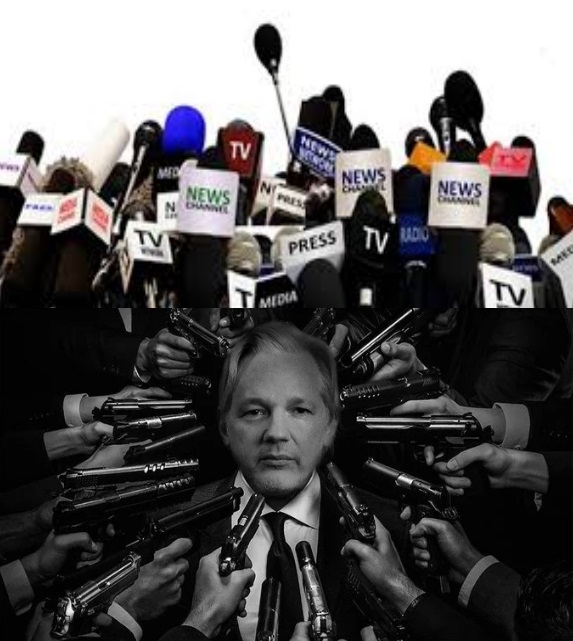
Sharp eyes will be trained on Assange in Australia, ……… He is in the bosom of the Five Eyes Alliance, permanently threatened by the prospect of recall and renewed interest by Washington. And there are dozens of journalists, indifferent to the dangers the entire effort against the publisher augurs for their own craft, wishing that to be the case.
Dr Binoy Kampmark 1 July 24 https://theaimn.com/author/binoy-kampmark/
Julian Assange of WikiLeaks fame is now back in the country of his birth, having endured conditions of captivity ranging from cramped digs in London’s Ecuadorian embassy to the maximum-security facilities of Belmarsh Prison. His return to Australia after striking a plea deal with the US Department of Justice sees him in a state with some of the most onerous secrecy provisions of any in the Western world.
As of January 2023, according to the Attorney-General’s Department, the Australian Commonwealth had 11 general secrecy offences in Part 5.6 of the Criminal Code, 542 specific secrecy offences across 178 Commonwealth laws and 296 non-disclosure duties spanning 107 Commonwealth laws criminalising unauthorised disclosure of information by current and former employees of the Commonwealth.
In November 2023, the Albanese Government agreed to 11 recommendations advanced by the final report of the review of secrecy provisions. While aspiring to thin back the excessive overgrowth of secrecy, old habits die hard. Suggested protections regarding press freedom and individuals providing information to Royal Commissions will hardly instil confidence.
With that background, it is unsurprising that Assange’s return, while delighting his family, supporters and free press advocates, has stirred the seething resentment of the national security establishment, Fourth Estate crawlers, and any number of journalistic sellouts. Damn it all, such attitudes seem to say: he transformed journalism, stole away our self-censorship, exposed readers to the original classified text, and let the public decide for itself how to react to disclosures revealing the abuse of power. Minimal editorialising; maximum textual interpretation through the eyes of the universal citizenry, a terrifying prospect for those in government.
Given that the Australian press establishment is distastefully comfortable with politicians – the national broadcaster, the Australian Broadcasting Corporation, for instance, has a central reporting bureau in Canberra’s Parliament House – Assange’s return has brought much agitation. The Canberra press corps earn their crust in a perversely symbiotic, and often uncritical relationship, with the political establishment that furnishes them with rationed morsels of information. The last thing they want is an active Assange scuppering such a neat understanding, a radical transparency warrior keenly upsetting conventions of hypocrisy long respected.
Let’s wade through the venom. Press gallery scribbler Phillip Coorey of the Australian Financial Review proved provincially ignorant, his mind ill-temperedly confused about WikiLeaks. “I have never been able to make up my mind about Assange.” Given that his profession benefits from leaks, whistleblowing and the exposure of abuses, one wonders what he is doing in it. Assange has, after all, been convicted under the US Espionage Act of 1917 for engaging in that very activity, a matter that should give Coorey pause for outrage.
For the veteran journalist, another parallel was more appropriate, something rather distant from any notions of public interest journalism that had effectively been criminalised by the US Republic. “The release of Julian Assange has closer parallels to that of David Hicks 17 years ago, who like Assange, was deemed to have broken American law while not in that country, and which eventually involved a US president cutting a favour for an Australian prime minister.”
The case of Hicks remains a ghastly reminder of Australian diplomatic and legal cowardice. Coorey is only right to assume that both cases feature tormented flights of fancy by the US imperium keen on breaking a few skulls in their quest to make the world safe for Washington. The military commissions, of which Hicks was a victim, were created during the madly named Global War on Terror pursuant to presidential military order. Intended to try non-US citizens suspected of terrorism held at the Guantánamo Bay detention facility, they were farcical exercises of executive power, a fact pointed out by the US Supreme Court in 2006. It took Congressional authorisation via the Military Commissions Actin 2009 to spare them.
Coorey’s colleague and international editor of The Sydney Morning Herald and The Age, Peter Hartcher, was similarly uninterested in what Assange exposed, babbling (paywalled) about the publisher’s return as the moment “Assangeism came into plain view”. He had no stomach for “the cult” which seemed to have infected Canberra’s cold weather. He also wondered whether Assange could constructively “use his global celebrity status to campaign for public interest journalism and human rights.” To do so – and here, teacher’s pet of the political establishment, beater of the war drum for the United States – Assange would have to “fundamentally” alter “his ways to advance the cause”.
All this was a prelude for Hartcher to take the hatchet to the journalistic exploits of a man more decorated with journalism awards that many in the Canberra gallery combined. The claim that he is “a journalist is hotly contested by actual journalists.” Despite the US government conceding that the disclosures by WikiLeaks had not resulted in harm to US sources, “there were many other victims of Assange’s project.” The returned publisher was only in Australia “on probation”, a signal reminder that the media establishment will be attempting to badger him into treacherous conformity.
Even this language was too mild for another Australian hack, Michael Ware, who had previously worked for Time Magazine and CNN. With pathological inventiveness, he thought Assange “a traitor in the sense that, during a time of war, when we had American, British and Australian troops in the field, under fire, Julian Assange published troves of unredacted documents.” Never mind truth to power; in Ware’s world, veracity is subordinate to it, even in an illegal war. What he calls “methods” and “methodology” cannot be exposed.
Such gutter journalism has its necessary cognate in gutter politics. All regard information was threatening unless appropriately handled, its more potent effects for change stilled. Leader of the opposition in the Senate, Simon Birmingham (paywalled), found it “completely unnecessary and totally inappropriate for Julian Assange to be greeted like some homecoming hero by the Australian Prime Minister.”Chorusing with hacks Coorey, Hartcher and Ware, Birmingham bleated about the publication by Assange of half a million documents “without having read them, curated them, checked to see if there was anything that could be damaging or risking the lives of others there.” Keep the distortions flying, Senator.
Dennis Richardson, former domestic intelligence chief and revolving door specialist (public servant becomes private profiteer with ease in Canberra), similarly found it inexplicable that the PM contacted Assange with a note of congratulation, or even showed any public interest in his release from a system that was killing him. “I can think of no other reason why a prime minister would ring Assange on his return to Australia except for purposes relating to politics,” moaned Richardson to the Guardian Australia.
For Richardson, Assange had been legitimately convicted, even if it was achieved via that most notorious of mechanisms, the plea deal. The inconvenient aside that Assange had been spied upon by CIA sponsored operatives, considered a possible object of abduction, rendition or assassination never clouds his uncluttered mind.
Sharp eyes will be trained on Assange in Australia, however long he wishes to say. He is in the bosom of the Five Eyes Alliance, permanently threatened by the prospect of recall and renewed interest by Washington. And there are dozens of journalists, indifferent to the dangers the entire effort against the publisher augurs for their own craft, wishing that to be the case.
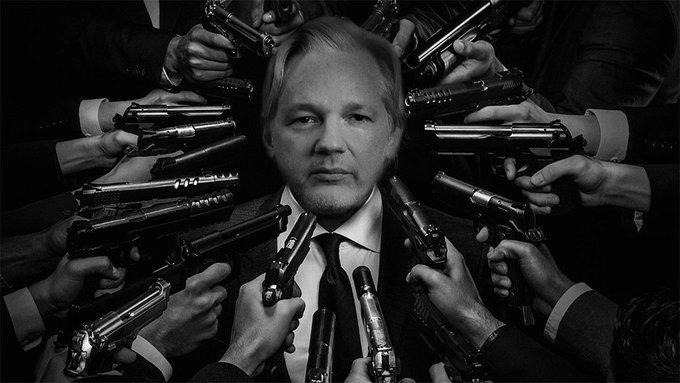
Julian Assange: Free at last, but guilty of practicing journalism
Pepe Escobar, Strategic Culture Foundation, Wed, 26 Jun 2024, https://www.sott.net/article/492585-Julian-Assange-Free-at-last-but-guilty-of-practicing-journalism
The United States Government (USG) – under the “rules-based international order” – has de facto ruled that Julian Assange is guilty of practicing journalism.
Edward Snowden had already noted that “when exposing a crime is treated as committing a crime, you are being ruled by criminals.”
Criminals such as Mike “We Lie, We Cheat, We Steal” Pompeo, former Trump Secretary of State, who had planned to kidnap and kill Julian when he was head of the CIA.
The indomitable Jennifer Robinson and Julian’s U.S. lawyer Barry Pollack sum it all up: the United States has “pursued journalism as a crime”.
Julian was forced to suffer an unspeakably vicious Via Crucis because he dared to expose USG war crimes; the inner workings of the U.S. military in their rolling thunder War Of Terror (italics mine) in Afghanistan and Iraq; and – Holy of Holies – he dared to release emails showing the Democratic National Committee (DNC) colluded with the notorious warmongering Harpy Hillary Clinton.
Julian was subjected to relentless psychological torture, and nearly crucified for publishing facts that should always remain invisible to public opinion. That’s what top-notch journalism is all about.
The whole drama teaches the whole planet everything one needs to know about the absolute control of the Hegemon over pathetic UK and EU.
And that bring us to the kabuki that may – and the operative word is “may” – be closing the case. Title of the twisted morality play: ‘Plead Guilty or Die in Jail’.
The final twist in the plot line of the morality play runs like this: the combo behind the cadaver in the White House realized that torturing an Australian journalist and publisher in a maximum security U.S. prison in an electoral year was not exactly good for business.
At the same time the British establishment was begging to be excluded from the plot – as its “justice” system was forced by the Hegemon to keep an innocent man and family father hostage for 5 years, in abysmal conditions, in the name of protecting a basket of Anglo-American intel secrets.
In the end, the British establishment quietly applied all the pressure it could muster to run towards the exit – in full knowledge of what the Americans were planning for Julian.
Life in prison was “fair and reasonable”
Cue to the kabuki this Wednesday in Saipan, the largest of the Northern Mariana Islands, unincorporated Pacific land administered by the Hegemon.
Free at last – maybe, but with conditionalities that remain quite murky.
Julian was ordered by this U.S. Court in the Pacific to instruct WikiLeaks to destroy information as a condition of the deal.
Julian had to tell U.S. judge Ramona Manglona that he was not bribed or coerced to plead guilty to the crucial charge of “conspiring to unlawfully obtain and disseminate classified information relating to the national defense of the United States”.
Well, his lawyers told him he had to follow the ‘Plead Guilty or Die in Jail’ script. Otherwise, no deal.
Judge Manglona – in an astonishing brush aside of those 5 years of psychological torture – said, “it appears that your 62 months in prison was fair and reasonable and proportionate.”
So now the – oh, so benign and “fair” – USG will take the necessary steps to immediately erase remaining charges against Julian in the notoriously harsh Eastern District of Virginia.
Julian was always adamant: he stressed over and over again that he would never plead guilty to an espionage charge. He didn’t; he pleaded guilty to a hazy felony/conspiracy charge; was given time served; was set free; and that’s a wrap.
Or is it?
Australia is a Hegemon vassal state, intel included, and with less than zero capability to protect its civilian population.
Moving from the UK to Australia may not be exactly an upgrade – even with freedom included. A real upgrade would be a move to a True Sovereign. Like Russia. Yet Julian will need U.S. authorization to travel and leave Australia.Moscow inevitably will be a sanctioned, off-limits destination.
There’s hardly any question Julian will be back at the helm of WikiLeaks. Whistleblowers may be even lining up as we speak to tell their stories – supported by official documents.
Yet the stark, ominous message remains fully imprinted in the collective unconscious: the ruthless, all-powerful U.S. Intel Apparatus will go no holds barred and take no prisoners to punish anyone, anywhere, who dares to expose imperial crimes. A new global epic starts now: The Fight against Criminalized Journalism.
How the media facilitates Dutton’s nuclear lies
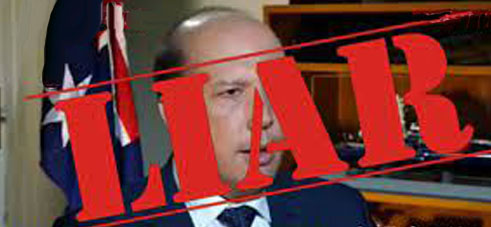
The fault is the media’s also. It entertains the nonsense, repeats it until it is real. It pretends there is debate where there is none. It leans too heavily on conflict. It mistakes credulity for balance.
It is in these false equivalences that Peter Dutton finds his purpose. Here, on these glib plains, he is reinvented as a politician. His lone policy announcement is given the status once reserved for an alternative government.
In journalism, the answer to any question in a headline is almost always no. The hope is that a reader might settle for maybe. The question mark itself bends over in embarrassment.
Last week, the ABC used its leading news podcast to ask: “Could nuclear power really lead to cheaper bills?” Similar questions have been asked across the media. The answer is no, but the headline has already done its work. It has already lent credibility to a fantasy.
According to the latest Lowy polling, two thirds of Australians now support the use of nuclear power. As many as 27 per cent support it strongly. A decade ago the opposite was true: 62 per cent did not want nuclear as part of the energy mix.
The difference is not science. It is mischief. The case for nuclear has not grown stronger. The cost argument has not been won. Uranium has become no safer or less finite. All that has changed is the desperateness of the Coalition and the fecklessness of the press.
Peter Dutton cannot name the experts who advised on his policy. This is most likely because they do not exist. Imaginary reactors are the preserve of imaginary scientists. The policy is not costed and relies on developments that are presently illegal.
Findings from the Australian Energy Market Operator, published this week, make clear that the power grid would fail before even the most optimistic projections of when these reactors might be operational. They are not a solution. They are a distraction.
Cost is another lie. The Commonwealth Scientific and Industrial Research Organisation notes that nuclear power is twice as expensive to produce as renewables. These figures don’t allow for blowouts in construction and time, which are almost inevitable. If everything went right, the answer would still be wrong.
Dutton knows all this. So does the media that asks fallaciously if nuclear power could lead to cheaper bills. They have conspired to solve a problem that exists now with a solution that is never coming.
There is little enough being debated that this is taking up all the space. It is interrupting the inevitable shift to renewables. That is its sole intention.
Once again investment is being slowed. Once again the obvious is being treated as uncertain. This is played out as if it were a game, but it is not: the world is being pushed closer to catastrophe.
No wonder the question marks cower in their headlines, ashamed of their role in this whole sordid scam.
This article was first published in the print edition of The Saturday Paper on June 29, 2024 as “The nuclear question mark”.
Julian Assange is finally free, but no thanks to the media

The establishment media acted as a willing tool in the demonising narrative the US and British governments carefully crafted against Assange.
The smears might not have stuck so well had they been thrown only by the rightwing tabloids. But life was breathed into these claims from their endless repetition by journalists supposedly on the other side of the aisle, particularly at the Guardian.
In this case, it was Assange. But the same media machine was rolled out against former Labour leader Jeremy Corbyn, another thorn in the establishment’s side. And as with Assange, the Guardian and the BBC were the two outlets that were most useful in making the smears stick.
JONATHAN COOK, 26 JUNE 2024 DeClassified UK
It was the media, led by the Guardian, that kept Assange behind bars. Their villainy will soon be erased because they write the script about what’s going on in the world.
“………………………………………………………………….Everything Assange had warned the US wanted to do to him was proved correct over the next five years, [from 2017] as he languished in Belmarsh entirely cut off from the outside world.
No one in our political or media class appeared to notice, or could afford to admit, that events were playing out exactly as the founder of Wikileaks had for so many years predicted they would – and for which he was, at the time, so roundly ridiculed.
Nor was that same political-media class prepared to factor in other vital context showing that the US was not trying to enforce some kind of legal process, but that the extradition case against Assange was entirely about wreaking vengeance – and making an example of the Wikileaks founder to deter others from following him in shedding light on US state crimes.
That included revelations that, true to form, the CIA, which was exposed as a rogue foreign intelligence agency in 250,000 embassy cables published by Wikileaks in 2010, had variously plotted to assassinate him or kidnap him off the streets of London.
Other evidence came to light that the CIA had been carrying out extensive spying operations on the embassy, recording Assange’s every move, including his meetings with his doctors and lawyers.
That fact alone should have seen the US case thrown out by the British courts. But the UK judiciary was looking over its shoulder, towards Washington, far more than it was abiding by its own statute books.
Media no watchdog
Western governments, politicians, the judiciary, and the media all failed Assange. Or rather, they did what they are actually there to do: keep the rabble – that is, you and me – from knowing what they are really up to.
Their job is to build narratives suggesting that they know best, that we must trust them, that their crimes, such as those they are supporting right now in Gaza, are actually not what they look like, but are, in fact, efforts in very difficult circumstances to uphold the moral order, to protect civilisation.
For this reason, there is a special need to identify the critical role played by the media in keeping Assange locked up for so long.
The truth is, with a properly adversarial media playing the role it declares for itself, as a watchdog on power, Assange could never have been disappeared for so long. He would have been freed years ago. It was the media that kept him behind bars.
The establishment media acted as a willing tool in the demonising narrative the US and British governments carefully crafted against Assange.
Even now, as he is reunited with his family, the BBC and others are peddling the same long-discredited lies.
Those include the constantly repeated claim by journalists that he faced “rape charges” in Sweden that were supposedly dropped. Here is the BBC making this error once again in its reporting this week.
In fact, Assange never faced more than a “preliminary investigation”, one the Swedish prosecutors repeatedly dropped for lack of evidence. The investigation, we now know, was revived and sustained for so long not because of Sweden but chiefly because the UK’s Crown Prosecution Service, then led by Sir Keir Starmer (now the leader of the Labour party), insisted on it dragging on.
Starmer made repeated trips to Washington during this period, when the US was trying to find a pretext to lock Assange away for political crimes, not sexual ones. But as happened so often in the Assange case, all the records of those meetings were destroyed by the British authorities.
The media’s other favourite deception – still being promoted – is the claim that Wikileaks’ releases put US informants in danger.
That is utter nonsense, as any journalist who has spent even a cursory amount of time studying the background to the case knows.
More than a decade ago, the Pentagon set up a review to identify any US agents killed or harmed as a result of the leaks. They did so precisely to help soften up public opinion against Assange.
And yet a team of 120 counter-intelligence officers could not find a single such case, as the head of the team, Brigadier-General Robert Carr, conceded in court in 2013.
Despite having a newsroom stuffed with hundreds of correspondents, including those claiming to specialise in defence, security and disinformation, the BBC still cannot get this basic fact about the case right.
That’s not an accident. It’s what happens when journalists allow themselves to be spoon-fed information from those they are supposedly watching over. That is what happens when journalists and intelligence officials live in a permanent, incestuous relationship.
Character assassination
But it is not just these glaring reporting failures that kept Assange confined to his small cell in Belmarsh. It was that the entire media acted in concert in his character assassination, making it not only acceptable but respectable to hate him.
It was impossible to post on social media about the Assange case without dozens of interlocutors popping up to tell you how deeply unpleasant he was, how much of a narcissist, how he had abused his cat or smeared his walls in the embassy with faeces. None of these individuals, of course, had ever met him.
It also never occurred to such people that, even were all of this true, it would still not have excused stripping Assange of his basic legal rights, as all too clearly happened. And even more so, it could not possibly justify eroding the public-interest duty of journalists to expose state crimes.
What was ultimately at stake in the protracted extradition hearings was the US government’s determination to equate investigative national-security journalism with “espionage”. Whether Assange was a narcissist had precisely no bearing on that matter.
Why were so many people persuaded Assange’s supposed character flaws were crucially important to the case? Because the establishment media – our supposed arbiters of truth – were agreed on the matter.
The smears might not have stuck so well had they been thrown only by the rightwing tabloids. But life was breathed into these claims from their endless repetition by journalists supposedly on the other side of the aisle, particularly at the Guardian.
Liberals and left-wingers were exposed to a steady flow of articles and tweets belittling Assange and his desperate, lonely struggle against the world’s sole superpower for the right not to be locked away for the rest of his life for doing journalism.
The Guardian – which had benefited by initially allying with Wikileaks in publishing its revelations – showed him precisely zero solidarity when the US establishment came knocking, determined to destroy the Wikileaks platform, and its founder, for making those revelations possible.
For the record, so we do not forget how Assange was kept confined for so long, these are a few examples of how the Guardian made him – and not the law-breaking US security state – the villain.
Marina Hyde in the Guardian in February 2016 – four years into his captivity in the embassy – casually dismissed as “gullible” the concerns of a United Nations panel of world-renowned legal experts that Assange was being “arbitrarily detained” because Washington had refused to issue guarantees that it would not seek his extradition for political crimes.
Long-time BBC legal affairs correspondent Joshua Rozenberg was given space in the Guardian on the same day to get it so wrong in claiming Assange was simply “hiding away” in the embassy, under no threat of extradition (Note: Though his analytic grasp of the case has proven feeble, the BBC allowed him to opine further this week on the Assange case).
Two years later, the Guardian was still peddling the same line that, despite the UK spending many millions ringing the embassy with police officers to prevent Assange from “fleeing justice”, it was only “pride” that kept him detained in the embassy.
Or how about this one from Hadley Freeman, published by the Guardian in 2019, just as Assange was being disappeared for the next five years into the nearest Britain has to a gulag, on the “intense happiness” she presumed the embassy’s cleaning staff must be feeling.
Anyone who didn’t understand quite how personally hostile so many Guardian writers were to Assange needs to examine their tweets, where they felt freer to take the gloves off. Hyde described him as “possibly even the biggest arsehole in Knightsbridge” while Suzanne Moore said he was “the most massive turd.”
The constant demeaning of Assange and the sneering at his plight was not confined to the Guardian’s opinion pages. The paper even colluded in a false report – presumably supplied by the intelligence services, but easily disproved – designed to antagonise the paper’s readers by smearing him as a stooge of Donald Trump and the Russians.
This notorious news hoax – falsely claiming that in 2018 Assange repeatedly met with a Trump aide and “unnamed Russians”, unrecorded by any of the dozens of CCTV cameras surveilling ever approach to the embassy – is still on the Guardian’s website.
This campaign of demonisation smoothed the path to Assange being dragged by British police out of the embassy in early 2019.
It also, helpfully, kept the Guardian out of the spotlight. For it was errors made by the newspaper, not Assange, that led to the supposed “crime” at the heart of the US extradition case – that Wikileaks had hurriedly released a cache of files unredacted – as I have explained in detail before.
Too little too late
The establishment media that collaborated with Assange 14 years ago in publishing the revelations of US and UK state crimes only began to tentatively change its tune in late 2022 – more than a decade too late.
That was when five of his former media partners issued a joint letter to the Biden administration saying that it should “end its prosecution of Julian Assange for publishing secrets”.
But even as he was released this week, the BBC was still continuing the drip-drip of character assassination. A proper BBC headline, were it not simply a stenographer for the British government, might read: “Tony Blair: Multi-millionaire or war criminal?”
For while the establishment media has busily fixed our gaze on the supposed character flaws of Assange, it has kept our attention away from the true villains, those who committed the crimes he exposed: Blair, George W Bush, Dick Cheney and many more.
We need to recognise a pattern here. When the facts cannot be disputed, the establishment has to shoot the messenger.
In this case, it was Assange. But the same media machine was rolled out against former Labour leader Jeremy Corbyn, another thorn in the establishment’s side. And as with Assange, the Guardian and the BBC were the two outlets that were most useful in making the smears stick.
Sadly, to secure his freedom, Assange was compelled to make a deal pleading guilty to one of the charges levelled against him under the Espionage Act.
Highlighting the enduring bad faith of the Guardian, the same paper that so readily ridiculed Assange’s years of detention to avoid being locked away in a US super-max jail, ran an article this week, as Assange was released, stressing the “dangerous precedent” for journalism set by his plea deal.
Washington’s treatment of Assange was always designed to send a chilling message to investigative journalists that, while it is fine to expose the crimes of Official Enemies, the same standards must never be applied to the US empire itself.
How is it possible that the Guardian is learning that only now, after failing to grasp that lesson earlier, when it mattered, during Assange’s long years of political persecution?
The even sadder truth is that the media’s villainous role in keeping Assange locked up will soon be erased from the record. That is because the media are the ones writing the script we tell ourselves about what is going on in the world.
They will quickly paint themselves as saints, not sinners, in this episode. And, without more Assanges to open our eyes, we will most likely believe them. https://www.declassifieduk.org/julian-assange-freedom-this-time-no-thanks-to-the-media/
1 This month

of the week – Australians for War Powers Reform (AWPR)
To see nuclear-related stories in greater depth and intensity
 Antinuclear