Greenland might reject Australian-Chinese company Greenland Minerals in its bid to mine rare earths
Telegraph 4th April 2021, AS elections go, it sounds rather minor-league: a contest with just 40,000 voters, triggered by a planning row in one of the most remote, inhospitable corners of the planet. On Tuesday, though, diplomats from Washington to
Beijing will be watching carefully as Greenland holds snap parliamentary polls. With a total of population of just 56,000, its electorate is smaller than some British town councils – yet their vote over the vexed issue of the Kvanefjeld mine project could have implications not just for Greenland, but the global superpower race.
Overlooking the tiny fishing settlement of Narsaq, where locals live mainly off catching whales and seals, the project
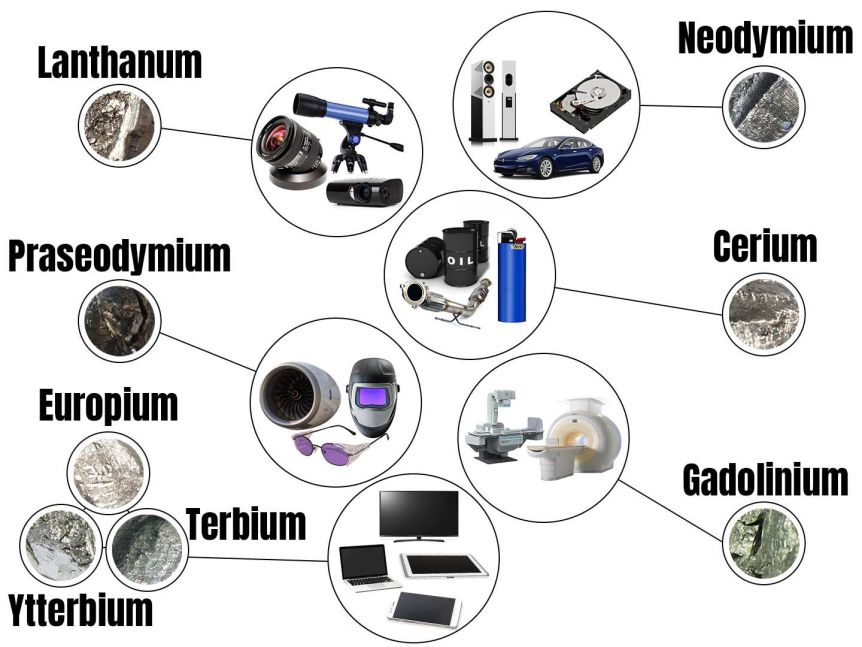
aims to tap into one of world’s biggest deposits of “rare earth” minerals – materials as vital to the 21st-century as oil was to the 20th. Their supermagnetic, superconductive properties are used in everything from i-Phones and solar panels through to hybrid cars and weapons systems.
Yet while they are key to the goals of a high-tech, low-carbon world, extracting them itself can be an environmentally-hazardous process – a point not lost on Greenland’s residents, some of whom are sceptical of promises from the Australian firm behind the project, Greenland Minerals, that strict anti-pollution measures will be enforced.
Frontrunners in the election are the Left-wing, pro-green Inuit Ataqatigiit party, who could throw the mine project out altogether, despite warnings from rival parties that Greenland’s isolated economy must end its dependence on fishing. But for others, the stakes are about much more than even that. Of particular concern is that Greenland Minerals is part-owned by Shenghe Holdings, a Chinese firm with close ties to the Beijing government.
Labor Party’s platform on uranium/nuclear and radioactive waste issues.

Dave Sweeey, 31 Mar 21, At its National Conference federal Labor adopted the platform (below) on uranium/nuclear and radioactive waste issues.
Clearly it is not what we would write but there’s a lot that is useful and important – including options to further contest Australian uranium sales, a commitment to responsible radioactive waste management and a rejection of domestic nuclear power.
Yesterday federal Labor also clearly reaffirmed its commitment to sign and ratify the Treaty on the Prohibition of Nuclear Weapons (the ICAN Ban) in government.
Uranium
1. The production of uranium and its use in the nuclear fuel cycle present unique and unprecedented
hazards and risks, including:
Threats to human health and the local environment in the mining and milling of uranium and
management of radioactive materials, which demand the enforcement of strict safety
procedures;
The generation of products that are usable as the raw materials for nuclear weapons
manufacture, which demands the enforcement of effective controls against diversion; and
The generation of highly toxic radioactive waste by-products that demand permanently safe
disposal methods.
2 Labor accordingly will allow the mining and export of uranium only under the most stringent
conditions.
3. In relation to mining and milling, Labor will:
Ensure the safety of workers in the uranium industry is given priority. Labor has established a
compulsory register for workers in the uranium industry that includes regular health checks
and ongoing monitoring. The register is held by an independent agency and will be subject to
privacy provisions;
Ensure Australian uranium mining, milling and rehabilitation is based on world best practice
standards, extensive continuing research on environmental impacts and the health and
safety of employees and affected communities, particularly Indigenous communities;
Ensure the Australian public is informed about the quality of the environmental performance
of uranium mines through public accountability mechanisms;
Foster a constructive relationship between mining companies and Indigenous communities
affected by uranium mining; and
Prohibit the mining of uranium within national parks under International Union for
Conservation of Nature protected area category 1A, category 1B, and category 2, and listed
world heritage areas.
4. In relation to exports other than to India, Labor will allow the export of uranium only to those
countries that observe the Nuclear Non-Proliferation Treaty (NPT), are committed to nonproliferation
policies, and have ratified international and bilateral nuclear safeguards agreements.
Labor will export uranium only to countries that maintain strict safeguards and security controls
over their nuclear power industries.
5. In relation to India, an important strategic partner for Australia, commitments and responsible
actions in support of nuclear non-proliferation, consistent with international guidelines on nuclear
supply, will provide an acceptable basis for peaceful nuclear cooperation, including the export of
uranium, subject to the application of strong safeguards.
6. In addition, Labor will work towards:
Strengthening export control regimes and the rights and authority of the International
Atomic Energy Agency (IAEA);
Appropriate international responses to violations of existing safeguard commitments;
Limiting the processing of weapon usable material (separation of plutonium and high
enriched uranium in civilian programs);
Tightening controls over the export of nuclear material and technology;
Universalising of the IAEA additional protocol making it mandatory for all states and
members of the Nuclear Suppliers Group to adhere to the additional protocol as a condition
of supply to all their transfers;
Criminalising actions of individuals and companies that assist in nuclear proliferation;
The development of an international guarantee of nuclear fuel supply to states foregoing
sensitive nuclear technologies;
Revising the NPT to prevent countries from withdrawing from the NPT and passing a new
resolution in the United Nations Security Council addressing the penalties for withdrawal
from the NPT;
Encouraging all nuclear states to join the NPT;
Reserving the right to withhold supplies of uranium permanently, indefinitely or for a
specified period from any country that ceases to observe the non-proliferation safeguards
and security conditions applied to Australian uranium exports to that country, or which
adopts nuclear practices or policies that do not further advance the cause of nuclear nonproliferation;
Supporting the maintenance and enhancement of international and Australian safeguards to
ensure that uranium mined in Australia, and nuclear products derived from it, are used only
for civil purposes by approved instrumentalities in approved countries that are signatories to
the NPT (with the exception of India) and with whom Australia has safeguard arrangements;
and
Seeking adequate international resourcing of the IAEA to ensure its effectiveness in
undertaking its charter.
7. Labor will progress these commitments through diplomatic means including the re-establishment
of the Canberra Commission to re-invigorate Australia’s tradition of middle power, multilateral
diplomacy. In doing so, Labor believes that as a non-nuclear armed nation and a good international
citizen, Australia can make a significant contribution to promoting disarmament, the reduction of
nuclear stockpiles, and the responsible use of nuclear technology.
8. Labor will:
Vigorously and totally oppose the ocean dumping of radioactive waste;
Prohibit the establishment of nuclear power plants and all other stages of the nuclear fuel
cycle in Australia;
Fully meet all Australia’s obligations as a party to the NPT; and
Remain strongly opposed to the importation and storage of nuclear waste that is sourced
from overseas in Australia.
9. Labor acknowledges that radioactive waste management is a complex policy challenge that
requires the highest levels of transparency and evidence, while balancing the need of the
community to benefit from treatments for diseases like cancer. Accordingly, Labor will act in
accordance with scientific evidence, and with full transparency, broad public input and best
practice technical and consultative standards, taking into account the views of traditional owners,
to progress responsible radioactive waste management
New research into the effects of nuclear bomb tests on Montebello islands
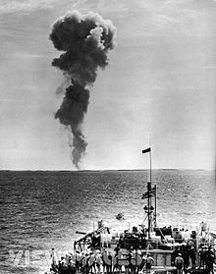 By Susan Standen 22 Mar 21, A new Edith Cowan University research project hopes to collect important data on the impact of historical nuclear testing in the remote Montebello Islands area. Key points:
Sixty years after the British government conducted nuclear explosion testing on the islands, there is little data available to find how much residue plutonium still exists. The project hopes to be the first study to outline how and where man-made radioactivity is still existing in the marine sediment. Collections of sediment are being collected from remote field trips to the islands to analyse amounts of residue plutonium radionuclides.,,,,,,,,,,,, Ms Hoffman says other island nations affected by nuclear blasts will be able to use the Montebello Islands research as a reference baseline to start their own investigations. Will it inform health research? Ms Hoffman says the first step is to find out what remains there as a legacy………….. The project is a collaboration between the Edith Cowan University, the Department of Biodiversity and Conservation and the Australian Radiation Protection and Nuclear Safety Agency. https://www.abc.net.au/news/2021-03-22/montebellos-nucelar-fallout-research/13260242 |
|
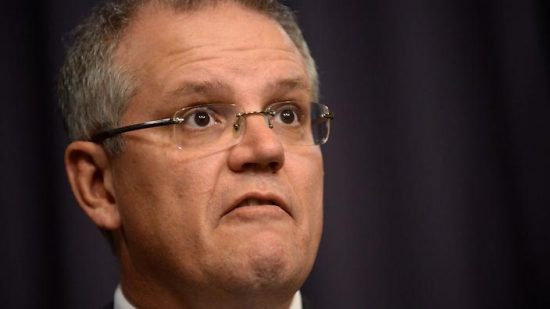
Why Boris Johnson rejected Scott Morrison as speaker at climate summit, to Morrison’s fury
|
Boris Johnson outlines why Scott Morrison was rejected to speak at climate summit, The Age, By Rob Harris March 22, 2021 British Prime Minister Boris Johnson told Scott Morrison that Australia was denied the opportunity to speak at last year’s climate summit because he wanted to encourage nations to set more ambitious emissions reduction targets.
Mr Johnson, who is rallying the world’s leading economies towards achieving net zero emissions by 2050, explained his rationale in a letter to the Australian Prime Minister in December last year while acknowledging the domestic political challenge over climate policy. Mr Johnson had originally invited Mr Morrison to speak at the December 12 summit but later walked away from the offer amid a behind-the-scenes diplomatic tussle over whether Australia’s climate change policies were insufficient to warrant a speaking slot………. While Mr Morrison told Parliament at the time he was not bothered by the snub, the government was privately furious behind the scenes and much of its anger was directed towards the British PM, who hosted the conference in partnership with the UN and France. Mr Johnson said Mr Morrison should understand that “we have tried to set a high bar for this summit to encourage countries to come forward with ambitious commitments”………https://www.theage.com.au/politics/federal/boris-johnson-outlines-why-scott-morrison-was-rejected-to-speak-at-climate-summit-20210322-p57d2o.html |
|
Need for ‘consent laws’, as Australian mining companies trample on Aboriginal rights
“The Australian government needs to amend native title and land rights legislation to include a requirement for companies to gain free, prior and informed consent from traditional landowners before proceeding with projects, as well as mandatory human rights due diligence assessments.”
The report also recommends governments at all levels work to remove financial and other barriers to Indigenous people accessing the courts to ensure they can effectively challenge decisions that affect them.
Close the gap in consent laws for major resource projects: report. A new report highlights accountability shortfalls in major resource projects and calls for legislative reform to protect Indigenous people’s rights. https://www.rmit.edu.au/news/all-news/2021/mar/mining-first-nations Michael Quin, 21 Mar 21,
The First Peoples and Land Justice Issues in Australia report by researchers at RMIT University’s Business and Human Rights Centre (BHRIGHT), reveals the human rights impacts of companies operating on Aboriginal and Torres Strait Islander land.
BHRIGHT Director, Associate Professor Shelley Marshall, said the case studies revealed a pattern of companies failing to meet international business and human rights norms, as well as a lack of respect for the fundamental principle of obtaining free, prior and informed consent from landholders on projects impacting them.
“Our research reveals a legal framework and corporate behaviour that refuses to acknowledge lack of consent,” Marshall said.
“The fact that companies can operate within Australian law while failing to respect and uphold their international human rights obligations underlines the urgent need for legislative reform at state, territory, and federal levels.”
“These companies also need to step up and take their obligations under human rights frameworks much more seriously.” Continue reading
Minerals Council of Australia trying to influence European Commission, to push for fossil fuels and nuclear
|
The Minerals Council of Australia has weighed into a European commission climate policy debate, urging it to back fossil fuels with carbon capture use and storage (CCS) and nuclear power on a list of environmentally friendly developments.
In a written submission to the commission, the minerals council (MCA) said a proposed EU taxonomy for sustainable activities intended to shape investment under a European green deal was inconsistent in how it dealt with clean technologies because it favoured solar, wind and biofuels over nuclear and CCS. The mining lobby group said it was concerned this approach would have a flow-on effect on the types of energy investments backed by EU-based companies across the globe and “increase the cost of reducing CO2 emissions”. It called for an overhaul. InfluenceMap, a London-based thinktank that tracks corporate climate lobbying, said the MCA’s submission suggested it wanted to export its “negative approach to climate policy” by pushing for changes in other parts of the world that would allow continued use of coal and gas. The MCA submission argued there was “no valid basis” for treating CCS and nuclear differently given EU countries currently used coal, gas and nuclear……….. But InfluenceMap’s program manager, Rebecca Vaughan, said the MCA appeared concerned a science-led approach to dealing with the climate crisis would hurt the industries it represented. “While the MCA says it wants the EU to take a technology neutral position, its submission appears to advocate for the continued use of coal and gas with carbon capture utilisation and storage, which is clearly at odds with the commission’s science-based policy,” Vaughan said. The MCA has long been accused of hindering action to tackle the climate crisis in Australia, and campaigned aggressively against Labor’s two attempts to introduce a carbon pricing scheme. In recent years it has come under pressure to change its anti-climate stance from its biggest members, BHP and Rio Tinto. It followed the big mining companies facing repeated calls from their investors to abandon the MCA over its commitment to coal. It resulted in the MCA releasing a climate plan that said it was committed to the Paris agreement and reaching net zero emissions, but did not include a timeframe in which that target should be reached. The EU taxonomy is intended to help it meet a target of at least a 55% cut in its emissions below 1990 levels by 2030 on the way to net zero by 2050 by defining what activities are considered environmentally sustainable and warrant investment support. The commission said it expected the taxonomy would “create security for investors, protect private investors from greenwashing, help companies to plan the transition, mitigate market fragmentation and eventually help shift investments where they are most needed”.
The final version of the EU’s sustainable finance rules was due in January but a decision was delayed until April after 10 countries objected to the initial proposal because they wanted gas to be deemed a sustainable energy source. Nuclear energy plays a significant role in some EU countries but has been found to be in decline in the developed world, and to be more expensive and less efficient at reducing emissions than renewable energy……….. Nuclear energy remains banned in Australia. Some Coalition MPs and industry leaders want the prohibition lifted. https://www.theguardian.com/australia-news/2021/mar/21/australias-miners-urge-europe-to-define-nuclear-power-and-fossil-fuels-with-carbon-capture-as-sustainable |
|
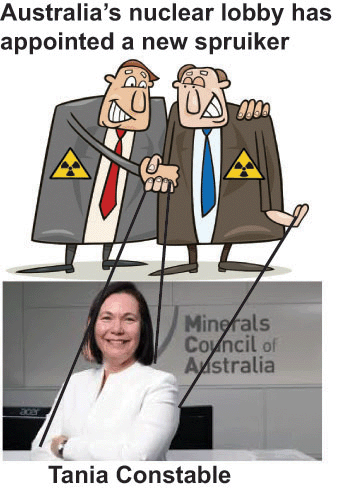
Australian Senate vote on Kimba nuclear dump delayed till mid-May, but dump opponents will be fighting on
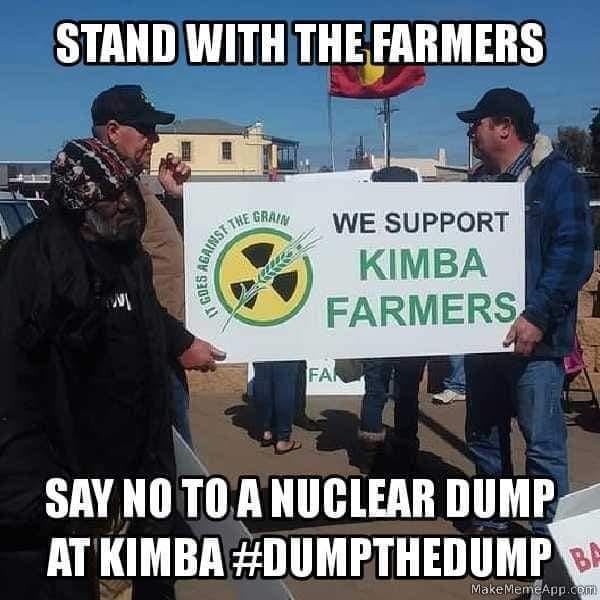
Resources Minister Keith Pitt on radio today – same old same old Bluff and Bribery about Kimba nuclear dump plan
 Kazzi Jai, No nuclear waste dump anywhere in South Australia, 19n Mar 21,
Pitt having a news grab this morning Monday 15/03/2021 on ABC 639 North and West. Had nothing new to say – same old, same old – …..but it was the first interview from him for the dump for 2021!
BHP, Rio Tinto given carte blanche to export uranium to global hotspots
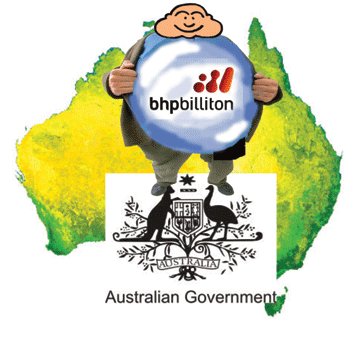 Risky Business: BHP, Rio Tinto given carte blanche to export uranium to global hotspots https://www.michaelwest.com.au/bhp-rio-tinto-given-carte-blanche-to-export-uranium-to-global-hotspots/ Risky Business: BHP, Rio Tinto given carte blanche to export uranium to global hotspots https://www.michaelwest.com.au/bhp-rio-tinto-given-carte-blanche-to-export-uranium-to-global-hotspots/by David Noonan | Mar 17, 2021 It has been 10 years since the Fukushima nuclear disaster that was fuelled by Australian uranium but neither the mining industry nor the nation’s leaders have heeded any of the lessons, instead continuing to export uranium to countries with inadequate regulation and nations beset by corruption. David Noonan and Dr Jim Green report. The Fukushima nuclear disaster, fuelled by Australian uranium mined by multinationals BHP and Rio Tinto, was entirely avoidable, as numerous reports have found. Yet neither company has taken any responsibility for the catastrophic impacts on Japanese society that resulted from the use of their uranium in a poorly regulated industry. With numerous warning signs of impending disaster at Fukushima, the mining giants and our leaders could have played an important role by making uranium exports conditional on improved management of nuclear plants and tighter regulation. Yet the uranium companies get tetchy at any suggestion of culpability, with the Australian Uranium Association describing it as “opportunism in the midst of human tragedy” and “utter nonsense”. Uranium accounts for less than 0.3 per cent of Australia’s export revenue and less than 0.1 per cent of all jobs in Australia. One wonders why an industry that delivers so little is given carte blanche by the government to do as it pleases. Australia ignored scandal after scandalWhile the mining companies won’t acknowledge that Australian uranium was used in the Fukushima reactors, the Australian Safeguards and Non-Proliferation Office confirmed Australian nuclear material was at the Fukushima Daiichi site and in at least five of the six reactors. Moreover, the mining companies can’t claim ignorance. Australia’s uranium industry did nothing as the Japanese nuclear companies lurched from scandal to scandal; accident to accident. The uranium industry did nothing in 2002 when it was revealed that TEPCO had systematically and routinely falsified safety data and breached safety regulations for 25 years or more. The uranium industry did nothing in 2007 when more than 300 incidents of ‘malpractice’ at Japan’s nuclear plants were revealed – 104 of them at nuclear power plants. It did nothing even as the ability of Japan’s nuclear plants to withstand earthquakes and tsunamis came under growing criticism from industry insiders and independent experts. And the uranium industry did nothing about the multiple conflicts of interest plaguing Japanese nuclear regulators. Exporting to countries with inadequate regulationInadequate regulation was a root cause of the Fukushima disaster yet Australia has uranium supply agreements with numerous countries with demonstrably inadequate nuclear regulation, including China, India, Russia, the United States, Japan, South Korea, and Ukraine. Likewise, Australian uranium companies and the government turn a blind eye to nuclear corruption scandals in countries with which it has agreements to supply uranium: South Korea, India, Russia and Ukraine among others. Indeed, Australia has signed up to expand its uranium trade to sell into insecure regions. In 2011 ‒ the same year as the Fukushima disaster ‒ the Australian government agreed to allow uranium exports to India. This despite inadequate nuclear regulation in India, and despite India’s ongoing expansion of its nuclear weaponry and delivery capabilities. A uranium supply agreement with the United Arab Emirates was concluded in 2013 despite the obvious risks of selling uranium into a politically and militarily volatile region where nuclear facilities have repeatedly been targeted by adversaries intent on stopping covert nuclear weapons programs. A uranium supply agreement with Ukraine was concluded in 2016 despite a host of safety and security concerns, and the inability of the International Atomic Energy Agency to carry out safeguards inspections in regions annexed by Russia. However, it is obvious that Australia will take action when it wants to. In 2014, Australia banned uranium sales to Russia, with then prime minister Tony Abbott stating: “Australia has no intention of selling uranium to a country which is so obviously in breach of international law as Russia currently is.” Australia’s uranium supply agreement with China, concluded in 2006, has not been reviewed despite abundant evidence of inadequate nuclear safety standards, inadequate regulation, lack of transparency, repression of whistleblowers, world’s worst insurance and liability arrangements, security risks, and widespread corruption. Civil society and NGO’s are campaigning to wind back Australia’s atomic exposures in the uranium trade with emphasis on uranium sales to China. China’s human rights abuses and a range of strategic insecurity issues warrant a cessation of uranium sales. China’s ongoing human rights abuses in Tibet and mass detention and forced labour against Uyghurs in Xinjiang are severe breaches of international humanitarian law and UN Treaties.` China is obviously in breach of international law on numerous counts. Uranium sales to Russia were suspended because of breaches of international law and the same standard should be applied to China. Scant regard for nuclear risksChina has exported nuclear weapons know-how to Pakistan, targets Australia in cyber-attacks, and is causing regional insecurity on the India border, in Hong Kong and Taiwan, and in the Pacific. BHP’s Olympic Dam is the only company still selling Australian uranium into China. There is a case for the ‘Big Australian’ to forego uranium sales overall and an onus to end sales to China. Australia supplies uranium with scant regard for nuclear safety risks. Likewise, proliferation risks are given short shrift. Australia has uranium export agreements with all of the ‘declared’ nuclear weapons states – the US, UK, China, France, Russia – although not one of them takes seriously its obligation under the Non-Proliferation Treaty to pursue disarmament in good faith. Australia claims to be working to discourage countries from producing fissile (explosive) material for nuclear bombs, but nonetheless exports uranium to countries blocking progress on the proposed Fissile Material Cut-Off Treaty and refusing to sign or ratify the Comprehensive Test Ban Treaty. And Australia gives Japan open-ended permission to separate and stockpile plutonium although that stockpiling fans regional proliferation risks and tensions in North-East Asia. Despite liberal export policies, Australian uranium sales are in long-term decline and now represent only 8.9 per cent of world uranium usage. With the Ranger mine shut down and no longer processing ore for uranium exports, there are only two operating uranium mines in Australia: BHP’s Olympic Dam copper-uranium mine and the smaller General Atomics’ Beverley Four Mile operation ‒ both in South Australia. |
|
Time for Australia to clean up uranium mining damage, and end this toxic industry
 It’s time to clean up not start up! https://www.onlineopinion.com.au/view.asp?article=21352 On this 10th anniversary of the Fukushima nuclear disaster, it is time to learn one simple lesson; radioactive risk is more constant than a politician’s promise. It is time to move beyond the risk of opening a uranium mine to safely rehabilitating existing exploration and trial mine sites. If we fail to act and allow small unproven company assurances to take the place of evidence, then we are both failing those affected by Fukushima and increasing the odds of fuelling a future one.
| By Kerrie-Ann Garlick – , 12 March 2021 |
|
The Bluff and the Bribing continue as Minister Keith Pitt spruiks on radio about Kimb nuclear waste dump plan
 Kazzi Jai, No nuclear waste dump anywhere in South Australia, 15 Mar 21,
 New South Wales Energy Minister ”excited about the opportunities” for nuclear power
Energy minister backs nuclear option , Daily Telegraph, 14 Mar 21,
NSW’s energy minister has said the state is “excited about the opportunities” being afforded by nuclear power as he denied climate policies were leading to the closure of coal-powered plants…… (subscribers only)
Refuting Senator Matt Canavan’s inaccurate hype about small nuclear reactors
|
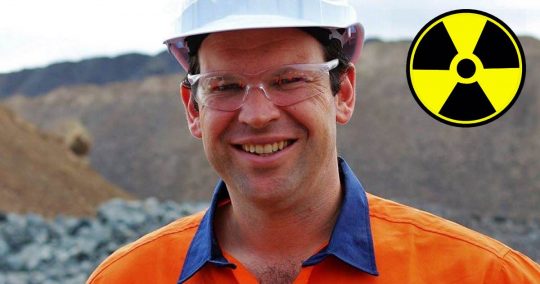
Canavan Keeping The Nuclear SMR Vaporware Dream Alive , Solar Quotes ,March 12, 2021 by Michael Bloch ”…… Senator Matt Canavan: ”Keep Nuclear Energy On The Table” It’s probably been a disappointing week for pro-coal Senator Matt Canavan with the news Yallourn Power Station will retire in mid-2028 instead of 2032. But as well as a passion for coal, Senator Canavan is a nuclear power supporter.In an interview with Sky News yesterday, Senator Canavan commented:
A year ago he referred to renewables as the “dole bludgers” of energy, using the same logic. With regard to the Fukushima incident, he stated: “The latest nuclear technology is much safer; more self-contained. Small modular reactors are effectively the size of shipping containers that are much more suited to our country and size and don’t have the same safety issues.” He also managed to squeeze in a mention about instances of fatalities associated with installing solar panels on rooftops just for good measure. But back to the small modular reactors (SMRs). Where are these SMRs he speaks of? The World Nuclear Industry Status Report 2020 released in September last year states:
|
|
Australian uranium fuelled Fukushima
The Nuclear Accident Independent Investigation Commission ‒ established by the Japanese Parliament ‒ concluded in its 2012 report that the accident was “a profoundly man-made disaster that could and should have been foreseen and prevented” if not for “a multitude of errors and wilful negligence that left the Fukushima plant unprepared for the events of March 11”.
The accident was the result of “collusion between the government, the regulators and TEPCO”, the commission found.
Mining
But overseas suppliers who turned a blind eye to unacceptable nuclear risks in Japan have largely escaped scrutiny or blame. Australia’s uranium industry is a case in point.
Yuki Tanaka from the Hiroshima Peace Institute noted: “Japan is not the sole nation responsible for the current nuclear disaster. From the manufacture of the reactors by GE to provision of uranium by Canada, Australia and others, many nations are implicated.”
There is no dispute that Australian uranium was used in the Fukushima reactors. The mining companies won’t acknowledge that fact — instead they hide behind claims of “commercial confidentiality” and “security”.
But the Australian Safeguards and Non-Proliferation Office acknowledged in October 2011 that: “We can confirm that Australian obligated nuclear material was at the Fukushima Daiichi site and in each of the reactors — maybe five out of six, or it could have been all of them”.
BHP and Rio Tinto, two of the world’s largest mining companies, supplied Australian uranium to TEPCO and that uranium was used to fuel Fukushima.
Tsunamis
The mining companies have failed to take any responsibility for the catastrophic impacts on Japanese society that resulted from the use of their uranium in a poorly managed, poorly regulated industry.
Moreover, the mining companies can’t claim ignorance. The warning signs were clear. Australia’s uranium industry did nothing as TEPCO and other Japanese nuclear companies lurched from scandal to scandal and accident to accident.
The uranium industry did nothing in 2002 when it was revealed that TEPCO had systematically and routinely falsified safety data and breached safety regulations for 25 years or more.
The uranium industry did nothing in 2007 when over 300 incidents of ‘malpractice’ at Japan’s nuclear plants were revealed – 104 of them at nuclear power plants.
It did nothing even as the ability of Japan’s nuclear plants to withstand earthquakes and tsunamis came under growing criticism from industry insiders and independent experts.
Vicious cycle
And the uranium industry did nothing about the multiple conflicts of interest plaguing Japanese nuclear regulators.
Mirarr senior Traditional Owner Yvonne Margarula ‒ on whose land in the Northern Territory Rio Tinto’s Ranger mine operated ‒ said she was “deeply saddened” that uranium from Ranger was exported to Japanese nuclear companies including TEPCO.

No such humility from the uranium companies. They get tetchy at any suggestion of culpability, with the Australian Uranium Association describing it as “opportunism in the midst of human tragedy” and “utter nonsense”.
Yet, Australia could have played a role in breaking the vicious cycle of mismanagement in Japan’s nuclear industry by making uranium exports conditional on improved management of nuclear plants and tighter regulation.
Even a strong public statement of concern would have been heard by the Japanese utilities – unless it was understood to be rhetoric for public consumption – and it would have registered in the Japanese media.
Safety
But the uranium industry denied culpability and instead stuck its head in the sand. Since the industry is in denial about its role in fuelling the Fukushima disaster, there is no reason to believe that it will behave more responsibly in future.
Successive Australian governments did nothing about the unacceptable standards in Japan’s nuclear industry. Julia Gillard ‒ Australia’s Prime Minister at the time of the Fukushima disaster ‒ said the disaster “doesn’t have any impact on my thinking about uranium exports”.
Signification elements of Japan’s corrupt ‘nuclear village’ ‒ comprising industry, regulators, politicians and government agencies ‒ were back in control just a few years after the Fukushima disaster. Regulation remains problematic.
Add to that ageing reactors, and companies facing serious economic stress and intense competition, and there’s every reason for ongoing concern about nuclear safety in Japan.
Professor Yoshioka Hitoshi is a Kyushu University academic who served on the government’s 2011-12 Investigation Committee on the Accident at the Fukushima Nuclear Power Stations.
Regulation
They said in October 2015: “Unfortunately, the new regulatory regime is … inadequate to ensure the safety of Japan’s nuclear power facilities. The first problem is that the new safety standards on which the screening and inspection of facilities are to be based are simply too lax.
“While it is true that the new rules are based on international standards, the international standards themselves are predicated on the status quo.
“They have been set so as to be attainable by most of the reactors already in operation. In essence, the NRA made sure that all Japan’s existing reactors would be able to meet the new standards with the help of affordable piecemeal modifications ‒ back-fitting, in other words.”
In the aftermath of the Fukushima disaster, UN secretary general Ban Ki Moon called for an independent cost-benefit inquiry into uranium trade. The Australian government failed to act.
Inadequate regulation was a root cause of the Fukushima disaster yet Australia has uranium supply agreements with numerous countries with demonstrably inadequate nuclear regulation, including China, India, Russia, the United States, Japan, South Korea, and Ukraine.
Overthrow
Likewise, Australian uranium companies and the government turn a blind eye to nuclear corruption scandals in countries with uranium supply agreements: South Korea, India, Russia and Ukraine among others.
Indeed, Australia has signed up to expand its uranium trade to sell into insecure regions.
In 2011 ‒ the same year as the Fukushima disaster ‒ the Australian government agreed to allow uranium exports to India.
This despite inadequate nuclear regulation in India, and despite India’s ongoing expansion of its nuclear weaponry and delivery capabilities.
A uranium supply agreement with the United Arab Emirates was concluded in 2013 despite the obvious risks of selling uranium into a politically and militarily volatile region where nuclear facilities have repeatedly been targeted by adversaries intent on stopping covert nuclear weapons programs. Australia was planning uranium sales to the Shah of Iran months before his overthrow in 1979.
Forced labour
A uranium supply agreement with Ukraine was concluded in 2016 despite a host of safety and security concerns, and the inability of the International Atomic Energy Agency to carry out safeguards inspections in regions annexed by Russia.
In 2014, Australia banned uranium sales to Russia, with then prime minister Tony Abbott stating: “Australia has no intention of selling uranium to a country which is so obviously in breach of international law as Russia currently is.”
Australia’s uranium supply agreement with China, concluded in 2006, has not been reviewed despite abundant evidence of inadequate nuclear safety standards, inadequate regulation, lack of transparency, repression of whistleblowers, world’s worst insurance and liability arrangements, security risks, and widespread corruption.
Civil society and NGO’s are campaigning to wind back Australia’s atomic exposures in the uranium trade with emphasis on uranium sales to China.
China’s human rights abuses and a range of strategic insecurity issues warrant a cessation of uranium sales. China’s ongoing human rights abuses in Tibet and mass detention and forced labour against Uyghurs in Xinjiang are severe breaches of international humanitarian law and UN Treaties.
Weapons
China proliferated nuclear weapons know-how to Pakistan, targets Australia in cyber-attacks, and is causing regional insecurity on the India border, in Hong Kong and Taiwan, and in the Pacific.
BHP’s Olympic Dam is the only company still selling Australian uranium into China. There is a case for the ‘Big Australian’ to forego uranium sales overall and an onus to end sales to China.
A federal Parliamentary Inquiry in Australia is investigating forced labour in China and the options for Australia to respond. A case is before this inquiry to disqualify China from supply of Australian uranium sales – see submission 02 on human rights abuses and submission 02.1 on security risks.
Australia supplies uranium with scant regard for nuclear safety risks. Likewise, proliferation risks are given short shrift.
Australia has uranium export agreements with all of the ‘declared’ nuclear weapons states – the US, UK, China, France, Russia – although not one of them takes seriously its obligation under the Non-Proliferation Treaty to pursue disarmament in good faith.
Carte blanche
Australia claims to be working to discourage countries from producing fissile – explosive – material for nuclear bombs, but nonetheless exports uranium to countries blocking progress on the proposed Fissile Material Cut-Off Treaty.
And Australia gives Japan open-ended permission to separate and stockpile plutonium although that stockpiling fans regional proliferation risks and tensions in North-East Asia.
Despite liberal export policies, Australian uranium sales are in long-term decline and now represent only 8.9 percent of world uranium usage.
With the Ranger mine shut down and no longer processing ore for uranium exports, there are only two operating uranium mines in Australia: BHP’s Olympic Dam copper-uranium mine and the smaller General Atomics’ Beverley Four Mile operation ‒ both in South Australia.
Uranium accounts for less than 0.3 percent of Australia’s export revenue and less than 0.1 percent of all jobs in Australia.
One wonders why an industry that delivers so little is given carte blanche by the government to do as it pleases.
These Authors
Dr Jim Green is the national nuclear campaigner with Friends of the Earth Australia. David Noonan is an independent environment campaigner. For further information on BHP’s Olympic Dam mine click here.
Australia must learn the lessons of Fukushima
Australia must learn the lessons of Fukushima https://www.acf.org.au/we_must_learn_the_lessons_of_fukushima– Dave Sweeney, Australian Conservation Foundation’s nuclear free campaign, 11 March 21,
Ten years ago, the world held its breath, crossed its fingers and learnt a new word.
Fukushima went from being the name of a provincial Japanese city to global shorthand for a costly, contaminating and continuing nuclear disaster.
Fukushima means ‘fortunate island’ but the region’s luck melted down along with its reactors on March 11, 2011.
The Great Eastern earthquake and tsunami which rocked then inundated much of Japan’s eastern seaboard also swamped the defences of the Fukushima nuclear complex run by TEPCO, the Tokyo Electric Power Corporation.
Against a backdrop of wailing sirens and crackling Geiger counters we witnessed mass evacuations, hundreds of billions of dollars in economic loss and radioactive contamination of the air, soil and ocean that continues today.
Japanese and international nuclear authorities have confirmed it will take at least three more decades to stabilise radioactive and waste issues at the site.
The most pressing of these is how to manage a large volume of contaminated water that is stored is hundreds of vast steel tanks and is growing daily.
The preferred company plan – to dump this untreated contaminated water directly into the Pacific – is generating growing concern among Japanese coastal communities, not to mention outrage in Korea and the wider region.
In August 2012, a year after the initial disaster, I joined a delegation of international environmental monitors and public health experts to visit the Fukushima region.
We saw and spoke with ordinary people whose lives had been extraordinarily disrupted.
We drove through countryside and towns that had been emptied of people and hope.
We met with elderly evacuees in temporary housing who understood that they would never return home.
The words of Hasegawa Kenichi, a Fukushima dairy farmer who lost his herd and his livelihood, remain in my head. ‘It is important to make sure that what is happening in Fukushima is not forgotten.’
As pro-nuclear politicians and industry associations seek to distract from their inaction on meaningful efforts to address climate change by once more banging the drum for domestic nuclear power, we need to remember these words – and the deep reality that lies behind them.
Especially in Australia.
In October 2011 the head of the Department of Foreign Affairs and Trade’s nuclear bureau formally confirmed that Australian uranium was routinely sold to the corner-cutting TEPCO and was fuelling the Fukushima complex at the time of the disaster.
Australian radioactive rocks are the source of Fukushima’s fallout.
As home to around 35% of the world’s uranium reserves, Australia has been a significant player in the global nuclear trade.
But, aptly enough, Australia’s uranium sector was hard hit by the market fallout from Fukushima.
In the last 10 years the global commodity price has flatlined, projects have been shelved, abandoned or placed in perpetual ‘care and maintenance’.
Australia’s longest operating uranium mine, the Ranger project in Kakadu, closed forever in January this year.
This brought an end to the controversial Kakadu mining chapter and has left mine owner Rio Tinto with a billion dollar clean up challenge that is attracting scrutiny from across Australia and around the world.
Australia’s uranium sector has long been constrained by political uncertainty, an absence of social license and strong First Nations and wider community resistance.
The industry’s prevailing business model seems to be to get the paperwork in order, cultivate friends in Canberra and wait in hope for better times.
But those times are unlikely to ever arrive.
The sector never really made sense and now it doesn’t even make dollars. The years since Fukushima have seen a dramatic decline in the popularity of nuclear power and a global surge in renewable energy projects and production.
Australia’s uranium sector is high risk and low return.
It leaves polluted mine sites at home and drives nuclear risk and insecurity abroad.
And it fuelled Fukushima – a profound environmental, economic and human disaster that continues to negatively impact lives in Japan and far beyond.
On this tenth anniversary it is time to honour Kenichi-san’s plea that the world not forget Fukushima.
We need a credible and independent review of the real costs and consequences of Australia’s uranium trade.
It is well past time for Australian politicians of all stripes to accept that we are in a period of irreversible transformation and that our shared energy future is renewable, not radioactive.
Read A joint statement from the Australian Conservation Foundation and the Electrical Trades Union.
1 This month
Chernobyl: The Lost Tapes – A good documentary on Chernobyl on SBS available On Demand for the next 3 weeks– https://www.sbs.com.au/ondemand/tv-program/chernobyl-the-lost-tapes/2352741955560
15 April – Zoom –Nuclear Power is Not the Solution
Apr 15, 2026 01:00 AM in Canberra, Melbourne, Sydney

Join the International Physicians for the Prevention of Nuclear War (IPPNW) on Tuesday, April 14th for a timely webinar exploring the risks associated with nuclear power and challenging the myth that it offers a simple, safe, carbon-free solution to the climate crisis

21 April Webinar: No Nuclear Weapons in Australia
Start: 2026-04-21 18:00:00 UTC Canberra, Melbourne, Sydney (GMT+10:00)
End: 2026-04-21 19:30:00 UTC Canberra, Melbourne, Sydney (GMT+10:00)
Event Type: Virtual
A virtual link will be communicated before the event.
Host Contact Info: australia@icanw.org

of the week – Australians for War Powers Reform (AWPR)
To see nuclear-related stories in greater depth and intensity
 Antinuclear