Australian Capital Territory politicians join calls for Australia to sign nuclear ban treaty
|
ACT politicians join calls for Australia to sign nuclear ban treaty https://www.canberratimes.com.au/story/7097235/act-politicians-join-calls-for-australia-to-sign-nuclear-ban-treaty/, Jasper Lindell 24 Jan 21,
ACT politicians have renewed their calls for the federal government to join a United Nations treaty banning the use of nuclear weapons, which came into force on Friday. Politicians and members of the international diplomatic corps gathered on Saturday at the Canberra Rotary peace bell in Nara Peace Park to mark the entry-into-force of the treaty. Greens member for Ginninderra Jo Clay said Australia’s continued relationship with uranium mining and the creation of nuclear weapons was unacceptable.
“With climate change upon us, the ACT Greens believe that there has never been a more urgent time for Australia to join its 86 international counterparts and show its commitment to a more peaceful and sustainable future for all of us,” Ms Clay said in a statement. All Greens members of the Legislative Assembly have signed the International Campaign to Abolish Nuclear Weapons’ parliamentary pledge.
Some Labor members, including Chief Minister Andrew Barr and Deputy Chief Minister Yvette Berry, have signed the pledge. Federal member for Canberra Alicia Payne has also signed. The Australian government has not signed the treaty, which compels signatories to stop developing, testing, producing or stockpiling nuclear weapons. Signatories are also banned from threatening to use the weapons. Fifty countries ratified the treaty in October, which was condemned by the United States. Red Cross International humanitarian law adviser Tara Gutman welcomed the treaty, saying the law was the cornerstone of a world free of nuclear weapons. “There has been no humanitarian response developed that is remotely capable of being applied to a nuclear weapon attack. We simply will not be there to assist victims,” she said. “These weapons are an inhumane response to any military threat … They decimate populations, cause untold and needless suffering, and their environmental impact would accelerate climate change making some areas of the planet uninhabitable. |
|
Red Cross celebrates Nuclear Ban Treaty- an incremental process towards elimination of nuclear weapons
 Crucial to sign up for a nuclear-free celebration. https://www.theage.com.au/national/crucial-to-sign-up-for-a-nuclear-free-celebration-20210121-p56vtl.htmly Kym Pfitzner Crucial to sign up for a nuclear-free celebration. https://www.theage.com.au/national/crucial-to-sign-up-for-a-nuclear-free-celebration-20210121-p56vtl.htmly Kym Pfitzner
January 22, 2021 — It’s taken 75 years since the bombing of Hiroshima and Nagasaki to reach the historic day when we finally have a ban on nuclear weapons enshrined in international law.
Today is a day for celebration. From January 22, all nations that ratified the Treaty on the Prohibition of Nuclear Weapons are banned from possessing, developing or having any direct dealings with these weapons of mass destruction. This development heralds progress towards a safer and more humane world. The Red Cross and Red Crescent Movement across the globe has been striving towards this moment for three-quarters of a century. How timely it is to achieve this milestone after a year of uncertainty and difficulties. I commend the 86 countries which have already signed this important treaty – from Austria to Zimbabwe – and particularly the 51 nations that have ratified it. They’ve put the interests of humanity and the environment above other considerations. I’d like to remind all other nations of our organisation’s inability to provide any remotely adequate medical or humanitarian response to a nuclear crisis and call on all countries which are yet to sign – including Australia, the nuclear-armed nations, and some of their allies – to do so now. But today should still be celebrated. It’s the dawn of new era in which the last weapon of mass destruction to be regulated by international law will finally begin to be controlled. Other weapons that cause unacceptable harm – contrary to the laws of war – have already been banned, such as cluster munitions, anti-personnel landmine and chemical weapons. Nuclear weapons are incompatible with the rules of international humanitarian law. The laws of war are unambiguous: weapons must be able to distinguish between civilians and combatants, as only combatants can be legally attacked. Weapons must not cause superfluous injury or unnecessary suffering. Their effects must be proportionate to their military objective. And weapons cannot be used if they cause widespread, long-term and severe damage to the environment. Rather than leaving the fate of these weapons to the handful of countries that legally own them, and which were not fulfilling their obligation to work towards their elimination, the public debate has been reframed from being defined as a matter of defence policy, to being about the unacceptable humanitarian consequences of use of nuclear weapons. We know all about those consequences. Members of the Red Cross and Red Crescent Movement were there when the bombs fell on Hiroshima and Nagasaki. There was little they could do to deal with the immediate needs of those needing help, or to alleviate the long-term suffering of the people on the ground. The impacts lasted decades and, devastatingly, even affected the children of those who survived those bombs. Research is still being conducted to determine whether the illnesses being experienced by descendants – two generations later – can be explained by mutations in their DNA that was caused by radiation. With the coming into force of this treaty, let’s hope we’re getting closer to the time that we’re never that helpless again. We want Australians to know that nuclear weapons are not an acceptable defence policy option. They are barbaric tools that cause hellish devastation and untold suffering to civilians. Some critics argue the treaty is toothless because the nuclear-armed nations and their allies have not yet signed it. This ignores the reality of International law-making, which is that creating new norms is an incremental process. It takes patience and persistence. No weapon has ever been eliminated without first being studied, stigmatised and prohibited. With the advent of a vaccine for COVID-19, we can be cautiously hopeful that the end of the current global pandemic is in sight. Unfortunately, though, we can’t rely on medical science to save us from the impacts of a nuclear attack. There can be no vaccine for the health effects of a nuclear weapon. Elimination is the only option. This is why we believe in a future without nuclear weapons. Kym Pfitzner is the CEO of Australian Red Cross. |
|
|
Australia could sign the Nuclear Ban Treaty and still keep its military co=operation with America
 The nuclear weapons ban treaty is groundbreaking, even if the nuclear powers haven’t signed The Conversation 22, 2021 Tilman Ruff– Honorary Principal Fellow, School of Population anobal Health, University of Melbourne,
The UN Treaty on the Prohibition of Nuclear Weapons (TPNW) was adopted at the United Nations in 2017 and finally reached the milestone of 50 ratifications in October. The countries that have signed and ratified include Austria, Ireland, Mexico, New Zealand, South Africa, Nigeria and Thailand.
The treaty completes the suite of international bans on all major weapons considered unacceptable because of their indiscriminate and inhumane effects, including anti-personnel landmines, cluster munitions, biological and chemical weapons………
The TPNW strengthens the current nuclear safeguards found in the 1970 Treaty on the Non-Proliferation of Nuclear Weapons by requiring all states that join to have comprehensive provisions in place and not allowing states to weaken their existing safeguards.
The treaty provides the first legally binding multilateral framework for a process by which all nations can work toward eliminating nuclear weapons………
Further, the TPNW is the first treaty to commit member nations to provide long-neglected assistance for the victims of atomic bombs and weapon testing. It also calls for nations to clean up environments contaminated by nuclear weapons use and testing, where feasible.
Nuclear-armed states have been put on notice
Currently, 86 nations have signed the TPNW, and 51 have ratified it (meaning they are bound by its provisions). The treaty now becomes part of international law, and the number of signatories and ratifications will continue to grow……..
While any treaty is technically only binding on the states that join it, the TPNW establishes a new international legal standard against which all nuclear policies will now be judged.
The treaty, in short, is a game-changer, and the nuclear-armed and dependent countries have been put on notice. They know the treaty jeopardises their claimed right to continue to threaten the planet with their weapons, as well as their plans to modernise and maintain their nuclear arsenals indefinitely…………
The strength of the opposition is a measure of the treaty’s importance. It will have implications for everything from defence policies and military plans to weapons manufacturing to financial investments in the companies that profit from making now illegal nuclear weapons………….
A ‘dangerous’ belief nuclear weapons enhance securityWould joining the treaty mean nations like Australia, Japan, South Korea and NATO members would have to end their military cooperation with nuclear-armed states like the US? No. There is nothing in the TPNW that prevents military cooperation with a nuclear-armed state, provided nuclear weapons activities are excluded. Countries like New Zealand and Kazakhstan have already demonstrated that joining the treaty is fully compatible with ongoing military cooperation with, respectively, the US and Russia. In a recent letter urging their governments to join the treaty, 56 former presidents, prime ministers and defence and foreign ministers from these nations said: By claiming protection from nuclear weapons, we are promoting the dangerous and misguided belief that nuclear weapons enhance security. As states parties, we could remain in alliances with nuclear-armed states, as nothing in the treaty itself nor in our respective defence pacts precludes that. But we would be legally bound never under any circumstances to assist or encourage our allies to use,
The signatories include two former NATO secretaries-general, Willy Claes and Javier Solana. Ban treaties have been proven to work with other outlawed weapons — landmines, cluster munitions and biological and chemical weapons. They have provided the basis and motivation for progressive efforts to control and eliminate these weapons. They are now significantly less produced, deployed and used, even by states that haven’t joined the treaties. We can achieve the same result with nuclear weapons. As Hiroshima survivor Setsuko Thurlow said at the UN after the treaty was adopted, This is the beginning of the end of nuclear weapons. https://theconversation.com/the-nuclear-weapons-ban-treaty-is-groundbreaking-even-if-the-nuclear-powers-havent-signed-153197 |
|
|
Resignation of Dr Adi Paterson from Australian Nuclear Science and Technology Organisation- Australian government keeps mum.
2020-2021 Budget estimates – Parliament of Australia more https://www.facebook.com/groups/344452605899556
- Some examples of government answers to Senators’questions.
 Sen Kim Carr” (Question No 85) : “Did Dr Paterson resign or was he asked to resign by the ANSTO board?
ANSWER. “There was no correspondence between the ANSTO Board and the Minister about Dr Paterson’s performance.”
The nuclear dump for Kimba propaganda continues in 2021, (and jobs for the boys)
 Kazzi Jai, Fight to Stop A Nuclear Waste Dump in South Australia, 22 Jan 21,
Morrison government gets in early to disparage nuclear ban treaty, but Labor supports it
 New nuclear treaty will be ‘ineffective’: DFAT, SMH, Anthony Galloway, January 21, 2021, Australia says a new United Nations nuclear treaty signed by more than 80 countries will be ineffective in eliminating nuclear weapons from the world.The Morrison government has not signed the Treaty on the Prohibition of Nuclear Weapons, which comes into effect on Friday.
The treaty, signed by 86 countries, bans signatories from testing, developing, producing, stockpiling or threatening to use nuclear weapons.
The Australian government decided not to sign the treaty on the basis that it failed to recognise the realities of the current international security environment.
Government sources confirmed there was concern about how the treaty would affect Australia’s dealings with the United States, including intelligence sharing through the Pine Gap satellite surveillance base near Alice Springs, because it banned signatories from doing anything to assist a nuclear weapon state in its nuclear plans.
New Zealand, which is part of the Five Eyes intelligence-sharing agreement with the US, Australia, Canada and Britain, has signed the treaty…….
Opposition foreign affairs spokeswoman Penny Wong said Labor welcomed the treaty.
“After taking into account the need to ensure an effective verification and enforcement architecture, the interaction of the treaty with the Nuclear Non-Proliferation Treaty, and achieve universal support, a Labor government would sign and ratify the treaty,” she said.
“Australia can and should lead international efforts to rid the world of nuclear weapons. A Labor government would work with our allies and partners to this end and would always act consistently with the US alliance.”
Helen Durham, director for international law and policy at the International Committee of the Red Cross, said all countries should sign the treaty as it was the “most explicit and clearest expression that the horrific weapons need to be banned”.
“It deals not only with their use but also with their threat of use, with their stockpiling, with their production, with their development and their testing,” she said.
“This treaty is a great opportunity to move a very stagnated, to date, agenda forward and we would encourage every state to take up this opportunity.”
Dave Sweeney, co-founder of the International Campaign to Abolish Nuclear Weapons, said the treaty was a “sign of hope for our planet”.
“The changed status of nuclear weapons means Australia faces a clear choice,” he said. “We either choose to be a responsible and lawful member of the global community or we remain silent and complicit in plans to fight illegal wars https://www.smh.com.au/politics/federal/new-nuclear-treaty-will-be-ineffective-dfat-20210121-p56vst.html
Kimba’s cosy nuclear corruption

Kimba’s Maree Barford new nuclear community liaison officer, Eyre Peninsula Tribune, Kathrine Catanzariti. AUGUST 24 2017
A Kimba local has been given the job of liaising between the community and government on all things nuclear.
National Radioactive Waste Management Facility Taskforce general manager Bruce McCleary announced on Thursday Maree Barford had been employed as community liaison officer – the first job created as a result of the community consulation on a potential National Radioactive Waste Management Facility at Kimba.
The announcement was made at the opening of a new project office in Kimba.
Mrs Barford moved to Kimba in December 2014 with her husband Shaun after they bought the lease for the Kimba Gateway Hotel.
Her role will be to liaise between the community and the government.
“I’ll be engaging with the community and then letting the government know what is happening in the community and their views,” Mrs Barford said.
She will start her role on Monday, working full-time from the project office.
“I think I can be the voice for the community, being the link between the town and the government.” ……
Barford would provide a permanent, local presence to help keep the community informed and involved in all activities, alongside the project team and other experts who would continue to visit Kimba……..
Australian government complicit in nuclear weapons, silent on Nuclear Weapons Ban Treaty
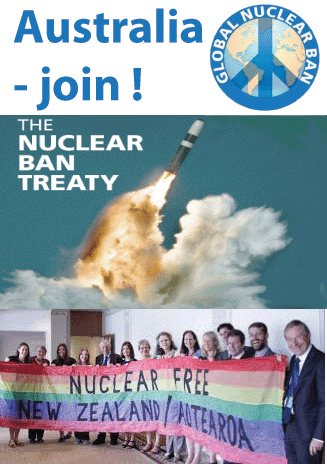 Nuclear weapons illegal from 22 January https://www.miragenews.com/nuclear-weapons-illegal-from-22-january/ 21 Jan 21, As President Joe Biden takes charge in the United States – and is expected to immediately move to rejoin the Paris climate agreement – this week also sees a very significant shift in the global status of nuclear weapons. Nuclear weapons illegal from 22 January https://www.miragenews.com/nuclear-weapons-illegal-from-22-january/ 21 Jan 21, As President Joe Biden takes charge in the United States – and is expected to immediately move to rejoin the Paris climate agreement – this week also sees a very significant shift in the global status of nuclear weapons.On Friday 22 January the UN Treaty on the Prohibition of Nuclear Weapons takes effect, making nuclear weapons finally and formally illegal under international law. “This is a sign of hope for our planet,” said Dave Sweeney, ACF nuclear free campaigner and co-founder of ICAN, the International Campaign to Abolish Nuclear Weapons. “Nuclear weapons pose an existential threat. They are weapons of mass and indiscriminate murder. From this week, they are illegal under international law.” The treaty prohibits signatories from testing, developing, producing, stockpiling or threatening to use nuclear weapons. It also obliges parties to support the widespread adoption of the treaty and address the human and environmental impacts of nuclear testing. While the treaty cannot force non-signatories – including the USA, China and Russia – to disarm, it will increase the political, legal and economic pressure on these nations and their allies. The Morrison government has opposed the progress of the treaty and refuses to support or sign the initiative. Labor has committed to sign and ratify the treaty when it is next in government. The Greens and some cross benchers also support the treaty. “The changed status of nuclear weapons means Australia faces a clear choice,” Dave Sweeney said. “We either choose to be a responsible and lawful member of the global community or we remain silent and complicit in plans to fight illegal wars. “It’s time for Australia to be on the right side of law and history – this treaty is the best way to finally get rid of the world’s worst weapons. We should celebrate it and support it.” The ban follows years of advocacy led by ICAN, the International Campaign to Abolish Nuclear Weapons, which started in Melbourne in 2007 and was awarded the Nobel Peace Prize in 2017 for drawing attention to the catastrophic humanitarian consequences of any use of nuclear weapons and for its efforts to achieve a treaty-based prohibition of such weapons. ICAN briefing paper on the Treaty on the Prohibition of Nuclear Weapons and Australia /Public Release. The material in this public release comes from the originating organization and may be of a point-in-time nature, edited for clarity, style and length. View in full here. |
|
|
Australian company Silex with Canadian company Cameco buys out GE-Hitachi Global Laser Enrichment LLC (GLE)
|
US government approves GLE restructure WNN, 19 January 2021 A proposed restructuring of GE-Hitachi Global Laser Enrichment LLC (GLE) has received the final key approval from the US government. The restructure will see Australian research and development company Silex Systems and Canadian company Cameco Corporation increase their holdings in the company to 51% and 49%, respectively.GLE has exclusive rights to commercially develop the SILEX laser isotope separation process technology under an agreement reached between GE (now GE-Hitachi) and Silex in early 2006. Cameco joined the project in mid-2008. GE-Hitachi in 2016 announced its decision to leave the venture, leading to GLE’s restructure. Silex and Cameco in December 2019 agreed to jointly purchase GE-Hitachi Nuclear Energy’s 76% interest for a total of USD20 million, and the three parties executed a binding Membership Interest Purchase Agreement (MIPA) for the restructure of GLE.
Silex yesterday said the US Department of the Treasury Committee on Foreign Investment in the United States (CFIUS) has approved the transaction under the terms of Section 721 of the Defense Production Act of 1950, after concluding that there are no unresolved national security concerns arising from the transaction. GLE earlier this month received notice from the US Nuclear Regulatory Commission (NRC) that it will be granted a stand-alone Facility Clearance, which will enable GLE to continue to operate under new ownership as a foreign owned entity, pursuant to closing of the MIPA…….. https://www.world-nuclear-news.org/Articles/US-government-approves-GLE-restructure |
|
Nuclear weapons ban treaty: more than a symbolic victory
Nuclear weapons ban treaty: more than a symbolic victory, https://www.croakey.org/nuclear-weapons-ban-treaty-more-than-a-symbolic-victory/ Editor: Nicole MacKeeAuthor: Sue Warehamon: January 18, 2021
As the Treaty on the Prohibition of Nuclear Weapons (TPNW) comes into force later this week, Dr Sue Wareham of the Medical Association for Prevention of War outlines the local and global implications. And, she calls on the Federal Government to make an explicit declaration that nuclear weapons must never be used again under any circumstances.
Sue Wareham writes:
Here’s a good news story about health to kick off 2021. It’s not about vaccines (despite their critical importance), but about the only weapons that threaten all of us and the environment we depend on: nuclear weapons.
On Friday 22 January, the Treaty on the Prohibition of Nuclear Weapons (TPNW), or nuclear weapons ban treaty, will legally come into effect. From that date, nuclear weapons – and every aspect of their existence including their development, testing, production, transfer, use and even possession – will be illegal under international law.
This is a huge achievement, and celebrations will be held around the globe, including in Australia.
Health professionals push
The legal prohibition stemmed from the health and humanitarian impacts of the weapons. They incinerate cities, kill, maim, burn and irradiate humans by the million, and destroy just about everything that health professionals need in the event of disaster. Their use could well trigger a nuclear winter that reduces food crops to starvation levels. By any measure, that’s an unconscionable affront to the healing professions.
Similarly, the momentum that led to the ban treaty was driven by health and humanitarian organisations and practitioners, in collaboration with progressive governments.
The message of prevention, especially of catastrophes for which there would be little that health professionals could do in response, was key, and remains so.
 The ban treaty is an especially proud achievement for health professionals in Australia, where in 2007 the Medical Association for Prevention of War (MAPW) initiated the International Campaign to Abolish Nuclear Weapons (ICAN), which played a leading role in the achievement of the Treaty.
The ban treaty is far from a symbolic victory; the  are huge, even without all nations – including those with the weapons – yet coming on board.
Associated with illegality
Nuclear weapons and those nations that possess or promote them will now be associated with illegality, which provides strong political leverage with which to press for abolition of the weapons.
This has certainly been the experience with the prohibition by treaty of other unacceptable weapons systems such as chemical and biological weapons, landmines, and cluster bombs.
Pressure will be brought to bear on financial, academic and other institutions that receive funding from, or invest in, the companies that make the weapons, to dissociate themselves from the purveyors of illegal goods; this has already begun (see, for example, here, here, and here) and will increase.
This is not only morally and medically repugnant, but such implicit threats of nuclear terror will now be, as of 22 January, illegal under international law.
The ban treaty comes none too soon. The Bulletin of the Atomic Scientists warned in January 2020 of the undermining of “cooperative, science- and law-based approaches to managing the most urgent threats to humanity”, and that “civilisation-ending nuclear war – whether started by design, blunder, or simple miscommunication – is a genuine possibility”.
The risk of nuclear war was assessed as higher than it’s ever been. If any further evidence were needed of the perilous state in which humanity exists, we were reminded recently that the US nuclear arsenal can be launched by one person, the president, regardless of whether that person happens to be an unhinged narcissist.
Call for change
Australia’s policy must change. There must be an explicit declaration that nuclear weapons must never be used again under any circumstances. And there must be a commitment to the urgent abolition of these weapons as the only way to ensure this.
Preventive health demands nothing less, and the Treaty on the Prohibition of Nuclear Weapons is the only global initiative that is leading us towards these goals. Australia must sign and ratify it.
The nuclear weapons ban treaty is supported by peak Australian and global health bodies, including the Australian Medical Association, the World Medical Association, the Australian Nursing and Midwifery Federation, the International Council of Nurses, the Public Health Association of Australia, and the World Federation of Public Health Associations.
MAPW is calling on the Health Minister Greg Hunt to declare that:
- Nuclear weapons must never be used, under any circumstances; and
- It is a medical and public health imperative to prohibit and eliminate nuclear weapons.
Readers are encouraged to join the call; you can do so here. It will be delivered to the Minister on 22 January, the day the TPNW comes into force. It will also be sent to the Shadow Health Minister Chris Bowen. Pleasingly, ALP policy is to support the TPNW when in government; that commitment must remain solid.
Since the first – and, thus far, the only – use of nuclear weapons in war in 1945, health professionals have played leading roles in the quest for their elimination. This critically important role continues. We have the weight of medical authority, moral authority and now unequivocal legal authority with which to exert political pressure.
Dr Sue Wareham OAM is President of the Medical Association for Prevention of War, and board member, ICAN (the International Campaign to Abolish Nuclear Weapons) Australia.
Australia’s environmental scientists intimidated, silenced by threats of job loss
 Australia’s environmental scientists intimidated, silenced by threats of job loss, Michael West Media, by Elizabeth Minter | Jan 17, 2021 The silencing of environmental scientists, as revealed in a study late last year, profoundly damages our democracy, wastes taxpayers’ money, takes a huge personal toll, allows fake news to proliferate and short-changes the public. Elizabeth Minter reports. Australia’s environmental scientists intimidated, silenced by threats of job loss, Michael West Media, by Elizabeth Minter | Jan 17, 2021 The silencing of environmental scientists, as revealed in a study late last year, profoundly damages our democracy, wastes taxpayers’ money, takes a huge personal toll, allows fake news to proliferate and short-changes the public. Elizabeth Minter reports.
“I declared the (action) unsafe. I was overruled and … was told to be silent or never have a job again.” “We are often forbidden (from) talking about the true impacts of, say, a threatening process […] especially if the government is doing little to mitigate the threat.” “I was directly intimidated by phone and Twitter by (a senior public servant).” “… governments allow (industry) to treat data collected as commercial in confidence. This means experts most able to comment on the details of big mining and construction projects are hopelessly conflicted and legally gagged from discussing these projects in public.” “(Government) staff are rewarded or penalized on the basis of complying with opinions of senior staff regardless of evidence.” “I proposed an article in The Conversation about the impacts of mining […] The uni I worked at didn’t like the idea as they received funding from (the mining company).” All in a day’s workAll these comments, straight from the mouths of some of Australia’s most esteemed scientists, highlight the threats faced by ecologists, conservation scientists, conservation policy makers and environmental consultants, whether they are working in government, industry or universities. The scientists were responding to an online survey as part of a study conducted by academics Don Driscoll, Georgia Garrard, Alexander Kusmanoff, Stephen Dovers, Martine Maron, Noel Preece, Robert Pressey and Euan Ritchie. In an ironic twist, one of the research team’s initial members declined to contribute to the project for fear of losing funding and therefore their job. As the study’s authors note, scientists self-censor information for fear of damaging their careers, losing funding or being misrepresented in the media. In others, senior managers or ministers’ officers prevented researchers from speaking truthfully on scientific matters. This means important scientific information about environmental threats often does not reach the public or decision-makers, including government ministers. This information blackout, termed “science suppression”, can hide environmentally damaging practices and policies from public scrutiny. Survey methodology……….Ministers not receiving full informationSome 75% of the scientists surveyed reported having refrained from contributing to public discussion when given the opportunity – most commonly in traditional or social media. A small number self-censored conference presentations (9%) and peer-reviewed papers (7%). For scientists working in government, the main reasons they didn’t comment was because of attitudes of senior management (82%), workplace policy (72%), a minister’s office (63%) and middle management (62%). Fear of what would happen to their career prospects (49%) and concern about media misrepresentation (49%) also discouraged those working in government from speaking publicly. Almost 60% of scientists working in government and 36% of scientists in industry reported that internal communications were modified………… Critical conservation issues suppressedThe most common issue on which information was suppressed was threatened species. About half of industry and government scientists, and 28% of academics, said their commentary was constrained. Scientists working in government also reported not being able to comment on logging and climate change………….. The system is brokenOf those scientists who had spoken publicly about their research, 42% had been harassed or criticised for doing so. Of those, 83% believed the harassers were motivated by political or economic interests……. Change is neededAs witnessed by the past four years of Donald Trump’s presidency, it has never been more important to ensure that the public are exposed to facts and information from trusted sources……. The study was published late last year in Conservation Letters, a journal of the Society for Conversation Biology. https://www.michaelwest.com.au/australias-environmental-scientists-intimidated-silenced-by-threats-of-job-loss/ |
|
How will Entry Into Force of the Nuclear Weapons Ban Treaty impact non weapons states parties, including Australia?
|
How will EIF impact non states parties, including Australia? https://icanw.org.au/wp-content/uploads/Australia-EIF-of-the-TPNW.pdf 16 Jan 21, While non states parties are not legally bound to the terms of the treaty, the norms set out and strengthened by the treaty can shape their behaviour and build pressure for them to join. The entry into force of the treaty puts Australia out of step with international law. While Australia has joined every other treaty that prohibits indiscriminate or inhumane weapons, the Nuclear Non-Proliferation Treaty and the South Pacific Nuclear Free Zone Treaty, it has not yet signed or ratified the ban on nuclear weapons. This position is contested by a growing nationwide movement and at all levels of government. The treaty reveals Australia’s complicity in the problem by including nuclear weapons in its defence posture.
****
As a country with a devastating history of nuclear testing, Australia will be obliged to take action as a state party to assist survivors of nuclear testing and take steps towards remediating contaminated environments. These obligations should be informed by and developed in collaboration with impacted First Nations people, nuclear test veterans, civil society, public health and other experts.
****
Entry into force of previous ban treaties has led to a substantial decrease in the production and deployment of prohibited weapons such as cluster munitions and landmines, both by states parties and non states parties. EIF will also impact the flow of funds to nuclear arms producing companies. Financial institutions often choose not to invest in “controversial weapons,” which are typically weapons prohibited by international law. The entry into force of the TPNW clearly puts nuclear weapons in this category and will likely trigger additional divestment, including by Australian banks and superannuation funds.
****
EIF of the treaty will further stigmatise nuclear weapons, including in Australia, by: Prompting further debate: more than 250 federal, state and territory parliamentarians have declared their support for the treaty and the federal Opposition, the Australian Labor Party, has committed to sign and ratify the treaty in government. Decision-makers will continue to be asked to engage with this new piece of international law.
****
Institutionalisation: entry into force will entrench the treaty’s place in the international legal architecture for nuclear weapons. It is already referenced in international fora as signatories and states parties proudly declare their commitment to nuclear disarmament.
****
Impacting alliances: all states parties in alliances with nuclear-armed states will be required to renounce the use of nuclear weapons on their behalf, and ensure they are not assisting with the use or threat of use of the weapons. Once a state party, Australia will need to cease any policy that countenances and supports the use of nuclear weapons. Other US allies, including New Zealand and Thailand, have already joined the treaty.
****
It will take years to build the necessary political will for some states to join the nuclear weapon ban treaty. Shifting nuclear weapons from a symbol of status to a liability of shame is slow, yet crucial, work. As the signatures and ratifications of the treaty continue beyond entry into force, non states parties will face increasing criticism from their citizens, international organisations and other states. Almost all of Australia’s neighbours in the Pacific and Southeast Asia support the treaty. It is only a matter of time before Australia joins the treaty and thereby becomes part of the solution to these abhorrent weapons.
|
|
The nuclear waste nightmare continues for Kimba, South Australia
 Kazzi Jai Fight to stop a nuclear waste dump in South Australia, 15 Jan 21,
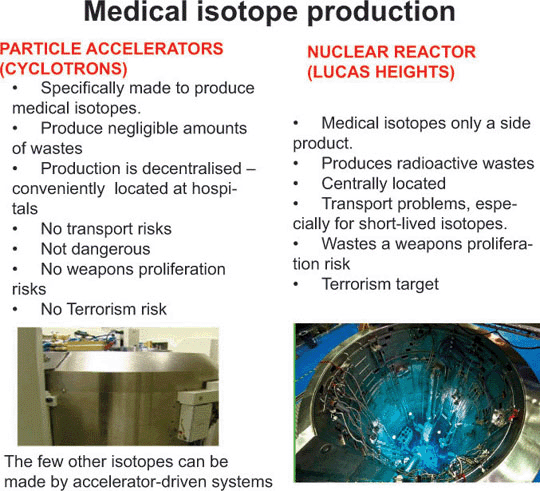
 Why did ANSTO shut down National Medical Cyclotron, that made medical isotopes without nuclear waste?
ANSTO gets a blank cheque for its nuclear waste production at Lucas Heights?
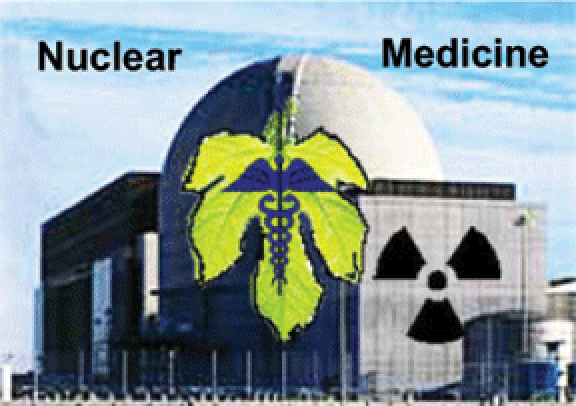 Greg Phillips, No nuclear waste dump anywhere in South Australia , 13 Jan 2021, Congratulations Canada! “Cyclotron-produced technetium-99m approved by Health Canada”. Why rely on a global network of aging, unreliable, toxic spewing nuclear reactors when you can have a local network of clean, reliable cyclotrons? Especially when pandemics hobble global freight networks. From the article: “The process is safe and precise, employing stable targets and producing little to no long-lived radioactive waste. And, with the right target and extraction systems, these cyclotrons can be used to reliably create technetium-99m regionally and without the need for reactor-based materials.”
1 This month.
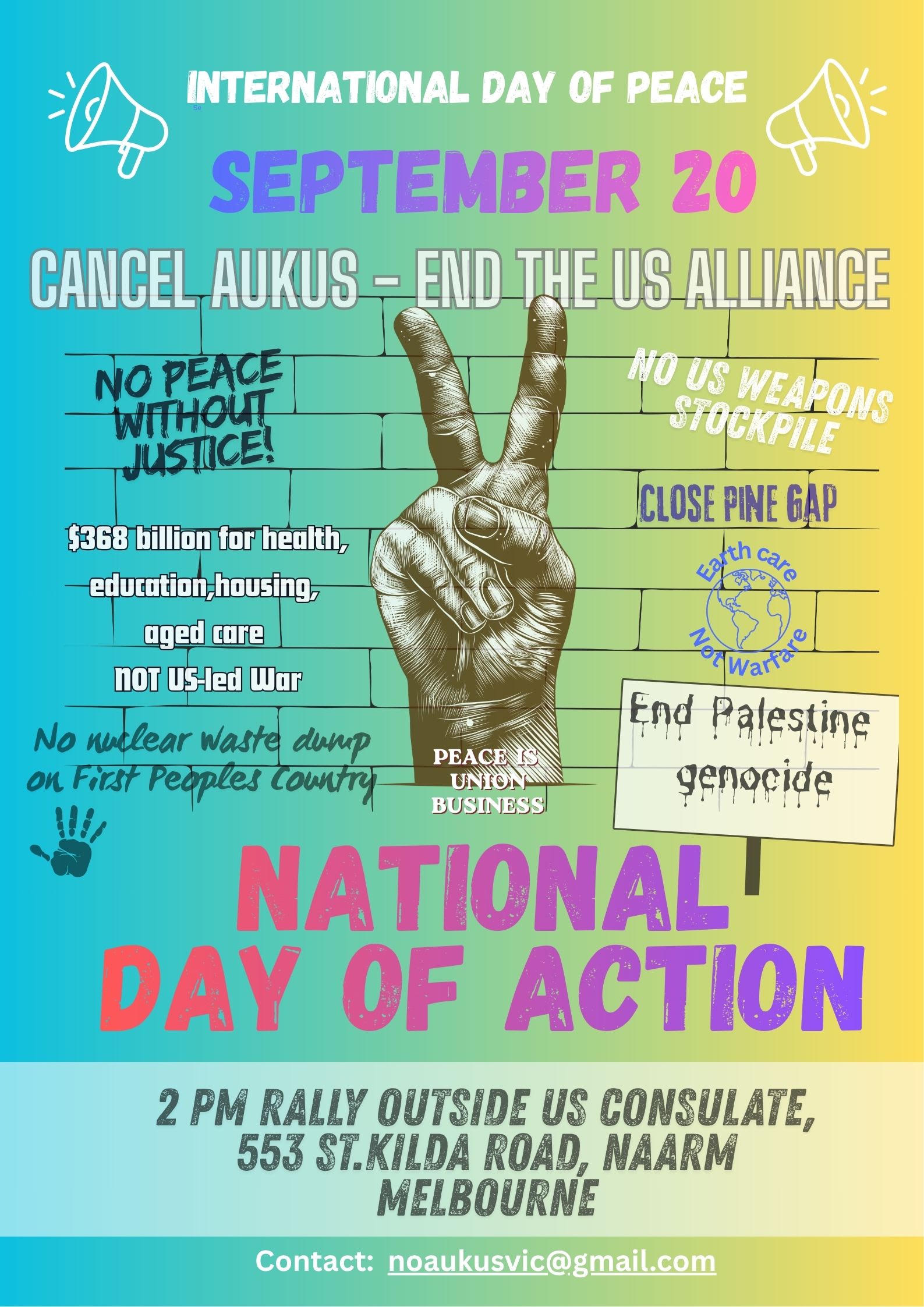
20 September –National Day of Action in Melbourne on the International Day of Peace

Help Aunty Sue Protect Her Land and Sacred Sites From Destructive Rocket Testing.
.

Australians deserve the truth
about
AUKUS – https://aukuspublicinquiry.com/
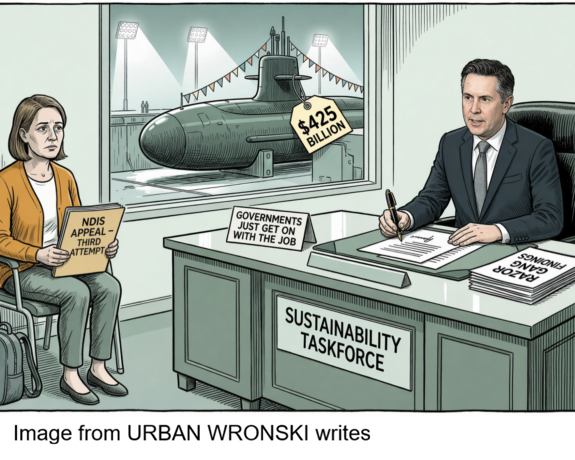

PETITION – To: Prime Minister Anthony Albanese and the Australian Labor Government

of the week – Australians for War Powers Reform (AWPR)
To see nuclear-related stories in greater depth and intensity
 Antinuclear