New chief scientist says climate change has “no single solution” — RenewEconomy

This is a real worry. Cathey Foley has a background in the minerals industry. The ”no single solution” could be code for including gas, carbon capture, nuclear….
Australia’s new chief scientist, Cathy Foley, says climate change is a problem with “no single solution,” and one of the world’s greatest challenges. The post New chief scientist says climate change has “no single solution” appeared first on RenewEconomy.
New chief scientist says climate change has “no single solution” — RenewEconomy

Farmers to Canberra, to protest the law that forces a nuclear dump on Kimba’s agriculutral land
 We are members of the Kimba community and proud and productive grain farmers who have travelled to Canberra to meet with Labor, Green and cross-bench Senators to put a face to those directly impacted by the proposed legislation to name Kimba as the site for Australia’s radioactive waste dump.
In our view the process the Government has employed to site this facility in Kimba over the last five years has been unfair, manipulative and completely lacking in transparency.
We are extremely concerned that the Governments proposed legislation currently awaiting Senate consideration intentionally removes our right to contest the decision and denies basic protections .
It is clear that productive farming land in Kimba is not the best, or even the right place for our nations radioactive waste. We urge the federal government to step back and review their selection process rather than continue trying to force this decision through via Parliament.
Quotes can be attributed to Toni Scott – Secretary, No Radioactive Waste on Agricultural Land in Kimba or SA Committee Media Contact – Kellie Hunt – 0428 572 411
Jo Biden’s win leaves Scott Morrison looking pretty silly on climate policy
 Biden win leaves Australia ‘isolated’ and lagging on climate goals, New Daily, Josh Butler 8 Nov 20, A Biden presidency will put an increasingly “isolated” Australian government under immense pressure to adopt strong environment and emissions policies, leading climate voices say, as the United States looks to again assume a global leadership role.It comes as former prime minister Malcolm Turnbull ridicules Scott Morrison’s plans for a ‘gas-led recovery’ as “BS” and “political piffle”, in calling for his former colleagues to back more ambitious climate targets……. Biden win leaves Australia ‘isolated’ and lagging on climate goals, New Daily, Josh Butler 8 Nov 20, A Biden presidency will put an increasingly “isolated” Australian government under immense pressure to adopt strong environment and emissions policies, leading climate voices say, as the United States looks to again assume a global leadership role.It comes as former prime minister Malcolm Turnbull ridicules Scott Morrison’s plans for a ‘gas-led recovery’ as “BS” and “political piffle”, in calling for his former colleagues to back more ambitious climate targets…….
President-elect Biden spoke of “the battle to save our planet by getting the climate under control”, while vice president-elect Kamala Harris also prominently mentioned the need “to combat the climate crisis” in her speech. Ambitious climate agendaMr Biden will reinsert the US into the Paris climate agreement on his first day in office. He pledged “to get every major country to ramp up the ambition of their domestic climate targets”, and will move to get the US power grid using 100 per cent clean energy by 2035. Crucially, he will commit the US to a policy of net-zero emissions by 2050. This change, Australian experts say, will leave Mr Morrison’s federal government out in the cold as the only one of our major trading partners without a similar target. “This will have huge ramifications in increasing action around the world,” Amanda McKenzie, CEO of the Climate Council, told The New Daily. “Australia will look isolated. Most countries have a net-zero target, many are looking more ambitious than that. Australia’s ‘climate-lite’ approach, of not doing a lot but claiming we are, won’t cut it.” All of Australia’s most important partners – the United Kingdom, Japan, South Korea, China, India, Canada, and now the US – have committed to concrete net-zero targets in coming years, meaning a balance between emissions produced and emissions removed. Last month, British PM Boris Johnson told Mr Morrison of the need for “bold action to address climate change” and “the importance of setting ambitious targets to cut emissions and reach net zero”. However, Mr Morrison has only committed Australia to the goal “in the second half of this century”. The federal government has also come under fire for the controversial plan to use ‘carryover credits’ from the previous Kyoto climate agreement to count against commitments under the Paris agreement. On Sunday, Mr Morrison said he looked forward to working with Mr Biden to lower emissions worldwide……… Pushing beyond net zeroRichie Merzian, climate and energy program director at The Australia Institute, said a Biden win will further pressure the federal government. “We could always hide behind the US when they were a laggard on climate, but no more. Biden will bring that pressure to bear on Morrison,” Mr Merzian told TND……. He added that Australia should scrap its reliance on Kyoto credits and pledge stronger action. “The most important period for climate action is the next 10 years … [a Biden win] does raise this and put this back as a front and centre issue,” Mr Merzian said. Australia Institute polling from last year found 62 per cent of Australians would back a net-zero target by 2050, or even earlier……. https://thenewdaily.com.au/news/2020/11/09/joe-biden-climate-change/ |
|
The plan to use nuclear bombs for fracking in Western Australia
Most recently, his dives into the archives led him to a largely forgotten episode in Western Australia’s past — the serious discussions that took place about using a nuclear weapon to create a deep harbour at Port Hedland in the state’s north.
The discussions were between the WA Government, United States nuclear scientists, and mining companies.
In 1961, the US Government began Operation Plowshare, a program investigating using atomic technology for civil purposes.
“[The US] had the bomb at the end of the war and they were looking for ways to get some value back out of it after all the money they had spent developing it,” Mr Clancy said.
The original fracking was atomic fracking. But it was too strong for that. It was doing too much damage underground.”
Various Plowshare ideas floated included using atomic bombs to cut a highway through southern California or duplicate the Panama Canal in Nicaragua, but they were deemed too big and too risky.
“They’d have needed 30 or 40 bombs to do that,” he said.
“There would have been too much leftover waste and they didn’t quite know what a big concentration of it in one place would end up doing.”
His interest in the connection to WA was first roused years ago on a trip to the United States.
“You can do a public tour of the Nevada [nuclear] Test Site (NTS), and I did that,” he said.
“They had one particular test that they (the NTS) had set up with Port Hedland in mind, seeing how much dirt they could shift with one blast and how big the hole would be. That’s the first I heard of this.”
Recently, his online research led to an array of documents held in the State Records Office including reports, correspondence, and newspaper clippings about the plans during the 1960s.
“I never thought there would be this much information on it,” he said.
The files reveal numerous discussions the State Government, north-west mining companies, and nuclear scientists had around using nuclear technology in the Pilbara.
At the same time, the discovery of vast iron ore deposits in the Pilbara meant that the region was rapidly opening up to mining and industrial development.
A port was needed to ship million of tonnes of iron ore offshore.
Mr Clancy said the project in Australia’s remote north-west, requiring only one or two bombs, would have seemed an ideal first project.
“The Plowshare operation was quite prominent, they were shopping around anywhere they could for someone that was interested,” he said.
“While this was going on, they were still doing underground testing in America, they were gathering information all the time.
“They [Operation Plowshare] were open to anything.”……….
While it’s not entirely clear who first suggested it, the flurry of correspondence between the Western Australian government, engineering firms and mining companies throughout the 1960s shows the idea was firmly on the drawing board.
In one letter to Charles Court, a former premier and minister for regional development and the north-west from 1959 until 1971, an engineering firm wrote they had met with Australia’s atomic energy attache at the embassy in Washington and were eager to proceed:……..
A report of a visit by Australian Atomic Energy officers to BHP’s Deepdale iron ore development, dated February 1, 1966, gives some hint of the magnitude of the political challenge faced.
It also raised the inconvenient problem of the existence of the Test Ban Treaty:
The report goes on to discuss how an exemption may have been possible, but it would have required the Australian Government to be the first in the world to propose changing the treaty.
Mr Clancy also suspects the fallout from the British tests on the Montebello Islands in Western Australia’s north-west and in Maralinga in South Australia also played a part in why the ideas came to nothing.
By 1971, the Liberal government under Premier David Brand had been defeated and the records come to an end.
In 1977, the United States Government formally ended Operation Plowshare, never having found a site for the peacetime application of nuclear weapons……..https://www.abc.net.au/news/2020-11-08/documents-reveal-plans-to-use-nuclear-bombs-in-port-hedland/12848004
Out of site out of mind – Australian govt has NO PLAN for nuclear waste disposal.
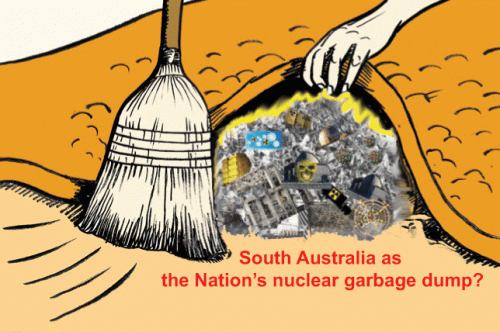
Divisive campaign on South Australian facility highlights urgent need for long term nuclear waste management plan, Croakey, 6 Nov 20, Tillman Ruff
“……..No long term management plan for nuclear waste
Australia needs to develop a plan for long-term management and disposal of long-lived intermediate level nuclear waste, which must be kept strictly isolated from people and the environment for 10,000 years.
More than 90 percent of Australia’s radioactive waste comes from nuclear reactors managed by the Australian Nuclear Science and Technology Organisation (ANSTO) at Lucas Heights in southern Sydney. This waste is stored there in a dedicated Interim Waste Store facility at Australia’s principal nuclear facility, with the best expertise and capacity in the country to manage this safely, monitored 24/7 by the Australia Federal Police.
A serious, open, transparent, evidence-based process is required to carefully consider the options, and develop the most responsible plan for ongoing long-term management and disposal of this waste.
nstead, successive governments — both Coalition and Labor — have sought to impose a succession of ill-considered waste dump plans on SA and NT remote communities. All have previously failed because of deeply flawed processes and strong community opposition.
Transport, taxpayer burdens absent health need
The risks of accident or theft are greatest during transport of nuclear materials. Kimba is 1,700 km from Lucas Heights. Road or sea transport of radioactive waste would involve lengthy routes potentially traversing many communities in multiple states.
The nuclear regulator, the Australian Radiation Protection and Nuclear Safety Agency (ARPANSA) has recently confirmed to a Senate inquiry that Lucas Heights has the capacity to safely store Australia’s radioactive waste for several decades, and that there is no urgent need to relocate it.
The Senate Inquiry last month recommended the South Australian plan go ahead, but there was a split among the committee membership, with Senators Jenny McAllister (Labor), Sarah Hanson-Young (Greens) and Rex Patrick (Independent) dissenting.
The government’s repeated claim that an immediate interim radioactive waste dump is needed to ensure the continuation of nuclear medicine in Australia is false.
Every sizeable hospital currently manages their radioactive waste on a ‘delay and decay’ basis on site; the residual waste rapidly loses its radioactivity and is stored on-site until it has decayed and can be discarded with normal waste. This doesn’t need to and won’t change.
The emotive but fallacious claim that provision of nuclear medicine services needed for diagnosis and treatment of cancer will be jeopardised if a new nuclear waste dump is not urgently progressed is being dishonestly but persistently promoted.
To support passage of the government’s amendments, Federal Resources, Water and Northern Australia Minister Keith Pitt is believed to be planning a “nuclear medicine roundtable” at Parliament House on Monday 9 November.
The true driver of increasing need for waste management is ANSTO’s institutional nuclear ambitions, reflected in its current massive ramp-up of production of medical isotopes for export — from around one percent to a target of 25-30 percent of global supply over the next several years.
Not only are we left with the waste legacy of this expanding isotope export business, Australian taxpayers also pick up the bill, paying $400 million for the Lucas Heights OPAL reactor, and subsidising ANSTO on an annual basis for its nuclear operations.
ANSTO received $313.8 million in 2019-20, and was given an additional $238.1 million over 4 years in last month’s Budget.
Cost analyses in several other countries have found that medical isotope sales usually only recover 10-15 percent of the true cost of production once waste, decommissioning, insurance and other costs are factored in.
ANSTO’s export expansion push is increasing domestic nuclear waste pressures, and this is happening without proper public and parliamentary accountability and scrutiny………..
Out of sight, out of mind
The government’s approach, codified in the proposed amendments, would see long-lived radioactive intermediate level nuclear waste transported long distances from the best and most secure site to manage radioactive waste in Australia, to a distant site in South Australian farming country with no current expertise, facilities or experience in securely managing long-lived hazardous radioactive waste.
Effectively, this “temporary” storage facility for waste that must be kept safe from the environment for over 10,000 years will be a large shed.
There is currently no plan and no process to develop a plan for the long-term management and eventual disposal of this waste. Therefore the intermediate level waste will likely languish indefinitely above ground in a facility inadequate for safe long-term storage or disposal, but out of sight and out of mind from Canberra or Sydney.
Australia needs an open, transparent, evidence-based and independent review of Australia’s current and projected radioactive waste production. This review should examine and make recommendations on the best practice long-term management of Australia’s radioactive waste production and disposal.
It should be conducted independently of ANSTO, given their role as proponent of the current proposal and plans to significantly increase nuclear waste production over the next decade for reasons which are not based on the health or other needs of Australians.
It should be open to input from Indigenous organisations, civil society organisations, experts and the public, and be undertaken before any soil is turned for a dump in Kimba and before any waste is moved from Lucas Heights. We have ample time to do this properly.
Tilman Ruff AO is Associate Professor at the Nossal Institute for Global Health, University of Melbourne. He is Co-President of International Physicians for the Prevention of Nuclear War, and co-founder and founding chair of the International Campaign to Abolish Nuclear Weapons, both Nobel Peace Prize laureate organisations. https://www.croakey.org/divisive-campaign-on-sa-facility-highlights-urgent-need-for-long-term-nuclear-waste-management-plan/
Australian govt will feel the heat when a Biden administration rejoins the Paris climate agreement
 Biden says the US will rejoin the Paris climate agreement in 77 days. Then Australia will really feel the heat, The Conversation Christian Downie, Australian Research Council DECRA Fellow, Australian National University, November 6, 2020 When the US formally left
the Paris climate agreement, Joe Biden tweeted that “in exactly 77 days,  a Biden Administration will rejoin it”.
The US announced its intention to withdraw from the agreement back in 2017. But the agreement’s complex rules meant formal notification could only be sent to the United Nations last year, followed by a 12-month notice period — hence the long wait.
While diplomacy via Twitter looks here to stay, global climate politics is about to be upended — and the impacts will be felt at home in Australia if Biden delivers on his plans.
Biden’s position on climate change
Can he do it under a divided Congress?
While the votes are still being counted — as they should (can any Australian believe we actually need to say this?) — it seems likely the Democrats will control the presidency and the House, but not the Senate.
This means Biden will be able to re-join the Paris agreement, which does not require Senate ratification. But any attempt to legislate a carbon price will be blocked in the Senate, as it was when then-President Barack Obama introduced the Waxman-Markey bill in 2010.
What’s needed are ambitious targets and mandates for the power sector, transport sector and manufacturing sector, backed up with billions in government investment.
Fortunately, this is precisely what Biden is promising to do. And he can do it without the Senate by using the executive powers of the US government to implement a raft of new regulatory measures.
Take the transport sector as an example. His plan aims to set “ambitious fuel economy standards” for cars, set a goal that all American-built buses be zero emissions by 2030, and use public money to build half a million electric vehicle charging stations. Most of these actions can be put in place through regulations that don’t require congressional approval.
And with Trump out of the White House, California will be free to achieve its target that all new cars be zero emissions by 2035, which the Trump administration had impeded.
If that sounds far-fetched, given Australia is the only OECD country that still doesn’t have fuel efficiency standards for cars, keep in mind China promised to do the same thing as California last week.
What does this mean for Australia?
For the last four years, the Trump administration has been a boon for successive Australian governments as they have torn up climate policies and failed to implement new ones.
Rather than witnessing our principal ally rebuke us on home soil, as Obama did at the University of Queensland in 2014, Prime Minister Scott Morrison has instead benefited from a cosy relationship with a US president who regularly dismisses decades of climate science, as he does medical science. And people are dying as a result.
For Australia, the ambitious climate policies of a Biden administration means in every international negotiation our diplomats turn up to, climate change will not only be top of the agenda, but we will likely face constant criticism.
Indeed, fireside chats in the White House will come with new expectations that Australia significantly increases its ambitions under the Paris agreement. Committing to a net zero emissions target will be just the first.
The real kicker, however, will be Biden’s trade agenda, which supports carbon tariffs on imports that produce considerable carbon pollution. The US is still Australia’s third-largest trading partner after China and Japan — who, by the way, have just announced net zero emissions targets themselves……
With Biden now in the White House, it’s not just global climate politics that will be turned on its head. Australia’s failure to implement a serious domestic climate and energy policy could have profound costs.
Costs, mind you, that are easily avoidable if Australia acts on climate change, and does so now. https://theconversation.com/biden-says-the-us-will-rejoin-the-paris-climate-agreement-in-77-days-then-australia-will-really-feel-the-heat-149533
Zali Steggall calls on Australia’s chief scientist to clarify position on net zero emissions by 2050
|
Zali Steggall calls on Australia’s chief scientist to clarify position on net zero emissions by 2050
More than 100 businesses and organisations have supported the independent MP’s climate change bill in ads in major newspapers, Guardian, Adam Morton Environment editor @adamlmorton, 6 Nov 20, The private member’s bill, which was announced in February but delayed due to Covid-19, is supported by Steggall’s fellow crossbenchers Rebekah Sharkie, Helen Haines, Andrew Wilkie and the Greens, and has been backed by climate scientists, economists and some business leaders, including the Business Council of Australia’s Jennifer Westacott, who described it as “sensible”. It is opposed by the government, which controls whether it will be debated in parliament and has rejected a 2050 net zero target……..https://www.theguardian.com/australia-news/2020/nov/07/zali-steggall-calls-on-australias-chief-scientist-to-clarify-position-on-net-zero-emissions-by-2050 |
|
Minister Keith Pitt reluctant to name property owner who sold land for nuclear dump
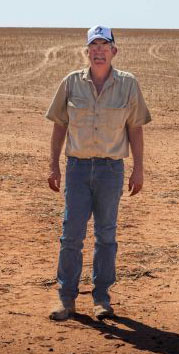
Australian government’s Nuclear Waste Bill – divisive, undemocratic and racist processes
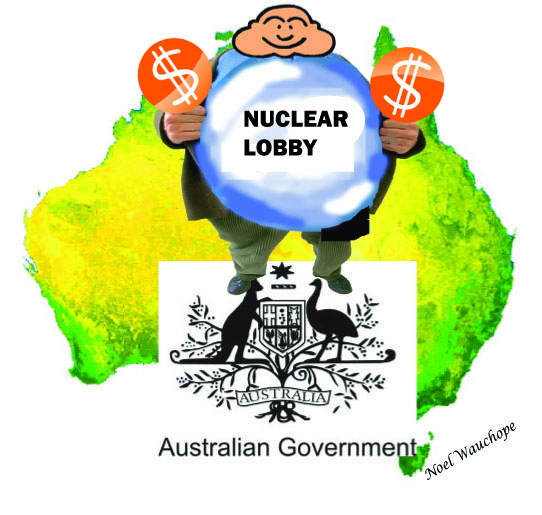
Divisive campaign on South Australian facility highlights urgent need for long term nuclear waste management plan, Croakey, 6 Nov 20,
Tilman Ruff writes: Radioactive waste production and management need a sound evidence-based plan, not shoddy and racist imposition based on misguided nuclear ambition.
On Tuesday 6 October, under the cover of the Federal Budget, the Government planned to introduce controversial amendments to laws on radioactive waste management in the Senate.
The amendments were dropped from the Senate list the following day, only to reappear the following day, the last sitting day for this parliamentary session. They were ultimately not tabled, for reasons unstated, but most likely because the government was concerned it did not have the numbers to pass them.
The National Radioactive Waste Management Amendment (Site Specification, Community Fund and Other Measures) Bill 2020 seeks to confirm the siting of a national radioactive waste facility near Kimba in regional South Australia. It would also remove any legal right to review this decision.
These laws were opposed by Labor, minor party and independent members when they passed in the lower house in June, and remain actively contested in Parliament and more so in the community.
Nonetheless $103.6 million was allocated in the budget over the next four years for the planned radioactive waste dump at Kimba, a clear sign the government remains committed to this flawed legislation, which is again scheduled to be debated in the Senate next week.
The radioactive waste management plans it would lock in deserve greater public scrutiny than they have received to date…………
Divisive, undemocratic and racist processes
The government campaign to persuade the residents of Kimba to accept a radioactive waste dump has been misleading and divisive, with much inaccurate information about risks and benefits, inflated employment promises, and very poor process to assess genuine community views.
The people selected to vote on this proposal (with shifting and nebulous goalposts) were town-based, excluding many farmers who actually live closer to the site than those in Kimba township. The local community has become divided.
Crucially, despite multiple requests, Barngarla Native Title holders were explicitly excluded from the government’s community ballot, and remain actively opposed to the planned waste facility. The Barngarla people unsuccessfully attempted to have their exclusion from the consultation process struck down in the Federal Court in March on the grounds that it contravened the Racial Discrimination Act.
When the Barngarla people commissioned a survey themselves, 100 percent of those surveyed were opposed. Nonetheless the process has proceeded, despite government promises that Aboriginal views would be taken into account.
Minister Pitt visited Kimba for the first time in months on 3 November. His media release thanking the Kimba community and chronicling his meetings with the mayor, proposed waste site landowner and various local organisations mentions Barngarla people not once.
Removing the right to legal review
The clear and unacceptable rationale of the proposed amendments are to remove the right of legal challenge to the choice of a national radioactive waste facility near Kimba.
Minister Pitt already has the power under the existing National Radioactive Waste Management Act (2012) to advance the planned Kimba facility, however this would be subject to legal review.
The right to independent legal recourse is a fundamental principle of our democracy and should not be jettisoned without compelling reasons – especially on an issue with such significant long-term implications and impacts as radioactive waste.
To remove the right to judicial review for affected people is unfair, unnecessary and unjustified. It violates the rights of Aboriginal people. ……….. https://www.croakey.org/divisive-campaign-on-sa-facility-highlights-urgent-need-for-long-term-nuclear-waste-management-plan/
Australian Nuclear Science and Technology Organisation (ANSTO) – disingenuous and inept promotion of Kimba nuclear waste dump

If anyone has viewed the Senate estimates hearing on Thursday 29 October 2020 with regard to ANSTO then I am sure they will be concerned at the ill-prepared and unconvincing explanations by its management which at times verged on being completely disingenuous. If this is the major federal government entity on which there is so much reliance for the establishment of the planned nuclear waste facility at Kimba in South Australia then the whole nation and not just the local community should be seriously worried about the capability of ANSTO which contrary to its self serving promotion and publicity is not held in high regard internationally
This extends to the Department of Industry Science Energy and Resources and the other agencies involved with the proposed nuclear waste facility at Kimba and demonstrates the ineptness and lack of competence on the part of the government in its various capacities in trying to establish the facility
Because of this it is very likely that the facility will not obtain the necessary licence for its establishment and operations and in any case the enabling legislation will be rejected by the Senate
It therefore defies logic for the government’s continued persistence with the Kimba proposal including the ministerial visit to Napandee farm yesterday which apparently failed to achieve anything as to a resolution of the inherent communityproblems – perhaps a political photo opportunity or confirmation at last that Napandee is a farm and not a community?
http://www.aph.gov.au Watch parliament Senate, Economics Legislation Committee
(Senate Estimates) Thu, 29 Oct 2020 Part 1 at 9.00 am EST
Why did Australia’s nuclear high priest Dr Adi Paterson leave so suddenly ?

Some very odd things happened in Senate Estimates last week. Seems NO-ONE knows why Adi Paterson resigned and officially took leave until the end of the year – nearing “the end of his term” we were told!!. Considering his term, it turns out, doesn’t end at the end of this year…or next year….but March 2022! Strange….
Then there is the David Tune Review into ANSTO…something about finances and administrative review…didn’t know there WAS a review….but there is no comment by ANSTO given at the Senate Estimates of EXACTLY what it was all about or what the recommendations were!Then some very strange comments about the ANM Facility. According to ANSTO’s website it says “The ANSTO Nuclear Medicine (ANM) project includes an export scale Mo-99 Manufacturing Facility and an innovative ANSTO Synroc waste treatment plant. Both of these new facilities will be owned and operated by ANSTO Nuclear Medicine (ANM) Pty Ltd, a majority subsidiary of ANSTO.”
It was completed construction in 2019 and after an accident occurred there mid-2019, it has been on amended and reamended licence by ARPANSA to produce Mo-99 at reduced amounts. The facility cost build was estimated to be approx. $169 million in 2016…but difficult to find the actual final cost. And yet it seems ANSTO is using the old facility currently which was retrofitted? How does that work?
So many questions!…. And no-one asking them!!
One thing which is important is that the acting CEO Mr Jenkinson did correct one of the Senators regarding the availability of isotopes from ANSTO which are used FOR DIAGNOSTIC IMAGING. They are NOT used for treatment! That is the PREDOMINATE USED OF ANSTO – TO PRODUCE Mo-90 which breaks down to Tc-99m which is used for DIAGNOSTIC IMAGING…
“Senator SHELDON: You had 12,000 normal doses that would go out. You said you imported some doses to cover that. What was the shortfall from 12,000 in comparison with the imports?
Biden as president would pursue climate ‘cheaters’, such as Morrison’s Australia
  Biden as president would pursue climate ‘cheaters’ – and Australia could be among them, Scott Morrison has resisted a call to action from the UK – but the US would be hard to ignore, Guardian, Richie Merzian 4 Nov 20, ”…….. If Joe Biden takes the Oval Office, on the day of his inauguration, 20 January 2021, he can formally ask to rejoin the Paris agreement. It takes one year to pull out but only 30 days to sign up. However, regaining membership to the agreement is just the beginning. The divergence on climate policy between the Democratic and Republican candidates is huge – possibly the widest divide between the two platforms – and while Trump questions global warming, Biden has the most ambitious climate policies of any presidential candidate (exceeding those of Barack Obama).First, Biden will lock the US into net zero emissions by 2050. Not an ill-defined target some time in the second half of the century, like the Australian government’s, but a 30-year target. A target that means putting coal, oil and gas on a downward trajectory, and bringing total global CO2 emissions under a net-zero target to over 60%, including major importers of Australian coal and gas – China, Japan and the Republic of Korea. Biden as president would pursue climate ‘cheaters’ – and Australia could be among them, Scott Morrison has resisted a call to action from the UK – but the US would be hard to ignore, Guardian, Richie Merzian 4 Nov 20, ”…….. If Joe Biden takes the Oval Office, on the day of his inauguration, 20 January 2021, he can formally ask to rejoin the Paris agreement. It takes one year to pull out but only 30 days to sign up. However, regaining membership to the agreement is just the beginning. The divergence on climate policy between the Democratic and Republican candidates is huge – possibly the widest divide between the two platforms – and while Trump questions global warming, Biden has the most ambitious climate policies of any presidential candidate (exceeding those of Barack Obama).First, Biden will lock the US into net zero emissions by 2050. Not an ill-defined target some time in the second half of the century, like the Australian government’s, but a 30-year target. A target that means putting coal, oil and gas on a downward trajectory, and bringing total global CO2 emissions under a net-zero target to over 60%, including major importers of Australian coal and gas – China, Japan and the Republic of Korea.
Within his first 100 days, Biden has committed to convene a climate world summit to directly engage the leaders of the major carbon-emitting nations of the world to persuade them to join the United States in making more ambitious national pledges, above and beyond the commitments they have already made. From the US, we could see a new, more ambitious emission reduction target than its underwhelming 26-28% by 2025 (if that sounds familiar, it’s because Australia has the exact same underwhelming target range but for 2030, and without the desire to improve it). Importantly, Biden will pursue countries seen as “cheating” on climate action, using “America’s economic leverage and power of example”. Given the Morrison government’s insistence on using leftover carbon credits to avoid any credible emission reductions over the next decade – dubbed by the former UN climate chief Christiana Figueres as “cheating” and by numerous Australian law professors as legally baseless – Australia may be a target of that pursuit. Australia and the US might also be at odds over financial support for climate action in developing countries. Biden’s campaign promises include meeting the US climate finance pledge, of which $2bn to the Green Climate Fund is still outstanding. Prime minister Scott Morrison pulled Australia out of the Green Climate Fund in 2018 during an interview with Alan Jones and has resisted calls since from our neighbours in the Pacific to rejoin. While presidential office is key, if Democrats take a majority of Senate seats their capabilities on climate would grow fast. The president, Senate and key states could see the US move quickly – even this year. And much like the climate leadership shown by states and territories in Australia that are all signed up to net-zero by 2050 targets, a number of US state governments have already banded together to take climate action under Trump. According to the America’s Pledge report, sub-national action makes it possible for the US to cut emissions by 37% by 2030. And despite Trump’s best efforts to revive the coal industry, more coal capacity (37GW) has been retired under his presidency than during Obama’s second term (33GW). The US consumed more energy from renewables than coal in 2019, for the first time in over a century, setting the stage for Biden’s promise of a carbon pollution-free power sector by 2035. This 12 December the Paris agreement turns five. The United Kingdom, which will host the next UN climate conference, will mark the occasion with an ambition summit. And while Scott Morrison has resisted calls from the UK to do more on climate, it may be harder to resist similar calls from the US. Morrison claims, “Our policies won’t be set in the United Kingdom, they won’t be set in Brussels, they won’t be set in any part of the world other than here.” I wouldn’t be so sure. When former president Obama pressured the Abbott government to do more on climate change in 2014, it had an impact. Let’s see what happens when Washington calls again. https://www.theguardian.com/commentisfree/2020/nov/04/biden-as-president-would-pursue-climate-cheaters-and-australia-could-be-among-them |
|
Rocket launches on the Eyre Peninsula wil damage the environment
Nature Conservation Society of SA fears Whalers Way rocket launch site will damage the environment
Worry rocket launch site will damage environment The Advertiser Clare Peddie, Science Reporter, The Advertiser, November 4, 2020
A proposed rocket launch facility at Whalers Way, on the tip of Eyre Peninsula, threatens vulnerable wildlife and coastal wilderness, conservationists say.
The Nature Conservation Society of South Australia is challenging the development, citing heightened fire danger, noise disturbance and land clearing, enabling the spread of feral predators and pests.
Society vice-president Rick Davies said the area was so special that it was protected under a legally binding heritage agreement, meaning it is be managed as a privately-owned conservation area in perpetuity. “We support a space industry in SA, but this is the wrong place for this development,” Dr Davies said.
With our country already seeing more large, uncontrolled fires, why would we allow a commercial firing range and all its propellant fuels in the middle of one of the best expanses of native coastal vegetation?”
The area is home to species at risk of extinction, including nationally vulnerable white-fronted whipbirds and the Eyre Peninsula southern emu-wren.
Dr Davies says these shy secretive birds require long unburnt vegetation and will be impacted both by both direct habitat destruction and associated industrial disturbance.
Coastal raptors such as vulnerable white-bellied sea eagles and rare osprey, which require vast hunting territories, will also be disturbed, he says.
The Eyre Peninsula Southern Emu-wren is endangered in South Australia. This male was briefly captured for research purposes and then released. Picture: Marcus Pickett
The State Government has given the Whalers Way Orbital Launch Complex major development status.
The company behind the development, Southern Launch, is now preparing a development application, including an environmental-impact statement.
Executive director Mike Damp expected those documents would be made available as part of the public consultation process early next year.
“Site selection took a long time and it was diligent; it wasn’t selected willy nilly or with disregard to the environment,” he said.
“Right from the outset, I want to dispel any inclination that you might have that we are prepared to ride roughshod over the environment.
“From the very beginning, we have been very mindful of the area that we are operating out of and we have, therefore, cemented into the bedrock of the company our biodiversity management strategy, so we intend to improve the conservation status of Whalers Way.”
The rugged coastline at Whalers Way, south of Port Lincoln on the Eyre Peninsula, including an osprey nest on a rocky outcrop. Picture: Marcus Pickett
A State Government spokesman said that the project would go through all required environmental-assessment processes.
“The sub-orbital launch facility will be one of two in the southern hemisphere – and presents enormous opportunity for growth in rapidly developing space sector,” he said.
“Projects like this will be critical in our state’s recovery from the global coronavirus pandemic,” he said.
But Shadow Environment Minister and deputy leader of the opposition Susan Close shares the conservationist’s concerns.
“I have serious concerns about the impact of this development on rare species and valuable habitat, and the risks it may pose for fire and damage to adjacent marine life,” she said.
“I urge the government to consider alternative locations which do not involve compromising environmental values and overriding existing protections.”
Frazer Nash and The South Australian Chamber of Mines and Energy (SACOME) want nuclear power – “good for the environment”!!
 SACOME pushes SA Government to back nuclear energy, Australian Mining
SACOME has also called for the state government to fund a nuclear energy forum, with South Australia holding 25 per cent of the world’s uranium resources and 80 per cent of Australia’s total uranium supply.
The chamber stated that the economic value of the nuclear fuel cycle needs to be re-examined due to the refinement and commercialisation of small modular reactors, which would be financially bolstered by South Australia’s renewable energy supply.
“SACOME supports the chief entrepreneur’s statements and calls upon the Marshall Government to establish a Nuclear Energy Forum to advance the conversation about development of a South Australian nuclear industry.”
According to Frazer Nash head of Australian business Jonathan Armstrong, the nuclear energy forum would reap positive results [??] for the environment………..https://www.australianmining.com.au/news/sacome-pushes-sa-government-to-back-nuclear-energy/
South Australia’s Jim Whalley provides nonsensical and misleading propaganda, spruiking small nuclear reactors

A military industry enterprise senior adviser to SA State gov is spruiking pro-International Nuclear Waste multi-decade–storage (not disposal), claiming ‘free’ nuclear energy in future, wanting to sell uranium processed into fuel rods with contracted high-level nuclear waste ‘return’ to SA, this is propaganda, non-sense and misleading.
And, by the way, The Advertiser, a pro nuclear right-wing paper, runs a poll on this – but only subscribers to this biased rag, are able to vote. Hardly suprsing that they get a pro nuclear result!
Chief entrepreneur Jim Whalley urges free nuclear power in South Australia, Nuclear energy would link up with renewable powerhouses and turn SA into a hi-tech Mecca, our chief entrepreneur says. Paul Starick, Chief Reporter, The Advertiser, Subscriber only, November 2, 2020
Chief entrepreneur, Jim Whalley, urges SA look at providing free energy through a combination of renewable and nuclear fuel, capitalising on technology advances to use small reactors to power towns across the state.
Premier Steven Marshall’s hand-picked chief entrepreneur is urging SA to consider providing free energy by coupling nuclear power with renewables to exploit a “real, natural advantage”.
Jim Whalley says hi-tech small modular nuclear reactors could be used to power places such as Adelaide, Whyalla, Port Lincoln and Mt Gambier.
Mr Whalley, who was appointed South Australia’s first chief entrepreneur in 2018 and is tasked with positioning the state as a destination for innovation, said embracing all aspects of the nuclear fuel cycle was a great opportunity that should be re-examined.
Mr Whalley, the chairman of defence firm Nova Systems and a former fighter jet pilot, told an Advertiser virtual roundtable of business leaders his “big idea” to kickstart the state from a coronavirus-induced recession was to examine free energy.
“I think energy is a real natural advantage we should have. I’d like to see us looking at providing free energy,” he said.
“We should be able to do it with renewables. We can definitely do it if we get smart about nuclear. We’ve got 42 per cent of the world’s mineable uranium. Even if we don’t start using nuclear energy, we can at least start supplying fuel rods, bring them all back, so they’re not used in weapons and bits and pieces like that. I think that does need to be looked at again.
“On the renewable side, we’ve got wind, we’ve got solar, we’ve got batteries – we should be the petri dish for future energy, and I’d like to see us take a real step forward there.”
Mr Whalley said this would make SA extremely attractive for energy-intensive industries, such as aluminium production.
“With the technology the way it’s evolving now, that stuff that we bring back and store now in another 20 years will actually be able to be used again,” said Mr Whalley, whose chief entrepreneur role is unpaid.
In November 2016, Mr Marshall withdrew support for further study of the case for a high-level nuclear waste repository, with the Liberals citing serious risks on both revenue and cost sides of the business case produced for the royal commission.
Energy and Mining Minister Dan van Holst Pellekaan said the 2016 royal commission made it clear large nuclear power generators were not economically viable.
“Small modular reactors have been proposed for several years now, but have not yet been proven up or available,” he said. “If small modular reactors become available in the future, we will assess whether they might be appropriate for our needs.”
He said SA was becoming a clean energy exporter, resulting in cheaper power. https://www.adelaidenow.com.au/news/south-australia/chief-entrepreneur-jim-whalley-urges-free-nuclear-power-in-south-australia/news-story/f0030d70b8c61535e0c79b090831a5be
1 This month.
20 September –National Day of Action in Melbourne on the International Day of Peace


Help Aunty Sue Protect Her Land and Sacred Sites From Destructive Rocket Testing.
.

Australians deserve the truth
about
AUKUS – https://aukuspublicinquiry.com/

PETITION – To: Prime Minister Anthony Albanese and the Australian Labor Government

of the week – Australians for War Powers Reform (AWPR)
To see nuclear-related stories in greater depth and intensity
 Antinuclear