315 nuclear bombs and ongoing suffering: the shameful history of nuclear testing in Australia and the Pacific
|
315 nuclear bombs and ongoing suffering: the shameful history of nuclear testing in Australia and the Pacific, https://theconversation.com/315-nuclear-bombs-and-ongoing-suffering-the-shameful-history-of-nuclear-testing-in-australia-and-the-pacific-148909, Tilman Ruff, Associate Professor, Education and Learning Unit, Nossal Institute for Global Health, School of Population and Global Health, University of Melbourne, Dimity Hawkins, PhD Candidate, Swinburne University of Technology
November 3, 2020 The Treaty on the Prohibition of Nuclear Weapons received its 50th ratification on October 24, and will therefore come into force in January 2021. A historic development, this new international law will ban the possession, development, testing, use and threat of use of nuclear weapons.Unfortunately the nuclear powers — the United Kingdom, France, the United States, Russia, China, Israel, India, Pakistan and North Korea — haven’t signed on to the treaty. As such, they are not immediately obliged to help victims and remediate contaminated environments, but others party to the treaty do have these obligations. The shifting norms around this will hopefully put ongoing pressure on nuclear testing countries to open records and to cooperate with accountability measures. For the people of the Pacific region, particularly those who bore the brunt of nuclear weapons testing during the 20th century, it will bring a new opportunity for their voices to be heard on the long-term costs of nuclear violence. The treaty is the first to enshrine enduring commitments to addressing their needs. From 1946, around 315 nuclear tests were carried out in the Pacific by the US, Britain and France. These nations’ largest ever nuclear tests took place on colonised lands and oceans, from Australia to the Marshall Islands, Kiribati to French Polynesia.
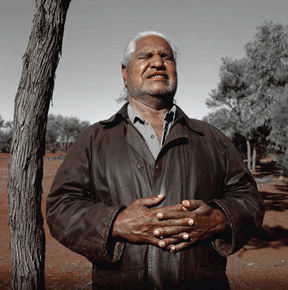
The impacts of these tests are still being felt today. All nuclear tests cause harm Studies of nuclear test workers and exposed nearby communities around the world consistently show adverse health effects, especially increased risks of cancer. The total number of global cancer deaths as a result of atmospheric nuclear test explosions has been estimated at between 2 million and 2.4 million, even though these studies used radiation risk estimates that are now dated and likely underestimated the risk. The number of additional non-fatal cancer cases caused by test explosions is similar. As confirmed in a large recent study of nuclear industry workers in France, the UK and US, the numbers of radiation-related deaths due to other diseases, such as heart attacks and strokes, is also likely to be similar. Britain conducted 12 nuclear test explosions in Australia between 1952 and 1957, and hundreds of minor trials of radioactive and toxic materials for bomb development up to 1963. These caused untold health problems for local Aboriginal people who were at the highest risk of radiation. Many of them were not properly evacuated, and some were not informed at all. We may never know the full impact of these explosions because in many cases, as the Royal Commission report on British Nuclear Tests in Australia found in 1985: “the resources allocated for Aboriginal welfare and safety were ludicrous, amounting to nothing more than a token gesture”. But we can listen to the survivors.
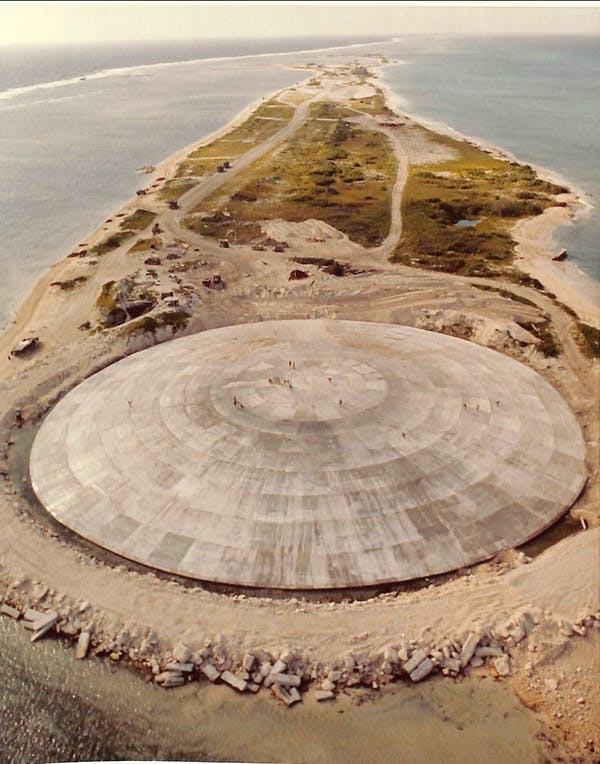
His daughter, Karina Lester, is an ambassador for the International Campaign to Abolish Nuclear Weapons in Australia, and continues to be driven by her family’s experience. She writes: For decades now my family have campaigned and spoken up against the harms of nuclear weapons because of their firsthand experience of the British nuclear tests […] Many Aboriginal people suffered from the British nuclear tests that took place in the 1950s and 1960s and many are still suffering from the impacts today. More than 16,000 Australian workers were also exposed. A key government-funded study belatedly followed these veterans over an 18-year period from 1982. Despite the difficulties of conducting a study decades later with incomplete data, it found they had 23% higher rates of cancer and 18% more deaths from cancers than the general population. An additional health impact in Pacific island countries is the toxic disease “ciguatera”, caused by certain microscopic plankton at the base of the marine food chain, which thrive on damaged coral. Their toxins concentrate up the food chain, especially in fish, and cause illness and occasional deaths in people who eat them. In the Marshall Islands, Kiritimati and French Polynesia, outbreaks of the disease among locals have been associated with coral damage caused by nuclear test explosions and the extensive military and shipping infrastructure supporting them. Pacific survivors of nuclear testing haven’t been focused solely on addressing their own considerable needs for justice and care; they’ve been powerful advocates that no one should suffer as they have ever again, and have worked tirelessly for the eradication of nuclear weapons. It’s no surprise independent Pacific island nations are strong supporters of the new treaty, accounting for ten of the first 50 ratifications. Negligence and little accountabilitySome nations that have undertaken nuclear tests have provided some care and compensation for their nuclear test workers; only the US has made some provisions for people exposed, though only for mainland US residents downwind of the Nevada Test Site. No testing nation has extended any such arrangement beyond its own shores to the colonised and minority peoples it put in harm’s way. Nor has any testing nation made fully publicly available its records of the history, conduct and effects of its nuclear tests on exposed populations and the environment. These nations have also been negligent by quickly abandoning former test sites. There has been inadequate clean-up and little or none of the long-term environmental monitoring needed to detect radioactive leakage from underground test sites into groundwater, soil and air. One example among many is the Runit concrete dome in the Marshall Islands, which holds nuclear waste from US testing in the 1940s and 50s. It’s increasingly inundated by rising sea levels, and is leaking radioactive material. The treaty provides a light in a dark time. It contains the only internationally agreed framework for all nations to verifiably eliminate nuclear weapons. It’s our fervent hope the treaty will mark the increasingly urgent beginning of the end of nuclear weapons. It is our determined expectation that our country will step up. Australia has not yet ratified the treaty, but the bitter legacy of nuclear testing across our country and region should spur us to join this new global effort. |
|
Rest super fund commits to net-zero emission investments after Brisbane man sues
|
Rest super fund commits to net-zero emission investments after Brisbane man sues, ABC, By national science, technology and environment reporter Michael Slezak, 2 Nov 20,
A 25-year-old man from Brisbane has successfully sued one of Australia’s biggest super funds over its handling of climate change, forcing it to commit to net-zero emissions for its investments by 2050.Key points:
In 2018, Mark McVeigh sued Rest, his superannuation fund, in the Federal Court after it failed to provide him with information on how it was managing the risks of climate change. Mr McVeigh alleged Rest had breached the Superannuation Industry Act and the Corporations Act by failing to manage those risks — which could include fossil fuel companies plummeting in value or infrastructure being damaged by extreme weather. The law requires trustees of super funds to act with care, skill and diligence to act in the best interest of members — including managing material risks to its investment portfolio. In an 11th-hour settlement reached on Monday while the case was adjourned, Rest agreed its trustees have a duty to manage the financial risks of climate change. Because the case was settled out of court, the outcome doesn’t carry the same weight as a legal precedent decided in court. But Mr McVeigh’s lawyer, David Barnden, head of Equity Generation Lawyers, said the case still sets an important precedent globally. “This outcome should represent a significant shift in the market’s willingness to tackle climate risk — a shift which should set a clear precedent for the industry in Australia, and also pension funds around the world,” Mr Barnden said……….. https://www.abc.net.au/news/2020-11-02/rest-super-commits-to-net-zero-emmissions/12840204 |
|
Australian doctors accuse government of failing on climate change
“We are also united by our concern about the climate crisis and the impact it is having on the safety and wellbeing of Australians and our neighbours. Public health is inextricably linked to climate health. Climate damage is here now – and it is killing people.”
The doctors accuse Mr Taylor of failing in his ministerial duties by directing public money to fossil fuel projects, failing to adequately reduce Australia’s emissions obligations and by not committing Australia to a 2050 net zero emissions target…….
In the letter the doctors said there is already a noticeable health impact from increased frequency and intensity of bushfires, floods, dust storms, drought and extreme heat in Australia.
“As a result, Australians are already seeing higher rates of respiratory illness, diarrhoea and morbidity requiring hospital admission during hot days, and higher rates of suicide in rural areas during drought years.
“The burning of fossil fuels such as coal and gas that drives global warming is also a major contributor to air pollution – this silent killer is linked to the premature deaths of 3000 Australians each year. Higher levels of air pollution are also associated with increasing illness and death related to ischaemic heart disease, chronic obstructive airways disease, lung cancer and asthma.” …..https://www.smh.com.au/environment/climate-change/australian-doctors-accuse-government-of-failing-on-climate-change-20201101-p56ajj.html
North of Australia is headed for a severe heatwave
 Severe heatwave could break record temperatures in the Top End, ABC By Chelsea Heaney and Amy Culpitt 2 Nov 20, Temperatures across the Top End are set to soar, with the Bureau of Meteorology predicting a severe heatwave is here to stay.Key points: Severe heatwave could break record temperatures in the Top End, ABC By Chelsea Heaney and Amy Culpitt 2 Nov 20, Temperatures across the Top End are set to soar, with the Bureau of Meteorology predicting a severe heatwave is here to stay.Key points:
After sticking out a sweaty weekend, with temperatures climbing up and over 40 degrees Celsius across various parts of the Top End, there appears to be no relief in sight and no concrete signs of any big wet season storms. Senior meteorologist Billy Lynch said the heat and sunny skies were “unusual” for this time of the year. “Darwin got up to 36.3C [on Sunday] and the rural area got up to about 39C. Then in inland parts, we saw Jabiru get to 40C and Katherine 41C,” he said. “Those temperatures are a few degrees above average, the November average for Darwin is 33C. “For Katherine the average is about 37C and we’re looking at 41C and 42C, so it’s nearly 5 degrees above average. “It is a little unusual to see temperatures getting this high at this time of year.
It’s these temperatures that have many outdoor workers worried………. Report reveals NT economically vulnerable to climate change The data comes as new research by Deloitte revealed that Queensland, the Northern Territory and Western Australia would be the most negatively affected economically because of climate change. In the NT, the services, mining and tourism industries would be hardest hit. By 2070, the Territory could see a drop in 12 per cent of its gross domestic product and 5 per cent fewer jobs because of the impacts of climate change, the report states. Heat expert Matt Brearley urged people to reconsider their plans during the current hot spell, especially those involving the outdoors. “Those producing heat, such as people exercising or working, out camping or having a fish in the boat, they’ll lose less heat and potentially cook themselves,” he said…….. https://www.abc.net.au/news/2020-11-03/severe-heatwave-record-breaking-temperatures-northern-territory/12840316 |
|
Superannuation funds are leaving investments on nuclear weapons
 Disarmament treaty drops bomb on super Disarmament treaty drops bomb on super funds investing in nuclear weapons, Michael West Media , by Margaret Beavis | Nov 2, 2020 Many superannuation funds exclude investment in “controversial weapons” but astoundingly this definition does not include nuclear weapons. However, this will change once the Nuclear Disarmament Treaty becomes international law, writes Dr Margaret Beavis. With two of the largest pension funds in the world already having divested, Australian funds are on notice. funds investing in nuclear weapons, Michael West Media , by Margaret Beavis | Nov 2, 2020 Many superannuation funds exclude investment in “controversial weapons” but astoundingly this definition does not include nuclear weapons. However, this will change once the Nuclear Disarmament Treaty becomes international law, writes Dr Margaret Beavis. With two of the largest pension funds in the world already having divested, Australian funds are on notice.
It would probably come as a surprise, and a disappointment, to most Australians to hear that some of their superannuation is invested in nuclear weapons. Especially given the strong community backing for nuclear disarmament, with two surveys in 2018 and 2020 (IPSOS) showing that between 71 and 79% of respondents supported Australia signing and ratifying the Treaty on the Prohibition of Nuclear Weapons. Yet the vast majority of superannuation funds have holdings in companies involved in the manufacture and maintenance of nuclear weapons. While many funds exclude investments in “controversial weapons”, astoundingly this definition often still allows nuclear weapons investment. But this is about to change. With the Treaty on the Prohibition of Nuclear Weapons (TPNW), which was endorsed by 122 countries at the United Nations in 2017, having just reached the milestone of 50 countries ratifying it, the treaty becomes international law in less than three months. Nuclear weapons, the worst of the weapons of mass destruction, will finally be on the same illegal footing as chemical and biological weapons. This means assistance of any sort, including financial assistance, towards nuclear weapons becomes illegal under international law. Only 26 companies support these weapons. Boeing, for example, the second largest weapons producer in the world, has contracts worth more than US$1.7 billion: building new nuclear weapons for the US, key components for the long-range nuclear Minuteman Intercontinental Ballistic Missiles system, sustaining the UK Trident II system and making tail-kit assemblies for the new B61 bombs. Divestment is accelerating. Globally, major investors are already ceasing their exposure to nuclear weapons activities. This includes two of the top five pension funds in the world, the Norwegian Government Pension Fund and ABP, which have divested from the 26 companies tied to nuclear weapons. Deutsche Bank and KBC are also divesting. In Japan, 16 banks (including three mega banks) have flagged ceasing investment in nuclear weapons companies. With accelerating divestment, the risks of holding nuclear weapons stocks increases. Superannuation funds in Australia are starting to consider the financial risks, reputational risks and ethical imperatives surrounding investments in nuclear weapons. Some, like Australian Ethical, Future Super and Bank Australia have already acted……… As with climate change, there is little point accumulating funds on behalf of the community if they contribute to the deaths of billions and a severely damaged future. Quit Nukes, an Australian-based campaign launched late last year, is working to get super fund portfolios out of the financing of nuclear weapons. The campaign members have met with senior executives at more than a dozen funds, the regulator APRA, several banks, index setters and a number of industry bodies. Blackrock, MSCI and other index setters have recognised the increasing demand from the public for ethical funds and have created products to suit. The full list of funds that have already acted is on the Quit Nukes website. Consumers are increasingly concerned about their funds being invested in destructive and unethical industries and super funds need to respond. https://www.michaelwest.com.au/disarmament-treaty-drops-bomb-on-super-funds-investing-in-nuclear-weapons/ |
|
|
Problems re the planned nuclear waste dump: Some tough questions for the Kimba Council
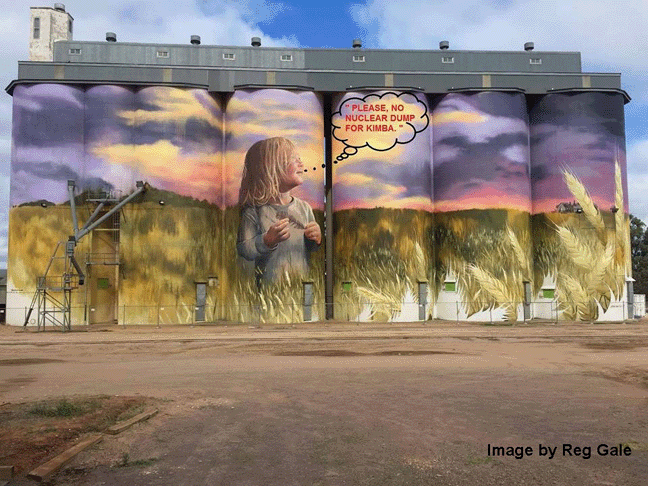
1. Based on overseas experience every place where some nuclear facility for waste storage and disposal has been established has seen a dramatic reduction in property values
2. Has the Kimba District Council considered this probable and economically debilitating situation
3. Is so how and what precautions have been taken by the Council to prevent it and what notification has it given to the community in that regard
4. If it has not been considered by the Council please explain why having regard to the duty of care that the Council owes to its community to ensure that they do not incur any financial loss
5. Has it ever been raised by the Council with the government and the responsible ministers and if so what responses has it received
6. Having now been given notice of this probable economic reversal what does the Council propose to do to prevent or at ameliorate the potential losses in property values for the Kimba community
7. Has or will the Council seek any financial assistance from the government towards the losses incurred by the community on their properties?
8. Has the Council sought any financial and legal advice with regard to this impending and major financial problem particularly as any economic advantages promoted by the government wold be only a pittance of the losses?
International Campaign to Abolish Nuclear Weapons (ICAN)- from a tiny group to an International Treaty
 Nuclear weapons treaty backed by 50 nations to become international law https://independentaustralia.net/politics/politics-display/nuclear-weapons-treaty-backed-by-50-nations-to-become-international-law,14455
2020 HAS BEEN a very tough year with fires, pestilence and massive economic and human disruption but amid the difficulties, an Australian-born initiative is steadily growing global support and offers our shared planet its best way to get rid of its worst weapons.
In October 2017, the International Campaign to Abolish Nuclear Weapons (ICAN), an initiative born in Melbourne and adopted, adapted and applied around the world, was awarded the 2017 Nobel Peace Prize.
This was in recognition of its:
“…work to draw attention to the catastrophic humanitarian consequences of any use of nuclear weapons and for its ground-breaking efforts to achieve a treaty-based prohibition of such weapons.”
Fast forward to October 2020 and the Treaty on the Prohibition on Nuclear Weapons has just cleared a big hurdle. Despite strong pressure from the nuclear weapons states, especially the U.S., 50 nations have now ratified the ban treaty. It will enter into force and become part of international humanitarian law on 22 January 2021.
At a time when the threat of nuclear war is more explicit than it has been in decades, the ICAN story is timely and shows the power of both the individual and the idea. When ICAN started in 2007, its founders could have fitted in a minibus. Ten years later, there are over 500 ICAN groups and formal partners in more than 100 nations. And a treaty. Continue reading
International team tracks record-setting smoke cloud from Australian wildfires
|
International team tracks record-setting smoke cloud from Australian wildfires, Science Daily , October 29, 2020
|
|
Australia is on the frontline, in the new age of fire
”Covid-19 is more than an illness. It is a symptom of the ailing health of our planet.”.
 Born in the ice age, humankind now faces the age of fire – and Australia is on the frontline Born in the ice age, humankind now faces the age of fire – and Australia is on the frontline The bushfires and the plague are symptoms of something momentous unfolding on Earth – an acceleration of our impact on nature, Guardian, by Tom Griffiths, 1 Nov 20 What has been the most shocking event of 2020? Was it awakening on New Year’s Day to more news of terror in Australia’s southern forests, to the realisation that the future was suddenly here, that this spring and summer of relentless bushfire was a planetary event? Was it the silent transmission of Covid-19, already on the loose and soon to overwhelm the world and change the very fabric of daily life everywhere at once? Or was it the surging race riots and protests, especially across America, where police brutality triggered grief, anger and outrage about the inequality and injustice still faced by black people? Could we even distinguish them from each other, this overlapping sequence of horrors? Fire, plague and racism are always with us, percolating away, periodically erupting, sometimes converging. They came together in the colonisation of Australia when the conquering British brought smallpox, scorned Indigenous rights and fought Aboriginal fire with gunfire. Systemic racism is the virus, declared Black Lives Matter protesters. ………
Throughout 2019, fire experts had pleaded with the federal government to hold a bushfire summit to prepare for the dreaded summer, but the prime minister had refused. The crisis could not be acknowledged in case it gave credence to the need for climate action. As if neglect and omission in the face of the fire threat were not enough, Coalition politicians and their apologists then hastily encouraged lies about the causes of the fires, declaring that they were started by arsonists and that greenies had prevented hazard-reduction burns. Yet these fires were overwhelmingly started by dry lightning in remote terrain, and hazard-reduction burning is constrained by a warming climate. The effort to stymie sensible policy reform after the fires was as pernicious as the failure to plan in advance of them.
There was barely a moment to breathe between bushfires and Covid. Australians had been in lockdown for months even before the year began, fighting fires that had started at the end of winter, cowering indoors from smoke, heat and ash, and wearing masks on their brief forays outside. People spoke courageously of “the new normal” but did not yet understand that “normal” was gone. Just as they finally stepped outside to sniff the clearer autumn air, it was declared dangerous again. Their masks were still in their pockets. Despite the connections between these crises, politicians were keen to separate them, as if one blessedly cancelled out the other, not least because the pandemic gave the prime minister a chance to reset after his disastrous summer. Instead of forcing handshakes he was forced to withhold them. For the beleaguered Coalition government, Covid seemed to provide the escape it wanted from climate politics.
Australians were forbidden from talking about the obvious relationship between bushfires and climate, so how will we manage to interrogate the common origins of climate change and the pandemic? The fires and the plague are both symptoms of something momentous that is unfolding on Earth: a concentration and acceleration of the impact of humans on nature. As the environmental scientists Inger Andersen and Johan Rockström argued in June: “Covid-19 is more than an illness. It is a symptom of the ailing health of our planet.”……..
Covid-19 spilled over from wild animals to humans and became a pandemic because of ecosystem destruction, biodiversity loss, climate change, pollution, the illegal wildlife trade and increased human mobility. “So when you’re done worrying about this outbreak,” Quammen warns, “worry about the next one. Or do something about the current circumstances.” Doing something about it means more than finding a vaccine; it means urgently addressing the causes of the climate emergency and the biodiversity crisis. It means understanding how dire the current rupture is in the long-term relationship between humans and nature……………
It is confirmation that in the 21st century our country remains a colony, still unable to accept (as the Uluru statement puts it) that “this ancient sovereignty can shine through as a fuller expression of Australia’s nationhood”. The deep environmental and cultural inheritance of this continent, with all the wisdom and perspective it might offer about living in this place, about survival, species and cultural burning, about fires, plagues and rising seas, is not yet important enough to Australians. When will it be, if not now? The insidious smoke is coming. • This essay will be part of the anthology Fire, Flood and Plague, edited by Sophie Cunningham and published by Penguin Random House in December https://www.theguardian.com/australia-news/2020/nov/01/born-in-the-ice-age-humankind-now-faces-the-age-of-fire-and-australia-is-on-the-frontline
|
|
$3 trillion and 880,000 jobs to be lost, if Australia continues inaction on climate change
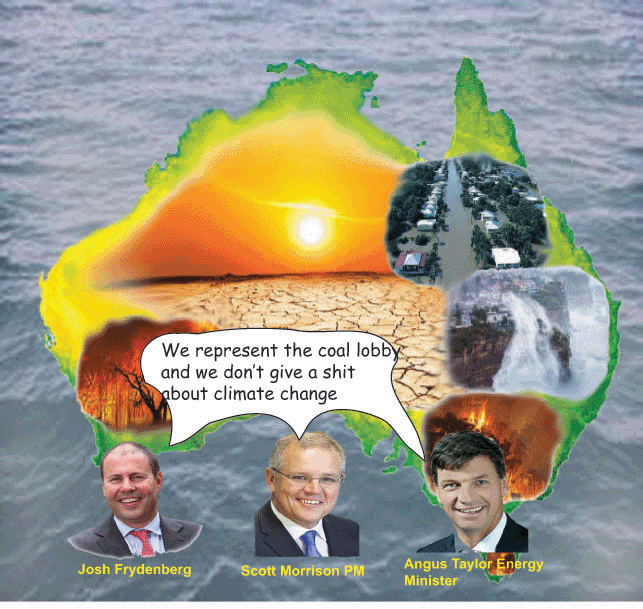 Australia will lose more than $3 trillion and 880,000 jobs over 50 years if climate change is not addressed, Deloitte says, ABC News, By Kathleen Calderwood– 1 Nov 20 The Australian economy will lose more than $3 trillion over the next 50 years if climate change is not addressed, according to a new report from Deloitte Access Economics.Key points: Australia will lose more than $3 trillion and 880,000 jobs over 50 years if climate change is not addressed, Deloitte says, ABC News, By Kathleen Calderwood– 1 Nov 20 The Australian economy will lose more than $3 trillion over the next 50 years if climate change is not addressed, according to a new report from Deloitte Access Economics.Key points:
The report found the economy could shrink by 6 per cent over the next 50 years and 880,000 jobs could be lost. Report author Pradeep Philip, who was a policy director for former prime minister Kevin Rudd, said there was also a lot to be gained if warming was kept below 1.5 degrees and Australia achieved net zero carbon emissions by 2050. “If we do act over the next few years then in just 50 years there is a benefit to the economy of $680 billion,” he said. “We’ll have an economy 2.6 per cent bigger, generating 250,000 jobs, so this tells us if you are pro-growth and pro-jobs then we need to act on climate change now……. Businesses ‘moving despite Government inaction’ Sheep grazier and chair of Farmers for Climate Action, Charlie Prell, says the pressure is already being felt in his industry, but opportunities are available to help agriculture businesses get by if climate change is addressed………. https://www.abc.net.au/news/2020-11-02/australian-economy-lose-$3-trillion-climate-change-inaction/12837244 |
|
|
Bushfire royal commission’s final report issues warning to Australia over climate change,
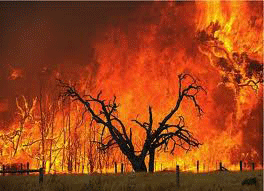 Bushfire royal commission’s final report issues warning to Australia over climate change, ABC News, By national science, technology and environment reporter Michael Slezak, 1 Nov 20, Bushfire royal commission’s final report issues warning to Australia over climate change, ABC News, By national science, technology and environment reporter Michael Slezak, 1 Nov 20, The bushfire royal commission’s final report is a stark warning of a future marked by extreme weather impacts of climate change.The commissioners describe their task at the very top of the report as “looking to the future”. And they are very clear about what that means. “Extreme weather has already become more frequent and intense because of climate change; further global warming over the next 20 to 30 years is inevitable,” they say. And as for what that means for fire regimes, they don’t mince their words. “Catastrophic fire conditions may render traditional bushfire prediction models and firefighting techniques less effective,” they say. The report notes there’s essentially nothing we can do about “locked in” warming set to occur over the next two decades. But what happens after that is up to us. Warming “beyond the next 20 to 30 years is largely dependent on the trajectory of greenhouse gas emissions”, it says. The commissioners also highlight evidence that avoiding or mitigating risks is much more cost effective than responding to disasters after they happen — an approach they unequivocally state is not adequate. “We need to do much more than put out fires. A resilient nation will seek to mitigate the risk of disasters through a wide range of measures, and it will attend to all of the complex and sometimes long-term consequences,” they say. Many commentators, including former fire chiefs, cross bench politicians and conservation groups, have argued the implication from the findings is clear: that greenhouse gas emissions must be quickly reduced to net zero. But of the report’s 80 recommendations, the commissioners do not make any aimed at trying to stop global warming. Their only climate-related recommendation calls for climate models to be created that can provide projections for smaller geographical areas — making them more useful for local disaster preparedness. Arguably, making recommendations about Australia’s greenhouse gas emissions or trajectory was outside the inquiry’s terms of reference. But that hasn’t stopped others drawing their own conclusions. “The Bushfire Royal Commission has laid out the facts in no uncertain terms: climate change drove the Black Summer bushfires, and climate change is pushing us into a future of unprecedented bushfire severity,” said Greg Mullins, former commissioner of Fire and Rescue NSW and founder of Emergency Leaders for Climate Action. “The Federal Government absolutely must act on the root cause of worsening bushfires in Australia, and take urgent steps to reduce greenhouse gas emissions. This clearly means no new coal or gas, and a rapid transition to renewable energy.” ……….. https://www.abc.net.au/news/2020-10-31/bushfire-royal-commission-final-report-a-stark-warning/12835096 |
|
In the Australian Capital Territory, (ACT), Labor to share power with The Greens
 Labor-Greens power-sharing deal set to be revealed on Monday, Canberra Times, Dan Jervis-Bardy, 30 Oct 20, Labor and the Greens are poised to unveil their power-sharing agreement for the next four years of government, following high-level talks between the two parties.
Chief Minister Andrew Barr and Greens leader Shane Rattenbury are aiming to finalise the new parliamentary agreement on Monday, ahead of a ceremonial sitting of the new ACT Legislative Assembly the following day.
Mr Barr and Mr Rattenbury, along with senior staff, have been locked in private talks throughout the week on the parliamentary agreement, thrashing out a list of shared priorities for the two parties and the terms under which the Greens will guarantee Labor’s hold on power……….. https://www.canberratimes.com.au/story/6992019/labor-greens-power-sharing-deal-set-to-be-unveiled-on-monday/?cs=14229
Malcolm Turnbull signs Kevin Rudd’s petition challenging News Corpse media dominance
 Malcolm Turnbull signs Kevin Rudd’s petition challenging News Corp media dominance
Former prime ministers urge others to join push for royal commission into lack of media diversity in Australia, Guardian, Calla Wahlquist, 30 Oct 20, Former Australian prime minister Malcolm Turnbull has signed Kevin Rudd’s petition calling for a royal commission into News Corp’s dominance of the Australian media.Rudd, also a former Australian prime minister, launched the petition to the Australian parliament earlier this month, saying the media company employed tactics that “chill free speech and undermine public debate,” and calling for a royal commission to ensure a strong and diverse news media in the face of “new business models that encourage deliberately polarising and politically manipulated news”.
Both Rudd and Turnbull faced negative campaigns from News Corp during their time in office.
On Sunday, Turnbull shared that he had signed the petition.
“Kevin has done well to get this petition going,” he said on Twitter. “I doubt it will result in a Royal Commission and Murdoch’s print monopoly (since 1987) is only part of the problem. But I have signed it and encourage others to do so.”
In Australia, there is no requirement for the parliament to respond to a petition once it reaches a certain number of signatures. Rudd told Guardian Australia that he knew it was unlikely the current federal government would respond.
“Obviously, the beneficiaries of the Murdoch protection racket, the Liberal National party, will not do that [act],” he said. “It will take some time to convince the Labor party that it’s in their interest as well. That will be influenced directly by the volume of public support.”………. Rudd said News Corp’s owner, Rupert Murdoch, was a “virtual monopoly player” in Australia. In his home state of Queensland, which is currently in a state election campaign, every newspaper is owned by NewsCorp.
“This is a one-newspaper state, not just a one-newspaper town,” he said “And anyone who thinks that’s fair in terms of every side of politics having a fair go has got rocks in their head.”…….https://www.theguardian.com/media/2020/oct/25/malcolm-turnbull-signs-kevin-rudds-petition-challenging-news-corp-media-dominance?CMP=Share_iOSApp_Other
Key findings from the report on Australian’s attitude towards climate change and energy

Climate of the nation 2020, Tracking Australia’s attitudes towards climate change and energy 28 OCT 2020 https://apo.org.au/node/309142, Audrey Quicke, Ebony Bennett, PUBLISHER The Australia Institute
The Australia Institute’s annual Climate of the Nation report details changing attitudes and beliefs around climate change, including its causes, impacts and solutions.
The 2020 report shows more Australians believe climate change is occurring and that humans are the main cause than since 2012. Australians support a range of decarbonisation policies and increasingly want Australia to be a world leader in finding solutions to climate change.
Key findings:
- After the devastating Black Summer bushfires, eight in ten Australians (82%) are concerned that climate change will result in more bushfires, up from 76% in 2019
- Vast majority of Australians (83%) want coal-fired power stations to be phased out
- Only 12% of Australians prefer investment in gas to power Australia’s economic recovery, while the majority of Australians (59%) prefer investment in renewables as a pathway for economic recovery
- Australians overestimate gas industry employment by a factor of 40x, believing, on average, that 8.2% of the workforce is in fossil gas mining when the reality is it represents just 0.2% of the Australian workforce
- Seven in ten Australians (71%) want Australia to be a global leader in finding solutions to climate change, a jump of 9 percentage points from 2019
- More than two in three Australians (68%) believe Australia should have a national target for net-zero emissions by 2050, including majority support across Coalition voters (59%), Labor voters (81%), Greens voters (90%), Other voters (65%).
British Prime Minister urges Scott Morrison on climate action: Morrison twists the message
|
But a statement from Mr Morrison described the call differently, noting that Mr Johnson “welcomed” Australian emissions reduction initiatives and “strongly endorsed” the Australian approach. The UK has a policy of achieving net zero carbon emissions by 2050. A press release from 10 Downing Street following the call said Mr Johnson “stressed that we need bold action to address climate change, noting that the UK’s experience demonstrates that driving economic growth and reducing emissions can go hand-in-hand”. The equivalent statement from the Australian Prime Minister’s office stated: “PM Johnson welcomed our significant increase in emissions reduction programs announced through the Budget, and strongly endorsed our focus on unlocking practical pathways to reducing emissions,” it read. “Both countries agreed to work closely together to accelerate research and deployment of low-emission technologies ahead of COP26.” COP26, the 2021 United Nations Climate Change Conference, will be held next year in Glasgow. Policies to be set locally Labor Senator Penny Wong pressed Foreign Minister Marise Payne over the contrast during senate estimates. “There is no reference to net zero emissions [in Scott Morrison’s statement] there is no reference to bold action and there is no reference to ambitious targets,” Senator Wong said……. https://www.abc.net.au/news/2020-10-28/boris-johnson-scott-morrison-climate-change-bold-action/12817474 |
|

1 This month.
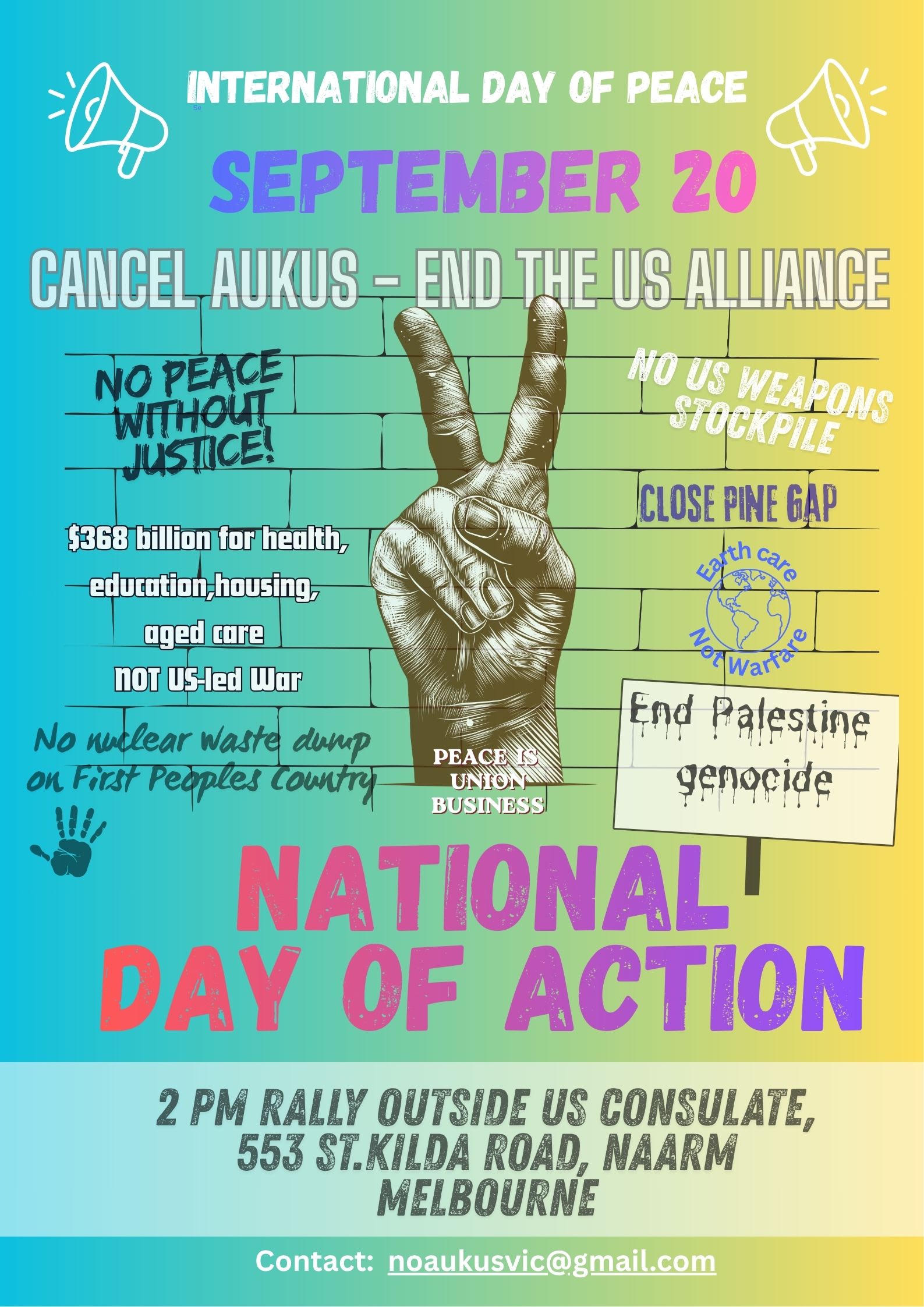
20 September –National Day of Action in Melbourne on the International Day of Peace

Help Aunty Sue Protect Her Land and Sacred Sites From Destructive Rocket Testing.
.

Australians deserve the truth
about
AUKUS – https://aukuspublicinquiry.com/
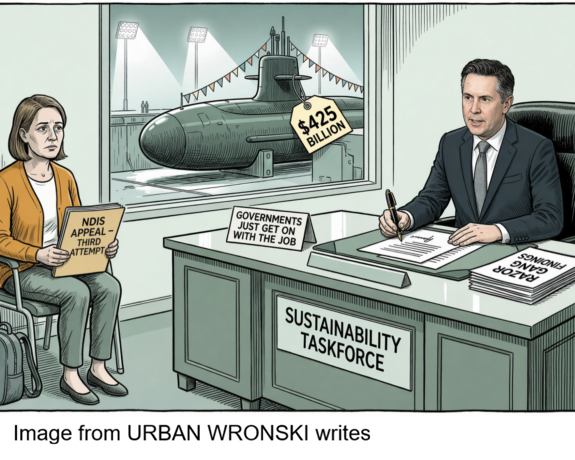

PETITION – To: Prime Minister Anthony Albanese and the Australian Labor Government

of the week – Australians for War Powers Reform (AWPR)
To see nuclear-related stories in greater depth and intensity
 Antinuclear