OLympic Dam uranium mine – NOT the great white hope for South Australia
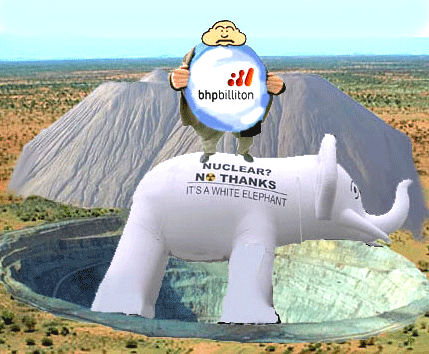 The Olympic Dam silver bullet is forever tarnished
“From the BHP side BFX is dead and buried… I suggest a new name: “OD-PERHAPS” for short.”
It’s time to stop looking to one mine in the state’s Far North for the answer to our economic problems
BHP, and our politicians, should be wary of rolling out the “expansion” tag to a state weary of spin around Olympic Dam, writes Business Editor Cameron England.
Cameron England, Business Editor, The Advertiser, October 20, 2020 ,
South Australians can take today’s announcement from BHP that its expansion plans have been shelved again as a signal that it’s time to step off the Olympic Dam silver bullet train once and for all…………
hanging our hopes on a big bang – or even a small bang – expansion of the project as a pivotal turning point for the state’s economy is a fool’s game.
The initial $30 billion open pit expansion – which was shelved in 2012 – would genuinely have been a game-changer for the state.
It included plans for an open pit bigger than the Adelaide CBD, new ports, and a surge in annual royalties for the State Government. But it was not to be.
The BFX expansion – which was shelved today – was a more modest $3.7 billion proposal, and while the spending would have been a boon to the state, it alone would have not moved the dial in a significant way for the state’s economy.
A broadbased approach, based around SA being a great place to do business – which the government is actually pursuing – stands a better chance of being the tide which lifts all boats.
Unfortunately the idea of an Olympic Dam expansion seems to be enough to make state ministers lose their equilibrium.
Back in 2011, former Infrastructure Minster Pat Conlon, with the caveat that it wasn’t his decision to make, declared the project a “goer” and said “I can tell you, having been regularly updated by my colleague Kevin Foley, Olympic Dam is a goer, it will get a sign-off.
“I’m very, very confident we’ll start up soon.’’
It didn’t of course.
And now current Mining Minister Dan van Holst Pellekaan says, similar to the results from Pantene, it won’t happen overnight, but it will happen…..
From the BHP side BFX is dead and buried, although they are committed to an incremental $500 million smelter maintenance plan and do want to gradually increase production.
But what most people would understand is an “expansion plan” is off the cards for now.
BHP needs to learn to manage expectations around this project, in a state which does have a tendency to hope for silver bullet solutions.
They’re between a rock and a hard place with their obligation to keep investors up to date, and not get people too excited with projects that invariably have billion dollar price tags attached.
I suggest a new name: the Olympic Dam Project Evaluation, Risk, Holistic Analysis and Potential Scheme – or “OD-PERHAPS” for short.
Kimba residents have been sold a lemon – dubious financial gain from nuclear waste dump
 Sandra Kanck Nuclear Fuel Cycle Watch Australia, 22 Oct 20,
How ANSTO’s Synroc nuclear waste solution turned out to be a dud

|
HOW SYNROC’S SCIENCE-PUSH FAILED AS THE PANACEA FOR NUCLEAR WASTE, https://www.aumanufacturing.com.au/how-synroc-s-science-push-failed-as-the-panacea-for-nuclear-waste by Peter Roberts, 21 Oct 20, CSIRO’s Synroc synthetic rock method for safely storing radioactive waste is making headlines again (more on that later), but as someone who has been around for a while it all just demonstrates yet again the topsy turvy way we see innovation in Australia. Synroc was unveiled in 1978 by a team led by Dr Ted Ringwood at the Australian National University, and further developed by CSIRO as the answer to nuclear waste. After a process of hot isostatic pressing, in which cannisters of waste are compressed at high temperature, Synroc ceramic was created and said to be a massive step forward from today’s techniques of storing high level waste in glass. But despite decades of trying to commercialise the technology both CSIRO and the Australian Nuclear Science and Technology Organisation have failed to get it adopted commercially – it is simply not seen by customers as that much better than what they were already doing. The process Synroc went through is typical of the science-push model of innovation in which researchers are seen as being the font of brilliant ideas that only need to be picked up by a grateful private sector. ANSTO’s Michael Deura said in a statement: “I am pretty excited to see the HIP system in action at ANSTO. This type of innovation will change the industry and how it operates in the longer term.” And Synroc technical director Gerry Triani said: “This HIP system is a global first for nuclear waste management.” Not a word in ANSTO’s media release about the three decades plus work and expenditure that has gone into Synroc, and not a word about the meagre uptake of the technology internationally. Really, you would hope we might learn the lessons of the past. |
|
|
Energy giant Engie supercharges green city development with support for EVs, hydrogen transport

Renew Economy 21st Oct 2020, French energy giant Engie backs Greater Springfield development, aiming to be ‘world’s greenest city’, with zero emissions transport plan. The post Energy giant Engie supercharges green city development with support for EVs, hydrogen transport appeared first on RenewEconomy.
A new city being developed in south-east Queensland aiming to become one of
the world’s greenest is set to get a boost, with a new roadmap launched with the backing of one of the world’s largest energy companies.Greater Springfield, which is located around 30km south-west of Brisbane and has
grown to a population of 45,000 has released a new master plan that will see electric vehicle charging infrastructure and a hydrogen fuelled bus network rolled out, in an effort to create the ‘world’s greenest city’ by 2038.The city is one of Australia’s largest privately funded city developments, including a mix of residential and business districts, and has attracted a campus of the University of Southern Queensland.
Energy giant Engie supercharges green city development with support for EVs, hydrogen transport — RenewEconomy
Kevin Rudd’s vision for a green recovery out of the pandemic
 New jobs, new industries, new wealth’: Kevin Rudd’s vision for a green recovery out of the pandemic
Former PM says Australia risks becoming ‘the complacent country’ and could suffer another recession if it remains tied to fossil fuels, Guardian, Adam Morton Environment editor @adamlmorton, Tue 20 Oct 2020 Kevin Rudd has called for solar panels to be made compulsory on all new buildings and increased incentives to be offered to households that do not yet have them as part of a “genuinely green recovery” from recession.
Speaking at an Australian National University event on Monday, the former prime minister repeated his 2007 declaration that climate change was the “great moral challenge of our time” and accused the Morrison government of putting jobs and long-term living standards at risk by failing to deal with the issue as promised under the Paris agreement.
Rudd said the government could have used the coronavirus pandemic as a spur to accelerate the shift to becoming a zero emissions economy, but had instead used it as an excuse to delay action further. It was evidence Australia had become “the complacent country” on the issue despite the experience of last summer’s catastrophic bushfires, he said.
“Besides the United States under [Donald] Trump and Brazil under [Jair] Bolsonaro, we in Australia are the only major economy that does not take the need for action on climate change seriously. Nor do we recognise the economic opportunities that will come with that action. I would argue this is bad company to keep,” Rudd said as part of his keynote address at the Wilson Dialogue.
“I fear that seeking to untangle our carbon-intensive economy much later than the rest of the world could in fact be what causes the next recession in Australia as the global economy increasingly walks away from fossil fuel dependency.”
Rudd said his vision for a green recovery from the pandemic included large-scale investment in renewable energy to position as a clean energy superpower, saying there was evidence it could create “new jobs, new industries, new wealth” while providing clean energy at home and creating clean energy technology that could be exported……….
In his speech, Rudd urged people to “launch, collectively, a national fusillade against the Murdoch media”, which he said had been the “echo-chamber of climate change denialism for the best part of a decade”. https://www.theguardian.com/australia-news/2020/oct/20/new-jobs-new-industries-new-wealth-kevin-rudds-vision-for-a-green-recovery-out-of-the-pandemic
Uranium: the mineral that never made sense now doesn’t even make dollars
 Uranium: the mineral that never made sense now doesn’t even make dollars, 20 Oct 20, News that BHP, the world’s biggest mining company, will not continue with the long planned multi-billion dollar expansion of its Olympic Dam uranium and copper project shows the clock is ticking on uranium, the Australian Conservation Foundation said today.
The planned expansion of the mine in northern South Australia enjoyed strong state and federal government support and was on Prime Minister Scott Morrison’s recent list of major projects to be fast-tracked.
“This move is further evidence of the deep market malaise surrounding uranium operations,” said Australian Conservation Foundation campaigner Dave Sweeney.
“Today’s announcement shows that political access, spin and favours cannot change the realities of an ore body or the global commodity market.
“BHP has made a basic, hard-headed business decision not to proceed with this project.
“The global uranium price has been hammered since the Fukushima nuclear disaster and it is unlikely to improve. The sector has scant social license and is increasingly embattled.
“Today’s decision by BHP, coupled with Rio Tinto’s exit from operations at the Ranger mine in Kakadu, shows the clock is ticking on uranium, the asbestos of the 21st Century.
“South Australia’s energy, employment and economic options should not be tied to a continued dependence on high impact, low certainty resource projects.
“South Australia is well placed to lead the nation in renewable energy tools, technology and thinking.
“This decision may be the pivot needed to shift to a secure, sustainable contemporary economy.”
For context or comment contact Dave Sweeney on 0408 317 812
BHP dumps its plan to expand Olympic Dam uranium mine
 BHP shelves $3.7bn expansion plan for Olympic Dam mine in SA for a second time
BHP has shelved a plan to spend $3.7 billion expanding the Olympic Dam copper and uranium mine – just months after the colossal project was put on a Federal Government fast-track. Cameron England, Business Editor, The Advertiser, 19 Oct 20,
BHP’s $3.7 billion expansion plans for the Olympic Dam mine have been abandoned.
The company had been looking at a Brownfields Expansion Project (BFX) which would have increased production from the current capacity of 200,000 tonnes of copper per year to as much as 300,000.
The project was one of a number of big ticket items earmarked for streamlined approval processes by the Federal Government in June in response to the COVID-19 pandemic and has major project status from the State Government……….
It is the second time BHP has scrapped plans for Olympic Dam. In August 2012, the company announced it had shelved its $30 billion expansion and would go back to the drawing board to find a cheaper alternative. Market conditions, subdued commodity prices and higher capital costs led to the decision eight years ago………
in its quarterly review released this morning, BHP said following more than 400km of underground drilling, which improved the knowledge of the ore body, it had decided to focus on incremental improvements, rather than a step change investment at the site.
“Following more than 400 km of underground drilling associated with the Brownfield Expansion (BFX) project studies, we have improved knowledge of the ore body’s variability,’’ the company said.
“This has provided challenges for the economics of the BFX project, and we have decided the optimal way forward for now is through targeted debottlenecking investments, plant upgrades and modernisation of our infrastructure.’………
BHP said Olympic Dam was performing well, and had posted its best quarterly performance in the past five years in the three months to the end of September.
“Over the next two years, our focus will remain on completing our asset integrity program to underpin more stable operations and copper production of more than 200 ktpa. We have a significant investment program in place to achieve that,’’ Mr Basto said.
“We will continue to study longer-term options for growth. Our enhanced understanding of the underground resources in the Southern Mine Area, promising results from Oak Dam and stronger foundations will help us unlock the full potential of Olympic Dam……..
In August, BHP announced Olympic Dam had made a full year loss before interest and tax of $US79 million, on revenues of $US1.463 billion. That was up from a loss the previous financial year of $US58 million on revenues of $1.351 billion.
New government Bill could target journalists, environmental and human rights groups
|
Tue 20 Oct 2020 Journalists and advocacy groups could face compulsory questioning by Asio as part of a proposed expansion of the spy agency’s powers, according to external legal advice prepared by leading barristers.With senior officials of Asio due to give evidence to Senate estimates hearings on Tuesday, the new advice seen by Guardian Australia argues a bill before parliament to extend the reach of questioning powers could have a “chilling effect” on the willingness of people to speak to journalists. It also argues some of the work of civil society organisations – especially those involved in environmental and human rights advocacy – may be caught by the broad definition of “acts of foreign interference” because it includes clandestine acts that “are otherwise detrimental to the interests of Australia”. Members of civil society groups could face potential questioning and the use of tracking devices, according to the advice commissioned by progressive group GetUp and prepared by Sydney-based barrister Dominic Villa SC – an expert in public and administrative law – and fellow barrister Diana Tang, both of New Chambers. The government’s bill – which is currently being scrutinised by parliament’s intelligence committee – would expand the range of matters that are subject to compulsory questioning powers beyond terrorism-related matters. The changes would allow the agency to question adults over espionage and foreign interference, amid warnings from Asio that there are now mores spies and proxies operating in Australia than at the height of the cold war……… “Despite well-recognised professional and ethical obligations of a journalist to maintain anonymity and confidentiality of a source, if so questioned under a warrant, a journalist would be required to disclose the identity of a confidential source.” The advice says there is no exception or exclusion provided for in the bill that would enable a journalist to refuse to answer a question on the basis it would reveal a confidential source. “There may therefore be a chilling effect on the willingness of people to speak to journalists about issues of political significance, including security matters and foreign relations.” Villa and Tang argue the proposed laws may also “undermine the important role played by civil society organisations in holding government to account”, partly because a “foreign power” is defined to include “a foreign political organisation”. The advice argues civil society organisations operating in Australia may “collaborate with or receive support from a foreign political organisation that shares a common interest or objective, in their advocacy campaigns”……… https://www.theguardian.com/media/2020/oct/20/chilling-attack-on-democracy-proposed-asio-powers-could-be-used-against-journalists |
|

Scientific women get together in plan for marine protected area for Antarctica Peninsula
|
All-female scientific coalition calls for marine protected area for Antarctica Peninsula Plus other ways to help penguins, whales, and seabirds, EurekAlert, UNIVERSITY OF SYDNEY, Research News 19 Oct 20, The Western Antarctic Peninsula is one of the fastest warming places on earth. It is also home to threatened humpback and minke whales, chinstrap, Adélie and gentoo penguin colonies, leopard seals, killer whales, seabirds like skuas and giant petrels, and krill – the bedrock of the Antarctic food chain.With sea ice covering ever-smaller areas and melting more rapidly due to climate change, many species’ habitats have decreased. The ecosystem’s delicate balance is consequently tilted, leaving species in danger of extinction.
Cumulative threats from a range of human activities including commercial fishing, research activities and tourism combined with climate change is exacerbating this imbalance, and a tipping point is fast approaching. Dr Carolyn Hogg, from the University of Sydney School of Life and Environmental Sciences, was part of the largest ever all-female expedition to the Antarctic Peninsula, with the women in STEMM initiative, Homeward Bound, in late 2019. There, she witnessed the beauty and fragility of the area, and the negative impacts of climate change and human activity on native species, first-hand. As part of the Homeward Bound program she learnt about the science, conservation and governance of Antarctica. In a new commentary piece published in Nature, Dr Hogg and her colleagues from the expedition outline these threats, and importantly, offer ways to counter them. More than 280 women in STEMM who have participated in the Homeward Bound initiative are co-signatories to the piece. A global initiative, Homeward Bound ‘aims to elevate the voices of women in science, technology, engineering mathematics and medicine in leading for positive outcomes for our planet’. Women are noticeably absent in Antarctica’s human history, which is steeped in tales of male heroism. Female scientists are still a minority in the region’s research stations. “Now, more than ever, a broad range of perspectives is essential in global decision-making, if we are to mitigate the many threats our planet faces,” said Dr Hogg. “Solutions include the ratification of a Marine Protected Area around the Peninsula, set to be discussed on 19 October, at a meeting of a group of governments that collectively manage the Southern Ocean’s resources,” said Dr Hogg. “The region is impacted by a number of threats, each potentially problematic in their own right, but cumulated together they will be catastrophic.” Decreasing krill affects whole ecosystem The Peninsula’s waters are home to 70 percent of Antarctic krill. In addition to climate change, these krill populations are threatened by commercial fishing. Last year marked the third largest krill catch on record. Nearly 400,000 tonnes of this animal were harvested, to be used for omega-3 dietary supplements and fishmeal. “Even relatively small krill catches can be harmful if they occur in a particular region, at a sensitive time for the species that live there,” said Dr Cassandra Brooks, a co-author on the comment from the University of Colorado, Boulder. “For example, fishing when penguins are breeding lowers their food intake, and affects their subsequent breeding success. A Marine Protected Area will conserve and protect this unique ecosystem and its wildlife, and we need to implement it now.” Climate change is fundamentally altering the Western Antarctic Peninsula:…… Three ways to protect the Peninsula 1. A Marine Protected Area (MPA) designation for the waters……… 2. Protect land areas ……… 3. Integrate conservation efforts……. ….https://www.eurekalert.org/pub_releases/2020-10/uos-asc101520.php |
|
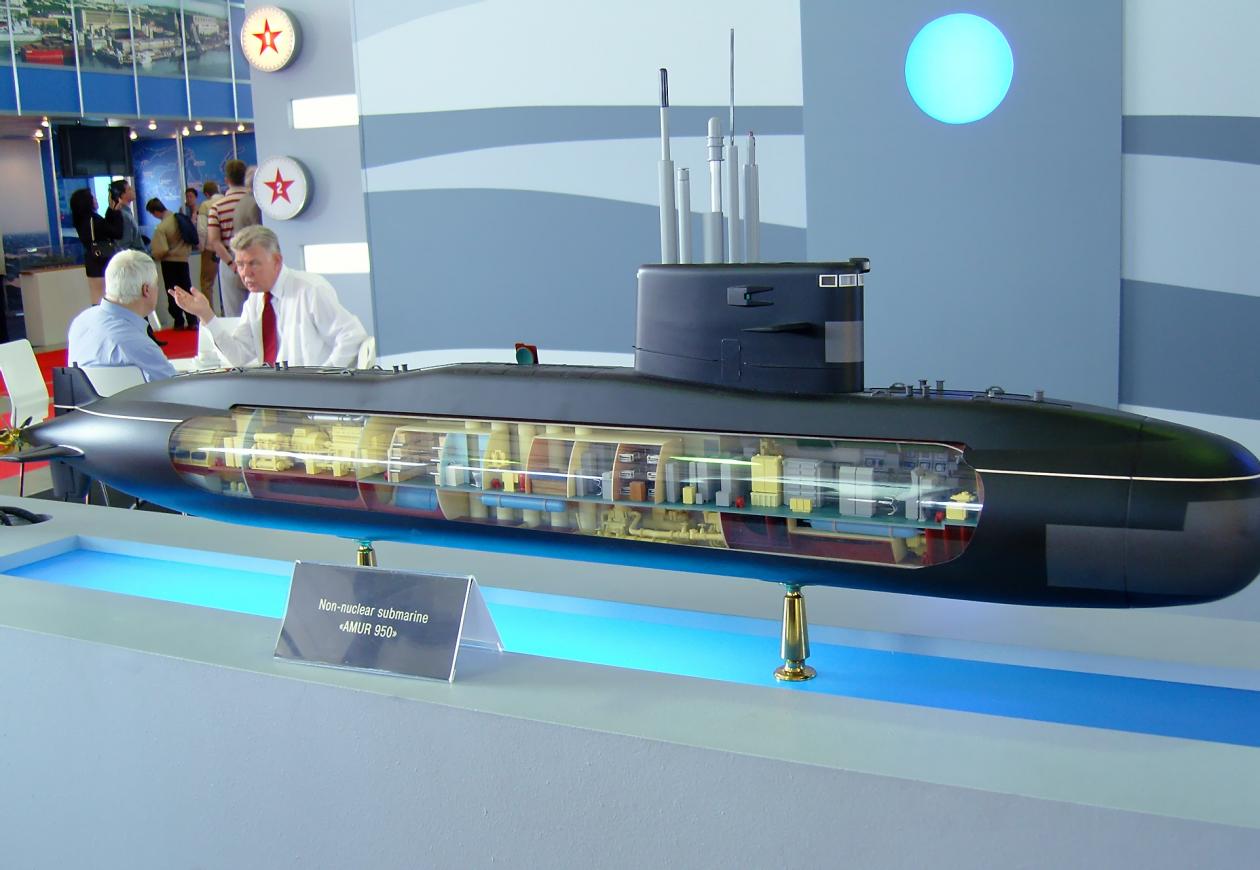
U.S. Deputy Sheriff Australia taken for a ride on an obsolete $90 billion submarine

|
In for a penny, in for a pound: $90 billion for an obsolete submarine fleet, Michael West Media, by Brian Toohey | Oct 18, 2020 So much for sovereignty. Australia is locked out of repairing key US components of our submarines’ computer systems, and the government has committed our fleet to the extraordinarily dangerous role of helping the US conduct surveillance in the South China Sea. Brian Toohey reports.
It is hard to believe that a government genuinely committed to defending the nation would sign a contract to buy 12 ludicrously expensive submarines that would not be operational for at least 20 years, with the final submarine not ready for nearly 40 years. The fleet will be obsolete before its delivered. But this is what the Turnbull government did when it announced in September 2016 that the majority French government-owned Naval Group would build 12 large submarines in Adelaide. The first sub is unlikely to be operational until the late 2030s and the last one until well after 2050. It is even harder to understand why the government endorsed the extraordinarily dangerous role for Australian submarines of helping the US conduct surveillance and possible combat operations within the increasingly crowded waters of the South China Sea. And while the Morrison government repeatedly claims that Australia’s defence force has a “sovereign” capability, in reality we are locked in “all the way” with the USA.
Ominously, an earlier Coalition government gave Lockheed Martin the contract to integrate these systems into the Attack subs. This is the same company that wasted billions on a dud computerised system for the US made F-35 fighter planes.. Called the Attack class, the conventionally powered submarines to be built in Adelaide by Naval will rely on an unfinished design based partly on France’s Barracuda nuclear submarines. Their official cost has already blown out from an initial $50 billion to $90 billion. It was revealed earlier this week that Defence officials knew in 2015 that the cost of the fleet had already blown out by $30 billion to $80 billion, yet continued to state publicly that the price tag was $50 billion. Life-cycle costs are expected to be around $300 billion…….. Under US commandAustralian subs in the South China Sea will be integrated into US forces and will be relying on them for operational and intelligence data. In an escalating clash, accidental or otherwise, they will be expected to follow orders from US commanders. Again, so much for Australia’s sovereignty. There is no compelling strategic reason why Australian submarines should travel that onerous distance to support the US in the South China Sea. ………… Perhaps the best argument, however, for not wasting $90 billion on the Attack class is that cheap underwater drones will soon have an important military role particularly suited to use from bases in northern Australia. https://www.michaelwest.com.au/in-for-a-penny-in-for-a-pound-90-billion-for-an-obsolete-submarine-fleet/ |
|
Nuclear waste dump: Will the Australian government compensate Kimba landowners for fall in their property values?

If the federal government’s proposed nuclear waste facility were built at the chosen site at Kimba and as a result property values in the region decreased as has been the case in other places around the world in not dissimilar circumstances what will the federal government do for the those who have suffered a diminution in their property values because of the facility
Based on past experience I suspect nothing
However if the government has promised huge economic benefits for the Kimba region – and it has certainly done so consistently for the past five years in order to win community support – and these promises proved to be incorrect then would the residents and even general community members who have suffered a loss have a right of action against the federal government for what is tantamount to misleading and deceptive conduct in the normal legal context
On the face of it they would but unfortunately the government as a Crown instrumentality is exempt from any legal responsibility and liability in that regard
However the District Council of Kimba has been fully complicit in misleading or misinforming the community and should be liable for any damages incurred as a result of the Council’s actions and conduct
Unlike the government the Council will not be treated as an instrumentality of the Crown and will therefore be fully liable with the liability extending personally to the individual councillors since there could be no limitation on their personal liability like in a normal corporate situation
What I would suggest – but please ensure that I am not mentioned and it is recognised that I am not offering any legal advice – is for several ratepayers to formally approach the mayor and councillors asking them to obtain a proper legal opinion for open publication for the Kimba community addressing these issues and the possible outcomes
Any resistance on the part of the councillors in acceding to this request will only worsen their situation as it could be argued very strongly that this is necessary in order to ensure the continued stability and solvency of the District Council and protect the financial position of the ratepayers
You may need the help of a lawyer but the District Council should pay all expenses in investigating what has been suggested and in obtaining any legal and if necessary financial advice so that the ratepayers and other community members can be protected
Best of luck!
USA election result, and Australia’s response- the world’s climate in the balance
This is a cautionary tale for Australia. In both the US and Australia, conservative politicians seem more eager to bail out dirty polluters than protect the public
For Australia’s sake, I hope Trump’s climate science denialism loses. https://www.theguardian.com/commentisfree/2020/oct/17/for-australias-sake-i-hope-trumps-climate-science-denialism-loses, Michael Mann US policy has emboldened Scott Morrison to be less ambitious on climate, just when so much is at stake.
|
Anyone in Australia who witnessed the Black Summer bushfires (as I did), and anyone in the US who experienced the thick smoke from our western wildfires (as I have), knows how much damage climate change is already doing. The stark reality is that worldwide efforts to avert ever-more catastrophic climate change impacts lie in the balance in the 2020 US election. Donald Trump will go down in history bearing substantial responsibility for the deaths of over 200,000 Americans due to his rejection of the advice of public health experts and his refusal to endorse policies such as social distancing and mask-wearing that could have saved many thousands of lives. But his rejection of the science of climate change sets the stage for a far greater toll. Far more human lives will be lost from the impacts of climate change if we fail to act. Whether or not Trump gets re-elected – and how other countries like Australia respond to the outcome of the US election – could determine the fate of our planet. Indeed, I’ve stated that a second Trump term might well be “game over for the climate” if it leads to the collapse of international efforts to act. The damage caused by Trump’s climate denial is painfully visible within the US as we endure climate change-fuelled extreme weather events, including unprecedented wildfires in the west and unprecedented hurricanes in the east. But the damage can be felt around the world. Trump has proudly, and shamelessly, trumpeted his climate denialism on the global stage, joining with petrostates such as Russia, Saudi Arabia and Brazil in opposing international climate efforts. Indeed, Trump’s actions have emboldened Australia to be less ambitious on climate too, prime minister Scott Morrison following Trump’s lead in promoting climate denial, coddling fossil fuel interests and blocking efforts to support a clean, renewable energy transition. By pulling the US out of the Paris agreement (one of the first and only campaign promises he kept) Trump ceded America’s leadership on the defining challenge of our time. Thus far, other countries have fortunately filled the leadership void, at least temporarily. The EU and China, with its new net-zero pledge, have stepped up to the plate, recognising that they will benefit from the opportunities of a clean energy economy and better protect their citizens from dangerous climate change impacts. But nobody stands to benefit more from climate action, or lose more if we fail to act, than Australia. Having spent a sabbatical leave down under earlier this year, aimed at collaborating with scientists in Australia to study the impact of climate change on extreme weather events, I instead witnessed those impacts first-hand. I saw the muted beauty of the Blue Mountains when shrouded in wildfire smoke. If Trump is re-elected, and we collectively continue down a path of insufficient climate action, it may not be long before those fires rage year-round, and the Blue Mountains are lost in a perpetual grey and dismal haze. It’s the same with the vibrant sea life of the Great Barrier Reef, which I was fortunate enough to witness with my family during my time in Australia. The delicate ecosystems of the GBR are already on the ropes, with fossil fuels pushing up temperatures in the ocean to the point where bleachings occur with such frequency and ferocity that corals simply cannot recover. Research released this week found that the reef has lost half its coral, largely due to warming oceans caused by climate change. Add the impact of ocean acidification from increasing carbon emissions, and we could sadly, within a decade or two, be reading the GBR’s obituary for real. It doesn’t have to be like that. For one thing, renewable energy costs are plummeting while the technology just keeps getting more efficient and better, so dirty energy no longer makes economic sense. For example, on one recent Sunday, all the electricity demand for the entire state of South Australia was met by solar power alone, and every state and territory in Australia has committed to go carbon neutral by 2050. Here in the US, we’ve seen a record number of cities and states stepping up on climate goals too, knowing clean energy is good for their communities’ health, resilience and prosperity. Policymakers must accelerate the shift to clean energy that is already under way. As we’ve learned in the Trump-era, some fossil fuels are too far gone for even the most determined polluter-in-chief to save. Though another term would give Trump time to defend his environmental rollbacks in court and solidify his dirty energy policies, he has already failed to save coal from market forces, and another four years isn’t going to reverse the long-term decline of the industry. This is a cautionary tale for Australia. In both the US and Australia, conservative politicians seem more eager to bail out dirty polluters than protect the public, denying politically inconvenient science in order to offer lavish payouts to help unprofitable fossil fuel companies. If we are to avert catastrophic warming, we must do just the opposite, providing financial incentives for renewables and disincentives for fossil fuels. That will level the playing field, and accelerate the clean energy transition. We must take the earliest exit possible off the fossil fuel highway. By trying to squeeze out the last drop of fossil fuel industry profits, the Morrison government could well be on its way to bleaching the life from Australia’s coral reefs and blighting the blue of its mountains. There is some good news, however. Regardless of whom Americans vote for – and for the sake of the planet, I hope it’s Joe Biden and the Democrats – Australians can still work together for structural change at home. You can’t solve it alone, but we also can’t solve it without you. Australia has seen that the sun can power an entire state’s electricity for a day. Now it’s time to make that happen every day. Australia must distance itself from the handful of bad petrostate actors who have sabotaged global climate action and rejoin the coalition of the willing, when it comes to the battle to save our planet. • Michael E. Mann is distinguished professor of atmospheric science at Pennsylvania State University. He is author of the upcoming book The New Climate War: The Fight to Take Back Our Planet, due out in January (Public Affairs Books) |
|
Persecuting Assange Is a Real Blow to Reporting and Human Rights Advocacy’
Persecuting Assange Is a Real Blow to Reporting and Human Rights Advocacy’
CounterSpin interview with Chip Gibbons on Assange extradition Fair, 15 Oct 20,
Assange’s case, the unprecedented use of the Espionage Act to go after a journalist, has dire implications for all reporters. But this country’s elite press corps have evidently decided they can simply whistle past it, perhaps hoping that if and when the state comes after them, they’ll make a more sympathetic victim.
Joining us now to discuss the case is Chip Gibbons. He’s policy director at Defending Rights & Dissent. He joins us now by phone from Washington, DC………..
CG: Sure. So the US has indicted Julian Assange with 17 counts under the Espionage Act, as well as a count under the Computer Fraud and Abuse Act.
Assange is not a US person; he’s an Australian national. He was inside the Ecuadorian embassy for a number of years, as Ecuador had granted him asylum, and the UK had refused to basically recognize that and let him leave the country, so he was de facto imprisoned inside the embassy. And after the indictment the US issued, the new government of Ecuador—which is much less sympathetic to Assange than the previous Correa government—let the US come in the embassy and seize him.
And the US is seeking Assange’s extradition to the US from the UK. I guess it’s, probably, technically a hearing, but Kevin’s point was that it’s more like what we would think of as a trial, in that there’s different witnesses, there’s expert testimony, there’s different legal arguments at stake.
The defense, the witness portion of it, has closed; it ended last week. And there’s going to be closing arguments submitted in writing, and then the judge will render a decision, and that decision will be appealable by either side. So regardless of the outcome, we can expect appeals. So it does very closely mirror what we would think of more like a trial than a hearing in the US court context.
It’s important to really understand what’s at stake with Assange’s extradition. He is the first person ever indicted by the US government under the Espionage Act for publishing truthful information.
The US government has considered indicting journalists before: They considered indicting Seymour Hersh, a very famous investigative reporter. They considered indicting James Bamford, because he had the audacity to try to write a book on the National Security Agency. But they’ve never done that.
And Obama’s administration looked at the idea of indicting Assange and said, “No, this would violate the First Amendment, and it would open the door to all kinds of other bad things.” But the Trump administration clearly doesn’t have those qualms……..
It is very interesting to see how this plays out in a US court in the current environment. If whoever—Trump or Biden, whoever is president, when this finally comes to the US—actually pursues this, and they actually are allowing the persecution of journalists, that’s going to be a really dark, dark assault on free expression rights.
And it’s worth remembering—and Julian Assange is clearly very reviled in the corporate media and the political establishment right now—but the information he leaked came from Chelsea Manning, it dealt with US war crimes; and he worked with the New York Times, the Guardian, Der Spiegel, Le Monde, Al Jazeera, to publish this information. So if he can go to jail for publishing this, why can’t the New York Times? And is that a door anyone wants to open? There is a big press freedom angle here.
I also want to talk about the facts, though: What did Julian Assange publish, and why did it matter? ………..
Julian Assange is accused of publishing information about war crimes, about human rights abuses and about abuses of power, that have been tremendously important, not just for the public’s right to know, but also have made a real difference in advocacy around those issues. People were able to go and get justice for victims of rendition, or able to go and get court rulings in other countries about US drone strikes, because of this information being in the public domain. So attacking Assange, persecuting Assange, disappearing him into a supermax prison, this is a real blow to reporting and human rights advocacy. ………
JJ: Right. And, finally, the journalists who are holding their nose right now on covering it aren’t offering to give back the awards that they won based on reporting relying on WikiLeaks revelations. And James Risen had an op-ed in the New York Times a while back, in which he was talking about Glenn Greenwald, but also about Julian Assange, and he said that he thought that governments—he was talking about Bolsonaro in Brazil, as well as Donald Trump—that they’re trying out these anti-press measures and, he said, they “seem to have decided to experiment with such draconian anti- press tactics by trying them out first on aggressive and disagreeable figures.”………. https://fair.org/home/persecuting-assange-is-a-real-blow-to-reporting-and-human-rights-advocacy/
Keep South Australia’s Nuclear Waste Storage Facility (Prohibition) Act 2000

Australian politics in the pandemic, climate, nuclear crises – theme for November 20
I’ve had to update this, in view of changed circustances:
- This site from now on will leave pandemic and climate coverage to others, as these issues are being covered so well by others,. Here we will focus on matters nuclear, which are being studiously ignored in Australia’s mainstream media.
- A dramatic win for fair process and against the nuclear lobby has just happened, as Labor and crossbench Senators rejected the government’s Bill to impose a nuclear waste dump on Kimba, South Australia. (But that battle will no doubt continue Minister Pitt, Trump-like, does not like losing)
******************************************************
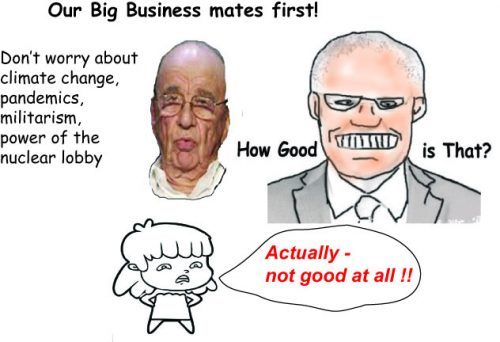
To be fair, Prime Minister Scott Morrison did a good job – taking the advice of medical science, and promptly dealing with the onset of the coronavirus pandemic.
But – looking at the longer term – well, this government just doesn’t look at it!
They thought that coronavirus would magically all be over within a few months. They have no plan for the , longer term health and economic recovery,
Australia is a leper in the world community, as it refuses to take action against climate change.
The Australian government, hand in glove with weapons-makers, has its politicians freely moving into weapons-making jobs, and vice versa, ignoring the huge conflicts of interest.
1 This month.
20 September –National Day of Action in Melbourne on the International Day of Peace


Help Aunty Sue Protect Her Land and Sacred Sites From Destructive Rocket Testing.
.

Australians deserve the truth
about
AUKUS – https://aukuspublicinquiry.com/

PETITION – To: Prime Minister Anthony Albanese and the Australian Labor Government

of the week – Australians for War Powers Reform (AWPR)
To see nuclear-related stories in greater depth and intensity
 Antinuclear