$6.6 trillion in annual GDP at risk as Asian climate warms – McKinsey Global Institute
 McKinsey sees $6.6 trillion in annual GDP at risk as Asian climate warms, https://www.smh.com.au/business/markets/mckinsey-sees-6-6-trillion-in-annual-gdp-at-risk-as-asian-climate-warms-20200813-p55ley.html By Bloomberg News, August 14, 2020 Lethal heatwaves, droughts, floods and typhoons will become more common in Asia-Pacific, which faces more severe potential impacts from climate change than many parts of the world, McKinsey & Co. researchers warn.Asia is particularly at risk because it has such a high number of poor people, who tend to rely more on outdoor work, living in areas most vulnerable to extreme increases in heat and humidity, McKinsey Global Institute said in a new report published on Thursday. By 2050, the loss of that labor could cost the region as much as $US4.7 trillion ($6.6 trillion) a year in GDP, about two-thirds of the global total at risk. McKinsey sees $6.6 trillion in annual GDP at risk as Asian climate warms, https://www.smh.com.au/business/markets/mckinsey-sees-6-6-trillion-in-annual-gdp-at-risk-as-asian-climate-warms-20200813-p55ley.html By Bloomberg News, August 14, 2020 Lethal heatwaves, droughts, floods and typhoons will become more common in Asia-Pacific, which faces more severe potential impacts from climate change than many parts of the world, McKinsey & Co. researchers warn.Asia is particularly at risk because it has such a high number of poor people, who tend to rely more on outdoor work, living in areas most vulnerable to extreme increases in heat and humidity, McKinsey Global Institute said in a new report published on Thursday. By 2050, the loss of that labor could cost the region as much as $US4.7 trillion ($6.6 trillion) a year in GDP, about two-thirds of the global total at risk.
The report underscores the economic risks of delaying investments that mitigate or adapt to climate change. The potential for widespread damage is similar to the region’s experience during the current pandemic, according to McKinsey. What we have seen is that countries, cities and people can take resolute actions and if we do take these actions and sustain them, we can cooperate globally and see positive outcomes,” said Oliver Tonby, McKinsey’s Asia chairman, who co-authored the report. The projections are based on a scenario in which the world fails to cut greenhouse gas emissions and Asia warms by 2 degrees Celsius. They show that by 2050, between 500 million and 700 million people living in places like India, Bangladesh and Pakistan could experience heatwaves that exceed the survivability threshold. The loss of outdoor labour during those times could shave off 7 per cent to 13 per cent off GDP in those three countries, resulting in losses of $US2.8 trillion to $US4.7 trillion across the whole of Asia on average per year, according to the report. Extreme precipitation events could rise three- or four-fold by 2050 in parts of Japan, China, South Korea and Indonesia, according to McKinsey. Increased riverine flooding could cause $US1.2 trillion in damage in Asia, about 75 per cent of the global impact. Conversely, as the earth warms, parts of southwestern Australia could spend more than 80 per cent of a decade in drought conditions by 2050 and regions of China could experience droughts 40 per cent to 60 per cent of the time. Climate change will also increase the likelihood of severe typhoon strikes from the Philippines and Vietnam to Northeast Asia. It will also create winners and losers, increasing surface water supply in parts of northern India and China while depleting reservoirs in Australia.
To face the business risks, Tonby said companies need to assess their exposure and take it into consideration when making plans. A significant opportunity lies in infrastructure development in Asia as the region is still rapidly urbanising. |
Australian government using COVID recovery strategy to bolster its mates in gas industry
There have been recent media reports that the commission advising the Morrison government on its COVID recovery strategy has recommended that taxpayers provide massive support to build gas and fuel infrastructure.
However, Australia is possibly suffering something of a “resource curse”, as capital markets increasingly won’t invest in – nor insure – new coal and gas projects.
With the world seeking to accelerate the transition to low-carbon economies and societies, this would see the Australian people being asked to invest in old-world industries and technologies, rather than new, emerging industries. Or in assisting some key industries that have been severely damaged by COVID-19 to reset.
It is not unfair to claim that Australia has never really had an effective industry policy.
Sure, we have often ridden on the backs of sheep and minerals booms, and enjoyed them while they lasted…….
The current special interest push for gas and fuel infrastructure defies common sense, is directly against our national interests.
It is to the detriment of other major export/employment sectors – such as education (especially universities) and international tourism – that have been severely impacted by the COVID-19 pandemic but are not being supported by government assistance.
Coal and gas are facing declining global demand; they are hardly “infant industries” the longer-term future of which could justify investment to assist them to grow up.
These projects just wouldn’t stack up as feasible, when full account is taken of their economic/commercial, social, and environmental costs and benefits.
Investors are also reassessing their climate risks and moving out of climate exposed investments, forcing many of the big oil, gas and coal companies to make significant write downs of the values of their assets.
By comparison, investments in renewable energy (including recognising its significant potential as an export, especially to Asia), as well as in the transition business opportunities as transport is decarbonised, in regenerative agriculture, and in a host of bioenergy/circular economy projects dealing with waste and fuel security will probably stack up on such a cost/benefit assessment…..
The tragedy is that the Morrison government gives priority to its mates. ….
Today, it’s more the mining industries and banks – and now the specific influence of some on the COVID Commission with gas and related interests.
It’s time for our government to think beyond the square, and in our national interest.
John Hewson is a professor at the Crawford School of Public Policy, ANU, and a former Liberal opposition leader. https://www.canberratimes.com.au/story/6877063/how-australia-is-suffering-a-resource-curse/?cs=14246
BHP shareholders demand immediate stop to mining that disturbs Aboriginal heritage
|
BHP shareholders demand immediate stop to mining that disturbs Aboriginal heritage
The move follows the blasting of Juukan Gorge by Rio Tinto and revelations BHP has approval to destroy at least 40 significant sites, Guardian, Lorena Allam and Calla Wahlquist, Thu 13 Aug 2020 BHP shareholders have demanded the company immediately put a stop to mining that could “disturb, destroy or desecrate” Aboriginal cultural heritage sites in Australia until laws are changed, in the wake of revelations that it, like Rio Tinto, had plans to destroy ancient sites in the Pilbara.The motion, made by the Australasian Centre for Corporate Responsibility (ACCR) and supported by 100 shareholders, follows revelations BHP has approval to destroy at least 40 – and possibly as many as 86 – significant Aboriginal sites in the central Pilbara to expand its A$4.5bn South Flank iron ore mining operation, even though its own reports show the traditional owners are opposed to the move. “Investors simply can’t stand by and allow another Juukan Gorge disaster to take place,” ACCR’s Brynn O’Brien said. “Investors should be concerned that BHP does not as a matter of process make public disclosures about cultural heritage sites it plans to disturb.” In June, Guardian Australia revealed that BHP was poised to destroy the sites, which its own surveys said included rock shelters that were occupied between 10,000 and 15,000 years ago. It said evidence in the broader area showed “occupation of the surrounding landscape has been ongoing for approximately 40,000 years”. ……https://www.theguardian.com/australia-news/2020/aug/13/bhp-shareholders-demand-immediate-stop-to-mining-that-disturbs-aboriginal-heritage |
|
Climate Change Is a Security Threat to the Asia-Pacific
|
Climate Change Is a Security Threat to the Asia-Pacific
Climate change is likely to alter the local physical and strategic environment profoundly, and potentially catastrophically. The Diplomat, By Shiloh Fetzek and Dennis McGinn, August 10, 2020 This week the ASEAN Joint Task Force on Humanitarian Assistance and Disaster Relief (HADR) will meet via video conference, with the COVID-19 pandemic escalating just as some countries in the disaster-prone Indo-Asia Pacific enter their cyclone, drought, heatwave, or monsoon seasons. The overlaying of the pandemic with existing complex challenges is a timely reminder that planning for HADR capacities – and regional security – needs to be attuned to the increasing likelihood of multiple, overlapping hazards and converging security risks, especially in a future where climate change alters the context in which other disasters and crises take place. Developing a clearer recognition of how climate change can reshape the strategic environment will be essential for preserving regional security, stability, and prosperity in the face of complicated and interlocking challenges, as we argue in a new report on the Indo-Asia Pacific published by the International Military Council on Climate and Security (IMCCS).
The Indo-Asia Pacific is highly exposed to climate change impacts. Climate change is likely to alter the local physical and strategic environment profoundly, and potentially catastrophically. More frequent or intense extreme weather, sea level rise, and ocean acidification (among other climate impacts) will create a range of threats to the well-being and security of countries in the region, many of which are already threatened by disaster vulnerability and increasingly complex security tensions.
As well as the immediate physical impacts, climate change will increase food and water insecurity, contribute to forced migration and displacement, and challenge disaster response and recovery capabilities …….. https://thediplomat.com/2020/08/climate-change-is-a-security-threat-to-the-asia-pacific/
|
|
Although Australians started a move to abolish nuclear weapons, The Australian government tried to sabotage the U.N. nuclear ban treaty
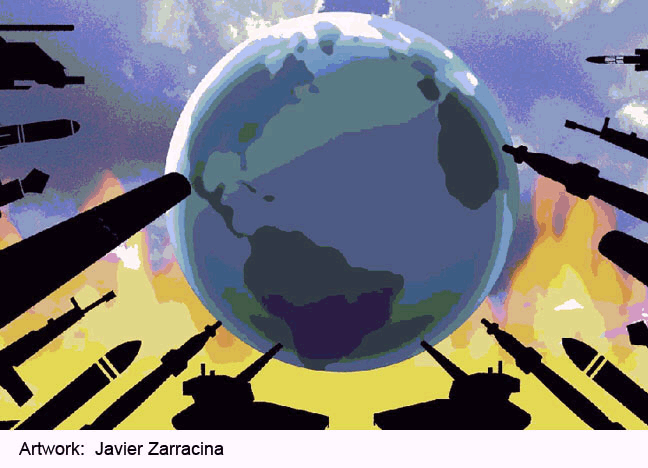 75 years after Hiroshima and Nagasaki, the arms race isn’t over, Independent Australia By Binoy Kampmark | 12 August 2020,“………………The 75th anniversary of the Hiroshima and Nagasaki bombings might have encouraged some reflection on current attitudes to the United Nations Treaty on the Prohibition of Nuclear Weapons. Passed on July 7, 2017, it has become a focal point for advocates of a nuclear weapons-free world and a source of irritation for nuclear weapons states.
Most perversely of all are those powers not in possession of nuclear weapons yet derive some form of security from states who have them, a strategic figment of the military imagination known as the ‘umbrella of extended nuclear deterrence“. For that reason Japan, despite being a global town crier for the banning of nuclear weapons, has refused to add its name to the nuclear weapons ban treaty.
Hiroshima Mayor Kazumi Matsui took the commemorative occasion to encourage the Japanese government to abandon that position:……
Australia, another U.S. annex in the Asia Pacific, similarly refuses to join the club of prohibitionists. When it participated in the UN working group on nuclear disarmament in 2016, Australian diplomats made it clear that they had no interest in seeing any document banning nuclear weapons emerge.
The disruptive involvement of Australian officials in the group was keenly exposed in documents obtained under Freedom of Information by the International Campaign to Abolish Nuclear Weapons (ICAN). ‘So long as the threat of nuclear attack and coercion exists,’ states one document from foreign ministry officials, ‘U.S. extended deterrence will serve Australia’s fundamental national security interests’.
Such a position would have to be renounced were Canberra to sign up to any treaty outlawing nuclear weapons. To avoid that outcome, they were to serve as spoilers, providing ‘a strong alternative viewpoint, notably against those states who wish to push a near-term ban treaty’.
During the course of negotiations, Australian officials also served as the ears and eyes of Washington, a role they have been accustomed to for decades. As the United States had boycotted the meetings, Canberra felt it necessary to remain in “close contact” with Washington ‘about our shared concerns’ on the working group’s disturbing move towards recommending ‘negotiations on a ‘ban treaty”’. Happily, Australia’s spoiling role merely served to strengthen the resolve of the other parties.
Canberra’s current position is that of a jaded cynic in realist’s clothes. The Department of Foreign Affairs and Trade states:
‘Australia does not support the “ban treaty” which we believe would not eliminate a single nuclear weapon.’
It scoffs at efforts that have ignored powers possessing nuclear weapons in negotiations, avoiding ‘the realities of the global security environment’. The document, furthermore, lacks the teeth of the NPT and ‘would be inconsistent with our U.S. alliance obligations’.
As long as the nuclear weapons option remains genuine, credible and desirable, there will always be a prospect for use. Once acquired, their abandonment has only ever proven exceptional (South Africa provides a unique case of this).
As things stand, a good number of countries could go nuclear overnight. It has taken much persuasion, and long discussion, to reassure South Korea and Japan not to do so before the nuclear ambitions of North Korea. The atom, in other words, still retains a deadly magic, tempting to upstarts, arrivistes and possessors. https://independentaustralia.net/article-display/75-years-after-hiroshima-and-nagasaki-the-arms-race-isnt-over,14192
Radio 3CR interviews Dave Sweeney, on matters nuclear
 City Limits Interview with Dave Sweeney, Radio 3CR 12 Aug 20 (incomplete notes from this interview.)
There are 15000 nuclear weapons globally – most of them under the control of authoritarians – Putin and Trump The sabre-rattling as the USA election approaches is deeply concerning.
Australia must place climate action at centre of coronavirus recovery, chief UN economist says
|
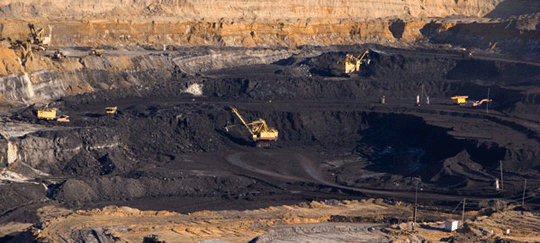
Australia must place climate action at centre of coronavirus recovery, chief UN economist says, SBS, BY TOM STAYNER 12 Aug 20, A chief economist for the United Nations has urged Australia to prioritise climate action above pouring money into fossil fuels in its coronavirus recovery.
A United Nations chief economist has urged Australia and other countries across the world to place more ambitious climate action and investment in clean energy at the centre of their COVID-19 recovery plans. Elliott Harris is helping lead the UN’s development of policy advice for nations grappling with the pandemic. Mr Harris appeared on a webinar with progressive think tank the Australia Institute on Wednesday, where he was questioned about how the Australian government should shape its recovery from the pandemic. He said developed nations such as Australia must be willing to make difficult decisions and prioritise a “green recovery”.
“What we’ve seen in this COVID crisis is that governments are indeed capable of really ambitious, rather unorthodox, extremely important and even massive interventions,” he told the webinar. “I can think of no stakes that are higher than the climate crisis that we are living in right now.” UN Secretary General Antonio Guterres has stressed coal should play no part in any country’s post-coronavirus stimulus plan, while business leaders in Australia have also been putting pressure on the federal government to prioritise renewable energy projects. The head of the federal government’s COVID advisory committee Nev Power told a Senate committee on Tuesday he has been approached about locking in a low emission future……… Mr Harris said Australia should focus on making long-term “sustainable” investments, rather than subsidising further fossil fuel projects. “This is a critical choice that all countries have to make and all investors have to make,” he said. “There is a very difficult trade-off, there is no doubt about it.” “[But] we really need to think about how we shift the flow of investment towards sustainability. “The fact of it is that, unfortunately, the world does not have the luxury of allowing itself of continuing down the path of fossil fuels.” Australia’s commitment to the Paris Agreement requires emissions reduction of at least 26 per cent by 2030, based on 2005 levels. But the government has come under scrutiny for not having a 2050 target, with the Business Council of Australia, Australian Industry Group and big miners Rio Tinto and BHP all backing a net zero-emissions goal by then. Australia is considered one of the world’s largest exporter of fossil fuels through coal and liquified natural gas projects, but also a leading investor in renewable energy. The UN has predicted the world economy will shrink by 3.2 per cent in 2020 because of the economic downturn forced by the pandemic. https://www.sbs.com.au/news/australia-must-place-climate-action-at-centre-of-coronavirus-recovery-chief-un-economist-says |
|
|
Kimba area locals point out the unsolved problems of nuclear waste transport to Napandee
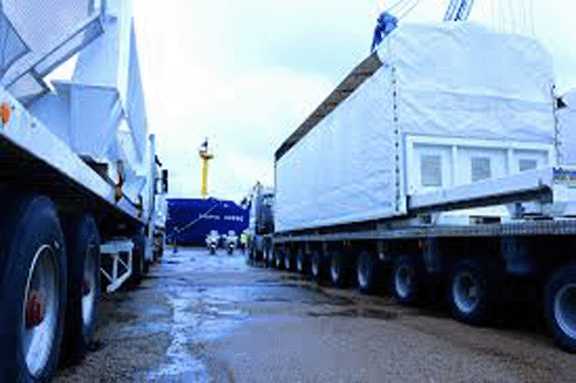
Kazzi Jai Fight To Stop A Nuclear Waste Dump In South Australia, 11 Aug 20
Noted disadvantages are that waste might pass close to Kimba … (after actually coming through a number of other locations)
-
Annette Ellen Skipworth Thats a lot of road to upgrade to take the weight of the canisters ..
Loads of Murray water..
Who is paying to upgrade the roads..
Government or local council and the maintenance of said roads.. 100 years i believe to dump will operate..Roni Skipworth Criterion 2 what hogwash to rail the Waste from Port Lincoln. Still has to go to Kimba Silos as we don’t have a RAILWAY SYSTEM ANYMORE being closed down by Viterra last year n all grain movement is trucked along our 3 local highways on dirt roads all over EP.
Looks like no one has worked out the transport side of things yet and why should we the locals who like using these dirt roads to get from A to B put up with these Trucks fucking them up so we can’t use or then not allowed cos of the Dump

Australia’s doctors call for a climate-focused COVID-19 recovery plan
|
Medical groups call for a climate-focused COVID-19 recovery plan, https://thenewdaily.com.au/news/2020/08/11/medical-groups-climate-focused-covid-19-recovery/ Dominica Sanda Many of the medical professionals on the frontline of the COVID-19 pandemic are urging the Australian government to also act on another health crisis – climate change.Australia’s peak medical groups representing GPs, emergency doctors, obstetricians and psychiatrists have written to Prime Minister Scott Morrison urging him to make climate change action a part of the COVID-19 economic response.
The letter, co-ordinated by the Doctors for the Environment Australia, notes the COVID-19 pandemic and climate change are two global health emergencies the nation must respond to. make climate change action a part of the COVID-19 economic response. The letter, co-ordinated by the Doctors for the Environment Australia, notes the COVID-19 pandemic and climate change are two global health emergencies the nation must respond to. make climate change action a part of the COVID-19 economic response. The letter, co-ordinated by the Doctors for the Environment Australia, notes the COVID-19 pandemic and climate change are two global health emergencies the nation must respond to. The mental health impacts are likely to linger for decades, the medical groups say. The doctors argue fossil-fuel combustion is a major contributor to air pollution, while water supplies and food-growing capacity are also threatened by climate change. They’ve urged the federal government to take a health-centred approach in its COVID-19 recovery by transitioning away from fossil fuels, coal, and gas and instead turn to renewables, electric vehicles, and public transport powered by electricity. “Redirecting funds from fossil fuel subsidies towards the production of renewable energy would produce cleaner air, significantly reduce emissions and power an economic recovery,” the letter said. “Climate change is a public health emergency. Failing to mitigate and prepare for climate change risks potentially catastrophic health and economic impacts.” The Royal Australasian College of Physicians said it was vital climate change and its impacts on health are central to the COVID-19 recovery plan. “While COVID-19 poses the most immediate threat to our health, the serious and long-term health impacts of climate change still remain,” spokeswoman Associate Professor Linda Selvey said in a statement. The Australasian College for Emergency Medicine noted the lockdowns imposed on communities during the pandemic reduced CO2 emissions significantly. “The net result was remarkable, and it shows that where there is political will, it is possible to reduce emissions,” ACEM Public Health and Disaster Committee chair Dr Lai Heng Foong said. “We need collective action, including government response to reduce our CO2 emissions, transition to renewable energy sources and build community resilience. Our future is at stake, and we need action now.” |
|
|
Four more states ratify Treaty on the Prohibition of Nuclear Weapons, and Australians commemorate anniversary of atomic bombing
The Irish Foreign Minister, Simon Coveney, said: “I am proud that Ireland today ratifies the Treaty on the Prohibition of Nuclear Weapons … It honours the memory of the victims of nuclear weapons and the key role played by survivors in providing living testimony and calling on us as successor generations to eliminate nuclear weapons.”
The Minister of Foreign Affairs of Saint Kitts and Nevis, Mark Brantley, said on Sunday “The bombing of Nagasaki was the apogee of human cruelty and inhumanity. As a small nation committed to global peace, Saint Kitts and Nevis can see no useful purpose for nuclear armaments in today’s world. May all nations work towards peace and mutual respect for all mankind.”
In Australia, the Hiroshima and Nagasaki anniversaries were honoured by activities and events on and off line, with the demand for Australia to join the nuclear weapon ban treaty loud, clear and persistent.
The Irish Foreign Minister, Simon Coveney, said: “I am proud that Ireland today ratifies the Treaty on the Prohibition of Nuclear Weapons … It honours the memory of the victims of nuclear weapons and the key role played by survivors in providing living testimony and calling on us as successor generations to eliminate nuclear weapons.”
The Minister of Foreign Affairs of Saint Kitts and Nevis, Mark Brantley, said on Sunday “The bombing of Nagasaki was the apogee of human cruelty and inhumanity. As a small nation committed to global peace, Saint Kitts and Nevis can see no useful purpose for nuclear armaments in today’s world. May all nations work towards peace and mutual respect for all mankind.”
In Australia, the Hiroshima and Nagasaki anniversaries were honoured by activities and events on and off line, with the demand for Australia to join the nuclear weapon ban treaty loud, clear and persistent.
special webinar on Tuesday night titled “Remembering the Atomic Bombs: History, Memory and Politics in Australia, Japan and the Pacific” featuring one of our wonderful board members Dimity Hawkins. Click here for info and registration.
Problematic selection of “community” in decision to site nuclear waste dump at Kimba. South Australia
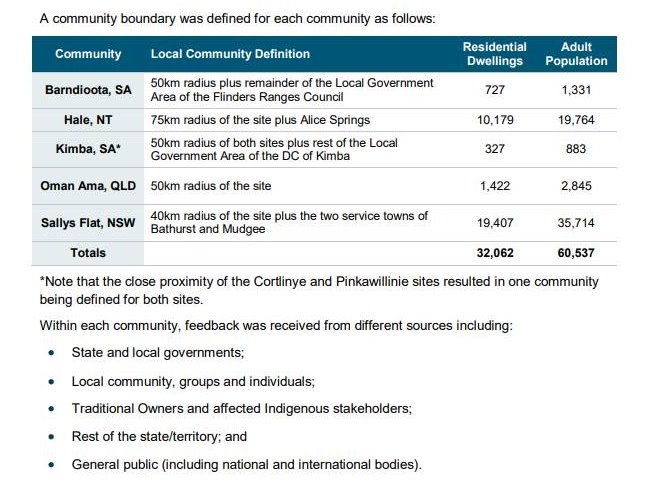
Kazzi Jai Fight To Stop A Nuclear Waste Dump In South Australia 9 Aug 20
There’s something that has been bothering me for some time…..This is a copy of a table from page 9 of the Phase 1 Document released in April 2016 by the Minister at that time Josh Frydenberg. Even with the “service towns” included for some of them – and of those, some of them DEFINITELY OUTSIDE the so called 50 km radius of the sites….doesn’t it seem interesting that the LEAST POPULATED SITES remained those IN SOUTH AUSTRALIA!
It was ULTIMATELY decided by Matt Canavan, as Minister, that Kimba would only have its Council boundary as the community ballot area, and not have the 50km radius involved at all!
And remember during all of this that the South Australian Royal Commission into the Nuclear Fuel Cycle was running AT THE SAME TIME – March 2015 to May 2016!
No wonder people thought that the nuclear dumps were one in the same! And they had thought it had ALL been dealt with when the Citizen’s Jury came back with an over two-thirds majority (70%) saying NO MEANS NO!https://www.facebook.com/groups/941313402573199/
Why Kalgoorlie-Boulder wants a Malaysian rare earths plant and its radioactive waste
|
Why Kalgoorlie-Boulder wants a Malaysian rare earths plant and its radioactive waste https://www.abc.net.au/news/2020-08-10/lynas-building-rare-earth-processing-plant-kalgoorlie/12354150?fbclid=IwAR1P8stcOV05Un8BjuU2zv2fp1W1u3qnVaIvgwZSxJY3MkiIKg2eEfa_0G8
As the saying goes, “One man’s trash is another man’s treasure” — so why is a city in outback Western Australia embracing plans for a multi-million-dollar processing plant that Malaysia wants banned? Key points:
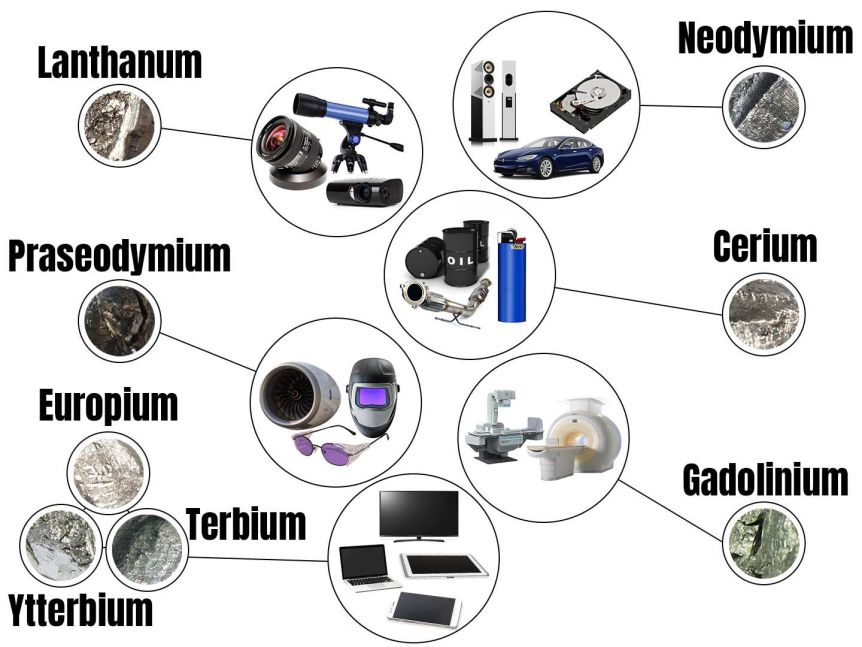
Lynas Corporation produces rare earth minerals, which are essential for technological devices such as smartphones, wind turbines and defence weapons systems. The company mines rare earths at Mount Weld in WA’s northern Goldfields and ships them to Malaysia for processing. The cracking and leaching part of the process creates low-level radioactive waste, a subject of controversy and protests in the Asian nation. In February, the Malaysian Government renewed Lynas’s operating licence with some key conditions, including that it must build a cracking and leaching plant elsewhere by mid-2023. Lynas would then be banned from importing materials containing naturally occurring radioactive material; the company still plans to use Malaysia for later stages of its processing. Race is on to build Kalgoorlie plantWhen the City of Kalgoorlie-Boulder heard Lynas was looking for a new site, it pursued the company and convinced it to move to the region. City chief executive John Walker said the plant would be a “game changer” for Kalgoorlie and help diversify the local economy, which was reliant on gold mining. Lynas has committed to using a residential workforce instead of fly-in fly-out workers, creating about 500 jobs in the construction phase and about 100 permanent roles.
|
David Noonan: a new Submission to Senate Environment Inquiry – on BHP Olympic Dam
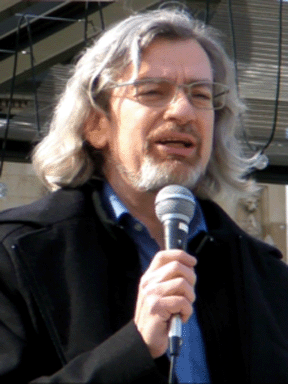 David Noonan, Independent Environment Campaigner and Consultant, has provided a “BHP Olympic Dam
  Case Study” submission to a federal parliament JSCNA Inquiry, which has now made public by the Committee: “A case study on BHP Olympic Dam mine in SA under the Prime Minister’s ‘fast track’ EPBC Act mine expansion Assessment and Approvals“.
FYI – This submission includes a Joint ENGO Briefing Paper “BHP LEGAL PRIVILEGES IN THE OLYMPIC DAM INDENTURE ACT 1982 OVERRIDE SA LAWS” (June 2019) and refers to the Joint ENO Recommendations & Submission to federal government on Olympic Dam mine in Dec 2019.
David Noonan will be variously distributing this submission over the weekend – welcome to discuss any related matter if and as may suit & as raised in the sub.
In addition to the 1982 Indenture over riding Aboriginal Heritage and the PM’s ‘fast track’ assessment & approvals to BHP, my submission raises required protection of GAB Springs and associated cultural heritage from BHP water mining and proposed doubling of GAB water extraction for Olympic Dam mine expansion to 50 million litres a day (annual average) for a 25 year period.
See the JSCNA Inquiry Home Page:
https://www.aph.gov.au/Parliamentary_Business/Committees/Joint/Northern_Australia/CavesatJuukanGorge
Submissions:
Submission No.73 Mr David Noonan B.Sc., M.Env.St. (PDF 330 KB)
https://www.aph.gov.au/DocumentStore.ashx?id=f6b111ae-8125-4cb0-8edb-6f64dbd613c2&subId=690802
Australia’s nuclear lobby targets young people, using Facebook and Instagram

Mining lobby pushes young people to embrace nuclear power , Financial Review, Aaron Patrick, 7 Aug 20,The mining industry has been wrestling for years with how to change one of the most entrenched rules in energy policy: a moratorium on nuclear power.Now, based on insights from a market researcher known for its political insights, the Minerals Council of Australia has begun a campaign to win over a group that could lead Australia to a nuclear industry: young people.
On Sunday, a week ago, 17 different ads started appearing on Facebook and Instagram promoting nuclear as safe, reliable and good for the environment.
Produced by the Mineral Council’s own staff, the ads are based on polling by JWS Research, which estimates support for nuclear power is 40 per cent, some 29 per cent of people are neutral or unsure, and women and people aged 18 to 34 are the least informed about nuclear power. Some aren’t even sure there is a connection between nuclear power and uranium, of which Australia is one of the world’s bigger producers.
After conducting focus groups and an online survey last year, JWS Research told the Minerals Council that support could rise to 55 per cent, or even higher, by providing more information to cou nter the reputational damage of the Three Mile Island, Chernobyl and Fukushima accidents.
“There is an obvious opportunity to educate Australians about nuclear power’s credentials,” JWS said in a report for the lobby group. “Low-level concerns about the cost of nuclear could be countered and its reliability and zero-emissions credentials should be promoted.”
The ad campaign isn’t a slick, big-budget production. Six ads, each about 1½ minutes long, contain statistics and information in graphical form set to music. “What are we afraid of,” says nuclear energy is the safest source of baseload electricity based on output, and no one died of radiation poisoning in the Fukushima meltdown in Japan in 2011.
Eleven other ads feature interviews about one minute long with experts and advocates discussing nuclear waste, medicine and reactor design at a nuclear conference in Sydney…….
In December, a parliamentary committee urged the government to legalise modern nuclear reactors, and in May Energy Minister Angus Taylor included nuclear among energy sources the government will study for investment. https://www.afr.com/companies/energy/mining-lobby-pushes-young-people-to-embrace-nuclear-power-20200729-p55gp
Australia’s ICAN and Conservation Council of Western Australia commemorate Hiroshima Day


On August 5th, people from across Australia gathered, via Zoom, to commemorate the nuclear bombing of Hiroshima, and to hear speakers from ICAN Autralia (International Campaign to Abolish Nucleat Weapons).
Medlissa Clarke spoke of the human effects of this catastrophe, and of the efforts over time, towards disarmament. The biggest leap forward in this has been, in 2017, the U.N. Treaty on the Prohibition of Nuclear Weapons. The Treaty now has over 200 nations signed up, with 40 ratifications – not far from the 50 required to make it international law.
Most Australians want a nuclear weapons free world.But Australia’s policy does endorse nuclear weapons. A future Labor government might change that.
Dimity Hawkins described the misery experienced by the Japanese, the agonising stories of the survivors. Since Hiroshima, the nuclear bombs developed are greatly stronger, and have been tested over many years, on the Marshall Islands, on Maralinga, South Australia, and on other Pacific Islands, in nuclear colonialism that has never properly been cleaned up. Australia is part of that nuclear chain. But now,the survivors are speaking out. Red Cross and Red Crescent, the world’s greatest non government emergency service is strongly behind the Treaty movement, and the indigenous people, particularly Australia’s Aboriginals .
Former Senator Scott Ludlam commemorated the Hibakusha, and the impact of the nuclear weapons industry on indigenous people world-wide. He drew attention to the ?proud statement of U.S. Strategic Command – that their nuclear weapons are to be used in a “safe, secure and lethal way”.
The Treaty was an Australian initiative, brought about by the work of, at first, a few, who by-passed official systems, and went out getting signatures, setting up ICAN, which became an international movement.-, – showing that people can do this, have an effect and an influence. As cities will be the places to bear the catastrophe of nuclear annihilation, many Mayors of many have City Councils have signed up to the Treaty. The Treaty shows that no-one can now claim that nuclear weapons are acceptable, in the same way as biological and chemical warfare are unacceptable.
For information on the continuing CCWA webinar series go to http://www.ccwa.org.au/yellowcake_country_webinar_series
1 This month.
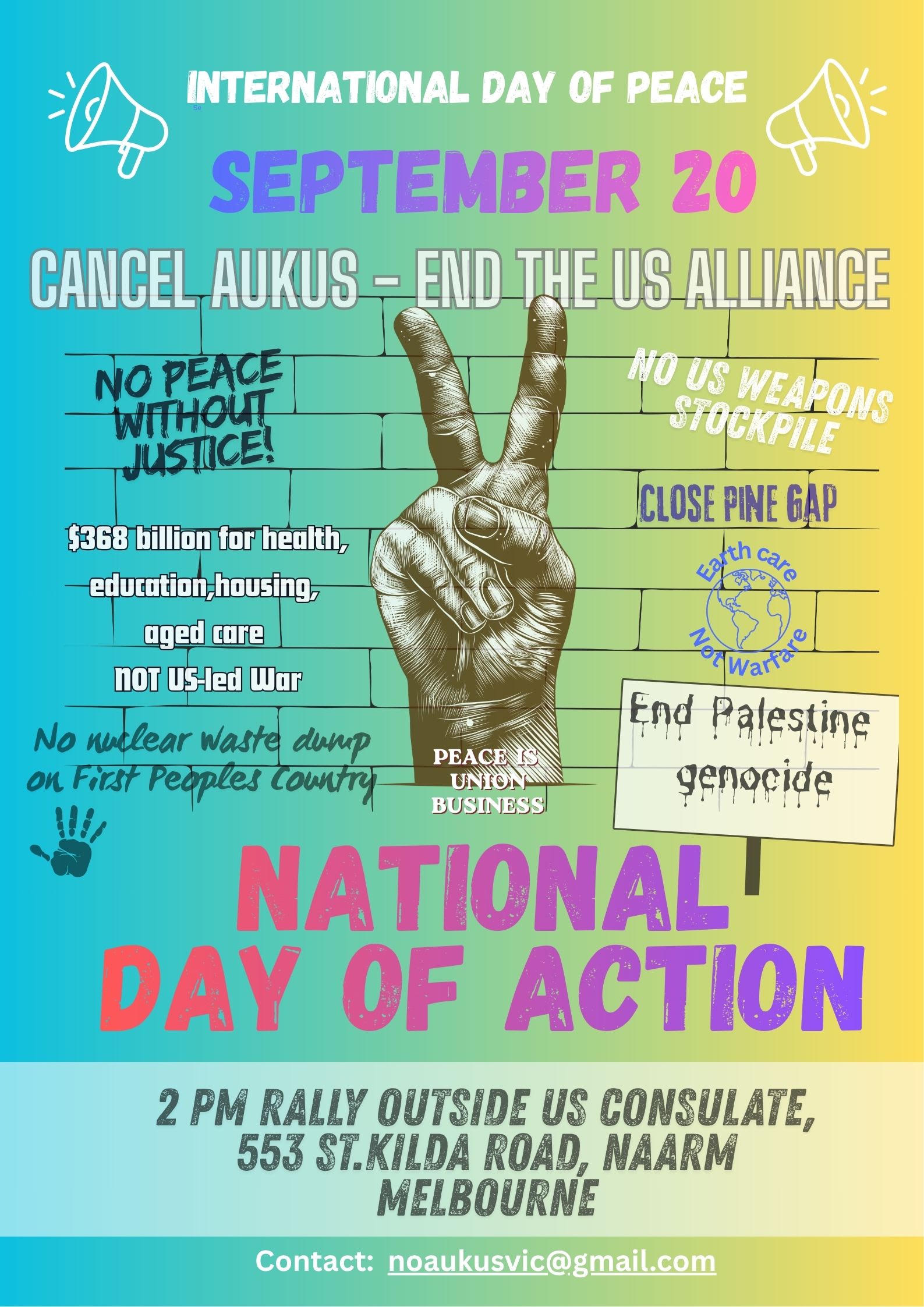
20 September –National Day of Action in Melbourne on the International Day of Peace

Help Aunty Sue Protect Her Land and Sacred Sites From Destructive Rocket Testing.
.

Australians deserve the truth
about
AUKUS – https://aukuspublicinquiry.com/


PETITION – To: Prime Minister Anthony Albanese and the Australian Labor Government

of the week – Australians for War Powers Reform (AWPR)
To see nuclear-related stories in greater depth and intensity
 Antinuclear