Another Hiroshima is Coming…Unless We Stop It Now
Today, an unprecedented campaign of propaganda is shooing us all off like rabbits. We are not meant to question the daily torrent of anti-Chinese rhetoric, which is rapidly overtaking the torrent of anti-Russia rhetoric. Anything Chinese is bad, anathema, a threat: Wuhan …. Huawei. How confusing it is when “our” most reviled leader says so.
The target is China. Today, more than 400 American military bases almost encircle China with missiles, bombers, warships and nuclear weapons. From Australia north through the Pacific to South-East Asia, Japan and Korea and across Eurasia to Afghanistan and India, the bases form, as one US strategist told me, “the perfect noose”.
In the Sydney Morning Herald, tireless China-basher Peter Hartcher described those who spread Chinese influence in Australia as “rats, flies, mosquitoes and sparrows”. Hartcher, who favourably quotes the American demagogue Steve Bannon, likes to interpret the “dreams” of the current Chinese elite, to which he is apparently privy. These are inspired by yearnings for the “Mandate of Heaven” of 2,000 years ago. Ad nausea.
To combat this “mandate”, the Australian government of Scott Morrison has committed one of the most secure countries on earth, whose major trading partner is China, to hundreds of billions of dollars’ worth of American missiles that can be fired at China.
At a quarter past eight on the morning of August 6, 1945, she and her silhouette were burned into the granite.
I stared at the shadow for an hour or more, then I walked down to the river where the survivors still lived in shanties.
I met a man called Yukio, whose chest was etched with the pattern of the shirt he was wearing when the atomic bomb was dropped.
He described a huge flash over the city, “a bluish light, something like an electrical short”, after which wind blew like a tornado and black rain fell. “I was thrown on the ground and noticed only the stalks of my flowers were left. Everything was still and quiet, and when I got up, there were people naked, not saying anything. Some of them had no skin or hair. I was certain I was dead.”
Nine years later, I returned to look for him and he was dead from leukaemia.
“No radioactivity in Hiroshima ruin” said The New York Times front page on 13 September, 1945, a classic of planted disinformation. “General Farrell,” reported William H. Lawrence, “denied categorically that [the atomic bomb] produced a dangerous, lingering radioactivity.”
Only one reporter, Wilfred Burchett, an Australian, had braved the perilous journey to Hiroshima in the immediate aftermath of the atomic bombing, in defiance of the Allied occupation authorities, which controlled the “press pack”.
“I write this as a warning to the world,” reported Burchett in the London Daily Express of September 5,1945. Sitting in the rubble with his Baby Hermes typewriter, he described hospital wards filled with people with no visible injuries who were dying from what he called “an atomic plague”.
For this, his press accreditation was withdrawn, he was pilloried and smeared. His witness to the truth was never forgiven.
The atomic bombing of Hiroshima and Nagasaki was an act of premeditated mass murder that unleashed a weapon of intrinsic criminality. It was justified by lies that form the bedrock of America’s war propaganda in the 21st century, casting a new enemy, and target – China.
During the 75 years since Hiroshima, the most enduring lie is that the atomic bomb was dropped to end the war in the Pacific and to save lives.
“Even without the atomic bombing attacks,” concluded the United States Strategic Bombing Survey of 1946, “air supremacy over Japan could have exerted sufficient pressure to bring about unconditional surrender and obviate the need for invasion. “Based on a detailed investigation of all the facts, and supported by the testimony of the surviving Japanese leaders involved, it is the Survey’s opinion that … Japan would have surrendered even if the atomic bombs had not been dropped, even if Russia had not entered the war [against Japan] and even if no invasion had been planned or contemplated.”
The National Archives in Washington contains documented Japanese peace overtures as early as 1943. None was pursued. A cable sent on May 5, 1945 by the German ambassador in Tokyo and intercepted by the US made clear the Japanese were desperate to sue for peace, including “capitulation even if the terms were hard”. Nothing was done.
The US Secretary of War, Henry Stimson, told President Truman he was “fearful” that the US Air Force would have Japan so “bombed out” that the new weapon would not be able “to show its strength”. Stimson later admitted that “no effort was made, and none was seriously considered, to achieve surrender merely in order not to have to use the [atomic] bomb”.
Stimson’s foreign policy colleagues — looking ahead to the post-war era they were then shaping “in our image”, as Cold War planner George Kennan famously put it — made clear they were eager “to browbeat the Russians with the [atomic] bomb held rather ostentatiously on our hip”. General Leslie Groves, director of the Manhattan Project that made the atomic bomb, testified: “There was never any illusion on my part that Russia was our enemy, and that the project was conducted on that basis.”
The day after Hiroshima was obliterated, President Harry Truman voiced his satisfaction with the “overwhelming success” of “the experiment”.
The “experiment” continued long after the war was over. Between 1946 and 1958, the United States exploded 67 nuclear bombs in the Marshall Islands in the Pacific: the equivalent of more than one Hiroshima every day for 12 years. Continue reading
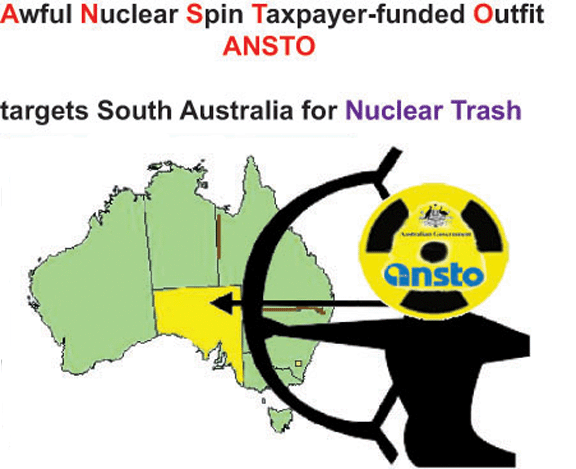
Call for public release of ANSTO Nuclear Waste Reports and ARPANSA’s Response
To: The Secretary, Senate Standing Economics Legislation Committee of Inquiry National Radioactive Waste Management Amendment Bill 2020 economics.sen@aph.gov.au
RE: David Noonan Supplementary Public Submission No.6.1
Call for public release of ANSTO Nuclear Waste Reports & ARPANSA’s Response; the Department fails test of transparency; and Concern over EPBC Act amendments to affect NRWMF assessment
Dear Secretary
Please consider matters raised in this Supplementary Submission, following my Public Submission No.6. in February 2020.
- Important ANSTO ILW nuclear waste reports due to ARPANSA by 30 June must be made public ASAP – along with the ARPANSA response, to provide for proper public scrutiny in this Inquiry.
- The Department has failed the test of transparency in its treatment of public submissions.
Note: Attachment of the Department’s redacted copy of my submission, to show the extent of redactions made, in blacking out over 50 public source quotations, without a proper basis to do so.
- Concern over proposed rushed changes to the EPBC Act to affect assessment & approvals of the NRWMF.
First: There are public interest concerns the scope of EPBC Act “whole of environment” nuclear action assessments will be replaced by new National Standards based on ARPANSA Codes, with limited “graded” assessments and use of pro-nuclear industry standards of IAEA origin.
Second: It should be no surprise that a Bill to amend the EPBC Act transfers EPBC Act assessment and approval of the NRWMF over to ARPANS Act Licensing.
Recommendation of this Supplementary Submission on assessment and approval of the NRWMF:
This Inquiry should investigate and report on the potential impact of pending changes to the EPBC Act on assessment & approval of the NRWMF, as flagged for introduction in a Bill in late August.
The Committee should call for EPBC Act “whole of environment” assessment of the NRWMF to be retained. The Committee should oppose potential transfer of EPBC Act environmental assessment of the NRWMF over to ARAPNS Act Licensing, Codes and Guides and limited “graded” assessment.
In Conclusion: The Committee must at a minimum reject the Bill’s proposal to legislate for specified siting of the NRWMF, and therefore of unnecessary less safe and more insecure imposition of above ground indefinite storage of ILW, at Napandee near Kimba on Eyre Peninsula in South Australia.
Rights to Judicial Review and Procedural Fairness must be retained for public interest reasons.
Please feel free to contact regarding any aspect of this public submission, by Mobile, Text or E-Mail.
Yours sincerely
Mr David J Noonan B.Sc., M.Env.St.
Independent Environment Campaigner and Consultant (ABN Sole Trader)
Napandee nuclear waste dump – potential impact on the neighbouring Pinkawillinie Conservation Park and Gawler Ranges National Park
Kazzi Jai No Nuclear Waste Dump Anywhere in South Australia 5 Aug 20 Not sure if this is relevant or not…but someone (not me, but wish I did) actually accessed FOI regarding the IMPACT or POSSIBLE IMPACT on the neighbouring Pinkawillinie Conservation Park and Gawler Ranges National Park with respect to the proposed Napandee site….and here is the DIIS reply…
Remember that these two parks, although neighbouring in the absolute sense of the definition, were not allowed to put in submissions against the nuclear dump being situated as a neighbour as they are State Owned, and it was decided by DIIS that they could not make a submission.
https://www.environment.sa.gov.au/…/200220-disclosure…
Actually…thinking along those lines…as they are State Owned…shouldn’t the PEOPLE OF SOUTH AUSTRALIA then have a justified say in this dump as VALID DIRECT NEIGHBOURS using the DIIS paradigm? Because these Conservation and National Parks BELONG to the PEOPLE of South Australia!
Oh…that’s right….”Ever Shifting Goalposts”!
https://www.environment.sa.gov.au/…/200220-disclosure… more https://www.facebook.com/groups/1314655315214929/
Labor’s carbon price proves effective climate policy is possible, Julia Gillard says
 Labor’s carbon price proves effective climate policy is possible, Julia Gillard says, https://www.sbs.com.au/news/labor-s-carbon-price-proves-effective-climate-policy-is-possible-julia-gillard-says The former prime minister says Australia would be in a different place on climate if the carbon tax had continued.
Former prime minister Julia Gillard doesn’t want climate policy put in the too-hard basket, saying Australia can have a scheme that reduces emissions.
It has been almost 10 years since Ms Gillard’s federal election win, with her minority Labor government introducing a short-lived carbon price scheme that saw emissions drop.
Emissions rose again after the Abbott government repealed the policy.
Ms Gillard says Australia would be in a different place on climate if the scheme had continued.
“One of the frustrations of sliding door moments is, other than in the famous movie, you don’t actually get to go back in time and run the parallel universe,” she told a webinar hosted by the Australia Institute think-tank on Wednesday.
Australia is one of the last developed countries actively considering new coal-fired power stations
“What I hope is remembered from that period and taken forward into the future … is that it’s possible to put in place a scheme in Australia that does reduce our carbon emissions.
“The perceived history is ‘oh we’ve been fighting forever, nothing gets done, it’s all too hard’. I would like us to unpack to the next level: it can get done, it was done.
“We can be informed by past experience and we can get on with the job. So I do want to push back against that sort of received helplessness that it’s all too hard.”
To coincide with the online discussion the Australia Institute released a report mapping where the nation’s emissions would be if the carbon price had remained. “What I hope is remembered from that period and taken forward into the future … is that it’s possible to put in place a scheme in Australia that does reduce our carbon emissions. The think-tank says given the policy reduced emissions by two per cent, levels would be 25 million tonnes lower this year than they are.
Vital questions for Senate Nuclear Waste Committee – on NOMINATIONS, EXPERT EVIDENCE, RADIONUCLIDES, RESET INITIATIVE

The following are some brief extracts from Peter Remta’s Additional submission
HOW DID THE NOMINATIONS COME ABOUT ?……..the government has persistently refused to provide true copies of the nominations claiming personal confidentiality.
This is a puerile excuse as the prescribed nomination form (being attachment B to the government’s own nomination guidelines issued in November 2016) specifically provides that a nominating landowner by its nomination confirms consent to the public disclosure of the nomination
For this reason your committee should request the Department to produce to it for public examination the nominations for Napandee and Lyndhurst and this should quickly establish the veracity of the claims as to the nomination and selection of those sites…..
WHY IS THE SENATE COMMITTEE NOT HEARING EXPERT EXTERNAL EVIDENCE? As it appears that your committee is drawing to the conclusion of its enquiry
I still ask why it has not availed itself of hearing from internationally renowned experts on the management of nuclear waste as I previously suggested………
WHY IS THE COMMITTEE ACCEPTING “EVIDENCE” FROM UNQUALIFIED PERSONS WITHOUT INFORMATION CONFIRMING IT? I am staggered by what was accepted as undisputed evidence by not necessarily qualified persons and without any attempt to gain further information or confirmation.
About agriculture The first of these is how the establishment of the facility at Napandee will give rise to agricultural and scientific research locally without any information to support that claim.
This becomes even more nonsensical when viewed in the light of the most recent protests by agricultural communities in European countries as to the presence of nuclear waste production and disposal……
About jobs. The other is the number of jobs arising through the establishment of the facility and now the new agency based in Adelaide as the numbers suggested are completely outside of the realm of reality.,,,,
WHY NO AUTHORITATIVE AGENCY LIKE AMERICA’s RESET INITIATIVE? While there are several examples that your committee should have studied perhaps the most apt at present is the United States of America initiative and experience known as the Reset of America’s Nuclear Waste Management – Strategies and Policies but for brevity is referred to as the Reset Initiative…… Reset is an effort to untangle the technical, administrative and public concerns in such a way that important issues can be identified,understood and addressed”………….
none of this has occurred with the selection of Napandee……
WHY THE SILENCE ON RADIONUCLIDES? Through a safety case, an implementer reveals its understanding of the management and repository site and how it expects the radionuclides to behave in the repository over long periods of time…………. One important aspect of the risk and safety of storage and disposal of nuclear waste included in the Reset relates to the radionuclides activity of the waste.
Again and despite my raising it previously there has been pointed silence in both the submissions and the personal evidence to your committee of the radionuclides inventories in the intermediate level waste which rather strangely is not known to ARPANSA.
Th Reset Initiative explains that most of the radionuclides in nuclear waste will decay away during the first 1,000 years of management but some will persist for tens of thousands to over one million years…….
It is therefore very difficult to understand how the government has chosen Napandee for its facility before and without any study of the site with regard to the radionuclides and the type of waste as this is the most preliminary and important factor in seeking a suitable location.
The results of the study should also determine the style and nature of the storage and disposal of the nuclear waste.
NEED FOR AN INTERNATIONALLY ACCEPTED PLAN FIRST – NOT “SUBSEQUENT PLANNING” This is something that cannot be cured by so-called subsequent planning and engineering and according to the expert advice should be a determining factor in rejecting the ultimate licence applications for Napandee………
In conclusion the importance and relevance of the Reset Initiative are best gauged by the suggestions that the Reset will be adopted with appropriate variations by IAEA as a principal part of its standards and codes relating to nuclear waste management which by treaty obligations would then become Australia’s prescribed standards.
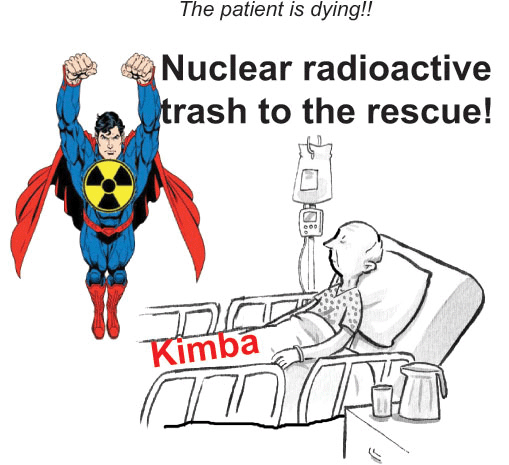
Senate committee to report by August 31 re Kimba Nuclear Waste Dump plan
[Ed. According to some reports – “Woomera has nothing to worry about, Defence say no, so they are safe.”]
Nuclear waste push for Woomera over Kimba ‘fails pub test’, local mayor says , Michelle Etheridge, Regional Reporter, The Advertiser
A push to swap Kimba for Woomera as the site of a new radioactive waste storage site is disrespectful and “fails the pub test” following years of consultation, the local mayor says.
Kimba Mayor Dean Johnson on Monday told a Senate committee that after much debate, the district was “the best informed community in Australia when it comes to radioactive waste and how it’s handled”.
His comments follow Senator Patrick’s suggestion that the contentious storage facility, planned for farming property Napandee, near Kimba, be built at Woomera instead.
“Our community has engaged and invested in the process for a really long time and to throw it in another location now, like Woomera, is just disrespectful on so many levels,” Mr Johnson said.
“It’s a bad idea that fails the pub test and the common sense test.”
Senator Patrick has said Federal Parliament should be given a choice to build the dump in the remote and highly-secure Woomera Protection area, where low and intermediate level waste has been stored for decades. However, Defence has argued building the facility at Woomera would “not align with Australia’s strategic interests”.
Kimba stands to receive a $31 million funding package under the plans.
Mr Johnson said the facility would deliver a new industry for the Eyre Peninsula town, and help the area “not just survive, but thrive”.
The Barngarla Determination Aboriginal Corporation have opposed the legislation on the basis that it removes the organisation’s right to seek a judicial review of the Government’s decision to go ahead with the site.
Its chairman Jason Bilney asked the committee to consider the impacts of a decision to go ahead as planned, despite traditional landowners objecting.
“What does that say to indigenous people – we’ve won our country but we still don’t have a right to say what we need to about our country? It’s very disrespectful to the community and our elders,” he said.
Kimba Council last year ran a poll on whether locals supported the waste plan, but traditional landowners not living in the area were excluded.
Meantime, No Radioactive Waste on Agricultural Land in Kimba or SA president Peter Woolford said the waste site should be built somewhere it posed no risk to agriculture. “The sad thing that’s been forgotten here is the impact on people – people are thinking about whether they’re going to move out because of their mental health,” he said.
“We’re (also) trying to stand up for people outside of Kimba that have been denied a say.”
The Senate committee will report back by August 31.
Links between Trump administration, Falun Gong, and Australia’s government
 Propaganda Wars: US state department funds anti-China news outlet in Australia https://www.michaelwest.com.au/propaganda-wars-us-state-department-funds-anti-china-news-outlet-in-australia/
by Marcus Reubenstein | Aug 4, 2020 Office bearers of US-backed Chinese language news service Decode China are linked with Falun Gong, the spiritual group that has spent millions backing Donald Trump through fake social media accounts. The same people are on the board of the National Foundation for Australia China Relations, raising scepticism about its ability to repair fractured relationships. Marcus Reubenstein investigates US state funding of anti-China media in Australia and links to global arms dealers via ASPI.
The US State Department is quietly funding a Chinese-language news service in Australia, a move more typically associated with China’s state media propagandists.
And two of the three office bearers of the news service, Decode China, are members of a taxpayer-funded independent board advising the Australian government on engagement with China.
Corporate records show Dr Wai Ling Yeung and Maree Ma became secretary and director, respectively, of Decode China Pty Ltd just eight weeks before Foreign Minister Marise Payne appointed them to the board of the National Foundation for Australia China Relations. The NFACR replaced the Australia China Council (ACC), which was set up by the Fraser government in 1978 and later chaired by former prime minister Gough Whitlam.
The retired Curtin University academic Dr Yeung is a vocal critic of the Chinese government, while Ma is the general manager of the Falun Gong-aligned, largely anti-Chinese government Vision Times newspaper. According to journalist and former Australian Falun Gong practitioner Ben Hurley, Vision Times is part of the apparatus of Falun Gong media in Australia, led by The Epoch Times and New Tang Dynasty Television.
The spiritual group Falun Gong is banned in China and there is substantial evidence that its mainland Chinese followers are harshly persecuted by the Chinese government.
However, former practitioners say it’s a dangerous cult, whose leaders claim to have the power of levitation and tell followers that aliens from other planets are responsible for interracial marriage and mixed-race children.
Falun Gong-aligned media affiliates in the US have been accused of pouring millions of dollars into fake social media accounts and Facebook advertising, since banned, supporting Donald Trump. A recent investigation by the ABC’s Foreign Correspondent and Background Briefing programs revealed Falun Gong-affiliated media in the US have spent more than US$11.5 million in social media advertising to promote Trump.
ASPI lurking in the background Continue reading
Brief note on today’s Senate Committee hearing about the Nuclear Waste Bill, including a damaging admission
The hearing ended early
Doubts that a Kimba nuclear dump will really bring jobs to the area
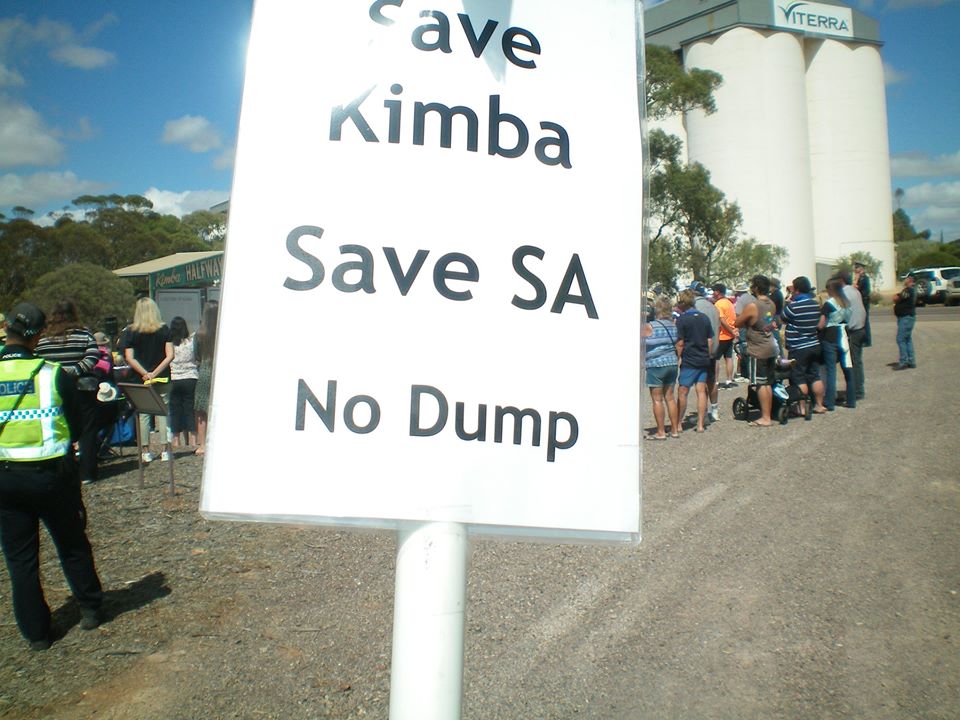 Kimba jobs a hot topic, Whyalla News, Louis Mayfield, 29 July 20,
Debate has ensured over the federal government’s promise of bringing 45 jobs to Kimba with the establishment of a nuclear dump at Napandee, after the latest Senate inquiry revealed there is no legislative requirement to continuously staff a low-level radioactive waste facility.
The Senate Inquiry into the federal government’s Nuclear Radioactive Waste Management Facility (NRWMF) met on Tuesday, with Centre Alliance Senator Rex Patrick reading the following statement from ARPANSA:
“There is no explicit requirement in the ARPANSA or ANSTO legislation or guidance that prescribes that a low-level radioactive waste disposal facility requires continuous presence of staff for either security or safety purposes.”
Senator Patrick was questioning the agency over whether the NRWMF at Kimba could be run remotely.
The federal government has long promised that the facility will create 45 jobs, and while Senator Patrick does not dispute the idea that the jobs will be available, he doubts they will last.
“The CEO of the site may end up being repatriated back to the Australian Radioactive Waste Agency in Adelaide, and I think some of the other roles may be pulled back and the site will turned into a remote facility two or three years down the track,” Senator Patrick said.
“Kimba locals should look at how the government is willing to shift 700 submarine jobs from Adelaide to Perth on a political whim.
“Having seen federal and state government services evaporate from country towns time after time, we know governments can’t be trusted to keep their promises.
“The writing is on the wall, and the wall hasn’t even been built yet.”
Senator Patrick believes this will be a likely course of action for the government because it’s a way to trim costs and achieve savings.
“They will look at those ARPANSA rules and say ‘this is not a bad option,'” he said……. https://www.whyallanewsonline.com.au/story/6855823/kimba-jobs-a-hot-topic/Debate/?fbclid=IwAR0KJkx1ynVTY_3MxehtRridHdfIu0G5eJYhurXHE6eunG7AdtHgbst2IOs
ABC Radio interview focusd on Kimba nuclear waste dump plan
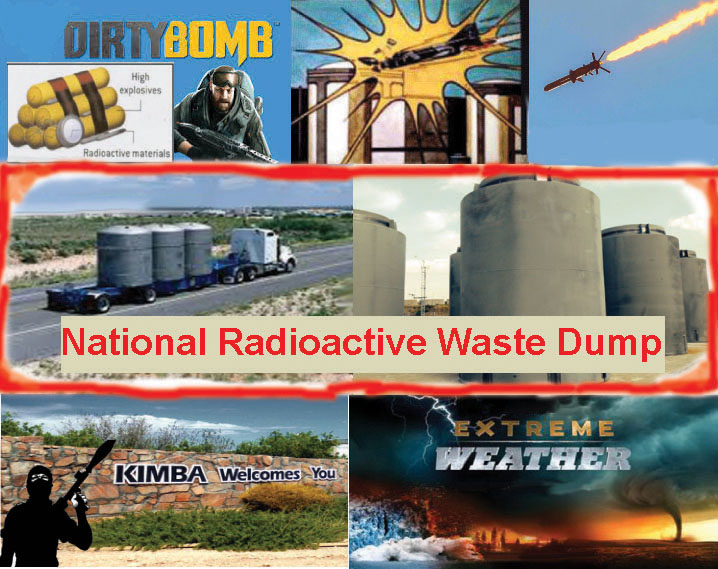 Evenings With Peter Goers ABC radio pm ABC Radio South Australia 30 July
Peter Goer first interviewed Keith Pitt, Minister for Resources. Pitt was confident about the Kimba nuclear waste dump plan. He stressed that it is essential for Australia’s medical care. He claimed strong community support for the plan, and said that it “meets all the technical requirements”. ” My advice is that the temporary waste can’t stay at Lucas Heights.” “The Kimba facility is a critical national infrastructure” “Necessary for people who receive cancer care”.
Peter Goer : “Strange that you have approved this new Adelaide agency whiled the matter still being discussed in the Senate.
Keith Pitt: “It will take time to put together the necessary team. It will take overseas and domestic research”.
Goer: “Have you read all the submissions to the Senate Inquiry?
Pitt avoided the question, and returned to the medical theme – “2 out of 3 of every Australian will utilise that type of technology, will need the Lucas Heights reactor”
Goer: It’s the temporary storage of ILW [Intermediate Level Waste] that worries people.
Pitt: ” Very small amounts. If we accept that we want to use nuclear medicine, then we must manage the by-product”
Peter Goer then interviewed Eddie Hughes, Labor federal member from South Australia
Hughes. We’ve had 3 separate Ministers. Sites that were nominated were all in the seat of Grey. First Rowan Ramsey offered his land – conflict of interest? Then another Liberal politician offered his land, did not consult local community, nor Aboriginal groups.
Aboriginal community- Barngarla not eligible to vote.They conducted their own vote, unanimoously against.
Not essential for a nuclear waste facility to be at this location. Medical waste doesn’t need to be transported to a national facility.
Goers. ILW [Intermediate Level Wastes) we are leaving that problem to our grandchildren.
Hughes. The ILW. This process should have been discussed broadly, including Aboriginal community.
Senate Inquiry going on,, but govt is pushing ahead with this plan, Kimba is not necessarily the solution
Calls. Bob from mid-north said that the vast majority of medical waste is very short-lived. There are also nuclear materials used in industry, universities. At Woomera there are 44 gallon drums rotting, materials transported from Fishermens Bends. Legacy waste from the cold war. Ws don’t know what is in it.
Goers – concern that this might led to importing nuclear waste.
Hughes – I don’t imagine this. Facility at Kimba is above ground, not suitable for deep geological disposal.
Jay Weatherill’s government gave space for Aboriginal people, gave power of veto. In the present case Barngarla people have been treated with contempt.
Goers. Kimba known as a nice little town. Will become known as the “dump town’
Hughes. I understand that people see the business activity. But I don’t think that 45 jobs will eventuate. Some overseas dumps have much smaller number of workers.
Goer. Rural communities are shrinking. Has Kimba been bribed?
Hughes. A lot of money has been put on the table for facilities – a big effort to get people onside. Sad that the only way a town can get the needed services is to offer itself for a nuclear dump. Federal govt hasn’t addressed the far more important issue of shortage of doctors across regional South Australia. Medical treatment will continue whether or not the dump goes ahead
Goers. Rowan Ramsey has the view that the local people are the best educated about this. Keith Pitt has a similar view. Seems to be a distrust of anyone who’s not local to Kimba.
Hughes. This is a South Australian issue. Very arrogant to say that only local people can have an opinion. Liberal govt ruled it out, and that legislation still stands. We need to go back and look at this whole process. Both those in favour or against this plan agreed that we need to deal with radioactive wastes in a responsible way.
Many texts received. – Reconciliation with Aboriginals – only lip service. Medicalisotopes can be made with cyclotrons – nuclear reactor not necessary. ANSTO could have promoted synchrotons producing isotopes for Australian use.- instead opted for building an export business from Lucas Hreights nuclear reactor.
The Australian government continues its war on the national broadcaster, the ABC
OFFICIAL AUSTRALIAN state policy since 2014 on its public broadcaster, the ABC, has been to throttle it through withdrawing its budget by stages while abusing it with propaganda through Liberal-linked commercial media — News Corp newspapers, 2GB radio network and Sky News pay television. There is also a subplot that involves, while the ABC survives, pressing it to deliver positive messaging for the government of the day.
It is a changed scene since broadcasting regulations providing oversight or program guidelines were dropped from the 1980s, the same as with the former Federal Communications Commission standards in America. The present-day barrage of extravagant opinion-making on commercial media is one result — different to the ABC, which being publicly-owned has to retain standards of accountability and fairness.
ABC broadcasters know they have formidable public support. Audience research over the decades shows that high proportions of the population from all walks of life use the service, depend on it, like it and respect it. It is sometimes conditional support; they do not like everything, but it gives the ABC, despite the six years of official abuse, breathing space to fall back on prepared positions as it has done through crises past.
………. the continuing pattern of the ABC. It provides service on many fronts, often service the commercials will never give, provided by broadcasters consulting their professional values, like the journalists guided by received news values — new and interesting, important and informative with no snide agendas.
Hatred?
So why this hatred of it? The answer is that a political and financial ideology which preoccupies certain people is obstructing the rest of us just getting a good range of services from the ABC — value for money, Australian culture first.
On one hand, the government of the day believes in privatising economic life to the direct benefit of wealthier constituents so it foregoes revenue – as with the scheme to cut company taxes – and will sell off public assets where it can. Some might watch and listen to the ABC, but that clearly gets outweighed by loyalty to party, money and power, so selling off is on the books.
Secondly, government trades favours with corporate backers, in the case of media indulging the demands of commercial broadcast interests for market protection, by pushing down the ABC — “people’s choice” not coming into it.
The relationship is being demonstrated by the trend for conservative ministers to make declarations or announcements through 2GB or Sky, where they can get the easiest, most matey, often fawning form of interview. The ABC is much less favoured, as it is independent and still does critical interviews; they look for the new information, hold the speaker to account, don’t run it on-and-on.
It does itself have a small co-operative part in this game by giving away slavish credits. Where ministers will only talk with 2GB or Sky, the audio or vision has to be recorded for replay and credited to them by name; they get a free ad on ABC. That goes against the alternative, that often if you take an allowable short excerpt – and copyright laws give fair leeway on this – you say it was “on radio”, or “on commercial television”……. https://independentaustralia.net/business/business-display/the-war-on-the-abc-and-its-options-for-survival,14161
Nuclear waste for Napandee: transport, double handling, safety? Should South Australians get a vote on this?
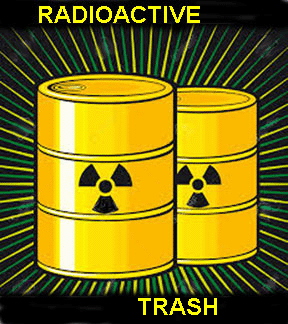 Jobs, safety and transport in the spotlight in Senate committee probe of Kimba waste plan, Michelle Etheridge, Regional Reporter, The Advertiser, July 28, 2020
Concerns about maritime workers facing safety risks and the Kimba community losing jobs promised for the local area have been raised before a Senate committee probing plans for a radioactive waste site.
Under the Federal Government’s project, low-level radioactive waste would be stored permanently at farming property Napandee, near Kimba, with intermediate-level waste stored there for several decades.
No long-term plan for intermediate-level waste has been set out – an issue raised by speakers during Tuesday’s committee meeting, which is looking into legislation the government says paves the way for the storage site.
Maritime Union of Australia (SA branch) secretary Jamie Newlyn said the Government should eliminate double-handling of the waste, also citing concerns for Whyalla-based members.
“Whyalla port has been considered … to take nuclear processing waste,” Mr Newlyn said.
“What they’re handling is 130-tonne casks of intermediate-level waste. That presents a massive risk.” A 2018 Federal Government technical report on Napandee said there was potential to ship waste from Port Kembla, NSW, to “port locations such as Whyalla, Port Pirie and Port Lincoln”.
Senator Rex Patrick also questioned whether the 45 long-term jobs promised to Kimba would stay there, now a Australian Radioactive Waste Agency has been announced for Adelaide.
A Kimba Council vote last year found 62 per cent of respondents supported the plan. Traditional landowners voted against it in a separate ballot.
Napandee owner Jeff Baldock said it was “time to accept the decision by the people of Kimba and move forward”.
“(The project) … has the potential to provide a lifeline to our community for decades to come,” Mr Baldock said.
Agriculture would benefit from the plan, he said, through a planned research and development centre.
Mr Baldock said it would also provide a much-needed new industry for the region.
This followed automation in farming and withdrawal of government agencies, which had led to a declining local population.
Wesley Schmidt, of Kimba-based Agsave Merchandise, said opposition to the project was coming from a “vocal minority”.
“We’re currently facing the third year running of drought conditions in Kimba. It’s more important than ever to establish another industry in our district,” he said.
Former Grey MP Barry Wakelin, based in the town, said the area had much to lose from picking up “something that nobody else in Australia wants”.
“Many people have said, why can’t we have an SA vote, at least, about this,” he said.
The Australian Conservation Foundation’s Dave Sweeney said: “In the absence of a clear, long-term approach for intermediate level waste, the best place to store this is at ANSTO (Australia’s Nuclear Science and Technology Organisation, in NSW).”
The Senate committee will report back by August 31.
A spokesman for the Australian Radioactive Waste Agency said the Government would consult on transport options with communities near potential routes and transport operators.
“The newly created Australian Radioactive Waste Agency will lead the separate process to site a facility to permanently dispose of Australia’s intermediate level waste,” he said.
He said the 45 jobs included security, administration, environmental monitoring and health and safety roles.
“The facility will need these onsite roles to ensure that the facility is managed safely and securely.” michelle.etheridge@news.com.au
Nuclear waste dump site selection process has made the Barngarla people “aliens in their own country”
 Barngarla continue fight against plan to dump nuclear waste on Country, https://www.sbs.com.au/nitv/article/2020/07/29/barngarla-continue-fight-against-plan-dump-nuclear-waste-country Barngarla mob say they were not properly consulted by federal government for plans to store radioactive waste on Country at Kimba in SA, and that their concerns continue to be ignored. By Royce Kurmelovs, NITV News 29 July 20
The 50-year-old Barngarla woman is talking about the enduring connection she has to Kimba when she tells how on the day she was born, her parents had been waiting for an ambulance that never came.
Forced to make their own way to the hospital, she says her mum made it as far as the tree outside before giving birth.
“So I’m born on Country,” she says.
Though she may not live there today, Jeanne says a part of her has never left. It is a detail that underscores the significance of the moment she learned Kimba was being considered as a dump for radioactive waste.
“I used to be a carer for my mum. When I first heard [about the facility], I told her. She goes: ‘no, no, no’ and got angry,” Jeanne says. “She said; ‘we don’t want it there’. She said to me: ‘you got to fight for this. You got to fight for it, we can’t have that place there. It’s a special place for us.’”
Most among the Barngarla have a similar story about the shock and confusion at learning their traditional Country was under consideration as part of a proposal to build a nuclear waste storage facility that would take in samples from 100 sites across the continent.
No one, they say, from the federal government contacted them beforehand to talk about the proposal, leaving most to find out through the news media or word of mouth.
Instead it was up to the Barngarla themselves, through the the Barngarla Determination Aboriginal Corporation (BDAC) to take the initiative and write to the government in April 2017 to find out what was going on.
‘Wasn’t interested in our views’
That first letter would plunge them into a fight that has so far lasted three years, until it entered a new phase in February when former Industry Minister Matt Canavan announced – a day before he resigned – that he had selected a site just outside of Kimba to situate the nuclear waste facility.
The location he chose was called Napandee, a slice of farmland about 25 kilometres west of Kimba. The precise area had been carved out of a 7500-hectare cereal and sheep property owned by the Baldock family and when built the facility promised to create 45 jobs and bring in $31 million to the community.
Over the course of its operating lifetime, the site would house low-to-intermediate level nuclear waste made up of medical waste drawn from 100 sites across the country. This material would include medical waste, but also the more serious TN81 canisters – casks of material once exposed to high levels of radiation that require containment for several hundred years.
If supporters of the proposal celebrated the financial windfall it would bring, critics worried the decision represented the thin end of a wedge that would eventually see the site expand to house higher-level toxic waste.
For the Barngarla people, however, the proposal represented something more significant: yet another decision where they have been overlooked, ignored and overruled in a process they describe as “divide and rule”.
“It’s like the government’s not listening to us,” Jeanne says. “It’s like if the government picks a place where they want to put rubbish like that, they’ll just go and do it and they don’t care what the people think. And that’s wrong. They should be listening to what the people want too.”
“I know there were people in Kimba that wanted it. We definitely know. We got the looks. We didn’t care. I didn’t care. This is something I believe in strongly and that’s why we don’t want it there, because of my strong beliefs and my family’s beliefs.”
After their early efforts to find out more, the Barngarla say they were stonewalled from the very beginning by both the Department of Industry, Science, Energy and Resources, and the Australian Radioactive Waste Agency (ARWA). That stance would become a pattern.
At first it began with the department initially dismissing the possibility that Aboriginal heritage sites may exist in the area and ignoring requests from the Barngarla for a meeting.
It took a year – until February 2020 – before the department offered to meet with the Barngarla people, though by the time the first and only meeting took place the government was already forging ahead to measure community support through a voting process.
In organising the vote, the local council limited those who could participate to ratepayers within the township, and provided a ballot with a single question: “Do you support the proposed National Radioactive Waste Management Facility being located at one of the nominated sites in the community of Kimba?”
Outraged by what they say was a clear act of voter suppression – a strategy common in the US where procedural tactics are used to discourage or prevent people from voting – the Barngarla took their fight to the courts.
They argued that the vote breached the Racial Discrimination Act by excluding the Traditional Owners who were openly opposed to the proposal. The matter would go all the way to the Federal Court, where it was ultimately dismissed on appeal.
Though the court found the local council had not excluded the Barngarla people on the basis of their ethnic identity, BDAC Chairperson Jason Bilney says the court did acknowledge the council had discretion about who to include in the vote, and they had deliberately chosen to exclude native title holders.
They basically created hurdles,” Bilney says. “The catchphrase was ‘rateable property’ – that’s white man’s terms ‘rateable property’. We’re the native title holders. That holds more weight than ‘rateable property’, so we should have been included.”
Around the time the Barngarla filed their lawsuit to challenge the vote, the first meeting with the department took place in August 2018 – a moment Bilney recalls with frustration.
He says Mr Canavan spoke for fifteen minutes before he left, taking all the government representatives with him.
“That’s it,” Bilney says. “He wasn’t interested in our views, he just wanted us to hear what he had to say.”
When the poll of Kimba residents was counted, it returned a result that saw 61.6 per cent of 824 participants vote in favour of the proposal.
BDAC responded by organising is own poll, asking its 209 members the same question that was asked of the broader Kimba residents.
The result would be a unanimous “No” from the 83 participants – a turnout figure explained by cultural and logistical factors that make it difficult to gather in any one place.
The Barngarla delivered the result to the department in November last year on the understanding Mr Canavan had promised to consider them together.
“Canavan said he would put the two together. He never did because if you put the two together there was clearly no broad community support,” says Bilney.
In its submissions to the senate, the department denies it agreed to incorporate the two votes, but says it only agreed to “consider” their outcomes.
Aliens in our own country’
What happens now is up to the Senate economics reference committee and a clutch of Labor, Greens and independent senators.
The Barngarla say the recent approach of the federal government – to legislate the precise location of the site – represents a new twist as it departs from the process established by the Gillard government under the National Radioactive Waste Management Act 2012.
Worse still, the Barngarla say the provisions of the bill will stymie their rights to seek a judicial review of the minister’s decision in the courts. The Parliamentary joint committee on human rights also raised concerns about the bill in April this year that it says may extinguish Native Title.
“In relation to any cultural and spiritual significance attaching to the land itself, it remains unclear how this would be protected once a radioactive waste facility is operational on the site. Further, it is unclear how Indigenous people will be able to access sites of cultural significance, should they be determined to exist,” the report said.
When NITV News contacted the Australia Radioactive Waste Agency for comment about the process to date, a spokesperson said in a statement the government is seeking to consult with the BDAC going forward.
“Napandee is privately owned, has no Native Title and has been used for agricultural purposes for 80 years. Preliminary assessments have identified no registered cultural heritage at the site,” the spokesperson said.
“Further ground cultural heritage surveys with Traditional Owner consultation are planned, to determine cultural heritage values at the site.
“That said, we have approached the Barngarla through BDAC numerous times during the past years to work together to identify heritage, without resolution.”
In addition, the federal government is seeking to establish a Barngarla economic plan backed by $3 million in government funding, employment opportunities at the site and a cultural heritage management plan.
The Barngarla view this as a bribe when for them it isn’t a matter of money, but one of self-determination concerning what happens on their Country, set against a much deeper history.
So far it has taken two decades for the Barngarla to have their Native Title claim to a 45,000 square kilometre stretch of the Eyre Peninsula recognised by the courts – a process during which they were once informed that they did not exist as a people.
Neither have they forgotten the horror at Maralinga when the British army tested nuclear weapons after falsely declaring there were no Aboriginal people in the area.
To the Barngarla, the government has only decided to talk after the big decisions have been made.
“We’re still flora and fauna to these people,” Bilney says. “They should have included us from the start. We heard about it on the news. We weren’t included in the vote.
“You know, the Barngarla [native title] claim was basically an unwinnable case, they said. It’s taken us 21 years. Twenty-one years to win Native Title under white man’s law. And yet we’re still classed as second-class citizens? Flora and fauna.
“We’re basically aliens in our own Country.”
Reflection on Jeff Baldock’s presentation to the Senate Hearing on Napandee Radioactive waste Dump plan
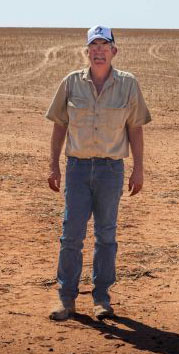 Jeff Baldock is the farmer who is selling a portion of his land near Kimba, for four times its market value, to the Federal Government for the site of a nuclear waste dump. He thinks he is benefiting the local community. He could be right, in that they will be showered by he Fed govt with services and facilities that they SHOULD HAVE GOT ANYWAY, without need of being bribed. Baldock has no concept of the long term effect, and later consequences for South Australia.
He made a brave effort at the hearing, to portray this as a community benefit. He struggled a bit, but was helped by plenty of “Dorothy Dixer” questions from the Chairman.
Listening to Jeff Badock on the Senate Committee hearings, I am struck by the naivety and ignorance of the man. He really thinks that farming life will go on just the same in Kimba. With the guarded radioactive waste dump, with dirty great trucks under heavy police guard arriving periodically, and with roadworks, and port works at Whyalla, and the whole disruption of the area Probable loss of population, but Baldock expects a new boom in agriculture and population there. Expects big professional jobs there – hell – those will all be in Adelaide, at best – could be Sydney or Canberra!
Black lives DO matter, but not apparently, to ANSTO and Australia’s nuclear lobby
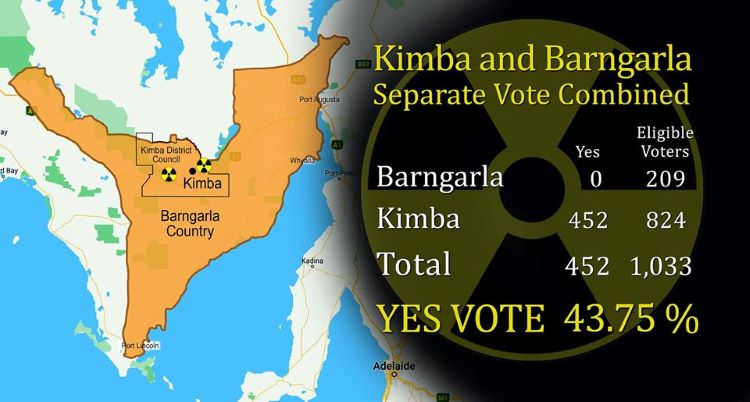
The systematic racist behaviour by your Government is a stain on the collective consciousness of this country.’
the Senate Inquiry Committee decided not to hold a hearing in SA. Instead it will be a phone/video hearing — a disappointing decision for those far more at ease in face-to-face meetings even if most of the Senators involved were themselves on video.
Much at stake for Barngarla Country, Country, https://www.eurekastreet.com.au/article/much-at-stake-for-barngarla-country?utm_medium=email&utm_campaign=Eureka%20Street%20Daily%20-%20Tuesday%2028%20July%202020&utm_content=Eureka%20Street%20Daily%20-%20Tuesday%2028%20July%202020+CID_a705bb9962677d9379d61686e520c4ca&utm_source=Jescom%20Newsletters&utm_term=Much% Michele Madigan, 28 July 2020
- In the present world wide climate of Black Lives Matter when some governments/states are changing significant processes for the betterment of all, how is our own country fronting up when it comes to competing interests regarding land and culture? ‘Quite badly’ is the assessment that comes to mind in examining Barngarla Peoples’ recent reply to the Department of Resources, the federal department charged by government with the establishment of the national radioactive waste dump/facility (NRWMF).
Their letter of reply, publicly released July 23rd lays it down:
‘As you would likely be aware the Parliamentary Joint Committee on Human Rights (Human Rights Committee) has confirmed, in their Human Rights Scrutiny Report — Report 4 of April 2020, that the proposal to place a NRWMF at Napandee is a violation of the Barngarla People’s Human Rights. This is clearly the case, given just some of the matters below…?’
The letter goes on to list how, as Traditional Owners, they were refused the right to vote, forcing them to organise their own official ballot with its unanimous ‘no’ vote which was then ‘entirely ignored by the Minister.’
Shamefully, the Barngarla further identify the final determination of government to crush First Nations and any other group seeking to use the democratic processes of the nation: ‘Those terrible failures in process would have been subject to judicial oversight had the Minister made a declaration under section14 of the existing National Radioactive Waste Management Act 2012 (Cth). However, being fully aware of this, the Minister is now seeking to remove the Barngarla People’s legal rights to judicial review by using Parliament to legislate the location directly.’
Yes, the gloves are certainly off in the long running saga of the federal government’s latest effort to offload the nation’s nuclear waste — this time on Barngarla Country.
The Coalition seems to be banking on the certainty that everyone’s energy about national matters is focused on the Covid-19 emergency. The Guardian reports the plan to rush through new conservation laws even before even Prof. Graeme Samuel’s Environment Protection and Biodiversity Conservation (EPBC) final report is written:
‘The EPBC Act Interim Report (released July 21st) ) unsurprisingly includes the reprimand that the federal government’s framework environment legislation ‘reflects an overall culture of tokenism and symbolism, rather than one of genuine inclusion of Indigenous Australians’.
At the same time, with the Radioactive Waste Management Amendment Act 2020 yet to pass the Senate, on 21st July Resources Minister Pitt announced his own kind of pre-emptive strike. His joint media release announced a ‘new agency to safely and securely manage Australia’s radioactive waste’ by the establishment of ‘a dedicated agency’ based in Adelaide which will be ‘responsible for all functions of the National Radioactive Waste Management Facility including engagement with the Kimba community.’
This is notwithstanding that the Senate Inquiry Committee is presently examining the actual issue and so of course Senators have not yet voted on the Bill, which confirms the selection of the Nappanee site in SA’s Kimba, Eyre Peninsula. The Minister’s apparent certainty of the outcome by announcing a ‘dedicated agency’ responsible for the entire matter, seems to take no account of these inconvenient facts. Is the Senate seen as irrelevant?
The bill itself narrowly passed the House of Representatives last month with opposition from Labor, the Greens and most of the Independents to whom it was clear that the rights of the Traditional Owners and other groups similarly opposed had been cast aside. MPs were aware that the process attempts to create a serious precedent. As Dave Sweeney ACF summarises: ‘the Parliament precluding the Courts.’
It is possible to turn around injustice: the Human Rights Committee’s report cited above was unanimous and was endorsed by Liberal and National Party members. With the Senate vote perhaps in September, it is to be hoped that federal Labor with its key South Australian Senators like Penny Wong and Don Farrell will follow the precedent set by their Lower House colleagues.
As well as the Greens, there are those other Senate crossbenchers who support farming communities. In the Kimba district and more widely in SA’s entire Eyre Peninsula, there are food producers disturbed by threats, whether by image or actuality, to their food production — the safety of which is more important than ever in these COVID-19 times.
A week out from the long awaited July 28th public hearing, the Senate Inquiry Committee decided not to hold a hearing in SA. Instead it will be a phone/video hearing — a disappointing decision for those far more at ease in face-to-face meetings even if most of the Senators involved were themselves on video.
But the Barngarla are clear. After refusing the funds offered to ironically ‘support their cultural heritage’ comes their letter’s devastating conclusion: ‘Your email indicates that the Government wants “to form a long term relationship with the Barngarla community based on mutual respect”. This is clearly an insincere statement given the complete violation of our rights to date. …The systematic racist behaviour by your Government is a stain on the collective consciousness of this country.’
There’s a long way to go for the Coalition to change from ‘its business as usual’ performance in this as in many other matters. We can all play our part, however, in encouraging Senators to stop another sizable wind back in the nation’s democratic processes. If the Senate defeats this Radioactive Waste Management Bill then the Barngarla and others can, as in any democratic country, take to court the minister’s processes.
There is much at stake.
1 This month.
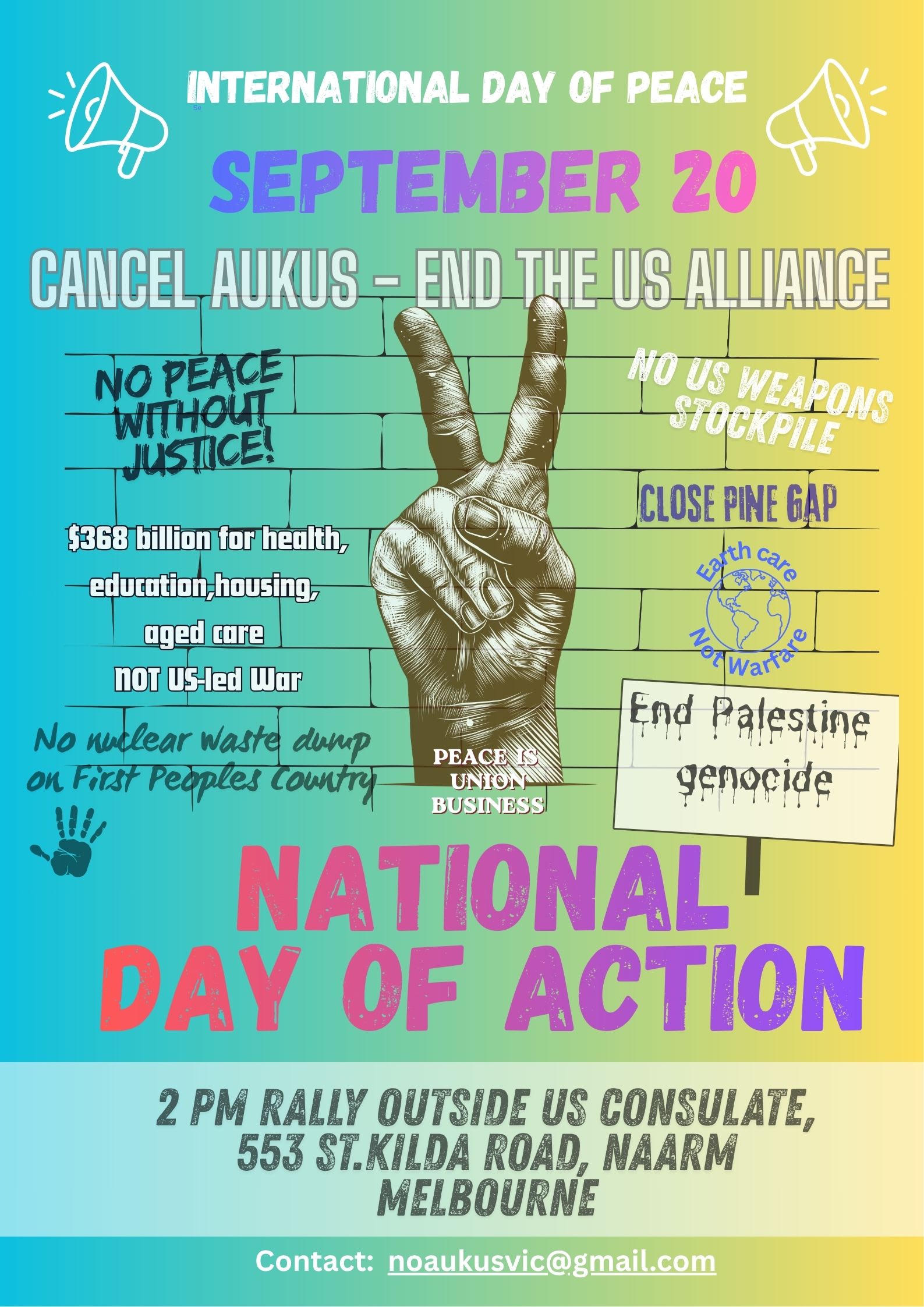
20 September –National Day of Action in Melbourne on the International Day of Peace

Help Aunty Sue Protect Her Land and Sacred Sites From Destructive Rocket Testing.
.

Australians deserve the truth
about
AUKUS – https://aukuspublicinquiry.com/

PETITION – To: Prime Minister Anthony Albanese and the Australian Labor Government

of the week – Australians for War Powers Reform (AWPR)
To see nuclear-related stories in greater depth and intensity
 Antinuclear