
Australia’s government, lackey of the coal industry, in denial over climate change
|
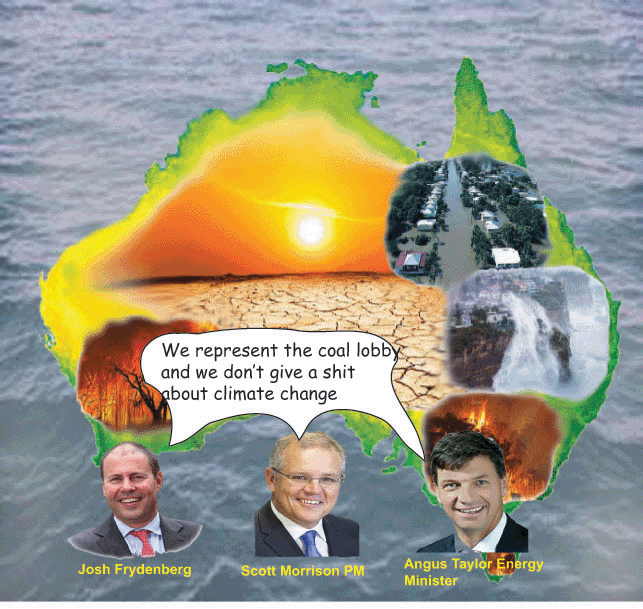
While others face climate reality, our government denies the undeniable, SMH, John Hewson, Columnist and former Liberal opposition leader, 1 Aug 19, despair at just how long our Australian government can continue to deny the undeniable. It seems the new Morrison government has learned nothing, doesn’t want to learn anything, just wants to kick the climate emergency further down the road, hoping nothing of consequence happens on its watch.It is fundamental to us meeting our global obligations as the largest exporter of fossil fuels in the world, with poor and worsening biodiversity, and in the clear interests of our future generations, that we make the transition to a low-carbon society by the middle of this century.
It should have been particularly instructive that Britain, a nation that led the industrial revolution fuelling its economy with coal, and has weathered the Thatcher era tensions with the coal mining industry, has recently announced its plan for a complete exit from coal and declared that there is, indeed, a “climate emergency”. Similarly, the Germans have announced a commitment to stop using coal by the mid-2030s, and even the likes of China and India are moving much faster than expected to reduce their reliance on fossil fuels. At the very least, our government should have heard and responded to the din of cries for action: from the 60 to 80 per cent of respondents to various surveys; from big business, including conspicuously large fossil fuel miners such as BHP, Rio, Glencore, and Woodside; and from the Reserve Bank of Australia, the Australian Prudential Regulation Authority, the Australian Securities and Investments Commission and the Australian Competition and Consumer Commission. No! The tin-eared Coalition has preferred silly stunts such brandishing a lump of coal in Parliament, claiming unjustified electoral mandates to mine more coal and build a new coal-fired power plant in North Queensland, even though there is no net demand for electricity in that region (when more than 80 global banks wouldn’t finance it nor insurers insure it, and where renewable alternatives are much cheaper). It has also ignored the potential of carbon farming in agriculture and scare-mongered over the inevitable transition to electric vehicles. While Australia dithers, others face reality. In November, the Federal Reserve Bank of San Francisco will host what is believed to be its first research conference focused on climate change, acknowledging the systemic risks to the soundness of the US banking system. In April, with global insurers shouldering $160 billion in climate-related losses from last year alone, a group that included 30 central banks – Australia’s included – called for measures to spur green finance. In May, the Bank of England issued climate risk guidance to help insurers and re-insurers assess the financial risks posed by climate threats such as heatwaves, floods and storms. ……https://www.smh.com.au/environment/climate-change/while-others-face-climate-reality-our-government-denies-the-undeniable-20190731-p52cdl.html |
|
Australian Senate passes motion to retain Australia’s ban on nuclear power
This motion was moved by Senator Hanson-Young and passed by the Senate, 29 July 19
Flynn electorate, Queensland, would be happy to host nuclear power plant, National Party MP Ken O’Dowd says
My area would accept nuclear: Qld Nats MP, The Islander, Rebecca Gredley , 29 July 19,
Federal Nationals MP Ken O’Dowd says his electorate would accept a local nuclear power plant, spruiking the energy source as the “safest” for electricity.
“Study after study in scientific journals prove that nuclear power plants are by far the best and safest way to make reliable electricity,” the Queenslander told the lower house on Monday.
Labor MPs in the chamber heckled Mr O’Dowd during his speech, questioning where he would propose to build a nuclear power plant in Australia.
The Nationals MP said it would take 20 years to build a power station, so the debate needed to start sooner rather than later…….
Mr O’Dowd is one of a handful Nationals MPs calling for a feasibility study into nuclear power. …….https://www.theislanderonline.com.au/story/6299668/my-area-would-accept-nuclear-qld-nats-mp/?cs=7
Restrictions on operations of Lucas Heights nuclear reactor, following a litany of safety incidents
Man who urinated in backyard exposed family to radiation, https://www.smh.com.au/politics/federal/man-who-urinated-in-backyard-exposed-family-to-radiation-20190729-p52bt4.html By Nicole Hasham July 29, 2019 A patient being treated with nuclear medicine who exposed his family to radiation after urinating in his backyard, and a worker who spilled a vial of radioactive liquid onto his hands are among hundreds of reported mishaps involving nuclear substances in Australia.
The cases have been detailed as the Queensland Liberal National Party declared its opposition to using nuclear technology to produce electricity – a position at odds with Queensland federal Coalition members pushing for a parliamentary inquiry into the issue.
Radiation incidents in Australia are reported to the Australian Radiation Protection and Nuclear Safety Agency (ARPANSA). Its latest register covers 575 incidents reported in 2017.
They include a worker who spilled a vial of irradiated solution when trying to remove its cap. It is understood the incident occurred at the Lucas Heights nuclear facility in southern Sydney.
Despite the worker wearing two pairs of gloves, his hands were contaminated causing “tissue reactions”. The exposure was considered serious and reported to the International Atomic Energy Agency.
In another case, a patient self-discharged from hospital after receiving radiotherapy involving nuclear medicine. After returning home he “urinated outside” and contaminated “the rear yard”. Turf and soil was removed to address the hazard.
Other incidents included a lung cancer patient who was given double doses of radiation, and a radioactive vial that broke in a microwave.
The report concluded that radiation use in Australia “is generally very safe” but unexpected events can occur “even with strict controls in place”.
But new Minerals Council chair Helen Coonan on Monday said a parliamentary inquiry into nuclear power would ensure issues such as safety were better understood.
“I think it’s time to give it a go quite frankly. There’s a long way to go, of course, because there are legislative barriers and there needs to be political will,” Ms Coonan told the ABC.
Federal and state laws currently ban nuclear power, and any push to develop a home-grown industry would need state support. However even state-based Liberal-Nationals have so far failed to back the prospect.
Queensland LNP Leader Deb Frecklington said in a statement that her party “does not support nuclear power in Queensland” and a spokesman for the Liberal South Australian government said it has “no plans to change its current legislation governing nuclear energy”.
Victorian Labor Energy Minister Lily D’Ambrosio said it “makes no sense to build nuclear power stations in Australia. They present significant community, health and environmental risks”.
Queensland Hinkler MP Keith Pitt, one of two backbenchers spearheading the push for a nuclear inquiry, on Monday said despite the Queensland LNP’s position, the party’s members were “very strongly supportive” of nuclear energy.
He said discussions on the issue were ongoing with Energy Minister Angus Taylor and the office of Prime Minister Scott Morrison.
Mr Taylor said on Monday that the government has “no plans” to change the nuclear power moratorium.
Meanwhile, ARPANSA has confirmed that restrictions remain in place at the Lucas Heights nuclear facility after an incident last month when two workers were exposed to radiation.
Under the restrictions, the facility run by the Australian Nuclear Science and Technology Organisation can produce enough nuclear medicine to meet domestic demand only. A spokeswoman said the ANSTO must provide evidence of safe operation in fortnightly reports, training records and evidence of satisfactory staffing levels and rostering arrangements before the restrictions are lifted, which could take “several months”.
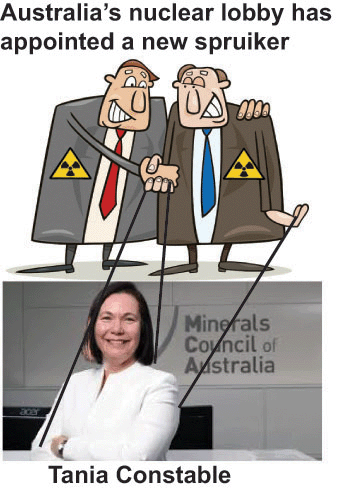
New Minerals Council chair Helen Coonan speaks out for nuclear power, and for Adani coal mine
Nuclear power should be considered for Australia: Minerals Council chair Helen Coonan, ABC, By senior business correspondent Peter Ryan 29 Jul 19, Newly appointed Minerals Council chair Helen Coonan has become the latest business heavyweight to call for nuclear power to be considered as part of Australia’s future energy mix.
Key points:
- The Minerals Council’s new chair Helen Coonan says there should be a parliamentary inquiry into nuclear power for Australia
- Ms Coonan’s comments come in response to statements from BHP’s CEO saying that climate change poses “an existential risk” to the planet
- She backed Adani’s Carmichael coal mine, saying the company “wouldn’t be proceeding if they didn’t have the business model to sustain the mine”
The former Howard government minister said the “nuclear option” should be on the table, along with renewables, as the resources industry edges away from fossil fuels in the coming decades.
Speaking to the ABC’s AM program, Ms Coonan said Australians were ready for a “sensible conversation” about nuclear power generation, which is currently outlawed in Australia.
“I think it’s time to give it a go quite frankly. There’s a long way to go, of course, because there are legislative barriers and there needs to be political will,” Ms Coonan said in her first broadcast interview as the Minerals Council of Australia’s chair……..
Ms Coonan’s push for nuclear power came as she responded to growing concerns about the future of coal, after BHP chief executive Andrew Mackenzie recently said climate change posed “an existential risk” to the planet.
Federal and state legislation blocks the development of local nuclear power generation, although calls are growing for a parliamentary inquiry into the feasibility of a local industry
Last week, former National Party leader Barnaby Joyce suggested residents living near a nuclear reactor could be offered free nuclear power.
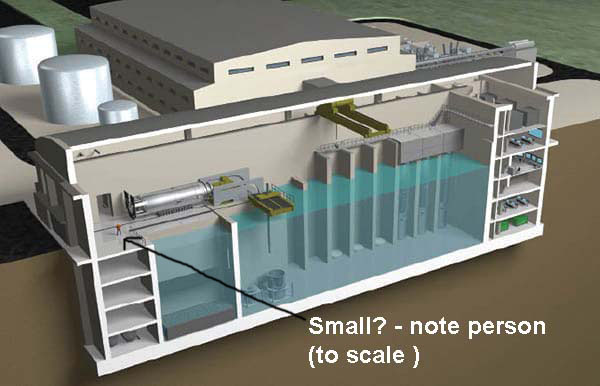
Ms Coonan — the first Minerals Council chair to come from outside the resources industry — did not sidestep environmental and safety concerns, but suggested Australia could consider smaller nuclear power stations, unlike the giant plants in the US, Europe and China.
“You’ve always got to be concerned about safety and that applies to nuclear power,” she said.
“It’s important to that any technology any mine and any power source is safe.”
Minerals Council backs Adani mine
Ms Coonan backed the approval of Adani’s Carmichael mine in central Queensland and said tough regulation was unnecessarily delaying projects………..
Last week, University of Sydney forensic accounting specialist Sandra van der Laan told the ABC that Adani’s corporate structure was “a corporate collapse waiting to happen”.
In an analysis labelled by Adani as false and misleading, Professor van der Laan likened Adani’s complex structure to the US energy giant Enron, which collapsed in spectacular fashion in 2001.
In addition to the Minerals Council role, Ms Coonan is also chair of the Australian Financial Complaints Authority and a non-executive director at Crown Resorts. https://www.abc.net.au/news/2019-07-29/nuclear-power-australia-should-be-considered-minerals-council/11359998
(Officially no climate change in Australia) but Queensland towns are running out of water
Queensland towns face million-dollar water-carting bills if rain stays away, Brisbane Times, By Tony Moore
More than 65 per cent of Queensland, including Ipswich, Lockyer Valley and Scenic Rim councils on Brisbane’s doorstep, is drought-declared.
The worst case is Stanthorpe, one of Queensland’s premier tourism and wine regions, in the Southern Downs Regional Council area.
Southern Downs mayor Tracy Dobie said Stanthorpe was on track to run out of water by Christmas, leaving ratepayers with a hefty bill to cart water from Warwick. “We are estimating something between half a million dollars to a million dollars per month just to cart water,” she said.
“That is a sizeable chunk for a regional council with 19,000 ratepayers and an annual budget of $70 million.”
Warwick would run out of water by December 2020 if it did not receive significant rainfall over summer, Cr Dobie said.
“The Warwick situation is worse than Stanthorpe,” she said.
“The only way we can do it, if it doesn’t rain, is establishing new bores and pumping.” In the Toowoomba Regional Council area, water is being carted to Cecil Downs, while water has also been carted to Hodgson Vale, Cambooya and Clifton as bores run dry.
Ipswich and Lockyer Valley councils are close to carting water to some regional areas, but at this stage are meeting water demand from dam supplies.
There are as yet no water restrictions on south-east Queensland homes.
Over the Great Dividing Range, regions face extreme water restrictions.
Stanthorpe and Warwick residents already face “extreme-level” water restrictions of 120 litres per person a day, the same as Brisbane during the drought of 2008. Cr Dobie said the cost of carting water was significant for smaller councils.
“We have these councils west of the Great Dividing Range and in New South Wales that have really small rate bases and don’t have the money to build their own infrastructure,” she said.
(Officially no climate change in Australia) but Norther Territory towns are running out ofvwater
NT rural residents face spending thousands to truck in water if
bores run dry, ABC News, By Sowaibah Hanifie 29 July 19, With groundwater levels critically low and the wet season yet to begin, some rural Northern Territory residents fear they may have to pay thousands of dollars to truck in water for their homes.
Many bores connected to the Berry Springs and Howard Springs groundwater systems have been flagged as critical and could run dry as soon as October due to the driest Territory wet season in decades.
Eddie and Sheryl Kendall’s Berry Springs bamboo business could collapse if their bore runs dry.
“The plants, we’d just have to let them die,” Mrs Kendall said.
“That wouldn’t be very good, but if you have to do it, you have to do it.”
Mr Kendall said while their bore was not critically low yet, they were being conservative with their water use, meaning their plants were not getting the water they needed to thrive.
In the community of Southport, Progress Association president Barry Whalan said he would be forced to pay $400 per week if his community, which has a critically low bore, ran dry before the wet season in December……..
Humpty Doo resident Shannon Griffiths is living near the site of a proposed $2 billion, 4,000-property development in Noonamah Ridge, which would be completed over 30 years.
Mr Griffiths said while he understood the Government wanted to increase the Territory’s population, he was concerned more rural development would put his groundwater at risk.
“How are they going to monitor people running their bores or irrigating their yards at night, which a lot of people do,” he said…..
https://www.abc.net.au/news/2019-07-29/rural-water-bores-running-dry-northern-territory/11354680
Australia’s legal ban on nuclear power will remain, says Environment Minister Sussan Ley
Environment Minister Sussan Ley refuses to consider an amendment to nuclear power ban in Australia The West Australian, 29 July 2019
Environment Minister Sussan Ley has quashed a push to lift the moratorium on nuclear power, saying she will not consider the ban as part of an upcoming review of Australia’s environmental protection legislation.
Speaking to The West Australian, Ms Ley gave the Federal Government’s strongest comment yet on the issue, indicating the settings would remain the same on nuclear power and a moratorium would not be lifted.
“I will not be looking to change the moratorium on nuclear power as part of that review,” Ms Ley said.
Ms Ley also said she would not be reviewing the decision by her predecessor — West Australian Melissa Price who was dumped from Cabinet — to approve the Yeelirrie uranium mine 500km north of Kalgoorlie a day before the May 18 Federal election.
“I don’t propose to review decisions that were already made before I became minister,” Ms Ley said, despite advice the mine could lead to the extinction of up to 12 native species.
As part of her portfolio, Ms Ley will have carriage over the 10-year review of the Environment Protection and Bio-diversity Conservation Act, which needs to begin by October.
The Act recognises the protection of the environment from nuclear actions as a matter of national environmental significance and specifically prohibits nuclear power generation in Australia.
A group of Coalition MPs, including Craig Kelly, James McGrath and Keith Pitt, want the Act to be amended to allow nuclear power generation to be permitted in Australia as a way to supply reliable, low-emissions base load power.
The move is backed by the Minerals Council of Australia and industry with Prime Minister Scott Morrison handed a draft terms of reference into a nuclear power inquiry last month. Ms Ley’s stance also comes as Labor tries to wedge the Government on power prices.
Shadow energy minister Mark Butler will today say average wholesale energy prices in the States connected to the National Energy Market — of which WA is not a participant — have risen 158 per cent since 2015.
Resources Minister Matt Canavan said it “makes sense” to see if nuclear power was a worthwhile option in the current environment but that he was not convinced it would be good for Australians struggling with higher power prices.
“It may not meet our present needs given we have a desperate need to reduce power prices and nuclear power is on the more expensive end of the scale,” he said.
Former deputy prime minister and Nationals MP Barnaby Joyce, who wants an inquiry into nuclear power, said last night he believed it was the only way to achieve zero emissions power.
“If this absurd zeitgeist believes that Australia singlehandedly contains the temperature of the globe by reason of them using coal fired power – as much as I disagree with that based on science – I’ll take the next alternative for baseload power which is nuclear power,” he said.
“Although we send uranium all around the world for zero-emissions power, there is an exceptional paranoia about it in Australian politics,” he said.
Energy Minister Angus Taylor told Question Time last week the government had an “open mind” on nuclear power generation but that there was no current plan to lift the moratorium.
“We always approach these things with an open mind, but we do not have … a plan to change the moratorium,” he said.
Opposition energy spokesman Mark Butler said nuclear power would not bring price relief for Australians.
“Based on the advice of industry and experts, it is clear nuclear power is not a viable option for Australia… The economics do not stack up and it would just mean higher power bills,” he said.
Nuclear power generation in Australia was pushed by John Howard while Prime Minister, with the Coalition running on a pro-nuclear platform at the 2007 election.
In 2006 former Telstra CEO Ziggy Switkowski chaired a Commonwealth government inquiry into nuclear power which concluded Australia was well placed to consider adding nuclear to its energy mix.
An energy Green Paper by the Coalition government in 2014 suggested nuclear energy was a “serious consideration for future low emissions energy”.
Australia is home to a third of the world’s uranium deposits and is the third largest producer behind Kazakstan and Canada.
Uranium accounts for around a quarter of Australian energy exports.
Papua New Guinea Prime Minister urges Australia to help island nations threatened by climate change
|
Australia must help protect Pacific from climate change, PNG prime minister says , Guardian,
James Marape says Australia, with New Zealand and PNG, has a moral obligation to listen to the voices of smaller island nations. Australia has a responsibility to protect the Pacific region from the impacts of climate change, PNG’s newly appointed prime minister has said. James Marape told the Guardian Australia had “a moral responsibility … to the upkeep of the planet”, particularly given the extreme effect it was having on smaller Pacific nations. “I don’t intend to speak from Canberra’s perspective, they have their own policy mindset, but as human beings I know they will respond to the moral obligation that is prevalent amidst us, that we are environmentally sensitive to the needs of others.” He said the voices of smaller island nations must be listened to. “As big countries in the Pacific – Papua New Guinea, Australia, New Zealand – we have a sense of responsibility to the smaller island countries, because displacement of these smaller communities will first and foremost be our neighbourhood responsibility,” Marape said………https://www.theguardian.com/world/2019/jul/27/australia-must-help-protect-pacific-from-climate-change-png-prime-minister-says |
|
Noosa the first Queensland council to declare a climate emergency – Mayor explains why
Why this south-east Queensland council declared a ‘climate emergency’ https://www.brisbanetimes.com.au/national/queensland/why-this-south-east-queensland-council-declared-a-climate-emergency-20190724-p52acd.html, By Tony Wellington, July 27, 2019
Frustrated by stagnant policy at the federal level, Australian communities are looking elsewhere for responses to climate change.
Businesses, communities and, increasingly, local governments are stepping up to the plate.
Noosa council declared a climate emergency to send a strong message, according to the mayor.
As the closest tier of government to the people, it’s our responsibility to listen to the concerns of residents, and they are demanding a healthy and resilient future for their children and grandchildren.
The concerns of our communities are not being heard by the national decision-makers. Local governments have no choice but to act as climate advocates for their communities and thus take matters into their own hands.
That’s why we in Noosa shire have set ourselves a target of net-zero carbon emissions by 2026 – and our community has jumped on board.
Our modelling shows that, if action is not taken to significantly reduce global greenhouse gas emissions, a much larger proportion of our residential and commercial properties will be within the storm tide inundation zone in the year 2100.
In other words, with a projected sea-level rise of 0.8 metres and intensifying weather events, many properties could be flooded in a significant storm or else subject to coastal erosion. We need to plan for this now, not wait until it’s too late.
Noosa recently became the first Queensland council to declare a climate emergency, joining 847 other government jurisdictions across the world who have already done so. We want to send a strong message to higher levels of government that this is the most serious issue facing humankind.
Noosa council is rolling out solar panels and battery storage, adopting a wide range of energy efficiency measures and tackling methane emissions from our landfill. And we are working with our community to reduce emissions at the business and household level. Of course, there is much more to be done. But we’re not alone.
We’re just one of many councils across the country who are rising to the challenge of climate change. From the Huon Valley in Tasmania to Port Douglas in northern Queensland, councils are working together through alliances such as the Cities Power Partnership.
We need to learn from each other and share our knowledge because we’re all in this together. Every local government wants to see sustainable, healthy communities that thrive in the future. And, like it or not, the future is renewable energy. Tony Wellington is the Mayor of Noosa Shire Council
Australia’s right-wing push for nuclear power is really a ruse to promote the coal industry
Wren’s Week: Out with Medicare and in with nuclear power Independent Australia By John Wren | 27 July 2019 “………..In the last week or so, too, there has been an upswing in calls for nuclear power in Australia. Interestingly, the calls are being made by all the old die-hard coal freaks in the Liberal and National Parties. Barnaby Joyce was prominent, with a harebrained scheme to offer free electricity to people whose homes are within sight of the plant.
Nuclear power has also been discussed amongst all the “looney fringe” on Sky News (after dark). The Energy Minister Angus “Watergate” Taylor was put under extreme pressure during Question Time by the Labor Party. He was visibly flustered. Taylor is not a strong performer at the Despatch Box. It culminated with him “not ruling out” nuclear power.
While we argue and debate the pros and cons of nuclear power, we are also continuing to burn coal. It’s a ruse and Australians should not be sucked in by it. Nuclear power is not the answer to Australia’s emissions now. It may have been 20 years ago when it was first mooted, but that time is long gone. https://independentaustralia.net/politics/politics-display/wrens-week-out-with-medicare-and-in-with-nuclear-power,12941
National Party Member for Gippsland Darren Chester makes reassuring, but rather ambiguous, noises against setting up nuclear power
“No plans” for move to nuclear: MP Latrobe Valley Express, Michelle Slater , 26 July 19,
The Australian Nuclear Association released a paper recommending five nuclear power plants be built in the Latrobe Valley, with the support of a handful of Coalition MPs, including Barnaby Joyce.
He said it was his priority to “secure reliable and affordable energy for Gippsland families, businesses and the farming community”…….
ANA vice president Robert Parker said they had been studying several sites in Queensland, New South Wales and Victoria, but it had not gone “beyond a broad brush approach at this stage”. ….
Gippsland Trades and Labour Council secretary Steve Dodd said the union did not support nuclear energy due to the amount of risks it presented.
“People talk about clean energy, but you only have to look at Japan and Chernobyl with these massive accidents where people have been evacuated,” Mr Dodd said….
Voices of the Valley president Wendy Farmer was sceptical about the viability and safety of nuclear power and described the idea as a “brain fart” and an “expensive pipe dream”.
“We can use the existing energy grid with renewable energy much faster and cheaper than nuclear without the risk of a spill,” Ms Farmer said.https://www.latrobevalleyexpress.com.au/story/6292224/no-plans-for-move-to-nuclear-mp/
To add to its safety problems, ANSTO has had to increase prices for nuclear medicine from the Lucas Heights reactor
Troubled ANSTO raises nuclear medicine prices, THE AUSTRALIAN, SEAN PARNELL, HEALTH EDITOR,JULY 26, 2019 Australia’s nuclear medicine sector has been hit with price hikes of up to 9 per cent from the government manufacturer despite months of supply problems, safety concerns and breakdowns.
The Australian Nuclear Science and Technology Organisation provides the domestic supply of nuclear medicine, likely to be needed by one in two Australians during their lifetime, and also wants to ramp up its exports.
But amid calls for Australia to also embrace nuclear energy, ANSTO’s reputation has been tarnished by problems at its Lucas Heights facilities that have even required it to rely on imports.
Most recently, after heaters for hydrogen converters failed, ANSTO was forced to bring its new $200 million plant into service before it had all the approvals. Two workers were then exposed to excess radiation, forcing its closure, and yet another investigation by the regulator, the Australian Radiation Protection and Nuclear Safety Agency.
An ANSTO spokesman yesterday confirmed the nuclear medicine sector had been asked to pay more than 3-9 per cent more for products…….
Some customers have been lobbying federal Industry, Science and Technology Minister Karen Andrews to intervene. https://www.theaustralian.com.au/nation/troubled-ansto-raises-nuclear-medicine-prices/news-story/208ee20abacac04f304e45960bd963b4
First nations rights and colonising practices by the nuclear industry: An Australian battleground for environmental justice
PDF of full article available on request (jim.green@foe.org.au)
First nations rights and colonising practices by the nuclear industry: An Australian battleground for environmental justice Jillian K. Marsh and Jim Green
The Extractive Industries and Society July 2019
https://www.sciencedirect.com/science/article/pii/S2214790X18302491
Abstract
This paper highlights current events and original research to explore the tensions between First Nations, industry and government in the context of uranium mining and nuclear waste management in Australia. We outline challenges faced by Aboriginal Australians in their role as custodians of the land, and as community leaders. A critical examination of some of the barriers to First Nations empowerment includes government engagement through legislation and practices that have repeatedly resulted in dispossession and disempowerment of Australian Aboriginal Traditional Owners. Laws ostensibly designed to provide rights and protections to Aboriginal people are repeatedly curtailed or overridden to facilitate nuclear projects—in particular radioactive waste repositories and uranium mines. We argue that existing measures provide feeble rights and protections for Aboriginal people as laws have repeatedly produced outcomes that favour government and industry and deny Aboriginal rights to sovereignty. Our research highlights patterns of colonial oppression that transgress human rights, and frames mining and nuclear waste in a way that lacks a decolonisation strategy and are based on industrial violence. Theoretical understandings of Indigenous sovereignty through a decolonising lens will highlight Indigenous standpoints, the continued contestation of Indigenous peoples’ customary land rights, and the limitations of post-colonial environmental justice.
…
Conclusions
The government and industry approach to environmental and cultural justice sits uneasily with the principle of free prior and informed consent enshrined in the United Nations Declaration on the Rights of Indigenous Peoples. The government approach lacks credibility based on the idea that consultation is somehow an equivalent and acceptable form of a consenting process. Continue reading