Bangarla Aboriginal people’s Statement on court decision regarding ballot on nuclear waste dump site
The Barngarla People have ancient historical connections to the land around Kimba, and we are the determined Native Title Holders for the broader area. The Barngarla hold significant areas of native title in the area, and we are also property owners for the purpose of the Local Government Act. The Barngarla respects the decision of the Federal Court, as the Court has to interpret complicated legislation. However, more generally we consider it sad that in the 21st Century we are required to take legal action to allow us to have the right to vote on the major decision of the day.

Huge volumes of water gulped by Olympic Dam uranium mine – even more with expanded mine
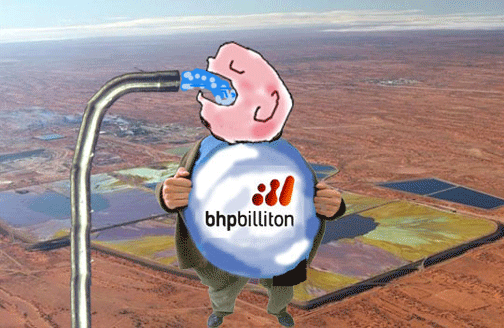
The nuclear cycle of destruction, Red Flag, James Plested, 12 July 2019 “……..The first stage of the cycle – the mining of uranium, the fuel used in nuclear power stations – is particularly relevant to Australia, home to an estimated 31 percent of the world’s known uranium reserves.
Uranium mining requires huge volumes of water – an obvious problem in arid Australia – and produces large quantities of toxic “tailings” which threaten the surrounding environment and people.
The historical record speaks for itself. According to the Gundjeihmi Aboriginal Corporation, over the 38 years of operation of the Northern Territory’s Ranger mine, there have been around 200 leaks, spills or other breaches of the mine’s operating licence. In 2013, the collapse of a leach tank resulted in a spill of about 1 million litres of radioactive waste over the mine site.
Beyond the risk of accidents, there are many other downsides to nuclear power. One particularly relevant factor for Australia is that nuclear reactors require massive amounts of water. A typical US reactor, for example, consumes 114 million litres of water an hour. To put this in perspective, total residential water consumption in Melbourne, a city of 4.8 million people, in 2018 was around 32 million litres an hour.
Australian business heads and governments have long had an eye on further uranium mines. The anti-nuclear movements of the 1970s and early 1980s, as well as the later campaign against the proposed Jabiluka uranium mine (see article in this issue), kept this aspiration in check. In recent years, however, state and federal governments have renewed the push.
The South Australian government is supporting a proposal by BHP to expand massively the operations of its existing Olympic Dam mine – which contains the largest single uranium deposit in the world. And the day before the last election was called, the federal government abruptly announced its approval of a new uranium mine in  Western Australia…….
The need for water means that reactors must be located close to rivers, lakes, dams or the ocean. In Australia, this would inevitably mean reactors would need to be built in or near densely populated areas…..” …… https://redflag.org.au/node/6835
Federal court rules against Aboriginal group who wanted inclusion in nuclear waste dump ballot
 Federal Court dismisses bid to stop ballot on nuclear storage facility near Kimba, ABC, By Candice Prosser, Claire Campbell and Sara Garcia 12 July 19, A South Australian Aboriginal group has lost a bid to stop a council ballot on whether a nuclear storage facility should be built on the Eyre Peninsula.
Key points:
- The Kimba District Council planned to hold a vote to gauge support for the waste dump
- Representatives of the Barngarla people were excluded from the ballot
- They argued it contravened the Racial Discrimination Act, but the Federal Court dismissed the application
The Barngarla Determination Aboriginal Corporation launched legal action against the District Council of Kimba, arguing it contravened the Racial Discrimination Act by excluding native title holders from the ballot.
The council planned to hold a vote to gauge community support among its ratepayers for having radioactive waste stored in their area, after the Federal Government shortlisted two sites near Kimba as possible locations for the facility.
A third site in Hawker, near the Flinders Ranges, has also been shortlisted.
The native title holders won an injunction to halt the ballot last year, while the legal challenge was being heard.
Justice Richard White ruled that no contraventions of the Racial Discrimination Act had been established, and dismissed the application.
SA Greens leader Mark Parnell said he was disappointed with the court’s decision.
“Here we are in NAIDOC week, celebrating Aboriginal culture, and the court has determined it is not a breach of the Racial Discrimination Act to deny traditional owners a vote on whether a nuclear waste dump can be built on their land,” he said.
“Clearly in this country we have a very long way to go before we achieve anything like reconciliation.
“The Aboriginal traditional owners have legitimate rights over this country, yet they’ve been denied a right to vote on whether a nuclear waste dump can be built.
“The Federal Government is obviously keen to get their project up but they only want to ask people who are going to say yes.”
In a statement the Barngarla people said they respected the Federal Court’s decision, but said their lawyers were considering an appeal.
“The Barngarla respects the decision of the Federal Court, as the court has to interpret complicated legislation,” the statement read.
“However, more generally we consider it sad that in the 21st century we are required to take legal action to allow us to have the right to vote on the major decision of the day.
“This case has been about standing up for the right of Aboriginal people to vote on important issues which affect their rights.”……….
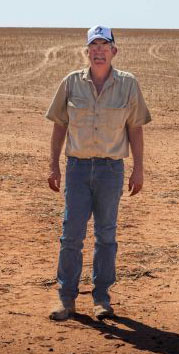
Landholder Jeff Baldock [at left] has volunteered a portion of his property in Kimba for the proposed facility and said he welcomed today’s decision.
“Now hopefully we get to have our democratic vote … if there’s nothing else that gets in the road,” he told ABC News………
The proposal has the community divided, with Kimba resident and former Liberal MP Barry Wakelin also opposing the facility. …….
The latest Federal Government proposal is to build a single facility in regional South Australia for all of the nation’s waste. https://www.abc.net.au/news/2019-07-12/bid-to-stop-ballot-on-nuclear-storage-facility-in-sa-dismissed/11302852
Hasty, secretive federal approval of Yeelirriee uranium project shows contempt for the scientific environmental evidence
News of the project’s approval did not emerge until around Anzac Day later that month, with no releases announcing the minister’s decision, prompting Australian Conservation Foundation (ACF) nuclear free campaigner Dave Sweeney’s call that it was a “clandestine approval under the cover of a national election”.
Yeelirrie, which sits within the boundaries of Ms Price’s vast federal electorate of Durack, had a long history of resistance.
It was previously rejected by the WA Environmental Protection Authority which flagged, among others, concerns about the project’s impact on 12 species living underground and in the water table.
Some species were only found in the area covered by the project and there were fears they could go extinct as the miner dug through groundwater to get to the uranium below.
It was later approved at a state level by the then-Barnett government, and several options on how to proceed were presented to Ms Price by the federal Department of the Environment and Energy on April 5 this year.
But the release last week of a statement of reasons from Ms Price – secured by the ACF – has revealed she signed off on the project with a less stringent set of environmental conditions than those recommended by the department, noting that if she attached the more onerous conditions “there is a real chance that the project could not go ahead”.
“I was satisfied that if the project did not go ahead and the social and economic benefits would not be realised, this would have an adverse effect on the region and the State as a whole,” Ms Price wrote.
The Wilderness Society WA state director Kit Sainsbury said the revelation meant the minister put economic and social conditions ahead of what should be her primary consideration – the environment.
“To see both at the state and federal level such contempt for the scientific evidence suggesting that this project is environmentally unsustainable – yet receiving approval – is galling and highly contentious,” he said.
“As the Yeelirrie decision proves, too often decisions affecting the environment are made behind closed doors … a national body with teeth can stand up for the communities which need it and their country they honour.”……….
Tjiwarl native title holders and conservationists are also appealing a Supreme Court decision against their challenge to the WA government’s approval of Yeelirrie, which Ms Price had previously told media she would wait for the outcome of before signing off on the approval. …….. https://www.watoday.com.au/national/western-australia/new-light-on-wa-uranium-mine-approval-sparks-call-to-put-environment-before-economics-20190709-p525mx.html
South Australian communities DID NOT voluntarily enter into process for hosting nuclear wastes
 Katrina Bohr No Nuclear Waste Dump Anywhere in South Australia, 12 July 19
However please take note of the wording at the finish:
‘The department will examine the decision in detail in the coming days, before advising the communities who voluntarily entered into the process, of the next steps.’
When did the communities Voluntarily enter into the process?
The landholders volunteered their land, but the communities didn’t voluntarily enter into the process. https://www.facebook.com/groups/1314655315214929/
For Australia – the prohibitive cost and time involved in constructing new nuclear reactors
 The nuclear cycle of destruction , RedFlag, James Plested, 12 July 2019 ” ……..Another downside to nuclear power is the cost and time involved in constructing new reactors. As Peter Farley of Engineers Australia wrote in RenewEconomy earlier this year, “The 2,200 MW Plant Vogtle [a new nuclear plant in the US] is costing US$25 billion plus financing costs, insurance and long term waste storage … For the full cost of US$30 billion, we could build 7,000 MW of wind, 7,000 MW of tracking solar, 10,000 MW of rooftop solar, 5,000 MW of pumped hydro and 5,000 MW of batteries”.
International financial advisory firm Lazard’s 2018 Levelized Cost of Energy Analysis found that nuclear power was significantly more expensive than gas, coal, or renewable energy sources like solar and wind. For new nuclear, it estimated the cost at US$112-189 per megawatt hour. The cost of power generation from coal was US$60-143. Wind and utility-scale solar were significantly cheaper, at US$29-56 and US$36-46 respectively.
The world’s 450 or so operative nuclear reactors produce only around 11 percent of the electricity supply. Any significant increase in this proportion would require a massive program of construction – on the order of 1,000 new plants over the next decade.
According to the most generous estimates, the cost of constructing a single new nuclear reactor is between US$5 and $10 billion (and the necessary decommissioning of the average reactor now costs an estimated US$500 million). So for the construction of 1,000, we would be looking at up to US$10 trillion. In addition, there is related infrastructure such as new uranium mines, enrichment and transportation facilities, waste storage facilities and so on. But if there are trillions of dollars available for nuclear, why not use that money to fund a global shift to a combination of wind, solar, tidal and other renewable sources that could much more cheaply and sustainably provide for the world’s energy needs? ….” . http://www.onlineopinion.com.au/view.asp?article=20398
BIRDS VS BHP: Evaporation ponds at BHP’s Olympic Dam mine are killing hundreds of birds
BIRDS VS BHP: Evaporation ponds at BHP’s Olympic Dam mine are killing hundreds of birds
Hundreds of birds are dying each year after mistaking Olympic Dam’s evaporation ponds for wetlands. Environment campaigners want the miner to stop using them. Clare Peddie, Science Reporter, The Advertiser, July 10, 2019
Conservationists want BHP to stop using evaporation ponds at Olympic Dam that kill hundreds of birds, including threatened species.
They want BHP to cancel plans for a new pond and phase out 146ha of existing ponds, which are used for the disposal of acidic waste water………
Scientist and environment campaigner David Noonan says it’s shocking that birds are drowned, choked or scalded by BHP’s highly acidic, toxic wastewater.
“They see this as a wetland in an arid region as they’re travelling through,” he said. “They’re typically poisoned by contact, they die on site or they’re poisoned and die later.”
BHP found 224 dead birds during weekly monitoring in the 2017-18 financial year and that included 39 banded stilts, a vulnerable species in SA. The number of dead birds found annually has hardly changed since 2011-12, when the banded stilt, red-necked avocet, whiskered tern, grey teal, black swan, hoary-headed grebe, …..
Plans for a huge open cut mine that were shelved in 2012 would have required a phase-out of evaporation ponds, but BHP says that condition is no longer relevant or applicable to current growth and expansion of the underground mine.
BHP is preparing to make a submission to both state and federal governments for a sixth evaporation pond.
A separate submission on a the new tailings storage facility – about the size of the Adelaide CBD and ten storeys high – has already been made, triggering an Environment Protection and Biodiversity Conservation Act referral, as in the case of the endangered bird in the path of the interconnector. https://www.adelaidenow.com.au/news/south-australia/evaporation-ponds-at-bhps-olympic-dam-mine-are-killing-hundreds-of-birds/news-story/1b886e4946f87fb7a729e201282f5cfb
A warning to Australia on the nuclear cycle of destruction
The nuclear cycle of destruction , RedFlag, James Plested, 12 July 2019, The hit HBO series Chernobyl portrays in chilling detail the horror of a serious nuclear accident and the scale of the destruction it can unleash. Predictably, the series has provoked a backlash from the nuclear lobby, which has sought to downplay the seriousness of the accident and spruik the potential of nuclear power as a “clean, green” alternative to fossil fuels.
The cost if Australia were to get nuclear weapons – and it’s not only financial
Going Nuclear in the Antipodes: Australia’s megadeath complex, Online Opinion By Binoy Kampmark – , 10 July 2019 The antipodes has had a fraught relationship with the nuclear option. At the distant ends of the earth, New Zealand took a stand against the death complex, assuming the forefront of restricting the deployment of nuclear assets in its proximity. This drove Australia bonkers with moral envy and strategic fury. The New Zealand Nuclear Free Zone, Disarmament and Arms Control Act 1987 made the country a nuclear and biological weapons-free area. It was a thumbing, defiant gesture against the United States, but what is sometimes forgotten is that it was also a statement to other powers – including France – who might venture to experiment and test their weapons in the Pacific environs. ………
As Anglo-American retainer and policing authority of the Pacific, Australia has had sporadic flirts with the nuclear option, one shadowing the creation of the Australian National University, the Woomera Rocket Range and the Snowy Mountains hydro-electricity scheme. Australian territory had been used, and abused, by British forces keen to test Albion’s own acquisition of an atomic option. The Maralinga atomic weapons test range remains a poisoned reminder of that period, but was hoped to be a prelude to establishing an independent Australia nuclear force. Cooperation with Britain was to be key, and Australian defence spending, including the acquisition of 24 pricey F-111 fighter bombers from the US in the 1960s, was premised on a deliverable nuclear capability.
During John Gorton’s short stint as prime minister in the late 1960s, rudimentary efforts were made at Jervis Bay to develop what would have been a reactor capable of generating plutonium under the broad aegis of the Australian Atomic Energy Commission. Gorton’s premiership ended in 1971; Australia slid back into the sheltering comforts of Washington’s unverifiable nuclear umbrella.
Then comes the issue of a nuclear capability, previously unneeded given the pillowing comforts of the US umbrella, underpinned by the assurance that Washington was “the primary power in Asia”. White shows more consideration than other nuclear groupies in acknowledging the existential dangers. Acquiring such weapons would come at a Mephistophelian cost. “It would make us less secure in some ways, that’s why in some ways I think it’s appalling.”
Dr Jim Green analyses the Australian super funds’ views about nuclear power
 Nuclear war between super funds Online Opinion, Jim Green – , 11 July 2019 Industry Super Australia (ISA) – a research and advocacy body for Industry SuperFunds – has published a report promoting nuclear power, prompting a sceptical response from Industry Super Holdings, which is controlled by super funds including AustralianSuper, Cbus, Hostplus and HESTA. Most of those super funds are also involved in ISA, so the sector is at war with itself – or perhaps the sceptical response can be read as the sector’s response to the authors of the pro-nuclear report.
The context for this debate is welcome – super funds urging governments to speed up climate action, and considering using some part of their own vast wealth to make needed investments for climate change abatement.
But the ISA report – ‘Modernising Electricity Sectors: A guide to long-run investment decisions’, written by ISA Chief Economist Stephen Anthony and Emeritus Professor Alex Coram from the University of WA – misses the mark on nuclear power.
ISA gives itself some wriggle-room by noting that the views expressed in the report do not necessarily reflect those of ISA. And the authors give themselves some wriggle-room: for all their nuclear boosterism, they note that it ‘is unlikely that nuclear offers opportunities for investment in the short term’ and that it should be placed on a ‘watching brief’.
On the other hand, the authors argue that Australia’s lack of experience managing a nuclear power plant ‘pre-empts the ability to make decisions between all major options for emission reduction.’ So Australia should introduce nuclear power in order to make a decision as to whether or not to develop nuclear power? Insofar as there is any logic to that argument, it is dizzyingly circular.
The authors fret that Australia has no capacity to build or operate a nuclear facility and thus lags geographical neighbours such as Indonesia and Vietnam. That’s nonsense. All three countries are in the same position: operating research reactors, no capacity to build power reactors and no serious plans to acquire them from overseas vendors (Vietnam abandoned its quest for nuclear power in 2016, citing excessive costs).
The authors aim to ‘to provide the best analysis possible’ but there isn’t even passing mention of salient issues such as the proliferation and security issues associated with nuclear power, or the industry’s sickening record of mistreating indigenous peoples, or the nuclear waste legacy, or the occasional catastrophic accident costing hundreds of billions of dollars in addition to the human and environmental costs.
 Nuclear economics
The authors state that levelised costs of energy are not a good basis for long-term investment or policy decisions, and they prefer grid-level cost estimates (which make allowance for such things as the cost of back-up power). Fine – but the inputs they choose undermine their work. Rubbish in, rubbish out……..
The report ignores the Hinkley Point construction project in the UK (two EPR reactors) as it ‘seems to be an outlier in terms of technology and financial arrangements’. So the authors use the ridiculous EIRP cost estimates for non-existent Generation IV reactors but ignore cost estimates for reactors that are actually under construction … go figure. Hinkley weighs in at a hefty US$10.5 billion per GW. And the ISA report ignores the Vogtle twin-AP1000 project in the US state of Georgia, which is even worse at US$12.3+ billion per GW.
There’s no mention of the V.C. Summer project in South Carolina (two AP1000 reactors), abandoned after the expenditure of at least A$12.9 billion, There’s no mention of the bankruptcy of industry giants Westinghouse and Areva.
The nuclear industry is in crisis – but you wouldn’t know it reading the ISA report. Nuclear lobbyists have themselves repeatedly acknowledged nuclear power’s ‘rapidly accelerating crisis‘, a ‘crisis that threatens the death of nuclear energy in the West‘, ‘the crisis that the nuclear industry is presently facing in developed countries‘, while noting that ‘the industry is on life support in the United States and other developed economies‘ and engaging each other in heated argumentsabout what if anything can be salvaged from the ‘ashes of today’s dying industry’.
Generation IV concepts
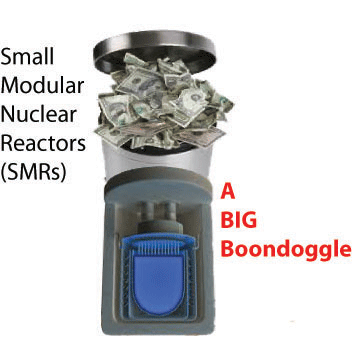 If the ISA report authors are entranced by Generation IV nuclear concepts, as their uncritical use of the EIRP report suggests, why not consider the estimated cost of prototypes under construction rather than ridiculous guestimates offered by nuclear companies? Argentina claims to be a world leader in the development of small modular reactors, but the estimated cost of the one SMR under construction in Argentina has ballooned to an absurd US$21.9 billion / GW. Likewise, estimated construction costs for Russia’s floating nuclear power plant increased more than four-fold and now amount to over US$10 billion / GW.
ISA’s chief economist and report co-author Stephen Anthony told the ABC that nuclear power ‘looks awfully good’. But the only figures in the ISA report that make nuclear look good are the ridiculous guestimates provided by companies involved in Generation IV R&D. Nuclear doesn’t look awfully good to the growing number of countries phasing out nuclear power ‒ a list that now includes Germany, Switzerland, Spain, Belgium, Taiwan and South Korea. And it doesn’t look awfully good to the nuclear lobbyists pondering what if anything can be salvaged from the ‘ashes of today’s dying industry’ … it looks awful, not awfully good.
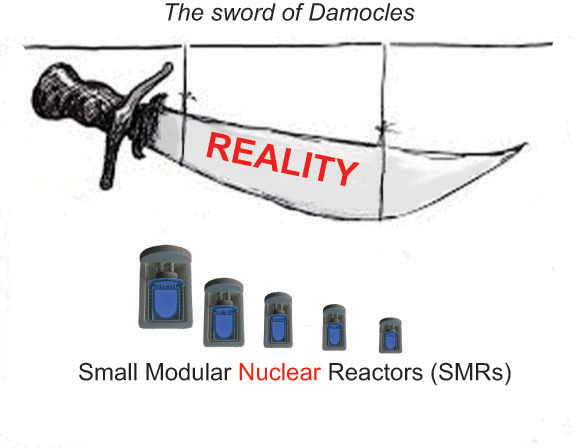 A 2015 report by the International Energy Agency and the OECD’s Nuclear Energy Agency said that ‘generation IV technologies aim to be at least as competitive as generation III technologies … though the additional complexity of these designs, the need to develop a specific supply chain for these reactors and the development of the associated fuel cycles will make this a challenging task.’
The late Michael Mariotte commented on the IEA/OECD report: ‘So, at best the Generation IV reactors are aiming to be as competitive as the current − and economically failing − Generation III reactors. And even realizing that inadequate goal will be ‘challenging.’ The report might as well have recommended to Generation IV developers not to bother.’
Technological neutrality?
A single reactor would be a ‘relatively small investment’, the ISA report states. But cost estimates for all reactors under construction in north America and western Europe range from A$14-24 billion………..
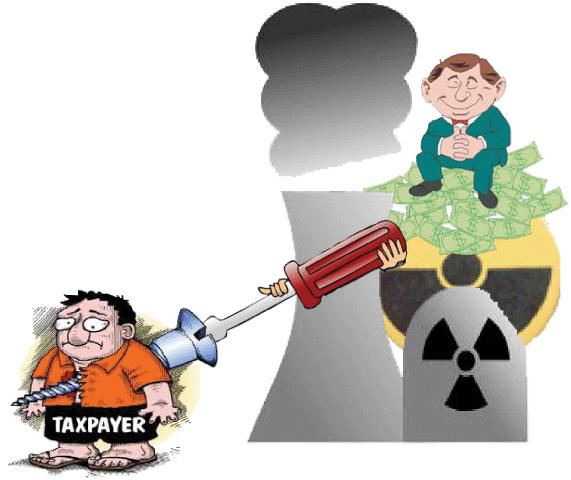 The report discusses the plan for a twin-reactor nuclear plant at Wylfa in Wales, abandoned after the cost estimate increased from A$26.4 billion to A$39.7 billion. The project was abandoned by Hitachi, the ISA authors state, ‘because it was required to carry too much risk relative to the size of the company.’ But staggering British taxpayer subsidies were on offer for Hitachi to proceed with Wylfa. Business and Energy Secretary Greg Clark saidthe UK government offered a ‘significant and generous package of potential support that goes beyond what any government has been willing to consider in the past’ … which is really saying something since taxpayer subsidies for Hinkley Point are estimated at A$55–91 billion.
Evidently the ISA report authors believe that the subsidies on offer for Wylfa needed to be increased again and again until Hitachi finally agreed to go ahead with the project.
Sceptical responses
The New Daily, a publication of Industry Super Holdings, didn’t buy the ISA’s nuclear Kool-Aid. The New Daily article quotes Dr Ziggy Switkowski saying last year that ‘the window for gigawatt-scale nuclear has closed’ and that nuclear power is no longer cheaper than renewables, with costs rapidly shifting in favour of renewables.
The New Daily also quotes Andrew Richards, CEO of the Energy Users Association of Australia. Richards noted that it would take at least a decade to get a nuclear power plant up and running (20+ years according to economist Prof. John Quiggin) and that governments would need to support insurance, dismantling and disposal costs as the private sector won’t take on those risks.
The Electrical Trades Union condemned the ISA report. ETU National Secretary Allen Hicks said: ‘The ETU has very strong concerns about this ISA report that broadly spruiks nuclear power while using flawed assumptions and poor modelling to write down the capacity of renewables and battery technology.’
Hicks called on partners in the superannuation industry to join in the condemnation of the ISA report ‘that is not only full of holes but would put at risk the very people who industry super represents – union members.’
Hicks continued: ‘This report has been developed without consulting key industry stakeholders or actual members of Industry Super Australia that we have been in contact with. … With the Federal Liberal Government totally incapable of leading on energy policy, we think ISA should take a leading role in energy investment, but it must not try to put our members retirement savings into a deadly industry that does not exist in Australia and is fading around the globe and consistently leads to spiralling costs.’
ETU National Industry Coordinator Matthew Murphy accusedI SA of ‘fluffing up the benefits of nuclear power’ and said many of the report’s findings were based on assumptions or numbers with no basis in reality. ‘This report is biased toward nuclear power and against renewables and that clearly bares out in shoddy maths and assumptions like ‘a battery will only run for one hour’ or that the island nation of Australia is not suitable for off-shore wind and tidal power,’ Murphy said. http://www.onlineopinion.com.au/view.asp?article=20399&page=1
Barnaby Joyce jumps on the Australian extreme right wing pro nuclear bandwagon
Barnaby Joyce to push for inquiry into nuclear power https://www.theaustralian.com.au/nation/barnaby-joyce-to-push-for-inquiry-into-nuclear-power/news-story/eb626f6785e7ad90bbec9aa504615690Barnaby Joyce wants an inquiry into nuclear power. RICHARD FERGUSON, REPORTER, JULY 11, 2019
Former Nationals leader Barnaby Joyce will use his position as the chair of a parliamentary committee to push for an inquiry into nuclear power, saying it is the only way to get to zero emissions.
Mr Joyce is the chairman of the House of Representatives standing committee into industry, innovation, sciences and resources and says his committee is better placed to look into nuclear power than the Senate.
The Australian reveals today that Scott Morrison was sent a draft terms of reference into a nuclear power inquiry by Coalition MPs last month.
Mr Joyce said this morning that he will push for a nuclear power inquiry in his committee and that those who want zero emissions but no nuclear option should “shut up.” Continue reading
Australia’s security and self-reliance – there’s a better path than getting nuclear weapons
the important point is what flows from that. White, one of Australia’s clearest statregic thinkers, says we should therefore be more self-reliant.
So far, so good. But his suggested options of meeting the challenge of being less reliant on the US displays a nation-state mentality which is quite outdated. ……
the question is not only how much money should be spent, but upon what it should be spent upon, to address our national security.
In the past two decades we have spent it in precisely the places which have reduced, not increased, our national security: Iraq and Afghanistan in particular. If we had stayed out, Australia would not have attracted the attention of jihadists and terrorists.
Spending money on a nuclear deterrent, which White does not rule out, did not help the US in its interventions in Afghanistan, Iraq, Syria, Libya, Lebanon etc……..
A better way is to make our forces responsive to Australian, not US, needs, as White suggests. But we do not have to spend a vast amount more. Rather than spend more on the military element of our national-security expenditure, we should spend more on the relationship-building expenditure – particularly foreign aid and the soft power of Australian TV and radio broadcasts into our region, and beyond – areas we have cut so stupidly against our national interest in the past two and half decades.
And surface ships which can respond to humanitarian crises, are critical. Submarines cannot do that.
The foreign-aid budget should be part of the defence budget. Australians have no idea how little we spend on foreign aid, so governments can get away with cutting it. The Lowy Institute (which, as it happens, I criticised last week on its inept polling on population) has done a first-rate job on exposing this. ……..
We can bluff our neighbours with a nuclear weapon that attacking Australia might or might not result in a painful rebuff. But the bluff might be called. On the other hand, if we build trade, educational and cultural exchanges and health, educational and economic aid with our neighbours they will never want to attack, and if they ever have totalitarian leaders those leaders will never be able to point to Australia as the wicked outsider deserving of attack.
To the extent we are no longer under the US nuclear umbrella, as White correctly points out, we should be grateful. The price has never been worth it. And Iran could well, one hopes not, prove the point yet again. ……..http://www.crispinhull.com.au/2019/07/12/defence-the-appalling-us-corollary/
Sydney Morning Herald article provokes Australian pro nuclear troll’s vicious attack on Dr Helen Caldicott.
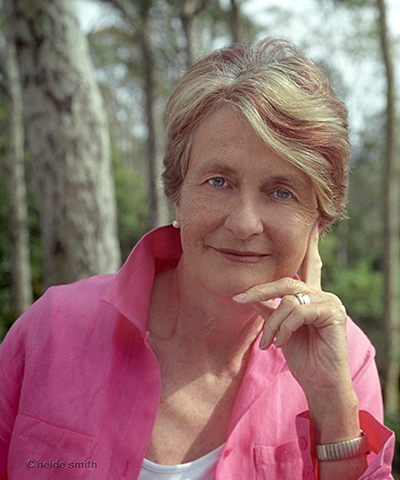 It was remarkable that the Sydney Morning Herald finally had the courage to run an article by globally recognised writer on matters nuclear – Dr Helen Caldicott. The Australian mainstream media generally runs pro nuclear articles, or, at best, steers clear of the nuclear topic altogether.
 This was too much for Australia’s pro nuclear propagandist, Ben Heard. He prides himself on writing information – the facts – and claims to never use ‘ad hominem’ arguments against nuclear critics. But here’s what Ben tweeted yesterday:
“Outrageous that @smh published the conspiratorial, unscientific train-of-thought that is Helen Caldicott. Next week, climatechange by Lord Christopher Moncton?
Any rational person need only spend 5 mins listening to her before feeling the need to back away slowly without making eye contact.”
France’s latest nuclear-powered ‘Barracuda’ class submarine: why did Scott Morrison send Australian Defence Minister Linda Reynolds to France, for the launch.
The French government has placed an order for six of the 5,000-tonne submarines made by Naval Group, in which defence company Thales has a 35 percent stake.
The Australian defence minister Linda Reynolds attended the ceremony unveiling the submarine. Australia recently ordered a non-nuclear attack class submarine fleet from the Naval Group……… https://www.euronews.com/2019/07/12/french-president-emmanuel-macron-to-unveil-france-s-nuclear-powered-barracuda-submarine
The unaffordable and extreme cost – if Australia opted for nuclear power
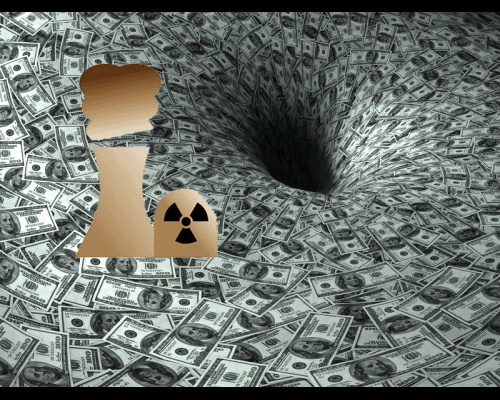 The nuclear cycle of destruction, Red Flag, James Plested, 12 July 2019 “……..Another downside to nuclear power is the cost and time involved in constructing new reactors. As Peter Farley of Engineers Australia wrote in RenewEconomy earlier this year, “The 2,200 MW Plant Vogtle [a new nuclear plant in the US] is costing US$25 billion plus financing costs, insurance and long term waste storage … For the full cost of US$30 billion, we could build 7,000 MW of wind, 7,000 MW of tracking solar, 10,000 MW of rooftop solar, 5,000 MW of pumped hydro and 5,000 MW of batteries”.
International financial advisory firm Lazard’s 2018 Levelized Cost of Energy Analysis found that nuclear power was significantly more expensive than gas, coal, or renewable energy sources like solar and wind. For new nuclear, it estimated the cost at US$112-189 per megawatt hour. The cost of power generation from coal was US$60-143. Wind and utility-scale solar were significantly cheaper, at US$29-56 and US$36-46 respectively.
The world’s 450 or so operative nuclear reactors produce only around 11 percent of the electricity supply. Any significant increase in this proportion would require a massive program of construction – on the order of 1,000 new plants over the next decade.
According to the most generous estimates, the cost of constructing a single new nuclear reactor is between US$5 and $10 billion (and the necessary decommissioning of the average reactor now costs an estimated US$500 million). So for the construction of 1,000, we would be looking at up to US$10 trillion. In addition, there is related infrastructure such as new uranium mines, enrichment and transportation facilities, waste storage facilities and so on. But if there are trillions of dollars available for nuclear, why not use that money to fund a global shift to a combination of wind, solar, tidal and other renewable sources that could much more cheaply and sustainably provide for the world’s energy needs? …… https://redflag.org.au/node/6835
1 This month.
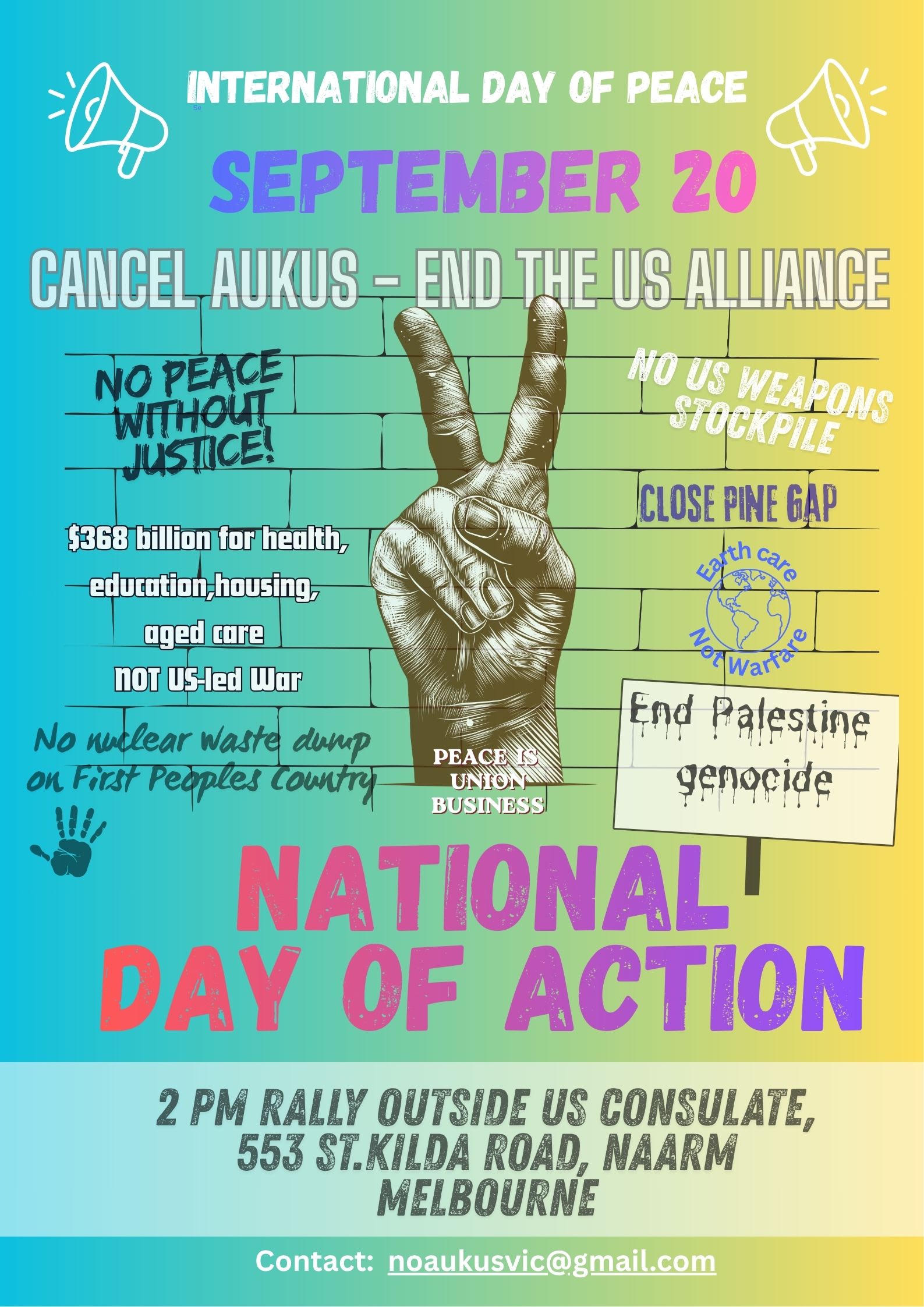
20 September –National Day of Action in Melbourne on the International Day of Peace

Help Aunty Sue Protect Her Land and Sacred Sites From Destructive Rocket Testing.
.

Australians deserve the truth
about
AUKUS – https://aukuspublicinquiry.com/
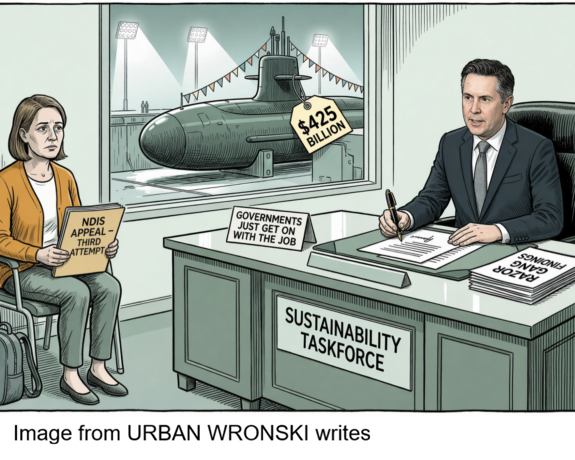

PETITION – To: Prime Minister Anthony Albanese and the Australian Labor Government

of the week – Australians for War Powers Reform (AWPR)
To see nuclear-related stories in greater depth and intensity
 Antinuclear