International ‘nuclear tombs’ are being built, but how do we warn future generations of what’s inside?
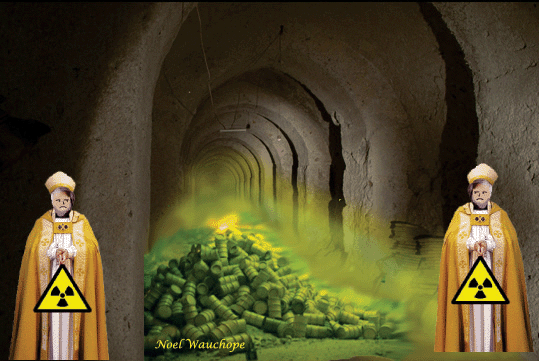
in November 2024, Adelaide residents said they were “blindsided” when federal parliament legislation allowed for nuclear waste to be stored and disposed of at a shipping yard in Osborne — 25 kilometres north-west of the CBD and seaside suburbs.
The plans are part of the $368 billion AUKUS project, which will involve building nuclear submarines in South Australia, and include a commitment from the federal government that it would secure storage for nuclear waste produced.
By Megan Macdonald for Future Tense, 20 Mar 25, https://www.abc.net.au/news/2025-03-20/nuclear-tombs-overseas-offer-warning-for-future-generations/105024144
Earth is no spring chicken.
In fact, based on scientific dating, it’s considered to be 4.5 billion years old.
Coincidentally, that’s also how long depleted uranium (a by-product of the process of enriching uranium for use in nuclear power reactors and weapons) remains dangerous.
And so, as the idea of using nuclear energy as an alternative power source dominates headlines, the safe storage of toxic waste produced by nuclear power and how we warn future generations about its dangers is being considered.
Dr Shastra Deo, a nuclear semiotics expert and author at the University of Queensland, tells ABC Radio National’s Future Tense this is a quandary at the centre of nuclear semiotics.
“Nuclear semiotics is obsessed with this idea of creating a sign to warn us about the dangers of nuclear waste into deep time … The main timeline we’re working with is 10,000 years, but that’s frankly not enough to keep us safe,” she says.
Nuclear on the mind
In June 2024, in response to Australia’s cost-of-living crisis and an upcoming federal election, Opposition Leader Peter Dutton announced his proposal for nuclear power in Australia.
Promising zero emissions and lower power prices, the announcement named seven locations for the nuclear power plants across Australia, which would be built next to existing infrastructure.
These included Mount Piper Power Station in New South Wales, Loy Yang Power Stations in Victoria and Tarong Power Station in Queensland.
While the announcement didn’t include a plan for how the toxic waste produced from nuclear power would be managed, it did state that a community engagement process would occur alongside “a comprehensive site study including detailed technical and economic assessments”.
Mr Dutton’s announcement added that currently, “32 countries [are] operating zero-emissions nuclear plants. Another 50 countries are looking to do so”.
Yet, while nuclear energy is a source of power for many countries, the question of what to do about the highly toxic waste that nuclear energy produces is not settled.
Toxic tension
The rolling hills of France’s Champagne region are known for their green landscapes and quaint villages.
But nearly 500 meters beneath the small village of Bure, France, large tomb-like chambers are being constructed by France’s national radioactive waste agency, Andra, so that they can demonstrate their suitability for building a geological disposal facility (GDF).
GDFs are built to store intermediate to high-level nuclear waste safely for thousands of years.
Andra’s chambers are part of a huge international engineering effort to build giant underground nuclear tombs for waste storage across the United Kingdom (UK) and Europe
Finland was the first country to build a deep GDF to store spent nuclear fuel for 100,000 years, and initial testing has already begun.
Mark Piesing, a UK-based freelance journalist, reported on the European and UK GDF plans last year.
He says GDFs take many years to get approved and built, and their long-term success relies on decades of future political stability.
“The security of them depends on the continuation of governments and states as we know it … If there is a political upheaval, if there [are] revolutions, if climate change brings about social chaos, then the security of these installations will be compromised,” he says.
Mr Piesing visited the Andra testing facility in Bure, France, and he describes the scale of the proposed GDF as “quite awe-inspiring”.
“The scale of it … you could imagine the pharaohs building something similar, the workers working for years,” he says.
While impressive, the construction and plans for GDFs across Europe haven’t been without controversy.
The Andra project underneath Bure, France (with a population of only 82 residents) has sparked protests — some violent — from anti-nuclear activists over the company’s plans to build a GDF for nuclear storage.
In Sweden, the Swedish Nuclear Fuel and Waste Management Company commenced test drilling across the country in the 1980s to find suitable locations for potential nuclear waste storage, a move that didn’t go down well.
“The Swedish authorities perhaps didn’t consult the community enough. So this caused protests in a number of locations where they’re trying to do their test drilling,” Mr Piesing said.
And here in Australia, proposed sites for storage of toxic nuclear waste have also received backlash.
Where would we store nuclear waste in Australia?
The storage of nuclear waste has been a long-held issue of national contention, particularly in South Australia.
In 2023, the Barngarla traditional owners of SA’s Eyre Peninsula won a legal challenge to stop the federal government from building a nuclear waste facility near Kimba.
The plans were to store low and intermediate-level radioactive waste at the proposed facility.
Then, in November 2024, Adelaide residents said they were “blindsided” when federal parliament legislation allowed for nuclear waste to be stored and disposed of at a shipping yard in Osborne — 25 kilometres north-west of the CBD and seaside suburbs.
The plans are part of the $368 billion AUKUS project, which will involve building nuclear submarines in South Australia, and include a commitment from the federal government that it would secure storage for nuclear waste produced.
Ted O’Brien, Shadow Minister for Climate Change and Energy, tells the ABC that the Coalition has a long-term plan for nuclear waste storage if it wins the upcoming election.
“Spent fuel from nuclear power plants will be temporarily stored on-site before being transported to a permanent waste repository, where spent fuel from our AUKUS nuclear submarines will also be stored,” he says.
Mr O’Brien says the permanent site’s location is a matter for the federal government.
The location of the permanent site under the AUKUS deal has not been addressed since late last year by the federal government.
However in January it was revealed by former senator Rex Patrick that documents obtained via Freedom of Information (FOI) show South Australia’s Defence Industries Minister met with a defence company in the UK for the “specific purpose of being briefed” on the dismantling of nuclear reactors and the waste associated with them.
“[The government is] yet to clarify the location … It is now Labor’s responsibility for identifying a long-term waste repository,” Mr O’Brien says.
“We stand ready to cooperate constructively.”.
A warning for generations to come
While the future for Australia’s nuclear waste remains unclear, Dr Shastra Deo says we can look back at history to inform the need for warnings surrounding toxic waste storage for future generations.
“You see the [Egyptian] pyramids and they’re very intriguing to us … There was a warning message on them from one of the pharaoh’s viziers that said, ‘If you intrude on my tomb, I will curse you and you will die,’ — and we went in anyway,” he explains.
“We’re curious people. That’s what humanity is … we want to find out what’s in these spaces.
n Ms Deo’s field of nuclear semiotics, several ideas have been raised to warn future generations of the dangers of toxic waste stored below ground.
These include hostile architecture (an urban design strategy that uses elements of a built environment to purposefully guide behaviour of humans), the use of symbols and an “atomic priesthood” of knowledge keepers.
Rounding out the list is the “black hole” which, as Ms Deo explains, would involve “putting granite over the area and the sun would heat it up to a point where you just couldn’t walk across it”.
Ms Deo says the ongoing challenge lies in the length of time these warnings are required, which can be hundreds of thousands of years.
“How can we create a message that will last this long? Already you can kind of see the impossibility in that.”
Ms Deo says that regardless of the challenges, we must consider our accountability to those who come after us.
“We need to send a message to ourselves about this technology and how we’re going to move forward with it — and how we’re going to store it.”
It’s a question that we’ve yet to answer.
The “Great Era of Nuclear Decommissioning” begins – well, sort of, even in Australia

https://theaimn.net/the-great-era-of-nuclear-decommissioning-begins-well-sort-of-even-in-australia/ 20 Mar 25
Nuclear is big news for Australia. For the coming election, the federal Opposition party – the Liberal-National Coalition, has as its major, indeed, pretty much its only, policy – to establish the nuclear power industry at 7 sites across the continent. At the same time, a Liberal group has sprung up – Liberals Against Nuclear, vowing to ditch that policy.
Meanwhile the AUKUS plan, (beloved of both major parties) to buy super-expensive nuclear submarines, has run into problems, and is at risk of being ditched.
Also now, on March 4th the Australian Nuclear Science and Technology Organisation (ANSTO) announces that it is embarking on a major decommissioning project , getting into the wonderful new Era of Nuclear Decommissioning. This Era was predicted by The Ecologist, back in 2019, but only now is it reported to be getting underway.
Japan, one of the top nuclear nations, has just announced the first dismantling of a commercial nuclear reactor – ‘signifying that the so-called “great era of decommissioning” has begun in earnest in Japan.’ They have another 59 to go (10 cleared for operation, 23 described as “operable” , and 26 shut-down ones).
So what indeed is the “great era of decommissioning”? What does “decommissioning” actually mean?
According to the European Union – “ It involves all activities starting from the shutdown of the facility and the removal of all nuclear material right down to the environmental restoration of the site. The whole process is complex and typically takes 20 to 30 years to complete.“
So, in Japan, they really mean business – “dismantling of the reactor, which began on March 17, is considered the main part of the decommissioning work“
In Australia -not so much. It means that ANSTO, a few weeks ago, got a licence from the Australian Radiation Protection and Nuclear Safety Agency (ARPANSA), to begin Phase A, Stage 1, and is now beginning to remove peripheral equipment from the the 67 year old Hifar nuclear reactor, now 18 years out of action. More Phases and Stages to go.
Both the Japanese and Australian news items give short shrift to that final problem – nowhere to put the radioactive remains. ANSTO’s at pains to stress how small an amount it is “be managed and stored safely onsite at Lucas Heights” . The Japanese article concludes “While Japan has entered an era of decommissioning, decommissioning plans continue to be postponed due to the lack of a finalized waste disposal site.”
The World Nuclear Association goes into much detail on the decommissioning of 700 nuclear reactors, but only a few of these have been completely dismantled, and still no way of permanently disposing of their radioactive remains.
Meanwhile the International Atomic Energy Agency, and the governments of the most powerful nations are all complacently touting the need for new nuclear reactors. Australian authorities, keen to stress Australia’s nuclear know-how are joining in this happy disregard of the importance of dangerous radioactive trash.
That famous old Australian character “blind Freddy” would immediately know that this is an unreasonable and immoral attitude.
The “era of nuclear decommissioning” is not really underway at all. If it were happening, there’d be no more hype about new nuclear. I fear that the sad reality is that the men in charge realise that nuclear decommissioning is just too expensive, too fraught with problems “best to just leave it alone, until we are comfortably superannuated out, or dead. “
Liberal supporters launch election ad campaign against Peter Dutton’s plan to build nuclear power plants
Liberals Against Nuclear say the policy would increase bureaucracy and impose ‘massive taxpayer-backed risk’
Adam Morton Climate and environment editor, 18 Mar 25, https://www.theguardian.com/australia-news/2025/mar/18/liberal-supporters-launch-election-ad-campaign-against-peter-duttons-plan-to-build-nuclear-power-plants
A group of Liberal supporters has launched an advertising campaign against the party’s plan to build taxpayer-funded nuclear power plants, arguing it “betrays Liberal values”, divides the party and “hands government back to Labor”.
The new advocacy group Liberals Against Nuclear says it rejects the Coalition’s policy as it would require the government to borrow tens of billions of dollars, swell the bureaucracy and impose “massive taxpayer-backed risk”.
Peter Dutton’s proposal would involve eventually building nuclear reactors at seven sites across the country, mostly after 2040. In the short term, the Coalition says it would slow the rollout of renewable energy, attempt to extend the life of ageing coal-fired power plants and rely more on gas-fired power.
The Liberals Against Nuclear spokesman is Andrew Gregson, a former Tasmanian Liberal director and candidate who said he was not currently a party member but remained a supporter. He declined to say how many supporters the group had or name other members, but said those involved were concerned the nuclear policy was driving “free market and middle ground voters” to support “teal” and other independent MPs in seats the Coalition must win to return to government.
“We’re trying to save the party from a policy that will gift seats to their opponents,” he said. “Nuclear technology itself isn’t the issue. It’s the socialist implementation being proposed that trashes Liberal values.
“If nuclear energy is so good then the market will back it without massive government intervention.”
The group is running television, digital and billboard ads that argue “many Liberals are against nuclear”. One of the ads shows a woman reading a newspaper article that quotes the Nationals senator Matt Canavan as saying “nuclear fixes a political issue for us but ain’t the cheapest form of power” and cites a report by the Institute for Energy Economics and Financial Analysis that found the Coalition proposal would lead to a $665 increase in average power bills. The ads ask the opposition leader, Peter Dutton, to “please dump nuclear”.
Gregson said they would run across the country and be particularly targeted in marginal seats, including those held by teal MPs. He said the ads were aimed at the party, not voters.
Liberals Against Nuclear said polling had suggested only 35% of Australians backed nuclear energy, and that support collapsed once voters understood the policy details. Its website raises concerns about the policy driving up national debt and creating safety and security risks.
Gregson said dropping the policy would cause the Coalition a “couple of days’ worth of negative publicity” but would not cost it the election. “Nuclear power is the big roadblock preventing the Liberals getting to The Lodge,” he said.
Asked about the campaign on the Seven Network, Dutton said his policy was “based on the international experience” and claimed it would bring electricity costs down by 44% and provide “stability in the market”.
The Climate Change Authority, a government agency, found the Coalition’s proposal would add an extra 2bn tonnes of carbon dioxide to the atmosphere and make it “virtually impossible” for Australia to reach net zero by 2050, a position the opposition claims to support.
Labor has a target of 82% of generation coming from renewable energy by 2030, up from the current level of nearly 45%. The authority said that under the Coalition’s plan there would probably not be 82% of electricity from zero emissions technology – renewables and nuclear – until 2042.
Independent experts have suggested the Coalition policy would likely lead to household power bills being higher than under Labor’s policy as there would be less generating capacity competing in the grid. They have also said it would increase the risk of the electricity supply becoming unreliable at peak times as it was more reliant on old coal power plants that are nearing the end of their expected operating lives.
Peter Dutton interrupted mid-speech by anti-nuclear protesters
By Josh Hohne Mar 20, 2025, 9 News
Opposition Leader Peter Dutton and Shadow Treasurer Angus Taylor have been interrupted by anti-nuclear energy protestors today in Sydney.
Dutton was addressing the Lowy Institute think tank when two protestors began heckling him.
“Why are you lying to the Australian people about the cost of nuclear,” one of the protesters said as he was escorted out by security and federal police.
He held a banner reading “Nuclear lies cost us all”.
After a pause, Dutton continued with his address.
Later in his speech about the Coalition’s election priorities, he was interrupted again by a man speaking from the sidelines……………………………………..
The protesters were part of the Rising Tide environmental group.
“The Coalition’s scheme to force nuclear into Australia’s energy grid is going to cost $600 billion to the taxpayer, add up to $1200 to people’s energy bills, and produce 1.6 billion tonnes of climate pollution by 2050,” Zack Schofield, one of the protesters, said afterwards.
Hours after interrupting Dutton, the same protesters disrupted another press conference, this time forcing Shadow Treasurer Angus Taylor to relocate his media opportunity.
Schofield again interrupted Taylor.
Taylor quickly packed up his team and began relocating to another location.
Dutton and Taylor aren’t the first to be interrupted by protesters this week, with climate activists cutting off Treasurer Jim Chalmers during a pre-budget speech on Tuesday. https://www.9news.com.au/national/peter-dutton-interrupted-mid-speech-protesters-nuclear-energy/eaed0bf8-0e02-4617-b2de-1cab1c419830
Bob Carr says Aukus a ‘colossal surrender of sovereignty’ if submarines do not arrive under Australian control

Former foreign minister says it is ‘inevitable’ US won’t supply nuclear-powered submarines under Aukus.
Guardian, Ben Doherty, 20 Mar 25
Australia faces a “colossal surrender of sovereignty” if promised US nuclear-powered submarines do not arrive under Australian control, former foreign affairs minister Bob Carr has said, arguing the US is “utterly not a reliable ally” to Australia.
“It’s inevitable we’re not getting them,” Carr told the Guardian, ahead of the release of a report from Australians for War Powers Reform that argues the multibillion-dollar Aukus deal had been imposed upon Australia without sufficient public or parliamentary scrutiny.
“The evidence is mounting that we’re not going to get Virginia-class subs from the United States,” Carr said, “for the simple reason they’re not building enough for their own needs and will not, in the early 2030s, be peeling off subs from their own navy to sell to us.”
Under “pillar one” of the planned Aukus arrangement, it is proposed the US would sell Australia between three and five of its Virginia-class nuclear-powered submarines in the early 2030s before the Aukus-class submarines were built, first in the UK, then in Australia
However, the US has already forecast it might not have capacity to spare any of its Virginia-class boats, the Congressional Research Service instead floating a proposal in which: “instead of … them being sold to Australia, these additional boats would instead be retained in US Navy service and operated out of Australia”.
Carr said that alternative would leave Australia without Australian-flagged submarines and no control of when, and to where, those boats were deployed.
“It involves the total loss of any sovereign submarine capacity and, more than that, a colossal surrender of Australian sovereignty in general.”
Australia, Carr said, needed to look past the “cheerful flag-waving propaganda” of the proclaimed Aukus deal, saying the alternative likely to be presented by the US would leave Australia “totally integrated in American defence planning and we’ll be hosting even more potential nuclear targets”.
Australians for War Powers Reform, a group that advocates for parliamentary oversight of the decision to send Australian troops to war, launched a report on Thursday morning arguing that the Aukus deal – signed by the Morrison government in 2021 and adopted by its Albanese-led successor – had been instituted without any public or parliamentary scrutiny.
“The public and the national parliament have been kept in the dark every step of the way,” the report argues.
“The Aukus pact has become a textbook example of how to disenfranchise the community, providing almost no transparency or democracy in a sweeping decision which will affect Australia for decades.”
Aukus and the Surrender of Transparency, Accountability, Sovereignty argues the multi-decade, multibillion-dollar Aukus deal was presented to the Australian public without any discussion, consultation, and without parliamentary debate. The current forecast cost of “pillar one” of Aukus – to buy US Virginia-class submarines and build Aukus subs – is $368bn to the 2050s.
The report raises concerns over vague “political commitments” offered by Australia in exchange for the Aukus deal, as well as practical concerns such as where and how nuclear waste would be stored in Australia.
“Aukus has no legitimate social licence because the public has been shut out of the process, and as a result, scepticism and cynicism have increased.”
Dr Alison Broinowski, AWPR committee member and a former Australian diplomat, said Australia’s agreement to the Aukus deal was manifestation of a structural flaw in Australia’s democracy, where decisions to go to war, or to make consequential defence decisions, were not subject to parliamentary scrutiny or public debate.
Broinowski said Aukus was acutely significant because of its size and potential consequence “and yet the same failure to be frank with the people characterises every government this country has had, during every war there’s been”.
She argued Australia had no control over Aukus. “We don’t know what Trump’s going to do and we have no control over what he does. And so we’re left hoping for the best, fearing the worst and with absolutely no way of controlling or influencing what happens, unless we first get ourselves out of Aukus.”……………………………….more https://www.theguardian.com/australia-news/2025/mar/19/bob-carr-aukus-submarine-deal-us-australia-relationship
Investors take aim at Coalition as nuclear debate hits boiling point
The Age, By Nick Toscano, March 19, 2025
Major investors have clashed with the Coalition ahead of the federal election, warning that slowing the rollout of renewable energy will push up electricity bills by increasing the need to call on failure-prone coal plants and expensive gas-fired generators.
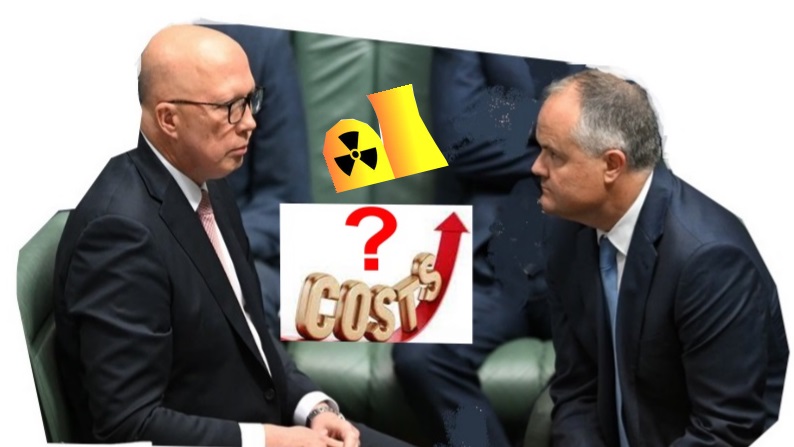
Debate about Australia’s clean energy shift has been thrust to centre stage as Opposition Leader Peter Dutton campaigns to limit renewables to 54 per cent of the electricity grid and build a fleet of government-owned nuclear generators across the mainland.
If it wins the election, the Coalition would roll back Labor’s 2030 climate commitments, including its target for renewables to make up 82 per cent of the grid by 2030, which experts believe is unlikely to be met.
However, in a significant intervention, a group of large investors including US asset giant BlackRock, France’s Neoen, Australia’s Macquarie Bank and the Andrew Forrest-backed Squadron Energy has ramped up its push against policies that would restrict the expansion of wind and solar and keep the grid heavily tied to fossil fuels for longer.
“Australia needs more renewables, not less, to achieve sustained power price reductions,” said the Clean Energy Investor Group, which represents 18 global and local investors with a portfolio value of $38 billion across Australian renewable projects.
Households have been hit with double-digit power bill increases since 2022, the year that Russia’s invasion of Ukraine unleashed a global energy crunch. Another power price rise, partly due to recent stretches of low wind and rain limiting renewables’ output, is set to take effect in Queensland, NSW and South Australia from July this year.
But bills would be up to $417 a year higher if not for renewable energy and batteries, the investor group’s analysis shows, as utilities would be forced to more frequently fire up their gas-powered generators, which are among the most expensive suppliers to the grid.
Separate industry modelling released last week by the Clean Energy Council suggests the Coalition’s push to limit renewables would require at least a three-fold increase in gas-powered electricity costs by 2030.
Investors have also expressed concern at the Coalition’s proposal to extend the lives of ageing coal-fired power stations beyond their closure dates in the 2030s and 2040s until nuclear plants were ready to replace them, which could raise risks of sudden breakdowns, power shortages and price spikes.
“Running a grid using fossil fuels rather than renewables would increase total system costs, weaken energy security, and place greater strain on ageing coal and gas infrastructure,” the investor group said………………………………..more https://www.theage.com.au/business/companies/investors-take-aim-at-coalition-as-nuclear-debate-hits-boiling-point-20250318-p5lkg8.html
Nuclear policy blocking Liberal gains

Liberals Against Nuclear, 19 Mar 25
A Redbridge poll released today confirms what Liberals Against Nuclear has been warning about: the Coalition’s nuclear energy position is actively preventing its path to an election win.
New RedBridge polling puts Labor ahead 51-49 on two-party preferred terms. The data reveals that despite the Coalition’s leadership’saggressive pro-nuclear campaign, voters aren’t buying it. Those believing nuclear energy is unsafe rising from 35% to 39% over the past year. Only 38% of voters believe nuclear would reduce power prices – barely moving from 37% a year ago
“The nuclear power policy is the single biggest roadblock preventing the Liberals from winning government,” said Andrew Gregson, spokesperson for Liberals Against Nuclear. “The Liberal Party’s nuclear fixation is alienating the very voters we need to win back.
“The numbers don’t lie. This policy betrays core liberal principles by requiring tens of billions in government borrowing, expanding bureaucracy, and imposing massive taxpayer-backed risk. It’s driving free-market centrist voters directly to the Teals and independents in must-win seats.”
RedBridge director Tony Barry, a former Coalition strategist, is quoted in today’s News Corp papers emphasizing that “the Coalition needs to return to its key equities of economic management.”
The data confirms the coming election will likely be decided by preferences, with both major parties struggling to reach the 76 seats needed for majority government. This makes winning middle-ground voters crucial – exactly the demographic being alienated by the nuclear position.
“We’re urging party leadership to pivot back to our core economic management strengths and abandon this policy that contradicts core principles.”
Media Contact: Andrew Gregson +61 432 478 066
www.liberalsagainstnuclear.au
Liberals Against Nuclear launches campaign to return party to core values.
Liberals Against Nuclear
A new advocacy group, “Liberals Against Nuclear,” launched today with an advertising campaign aimed at persuading the Liberal Party to abandon its nuclear energy policy position so it can win the coming election.
The group spokesman is Andrew Gregson, former Tasmanian Liberal director, candidate, and small businessman.
“Nuclear power is the big road block preventing the Liberals getting to the Lodge,” Gregson said. “This is big government waste that betrays liberal values, splits the party, and hands Government back to Labor. It’s time for our party to dump nuclear.
“This policy contradicts core liberal principles by requiring tens of billions in government borrowing, swelling the bureaucracy, and imposing massive taxpayer-backed risk.”
The campaign launch includes television advertising, digital content, and billboards questioning the Liberal Party’s support for nuclear. The ads highlight how nuclear energy requires billions in upfront government borrowing, with international experience showing inevitable cost blowouts.
“As John Howard said: “For Liberals the role of government should be strategic and limited.” Yet this nuclear policy gives us bigger government, higher taxes to pay for it, more debt, and less freedom as the state takes over energy production,” Gregson said.
The group warns that the nuclear policy is driving free market and middle ground voters directly to the Teals and other independents in must-win seats. Recent polling shows just 35% of Australians support nuclear energy, with support collapsing once voters understand the policy details.
The group warns that the nuclear policy is driving free market and middle ground voters directly to the Teals and other independents in must-win seats. Recent polling shows just 35% of Australians support nuclear energy, with support collapsing once voters understand the policy details. https://liberalsagainstnuclear.au/
Greens leader Adam Bandt says Australia should walk away from AUKUS in wake of Trump’s tariffs
ABC News, By political reporter Maani Truu, 16 Mar 25
In short:
Greens leader Adam Bandt has urged the government to walk away from the AUKUS pact with the United States, describing the imposition of steel and aluminium tariffs as a “wake-up call” to rethink Australia’s relationship with its key ally.
It comes as Trade Minister Don Farrell said the challenge going forward is figuring out what US President Donald Trump wants and to “make an offer he can’t refuse”.
What’s next?
The minor party is open to a formal agreement with Labor in the event of a hung parliament after the upcoming federal election, due on or before May 17.
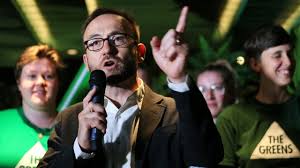
Greens leader Adam Bandt says the government should get out of the AUKUS deal with the United States and explore other relationships in the wake of Donald Trump’s tariffs, warning it puts a “very big” target on Australia’s back.
The minor party has long opposed the AUKUS nuclear submarine project, which is expected to cost $368 billion, but Mr Bandt said the new tariffs imposed this week were a “wake-up call that we need to rethink our relationship with the United States”.
“We should get out of AUKUS, now is not the time to be hitching Australia’s wagon to Donald Trump — it puts Australia at risk and it is billions of dollars being spent on submarines that might never arrive,” he told ABC’s Insiders on Sunday.
Mr Bandt said the US president was a “very dangerous man” and it was “wishful thinking” to believe he would come to Australia’s aid in the event of a security threat.
Prime Minister Anthony Albanese has already ruled out walking away from the AUKUS deal as a response to the tariffs, describing it as a “good deal for Australia”.
The trilateral agreement with the US and UK would deliver Australia eight new nuclear submarines based on British design and with American technology, with the first five due by the middle of the 2050s.
The federal government had fought for an exemption to Mr Trump’s sweeping 25 per cent tariff on steel and aluminium imports, but on Wednesday the White House revealed that no country would be spared.
In the wake of the decision, Mr Albanese said it was “not a friendly act” and lashed the US president’s order as “entirely unjustified”.
But he said Australia would not respond with tariffs of its own, pivoting instead to a pre-election pitch at Australians to “buy local”……………………………………………………………………………………………
Greens open-minded to formal hung parliament deal
The Greens are preparing for the possibility of a minority government after the federal election, which is due on or before May 17.
Mr Bandt said the party would be “open minded” to striking a formal agreement with Labor if that eventuated, as was the case in 2010, categorically ruling out working with the Coalition leader.
He said his preference would be to work with Labor to get action on the cost of living crisis and climate change………………………………………………………………………………………………………………………………
he said a hung parliament would be a “once in a generation chance” to push the major parties to act…………………………. https://www.abc.net.au/news/2025-03-16/greens-adam-bandt-aukus-insiders/105057580?utm_medium=social&utm_content=sf276668174&utm_campaign=tw_abc_news&utm_source=t.co
The Coalition MP who tried to stop the solar farm that will help save thousands of local jobs

What is clear is that if the LNP had its way, and was in a position to deliver on its ideological infatuation with coal and nuclear, old energy paradigms and its obsession with “baseload”, then the smelters and the refineries would not survive beyond the end of the decade.
Giles Parkinson, Mar 16, 2025, https://reneweconomy.com.au/the-coalition-mp-who-tried-to-stop-the-solar-farm-that-will-help-save-thousands-of-local-jobs/
If you ever need an example of the idiocy and the ignorance behind the Coalition and LNP campaign against renewable energy in Australia, a good place to start would be the federal MP for Flynn, Colin Boyce.
The LNP member has staged a relentless campaign against renewables, and the proposed Smoky Creek solar project in his electorate in particular. Boyce has argued that they are “reckless”, and he has amplified numerous scare campaigns about heat islands and toxic runoffs, and even homelessness that these projects allegedly cause.
Just a few weeks ago, Boyce argued that wind and solar could not possibly provide the necessary power for the biggest employer in his own electorate, and the biggest energy consumer in the state, the Boyne Island smelter.
“The Gladstone community and the Boyne smelter rely heavily on reliable, predictable and affordable power. The reality of wind and solar output, for anyone enjoying their air-conditioning in this current heat, is that it cannot provide any of this,” Boyce wrote on his web page on January 22.
“It is not a 24-hour baseload solution. It isn’t always windy and it’s certainly not that sunny after 7pm.” Nuclear, Boyce suggested, is the only solution to replace coal fired power.
How wrong, how ill-informed, and how irresponsible can a local MP be?
Last week, Rio Tinto – the owner of the Boyne Island aluminium smelter and the Yarwun and Queensland Alumina refineries that together employ more than 3,000 people in Gladstone alone – announced the future of these assets will be secured, precisely because they have been able to sign deals for wind, solar and battery storage.
Rio Tinto last week signed 20-year off take deal with the 600 MW Smoky Creek solar farm and its huge 600 MW, 2,400 MWh DC coupled battery, adding to the previously announced contracts with the 1.4 GW Bungaban wind project and the 1.2 GW Upper Calliope solar project.
“These agreements are integral to repowering our Gladstone aluminium operations with affordable, reliable and lower carbon energy for decades to come,” said the head of Rio Tinto Australia Kellie Parker.
“For the first time, we have integrated crucial battery storage in our efforts to make the Boyne aluminium smelter globally cost-competitive, as traditional energy sources become more expensive.”
Rio Tinto says the deal with the Smoky Creek solar and battery means the company now has contracts in place for 80 per cent of its bulk energy needs in Gladstone, and 30 per cent of its “firming” requirements. But it is confident, given the plunging cost of battery storage technologies, that this gap can be readily addressed.
What is clear is that if the LNP had its way, and was in a position to deliver on its ideological infatuation with coal and nuclear, old energy paradigms and its obsession with “baseload”, then the smelters and the refineries would not survive beyond the end of the decade.
Coal fired generation is now too costly and the local coal generators are getting old, the alumina and aluminium products must compete in a world that demands low emission supplies, and nuclear is too far away – and way too expensive – to help.
Boyce’s argument against Smoky Creek is a taste of the nonsense, lies and deliberate misinformation peddled by the LNP, the Murdoch media, conservative “think-tanks” and nuclear boosters and then recycled back through frightened and ill-informed constitutents.
Boyce’s arguments against the Smoky Creek project included claims about “run -off” from solar farms affecting the barrier reef, of destroyed farming land, of businesses lost, and homelessness.
He has warned of “heat islands” (a disproved nonsense) and in 2023 wrote to the regulator warning that his constituents were “lying awake at night, concerned about the radiation and heat energy will affect their herds, their families, and their health.”
Boyce has long campaigned against Smoky Creek, standing up in Queensland state parliament in May, 2021, as the then member for Callide, complaining that the project would only employ five people on a full time basis. He didn’t consider the thousands of jobs that could be saved by the project going ahead.
That speech to parliament – you can watch the video here – was delivered less than five hours after the Callide coal generator, experienced a devastating explosion that very nearly caused a state-wide blackout, and might have were it not for the intervention of big batteries that the Coalition still dismisses as useless.
But Boyce, without a hint of irony, declared that the Callide explosion “reiterates the fact that we need baseload power.”
The biggest employer in his electorate, and the biggest consumer of energy in Australia, begs to differ. Perhaps it’s time that Boyce and his LNP colleagues listen to what they have and other experts have to say.
Giles Parkinson is founder and editor of Renew Economy, and of its sister sites One Step Off The Grid and the EV-focused The Driven. He is the co-host of the weekly Energy Insiders Podcast. Giles has been a journalist for more than 40 years and is a former deputy editor of the Australian Financial Review. You can find him on LinkedIn and on Twitter.
Australia Ramps Up Missile Arsenal Over Chinese Navy Concerns

Just the bare $74 billion
Canberra plans to strengthen the nation’s maritime defenses by equipping forces with anti-ship missiles and advanced targeting radars.
The Australian military is looking to deploy new long-range missiles amid concerns about the growing presence of Chinese warships off the country’s vast coastline.
In the latest move to defend Australia’s maritime security, the government plans to arm forces with anti-ship missiles and advanced targeting radars.
Canberra will allocate up to 74 billion Australian dollars (47 billion U.S. dollars) over the next decade for targeting technology, long-range strike capabilities, missile defense, and the manufacturing of missiles and explosives, according to official speeches and defense planning documents.
Two new types of advanced anti-ship missiles, to be fired from mobile launchers, are currently under evaluation, with a decision expected by 2026.
Future versions of one of the contenders, Lockheed Martin’s Precision Strike Missile, are expected to have a range of up to 1,000 km and could be launched from High Mobility Artillery Rocket System (HIMARS) launchers. Australia has ordered 42 HIMARS launchers from the United States, with the launchers expected to be in service by 2026-27, according to the defense department.
Mick Ryan, a retired Australian army major general, said the new missiles for the Australian army would provide a powerful strike capability and serve as a deterrent to potential adversaries………………………………………………………………………………………………………………
Australian security officials expect more frequent and stronger visits by Chinese warships to the country’s coast…………………………….. https://www.theepochtimes.com/china/australia-ramps-up-missile-arsenal-over-chinese-navy-concerns-5825315?utm_source=Aobreakingnoe&utm_medium=Aoemail&utm_campaign=Aobreaking-2025-03-17&utm_content=NL_Ao&src_src=Aobreakingnoe&src_cmp=Aobreaking-2025-03-17&cta_utm_source=Aobreakingnoecta&est=LOrwYxBGZjROUs118QpMBtE0bgLYS8gg4SGZaQDgSPefhBQmyAxNjk%2BPa9v%2FDaL7DpE6eW86a08A
The Lizard’s Revenge
topnrosdeS146ag, https://www.facebook.com/profile.php?id=100064594993745
Anti-nuclear activists target BHP headquarters and block Collins St to mark the 14th anniversary of the Fukushima nuclear disaster.
Just after 10am today around 20 anti-nuclear activists dressed in white radioactive suits used barrels marked with the radioactive symbols and a car decorated with anti-nuclear statements to block the BHP head office. Inside the car a man in his 60s
secured himself to the steering wheel using a bike lock.
The Desert Liberation Front, who organised the protest highlighted the relationship between uranium mined by BHP and the Fukushima disaster:
“BHP makes its billions from destroying the planet and it is not only complicit in Fukushima by supplying the uranium but is part of the push for nuclear power in Australia, a plan that puts all of us and our planet in danger of another Fukushima.”
“The 14th anniversary of the Fukushima nuclear disaster comes at a time in Australia when the Liberal Party is attempting to dress up nuclear power as safe and the Labor Party is continuing with its commitment to AUKUS, a plan that will not only bring nuclear subs to ports around the country but will also result in nuclear waste dumps on sacred land.”
“We call on all political parties and private companies operating in this country to commit to banning the mining of uranium and the banning of all forms of nuclear power, both for weapons of war and as a false alternative to renewable energy.”
The end of coal and the fake nuclear energy ‘red herring’
Coal has had its day as Australia’s key energy source — regardless of what politicians driving an energy debate full of distractions tell you over the next few months.
And the suggestion that nuclear energy is a viable replacement is a red herring.
John Quiggin, New Daily, 16 Mar 25
Coal-fired power is more expensive than renewable alternatives, more polluting and the power stations that use it now are old, generally obsolete and unreliable. They won’t be rebuilt. That’s not just an opinion, it’s backed by all the evidence, regardless of how many political agendas argue otherwise.
Coalition claims that nuclear energy can replace coal simply don’t stack up. It’s expensive and can’t possibly be delivered in time to replace coal-fired energy. And gas is not the stopgap solution some would like to think.
The genuine answer to deliver on Australia’s growing energy needs is to quickly manage the nation’s transition to renewables.
Yet the debate over future energy supply and power prices, which will be front and centre during the election campaign, is part of the ongoing culture wars over energy largely imported from the US.
Coal: the facts
The core of the problem is simple. The coal-fired power stations that supply about 50 per cent of electricity to Victoria, NSW and Queensland are old, unreliable and polluting.
Most are 40-50 years old, using obsolete ‘subcritical’ technology – which is constrained by the boiling point of water, and is about 34 per cent efficient. Even the newest plants at Kogan Creek and Tarong in Queensland use outdated supercritical technology, which is about 39 per cent efficient.
The state of the art in coal-fired power, still highly polluting, is ‘ultra-supercritical’ at 43 per cent efficiency but there are no Australian plants of this kind. Worse still, despite their relative youth and modernity, Kogan Creek and Tarong have been among the least reliable plants in the network.
Most of these plants are due for retirement soon: On current plans, all but a handful will be gone by 2035. Meanwhile, electricity demand is set to grow with the electrification of transport, industry and home heating and perhaps with the development of energy-hungry data centres.
There is no prospect of building new coal-fired power stations. The cost far exceeds that of solar photovoltaics and wind, even after allowing for the cost of battery storage.
Outside China and India, which had 97 per cent of new or revived coal-fired proposals in the first half of 2024, almost no one is building new coal-fired power stations.
Even in those two countries, where demand is growing rapidly, the great majority of new capacity is renewable.
There may be some role for gas in meeting peak demand, though even this is doubtful. Gas is a hugely expensive source of electricity, with the problem made worse by the way successive governments have mishandled Australia’s gas resources, selling gas cheaply to foreign buyers that might have to be bought back at a loss.
It becomes obvious the only real question — despite the imported culture wars — is how rapidly we can manage the transition to renewables and what mix of generation, storage and transmission technologies will best achieve this.
Coalition politicians like Barnaby Joyce have led campaigns against solar and wind projects and the transmission lines needed to incorporate them into the grid………………………………………………………………
Nuclear red herring
Rather than concede that its policy can only delay the transition, the Coalition has relied on the claim that nuclear power will provide a replacement for coal.
Apart from being massively expensive, nuclear power can’t possibly be delivered in time to replace existing coal-fired power stations.
Even in countries with established systems of regulation, trained workforce and ‘brownfield’ sites, construction of reactors commonly takes 15 years or more.
For Australia, starting from scratch, 20 to 25 years is more likely.
Nuclear power is, quite simply, a red herring. Senator Matt Canavan incautiously admitted as much last year, saying that while nuclear is expensive “we’re latching onto it as a silver bullet, as a panacea, because it fixes a political issue for us”.
This dishonest campaign, along with wider voter concerns about the cost of living, may be enough to get the Coalition past the next election.
But the real energy issues will remain and wishing them away with the illusory prospect of nuclear power won’t work. Australians deserve some reality in the political debate.
Professor John Quiggin is a professor of economics at The University of Queensland and a former member of the Climate Change Authority. https://www.thenewdaily.com.au/life/science/environment/2025/03/15/end-coal-nuclear
Bandt says Australia should cancel Aukus payments and leave pact.
Bandt says Australia should reconsider its relationship with the US and particularly the Aukus pact.
“It is being led by a very dangerous man, and we should get out of Aukus. Now is not the time to be hitching Australia’s wagon to Donald Trump. It puts Australia at risk, and it is billions of dollars that is being spent on submarines that might never arrive, even the United States Congress has said that they’re not building the submarines at the rate that is needed to in order to abide by the Aukus agreement.”
Bandt says that Aukus commits Australia to serving as “an attack force of the United States” and that any assumption the Trump administration is committed to standing with Australia if there was a security threat is a mistake.
“Thinking that Donald Trump will ride to our rescue if there’s any security threat, is now absolutely wishful thinking.”
Money being spent on Aukus submarines could be reallocated in defence: Bandt
Asked about whether Australia should close Pine Gap, Bandt says his “priority right now is Aukus” given that Australia has already been paying the US and UK to rebuild their shipyards.
“The prime minister and the government just gave Donald Trump the best part of $1bn in the last couple of weeks for submarines that may never arrive. And what’s happened in return? We have tariffs imposed on us and now the threat of more.
That is something that we could concretely do right now, instead of spending hundreds of billions of dollars on submarines that may never arrive.”
Pressed on the possibility of increased defence spending if Australia were to walk away from the US alliance, Bandt says the money currently being spent on nuclear submarines could be reprioritised, including to other parts of the defence force.
We have costed the Aukus contributions. It’s over the near-term, the next decade. We’re looking at $70bn being spent on it. Now, reallocating that would go a long way to ensuring that Australia has a fit for purpose defence force.
1 This month

of the week – Australians for War Powers Reform (AWPR)
To see nuclear-related stories in greater depth and intensity
 Antinuclear