Having won the Queensland election, Annastacia Palaszczuk will be vetoing the Adani coal megamine
 Annastacia Palaszczuk finally wins Qld election
The veto of a federal loan for Adani’s controversial $16.5 billion Carmichael mine will be one of Annastacia Palaszczuk’s first jobs once her government is sworn in she says…. (subscribers only)
http://www.afr.com/news/politics/annastacia-palaszczuk-finally-wins-qld-election-after-tim-nicholls-concedes-20171207-h015mi
For Australia’s cities, climate change is already here

Heatwaves, infrastructure and resilient, The Saturday Paper Greg Foyster 9 Dec 17 It’s 5pm on a Friday after a week of 40-degree days in Melbourne, and commuters are lined up at platforms on Flinders Street Station, desperate to get home.
But something’s wrong – all the departure screens are blank. Commuters check their smartphones, craning sunburnt necks. Train tracks have buckled, carriage airconditioners have conked out, and now a bushfire threatens transmission lines to the east, the city’s umbilical link with Latrobe Valley power stations. As blackouts cascade across the suburbs, Twitter bristles with the hashtag #Meltbourne. More than half a million people are stranded.
This scenario is fiction, but based on fact. On February 6, 2009, after a string of 40-degree days, telecommunications, public transport, power and lifts really did start to fail. “The city itself very nearly failed,” explains Melbourne Lord Mayor Robert Doyle. “We somehow got through that Friday night and got the 850,000 people who were in the centre of the city home. Black Saturday was the next day.”
Doyle shared this anecdote at the opening of Refuge, an arts event held last month that turned North Melbourne Town Hall into a heatwave emergency relief centre. It’s part of the city’s new “resilience” strategy, published in May 2016, to prepare for disasters.
Sydney is also working on a resilience plan, Continue reading
Australia’s top companies ignore climate change, and we let them
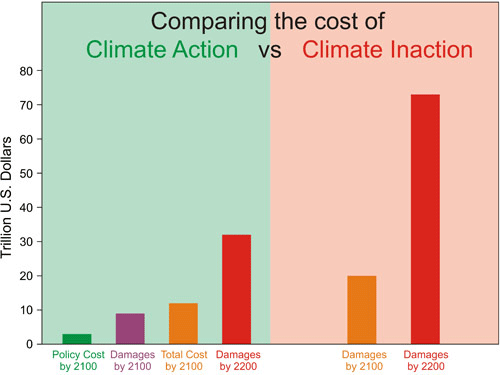
the mis- or non-management of climate risk is rampant in corporate Australia.
Whether the situation stays like this is up to investors
 http://www.smh.com.au/business/markets/companies-ignore-climate-change-and-we-ve-let-them-get-away-with-it-20171208-p4yxjg.html Julien Vincent , 8 Dec 17
Last week, APRA Executive Board member Geoff Summerhayes warned the transition to a low carbon economy is already underway and “institutions that fail to adequately plan for this transition put their own futures in jeopardy, with subsequent consequences for their account holders, members or policyholders.”
The speech followed a Centre for Policy Development discussion paper on how companies can follow the recommendations of the Financial Stability Board’s Task Force on Climate-related Financial Disclosures (TCFD).
The TCFD has set the standard for climate risk disclosure since its draft recommendations were released a year ago. Its final recommendations were backed by over 100 companies with a combined market capitalisation of over $3 trillion, which should give an idea to how seriously the TCFD is being taken.
But is it though? Market Forces has just examined the ASX top 50 companies’ responses to the TCFD. Only seven had delivered on the key recommendation to disclose information on how their company performs in a scenario where global warming is held below 2°C, while 31 don’t even mention the TCFD recommendations, let alone implement them.
It isn’t the first warning sign that corporate Australia is failing to manage climate risk. Continue reading
International Campaign to Abolish Nuclear Weapons to receive Nobel Peace Prize on Deccember 10th

Nobel Peace Prize: Does an Australian-born anti-nuke group’s award achieve anything? ABC News By Europe correspondent James Glenday , 9 Dec 17 It has been dubbed an “ambassador boycott”, a Nobel Peace Prize ceremony snub.
When an Australian-born movement to ban nuclear weapons receives the world’s most prestigious award this weekend, Russia will be the only declared nuclear power with a top diplomat present.
Israel is sending an ambassador, though it does not confirm or deny it has nuclear warheads, while the US, the UK and France have chosen to make a statement — they will only be represented by deputies.
 The prize winner, the International Campaign to Abolish Nuclear Weapons (ICAN), claims the “ambassador boycott” by western countries is aimed at undermining its work.
It has fought for a global treaty banning nuclear weapons, which now has 53 signatories.
But the document remains somewhat symbolic because no nuclear powers have signed it and neither have many of their close allies.
Australia, for example, has long argued banning the bomb outright — while emotionally appealing — will not lead to any meaningful reduction in nuclear weapons and may divert attention from existing treaties aimed at preventing nuclear proliferation.
Thus far, the Turnbull Government has stopped short of congratulating ICAN, which began in Melbourne……..
There has been controversy and contradictions surrounding the Nobel Peace Prize ever since it was founded by Alfred Nobel, a Swedish businessman who invented dynamite and traded arms……..
This year the award is worth 9 million Swedish kronor, more than $AU1.411 million. “That money helps a young NGO [like ICAN], one that doesn’t have much access to funds, one that is perhaps being denied funds because of some political problems,” Dr Lewis said.
“ICAN was founded in Australia. It’s something that Australians have achieved.”……..
ICAN is, of course, hoping the prize will convince more people to back its bomb ban.
But it also wants more public debate about the pace of nuclear disarmament — many nuclear experts agree things have moved too slowly, for too long.
“I would hope [ICAN’s work] generates some momentum within existing processes for disarmament,” Mr Dall said.
“If it doesn’t, then the long-term impact could be that nothing is going to happen and that really is the worst possible long-term impact.”
Regardless, the prize, the controversy and “ambassador boycott” is all invaluable for ICAN itself.
Anything that prompts more global coverage of nuclear weapons and the destruction they can unleash, is much more useful to it than any number of diplomatic niceties in Norway this weekend. http://www.abc.net.au/news/2017-12-09/does-the-nobel-peace-prize-achieve-anything/9242626
Did thorium pollution cause cancers and deaths in the Tweed Valley?
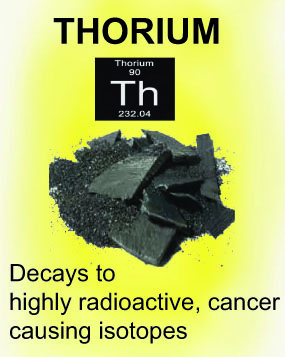 Cancer cluster fears after more than 20 deaths https://www.tweeddailynews.com.au/news/cancer-cluster-scare-black-sand-suspect-in-deaths/2748511/ by Alina Rylko 22nd Aug 2015 Updated: 14th Aug 2017 A MULTI-GENERATIONAL tragedy costing dozens of lives on a short stretch of road in the Tweed Valley is claimed to be evidence of a cancer cluster.
Adani coal project in a financial pickle, as Australian and Chinese banks refuse funding
 Is this the end of the road for Adani’s Australian megamine?
Australian and Chinese banks have turned it down, and analysts say Adani’s failure to secure funding for the Carmichael mine leaves it high and dry, Guardian, Michael Slezak, 7 Dec 17 , Adani’s operations in Australia appear to be hanging on by a thread, as activists prove effective at undermining the company’s chances of getting the finance it needs.
China seems to have ruled out funding for the mine, which means it’s not just Adani’s proposed Carmichael coalmine that is under threat, but also its existing Abbot Point coal terminal, which sits near Bowen, behind the Great Barrier Reef.
The campaign against the mine has been long. Environmentalists first tried to use Australia’s environmental laws to block it from going ahead, and then failing that, focused on pressuring financial institutions, first here, and then around the world.
The news that Beijing has left Adani out to dry comes as on-the-ground protests against construction of the mine pick up. Two Greens MPs, Jeremy Buckingham and Dawn Walker, have been arrested in Queensland for disrupting the company’s activities.
Is China’s move the end of the road for Adani’s mega coalmine in Australia, and will the Adani Group be left with billions of dollars in stranded assets?
Environmental laws fail to halt mine
Despite the mine threatening to destroy some of the best remaining habitat of threatened species of birds and lizards, federal environmental laws proved unable to stop the mine in the face of a government that wanted it to go ahead.
The initial federal approval for the mine was overturned after it was revealed the then-minister for the environment, Greg Hunt, had ignored his own department’s advice about the mine’s impact on two vulnerable species, the yakka skink and the ornamental snake.
But Australia’s environmental law leaves very little opportunity for challenging the merits of a minister’s decision – it only allows for challenges on whether those decisions considered everything required by the law. As a result, the minister needed only approve it again, after formally considering the impact on the two species.
Another court challenge argued the approval was invalid because the emissions caused by the mine – which would be greater than those of New York City – were a threat to the Great Barrier Reef. Hunt argued in court, successfully, that there was no definite link between coal from Adani mine and climate change.
It became apparent Australia’s environmental laws were unable to stop a project like this if the government of the day was determined to push it through……. https://www.theguardian.com/environment/2017/dec/07/is-this-the-end-of-the-road-for-adanis-australian-megamine
Turnbull govt might still try to restrict environmental groups
Turnbull government drops plans to curb green groups but doubts remain, The Age, 6 Dec 17 Peter Hannam Environment groups have welcomed the Turnbull government’s retreat from plans to curb environmental advocacy but concerns remain about other proposals to restrict the charity sector.
Kelly O’Dwyer, Minister for Revenue and Financial Services, announced the government would drop its intention to require environmental charities spend at least 50 per cent of donation income on “environmental remediation work” to retain their tax-deductible status.
“The government will not mandate a level of remediation by environmental organisations,” Ms O’Dwyer said.
The push for a required level of environmental work lost traction after BHP indicated it would oppose such curbs. The Australian Conservation Foundation welcomed the backdown of the government’s “anti-democratic proposal” to curb environmental advocacy.
The Minerals Council of Australia had sought as much as a 90 per cent requirement for remediation efforts, with only 10 per cent for advocacy for green groups to retain their tax-deductibility status.
Other worries emerge
But other moves by the Turnbull government are fanning uncertainty, including plans released on Tuesday to ban foreign donations to advocacy groups.
Samantha Hepburn, a law professor at Deakin University, said financial reporting requirements under the Annual Information Statement (AIS) collected by the Australian Charities and Not-for-profits Commission could pose other challenges for environmental groups.
Where an environmental group provided an AIS that revealed strong expenditure on political advocacy rather than remediation, it might be investigated by the Australian Taxation Office. The proposed changes increased funding for the ACNC and the ATO to review more groups for their ongoing eligibility for tax benefits, she said.
“This creates uncertainty for environmental organisations,” Professor Hepburn said. “It is unclear whether their public interest imperatives in pursuing political advocacy for such issues, such as climate change and matters of national environmental significance, will actually result in their ongoing eligibility being put at risk.”
‘Undue burdens’
“Charities are already highly regulated and scrutinised, much more so than other groups in public life such as industry lobbies,” Ms O’Shanassy said. “Any reforms should not put undue burdens on charities that would force them to use their limited resources on unnecessary red tape.”……http://www.theage.com.au/federal-politics/political-news/turnbull-government-drops-plans-to-curb-green-groups-but-doubts-remain-20171206-gzzs5s.html
Greens Members of Parliament arrested at anti Adani coal mine protest
Greens MPs arrested and fined at Adani protest, as Indian miner is referred to consumer watchdog, The New Daily 6 Nov 17, Two NSW Greens MPs have been arrested and fined for protesting against the proposed Adani Carmichael coalmine, while another front was opened in the long-running battle against the development.
Jeremy Buckingham and Dawn Walker were among 17 people arrested on Wednesday morning for trespassing at the controversial site, 270 kilometres west of Bowen in Queensland.
Mr Buckingham and Ms Walker were fined $250 each after being issued with a police infringement notice for trespassing unlawfully at a place of business.
“I’m proud to stand with activists in defence of climate and country, and respect all those people around Australia and internationally who want to stop the Adani coal project,” Mr Buckingham said in a statement on Wednesday.
“Although we are MPs from NSW this is an issue of national and international significance. Adani represents a line in the sand for all those concerned about climate change who do not want to see a new coal precinct opened up in Australia.”
Ms Walker said the proposal was “tearing Indigenous communities apart” and was offering “a sub standard agreement to traditional owners for their land”.
About 5am on Wednesday, Queensland Police were alerted that 35 people were blockading the railway construction site near the proposed mine.
Fourteen protesters entered the site and climbed onto vehicles and machinery about 6am, a police spokesman told The New Daily.
A woman in her 60s locked herself to a boundary gate with a metal bike lock around her neck. Police were working to remove her.
Seventeen people were arrested for trespass and failure to comply with direction. Nine of those people were issued with infringement notices after moving on.
Eight people continued to fail to comply and they remained under arrest on Wednesday afternoon…… http://thenewdaily.com.au/news/state/qld/2017/12/06/adani-greens-mps-arrested-accc/
8 December More REneweconomy news
 RenewEconomy
-
-
Rooftop solar: Australia’s greatest opportunity – and its greatest risk
Why rooftop solar could be one of the grid’s greatest assets but also one of its greatest threats if not properly managed. Here’s what AEMO thinks needs to be done. -
Coal versus cricket in IndiaWill the interruption of match in New Delhi between India and Sri Lanka by toxic smog finally spur the Indian Government to take coal plant pollution seriously?
-
Campoona mining project approved to produce ultra-pure graphite for batteriesArcher Exploration has been granted approval for its Campoona graphite project, north of Cleve on the Eyre Peninsula.
-
NSW signs LGC off-take deal with Neoen’s Dubbo solar farmNSW signs deal to buy LGC’s from Neoen’s Dubbo solar farm, and says “this lays the foundation for more renewable energy procurement.”
-
Zen Energy gets retail licence to launch “base-load” renewable productZen Energy gets electricity retailer licence to offer “baseload renewable energy” product and proceed with 1GW solar and storage facility at the Whyalla Steelworks.
-
Newcrest snubs solar for coal power, but was it a good deal?Gold miner Newcrest decides against solar farm to help power its Cadia mine in NSW, highlighting the challenges for renewable developers.
ACCC asked to investigate Adani ‘10,000 jobs’ claim
https://www.brisbanetimes.com.au/national/queensland/accc-asked-to-investigate-adani-jobs-claim-20171206-p4yxfl.html Environmental lawyers have asked Australia’s consumer watchdog to investigate Adani’s claims that its controversial Queensland coal mine will create a jobs bonanza.
Environmental Justice Australia this week wrote to the Australian Competition and Consumer Commission asking it to investigate what it says is “misleading or deceptive conduct” by the company relating to the Carmichael mine in the Galilee Basin.
“Plenty of evidence suggests Adani’s representations about 10,000 direct and indirect jobs are seriously flawed, yet the company continues to mislead people looking for work,” said EJA lawyer David Barnden, who said the Queensland Land Court had already ruled the mine would create just 1464 jobs.
The future of the mine has suffered setbacks this week, with project funding from China looking increasingly unlikely.
The Bank of China on Tuesday issued a one-line press release saying it “has not, and does not intend to, provide funding for the Adani Carmichael Mine project”.
It is the third of the country’s “big four” banks to distance itself from the mine, following The Industrial & Commercial Bank of China and China Construction Bank’s decision not to stump up cash.
Australia’s own big four banks have already ruled out supporting the project.
The Greens say it signals the end of the mine.
“Any financier with any sense doesn’t want Adani,” Greens senator Andrew Bartlett told reporters in Canberra on Monday.
“It’s time for Adani to give it up, save their money and for the politicians of Queensland to focus on the issues that will deliver genuine jobs for regional Queensland.”
Adani referred to the Australian Consumer and Competition Commission (ACCC) over its misleading job promises
Greens MPs arrested and fined at Adani protest, as Indian miner is referred to consumer watchdog, The New Daily, 6 Dec 17 “………Adani referred to the ACCC
The protest comes after community legal service Environmental Justice Australia (EJA) referred the Indian miner to the Australian Consumer and Competition Commission (ACCC) over its jobs spruiking.
Acting for Townsville jobseeker Chris McCoomb, a volunteer coordinator with the Australian Unemployed Workers Union, EJA is urging the ACCC to investigate Adani for “misleading vulnerable jobseekers”.
EJA says “inflated” claims its mine will create 10,000 jobs is leading jobseekers to spend thousands of dollars on training for “jobs that will never exist”.
Mr McCoomb’s 17-page complaint names at least one Queensland mining training outfit that is using Adani’s “inflated figures … to promote sometimes costly training courses and certifications” to cash-strapped jobseekers.
That company advertises a one day “mining induction course” for $650.
In 2015, Land Court of Queensland president Carmel MacDonald found Adani had significantly “overstated” its job figures in court evidence and to the State Government.
Ms MacDonald accepted testimony the project would “increase average annual employment by 1,206 jobs in Queensland and 1,464 jobs in Australia”, not by 10,000.
EJA lawyer David Barnden told the ACCC “the evidence for misleading and deceptive conduct … is strong”.
“ACCC is urged to take action to prevent the continued dissemination of Adani’s misleading or deceptive statements that are directed at jobseekers.
“Vulnerable jobseekers should not be misled into spending money or training courses or certification without the true number of expected direct and indirect jobs being published by Adani.”
An ACCC spokesman declined to comment on the Adani complaint. An Adani spokesman could not be reached for comment. http://thenewdaily.com.au/news/state/qld/2017/12/06/adani-greens-mps-arrested-accc/
Australia’s first offshore wind farm wins international funding
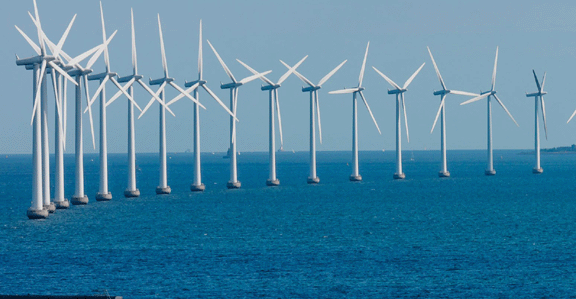 The Age , Cole Latimer, 6 Dec 17, Australia’s first offshore wind farm, an $8 billion 2000 megawatt project, has secured financial backing from a major international green energy investment fund.
Offshore Energy has joined with Danish fund management group Copenhagen Infrastructure Partnership to develop the renewable energy project.
The offshore wind farm, dubbed the Star of the South, will be built 10 to 25 kilometres off the coast of Victoria’s Gippsland region, in the Bass Strait, and could provide one and a half times the energy of the now-closed Victorian Hazelwood coal-fired power station.
Offshore Energy managing director Andy Evans told Fairfax Media the partnership would transform the company and lift the viability of offshore wind for Australia………
Star of the South is currently Australia’s only offshore wind project.
“The industry doesn’t really exist at the moment,” Mr Evans told Fairfax Media.
He said there is currently a greater focus on solar and onshore wind projects in Australia, as they are currently cheaper than offshore wind, however, “the cost of offshore will come down, and has already seen falling costs in Europe.”
However, it is not Australia’s only offshore renewable energy project in development.
There are a number of wave energy projects currently underway around the nation’s coast. Wave Swell Energy is one wave energy generator that is also using the Bass Strait as its testing grounds.
The group is carrying out commercial validation of its technology off King Island, in the Bass Strait.
It has signed an offtake agreement with Hydro Tasmania for an initial 200-kilowatt trial unit, and will operate during 2018 after its initial funding goals are reached. http://www.theage.com.au/business/energy/australia-s-first-offshore-wind-farm-international-funding-20171205-p4yxfb.html
8 December REneweconomy news
RenewEconomy-
AusNet, Deakin Uni to build 7.25MW solar, storage micro-gridAusNet and Deakin Uni to build solar and storage micro-grid on Geelong campus, to act as R&D for similar projects.
-
The Community Grid Project launches with a ‘Local Energy Hero’ competitionMornington Peninsula Shire were joined by representatives from electricity network provider United Energy and technology company GreenSync to officially launch the Community Grid Project at the Eco Living Display Centre, at the Briars in Mount Martha.
-
Improper creation of STCs results in compliance actionFollowing recent enforcement action against one of Australia’s largest solar retailers, the Clean Energy Regulator has taken enforcement action against one of the largest registered agents, Emerging Energy Solutions Group Pty Ltd.
-
The Australian utility first to embrace era of “base-cost renewables”West Australia’s regional utility Horizon Power has become the first major Australian utility to embrace the concept of “base-cost renewables”, recognising that the plunging cost of solar and wind is set to turn traditional theories of energy supply on their head.
-
Acciona supports Australian manufacturing as Mt Gellibrand transformer deliveries beginAcciona Energy is about to take delivery of critical components for its 132 MW under-construction wind farm at Mt Gellibrand in Victoria.
-
The climate effect of the Trump administrationOver its first year, the Trump administration has taken extreme steps to unravel progress on U.S. climate action domestically.
-
Tesla battery and “hidden demand” added to popular NEM-WatchThe popular NEM-Watch facility now includes the Tesla big battery, state demand levels and “hidden demand” from rooftop solar PV.
-
Polluting robots win big, clean energy workers get screwed in Trump tax billThe Trump tax bill will devastate the renewable industry and jobs, while incentivising automation, and the manufacture of polluting, unprofitable robots.
-
Five ways that cities can slash carbon pollution right nowA new report from the Rocky Mountain Institute lists 22 policies that could help get the job done.
Pine Gap: peaceful protestors sentenced to fines, not gaol
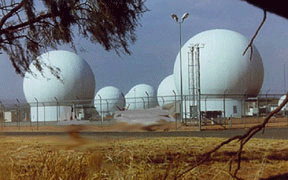 Pine Gap protesters who entered top-secret Central Australia facility spared jail to avoid creating ‘martyr’ http://www.abc.net.au/news/2017-12-04/pine-gap-trespassers-not-jailed-to-avoid-creating-martyr/9223946
The group were charged under the Defence (Special Undertakings) Act, which carries a maximum of seven years in prison.
One of the group members, Andy Paine, faced another two years for carrying a smartphone onto the base.
But Justice John Reeves fined the group a total of $15,500.
While sentencing the oldest member of the group, Jim Dowling, 62, Justice Reeves expressed concern that Dowling had committed 27 similar trespass offences since 1986.
“If I imprison you, I think that would be likely to make you a martyr to your cause, rather than to underscore the law breaking in which you were involved,” he said.
Dowling was fined $5,000 as one of five people who entered Pine Gap on September 29, 2016.
In that group, Margaret Pestorius was fined $3,500, Andy Paine fined $2,500, while Franz Dowling and Tim Webb were fined $1,250.
The group told the court they went to sing a lament which several members of the group had composed in memory of people they believed had been killed by US drone strikes, with help from Pine Gap.
Paul Christie was fined $2,000 for also entering Pine Gap in a separate crime on October 3, 2016.
In sentencing Christie, Justice Reeves said his offence was at the lowest possible end of the spectrum.
He said Christie was arrested while holding a rattle and some flowers, while praying.
“I do not accept the Crown’s submission that your offences potentially struck at the heart of national security,” Justice Reeves told the group.
“Your activities posed no real threat to the Pine Gap facility.”
The two separate trials in the NT Supreme Court lasted two weeks, with the Crown briefing a senior counsel to prosecute the matters.
Significant wins by the Greens for the nuclear free cause in South Australia
 Mark Parnell MLC , Parliamentary Leader, Greens SA, 6 Dec 17,
The last couple of sitting weeks of the year in State Parliament have been huge, and the Greens have had some significant wins
A win for democracy
My amendment to the South Australian Constitution to make it fairer to all parties and candidates passed both Houses of Parliament. Under the mis-leadingly named “fairness clause” in the Constitution, the boundaries of electorates were required to be rigged so that one of the two major parties would form a government. This is despite the fact that a growing number of South Australians don’t vote for either of the old parties.
For elections beyond 2018, the review of electorate boundaries will have regard to population, one-vote-one-value, geography, communities of interest and other relevant factors but won’t be artificially rigged to favour the old parties. The Greens have ensured that future elections will be more democratic and better reflect the will of the people of South Australia.
No more public money to spruik nukes
A big majority in Parliament passed my Greens Private Members Bill to prohibit the Government spending public money on spruiking the benefits of nuclear waste dumps in SA. We won the campaign against the high level international nuclear waste dump but we still have the national dump proposed for the Flinders Ranges and Kimba. Not only are these dumps illegal in SA, but now it is also illegal to use public money to encourage or finance nuclear waste dumps……..
Biodiversity can no longer be ignored
Another Greens’ Bill that passed last week ensures that biodiversity is properly considered in all planning decisions.
There is a real crisis in biodiversity in South Australia, which is under threat from many sides including loss of habitat and climate change. Whilst passing a law for a new State Biodiversity Planning Policy won’t fix the problem overnight, it sends an important message to State and Local Governments that they can’t ignore the natural environment when making decisions about development or rezoning land.
Can SA be 100% renewable?
Absolutely! Despite attempts by some opportunistic MPs to blame renewable energy for the Statewide electricity blackout last year and other weather-related outages, a Parliamentary Inquiry has found that renewable energy was not to blame. What’s more, there is now a clear pathway to achieving 100% renewable energy in South Australia. The key is to use wind and solar energy backed by batteries, pumped hydro and solar thermal storage. This is achievable without compromising system reliability, security and affordability for consumers. With our State’s national leadership on renewables and our fantastic wind and solar resources, the future is looking bright. My report is at p.42 of the Committee’s Report.
1 This month



Help Aunty Sue Protect Her Land and Sacred Sites From Destructive Rocket Testing.
.

Australians deserve the truth
about
AUKUS – https://aukuspublicinquiry.com/

PETITION – To: Prime Minister Anthony Albanese and the Australian Labor Government

of the week – Australians for War Powers Reform (AWPR)
To see nuclear-related stories in greater depth and intensity

