Prime Minister Malcolm Turnbull talks complete rubbish on climate policy
Turnbull’s two key political messages since Frydenberg’s unseemly capitulation to conservatives earlier in the week – that we won’t do carbon pricing lest it inflate power bills, and that governments have a fundamental obligation to keep the lights on – are entirely inconsistent with the actions the government is taking
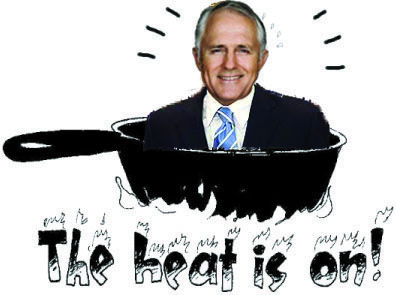 On climate policy and power prices Turnbull is talking rubbish. Here are some facts, Guardian, Katharine Murphy, 9 Dec 16
An emissions trading scheme is the cheapest way meet Australia’s climate commitments – which will be news to anyone listening to the Coalition. I just want to be very, very clear that energy prices are too high already. We will do everything that we can to put downward pressure on energy prices. We will not impose a carbon tax, or an emissions trading scheme – that is our position.
This is the prime minister, Malcolm Turnbull, talking to the Melbourne radio host, Neil Mitchell, on Thursday, talking nonsense as it turned out – which is what the government has been doing all week on the subject of climate change.
How do I know he was talking nonsense?
There are any number of reports we can draw on to call out what can only be described as unmitigated, lowest common denominator, political crap emanating from the mouth of the prime minister – but I’ll just pick a couple.
Let me share with you the findings of a report that lobbed into the public domain at the start of the week, sandwiched between the government opening what could have been a rational and productive conversation about climate change and energy policy, and the government melting in a small puddle of panic. Continue reading
South Australian nuclear waste dump enthusiasts write to politicians
 List of signatories:
- Fraser Ainsworth AM
- Rob Chapman
- Tim Cooper AM
- Di Davison AM
- Colin Dunsford AM
- Robert Gerard AO
- Dr Ian Gould AM
- Kathy Gramp
- Jim Hazel
- Mike Heard
- David Klingberg AO
- Theo Maras AM
- Jim McDowell
- Prof Mike Miller AO
- Creagh O’Connor (Snr) AM
- Dr Leanna Read
- Richard Ryan AO
- Antony Simpson
- Michael Terlet AO
- Dr Meera Verma
- Stephen Young http://www.abc.net.au/news/2016-12-09/south-australians-urge-nuclear-waste-dump-debate-continues/8107978
Nuclear debate: Businessmen, academics, scientists call on SA politicians to keep discussion alive, ABC News, By political reporter Nick Harmsen, 9 dec 16, A group of prominent South Australian business people, academics and scientists have signed an open letter to the state’s politicians urging them to keep discussion alive on the merits of an international nuclear waste dump. Continue reading
Maralinga nuclear compensation cases blocked by Bob Hawke when PM
 Hawke government schemed to stymie Maralinga nuclear test compensation, cabinet documents reveal http://www.adelaidenow.com.au/news/south-australia/hawke-government-schemed-to-stymie-maralinga-nuclear-test-compensation-cabinet-documents-reveal/story-fni6uo1m-1227171284110 PETER JEAN POLITICAL REPORTER THE ADVERTISER JAN 1, 2015 THE statute of limitations was invoked by the Hawke Government to prevent hundreds of compensation actions being pursued in court by veterans of British nuclear tests in Australia.
Government documents from 1988 and 1989 released by the National Archives of Australia reveal that cabinet decided to try and invoke time-limit rules to fight court compensation actions launched after 1988. Continue reading
According to Bob Hawke, Aborigines can get a decent life only if Australia imports nuclear waste?
 Former PM Bob Hawke wants Australia to become nuclear dumping ground
 ASHLEIGH GLEESON, The Daily Telegraph December 9, 2016
  AUSTRALIA should become the storage ground for the world’s nuclear waste and pledge a percentage of the profits to helping the indigenous population, former prime minister Bob Hawke says.
Traditional Owners construct ‘legal line of defence’ against Adani and Qld Govt

 http://wanganjagalingou.com.au/traditional-owners-construct-legal-line-of-defence-against-adani-and-qld-govt/ 7 December 2016:
“Announce Full Bench Supreme Court Appeal – natural justice sought
“Express Anger at Gautam Adani’s Failure to Meet
“The Wangan and Jagalingou (W&J) Traditional Owners Council have today announced a further action in their legal line of defence of their lands and rights against the imposition of Adani’s “mine of mass destruction”. They have also expressed offence at multi-billionaire Mr Gautam Adani’s failure to meet with them during his visit to Australia to spruik the Carmichael project.
“Leading Aboriginal rights advocate, primary W&J Traditional Owner and Council spokesperson, Mr. Adrian Burragubba, says, “We are constructing a legal line of defence because the Queensland Government and Adani are trying to bulldoze us aside. We will not stand by while they sing from the same song sheet about their grandiose but hollow plans.
We are acting in the courts to stop this destructive project. Our people, the Australian community, and the world deserve better than this cavalier, unjust and outdated approach to our shared future” …
“W&J youth leader and council spokesperson, Ms. Murrawah Johnson, says,
“It is our obligation as Traditional Owners to safeguard the future for our people and secure our lands and waters against this ‘mine of mass destruction’.
The W&J Council members have vowed to do everything in our power to stop the mine proceeding,
and we will take our concerns to the High Court if necessary.
““We are not easily intimidated. We will fight this mine until Mr Adani and his people pack their bags and head home”, she said.
“Lawyer for the Supreme Court Appeal and other matters, Mr. Colin Hardie says,
“There are reasonable grounds for my clients to argue that they were denied natural justice
by the Minister for Mines in the issuing of the mining leases for the Carmichael Mine.
The denial of natural justice can create significant costs and cause distress to Traditional Owners,
leading to a profound devaluing of their native title to land and waters. … “
Barwon Water and the City of Greater Geelong investigate solar array for landfill site
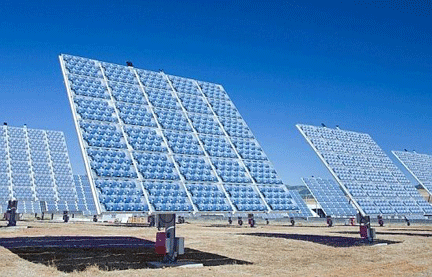 Geelong solar array capable of powering 1000 homes proposed for old Corio landfill site http://www.news.com.au/national/victoria/news/geelong-solar-array-capable-of-powering-1000-homes-proposed-for-old-corio-landfill-site/news-story/6b6154708d9fa4a7383b44246a096143 DECEMBER 8, 2016 A LARGE solar energy project with the potential to power 1000 homes is being explored at an old Corio landfill site.
Barwon Water and the City of Greater Geelong are investigating the feasibility of building a three-megawatt solar PV system at the former tip, which is next to Limeburners Lagoon. Early research into the concept has proven positive, with the agencies to embark on a detailed feasibility study. The 3000-kilowatt capacity system would generate about four million kilowatt hours of electricity annually, which is enough to power about 1000 homes.
The renewable energy would be shared by the two partners and fed through the grid to supply other locations.
Barwon Water has several power-intensive sites nearby, including the Northern Water Plant, Cowies Creek Sewer pump station and Lovely Banks water pump station. Strategy and planning general manager Carl Bicknell said Barwon Water was developing a program to achieve 100 per cent renewable energy use over the next 10 years. “Investing in locally sourced renewable energy would directly reduce Barwon Water’s use of fossil fuel-based grid electricity,” Mr Bicknell said. “A partnership approach makes good sense for the region. If feasible, the project would help both businesses make significant reductions in their emissions.”
The council’s city services acting general manager, Vicki Shelton, said the study, which is out to tender, would explore the project’s economic and environmental benefits. “Importantly it will examine how the City and Barwon Water can collaborate to secure a local renewable energy supply,” she said.
Barwon Water has recently tendered for a one-megawatt solar array at Black Rock, to feed renewable energy directly to the site’s water reclamation plant. It also hosts Victoria’s oldest wind turbine at Breamlea and jointly runs a mini-hydro generator at Lal Lal.
Australian govt’s honest advertisement on climate and Adani coal mine
Honest Government Advert – Carmichael Coal Mine
Australia’s gutless Minister for Environment and Energy – Josh Frydenberg
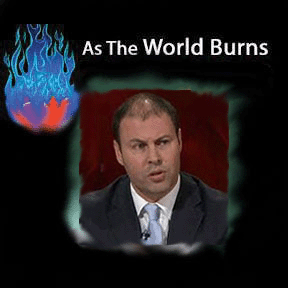 What an extraordinary, gutless capitulation by Josh Frydenberg Forget climate policy intricacies – through this pathetic retreat the government has again revealed its true nature, Guardian, Katharine Murphy, 9 Dec 16, What an extraordinary capitulation.
Just 24 hours of controversy from entirely predictable quarters and a carefully calibrated process to try to engineer a truce in Australia’s utterly wretched climate politics has been all but abandoned by its architects.
Josh Frydenberg has gone in the space of 24 hours from saying quite clearly the government would consider an emissions intensity trading scheme for the electricity sector to trying to pretend he said no such thing.
The retreat is, frankly, unseemly.
Actually, the retreat is more than unseemly, it’s pathetic – and the consequences of it stretch far beyond yet another apparent failure to do what needs to be done to ensure our economy makes an orderly transition to the carbon-constrained world that the Turnbull government willingly accepted when it signed Australia up to the Paris international climate agreement this time 12 months ago……
On climate policy the Coalition has backed itself into a tight corner of its own making – and it shows no sign of finding the courage, the steadiness or the integrity to try to manage its way out. https://www.theguardian.com/australia-news/2016/dec/07/what-an-extraordinary-gutless-capitulation-by-josh-frydenberg
Media secrecy allowed Australian territory to become highly radioactively contaminated
Dig for secrets: the lesson of Maralinga’s Vixen B The  Conversation, Liz Tynan, 26 July 13 “……lack of knowledge about the British nuclear tests in Australia is not surprising. The tests were not part of the national conversation for many years. Even when older people remember that nuclear tests were held here, no-one knows the story of the most secret tests of all, the ones that left the most contamination: Vixen B.
Maralinga is a particularly striking example of what can happen when media are unable to report government activities comprehensively. The media have a responsibility to deal with complex scientific and technological issues that governments may be trying to hide. While Maralinga was an example of extreme secrecy, the same kind of secrecy could at any time be enacted again. With the Edward Snowden case, we have seen what can happen when journalists become complicit in government secrecy, and we have learned the press must be more rigorous in challenging cover-ups.
At Maralinga, part of our territory became the most highly contaminated land in the world. But the Australian public had no way of granting informed consent because no-one knew it was happening. Remediating the environmental contamination was delayed for decades for the same reason. While arguments might be mounted for the need for total secrecy at the time (although these arguments are debatable in the case of Vixen B), there was no reason to keep the aftermath totally secret as well. Continue reading
Finkel Report recommends emissions trading, warns on Australian govt’s climate policy chaos
 Finkel review criticises climate policy chaos and points to need for emissions trading Report warns investment in electricity has stalled, and existing policies won’t allow Australia to meet its Paris target, Guardian Katharine Murphy, 8 Dec 16, Australia’s chief scientist, Alan Finkel, has said investment in the electricity sector has stalled because of “policy instability and uncertainty” – and he’s warned that current federal climate policy settings will not allow Australia to meet its emissions reduction targets under the Paris agreement.
In a 58-page report that has been circulated before Friday’s Council of Australian Governments meeting between the prime minister and the premiers, Finkel has also given implicit endorsement to an emissions intensity trading scheme for the electricity industry to help manage the transition to lower-emissions energy sources.
While there is no concrete recommendation to that effect, the report, obtained by Guardian Australia, references the evidence from energy regulators that such a scheme would integrate best “with the electricity market’s pricing and risk management framework” and “had the lowest economic costs and the lowest impact on electricity prices”.
Finkel also notes advice from the Climate Change Authority which says market mechanisms have the lowest average cost of abatement, and of the options modelled, an emissions intensity scheme “had the lowest impact on average residential electricity prices”.
The positive commentary from the chief scientist cuts directly across political arguments the Turnbull government has made since dumping its nascent attempt to use the review of the Direct Action policy to explore an intensity trading scheme for electricity – equating carbon pricing with higher power prices for consumers……… Continue reading
Australia’s electricity industry strongly calls for a carbon price, and switch to clean energy
Electricity industry pushes for carbon price to aid transition to clean energy system http://www.abc.net.au/news/2016-12-08/electricity-industry-push-for-a-carbon-price/8104642 By political reporter Naomi Woodley Australia’s electricity industry has issued a strongly worded plea to federal and state governments to quickly decide on ways to transform Australia’s ageing energy grid.
In a joint statement released ahead of tomorrow’s Council of Australian Governments meeting, the groups representing generators, distributors and retailers say a national, market-based carbon price is the best option to make the transition to a cleaner energy system.
The Australian Energy Council and Energy Networks Australia said without change, customers face higher prices and an increasingly unstable electricity supply. Continue reading
EnergyAustralia to invest $1.5 billion in new wind and solar projects
 EnergyAustralia’s $1.5bn for renewables
 http://www.heraldsun.com.au/business/breaking-news/energyaustralia-puts-15bn-in-renewables/news-story/e1fbf5f408e5405adfc0adc7a263448c
The electricity provider has committed to buying 500 megawatts of power from wind and solar plants, more than doubling the amount of energy it can source from renewables.
It said on Wednesday it had bought the output from a planned 42.6 megawatt solar farm at Manildra in central west NSW, which will be able to power 14,000 homes per year when completed in 2018.
Managing director Catherine Tanna said EnergyAustralia was looking to lead the development of cleaner energy even though it owns two of the biggest coal power stations in the country. “These are the projects which will come to underpin energy supply in Australia as coal-fired power plants are retired,” she said in a statement. EnergyAustralia plans to ink a 13-year agreement with the Manildra farm by the end of December.
The company already has the rights to more than 450 megawatts of electricity from wind farms in New South Wales, Victoria and South Australia. EnergyAustralia’s pledge comes after Origin Energy inked a 15-year contract in March with the Moree Solar Farm in northern NSW, which can power 24,000 homes.
Sydney students pioneer a shared solar and battery system for apartment block
Stucco students install one of Australia’s first shared solar and battery systems for apartment block, 702 ABC Sydney ,By Amanda Hoh, 8 Dec 16, After 18 months of “bureaucracy” and jumping through regulatory hoops, the students of Sydney’s Stucco apartments have finally achieved their goal of spearheading a “solar revolution”.
The social housing apartment block in Newtown has become one of the first multi-dwelling buildings in Australia to install a shared solar and battery storage system.
Last week 30 kilowatts of solar panels were placed on the roofs and 36 batteries set up in the building totalling 42.3kW storage capacity. The solar system will now provide 80 per cent of the residents’ energy needs, with the remainder of electricity drawn from the grid. Each student is expected to save up to $35 a month on their electricity bill. “As poor uni students, that difference in a bill makes a huge difference,” Sarah King, Stucco committee president, resident and social work student, said.
“There’s also the great feeling of using green clean energy as opposed to dirty coal.

“As a cooperative, it’s quite empowering to have your own locally sourced power system, otherwise you’re quite vulnerable to what electricity companies are going to charge you. Stucco is a cooperative, not-for-profit housing complex for low-income students from Sydney University. There are 40 residents in the eight units who each pay about $90 in weekly rent. As a cooperative, the students self-manage the property, which is part-owned by the university and the Department of Housing.
How do students pay for solar? A software system was put in place to manage and analyse the energy output from each unit, meaning the Stucco committee now acts as its own energy retailer and issues electricity bills to the residents. For the energy consumption that is provided by solar, the students are charged a maximum of 10 cents during off-peak times and up to 40 cents during peak use.
They are currently in pricing talks with various commercial energy retailers for when the building draws from the grid.
The cost of the project totalled $130,000, with the solar technology costing $97,000……..The students received an $80,000 grant from the City of Sydney.
The remainder of the cost was made up from 25 years’ worth of sinking funds and “grassroots community efforts” of voluntary contributions and pro-bono work……The solar and battery system is expected to take about six to seven years to pay for itself, although Mr Janse Van Rensburg said the long-term gain and savings far outweighed the cost of the system…..The students have started a crowdfunding campaignto help rebuild the administration and sinking funds.
Calls for more solar as household tariffs dumped There are 1.6 million solar systems installed across the country; mainly in free-standing owner-occupied homes and in lower to medium income suburbs.
According to Claire O’Rourke from community-based organisation Solar Citizens, Stucco is “a pioneering project”, particularly as it was conceived by a housing cooperative.
“We’ve had a lot of anecdotal reports from apartment owners who have tried to get this [a multi-apartment dwelling solar and battery system] in place but have failed,” Ms O’Rourke said……..
“The real opportunity is in cities where there are more apartments and renters…….
The Solar Bonus Scheme in New South Wales ends on December 31, which means solar households will no longer receive a feed-in tariff when they redirect energy back into the electricity network. Solar Citizens is lobbying the Government for a mandated minimum tariff to pay solar owners.”Going solar now is the best way to save for the long term, because solar panels will last 20 to 25 years, batteries will last for a decade,” Ms O’Rourke said.
“Landlords and renters everywhere should be inspired by this project [Stucco] and look at starting up similar projects that help them save money and spearhead that revolution we want to see.” http://www.abc.net.au/news/2016-12-08/stucco-student-housing-installs-shared-solar-battery-system/8103298
New 116-turbine wind farm for the Wimmera, Victoria
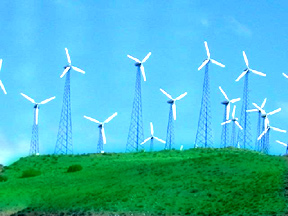 Wind farm: 116-turbine farm gets tick of approval
 http://www.weeklytimesnow.com.au/news/national/wind-farm-116turbine-farm-gets-tick-of-approval/news-story/9748769c22c8e976b78e65e2c9907195 KATH SULLIVAN, The Weekly Times December 7, 2016
  ONE of Victoria’s most expensive wind farms will be built in the Wimmera, after the State Government approved its planning application.
The $650 million, 116-turbine farm at Murra Warra, north of Horsham, was approved by Planning Minister Richard Wynne after no objections were received.
“We are paving the way for more investment and jobs in the wind sector and it’s great to see Murra Warra come online and deliver a boost to the region,” Mr Wynne said.
Project operator RES said the farm would create more than 600 jobs during construction, 15 ongoing jobs and remove more than one million tonnes of greenhouse gas emissions a year from Victoria’s energy sector.
It is expected to generate enough energy to power 252,000 homes. RES is working with 18 families, across more than 4250ha, who are expected to receive lease payments for the turbines.
RES also manages a 75-turbine wind farm under construction at Ararat.
Not justified, not financially viable – Adani’s huge coal mine project
Adani’s mega mine neither financially viable nor justified, says energy analyst, ABC News, By Casey Briggs, 8 Dec 16, Adani’s mega coal mine in north Queensland is neither “financially viable nor strategically required” an energy commentator claims.
The mining giant will begin construction on its $22 billion Carmichael coal mine in the Galilee basin in central Queensland next year.
This week, Adani announced the mine’s regional headquarters will be in Townsville, and the State Government is promoting an “ironclad” handshake deal with the company to source workers from regional Queensland.
Despite the announcements, energy analyst Tim Buckley from the anti-coal think tank The Institute for Energy Economics and Financial Analysis (IEEFA) said there is still doubt over whether the mine is even viable.
“All of my financial analysis over the last four years says the mine is neither financially viable nor strategically required or justified,” Mr Buckley said.
“Financial closure is going to be a major obstacle, I have absolutely no doubt.”
“As the company has admitted, they have not been talking to any financial institutions about this project”
Federal government should study India first
A number of Australian and international banks have reportedly ruled out financing the mine. Adani has also applied for public financing for a $1 billion rail link from the Commonwealth Government, but it’s unclear if the loan will be granted.
Mr Buckley said the Indian Government’s plans to reduce and potentially end coal imports threatens the justification for the project. “[The Australian Government should] go and study what’s happening in India … before they give a billion dollars in taxpayer subsidy to a foreign billionaire who made an investment decision at the height of the coal boom in 2011 and hasn’t progressed the project for six years,” said Mr Buckley.
At the Paris climate summit in November 2015 India’s prime minister Narendra Modi declared that in the 21st century “the world must turn to the sun to power the future”…….http://www.abc.net.au/news/2016-12-08/adani-mega-mine-neither-viable-nor-required-says-analyst/8100906
1 This month


Help Aunty Sue Protect Her Land and Sacred Sites From Destructive Rocket Testing.
.

Australians deserve the truth
about
AUKUS – https://aukuspublicinquiry.com/

PETITION – To: Prime Minister Anthony Albanese and the Australian Labor Government

of the week – Australians for War Powers Reform (AWPR)
To see nuclear-related stories in greater depth and intensity

