Citizens’ jury questions safety concerns surrounding dump proposal
Nuclear royal commission: Citizens’ jury questions safety concerns surrounding dump proposal, ABC News, By Daniel Keane, 10 July 16 A grassroots report into a proposal to build a high-level nuclear waste dump in South Australia has identified safety as a major concern.
The report by a citizens’ jury of 50 randomly selected South Australians also found “significant additional research” is required before residents can make an “informed decision”.
The report, presented to Premier Jay Weatherill on Sunday afternoon, followed four days of intense discussions and meetings with experts both for and against the proposal.
Timeline: SA’s nuclear dump debate Plans for a national nuclear waste dump have been on the agenda for decades, and for much of that time SA’s outback has been touted as a possible site.
“The jurors recognise there are potential economic benefits, but there are also substantial risks to consider,” the report stated. “There is a degree of uncertainty around both the benefits and risks associated with establishing such a facility…….
Nuclear radiation a concern to people, environment Continue reading
South Australia Nuclear Citizens Jury afternoon session 9 July
 In this session, facilitator (probably Emily Jenke from DemocracyCo) was asking the jury to discuss and develop a consensus on the wording of their reports on several topics.
I hope that there will be a transcript of this – (a) because I missed quite a lot and (b) because the to and fro of questions between jurors is hard to follow in an attempted transcript such as I’m doing.
In fact, I learned only some of the discussion on subjects of Education, Community Consent and Trust, and Safety.
Parts that I found particularly significant –
- On Economics – how much investment does the State of South Australia have to put into development of nuclear waste importing facilities? Some jurors felt that there was not enough economic modelling. on education: when will a yes or no answer be acceptable?
- on Trust : it was stressed that this is important because the current South Australian legislation prohibits import and storage of foreign nuclear waste. We need to decide if South Australia, as producer of uranium, has a moral and ethical obligation to take back wastes. Apparently Haydn Manning in a previous hearing has suggested that there is this obligation. However, one juror stated that this was not the finding of the old Ranger Inquiry. International standards state that the society that generates the waste (i.e in nuclear reactors) has that obligation, (not the society that provides the uranium). The Royal Commission Report also states this.
- on Safety – a comprehensive report was given on this, outlining many questions. Here one juror complained that the risks had been emphasised, rather than safety. He referred the jurors back to then evidence given the previous week on radiation risks. At this point my live-stream reception cut out – just as it was getting interesting, seeing that last week’s Citizens’ jury speakers produced a whole lot of trivial nonsense on this topic.
The Nuclear Industry and Indigenous People -theme for July 16
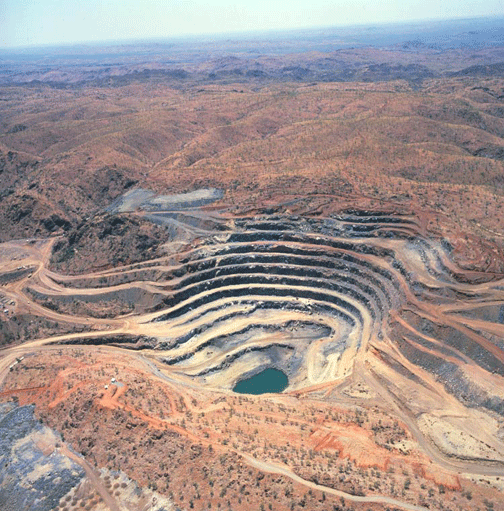 Indigenous people continue to bear the brunt of nuclear toxicity. It started with uranium mining – of course, on indigenous land in rural areas, in USA, Canada, Bulgaria, Australia, Germany , India, and of course to provide nuclear weapons material.
Then came the nuclear bomb tests – on remote rural indigenous lands and islands
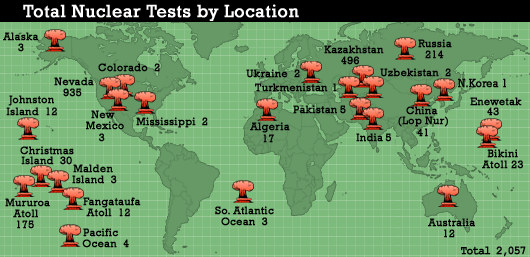
Indigenous peoples either stayed on their polluted lands, as uranium mining continued, or were removed from bomb tests sites, unable to return.
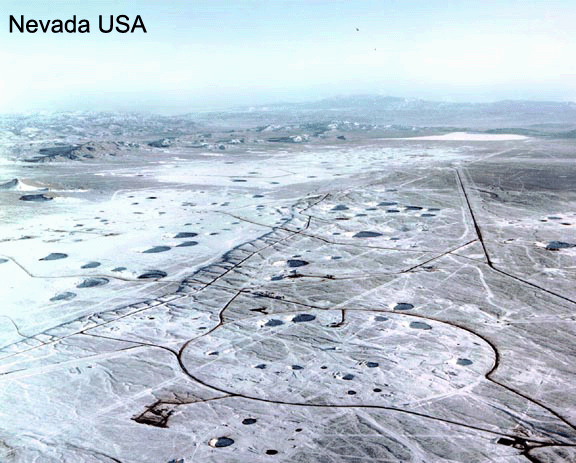
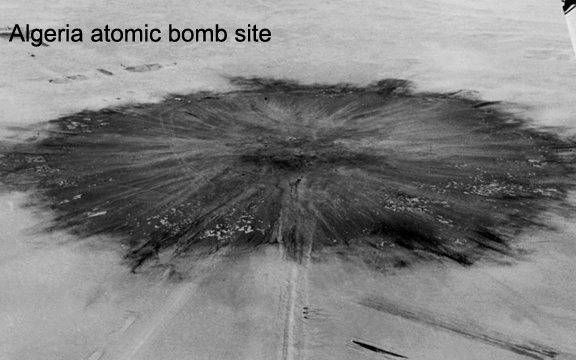
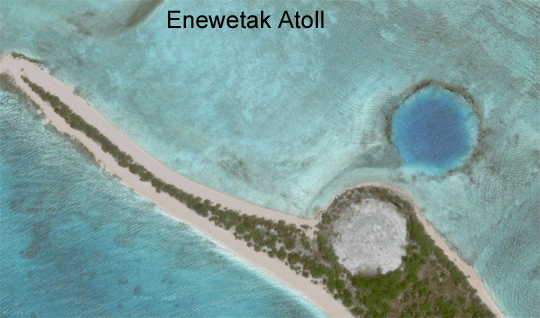
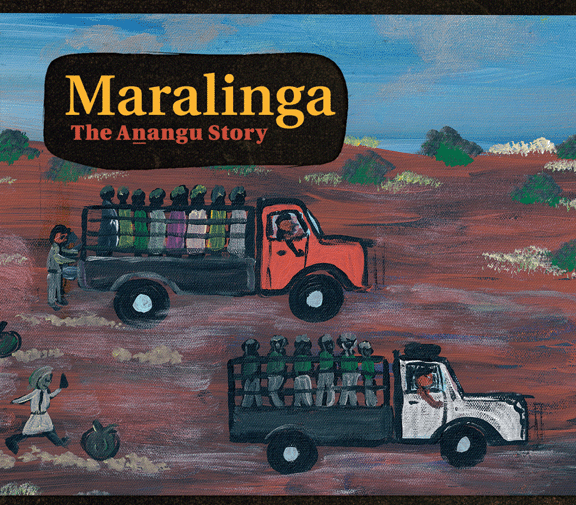
This Radioactive pollution remains today, from uranium mining in many countries – but always on or close to indigenous lands. The nuclear bomb test sites remain too radioactive for the indigenous people to return home.
Uranium mining and milling, nuclear bomb tests and radioactive wastes ... Russia is 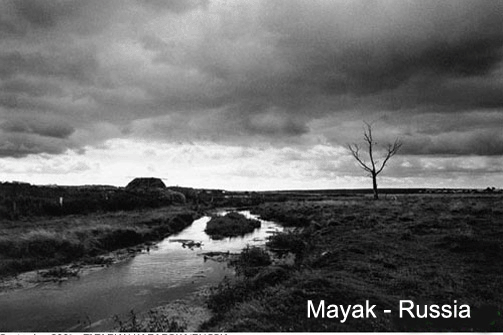 secretive about its nuclear wastes. They used to dump it in oceans, as did the French and others. Russia is notorious for its extremely polluted remote area at Mayak, where the rural people suffer the health legacy to this day
The “developed” world realises that something must be done with the growing amounts of radioactive trash.
Where to dump it? That’s a “developed society” no brainer 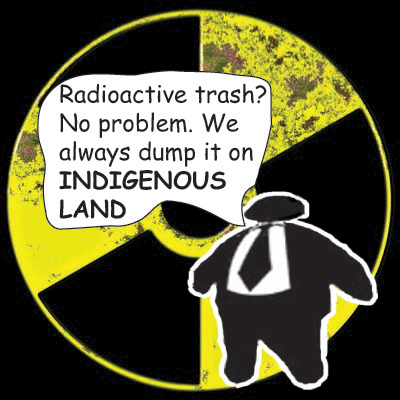
– ON INDIGENOUS LAND, of course. There’s now a movement to export radioactive trash to remote rural areas, such as the Aboriginal lands of Australia
Next week we will look at the indigenous fight against the nuclear industry
Nuclear Citizens Jury discusses Community Consent
Enice Marsh from the Adnyamathanha Camp Law Mob led off with a clear and passionate statement on the fact that, despite the friendliness and courtesy of the Nuclear Commission’s Jon Bok, their group utterly rejects nuclear waste importing.
This discussion focused mainly on Aboriginal issues. Of course, mainly white people talking. But it is encouraging to note that these jurors showed real concern for the interests of Aboriginal people.
Some interesting discussion on whether the question of importing nuclear waste is an “ethical question or an economic question”
One juror answered firmly –
“If you read the Royal Commission’s report, it’s all about the money”
Nobody disputed that , and the facilitator moved the discussion on quickly.
A juror questioned the lack of information amongst the ordinary public, including the jurors, about radiation. This matter was not followed up.
Proposals were made that there should be no further discussion, until all potential native landowners be fully consulted, before there is any further progress in the State discussion on nuclear. waste importing. It doesn’t look as if that proposition will be taken up. It was knocked on the head by another Aboriginal speaker – Harry?
The group ended up working out a paragraph for their Final Report. – along these lines:
“We have confidence that the best consultation must be what works for the people being consulted. It should not be rushed, and this must be clear from the start.”
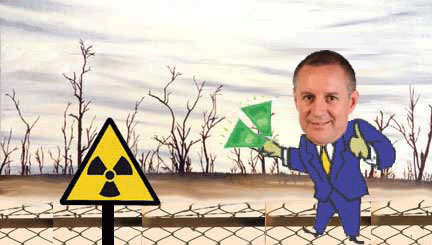
South Australian Greens leader shows up folly of Jay Weatherill’s nuclear waste boondoggle
| Throwing good money after bad – How the nuclear waste dump folly could wreck the State Budget | ||||
The additional $3.6m allocated in the SA State Budget to advance the case for an international nuclear waste dump means that $13m will have been spent on this deeply flawed proposal by the end of the year, according to Greens SA Parliamentary Leader, Mark Parnell MLC.
“If the Government decides at the end of this year to proceed further with the nuclear waste dump, then this amount must be budgeted for. There will be no revenue, only costs. “On the other hand, if the Government abandons this nuclear waste dump folly now, then we can cut our losses and re-allocate that money to genuinely benefit South Australians rather than impose a toxic legacy for countless future generations”, said Mr Parnell. Here are some better uses to which $600m could be spent: · Finish electrification of the Gawler line and new tram lines to make AdeLink a reality · Better cycling infrastructure · Solar panels on all public housing · Better rural health services and mental health services · Reducing payroll tax for wages paid to apprentices and trainees |
||||
Tarlka Matuwa Piarku Aboriginal Corporation signs agreement with uranium company Toro
Toro signs native title deal for Wiluna, Yahoo News Jarrod Lucas, Kalgoorlie – The West Australian on July 7, 2016 Uranium hopeful Toro Energy has signed a native title agreement with the traditional owners of its proposed Wiluna mine.
It comes as Toro waits on the Environmental Protection Authority’s verdict on Wiluna after a three-month public review process was completed in February.
Wiluna is one of three Goldfields uranium projects — alongside Vimy Resources’ Mulga Rock project and WA’s biggest deposit, the Cameco- owned Yeelirrie — which are awaiting EPA approval.
The agreement with the Tarlka Matuwa Piarku Aboriginal Corporation, the native title holding body of the Wiluna people, recognises opportunities for a range of business and employment initiatives.
Toro’s managing director Vanessa Guthrie said the agreement was reached after more than seven years of relationship building with the Wiluna people……….
In July 2013 the Federal Court determined their native claim over almost 48,000sqkm, including the Millipede, Centipede and Lake Way uranium deposits which Toro plans to mine. The Wiluna project also takes in the Lake Maitland deposit, where mining would begin six years into the 20-year project life.There is currently no native title claim over Lake Maitland, but Toro has been engaging with the Barwidgee people who claim an interest.
The Liberal Government overturned a ban on uranium mining in 2008, but WA has not produced a single pound of yellowcake, with prices depressed since the 2011 Japanese tsunami sent the Fukushima plant into multiple meltdowns.
Wiluna became the first mine in WA to win State Government environmental approvals in October 2012 and Toro added Federal approval six months later. But the $35 million acquisition of the Lake Maitland deposit from Mega Uranium in mid-2013 meant Toro went back to the drawing board to win further approvals to add new deposits to the mine plan.
The situation is now delicately poised with Toro, Vimy and Cameco striving to win environmental approval before next year’s State election.
WA Labor remains opposed to the mining and export of uranium, but shadow mines minister Bill Johnston says the party would not over-turn approvals if it wins next year’s State election……….https://au.news.yahoo.com/thewest/wa/a/32003739/toro-signs-native-title-deal-for-wiluna/
Victoria is beating New South Wales in the renewable energy race
 Climate change: how Victoria trumped New South Wales in the great renewable energy race
Wind and solar energy projects are set to be the big winners of the state’s ambitious renewable energy targets, Guardian, Giles Parkinson 6 July 16
Victoria’s ambitious renewable energy targets will see a doubling of the state’s wind energy capacity.
Two years ago Rob Stokes, the then environment minister for New South Wales, promised that his state could become Australia’s answer to California in the clean energy industry.
“We are making NSW No 1 in energy and environmental policy,” Stokes, a Liberal,told the Clean Energy Week gathering in Sydney in July 2014.“When it comes to clean energy, we can be Australia’s answer to California.”
It was a bold vision, and a laudable one, but it didn’t turn out that way.
Investment in large-scale renewable energy, apart from some federally funded large-scale solar projects, has all but dried up. In May, a report by the Climate Council rated NSW as the “worst place” for renewable energy investment in Australia.
It’s ironic because NSW has the biggest pipeline of undeveloped renewable energy projects in the country. But now other states are seeking to grab a bigger share of the renewable energy pie, particularly as traditional industries of car manufacturing and steel-making face an uncertain future.
Last month Victoria became the latest Labor government to announce renewable energy targets over and above the federal target, announcing it would aim to have 25% of its electricity served by renewable energy by 2020, and 40% by 2025.
That compares with a national target that translates to about a 23% by 2020, and the Australian Capital Territory’s 100% target by 2020, Queensland’s 50% target by 2030 and South Australia’s 50% target by 2025, a percentage it is likely to reach later this year.
ut Victoria’s target appears the most ambitious of the lot, simply for the sheer number of new wind and solar farms that will be needed to meet the target. And it also intends to have legislation in place from next year that will ensure the target is met.
The 40% by 2025 target translates into some 5,400MW of new renewable energy capacity to be installed within the next 10 years. That will be almost exclusively wind and solar farms and is three times as much renewable energy capacity as the state has installed up till now and nearly equal to the national target for 2020.
“This is an ambitious target but a very achievable target,” says the Victorian energy minister, Lily D’Ambrosio. She intends to adopt the system of “reverse auctions” pioneered successfully by the ACT, which will have some 600MW of large scale renewables in place by 2020 to meet its own 100% target.
Already, under a previously announced tender designed to support wind projects, the Victorian government has signed contracts that will help two windfarms be built over the next year – a 13-turbine windfarm at Kiata near Horsham and a 44-turbine windfarm at Mount Gellibrand near Colac………https://www.theguardian.com/sustainable-business/2016/jul/06/climate-change-how-victoria-trumped-new-south-wales-in-the-great-renewable-energy-race
Greg Ward, Chad Jacobi, Nigel McBride, Jason Kuchel, Michael Penniment mislead the Nuclear Citizens Jury about Radiation
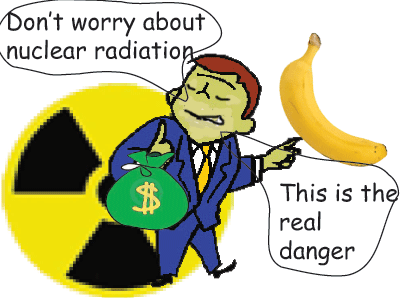
Bananas, brazil nuts and some other foods contain radioactive potassium-40 — but in extremely low doses. Potassium-40 in bananas has a specific activity of 71 ten millionths of a curie per gram. Compare that to the 88 curies per gram for Cesium-137. This is like comparing a stick of dynamite to an atomic bomb. Our bodies manage the ingested Potassium 40, so that after eating bananas, the excess is quickly excreted and the body’s Potassium-40 level remains unchanged.
The radioactive isotopes that come from nuclear fission (such as strontium -90, cesium -137 and iodine 131) were unknown in nature before atomic fission: our bodies are not adapted to them. And as well as being far more radioactive that Potassium -40, they can accumulate in the body.
I had hoped for something sensible to come out of these Citizens’ Juries. That doesn’t look like happening if the juries continue to be fed this kind of nonsense.
Chocolates, bananas, ionising radiation and a nuclear waste dump https://independentaustralia.net/life/life-display/chocolates-bananas-ionising-radiation-and-a-nuclear-waste-dump,9200 5 July 2016
On the matter of ionising radiation and health, Noel Wauchope rebuts five misleading speakers at the Nuclear Citizens’ Jury hearings on Australia’s nuclear waste importation plan.
IN TWO DAYS of 25 Citizens’ Jury sessions in Adelaide (on 25-26 June), about nuclear waste importing, there was minimal coverage of the question of ionising radiation and health.
What little there was, was skimpy, superficial and downright deceptive, in 209 pages of transcripts.
There was not one mention of the world’s authoritative bodies on the subject — The World Health Organisation, U.S. National Academy of Sciences, Canadian Nuclear Safety Commission or any of the reports on biological effects of ionising radiation.
There was no explanation of the “linear no threshold” (LNT) theory on ionising radiation and health, despite the fact that this theory is the one accepted by all the national and international health bodies, including the Ionising Radiation Safety Institute of Australia who, on this topic, quote the Australian Radiation Protection and Nuclear Safety Agency (ARPANSA).
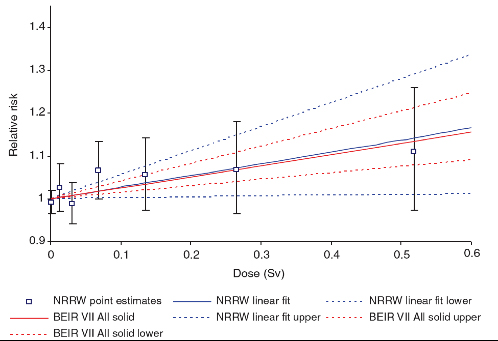
Instead of explaining this basic concept in radiation protection, the slight coverage on radiation and health given to the Jury, was done in a trivial manner as the following examples (listed in the transcript report) illustrate. Continue reading
Nuclear Citizens’ Jury – dubious process, and very dubious purpose
It’s not a proper “Jury”, with a purpose to arrive at a yes or no verdict. It is a campaign ruse by the Weatherill government to get these “ordinary people” to develop a readable, understandable, summary of the RC’s 320 pages of recommendations. Apparently the RC personnel are not able to do this themselves.
Two rays of light in all this. First, the jury members are already asking intelligent questions. Secondly, DemocracyCo’s personnel are making every effort to run these hearings fairly, and transparently.
The South Australian nuclear lobby may be in for some surprises.
Nuclear Citizens Jury in action: the purpose and the process, Online Opinion,
By Noel Wauchope – , 5 July 2016 On June 25 and 26, the South Australian government held the first of three citizens juries, dedicated to discussing the recommendations of the recent Nuclear Fuel Cycle Royal Commission. The sessions are being run by the South Australian company DemocracyCo.From the start, there are problems with the purpose of this Citizens’ Jury. Premier Weatherill did not really help to clarify this, in his opening speech, as he explained its purpose:
|
The Lizard Bites Back goes North
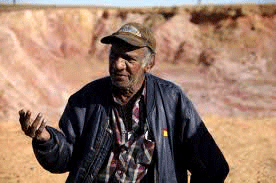 Nectaria Calan 6 July Arabunna elder Uncle Kevin Buzzacott has invited participants at the Lizard Bites Back to visit his country today, to witness firsthand the impacts of BHP Billiton’s Olympic Dam mine on the mound springs in the Lake Eyre region. The mound springs are integral to the desert ecosystem and sacred to the Arabunna people, and are threatened by the 37 million litres of water per day that the mine uses from the Great Artesian Basin, which feeds the mound springs.
The Lizard Bites Back has attracted over 300 people from around the country, converging near the mine gates for a weekend of direct action, workshops on nuclear issues, and music. After two days of workshops and marches to the gates of the mine, the last day of the convergence saw nearly one hundred activists block the main road to the mine for eighteen hours. Riot police were sent in at midnight. On their way, riot police approached base camp, in what appeared to be a simulated raid.
“They approached camp in formation at midnight, shouting at people to get out of their tents,” said Nectaria Calan, co-organiser of the Lizard Bites Back. “Then, for no apparent reason, they retreated. Trying to terrorise people at a non-violent protest camp was a low move, but in line with the police’s behaviour all weekend,” continued Ms Calan. “They have spent the weekend defecting cars and trying to deter people from attending the event by telling them that the public land we are camped on is owned by BHP Billiton. They have also prevented mine workers from visiting the camp. Although they have been lodged for the weekend by the company’s accommodation, they should remember that they do not actually work for BHP.”
“Despite the petty dishonesty of the police and the ongoing abuse of their powers, hundreds of people had the opportunity to sit on country and learn about the risks and impact of the nuclear industry, and disrupt the normal operations of a mine that will leave millions of tonnes of tailings that will remain radioactive for several hundred thousand years.”
“With South Australia facing two proposals for nuclear waste dumps, The Lizard Bites back has also aimed to raise awareness about the connections between uranium mining and nuclear waste,” said Ms Calan. “A responsible approach to managing nuclear waste would begin with stopping its production.”
Co-organiser Izzy Brown said, “Until we stop mining this metal that we have no idea how to dispose of safely, we will keep returning to remind BHP Billiton and the government that the intergenerational health and environmental impacts of this industry are more important than money.”
Many participants have called for another convergence next year.
“After this weekend, this is the most optimistic I’ve ever felt since Western Mining Corporation started digging up the old country. This industry is a house of cards,” said Uncle Kevin.
“This place has a long history of struggle, and we will continue to struggle to honour the sacrifices made by the elders that struggled before us, that may still be with us if this mine was not established. We need to say sorry to the old country and begin healing this land.”
Assessing the risks of Australia becoming the world’s nuclear wasteland
 Shunning nuclear power but not its waste: Assessing the risks of Australia becoming the world’s nuclear wasteland http://www.sciencedirect.com/science/article/pii/S2214629616301323 Mark Diesendorf
Abstract
The South Australian Nuclear Fuel Cycle Royal Commission has undertaken ‘an independent and comprehensive investigation into the potential for increasing South Australia’s participation in the nuclear fuel cycle’. In its Final Report, issued 6 May 2016, it acknowledges that nuclear power would not be commercially viable in South Australia in the foreseeable future. However it recommends that ‘the South Australian Government establish used nuclear fuel and intermediate level waste storage and disposal facilities in South Australia’. This is a business proposition to store a large fraction of global nuclear wastes, providing interim above-ground storage followed by permanent underground storage in South Australia. The present critical evaluation of the scheme finds that the Royal Commission’s economic analysis is based on many unsubstantiated assumptions. Furthermore, the scheme is financially risky for both Australian taxpayers and customers and has a questionable ethical basis.
Josh Frydenberg, Energy and Resources Minister attacks environmental groups
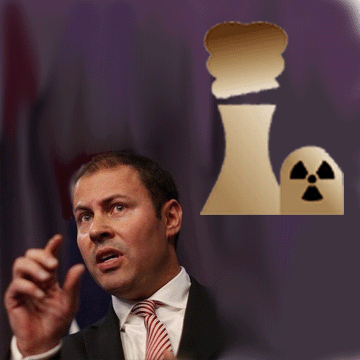 Federal election 2016: Frydenberg slams activist ‘bias’ The Australian, 5 July 16 Liberal frontbencher Josh Frydenberg has attacked the Australian Conservation Foundation and Environment Victoria for campaigning against him in his electorate despite their claims to being independent and non-partisan.
Deposed Tasmanian Liberal Andrew Nikolic is also locked in a war of words with activist group GetUp! over its activities in his seat, where 80 volunteers and 10 paid staff led a $300,000 campaign against the former government whip.
Mr Frydenberg, the Energy and Resources Minister, said the ACF and Environment Victoria had used billboards, trucks and pamphlets to campaign against the Coalition in his inner-Melbourne seat of Kooyong.
“These organisations such as the ACF and Environment Victoria claim to be non-partisan and independent but they clearly acted in this campaign in a way that is hostile to the Coalition,’’ he said.
The ACF hired a truck to drive through the electorate throughout the campaign with a banner attached attacking Mr Frydenberg for refusing to sign up to its environment pledge……..
ACF spokesman Josh Meadows said the banner and flyers were not partisan. “We weren’t saying vote for this person; what were saying was this person pledged commitment and this person didn’t,’’ he said.
Mr Frydenberg said Environment Victoria also launched a partisan attack, placing a billboard at a prominent intersection in the electorate saying: “We booked this ad to talk about the Liberals’ plan to cut climate pollution … they still don’t have one.”
Environment Victoria chief executive Mark Wakeham said: “We are non-partisan, but under the Coalition CO2 emissions have been rising and it’s important that people know that.”…….
In the Adelaide seat of Mayo, GetUp! ran a campaign advocating voting for the Nick Xenophon Team candidate Rebekha Sharkie over Liberal Jamie Briggs. The group says it chooses the recipients of its favours on their stands on renewable energy, marriage equality and education and health. http://www.theaustralian.com.au/federal-election-2016/federal-election-2016-frydenberg-slams-activist-bias/news-story/8c940ff1f471180836bcef01a7813fc9
Queensland wind farm to ‘drought proof’ farm incomes and provide jobs
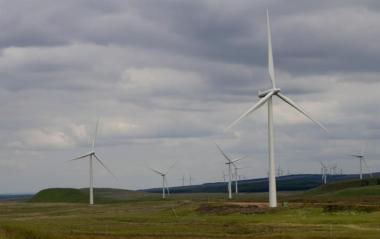 Queensland’s $500m Coopers Gap wind farm could be operational by 2020 http://www.abc.net.au/news/2016-07-04/hope-qld-500m-coopers-gap-wind-farm-project-operational-2020/7562124?section=environment By Ellie Sibson An energy company planning to build Queensland’s largest wind farm is hoping to have the project operational by 2020.
AGL Energy’s proposed $500 million Coopers Gap wind farm would be constructed at Cooranga North, about 200 kilometres north-west of Brisbane in the state’s South Burnett region. It has a proposed capacity of 350 megawatts and could power 190,000 homes each year.
Under the plans, up to 115 turbines would be built across 11 properties.
Last month, the wind farm was declared a coordinated project and community consultation on the draft terms of reference for an environmental impact statement is currently underway. Dozens of residents attended a recent public meeting at the nearby township of Bell to raise concerns and ask questions about the project.
Project manager Neil Cooke said most of the feedback had been positive. “Some of the community are concerned about the noise being too high and concerned about sleep,” he said. “We’re in the process of organising a second trip down to our wind farms in Victoria so people can actually get to see wind farms close up.”
Wind farm would ‘drought-proof property’ If the wind farm is approved, Cyril Stewart would have three turbines built on his cattle property. During times of drought, Mr Stewart has had to leave his land in search of a job. “It would be the greatest thing since sliced bread because it is drought-proofing the property,” he said. “This is something that rain, hail or shine, there’s an income.”
About 350 workers are needed for construction with ongoing employment for 20 people. South Burnett Mayor Keith Campbell said it would be a big jobs boost for the region. “Economic development is something our region really needs,” he said. “These sorts of things don’t come about often … employment driven by the economic outcomes is something that as a region we can’t ignore.” The environmental impact process is expected to take at least six months.
Victorian government backing 2 new wind farms
Two new wind farms gain Victorian government support http://www.theage.com.au/victoria/two-new-wind-farms-gain-victorian-government-support-20160705-gpz37f.html Benjamin Preiss STATE POLITICAL REPORTER FOR THE AGE TWO NEW VICTORIAN WIND FARMS WILL BE BUILT WITHIN TWO YEARS AND WILL RECEIVE AN EXTRA SOURCE OF INCOME FROM THE STATE GOVERNMENT.
The new wind farms will produce enough energy to power 80,000 homes. They will be located at Kiata near Horsham and Mount Gellibrand near Colac. The Kiata wind farm will have up to 13 turbines, while Mount Gellibrand will host up to 44. Both projects are expected to be operating by 2018.
The government says it is using its purchasing power to support these wind farms through so-called renewable energy certificates. The state government has committed to purchasing some renewable energy certificates from these two wind farms, giving them an additional revenue stream. Certificates are allocated to wind farms as part of the national renewable energy target. Producers of renewable energy can also sell the certificates to energy retailers.
Energy Minister Lily D’Ambrosio said the government was rebuilding much-needed confidence in the renewable energy industry. “We can build a strong, sustainable, renewable energy industry that powers our broader economy, creates well-paid jobs and reduces our environmental impact,” she said.
Last month the government committed to a renewable energy generation target of 25 per cent by 2020 and 40 per cent by 2025. Planning Minister Richard Wynne is also considering six applications to amend existing wind farm permits so they can increase their turbine size.
Teach climate denial in schools – the Hanson plan !
 Federal election 2016: Potential One Nation senator wants climate scepticism taught in schools, SMH July 5, 2016 Nicole Hasham The One Nation candidate with a strong chance of joining Pauline Hanson in the Senate, Malcolm Roberts, wants climate scepticism taught in schools and says the CSIRO and United Nations’ peak climate body endorse corruption.
As Australians adjust to One Nation’s return as a political force, attention has turned to the party’s far-right agenda, which extends well beyond controversial views on immigration and Islam.
Ms Hanson is confident of securing a second Senate spot out of Queensland, which would see Mr Roberts take a seat in the red chamber. She claims her party is in the running for six Senate position
The One Nation website touts Mr Roberts as a family man and former coal mine manager who is “passionate about climate change data and facts”.
He “has earned the respect of informed people around the world for his investigation of claimed global warming and climate change where he … exposed the corruption,” the website states.
……..Mr Roberts’ views appear to be driving One Nation’s extreme climate policy agenda, which includes pushing for a royal commission into climate science and abolition of the Renewable Energy Target.It also wants the teaching of climate science in schools to be based on “the scientific method of scepticism”.
One Nation wants the Bureau of Meteorology reviewed, including “public justification of persistent upward adjustments to historical climate records” and a review of the CSIRO to determine whether funding has influenced its climate claims.
Mr Roberts is listed as a project leader for the Galileo Movement, a prominent climate-sceptic group that boasts broadcaster Alan Jones as its patron.
In a paper published in 2013, Mr Roberts claimed CSIRO scientists were “deeply enmeshed in producing corrupt UN IPCC reports”, in reference to the United Nation’s Intergovernmental Panel on Climate Change, which he also described as “corrupt”.
He claimed IPCC papers “contradict empirical scientific evidence and provide no logical scientific reasoning for their core claim that human CO2 caused, causes or will cause global warming”.
The federal election cleaned out a number of parliamentarians seen as roadblocks to the environment cause, such as WA climate-sceptic MP Dennis Jensen and Bass MP Andrew Nikolic, who wanted environment groups stripped of their charity tax status.
It also put in serious doubt the political futures of others including anti-wind farm crossbench senators Bob Day, David Leyonhjelm and John Madigan.
However One Nation’s new power in the Senate would pose a fresh challenge to those seeking stronger climate action in the next Parliament.
On Monday Ms Hanson said she was “definitely not sold on” climate change…….. Comment has been sought from Mr Roberts. http://www.smh.com.au/federal-politics/federal-election-2016/federal-election-2016-potential-one-nation-senator-wants-climate-scepticism-taught-in-schools-20160705-gpytok.html#ixzz4DapAkA8C
1 This month.

Australians deserve the truth
about
AUKUS – https://aukuspublicinquiry.com/

PETITION – To: Prime Minister Anthony Albanese and the Australian Labor Government

of the week – Australians for War Powers Reform (AWPR)
To see nuclear-related stories in greater depth and intensity
 Antinuclear
