Hypocrisy of Malcolm Turnbull on Climate Change
 Three minutes to midnight and our politics ignores the climate threat The further burning of vast carbon reserves is an attack on the human species, writes scientist Dr Andrew Glickson. Crikey, 19 July 16
— Malcolm Turnbull, 2010 … (subscribers only) https://www.crikey.com.au/2016/07/19/inaction-on-climate-change-crime/
Nick Xenophon wants inquiry in South Australia’s renewable energy issues
Nick Xenophon blames SA energy woes on ‘bad’ renewables rules, AFR, by Angela Macdonald-Smith, 20 July 16 South Australian Senator Nick Xenophon says the state’s energy problems are due to “bad decisions” in the design of the renewable energy target legislation that failed to take into account the impact of more intermittent generation on wholesale prices……..
Mr Xenophon said he would raise the suggestion of a Senate inquiry into renewable energy to consider issues as to whether some types of energy should attract a higher weighting in renewable energy certificates if they produced more reliable power, and to consider potential incentives for battery storage.
SA Treasurer Tom Koutsantonis says those blaming the state’s energy woes on its push into renewables have “completely misunderstood” the situation and insists the fault lies in the lack of a real national electricity market.
Australia’s new Environment Minister “Mr Coal (and Nuclear)” – Josh Frydenberg
For environmentalists, climate scientists, and any Australian who wants the Great Barrier Reef to outlive them, there’s good news and there’s bad news.
The good news is that Greg Hunt is no longer the Environment Minister, stripped of the title and bumped across to the position of Industry, Innovation, and Science, as part of Malcolm Turnbull’s first post-election Cabinet reshuffle.
The bad news is the name of the man who will replace him.
Josh Frydenberg, formerly the Minister for Resources, Energy and Northern Australia, is set to take over the portfolio, which has ominously been extended to include both environment and energy.
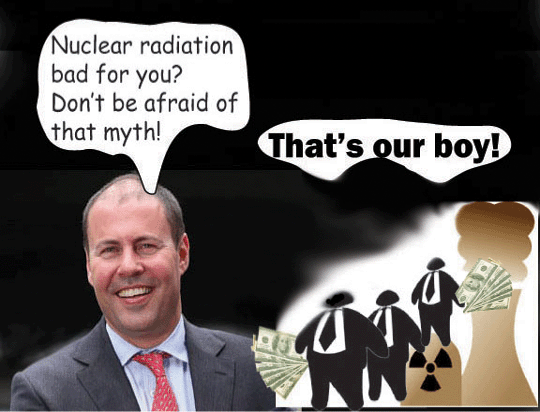
Frydenberg has been a major advocate for coal, and has echoed Tony Abbott’s belief that the mineral is “good for humanity”. In an interview with Andrew Bolt last year, Frydenberg said “I certainly believe in the moral case that Tony Abbott and others have put that our coal, our gas, our energy supplies do lift people out of energy poverty, and that’s going to be an important theme of my term in this role.”
In the interview Bolt described the Minister as the “new Mr Coal”.
During the conversation the soon-to-be Environment Minister parroted Hunt’s defence of the government’s Direct Action climate change policy, and rehashed the claim that Adani’s planned mine in the Galilee basin would create 10,000 jobs – despite the fact Adani’s own expert witness quoted a far lower number to a Queensland court.
Frydenberg has also been an at times bizarrely enthusiastic advocate for mining, describing resource development as an iconic Australian endeavor.
“Resources is to the Australian economy what the baggy green is to Australian sport: totemic; iconic; indispensable to our national story and synonymous with our national identity,” he said in February 2016.
And he’s not the only one with a curious relationship to coal and the climate who has found himself newly in charge of a portfolio relevant to both. Replacing Frydenberg as Minister for Resources is Senator Matt Canavan, who has said the science on climate change is becoming “less certain”……….
“Mr Frydenberg has repeatedly showed himself to be unfit for office. From spruiking the benefits of coal and gas to blocking the price on pollution and saying no to investing in clean energy, he has consistently put the big polluters ahead of the people he was elected to represent,” 350.org Australia Campaigns Director Charlie Wood said at the time.
Turnbull’s selection of Frydenberg appears to confirm the Prime Minister’s adapted willingness to back off on strong climate action, an issue which helped end his first stint as Liberal leader. https://newmatilda.com/2016/07/18/malcolm-turnbull-just-made-mr-coal-his-environment-minister/
South Australia’s coming renewable energy revolution- Craig Wilkins at Parliamentary Inquiry

83-Percent Of south Australia’s Electricity From Wind last weekend
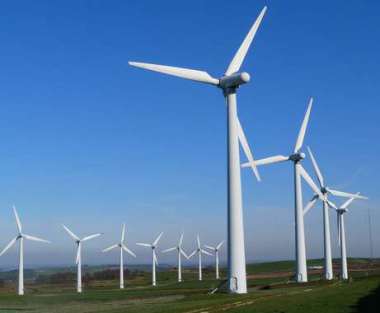 South Australia Just Produced 83-Percent Of Its Electricity From Wind Energy HTTP://WWW.HEXAPOLIS.COM/2016/07/16/ BY: SUKANYA MUKHERJEE JULY 16, 2016
Thanks to a particularly windy weekend, South Australia recently saw nearly 83-percent of its total electricity coming solely from eco-friendly wind energy. Although the harsh weather conditions led to power outages in some of the places, its advantages far outweigh the temporary inconvenience. According to officials, wind turbines installed in the area captured much of the ambient energy, which was used to meet more than two-thirds of the region’s total electricity demands last Monday.
When it comes to renewable power, South Australia is one of the front runners, boasting both solar and wind energy. Investments of up $6 billion have resulted in the installation of as many as 638 wind turbines in the area. According to Alicia Webb of Australia-based Clean Energy Council, an organization dedicated to improving renewables and conversion efficiency, the industry has also generated “hundreds” of jobs. Given the current trend, the region will soon see wind and solar power overtaking conventional fossil fuels. Webb said:
Southern Australia…is in the midst of a remarkable transformation, with more than 40 percent of its power needs coming from renewable energy last year. It is clear that modern economies can run on increasingly higher levels of renewable energy, and it is clear from South Australia’s example that other mainland states can go much further with no loss of reliability.
With oil and volatile gas prices skyrocketing in recent years, wind turbines in South Australia actually help produce electricity at lower costs, especially during windy weather. As pointed out by Webb, the area’s total “installed solar capacity” will likely reach five gigawatts in the coming months. These steps are part of the government’s efforts to meet the targets declared in the Paris agreement. In addition to renewables, researchers in South Australia are coming up with new, innovative technologies that could in turn help reduce environmental pollution. Via: CleanTechnica
Greening of south-east Queensland – City of Logan leads
 Logan becoming south-east Queensland’s greenest city , Brisbane Times, July 17 2016 The greener side of Logan is starting to show through, with the south-east Queensland city embracing solar energy, recycling initiatives, DIY kits and sustainable living workshops.
Energex statistics from June revealed Logan was ahead of nearby cities when it came to solar power, with more than a quarter of all properties having solar panels on their roofs.
This was compared to 17 per cent in Brisbane and 18 per cent on the Gold Coast.
The city of more 308,000 residents is 70 per cent rural or semi-rural, an appealing factor for those in the area who enjoy their open spaces…….
“A lot of schools are becoming a lot more sustainable, Calvary Christian College at Springwood have their own chickens and sell their eggs, the children involved in gardening, selling produce, checking the eggs,” ………..http://www.brisbanetimes.com.au/queensland/logan-becoming-southeast-queenslands-greenest-city-20160717-gq7mp0.html
South Australian Liberals keen to obstruct wind energy projects?
 Libs pushing for wind farm changes
ALL new wind farm projects would have to undergo an assessment to see how they would affect the electricity market before being approved, if changes proposed by the Opposition were adopted…. (subscribers only )
http://www.adelaidenow.com.au/news/south-australia/sa-liberals-pushing-for-all-new-wind-farms-to-be-assessed-for-their-impact-on-the-electricty-market/news-story/c52442ad2d7640d9b23ee4372b75eb6a
South Australia’s Premier Jay Weatherill and his Citizens’ Jury Nuclear Deception
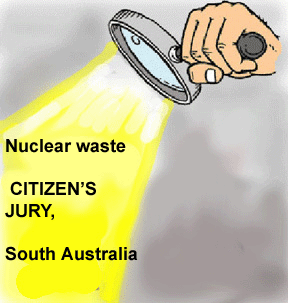 Weatherill trumps up Citizens’ Jury Report in push for SA nuke waste dump, Independent Australia 15 July 2016, Noel Wauchope, who has been covering the Nuclear Fuel Cycle Royal Commission for IA, calls SA Premier Jay Weatherill out over a sleight of hand following the Nuclear Citizen’s Report this week.
SA Premier Jay Weatherill received the Nuclear Citizen’s Jury Report on 10 July. He said that it was a “commonsense” report and that:
“they [the jury] are asking us to also change the legislation to undertake that work”
(i.e: the work of investigating overseas markets for sending nuclear wastes to South Australia)
Here’s where the sleight of hand comes in. That call to change legislation did not come from the Citizens’ Jury. It came from the pro-nuclear Nuclear Fuel Cycle Royal Commission (NFCRC), and the jury was merely doing its appointed task — which was to paraphrase the NFCRC’s recommendations. Throughout the jury process, the jury members were reminded that they had no brief to make any decisions or recommendations and they conscientiously stuck to that rule.
Now I think we know why Weatherill was so adamant that this group be called a “jury”. A later group of 350 members, will also be called a “jury”. There is some possibility that this number 350 could be taken as an adequate sample of the South Australian population of 1.712 million. So again, by regurgitating the NFCRC’s recommendations, this might conceivably be portrayed as the “verdict”of the people. That’s a lot safer than a referendum. …….
NFCRC is over, and finished, but hey — not so! The next move is a massive public advertising process and this kicked off with the recent Citizens’ Jury, which, while being organised by the South Australian firm DemocracyCo, was master-minded and controlled by NFCRC personnel. The witnesses were predominantly pro-nuclear, speakers from NFCRC were prominent and NFCRC staff were present at many, if not all, sessions.
Several times, during hearings, and Q and A sessions, the jury was reminded of the necessity to change State and Federal legislation.
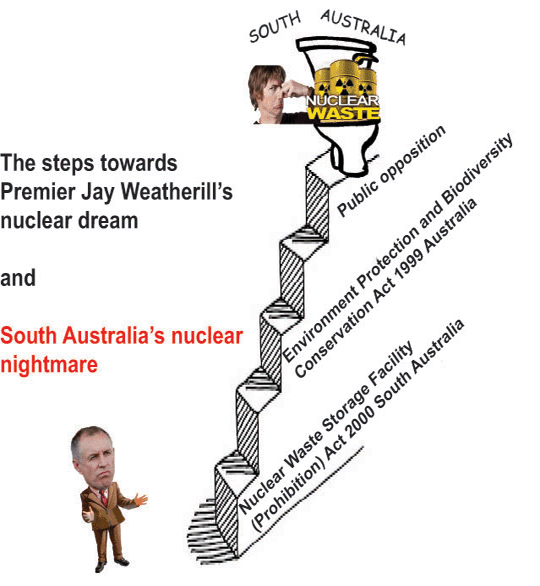
This process had, in fact, already begun, with legislative change that had to be made retrospective, seeing that the government had already spent $7.2 million on the Royal Commission. It is rare for legislation to be made retrospective. As the Greens’ Mark Parnell commented:
‘The retrospective clause is basically saying that if anyone did anything illegal we now legalise it.’
The South Australia Nuclear Waste Storage Facility (Prohibition) Act 2000 used to say:
13 — No public money to be used to encourage or finance construction or operation of nuclear waste storage facility
(1) Despite any other Act or law to the contrary, no public money may be appropriated, expended or advanced to any person for the purpose of encouraging or financing any activity associated with the construction or operation of a nuclear waste storage facility in this State
This section was amended in May 2016. The government wanted to remove Section 13, altogether. However, after several efforts on this, (Greens’ Mark Parnell objecting), Section 13 was amended, to include a new provision:
‘(2) Subsection (1) does not prohibit the appropriation, expenditure or advancement to a person of public money for the purpose of encouraging or financing community consultation or debate on the desirability or otherwise of constructing or operating a nuclear waste storage facility in this State.’
That was a small step forward for the nuclear cause.
Now for a bigger step. The government needs to drastically amend the South Australia Nuclear Waste Storage Facility (Prohibition) Act 2000. Later on, they need to get changes made to the national legislation — The Environment Protection and Biodiversity Conservation Act 1999 (the EPBC Act). They’d probably like these national powers to be removed and have these topics placed under State laws.
In building their argument for changing the law, the Weatherill Government needs to gather persuasive evidence about the proposed economic bonanza to come from importing foreign nuclear wastes. That means another round of expensive trips overseas, and a lot of advertising and promotional meetings in South Australia.
All this can now be justified, because, according to the government, the Citizens’ Jury called for more information, especially on economics, and even more importantly, called for changing the law on importing nuclear waste.
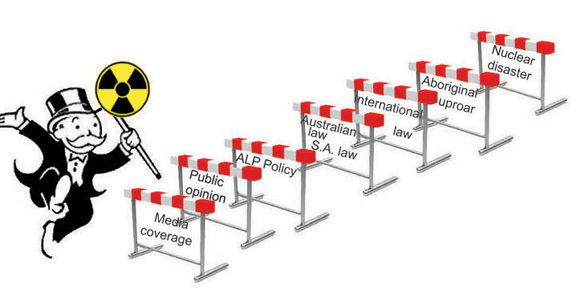
The fact that this jury group diligently summarised the Royal Commission report, without themselves making any recommendations, will almost certainly get lost in the onslaught of pro-nuclear hype that is about to descend upon the South Australian population. https://independentaustralia.net/environment/environment-display/weatherill-trumps-up-citizens-jury-report-in-push-for-sa-nuke-waste-dump,9237
Coalition govt’s secret plan to take over community-run indigenous rangers scheme
 Leaked docs reveal secret Coalition plans for indigenous rangers Although the Indigenous Rangers — Working on Country program is a huge success, Nigel Scullion wants to overhaul it from a community-run to a top-down structure. Crikey, Josh Taylor , 15 July 16 A secret document, leaked to Crikey, reveals significant changes being considered for the federal government’s wildly successful indigenous rangers program — that is, if Indigenous Affairs Minister Nigel Scullion keeps his job and is around to implement them.
The “Indigenous Rangers — Working on Country” program was started in 2007 under the Howard government as a means to provide employment and training for indigenous Australians into work applying their knowledge of the local land to care for it. It currently employs 777 indigenous rangers in full-time roles in 107 different groups, and more than 2500 indigenous people overall in full-time, part-time or casual positions…… (subscribers only) https://www.crikey.com.au/2016/07/15/leaked-docs-reveal-coalition-plans-indigenous-rangers/
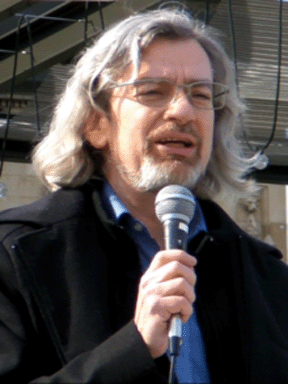
Craig Wilkins, Conservation Council of South Australia, at parliamentary Nuclear Inquiry
Citizens Jury Panel 1: Craig Wilkins
 TRANSCRIPT OF EVIDENCE TO SOUTH AUSTRALIAN PARLIAMENTARY
  COMMITTEE, 15 July 16
 No Profit in Nuclear waste
- A minimal safety margin requires that high level waste not be imported before an agreed licensed geological disposal site…
- High level nuclear waste disposal costs can double in a decade…..
- Dubious claim that disposal of nuclear waste in SA costs one quarter less than in experienced countries….
- SA faces a $60 billion debt in costs across 37 years of ongoing nuclear waste storage operations and nuclear facility decommissioning after the last receipt of overseas revenues for waste imports….
- Nuclear contingency costs are unfunded…
 Brief (July 2016) by David Noonan, Independent Environment Campaigner
South Australians are being misled by inflated revenue claims, untenable assumptions and under-reported nuclear waste costs. Reality check analysis shows there is no profit in nuclear waste.
Nuclear waste costs are fast rising and unrelenting for decades after the last recite of waste imports regardless of whether or not claimed revenues and fixed prices over time prove to be realistic or illusory.
The Nuclear Royal Commission Final Report Ch.5 “Management, storage and disposal of nuclear waste” and the Nuclear Commission Tentative Findings Report (p.16-20) present a nuclear waste baseline business case that is near solely reliant on a consultancy “Radioactive waste storage and disposal facilities in SA” (Feb 2016) by Jacobs MCM, summarised in Final Report Appendix J.
There is no market based evidence for the Final Report revenue assumptions and claimed income.
Claimed revenues are a tonnage based multiplier: inflated tonnage equals misleading revenues.
Claimed revenues are doubled by an assumption SA can take twice the waste the US failed to achieve. Continue reading
Queensland: Catholic schools recognised by Vatican for solar energy success
 Vatican praise for Townsville Catholic diocese solar scheme http://www.abc.net.au/news/2016-07-14/vatican-praise-for-townsville-catholic-diocese-solar-scheme/7630890?section=environment By Ben Millington Catholic schools in north Queensland have caught the eye of the Vatican with a solar project that is cutting carbon emissions and saving millions of dollars.
The Diocese of Townsville, which stretches from the coast to Mt Isa in the state’s north-west, has installed solar panels on roofs of all its eligible schools. The diocese has invested $6 million in one megawatt of solar panels, but diocese director of education Dr Cathy Day said this could deliver a much higher return. “The best figures that I like to think is a saving of $40 million over 25 years,” she said.
“Now when you turn that into teachers that we can pay for, or resources for students, that’s quite a substantial amount of money and I think it’s a great investment.”
In combination with the use of low-energy LED lighting, she said, the diocese had cut carbon emissions by 40 per cent, which is equivalent to taking 40,000 cars off the road. Dr Day said her main motivation had been to set a positive example for students and the broader community. “We’ve all got to start investing in technology and energy efficiency,” she said. “This is the way of the future. Our students are going to be in these industries. Nobody’s going to be working in a coal-fired power station in years to come.”
Emissions will eventually be cut by 80 per cent With further investment, Dr Day said they expect to achieve an 80 per cent reduction in emissions through installing more solar and energy-efficient air conditioning, as well as using batteries to store the power generated.
She returned last week from a visit to Rome, where she presented the project to Vatican officials in meetings led by former deputy prime minister and onetime ambassador to the holy see, Tim Fischer, who has become a spokesman for the project. Mr Fischer said the scheme was well received in Rome and he would like to see it rolled out in schools across the world. “What has happened in Townsville is mildly revolutionary and is extremely positive in terms of energy savings because it works and it can be monitored in real time,” he said.
“That’s what caused positive ripples in Rome. They saw in this sustainable, cut-through, realistic energy savings created without massive capital expenditure.”
The project is already being replicated in other Catholic schools in Cairns and the Northern Territory.
Minerals Council of Australia spends up big to promote moribund uranium industry
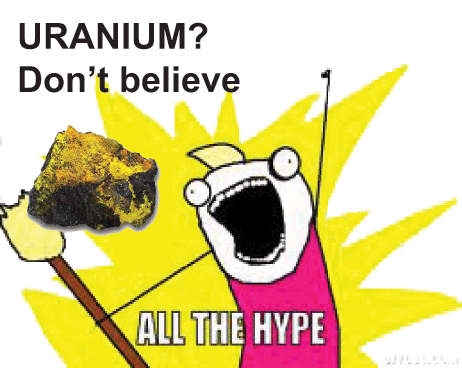 According to IBISWorld Australia’s uranium sector employs less than a thousand people and it generates around $700 million in sales. The uranium industry accounts for 0.01% (0.0084%) of jobs in Australia and in the 20131/14 financial year accounted for 0.19% of national export revenue. It is a sector that has promised much and delivered little.
But this hasn’t stopped the Minerals Council from pumping funds into poorly advised social and hard media campaigns of late to try to breathe life into the comatose uranium sector.
Australia’s nuclear-powered PR in meltdown, Independent Australia, 14 July 2016 With nuclear energy take-up shrinking post Fukushima, Australia continues to ignore the UN’s call for an independent cost-benefit analysis of our high risk-low return uranium trade. ACF’s Dave Sweeney examines the continuing spin by the MCA. “…… the changed status of Australia’s embattled uranium sector.
“Fukushima changed everything.” This might sound like a line from the anti-nuclear lobby but it is a direct quote from BHP, the world’s biggest miner. And they are right.
The Fukushima disaster was directly fuelled by Australian uranium and increasingly its impacts are being directly felt by the Australian uranium sector.
In the continuing shadow of Fukushima nuclear powers contribution to the global energy mix is shrinking and has been eclipsed by renewables, and with over 200 reactor shut-downs due by 2040, the industry will have to run hard just to stay put.
The related uranium market meltdown has been severe and seen prices, profits and employment numbers go south. Continue reading
Turnbull govt still backing Trans Pacific Partnership
Trans-Pacific Partnership: Trade Minister Steve Ciobo says he won’t give up on deal, Sydney Morning Herald, July 14 2016
The Turnbull government is refusing to give up on an ambitious 12-nation trade pact despite the prospect of a protectionist Senate and opposition in the US.
The Trans-Pacific Partnership: the dirtiest trade deal, you’ve never heard of
The upper house is shaping up to be difficult for the government’s free-trade agenda and its plans to ratify the Trans-Pacific Partnership. The Nick Xenophon Team, Pauline Hanson’s One Nation and Jacqui Lambie, considered either protectionist or anti-free trade, are readying to take their spots in the Senate.
Senator Xenophon said the government should throw in the towel on the TPP, which he believes will fail to deliver the promised benefits.
He fears the agreement will sacrifice tens of thousands of Australian jobs, accusing the government of failing to think through the real-life consequences.
But his most potent argument is that the deal could be dead in the water anyway given US presidential candidates Donald Trump and Hillary Clinton oppose it.
“Why are we jumping into this deal when whoever will be US president doesn’t want a bar of it?” Senator Xenophon told ABC radio on Thursday. However Trade Minister Steve Ciobo, who was in Washington this week to discuss the TPP, is not prepared to walk away.
But the minister was careful to pick up on the apparent rise of domestic scepticism on trade deals.
“I do appreciate that some Australians feel a little alienated by a globalised world, by a world in which currency flows, people flows, trade flows are happening at a faster rate than ever before,” Mr Ciobo told ABC TV.
“I don’t think you say it’s over till it’s over.”
He hopes the deal could at least be cleared at home with the help of the Labor Party. http://www.smh.com.au/federal-politics/political-news/transpacific-partnership-trade-minister-steve-ciobo-says-he-wont-give-up-on-deal-20160714-gq5ozu.html
Warning to Australia against being USA ‘deputy sheriff’ near China
Labor’s Bob Carr warns against ‘deputy sheriff’ military action in South China Sea, The Age, July 14 2016 Daniel Flitton Former Labor foreign minister Bob Carr has warned Australia risks looking like a US “deputy sheriff” should warships sail close to China’s artificial islands…….
“The plain fact is if Australia joined American patrols or ran patrols of its own that penetrated the 12-mile radius of Chinese-claimed territory, we would be the only American ally to do so,” Mr Carr told Fairfax Media.
China has denounced the ruling in the arbitration case brought by the Philippines as “null and void” and threatened to impose controls on aircraft over the disputed waters.
The territorial dispute has escalated in recent years after China seized control of coral atolls and tiny islands in waters claimed by the Philippines, dredging the sea floor to reclaim land and construct aircraft runways, which could serve as military bases.
Speaking from Beijing, Mr Carr said a diplomatic course was more likely to find a solution.
Asked about Senator Conroy’s comments, Mr Carr said Bill Shorten and shadow foreign affairs spokeswoman Tanya Plibersek had shown “realism” by supporting the diplomatic path.
“If our response to the arbitration were to immediately signal patrols that mimicked the American patrols, Australia would be one out among all American partners in the region. We’d look like the deputy sheriff,” he said…….http://www.theage.com.au/federal-politics/political-news/labors-bob-carr-warns-against-deputy-sheriff-military-action-in-south-china-sea-20160713-gq5arp.html
1 This month


Help Aunty Sue Protect Her Land and Sacred Sites From Destructive Rocket Testing.
.

Australians deserve the truth
about
AUKUS – https://aukuspublicinquiry.com/

PETITION – To: Prime Minister Anthony Albanese and the Australian Labor Government

of the week – Australians for War Powers Reform (AWPR)
To see nuclear-related stories in greater depth and intensity

