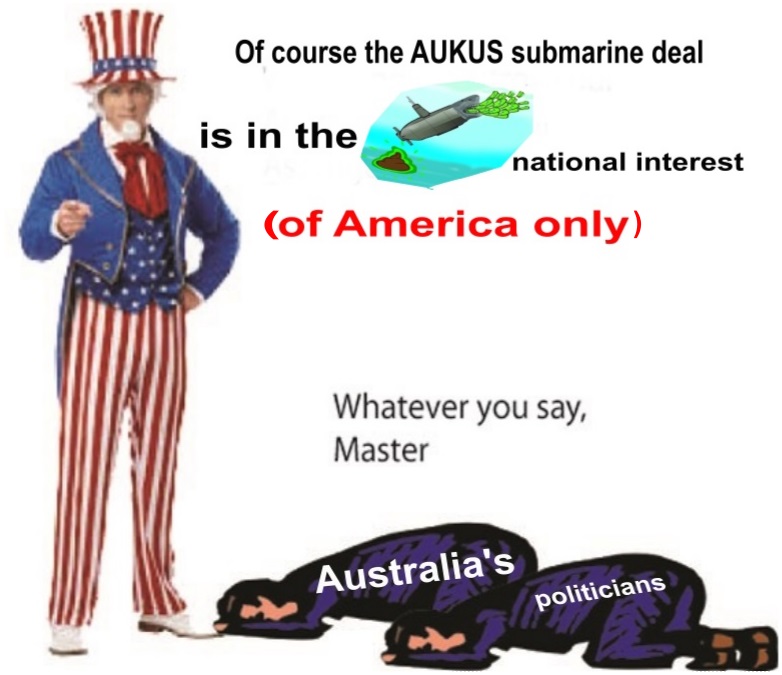
Top Australian honour (whaa-at !!!!) for American politician who helped push Australia into the shonky AUKUS agreement
Rex Patrick, 24 Oct 24
Albanese pours $5B of Australian taxpayers’ cash into US shipyards (with no guarantee #AUKUS subs will ever be delivered). He then arranges for the local US Congressman to get a top Australian honour. Icing on the cake for that guy.
Rep. Courtney to receive Australia’s top civilian award
WSHU | By Brian Scott-Smith, October 23, 2024
U.S. Rep. Joe Courtney (D-CT-2) has been chosen for one of Australia’s top civilian awards. Courtney is one of a few Americans to be given the Order of Australia, which recognizes extraordinary service by a non-citizen…………………… He has also been instrumental in the AUKUS trilateral defense agreement between Australia, the UK and the U.S. to help provide nuclear submarines to Australia. It’s the first time the U.S. has entered into such an agreement with another country…….. https://www.wshu.org/connecticut-news/2024-10-23/ct-joe-courtney-australia-civilian-award
Select Committee on Nuclear Energy – Submissions close 15 November.

https://www.aph.gov.au/Parliamentary_Business/Committees/House/Select_Committee_on_Nuclear_Energy
The House Select Committee on Nuclear Energy was established by a resolution of appointment that passed the House of Representatives on 10 October 2024.
The Committee will inquire into matters referred to in the resolution of appointment and is required to present its final report by no later than 30 April 2025. The Committee will cease to exist upon presenting its final report.
Select Committee on Nuclear Energy
We will inquire into and report on the consideration of nuclear power generation, including deployment of small modular reactors, in Australia, including:
 deployment timeframes;
fuel supply, and transport of fuel;
uranium enrichment capability;
waste management, transport and storage;
water use and impacts on other water uses;
relevant energy infrastructure capability, including brownfield sites and transmission lines;
Federal, state, territory and local government legal and policy frameworks;
risk management for natural disasters or any other safety concerns;
potential share of total energy system mix;
necessary land acquisition;
costs of deploying, operating and maintaining nuclear power stations;
the impact of the deployment, operation and maintenance of nuclear power stations on electricity affordability; and
any other relevant matter.
Delay-mongers have latched on to nuclear
Australia should be at the front of the queue, positioning our nation as a renewable energy superpower and an economic powerhouse for decades to come.
The delay-mongers have latched on to nuclear power, despite the overwhelming evidence that it can only drive up energy bills, can only be more expensive, and can only take too long to build in a cost-of-living crisis.
I suspect that even those arguing for nuclear don’t believe that we’ll ever build one of these reactors in Australia, and certainly not in time to help manage the exit of coal from the system.
Matt Kean, Former NSW treasurer, 22 Oct 24, https://www.theguardian.com/australia-news/2024/oct/22/matt-kean-fantasy-coalition-energy-policy-coal-nuclear-power?fbclid=IwY2xjawGFBTtleHRuA2FlbQIxMQABHZOLw35JiI_0LOuO7ud0lCdaODH8ws-XTXtm6BjH-aQRT5FT8Ac8UKeUTQ_aem_yTUmsY_z33BOm66Ol9MkEA
Capital markets and the private sector have often been ahead of the curve in the debate over climate change.
They were prepared to discard the nonsense that action on climate change represented a choice between our environment and our economy.
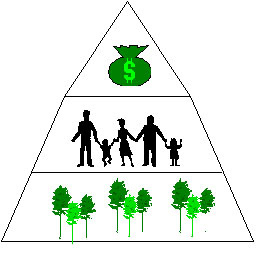
(True economics – the economy is based on a healthy environment)

(False economics – profit is the first priority – consider the environment only later)
That’s because the forces reshaping the global economy are clear, the cost of low emissions technology is coming down, and the appetite of investors to direct capital towards it is surging.
These trends are now embedded and have forever shifted the dynamics of climate policy. Consider the sheer weight of capital now pouring into the low-carbon energy transition right across the world.
It means an economic arms race to capture the next generation of investment, resource projects, exports, jobs and innovation will continue to explode right across the world.
Australia should be at the front of the queue, positioning our nation as a renewable energy superpower and an economic powerhouse for decades to come.
We should have the confidence to be bold, knowing there is a clear capacity to attract the finance for the technology and innovation needed to reduce emissions.
Our track record tells us so we have continued to build the policy architecture needed to give comfort to investors, and we can tell a story of meaningful progress against our emissions reduction goals towards a contemporary clean-energy system, and in pursuit of the next wave of ideas to sustain our success.
The integrated system plan gives us a clear national blueprint for the generation, storage and transmission infrastructure needed to sustain a reliable, secure and affordable national electricity market.
It will also depend on enabling initiatives such as the capacity investment scheme, which is revolutionising our ability to encourage new investment in dispatchable renewable energy, generation and storage.
The scale of the scheme is simply mammoth, with a target of 32 gigawatts of new capacity, comprising 23 gigawatts of renewable capacity and 9 gigawatts of clean, dispatchable capacity.
In total, it’s expected to drive $67 billion worth of investment continuing to inject renewables into the system, backed by storage and firming technology.
It is the best, most affordable way to replace capacity lost as coal-fired power stations exit the system.
That’s the advice of the CSIRO. That’s the advice of the Australian Energy Market Operator, and it’s one of the major assumptions that underpins the recently released sector pathways review produced by the Climate Change Authority, which I’m now pleased to chair.
Perhaps the biggest cost of nuclear is time.
That’s because mature and available technology allows us to step up the pace of change, by building on the rise in clean energy that has seen the transformation of our grid.
More than 40 per cent of the nation’s electricity is now generated by renewables.
We need to consider this simple fact: as renewables have poured into the system, the emissions intensity of the national electricity market, the nation’s largest grid, has dropped by more than a third, and sectoral emissions can be dramatically slashed further if we continue to invest in new solar, wind, storage and firming solutions.
We know that as much as 90 per cent of the coal-fired power that has underpinned our economy is coming to the end of its technical life by 2035. It’s an ageing technology that is already adding to price spikes and reducing reliability for households and businesses.
And if we continue to depend on it, we accelerate the rundown of the limited carbon budget available to us, we would fall behind the curve on our near-term emissions reduction targets, and we would face the prospect of irreversible damage to our environment, our economy and our way of life.
We simply can’t afford to wait and hope that bigger breakthroughs are over the horizon, and perhaps more importantly, we can’t pander to those vested interests and self-serving groups who want to delay clean and cheap energy, seemingly to benefit their own careers or their profits at the expense of the environment, the economy and our people.
Recently, for example, an illiberal drive to intervene in the market-led energy transition has been elevated from internet chat rooms and lobby groups to the national stage.
The delay-mongers have latched on to nuclear power, despite the overwhelming evidence that it can only drive up energy bills, can only be more expensive, and can only take too long to build in a cost-of-living crisis.
I suspect that even those arguing for nuclear don’t believe we’ll ever build one of these reactors in Australia, and certainly not in time to help manage the exit of coal from the system.
But they get their grabs up in the news, while the public get the growing energy bills that they can’t afford to pay.
Perhaps the biggest cost of nuclear is time. It is precious time that neither our economy nor our environment can afford, and it will once again plunge Australia back into indecision and delay.
A regime in flux lacks the stability and durability that investors need. Sensitivities will be further heightened when you add concepts that crowd out investment, forcing government-owned entities to fund, own and develop technology where Australia currently lacks capacity and that is arguably more expensive.
We don’t have the luxury of placing that bet, and that’s why, as chair of the Climate Change Authority, I will always place a premium on science, evidence, engineering and economics; that’s how we build a modern energy system.
We need to continue to give households and businesses the affordable and reliable energy they want. And it’s how we continue to harness the wall of capital washing across the world to create a clean, strong future that lifts our prosperity and protects our way of life for decades ahead.
There is a lot to do, but we can do that. We can get there and deliver cheaper, reliable energy for everyone across the country, and set our country up for a stronger and more prosperous future than any generation of Australians has ever seen. That’s the chance. Let’s grab it.
Matt Kean is the former treasurer and energy minister of NSW. He now chairs the Climate Change Authority. This is an edited extract of his speech at The Australian Financial Review’s Energy & Climate Summit.
Nuclear too slow to replace coal by 2035
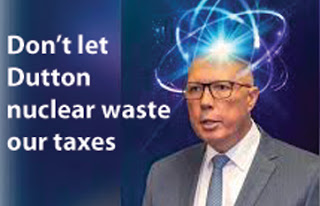
Financial Review, John Kehoe and Jenny Wiggins, 21 Oct 24
Energy executives say the development of nuclear power in Australia will be too slow to replace ageing coal-fired power plants in the next decade, as Climate Change Authority chairman Matt Kean accuses “delay-mongers” of latching onto the idea for a publicity stunt.
But beyond the urgent phase of the energy transition to renewables and gas-fired power, some executives and the energy market operator said nuclear should be left on the table as a potential energy source for Australia in the long term to keep up with rising power demand from consumers and businesses.
Opposition Leader Peter Dutton has pledged to build seven government-owned nuclear power stations by 2050 to meet Australia’s net zero emissions commitment. Under the high-level proposal, the first small modular reactor would arrive in 2035, although energy experts say this is overly ambitious and it would likely take years longer.
Australian Energy Market Operator chief executive Daniel Westerman said, “urgent and sustained investment” in renewables generation was needed to replace retiring coal-fired power stations, as well as investment in storage and transmission lines over the next 10 years.
“That is not a time frame in which nuclear will be available,” Mr Westerman told The Australian Financial Review Climate and Energy Summit on Monday……………………………………………………….
Mr Kean, a former NSW Liberal treasurer who now leads the federal government’s independent climate change advisory body, will tell the Summit on Tuesday that there was overwhelming evidence that nuclear would increase energy bills and take too long to build.
“I suspect that even those arguing for nuclear don’t believe we’ll ever build one of these reactors in Australia … and certainly not in time to help manage the exit of coal from the system – but they get their grabs in the news, while the public will get growing energy bills they can’t afford to pay,” Mr Kean will say, according to his speaking notes.
Origin Energy chief executive Frank Calabria said that to achieve the Albanese government’s 82 per cent renewable electricity target by 2030, a massive 32 gigawatts of generation needed to be brought online. “You’ll need to double that again in 2040,” Mr Calabria said.
Origin has examined small modular nuclear reactors but believes it is still early days for the technology, Mr Calabria said.
“Commercialisation and cost and scale are at least a decade away … it’s certainly into the 2030s.”
While Origin considered small reactors could be a potential future source of energy, it wouldn’t make a “single bet”, he said.
“We’re certainly not discounting it. I just wouldn’t overstate its role right today.”
The large-scale nuclear reactors promoted by the Coalition have “varying costs” and are also at least a decade away, he added.
“That for us feels much more difficult because we have got an influx of renewable energy that is going to be into the system and therefore is it going to intersect alongside that well?”
Origin is sticking with its revised target of August 2027 for shutting its Eraring coal power station in Lake Macquarie and is “agnostic” over what kind of energy replaces coal, Mr Calabria said.
The Origin boss acknowledged it would be difficult to create a reliable power system to replace coal, but expects solar panels to be installed on rooftops faster than expected.
Gas-fired power would also be needed as back-up power to solar, wind and battery-stored energy, he said.
The Albanese government is scrambling to meet an international commitment to reduce carbon emissions by 43 per cent on 2005 levels by 2030, en route to a net zero goal by 2050.
Renewable energy including solar, wind, battery storage and pumped hydro forms the backbone of the government’s plan, with gas-peaking plants backing up the intermittent renewables.
NSW Climate and Energy Minister Penny Sharpe said the key challenge for nuclear was that coal will be phased out before nuclear is ready. “Nuclear just doesn’t fit that time frame,” she told the Summit. “Our challenge is to manage the [coal] exit as quickly as we can, while replacing it with renewables.”
……………………………………. Squadron Energy chief executive Rob Wheals said the whole nuclear debate was a distraction.
“It seems like a tactic of kicking the can down the road and actually not focusing on the technologies that we know are available and are available in the time frame that we’ve got,” he said.
Political fight
Federal Climate Change and Energy Minister Chris Bowen panned the Coalition’s idea of starting a nuclear energy industry from scratch.
“The real danger in the Coalition’s nuclear scheme is the uncertainty it deliberately creates in relation to our grid. Investment is vital,” he said…………………………………….. https://www.afr.com/policy/energy-and-climate/nuclear-too-slow-to-replace-coal-by-2035-20241021-p5kjzg
Refuting myths about nuclear and renewable energy

15 Oct 2024, Mark Diesendorf, https://renew.org.au/renew-magazine/renew/refuting-myths-about-nuclear-and-renewable-energy/
There’s a lot of talk at present about nuclear energy being a strong contender in Australia’s energy market. But how much is political spin getting in the way of fact? Dr Mark Diesendorf unpacks some of the myths that are out there.
The AUKUS agreement has given renewed stimulus to the nuclear energy lobby. With campaign support from the Murdoch press, they have increased their efforts to denigrate renewable energy and to promote nuclear energy and fossil gas in its place.
Because of the sheer volume of their campaign and the difficulty of publishing fact checks and refutations in the mass media, public opinion polls indicate that some people seem to be taking the misleading claims of the nuclear lobby seriously. In this article, I seek to refute the principal myths the lobby is disseminating.
Myth: Renewables cannot supply 100% electricity
Denmark, South Australia and Scotland already obtain 88%, 74% and 62% of their respective annual electricity generations from renewables, mostly wind. Scotland actually supplies the equivalent of 113% of its electricity consumption from renewables; the difference between its generation and consumption is exported by transmission line.
All three jurisdictions have achieved this with relatively small amounts of hydroelectricity, zero in South Australia. Given the political will, South Australia and Denmark could reach 100% net renewables generation by 2030, as indeed two northern states of Germany have already done. The ‘net’ means they trade some electricity with neighbours but on average will be at 100% renewables.
Computer simulations by several research groups, including ours at UNSW, using real hourly wind, solar and demand data spanning several years, show that the Australian electricity system could be run entirely on renewable energy, with the main contributions coming from solar and wind. System reliability can be maintained by a combination of storage, building excess generating capacity for wind and solar (which is cheap), key transmission links, and demand management encouraged by transparent pricing.
Storage to fill infrequent troughs in generation from the variable renewable sources will comprise existing hydro, pumped hydro (mostly small-scale and off-river), and batteries. Geographic dispersion of renewables will also assist.
For the rare extended periods of Dunkelflaute (literally ‘dark doldrums’), gas turbines with stores of biofuels or green hydrogen could be kept in reserve as insurance.
Coal and nuclear power stations are too inflexible in operation to be useful as backup—they require a whole day to start up from cold and, when operating, have difficulty and increased costs in attempting to vary their output to follow the peaks and troughs in demand.
Myth: We need baseload power stations
This is an old, discredited claim that refers to the past when variable renewables (wind and solar) were absent and the fossil fuelled electricity supply system consisted mainly of two types of power station: baseload and peak load.
Baseload power stations, such as coal and nuclear, operate 24/7 at maximum power output, except then they break down or undergo planned maintenance. Because of their inflexibility in operation, the former system also needed to supplement baseload with peak load power stations, hydro-electric and gas turbines. Peak load stations can vary their output rapidly in response to rapid changes in demand or breakdowns in baseload supply.
When a nuclear power reactor breaks down, it can be useless for weeks or months. For a conventional large reactor rated at 1000 to 1600 megawatts, the impact of breakdown on electricity supply can be disastrous. Big nuclear needs big back-up, which is expensive. Small modular reactors are not commercially available nor likely to be in the foreseeable future.
A renewable electricity system, including storage, delivers the same reliability, and hence the same economic value, as the traditional fossil fuelled system based on a mix of baseload and peak-load power stations.
Myth: Gas can fill the gap until nuclear is constructed
As a fuel for electricity generation, fossil gas in eastern Australia is many times more expensive per kilowatt-hour than coal, so it’s not generally used for baseload power. Instead, it’s used for fuelling gas turbines for meeting the peaks in demand and helping to fill troughs in supply. For this purpose, it contributes about 5% of Australia’s annual electricity generation. But, as storage expands, fossil gas will become redundant in the electricity system.
The fact that baseload gas-fired electricity generation continues temporarily in Western Australia results from a unique history. Unlike the eastern states, WA has a Domestic Gas Reservation Policy that insulates domestic customers from the high export prices of gas. However, most new gas supplies would have to come from high-cost unconventional sources.
South Australia has an ancient, struggling, gas-fired power station, Torrens Island, that was originally regarded as baseload, but can no longer perform as baseload. It will be closed in 2026 and replaced with renewables and batteries. South Australia will soon have 100% renewable electricity without a single baseload power station.
Myth: Nuclear energy is cheaper than renewables
Assuming that Australia would not buy nuclear reactors from China or Russia, the only choices are the European Nuclear Reactor and the Westinghouse AP-1000 (or variants thereof). The former type is under construction in Finland, France and the UK. In each case, construction times have greatly increased and original cost estimates have tripled or more.
In South Carolina USA, two AP-1000 reactors were abandoned while under construction due to delays and cost escalation—under state law the electricity customers had to pay for the failed project. In Georgia USA, two AP-1000 reactors have just been completed at double the original cost. They are the only new nuclear power reactors commenced in the USA since the 1970s and completed. Nuclear power projects bankrupted Westinghouse in 2017.
South Korea is exporting its modification of the Westinghouse reactor, the APR-1400, subsidised by an unknown amount by its government. Its only export project so far, the Barakah project in UAE, is three years behind schedule—the extent of its cost overrun is unknown.
The state-owned Korean Electric Power Company (KEPCO) has a debt equivalent to US$149 billion resulting mainly from its nuclear investments.
All expert studies—e.g. by CSIRO, AEMO, and the multinational investment advisor Lazard—find that nuclear is the most expensive electricity generating technology, while solar PV and wind are the cheapest. This is true after including the cost of ‘firming’ renewables with storage.
Contrary to the claims of some nuclear proponents, the levelised cost method used in these studies takes account of the different lifetimes of the technologies. It also includes the cost of connecting the power stations to the main grid. While renewables will need a few additional major high-voltage transmission links, so would nuclear.
Myth: Nuclear energy can co-exist with large contributions from renewables
This myth has two refutations:
- Nuclear is too inflexible in operation to be a good partner for variable wind and solar. Its very high capital cost necessitates running it constantly at full power, not just during periods of low sun or wind. This would mean offloading renewables, although they are much cheaper to operate.
- On current growth trends of renewables, there will be no room for nuclear energy in South Australia, Victoria or NSW. The 2022 shares of renewables in total electricity generation in each of these states were 74%, 37% and 33% respectively. Rapid growth from these levels is likely. It’s already too late for nuclear in SA. Provided the growth of renewables is not deliberately suppressed in NSW and Victoria, these states too will reach 100% renewables long before the first nuclear power station could go online
Myth: There is insufficient land for wind and solar
Although a wind farm may span a large area, its turbines, access road and substation together occupy a tiny fraction of that area, typically about 2%. Most wind farms are built on land that was previously cleared for agriculture and are compatible with all forms of agriculture. Off-shore wind occupies no land.
Solar farms are increasingly being built sufficiently high off the ground to allow sheep to graze beneath them, providing welcome shade. This practice, known as agrivoltaics, provides additional farm revenue that’s especially valuable during droughts. Rooftop solar occupies no land.
Myth: Nuclear energy is safe
Nuclear energy is dangerous for three reasons: its contribution to the proliferation of nuclear weapons, the impacts of nuclear accidents and the task of managing high-level nuclear wastes for 100,000 years or more.
The two principal nuclear explosives are Uranium-235 and Plutonium-239. Both can be obtained from the nuclear energy supply chain.
Under the cloak of nuclear energy, several countries—the UK, France, India, Pakistan, North Korea and South Africa—have produced nuclear weapons either by further enrichment of uranium to increase the concentration of Uranium-235 beyond the level (3-4%) required for nuclear energy or by extracting Plutonium-239 from the spent fuel of their nuclear power reactors.
In addition, the following countries have attempted to use nuclear power to produce nuclear explosives while cloaking their development of nuclear weapons: Algeria, Argentina, Australia, Brazil, Libya, South Korea and Taiwan.
Fortunately, they did not complete their programs for various reasons. Nuclear power and nuclear weapons are intimately linked.
The most serious nuclear accidents were the Kyshtym disaster in the former USSR in 1957, the partial meltdown at Three Mile Island in the USA in 1979, Chernobyl in Ukraine in 1986, and Fukushima in Japan in 2011. Except for Three Mile Island, which took the US to the brink of a major disaster, each of these accidents have likely caused many thousands of cancer deaths from exposure to ionising radiation.
There are no operating permanent repositories for high-level nuclear wastes. Finland is the only country that’s close to completing a deep underground repository. The USA spent billions developing one at an unsuitable site in Nevada and then had to abandon it.
At present, high-level wastes are in temporary storage above ground at nuclear reactor sites, either in steel and concrete casks or in pools of water.
The contrast between nuclear and renewable energy technologies is demonstrated by their respective responses to the earthquake and tsunami that struck the Pacific coast of Japan in 2011.
At the Fukushima Daichi nuclear power station, three of the six nuclear reactors melted down, accompanied by hydrogen explosions that expelled vast amounts of radioactive materials into the environment.
Further down the coast at Kamisu, the tsunami passed through a near-shore wind farm located in the surf (see picture) without stopping it. It was only shut down when the grid went down and recommenced operating when the grid was restored three days later.
In summary
Renewables—solar, wind and existing hydro—together with storage and energy efficiency, can supply all Australia’s electricity and ultimately all energy, including transportation and heating.
Nuclear energy is too dangerous, too expensive, too slow to build, and too inflexible in operation to be a good partner for wind and solar. A nuclear scenario would inevitably involve the suppression of clean, inexpensive, safe renewables.
Congressional report suggests Australia could dump plans to acquire AUKUS nuclear submarines

“This division of power no doubt makes sense from a US perspective with Australia providing them with funds and bases and getting no actual submarines,”
“From an Australian perspective that looks far more like a strategic surrender than a partnership – Greens Senator David Shoebridge
ABC News, By Defence Correspondent Andrew Greene and State Political Reporter Rory McClare, 18 Oct 24
In short
An influential US research body has published a report arguing Australia could invest in long-range bombers and other capabilities instead of nuclear-powered submarines.
The report says there is “little indication” that “rigorous” analysis was conducted on whether there were more cost-effective options.
What’s next?
Greens senator David Shoebridge, a vocal opponent, said the AUKUS partnership looked like a “surrender” of Australian interests.
Research prepared for the United States Congress argues Australia could abandon its $368 billion AUKUS push to buy nuclear-powered submarines (SSNs), outlining several alternatives including US owned boats serving both nations.
According to the report published by the Congressional Research Service (CRS), billions of Australian dollars could instead be diverted to military capabilities for this country and the US, such as missiles and B-21 long-range bombers.
Under the AUKUS Pillar 1 plan, US and British nuclear submarines will rotate out of Western Australia from 2027, before Australia buys up to five second-hand Virginia class boats in the 2030s, and then begins constructing a new fleet known as SSN-AUKUS.
In the 105-page report, a number of policy options are presented including Australia no longer purchasing US submarines but instead having American boats perform missions on its behalf, while still continuing to design and build the SSN-AUKUS fleet.
“An alternative to Pillar 1 as currently structured would be a US-Australia military division of labour under which US SSNs would perform both US and Australian SSN missions while Australia invested in military capabilities for performing non-SSN missions for both Australia and the United States,” the report reads.
“Australia, instead of using funds to purchase, build, operate, and maintain its own SSNs, would instead invest those funds in other military capabilities — such as, for example, long-range anti-ship missiles, drones, loitering munitions, B-21 long-range bombers, or other long-range strike aircraft.
“Under this variation, the size of the US SSN force would eventually be expanded above previously planned levels by eight boats (i.e., the planned eventual number of SSNs that Australia had planned to acquire).”
Using stark language, the report warns that the costs of AUKUS Pillar 1 for Australia could “reduce, perhaps significantly, funding within Australia’s military budget for other Australian military capabilities” particularly if the project’s budget blows out.
“If this were to occur, there could be a net negative impact on Australia’s overall military capabilities for deterring potential Chinese aggression,” the report says.
The CRS report claims no alternatives were ever considered by AUKUS partners and concludes by diverted spending elsewhere it would help “create an Australian capacity for performing non-SSN military missions for both Australia and the United States”.
“There is little indication that, prior to announcing the AUKUS Pillar 1 project … an analysis of alternatives (AOA) or equivalent rigorous comparative analysis was conducted to examine whether Pillar 1 would be a more cost-effective way to spend defence resources”.
Proposals a ‘strategic surrender’
Greens Senator David Shoebridge, a vocal opponent of AUKUS, says the proposals outlined in the congressional report appeared more like “a strategic surrender than a partnership”.
“This division of power no doubt makes sense from a US perspective with Australia providing them with funds and bases and getting no actual submarines,” he said.
“From an Australian perspective that looks far more like a strategic surrender than a partnership.
“For the US, the whole AUKUS deal always had at its heart US access to Australian real estate for their submarines, bombers and marines, with any marginal additional Australian capacity being very much secondary.”……….. https://www.abc.net.au/news/2024-10-17/report-suggests-australia-dump-aukus-nuclear-submarine-plans/104486868—
Inside the room that loves Nuclear Ted

The Opposition’s fission frontman Ted O’Brien was in his element at Australia’s premier pro-nuclear conference last week, feeling the love from a hot-to-trot audience swallowing every word from a smooth-talking messiah . Freelance Journalist Murray Hogarth was there and imbibed the vibe — but not the glow-in-the-dark Kool-Aid.
by MURRAY HOGARTH., https://thepolitics.com.au/inside-the-rooms-that-love-nuclear-ted/?fbclid=IwY2xjawF8E1hleHRuA2FlbQIxMQABHeNqjz022ugJko-9VboOWN2DC-94pA7Y5ifdvNwZFTZ_YaikPJPpvYhkNw_aem_dxORDyGfCPnc4VD223hWhA 16 Oct 24
Ted O’Brien MP was confecting political outrage, playing to Australia’s ultimate pro-nuclear audience in Sydney last Friday. The day before, the Albanese Labor government had sprung a pre-election surprise on the Liberal-National coalition, and O’Brien as its nuclear torchbearer, when it forced through a tactical parliamentary inquiry into nuclear energy.
“It was hard not to be a little bit suspicious, not just because there’d been zero engagement on this,” he confided, eager to share his take on the backstory to how the Coalition had been politically blindsided and outmuscled.
O’Brien was in high dudgeon about the inquiry’s terms of reference, but mainly about its committee having four Labor government members versus two from the Coalition, a two-to-one ratio, plus one from the crossbench, a teal. That’s a clear government majority, so official committee reports will say what it wants, which is realpolitik at work. But to O’Brien it was a desperate government “very clearly trying to weaponise the parliamentary system to kill the idea that Australia should include nuclear energy as part of its mix”.
Of course, hypocrisy is quite the thing in politics. It turns out the last parliamentary inquiry into nuclear energy in 2019, which was chaired by O’Brien, and which supported partial lifting of Australia’s long-standing nuclear energy ban, was even more dominated by the then Coalition government — 5-2 also plus a single teal.
The Coalition under PM Scott Morrison then squibbed it on running a go-nuclear policy at the 2022 elections, which it lost to Labor. Yet, as the opposition, it now expects a Labor government to overturn the nuclear ban that the Coalition introduced in 1998, under the conservative leadership of PM John Howard.
Nothing for O’Brien to melt down over here. But don’t let facts get in the way of a convenient story.
Smug, glib, righteous and on the Right
O’Brien approaches a speaking platform with a radioactive level of smugness and glibness that makes me feel queasy to the core. Perhaps that’s because I’ve been overexposed to him in the past six months as I’ve tracked the emerging nuclear story: three live speeches and seemingly endless videos and television interviews. His own productions. 7.30. Insiders. Four Corners. Sky News on loop.
A committed spruiker, in an Americanised preachy showman kind of way, the ambitious O’Brien is both righteous and on the Right. To paraphrase him: nuclear is vital to our future energy mix and to achieving net zero. Labor’s 100% renewables can’t do it. Blah blah blah. Oh, and we’ll make public the costs and other key details “in due course”.
Last Friday, in contrast to my gut feeling, there was love vibing in the room when O’Brien returned to his people at Australia’s premier pro-nuclear event, the annual conference of the Australian Nuclear Association (ANA). Among this fraternity, he’s Nuclear Ted, the reactor-evangelising federal Liberal from Queensland who’s putting the fission back into the politics of energy in Australia, with a touch of frisson too for this audience.
It’s a pro-nuke constituency that has been in the Australian political wilderness seems like forever, but at least since the 1960s. Now a smooth-talking messiah has emerged, vowing to lead it to its promised land: a nuclear Australia.
If you’ve been thinking it’s mainly renewables-hating, climate-denying National Party political malcontents who are behind the Coalition’s plans — which include prolonging coal and expanding gas generation — think again.
Friends in high places
ANA conferences are where corporate big nuke and its international and local lobbyists meet Australia’s nuclear true believers. Weirdly, however, this gathering of 200 or so delegates has the Australian government as its long-standing principal sponsor. That’s right. The Albanese Labor government is sponsoring a platform for O’Brien, its would-be nuclear energy policy nemesis, to attack the government. And unsurprisingly he keeps coming back to do just that. It’s almost like the government wants O’Brien out there, talking his talk.
The government’s sponsorship comes via its main nuclear advisory agency, the Australian Nuclear Science and Technology Organisation (ANSTO), which operates the nation’s only reactor, a research and medical isotopes facility at Lucas Heights in Sydney. The other event sponsors include the Canadian nuclear engineering powerhouse AtkinsRéalis, and the Australian lobbying outfit SMR Nuclear Technologies.
ANSTO definitely isn’t meant to play politics, challenge policies of the government of the day, or otherwise advocate for nuclear energy. So it’s worth pointing out that the ANA’s president, and the conference’s main host, Dr Mark Ho, is a senior ANSTO scientist in his day job, and the event’s key organiser, Dr John Harries, is former ANSTO, as are many in the ANA orbit.
Beyond the conference, the ANA is increasingly involved in promoting nuclear energy. It and Ho helped organise the Navigating Nuclear forum in May, where O’Brien was a surprise guest speaker after it had been promoted as being “free of politics”.
The Nuclear for Australia campaign thanked Ho for joining its first public event in Lithgow — one of the Coalition’s targeted communities for nuclear reactors — several weeks ago, and Ho was billed as a speaker at an ultra-conservative, anti-renewables, pro-nuclear forum in western Sydney in September where Barnaby Joyce was a pop-up speaker, as previously reported in The Politics, before Harries stepped in to replace him.
I missed Lithgow, but I was at the Navigating Nuclear and western Sydney events. Hence my delicate stomach.
The Coalition is all over this
O’Brien gave a keynote at the ANA’s conference last year too, lambasting the Albanese Labor government then as well. His National Party colleague Dr David Gillespie MP, who spoke at the end of last Friday’s event, has been a regular at these conferences since 2018. Gillespie used the 2022 conference as a springboard for pro-nuclear lobbying through his chairmanship of the Coalition-dominated Parliamentary Friends of Nuclear Industries.
With O’Brien, they played a key role in shaping Opposition Leader Peter Dutton’s headland nuclear energy policy announcements in mid-2023. Indeed, O’Brien passed on Dutton’s greetings to last Friday’s conference, and indicated Dutton’s wish to attend a future event “in due course”.
The irony of this phrase choice may have escaped O’Brien in the moment. But he and Dutton are constantly promising the media and the Australian public that they will announce the Coalition’s nuclear energy policy costs and other details “in due course”. Thus far there is no sign of them.
As the day-long conference played out last Friday, it became more and more clear this wasn’t just a political speaker and an audience with a common interest. It’s more like they are collaborators, private sector interests included, working not just for a nuclear Australia but for a global nuclear renaissance.
One of the main industry sponsor presenters, for example, mentioned a recent economic assessment it had undertaken looking at nuclear generation for the NSW Hunter region that “isn’t public”, saying that “hopefully David and Ted can use that going forward”. Very cosy. It’s all very reciprocal and transactional. The kind of thing which Donald Trump, the self-proclaimed master of the deal turned political leader, might applaud.
It’s a fair bet that if Trump returns to the US presidency after next month’s election the Americans will be all over Australia to buy its nuclear energy technologies and services — a number of which were showcased at the 2023 ANA conference, especially Brookfield-owned Westinghouse, already on Dutton’s reactor design shopping list, and Bill Gates’s TerraPower.
The dream merchant
O’Brien, meanwhile, hung around the conference for an extra Q&A session, and actively canvassed for political support via the ANA community, inviting delegates to mobilise their networks ahead of the federal election, and make wide-ranging submissions to the Labor-dominated parliamentary inquiry into nuclear energy now underway, without feeling constrained by “Labor’s terms of reference”.
In return, O’Brien is promising the realisation of their nuclear dream. If only the Coalition can return to political power, they’ll get nuclear power, or at least that’s the bait, whatever happens down the years ahead. At one stage in the Q&A he even indicated that a future Coalition government could help promote nuclear energy development ambitions with other nations across the Asia-Pacific.
Standing in the way, however, as O’Brien the reactor evangelist tells it, is a Labor government at odds with the nation’s patriotic spirit, and “Team Australia” to revive a favoured Tony Abbott line:
“This is about Australia … But it is people in this room and beyond, who’ve been doing the heavy lifting for years. It is the intellectual capacity of people in this room and the willingness to be patriots, to put Australia first … It is very much a Team Australia effort of patriots who are prepared to engage and assist along the way.”
Oh dear, I’m feeling queasy all over again.
FOOTNOTE: A key conclusion from delving into O’Brien’s nuclear journey, and that of the Dutton Opposition over the past couple of years, is that they haven’t gone to energy experts to work out if and how nuclear fits into Australia’s energy future. Rather, they’ve gone to nuclear vested interests and true believers, and surprise! surprise! they are all for it! As are fossil-fuel diehards, who know a strategic distraction when they see one.
Making “Australia a Global Nuclear Waste Dump”: Senator Shoebridge on Labor’s Latest Betrayal
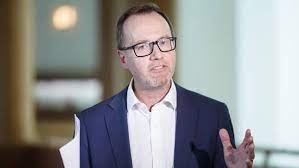
This is purely designed to make AUKUS work, to make Australia a global nuclear waste dump, starting with waste from the UK and US nuclear submarines.
surrender of our sovereignty: the surrender of our national interest to these so-called great powerful friends.
It is an incredibly dangerous pathway, but it is one that we can still step aside from.
SYDNEY CRIMINAL LAWYERS, by Paul Gregoire, 15 Oct 2024
In passing the Australian Naval Nuclear Power Safety Bill 2024 on Thursday last week, the Albanese government quietly got a proposition over the line in this country that had been resisted for decades and that was in the passing of laws that facilitate the imposition of nuclear waste dumps.
Greens Senator David Shoebridge stepped out of the chamber to announce this straight after the bill had passed and he decried the fact that both majors shut down debate on the divisive laws and then promptly jammed them through with bipartisan approval.
Of course, the official line is that the nation needs to be able to store its own nuclear waste that will be produced by the eight nuclear-propelled submarines the AUKUS Pillar I provides that the nation will be receiving over the next four decades or so. However, this acquisition is not guaranteed.
And as Shoebridge has made clear in his campaigning against turning this continent into a site for nuclear waste dumps, the framework that’s been enacted provides that the US and the UK will be dumping their nuclear waste at multiple sites here and other nations could join in the future.
AUKUS dumping ground
Defence minister Richard Marles explained on introducing the laws into parliament that they’re the “second legislative step of Australia’s conventionally armed, nuclear-powered submarines”, and the laws are “specifically focused on… ensuring Australia maintains the highest nuclear safety”.
Under the new laws, regulated activities – nuclear facility, submarine and material activities – are regulated to “designated zones”. Two such zones have already been passed into law, one in WA and the other in SA, while a designated zone can further be any other area in Australia that’s chosen.
The bill also establishes NNP (naval nuclear propulsion) facilities, which are purpose-built facilities for constructing AUKUS submarines and they will further serve as radioactive waste management facilities as well. And this will all be taking place within the designated zones.
And besides a last-minute amendment to prevent the disposal of spent fuel from a submarine that is not Australian, Shoebridge warns that the major parties have swung open the door for this nation to take on the low, intermediate and high-level nuclear waste of the US and the UK going back years.
Opening the floodgates
As the senator explained in an interview in April, despite the US and the UK having nuclear industries going back half a century, neither of them have come up with a permanent solution for their high-grade military nuclear waste. Indeed, the US has only managed this for their intermediate range.
In addressing the 53rd weekly protest for Palestine and now Lebanon on Gadigal land in Sydney last weekend, Shoebridge further warned that the tone of the federal Liberal opposition has become ever more warlike of late, in terms of its support for Israel, which is ensuring Labor slides to the right.
Sydney Criminal Lawyers spoke to Greens Senator David Shoebridge about his insistence that the nation is not yet bound to AUKUS, although it’s getting quite close, as well as the implications of the imposition of nuclear waste dumps and his warning about the Coalition’s new low in war posturing…………………………..
Senator Shoebridge:
What we saw was Albanese, Labor and the Dutton Coalition join up to do what’s known in parliamentary terms as a guillotine: to just ram this through parliament without any debate. And this is after a year of community resistance.
This is purely designed to make AUKUS work, to make Australia a global nuclear waste dump, starting with waste from the UK and US nuclear submarines.
This is going to be arriving in a town or city near you, in the next few months and years because of this legislation they rammed through.
In the next few years, we’re going to be receiving nuclear waste from visiting US nuclear submarines, which can do repairs, starting first at Garden Island off the coast of Fremantle, but also, at Osborne Naval Facility, just south of the Adelaide CBD.
This law greenlights working on those nuclear submarines at both of those facilities and then receiving and storing waste.
But it also means taking waste from those decommissioned UK and US submarines, and they’ve each got dozens and dozens of old submarines rusting away.
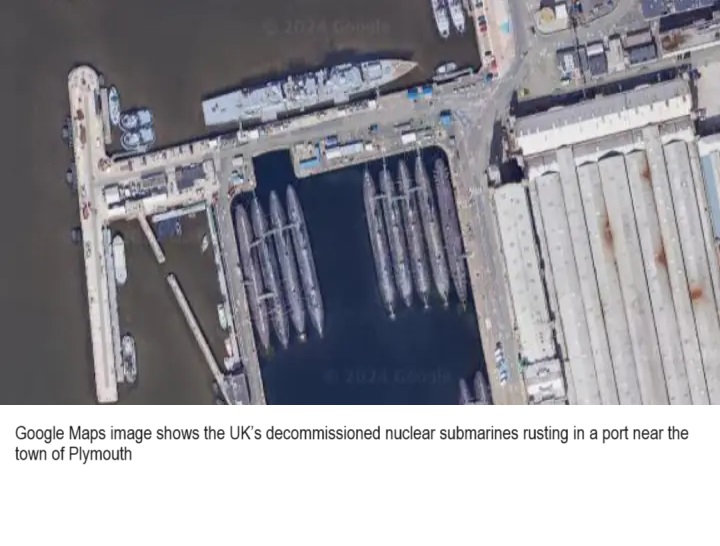
What the Albanese government has done – and they’ve held Peter Dutton’s hand on this journey all the way through – is work around decades and decades of First Nations resistance to nuclear waste dumps and ram this legislation through under the shadow of AUKUS.
I can tell you now, there are people inside Defence, and there are people inside Labor and the Coalition, who desperately want to turn nuclear waste dumps into broader civilian waste dumps and really use this to open up the nuclear industry across this country.
It has been deceitful from day one. When we pointed out last year that the legislation, as initially drafted, allows for the importation of any nuclear waste, even the high-level waste, which is the equivalent of weapons-grade uranium from the UK and US subs, we were attacked by defence minister Marles.
The minister called it a “Green conspiracy” when we pointed out that the law provided that. We won that argument. He had to concede that the bill, as it was drafted, allowed for any nuclear waste and that is partly why we got that amendment up to at least exclude one form of nuclear waste: nuclear fuel.
But from day one it has been deceitful. From day one it has been a stalking horse, using the cover of AUKUS to literally open up this country for the dumping of a global nuclear waste stream.
As more people find out about what this is, people are getting angrier and angrier, but we need to convert that into political mobilisation to undo this.
………………………………………………………………………………………………………………………………………………………………….. If we get to a dystopian future, where we start receiving thousands of tonnes of other countries’ nuclear waste, there will be no path back from that. They will never accept that waste back.
That’s the kind of cruel bargain that the Albanese government is opening up.
I say this especially for First Nations peoples, who have been protecting this continent for tens of thousands of years. This is a particularly cruel bargain that the Albanese government is opening up.
I remain incredibly hopeful that the Australia public are increasingly seeing this for what it is.
Each time political support for AUKUS is tested, it falls and falls. And that is because people can see that we have a political class in both the Labor Party and the Coalition, who are willing to sell out our national interest – poison our land, poison our water – because they’re so keen to follow the US lead and be seen as a sub-imperial power, as a deputy sheriff, they can rely upon.
This latest piece of legislation, that opens up this country to the dumping of US and UK nuclear waste, is just the most recent example of that surrender of our sovereignty: the surrender of our national interest to these so-called great powerful friends.
It is an incredibly dangerous pathway, but it is one that we can still step aside from. https://www.sydneycriminallawyers.com.au/blog/making-australia-a-global-nuclear-waste-dump-senator-shoebridge-on-labors-latest-betrayal/?fbclid=IwY2xjawF72VJleHRuA2FlbQIxMQABHcYCk8aMc9ghXrB4wqCjiVYrmvoQtdGFca2r7nnmWrxwp8Zl17RummiVUw_aem_6KEWHWbagHvCNwR1mF-lWQ
Australia’s democracy trashed, as Labor government + Liberal opposition join forces to push AUKUS bills through
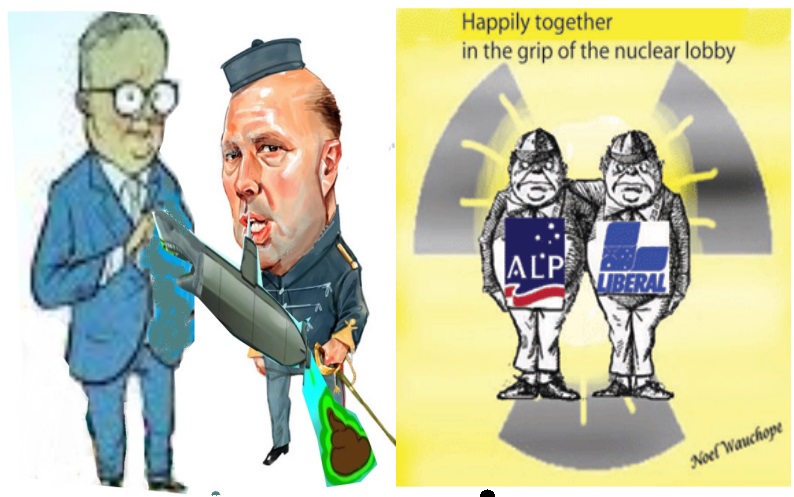

15 Oct 24, On Thurs 10th the ALP Gov & Coalition jointly forced a Senate vote on two AUKUS Bills without allowing any debate and jointly voted down all proposed amendments (see below) – see the vote at Senate Hansard extract at p.28-29 of this doc https://parlinfo.aph.gov.au/parlInfo/download/chamber/hansards/28068/toc_pdf/Senate_2024_10_10.pdf;fileType=application%2Fpdf
16 x Senators voted No:
Allman-Payne, P. J. Cox, D. Faruqi, M. Hanson-Young, S. C. Hodgins-May, S. Lambie, J. McKim, N. J. (Teller) Payman, F. Pocock, B. Pocock, D. W. Roberts, M. I. Shoebridge, D. Steele-John, J. A. Thorpe, L. A. Tyrrell, T. M. Waters, L. J.
36 x Labor & Liberal & National Senators voted Yes to AUKUS Bills.
see Australian Greens Senator David Shoebridge Media Release on 11th Oct 2024 on nuclear waste aspects:
Albanese and Dutton team up on toxic AUKUS nuclear waste deal | Australian Greens
All proposed Amendments to the AUKUS Bills were voted down by the ALP & the Coalition.
a set of Amendments by Greens Senator Shoebridge, a set by Ind Senator Thorpe, a set by Ind Senator Pocock, and a set by Senator Lambie, were voted down as four groups of amendments – see a Senate Hansard extract from p.40 to p.58 of doc: https://parlinfo.aph.gov.au/parlInfo/download/chamber/hansards/28068/toc_pdf/Senate_2024_10_10.pdf;fileType=application%2Fpdf
Premier vows to hold vote on Coalition nuclear power plan ahead of federal election

Queensland state law forbids the construction and operation of nuclear reactors and other facilities under the Nuclear Facilities Prohibition Act.
LNP leader David Crisafulli, who is on track to lead the opposition to power, stands firmly against the proposal.
Fraser Barton, Oct 15, 2024, https://reneweconomy.com.au/premier-vows-to-hold-vote-on-coalition-nuclear-power-plan-ahead-of-federal-election/
Queenslanders will be asked to vote in a plebiscite on nuclear energy at the next federal election if Labor Premier Steven Miles is re-elected.
The premier believes a separate vote on Opposition Leader Peter Dutton’s nuclear proposals can be held at the same time as the federal poll.
“I’ve said I’ll comply with the law,” the premier told reporters alongside Prime Minister Anthony Albanese on Monday.
“The law bans nuclear in Queensland but also requires the minister to hold a plebiscite as soon as they reasonably believe that the Australian government intends to build a nuclear reactor.
“Peter Dutton said the first step to get nuclear reactors in Queensland is to elect David Crisafulli – they were his words – and that means that the first step to blocking Peter Dutton’s plan for nuclear reactors is to elect me in October.”
Albanese labelled the federal coalition’s nuclear energy goals a “fantasy”.
“They don’t have a proper plan here, and it’s no wonder that they should be held to account for it,” he said.
Dutton has promised to build seven nuclear plants across Australia if the coalition wins next year’s federal election.
Dutton has previously vowed to override states who refuse to adopt the energy plan.
But Queensland state law forbids the construction and operation of nuclear reactors and other facilities under the Nuclear Facilities Prohibition Act.
LNP leader David Crisafulli, who is on track to lead the opposition to power, stands firmly against the proposal.
Political analyst John Mickel said Labor would use nuclear’s high costs and dependency on water to woo regional voters, if the plebiscite goes ahead.
“What Labor would be trying to do there is bring that issue to the fore,” he told AAP.
Plans to build nuclear plants could cost up to $600 billion and the coalition said nuclear reactors could be online by 2037.
Queensland premier will hold plebiscite on nuclear power if he wins state election
Exclusive: Steven Miles says law requires a referendum be called if the commonwealth is likely to build a ‘prohibited nuclear facility’ in the state
Andrew Messenger and Graham Readfearn, Mon 14 Oct 2024
Steven Miles will hold a state plebiscite on Peter Dutton’s nuclear power plans if he wins the 26 October poll, a move that could polarise the electorate in the Coalition’s strongest state at the next federal election.
The Queensland premier said he had received legal advice on the nuclear issue and raised the possibility of initiating a plebiscite on the same day as the federal election.
“Depending on how things play out, you could even hold that plebiscite on the same day as the federal election, to save people going to the polls twice,” Miles said in an exclusive interview with Guardian Australia.
The federal opposition leader, Peter Dutton, will take a plan for seven Commonwealth-owned nuclear power stations to the next election. That includes two in Queensland, replacing existing coal plants at Callide and Tarong.
But an obscure provision in Queensland’s 17-year-old Nuclear Facilities Prohibition Act 2007 may stand in the way. The act bans granting a grid connection, development application or generating authority to any nuclear facility.
It also requires the minister call a plebiscite if “satisfied the government of the commonwealth has taken, or is likely to, take any step supporting or allowing the construction of a prohibited nuclear facility in Queensland”.
The state opposition leader, David Crisafulli, has repeatedly ruled out changes to the law, most recently at a joint press conference with Dutton this month……………………………………………………………………………………. more https://www.theguardian.com/australia-news/2024/oct/14/queensland-premier-will-hold-plebiscite-on-nuclear-power-if-he-wins-state-election
Two Peter Dutton policies may swing Teals to Labor in a minority government
Michael West Media by Michael Pascoe | Oct 14, 2024
The scenario: a minority government after the next election, as various polls forecast.
The question: in a close-run thing, to whom would the “Teals” give the keys to the Lodge?
The hypothesis: there are two Dutton policies that should force the genuine independents to select Albanese as Prime Minister.
The perversity: neither of those policies could be expected to appeal much to voters who weren’t already in the LNP camp.
May election likely
Slipping by without much attention last week was the government changing Budget Night to March 25, effectively confirming the early May election that has always been most likely. So seven months to win any hearts and minds that are not already committed.
The makeup of the crossbench will be different. Not all the community independents – to give Teals their official name – from the Class of ’22 may be returned (for starters, vale the scratched seat of North Sydney and, therefore, Kylea Tink) and there could be newbies. From here, though, it still looks likely that Teals will have the final say on who forms government. More on that later.
Enter stage right the two key LNP policies that should make it impossible for Teals to give Dutton the nod: nuclear power and housing.
The key common issues of the Teal wave in 2022 were climate, integrity, gender, and not being Scott Morrison, all based on a pledge of listening to and reflecting their communities’ concerns.
The nuclear “concept” of a plan
Dutton’s “concept of a plan” to build multiple nuclear reactors somewhere between a distant tomorrow and eternity – an excuse for extending fossil fuel burning and reducing investment in renewables – won’t and can’t wash with any Teal genuinely concerned about climate policy.
Enter stage right the two key LNP policies that should make it impossible for Teals to give Dutton the nod: nuclear power and housing.
The key common issues of the Teal wave in 2022 were climate, integrity, gender, and not being Scott Morrison, all based on a pledge of listening to and reflecting their communities’ concerns.
As Phil Coorey reported in the AFR ($):
“If they’re not going to release the detail, we’ll do it for them,” a government member said, speaking on condition of anonymity.
“The terms of reference include an examination of how soon a nuclear power plant could be operational; the cost of building and maintaining them, the storage and transportation of fuel and waste; the feasibility of using existing coal-fired power station sites and their power lines; federal, state, territory and local government legal and policy frameworks; and the impact of power prices.”
Generally forgotten is that we had a parliamentary inquiry into nuclear power only five years ago, chaired by the LNP’s Ted O’Brien, now the shadow energy spokesman tasked with selling Dutton’s nuclear gambit.
With the Coalition dominating that inquiry, the most O’Brien could come up with was that “nuclear energy should be on the table for consideration as part of our future energy mix”, not that we should go for it.
Then, like now, O’Brien was hoping small modular reactors might become a thing and other new large reactor technologies could be the economical go.
Generally forgotten is that we had a parliamentary inquiry into nuclear power only five years ago, chaired by the LNP’s Ted O’Brien, now the shadow energy spokesman tasked with selling Dutton’s nuclear gambit.
With the Coalition dominating that inquiry, the most O’Brien could come up with was that “nuclear energy should be on the table for consideration as part of our future energy mix”, not that we should go for it.
Then, like now, O’Brien was hoping small modular reactors might become a thing and other new large reactor technologies could be the economical go.
The only certainty about the LNP’s energy/climate policy is that it would delay efforts to reduce Australia’s carbon emissions. With climate denial strong in the party, the procrastinator’s golden rule rules: Put off to tomorrow what you don’t have to do today because you might get away with not doing it tomorrow.
There is no way Teals, in conscience, could choose such a policy. Climate 2000’s Simon Holmes à Court doesn’t call the Teals’ shots, but they couldn’t expect his support if they went with the deniers and sceptics………………………………………………………………………………………………..
The minority government scenario?
The post-election negotiations will test the integrity of cross-bench members. The Teals of Liberal heritage – most obviously Allegra Spender in Wentworth and Kate Chaney in Curtin – might have to hold their noses to appoint a Labor government, but they would forfeit all personal credibility if they empowered fraudulent nuclear and housing policies.
The others – Monique Ryan, Zali Steggall, Helen Haines, Zoe Daniel, Sophie Scamps and, possibly post-May, Nicolette Boele in Bradfield – have their own professed standards to live up to. If they do, they won’t be empowering a minority LNP government.
We may also assume that Bob Katter, Rebekha Sharkie ($) and Andrew Gee (if he is returned in Calare after quitting the Nationals over the Voice referendum) go LNP, while the Greens and Andrew Wilkie prefer Labor.
The self-declared opposite of a Teal, the former Liberal Dai Le ($) in the former Labor seat of Fowler, has never pledged herself on climate or anything else for that matter, winning by being an involved local and not the parachuted-in Labor candidate, Kristina Keneally.
Her gaffe in ignorantly suggesting the Lucas Heights research facility could generate electricity indicates she would not have a problem with the Dutton nuclear fantasy – unless the parliamentary inquiry convinces her otherwise. https://michaelwest.com.au/peter-duttons-policies-may-swing-teals-to-labor-in-election/
Albanese and Dutton team up on toxic AUKUS nuclear waste deal
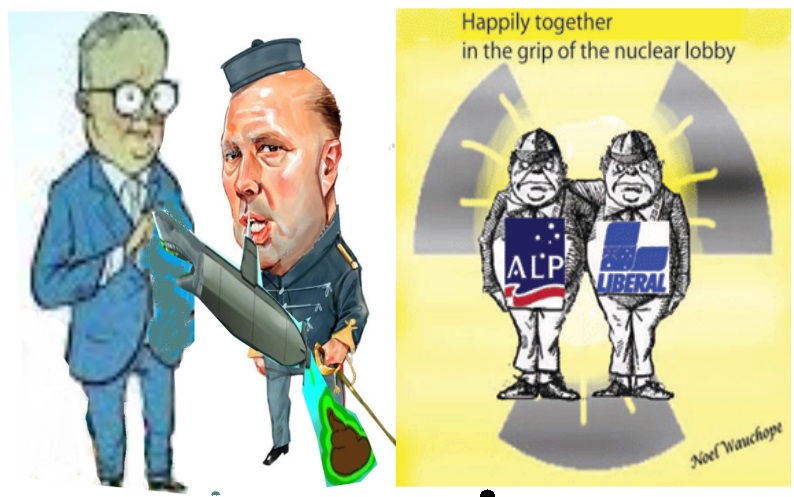
The Bill immediately creates two nuclear dump ‘zones’, one off the coast of Perth and the other at Port Adelaide, without any community consultation or local support.
The Albanese Government today teamed up with Peter Dutton’s Coalition to push through a controversial AUKUS Bill that will allow the dumping of high-level naval nuclear waste anywhere in Australia.
The Albanese Government, in alliance with the Coalition, rammed the Australian Naval Nuclear Power Safety Bill through the Senate today without debate.
The Bill also created a new naval nuclear regulator as part of the AUKUS agreement with the UK and US on nuclear submarines. It initially allowed for all UK and US nuclear submarine waste to be dumped in Australia until the Albanese Government sheepishly amended it, due to growing public opposition, to prevent the dumping of UK or US ‘spent nuclear fuel’.
However, the amendments still allow the dumping of US and UK intermediate-level waste and other high-level nuclear waste from their nuclear submarines. The Greens moved amendments this afternoon that explicitly prevented this, and the major parties voted against these amendments and others.
The Bill immediately creates two nuclear dump ‘zones’, one off the coast of Perth and the other at Port Adelaide, without any community consultation or local support.
The Bill also allows nuclear dump zones to be declared anywhere in Australia that the Defence Minister chooses with the flick of their pen, again without any consent from local communities or First Nations traditional owners.
Senator David Shoebridge, Greens Spokesperson for Defence, said: “Albanese and Dutton have teamed up today to push this AUKUS nuclear waste legislation through the Senate without debate.”
“Today’s actions see both Labor and the Coalition joining hands to ram through legislation that will let the UK and US dump their naval nuclear waste in Australia.”
“The Albanese Labor Government initially tried to sneak through a law that would allow the UK and US to dump all types of nuclear waste in Australia. The Greens called the Government out on this, and then people around Australia pushed back.
“Even with last-minute Labor amendments, this legislation still allows the dumping of US and UK nuclear waste in Australia. Labor’s amendments only prohibit the US and UK dumping ‘spent nuclear fuel’ from their submarines in Australia, but do not prohibit any other highly irradiated UK and US nuclear waste.
“This legislation green-lights dumping of all Australian naval nuclear waste anywhere in Australia. To be clear, exposure to even intermediate-level waste is lethal to humans, and the risk lasts for hundreds of years.
“Everyone can see AUKUS is sinking, the question is now becoming how much environmental and financial damage it will do before it hits rock bottom,” Senator Shoebridge said.
John Hewson – The opposition leader’s nuclear bullshit
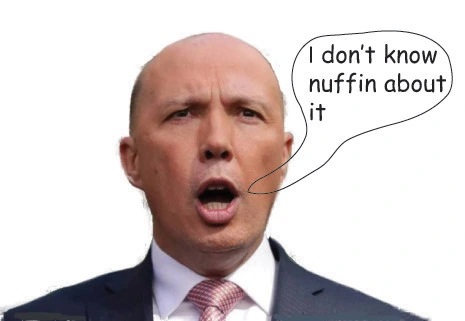
But the basic question that never seems to be asked is whether the electricity sector is being run in the interests of electricity consumers or the nuclear industry. This needs to be asked in the Australian context, in relation to Dutton’s persistence with his nuclear option against the massive and still-mounting global evidence of its cost and time delay disadvantages, and the hollowness of his commitments to cheaper electricity.
https://www.thesaturdaypaper.com.au/comment/topic/2024/10/12/the-opposition-leaders-nuclear-bullsh, 12 Oct 24, John Hewson is a professor at the ANU Crawford School of Public Policy and former Liberal opposition leader.
In a full mimicry of Donald Trump, Opposition Leader Peter Dutton’s reality is how he claims it to be, in complete disregard for the facts. So it is with his stance on nuclear energy. He simply asserts his nuclear power will deliver cheaper electricity to Australian households, and that nuclear is the only pathway to net zero by 2050. In a speech to the Committee for Economic Development of Australia last month he delivered his rationale: line after line of bullshit.
Dutton builds much of his case for nuclear on what he claims are the very cheap electricity prices in the Canadian province of Ontario, where nuclear accounts for about half of the energy mix. However, he ignores the fact the domestic supplier, Ontario Power Generation, is effectively a basket case, with a very sorry financial history that has been catalogued by the Ontario Clean Air Alliance.
In 1998, seven of public utility Ontario Hydro’s nuclear reactors were unexpectedly forced to shut down due to safety concerns. All of these reactors were inoperable for more than five years – two were still inactive as late as 2017, according to the Ontario Clean Air Alliance.
By the following year, Ontario Hydro was effectively bankrupt, and split into five companies. The nuclear stations went to OPG, while some $20 billion of the stranded nuclear debt was transferred to the Ontario Financial Corporation, with the paydown lasting for more than a decade.
The province had to boost its dirty coal plants’ output by 120 per cent to keep the lights on – an outcome that would be most pleasing to Dutton’s important donors.
OPG’s electricity prices rose about 60 per cent between 2002 and 2016, in order to pay for nuclear power – including restarting the five reactors that had been shut down. In September 2016, OPG told the Ontario Energy Board it needed to increase its nuclear power prices by more than 10 per cent a year for the next decade. The premier of Ontario later directed OPG to take on billions of dollars of additional debt to ensure electricity price increases over subsequent years would not exceed the rate of inflation.
It is worth noting that in the start-up phase, the relatively new Darlington Nuclear Generating Station on the north shore of Lake Ontario has suffered from technical problems, even with proven technology, which have delayed it becoming fully operational. It should be clear there are very few givens in adopting these technologies, as evidenced with most projects across the globe, whereas Dutton is inclined to assume otherwise.
Dutton and O’Brien have attempted to create the impression that Australia is being left behind in a world rushing to adopt and expand nuclear power. This is in doubt, but it is certainly true that there is a major push to decommission existing nuclear power plants.
It is also important to learn from the cost blowouts of the Darlington project. The project was initiated in 1973 but not started until roughly a decade later. Ontario Hydro estimated a cost of C$7.4 billion when construction began (though earlier projections were lower). Costs more than doubled from here, an important element of which was the interest cost on the project debt over and above the expanding costs from delays in construction scheduling and in the build itself, which is often ignored in discussions. Other reasons for the cost blowout included the need to meet regulatory changes and updates to Ontario Hydro’s financial policies, as well as necessary design tweaks during construction. All of which seem to be characteristic of nuclear projects.
The overruns prompted more questions about whether OPG would go bankrupt again if the Darlington rebuild continued to go over budget and demand for electricity continued to fall. Why weren’t costs cut, or the Darlington rebuild cancelled, and, importantly, why didn’t they start buying more cheap water power from neighbouring Quebec, using existing transmission lines?
But the basic question that never seems to be asked is whether the electricity sector is being run in the interests of electricity consumers or the nuclear industry. This needs to be asked in the Australian context, in relation to Dutton’s persistence with his nuclear option against the massive and still-mounting global evidence of its cost and time delay disadvantages, and the hollowness of his commitments to cheaper electricity.
It is also worth noting that Canada established Atomic Energy of Canada Limited (AECL), a Crown corporation, not as a generator but as the primary research and development agency in the field of nuclear energy. As such, it is responsible for design, engineering, marketing and servicing of the country’s CANDU reactors, and aims to make CANDU “the long-term competitive electricity supply system”. This is a for-profit operation. Does the Coalition aim to replicate this sort of entity?
Peter Dutton and his shadow energy minister, Ted O’Brien, have sought to challenge the authority of CSIRO’s GenCost report on these cost disadvantages. A United States study has suggested the CSIRO estimates were conservative, putting the cost at $12,351 a kilowatt, compared with GenCost’s $8446/kW. Similarly, a recent report on the ABC’s Four Corners reviewing the US experience with the Plant Vogtle project in Georgia – which is also often cited by the Dutton team, in support of their policy proposal, as delivering cheaper electricity – revealed consumer dissatisfaction as electricity prices have risen sharply. And Bill Gates’s new Kemmerer project in Wyoming has encountered troubles.
While there are many gaps still in Dutton’s advocacy for us to adopt nuclear energy, one of the most important is his vagueness about the technology to be adopted – he has vacillated from the demonstrated, expensive large reactors to the commercially as yet unproven small modular reactors (SMRs). He would have us believe that by the time we need to build these, the proven technologies will be available. This delay may prevent him from supplying adequate cost estimates before the next election. It’s notable that the only SMR project to receive approval by the US Nuclear Regulatory Commission was abandoned recently because of rising costs, even after the Department of Energy had pledged some US$500 million in grants.
Although we probably have the world’s largest deposits of uranium, we don’t have an enrichment industry. This also raises another serious question for the opposition to answer: where will the fuel for the reactors come from? Are they advocating that we also launch a nuclear enrichment industry? Is this also part of their AUKUS dream?
There are also important issues to be addressed in relation to the disposal of the waste from the reactors. The United Kingdom is currently demonstrating just how significant a challenge this can become.
1 This month
.

Australians deserve the truth
about
AUKUS – https://aukuspublicinquiry.com/

PETITION – To: Prime Minister Anthony Albanese and the Australian Labor Government

of the week – Australians for War Powers Reform (AWPR)
To see nuclear-related stories in greater depth and intensity

