Julian Assange’s five-year battle against extradition to the US continues as he WINS last-ditch legal battle to lodge appeal
‘Today is a victory, but part of the victory only.’
‘Today marks a turning point. We went into court and we sat and heard the United States fumbling through their arguments, trying to paint lipstick on a pig.
‘We are relieved as a family that the courts took the right decision today but how long can this go on for?
Daily Mail, By GEORGE ODLING and ELIZABETH HAIGH, 21 May 24
WikiLeaks founder Julian Assange‘s five-year battle against extradition to the US for espionage charges continues after he won a last-ditch legal battle to appeal.
‘Well, the judges were not convinced. Everyone can see what is going on here. The United States’ case is offensive.
‘It offends our democratic principles, it offends our right to know, it’s an attack on journalists everywhere.
‘We are relieved as a family that the courts took the right decision today but how long can this go on for? Our eldest son just turned seven.
‘All their memories of their father are in the visiting hall of Belmarsh prison, and as the case goes along, it becomes clearer and clearer to everyone that Julian is in prison for doing good journalism, for exposing corruption, for exposing the violations on innocent people in abusive wars for which there is impunity.
There were gasps of relief from the Australian’s wife and other supporters in the High Court as Dame Victoria Sharp said she and Mr Justice Johnson had decided they were not satisfied with assurances given by US prosecutors.
The judges had last month dismissed most of Assange’s legal arguments but said he would be able to bring an appeal on three grounds unless the US provided ‘satisfactory assurances.’
These were that Assange would be protected by and allowed to rely on the First Amendment, that his trial would not be prejudiced by his nationality and that the death penalty would not be imposed.
Dame Victoria told the court they were not satisfied Assange was guaranteed protection under the First Amendment.
Speaking outside court, Assange’s wife Stella said the judges had made the ‘right decision’, adding: ‘He should be given the Nobel prize and he should walk freely with the sand beneath his feet. He should be able to swim in the sea again. Free Assange.’
Delivering the ruling, Dame Victoria told the court: ‘We have carefully considered the submissions made in writing and orally.
‘First, in respect of the appeal under section 103 of the Extradition Act, we have decided to give leave to appeal on grounds four and five.’
Assange’s lawyer, Edward Fitzgerald KC, said he was satisfied with assurances that if the WikiLeaks founder was extradited and convicted he would not face the death penalty.
But lawyers for the US said that the fact that Assange is accused of illegally obtaining and disseminating confidential defence information means he was not guaranteed protection by the First Amendment regardless of nationality.
In written submissions, he said: ‘The position of the US prosecutor is that no-one, neither US citizens nor foreign citizens, are entitled to rely on the First Amendment in relation to publication of illegally obtained national defence information giving the names of innocent sources to their grave and imminent risk of harm.’
This principle applies to both US and non-US citizens irrespective of their nationality, he added.
The US has provided an assurance that if extradited, Assange ‘will be entitled to the full panoply of due process trial rights, including the right to raise, and seek to rely upon, the first amendment as a defence.’
Assange’s wife, Stella, has previously dismissed this pledge as ‘weasel words.’
The ruling will no doubt increase calls in Assange’s native Australia for the government to intervene on his behalf.
More than a hundred supporters gathered outside the Royal Courts of Justice to wave banners emblazoned with logos including ‘If Assange goes, free speech goes with him.’
Assange declined to attend the hearing but Mrs Assange sat next to his father John Shipton in the well of court 4.
Supporters of Julian Assange cheered as news of the decision to allow his appeal against extradition to the United States filtered out of the courtroom.
Hundreds of people gathered outside the Royal Courts of Justice in London, with many holding signs, flags and banners, while a band is also playing music.
Several speakers addressed crowds on a stage erected adjacent to the court building, with one telling supporters: ‘Today is a victory, but part of the victory only.’
Following the decision, one man with a megaphone said to Assange supporters: ‘We have to do more.’
Among the supporters chanting ‘Free Julian Assange’ were former Labour leader Jeremy Corbyn and Labour MP Apsana Begum.
Kaylaa Sandwell travelled from east London to attend the rally and said: ‘It was obvious from the beginning that they want to silence him and I think he’s a very honest man, and he’s spoken up for us, so we need to really support that.
‘He needs to be freed because he hasn’t done anything wrong.
‘If he doesn’t get freed, we won’t have a free press anymore.’
Speaking outside the Royal Courts of Justice after Julian Assange won a bid to bring an appeal against his extradition to the United States, his wife, Stella Assange, said that judges ‘reached the right decision’ and called on the US to drop the ‘shameful’ case.
She said: ‘Today marks a turning point. We went into court and we sat and heard the United States fumbling through their arguments, trying to paint lipstick on a pig.
‘Well, the judges were not convinced. Everyone can see what is going on here. The United States’ case is offensive.
‘It offends our democratic principles, it offends our right to know, it’s an attack on journalists everywhere.
‘We are relieved as a family that the courts took the right decision today but how long can this go on for? Our eldest son just turned seven.
‘All their memories of their father are in the visiting hall of Belmarsh prison, and as the case goes along, it becomes clearer and clearer to everyone that Julian is in prison for doing good journalism, for exposing corruption, for exposing the violations on innocent people in abusive wars for which there is impunity.
On top of that impunity they have gone after the man who put that impunity onto the public record.
‘The Biden administration should distance itself from this shameful prosecution, it should have done so from day one, but it may be running out of time to do the right thing.
‘Everyone can see what should be done here. Julian must be freed. The case should be abandoned. He should be compensated.
‘He should be given the Nobel prize and he should walk freely with the sand beneath his feet. He should be able to swim in the sea again. Free Assange.’
She continued: ‘The judges reached the right decision. We spent a long time hearing the United States putting lipstick on a pig, but the judges did not buy it.
‘As a family we are relieved, but how long can this go on? The United States should read the situation and drop this case now.’
The 52-year-old was indicted by a US grand jury in 2018 on 17 espionage charges and a charge of unlawful use of a computer, which Assange’s lawyers claim could see him sentenced to 175 years in jail.
American prosecutors allege that the Australian encouraged and helped former US army intelligence analyst Chelsea Manning to steal the cables, which they claim put the lives of covert sources around the globe at risk.
President Joe Biden has faced persistent pressure to drop the case filed by his predecessor Donald Trump.
Assange had previously lived inside the Ecuadorian Embassy in Knightsbridge, west London, for almost seven years until he was eventually dragged out in 2019 when the Ecuadorian government withdrew his asylum.
He entered as a fugitive in 2012 to avoid extradition to Sweden on sexual assault charges, which he denied and which Sweden dropped in 2019………………………………………………………………………. more https://www.dailymail.co.uk/news/article-13438235/julian-assange-wikileaks-death-penalty-high-court.html
Anthony Albanese accuses Coalition of hiding key details on nuclear policy
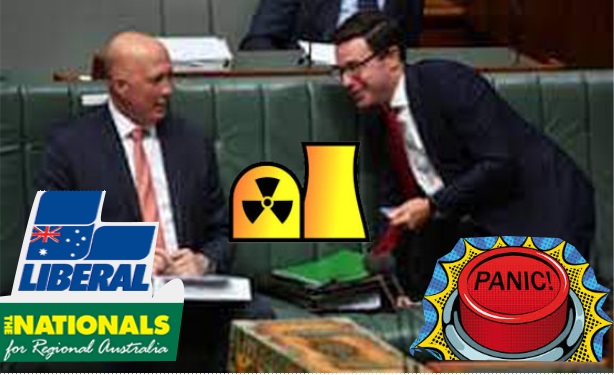
The prime minister has lashed out at the opposition for failing to reveal where nuclear power plants after ‘extensive’ polling was done in potential electorates.
Eleanor Campbell, May 19, 2024 , https://www.news.com.au/finance/business/other-industries/anthony-albanese-accuses-coalition-of-hiding-key-details-on-nuclear-policy/news-story/4869e764cab8286dc57a0883412c89c4
Anthony Albanese has attacked the coalition for failing to reveal key details of its controversial nuclear energy policy, which now looks be delayed until the end of the year.
Opposition Leader Peter Dutton’s reply to the federal budget last Thursday omitted key details of the signature energy policy, including the total costs and locations of the six nuclear power plants slated to replace a retiring fleet of coal-fired power stations.
Nationals leader David Littleproud on Sunday said it would not have been “appropriate” for Mr Dutton to outline the full costs in his budget reply speech, but confirmed the policy would “of course” be released before the end of 2024.
“We have done extensive polling of the electorates, we’ll be looking at six or seven sites … and they have been very supportive of a nuclear future,” Mr Littleproud told Sky Sunday Agenda.
Describing the opposition’s nuclear idea as “shocking policy” when asked at a press conference on the NSW Central Coast, the Prime Minister accused Mr Littleproud of intentionally hiding details from the public because the plan “didn’t stack up”.
“David Littleproud has said that they have done polling in the areas where the nuclear reactors are going to be built,” Mr Albanese said.
“So he clearly has full knowledge of where these reactors will be built, but he won’t tell Australians where it will be.
“Earlier this week, he said he’d look Australians in the eye and tell them where it would be, what it would cost, who would build them and who would finance them.
“Today, he’s saying, ‘We’ve got polling, but we’re not going to tell you’.
‘Bring Julian home’: the Australian campaign to free Assange
Assange’s supporters say what Wikileaks revealed about power and access to information is as relevant today as ever.
Aljazeera, By Lyndal Rowlands 19 May 2024
Melbourne, Australia – At home in Australia, Julian Assange’s family and friends are preparing for his possible extradition to the United States, ahead of what could be his final hearing in the United Kingdom on Monday.
Assange’s half-brother Gabriel Shipton, who spoke to Al Jazeera from Melbourne before flying to London, said he had already booked a flight to the US.
A filmmaker who worked on blockbusters like Mad Max before producing a documentary on his brother, Shipton has travelled the world advocating for Assange’s release, from Mexico City to London and Washington, DC.
Earlier this year, he was a guest of cross-bench supporters of Assange at US President Joe Biden’s State of the Union address.
The invitation reflected interest in his brother’s case both in Washington, DC and back home in Australia. Biden told journalists last month he was “considering” a request from Australia to drop the US prosecution.
Assange rose to prominence with the launch of Wikileaks in 2006, creating an online whistleblower platform for people to submit classified material such as documents and videos anonymously. Footage of a US Apache helicopter attack in Baghdad, which killed a dozen people, including two journalists, raised the platform’s profile, while the 2010 release of thousands of classified US documents on the wars in Afghanistan and Iraq, as well as a trove of diplomatic cables, cemented its reputation.
Shipton told Al Jazeera the recent attention from Washington, DC had been notable, even as his brother’s options to fight extradition in the UK appeared close to running out.
“To get attention there on a case of a single person is very significant, particularly after Julian’s been fighting this extradition for five years,” Shipton told Al Jazeera, adding that he hoped the Australian prime minister was following up with Biden.
We’re always trying to encourage the Australian government to do more.”
A test for US democracy
Assange’s possible extradition to the US could see freedom of expression thrown into the spotlight during an election year that has already seen mass arrests at student antiwar protests.
Shipton told Al Jazeera the pro-Palestinian protests had helped bring “freedom of speech, freedom to assembly, particularly in the United States, front of mind again”, issues he notes have parallels with his brother’s story.
While Wikileaks published material about many countries, it was the administration of former US President Donald Trump that charged Assange in 2019 with 17 counts of violating the Espionage Act.
US lawyers argue Assange is guilty of conspiring with Chelsea Manning, a former army intelligence analyst, who spent seven years in prison for leaking material to WikiLeaks before former US President Barack Obama commuted her sentence.
“It’s an invaluable resource that remains utterly essential to understand how power works, not just US power, but global power,” Antony Loewenstein, an independent Australian journalist and author, said of the Wikileaks archive.
“I always quote and detail [Wikileaks’s] work on a range of issues from the drug war, to Israel/Palestine, to the US war on terror, to Afghanistan,” Loewenstein said, noting that Wikileaks also published materials on Bashar al-Assad’s Syria and Vladimir Putin’s Russia.
“It’s just an incredible historical resource,” he said.
Loewenstein’s most recent book, the Palestine Laboratory, explores Israel’s role in spreading mass surveillance around the world, another issue Loewenstein notes, that Assange often spoke about.
“One thing that Julian has often said, and he’s correct, is that the internet is on the one hand an incredibly powerful information tool… but it’s also the biggest mass surveillance tool ever designed in history,” said Loewenstein……………………………………………. more https://www.aljazeera.com/features/2024/5/19/bring-julian-home-the-australian-campaign-to-free-assange
Nuclear more than 6 times the cost of renewables – report

20 May 2024, https://www.aumanufacturing.com.au/nuclear-more-than-6-times-the-cost-of-renewables-report
An independent report by consulting and engineering firm Egis and commissioned by the Clean Energy Council has confirmed that nuclear is the most expensive form of new energy in Australia.
The review analysed the CSIRO and Australian Energy Market Operator (AEMO)’s GenCost report against the Lazard Review and the Mineral Council of Australia (MCA)’s research into Small Modular Nuclear Reactors.
The report found that nuclear energy is up to six times more expensive than renewable energy and even on the most favourable reading for nuclear, and that renewables remained the cheapest form of new-build electricity.
Nuclear may be even higher cost than forecast as waste management and decommissioning of nuclear plants had been omitted in cost calculations.
The report also found:
- The safe operation of nuclear power requires strong nuclear safety regulations and enforcement agencies, none of which exist in Australia
- And the economic viability of nuclear energy will further diminish as more wind, solar and battery storage enters the grid.
“Put simply, nuclear plants are too heavy and too slow to compete with renewables and can’t survive on their own in Australian energy markets.”
Clean Energy Council Chief Executive Kane Thornton, said households would need to pay a hefty price to subsidise nuclear reactors.
Thornton said: “Taxpayers also need to understand the costs that will be borne if they are forced to foot the bill for building a nuclear industry from scratch over a period of decades.
“Nuclear power is also a poor fit with our increasingly renewable power system.
“Nuclear power stations are expensive and have to run constantly in order to break even – but that doesn’t work in a world with an abundance of cheap renewables.”
The Egis report also found the MCA’s research on Small Modular Reactors (SMRs) did not anticipate the current long delay in SMR projects around the world.
Going nuclear on power and wages may not be the election winner Peter Dutton thinks it is

Guardian, Paul Karp, 20 May 24
Opposition leader has laid fertile ground for progressive attack ads to grow in policy-lite budget reply
Peter Dutton’s budget reply sets the Coalition up for an election campaign focused on migration and law and order. At least, that’s the election he wants because it’s one he thinks he could win.
But Dutton’s policy-lite speech contains the seeds of campaigns that will inevitably be deployed by the progressive side of politics: on nuclear and wages.
The nuclear debate has been a train wreck in slow motion for months now.
So many front page stories in the Australian promised the policy before the budget with such juicy details as the type of technology, the number of reactors, their putative location.
Then, a deferral. All in good time.
In Thursday’s speech, Dutton made the case that nuclear is popular. Bob Hawke supported it, so does John Howard, the Australian Workers Union and “65% of Australians aged 18 to 34 years of age”.
One couldn’t help but wonder: if it’s so popular, why not make it the centrepiece of the speech and actually announce the policy?
Perhaps because it’s so expensive that it completely fails the Coalition’s new test for Future Made in Australia projects – that they must be commercially viable without taxpayer support. Perhaps because the friendlier-sounding small modular reactors are not commercially available.
Or perhaps because it is not, in fact, that popular.
Labor are increasingly cocky that the nuclear thought-bubble is an exploding cigar for the opposition. On Thursday the energy minister, Chris Bowen, gleefully cited choice anonymous quotes from Coalition backbenchers in question time that the policy is “madness on steroids” and within the ranks there is “a sudden sense of bewilderment” about the idea.
A few months ago I wrote a slightly trolling column about the possibility of a plebiscite on nuclear power to accompany the next election. Labor see Dutton doing everything in his power to turn the next election into a straw poll on his big bad idea anyway.
The attack ads write themselves. I can see the bunting wrapped around schools on election day already, with nuclear cooling towers, yellowcake, plutonium rods and Dutton’s face.
In his post budget reply press conference the education minister, Jason Clare, said simply: “If he won’t tell you where he’s going to put all the nuclear reactors, why would you vote for him?”
This is the obvious scare campaign. Let’s also look at the slower burn issue: wages.
An easy win – but not for him
In his speech Dutton promised to “remove the complexity and hostility of Labor’s industrial relations agenda, which is putting unreasonable burdens on businesses”…………………
It’s absolutely fine for Dutton to create some policy differentiation with Labor, but if he doesn’t set out chapter and verse what’s in and what’s out, the unions will paint him as against all of it………………………………………………………………
The minor themes of the speech have the greatest potential to develop into major problems for him https://www.theguardian.com/australia-news/article/2024/may/20/going-nuclear-on-power-and-wages-may-not-be-the-election-winner-peter-dutton-thinks-it-is
The president of the ACTU, Michele O’Neil, said: “Dutton committed to getting rid of the workplace laws that are finally seeing real wages grow, after 10 years of wage stagnation by the last Coalition government.”
Dutton “told workers that if he is elected, he will again commit the Coalition to running an economy based on low wages” and “turn secure jobs into casual jobs”.
The Heroism of David McBride
By John Kiriakou https://consortiumnews.com/2024/05/16/john-kiriakou-the-heroism-of-david-mcbride/
By 2014 McBride had compiled a dossier into profound command failings that saw examples of potential war crimes in Afghanistan overlooked and other soldiers wrongly accused. On Tuesday he was sentenced to nearly six years in jail.
Sometimes a whistleblower does everything right. He or she makes a revelation that is clearly in the public interest. The revelation is clearly a violation of the law. And then he or she is even more clearly abused by the government. It would be great if these stories always had happy endings. Unfortunately, they don’t.
In this case, the whistleblower, the hero, Australian David McBride has been sentenced to five years and eight months in prison for telling the truth. He will not be eligible for parole for 27 months.
David McBride is former British Army officer and a lawyer with the Australian Special Forces who blew the whistle on war crimes committed by Australian soldiers in Afghanistan, specifically the killing of 39 unarmed Afghan prisoners, farmers, and civilians in 2012.
After failing to raise a response through official channels, McBride shared the information with the Australian Broadcasting Corporation (ABC), which published a series of major reports based on the material.
The ABC broadcasts in 2017 led to a major inquiry that upheld many of the allegations. Despite this, the ABC and its journalists themselves came under threat of prosecution for their work on the story.
The ABC offices in Sydney were raided by the national police, but in the end the government did not prosecute an ABC journalist because it was not in the public interest. McBride himself, however, was prosecuted for dissemination of official information.
Two Tours in Afghanistan
Let’s go back a few years. McBride at the time already was a seasoned attorney. After studying for a second law degree at Oxford University, he joined the British military and eventually moved back to Australia where he became a lawyer in the Australian Defence Forces (ADF). In that role he had two tours in Afghanistan in 2011 and 2013.
While on deployment, McBride became critical of the terms of engagement and other regulations that soldiers were working under, which he felt were endangering military personnel for the sake of political imperatives determined elsewhere.
By 2014 McBride had compiled a dossier into profound command failings that saw examples of potential war crimes in Afghanistan overlooked and other soldiers wrongly accused. His internal complaints were suppressed and ignored.
McBride’s reports also looked at other matters, including the military’s handling of sexual abuse allegations. After his use of internal channels had proven ineffective, McBride gave his report to the police. And eventually, he contacted journalists at ABC.
ABC’s Afghan Files documented several incidents of Australian soldiers killing unarmed civilians, including children, and questioned the prevalent “warrior culture” in the special forces. Subsequent to McBride’s disclosures, the behavior of other Coalition Special Forces in Afghanistan also came under sustained investigation.
In many ways, McBride’s reports went further than the issues identified by ABC. Amid prevalent rumors that Australian troops were responsible for war crimes, questionable deaths in Afghanistan had led to calls for investigations.
Report Vindicated McBride & ABC
In November 2020, the Brereton report (formally called the Inspector General of the Australian Defence Force Afghan Inquiry report) was published, utterly vindicating McBride and the ABC. Judge Paul Brereton found evidence of multiple incidents involving Australian personnel that had led to 39 deaths. Among his recommendations were the investigation of these incidents for possible future criminal charges.
There would be almost no criminal charges, however. At least, there would be only one eventual criminal charge against one single soldier in the murder of Afghan civilians. There have been no charges against the officers who covered up the war crimes.
Instead, though, there would be serious charges against McBride for “theft of government property” (the information) and for “sharing with members of the press documents classified as secret.” He faced life in prison.
McBride’s sentence illustrates the challenges that Australian whistleblowers face when reporting evidence of waste, fraud, abuse, illegality, or threats to the public health or public safety.
First, just like in the United States, there are no protections for national security whistleblowers. McBride took his career — indeed, his life — into his hands when he decided to go public with his revelations. But what else could he do?
Second, as in the United States, there is no affirmative defense. McBride, like Edward Snowden, Jeffrey Sterling, Daniel Hale and like me, was forbidden from standing up in court and saying, “Yes, I gave the information to the media because I witnessed a war crime or a crime against humanity. What I did was in the public interest.”
Those words are never permitted to be spoken in a court in the United States or Australia.
Recalling Nuremberg
Third, Australia is in dire need of some legal reforms. The judge in McBride’s case said at sentencing that McBride, “had no duty as an army officer beyond following orders.” That defense was attempted at Nuremberg and it failed. It’s time for the Australian judiciary to get into the 21st century.
There are a couple points of light in this whole fiasco. The Brereton Commission did indeed recommend that 19 members of the Australian Special Forces be prosecuted for war crimes. So far, one has been charged with a crime. He is accused of shooting and killing a civilian in a wheat field in Uruzgan Province in 2012.
Indeed, Andrew Wilkie, a former Australian government intelligence analyst-turned-whistleblower, and now member of Parliament, says that “the Australian government hates whistleblowers” and that it wanted to punish David McBride and to send a signal to other government insiders to remain silent, even in the face of witnessing horrible crimes. I would say exactly the same thing about the United States.
I’m proud to call David McBride a friend. I know exactly what he’s going through right now. But his sacrifice will not be in vain. History will smile on him. Yes, the next several years will be tough. He’ll be a prisoner. He’ll be separated from his family. And when he gets out of prison, well into his 60s, he’ll have to begin rebuilding his life. But he is right and his government is wrong. And future generations will understand and appreciate what he did for them.
John Kiriakou is a former C.I.A. counterterrorism officer and a former senior investigator with the Senate Foreign Relations Committee. John became the sixth whistleblower indicted by the Obama administration under the Espionage Act — a law designed to punish spies. He served 23 months in prison as a result of his attempts to oppose the Bush administration’s torture program.
And McBride will be allowed to appeal his conviction. Still any other light at the end of the tunnel is likely an oncoming train, rather than relief for the whistleblower.
But the bottom line is this. There is a war against whistleblowers in Australia just like there is in the United States.
Nuclear option costs ‘six times more’ than renewables
By Marion Rae, May 18 2024, https://www.canberratimes.com.au/story/8632826/nuclear-option-costs-six-times-more-than-renewables/—
The high upfront costs and burden on consumers of adding nuclear to Australia’s energy mix have been confirmed in an independent review.
Building nuclear reactors would cost six times more than wind and solar power firmed up with batteries, according to the independent report released on Saturday by the Clean Energy Council.
“We support a clear-eyed view of the costs and time required to decarbonise Australia and right now, nuclear simply doesn’t stack up,” the industry body’s chief executive Kane Thornton said.
Taxpayers needed to understand the decades of costs if they were forced to foot the bill for building a nuclear industry from scratch, Mr Thornton warned.
The analysis prepared by construction and engineering experts Egis also found nuclear energy had poor economic viability in a grid dominated by renewable energy.
Renewable energy will provide 82 per cent of the national electricity market under current targets for 2030, which is at least a decade before any nuclear could theoretically be operational.
Further, nuclear power stations are not designed to ramp up and down to align with renewable energy generation.
Adding to the cost challenges, Australia has no nuclear energy industry because it is prohibited under commonwealth and state laws, which would all need to be changed.
Mr Thornton said the analysis confirmed that building nuclear power stations instead of renewables would cause power prices to “explode”.
The analysis was based on the CSIRO’s GenCost 2023-24 consultation draft, the Mineral Council of Australia’s Small Modular Reactors study and the industry benchmark Lazard Levelized Cost of Energy Report.
These reports did not include waste management and decommissioning of a nuclear plant in cost calculations, which meant the true cost could be even higher, Mr Thornton said.
David McBride goes to prison – and Australian democracy takes a hit
Peter Greste, Professor of Journalism and Communications, Macquarie University, 17 May 24, https://theconversation.com/david-mcbride-goes-to-prison-and-australian-democracy-takes-a-hit-230007—
Governments and their agencies wield awesome power. At times, it is quite literally the power over life and death. That is why in any functioning democracy, we have robust checks and balances designed to make sure power is exercised responsibly and with restraint.
So, what message does a sentence of more than five years in prison for someone who exposed credible allegations of war crimes by Australian soldiers send?
On Tuesday, ACT Supreme Court Justice David Mossop despatched the former military lawyer David McBride to prison for five years and eight months, for passing classified military documents to journalists. Those documents formed the basis of the ABC’s explosive “Afghan Files” investigation, revealing allegations that Australian soldiers were involved in the unlawful executions of unarmed civilians.
It is hard to think of any whistleblowing more important.
McBride’s case forced us to confront the way our own troops had been conducting the war in Afghanistan, as well as the government’s ongoing obsession with secrecy over the public interest.
McBride had been concerned about what he saw as systemic failures of the SAS commanders, and their inconsistency in dealing with the deaths of “non-combatants” in Afghanistan. In an affidavit, he said he saw the way frontline troops were being –
improperly prosecuted […] to cover up [leadership] inaction, and the failure to hold reprehensible conduct to account.
He initially complained internally, but when nothing happened he decided to go public. In 2014 and 2015, McBride collected 235 military documents and gave them to the ABC. The documents included 207 classified as “secret” and others marked as cabinet papers.
It is hard to deny the truth of what McBride exposed. The Brereton Inquiry later found what a parliamentary briefing described as “credible information” of 23 incidents in which non-combatants were unlawfully killed “by or at the direction of Australian Special Forces”. The report said these “may constitute the war crime of murder”.
Brereton went on to recommend prosecutions of the soldiers who were allegedly responsible. Yet, the first person to face trial and be sent to prison in the whole debacle is not any of those who might have been responsible for alleged killings, but the man who exposed “misconduct” in the Australian Defence Force.
Much has been made of McBride’s reasons for going to the media, but this focus on motives is a form of misdirection. Whistleblowers take action for a host of reasons – some of them less honourable than others. But ultimately, what matters is the truth of what they expose, rather than why.
That is why we recognise media freedom as an essential part of a healthy democracy, including the right – indeed the responsibility – of journalists to protect confidential sources. Unless sources who see wrongdoing can confidently expose it without fear of being exposed and prosecuted, the system of accountability falls apart and gross abuses of power remain hidden.
It is also why the formal name for Australia’s whistleblower protection law is the “Public Interest Disclosure Act”.
This law is designed to do what it says on the tin: protect disclosures made in the public interest, including those made through the media. It recognises that sometimes, even when the law imposes certain obligations of secrecy on public servants, there may be an overriding interest in exposing wrongdoing for the sake of our democracy.
As a highly trained and experienced military lawyer, McBride knew it was technically illegal to give classified documents to the media. The law is very clear about that, and for good reason. Nobody should be able to publish government secrets without a very powerful justification.
But nor should the fact that a bureaucrat has put a “secret” stamp on a document be an excuse for covering up serious crimes and misdemeanours.
In McBride’s case, the judge accepted the first premise, but rejected the second.
This is why my organisation, the Alliance for Journalists’ Freedom, is advocating for a Media Freedom Act. The act would oblige the courts to weigh up those competing public interests – the need for secrecy in certain circumstances against the sometimes more compelling need to publish and expose wrongdoing – rather than assume secrecy as a given.
It is hard to overstate the impact this case is likely to have on anybody with evidence of government misdeeds. Do they stay quiet and live with the guilt of being complicit, or do they speak up like McBride and others, and risk public humiliation, financial ruin and possibly even prison?
Attorney-General Mark Dreyfus has committed to reforming the whistleblower protection regime, and before the last election, promised to set up an independent Whistleblower Protection Authority. Those commitments are laudable, but they ring hollow while McBride sits in prison and another prominent whistleblower, Richard Boyle from the Australian Taxation Office, faces trial later this year.
It is hard to see the former military lawyer being locked in a cell, and say Australia is either safer, or better because of it.
Australian Greens’ dissenting report on The Australian Naval Nuclear Power Safety Bill .

1.1The Australian Naval Nuclear Power Safety Bill 2023 (the Bill or ANNPS) is deeply flawed legislation that is only being progressed because of the deeply flawed trilateral agreement that is AUKUS.
1.2The Bill proposes a seriously flawed regulatory model for the dangers of naval nuclear reactors and associated waste.
1.3 The proposed regulator lacks genuine independence, the process for dealing with nuclear waste is recklessly indifferent to community or First Nations interests and the level of secrecy is a threat to both the environment and the public interest.
1.4 Any amendments proposed to improve the many deficiencies of this legislation should not be interpreted as support for the Bill itself or for the AUKUS deal.
1.5 This Bill establishes a new defence naval nuclear regulator that will oversee all aspects of the nuclear production and waste cycle associated with Australian nuclear-powered submarines (and with regard to waste but not the operational activities of UK and US submarines) that operate, are constructed or decommissioned in Australia and Australian territorial waters.
1.6 This regulator will be entirely separate from the existing and long-standing nuclear regulation framework in Australia, which currently sits under the Australian Radiation Protection and Nuclear Safety Act 1998 (ARPANS Act).
Independence
1.7This Bill fails to meet the fundamental international principles of regulatory independence for safely addressing the inherent risks of nuclear power and nuclear waste.
1.8In this Bill, the proposed Australian Naval Nuclear Power Safety Regulator reports directly to the Minister of Defence. The Defence Minister is also responsible, through the Australian Defence Force, for the operation of those same nuclear submarines.
1.9 This is widely out of step with international standards of legal and functional independence for nuclear safety and is contrary to current practice on civil nuclear regulation in Australia.
1.10This is also in direct opposition to the International Atomic Energy Agency in its Fundamental Safety Principles that state: An effective legal and governmental framework for safety, including an independent regulatory body, must be established and sustained.[1]
1.11It is also not in line with the current regulation of nuclear waste in Australia. The regulator, called the Australian Radiation Protection and Nuclear Safety Agency (ARPANSA) sits in the Ministry of Health whereas the Australian Nuclear Science and Technology Organisation (ANSTO) (which operates the Lucas Heights reactor) sits in the Ministry of Industry and Science. This is to ensure the regulator is independent of the industry it oversees.
1.12As the majority report notes in some detail, the proposed model under this Bill is distinct from either the UK or US naval nuclear regulators.
1.13 In the UK, while the main naval nuclear regulator does report through the Ministry of Defence, there is a significant ongoing role for the independent civilian Office for Nuclear Regulation (ONR) in overseeing defence nuclear activities. This is formalised in the General Agreement between the Ministry of Defence and the Office for Nuclear Regulation. This agreement clearly delineates the relationship between the Ministry of Defence and the ONR in discharging their respective roles and responsibilities for the UK’s defence nuclear operations. There is no equivalent role for ARPANSA in this Bill.
In the US, the regulator is known as the Naval Nuclear Propulsion Program (NNPP). This is not run solely by Defense but rather is jointly managed and self-regulated by the civilian National Nuclear Security Administration (NNSA) that reports to the Department of Energy, and the Department of the Navy. By contrast, under this Bill the regulator will be entirely within the Department of Defence and the Defence Minister will have sole ministerial responsibility.
1.15The importance of regulatory independence was outlined in a letter to the CEO of ARPANSA from the Radiation Health and Safety Advisory Council in October 2022 that stated:
Independence of the regulator is a critical part of its effectiveness. The regulator should be independent of the operators and departments overseeing any aspect of purchase, manufacture, maintenance, and operation of the program. It is noted that some of the more significant global nuclear and radiation incidents have arisen from inadequate separation of responsibilities from regulatory capture. More than functional separation, it is important that the independent regulator can operate without influence, and with a strong voice. If a regulatory body cannot provide information on safety and incidents at licensed facilities without the approval of another organisation, issues of independence and transparency will arise. Reporting arrangements should therefore enable the regulatory body to be able to provide safety related information to the Government and the public with the maximum amount of transparency.[2]
1.16During a committee hearing, these concerns were put to the Royal Institution of Naval Architects (RINA), concerning the importance of independence in ‘social licence’:
Senator SHOEBRIDGE: We have good examples, though, of independence. ANSTO is an operator. The regulator of ANSTO reports to a different minister, and that is part of how ANSTO gets social licence. That’s a good example, isn’t it, of structural independence?……………………………………………………
ARPANSA also acknowledged that the key to their social licences was independence through reporting to a minister not associated with the industry they are regulating
1.18In further questioning concerning how this independence can be achieved with the Defence Minister having both the regulator and the body it’s regulating reporting to them, ARPANSA stated:
Senator SHOEBRIDGE: Do you agree it’s a weakness in this bill to have the operator and the regulator both report to the same minister? Or if you don’t want to adopt my phrase, tell me how you would respond to the fact that the regulator and the operator both report to the same minister, given the fundamental importance of independence?
Dr Hirth: I think it’s important to go back to the IAEA, and I think the comments made by RINA in your questions to them this morning around undue influence. Establishing reporting arrangements in order that there isn’t undue influence of interested parties does present a challenge for the Minister for Defence…………………………….
1.19Furthermore, there were concerns raised about the development of a new regulatory body, with all the concerns of independence with the ANNPS Bill, which may also lack the expertise needed……………..
The ability of the Minister through proposed section 105 to issue directions to the regulator further blurs the independence of the new regulator. This was a concern for the Australian Shipbuilding Federation of Unions (ASFU),……………………………………………
1.21Another aspect of the lack of independence concerns the staffing and leadership of the new regulator. It is true that neither the Director-General nor Deputy Director-General can be an active member of the ADF (Australian Defence Force) as specified in proposed section 109.
1.22 However, there is nothing stopping someone from immediately stepping out of the ADF and the next day becoming the Director-General or Deputy Director-General, as this exchange with Defence made clear:……………………………………………………..
1.23 Furthermore, there are no such restrictions on the staff of the regulator, which may all be drawn from active ADF personnel.
1.24 This means the supposed independent regulator of Defence can be run by someone who, the day before was in the Defence, staffed by the Defence and report to the Minister of Defence.
Recommendation 1
1.25 It is recommended that the Bill be amended to ensure a genuinely independent regulator and that the regulator reports to the Minister of Health rather than the Minister of Defence.
1.26 Alternatively, that the regulator more closely reflects the arrangements in the United States and jointly reports to both the Minister of Health and the Minister for Defence, with these Ministers jointly holding Ministerial responsibility under the Bill.
Recommendation 2
1.27 It is recommended that for transparency any direction issued under section 105 be tabled in Parliament within three days where the direction may, or will, negatively impact public health or safety.
Recommendation 3
1.28 It is recommended that section 109 be amended to:
prohibit the Director General from being a current or former member of the ADF or Department of Defence, and;
that the Deputy Director General not be a current member of the ADF or Department of Defence or have been a member of the ADF or Department of Defence for at least two years prior to any appointment.
No public or First Nations consultation
1.29This Bill allows the Minister of Defence to establish ‘designated zones’ for the storage, management and disposal of low, medium and high-level nuclear waste in any part of Australia the Minister chooses by regulation.
1.30This Bill establishes an initial two zones, one at HMAS Stirling at Garden Island in Western Australia and another at the Osborne Naval Shipyard in South Australia. Both zones are close to major metropolitan centres.
1.31Concerning future nuclear waste dumps, the Minister for Defence has indicated that they will only be on Defence land, however, that includes large parcels of land within every major population centre in the country. The Minister also said this can include ‘future’ Defence land.[9]
1.32However, the Bill does not provide even this limitation on where nuclear waste can be located. In fact, the Bill says in bold terms the waste can be on defence land or ‘any other area in Australia’ identified in the regulations. This means, with the flick of the Minister’s pen, any location in Australia can be made into a high-level nuclear waste dump.
1.33This completely excludes any consultation with the local impacted community or with First Nations people whose land and water will be targeted by Defence. With this Bill, neighbours to large defence sites like Holsworthy in Sydney or Greenbank in Brisbane are right to be concerned that they may wake up one morning, with no notice, to find they back onto a high-level nuclear waste dump.
1.34 We have seen from decades of failed attempts to set up nuclear waste sites across the country, most recently at Kimba, that Federal governments have routinely sought to override First Nations people’s claims to the land on this issue. The United Nations Declaration on the Rights of Indigenous Peoples (UNDRIP) specifies the importance of free, prior and informed consent before any such action is taken. This Bill does not even pretend to engage with these principles.
1.35 As the submission from Friends of the Earth stated:
First Nations communities have repeatedly defeated thuggish, racist governments in relation to radioactive waste facilities but that has come at a huge cost in terms of physical and mental health.[10]
1.36The few protections that the law currently gives to First Nations people over their land are removed by this Bill. The Independent and Peaceful Australia Network raised this during a hearing, stating:
There doesn’t seem to have been any notice taken of the United Nations Declaration on the Rights of Indigenous Peoples. They should have the right to prior informed consent on this issue and have full consultation before any designations are made for nuclear waste.[11]
1.37Multiple submissions also raised the comments by Dr Marcos Orellana, UN Special Rapporteur on Toxics and Human Rights, in 2023 on this issue, saying:
It is instructive that all siting initiatives by the Government for a radioactive waste repository have failed, leaving a legacy of division and acrimony in the communities. The loss of lives and songlines resulting from exposure of Indigenous peoples to hazardous pesticides in the Kimberley region, from asbestos exposure in Wittenoom in Western Australia, and from the radioactive contamination following nuclear weapons testing in South Australia, are all open wounds. Alignment of regulations with the UN Declaration on the Rights of Indigenous Peoples is a critical step in the path towards healing open wounds of past environmental injustices.[12]
1.38Concerning the proposed nuclear ‘designated zone’ in Perth, Nuclear Free WA and Stop AUKUS WA noted the importance of the areas around HMAS Stirling, stating in their submission:
Cockburn Sound and Garden Island have significant cultural value for First Nations Peoples … The ecological values of Garden Island, the proximity to Cockburn Sound make radioactive waste disposal here incompatible.[13]
1.39 It is remarkable that on an issue so vital to communities, the potential location of a nuclear waste dump, there is zero public consultation required under this Bill. Compare this to existing laws such as the National Radioactive Waste Management Act 2012, where a site must be voluntarily nominated, evaluated against technical, economic, social and environmental criteria, and offered for public consultation.
1.40 This, together with the express inclusion of the UNDRIP principles, is the minimum standard that should be expected under this Bill for public and First Nations consultation.
Recommendation 4
1.41 It is recommended that the Bill must ensure that there is free, prior and informed consent from First Nations people and the communities impacted before any designated zone is established for low, medium or high-level naval nuclear waste.
Recommendation 5
1.42 It is recommended that the Bill should expressly include reference to, and compliance with, Australia’s international obligations including the United Nations Declaration on the Rights of Indigenous Peoples.
Recommendation 6
1.43 It is recommended that the Bill should adopt the requirements for public consultation and site identification for designated nuclear zones found in the National Radioactive Waste Management Act 2012.
Transparency and collaboration
1.44 The ARPANS Act has key elements to ensure the management of nuclear waste is done in collaboration with other experts and bodies, as well as openly with the public. This Bill fails on both of these fronts……………………………………………………………………………………………
1.47 By creating a legally and functionally separate naval nuclear regulator this Bill ignores decades of experience in both the UK and the US where there is a co-regulatory civil and defence regime. This not only ignores international experience, it also ignores the decades of experience held in Australia’s civilian nuclear regulators and advisers. This is a reckless proposal that will leave Defence to be both the nuclear operator and the nuclear regulator without having ongoing advice from an independent body.
Recommendation 7
1.48 It is recommended that the Bill should require close co-operation and consultation between the proposed naval nuclear regulator and the civilian regulator ARPANSA.
Recommendation 8
1.49 It is recommended that the Bill should be amended to ensure that the Director General receives advice from the relevant nuclear safety advisory groups including the Radiation Health and Safety Advisory Council, Radiation Health Committee and the Nuclear Safety Committee.
UK and US nuclear waste dumping ground
1.50 As noted above the Bill is drafted to allow the UK and US to dump nuclear waste, including high-level nuclear waste, from their existing and decommissioned nuclear submarines in Australia.
1.51 Despite Minister Marles rejecting this as ‘fear-mongering’ when first raised, this fact was admitted by multiple witnesses, including Defence officials and BAE Systems Australia. It also flows from any even moderately close reading of the Bill.[16]
1.52 It turned out to be significantly more than this with numerous organisations confirming that this Bill indeed does allow for the dumpling of nuclear waste in Australia from UK and US submarines.
1.53 Mr Peter Quinlivian, Senior Legal Counsel, BAE Systems Australia admitted the law would permit the dumping of nuclear waste from UK nuclear submarines in the following exchange:…………………………………………………………………………………………………………………….
1.54 Mr Adam Beeson, General Counsel, Australian Conservation Foundation, further corroborated this information said:………………………………………………………………………….
1.55 Mr Kim Moy, Assistant Director-General of the Domestic Nuclear Policy Branch, Department of Defence also admitted that this Bill would allow for the dumping of foreign nuclear waste:……………………………………………………
1.56 Question on Notice 1 from Defence during this hearing also made clear that the current definition is not just limited to low-level nuclear waste, but high-level nuclear waste too.[20]
1.57 This is particularly disturbing given the UK currently has no plan to dispose of the nuclear waste from their nuclear submarines. In the UK there are now six decades of decommissioned rusting nuclear submarines that are filled with high and medium-level nuclear waste for which they have no solution.
1.58 To be clear, under this Bill, there is a real and present danger that either this government or a future government will allow UK nuclear waste to be brought to Australia. This is an extraordinary proposal and is so clearly not in Australia’s interests, let alone the interests of communities and First Nations peoples on whose land this toxic waste will be dumped.
1,59 Mr Dave Sweeny, Nuclear Policy Analyst, Australian Conservation Foundation addressed these concerns ………………………………………………………..
1.60If the AUKUS nuclear submarine deal is to splutter on, then it must not be allowed to become a back door entry for the world’s most toxic nuclear waste.
Recommendation 9
1.61 The Bill must be amended to ensure that no UK or US nuclear waste can be stored or disposed of in Australia.
Overrides other laws
1.62 This Bill also seeks to override or disregard other laws and international obligations.
1.63 For example, the Bill allows for the Minister to override State and Territory laws that might limit where the Federal Government proposes nuclear waste will be stored through proposed section 135 which reads:
If a law of a State or Territory, or one or more provisions of such a law, is prescribed by the regulations, that law or provision does not apply in relation to a regulated activity.
1.64 This issue has been noted by local communities and environmental groups including David J Noonan who stated in his submission:
The Bill is undemocratic and disrespectful to the people of SA in a proposed power under Section 135 “Operation of State and Territory laws” to over-ride any SA Laws or provisions of our Laws effectively by decree, a fiat of unaccountable federal agents to annul our Laws by naming then in Regulations.[22]
Recommendation 10
1.68 It is recommended that section 135 of the Bill should be removed to retain existing State and Territory protections for the safe treatment of nuclear materials.
Recommendation 11
1.69 It is recommended, to ensure the Bill meets the existing requirements for Australia’s nuclear safety regime to be consistent with international standards, that section 136 be amended to require functions performed to be in accordance with, rather than simply to have regard to, prescribed international agreements.
1.70 Each of the above amendments are intended to strengthen a dangerously undercooked bill. Taken together they would significantly strengthen the proposed regulatory regime to make it more independent and to ensure the public interest, public consultation and First Nations’ rights are respected.
1 .71 However, even if all were adopted, the Bill’s express purpose is to facilitate Australia spending some $368 billion to obtain a handful of nuclear submarines. This entire project comes at an eye-watering cost that strips vital public resources from addressing the climate challenge, the housing crisis and rising economic inequality in our country.
1.72 For all these reasons the Bill should be rejected by the Parliament in its entirety.
Recommendation 12
1.73 It is recommended that the Bill be rejected in full.
Senator David Shoebridge, Substitute member, Greens Senator for New South Wales
Footnotes ………………………………………………………………………………………………………………………….. https://www.aph.gov.au/Parliamentary_Business/Committees/Senate/Foreign_Affairs_Defence_and_Trade/ANNPSBills23/Report/Australian_Greens_dissenting_report?fbclid=IwZXh0bgNhZW0CMTAAAR05CTHduGYDKKcA97g2CvxUE5GZijeBqCITeyjzP0E6YtRmwA_t1EDhwE0_aem_AfsyqQjkM1ez6NUjpa-gSqQ_S_XuhvR6d41rhpWq5VIanWmfHvNRjs3Fqrq_uzaOhVymvSX39Jdbj-LRRbQGamPl
Australian war crimes whistleblower David McBride jailed for six years
Eight years after Australia began investigating alleged war crimes in Afghanistan, a whistleblower is the first to be punished.
By Al Jazeera Staff, 14 May 2024
Former Australian Army lawyer David McBride has been sentenced to five years and eight months for revealing information about alleged Australian war crimes in Afghanistan.
Supporters of McBride have long expressed his concern that the Australian government was more interested in punishing him for revealing information about war crimes rather than the alleged perpetrators.
“It is a travesty that the first person imprisoned in relation to Australia’s war crimes in Afghanistan is not a war criminal but a whistleblower,” said Rawan Arraf, the executive director of the Australian Centre for International Justice, in a statement released after the sentencing.
“This is a dark day for Australian democracy,” Kieran Pender, the acting legal director of the Melbourne-based Human Rights Law Centre, said in the same statement, noting McBride’s imprisonment would have “a grave chilling effect on potential truth-tellers”.
McBride, who arrived at the Supreme Court in Canberra, Australia this morning with his pet dog and surrounded by supporters, will remain behind bars until at least August 13, 2026, before he is eligible for parole.
In an interview with Al Jazeera before his trial began last year, McBride said he had never made a secret of sharing the files.
“What I want to be discussed is whether or not I was justified in doing so,” McBride stressed.
The former Australian Army lawyer’s sentencing comes almost seven years after Australian public broadcaster, the ABC, published a series of seven articles known as the Afghan Files based on information McBride provided.
The series led to an unprecedented Australian Federal Police raid on ABC headquarters in June 2019 but details published in the series were also later confirmed in an Australian government inquiry, which found there was credible evidence to support allegations war crimes had been committed.
A Spokesperson for the Office of the Special Investigator (OSI) told Al Jazeera that a former Australian Special Forces soldier who was charged with one count of the war crime of murder on March 20, 2023, is on bail with a mention scheduled for July 2, 2024.
“This is the first war crime arrest resulting from [joint investigations between the Office of the Special Investigator (OSI) and the Australian Federal Police]”, the spokesperson said.
The spokesperson also said the investigations were “very complex” and “expected to take a significant amount of time” but that they were conducting them as “thoroughly and expeditiously as possible”.
In a separate case last year, an Australian judge found Australia’s most decorated soldier Ben Roberts-Smith was “complicit in and responsible for the murder” of three Afghan men while on deployment. The finding was made in defamation proceedings brought by Roberts-Smith against three Australian newspapers who had reported on the allegations against him.
Roberts-Smith has appealed against the defamation ruling.
‘Greyer, murkier, messier’
McBride’s sentencing comes four months after Dan Oakes, one of two ABC journalists who wrote the Afghan Files, was awarded an Order of Australia Medal, with the citation simply saying he was recognised “for service to journalism”.
Oakes was quoted by the ABC at the time as saying, “I’m very proud of the work we did with the Afghan Files and I know that it did have a positive effect in that it helps bring some of this conduct to light………………………………………………………………….
In a joint statement from several Australians issued after the hearing, Peter Greste, the executive director of the Alliance for Journalists’ Freedom, said that “press freedom relies on protections for journalists and their sources”. He also noted that Australia had recently dropped to 39th in the global press freedom rankings.
Greste is a former Al Jazeera reporter who was jailed with two colleagues in Egypt from 2013 to 2015 on national security charges brought by the Egyptian government.
“As someone who was wrongly imprisoned for my journalism in Egypt, I am outraged about David McBride’s sentence on this sad day for Australia,” said Greste.
McBride is one of several Australians facing punishment for revealing information, while high-profile Australian Julian Assange will face hearings on his potential extradition from the United Kingdom to the United States later this month.
The 13 leading sites for a nuclear reactor in Australia – including a dam that supplies drinking water for a major city.
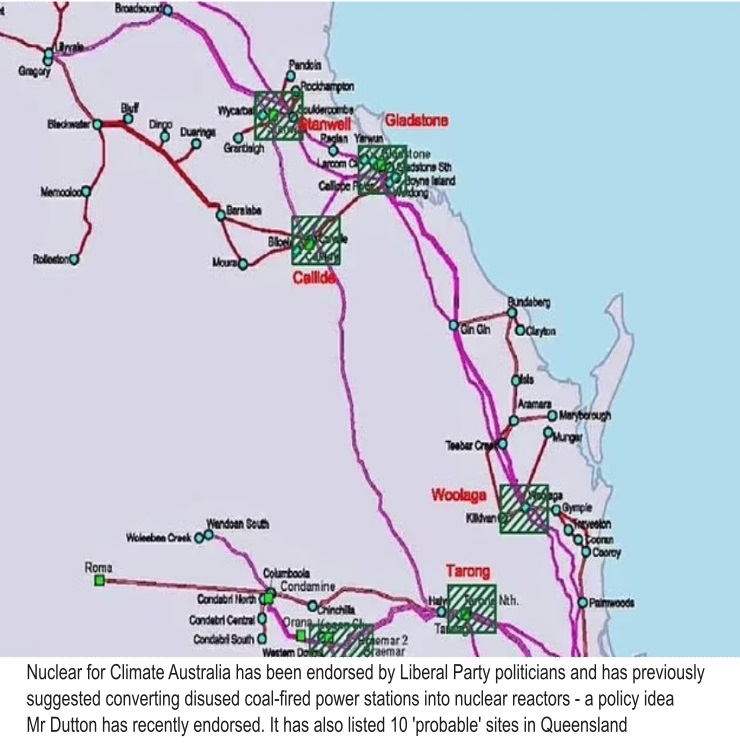
- Nuclear for Climate has Liberal Party endorsements
- It favours turning coal stations into nuclear reactors
- Also suggested Brisbane’s Wivenhoe Dam as site
By STEPHEN JOHNSON, ECONOMICS REPORTER FOR DAILY MAIL AUSTRALIA,12 May 2024
A dam that supplies drinking water near a major city could be used to cool a reactor should Australia embrace nuclear power.
Opposition Leader Peter Dutton is expected to use his upcoming Budget in Reply speech to provide more detail on potential sites for nuclear reactors, with the Coalition arguing Australia cannot solely rely on renewable energy to meet its climate change targets.

Nuclear for Climate Australia has been endorsed by Coalition MPs and its founder, a disillusioned former Labor candidate, is now advising the Opposition on nuclear energy policy.
Nuclear plants use the process of fission – splitting atoms – to heat water from the dam to create steam, which powers a turbine that creates electricity.
The dam’s water would also be used to cool down the nuclear system, with the water then recirculated back into the reactor.
‘While recirculating systems don’t add heat to the river or lake, they do consume water through evaporation,’ Nuclear for Climate Australia said……………………………
Robert Parker said Wivenhoe Dam offered cooling qualities during a drought.
‘You need to ensure that you got sufficient water in the highest demand, hot periods when everyone’s got their air conditioners going, you do not want your plant losing cooling ability,’ Mr Parker told Daily Mail Australia.
‘Smaller nuclear power plants would need to be able to get an allocation of water, particularly in the hot-weather periods out of those dams to cool themselves.
‘If the water allocation can be given to the power station, it would be a phenomenally good resource for cooling a nuclear power plant.’
This site was one of 10 ‘probable’ sites in Queensland along with another three ‘possible’ sites in the home state of Mr Dutton and the Coalition’s energy spokesman Ted O’Brien.
Opponents of nuclear power argue it is too risky to put a plant near any population centre because of the risk of meltdown, even though nuclear medical isotopes for cancer treatment are produced at Lucas Heights in suburban Sydney.
The meltdown at the Soviet-era Chernobyl plant in Ukraine in 1986 resulted in a mass leakage of radiation that devastated surrounding areas for decades, while the effects of the 2011 earthquake on the Fukushima plant in Japan also caused a major radiation event.
Other possible nuclear power plant sites
Nuclear for Climate’s 13 recommended potential reactor sites include seven existing coal-fired power stations: Callide, Stanwell, Tarong, Gladstone, Millmeran, Kogan Creek and Collinsville, along with gas-fired Swanbank in suburban Ipswich.
‘In Queensland coal fired plants were constructed adjacent to available coal mines and other infrastructure,’ it said.
‘New nuclear plants will where possible take advantage of the resource used for cooling at these plants.’
Mr Dutton has flagged the idea of potentially converting five disused coal-fired power stations into nuclear energy reactors, arguing Australia could not entirely rely on wind and solar energy to meet its target of net zero carbon dioxide emissions by 2050.
The Coalition argues the existence of electricity transmission lines from these sites meant nuclear power could be delivered affordably – unlike Labor’s $20billion Rewiring the Nation plan……………………………………….
Nuclear for Climate has also suggested Ross River in north Queensland, the existing site of a solar farm near Townsville that is also close to the sea.
The three ‘possible’ sites included Stockleigh in suburban Logan south of Brisbane, Samsonvale west of Brisbane, and the Burdekin regional in north Queensland.
Mr Parker compiled that list in 2022 but since then he has revised it to drop two sites too far inland, citing droughts……………………………………………….
Nuclear advocacy group
Nuclear for Climate was influential within Coalition circles even before Mr Dutton in March revealed a government led by him would push for a nuclear power industry.
Mr Parker, who ran as a New South Wales state Labor candidate in 2007, said he was now providing advice to the federal Coalition……………………………
In 2022, he addressed the Parliamentary Friends of Nuclear Industries, chaired by Nationals backbencher David Gillespie.
Coalition senators in 2022 also cited Mr Parker in their dissenting report on the government’s plan for Australia to source 82 per cent of its energy from renewable sources by 2030.
Hollie Hughes, Ross Cadell and Bridget McKenzie wrote their report as members of a Senate environment and communications committee who opposed the Climate Change Bill 2022, which Labor and the Greens backed.
Mr Parker’s Nuclear for Climate group had made a submission to this bill arguing Australia could not rely on renewable energy for power generation……………………………….
Mr Parker has also been endorsed in Parliament by Liberal MP Rick Wilson.
In November 2022, the assistant shadow minister from Western Australia hailed his expertise on small modular reactors that can produce 300 megawatts, or 300million watts of power.
‘Speakers like Robert Parker, founder of Nuclear for Climate Australia, described the journey of Canada’s expanding nuclear power using SMR technology,’ he said.
SITES EARMARKED FOR NUCLEAR POWER
’10 PROBABLE SITES’
COLLINSVILLE: coal-fired plant in Whitsunday region of north Queensland
MILLMERRAN: coal-fired plant in Darling Downs region of south Queensland (dropped)
CALLIDE: coal-fired plant at Biloela in central Queensland
GLADSTONE: coal-fired plant in central Queensland
TARONG: coal-fired plant in South Burnett region of south Queensland (scaled back)
STANWELL: coal-fired plant near Rockhampton in central Queensland
KOGAN CREEK: coal-fired plant north-west of Toowoomba in south Queensland (dropped)
SWANBANK: gas-fired plant in Ipswich in south-east Queensland
WIVENHOE: hydro plant north-west of Brisbane in south-east Queensland
ROSS RIVER: solar farm near Townsville in north Queensland
‘3 POSSIBLE SITES’
STOCKLEIGH: rural area west of Logan
BURDEKIN: pumped hydro in north Queensland
SAMSONVALE: rural area west of Moreton Bay in south-east Queensland
Source: Nuclear for Climate Australia’s 2022 list which founder Robert Parker has reconsidered in 2024 https://www.dailymail.co.uk/news/money/article-13394175/13-sites-nuclear-reactor-Australia.html
Nuclear waste from AUKUS nations could be on cards

Greens senator David Shoebridge, who sits on the committee, said the laws would allow the defence minister to designate any area as a nuclear waste facility.
“This runs roughshod not just over local communities but also First Nations peoples who have a long history of protecting their land from nuclear waste, from Muckaty to Kimba,” he said
“This just shows the lengths the Albanese government will go to try and keep the failing AUKUS nuclear submarine deal sputtering along.”
Andrew Brown, May 13, 2024, https://www.thenewdaily.com.au/news/2024/05/13/nuclear-waste-from-aukus-nations-could-be-on-cards
Nuclear safety laws should allow for Australia to accept low-level waste from the UK and US as part of the AUKUS submarine deal, a Senate committee has found.
An inquiry looking at how nuclear safety would be carried out as part of the $368 billion submarine deal found that while Australia should not accept high-level nuclear waste, low-level waste from the submarine programs of AUKUS nations would be accepted.
The Senate committee on Monday recommended the safety laws pass Parliament and extra oversights should be set up for nuclear regulators.
However, opponents say the laws would allow Australia to become a dumping ground for nuclear waste.
Greens senator David Shoebridge, who sits on the committee, said the laws would allow the defence minister to designate any area as a nuclear waste facility.
“This runs roughshod not just over local communities but also First Nations peoples who have a long history of protecting their land from nuclear waste, from Muckaty to Kimba,” he said
“This just shows the lengths the Albanese government will go to try and keep the failing AUKUS nuclear submarine deal sputtering along.”
However, while the committee in its report acknowledged the concern of what would happen to the nuclear waste as part of AUKUS, proper processes would be in place.
“Terms like ‘dumping ground’ are not helpful in discussing the very serious question of national responsibility for nuclear waste of any kind,” the report said.
“There is an important distinction between the categories of nuclear waste which spans from waste with lower levels of radioactivity generated by day-to-day submarine operations … to waste with higher levels of radioactivity, such as spent fuel produced when submarines are decommissioned.”
As part of the AUKUS deal, the US will sell Australia three second-hand Virginia-class submarines in the next decade before a new class of vessels will be used that are co-designed by all three nations in the pact.
In a dissenting report to the inquiry, the Greens also took aim at the oversight of the proposed Australian Naval Nuclear Power Safety Regulator.
Senator Shoebridge said the regulator reporting to the defence minister was out of step with similar bodies set up in other countries.
He said the body should instead report to the federal health minister to ensure its independence.
The report’s findings are set to be considered by the government before being brought back for debate in Parliament.
Australia risks being ‘world’s nuclear waste dump’ unless Aukus laws changed, critics say
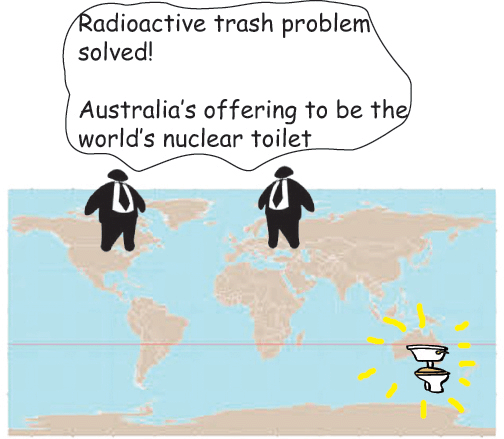
Labor-chaired inquiry calls for legislation to rule out accepting high-level nuclear waste from US and UK submarines among other recommendations
Daniel Hurst Foreign affairs and defence correspondent, https://www.theguardian.com/world/article/2024/may/13/australia-aukus-deal-submarines-critics-nuclear-waste
Australia risks becoming the “world’s nuclear waste dump” unless the Albanese government moves to rewrite its proposed Aukus laws, critics say.
A Labor-chaired inquiry has called for the legislative safeguard to specifically rule out accepting high-level nuclear waste from the US and the UK. One of the members of a Senate committee that reviewed the draft laws, independent senator Lidia Thorpe, said the legislation “should be setting off alarm bells” because “it could mean that Australia becomes the world’s nuclear waste dump”.
The government’s bill for regulating nuclear safety talks about “managing, storing or disposing of radioactive waste from an Aukus submarine”, which it defines broadly as Australia, UK or US submarines.
In a report published on Monday, the Senate’s foreign affairs, defence and trade legislation committee said this wording did not reflect the government’s promise not to accept high-level nuclear waste.
It recommended that the government consider “amending the bill so that a distinction is made between Australia’s acceptance of low-level nuclear waste from Aukus partners, but non-acceptance of high-level nuclear waste”.
The government has left the door open to accepting low-level waste from US and UK nuclear-powered submarines when they conduct rotational visits to Western Australia in the first phase of the Aukus plan. Low-level waste contains small amounts of radioactivity and include items such as personal protective equipment, gloves and wipes.
“According to the Australian Submarine Agency, nuclear-powered submarines only generate around a ‘small skip bin’ of low-level naval nuclear waste per submarine per year and that intermediate- and high-level waste will not become a concern until the first naval nuclear reactor requires disposal in the mid-2050s,” the Senate committee report said.
The government has yet to decide on the location for the disposal of radioactive waste from the submarines.
But infrastructure works proposed for HMAS Stirling – the naval base in Western Australia – to support the increased rotational visits are expected to include an operational waste storage facility for low-level radioactive waste.
The Department of Defence has argued any changes to the definitions should not prevent “regulatory control of the management of low-level radioactive waste from UK or US submarines” as part of those rotational visits.
Thorpe, an independent senator, said the call to prohibit high-level nuclear waste from being stored in Australia was “backed by experts in the field and was one of the major concerns raised during the inquiry into the bill”.
“The government claims it has no intention to take Aukus nuclear waste beyond that of Australian submarines, so they should have no reason not to close this loophole,” Thorpe said.
“They also need to stop future governments from deciding otherwise. We can’t risk our future generations with this.”
The government’s proposed legislation would set up an Australian naval nuclear power safety regulator to oversee the safety of the nuclear-powered submarines.
The committee made eight recommendations, including setting “a suitable minimum period of separation” to prevent a revolving door from the Australian Defence Force or Department of Defence to the new regulator.
The main committee report acknowledged concerns in the community that Australia might become a “dumping ground” for the Aukus countries, but it said the term was “not helpful in discussing the very serious question of national responsibility for nuclear waste”.
It also said the bill should be amended to ensure the regulator was transparent about “any accidents or incidents” with the soon-to-be-established parliamentary oversight committee on defence.
The Labor chair of the committee, Raff Ciccone, said the recommendations would “further strengthen the bill” and help “ensure Australia maintains the highest standards of nuclear safety”.
In a dissenting report, the Greens senator David Shoebridge said the legislation was “deeply flawed”, including because the regulator would report to the defence minister.
“The proposed regulator lacks genuine independence, the process for dealing with nuclear waste is recklessly indifferent to community or First Nations interests and the level of secrecy is a threat to both the environment and the public interest,” Shoebridge said.
The defence minister, Richard Marles, was contacted for comment.
Amidst genocide and war, anti-Zionism protesters are demonised as ‘extremists’
Independent Australia, By Martin Hirst | 13 May 2024
As human rights experts warn of an ongoing genocide in Gaza, any opposition to Zionism is being egregiously labelled as extremism, Dr Martin Hirst writes.
STUDENT PROTESTERS around the world are being demonised by politicians, bureaucrats and the news media for taking a stand against genocide.
This is just an updated version of the moral panic playbook that conservatives use to demonise young people who don’t toe the establishment line.
In the last six weeks, student protests have exploded around the world on a scale not seen since the Vietnam Moratorium almost 60 years ago. These students are protesting against what human rights experts are not hesitating to call a genocide in Gaza.
This reporter knows some of the Australian leaders of these protests quite well, organising politically with them as a long-term member of Left-wing group Socialist Alternative and a writer for its newspaper, Red Flag.
We know that none of these outstanding young activists are antisemitic. We know they are better educated about Palestine from a contemporary and historical perspective than our Prime Minister and most politicians…………………………………………………
We know that these young people are on the right side of history.
We also know that attempts by political leaders, intelligence agencies, Zionist hacks, the police and some university administrators to brand these brave students as violent, dangerous and antisemitic is a bald lie.
It is the lie itself that is dangerous because it actually emboldens Zionist thugs to launch ever-more violent attacks on student encampments, causing injury and mayhem.
It is also dangerous because it is a serious attempt – carried out with planning and intent – to criminalise anti-genocide activists and to criminalise their right to political speech.
What is happening in Australia, across Europe and in the United States is the creation of a state of emergency based on these dangerous lies. Right in front of our eyes, pro-Israel elements of the ruling class are establishing the conditions for a new wave of moral panic.
Students are being demonised as the 21st-Century version of the “folk devil“. The protests are being compared to 1930s Germany – which most people who make this comparison know absolutely fuck-all about – and they are being used to launch a McCarthyite witch hunt against students and academics who stand up for Palestine.
There’s nothing new about moral panics — the phrase was coined by British sociologist Stanley Cohen in the 1970s to describe the clamour for the state to take action against “Mods” and “Rockers” — two rival youth subcultures that enjoyed different types of music.
Interestingly, the Pogroms against Jews that swept Europe in the 1920s were a form of moral panic…………………………………………………………………………………………………
A moral panic only works when those in power – who feel threatened by resistance from below – can enlist loyal handmaidens in the media to prosecute their case and amplify their fear-mongering. Now, these tactics of intimidation are aimed at silencing dissent and any vocal opposition to the Israeli slaughter in Gaza.
Make no mistake, it is happening. Take it seriously because the Zionists and the political establishment are taking it seriously……………………………………………………
Failed Liberal Minister Josh Frydenberg helped to produce a “documentary” helpfully explaining to Sky News audiences how Australia is sliding into Nazi-era pogroms because of the threat to civil order posed by the student encampments and the wider anti-genocide movement.
In the last week alone, there has been a slew of opinion columns and news pieces in The Australian slandering student encampments while ignoring the attacks mounted on them by Zionist thugs.
Andrew Bolt and the usual list of suspects are apoplectic with rage that university administrators haven’t (yet) moved to shut down the protests.
However, the universities are beginning to move. The administration at Monash University in Melbourne is demanding students remove ‘Zionists not welcome’ signs from around their encampment because of some spurious “legal advice” that it is vilification.
Police have been allowed to install surveillance cameras overlooking the Monash encampment. Vice Chancellors from the Group of Eight — Australia’s richest universities — have asked Attorney-General Mark Dreyfus to advise them if the slogans used in the encampments are “hate speech”.
This is particularly egregious because Dreyfus himself is a Zionist. Dreyfus declined to provide legal advice but urged people who feel offended to lodge complaints under Section 18a of the Racial Discrimination Act. …………………………………………………..
It is too early to tell where all of this will end, but we can confidently predict that the Labor Party will support Sarah Henderson’s call for a Senate inquiry.
Anthony Albanese is fuelling the moral panic with apparent joy. He is reported to have told a room full of senior Zionist elders and student leaders that he believes the campus protests are led by outside agitators.
Helpfully, he was able to name them too. It’s all “the Trots‘ fault”.
This is deeply ironic for two reasons:
Russian revolutionary leader Leon Trotsky was a Jew and when he fell foul of the Stalinist regime, his Jewish heritage was used against him to launch a moral panic that even spread to Australia and poisoned the minds of many good Communist Party members, including the artist Noel Counihan who famously called Trotsky a “fascist gangster”.
Albanese has also been demonised as a Trotskyist by Murdoch hacks and (former Liberal MP Bronwyn Bishop) “Kerosene Bronny“…………….. https://independentaustralia.net/politics/politics-display/amidst-genocide-and-war-anti-zionism-protesters-are-demonised-as-extremists,18594
Koonibba looks to the future as a rocket launch site, but one elder is concerned about impact on sacred sites
ABC Eyre Peninsula / By Jodie Hamilton and Amelia Costigan, Sat 11 May 2024
When an 11.5 metre German rocket was launched from the tiny South Australian former mission town of Koonibba last Friday, it lit the candle for self-determination and the future of local Indigenous youth.
But one elder says the project risks damaging sacred women’s sites and the next generation’s connection to country.
Kokotha elder Sue Coleman-Haseldine was camped out in the firing line on the rocket range with a handful of supporters to protest the space venture.
However, the majority of the 125 residents of Koonibba — down from a population of 145 in 2016 — supported the launch.
The community negotiated and developed the venture in partnership with Adelaide company Southern Launch over six years.
The partnership is already delivering educational benefits for town’s small school and nearby Ceduna schools, with plans for a space observatory to attract tourists.
Connection to country
But Ms Coleman-Haseldine has vowed to continue protesting against the site.
She is worried it could help develop weapons technology, the scars of which still plague the lands to the north of Koonibba at Maralinga and Emu Fields, where the Australian and British governments tested nuclear weapons from 1952 to 1963.
Ms Coleman Haseldine was born at the Koonibba Mission in 1951 and said she was no stranger to battles, having addressed the United Nations in 2017 about the impact of those weapons tests at Maralinga.
Walking across a large granite rock outcrop, she points out symbols and talks about the stories of the land.
With family and friends, she has been maintaining and cleaning sacred deep waterholes and clearing dirt and soil washed into shallow surface rock pools, to provide safer drinking holes for emus, kangaroos, birds and reptiles.
She set up camp in the Yumbarra Conservation Park, part of the 41,000 square kilometre rocket launch range, which allows for rocket re-entry and retrievals.
The Yellabinna Wilderness Protection Area to the north is also in the rocket launch range
“That rocket launching, I think it could start fires, it could just hit one of these rocks and smash it, starting to break the storylines,” Ms Coleman-Haseldine said.
A Department for Environment and Water spokesperson said the department ensured Southern Launch had consulted appropriately with the Far West Coast Aboriginal Corporation and the Yumbarra Conservation Park Co-management Board…………………………..
Ms Coleman-Haseldine said she had been going to the area from childhood and had a custodial role to protect the land, animals and stories.
“This area is all part of the Seven Sisters dreaming,” she said.
“Country gives us bush med, food, teaches the kids out here how to survive.
“And it teaches them respect for the country and each other, and the animals………………………………………….. https://www.abc.net.au/news/2024-05-11/koonibba-rocket-launch-aboriginal-community-protest-kokotha-sa/103808598
1 This month

of the week – Australians for War Powers Reform (AWPR)
To see nuclear-related stories in greater depth and intensity
 Antinuclear