“An Awkward Problem”: Julian Assange and the Australian dog that didn’t bark

a clear Australian Government policy to limit direct engagement on the Assange case until after he has been extradited to the United States, put to trial, convicted, sentenced and exhausted all appeal rights.
by Philip Dorling and Rex Patrick | Apr 13, 2024, https://michaelwest.com.au/julian-assange-an-awkward-problem-for-albanese/?utm_source=newsletter&utm_medium=email&utm_term=2024-04-18&utm_campaign=Michael+West+Media+Weekly+Update
Joe Biden says he’s “considering” an end to the prosecution of Julian Assange. Anthony Albanese says, “enough is enough,” but not much else. Rex Patrick and Philip Dorling discuss the latest developments in the Assange case.
That’s the position behind the Government’s careful words about bringing the matter to a close.
At no point has the Australian Government called publicly for the espionage charges to be dropped and the extradition process to be ended.
A plea deal?
Last month, the Wall Street Journal reported the US Justice Department has been considering a proposed plea deal with Assange, dropping the espionage charges and allowing him to admit to a misdemeanour concerning the mishandling of classified documents.
According to the Journal the Justice Department was exploring ways to end the long London court battle as Assange continues to fight against extradition. It isn’t clear whether the move for a plea deal has come from Justice or Assange’s legal team. In any case, Assange’s lawyers said they’d been “given no indication” of any change in the US position.
President Biden may have been referring to the question of a plea deal as much as any representations from the Australian Parliament.
A plea deal might well be under consideration, but it’s clearly not a done deal yet, and a radical reduction in the charges, with Assange walking free in London and his time in His Majesty’s Prison Belmarsh taken into account, sounds like a big ask.
That dog ain’t barking…
One thing’s clear, however, Albanese hasn’t followed up on the parliamentary resolution with any personal diplomatic push on the Assange case.
One might have thought that Albanese would have directly engaged President Biden or else directed new representations across the top levels of the US Administration.
If that were the case, one would expect Albanese’s own Department to be closely engaged, working with DFAT and the Australian Embassy in Washington. Albanese is a careful, process-driven prime minister, so one would expect there to be PM&C briefing papers and correspondence. If absolutely nothing else one would expect there to be a Parliamentary Question Time Brief.
With such expectations, on March 7, 2024, Rex Patrick submitted a new FOI application for access to “PM&C submissions, talking points or other documents provided to Prime Minister Albanese between 1 February 2024 and 29 February 2024 that refer or relate to Julian Assange”.
Yesterday, the same day as Albanese’s latest comments that his government was using “all of our diplomatic efforts at every level”, PM&C provided their FOI response.
Dave Titheridge, head of the Department’s Global Interests Branch, advised: “I am refusing your request for access … as the documents you have requested do not exist”.
PM&C conducted an extensive search, including through its email system, Parliamentary Document Management System and electronic records repository and turned up nothing.
Nothing happening here – either before or after the parliamentary resolution.
Zero, zip, zilch, nada.
What’s next?
So, where does this leave Assange? His appeal options in London are nearly at an end. Perhaps his lawyers will finally get lucky. Perhaps President Biden is “considering” his case. Perhaps there will be a plea deal.
But Assange may well be extradited and spend decades rotting in a US maximum security prison. He might die there. He could also eventually come home, but as a prisoner in shackles, not as a free man.
Whatever happens, however, it won’t be down to a big effort – or barking – from the Albanese Government.
Supporters of Julian Assange were encouraged on Thursday by US President Joe Biden’s off-the-cuff- remark that his administration was “considering” an Australian request to end the espionage prosecution of the WikiLeaks founder.
Assange’s spouse, Stella Assange, called on Biden to “do the right thing” and “drop the charges”. Prime Minister Anthony Albanese said Australia was using “diplomatic efforts at every level to communicate that it is time that this was brought to a close, enough is enough.”
However, getting to the bottom of what governments do in the secretive world of diplomacy can often be akin to investigating a murder mystery. The clues are elusive and fragmentary. In the case of imprisoned Australian journalist Julian Assange, it’s a case of a dog that didn’t bark.
Parliamentary action
Media reports attributed the apparent shift in the US position to Albanese’s support for a parliamentary motion moved by independent MP Andrew Wilkie on February 14 that declared the Assange extradition proceedings have “gone on for too long” and “underline[d] the importance of the UK and USA bringing the matter to a close so that Mr Assange can return home to his family in Australia”.
Albanese said his government had supported the motion “because it is the right thing to do.” He added that he had raised the Assange case “at the highest levels” with the US and UK with “a calibrated and deliberate approach” that included discussions with Assange’s lawyers. In that context, the parliamentary resolution was “important… it’s important to send that message.”
Quiet diplomacy
It’s one thing to express support for “bringing the matter to a close”; but what does that mean in practice? For Assange supporters, it means the US dropping the prosecution and Assange returning to Australia as a free man.
However, the Albanese Government’s understanding and expectations are likely rather different.
FOI inquiries by Rex Patrick over the past eighteen months have shown that the Albanese Government’s track record on the Assange case has been patchy at best. The government’s “quiet diplomacy” has been minimalist. FOI applications directed toward the Department of Foreign Affairs and Trade, including Australia’s Embassy in Washington, have revealed little evidence of concerted diplomatic activity,
This isn’t to say that Albanese hasn’t raised the Assange case at the “highest levels.” He undoubtedly has, but it’s likely involved mentioning it as a politically awkward problem rather than a push to secure Assange’s freedom.
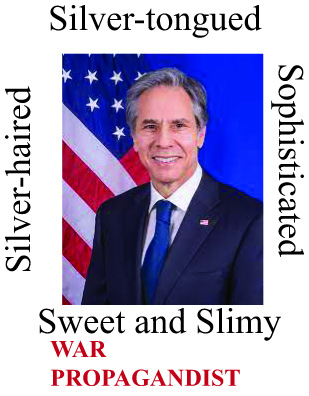
In response Secretary of State Antony Blinken made it publicly clear the US Government was most reluctant to intervene in the Justice Department’s prosecutorial process – an issue of obvious political sensitivity given the criminal charges brought against former president Donald Trump.
FOI inquiries also unearthed briefings for Attorney-General Mark Dreyfus that revealed a clear Australian Government policy to limit direct engagement on the Assange case until after he has been extradited to the United States, put to trial, convicted, sentenced and exhausted all appeal rights. Only then could Assange apply under the International Transfer of Prisoners scheme to serve a sentence of imprisonment in Australia. Only then would the Attorney-General formally consider that possibility,
Assange Extradition Case Moves Forward While The CIA Covers Its Tracks

CAITLIN JOHNSTONE, APR 17, 2024 https://www.caitlinjohnst.one/p/assange-extradition-case-moves-forward?utm_source=post-email-title&publication_id=82124&post_id=143660864&utm_campaign=email-post-title&isFreemail=true&r=1ise1&triedRedirect=true&utm_medium=email
So they’re really doing it. The Biden administration is really ignoring Australia’s request to end the case against Julian Assange, and they’re proceeding with their campaign to extradite a journalist for telling the truth about US war crimes.
In order to move the extradition case forward, per a British high court ruling US prosecutors needed to provide “assurances” that the US would not seek the death penalty and would not deprive Assange of his human right to free speech because of his nationality. The US provided the assurance against the death penalty (which they’d previously opposed doing), and for the free speech assurance they said only that Assange will be able to “raise and seek to rely upon” US First Amendment rights, adding, “A decision as to the applicability of the First Amendment is exclusively within the purview of the U.S. Courts.”
Which is basically just saying “I mean, you’re welcome to TRY to have free speech protections?”
At the same time, CIA Director William Burns has filed a State Secrets Privilege demand to withhold information in a lawsuit against the agency by four American journalists and attorneys who were spied on during their visits to Assange at the Ecuadorian embassy in London. State secrets privilege is a US evidentiary rule designed to prevent courts from revealing state secrets during civil litigation; the CIA began invoking it with the Assange lawsuit earlier this year.
Burns argues:
“I am asserting the state secrets and statutory privileges in this case as I have determined that either admitting or denying that CIA has information implicated by the remaining allegations in the Amended Complaint reasonably could be expected to cause serious — and in some cases, exceptionally grave — damage to the national security of the United States. After deliberation and personal consideration, I have determined that the complete factual bases for my privilege assertions cannot be set forth on the public record without confirming or denying whether CIA has information relating to this matter and therefore risking the very harm to U.S. national security that I seek to protect.”
Which is obviously a load of horse shit. As Assange himself tweeted in 2017, “The overwhelming majority of information is classified to protect political security, not national security.” Burns isn’t worried about damaging “the national security of the United States,” he’s worried about the potential political fallout from information about the CIA spying on American lawyers and journalists while visiting a journalist who was being actively targeted by the legal arm of the US government.
Political security is also why the US is working to punish Julian Assange for publishing inconvenient facts about US war crimes. The Pentagon already acknowledged years ago that the Chelsea Manning leaks for which Assange is being prosecuted didn’t get anyone killed and had no strategic impact on US war efforts, so plainly this isn’t about national security. It’s just politically damaging for the criminality of the US government to be made public for all to see.
They’re just squeezing and squeezing this man as hard as they can for as long as they can get away with to keep him silent and make an example of him to show what happens when journalists reveal unauthorized information about the empire. Just like Gaza, the persecution of Julian Assange makes a lie of everything the US and its western allies claim to stand for, and reveals the cruel face of tyranny beneath the mask of liberal democracy.
Modular Reactors. Peter Dutton hasn’t done his nuclear homework

by Rex Patrick | Apr 16, 2024 , https://michaelwest.com.au/nuclear-reactors-peter-dutton-has-not-done-his-homework/—
Has Peter Dutton’s proposed ‘rollout’ of modular nuclear reactors real policy or just politics? What research has he done to develop the policy? Not much, it seems. Rex Patrick reports.
In September 2020, the Morrison Government released a Low Emissions Technology Statement that placed Small Modular Reactors (SMR) on a list of watching brief technologies. SMR developments were to be monitored to see if they might play a part in Australia’s energy future.
Consistent with that listing, the Government directed the Australian Nuclear Science and Technology Organisation (ANSTO) to join an International Atomic Energy Agency (IAEA) Coordinated Research Project focused on the Economic Appraisal of SMRs to provide information to assist in evaluating the technology’s economic viability.ANSTO assembled a team to prepare, among other things, a case study on Australia’s potential to adopt SMR technologies in the future and analyse financing options for the technology. As part of that project, ANSTO even supported a University of Queensland PhD thesis on SMRs.
Flip flop politics
Peter Dutton, a minister in the Government that commissioned the ANSTO work, came out mid-way through 2023 with a proclamation of the Coalition’s plans for Australian to adopt SMRs as a preferred tool in our movement towards net zero carbon emissions.
In doing so Dutton opened himself up to a political battering because of the nascent state of SMR development around the world and huge questions around costs.
Undeterred, in early March Dutton doubled down on nuclear power, switching his thinking to large nuclear power plants scattered about the country. As public controversy raged about the new plans, Dutton has started reinjecting SMRs into the total mix.
There are now to be a mix of economic and taxation incentives for the local communities targeted by the Coalition to host a nuclear reactor.
Missing homework
In response to their hip flip to a larger nuclear power plant and his small flop back to SMRs, I thought MWM set out to see if Dutton has visited ANSTO or taken a brief from them in relation to his plans.
After all, there’s no shortage of precedent for parliamentary oppositions to seek factual briefings from government agencies, especially on complex and specialised subjects.In a recent nuclear estimates brief prepared for the CEO of ANSTO, the first two paragraphs stated:
“ANSTO has significant insight into what other countries and jurisdictions are doing around the world in terms of nuclear power.”
As mentioned above, ANSTO was specifically engaged by the former Coalition Government to take a look at SMRs.So, I was left gobsmacked when a Freedom of Information request I made to ANSTO to find out what Dutton’s interactions with ANSTO had been over the past five years returned nil information.
ANSTO FOI response (on original)
Dutton has not visited Australia’s only nuclear reactor and has not received a brief from our country’s expert agency on the policy area he was developing.
In some measure, it explains the flip-flopping and limited detail in many of his announcements.
For completeness, I also asked the Government’s nuclear safety regulator, ARPANSA, if Dutton had visited them or sought advice from them. FOI came up with the same answer from them. (on original) Nothing at all..
Politics, not policy
You can’t develop policy just by chin-wagging at party room meetings and with briefs from vested business interests. That’s not how it works. You have to get independent and expert advice, and in the case of nuclear matters, a vital place to get that advice in Australia is ANSTO and ARPANSA.
So, just what policy work has Dutton done? In large part, he appears completely dependent on the Google skills of his little-known Climate Change and Energy spokesperson, Ted O’Brien.
With a background in marketing, O’Brien has no ministerial experience, so the practicalities of major project implementation may be quite novel for him. He did once chair a parliamentary committee inquiry into nuclear energy, but as so often is the case, the research there was largely done by the committee secretariat, with O’Brien just adding a thin layer of pro-nuclear evangelism on the top.
It’s pretty safe to say that, in the absence of comprehensive briefs from and engagement with Australia’s leading experts, Dutton is not engaging in serious policy development. Rather it’s a manoeuvre to achieve political differentiation and keep the anti-renewals, climate-change-denying core of his Coalition happy. Dutton’s approach to policy development, in this instance, says just as much about him as it does about his nuclear plans.
“It’s all politics”
Why South Australia will be a nuclear power battleground at the 2025 federal election

Adelaide Now, 15 Apr 24
Crunch time for affordable, reliable electricity is coming fast and SA will be key to deciding nuclear power’s fate, writes Paul Starick.
Crunch time is rapidly approaching in the race to deliver affordable, reliable electricity while transitioning Australia to a net-zero economy.
The next federal election, expected early next year, will be yet another battle in the climate war that has deadlocked politicians and delivered little for voters – other than dramatically higher power prices.
The fundamental choice at this election will be between pumping billions of dollars into building wind and solar farms – or nuclear power plants.
Prime Minister Anthony Albanese argues renewable energy will bring cheaper power prices and boost sovereign capability by reviving manufacturing.
A Net Zero Australia report released last July finds $1.5 trillion will have to be spent by the end of this decade, particularly on rolling out transmission networks to support new wind and solar, if Australia is going to meet its emissions reductions targets by 2050.
The group, which included experts form Melbourne, Queensland and Princeton universities, said: “Nuclear power should not be in our plans, because it’s too expensive and slow”.
His rival, Opposition Leader Peter Dutton, argues the Coalition could deliver cheaper power prices by installing the first small-modular nuclear power reactors into the grid by the mid-2030s, at a cost of $3.5bn to $5bn each.
They would be built by Rolls-Royce, also the supplier of nuclear reactors for AUKUS submarines to be built in Adelaide as part of $368bn project.
The reported cost and timeline, at the very least, raises strong questions over Labor’s blanket rejection of nuclear as uneconomic, given the amount that is being ploughed into renewables.

I find it amazing that the Advertiser just accepts Peter Dutton’s claims on the timing and costs of the as yet non-existent small nuclear reactors
South Australia will be at the epicentre of this epic battle over electricity generation and prices.
The state has world-leading penetration of renewable energy and the world’s largest uranium resource at Olympic Dam.
The Coalition wants a nuclear power plant at Port Augusta.
The consequences are huge, as straight-talking Alinta Energy chief Jeff Dimery said on Wednesday, when he argued Australians must face the “hard truth” of having to pay more for electricity to reach net zero by 2050”.
State and federal Labor governments want to rapidly accelerate the renewable push.
Premier Peter Malinauskas in late February said the 100 per cent renewables net electricity generation target would be brought forward three years from 2030 to 2027.
The catalyst, he vowed, would be a clean energy boom underpinned by the state-owned, $593m hydrogen power plant operating in Whyalla from 2026.
This project, a core 2022 election promise, almost certainly will attract federal funding in the May federal budget, as part of massive government investment in the energy transition promised by Prime Minister Anthony Albanese in a landmark speech on Thursday.
Mr Albanese is citing green iron production at Whyalla steelworks, fuelled by green hydrogen from the state-operated plant, as a key example of his Future Made in Australia plan.
But the federal Coalition and state Liberals sense an opportunity to wedge Mr Malinauskas on nuclear energy.
He seems a supporter, frustrated only by a disciplined commitment to implement his hydrogen power plant election promise, plus remain in lock-step with Labor colleagues by insisting it is uneconomic……………….
Whatever the machinations, voters will soon, appropriately, decide nuclear power’s future.
No decisions on site for nuclear waste dump as spin doctor sought

By Karen Barlow – Canberra Times, April 15 2024 – https://www.canberratimes.com.au/story/8591149/the-nuclear-waste-dump-quest-is-waiting-for-its-spin-doctor/
The Albanese government has confirmed it is searching for, and is yet to settle on, sites for both low- and intermediate-level radioactive waste as it seeks a highly skilled PR team to manage likely “high” outrage over possible sites.
In a series of answers to questions from potential suppliers on the federal tender site, the Department of Industry, Science and Resources also advised that there may be a need to reference the future AUKUS nuclear-powered submarine program through the contract, but only in educational materials.
It comes after a major government approach to market was uncovered by The Canberra Times, revealing that a nuclear-specific crisis management team is being sought – six months after the government abandoned plans for a low-level waste dump near Kimba in remote South Australia – to bid for a two-year contract to help manage public discussion of nuclear waste in Australia.
The move has been criticised by the Greens and the Coalition as spin and “steamrolling regional communities,” but the new approach to market appears to address other criticism that nuclear waste dumps are announced and later argued as needed.
Asked by an unnamed potential supplier if the department has a list of sites or communities looking to be engaged over the two-year contract period, the answer is “no.”
“This information is unknown,” the answer reads. “The Australian Radioactive Waste Agency has started work on alternative proposals for the storage and disposal of the commonwealth’s civilian low-level and intermediate-level radioactive waste.”
So that is not just the low-level option that was being sought, but abandoned, at Napandee at the top of the Eyre Peninsula.
The answers to the questions of potential suppliers, which have to bid for the contract, offer greater insight to the process for delivering a secure storage facility, but are limited to current timelines.
“No site has been been shortlisted or selected and no benefits package has been determined, this will be a matter for government,” the department stated.
The department also advises that there are not currently “specific deliverables” that the department is looking to complete. It is also advised there may be some stakeholder engagement activities that involve a role in decision making.
The original approach to market, posted March 26, asked for assistance with “nuclear-specific” public relations and professional communications services during the early stages of a new radioactive waste management approach being identified. This is described as the first three to five years of a 100-year project.
It would involve engagement with “impacted communities”, “stringent preparation for technical and challenging questions” from the public, and support for the public’s “comprehensive understanding of the nation’s radioactive waste inventory, origins and need for safe management.”
“This is a highly specialised high-outrage area and there are times of uplift where urgent assistance is required and additional industry-relevant specialist support is needed, including upskilling staff to undertake these activities in a high outrage environment,” the document reads.
It comes as Australia, as well as AUKUS partners the United States and the United Kingdom, continues to be without a long-term solution for radioactive waste disposal.
Asked by a potential supplier if there is consideration for SSN-AUKUS (nuclear powered submarines under the AUKUS trilateral pact) or visiting nuclear-powered naval capabilities, the department said maybe, but not much.
“While information about Australia’s nuclear-powered submarine program may form a small part of ARWA educational materials, the supplier will not be required to undertake engagement work focused on AUKUS or nuclear-powered submarines,” it responded.
There appears to be no willingness to waive the requirement for baseline security clearance, even for a world-leading technical subject matter expert.
Asked if a waiver was possible for the duties which include assisting in preparing “factually correct nuclear technology and radioactive waste engagement materials”, the department responded, “Any specified personnel must be able to obtain and hold a Baseline Security Clearance.”
Asked further if people with equivalent security clearances from other five eyes nations (the US, UK, New Zealand and Canada) are able to work on the project, the response was the same: “Any specified personnel must be able to obtain and hold a Baseline Security Clearance.”
Secret Agreements: The Australian-Israel Defence Memorandum of Understanding

Elbit Systems, Israel’s notorious drone manufacturer and creator of the Hermes 450 aerial device responsible for this month’s killing of seven World Central Kitchen aid workers including the Australian national, Lalzawmi “Zomi” Frankcom, was rewarded with a A$917 million contract. Business, even over bodies, exerts a corrupting force.
Binoy Kampmark, 14 Apr 24, https://theaimn.com/secret-agreements-the-australian-israel-defence-memorandum-of-understanding/
While the Australian government continues to pirouette with shallow constancy on the issue of Israel’s war in Gaza, making vacuous utterances on Palestinian statehood even as it denies supplying the Israeli Defense Forces (IDF) with weapons (spare parts, it would seem, are a different, footnoted matter), efforts made to unearth details of the defence relationship between the countries have so far come to naught.
The brief on Australian-Israel relations published by the Department of Trade and Foreign Affairs is deplorably skimpy, noting that both countries have, since 2017, “expanded cooperation on national security, defence and cyber security.” Since 2018, we are told that annual talks have been conducted between defence officials, while Australia appointed, in early 2018, a resident Defence Attaché to the embassy in Tel Aviv. What is conspicuously absent are details of the Memorandum of Understanding on defence cooperation both countries signed in 2017.
A little bit of scrapping around reveals that 2017 was something of a critical year, a true bumper return. The Australia-Israel Defence Industry Cooperation Joint Working Group was created that October. A following Australian Defence media release notes the group’s intention: “to strengthen ties between Australia and Israel, explore defence industry and innovation opportunities, identify export opportunities, and support our industries to cooperate in the development of innovative technologies for shared capability challenges.”
The intentions of the group were well borne out. Defence contracts followed with sweet indulgence: the February 2018 contract between Israel-based Rafael Advanced Defence Systems with Australia’s Bisalloy Steels worth A$900,000; an August 2018 joint venture between the Australian defence engineering company Varley Group and Rafael, behind such “leading weapons systems” as “the Spike LR2 anti-tank guided missile”; and the Electro Optic Systems-Elbit Systems agreement from 2019 responsible for developing “a modular medium-calibre turret that can be configured for a range of platforms, including lightweight reconnaissance and heavy fighting vehicles.”
In February this year, Elbit Systems, Israel’s notorious drone manufacturer and creator of the Hermes 450 aerial device responsible for this month’s killing of seven World Central Kitchen aid workers including the Australian national, Lalzawmi “Zomi” Frankcom, was rewarded with a A$917 million contract. Business, even over bodies, exerts a corrupting force.
In a heartbeat after the outbreak of the latest Gaza War last October, the Australian Greens filed a Freedom of Information (FOI) request seeking a copy of the barely mentioned MOU. After a period of three months, the Australian Defence Department reached the boring conclusion that the application should be rejected. It fell, the argument went, within the category of exemptions so treasured by secretive bureaucrats keen to make sure the “freedom” in FOI is kept spare and bare.
What follows is repulsive to intellect and denigrating to morality. “The document within the scope of this request,” went the letter from the Defence Department, “contains information which, if released, could reasonably be expected to damage the international relations of the Commonwealth.” The MOU “contains information communicated to Australia by a foreign government and its officials under the expectation that it would not be disclosed.” Releasing “such information could harm Australia’s international standing and reputation.”
A telling, and troubling role was played by Israel in the process. With characteristic, jellied spinelessness, Australian defence officials notified Israel of the FOI request in December 2023. In February, the Netanyahu government responded with its views, of which we can only speculate. The Greens were duly informed by the Australian Information Commissioner (OAIC) that the relevant decision maker in Defence “will consider the foreign government’s consultation response to make an informed and robust decision.” With such words, a negative response was nigh predictable.
Greens Senator David Shoebridge, in responding to the decision, was adamant that, “There is no place for secret arms treaties and secret arms deals between countries.” Furthermore, there was “no place for giving other countries veto power over what the Australian government tells the public about our government defence and arms deals.” The case is even more pressing given allegations of war crimes, crimes against humanity and genocide taking place in the Gaza strip.
This regrettable episode retains a certain familiar repulsiveness. Unfortunately for devotees of open government, a fraught term if ever there was one, Australia’s FOI regime remains stringently archaic and pathologically secretive.
Decision makers are given directions to frustrate, not aid applications to reveal information, notably on sensitive topics such as security, defence and international relations. Spurious notions about damage to international relations are advanced to ensure secrecy and the muzzling of debate. The OAIC has also shown itself to be lamentably weak, tardy and inefficient in reviewing applications. In March 2023, it was revealed that almost 600 unresolved FOI cases had bottled up over the course of three years.
The latest refusal from the Defence Department to disclose the Israel-Australian MOU to members of Parliament, a decision reached after discussions with a foreign power (that fact is staggering and disheartening in of itself), betrays much doubletalk regarding defence ties between Canberra, the IDF, and the Israeli government. More than that, it confirms that those in Canberra are being steered by other interests, longing for the approval of foreign eyes and foreign interests.
Coalition nuclear plan flips back to SMRs after latest meeting with lobbyists

Giles Parkinson, Apr 12, 2024, https://reneweconomy.com.au/coalition-nuclear-plan-flips-back-to-smrs-after-latest-meeting-with-lobbyists/
And then, in a single bound, it was back to small modular reactors. The federal Coalition’s confused nuclear power policy has lurched from SMRs to large scale nuclear and back again to SMRs. It’s as if the policy is decided by the nuclear lobbyist most recently consulted.

Coalition leader Peter Dutton’s latest thought bubble on nuclear, dutifully reported in The Australian newspaper last weekend, is that Australia should sign up to SMRs, and should be able to build the first of them by the middle of the 2030s – faster than even most of the technology’s boosters admit is possible.
And then, in a single bound, it was back to small modular reactors. The federal Coalition’s confused nuclear power policy has lurched from SMRs to large scale nuclear and back again to SMRs. It’s as if the policy is decided by the nuclear lobbyist most recently consulted.
Coalition leader Peter Dutton’s latest thought bubble on nuclear, dutifully reported in The Australian newspaper last weekend, is that Australia should sign up to SMRs, and should be able to build the first of them by the middle of the 2030s – faster than even most of the technology’s boosters admit is possible.
Dutton says the new plan will be fully sketched out before the federal Labor government’s budget in early May – and according to The Australian this latest plan follows meetings last week with executives of Rolls Royce SMR and its Australian partner Penske.
Renew Economy decided to check all this out with Rolls Royce SMR itself, and got some surprising answers.
“It wasn’t a representative of ours (who met with Peter Dutton),” a company spokeswoman said by email. “I believe it was a potential partner of ours that met with Peter Dutton who spoke about RR SMR on our behalf.”
Dutton and other Coalition boosters like to talk about SMRs in the present tense, and most mainstream media dutifully follow suit, as if they are already operating.
This is deception. A group of my friends chatting over coffee this week was stunned to hear that SMRs are not actually a thing, despite what they read in the press. A few smaller nuclear reactors exist, such as in China and Russia, but they are in no way modular, which is the supposed key selling point of this new technology.
“One of the biggest problems for SMRs is that they don’t exist,” Allison Macfarlane, director of the school of public policy and global affairs at the University of British Columbia and a former chair of the US Nuclear Regulatory Commission, told the Financial Times this week.
“We’re still at the paper stage, the computer model stage. To get to demonstration models and then a full-scale model when you are ready to commercialise will take billions of dollars,” she added.
Rolls Royce SMR is still at least two years away from obtaining a licence, and the spokesperson told Renew Economy this week that the company is hopeful that the first SMR can be completed “in the early 2030s.”
However, Simon Bowen, the chair of Great British Nuclear, the government agency that is trying to lead the technology’s revival and find ways to replace its existing ageing fleet, told the FT this week the first SMR won’t likely be seen until the mid 2030s.
That time line is important, because it goes to the fantasy nature of the Coalition’s nuclear policy. Is Dutton seriously suggesting that Australia, with no civil nuclear power industry, can match the UK on timing on their proprietary nuclear technology.
And first-of-their-kind technologies are always considerably more expensive than those that follow. But more on the timing later, because that goes to the heart of what the Coalition is trying to do – not so much build nuclear, but to stop renewables in their tracks.
But it is impossible to think that Australia would commit to an SMR before it is built in its host country, with all the embedded infrastructure and know-how. And no country is going to commit to more SMRs until the first one is built, and can prove itself. Which straightaway pushes the Coalition timeline back into the 2040s.
On costs, Dutton is trying to convince everyone that nuclear – contrary to all available evidence – is low cost, which The Australian, unsurprisingly, reported as a matter of fact.
The Coalition’s energy spokesman Ted O’Brien engages in some impressive verbal calisthenics by claiming that they might be expensive for investors, but are low cost for consumers.
But if new-build nuclear is to be low cost to consumers it will be the result, as it is in France, of massive government subsidies. And given the Coalition’s horrified reaction to Labor’s “Made in Australia” green manufacturing plan, they are definitely not in favour of government subsidies.
The Australian reported that the Rolls Royce SMR is priced at around $5 billion for a 470 MW facility, which appears an heroic assumption given it is less than one third of the price of the only SMR to actually obtain a licence to date, the NuScale project in the US that was cancelled last year because it was too expensive for consumers.
Rolls Royce SMR’s own web page describes a study produced last year that claimed its technology could reduce wholesale prices in the UK by between three per cent and 13 per cent, depending on how many SMRs were rolled out.
Curiously, the study – according to the detailed Rolls Royce summary of it – arrives at these numbers by comparing SMRs to the cost of peaking gas plants, the most expensive generation on the grid, and which – in reality – is rarely used. They are only switched on around 1 to 2 per cent of the time.
These peaking gas plants are not seen as the usual competitor to nuclear or SMRs, because nuclear is designed to be baseload, not the fast response and flexible capacity needed to fill in the gaps of a grid dominated by wind and solar.
And, it should be noted, nuclear itself is highly dependent on fast-response capacity – peaking gas and pumped hydro – to make up for its own lack of flexibility.
The Rolls Royce spokesperson told Renew Economy that this analysis was conducted in the winter of 2022/23, when the energy crisis was at its worst, gas prices had soared, and energy consumers were being hit by huge bills.
It begs a question, which Rolls Royce didn’t answer: If SMRs are only able to undercut peaking gas power plant prices by a small amount, what does that imply when those costs are spread across the whole day?
The spokesperson confirmed that Rolls Royce SMRs will indeed be focused on “baseload” power, and its SMRs are designed not to displace renewables, but replace “the loss in low-carbon electricity … caused by our ageing existing reactor fleet going offline in the years ahead.”
The spokesperson said SMRs do have a degree of flexibility to load follow and respond “when the wind doesn’t blow and the sun doesn’t shine,” and can use its thermal output to produce hydrogen or process heat, which might be attractive in the northern hemisphere.
But they have little ability to ramp up to fill in gaps of wind and solar because, as the spokesperson told Renew Economy in their email: “SMRs work most cost-effectively when ‘always on’.”
And this is important because it goes to the heart of why the Coalition nuclear plan makes absolutely no sense and is more about destruction of one industry, rather than construction of another.
Australia is heading towards 82 per cent renewables by 2030, and even if it doesn’t meet that deadline, it will be above 90 per cent by the mid 2030s, and likely close to 100 per cent.
A fleet of “always on” nuclear power plants will struggle to find a role in that scenario, particularly as daytime demand will be almost entirely met by the anticipated ongoing boom in small-scale solar on the roofs of household and business consumers.
But the Coalition policy, and it makes no secret of this, is not about compatibility. O’Brien’s own energy advisor admits that nuclear and renewables are effectively an “either-or” because the system is either going to be baseload or renewables and storage.
And the Coalition’s fundamental stand is that it refuses to believe that wind and solar can power a modern economy. “The lights will go out,” says Dutton, or “your fridge goes off at home” he added this week.
Which is why they are calling for a moratorium on the roll out of wind, solar, battery storage and transmission, and why they want coal-fired power stations to stay open until nuclear can arrive.
And it’s why their proxies in the mainstream and social media – and so-called think tanks and ginger groups backed by billionaires such as Gina Rinehart and Trevor St Baker – spend so much time demonising the technologies that are currently available, and which can do the job, such as solar, wind, battery storage and electric vehicles.
Dutton’s rhetoric is also liberally splattered with outright falsehoods. A check of his media transcripts this week reveals a number of common false statements.
The first is the claim that Australia is the only OECD country not to have or want nuclear. Not true. Germany closed down the last of its nuclear generators a year ago, and Italy voted against the technology in a referendum a decade ago after shutting down the last of its reactors. A number of other EU countries are following suit.
Dutton also claims that the federal government is planning “28,000 kms of new transmission lines by 2030.” Again, not true. The Australian Energy Market Operator’s Integrated System Plan models 10,000km by 2030 in its core step change plan. That’s still a lot, but little more than one third of what Dutton claims.
The 28,000km number is a 2050 target, not 2030, and only in the scenario where Australia becomes a renewable energy superpower by exporting green hydrogen and other green products, most likely from vast wind and solar projects in the middle of the country that will need to link into the grids or production facilities.
Dutton says he wants to have a “mature” discussion about the energy mix. But that can’t happen if his rhetoric is based around obvious lies.
Cook by-election candidate Simon Kennedy says locals are ‘comfortable’ living near nuclear reactors
ABC News, By Ethan Rix 13 Apr 24
The by-election for former prime minister Scott Morrison’s southern Sydney seat has not garnered national fanfare the way other by-elections have in the past.
And as voters head to the polls today, you can count the apathy being felt in the electorate of Cook — with early voting down by about 11 per cent compared to the 2022 federal election and nearly 13 per cent lower than the Voice referendum late last year, according to the Australian Electoral Commission.
Even the Liberals’ candidate, Simon Kennedy, won’t be able to personally boost voter turnout as his team confirmed he didn’t move into the electorate in time to meet the registration deadline — denying him an opportunity to pose for the cameras as he votes for himself.
Perhaps the lack of enthusiasm is because the Liberals look set to comfortably hold a seat they have held for half a century, or maybe it’s because the Labor Party has opted not to put a horse in the race, diminishing any usual analysis the result could be a “test” of Anthony Albanese’s leadership.
But for people who are eligible to cast a ballot today, what are they really voting for?
A nuclear reactor in Cook’s backyard
Former McKinsey consultant Simon Kennedy has openly backed his party’s push to introduce nuclear power to the national energy grid, with the opposition preparing to announce up to six possible sites for nuclear plants.
When asked whether he would oppose a nuclear power reactor being built in the electorate of Cook, Mr Kennedy said locals were “comfortable” with the concept because there was already one positioned on its “doorstep” in Lucas Heights.
“People are comfortable with where Lucas Heights is, they’ve been comfortable with that concept,” he said.
“I haven’t heard any fear or worries about that at all.”
Lucas Heights, which is located on the outskirts of the Sutherland Shire, is home to Australia’s only nuclear reactor, which is not used to produce electricity.
It instead produces medical and industrial isotopes and stores low-level waste and a small amount of intermediate-level waste on-site.
“They’re [voters] not looking for people pushing clean or coal or one over the other, they’re looking for cheap, reliable and clean power,” Mr Kennedy said.
Looking at getting more female candidates
The number of female MPs in the Coalition has also been a key question in the lead-up to this by-election.
Mr Kennedy comfortably defeated the only female candidate to put her hand up for Liberal pre-selection, Veteran Family Advocate Commissioner Gwen Cherne, who received 35 votes to his 158.
The result was said to have upset those within the party pushing for more females to be preselected to safe Liberal seats……………….
Who else is running?
…………… The Australian Greens have put up Martin Moore, who has a Fine Arts Degree with a Masters in Social Ecology and ran for the local seat of Miranda at the 2023 NSW election.
Mr Moore disagreed with Mr Kennedy that locals would be comfortable living next to a nuclear reactor.
“I feel that people are really concerned that we’re being dragged into a nuclear wasteland with the AUKUS deal … and the opposition’s ideas of reactors,” he said……………………………… https://www.abc.net.au/news/2024-04-13/cook-byelection-simon-kennedy-nuclear-reactors/103696760—
Former PM Paul Keating on a craven acceptance of US strategic hegemony in Asia
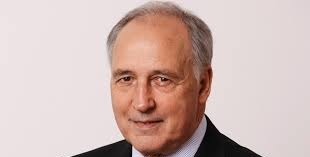
By Paul Keating, Apr 11, 2024 https://johnmenadue.com/a-craven-acceptance-of-us-strategic-hegemony-in-asia/
The Financial Review, if it wishes to remain relevant, requires a monster dose of reality – a de-lousing of its misplaced strategic ideology and its craven acceptance of US strategic hegemony in Asia, a region where not one US state resides.
In the mid-1980s, a young and enthusiastic Michael Stutchbury was a permanent attendee at my often two-hour press conferences as treasurer, drumming into the Canberra press gallery that the presence of large economic forces was more important and more newsworthy than the gallery’s normal diet of election speculation, leadership changes, tax cuts and cigarette prices.
And Michael lapped it up. He was an early graduate of my school of advanced economic and entrepreneurial thinking. And while he has become more conservative as he has become older, his stewardship of The Australian Financial Review provides an attestation that those economic lessons were an anchor, a ballast, for the wider presentation and contemporary dissertation of economic news and events.
In short, Michael’s close proximity to and at the reformation of the Australian economy in the 1980s and early 1990s has made his views and leadership on economic issues today to be of substantial national value. But economic insight is where Michael’s experience shutters. On foreign policy, as in The AFR View ‘‘JAUKUS shows Australia seeks security in Asia’’ (April 9), Michael is away with the pixies
– a sugar plum fairy in the Australian strategic fantasy.
And that fantasy goes to asserting that an Atlantic power, the United States, along with other Anglos, Britain and Australia, but topped up with some resentment sauce from Japan, in some way fashions a new Asia construct – a construct in which Australia is or can be part. Distorting my policy that Australia could find its security in Asia by being tied up and indentured to a particularly un-Asian bunch.
Unlike Europe, which after the Thirty Years’ War hit upon the Westphalian model of collective security among states of roughly equal size, Asia has always been a hierarchy of countries with China at its top. This remains the case today.
So, the policy of any nation, particularly a Pacific one, thinking it can deal with Asia by ignoring China or pretending it doesn’t exist or that it is in some way illegitimate, is a policy of fantasy. A policy of fools.
But if you are a sugar plum fairy, as in foreign policy Michael seems happy to be, you will believe almost anything. Like AUKUS nuclear subs will belong to Australia and be sovereign to it, despite US Deputy Secretary of State Kurt Campbell’s regular and blatant assertions that he expects the subs to be at the beck and call of the United States whenever it wishes to hop into China over Taiwan.
The Financial Review, if it wishes to remain relevant, requires a monster dose of reality – a de-lousing of its misplaced strategic ideology and its craven acceptance of US strategic hegemony in Asia, a region where not one US state resides.
First published in the Australian Financial Review, April 10, 2024.
Flicker of Hope: Biden’s Throwaway Lines on Assange
April 12, 2024 by: Dr Binoy Kampmark, https://theaimn.com/flicker-of-hope-bidens-throwaway-lines-on-assange/
Walking stiffly, largely distracted, and struggling to focus on the bare essentials, US President Joe Biden was keeping company with his Japanese counterpart, Prime Minister Fumio Kishida, when asked the question. It concerned what he was doing regarding Australia’s request that the WikiLeaks founder Julian Assange be returned to Australia.
Assange, who has spent five tormenting years in Belmarsh Prison in London, is battling extradition to the US on 18 charges, 17 tenuously and dangerously based on the US Espionage Act of 1917.
The words that followed from the near mummified defender of the Free World were short, yet bright enough for the publisher’s supporters. “We’re considering it.” No details were supplied.
To these barest of crumbs came this reaction from from Australian Prime Minister Anthony Albanese on ABC’s News Breakfast: “We have raised on behalf of Mr Assange, Australia’s national interest, that enough is enough, that this needs to be brought to a conclusion, and we’ve raised it at each level of government in every possible way.” When pressed on whether this was merely an afterthought from the president, Albanese responded with the usual acknowledgments: the case was complex, and responsibility lay with the US Department of Justice.
One of Assange’s lawyers, the relentless Jennifer Robinson, told Sky News Australia of her encouragement at Biden’s “response, this is what we have been asking for over five years. Since 2010 we’ve been saying this is a dangerous precedent that’s being set. So, we certainly hope it was a serious remark and the US will act on it.” Assange’s brother, Gabriel Shipton, also told Sky News that the statement was significant while WikiLeaks editor-in-chief, Kristinn Hrafnsson thought the utterance “extraordinary”, cautiously hoping “to see in the coming days” whether “clarification of what this means” would be offered by “those in power” and the press corps.
The campaign to free Assange has burgeoned with admirable ferocity. The transformation of the WikiLeaks founder from eccentric, renegade cyber thief deserving punishment to prosecuted and persecuted scribbler and political prisoner has been astonishing.
The boggling legal process has also been shown up as woefully inadequate and scandalous, a form of long-term torture via judicial torment and deprivation. The current ludicrous pitstop entails waiting for a UK Court of Appeal decision as to whether Assange will be granted leave for a full reconsideration of his case, including the merits of the extradition order itself.
The March 26 Court of Appeal decision refused to entertain the glaringly obvious features of the case: that Assange is being prosecuted for his political views, that due process is bound to be denied in a country whose authorities have contemplated his abduction and murder, and that he risks being sentenced for conduct he is not charged with “based on evidence he will not see and which may have been unlawfully obtained.” The refusal to entertain such material as the Yahoo News article from September 2021 outlining the views of intelligence officials on kidnapping and assassination options again cast the entire affair in a poor light.
Even if Assange is granted a full hearing, it is not clear whether the court will go so far as to accept the arguments. The judges have already nobbled the case by offering US prosecutors the chance to offer undertakings, none of which would or could be binding on the DOJ or any US judge hearing the case. Extradition, in other words, is likely to be approved if Assange is “permitted to rely on the First Amendment”, “is not prejudiced at trial (including sentence) by reason of his nationality” and that he “is afforded the same First Amendment protection as a United States citizen, and that the death penalty not be imposed.” These conditions, on the face of it, look absurd in their naïve presumption.
Whether Biden’s latest casual spray lends any credibility to a change of heart remains to be seen. In December 2010, when Vice President in the Obama administration, Biden described Assange as a “high-tech terrorist” for disclosing State Department cables. He failed to identify any parallels with previous cases of disclosures such as the Pentagon papers.
Craig Murray, former British diplomat and Assange confidant, adds a note of cautious sobriety to the recent offering from the president: “I’m not going to get too hopeful immediately on a few words out of the mouth of Biden, because there has been no previous indication, nothing from the Justice Department so far to indicate any easing up.”
For all that, it may well be that the current administration, facing a relentless publicity campaign from human rights organisations, newspapers, legal and medical professionals, not to mention pressure from both his own party in Congress and Republicans, is finally yielding. Caution, however, is the order of the day, and nothing should be read or considered in earnest till signatures are inked and dried. We are quite a way off from that.
The cost of needless secrecy on nuclear. What’s the scam?
The Defence Department and the ADF should keep secrets important to protect our national security. But that doesn’t mean everything they do should be secret. Rex Patrick
by Rex Patrick | Apr 11, 2024 https://michaelwest.com.au/whats-the-scam-with-nuclear-secrecy/
It’s been 395 days since I made the FOI request, 336 days since the Department of Defence said “no,” and 231 days since lawyers started their billing clocks to try to defend Defence’s secrecy addiction in the Administrative Appeals Tribunal (AAT).
The topic of the FOI request is one that goes to elements of the AUKUS program that relate to:
nuclear regulation, stewardship and safety, the management of operations nuclear waste, reactor decommissioning, and the management of nuclear waste.
Refuse everything
Their “refuse everything” approach is even more inexplicable, noting that Defence knows it has to build a social licence to operate nuclear reactors. ANSTO actually instructed them on this during the Morrison study into AUKUS.
Today, the government will hand over some of the secret documents that they now concede aren’t actually secret. That means the poor taxpayer will foot the bill for the AAT’s resources (because I’ll get my $1000 AAT application fee back) in addition to the lawyers’ fees.
The taxpayer’s cost-to-date is not known. Senator Jacqui Lambie has asked Defence for them through Senate processes.
“I’m willing, based on past experience, to wager the legal fees alone will be north of $50K.”
All because of an anti-transparency culture inside the Defence establishment. A culture that is especially acute inside AUKUS, where all information must, in their view, be contained within the valence shell.
Alinta Energy boss likens nuclear pursuit to chasing ‘unicorns in the garden’
ABC News, By energy reporter Daniel Mercer 10 Apr 24
- In short: Alinta Energy boss Jeff Dimery has thrown cold water on plans to replace coal-fired plants with nuclear power.
- Mr Dimery said Alinta considering nuclear power “wouldn’t be a great use of our time” given Australia’s ban on the technology.
- What’s next: The Alinta head said consumers would ultimately pay more for power courtesy of Australia’s energy transition.
The head of one of Australia’s biggest energy companies has thrown doubt on federal opposition plans to replace coal plants with nuclear power, likening them to “looking for unicorns in the garden”.
Jeff Dimery, the boss of Alinta Energy, said while it was theoretically possible Australia could build some nuclear power in the next 10 to 15 years, legislated bans on the technology meant this would be all but impossible.
The comments came during a National Press Club address in which Mr Dimery also said consumers should brace for higher energy costs as the country transitioned away from fossil fuels……………………………………………………………………………………………………………………………………………………
Mr Dimery said it was imperative that governments and industry build the back-up or “firming” capacity that would be needed to fill in the blanks when small- and large-scale green sources were not enough.
Nuclear ‘unicorns in the garden’
Among these, he said, were “long-duration storage” facilities such as the Snowy 2.0 pumped hydro project, gas plants that could ramp up and down quickly, and consumers empowered with solar and batteries.
“Without pumped hydro, or in Victoria’s case, if the generation profile isn’t uplifted by offshore wind to something closer to base-load, then coal and rooftop solar will be locked into a negative feedback loop,” he said.
Asked about the part nuclear power could play in Australia’s energy mix, Mr Dimery was indifferent.
The question of whether Australia should build nuclear power plants looms as a key battle at the next federal election, with the Coalition set to formally announce its policy in favour of the technology.
Quoting his age as 55, Mr Dimery suggested he would be retired well before any nuclear power plant could come online.
He noted nuclear power was banned in Australia and overturning any such ban would be a “lengthy process”.
“And then there’s a lengthy process to go through the development and construction, in which time I’ll be retired,” he said.
“You could imagine our shareholder and our board wouldn’t be too impressed if the management team was sitting around contemplating building power stations that are not legal.
“It wouldn’t be a great use of our time.
“Based on what I’ve read, could you, if you started now, have nuclear in the market by 2035, 2038?
“The answer would be yes.
“But, again, no one is starting now because the legislation isn’t conducive to us even exploring that.
“So … it’s kind of like looking for unicorns in the garden.”
Mr Dimery questioned how relevant the technology was for the pressing task of replacing Australia’s ageing fleet of coal-fired power plants.
Many coal generators, including the Loy Yang B plant owned and operated by Alinta in Victoria, are due to retire in the next 10 to 15 years. https://www.abc.net.au/news/2024-04-10/alinta-boss-likens-nuclear-pursuit-to-chasing-unicorns/103683252
Nuclear lobby manipulates ABC’s 7.30 Report

By Noel Wauchope | 11 April 2024, https://independentaustralia.net/business/business-display/nuclear-lobby-manipulates-abcs-730,18498—
An ABC report on nuclear energy presented a one-sided viewpoint, dominated by the pro-nuclear lobby, writes Noel Wauchope.
ON 4 APRIL, on ABC’s 7.30, regional affairs reporter Jane Norman presented a sort of debate on nuclear power for Australia. An accompanying article was also published on 2 April as a debate about ‘a generational divide’.
The show was quite gripping, with excellent visual snippets of Australia’s history of nuclear issues and promotional visualisation of the industry’s proposed new small modular reactors (SMRs).
The essence of this debate seemed to be that old people are inclined to oppose nuclear power, but young people see it as a new and valuable way to reduce carbon emissions and counter global heating.
In discussing the pros and cons of nuclear power, Norman, herself relatively young, mentioned some recent opinion polls in which public opinion was split, with younger Australians being more supportive of nuclear.
In opposition to nuclear, elderly Indigenous Aunty Sue Haseldine gave an intensely personal history, passionately setting out her concern for the environment and for the children of the future. We learned, as the programme went on, that older generations had been influenced by the history of past atomic tests in Australia, and by past accidents overseas, and had developed a distrust of nuclear power.
And, presently, the Liberal Coalition Opposition, led by Peter Dutton, is putting nuclear ‘at the centre of its energy policy’.
Moving on to those supporting nuclear power, Jane Norman interviewed the enthusiastic Helen Cook.
Cook is deeply involved in the pro-nuclear lobby as principal of GNE Advisory, whose website states:
‘Helen is recognised as a nuclear law expert by the International Atomic Energy Agency [and] the former Chair of the World Nuclear Association’s Law Working Group…’
She is definitely a nuclear promoter and a favoured speaker for the industry, along with luminaries such as Michael Shellenberger, Zion Lights and Dr Adi Paterson. She said that she had had trouble overseas trying to explain Australia’s ban against nuclear power, but now back in Australia, did not find negative attitudes towards it.
We then heard very limited support from the Grattan Institute‘s Tony Wood. He was clear that at present the economics for nuclear power are “terrible”, but said that SMRs could be an option for the future. (BHP, a big uranium miner, is a big backer of the Grattan Institute.)
The programme reinforced the message for small nuclear power, showing attractive graphics of SMRs prominently marked with text: ‘Reliable, cost-effective, clean and safe.’
Then came Mark Ho, nuclear engineer and president of the Australian Nuclear Association, on the need to overturn the legislation banning nuclear. Construction of SMRs would take from three to five years.
The International Atomic Energy Agency (IAEA) says that a country could go from considering nuclear energy to having nuclear energy in its power grid in ten to 15 years
Associate Professor Edward Obbard, the head of nuclear engineering at UNSW, was the final pro-nuclear expert. He explained that there is, among young people, very little opposition to AUKUS nuclear submarines. Younger generations regard climate change as the greatest threat, so nuclear could be one of the solutions. Obbard sees it as a moral case — an environmentally low-impact way to decarbonise.
Helen Cook has interesting insights. She says that Australia has expertise in nuclear power — a questionable claim when it is based on just the staff of one small research reactor. She argues that the USA, Japan and Ukraine have experienced severe nuclear accidents, yet have pledged to treble their nuclear energy production by 2050. One does wonder why.
This is problematic, as all three countries are burdened with nuclear waste and the industry now promises the reactors that might “eat the waste” (itself a dodgy claim). The UK government now admits that the nuclear weapons industry is the real reason for civil nuclear reactors. Her case for nuclear power for Australia seems to boil down to if others are doing this, so should we.
So we have on one side a little old (very articulate and eloquent) Indigenous lady, who probably does not have a university degree, let alone a big job in the industry, versus four “highly qualified” prestigious members of the pro-nuclear lobby.
I wrote to 7.30 suggesting a bit of genuine balance in this debate. I suggested for speakers the very well-informed Jim Green, of the international Nuclear Consulting Group and Friends of the Earth Australia, Dr Helen Caldicott, or Dave Sweeney of the Australian Conservation Foundation. But I now reflect that these might be a bit much for the ABC.
They might consider interviewing former nuclear supporters such as Ziggy Switkowski, Alan Finkel, or some more neutral experts like economist Professor John Quiggin or Jeremy Cooper.
Anyway, it’s the same old problem of false balance that has plagued the ABC in the past.
And there’s another dimension, now. The programme depicted Aunty Sue Haseldine as an admirable person, with genuine concern and emotion. But she hasn’t got the facts, the new young expert technical facts that appeal to today’s young people.
But 7.30 didn’t really present the facts. The gee-whiz SMRs are not new and young. They were tried out in the 1940s to 1960s but turned out to be uneconomic, time-consuming, gave poor performance and produced toxic wastes. The programme glossed over important issues such as waste problems, genuine study of the probable delays before SMRs could be operational, safety issues, risks of terrorism and weapons proliferation.
The ABC has a pretty noble history of tackling tough issues. And so does Sarah Ferguson, presenter of 7.30. I think they let us down this time and hope they will rectify this.
Coalition nuclear plan would force consumers to wait 20 years longer for 30% higher electricity bills
ReNewEconomy, Ben Rose, Apr 11, 2024
The Coalition is making unproven assertions that 100% ‘zero emissions’ electricity can be provided more cheaply and reliably by nuclear than renewable energy. It has even proposed sites for nuclear reactors, including Collie in Western Australia, which currently has three coal fired power stations.
This article compares weighted average levelized cost of energy (WALCOE) for nuclear grid scenarios, with those of renewable energy (RE) grid scenarios for Western Australia’s South West Integrated System (SWIS). The modelled scenarios deliver 95% and 100% near zero emissions energy (Table 1)
Much has been written about the impediments to nuclear in Australia, including laws prohibiting it, storage of nuclear waste, costly insurance/ underwriting of plants, 10-15 year lead time, the unavailability of commercial small modular reactors and likely cost overruns, all of which would add to the cost.
LCOE modelling does not include any of these ‘externalized items’ and therefore considerably underestimates the real cost of nuclear.
In this analysis I have used the renewable energy modelling software SIREN and my LCOE modelling software PowerBalance2, which uses the formula: WALCOE of grid scenario = (sum annualized amortized capital costs plus fixed costs plus variable costs including fuels, of all power stations) / grid annual energy demand.
Capital costs, technology, life time and interest rates are from CSIRO, 2024 Gen Cost draft report, 2024. (Appendices B2, B5, B6).
From Table 1 [on original] it is clear that scenario 1, ‘RE generation with 8 hour batteries plus 24 hr pumped hydro storage (PHS)’ would deliver the lowest cost 95% near zero emissions (NZE) scenario at $119/MWh.
Converting the OCGT generation to green hydrogen (H2) at an assumed cost of 5 times natural gas gives a 100% scenario costing $133/ MWh, which is still 28% cheaper than replacing Collie coal with nuclear and provides the rest of the energy requirements with RE.
All scenarios assume 1.66 times 2017 demand, which should be enough to cover 2030 demand including vehicle electrification………………………………………………
The lowest cost nuclear option is replacing the existing 1550 MW of coal generators at Collie/ Muja with 1800 MW of nuclear, assumed to be small 300 MW units, allowing one to cover down time.
If this were commenced in 2027, the earliest possible for a Coalition government to initiate it, renewable energy installation would slow from that date and the nuclear plant would not be completed until after 2040. Table 1 shows the cost of this scenario is $171/ MWh, 28% higher than ‘RE with batteries and pumped hydro (PHS)’.
Due to its inability to switch on and off and ramp below 50%, nuclear has to continue to generate even when much lower cost RE is available and has to be spilled (See Figure 2). This is the major issue that makes nuclear unsuitable for integration with RE.
‘Nuclear with Existing RE’, (scenario 5 in Table 1) is the other ‘less implausible’ scenario. RE build is curtailed in 2027 and 3900 MW of nuclear would be completed after 2040. This would provide electricity at $203/ MWh, which is 59% higher the RE scenario 1.
Scenarios 6 and 7 – ‘Nuclear and natural gas’ and ‘Nuclear only’ – are included for cost comparison only. They could never be implemented as the electricity cost is exorbitant – 80% and 115% respectively higher than the RE equivalent scenarios.
Also, existing and planned RE – about 1300 MW of wind and 2000 MW of mainly rooftop PV – would have to be decommissioned.
The unthinkable situation of doing nothing until 2040 then waiting until 2055 for a nuclear near zero emissions grid was also modelled (Table 1 column 5).
The CSIRO GenCost forecasts that all capex costs will fall and that nuclear cost will decline most (from $21.2 million to $11.2 m / MWh). LCOEs of scenarios 4 -7 with increasing amounts of nuclear were still 10% – 49% higher than the corresponding RE scenarios.
This analysis has been overly generous to nuclear. The costs of radioactive waste disposal and Government underwriting have not been included.
There are unrealistic assumptions that small nuclear reactors could actually be constructed at the reducing costs predicted by GenCost without over-runs and that there would be no new transmission and connection costs for the high nuclear scenarios.
Nevertheless, even omitting these externalized costs, all nuclear scenarios are still more expensive than those based on wind and solar generation, which do not incur cost over-runs and have proved reliable.
In conclusion the most cost effective near zero electricity (NZE) scenarios for the WA SWIS grid are 95% and 100% RE generation, 95% being achievable by 2035……………. https://reneweconomy.com.au/coalition-nuclear-plan-would-force-consumers-to-wait-20-years-longer-for-30-higher-electricity-bills/
TODAY. Australia is EVER so grateful to the global nuclear lobby!
First of all, we Australians LOVE spending money! Not on health, education, preserving our unique biodiversity, certainly not on shelter for our growing homeless.
With our relatively small population, we are still delighted to cough up nearly $400billion to buy a second-hand American nuclear submarine and to buy all the USA and UK nuclear submarine wastes that these dear friends vouchsafe to dump on us.
And, it was interesting to read today, that the UK has spurned paying $millions to Rolls Royce as the maker for its proposed fleet of small modular nuclear reactors.
No problem to the nuclear lobby. Rolls Royce now plans to flog them off to Australia instead – Opposition leader Peter Dutton has pledged, if elected, to deliver Rolls Royce small modular reactors into the grid by the mid-2030s.
Any old or useless stuff that the nuclear industry has to get rid of – no probs – Australia will buy it!
1 This month

of the week – Australians for War Powers Reform (AWPR)
To see nuclear-related stories in greater depth and intensity
 Antinuclear