Senior Western Australia Liberal calls for Australia to become nuclear weapons power

Brisbane Times, Hamish Hastie, March 11, 2024
A two-time WA Liberal candidate and party office bearer says Australia should have nuclear weapons.
Jim Seth made the argument at a Liberal Party state council meeting this month, saying nuclear weapons had made North Korea untouchable and suggested Australia should follow suit.
At the party’s March 2 meeting, details of which were leaked to WAtoday, Seth asked the question-and-answer panel:
“North Korea, a small country, has got nuclear fire, right? Nobody can do a mimicry [sic] on them, no neighbour can touch them, why we as first world country not nuclear react?”
Seth, who was a WA Liberals candidate for Bassendean in 2017 and for Morley in 2021 and is now the marketing committee chair and state executive member, furthered his point in a follow-up question about the Australian Navy’s capabilities to counter drone attacks…………………..
Seth claimed $90 million was being paid every day to Canberra public servants to create federal policies and suggested this money could be better spent on making Australia a nuclear power.
“We could have spent that money into making Australia a nuclear power, so nobody can come and do mimicry [sic] on us,” he said………………………….
WAtoday contacted Seth to clarify whether he was talking about nuclear energy or weapons, and he said “as a patriotic Australian” he believed Australia should have nuclear weapons.
He did not respond to follow-up requests for comment.
Australia has since 1970 been a signatory to the United Nations Nuclear Non-Proliferation Treaty, which binds the country to an agreement not to acquire nuclear weapons.
According to the Department of Foreign Trade and Affairs Australia has been one of the treaty’s strongest supporters and was a key player in ensuring the treaty was extended indefinitely in 1995.
Seth’s comments alarmed Nuclear Free WA co-convener Mia Pepper who said nuclear weapons would make Australia a target, not safer.
“Nuclear weapons have no strategic utility and would not enhance Australia’s defence or security,” she said.
“In a time of growing conflict and uncertainty, Australia should be proliferating peace and diplomacy, not fuelling nuclear tensions and threat.”………………… https://www.brisbanetimes.com.au/politics/western-australia/senior-wa-liberal-calls-for-australia-to-become-nuclear-weapons-power-20240308-p5fazr.html?ref=rss&utm_medium=rss&utm_source=rss_feed
The UK and US could send nuclear waste to Australia under our AUKUS deal
https://www.crikey.com.au/2024/04/02/misbehaving-mps-pay-aukus-nuclear-waste/
The UK and US could send nuclear waste to Australia under our AUKUS deal, the Australian Conservation Foundation’s Dave Sweeney told a parliamentary inquiry.
It’s exploring Labor’s draft Australian Naval Nuclear Power Safety Bill, as Guardian Australia reports, which proposed facilities that could store or dispose of radioactive waste from AUKUS submarines — defined as either an Australian or a UK/US one, the Defence Department’s domestic nuclear policy branch assistant director general Kim Moy confirmed.
Basically, we’d be in prime position to become a poison portal, Sweeney claimed, though Defence Minister Richard Marles has before vowed it won’t happen. In any case, one expert told the inquiry we need a plan to store the nuclear waste from the subs for as long as 100,000 years — and so far, no-one in AUKUS has quite worked it out.
‘Like a radioactive cloud’: elegance and horror combine in powerful Yhonnie Scarce exhibition
Australia’s forgotten nuclear history and its dehumanisation of Aboriginal people come together in First Nations glass artist’s fiercely intellectual work.
Guardian, by Rosamund Brennan, 2 Apr 24
Yhonnie Scarce grew up in the grim aftermath of nuclear weapons testing in South Australia in the 50s and 60s, not far from her birthplace of Woomera. From the tender age of ten, she heard stories from elders about a cataclysmic roar, the sky turning red and a poisonous black mist hovering over the desert, like an apparition.
Born in 1973, the Kothakha and Nukunu glass artist has spent much of her career researching the British government’s testing of nuclear weapons in Maralinga and Emu Field, which she says “lit a fire in my heart that hasn’t been extinguished”.
The blasts wreaked havoc on generations of Aboriginal people, as well as military personnel and non-Aboriginal civilians – sending radioactive clouds thousands of kilometres, causing burns, blindness, birth defects and premature death.
When the toxic plumes reached Ceduna, where Scarce’s family lived, radioactive slag rained down from the sky, singeing their skin. Their concerns about the burns were rebuffed by doctors, who spuriously claimed there was a measles outbreak. But today, according to Scarce, cancer is prevalent in the town.
“I call this a mass genocide,” Scarce says. “I don’t know if we’ll ever find out how many Aboriginal people died over that 10-year period. But I can imagine it’s thousands.”………………………………………………………………………………………………..
The series is revelatory of Scarce’s practice: at once fiercely intellectual, deeply felt and elegant in its materiality. As a glass-blower, Scarce quite literally breathes life into her work, animating its delicate, molten surface, giving form to invisible pain and loss.
Glass holds special significance for Scarce: crafted from silica, or sand, it emerges from the very essence of the landscape. As Australia’s only professional Indigenous glass-blower, she veered away from working with traditional forms like decorative vases or bowls, instead drawing from what she calls the “bush supermarket”: depicting yams, plums and bush bananas to convey the history of her people.
Conceived by Wardandi and Badimaya curator Clothilde Bullen, the career-spanning exhibition at AGWA also features works which examine the dehumanisation and exploitation of Aboriginal people through displacement, indentured labour and institutionalised racism. One such work is In The Dead House, which features glass bush bananas laid out on a mortuary trolley, their bodies split wide open.
……………………………………………………………………………………………… In a seemingly fated moment, when those monstrous atomic bombs exploded at Maralinga almost 70 years ago, the red desert sand melted into thousands of green shards of glass that still litter the site today. Across Scarce’s 20-year career, it’s as if she’s been slowly collecting the disaster’s shattered remains and, piece by piece, crystallising a dark, hidden chapter of Australia’s history. Like a radioactive cloud, her astonishing body of work engulfs you in its sheer power and potency.
https://www.theguardian.com/artanddesign/2024/apr/02/yhonnie-scarce-light-of-day-art-gallery-western-australia
- Yhonnie Scarce: Light of Day is showing at the Art Gallery of Western Australia until 19 May 2024
Melissa Parke: The nuclear threat Australia is ignoring
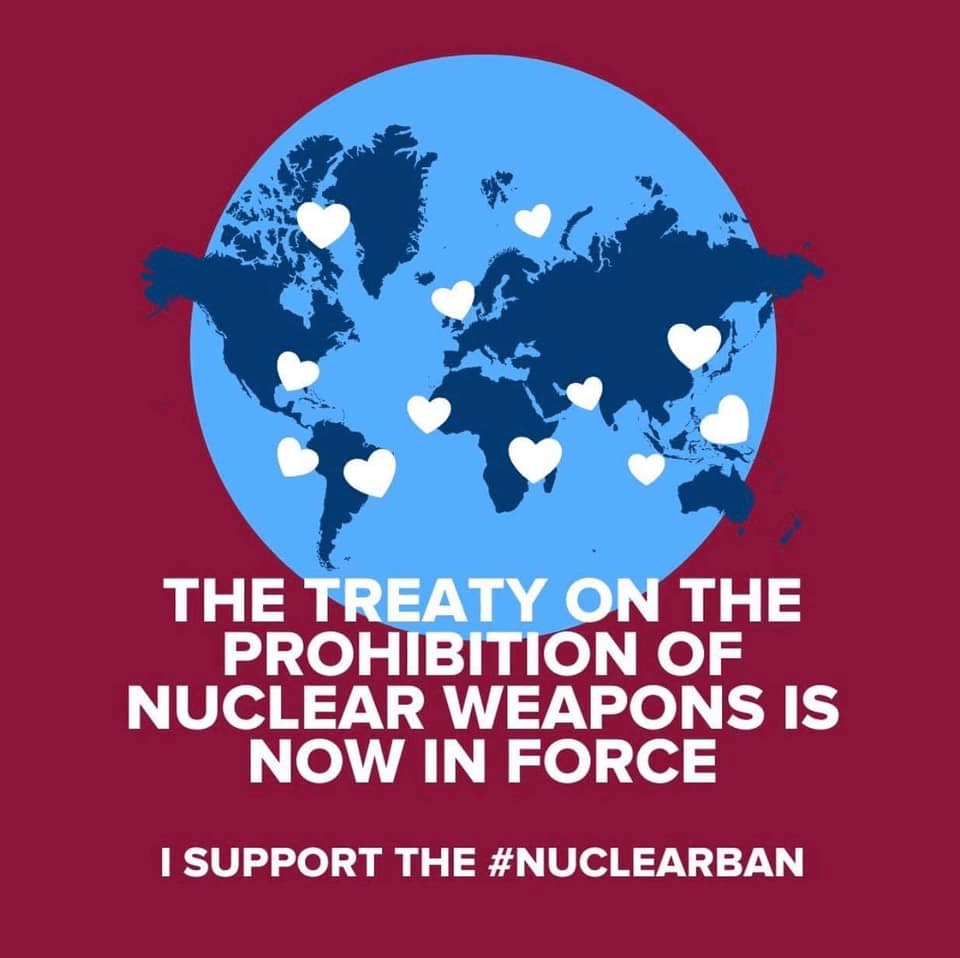
In its 2018 policy platform, Labor committed to signing and ratifying the TPNW in government, after taking account of a number of factors, including the new treaty’s interaction with the longstanding non-proliferation treaty.
It was Albanese who moved the motion, stating at the time, “Nuclear weapons are the most destructive, inhumane and indiscriminate weapons ever created. Today we have an opportunity to take a step towards their elimination.”
The motion was seconded by the now defence minister, Richard Marles, and adopted unanimously.
The Saturday Paper, 30 Mar 24
In August 1939, a month before the outbreak of World War II, Albert Einstein wrote to then United States president Franklin D. Roosevelt advising that a large mass of uranium could be used to make “extremely powerful bombs of a new type”.
Fearing Nazi Germany would be the first to develop such weaponry, he implored Roosevelt to speed up experimental work aimed at harnessing the destructive power of the atom.
It was, he later said, the “one great mistake” of his life.
Like J. Robert Oppenheimer, Einstein became increasingly alarmed at the implications of the Manhattan Project. In just a few years, the human species had acquired the means to destroy itself, along with most other living organisms on Earth.
Horrified by the high death toll from the US atomic bombings of Hiroshima and Nagasaki in 1945, which killed more than 200,000 people, mostly civilians, Einstein reflected, “The unleashed power of the atom has changed everything save our modes of thinking, and we thus drift toward unparalleled catastrophe.”
Shortly before his death in 1955, Einstein signed a manifesto with other renowned intellectuals, including the mathematician and philosopher Bertrand Russell, warning “a war with H-bombs might quite possibly put an end to the human race”.
Their growing concern stemmed, in part, from the discovery that nuclear weapons could spread destruction over a much wider area than had initially been supposed.
A year earlier, at Bikini Atoll in the Marshall Islands, America’s infamous Castle Bravo nuclear weapons test had poisoned not only the people of nearby Rongelap but also Japanese fishermen hundreds of kilometres from the blast site.
It was the largest of more than 300 US, French and British nuclear test explosions carried out in the Pacific between 1946 and 1996, with devastating consequences for local populations and the environment.
The British government also tested nuclear weapons on Australian soil in the 1950s and 1960s, poisoning the environment, dislocating and irradiating Aboriginal communities, and affecting many of the 20,000 British and Australian service personnel involved in the testing program.
The toxic legacy of these experiments – in Australia, the Pacific and other parts of the world – persists to this day. Those exposed to radiation and their descendants suffer from birth defects and cancers at much higher rates than the general population.
Still, the nuclear arms race continues apace. The dire warnings articulated so powerfully in the Russell–Einstein manifesto seven decades ago remain just as relevant today.
Our world is teetering on the brink of catastrophe, with close to 13,000 nuclear weapons in the arsenals of nine countries. The risk of their use – whether by accident or design – is as high as ever……………………………………………………………
Australia’s plan to acquire nuclear-powered submarines under AUKUS has only exacerbated tensions, eroding well-established non-proliferation norms.
Last year, more than 150 medical journals, including The Lancet and the Medical Journal of Australia, put out a joint call for urgent action to eliminate nuclear weapons. They identified the abolition of nuclear weapons as a public health priority. “Even a ‘limited’ nuclear war involving only 250 of the 13,000 nuclear weapons in the world,” the warning stated, “could kill 120 million people outright and cause global climate disruption leading to a nuclear famine, putting two billion people at risk.”……………………………………………………………………………………………………………..
This week, as I walked the halls of Parliament House to advocate for Australia’s signing of the Treaty on the Prohibition of Nuclear Weapons (TPNW), a landmark accord adopted at the United Nations in 2017 with the backing of 122 countries, I was reminded of the power that people in government have to make real and long-lasting change, and also how all too often they let opportunities slip by.
During my nine years as the Labor member for Fremantle, I saw how government action and policy change could make positive differences for people and the environment, but also how inaction could have devastating consequences.
The Albanese government has an opportunity to leave a powerful legacy and help secure the future of all life on Earth. To do so, Australia must step out from under the shadow of the nuclear umbrella and sign the Treaty for the Prohibition of Nuclear Wespons (TPNW)
The sticking point for Australia has been the doctrine of extended nuclear deterrence, a feature of our defence strategy for decades. In theory, Australia relies on US nuclear weapons to defend us against nuclear attack. Washington, however, has never made a public commitment to that effect. Furthermore, since nuclear deterrence is based on the willingness and readiness to commit the mass murder of civilians, it is morally and legally unacceptable, even by way of retaliation.
Deterrence theory also assumes complete rationality and predictability of all actors, including one’s enemies, all of the time, which is a bold assumption.
There are many things that cannot be deterred, including accidents, miscalculations, unhinged leaders, terrorist groups, cyber attacks and simple mistakes. There have been many nuclear near-misses over the decades and we have been on the brink of catastrophe more than once, most famously during the Cuban Missile Crisis in 1962.
The TPNW provides a pathway to the elimination of nuclear weapons. It is a new norm in international law that delegitimises and stigmatises the most destructive and inhumane weapons ever created. It also includes groundbreaking provisions to assist communities harmed by nuclear use and testing and to remediate contaminated environments.
Indonesia, New Zealand, Malaysia, the Philippines, Thailand and nine of the Pacific Island states have signed up. We are clearly out of step with our region.
Australia has a proud history of championing nuclear disarmament, particularly under Labor governments. The late Tom Uren, a Labor luminary and mentor to Anthony Albanese, was one of the party’s most passionate critics of nuclear weapons and war.
It was under the Whitlam government, with Uren serving as a minister, that Australia ratified the Treaty on the Non-Proliferation of Nuclear Weapons in 1973. Bob Hawke worked with Pacific neighbours to develop the South Pacific Nuclear Free Zone Treaty in 1985. Paul Keating established the Canberra Commission on the Elimination of Nuclear Weapons in 1995. Kevin Rudd established a follow-up commission in 2008.
In its 2018 policy platform, Labor committed to signing and ratifying the TPNW in government, after taking account of a number of factors, including the new treaty’s interaction with the longstanding non-proliferation treaty.
It was Albanese who moved the motion, stating at the time, “Nuclear weapons are the most destructive, inhumane and indiscriminate weapons ever created. Today we have an opportunity to take a step towards their elimination.”
The motion was seconded by the now defence minister, Richard Marles, and adopted unanimously.
Albanese argued the most effective way for Australia to build universal support for the TPNW – including, ultimately, bringing nuclear-armed states on board – would be for our country to join the treaty itself.
He also said that doing so would not jeopardise Australia’s alliance with the US, noting Australia had joined other disarmament treaties to which the US isn’t a party, including those banning anti-personnel landmines and cluster munitions.
New Zealand, the Philippines and Thailand have all ratified the TPNW, with no disruption to their ongoing non-nuclear military cooperation with the US. Indeed, the Philippines recently almost doubled the number of its military bases available to US forces and conducted joint military exercises with the US in the South China Sea.
Labor reaffirmed its commitment to signing the TPNW at its 2021 and 2023 national conferences, but the Albanese government has not yet inked the accord. It is time for the prime minister to act.
The rising, existential danger of nuclear war makes it all the more important for Australia to get on the right side of history.
We need to change our modes of thinking – to use Einstein’s phrase – and dispense with old ideas about what makes us safe and secure. We must remember that disarmament is essential for our collective survival.
In their manifesto, Einstein and Russell appealed as human beings to human beings: “Remember your humanity, and forget the rest.”
This article was first published in the print edition of The Saturday Paper on March 30, 2024 as “The nuclear threat Australia is ignoring”. https://www.thesaturdaypaper.com.au/comment/topic/2024/03/30/the-nuclear-threat-australia-ignoring#mtr
.
Liberal Coalition twisting itself into knots over nuclear policy
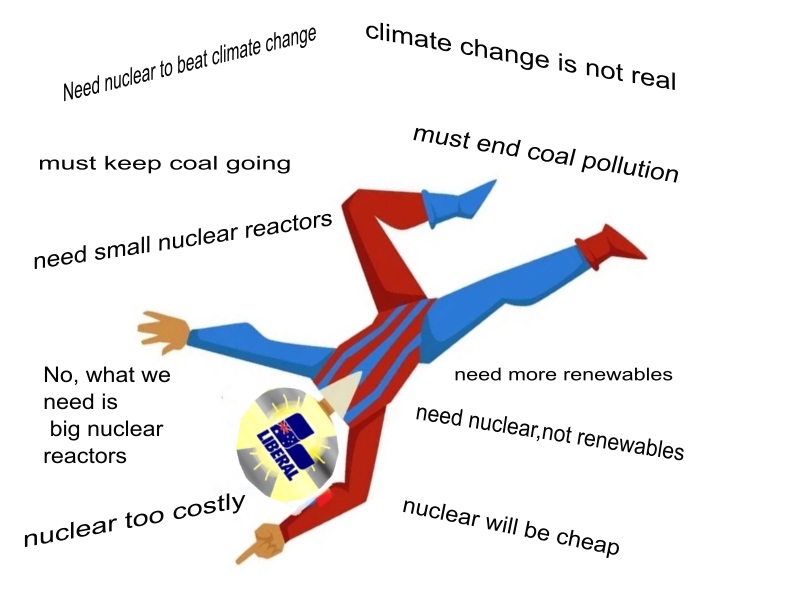
Liberal MP warns Dutton on nuclear energy as Labor steps up attacks
By Paul Sakkal, March 28, 2024 , https://www.smh.com.au/politics/federal/liberal-mp-warns-dutton-on-nuclear-energy-as-labor-steps-up-attacks-20240326-p5ff92.html
Liberal MP Bridget Archer has issued her colleagues a caution on the political risk of the party’s nuclear energy plans, which the backbencher claims have been catapulted into political debate partly to keep climate change doubters on board with the Coalition’s net zero emissions policy.
While there is widespread support within Peter Dutton’s opposition for a conversation on nuclear energy, several Coalition MPs speaking confidentially to detail private concerns said they were worried the opposition was moving too quickly and creating an easy target for Labor attacks.
As the first Liberal to ask questions about the Coalition’s approach, Archer argued fiscally conservative opposition MPs, including herself, would be uneasy with the massive government investment required to build multibillion-dollar plants.
Nuclear energy, which Archer — a leading moderate voice within the party — says she is open to, should be pursued only if coupled with a rapid surge in renewables, she said, a contrast with Dutton and other Coalition MPs, who suggest extending the life of coal until nuclear availability in 10 or 20 years.
Dutton and the shadow cabinet MP leading the nuclear push, Ted O’Brien, are expected to detail their energy plans, including about six plant sites, by the budget in May, but Archer said the initial policy should be limited to lifting Australia’s nuclear moratorium.
“I’m very agnostic about it and I don’t think we should be afraid to just have conversations. But there are a lot of things that need to line up,” she said, noting technological and economic factors that might inhibit private investment even if the decades-old moratorium was overturned.
The opposition has spoken in favour of nuclear energy since losing government in 2022, and escalated its commitment this year as it declared support for large-scale nuclear on top of new-age small modular reactors.
Its backing of the new energy source has guaranteed that climate change and energy will be a key election issue. Voters will be presented with a choice between Labor’s renewables-heavy path to a zero emissions future and one complemented by nuclear energy, amid doubts over Labor’s emissions-reduction targets and expensive energy bills.
Signalling Labor’s future election attacks, Prime Minister Anthony Albanese compared Dutton to the contentious energy source in parliament on Wednesday, saying: “One is risky, expensive, divisive and toxic; the other is a nuclear reactor. The bad news for the Liberal Party is that you can put both on a corflute, and we certainly intend to do so.”
Dutton has been open about the potential need for government investment in nuclear plants, which Labor says have cost tens of billions overseas.
Archer, a member of an influential parliamentary inquiry into nuclear energy last term, said she would be uncomfortable with a “big government” approach to energy investment, which she said might irk Liberals with a fiscally conservative bent.
O’Brien has emphasised nuclear as a zero-emissions option to smooth Australia’s bumpy transition to net zero. However, some of the strongest voices for nuclear energy are MPs such as Barnaby Joyce, who oppose renewables and have questioned scientific orthodoxy on climate change.
Earlier this month O’Brien said, “we should not be closing our coal-fired power stations prematurely” because under Labor’s plans 90 per cent of baseload energy would exit the grid by 2034.
Archer, who Dutton this week congratulated for winning the McKinnon Prize for political leadership, said nuclear energy should not be used as an excuse to prolong fossil fuel reliance.
“There is no point even having a nuclear discussion if you don’t accept a need to decarbonise, to transition away from coal and gas,” she said. “There only is a case for nuclear if there is a fairly rapid transition to large-scale renewables, otherwise why are you doing it?”
“I think part of the reason for having the discussion is to keep people in the tent on net zero.”
Allegra Spender, a teal MP who some Liberals believe should be recruited to the party in future, said nuclear “may have a role in the distant future”.
But it is too slow, too expensive and the UK Hinkley [nuclear power station] experience shows the costs are too uncertain for it to be relevant to our current energy plans,” she said.
“AGL Energy, Alinta, EnergyAustralia and Origin Energy have all dismissed nuclear.
“The community does not trust the Coalition’s commitment to climate action, and their current stance reinforces it.”
Purgatorial Torments: Assange and the UK High Court

Australian Independent Media, March 27, 2024, by: Dr Binoy Kampmark
What is it about British justice that has a certain rankness to it, notably when it comes to dealing with political charges? The record is not good, and the ongoing sadistic carnival that is the prosecution (and persecution) of Julian Assange continues to provide meat for the table.
Those supporting the WikiLeaks publisher, who faces extradition to the United States even as he remains scandalously confined and refused bail in Belmarsh Prison, had hoped for a clear decision from the UK High Court on March 26. Either they would reject leave to appeal the totality of his case, thereby setting the wheels of extradition into motion, or permit a full review, which would provide some relief. Instead, they got a recipe for purgatorial prolongation, a tormenting midway that grants the US government a possibility to make amends in seeking their quarry.
A sinking sense of repetition was evident. In December 2021, the High Court overturned the decision of the District Court Justice Vanessa Baraitser to bar extradition on the weight of certain assurances provided by the US government. Her judgment had been brutal to Assange in all respects but one: that extradition would imperil his life in the US penal system, largely due to his demonstrated suicidal ideation and inadequate facilities to cope with that risk.
With a school child’s gullibility – or a lawyer’s biting cynicism – the High Court judges accepted assurances from the Department of Justice (DOJ) that Assange would not face the crushing conditions of detention in the notorious ADX Florence facility or suffer the gagging restrictions euphemised as Special Administrative Measures. He would also receive the appropriate medical care that would alleviate his suicide risk and face the prospect of serving the balance of any sentence back in Australia. The refusal to look behind the mutability and fickle nature of such undertakings merely passed the judges by. The March 26 judgment is much in keeping with that tradition.
The grounds for Assange’s team numbered nine in total entailing two parts. Some of these should be familiar to even the most generally acquainted reader. The first part, comprising seven grounds, argues that the decision to send the case to the Home Secretary was wrong for: ignoring the bar to extradition under the UK-US Extradition Treaty for political offences, for which Assange is being sought for; that his prosecution is for political opinions; that the extradition is incompatible with article 7 of the European Convention on Human Rights (ECHR) noting that there should be no punishment without law; that the process is incompatible with article 10 of the ECHR protecting freedom of expression; that prejudice at trial would follow by reason of his non-US nationality; that the right to a fair trial, protected by article 6 of the ECHR, was not guaranteed; and that the extradition is incompatible with articles 2 and 3 of the ECHR (right to life, and prohibiting inhuman and degrading treatment).
The second part of the application challenged the UK Home Secretary’s decision to approve the extradition, which should have been barred by the treaty between the UK and US, and on the grounds that there was “inadequate specialty/death penalty protection.”
In this gaggle of imposing, even damning arguments, the High Court was only moved by three arguments, leaving much of Baraitser’s reasons untouched. Assange’s legal team had established an arguable case that sending the case to the Home Secretary was wrong as he might be prejudiced at trial by reason of his nationality. Following from that “but only as a consequence of that”, extradition would be incompatible with free speech protections under article 10 of the ECHR. An arguable case against the Home Secretary’s decision could also be made as it was barred by inadequate specialty/death penalty protection.
What had taken place was a dramatic and savage pruning of a wholesome challenge to a political persecution garishly dressed in legal drag. On the issue of whether Assange was being prosecuted for his political opinions, the Court was happy to accept the woeful finding by Baraitser that he had not. The judge was “entitled to reach that conclusion on the evidence before her, and on the unchallenged sworn evidence of the prosecutor (which refutes the applicant’s case).” While accepting the view that Assange “acted out of political conviction”, the extradition was not being made “on account of his political views.” Again, we see the judiciary avoid the facts staring at it: that the exposure of war crimes, atrocities, torture and various misdeeds of state are supposedly not political at all.
………………………………………………………………………………………….. Of enormous, distorting significance was the refusal by the High Court to accept “fresh evidence” such as the Yahoo News article from September 2021 outlining the views of intelligence officials on the possible kidnapping and even assassination of Assange.
…………….Imaginatively, if inexplicably, the judges accepted her finding that the conduct by the CIA and UC Global regarding the Ecuadorian embassy had no link with the extradition proceedings. With jaw dropping incredulity, the judges reasoned that the murderous, brutal rationale for dealing with Assange contemplated by the US intelligence services “is removed if the applicant is extradited.” In a fit of true Orwellian reasoning, Assange’s safety would be guaranteed the moment he was placed in the custody of his would-be abductors and murderers.
The High Court was also generous enough to do the homework for the US government by reiterating the position taken by their brother judges in the 2021 decision. Concerns about Assange’s mistreatment would be alleviated by granting “assurances (that the applicant is permitted to rely on the First Amendment, that the applicant is not prejudiced at trial (including sentence) by reason of his nationality, that he is afforded the same First Amendment protection as a United States citizen, and that the death penalty not be imposed).” Such a request is absurd for presuming, not only that the prosecutors can be held to their word, but that a US court would feel inclined to accept the application of the First Amendment, let alone abide by requested sentencing requirements.
The US government has been given till April 16 to file assurances addressing the three grounds, with further written submissions in response to be filed by April 30 by Assange’s team, and May 14 by the Home Secretary. Another leave of appeal will be entertained on May 20. If the DOJ does not provide any assurances, then leave to appeal will be granted. The accretions of obscenity in the Assange saga are set to continue. more https://theaimn.com/purgatorial-torments-assange-and-the-uk-high-court/
IFM Investors steers clear of nuclear projects
Jenny Wiggins, Infrastructure reporter, AFR, 28 May 24
IFM Investors, which manages some $217 billion for Australian superannuation funds, is steering clear of investments in nuclear projects due to the difficulties of managing nuclear waste.
While IFM Investors believes “energy security is fundamental,” it hasn’t invested in any nuclear projects to date, global head of infrastructure Kyle Mangini told The Australian Financial Review.…………… (Subscribers only) https://www.afr.com/companies/infrastructure/ifm-investors-steers-clear-of-nuclear-projects-20240325-p5ff1h
‘They don’t have a plan’: Chris Bowen slams Opposition push for nuclear
Climate Change and Energy Minister Chris Bowen has slammed the Opposition over its push for nuclear because they “don’t have a plan”.
“Rolling out renewables and storage over this decade is critical not just for reducing emissions … but because it’s the cheapest form of energy available,” Mr Bowen said during Question Time on Wednesday.
“It is important for jobs and job creation, and also it’s very important for reliability.
“The alternative approach that’s been proposed by those opposite is nuclear.
“Any sort of nuclear plan is irresponsible and incorrect.
“Maybe they got it right because they’ve got a thought bubble, but they certainly don’t have a plan.”
Australia’s move on nuclear submarines raises concern
Editor : Li Yan, https://www.ecns.cn/news/military/2024-03-28/detail-ihcyyfhe2567871.shtml
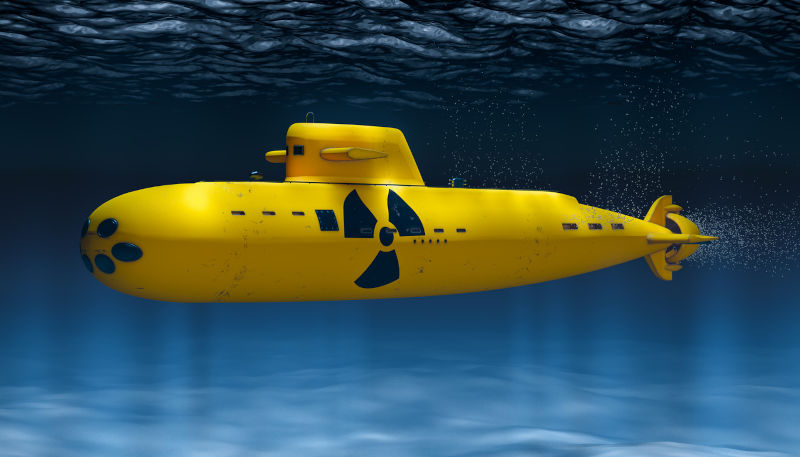
Despite growing concerns over costs, capabilities, and risks to national interests, Australia has committed to collaborating with the United States and the United Kingdom to advance the AUKUS nuclear-powered submarines, a move experts predicted would escalate domestic opposition and heighten regional tensions.
Australia has pledged $3 billion to support British industry in constructing nuclear-powered submarines, ensuring the timely delivery of its new fleet, as announced by both countries last Friday.
Grant Shapps, British defense secretary, emphasized the ongoing importance of AUKUS while drawing attention to the so-called “China threat” in his remarks.
However, the trilateral agreement has faced domestic criticism and protests from the outset. On March 18, local unions and environmental groups in Australia urged the government to abandon plans for a base while holding a protest outside the parliament house, the latest demonstration in a series, some of which drew as many as 5,000 protesters.
The establishment of the base is a key component of AUKUS, Australia’s largest defense initiative since World War II. In total, the submarine project could cost up to $240 billion over the next 30 years.
“We don’t want to be part of someone else’s belligerent nuclear plans,” said Arthur Rorris, head of the South Coast Labor Council, comprising unions representing 50,000 workers in the area.
They fear the base could choke an infant clean energy sector by taking up scarce land and ushering in security curbs, as well as the permanent presence of U.S. warships. Faced with strong opposition, the government said it hadn’t decided on Port Kembla, a favorable location for the base, as local media had reported.
Chen Hong, director of the Australian Studies Centre at East China Normal University in Shanghai, said the protests against AUKUS signify a growing awareness among Australians of the detrimental consequences of the military pact on national interests and regional stability.
“By taking part in the U.S.-led trilateral military pact, Australia hopes to get nuclear submarine technologies and more security promises from the United States and the United Kingdom. However, this move will drag the country and its people into a potential war as the Australian government keeps supporting U.S. hegemony and surrenders its land for U.S. warships,” Chen said.
AUKUS, established in 2021, aims to bolster Australia’s military capabilities by providing it with nuclear-powered submarines.
Fueling tensions
“Through AUKUS, the U.S. and its Western allies are trying to weaponize Australia and force the country to join its ‘anti-China’ bloc. Plus, the U.S. has kept pushing forward its ‘Indo-Pacific’ strategy, which also involves Australia, fueling tensions in the whole region,” he said.
Daryl Guppy, an international financial technical analyst and former national board member of the Australia China Business Council in Melbourne, said that some Australian politicians have moved closely with the U.S. on the assumption that U.S. and Australian interests are largely the same, which has undermined Australia’s sovereign independence.
Apart from the political turbulence, Chen also said the nuclear submarine pact will raise concerns over nuclear proliferation and cause environmental influences that will damage the health of local communities.
“Australia has long championed nuclear-weapon-free zones and was a founding member of the South Pacific Nuclear Free Zone Treaty. However, Australia’s attempt to acquire nuclear submarines will undermine its nuclear-free promise,” Chen said.
As Chinese Foreign Minister Wang Yi visited Australia recently, experts are expecting that the two countries can collaborate to improve the bilateral relationship.
“China and Australia can work together to find more common grounds and build a more stable, mature and fruitful comprehensive strategic partnership, which will benefit the peoples of the two countries,” Chen said.
The Empire Slowly Suffocates Assange Like It Slowly Suffocates All Its Enemies
CAITLIN JOHNSTONE, MAR 27, 2024, https://www.caitlinjohnst.one/p/the-empire-slowly-suffocates-assange?utm_source=post-email-title&publication_id=82124&post_id=142993532&utm_campaign=email-post-title&isFreemail=true&r=1ise1&triedRedirect=true&utm_medium=email
The British High Court has ruled that WikiLeaks founder Julian Assange may potentially get a final appeal against extradition to the United States, but only within a very limited scope and only if specific conditions are met.
The court ruled that Assange may appeal only on the grounds that his freedom of speech might be restricted in the US, and that there is a possibility he could receive the death penalty. If the US provides “assurances” that neither of these things will happen, then the trial moves to another phase where Assange’s legal team may debate the merits of those assurances. If the US does not provide those assurances, then the limited appeal will move forward.
Absurdly, the court determined that Assange’s lawyers may not argue against extradition on matters as self-evidently critical as the fact that the CIA plotted to assassinate him, or on the basis that he is being politically persecuted for the crime of inconvenient journalism.
The mass media are calling this a “reprieve”, even “wonderful news”, but as Jonathan Cook explains in his latest article “Assange’s ‘reprieve’ is another lie, hiding the real goal of keeping him endlessly locked up,” that’s all a bunch of crap.
“The word ‘reprieve’ is there — just as the judges’ headline ruling that some of the grounds of his appeal have been ‘granted’ — to conceal the fact that he is prisoner to an endless legal charade every bit as much as he is a prisoner in a Belmarsh cell,” writes Cook. “In fact, today’s ruling is yet further evidence that Assange is being denied due process and his most basic legal rights — as he has been for a decade or more.”
Cook writes the following:
“The case has always been about buying time. To disappear Assange from public view. To vilify him. To smash the revolutionary publishing platform he founded to help whistleblowers expose state crimes. To send a message to other journalists that the US can reach them wherever they live should they try to hold Washington to account for its criminality.
“And worst of all, to provide a final solution for the nuisance Assange had become for the global superpower by trapping him in an endless process of incarceration and trial that, if it is allowed to drag on long enough, will most likely kill him.”
This kind of slow motion strangulation is how the empire operates all the time these days, across all spheres. Helping Israel starve Gaza while slowly pretending to work toward solutions. Drawing out a proxy war in Ukraine for as long as possible to bleed Russia. Slowly killing Assange in prison without trial under the pretense of judicial proceedings.
The US-centralized empire hunts not like a tiger, killing its prey with one fatal bite to the jugular, but more like a python: slowly suffocating the life out of its prey until it perishes. It favors the long, drawn-out, confusing strangulation of inconvenient populations and individuals, carried out under the cover of bureaucracy and propaganda spin. In today’s world it prefers sanctions, blockades and long proxy conflicts over the big Hulk-smash ground invasions we saw it carry out in places like Iraq and Vietnam.
These slow suffocations can take more time, but what they lack in efficiency they make up for in the quality of perception management. It’s bad PR to just openly invade countries and murder people, which is why the leaders of the western empire have been able to wag their fingers at Putin despite their being quantifiably far more murderous than Russia. People start snapping out of the propaganda matrix you spent so much time building for them and begin organizing against the political status quo your power is premised on.
So they opt for slow strangulation strategies where they can confuse the public about what’s happening and who’s responsible, outsourcing the blame to other parties while posing as the good guy who’s trying to bring peace and stability. It takes time, but the empire has time to burn. That’s what happens when you’re the most powerful empire in the history of civilization; you have the luxury of biding your time while orchestrating large-scale, long-term operations to advance your power agendas.
Meanwhile Gaza starves, Ukraine bleeds, and Assange languishes in prison, each needing this to end with more urgency every day.
WATCH: Nabbed Australian Protestors Stopping Military Shipment to Israel
Video and article by Cathy Vogan, Consortium News https://consortiumnews.com/2024/03/25/watch-nabbed-stopping-military-shipment-to-israel/
Paul Keating, branch secretary of the Australian Maritime Union (AMU) spoke for fellow members in solidarity with the Palestinian community and faced off with police, when he and several hundred protestors blockaded Sydney’s Port Botany on Sunday to protest Australia’s export of military aid to Israel.
The protestors’ target is ZIM Shipping, a well known Israeli company that trade unionist Ian Rintoul says supports and is connected with Israel. “It offered its services to the Israeli state for the conduct of the genocide,” he told Consortium News. “Zim Shipping has actually been a target of protests at ports all around the world in the United States and Italy, Europe [and elsewhere in Australia]”.
Keating, who also spoke to CN, called on all of the other workers’ unions to stand with the AMU and for Prime Minister Anthony Albanese to place sanctions on Israel for what the International Court of Justice has called a plausible case of genocide.
He told the police chief at the scene: “This is an international working class issue”, and in his speech reiterated:
“On behalf of the MUA, we stand with our communities and throughout the generations we fought against the establishment who have supported apartheid, like we saw with South Africa, like we’ve seen with the wars that have forced ordinary working class men and women like ourselves and our communities into the most desperate of situations. We oppose war. Peace is union business, and this is our business”.
Deputy Leader of the Greens Mehreen Faruqi also spoke in favour of the blockade and condemned the government’s current policy. She said:
“It’s been 169 days of Israel’s genocide on Gaza. 169 horror-filled days for Palestinians. More than 30,000 Palestinians have been slaughtered by Israel. More than 1 million Palestinians are being starved by Israel. Famine and disease loom large in the ruins of Gaza. That’s the reality on the ground right at this moment. And how bereft, how bereft of humanity, of morality, of head and heart can the Labor government be to not do anything to stop these war crimes, this collective punishment, these atrocities and this genocide? How ruthless and cruel can you be to aid, abet and arm Israel?”
The blockade was short-lived and was broken up by police. Keating and 18 others were arrested and now face fines of up to AUS $22K and two years jail for obstructing traffic in the maritime zone.
Cathy Vogan is the executive producer of CN Live!
Antarctic sea ice ‘behaving strangely’ as Arctic reaches ‘below-average’ winter peak
Carbon Brief, AYESHA TANDON, 26 Mar 24,
Antarctic sea ice is “behaving strangely” and might have entered a “new regime”, the director of the US National Snow and Ice Data Centre (NSIDC) tells Carbon Brief.
Following an all-time low maximum in September 2023, Antarctic sea ice has been tracking at near-record-low extent for the past six months. Last month, it hit its 2024 minimum extent, tying with 2022 for the second-lowest Antarctic minimum in the 46-year satellite record.
Dr Mark Serreze, director of the NSIDC tells Carbon Brief that more warm ocean water is reaching the surface to melt ice and keep it from forming. He says that we “must wait and see” whether this is a “temporary effect” or whether the Antarctic has entered a “new regime”.
Meanwhile, Arctic sea ice has reached its maximum extent for the year, peaking at 15.01m square kilometres (km2) on 14 March. The provisional data from the NSIDC shows that this year’s Arctic winter peak, despite favourable winds that encouraged sea ice formation, was 640,000km2 smaller than the 1981-2010 average maximum.
This year’s maximum was the 14th lowest in the satellite record…………………………………………………………………………………………………………………………………………………..
Record-breaking Antarctic extent
Antarctic sea ice has been tracking at or near record-low levels for months.
The Antarctic set a record-low maximum on 10 September 2023, with an extent of 16.96m km2. This was “the lowest sea ice maximum in the 1979 to 2023 sea ice record by a wide margin”, and one of the earliest, the NSIDC says.
Antarctic conditions over 2023 were “truly exceptional” and “completely outside the bounds of normality”, one expert told Carbon Brief.
As 2023 progressed, Antarctic sea ice melt was “slower than average”, the NSIDC says. The total decline in Antarctic sea ice extent through October was 903,000km2, while the October average was 985,000km2.
Nevertheless, Antarctic sea ice extent continued to track at a record low. On 31 October 2023, Antarctic sea ice extent was still tracking at a record-low of 15.79m km2. This is 750,000km2 below the previous 31 October record low………….. more https://www.carbonbrief.org/antarctic-sea-ice-behaving-strangely-as-arctic-reaches-below-average-winter-peak/
Nuclear ranks last on list of good investments by big institutions
Marion Rae, Mar 25, 2024, https://reneweconomy.com.au/nuclear-ranks-last-on-list-of-good-investments-by-big-institutions/
Nuclear energy is last on the list of technologies that investors want exposure to, according to a survey of big financial institutions.
The vast majority of investors do not see nuclear power as a good investment, with less than one in 10 exploring this technology, the survey released on Monday found.
Opposition Leader Peter Dutton is spruiking nuclear reactors as an option for Australia’s future low-carbon economy although the energy source is illegal under existing laws and Labor has ruled it out.
Renewable energy is tipped to deliver the best long-term financial returns, with half the investors surveyed exploring opportunities to invest.
Investors have also become more confident about Australian climate policy under the Albanese government, according to the survey by the Investor Group on Climate Change.
“Investors have given the government a pretty good report card,” the group’s policy chief Erwin Jackson said.
But Australia will need globally competitive, targeted incentives to suit the nation’s economic strengths and values to stop “ongoing capital flight” to the United States and Europe where there are more generous tax breaks.
Clear timelines for the phase-out of fossil fuels by 2050 would also help investors manage transition risks and remain invested in the Australian economy, according to the group.
This year’s data includes 63 superannuation funds as well as other asset owners and managers, with more than $37 trillion in assets under management globally. Their beneficiaries include more than 15 million Australians.
Emerging priorities include clear timelines for phasing out coal, oil and gas and clear policies to build resilience and adapt to physical damage from climate change.
Opinions citing policy and regulatory uncertainty as a barrier to clean economy investment in Australia have changed dramatically, supported by four out of 10 investors compared with 7 out of 10 in 2021.
Renewable energy (47 per cent) was picked as the best option for long-term climate solutions, followed by nature-based schemes including biodiversity projects (34 per cent).
But investors are still in the dark on the federal government’s sector-by-sector decarbonisation plans for heavy polluters such as the energy, transport, agriculture and resources industries – and on the scope of the 2035 emissions reduction target.
“Credible and clear sector by sector decarbonisation plans to achieve a 2035 target with the highest possible level of ambition are critical for investment and it is critical to build on the steps already taken,” Mr Jackson said.
Climate Change and Energy Minister Chris Bowen has said the 2035 target will be “ambitious and achievable”, with advice to come from Australia’s recently beefed-up Climate Change Authority.
The sectoral review by the authority has an August 1 deadline, and will be released shortly afterwards.
AAP
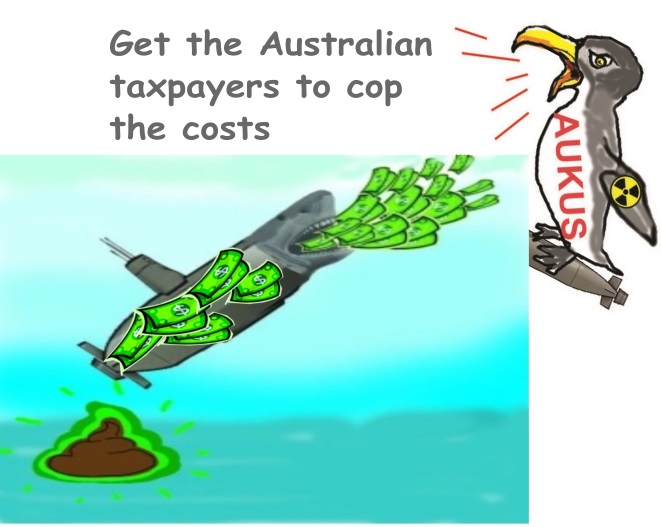
The AUKUS Cash Cow: Robbing the Australian Taxpayer
The eye-opener in the AUKMIN chatter is the promise from Canberra to send A$4.6 billion (£2.4 billion) to speed up lethargic construction at the Rolls-Royce nuclear reactor production line. There are already questions that the reactor cores, being built at Derby, will be delayed for the UK’s own Dreadnought nuclear submarine.
The eye-opener in the AUKMIN chatter is the promise from Canberra to send A$4.6 billion (£2.4 billion) to speed up lethargic construction at the Rolls-Royce nuclear reactor production line.
March 26, 2024, by: Dr Binoy Kampmark, https://theaimn.com/the-aukus-cash-cow-robbing-the-australian-taxpayer/
Two British ministers, the UK Foreign Secretary David Cameron and Defence Secretary Grant Shapps, paid a recent visit to Australia recently as part of the AUKMIN (Australia-United Kingdom Ministerial Consultations) talks. It showed, yet again, that Australia’s government loves being mugged. Stomped on. Mowed over. Beaten.
It was mugged, from the outset, in its unconditional surrender to the US military industrial complex with the AUKUS security agreement. It was mugged in throwing money (that of the Australian taxpayer) at the US submarine industry, which is lagging in its production schedule for both the Virginia-class boats and new designs such as the Columbia class. British shipyards were hardly going to miss out on this generous distribution of Australian money, largesse ill-deserved for a flagging production line.
A joint statement on the March 22 meeting, conducted with Defence Minister Richard Marles and Foreign Minister Penny Wong, was packed with trite observations and lazy reflections about the nature of the “international order”. Ministers “agreed the contemporary [UK-Australian] relationship is responding in an agile and coordinated way to global challenges.” When it comes to matters of submarine finance and construction, agility is that last word that comes to mind.
Boxes were ticked with managerial, inconsequential rigour. Russia, condemned for its “full-scale, illegal and immoral invasion of Ukraine.” Encouragement offered for Australia in training Ukrainian personnel through Operation Kudu and joining the Drone Capability Coalition. Exaggerated “concern at the catastrophic humanitarian crisis in Gaza.” Praise for the United Nations Convention on the Law of the Sea (UNCLOS) and “respect of navigation.”
The relevant pointers were to be found later in the statement. The UK has been hoping for a greater engagement in the Indo-Pacific (those damn French take all the plaudits from the European power perspective), and the AUKUS bridge has been one excuse for doing so. Accordingly, this signalled a “commitment to a comprehensive and modern defence relationship, underlined by the signing of the updated Agreement between the Government of Australia and the Government of the United Kingdom of Great Britain and Northern Ireland for Defence and Security Cooperation.”
When politicians need to justify opening the public wallet, such tired terms as “unprecedented”, “threat” and “changing” are used. These are the words of foreign minister Wong: “Australia and the United Kingdom are building on our longstanding strategic partnership to address our challenging and rapidly changing world.” Marles preferred the words “an increasingly complex strategic environment.” Shapps followed a similar line of thinking. “Nuclear-powered submarines are not cheap, but we live in a much more dangerous world, where we are seeing a much more assertive region [with] China, a much more dangerous world all around with what is happening in the Middle East and Europe.” Hardly a basis for the submarines, but the fetish is strong and gripping.
With dread, critics of AUKUS would have noted yet another round of promised disgorging. Britain’s submarine industry is even more lagging than that of the United States, and bringing Britannia aboard the subsidy truck is yet another signal that the AUKUS submarines, when and if they ever get off the design page and groan off the shipyards, are guaranteed well deserved obsolescence or glorious unworkability.
A separate statement released by all the partners of the AUKUS agreement glories in the SSN-AUKUS submarine, intended as a joint effort between BAE Systems and the Australian Submarine Corporation (ASC). (BAE Systems, it should be remembered, is behind the troubled Hunter-class frigate program, one plagued by difficulties in unproven capabilities.)
An already challenging series of ingredients is further complicated by the US role as well. “SSN-AUKUS is being trilaterally developed, based on the United Kingdom’s next designs and incorporation technology from all three nations, including cutting edge United States submarine technologies.” This fabled fiction “will be equipped for intelligence, surveillance, undersea warfare and strike missions, and will provide maximum interoperability among AUKUS partners.” The ink on this is clear: the Royal Australian Navy will, as with any of the promised second-hand Virginia-class boats, be a subordinate partner.
In this, a false sense of submarine construction is being conveyed through what is termed the “Optimal Pathway”, ostensibly to “create a stronger, more resilient trilateral submarine industrial base, supporting submarine production and maintenance in all three countries.” In actual fact, the Australian leg of this entire effort is considerably greater in supporting the two partners, be it in terms of upgrading HMAS Stirling in Western Australia to permit UK and US SSNs to dock as part of Submarine Rotational Force West from 2027, and infrastructure upgrades in South Australia. It all has the appearance of garrisoning by foreign powers, a reality all the more startling given various upgrades to land and aerial platforms for the United States in the Northern Territory.
The eye-opener in the AUKMIN chatter is the promise from Canberra to send A$4.6 billion (£2.4 billion) to speed up lethargic construction at the Rolls-Royce nuclear reactor production line. There are already questions that the reactor cores, being built at Derby, will be delayed for the UK’s own Dreadnought nuclear submarine. The amount, it was stated by the Australian government, was deemed “an appropriate and proportionate contribution to expand production and accommodate Australia’s requirements.” Hardly.
Ultimately, this absurd spectacle entails a windfall of cash, ill-deserved funding to two powers with little promise of returns and no guarantees of speedier boat construction. The shipyards of both the UK and the United States can take much joy from this, as can those keen to further proliferate nuclear platforms, leaving the Australian voter with that terrible feeling of being, well, mugged.
On nuclear, Coalition prefers the optimism of misleading, decade-old, unverified claims

The Coalition is a fan of quoting the Australian Nuclear Science and Technology Organisation’s optimism on nuclear timelines compared to the CSIRO. But do the numbers add up?
JOHN QUIGGIN, MAR 22, 2024, https://johnquigginblog.substack.com/p/on-nuclear-coalition-prefers-the?utm_source=post-email-title&publication_id=806934&post_id=142847313&utm_campaign=email-post-title&isFreemail=true&r=1ise1&triedRedirect=true&utm_medium=email
To the extent that most Australians have heard of the Australian Nuclear Science and Technology Organisation (ANSTO), we know it as a supplier of radio-isotopes for use in medicine and as the operator of a small research reactor at Lucas Heights in the suburbs of Sydney.
So, it may have come as a surprise to hear shadow energy minister Ted O’Brien cite ANSTO as the source for an estimate that a small modular reactor (SMR) could be constructed in three to five years, and a large reactor in eight to 12 years.

Appearing on the ABC’s 7:30 report in mid-March, O’Brien stated “that is the advice from ANSTO. That is the advice of the Albanese government’s nuclear agency”. In view of the fact that widely publicised advice from an extensive study undertaken by CSIRO yields much less optimistic conclusions, that seems like a surprising claim.
But O’Brien is correct. ANSTO is indeed the government agency officially advising on nuclear technology, including nuclear power.
Section 5 of the ANSTO Act mandates the organisation provide advice on aspects of and the application and use of nuclear science and nuclear technology. ANSTO provides such advice to government, parliaments, ministers, departments and agencies, inquiries and investigations, members of the public, and international, multilateral and bilateral partners — in pursuit of the national interest.
In a submission to the Senate standing committee on environment and the communications inquiry into the environment and other legislation amendment (Removing Nuclear Energy Prohibitions) Bill 2022, ANSTO stated that SMRs “have the potential to reduce build costs using a variety of strategies, including reducing plant build times from six to eight years for large reactors to two and a half to four years for SMRs via the use of series-production methods“.
These numbers are even more optimistic than those cited by Ted O’Brien. But terms like “potential” can do a lot of work in claims of this kind. Nuclear fusion, for example, has the potential to meet all the energy needs of the planet, but it won’t do so any time soon.
A natural response from an interested member of the public would be to visit the ANSTO website to get more detailed information on the assessment of nuclear technology. This leads us to a webpage titled “What are small modular reactors and what makes them different?”, which leads with the claim “the USA is expected to have its first SMR operating by 2026” and includes the timeframe of three to five years for construction.
A note hastily added in the last week states: “Please note that this content was current at the time of publishing (July 2020), and the projected construction time of SMRs (three to five years) is referenced from a University of Leeds research paper. In November 2023, NuScale [the subject of the 2026 claim] announced it was discontinuing its SMR project in Idaho.”
Even in 2020, this research was out of date. The NuScale project, originally projected to be delivering power in 2023, had already pushed its target past 2026 by then. But given that the project has been abandoned, there’s no need to look too closely at this.
The University of Leeds paper is more interesting. It turns out to be a literature survey covering the period 2004-19. The three- to five-year estimate for the construction time for SMRs is taken from a non-peer-reviewed 2016 report by consulting firm Ernst and Young (which worked with one of the authors on the University of Leeds study). The information used to compile the report is even older, going back to 2014 or earlier. To put it bluntly, this is worthless.
Rather than complying with its legal obligation to keep abreast of nuclear power technology and inform the public of its findings, ANSTO has relied on decade-old, unverified claims, made by a consulting company. This sloppy treatment of an issue that should be a central focus of ANSTO analysis contrasts sharply with the careful assessment undertaken by CSIRO.
I went to ANSTO for a response but didn’t hear back.
Ted O’Brien can scarcely be blamed for taking ANSTO’s word on these matters, particularly when its claims are so convenient to his case. But ANSTO needs to retract its misleading claims as soon as possible. That would give the LNP an opportunity, if it wants it, to drop its nuclear policy and put the blame on an Albanese government agency for misleading it.
One final irony. The ban on nuclear power, which is now the subject of so much controversy, was introduced by the Howard government to secure the passage of legislation that allowed ANSTO to build a new research reactor at Lucas Heights. In light of this history, maybe ANSTO’s remit should be revised to steer the organisation clear of nuclear power once and for all.
1 This month

of the week – Australians for War Powers Reform (AWPR)
To see nuclear-related stories in greater depth and intensity
 Antinuclear