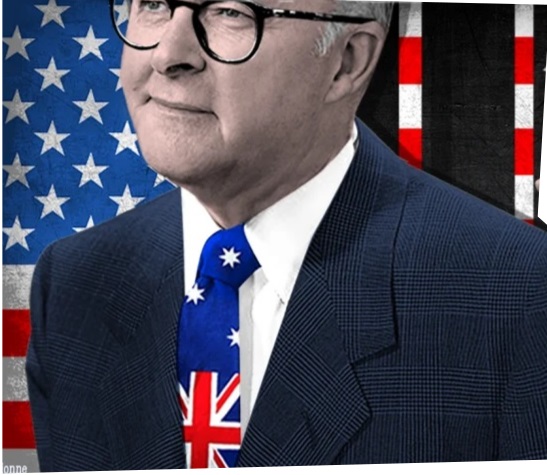
Dutton’s nuclear lights are out and no one’s home
But none of this matters to Dutton. The reason he is pushing for nuclear is plain: since any nuclear energy plan is unattainable for at least 20 years, it ensures his coal and gas mining mates can continue destroying our natural environment for a long, long time to come.
By Michelle Pini Independent Australia, 20 June 2024
Dutton’s alternative facts on nuclear energy demonstrate that the Coalition is no longer fit for purpose as a credible opposition, let alone a serious government contender. Michelle Pini reports.
APART from frequently changing leaders, nothing has changed about the Liberal-National Party Opposition for a very long time, certainly not since the Abbott/Turnbull/Morrison retrograde regime.
Put simply, since the whole point of an opposition party in a two-party system is to provide credible alternative policies – not to recycle the ideas and innovations of a bygone era – today’s Coalition is simply no longer fit for purpose.
This is perhaps best illustrated by Dutton’s most recent set of alternative facts masquerading as policies, the recycled 1950s nuclear power plan.
Sure, the Liberals/Nationals are the parties of the status quo but the fact is, they have taken this concept well past its natural use-by date. Basically, if this was the age of the telephone invention, Opposition Leader Peter Dutton and his band of unmerry naysayers would be advocating to keep tin cans and string because phones would put can and string manufacturers out of business — not to mention the plight of carrier pigeon trainers.
Wait, that is actually the same reasoning that led to over a decade of third-world-standard NBN, but we digress.
Carrier pigeons and tin cans notwithstanding, today, the Coalition want us to get behind a leader who, if elected, would catapult us back to an age before science, before technology and before we worked out the Earth wasn’t flat — in every facet of our lives.
A word is needed about the role of the entire mainstream media, here, including the national broadcaster – yet again – in providing a framework where Dutton’s idiotic ramblings are given prominence — nay, are exalted as if they came from the Heavens.
There are so many subtle ways in which his party’s every brain fart is reported in the media as a credible idea and Alan Austin’s latest analysis provides a more detailed explanation of how the ABC’s news coverage, in particular, subtly facilitates this Liberal Party agenda. (You can read more here.)
So, to summarise the Dutton Coalition “policy platform”, it goes something like this:
Finding it hard to keep up with the changing world? Need a scapegoat for your woes?
Then, has Dutton got an idiotic plan, a minority group and a few gaslights, courtesy of the establishment media, for you?!
It is the exploitation of these core fears – the primal fears of change and of “others” – that form the basis of Dutton’s Coalition “policy structure”. It is the reason he does not provide any substantial “detail” in support of his claims. And it provides ongoing ammunition for the climate and culture wars he favours. It’s really no more complicated than that.
Let’s take a close look at Dutton’s banal nuclear “power plan”, which has been presented as a legitimate argument in the legacy media.
A NUCLEAR NIGHTMARE
Dutton – or at least the Coalition’s expert advisers, assuming they still have any – is abundantly aware of the following:
- nuclear energy is not safe by any stretch of the imagination;
- it is not clean;
- it is prohibitively expensive; and
- a nuclear energy industry is unachievable, certainly in the foreseeable future.
But none of this matters to Dutton. The reason he is pushing for nuclear is plain: since any nuclear energy plan is unattainable for at least 20 years, it ensures his coal and gas mining mates can continue destroying our natural environment for a long, long time to come.
With the main game already established, it is only necessary to deflect and obfuscate, providing no “details”, such as properly calculated costs or a realistic timeline. Even his claim that the first seven reactors would be built in Victoria, New South Wales and Queensland was debunked by the state premiers, who have unanimously rejected the idea. According to one ABC report, even some state Liberal and National MPs have ‘distanced themselves from nuclear’.
It’s fine, though, according to Dutton, who may eventually give us the details after his party is elected.
NO RENEWABLES FOR US!
Because the efficiency of renewable energies poses a real and imminent threat to fossil fuels, Dutton also plans to ensure any further great strides in this sector will die a quick and unceremonious death by imposing a cap on renewable energy investment.
And because Dutton’s plan is only about fear, he harnesses the fear of running out of power, or of exorbitant energy prices with idiotic statements like, “We can’t allow the lights to go out.”………………………………………………….. https://independentaustralia.net/politics/politics-display/duttons-nuclear-lights-are-out-and-no-ones-home,18701
Nuclear proposal rejected by premiers, who say Dutton has no power to lift state nuclear bans
In Queensland, where the Coalition has proposed establishing two nuclear power stations, the state Liberal-National Party has voiced its opposition to nuclear, leaving the opposition without allies at a state level.
ABC News, By political reporter Jake Evans and staff, 19 June 24
- In short: State premiers have unanimously rejected the federal Coalition’s nuclear proposal, which would require lifting several state bans
- Some state Liberal and National members have also distanced themselves from nuclear, though the NSW opposition is open to the idea
- What’s next? The Coalition has been pushed to detail costings of its proposal for seven nuclear sites, and to provide more detail
Among the many hurdles for the Coalition to leap before it can break ground on a single nuclear site will be the state’s premiers, who have lined up against a proposal to establish nuclear power plants at seven locations across the country.
The Coalition has announced its proposal for Australia to go nuclear, eschewing the ramp up of more solar and wind power, to instead build either traditional nuclear plants or small modular reactors on retiring coal sites in Queensland, NSW, Victoria, South Australia and in Western Australia.
To do so, a future Coalition government would first have to convince federal parliament to lift a prohibition on nuclear power, establish viable sites, find a solution for nuclear waste, convince local communities and train workers before a first plant could be built by late next decade.
And state premiers have emerged as another barrier to entry, with Labor premiers in the states proposed to go nuclear unequivocal in their opposition to the plan — but also some Liberal and National MPs in those states saying they won’t be buying in.
NSW Premier Chris Minns and Victorian Premier Jacinta Allan said even if Liberal leader Peter Dutton managed to lift the federal nuclear ban, he would also have to overcome bans at a state level.
“We’ve got our ban in place … if there’s a constitutional way for a hypothetical Dutton government to move through the state planning powers, I’m not aware of it, but that’s probably a question for him to answer,” Mr Minns said.
Ms Allan said building a plant in Gippsland would also require repealing state legislation in Victoria.
“They want to bring more expensive, more risky, more toxic energy solutions to the people of this country. We won’t stand for that,” Ms Allan said.
The Victorian premier has since written to Mr Dutton to confirm her government “won’t be negotiating” and would do all in its power to stop a nuclear plant in the Latrobe Valley.
In Queensland, where the Coalition has proposed establishing two nuclear power stations, the state Liberal-National Party has voiced its opposition to nuclear, leaving the opposition without allies at a state level.
Queensland Opposition Leader David Crisafulli said his party had been “clear” nuclear was not part of their plan.
“That’s a matter for Canberra. We’ve been consistent the whole way through,” Mr Crisafulli said…………………. https://www.abc.net.au/news/2024-06-19/premiers-reject-nuclear-proposal-nuclear-bans/103997020
Wrong reaction: Coalition’s nuclear dream offers no clarity on technology, cost, timing, or wastes

https://www.acf.org.au/coalition-nuclear-dream-offers-no-clarity-on-technology-cost-timing-or-waste 19 June 24
In response to Opposition leader Peter Dutton’s announcement of his proposed nuclear reactor sites, the Australian Conservation Foundation’s nuclear analyst Dave Sweeney said:
“The Opposition leader has named seven places where he wants nuclear reactors to be built, but he hasn’t been clear about the technology he wants to use, the cost to taxpayers, the timing, or what would happen to the radioactive waste that stays toxic for thousands of years.
“Mr Dutton wants Australians to believe there will be nuclear reactors operating in a decade should he win the next election. Tell him he’s dreaming.
“There is no bipartisan support and there are deep community, legal and political obstacles facing the Coalition in every Australian jurisdiction.
“It’s clear the Opposition leader hasn’t given up on his dream of small modular reactors. Mr Dutton was vague about whether he is promoting big reactors or small reactors, which are not in commercial deployment anywhere in the world.
“Going nuclear would delay the transition away from coal and gas, increase household electricity bills, introduce the possibility of catastrophic accidents and create multi-generational risks associated with the management of high-level radioactive waste – almost certainly with a disproportionate burden on First Nations communities.
“Extensive modelling, including from CSIRO, shows nuclear is far-and-away the most expensive energy option. Taxpayers and households would bear the cost.
“Nuclear is a dangerous distraction to effective climate action. Australia is blessed with plentiful clean energy resources. Our energy future is renewable, not radioactive.”
A detailed new critique of nuclear energy, released today by ACF, shows:
- Australian taxpayers would foot a massive bill for what is the slowest, most expensive form of power generation.
- Australia’s leading insurance companies will not cover damage from a nuclear disaster.
Read more:
Power games: Assessing coal to nuclear proposals in Australia (30-page report)
Why nuclear power will never be right for Australia (10-page summary)
Nuclear plan is fiscal irresponsibility on an epic scale and rank political opportunism

The LNP wants to burn untold tens of billions of public money in a nuclear debt bin fire because nuclear is 100% uncommercial – no private investor will touch it with a ten foot pole short of massive multi-decade subsidies.
The LNP wants to burn untold tens of billions of public money in a nuclear debt bin fire because nuclear is 100% uncommercial – no private investor will touch it with a ten foot pole short of massive multi-decade subsidies.
Tim Buckley & AM Jonson, ReNeweconomy, Jun 19, 2024
While the Coalition has failed to release any detail or costings, today we have confirmation that if it gets into office, Australians will be paying a mult-billion dollar “nukebuilder” tax for generations to come for a national build out of government-owned nuclear reactors across seven locations, including on the sites of former coal-fired power stations.
It beggars belief that opposition leader Peter Dutton proposes nationalising a nuclear public debt bomb and detonating it at the heart of energy policy in this country.
This exacerbates the problem that electricity generated from nuclear is two to four times as expensive as power from firmed renewables – as the CSIRO has confirmed – and would permanently lock in higher energy prices for consumers already crushed by cost of living pressures.
The medium term energy price implications are horrendous. Electricity prices would skyrocket as private investment in new replacement capacity is crowded out, resulting in undersupply for the next 15-25 years while we wait for the LNP’s nuclear white elephants to arrive.
We know that firmed renewables – utility scale solar and wind, backed by big batteries, and orchestrated with accelerated deployments of distributed consumer energy resources such as rooftop solar, storage and EVs in a modernised grid – can and will keep the lights on, delivering consistent, secure, reliable and affordable supply at a fraction of the cost. This transition is already underway and accelerating.
Critically, the Coalition’s announcement puts at serious and imminent risk planned private capital investments in clean energy as policy uncertainty and chaos make proposals uninvestable – especially in light of public statements by Nationals Leader David Littleproud that the LNP would, bizarrely, “cap” renewables investment here.
The thought bubble released this week threatens to undermine our energy and economic security and our future prosperity as it creates sovereign risk.
By destroying investor confidence, it deters the private clean energy capital we need to attract at speed and scale – capital for which we are competing with the rest of the world.
The LNP wants to burn untold tens of billions of public money in a nuclear debt bin fire because nuclear is 100% uncommercial – no private investor will touch it with a ten foot pole short of massive multi-decade subsidies.
As the Investor Group on Climate Change, representing energy investors with $35tn in assets, said, there is “no interest” among investors in nuclear, when nuclear has time blowouts up 15+ years and cost blowouts in the tens of billions, and lowest-cost technologies – renewables, batteries and so on – are available to deploy now.
Further, to model our energy transition on the great government-owned public infrastructure debacles of the last quarter century – Snowy 2.0 and the NBN – is an egregious blunder with dire consequences now and for future generations.
The LNP’s Snowy 2.0 was due to be operational in 2021 at a cost of $2bn. After a rolling series of crises, it’s now expected to come online around 2028 and is likely to cost Australians $15bn, a budget blowout of 700%. And we have been lumped with one of the world’s worst, slowest (64th fastest in the world) and most expensive NBNs after a litany of LNP mismanagement.
The idea that nuclear could be up and running in 2035-37 is fanciful. Community opposition, inevitable protracted state and federal legal challenges, technological hurdles and the requirement that nationwide legislative bans on nuclear be overturned make a 2035 timeline impossible.
There is zero mention of how Australia plans to deal with nuclear waste for many centuries to come, or provide for the $10bn per nuclear plant end of life closure costs, another two LNP debt burdens dumped on future generations. The people of Japan are funding the US$200bn cleanup of the Fukushima disaster for the next century.
The international experience shows that the western nuclear industry is plagued with massive delays and cost blowouts. There is zero reason to expect Australia would be any different when the risks for us are higher, as we have no history of deployment of nuclear energy generation here.
The Vogtle nuclear power plant expansion debacle in Georgia, US, is a case point, massively delayed and the most expensive public works project in US history at $35bn, with consumers left to carry the can for the runaway costs.
And the £33bn Hinkley Point C nuclear plant in England – with completion now delayed to 2031 – is a millstone around UK citizens’ necks for the next 60 years or so, even as owner EDF of France took a €12bn writedown on this white elephant after China General Nuclear (CGN) walked away.
Dutton now centres Australian energy and climate policy on nuclear against the explicit and unequivocal advice of our flagship national scientific agency, the CSIRO, which warned that nuclear would take until at least 2040 to stand up in Australia, if legislative bans and other barriers could be overcome, and the energy generated would cost at least twice that of firmed renewables. …………………………………………………………………………… more https://reneweconomy.com.au/nuclear-plan-is-fiscal-irresponsibility-on-an-epic-scale-and-rank-political-opportunism/
Lockheed Martin, Australian Government: joined at the hip
There is a remarkable “revolving door” of top people between Australian government and Defence Department roles and the world’s no 1 weapons-maker
MICHELLE FAHY, JUN 19, 2024
Global weapons giant Lockheed Martin – which has deleted from its website details about Australia’s key role in building F-35 fighter jets – has long had deep ties to the Australian government, investigations show.
Analysis shows a remarkable “revolving door” of people between top government and Defence Department roles and the world’s largest weapons-maker, whose F-35 fighter jets Israel is using to bomb Gaza.
The revolving door between government and corporations is well documented as a factor helping to undermine democracy.
In 2022, Lockheed Martin’s total global revenue was US$66 billion, with 90 per cent of it (US$59.4 billion) from the sale of arms.
Some of Australia’s most senior government officials, military officers, and Defence Department staff have been appointed to Lockheed Martin Australia’s board or have served as its chief executive or in other positions in recent years.
Constantly revolving door
Lockheed’s current CEO for Australia and New Zealand, retired Air Marshal Warren McDonald, officially joined the weapons maker’s ANZ leadership team as chief executive elect on July 1, 2021 having exited his 41-year career in the Royal Australian Air Force (RAAF) just seven months earlier. McDonald formally commenced as Lockheed’s local CEO in November 2021.
McDonald was deputy chief of the RAAF until mid-2017 when he was promoted into a new role as the Defence Force’s inaugural Chief of Joint Capabilities, a group comprising space, cyber and the defence networks tasked with preparing space and cyber power, and logistics capabilities, to serve the modern integrated defence force.
When later asked what had interested him about joining Lockheed Martin, McDonald said: “From all domains – space to the sea floor – Lockheed Martin has in its hands the combat capability of the Defence Force”…………………………………………………………………………more https://undueinfluence.substack.com/p/lockheed-martin-australian-government?utm_source=post-email-title&publication_id=297295&post_id=145632377&utm_campaign=email-post-title&isFreemail=true&r=ln98x&triedRedirect=true&utm_medium=email
Peter Dutton reveals seven sites for proposed nuclear power plants
By political reporter Tom Crowley and national regional affairs reporter Jane Norman, 19 June 24 https://www.abc.net.au/news/2024-06-19/dutton-reveals-seven-sites-for-proposed-nuclear-power-plants/103995310—
Peter Dutton has told his Coalition colleagues he will go to the next election promising to build seven nuclear power stations.
Mr Dutton will promise the first two sites can be operational between 2035 and 2037, several years earlier than the timeframe the CSIRO and other experts believe is feasible.
As had been previously flagged, the stations are all on retiring or retired coal sites.
The seven sites are:
- Tarong in Queensland, north-west of Brisbane
- Callide in Queensland, near Gladstone
- Liddel in NSW, in the Hunter Valley
- Mount Piper in NSW, near Lithgow
- Port Augusta in SA
- Loy Yang in Victoria, in the Latrobe Valley
- Muja in WA, near Collie
Five of the seven are in Coalition seats: Muja in Rick Wilson’s seat of O’Connor, Loy Yang in Darren Chester’s seat of Gippsland, Port Augusta in Rowan Ramsey’s seat of Grey, Callide in Colin Boyce’s seat of Flynn and Tarong in Nationals leader David Littleproud’s seat of Maranoa.
Mount Piper is in the seat of Calare, held by independent Andrew Gee who was elected as a Nationals MP in 2022 but quit the party.
Liddel is in only site in a Labor seat, the seat of Hunter, held by Labor’s Dan Repacholi.
Further details are expected later this morning, including about how much government funding would be required and whether the proposal is for large-scale nuclear reactors, small modular nuclear reactors, or a combination.
The Coalition had been promising a nuclear policy, including specific sites, for several months amid expert concerns over the cost and timeframe.
Last week, Mr Dutton also revealed the Coalition would campaign against the Labor government’s legislated target to reduce emissions by 43 per cent by 2030, and would not outline a 2030 emissions reduction target of its own before the election.
Coalition energy spokesperson Ted O’Brien and Nationals leader Mr Littleproud will address an energy conference held by The Australian today.
This morning, Treasurer Jim Chalmers will tell that conference the Coalition’s nuclear plan is “the dumbest policy ever put forward by a major party” and will seek to contrast the Coalition’s plan, likely to require significant public funding, with Labor’s plan to encourage private investment in renewables and gas.
Coalition set to announce long-awaited nuclear details

Jacob Shteyman June 19, 2024, https://www.aap.com.au/news/coalition-set-to-announce-long-awaited-nuclear-details/
Opposition Leader Peter Dutton is poised to announce his nuclear energy policy, including multiple proposed sites for power plants.
The Liberal leader plans to reveal the location of up to three sites for nuclear energy plants should the coalition win the next federal election, according to media reports.
Mr Dutton is set to hold a press conference on Wednesday alongside Nationals leader David Littleproud and deputy Liberal leader Sussan Ley.
His party’s MPs are expected to be briefed on the plans that morning.
Mr Dutton has said he will oppose Australia’s legally binding 2030 climate target, a 43 per cent emissions reduction on 2005 levels, if he is elected.
The coalition remains committed to reaching net-zero emissions by 2050, senior party members have said.
A report by the CSIRO found nuclear power plants wouldn’t be built at the earliest until 2040.
The latest report on the technology’s feasibility has found nuclear power is a “dangerous distraction” to Australia’s renewable energy transition because it would take too long and cost too much to build.
Even if nuclear restrictions were lifted tomorrow, it would still be at least 20 years before a reactor could be operational, the paper released by the Australian Conservation Foundation says.
By that time, all or nearly all Australia’s remaining coal-fired power plants will be closed, meaning carbon emissions-intensive fossil fuels will likely have to be prolonged.
Even ignoring the lead time required to establish a nuclear industry, it would be unable to compete financially with renewables and require taxpayer subsidies worth tens or hundreds of billions of dollars.
Another hurdle is convincing Australians nuclear poses no safety risk.
Major insurers, including AAMI, Allianz and NRMA, specifically exclude coverage to homes, cars or possessions from nuclear accidents.
“Proposals to introduce nuclear power to Australia make no sense,” concludes the report, which was led by anti-nuclear campaigner Jim Green and released on Wednesday.
The paper was written in response to a federal coalition plan to replace coal-fired power stations with nuclear, rather than relying on increased investment in renewable energy and storage to reach net zero.
Mr Dutton argues baseload nuclear is necessary to achieve the energy transition without sacrificing affordability or reliability.
“I want to make sure that we’ve got renewables in the system,” he told reporters on Tuesday.
“I’m happy for batteries, but we can’t pretend that batteries can provide the storage.
“We need to make sure that as we decarbonise and as the economy transitions, that we do it in a sensible way.”
The latest edition of the benchmark GenCost report, released by the CSIRO and Australian Energy Market Operator in May, found the cost of building a large-scale nuclear power plant would be at least $8.5 billion.
Nuclear misinformation in Australia is Hail Mary policy by the Opposition
The Fifth Estate, DARRIN DURANT, Dr Darrin Durant is Senior Lecturer in Science and Technology Studies at the University of Melbourne.17 JUNE 2024
Having promised a nuclear power policy for several years, the Australian Liberal-National Party finally announced one: no reactors before 2040 and approving new gas and coal projects instead. At the same time, it is abandoning the emissions reduction target for 2030 (a 43 per cent cut compared with 2005 levels) and refusing to commit to details about nuclear projects until after the May 2025 election.
This is a Nuclear Hail Mary Policy: reduce emissions aspirations and hope a final play two decades from now will work out.
Most commentary has focused on what this nuclear Hail Mary implies for Australia’s commitment to the Paris Agreement. Some suggest the LNP plans to “rip up” the agreement. Others that the LNP plans to “breach the text and spirit” of the agreement.
Closest to the mark, I suggest, is that LNP is internally fractured and confused about both what its nuclear and emissions policy should be and how it should conduct itself regarding international agreements.
Opposition Leader Peter Dutton’s climate backtracking on Saturday, 8 May 2024, pushed from the news cycle a clear marker of the LNP’s policy vacuum on nuclear power, climate emissions and international. On 7 June, the LNP engaged in disinformation about regional cooperation on decarbonization.
The occasion for the LNP’s disinformation campaign was the signing by the Albanese Labor government of the Indo-Pacific Economic Framework (IPEF) Clean Economy Agreement. The IPEF was signed by Australia and 13 other nations on 6 June 2024.
Ted O’Brien MP (Shadow Minister for Climate Change and Energy in the LNP) claimed the ALP signing of the IPEF “exposes rank hypocrisy”, demonstrates a “lack of integrity”, and amounts to “treating Australians like mugs”.
None of the claims by O’Brien and the LNP are true. It is the LNP nuclear disinformation campaign that displays hypocrisy and duplicity and treats Australians like mugs.
The IPEF Clean Economy Agreement
The IPEF agreement aims to build regional economic cooperation across four pillars: trade, supply chains, clean energy, and tax. Australia joined IPEF on 23 May 2022, after the 21 May 2022 election in which Labor swept the LNP from power. Since then, eight rounds of negotiations between the member nations have taken place…………………………………………………………………………………………………..
Australian nuclear misinformation goes walkabout
Thus far, Coalition claims about nuclear prospects have been domestic doomsday claims about Australia’s fate if it does not “go nuclear”.
Yet the Coalition’s claims routinely hinge on misinformation: inflating estimations of transmission projects, over-playing the risk of load shedding, over-estimating G20 reliance on nuclear, exaggerating renewables-related land use, and inventing risks from windfarms (on and offshore).
While the international nuclear renaissance has been a farcical (short) history of massive cost and construction blowouts, the Coalition has sidelined those facts at home, leading to claims that Coalition nuclear plans are a delay tactic to perpetuate coal and gas………..
The IPEF stipulates that the Parties should:
“promote transparent licensing, siting, and permitting for clean energy and related generation, transmission, distribution, and storage projects in the electricity sector” (Sect 4, Point 2b)
Furthermore, for those parties supportive of nuclear, they should:
“ensure that sound policy and regulatory frameworks in nuclear safety and waste management are in place when considering the adoption of nuclear energy technologies” (Sect. 4, Point 7a).
The LNP has spent years spruiking nuclear power, yet the Australian public remains in the dark about those two important clauses in the IPEF agreement.
The LNP cannot be ‘transparent’ if it has provided no detail to the Australian public about licensing, siting and permitting. The LNP claims to be considering nuclear, yet where are any serious policy proposals regarding the regulatory frameworks for nuclear safety and nuclear waste?
Instead, the LNP treats citizens as incapable of spotting fabrications and omissions.
For instance, the O’Brien’s/LNP press release tells citizens they will find the IPEF “supporting small modular reactors (SMRs) in the Indo Pacific”. This is a fabrication: the negotiated text of the agreement never mentions SMRs. Similarly, the Coalition omits that the IPEF agreement strongly supports windfarms and energy efficiency, two key elements of the ALP’s Rewiring the Nation plan………….
Treating citizens like mugs
……………………………To be a mug is to be easily deceived. The LNP must assume citizens are mugs if it thinks Australian voters cannot spot the LNP’s misrepresentation of the IPEF agreement. No, Labor is not in contradiction for opposing domestic nuclear and signing the IPEF, because the IPEF favours clean energy in general and advocates for member nations to pursue their own pathway (which may or may not include nuclear power)
Yet even if tempted by the Coalition logic, just remember, the Coalition opposes most of what is supported in the IPEF agreement. The Coalition is not talking straight about either energy policy or international agreements, and voters should keep this in mind as the Coalition obfuscates important international agreements like the Paris Agreement. https://thefifthestate.com.au/columns/spinifex/nuclear-misinformation-in-australia-is-hail-mary-policy-by-the-opposition
Superficial coverage of Dutton’s nuclear policy does Australia a disservice
By Ernst Willheim, Jun 17, 2024, https://johnmenadue.com/superficial-coverage-of-duttons-nuclear-policy-does-australia-a-disservice/
Noel Turnbull correctly writes that media coverage of the federal opposition’s nuclear power proposal is superficial. There is a very wide range of as yet unanswered issues.
First, who will build and operate the proposed nuclear power stations.
Many years ago, when the Commonwealth proposed establishment of a nuclear power station, it settled on Jervis Bay because the ‘territories’ power in the Commonwealth Constitution gave the Commonwealth plenary power. The proposal was well advanced, and a large concrete platform was built, before the proposal was eventually abandoned because it proved to be uneconomic.
The opposition apparently contemplates location of nuclear power stations on the sites of disused coal fired power stations. Does the opposition believe the Commonwealth has constitutional power to establish and operate nuclear power stations in the States?
The States would of course have the constitutional power to establish nuclear power stations. Remember State electricity authorities used to be publicly owned before they were privatised. But has any of the States indicated any enthusiasm for establishing and operating nuclear power stations?
If the opposition doesn’t envisage either Commonwealth or State government involvement, do they envisage private enterprise.
There are many capable private operators around the world but I haven’t seen any evidence of private corporations clamouring for the right to build nuclear power stations in Australia. Could it be that the private sector understands that privately owned nuclear power stations in Australia would not be competitive, that is, they would not return a profit.
There remain a range of wider regulatory issues, who would be responsible for planning, oversight and safety. How would liability and insurance be handled. Would the opposition envisage that Australia should become a party to the Vienna Convention on Civil Liability for Nuclear Damage. What about safeguards. Would the opposition accept oversight by the International Atomic Energy Agency?
It is not clear that the opposition has addressed any of these issues.
Key question Peter Dutton refuses to answer about his nuclear power plan

- Peter Dutton refused to answer question
- He was probed about nuclear power policy
By NCA NEWSWIRE and ELEANOR CAMPBELL FOR NCA NEWSWIRE, 16 June 2024 https://www.dailymail.co.uk/news/article-13534571/Key-question-Peter-Dutton-refuses-answer-nuclear-power-plan.html
Peter Dutton has again refused to reveal key details on the Coalition’s nuclear power policy, declaring he would consider announcing his alternative 2035 emissions reduction goal if the government released modelling on interim climate targets.
In a fiery interview on Sunday with Sky’s Sunday Agenda host Andrew Clennell, the federal Opposition Leader became defensive after being pressed to reveal the locations and costings of his six proposed nuclear power plants.
Mr Dutton said he would reveal the opposition’s energy plan within ‘weeks’ in March but again declined to spell out the full details of his vision for Australia’s energy transition.
‘What we’ve said, the sites that we’re looking at are only those sites where there’s an end-of-life coal-fired power stations,’ he told Sky on Sunday.
‘One of the main reasons is that people in those communities know that they’re going when coal goes and we have the ability to sustain heavy industry, we have the ability to keep the lights on.’
A recent report from peak scientific body CSIRO suggested that building a large-scale nuclear power plant in Australia would cost at least $8.5bn and take at least 15 years to deliver.
The Coalition has refused to confirm reports of the locations of up to seven proposed power sites, which according to speculation, include sites in two Liberal-held seats and four or five Nationals-held seats.
Potential sites include the Latrobe Valley and Anglesea in Victoria, the Hunter Valley in NSW, Collie in WA, Port Augusta in South Australia, and potentially a plant in the southwest Queensland electorate of Maranoa, held by Nationals leader David Littleproud.
When pressed on the locations of the sites, Mr Dutton responded: ‘We’ve said that we’re looking at between six and seven sites, and we’ll make an announcement at the time of our choosing, not of Labor’s choosing.’
When asked if a power plant would be placed on each of the unspecified sites, Mr Dutton did not answer directly, saying only that he would consider output and environmental impact.
The Opposition Leader was then asked if the plants would be government subsidised, and responded by saying all power sources, other than coal, receives funding.
‘We’ll make an announcement in due course, but I just make the point that wind and solar don’t work without government subsidy,’ he said.
Mr Dutton also came under scrutiny this week after revealing he would oppose a legislated 2030 carbon emissions target at the next election.
Asked directly if he would consider a 2035 interim reduction target, which would be legally required under the 2015 Paris agreement, the Liberal leader said he would ‘take advice’ from the treasury before changing climate legislation, citing concerns about the nation’s economic situation
‘I think we have a look at all of that information and if there were settings we need to change … it doesn’t mean exiting Paris or walking away from our clear commitment to be net zero by 2050,’ he said.
Mr Dutton was asked for a second time if he would set a 2035 target, but again spoke at length about cost of living pressures facing the country.
Trade Minister Don Farrell said Mr Dutton’s comments were ‘outrageous’ and argued watered down climate commitments would damage Australia’s standing with its international allies.
‘It’s beyond the pale to be perfectly honest,’ Mr Farrell said on Sunday.
‘We went to the last election committing to a 2030 target and despite what Mr Dutton might say, we’re on track to meet that target.’
Farmers who graze sheep under solar panels say it improves productivity. So why don’t we do it more?
Guardian, by Aston Brown, 14 June 24
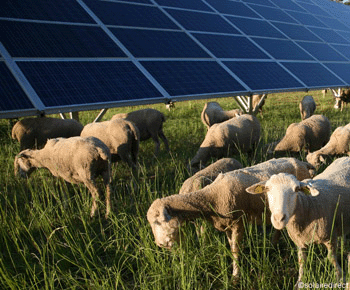
Allowing livestock to graze under renewable developments gives farmers a separate income stream, but solar developers have been slow to catch on.As a flock of about 2,000 sheep graze between rows of solar panels, grazier Tony Inder wonders what all the fuss is about. “I’m not going to suggest it’s everyone’s cup of tea,” he says. “But as far as sheep grazing goes, solar is really good.”
Inder is talking about concerns over the encroachment of prime agricultural land by ever-expanding solar and windfarms, a well-trodden talking point for the loudest opponents to Australia’s energy transition.
But on Inder’s New South Wales property, a solar farm has increased wool production. It is a symbiotic relationship that the director of the National Renewables in Agriculture Conference, Karin Stark, wants to see replicated across as many solar farms as possible as Australia’s energy grid transitions away from fossil fuels.
“It’s all about farm diversification,” Stark says. “At the moment a lot of us farmers are reliant on when it’s going to rain, having solar and wind provides this secondary income.”
In exchange, the panels provide shelter for the sheep, encourage healthier pasture growth under the shade of the panels and create “drip lines” from condensation rolling off the face of the panels.
“We had strips of green grass right through the drought,” Dubbo sheep grazier Tom Warren says. Warren has seen a 15% rise in wool production due to a solar farm installed on his property more than seven years ago.
Despite these success stories, a 2023 Agrivoltaic Resource Centre report authored by Stark found that solar grazing is under utilised in Australia because developers, despite saying they intend to host livestock, make few planning adjustments to ensure that happens……………………………………………………………………………….
According to an analysis by the Clean Energy Council, less than 0.027% of land used for agriculture production would be needed to power the east coast states with solar projects – far less than the one-third of all prime agricultural land that the rightwing thinktank the Institute of Public Affairs has claimed will be “taken over” by renewables. That argument, which has been heavily refuted by experts, has been taken up by the National party, whose leader, David Littleproud, said regional Australia had reached saturation point with renewable energy developments.
Queensland grazier and the chair of the Future Farmers Network, Caitlin McConnel, has sold electricity to the grid from a dozen custom-built solar arrays on her farm’s cattle pastures for more than a decade.
“Trial and error” and years of modifications have made them structurally sound around cattle and financially viable in the long-term, she says.
“As far as I know, we are the only farm to do solar with cattle,” McConnel says. “It’s good land, so why would we just lock it up just for solar panels?” https://www.theguardian.com/australia-news/article/2024/jun/13/farmers-who-graze-sheep-under-solar-panels-say-it-improves-productivity-so-why-dont-we-do-it-more
Why bet on a loser? Australia’s dangerous gamble on the USA
June 15, 2024, by: The AIM Network, By Michael Williss, https://theaimn.com/why-bet-on-a-loser-australias-dangerous-gamble-on-the-us/
A fresh warning that the US will lose a war with China has just been made by a US data analytics and military software company with US Department of Defense contracts.
It seems no-one is prepared to back the US to win a war with China, so why is Australia going all-out to align itself with provocative moves and hostility from the US directed at China?
Govini released its latest study of US capacity to fight China in June. Its annual reports measure the performance of the US federal government, looking at 12 top critical national security technologies through the lens of acquisition, procurement, supply chain, foreign influence and adversarial capital and science and technology.
It concluded that it is nearly impossible for the US to win a war against the PLA if a conflict were to break out between the two global superpowers.
The report also found that China has more patents than the US in 13 of 15 critical technology areas, further demonstrating how the US is falling behind in AI development.
“This year’s report also highlighted another reason a US conflict with China could be unwinnable: the very real possibility of parts scarcity.”
It identified serious risks within seven major DoD programs, including the cornerstone of AUKUS, namely the Virginia-class submarines. Not that this will worry the cargo-culters in Canberra who keep throwing billions at the fraught arrangement.
Another factor was China’s lead in the global supply chains.
-ADVERTISEMENT-
Govini CEO Tara Murphy Dougherty said:
”China still has a dangerously high presence in US government supply chains. The Departments of the Navy and Army showed a decreasing reliance on Chinese suppliers over the past year, however, the Department of the Air Force showed a 68.8 percent increase in the usage of Chinese suppliers.”
Govini’s report adds to a number of similar scenarios in recent years, starting with the headlined warning by The Times on May 16, 2020 “US ‘would lose any war’ fought in the Pacific with China.”
In the New Atlanticist, Lieutenant Colonel Brian Kerg, an active-duty US Marine Corps operational planner, critiqued biases in modern US war games, in which military planners command opposing armed forces in simulated warfare. He writes that instead of a short, sharp war over Taiwan with a win for the US, as predicted by war games, the greater likelihood is one of a years-long war with China with uncertain outcomes. One of those, too terrible to contemplate, must be the likelihood of Chinese retaliation against Australia for joining the US, for being fully interoperable with its military, and the consequent rubbleisation of Australian cities and attacks on US military bases here.
Retired US Army Colonel Dr John Mauk agrees that any conflict over Taiwan will almost certainly be a prolonged war, and he says that it would be one that favours China. He writes:
“U.S. military forces are too small, their supply lines are too vulnerable, and America’s defense industrial capacity is far too eroded to keep up with the materiel demands of a high-intensity conflict. Another critical factor undermining U.S. capacity to sustain a war is that Americans lack the resilience to fight a sustained, brutal conflict.”
By contrast, China is well-postured to sustain a protracted high intensity war of attrition.
He says that the current political divide in the US impedes its ability to respond to national security crises, and that:
“Americans in general are unprepared for, unwilling, or incapable to perform military service. Short of reinstituting a draft, U.S. military services cannot attract or retain enough manpower quickly enough to sustain a fight with China.”
Former US assistant secretary of state for Europe and Eurasia, A. Wess Mitchell, believes that “United States is a heartbeat away from a world war that it could lose.” He writes that:
“… today’s U.S. military is not designed to fight wars against two major rivals simultaneously. In the event of a Chinese attack on Taiwan, the United States would be hard-pressed to rebuff the attack while keeping up the flow of support to Ukraine and Israel.”
Comparing US and Chinese naval growths, Mitchell says that the US is no longer able to “outproduce its opponents”. With US debt already in excess of 100% of GDP, he says that the debt loads incurred through war with China would risk catastrophic consequences for the U.S. economy and financial system.
He raises the possibility of a Chinese fire-sale of US debt:
“China is a major holder of U.S. debt, and a sustained sell-off by Beijing could drive up yields in U.S. bonds and place further strains on the economy.”
Hillary Clinton raised this quandary facing the US with then PM Kevin Rudd in 2010 when she asked him “How do you deal toughly with your banker?” It is a question that the US has yet to find an answer to.
And questions there are. Harlan Ullman, a senior adviser at the Atlantic Council, opens a January 2024 article with the observation that:
“Since World War II ended, America has lost every war it started. Yes, America has lost every war it started – Vietnam, Afghanistan and the second Iraq War.”
He sounds a warning:
“… given likely weapons expenditure rates should a war with China erupt, the U.S. has the capacity for about a month before, as in Ukraine, it runs out of inventory,” before asking his questions: “War with China would be a strategic catastrophe. The U.S. has not explained how such a war could be fought and won. The economic consequences would be disastrous. And how would such a war end? Can anyone answer these questions?”
China is quite adept at utilising sentiments such as these. Major Franz J. Gayl, a retired Marine Corps infantry officer has regularly written for Chinese online news outlet Global Times. Last year, a number of his contributed articles to GT were published as a book, “The United States Will Lose the Coming War with China” which is available on Amazon.
Australia’s Liberal-Labor pro-US coalition has placed a $368 billion bet on the ability of the US to prevent the expansion of Chinese influence in the South Pacific or its recovery of the island province of Taiwan.
It is an expensive way to be taught the African proverb that when the elephants dance, it is the grass that suffers.
Nationals seats to go nuclear

https://www.abc.net.au/listen/programs/pm/nationals-seats-to-go-nuclear/103970680, 13 June 24
As debate over energy policy intensifies again, the Nationals leader David Littleproud has confirmed that nuclear reactors would be built in Nationals electorates under the Coalition’s plan.
The Coalition is yet to reveal exactly where it would construct nuclear reactors, only saying it would be limited to areas with existing coal fire power stations.
The nuclear option has already sparked some debate the coal heartlands of New South Wales and Victoria.
ABC boss Kim Williams launches stunning attack on Peter Dutton’s nuclear power plan – just days after Laura Tingle said Australia is ‘a racist country’
Daily Mail, By PADRAIG COLLINS FOR DAILY MAIL AUSTRALIA, 13 June 24
ABC’s chairman Kim Williams has launched a blistering attack on Peter Dutton’s nuclear power plan, just days after 7.30 correspondent Laura Tingle was ‘counselled’ for her comments about the Coalition.
Speaking on a panel at Sydney‘s Vivid Festival on Wednesday night, Mr Williams said Mr Dutton’s nuclear policy was ‘absent any of the normal fabric of policy formulation’.
In comments reported by news website Crikey, the national broadcaster’s boss said the Coalition had announced the policy ‘as a sound bite, with no detail as to emissions targets’.
Mr Williams, who is not a journalist and therefore not subject to the ABC’s editorial guidelines, said he was ‘not being political’ and not ‘in any way … speaking for the ABC’.
‘I’m speaking as an Australian citizen, and I’m entitled, like any Australian citizen, to have a view as to the necessity of good public policy in our nation.’
…………………………………………………………………….Just hours before Mr Williams comments, Nationals leader David Littleproud said if the Coalition wins the next election and goes ahead with its nuclear plans, power plants will be in National Party seats.
Mr Littleproud said Australians would ‘know very soon the specific sites’ being proposed.
‘We’ve been very clear that they will be limited to where existing coal power stations are, so we don’t need the extra 28,000 of transmission lines to plug the renewables.
‘We’re clear, there are 12 to 14 existing coal-fired power stations across the country so we can limit to that,’ he told ABC breakfast.
But Mr Williams said the Coalition was not doing near enough to explain what its nuclear plans are.
He said in the past, governments published green papers, which were designed to generate discussion from all interested parties on major issues.
‘And then they published a white paper, which is an announcement of intended government direction from which debate would follow in the Parliament, and then legislation would appear,’ he said.
‘That was the traditional process for public policy formulation, particularly on critical matters such as energy policy. I think it’s a pretty good system.’
Mr Williams has stood by his comments, telling Crikey that he ‘was trying to be as careful as I can be but still answer the question’.
‘It wasn’t said in a sort of vigorous “I’m taking on the opposition here”, it was said as a commentary about public policy and public policy formulation and public policy process.’
An ABC spokesman told Daily Mail Australia: ‘The ABC Chair Kim Williams is not an ABC employee and is not directly involved in creating and publishing journalism.
‘Mr Williams declared he was making his observations as a private citizen.’
Mr Dutton has also been contacted for comment. https://www.dailymail.co.uk/news/article-13524723/ABC-boss-kim-williams-peter-dutton-nuclear-power-plan-laura-tingle.html—
Who prepared Dutton’s report on nuclear power?

By Noel Turnbull Jun 13, 2024, https://johnmenadue.com/who-prepared-duttons-report-on-nuclear-power/
The Canberra Press Gallery is not a homogenous group although its members do seem to suffer from a fair amount of groupthink; preference for gotchas and speculation about what might happen next in politics; and heavy dependence on leaks and drops for copy.
One part of it – the Murdoch part – subsumes this into propaganda and sneering opinion pieces.
All this makes intelligent analysis of policy difficult – as illustrated by the recent coverage of the Dutton Opposition commitment to nuclear power – which is mainly superficial and focussed on the politics of it all. The Albanese Government has not been helpful by saying that they will campaign every day until the election on nuclear policy – a vow unlikely to be kept given the short attention span of the media and party staffers.
Yet just as the best staffers plan answers (usually zingers rather than substance) to media questions about policies and recent political developments it is useful to consider the sort of questions the media might ask – if someone is smart enough to brief them first – after Dutton announces his plans.
The first ones are pretty obvious. Why is the report you commissioned more credible than the CSIRO report’s conclusion that nuclear is more expensive than renewables? Who prepared your report and what are their credentials on nuclear power? Do they have any conflicts of interests?
Then they can get more detailed.
What are the current time frames around the world for building nuclear reactors? Are you aware that the average is about 14 years? How can you be certain, given Australia’s record of infrastructure cost overruns, that they will be built by the announced date and on budget when even at the earliest it would be the late 20240s before one is operational?
Who will you get to build it and what is their track record? Have you analysed the construction record of nuclear power stations around the world and the cost overruns they have experienced?
Where will Australia get the staff and nuclear fuel required to build and commission the plants?
Are you aware that there is currently a worldwide shortage of people who can operate and maintain the existing plants operating around the world? How will you recruit sufficient skilled and experienced staff to operate them given this global shortage?
You have continued to refer to small modular reactors – Can you refer us to one which is in operation or planned?
Are you aware that SMRs and proposed micro sized reactors are so inefficient that they would need HALEU (high-assay low enriched uranium) fuel to power the new stations?
As this would require that, unlike traditional nuclear power stations which require only 3% to 5% enrichment, these new stations would require enrichment of 19.75%, would this mean that a single reactor might contain enough HALUE to make a nuclear weapon?
You have said you will build them on the sites of former coal powered stations? What will be the cost of demolishing the stations and remediating any environmental problems on the sites? How many such sites exist and how many others will become available in time for nuclear construction to meet your timetables?
As you have dumped current emissions targets what will the climate impacts if there are delays in bringing the nuclear power stations online?
What is the impact on meeting carbon targets if support for renewables is diluted in the time lag required for nuclear power?
How do you plan to override States which have legalised nuclear bans?
What are your plans for disposal of nuclear waste?
Now staffers are more likely to be spending their time on factional manoeuvring; writing zingers; thinking about how they can get pre-selection or which lobbying firm might offer them a well-paid gig than other matters.
But Opposition staffers might find it useful to start coming up with convincing answers to questions such as this. And Government staffers should be thinking of how they can be used to demolish Dutton’s case.
1 This month
25 October – Film –Britain’s Nuclear Bomb Scandal: Our Story – part of the Adelaide Film Festival,
Screening and Conversation
A screening of Britain’s Nuclear Bomb Scandal: Our Story (2024) followed by a talk with 2026 Bettison and James Awardee and Tradtional Owner Karina Lester in conversation with Simone Tur.
When: Sun 25 Oct, 12:00pm-Screening, 1:15pm-Talk
Where: The Mercury
Free admission, register below by clicking on BUY TICKETS and select free event tickets, at end of web page:
https://www.adelaidefilmfestival.org/program/2026/britains-nuclear-bomb-scandal-our-story
.

Australians deserve the truth
about
AUKUS – https://aukuspublicinquiry.com/

PETITION – To: Prime Minister Anthony Albanese and the Australian Labor Government

of the week – Australians for War Powers Reform (AWPR)
To see nuclear-related stories in greater depth and intensity

