Day X Marks the Calendar: Julian Assange’s ‘Final’ Appeal

December 22, 2023, by: Dr Binoy Kampmark https://theaimn.com/day-x-marks-the-calendar-julian-assanges-final-appeal/—
Julian Assange’s wife, Stella, is rarely one to be cryptic. “Day X is here,” she posted on the platform formerly known as Twitter. For those who have followed her remarks, her speeches, and her activism, it was sharply clear what this meant. “It may be the final chance for the UK to stop Julian’s extradition. Gather outside the court at 8.30am on both days. It’s now or never.”
Between February 20 and 21 next year, the High Court will hear what WikiLeaks claims may be “the final chance for Julian Assange to prevent his extradition to the United States.” (This is qualified by the prospect of an appeal to the European Court of Human Rights.) Were that to take place, the organisation’s founder faces 18 charges, 17 of which are stealthily cobbled from the aged and oppressive US Espionage Act of 1917. Estimates of any subsequent sentence vary, the worst being 175 years
The WikiLeaks founder remains jailed at His Majesty’s pleasure at Belmarsh prison, only reserved for the most hardened of criminals. It’s a true statement of both British and US justice that Assange has yet to face trial, incarcerated, without bail, for four-and-a-half years. That trial, were it to ever be allowed to take place, would employ a scandalous legal theory that will spell doom to all those who dive and dabble in the world of publishing national security information.
Fundamentally, and irrefutably, the case against Assange remains political in its muscularity, with a gangster’s legality papered over it. As Stella herself makes clear, “With the myriad of evidence that has come to light since the original hearing in 2018, such as the violation of legal privilege and reports that senior US officials are involved in formulating assassination plots against my husband, there is no denying that a fair trial, let alone Julian’s safety on US soil, is an impossibility were he to be extradited.”
In mid-2022, Assange’s legal team attempted a two-pronged attempt to overturn the decision of Home Office Secretary Priti Patel to approve Assange’s extradition while also broadening the appeal against grounds made in the original January 4, 2021 reasons of District Judge Vanessa Baraitser.
The former, among other matters, took issue with the acceptance by the Home Office that the extradition was not for a political offence and therefore prohibited by Article 4 of the UK-US Extradition Treaty. The defence team stressed the importance of due process, enshrined in British law since the Magna Carta of 2015, and also took issue with Patel’s acceptance of “special arrangements” with the US government regarding the introduction of charges for the facts alleged which might carry the death penalty, criminal contempt proceedings, and such specialty arrangements that might protect Assange “against being dealt with for conduct outside the extradition request.” History shows that such “special arrangements” can be easily, and arbitrarily abrogated.
On June 30, 2022 came the appeal against Baraitser’s original reasons. While Baraitser blocked the extradition to the US, she only did so on grounds of oppression occasioned by mental health grounds and the risk posed to Assange were he to find himself in the US prison system. The US government got around this impediment by making breezy promises to the effect that Assange would not be subject to oppressive, suicide-inducing conditions, or face the death penalty. A feeble, meaningless undertaking was also made suggesting that he might serve the balance of his term in Australia – subject to approval, naturally.
What this left Assange’s legal team was a decision otherwise hostile to publishing, free speech and the activities that had been undertaken by WikiLeaks. The appeal accordingly sought to address this, claiming, among other things, that Baraitser had erred in assuming that the extradition was not “unjust and oppressive by reason of the lapse of time”; that it would not be in breach of Article 3 of the European Convention on Human Rights (inhuman and degrading treatment)”; that it did not breach Article 10 of ECHR, namely the right to freedom of expression; and that it did not breach Article 7 of the ECHR (novel and unforeseeable extension of the law).
-ADVERTISEMENT-
Other glaring defects in Baraitser’s judgment are also worth noting, namely her failure to acknowledge the misrepresentation of facts advanced by the US government and the “ulterior political motives” streaking the prosecution. The onerous and much thicker second superseding indictment was also thrown at Assange at short notice before the extradition hearing of September 2020, suggesting that those grounds be excised “for reasons of procedural fairness.”
An agonising wait of some twelve months followed, only to yield an outrageously brief decision on June 6 from High Court justice Jonathan Swift (satirists, reach for your pens and laptops). Swift, much favoured by the Defence and Home Secretaries when a practising barrister, told Counsel Magazine in a 2018 interview that his “favourite clients were the security and intelligence agencies.” Why? “They take preparation and evidence-gathering seriously: a real commitment to getting things right.” Good grief.
In such a cosmically unattached world, Swift only took three pages to reject the appeal’s arguments in a fit of premature adjudication. “An appeal under the Extradition Act 2003,” he wrote with icy finality, “is not an opportunity for general rehearsal of all matters canvassed at an extradition hearing.” The appeal’s length – some 100 pages – was “extraordinary” and came “to no more than an attempt to re-run the extensive arguments made and rejected by the District Judge.”
Thankfully, Swift’s finality proved stillborn. Some doubts existed whether the High Court appellate bench would even grant the hearing. They did, though requesting that Assange’s defence team trim the appeal to 20 pages.
How much of this is procedural theatre and circus judge antics remains to be seen. Anglo-American justice has done wonders in soiling itself in its treatment of Britain’s most notable political prisoner. Keeping Assange in the UK in hideous conditions of confinement without bail serves the goals of Washington, albeit vicariously. For Assange, time is the enemy, and each legal brief, appeal and hearing simply weighs the ledger further against his ailing existence.
More serious governance failures in Defence contracting
The pattern of poor governance by Defence has been further exposed following disturbing revelations in yet another contract.
MICHELLE FAHY, DEC 23, 2023 https://undueinfluence.substack.com/p/more-serious-governance-failures?utm_source=post-email-title&publication_id=297295&post_id=140001297&utm_campaign=email-post-title&isFreemail=true&r=1ise1&utm_medium=email
It was revealed this week that Defence Department officials congratulated themselves for not recording minutes of a critical meeting in which the work of consultants it had hired was being checked against the contract.
Incredibly, the failure to record minutes was noted as a positive in a post-implementation review of the project, with the only negative point listed being that the donuts arrived too early in the meeting.
This serious accountability failure is a breach of Defence’s contracting rules and the Commonwealth Procurement Rules, adherence to which is fundamental to good governance.
The failure to keep minutes of the key meeting means there’s no official record of who attended the meeting, in what capacity, and what contribution they made.
It was just one of a raft of irregularities found in a $100 million contract between the Defence Department and KPMG, which is part of the One Defence Data program, following a damning review by external consultants, Anchoram Consulting.
Some of the irregularities described in the review bear striking similarities to those found in Defence’s controversial Hunter Class frigate procurement from BAE Systems, Australia’s largest ever surface warship acquisition, which has been referred to the National Anti-Corruption Commission following a scathing report by the auditor general.
One of the grounds for the corruption referral was the absence of a number of important accountability documents, including minutes of key decision making meetings, related to the Hunter Class frigate procurement process. (Read full story on the $46 billion frigate procurement here and here.)
The Australian National Audit Office report on the frigates noted that the Defence Department was a serial offender when it came to deficient record-keeping. The auditors footnoted a comment from the Commissioner for Law Enforcement Integrity that a “lack of record keeping can create corruption vulnerabilities within an Agency”.
A lack of record keeping can create corruption vulnerabilities
Another revelation in the Anchoram review was that Defence had made “a six-figure payment” to KPMG “for work the government knew had not been delivered”.
Similarly, as the audit office revealed in May, during the frigate procurement process the Defence Department made milestone payments to BAE Systems even though BAE had missed the milestones.
Anchoram revealed that the KPMG project was plagued by a “lack of accountability” and “real and perceived conflicts of interest”. Core governance documents were not signed off and key requirements of KPMG’s contract were diluted from “mandatory” to “desirable”, sometimes in consultation with KPMG itself, despite Defence requirements stating explicitly that mandatory items cannot be changed.
Furthermore, Anchoram concluded that “the Commonwealth has a significant risk that it absolved [KPMG] from its commercial obligations and consequently transferred delivery risk from [KPMG] to the Commonwealth.”
The review said the Commonwealth’s ability to govern the One Defence Data program’s financials and ensure value for money had been “significantly compromised”.
Similarly, with the frigate procurement process, Defence sidelined the central procurement rule of achieving value for money. Numerous conflicts of interest and revolving door appointments, including the secretive involvement in the frigate tender evaluation process of people formerly employed by BAE Systems (as I reported exclusively in July) prefigure the serious governance issues exposed by Anchoram in Defence’s cosy arrangement with KPMG.
The Anchoram Consulting report, dated April 2022, has been released publicly this week following an order from independent senator David Pocock to the Defence Department.
Meanwhile, the Parliamentary Joint Committee of Public Accounts and Audit is conducting an inquiry into Defence’s frigate procurement process.
Labor MP Julian Hill, the chair of the committee, has stated: ‘It does feel like someone has back-engineered a decision and gone, “we want to go with BAE”…’.
The Anchoram Consulting report on the One Defence Data program can be downloaded here.
Assange Appeal Hearing Set for February

Julian Assange’s wife Stella Assange confirmed that the hearing will take place at the Royal Courts of Justice in the middle of February.
By Joe Lauria / Consortium News, https://scheerpost.com/2023/12/19/assange-appeal-hearing-set-for-february/
Imprisoned publisher Julian Assange will face two High Court judges over two days on Feb. 20-21, 2024 in London in what will likely be his last appeal against being extradited to the United States to face charges of violating the Espionage Act.
Assange’s wife Stella Assange confirmed that the hearing will take place at the Royal Courts of Justice. Assange had had an earlier request to appeal rejected by High Court Judge Jonathan Swift on June 6.
Assange then filed an application to appeal that decision and the dates have now been set. Assange is seeking to challenge both the home secretary’s decision to extradite him as well as to cross appeal the decision by the lower court judge, Vanessa Baraitser.
Baraitser had ruled in January 2021 to release Assange from Belmarsh Prison and deny the U.S. request for extradition based on Assange’s mental health, his propensity to commit suicide and conditions of U.S. prisons. On every point of law, however, Baraitser sided with the United States.
The U.S. appealed her decision, issuing “diplomatic assurances” that Assange would not be mistreated in prison. The High Court, after a two-day hearing in March 2022, accepted those “assurances” and rejected Assange’s appeal.
His application to the U.K. Supreme Court to hear the case was then denied. Assange then applied for a new appeal of Baraitser’s legal decisions and the home secretary’s extradition order.
Swift rejected Assange’s 150-page argument in a three-page rejection. The appeal of that decision will now take place two months from now.
If convicted under the World War I-era Espionage Act, the WikiLeaks publisher and journalist is facing up to 175 years in a U.S. dungeon for publishing classified material revealing crimes by the U.S. state, including war crimes.
Assange was also charged with conspiracy to commit computer intrusion, though the indictment agains him does not accuse him of stealing U.S. documents or even of helping his source, Army intelligence analyst Chelsea Manning, to do so.
A Merry AUKUS Surprise, Western Australia!
December 20, 2023, by: Dr Binoy Kampmark, https://theaimn.com/a-merry-aukus-surprise-western-australia/
The secretive Australian government just cannot help itself. Clamouring and hectoring of other countries and their secret arrangements (who can forget the criticism of the Solomon Islands over its security pact with China for that reason?) the Albanese government is a bit too keen on keeping a lid on things regarding the withering away of Australian independence before a powerful and spoiling friend.
A degree of this may be put down to basic lack of sensibility or competence. But there may also be an inadvertent confession in the works here: Australians may not be too keen on such arrangements once the proof gets out of the dense, floury pudding.
It took, as usual, those terrier-like efforts from Rex Patrick, Australia’s foremost transparency knight, forever tilting at the windmill of government secrecy, to discover that Western Australians are in for a real treat. The US imperium, it transpires from material produced by the Australian Department of Defence, will be deploying some 700 personnel, with their families, to the state. And to make matters more interesting, Western Australia will also host a site for low-level radioactive waste produced by US and UK submarines doing their rotational rounds under the AUKUS arrangements.
The briefing notes from the recently created Australian Submarine Agency reveal that the Submarine Rotational Force-West (SRF-West) will host as many as four US nuclear submarines of the US Navy Virginia-class at HMAS Stirling and one UK nuclear-powered boat from 2027. As part of what is designated the first phase of AUKUS, an Australian workforce of some 500-700 maintenance and support personnel is projected to grow in response to the program before Australia owns and operates its own US-made nuclear-powered boats. Once established and blooded by experience, “This workforce will then move to support our enduring nuclear-powered submarine program and will be a key enabler for SRF-West.”
The ASA documents go on to project that “over 700 United States Personnel could be living and working in Western Australia to support SRF-West, with some also bringing families.” The UK will not be getting the same treatment, largely because the contingent from the Royal Navy will be moving through on shorter rotations.
The stationing of the personnel in question finally puts to rest those contemptible apologetics that Australia is not a garrison for the US armed forces. At long last Australians can be reassured, if rather grimly, that these are not fleeting visits from great defenders, but the constant, and lingering presence of an imperial power jealously guarding its interests.
The issue of storing waste will have piqued some interest, given Australia’s current and reliably consistent failure to establish any long-term storage facility for any sort of nuclear waste, be it low, medium or high grade. But never fear, the doltish poseurs of the Defence Department are always willing to please and, as the department documents show, learn in their servile role.
As Patrick reveals, the documents released under FOI tell us that “operational waste” arising from the Submarine Rotational Force operation at HMAS Stirling will include the storage of low to intermediate level radioactive waste on Australian defence sites. One document notes that, “The rotational presence of United Kingdom and United States SSNs in Western Australia as part of the Submarine Rotational Force – West (SRF-West) will provide an opportunity to learn how these vessels operate, including the management of low-level radioactive waste from routine sustainment.”
The ASA also confirms with bold foolhardiness that, “All low and intermediate radioactive waste will be safely stored at Defence sites in Australia.” The storage facility in question is “being planned as part of the infrastructure works proposed for HMAS Stirling to support SRF-West.”
The Australian Defence Minister Richard Marles has retained a consultant, Steve Grzeskowiak, to the remunerative value of AU$396,000 from February to December this year to identify a suitable site on land owned by the Commonwealth. Absurdly, the same consultant, when Deputy Secretary of Defence Estates, conducted an analysis of over 200 Defence sites in terms of suitability for low-level waste management, finding none to pass muster.
In a troubling development, Patrick also notes that the Australian Naval Nuclear Power Safety Bill 2023, in its current form, would permit the managing, storing or disposing of radioactive waste from an AUKUS submarine, which would include UK or US submarines. Importantly, that waste could well be of a high-level nature. “While the Albanese Government has made a commitment that it will not do so, the Bill leaves the legal door open for possible future agreement from the Australian Government to store high-level nuclear waste generated from US or UK nuclear-powered submarines.”
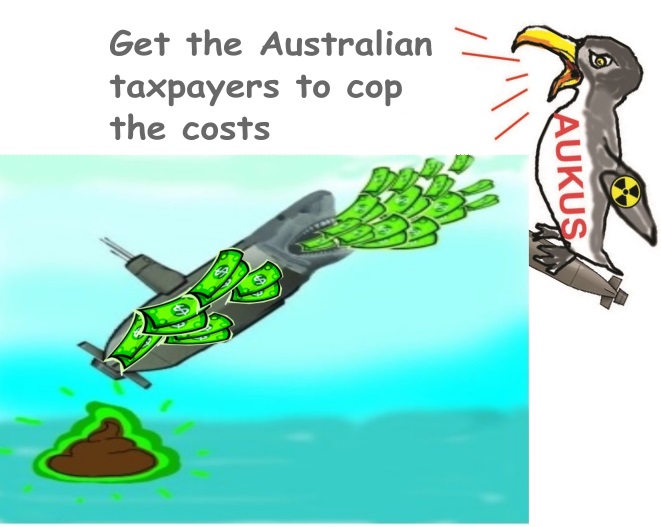
To round matters off, Australia’s citizenry was enlightened to the fact that they will be adding some $US3 billion (AU$4.45 billion) to the US submarine industrial base. In the words of the ASA, “Australia’s commitment to invest in the US submarine industrial base recognises the lift the United States is making to supporting Australia’s acquisition of nuclear-powered submarines.” This will entail the pre-purchase of “submarine components and materials, so they are on hand at the start of the maintenance period” thereby “saving time” and “outsourcing less complex sustainment and expanding planning efforts for private sector overhauls, to reduce backlog.”
Decoding such naval, middle-management gibberish is a painful task, but nothing as painful as the implications for a country that has not only surrendered itself wholly and without qualification to Washington but is all too happy to subsidise it.
CSIRO says wind and solar much cheaper than nuclear, even with added integration costs
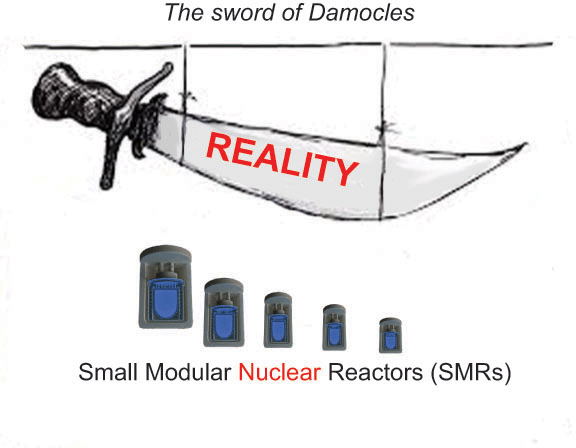
The big mover – and one that is significant in the context of the Australian debate on the energy transition, and the federal Coalition’s insistence that nuclear is the answer to most questions – is the cost of nuclear and small modular reactors.

Giles Parkinson 21 December 2023 ReNewEconomy
The CSIRO has published the latest edition of its important GenCost report, and responded to critics by dialling in near term integration costs for wind, solar and storage. But the result is just the same – renewables are clearly Australia’s cheapest energy option, and the story for nuclear just got a whole ot worse.
The annual GenCost report, prepared in collaboration with the Australian Energy Market Operator since 2018, is an important guide to where Australia’s energy transition is at and where it should be heading, but over the past has become the target of attack from conservative naysayers and the pro-nuclear lobby.
CSIRO has defended its methodology, but to satisfy the critics has added in pre-2030 integration costs – including the new transmission lines being built to connect new generation – and finds that the story is much the same.
“While this change leads to higher cost estimates, variable renewables (wind and solar) were still found to have the lowest cost range of any new-build technology,” the CSIRO says, noting that this includes all integration costs up to and including 90 per cent renewables.
In the past year, cost of solar and offshore wind has fallen, the cost of battery storage has remained steady, but the cost of other technologies such as onshore wind and pumped hydro has increased.
The big mover – and one that is significant in the context of the Australian debate on the energy transition, and the federal Coalition’s insistence that nuclear is the answer to most questions – is the cost of nuclear and small modular reactors.
The CSIRO has been attacked by the pro-nuclear lobby, including conservative media and right wing think tanks, for what the lobby claims are inflated cost estimates, but the CSIRO says recent events have backed its numbers. In fact, they make clear that nuclear SMR costs are worse than thought.
CSIRO economist Paul Graham points to the collapse of a major deal this year involving the most advanced SMR projects in the US, the NucScale projects in Utah, which were withdrawn because of soaring costs.
Graham says it is significant because, as NuScale was listed and had to abide by strict regulatory disclosure rules, it had to be “honest” about the anticipated costs of SMRs.
And these were nearly double what was previously thought. In fact they ended up at the equivalent of $A31,000/MW, according to NuScale filings, and much higher than the $A19,000/MW estimated by the CSIRO in its previous report, and for which it was accused of inflating.
“The UAMPS (Utah utility) estimate implies nuclear SMR has been hit by a 70 per cent cost increase which is much larger than the average 20% observed in other technologies,” the CSIRO writes.
“The cancellation of this project is significant because it was the only SMR project in the US that had received design certification from the Nuclear Regulatory Commission which is an essential step before construction can commence.” Graham says that all other claims on nuclear SMR costs are just marketing and sales talk.
The reality, however, is that talk of nuclear SMRs as a solution for Australia’s energy transition and near term emissions targets are a distraction, given that the SMR technology is simply not available, and unlikely to be so for two decades.
The CSIRO report says some interesting things about the costs of wind and solar, technologies which are available and which do work. It says the costs of these technologies will continue to fall in coming years after the various price shocks that have affected the technologies over the last couple of years.
By including the costs of transmission and storage that is underway now and committed out to 2030 adds 40 to 60 per cent to the 2023 cost of deploying high shares of wind and solar, although that also ignores the technologies cost falls that will occur over time……………………………………………………………………………………….more https://reneweconomy.com.au/csiro-says-wind-and-solar-much-cheaper-than-nuclear-even-with-added-integration-costs/
Opposition need to explain whether they’ll will stick with their ‘nuclear fantasy’
Climate Change and Energy Minister Chris Bowen says the Opposition has some explaining to do about whether they’ll stick with their “nuclear fantasy”.
“So, of course, projects will encounter some challenges – Snowy 2.0 has encountered delays and cost increases,” he said during a media conference on Thursday.
“That’s just one example.
“Nevertheless, it remains a very important project.
“Renewable energy, in all the evidence independently examined by the CSIRO and AEMO, is the cheapest form of energy.”
Cost update blasts nuclear out of energy mix
Canberra Times, By Marion Rae, December 21 2023
A surge in the cost of small nuclear reactors has forced the national science agency to change its calculations for Australia.
The latest modelling of all energy sources, released by CSIRO on Thursday, includes data from a recently scrapped project in the United States that was showcasing nuclear small modular reactors (SMRs) as a way to fight climate change.
The draft GenCost 2023-24 report, out for consultation over summer, shows that while inflation pressures are easing there has been a recalculation on SMRs that puts them out of reach.
Real data on a high-profile six-reactor power plant in the United States has confirmed that the contentious technology costs more than any energy consumer wants to pay.
Project costs for the Utah project were estimated at $18,200 per kilowatt, but the company has since disclosed a whopping capital cost of $31,100/kW, prompting its cancellation in November.
In contrast, under existing policies the cost of new offshore wind in Australia in 2023 would be $5545/kW (fixed) and $6856/kW (floating), while rooftop solar panels are calculated at a modest $1505/kW………………………………………………………………………………………………………………..
A small but vocal group of industry backers have been calling for nuclear SMRs for some years, citing the emerging low-emission technology as being suitable for Australia’s vast and geologically stable landmass.
The coalition recently pledged to reopen the nuclear debate in Australia, where laws ban any research or use of nuclear energy despite the country having the world’s largest uranium reserves.
Regulators estimate it would be around 15 years to first production from a decision to build nuclear SMR in Australia, given the scale of legislative change required.
But even if a decision to pursue a nuclear SMR project in Australia were taken today, with political backing for new laws, it is “very unlikely” a project would be up and running as quickly as 2038, CSIRO said.
Further, CSIRO warned nuclear electricity costs put forward by proponents may be for technology that is not appropriate for Australia, or calculated from Russian and Chinese government-backed projects that don’t operate commercially. https://www.canberratimes.com.au/story/8467236/cost-update-blasts-nuclear-out-of-energy-mix/
Busting the government spin about “radioactive waste management” at Garden Island, Western Australia.

The claim that planning has begun for a “low-level radioactive waste management”
facility at HMAS Stirling as part of the AUKUS arrangements must surely be the worst of
political spin as Garden Island by its geological and topographical settings is both
completely unsuitable and highly dangerous for that purpose.
What is more it will be be difficult to separate the nuclear waste generated through the
use of Stirling into the levels of low and intermediate classifications – and there will be
some of intermediate level generated – for storage or other means of management of
the resulting nuclear waste.
Besides its relatively small size Garden Island is comprised of porous limestone
covered by a thin layer of sand making it unsafe even by extensive engineering from
harmful contamination through leakages of nuclear waste which occur regularly at
above the ground nuclear waste installations
Why does the federal government in its various guises fail to avail itself of the Azark
Project underground nuclear waste facility at Leonora in Western Australia which is
regarded internationally as the best and safest possible for the permanent disposal of
nuclear waste
The Garden Island proposal reeks of the same incompetence as with the choice of
Kimba in South Australia for the national waste facility where the government was
spared by the recent judicial decision against that choice the embarrassment of having
it rejected under international prescriptions for its unsuitable and unsafe nature.
It should be clearly understood that none of the operations of AUKUS can be
implemented until Australia has a proper means for the safe disposal of the resulting
nuclear waste.
Renewables cheaper than nuclear, coal now and into the future: CSIRO

By Mike Foley, December 21, 2023 https://www.smh.com.au/politics/federal/renewables-cheaper-than-nuclear-coal-now-and-into-the-future-csiro-20231219-p5esga.html
Electricity produced by renewables is cheaper than fossil fuels and nuclear power and is expected to remain the lowest cost power source for decades to come, according to findings from the top science agency which challenge the federal opposition’s campaign against the government’s climate policy.
The new findings were published in released in CSIRO’s GenCost report on Thursday, which includes projections that an electricity grid dominated by 90 per cent renewables would deliver considerably cheaper power to households compared to fossil fuel and nuclear alternatives.
Opposition Leader Peter Dutton and his climate change and energy spokesman, Ted O’Brien, are calling for the government to halt the rollout of new energy transmission lines amid a farmer backlash over land access. The Coalition has mounted a campaign for nuclear power to be added to the nation’s energy mix.
Nuclear advocates have criticised previous CSIRO reports for not incorporating the costs of tens of billions of dollars of transmission lines needed to link the growing fleet of wind and solar farms across the country into population centres.
However, CSIRO has now included more than $30 billion of new transmission lines and projects to provide back up power when the wind isn’t blowing and the sun isn’t shining – such as the $12 billion Snowy 2.0 pumped hydro dam.
Its findings still showed that renewables were cheaper than nuclear, coal and other fossil fuels.
The report said that small modular reactors (SMR), a nascent technology not yet in commercial use but favoured by the opposition, would be far more expensive than coal and gas plants as well as renewables.
How did CSIRO calculate the costs?
GenCost uses the metric known as the levelised cost of electricity. This is how much it costs for a power plant to generate electricity, which includes capital expenditure as well as the revenue required to create a return on investment.
The report showed that a mix of wind and solar power in 2023 would generate electricity for $90 to $134 per megawatt hour.
This cost range is projected to fall to a $70 to $100 by 2030 – with renewables generating 90 per cent of the grid’s electricity. The Albanese government has set a target for renewables to reach 82 per cent of the energy mix by 2030.
CSIRO found coal generation is more expensive, even without the cost of transmission lines to link the power stations to the grid. Coal electricity generation costs between $110 and $220 per megawatt hour in 2023. This price drops slightly to a range of $85 to $135 in 2030.
The nuclear option
Dutton is calling for Australia to join a global “nuclear renaissance”, which would require removing the 1998 ban on nuclear energy and building small modular reactors on the site of retired coal-fired power plants.
US company NuScale was developing the world’s most advanced commercial SMR project in Utah, but the project was abandoned in November due to a 70 per cent blowout in project costs.
Using the NuScale project as a guide, CSIRO found that were SMR technology available today it would generate electricity at a cost of $380 to $640 a megawatt hour. This marked an increase from its July projections for SMRs to generate electricity at between $200 and $350 per megawatt hour.
CSIRO said SMR costs would fall as the technology develops, with a projected cost of $210 to $350 a megawatt hour of electricity generation in 2030.
NuScale’s development in Utah was expected to take at least 15 years to switch on, and CSIRO said this was a reasonable time frame to assume for Australia – if the current legislative ban on nuclear energy was removed and the necessary political support was in place.
Atlas Network strategies: how fossil fuel is using “think” tanks to delay action

December 21, 2023, by: Lucy Hamilton, https://theaimn.com/author/lucy-hamilton/
Australians should be wondering why the Centre for Independent Studies (CIS), one of the country’s proudest think tanks, has just established a body promoting nuclear energy that appears to have little to justify it. If the CIS truly believes in the project, surely it would have sought a leader with a stellar resumé?
Earlier this year, environmental journalist George Monbiot warned that the chance of simultaneous harvest failures in the world’s major breadbaskets was “much worse than we thought.” He poured his fury onto the old industries deploying as many Atlas Network-style “junktanks (‘thinktanks’), troll farms, marketing gurus, psychologists and micro-targeters as they need to drag our eyes away from what counts, and leave us talking about trivia and concocted bullshit instead.”
The 500+ global “partner” bodies of the Atlas Network have, for decades, been forming metastasising entities such as “think” tanks to create the sense of a chorus of academic or public support for the junk science and junk political economies that serve their funders. The primary goals have been to liberate plutocrats from any tax or regulation, and fossil fuel bodies have been amongst their most prolific donors.
By contrast with the billions spent to “stop collapse from being prevented,” the effort to prevent Earth systems collapse is led by people “working mostly in their own time with a fraction of the capacity.”
The Atlas strategy involves networking promising ultra-free market spruikers with the astonishing sums of money that fossil fuel and similar industries spend to promote their goals. The spruikers can be trained and cross-connected. Some are helped to create benign-named bodies that describe themselves as think tanks or academic institutes (beachheads) in universities. They found fake grass roots bodies (astroturfing) to pressure politicians into believing that there is public support for a policy. Youthful scholars or strategists co-opted and funded by the machine go on to export the work into politics and the media.
One Australian example is the founder of the Australian Taxpayer Alliance, Tim Andrews. He was a graduate of the Koch Associate Program, a year-long training program at the Charles Koch institute, and worked at the Atlas-partner Americans for Tax Reform for two years. Koch is one of the most significant figures in the Atlas Network’s spread. Andrews is now a member of the UK Atlas Partner, the Taxpayer Alliance Advisory Council.
High profile mining figures in particular unite many of these bodies. In Australia, Hugh Morgan’s name, for example, is present in many of their histories. He assisted Greg Lindsay in turning the CIS from a “part-time hobby” into the more serious institution that it became. Morgan was described in the Sydney Morning Herald in 1985 as “the most important conservative figure in Australia. He is not merely an outspoken captain of industry, he is at the centre of a large and growing network of activists who are seeking to reshape the political agenda in this country.”
In America there is an extensive web of such networks and bodies that interact together. The Atlas Network is important for its international forays into 100 countries, working to infect debate with this American ideology that overwhelmingly promotes the right of corporations to extract resources at any cost to the nation exploited.
Continue readingUS and UK nuclear waste coming to Australia

A ‘low-level radioactive waste management’ facility is planned for near Perth and US and UK nuclear waste could be stored here as early as 2027, and the latest Newspoll has Labor leading the Coalition 52% to 48% two-party-preferred.
Crikey EMMA ELSWORTHYDEC 18, 2023
DUMPED ON
Australia could start taking radioactive waste from the US and UK as early as 2027, Rex Patrick writes for Michael West Media after FOI-ing documents from Defence, which is somewhat at odds with Defence Minister Richard Marles’ insistence that Australia will not be taking US or UK nuclear waste. The ABC continues that a “low-level radioactive waste management” facility is being planned in Perth, with Australian Submarine Agency briefing documents confirming: “All low- and intermediate-level radioactive waste will be safely stored at Defence sites in Australia.” As many as 700 US personnel will head there to look after up to four US nuclear submarines too — there will be fewer British with shorter rotations, however……….. (Subscribers only) more https://www.crikey.com.au/2023/12/18/us-uk-nuclear-waste-australia/
Price Waterhouse Cooper’s (PWC’s) $8m nuclear submarine payday revealed
18 DECEMBER 2023, By: Liam Garman, https://www.defenceconnect.com.au/naval/13341-pwc-s-8-million-nuclear-submarine-payday-revealed
Talking points prepared for Vice Admiral Jonathan Mead, director general of the Australian Submarine Agency, on the Nuclear-Powered Submarine Taskforce’s engagement with the embattled professional services firm have come to light following a freedom of information request from former independent senator Rex Patrick.
Information seen by Defence Connect have detailed two separate contracts between the Nuclear-Powered Submarine Taskforce and the consulting firm via the Defence Support Services Panel.
In total, Defence spent $8,055,928.56 with PwC between 2021 and 2023, with one contract phase costing Defence $560,142.57 for just 12 weeks of consulting work.
The revelation comes as PwC grapples with the fallout of the widely reported tax scandal in early 2023, which saw senior partners at the firm share confidential Commonwealth information with clients to avoid paying tax.
Leaked internal emails from PwC showed that confidential tax information was shared with over 50 of the company’s partners, some of whom then used the information to approach 14 global companies.
The talking points sourced by former South Australian independent senator Rex Patrick were developed for the head of the ASA, Vice Admiral Mead, for budget estimates, who justified the engagements, outlining that “value for money was a core consideration in the Nuclear-Powered Submarine Taskforce’s engagement of PwC”.
The ASA has not engaged with PwC since its creation on 1 July 2023.
Speaking to Defence Connect, an ASA spokesperson explained the taskforce’s engagement with PwC: “The Nuclear-Powered Submarine Taskforce entered into two contracts with PwC, during the 18-month consultation period.
At no time was PwC briefed into any security compartment, nor were they part of any development of the Optimal Pathway during the 18-month consultation period.”
The contracts were awarded to support the development of a domestic nuclear-powered submarine industry and included $5,275,135.90 for the development of Program Management Office (PMO) artefacts, scheduling support, program development and management, and “governance mechanisms”.
The second contract, valued at a total $2,780,792.66, was for the delivery of an enterprise-wide solution on the reporting of workforce demographics, and supported the development and implementation of a workforce support concept development plan.
At its time of writing, the talking points detailed that the Australian Submarine Agency had five ongoing consulting contracts valued at $2.756 million with KPMG and Deloitte.
More to follow.
Over 700 American AUKUS personnel to be based in Western Australia, with radioactive storage facility also planned
by defence correspondent Andrew Greene, https://www.abc.net.au/news/2023-12-18/aukus-americans-western-australia-radioactive-storage-facility/103239924
Defence expects more than 700 American personnel could live in Western Australia to support up to four US nuclear submarines being stationed at HMAS Stirling, where a “low-level radioactive waste management” facility is also being planned.
Key points:
- Western Australia will host the first submarines from 2027
- British personnel are also expected to join rotations but without families
- Radioactive waste will be stored at Defence sites including a new management facility in Perth
The projections are contained in comprehensive briefing notes prepared by the newly created Australian Submarine Agency (ASA) which also detail how a one-off Australian government payment of $US3 billion ($4.45 billion) will be spent by the United States.
Under the optimal pathway announced by AUKUS leaders earlier this year, the Submarine Rotational Force – West (SRF-West) would first begin hosting Royal Navy Astute-class and US Navy Virginia-class submarines at HMAS Stirling from 2027.
A Virginia-class submarine carries a crew of 132 according to the US Navy, while an Astute-class boat deploys with almost 100 Royal Navy submariners on board.
“This workforce will then move to support our enduring nuclear-powered submarine program and will be a key enabler for SRF-West,” the ASA states in documents obtained under Freedom of Information by former Senator and submariner Rex Patrick.
“In addition to these 500-700 Australians at its height, we estimate that over 700 United States Personnel could be living and working in Western Australia to support SRF-West, with some also bringing families,” the ASA predicts.
According to the ASA, SRF-West will be established as early as 2027 and expand in subsequent years to support up to four US and one UK nuclear-powered submarine, with the Australian government investing $8 billion to expand HMAS Stirling outside Perth.
The ASA notes there will also be “a small United Kingdom contingent living in Perth” but most British personnel supporting SRF-West “will be in Australia for shorter rotations, meaning they will not be bringing families with them”.
Planning begins for low-level radioactive waste management
Decisions on where Australia will eventually dispose of its nuclear submarine reactors are not expected for many years, but planning has begun for “low-level radioactive waste management” at HMAS Stirling to support SRF-West.
“Expertise to manage low-level operational waste arising from nuclear-powered submarine operations and sustainment will be an important part of Australia building the necessary stewardship capability to operate and maintain its own submarines.”
More details emerge on Australia’s multi-billion dollar payment
Inside the almost 200 pages of ASA briefing notes are further details of how a $US3 billion ($4.45 billion) Australian contribution to the US submarine industrial base will be spent, including on enhancing facilities and pre-purchasing components and materials.
“Australia’s commitment to invest in the US submarine industrial base recognises the lift the United States is making to supporting Australia’s acquisition of nuclear-powered submarines.”
“Pre-purchasing submarine components and materials, so they are on hand at the start of the maintenance period – saving time” and “outsourcing less complex sustainment and expanding planning efforts for private sector overhauls, to reduce backlog”.
Flirting With Nuclear Energy Down Under

December 15, 2023, by: Dr Binoy Kampmark, https://theaimn.com/flirting-with-nuclear-energy-down-under/
It was a policy that was bound to send a shiver through the policymaking community. The issue of nuclear energy in Australia has always been a contentious one. Currently, the country hosts a modest nuclear industry, centred on the Australian Nuclear Science and Technology Organisation (ANSTO), nuclear medicine and laboratory products. But even this has created headaches in terms of long-term storage of waste, plagued by successful legal challenges from communities and First Nation groups. The advent of AUKUS, with its inane yet provocative promise of nuclear-powered submarines for the Royal Australian Navy, adds yet another, complicating dimension to this fact. Without a clear idea of a site, a vital part of the nuclear dilemma remains unresolved.
Broadly speaking, the nuclear issue, in manifold manifestations, has never entirely disappeared from the periphery of Australian policy. The fact that Australia became a primary testing ground for Britain’s nuclear weapons program was hardly something that would have left Canberra uninterested in acquiring some nuclear option. Options were considered, be they in the realm of a future weapons capability, or energy generation.
In a June 29, 1961 letter from Australian Prime Minister Robert Menzies to his counterpart in the UK, Harold Macmillan, concerns over the impediments imposed by a potential treaty that would impose limitations on countries the subject of nuclear testing were candidly expressed. Were that treaty to go ahead, it “could prove a serious limitation on the range of decisions open to a future Australian Government in that it could effectively preclude or at least impose a very substantial handicap on Australia’s acquisition of nuclear weapons.”
Menzies put forth a suggestion that was ultimately never pursued – at least officially. An arrangement deemed “more practical,” suggested the Australian PM, might involve “the supply of ready-made weapons” at the conclusion of such a treaty.
A sore point here were efforts by the Soviets to insist that countries such as Australia be banned from pursuing their own nuclear program. Menzies therefore wished Macmillan “to accord full recognition of the potentially serious security situation in which Australia could find herself placed as a result of having accommodated United Kingdom testing.”
Australia eventually abandoned its nuclear weapons ambitions with the ratification of the Treaty on Non-Proliferation of Nuclear Weapons (NPT) in February 1970, preferring, instead, the nuclear umbrella of extended deterrence offered by the United States. (The nature of that deterrence has always seemed spectacularly hollow.) Domestically, nuclear technology would be sparingly embraced. Nuclear power stations, however, were banned in every state and territory, a policy left unchallenged by a number of parliamentary inquiries.
The quest of meeting emissions reduction targets during the transition to the goal of net zero was bound to refocus interest on the nuclear power issue. The Liberal-National opposition is keen to put the issue of nuclear power back on the books. It is a dream that may never see the light of day, given, according to the chief government scientific body, the CSIRO, its uncompetitive nature and the absence of “the relevant frameworks in place for its consideration and operation within the timeframe required.”
Australian politicians have often faced, even when flirting with the proposition of adopting nuclear power, firm rebuke. South Australian Premier Malinauskas gave us one example in initially expressing the view late last year that “the ideological opposition that exists in some quarters to nuclear power is ill-founded.” It did not take him long to tell the ABC’s 7.30 program that he did not wish “to suggest that nuclear should be part of the mix in our nation.” Australia had to “acknowledge that nuclear power would make energy more expensive in our nation & [we should] put it to one side, rather than having a culture war about nuclear power.”
Opposition Leader Peter Dutton has been by far the boldest, pitching for a gentler exit from the fossil-fuel powered nirvana Australia has occupied for decades. Australia, he is adamant, should join “the international nuclear energy renaissance.” Of particular interest to him is the use of Small Modular Reactors (SMRs), which might be purposefully built on coal generator cites as part of the general energy package alongside renewables. SMRs, as Joanne Liou of the International Atomic Energy Agency explains, “are advanced nuclear reactors that have a power capacity of up to 300 Mw(e) per unit, which is about one-third of the generating capacity of traditional nuclear power reactors.”
The heralded advantages of such devices, at least as advertised by its misguided proponents, lie in their size – being small and modular, ease of manufacture, shipping and installation. They also offer, according to the International Atomic Energy Agency, “savings in cost and construction time, and they can be deployed incrementally to match increasing energy demand.”
For all these benefits, the cold reality of SMR designs is how far they have yet to go before becoming viable. Four SMRs are currently in operation, though these, according to Friends of the Earth Australia’s lead national nuclear campaigner, Jim Green, hardly meet the “modular definition” in terms of serial factory production of components relevant to such devices.
Russia and China, despite hosting such microreactors, have faced considerable problems with cost blowouts and delays, the very things that SMRs are meant to avoid. Oregon-based NuScale has tried to convince and gull potential patrons that its small reactor projects will take off, though the audience for its chief executive John Hopkins is primarily limited to the Coalition and NewsCorp stable. The company’s own cost estimates for energy generation, despite heavy government subsidies, have not made SMR adoption in the United States, let alone Australia, viable.
In his second budget reply speech in May, Dutton showed little sign of being briefed on these problems, stating that “any sensible government [in the 21st century] must consider small modular nuclear as part of the energy mix.” Labor’s policies on climate change had resulted in placing Australia “on the wrong energy path.”
Such views have not impressed the Albanese Government. Energy Minister Chris Bowen insists that counterfeit claims are being peddled on the issue of the role played by nuclear energy in Canada along with false distinctions between the costs of nuclear power and renewable energy.
“If they are serious about proposing a nuclear solution for Australia, the simplistic bumper stickers and populist echo chamber has to come to an end. Show the Australian people your verified nuclear costings and your detailed plans about where the nuclear power plants will go.”
Such verification will be a tall order indeed. As the CSIRO concedes, “Without more real-world data for SMRs demonstrating that nuclear can be economically viable, the debate will likely continue to be dominated by opinion and conflicting social values rather than a discussion on the underlying assumptions.”
Nuclear energy is not viable for Australia, for a number of reasons
By John Grimes, Saul Griffith, Tim Buckley, Blair Palese, Janaline Oh, John Hewson, Mara Bun, https://www.canberratimes.com.au/story/8456455/debating-viability-of-nuclear-power-in-australia/ December 13 2023
The prospect of nuclear power generation in Australia is now a live debate. There are a number of barriers that make nuclear unviable as a solution for Australia’s energy transition in a timeframe necessary to respond to the climate, energy and cost-of-living crisis. We outline these below.
We need energy, decarbonisation and cost of living solutions this decade. The Intergovernmental Panel on Climate Change recommends a 50 per cent emissions reduction by 2030. As former Chief Scientist Dr Alan Finkel has noted, It is hard to imagine first operation of small modular reactor (SMR) technology before 2040.
SMR technology, advocated by proponents of nuclear energy in Australia, is not commercial. There are no SMRs in operation outside of Russia and China, and none under construction in Europe or North America, meaning there is no evidence of their safe and consistent operation, or viability. In November, the only SMR development in the US was terminated.
Nuclear power is prohibited in Australia under federal legislation, with similar legislation in the states and territories.
To overturn these bans and establish the new regulatory and compliance regime would take years and would only be the start of the process of developing a nuclear industry. Sites for reactors would need to be identified, and social licence secured. Rigorous approvals processes would need to run their course. A skilled specialist local workforce would need to be trained and deployed. Robust arrangements would need to be made to manage waste and to mitigate risk. Legal challenges and civic protest would arise.
All of the above means nuclear would not be ready to deploy in a climate-necessary timeframe in Australia.
Therefore, we must continue to deploy the commercially viable and proven zero-emissions technologies of firmed solar and wind power as rapidly as possible.
Further, the cost of nuclear power generation is much higher than its low-cost alternatives.
The 2022 World Nuclear Industry Status Report (WNISR) notes that between 2009 and 2021, unsubsidised costs for solar PV declined from US$359 to US$36 per megawatt hour (MWh), a fall of 90 per cent, and for wind from US$135 to US$38 per MWh, a 72 per cent fall, while nuclear power costs rose from US$123 to US$167 per MWh, up 36 per cent. This gap is widening.
The CSIRO/Australian Energy Market Operator May 2023 GenCost report found that: “A review of the available evidence makes it clear that nuclear power does not currently provide an economically competitive solution in Australia – or that we have the relevant frameworks in place for its consideration and operation within the timeframe required.”
The Investor Group on Climate Change, which represents investors with $30 trillion in assets under management, says there is no interest among investors in nuclear, when nuclear has “project time blowouts of anything from seven to 15-plus years and cost blowouts in the tens of billions, and lowest-cost technologies, renewables, batteries and so on, are available to deploy now”.
The 2023 WNISR notes that in 2022, “total investment in renewable electricity capacity reached a new record all-time high of US$495 billion (up 35 per cent), 14 times the reported global investment decisions for the construction of nuclear power plants”.
The climate and energy price crises require Australia to accelerate the decarbonisation of its electricity system and economy toward zero-emissions this decade.
Australia enjoys the global advantage of superabundant solar and wind resources.
Unlike some economies where nuclear energy is established, Australia also has available landmass for renewables infrastructure and the opportunity to share the benefits with communities.
We urge the federal government to maintain its policy and investment focus on the proven technology of low-cost, deflationary firmed renewables and “electrification of everything”, and to accelerate deployments, as it has done with its recent landmark boost to the Capacity Investment Scheme (CIS) bolstered by its pledge at COP28 to triple renewables by 2030.
When announced last year, the federal government said the first iteration of its CIS would drive around $10 billion of investment in clean dispatchable power.
Climate Energy Finance estimates the recently announced turbocharging of the CIS will see a four-fold lift in firmed clean energy investment across Australia.
The fastest-to-deploy and most popular renewable energy option for Australia is rooftop solar, the world’s cheapest energy source, because it eliminates transmission and distribution costs.
Mass solar electrification of households should be central to our clean energy transition plans.
Electrification of communities and commercial operations in Renewable Energy Zones will improve equity and build social licence for large-scale energy infrastructure, as it enables decarbonisation of industry.
These complementary actions will permanently reduce greenhouse emissions and energy prices, enable Australia to deliver on its climate commitments, and catalyse our generational opportunity to position Australia as a zero-emissions trade and investment leader.
Australia has no time to lose. The rise of renewables offers us a chance to reinvent Australia’s economy.
We can ill afford the opportunity cost of delay to our renewables transformation.
John Grimes is CEO of the Smart Energy Council. Dr Saul Griffith is co-founder and chief scientist of Rewiring Australia. Tim Buckley is a director of Climate Energy Finance. Blair Palese is founder of the Climate Capital Forum. Janaline Oh is executive director of Diplomats for Climate and a former senior diplomat. Dr John Hewson AM is a professor at the ANU Crawford School of Public Policy. Mara Bun is a company director and former president of the Australian Conservation Foundation.
1 This month
25 October – Film –Britain’s Nuclear Bomb Scandal: Our Story – part of the Adelaide Film Festival,
Screening and Conversation
A screening of Britain’s Nuclear Bomb Scandal: Our Story (2024) followed by a talk with 2026 Bettison and James Awardee and Tradtional Owner Karina Lester in conversation with Simone Tur.
When: Sun 25 Oct, 12:00pm-Screening, 1:15pm-Talk
Where: The Mercury
Free admission, register below by clicking on BUY TICKETS and select free event tickets, at end of web page:
https://www.adelaidefilmfestival.org/program/2026/britains-nuclear-bomb-scandal-our-story
.
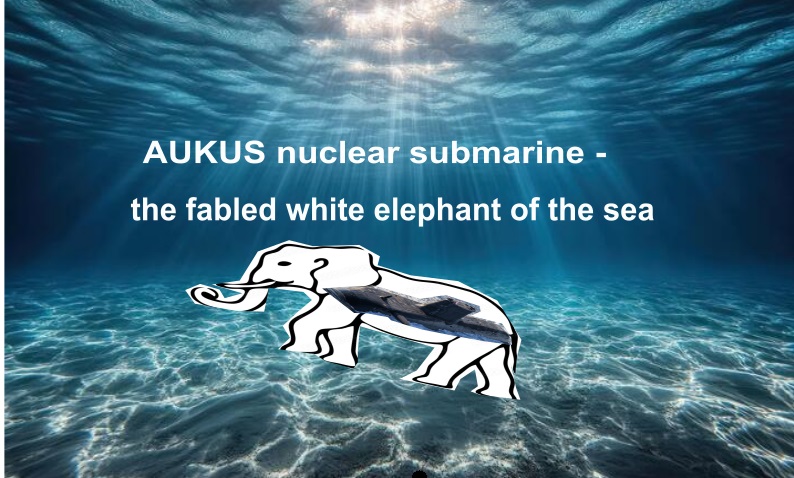
Australians deserve the truth
about
AUKUS – https://aukuspublicinquiry.com/

PETITION – To: Prime Minister Anthony Albanese and the Australian Labor Government

of the week – Australians for War Powers Reform (AWPR)
To see nuclear-related stories in greater depth and intensity

