While the “Iran war” is fuelling Israel’s desire for Middle East chaos, Australia finds itself in strategic quagmire of confused priorities and escalating energy costs. Stuart McCarthy reports.
According to the 2023 Defence Strategic Review, Australia is confronting the “worst strategic circumstances since WWII.” A need to “pivot” from pointless “forever wars” in the Middle East towards the Indo-Pacific and counter a rapid build-up of Chinese military power evidently warrants an overhaul of our “not fit for purpose” defence force, expenditure of up to $368B on AUKUS submarines and a plan to enter the “missile age.”
No mention is made in that “strategic” document of this country’s most serious vulnerability. Namely, our systemic exposure to exactly the kind of global oil shocks triggered by the latest Middle East military fiasco.
Our lack of preparedness for these shocks is the result of at least two decades of inexcusable incompetence across the political spectrum.
The reality we face is that Australia has been caught with its pants down during a seismic but foreseeable shift in the global geopolitical landscape. The fallout from the current Middle East war will hit us hard, and we are not prepared.
Even if the Strait of Hormuz – the vital artery for 20% of global oil supplies – is miraculously reopened to merchant shipping within the next few weeks, an economic recession is already a safe bet. The 1979 oil shock saw a severe recession across industrialised countries. Australia saw a double-dip recession, and unemployment rose to more than 10%.
Oil dependency
Australia produces less oil now than it did in 1979, but demand has doubled over the same period, in line with economic growth. We are now 90% dependent on imported petroleum fuel.
The 20 years needed to transform our road transport fleet have been squandered, and we are at the tail end of a jet fuel-dependent global air transport system. The demand-led Covid recession saw a 7% decline in domestic petroleum fuel consumption, mostly as a result of the near total shut down of the aviation sector, but we now face a collapse in the availability of globally traded petroleum fuels, affecting the entire transport sector.
And there’s more. As much as two-thirds of the Urea fertiliser used by Australian farmers also usually comes through the Strait of Hormuz. There are already shortages of some essential medicines and other manufactured goods, which rely on fragile, just-in-time global supply chains.
The stability of our financial system remains as dependent on the assumption of perpetual economic growth as it did before the 2008 financial crisis. Oil supply and economic shocks such as these are blithely dismissed as “externalities” in business-as-usual finance and economic models. Much of the financial capital we need to properly transform our economy to a sovereign resilience model is sure to evaporate in equities and finance markets.
This shock will undoubtedly be much worse than what we saw in 1979.
“And who will pay the price? In short, we all will.”
The cost of war
Since the end of WWII, the human costs of Australia’s wars have been carried solely by the tiny proportion of our community who serve in the defence force, their families and the populations of countries “over there.”
For most of us, mere curiosities on the evening news or social media feeds.
Within military circles, Australia’s contributions to US-led wars in the Middle East and elsewhere have often been disparaged as niche wars. Relatively small contingents of “niche” capabilities were assigned to US-led military coalitions with little impact on overall strategic outcomes other than legitimising US hegemony, while minimising domestic political risk and accountability in case things went wrong.
Given this government reflexively committed us to this war with even less forethought than previous governments in the last several wars, it would more accurately be described as Albanese’s rubber-stamp war.
Within hours of the first Israeli and US air strikes against Iran on 28 February, Albanese regurgitated the Israeli pretext that Iran posed an imminent nuclear threat. This pretext has already been publicly debunked by the US Director of National Intelligence.
Unprovoked attacks
For the second time in less than a year, the attacks were launched even as US officials were negotiating with the Khamenei regime over its uranium enrichment program. Iran would be irrational to come back to the negotiating table because that is now proven indicator of the next Israel-US aerial bombardment campaign.
“The degree of Israel-US incompetence on display here is breathtaking,”
even before any moral or legal considerations are made.
Now facing a direct existential threat, the Khamenei regime, on the other hand, has responded with a coherent strategy of lateral escalation, for which they have been preparing since at least 2003.
From their perspective, to “win” this war, all they need to do is survive.
Their strategy is to inflict severe economic pain on the global economy by closing the Strait of Hormuz until the US eventually comes to its senses, and to drive a wedge between the US and the Gulf states, which host permanent US military bases that project power across the region.
These bases have been a growing source of tension in the Middle East since the Iranian revolution in 1979 and the Russian invasion of Afghanistan later in the same year. The US at the time saw a Russian presence in Afghanistan as a threat to its vital national interests in maintaining access to Middle East oil exports, responding with a permanent military presence in the Gulf states under its “Carter doctrine.”
Over time, this US support also allowed the Gulf states and Israel to contain the perceived threat to regional stability from the Iranian regime.
Now, almost fifty years later and with the NATO-led Afghanistan and Iraq wars in the rear view mirror, US bases nonetheless remain, part of a self-perpetuating escalatory spiral with Iran.
Iran will not be content with Israel and the US merely stopping their attacks. They are now demanding that US bases in the Gulf be shut down permanently. The Gulf states – despite their serious diplomatic efforts to establish stable relations with Iran – are trapped in the middle of a war they didn’t want, and they have no clear way out.
War out of control?
On Wednesday night, Israel bombed South Pars, the world’s largest gas field jointly owned by Qatar and Iran. Iranian officials have vowed to launch retaliatory strikes against gas and oil infrastructure elsewhere in the region. This marks the next step up the escalatory ladder, and it means the duration of the energy and economic shock will be measured in years, not months.
Trump no longer has control of the situation, even if he ever did. Netanyahu has for many years envisaged not merely regime change but the fracturing of the Iranian state as a strategic win for Israel, and he – not Trump – is calling the shots.
For Australia’s part, our rubber-stamp contribution of an air force Wedgetail surveillance aircraft, ostensibly to help defend the United Arab Emirates from incoming Iranian missiles, has actually played into the hands of the Iranian strategic narrative.
Regardless of Foreign Minister Penny Wong’s nauseating semantics over this aircraft playing a “defensive” role,
“Australia is now party to the war with Iran,”
from our own base at Al Minhad in the UAE, which has already been targeted by the Iranians at least twice. We are one of only a small handful of Western countries with a permanent military presence in the Gulf, a presence that in and of itself is helping to fuel the escalatory spiral.
While all this plays out “over there”, for the first time in almost a century, some of the human cost of this war will be carried by the wider public here at home. Costs for fuel, food and utilities will continue to soar, as will mortgage payments and rents. Savings and investments will take a hit. Many people will lose their jobs. Some will lose their homes.
Among them are those who used to be considered Labor’s core constituents – the “Aussie battlers” who work hard but struggle to make ends meet – before the “workers’ party” abandoned its principles in favour of banal neoliberal economic rationalism, political careerism and mindless identity politics.
We can only hope that this shock might at last see a consensus emerge for a rational, sovereign, independent national security and foreign policy. Our policies of vassal state subservience to the US and, in this case, Israel are beyond unfit for purpose. They are directly undermining our vital national interests. In the meantime, we’re in for a rough ride.
Stuart McCarthy is a medically retired Australian Army officer whose 28-year military career included deployments to Afghanistan, Iraq, Africa, Indonesia and Papua New Guinea. Stuart is an advocate for veterans with brain injury, disabilities, drug trial subjects and abuse survivors. Twitter: @StuartMcCarthy_
‘…every day Trump and Netanyahu’s demands of Australia keep growing.’
She accused Labor of having ‘no red lines’. Australia’s significant Iranian, Israeli, Lebanese, and broader Middle Eastern diaspora communities bring both personal grief and political intensity to the debate.
Operation Epic Fury is exposing the true cost of alliance dependence, energy fragility, and strategic distraction from the Indo-Pacific, writes Vince Hooper.
ON 28 FEBRUARY 2026, the United States and Israel launched Operation Epic Fury against Iran. As the war enters its third week, the scale is staggering: at least 1,348 Iranian civilians killed and over 17,000 injured, 3.2 million displaced, approximately 6,000 U.S. strikes, and a new supreme leader – Mojtaba Khamenei – vowing to keep the Strait of Hormuz closed.
The International Energy Agency warns of the ‘largest supply disruption in the history of the global oil market’. Oil has breached US$100 (AU$142.11) a barrel. More than 820,000 have been displaced in Lebanon as Israel–Hezbollah hostilities reignite.
For Australia, geographically distant but entangled through alliance commitments, intelligence infrastructure, energy dependence and a 115,000-strong diaspora in the Middle East, the ramifications are immediate. In financial economics, alliance membership functions like a call option — the right to draw on a protector’s military power, but at a price paid in sovereignty foregone, bases hosted, and conflicts joined.
The Iran crisis is Australia’s margin call. The price is suddenly, painfully visible.
The alliance reflex
The Albanese Government endorsed Operation Epic Fury with speed that surprised even American officials, while insisting Australia was “not participating” offensively.
By 10 March, that distinction had eroded: Albanese deployed an E-7A Wedgetail early warning aircraft, air-to-air missiles for the UAE, and 85 Australian Defence Force personnel to the Gulf. The Wedgetail’s capacity to map missile launch locations and coordinate battle management in real time makes it far more than a passive shield — the line between defensive and offensive enablement is, as one analyst observed, a blurry one at best.
It has since emerged that three Royal Australian Navy sailors were aboard the U.S. submarine that torpedoed the Iranian frigate IRIS Dena near Sri Lanka on 4 March — the first U.S. submarine torpedo attack since the Second World War.
Albanese confirmed their presence but insisted they did not take part in offensive action. Meanwhile, the Joint Defence Facility Pine Gap near Alice Springs – now hosting 45 satellite radomes and dishes – continues to provide real-time intelligence across the Middle East. A former NSA analyst confirmed in 2023 that Pine Gap was collecting data on the Gaza conflict and “surrounding areas”.
That intelligence flows to Washington and, in turn, to Israel. Having invested decades in this facility, Australia cannot credibly claim neutrality. It is infrastructure that commits the country irrevocably — a strategic investment with no exit clause.
The Indo-Pacific opportunity cost
Here is the dimension that should concern Australian strategists most. In what economists call “real options” theory, the value of an investment depends on keeping the opportunity alive until conditions are ripe. AUKUS is precisely such an option: a ticket to a credible submarine deterrent, but only if the U.S. industrial base and technology transfers remain available. The Iran conflict is degrading every one of those conditions.
The U.S. submarine industrial base produces around 1.2 Virginia-class boats per year against a combined requirement of 2.3.
An Iran war that diverts Navy priorities means no spare construction capacity for Australian boats. Congressional approvals, State Department licences, and Department of Energy support all stall when those agencies are managing Iran’s nuclear fragments. Australia’s planned 2030s submarine delivery could slip to the 2040s. We know the cost of American distraction: between 2001 and 2020, while Afghanistan and Iraq consumed U.S. bandwidth, China militarised the South China Sea, developed carrier-killing missiles, and built the world’s largest navy.
The U.S. has already spent over US$11 billion (AU$15 billion) in Epic Fury’s first week. As the Hudson Institute’s Zineb Riboua has argued, every dollar spent defending Red Sea shipping lanes is a dollar unavailable for Pacific basing or Taiwan contingency planning.
Fat tails at the fuel bowser
Australia imports roughly 90 per cent of its refined liquid fuel. The Strait of Hormuz, carrying a fifth of global petroleum, has been reduced to what the IEA calls ‘a trickle’ — global supplies down an estimated eight million barrels per day. IEA members have agreed to release 400 million barrels from emergency stockpiles, the largest coordinated release in history, but analysts warn this only partially offsets prolonged disruption.
For anyone who studies what statisticians call ‘fat-tailed’ distributions — events that are rare but devastating when they occur — this is a textbook case. Australia’s fuel supply architecture is built for normal times: 36 days of strategic reserves against an IEA benchmark of 90.
According to Westpac’s modelling, a one-month Hormuz disruption lifts the Australian CPI by approximately 1 percentage point; a three-month closure spikes it by 1.5 points and reduces GDP by 0.5 points. Petrol prices could rise 40 cents per litre. LNG prices have surged 12 per cent, and Qatari production remains halted. These pressures compound: higher oil costs flow through shipping, fertilisers, and manufacturing into broader inflation, landing on an economy where the RBA is already navigating delicate disinflation.
115,000 reasons to worry
An estimated 115,000 Australians were in the Middle East when the conflict erupted.
“This is a consular crisis that dwarfs any that Australia has had to deal with in terms of numbers of people.”
The closure of airspace across Bahrain, Iraq, Iran, Qatar, Kuwait, and Syria stranded thousands.
By 10 March, over 2,600 had returned on 18 flights from the UAE.
Tens of thousands remain, with Smartraveller now advising against all travel to the UAE, Qatar, Kuwait, Bahrain, Israel, and Lebanon. Bus convoys to Kuwait and Bahrain, overland routes to Oman, and limited commercial flights have been the improvised lifelines. Canberra also granted asylum to five members of Iran’s women’s football team who were in Queensland for the AFC Women’s Asian Cup — a gesture that only hints at the potential for larger refugee flows if the conflict deepens further.
The rules-based order — selectively applied
Operation Epic Fury was launched without UN Security Council authorisation. Ben Saul the UN Special Rapporteur on the promotion and protection of human rights and fundamental freedoms while countering terrorism, has stated that Iran had not enriched uranium to the point of building a nuclear device — the case for self-defence, in his words, “does not fall anywhere close”.
Australia’s refusal to address the strikes’ legality places it in what ANU’s Don Rothwell calls a “say nothing” posture — conspicuously at odds with its willingness to assert the illegality of Russia’s invasion of Ukraine.
In my own work on alliance behaviour, I model geopolitical commitments using the same frameworks that price financial options. International law functions as a hedge — an insurance policy limiting everyone’s downside. When a country lets that insurance lapse for allies while enforcing it against adversaries, it is strategically exposed.
For a middle power whose influence rests on normative authority rather than military mass, this shapes standing in ASEAN, the Pacific Islands Forum, and every multilateral setting where Western double standards are a live issue.
Domestically, the Greens’ Senator Larissa Waters captured the mood of many when she warned:
‘…every day Trump and Netanyahu’s demands of Australia keep growing.’
She accused Labor of having ‘no red lines’. Australia’s significant Iranian, Israeli, Lebanese, and broader Middle Eastern diaspora communities bring both personal grief and political intensity to the debate.
The energy transition as strategic hedge
If the conflict carries a silver lining, it may be in strengthening the case for energy transition. Renewables and storage now provide nearly 45 per cent of electricity on Australia’s main grid and contributed to halving wholesale power prices in late 2025. Renewable energy is a natural insurance policy against geopolitical oil shocks: its fuel cost is zero and its supply chain is overwhelmingly domestic.
Accelerating electrification of transport, homes, and industry reduces exposure to precisely the kind of extreme energy price events that the Strait of Hormuz crisis illustrates. But the transition is capital-intensive: a one-year delay in wind or transmission projects could increase residential power prices by up to 20 per cent. The conflict sharpens both the urgency and the stakes.
The margin call
The Iran conflict is a stress test for Australian strategic policy on every front: alliance dependence, energy fragility, consular capacity, and commitment to international law. Most importantly, it reveals the opportunity cost in the Indo-Pacific.
Every month of Middle Eastern entanglement is a month in which AUKUS – and a credible deterrent posture in the Western Pacific – loses value. The conflict is not just consuming Australian resources. It is consuming the strategic future those resources were meant to buy.
For policymakers, the lessons are uncomfortable but clear. Diversification – of energy sources, strategic relationships, and economic exposure – is not merely desirable but urgent. The capacity to make independent strategic judgements, rather than reflexively aligning with allied positions, must be cultivated alongside the alliance itself. International law must be applied consistently, not selectively invoked when adversaries breach it and quietly set aside when allies do the same. The margin call has arrived. The question is whether Australia can pay it without liquidating the portfolio.
Vince Hooper is a proud Australian-British citizen and professor of finance and discipline head at SP Jain School of Global Management with campuses in London, Dubai, Mumbai, Singapore and Sydney.
Today marks three years since a widely criticised media series predicted Australia would be at war with China within three years.
The Red Alert series was published by the Sydney Morning Herald and the Age, and featured a panel of national security experts who claimed war was just around the corner and Australia was woefully unprepared.
“As it turns out all five “experts” were wrong and the authors of the series, Peter Hartcher andMatthew Knott, were also wrong,” said AWPR President and former Senator Andrew Bartlett.
No doubt all of Australia is breathing a sigh of relief today as the threat of annihilation recedes.
While it is easy to make fun of this laughable series of reports, it is depressing to think that the views expressed in the articles are common among establishment defence commentators.
We have had years of fearmongering about imminent threats to Australia, all of which have been shown to lack any credibility. Yet this is what currently passes for mainstream defence expertise.
Rarely does a day go by without a news article featuring a so called expert, demonising our largest trading partner and demanding that Australia spends billions more on the military.
This is despite the fact that the government’s own Defence Strategic Review in 2023 found that there is very little risk of an invasion.
Many commentators regularly suggest that if a war over Taiwan erupted, Australia would be compelled to get involved.
This is a dangerous suggestion and should be rejected outright. The Australian government has the right to decline any US request to join foreign wars.
This is why Australia should urgently re-visit War Powers Reform, which would ensure the whole parliament gets a say on overseas wars.
The John Howard-style ‘captain’s call’ decision-making, which we saw over the Iraq and Afghanistan wars is no longer acceptable in modern Australia” Mr Bartlett concluded.
The Australian prime minister, Anthony Albanese, gave Donald Trump a gift of a model nuclear submarine with golden plates and finishes, internal documents reveal, during his visit to the White House last year which sealed the president’s support for the Aukus pact.
The prime minister also presented the US first lady, Melania Trump, with a A$3,000 Paspaley pearl pendant.
The information, obtained by Guardian Australia from the Department of Prime Minister and Cabinet after a four-month freedom of information process, revealed more about the delicate diplomatic planning and charm offensive that went into Albanese’s long-awaited first face-to-face meeting with Trump.
“Gift form” documents from the department reveal Albanese came to the White House bearing a two-foot-long model Virginia-class submarine, mounted on a base with gold plates, and a pearl necklace from one of Australia’s most famous jewellers.
Albanese had previously stated he’d given the Trumps a model submarine and jewellery, but at the time neither Albanese’s office nor his department would reveal any further information about the gifts.
Or, Why Australia chooses to live in the lies of an American world
Burning Archive, Substack, Mar 07, 2026
Australia feinted on the global stage this week when Canadian Prime Minister Mark Carney went to Canberra. Offered dignity as a middle power, the Australian Government acted the pawn in another USA-run war.
Disappointing, but what I have come to expect, and we have to deal with the world as it is, right? Or, so the realist fictions say. But let me tell you a stranger history of the plural Australian experience, and how this decolonised nation came to be that way.
Contemporary Australia’s muddled national sovereignty is the product of three botched decolonisation projects:
Federation as White Dominion, 1890-1920;
USA Agent in a British Commonwealth, 1930-50;
Deputy Sheriff and Starlet in the USA’s Liberal Empire, 1968-1999.
You may not have heard these labels; I devised them for this essay. But don’t worry: I explain the history and evidence behind them at the end of this post on Australia’s experience of decolonisation.
Mark Carney’s Wake-Up Call to Independence
In each of the three botched decolonisation projects, Australians – both élites and masses – chose belonging to an empire, which claimed global supremacy, over modest, gregarious co-existence as a middle power of one earth.
Now, in 2026, another historic opportunity for decolonisation has arisen. It was announced to the Australian Parliament by the Prime Minister of another decolonised dominion, Mark Carney of Canada.
“Yes, the world will always be driven by great powers, but it can also be shaped by middle powers that trust each other and act with speed and purpose.
Mark Carney, Address to Parliament, Hansard, 5 March 2026
Will Australia seize the moment? Will we act with speed and purpose? Will Australia ride, or get dumped by, a fourth wave of US American decolonisation, by the unravelling of the USA Empire?
My hunch is: we will get dumped, and then sucked out with the rip into the most dangerous waters. Like a bad cocky swimmer in rough surf, we have not been paying attention to the world “as it is” around us, and not even swimming between the flags.
At least, the mainstream élites in politics, business and culture in Australia have not been paying attention. The omens of this opportunity for a new decolonisation have been noticed in the Great Southern Land, for a decade or more, by a few dissident, reviled voices. Like antipodean Havels, we have tried to live in the truth, and point out the lies and slogans our leaders ask us to hang in our shop windows, like the indispensable American Alliance, our great and powerful democratic friend, and the ‘liberal rules-based international order,’ exposed as a sham by Mr Carney at Davos. But Australian leaders have suppressed all readings of the omens. They have blocked their ears and masked their eyes. They refuse to see Australia as anything but the Deputy Sheriff of the USA’s Empire or some B-grade celebrity starlet aspiring to be enriched by Rupert Murdoch’s global media empire.
The Closing of the Australian Mind
The Australian mind is closed and colonised, like few around the world. It may be because Mr Murdoch has so successfully counter-colonised the political and cultural networks of imperial masters, Britain and the USA. It may be because we botched our past three attempts at decolonisation, and the gulfs have washed us down. It may be that we have been unlucky in our leaders. But I suspect, most deeply, it is because, in each attempt at independence, we neglected one crucial truth: colonisation begins and ends in the mind.
It’s only Day Five of the war, but surely the epic stupidity of Australia so cravenly backing the US-Israeli invasion of Iran is evident by now. Michael West reports.
We are led by fools and sycophants. The illegal, unprovoked invasion of Iran is not just garden-variety stupidity. This is stupidity on a grandiose, stratospheric scale.
The Israeli propaganda narrative that Iranians would sprinkle rose petals at the feet of their invaders has not come to pass. It has already been demolished in fact.
Instead of bringing freedom and democracy – ‘regime change’ – we have brought chaos, possibly a world war, and definitely the destruction of the Middle East. The world economy is being hit hard as we write; oil prices spiralling, energy prices about to soar, and the inexorable spectre of inflation and recession.
“And it didn’t have to happen.“
This was a war of choice. Even without the “Epstein Coalition” – as the Iranian media so aptly dubs their invaders – murdering 168 Iranian school girls on day one, ‘peace through strength’ was never going to happen.
Quite the contrary. The illegal and unprovoked invasion of Iran has hardened the resolve of Iranians, who are massing in their hundreds of thousands across the country to mourn their dead and chant Death to America, to back their regime.
Where was the advice?
The Epstein Coalition killed the Ayatollah, who was actually against nuclear power; he was a moderate. Did Albo and Penny Wong not seek advice from Foreign Affairs that attacking Iran was folly, that the anti-regime protestors were a minority, that the pre-invasion protests were a Mossad and CIA psyop, that Iran might attack US proxy states in the region, that invasion would be a Brobigdadgian mistake?
Or did they ignore the advice in favour of a Washington regime compromised by the Epstein pedophile scandal?
And now, we see the feeble, hypocritical whining by Israel and its supporters about Iran attacking the Gulf states. Is that our only moral defence? Decades of supporting these regimes: Bahrain, Qatar, Kuwait, Saudi Arabia, and the United Arab Emirates – US proxy states all – regimes now unravelling, the oil price is soaring, inflation and recession are beckoning globally.
Images are emerging from Bahrain of locals cheering on the Iranian missiles. Were DFAT and our politicians unaware of popular angst in the Gulf states against American imperialism?
And what did they expect Iran to do in the face of this existential threat? Not blow up American bases and infrastructure while the US attacked them; after the US betrayed them at the very negotiating table when they were offering significant concessions on nuclear enrichment, all to avoid war? This war.
Australia, the US flunkies
Yet here was Australia, Saturday night, first out of the blocks worldwide to throw its support behind Donald Trump and his preposterous “Operation Epic Fury”, a probable pedophile being blackmailed and led around by the genocidal Benjamin Netanyahu like a pony at the fairground show.
“Operation Epstein Fury”, it was fast labelled. The soaring, craven stupidity is hard to grasp. Both major parties backing it. Albo first, then Angus Taylor rushing to tow the Donald’s line. Then, Pauline Hanson, too, who even congratulated and praised Netanyahu. We are led by fools and sycophants.
The flawed defence of atrocity
To address the empty rhetoric of the pro-war lobby, criticism of this war does not equate to support for the regime in Iran. Defenders of the US-Israel atrocity are busy with their swarms of social media bots peddling the argument that “you are an Islamist terror supporter” if you criticise the invasion.
This is the 2026 version of “You are a Hamas supporter” if you argue against genocide in Gaza.
The cold facts of this debacle are that regime change does not work, that Iran did not want this war, that Iran appears to be exceptionally well prepared – even winning the war – that the Epstein Coalition, which Australia supports, is daily backing war crimes: blowing up hospitals, schools and civilian infrastructure.
“This is a war which has already been lost.“
The obvious reality is that regime change wars are a demonstrable failure. Vietnam. Iraq. Afghanistan. Iraq – a million dead, irretrievable regional stability. In Afghanistan, 20 years, trillions of dollars spent, four US presidents, six Australian PMs – all to replace the Taliban with the Taliban.
And here we are, the world’s busybodies, doing it again.
Who would ever negotiate with the US in good faith again, or Israel for that matter? Iran did not want this war. Iran has not attacked another country in 300 years.
The US lured them to the negotiating table, then, without warning, murdered their leadership. This echoes last year’s 12-day war, where Israel and the US lured them in on the premise of good faith talks, then murdered them and now play the victim.
What did they expect Iran to do in the face of this existential threat?
The record speaks for itself. The US is the biggest invader of other countries in history. Israel has, last year alone, attacked Iran, Iraq, Lebanon, Yemen, Jordan, Palestine, Qatar, Tunisia, Malta, and Greece.
Six illegal attacks of sovereign nations, as well as three illegal attacks in international waters equals 9 all up. In one year. And now they are invading Lebanon again, seizing more territory as their puppets, America, fight their campaign against Iran.
Albo, what are you doing?
We know who the war mongers are. We are the war mongers. Yet, in his bizarre statement of support, Prime Minister Anthony Albanese was the fastest out of the blocks of all the allies on the weekend, issuing a false statement.
The claim, echoed by the usual warmongers of the Lib-Lab establishment, is that Iran is guilty of attacks on Australian soil, referencing alleged attacks on a deli in Bondi.
We know who the war mongers are. We are the war mongers. Yet, in his bizarre statement of support, Prime Minister Anthony Albanese was the fastest out of the blocks of all the allies on the weekend, issuing a false statement.
The claim, echoed by the usual warmongers of the Lib-Lab establishment, is that Iran is guilty of attacks on Australian soil, referencing alleged attacks on a deli in Bondi.
Then there is the age-old claim that Iran is about to produce nuclear weapons. The US and Israel’s nuclear risk claims have been so roundly discredited it’s a joke.
Benjamin Netanyahu has been trying to instigate a war against Iran for 30 years – claiming Iran is days away, weeks away, months away from nuclear missiles.
And they were at the negotiating table again when the Epstein forces murdered them.
The propaganda
We are now seeing mainstream media decry the ‘illegal attacks’ on Israel and the Gulf states. Yet the ‘victim card’ is tapped out. Around the world, outside the legacy media propaganda, there is little sympathy for Israel having razed Gaza and slaughtered between 72,000 and 700,000 Palestinians while stealing more land in the West Bank daily.
It will continue. The media and political classes have failed so majestically that they can only try to salvage their authority with more propaganda.
The deplorable coverage of the murdered schoolgirls in Iran is a case in point. The “40 beheaded babies” and the “mass rapes” of Hamas filled the headlines in the West on October 8, 2023. Yet real murders – 170 murdered schoolgirls – have hardly rated a mention. Yes, a mention perhaps, but a side story, buried, no headlines of outrage.
Can’t handle the truth?
Is the truth too hard to handle? Is it not evident to everybody except the most brainwashed advocate of the Epstein lobby that Israel – the government, the state – is the problem here?
Netanyahu has won his ambition to drag America into a war against Iran, and if you follow the money, while world stock markets teeter, the stock market in Tel Aviv is surging, replete with weapons companies as it is.
Meanwhile, the ASX is tanking, ergo our savings. Oil prices are surging, ergo higher energy prices and inflation. The Houthis, Iran’s allies, are shooting again in the Red Sea while, on the other side of the Arabian peninsula, Iran has blocked the Straits of Hormuz, choking off a large chunk of the world’s oil supply.
Higher prices in India and China will mean higher prices for imports and inflation around the world.
The lessons of history have not been learnt; in fact, they have been discarded in spectacular fashion.
Australia’s acquisition of nuclear-powered submarines is not in fact the most important part of the AUKUS deal – they are a distraction … AUKUS’s main game is the base that Australia intends to give to the US at HMAS Stirling in Western Australia
It is tempting to label the AUKUS project an exercise in self-delusion and self-denial. The number of commentators who believe the project’s core promise will actually be honoured – the transfer of Virginia-class nuclear-powered submarines from the United States to Australia – is astonishingly small and mainly limited to politicians and their hangers-on.
Even in the US, the likelihood of the transfer taking place is openly discounted, including by the chief of naval operations, Admiral Daryl Caudle. As if preparing for a let-down, a new report from the Congressional Research Service advances alternatives to the transfer of the promised submarines that will still allow the US to meet its strategic priorities.
In addition, it is hard to square the submarine promise with the reality that is Washington these days. US President Donald Trump’s willingness to pressure America’s allies and turn the US into a rogue superpower is well documented – just ask the Canadians and Danes. We have witnessed in real time his destruction of the global rules-based order as the US withdraws from dozens of international organisations and agreements.
That the US warship-building industry is in poor shape is also no secret. The odds of the nation being able to increase its submarine build rate to the required level for the transfer to go ahead without a loss of US operational capability is virtually nil, according to a December 2025 report from the Washington-based Center for Strategic and International Studies.
One must accept that Australia’s politicians are reasonably intelligent, yet with the myriad well-known problems facing the nuclear-powered submarine transfer it is hard to understand how they can still insist that the project is “full steam ahead”. Nor is this insistence without cost to the taxpayer, as evidenced in the recent promise to spend $30 billion on South Australia’s Osborne shipyard to make it AUKUS ready. How can our politicians sustain their faith in AUKUS and not be rightly labelled as delusional?
The answer to this contradiction lies in recognising what AUKUS is really about – what the parties actually expect to gain from the agreement. Australia’s acquisition of nuclear-powered submarines is not in fact the most important part of the AUKUS deal – they are a distraction. There are too many challenges to Australia’s acquisition, operation and maintenance of these boats for any rational person to believe they will arrive as promised. Hence AUKUS’s main game is the base that Australia intends to give to the US at HMAS Stirling in Western Australia.
This base may be on Australian soil but its primary beneficiary will be the US, just as it is the US that disproportionately gains from the seemingly “joint” military facilities at Pine Gap and North West Cape.
The forthcoming nuclear submarine base is part of a wider American preparation for a possible war between the US and China. From the base, American submarines will be able to operate against China’s southern flank and sever its lines of communication across the Indian Ocean. In addition, the base allows the US to complicate China’s security arrangements by allowing American forces to operate on multiple lines of attack – westwards across the Pacific Ocean and northwards from Australia.
For the US, the defence of Australia is a distant secondary goal for this base. Our politicians are not therefore being delusional; they are being actively deceptive to their voters, since they must know what it is that the US really wants.
Australia is making enormous improvements to Fleet Base West (Stirling). The base is being upgraded so it can sustain and maintain a fleet of foreign nuclear-powered submarines, principally the US Navy’s Virginia-class attack boats, Ohio-class nuclear-armed missile submarines and the occasional British submarine.
The Stirling upgrade is similar in intent to what is happening at RAAF Base Tindal in the Northern Territory, which is being improved to accept US heavy bombers, presumably including nuclear-armed ones.
As a second order effect, the US presence at Stirling will see a significant influx of American sailors, maintenance personnel and administrative staff to the area. So determined is our government to meet its AUKUS responsibilities and make the US submarine base a reality that it plans to build new homes for the 1200 mainly American military personnel and their families who will be calling Australia home.
In the midst of a national housing crisis, and in a region where home prices increased by 15 per cent in a single year, a similar urgent housing build for Australian citizens is apparently not on the cards.
If one examines AUKUS from the perspective of Australia’s longstanding security practice, what appears to be merely senseless starts to reveal a disturbing logic.
Since the end of World War II, Australian governments have gone to great lengths and expense to keep the US interested in our part of the world. Australia needs to get US attention because the south-west Pacific has never been – and still isn’t – an important part of the world in the eyes of our great power leader.
In order to keep our protector onside and interested in our fate, Australia has had to demonstrate repeated and enthusiastic support for American policy. The need to maintain relevance explains why Robert Menzies encouraged the US to fight in Vietnam, why Australia then invited itself to the war, and why this country went to such great lengths to be included in the 2003 invasion of Iraq, as well as other military missions. Of course, getting into such conflicts was easy. Getting out again can be a lot harder. Any early withdrawal risks offending the US, so Australians have fought to the end.
Generating relevance also explains the readiness with which successive governments have accepted the establishment of US military bases on Australian soil. The most important of these are the spy and signals establishment at Pine Gap and the Naval Communication Station Harold E. Holt.
Just how vital these facilities are to America should not be minimised – they are critical for the conduct of US military and CIA operations, as well as the interception of communications by individuals ranging from actual terrorists to ordinary people, including Australians. The submarine base at Stirling will join Pine Gap and Naval Station Holt as a third facility of great operational importance.
AUKUS has a grim rationale when it is seen as the latest initiative in Australia’s longstanding tradition of seeking American attention. What is different in this case is that Australia’s leaders have increased the nation’s exposure to risk in any future war to a potentially existential level.
In the past, our participation in Vietnam, Iraq and Afghanistan did not create any threat to Australia itself. Only those who served were placed in harm’s way. That is no longer the case.
China is a great power and, unlike Vietnam 60 years ago, has power projection capabilities that can hold Australian territory and population centres at real risk. The Australian government has placed a bullseye on Australia’s back and it isn’t clear if our leaders understand this.
Since the US bases are of great military importance, China would likely seek to destroy them in order to protect its own interests. Worse, China could safely employ nuclear weapons against Australia because the US would be unlikely to retaliate against such distant damage and risk the incineration of one of its own cities.
Without any commensurate benefit, the Australian government has embraced AUKUS and accepted the tremendous costs and risks it entails. It has done so with an appalling lack of honesty towards the Australian public, using the submarine promise like a set of shiny keys in front of a baby.
Our leaders must know that the US will not have submarines to spare when the time comes for the transfer. Instead, they employ deception to distract from the real game – a US submarine base and the unstated commitment of Australia to the American side in a war between great powers.
Of course, this need not be the outcome. Despite tradition and reluctance by our political leaders to embrace new ideas, policy can change. An independent defence policy that puts Australian sovereignty first is within reach, and the military technologies to enact it already exist.
The impediment is the Australian government’s inability to accept the reality of the present security situation. Instead, it opts for nostalgia. Australia needs a government that is willing to embrace the necessary changes in perspective and culture that will allow it to consider other security options.
Perhaps one day our politicians can rise to conceiving and implementing a different security policy, rather than falling back on the traditional default response of jumping up and down to get the attention of Washington. One can only hope.
Criticism of the Australia-US alliance examines whether unquestioning support for the US undermines peace, sovereignty, and regional stability.
Introduction – Asking the Question Australians Rarely Hear
For decades, Australia has treated close alignment with the United States as the unquestioned foundation of its foreign and defence policy. This article advances criticism of the Australia-US alliance in a calm, factual way, asking whether that loyalty still serves Australian interests or exposes the country to unnecessary risk. This is not an argument against the American people. It is an argument for honesty about power, history, and Australia’s place in the region.
The Problem – A History That Is Rarely Acknowledged
1. US power and coercion are not new
US pressure on other nations did not begin with Donald Trump. Across its history, the United States has used sanctions, economic coercion, regime change, and military force to advance strategic and corporate interests. Trump did not invent this behaviour; he removed the diplomatic language that once softened it. This matters because Australia often treats US actions as benign by default, even when they undermine international law or regional stability.
2. US military influence on Australia
The influence of the U.S. military-industrial system extends beyond policy advice to Australian territory itself. Through joint facilities, force posture agreements, and rotational deployments, US military assets run on Australian soil with limited transparency and little public scrutiny. Although described as cooperative, these arrangements often leave strategic control and escalation decisions primarily with Washington.
This creates a clear danger for Australia. In any conflict involving the United States, Australian bases may be considered legitimate targets, regardless of whether Australia has made an independent decision to participate. Hosting foreign forces therefore increases Australia’s exposure to war while reducing its ability to stand apart from US strategic choices.
The Impact – How Fear Shapes Policy and Public Debate
3. The China threat narrative in Australia
Public discussion of China in Australia is dominated by fear-based framing. China is routinely portrayed as an inevitable military adversary, despite being Australia’s largest trading partner and a country whose primary focus has been economic development and internal stability. This narrative leaves little room for diplomacy, cooperation, or recognition that China has not pursued global military dominance as the United States has.
4. Why politicians rarely challenge the US
Australian politicians across both major parties rarely question US behaviour because the costs of dissent are high. Defence integration, intelligence sharing, media pressure, and elite political incentives all discourage independence. Challenging the US risks being labelled reckless or weak on security, even when the concern is evidence-based and aligned with Australian interests.
The Alternative – A Clearer View of Australia’s Interests
5. Seeing China without fear or fantasy
Viewing China in a more positive and realistic light does not mean ignoring disagreements. It means recognising that China poses no credible invasion threat to Australia and that stability is better served through engagement than confrontation. A mature foreign policy distinguishes between legitimate concerns and manufactured fear.
6. An independent foreign policy grounded in peace
Australia keeps full sovereignty over its choices. Independence does not need abandoning alliances, but it does require the courage to say no when US actions increase the risk of war. Reducing automatic alignment would strengthen Australia’s credibility in the region and lower the chance of being drawn into conflicts that do not serve Australian citizens
Practical steps include:
• Prioritising diplomacy and regional institutions • Limiting foreign military exposure on Australian soil • Encouraging genuine parliamentary debate on alliance commitments • Investing in peace building rather than perpetual deterrence……………….
Final Thoughts – Choosing Independence Over Reflex
Australia-US alliance criticism is not about turning away from allies. It is about recognising that blind loyalty carries real dangers. Australia is better served by calm engagement with its region, a realistic view of China, and a clear-eyed assessment of US behaviour. Peace, not fear, should guide Australian foreign policy https://theaimn.net/is-australia-us-alliance-hurting-australia/
Retired rear admiral Philip Mathias, a former director of nuclear policy with the UK Ministry of Defence, told this masthead last month he feared Australians were not adequately informed about how the troubles plaguing the British navy could scuttle the SSN-AUKUS plan.
“ there is a high probability that the UK element of AUKUS will fail,”
“Australia has shown a great deal of naivety and did not conduct sufficient due diligence on the parlous state of the UK’s nuclear submarine program before signing up to AUKUS – and parting with billions of dollars,”
A British nuclear-powered submarine has arrived in Australia for an unprecedented month-long visit despite the well-chronicled problems plaguing the British navy’s ability to send its vessels to sea.
The British and Australian governments are holding up the visit as a sign of the countries’ commitment to the AUKUS pact, even as the United Kingdom views Russia as its most pressing security threat.
HMS Anson, an Astute-class nuclear-powered submarine, arrived on Sunday at the HMAS Stirling naval base in Perth for a month-long maintenance visit.
described the first such visit by a UK nuclear‑powered submarine in Australia as a “historic step in our nation’s readiness to operate and maintain conventionally armed, nuclear‑powered submarines”.
HMS Anson, which was commissioned in 2022, is reportedly the only available submarine in the British navy’s fleet of five Astute-class boats, highlighting the significance of the extended deployment to Australia.
British defence publication Navy Lookout has written that the “timing of the deployment seems extraordinary” as the British navy does not have any other Astute-class submarines available.
“The UK must continue to play its part in AUKUS, but in the short term, perhaps more local concerns should be the priority,” the publication argued this month.
“Placing the sole attack submarine on the other side of the globe appears to be at odds with vigorous official warnings to Russia that ‘any threat will be met with strength and resolve’.”
Navy Lookout said the British navy’s other four Astute-class submarines were “all at low or very low readiness”…………………………………………………………………………………
The plan involves the US selling Australia at least three Virginia-class submarines while the UK and Australia partner on the development of a new class of submarine known as the SSN-AUKUS………….
Retired rear admiral Philip Mathias, a former director of nuclear policy with the UK Ministry of Defence, told this masthead last month he feared Australians were not adequately informed about how the troubles plaguing the British navy could scuttle the SSN-AUKUS plan.
“Whilst the United States may sell some [nuclear-powered submarines] to Australia, there is a high probability that the UK element of AUKUS will fail,” he said
Mathias, who led a 2010 review of the UK Trident nuclear-weapons system, said: “It is clear that Australia has shown a great deal of naivety and did not conduct sufficient due diligence on the parlous state of the UK’s nuclear submarine program before signing up to AUKUS – and parting with billions of dollars, which it has already started to do.”
The head of the British navy, First Sea Lord Gwyn Jenkins, ordered an urgent 100-day drive to tackle systemic delays in the UK submarine program in October.
A few comments about why China is like it is – first of all, in the last 45 years, there has been no invasions, despite what people like little Marco Rubio of the US and Richard Marles the Australian Defence Minister might say, China is not and does not pose a threat to any of these countries – Japan might think there is a threat, China does not agree, in fact the opposite is true, Japan poses a much larger threat to China than China has ever posed to Japan.
China is concerned about, and in fact does feel threatened by Japan’s military expansion because the last time it happened literally millions of Chinese were murdered by the Japanese. Australia’s defence minister, Marles, asks us to consider why China has the world’s largest military expansion but he’s wrong – we have to hope he’s wrong because he’s been misinformed and is too dim to check out for himself, but more likely he knows he’s lying about this as China spends considerably less money than the US, in terms of not only its population but its geographical size, it’s quite entitled to spend more cash, when on a per capita basis, the amount is tiny compared to the US, on a ratio to GDP, it’s smaller than the US, it’s one third or less than NATO has been required to spend in terms of percentage of GDP and there’s one more very important factor that the US with only two neighbouring countries doesn’t have – that is 14 neighbouring countries with a shared land border.
Here’s another thing. China was invaded when they were weak, the British did it, the Americans did it, the eight nations alliance did it, Britain carved up part of Burma and took away some of China, it carved up India and took away parts of China, the Russians carved up Mongolia and Heilongjiang, taking away parts of China, the Japanese invaded and occupied China for 14 years. The classic twists and mental gymnastics people like Marles make would have us believe that the hundreds of US bases around China are to prevent China from doing what they’ve NEVER done – going out to invade other countries.
He, and several pundits would like us all to believe is that the US is keeping the world safe from China by arming their neighbours, interfering in the Provinces, Regions and the SARs but the reality is, China is building a military that will defend Chinese people inside China and Chinese land that belongs to China now – it’s not looking to reclaim land back, except in disputed regions.
Those disputed regions include parts of Tibet that the British took away and gave to India, parts of the South China Seas that the Japanese took away and both the US and UK, at the end of the Second World War, agreed would come back to China. There’s one military base in Africa, which is in a region shared with many other countries, including the USA, Japan, France, Italy, Germany Spain and even Saudi Arabia. Taiwan is NOT one of these disputed regions – the entire world whether they recognise Beijing or Taipei as the capital, recognises that there is one China and Taiwan is part of it – anyone who suggests that Taiwan is a country is either a liar, deliberately misleading us, or is far too dim to read the Constitution of the Republic of China, which not only claims all of the Chinese Mainland, it also wants those disputed regions back too.
China has something else which its detractors hate to admit and will lie about – that’s a policy of non-interference in the affairs of a sovereign nation – when it invests in another nation, it doesn’t call for democracy or elections, it doesn’t even ask that Communism or Socialism are accepted, it doesn’t send military to protect its assets, it won’t send missionaries to convert their subjects and it won’t impose conditions that force countries to give up their national assets or utilities if they can’t make the payments – if that sounds familiar and if it’s because you’ve been hearing that China will do all of those things and, if you think they have, I’d implore you to find me an example of where it’s happened, outside of opinion pieces written by people who want you to believe they have, almost every incident where we can find any of these things alleged, will be speculative – they’ll tell us what China might do, what China could do, what China may be doing, is alleged to have done or suspected to be involved in.
We might find individual cases of rogue Chinese people, Chinese criminals even and they use these tiny individual examples to tell you that this is “what China does” when that person who has broken the law has usually already been punished by the time they report it in western media and, if they mention that at all, it’ll be after the third paragraph where most of us have stopped reading.
On the other hand, I can find literally hundreds of examples where the USA is doing these things, where the UK and France have done these things, where Germany, Belgium, even Spain and Portugal have done them.
So then some of the comments I have been getting relate to the Port in Darwin, the ports in Panama and the Pirelli saga in Italy. Just for some background here, Sinochem owns 37% of Pirelli, the big Italian tyre company which wants to expand into the USA, of course the US won’t allow that while China has such a controlling interest. The share of Sinochem hasn’t changed, the only change is that the board, and remember Sinochem had controlling interest being the largest single shareholder, has declared that Sinochem no longer has control, giving the board more autonomy, – Sinochem agreed to this, so this isn’t a situation where anything has been taken from China, merely an agreement that the board retains control which a Chinese corporation retains more shares.
Erich, one of my followers said this: “if China doesn’t protect its assets it will lose them like Pirelli in Italy, the Ports in Panama, etc. Maybe at some point China will start caring about these things.”
My response is that it’s not just Erich, it’s literally hundreds of people, probably thousands but many in my responses who are misunderstanding China. China cares very deeply about the assets its people and corporations invest in, particularly overseas, but it will not break international laws, or contractual Agreements in order to protect them from people or governments which do break laws.
China will react to this in the same way it reacts to every other illegal action against it, by negotiations, and where they fail, arbitration, it will, when all else fails, take the appropriate legal action, which might be appeals to the WTO and perhaps even the UN or more likely the local courts – it knows there will be no satisfaction from those appeals but they are the legal mechanisms open to Chinese corporation. China as a government participates in legal and lawful bodies and does not want to overthrow them, to do so, makes China another USA – so the actions China takes, which will definitely be retaliatory, will be legal, they can, and probably will reduce purchases from offending countries, and of course, they will be much more careful in the decisions when investing in those countries both of which are well within their legal rights.
What China will not do is: unilaterally sanction anyone, any country or even any organisation within the country, it will not militarily defend its assets, it will not interfere in the internal affairs of another country but there is no doubt in my mind that if any country persists and acts on threats to China’s investments, there will be repercussions, probably it’s best not to call them retaliations, they are simply normal responses to a situation of risk.
In Australia for example, if they persist with this challenge to the legal investments Landbridge has made, investments that are compliant in every way and even beneficial to the people of the Northern Territory in jobs and payroll taxes, as well as increased business going through it’s port and beneficial to the people of Australia in 4.5 million income tax paid last year, those are the people who will suffer – China will find other suppliers for the things Australia sends – so far, the only one which is not directly sourced elsewhere is iron ore and, if China stops buying that in any great quantity, it will kill Australia’s economy.
Just continuing to use Darwin Port as an example, it is a critical trade hub in Northern Australia, handling minerals, agriculture, and livestock, with 2,295 vessel visits recorded in 2024-25, marking a 31.07% increase on the previous year. Darwin serves as a key gateway to Asia, managing significant exports of manganese, titanium, iron ore, and livestock. Given that China is the major trading partner of Australia, a huge proportion, unfortunately, there’s no way I can find out, would be Chinese owned, flagged, operated or destined ships, they would be travelling between China and Darwin – that’s 44 ships a week, many of which will simply divert to other ports, or, if the asset has been seized they’re more likely to simply stop coming altogether – how can that possibly benefit the warehouses, the truckers, the waste management, the catering and hospitality venues that the sailors use, the customs brokers, the security and surveillance companies – there’s an entire eco-system of industries deriving their income from a well-operated port and Darwin, which is a small city will feel a very heavy impact from no Chinese ships arriving and departing there. There will also be a lot of farmers, miners and other suppliers using that port to ship to China – it will all stop.
So, to think China will just sit back and do nothing is wrong, they are very mindful that their investments are not just at risk but under threat – business leaders in China understand this and are already taking action – there’s an April 2024 KPMG report, that’s almost 2 years old now showing that China’s investments in Australia have declined from a peak in 2016, just after the Free Trade Agreement was signed to the lowest level since 2006. It’s well worth a read if you’re interested, the report defines all kinds of factors but fails to mention the obvious one – Australia simply doesn’t want Chinese investment, they feel threatened by perceptions given to them by media which are completely false.
In keeping with the maxim that one person’s loss is another’s gain, the vast majority of China’s Overseas Direct Investment is now going to One Belt One Road countries – these are safe destinations, they are countries that welcome trade with and investments from China. In the Western world, that’s not many countries. Leaders of Canada and the UK were recently in China seeking investment opportunities, in both cases, they returned to their home countries to media criticism. It remains to be seen how they will handle this but they, as leaders, and their business leaders all know the truth – the media is lying, a few politicians who are actually paid by Washington to further lie about China are losing influence. Some people will assume that I’m either exaggerating about this but the reality is there for all to see, if you don’t believe me, go look up who are the main funders of the Inter Parliamentary Alliance on China (IPAC). It states clearly on its website that it does not accept funds from governments. But then lists the Taiwan Foundation for Democracy, the National Endowment for Democracy, the International Republican movement, Hello Taiwan the National Democratic Institute and others, all of which are government funded and almost all of which can trace their funds back to Washington DC and congressionally approved expenditure.
The vast majority of the Non-US aligned world realises – there is no threat from China and, once again I reiterate something I’ve said many times, the people telling you China is a threat are more likely to damage your economy and your global standing than China ever will – China isn’t a threat, it’s those people telling you it is, who are.
The Australian Delegation of the Global Sumud Flotilla released the names of the first wave of Australians, including several First Nations participants, a feminist author, climate justice activists and an anti-zionist Jewish activist, due to set sail to Gaza in late March 2026.
Australian delegates, including Anny Mokotow, Sam Woripa Watson, Clementine Ford, Surya McEwen, Juliet Lamont, Zack Schofield and Jayden Kitchener-Waters, will join thousands of participants from 100 countries as part of the Global Sumud Flotilla. The flotilla will again attempt to break the illegal Israeli naval blockade of Gaza to deliver crucial aid and medicine to Palestinians.
In January, the Israeli government banned Doctors Without Borders, Oxfam, Save the Children, and over 30 other aid organisations from operating within Gaza. Medical evacuations have ended. This attempt by the Global Sumud Flotilla to break the siege on Gaza is now more vital than ever. One of the Australian delegation’s demands is the establishment of a Palestinian-led humanitarian corridor to deliver food and medicine, and to facilitate the entry of health, legal, engineering, logistics and construction workers to support the people of Gaza.
Spokesperson Juliet Lamont stated: “People around the world have had enough of watching the starvation of children and the bombing of Palestinian families in tents. Members of the Australian delegation are sailing to Gaza to sustain and support life. Meanwhile, the Australian Government hosts the President of Israel, Isaac Herzog, a president who has been accused of incitement to genocide by the United Nations Human Rights Council.”
Juliet Lamont, leader of the Australian delegation sailing to Gaza on the Global Sumud Flotilla, condemned the visit of Israeli President Isaac Herzog to Australia, calling it “a failure of democracy and a betrayal of human rights”.
Zack Schofield of climate activist group Rising Tide stated, “Most Australians reject association with breaches of international law. Australians do not want to welcome or assist the architects of mass civilian starvation. We don’t want to be tied to governments that openly flout the Geneva Convention and commit war crimes.” He confirmed a much larger delegation of Australians will be sailing this time in an attempt to break Israel’s illegal maritime blockade and deliver food and medical aid to Gaza.
As Israel continues to attack Gaza from the air, land and sea (despite the so-called ceasefire), the Global Sumud Flotilla is needed now more than ever to break the siege and to let aid flow to Gaza. According to the Gaza Ministry of Health, since the ‘ceasefire agreement’ came into effect on October 10, 2025, Israeli forces killed more than 464 people, including at least 100 children. UNICEF reports that Israeli bombing injured 1,275 people during this period of time. According to the UN, more than three-quarters of the population of Gaza is facing acute hunger and malnutrition.
Zack Schofield explained “A country our politicians call a mate is actively starving and bombing civilians and instead of punishing that behaviour, we’ve just spent millions in taxpayer dollars to play host to a politician who has, according to the United Nations, incited genocidal violence.”
“Ordinary Australians don’t want us to extend friendship, free trade, and even weapons components to a country so proficient at killing unarmed civilians as people suffer through a cost-of-living crisis at home. It’s time for us to get new mates, get aid to Gaza, and get Australia out of Israel.”
He went on to say, “those of us joining the flotilla will be putting our lives on the line to protect what people we can against tanks made with Australian steel, and bombs dropped from F-35s with Australian engineering.”
Jewish activist Anny Mokotow stated “I’m joining the Flotilla because I cannot stand by while Palestinian children die from starvation, homes and hospitals are bombed, and aid is blocked. As a child of Holocaust survivors, I believe “never again” means for everyone. When governments fail, ordinary citizens must act to bring food, medicine, and hope to the most vulnerable.”
Sam Woripa Watson, Wangerriburrah and Birri Gubba community activist and film maker said “We see our collective liberation in Palestinian liberation, and theirs in ours. As First Nations people, we know what colonial violence looks like – land theft and erasure. Palestinians are facing that same violence now. Standing with Gaza is standing for justice everywhere. Let Palestinians live. Let aid flow. Cut ties with Israel.”
Author Clementine Ford stated on joining the Flotilla “I am no different to the mothers in Gaza, even if governments want me to believe I am while they send weapons that kill their children. I know what it is to love a child the same way Palestinian parents do. Let aid flow. Cut ties with Israel.”
Jayden Kitchener-Waters a Gomeroi and Ngiyampaa singer and storyteller said “Our government is helping to do to Palestinians what they did to our people – colonisation, land theft, and starvation. We need to cut ties with Israel, instead of spending millions on bringing Herzog here.”
Surya McEwen, taking part in his fourth flotilla stated “We all feel that the suffering on this mass scale is too much to bear, and something desperately has to be done. Taking these steps together is the most natural and reasonable response in the world. Let Palestinians live. Let aid flow. Cut ties with Israel.”
The Global Sumud Flotilla is calling on people around the world to get involved, sign up to join the flotilla or donate and follow online to keep participants safe. The Flotilla will be sailing from various ports around the Mediterranean from late March 2026 onwards.
They reneg on delivering the “goods” sold, but keep the $368 billion!
the Congressional Research report describes an alternative “military division of labour”, under which the US would not sell any Virginia-class submarines to Australia.
Report offers alternative of the US navy retaining boats and operating them out of Australian bases
A new United States congressional report openly contemplates not selling any nuclear submarines to Australia – as promised under the Aukus agreement – because America wants to retain control of the submarines for a potential conflict with China over Taiwan.
The report by the US Congressional Research Service, Congress’s policy research arm, posits an alternative “military division of labour” under which the submarines earmarked for sale to Australia are instead retained under US command to be sailed out of Australian bases.
One of the arguments made against the US selling submarines to Australia is that Australia has refused to commit to supporting America in a conflict with China over Taiwan. Boats under US command could be deployed into that conflict.
The report, released on 26 January, cites statements from the Australian defence minister, Richard Marles, and the chief of navy that Australia would make “no promises … that Australia would support the United States” in the event of war with China over Taiwan.
“Selling three to five Virginia-class SSNs [nuclear-powered general-purpose attack submarines] to Australia would thus convert those SSNs from boats that would be available for use in a US-China crisis or conflict into boats that might not be available for use in a US-China crisis or conflict,” the report argues.
“This could weaken rather than strengthen deterrence and warfighting capability in connection with a US-China crisis or conflict.”
Under the existing Aukus “optimal pathway’, Australia will first buy between three and five Virginia-class nuclear-powered conventionally armed submarines, the first in 2032.
Following that, the first of eight Australian-built Aukus submarines, based on a UK design, is slated to be in the water “in the early 2040s”.
But the Congressional Research report describes an alternative “military division of labour”, under which the US would not sell any Virginia-class submarines to Australia.
The boats not sold to Australia “would instead be retained in US Navy service and operated out of Australia” alongside US and UK attack submarines already planned to rotate through Australian bases.
The report speculated Australia could use the money saved to invest on other defence capabilities, even using those capabilities as a subordinate force in support of US missions.
“Australia, instead of using funds to purchase, build, operate, and maintain its own SSNs, would instead invest those funds in other military capabilities – such as … long-range anti-ship missiles, drones, loitering munitions, B-21 long-range bombers … or systems for defending Australia against attack … so as to create an Australian capacity for performing other missions, including non-SSN military missions for both Australia and the United States.”
The report also raises cybersecurity concerns, noting that “hackers linked to China” are “highly active” in attempting to penetrate Australian government and contractors’ computers.
It argues that sharing nuclear submarine technology with another country “would increase the attack surface, meaning the number of potential digital and physical entry points that China, Russia, or some other country could attempt to penetrate to gain access to that technology”.
The debate over whether the US should sell boats to Australia is also grounded in ongoing concern over low rates of shipbuilding in the US: the country’s shipyards are failing to build enough submarines to supply America’s own navy, let alone build boats for Australia.
For the past 15 years, the US Navy has ordered boats at a rate of two a year, but its shipyards have never met that build rate “and since 2022 has been limited to about 1.1 to 1.2 boats per year, resulting in a growing backlog of boats procured but not yet built”.
The US fleet currently has only three-quarters of the submarines it needs (49 boats of a force-level goal of 66). Shipyards need to build Virginia-class submarines at a rate of two a year to meet America’s own needs, and to lift that to 2.33 boats a year in order to be able to supply submarines to Australia.
Legislation passed by the US Congress prohibits the sale of any submarine to Australia if the US needs it for its own fleet. The US commander-in-chief – the president of the day – must certify that America relinquishing a submarine “will not degrade the United States undersea capabilities”.
The report argues that Australia’s strict nuclear non-proliferation laws could also weaken US submarine force projection under the current Aukus plan.
Australian officials have consistently told US counterparts that, in adherence to Australia’s commitments as a non-nuclear weapon state under the Treaty on the Non-Proliferation of Nuclear Weapons, Australia’s attack submarines can only ever be armed with conventional weapons.
Herzog isn’t just any visiting dignitary. He reportedly signed artillery shells destined for Gaza – a symbolic endorsement of actions that have killed tens of thousands of civilians, the majority women and children.
When the Jewish Council of Australia says ‘not in our name,’ we have a moral duty to stand with them. Join us on 9th February 2026.
This Monday, I’ll be protesting Israeli President Isaac Herzog’s visit to Australia. This isn’t about politics. It’s about moral clarity.
The Context
On December 14, 2025, fifteen people were killed in a horrific attack at a Hanukkah event on Bondi Beach. The grief is real. The trauma is profound.
Nine days later, on December 23, the Zionist Federation of Australia invited Herzog to meet with victims’ families and survivors. That same day, Prime Minister Anthony Albanese elevated this to an official state visit. Herzog arrives Sunday, February 8, with full red-carpet protocol.
The intention – solidarity with Jewish Australians – is understandable. The execution is appalling.
Why This Matters
Because grief should never be weaponised to provide political cover for someone implicated in grave human rights violations.
UN experts, including Special Rapporteur Francesca Albanese and Professor Ben Saul, have flagged Herzog’s statements as potentially inciting genocide in Gaza. The International Criminal Court has issued arrest warrants for Israeli Prime Minister Netanyahu and former Defence Minister Gallant for war crimes. Australia has obligations under international law.
Human rights lawyer Chris Sidoti has called for rescinding the invitation “for the sake of social cohesion,” arguing that Herzog’s presence inflames rather than heals divisions. Federal Labor MP Ed Husic has voiced deep concerns. Greens Senator David Shoebridge urges the government to withdraw the invitation immediately.
This is not about denying Jewish Australian grief. It’s about refusing to let that grief be used as a political prop while there is genocide in Gaza.
The most powerful voices against this visit are progressive Jewish Australians themselves.
The Jewish Council of Australialaunched a petition declaring: “Israeli President Herzog does not speak for us and is not welcome here.”
Their statement is unequivocal: “This visit betrays Jewish communities, multicultural Australia, and advocates for Palestinian human rights. It conflates Jewish identity with Israeli state actions – a dangerous and offensive move that puts Australian Jews at greater risk, not less.”
Executive Officer Sarah Schwartz warns against “using Jewish grief as a political prop.” The Council has joined a historic legal complaint with the Hind Rajab Foundation and Australian National Imams Council, calling for Herzog to be arrested or barred entry over allegations of incitement to genocide and war crimes.
Progressive Jewish groups like Jews Against the Occupation ‘48 are organising protests. These are not fringe voices – these are Jewish Australians refusing to let their identity be weaponised to justify the unjustifiable.
What Herzog Represents
I stand with them. I support their work. This is what true solidarity looks like
Herzog isn’t just any visiting dignitary. He reportedly signed artillery shells destined for Gaza – a symbolic endorsement of actions that have killed tens of thousands of civilians, the majority women and children.
When UN experts warn that a leader’s rhetoric contributes to potential genocide, when the ICC issues arrest warrants for war crimes against his government’s senior officials, when respected Australian human rights lawyers call for his arrest upon arrival – we have an obligation to listen.
Australia Deserves Better
This visit doesn’t foster unity. It deepens divisions.
It tells Palestinian Australians their lives matter less. It tells progressive Jewish Australians their voices don’t count. It tells the world that Australia will provide red-carpet protocol to leaders implicated in humanitarian catastrophes as long as they claim to represent “the Jewish community.”
That’s not solidarity. That’s complicity
True solidarity means:
Condemning all violence unequivocally
Supporting Jewish Australians in their grief
AND refusing to let that grief be exploited to normalise violations of international law
AND standing with Palestinians facing unimaginable suffering
AND listening when progressive Jewish voices say “not in our name”
These things are not contradictory. They’re all essential to justice.
Monday, February 9
Protests are planned across Sydney, Melbourne, Adelaide, Perth, and beyond. Thousands will gather. NSW Police have extended restrictions on demonstrations, citing “safety concerns” – an attempt to stifle dissent rather than address the root problem.
I’ll be there because silence is complicity
I’ll be there alongside the Jewish Council of Australia, Jews Against the Occupation, Palestinian Australians, and people of conscience from every background.
I’ll be there because when a government provides honours to someone implicated in potential genocide, when UN experts warn us, when our own international law obligations demand action – we have a moral duty to speak.
This Is About Values
Australia prides itself on fairness, multiculturalism, and standing against atrocities. We signed the Genocide Convention. We claim to uphold international law. We say we care about human rights.
Then we must act like it.
Hosting Herzog isn’t just poor judgement – it’s a betrayal of everything we claim to stand for. It says Australia’s commitment to human rights is conditional. It says some lives matter more than others. It says international law applies only when convenient.
I reject that. So do thousands of Australians who will protest Monday.
What I Ask
Join us Monday. If you can’t attend, speak out. Share the Jewish Council of Australia’s petition. Contact your MP and demand they condemn this visit. Support organisations doing the hard work of building true solidarity across communities.
Listen to progressive Jewish voices. The Jewish Council of Australia, Jews Against the Occupation, and countless Jewish Australians who refuse to let their identity be weaponised are showing us what courage looks like.
Understand that opposing this visit is not antisemitic – it’s anti-racist. It refuses the conflation of Jewish identity with Israeli state actions. It protects Jewish Australians by rejecting the very logic that puts them at risk.
Demand better from our government. Australia can support Jewish Australians in their grief without providing state honours to leaders implicated in war crimes. These are not incompatible positions.
Final Word
On December 14, fifteen people were murdered in a tragic attack. That grief is sacred. Those lives mattered. That horror demands justice.
However, justice cannot be built on hypocrisy
We cannot condemn violence against Australians while honouring a leader whose government’s actions are under investigation for war crimes and potential genocide. We cannot claim to stand for human rights while rolling out red carpets for those who violate them.
The families who lost loved ones at Bondi Beach deserve genuine solidarity – not the politicisation of their grief. The Jewish Council of Australia is showing us what that looks like: refusing to let tragedy be exploited, demanding accountability for all, building a future where no community’s safety depends on another’s suffering.
That’s the solidarity I choose. That’s the Australia I believe in
Monday, February 9. We stand for justice. We stand with progressive Jewish voices. We stand against complicity.
We cannot – we will not – stand by.
Join us.
You know what to do.
Onward we press
Details:
When: Monday, February 9, 2026
Where: Protests in Sydney, Melbourne, Adelaide, Perth, and other cities – see the list below.
Who: Jewish Council of Australia, Jews Against the Occupation ‘48, Palestine Action Group, and thousands of Australians of conscience.
This is a peaceful protest. If you’re attending, bring water, wear comfortable shoes, know your legal rights. Legal observers will be present.
Support: Jewish Council of Australia petition and information at jewishcouncil.com.au
Australians who went to fight for ISIS were prosecuted, their families vilified, while former IDF soldiers fighting for Israel walk freely among us. Andrew Brown reports on the double standards.
Australians like to believe our justice system is governed by principle, and crimes judged by what was done, not by who did them. We like a comforting story about ourselves. That justice is served, and accountability painful but even-handed. We tell it often. We believe it when it suits us.
That story collapses the moment it is tested.
After the Brereton Report, Australia demonstrated what accountability looks like when it chooses to take law seriously. Entire Australian Defence Force platoons were investigated. Whole units placed under suspicion. Soldiers interrogated repeatedly. Careers frozen. Medals questioned. Command structures dismantled. Hundreds of millions of public dollars spent. One soldier charged. Many others left suspended indefinitely, their lives stalled in legal limbo.
This pursuit of accountability was not timid or symbolic. It did not flinch at rank, reputation, or heroism. Australia went after its returning heroes, including Victoria Cross recipients, and some of the most decorated units in its military history. It did so publicly and without fear or favour.
“No medal or mythology placed anyone beyond scrutiny.”
Australia wanted the world to see that it would investigate its own forces, not just individuals but units and chains of command, even when it was humiliating and politically costly.
Soldiers going overseas
When Australians travelled to join ISIS, the response was faster and harsher. Passports cancelled. Homes raided. Surveillance expanded. Citizenship stripping powers deployed. Wives treated as accomplices. Children framed as future threats. Suspicion alone was often enough to trigger punishment. Due process became optional.
If Australians fought for Russia against Ukraine, arrests would follow. Prosecutions under foreign incursion and war crimes laws. Media outrage before the luggage carousel stopped turning. The word traitor would appear instantly.
That is the standard Australia claims to uphold.
Gaza
Now consider Gaza. What is occurring is not chaotic warfare. It is a civilian catastrophe with a measurable pattern. Credible casualty analyses based on hospital records, death registries, and independent verification show that approximately 84% of those killed are civilians and around 33% are children. Not combatants miscounted. Not teenagers caught in crossfire. Children.
By comparison, in Ukraine, children account for around 0.3% of casualties. That is a difference of more than one hundredfold.This is not incidental harm. It is demographic concentration.
The destruction follows the same logic. Entire residential districts have been levelled. Homes, schools, universities, bakeries, water infrastructure, and sewage systems have been systematically destroyed. This is not damage caused by fighting around civilians.
“It is the removal of the conditions required for civilian life to continue.”
Hospitals have been a central target. Gaza’s major medical complexes were besieged, raided, and rendered inoperable. Electricity was cut. Fuel was denied. Oxygen supplies ran out. Patients died untreated on floors. Premature infants were left in incubators without power. Medical staff were detained directly from wards and operating theatres, taken without charge, many remaining in detention months later.
This is not collateral damage. It is the dismantling of a healthcare system in real time.
Human rights atrocity
Mass detention has accompanied the physical destruction. Thousands of Palestinians have been taken without charge or access to legal counsel. Human rights organisations have documented beatings, starvation, stress positions, and sexual abuse in detention. Medical professionals and journalists were not spared. They were targeted.
Journalists have been killed at a rate unmatched in any modern conflict. Aid workers have been killed despite operating in clearly marked vehicles and facilities. Among them was Australian humanitarian Zomi Frankcom, killed during a coordinated strike on an aid convoy.
And then there is Hind Rajab.
A six-year-old girl was trapped in a car after her family was shot dead. She called emergency services. Her voice was recorded. An ambulance was dispatched to rescue her. The ambulance was destroyed. Hind was later found dead alongside the paramedics sent to save her.
There was no firefight. No exchange of fire. No ambiguity.
Doctors from Australia, the United States, and Canada who worked in Gaza later testified publicly to treating repeated waves of children with gunshot wounds consistent with sniper fire. Identical entry wounds to heads and chests. These were not anecdotes.
They were clinical observations recorded by trained professionals.
The crime scene
This is why the language of genocide is no longer rhetorical. It is legal. The International Court of Justice has found a plausible risk of genocide and ordered provisional measures. The International Criminal Court is pursuing accountability for war crimes and crimes against humanity arising from Israeli actions.
What is unfolding in Gaza is not a tragedy without authorship.
It is a crime scene.
Australia has chosen silence.
That silence is no longer ignorance. At the National Press Club, senior human rights lawyer Chris Sidoti warned that Australians who served in Gaza may face criminal liability if genocide or war crimes are established. He was explicit. Genocide does not require pulling a trigger. Assistance, facilitation, or knowing contribution can be enough.
“The government did not contest the law. It did nothing.”
The government did not contest the law. It did nothing.
No Australian Federal Police task force. No examination of units or command chains. No transparency. No framework for investigating potential complicity in genocide or war crimes under Australian law.
Instead, indulgence.
An estimated 1,000 former or current Israeli Defence Force soldiers now live freely in Australia. They stroll through Caulfield, Bondi, Dover Heights, and Double Bay. They drink lattes in Sydney cafes. They enjoy suburban normality without scrutiny, while Gaza remains a ledger of rubble, amputations, mass graves, and dead children.And the indulgence does not stop at inaction. It now edges toward empowerment.
NSW Premier Chris Minns has publicly canvassed expanding armed community protection roles, including the involvement of current or former Israeli soldiers in guarding Jewish institutions in Australia. The stated aim is protection against antisemitism. That aim is legitimate. The implications are not.
Policing and the authorised use of force are public functions. They exist because weapons in civilian life require training, oversight, accountability, and law. When governments contemplate arming individuals with recent service in a foreign military now under investigation for genocide, the issue becomes immediate and domestic.
Run the test honestly.
ISIS vs IDF
If ISIS returnees sought to bear arms in public under the guise of community protection, the state would answer with handcuffs and prison, not consent. The request itself would be treated as evidence of danger.
That this proposal can be entertained for one category of foreign fighter while unthinkable for another exposes the fiction at the heart of Australia’s claim to equal justice. The law has not changed. Only who it is prepared to protect has.
“This is not neutrality. It’s policy.”
Australia destroyed careers investigating its own soldiers. It went after its most decorated units without fear or favour. It acted ruthlessly against ISIS recruits. It would move instantly if Australians fought for Russia.
When Australians fight in Gaza under the Israeli flag, amid credible allegations of genocide now before international courts, the state looks away.
“That is not restraint, but complicity.”
History will remember this as the moment Australia blinded its own law, allowing returning IDF soldiers to pass unexamined and exposing fairness before the law as a deliberate lie.
When the US bombs Iranian nuclear sites, it’s a “strike”. When Iran defends itself, it’s “aggression”. When the US funds insurrections, arms rebels and sabotages economies, it’s “promoting democracy”.
While Ms Penny Wong chants the “rules based order” mantra, Mr Moriarty, gets the gong: he is off to Washington to ensure Australia remains locked in step with the world’s biggest bully. Meanwhile, as the ICJ rules that Israel’s actions in Gaza constitute plausible genocide, and as the US and Australia continue to arm and fund Israel’s apartheid regime, the hypocrisy would knock you over. The “rules based order” isn’t about justice. It’s about power and who gets to wield it without consequences.
Australia’s Foreign Minister Penny Wong chants “rules based order” like a sacred hymn.
Order? In reality, it’s a squalid, pseudo-legal jargon for a world where might is right. While the US drops depleted uranium on Iraqi children, arms Israeli apartheid and fuels insurrections in Iran, any nation that dares assert its independence is crushed under a tonne of bricks. In Iran’s case, a hail of “precision strikes” designed to wound, maim and cause lifelong agony. Meanwhile, in Gaza, the International Court of Justice has declared Israel’s actions plausible genocide, ordering an immediate halt to atrocities and unimpeded humanitarian access. The US and its allies, including Australia, have ignored every ruling, proving once again that the “rules based order” is nothing more than a mafia protection racket, and we’re collecting the rent.
Depleted Uranium is often said to drop but it’s part of the super new bullets or “rounds” in use. The A-10 Warthog’s GAU-8 Avenger, for example, fires 30mm DU rounds. Tank rounds (e.g., the US M829 series) use DU in their cores to penetrate enemy armour. So kids get a spray of it, rather than a drop.
When these rounds hit a target, they aerosolise into fine, toxic dust, which can be inhaled or contaminate soil and water, leading to long-term health risks (e.g., cancer, birth defects) and environmental damage.
The Rules Based Order A Licence to Kill
Penny Wong stands in Parliament, her voice trembling with moral certainty. To her, Australia stands with the brave people of Iran as they struggle against an “oppressive regime”. She invokes the rules based order like it’s a force field against tyranny, a beacon of justice in a murky, chaotic and mercenary world. Just one snag. The rules apply to everyone else. Only.
When the US bombs Iranian nuclear sites, it’s a “strike”. When Iran defends itself, it’s “aggression”. When the US funds insurrections, arms rebels and sabotages economies, it’s “promoting democracy”.
When anyone else does it, it’s “terrorism”. And as the US sprays depleted uranium, children become cancer statistics? Birth defects are an inter-generational curse, it’s “collateral damage” a euphemism for war crimes.
This isn’t a rules based order. It’s a licence to kill, and Australia through our defence secretary Greg Moriarty, our intelligence agencies and our slavish alignment with US foreign policy is complicit at every step.
And now, as the International Court of Justice declares Israel’s actions in Gaza a plausible genocide, ordering Israel to halt its military operations and allow humanitarian aid, the US and its allies, including Australia, have done what they always do ignored the ruling and doubled down.
Loaded Language “Regime” vs “Government”, “Strikes” vs “Slaughter”
Let’s talk about the language of empire. The US and its press never refer to the “Iranian government”. It’s always the “Iranian regime” a term that strips legitimacy, implies tyranny and justifies intervention. Meanwhile, Saudi Arabia, a brutal monarchy that beheads dissidents and bombs Yemeni school buses, is a “key ally.”
Israel, an apartheid state with nuclear weapons, is a “vibrant democracy”
When the US bombs a Syrian hospital, it’s a “precision strike”. When Iran fires a missile in self defence, it’s “terrorism”. When the US funds, arms and trains insurgents in Iran such as the Network of Iranian Activists for Democracy (NAD), which distribute Molotov cocktails to protesters and boast about “turning Tehran into a warzone” it’s “supporting democracy”. When Iran arrests those same insurgents, it’s “crushing dissent”.
This isn’t reportage. It’s propaganda, and it’s designed to manufacture consent for the next war.
The Dirty Weapons Engineered to Maim, Designed to Terrorise
The US doesn’t just kill. It maims. It terrorises. It leaves behind a legacy of suffering so grotesque that it defies the term “war crime”. What’s happening is worse than death. Generations suffer. The US has used depleted uranium munitions in every major Middle East conflict since the Gulf War. Why? Because DU is dense enough to pierce armour, but its real legacy is cancer, birth defects and environmental poisoning.
In Fallujah, where the US used DU in 2004, doctors reported a 14 fold increase in birth defects; babies born with two heads, missing limbs and organs outside their bodies. The called the city “the new Hiroshima”. In Syria, the Pentagon confirmed using DU in 2015, despite international condemnation. The result? Radioactive dust that lingers for decades, poisoning soil, water and people. In Iraq, the US ignored its own guidelines, firing DU at unarmoured targets, buildings and even troops turning cities into toxic wastelands.
The US knows DU is a war crime in slow motion. It just doesn’t care.
The US military has set out to maximise suffering. From cluster munitions banned by 100 countries, but still used by the US to white phosphorus, which burns through flesh to the bone, the goal isn’t just to win wars it’s to leave populations traumatised, disabled and dependent.
Cluster bombs scatter hundreds of tiny bomblets, many of which fail to explode until a child picks one up years later. White phosphorus doesn’t just burn. It melts flesh and re-ignites when exposed to air, ensuring victims suffer excruciating, prolonged deaths. Drones don’t just kill targets. They terrorise entire communities, turning the sky into a permanent threat and leaving survivors with PTSD for life.
This isn’t warfare. It’s sadism, dressed up in the language of “national security”.
The Australian Connection Greg Moriarty and the Art of Complicity
Australia isn’t just a bystander to this horror-show. We’re in it up to our necks. Greg Moriarty, our defence secretary and soon to be ambassador to the US, cut his teeth in Iran. As Australia’s ambassador to Tehran from 2005 to 2008, he briefed George W. Bush on Iranian politics at the height of US sabotage operations, assassinations and economic warfare against Iran.
Moriarty’s stellar career is a masterclass in how Australia punches above its weight in the US empire from intelligence sharing to military drill, from sanctions enforcement to diplomatic cover for US aggression.
While Ms Penny Wong chants the “rules based order” mantra, Mr Moriarty, gets the gong: he is off to Washington to ensure Australia remains locked in step with the world’s biggest bully. Meanwhile, as the ICJ rules that Israel’s actions in Gaza constitute plausible genocide, and as the US and Australia continue to arm and fund Israel’s apartheid regime, the hypocrisy would knock you over. The “rules based order” isn’t about justice. It’s about power and who gets to wield it without consequences.
Historical Parallels Chile, Guatemala, Iraq, Syria and Now Iran (and Gaza)
This isn’t new. The US has been skittling independence for decades. In Chile in 1973, the CIA sabotaged the economy, funded strikes and backed a coup against Salvador Allende all to protect US corporate interests. The result? Seventeen years of Pinochet’s torture chambers……………………………………………………………………………………………………………………………………………………………………………………………………………………………….. Call tyranny for what it is. While we are still permitted to express dissent.
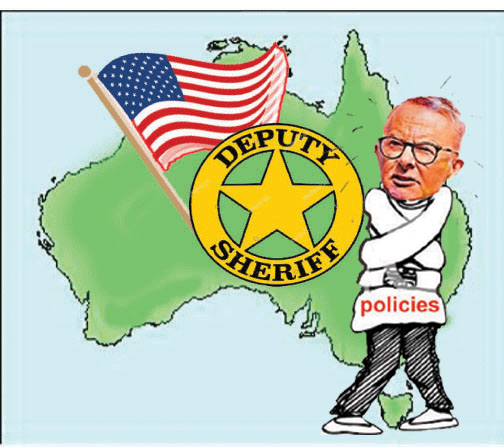

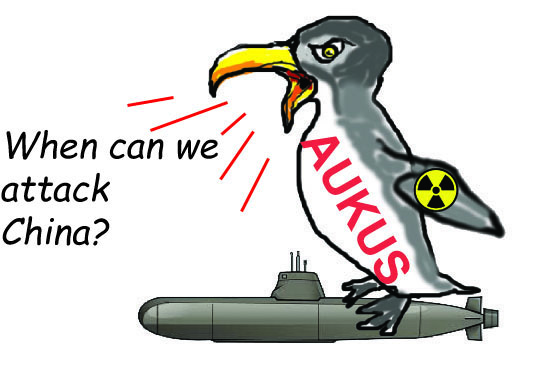

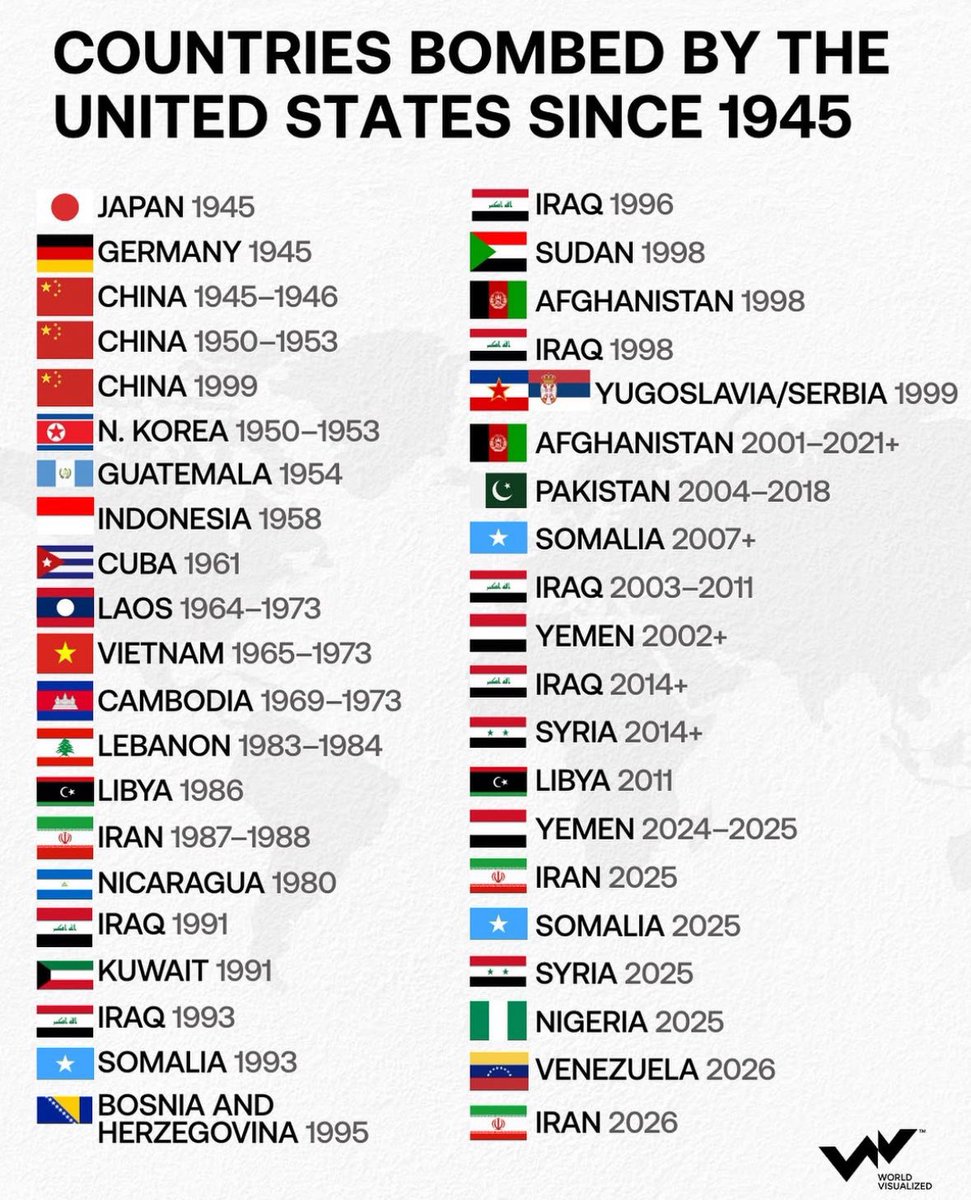
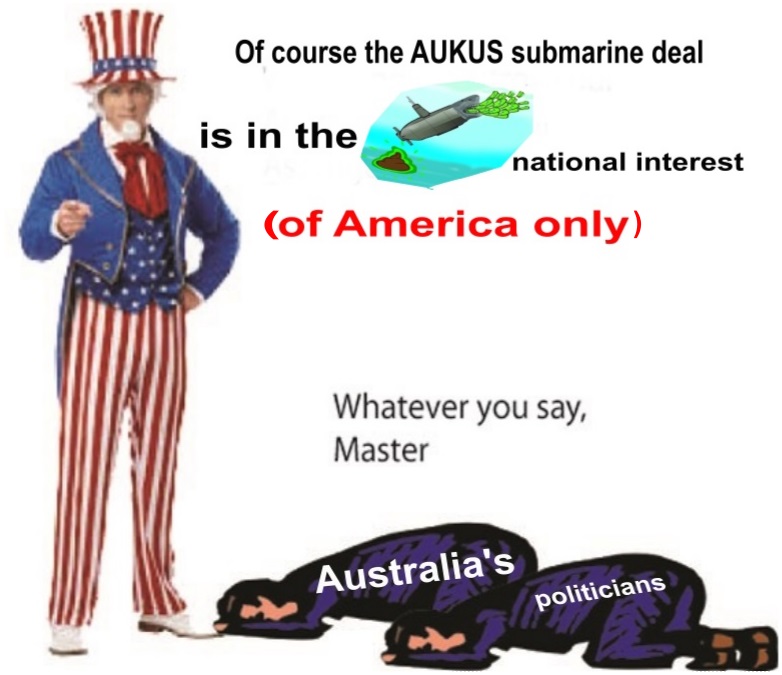
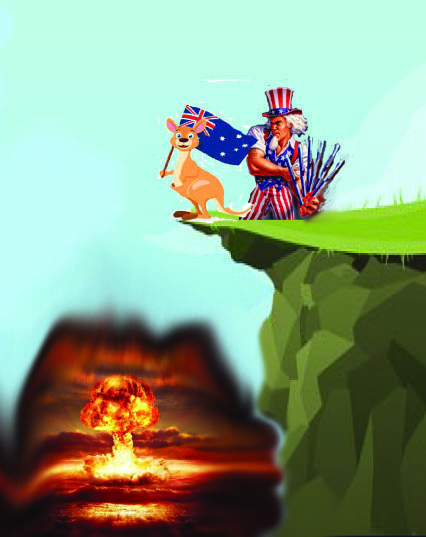


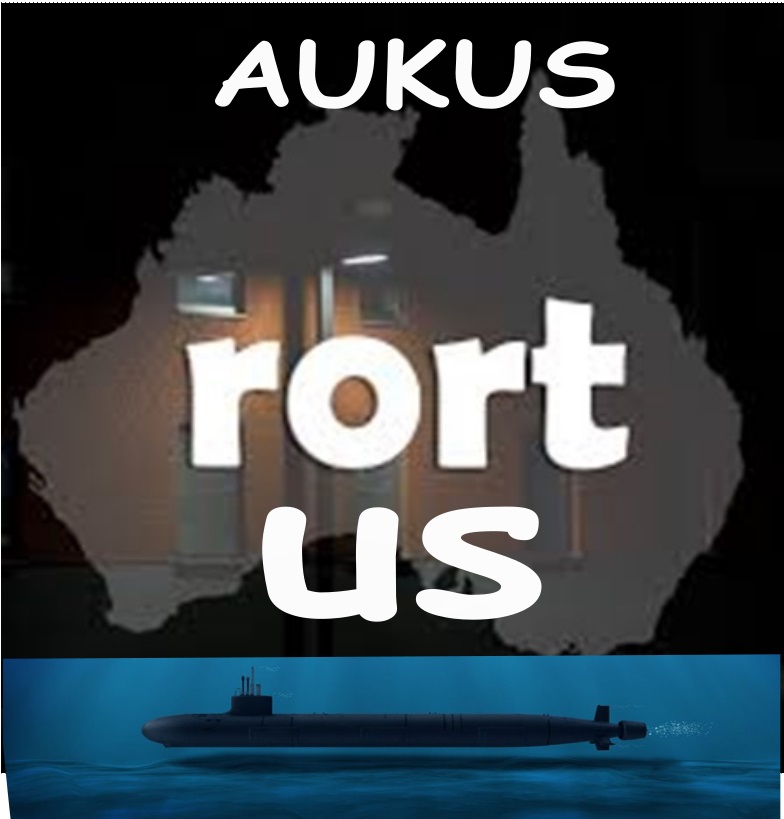
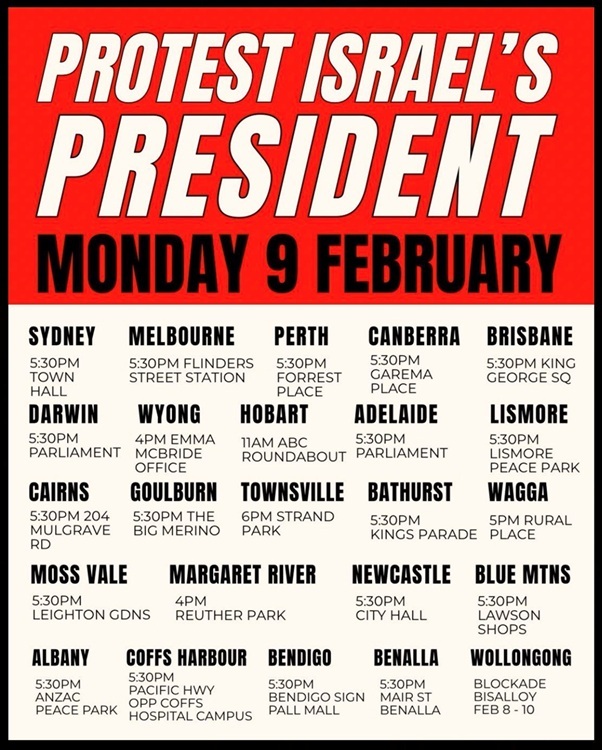

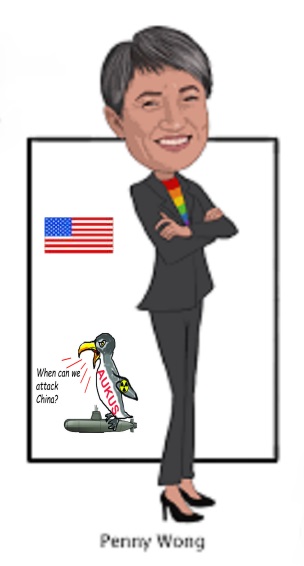

 Antinuclear